Categories
Featured Juneau News Juneau Local Ketchikan Local News Feeds Sitka Local

Alaska DOT is planning a new dock for one of Alaska’s most remote ferry terminals

By: James Brooks, Alaska Beacon
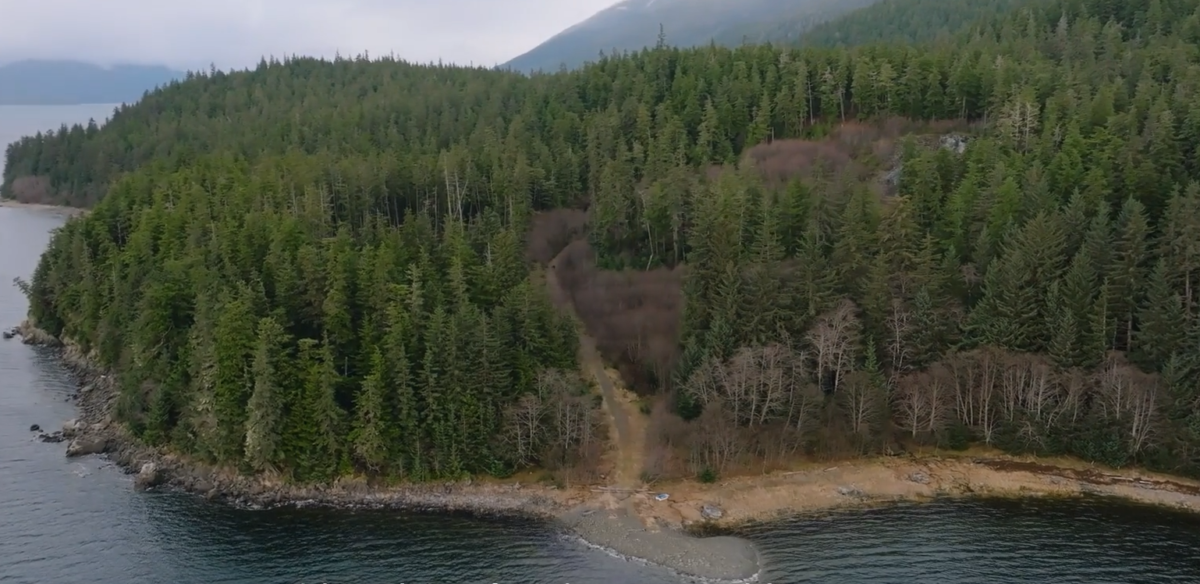
The Cold Bay dock is seen in 2021 during a visit by the ferry Tustumena. (Photo by Sean Maguire/contributed image)

The Alaska Department of Transportation and Public Facilities is planning a new dock at Cold Bay, one of the most remote stops on the state ferry system’s route map.

More than 600 miles southwest of Anchorage, on the Alaska Peninsula, the town of just 56 people is the gateway to the Izembek National Wildlife Refuge and home to a 10,000-foot runway used as an emergency stop for trans-Pacific flights. 

Cold Bay is a stop on the ferry route between Kodiak and Dutch Harbor, but the dock serves more than ferries — it connects the town with ships that supply groceries, water and almost everything else it needs.

State surveys have found that the existing dock “is nearing the end of its serviceable life and is at risk of failing.”

Most of the funding for the new dock is expected to come from the federal government; the Infrastructure Investment and Jobs Act passed by Congress during the Biden administration included $43.4 million for the dock, and the state will contribute another $8.7 million in matching funds.

The final cost of the dock may be higher than that; inflation has driven the cost of all construction projects higher than they were in 2023, when the federal government awarded a construction grant.

Under DOT’s timeline, the project will go out to bid in spring 2027, with construction beginning the following year, and projected to be completed in 2029.

The new dock is expected to be large enough to support the planned replacement for the ferry Tustumena.

One public meeting about the project has already taken place; a second is planned for Tuesday evening, Dec. 16, by Zoom.

Categories
Featured Juneau News Juneau Local Ketchikan Local News Feeds Sitka Local

State senators express skepticism about proposed Juneau ferry terminal backed by Dunleavy

By: James Brooks, Alaska Beacon

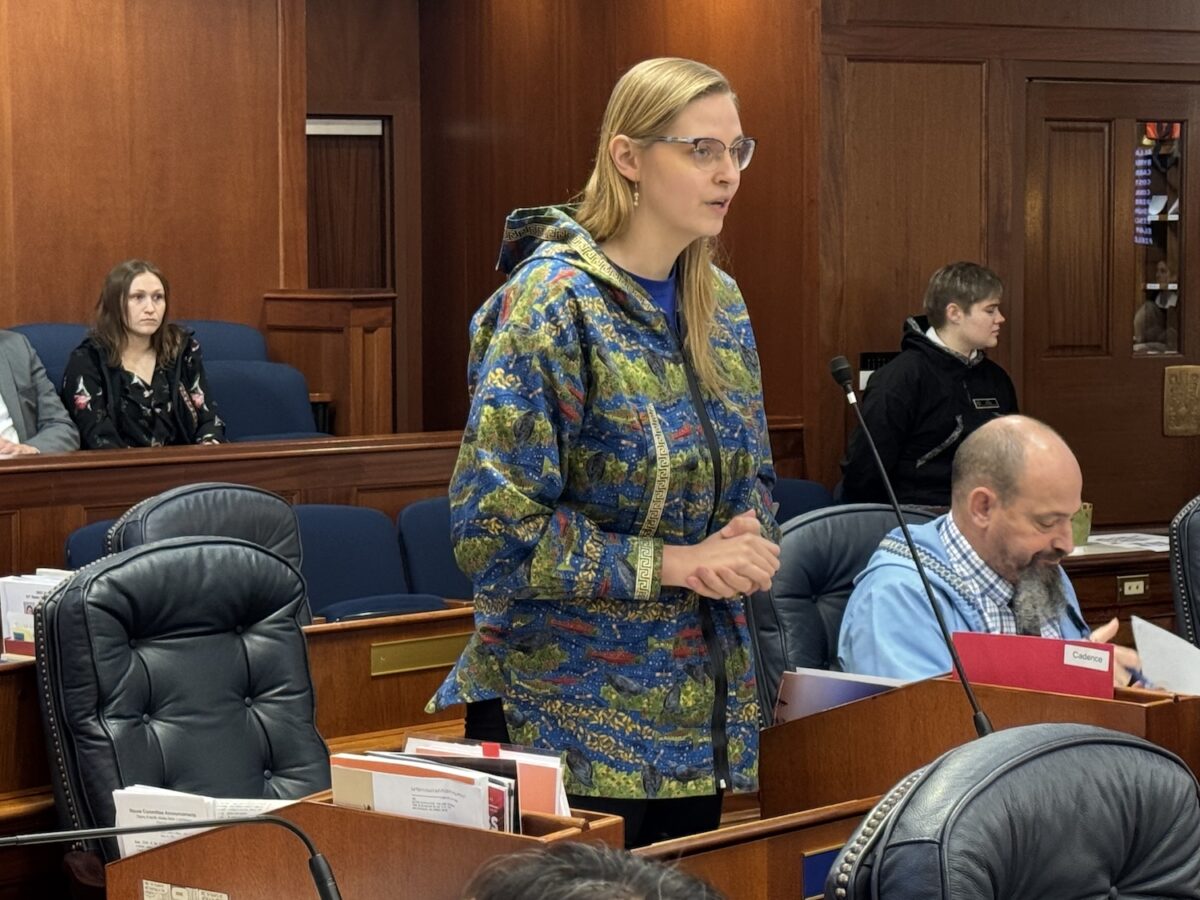
Sen. Jesse Bjorkman, R-Nikiski, speaks Wednesday, April 23, 2025, on the floor of the Alaska Senate. (Photo by James Brooks/Alaska Beacon)

In a Friday hearing, members of the Alaska Senate spoke critically about a proposed new ferry terminal in Juneau, questioning why the project would be worth its multimillion-dollar cost.

Earlier this year, state legislators planned to divert $62 million from a variety of transportation projects in order to pay for the state share of federal transportation grants worth between $500 million and $600 million.

Lawmakers included the diversion in their budget for the year, but Dunleavy vetoed the maneuversaying that the “funding is either still obligated in the original project or has been fully expended and is unavailable for reappropriation.”

That left legislators’ spending plan partially unfunded.

One of lawmakers’ biggest targets this past spring was DOT’s plan to build a new ferry terminal in Juneau, roughly 30 miles north of the existing terminal in Auke Bay, in Juneau at a place called Cascade Point, which would shorten ferry runs to Haines and Skagway.

Legislators sought to divert $37 million from an account intended to fund that new terminal, but Dunleavy vetoed the transfer and the Department of Transportation subsequently signed a $28.5 million contract for work on the terminal.

In October, the state’s ferry advisory board concluded that the project likely did not make economic sense. 

“Do you agree with that study?” asked Sen. Jesse Bjorkman, R-Nikiski, during Friday’s hearing of the Senate Transportation Committee.

“Can you please make the case to the Alaska people why you think investing this money … in the Cascade Point project makes fiscal sense for Alaskans?”

Anderson responded that “as a public agency, we’re more than economics. In this case, there’s this idea of saving people time with a much shorter run, saving money, the cost of operating that ship, we’re saving fuel. It’s less carbon emissions. I mean, there’s a lot of good benefits to shorter ferry runs.”

Lawmakers don’t have the votes to override the governor’s vetoes, which means that when they reconvene in January, they’ll have to come up with a new way to fund construction work this summer.

According to documents presented to the committee on Friday, the Alaska Department of Transportation has “deferred” about 25 projects 1-3 years “to remain within available match.”

Without new money, “fewer projects will move to contract award, limiting construction activity.”

Ryan Anderson, commissioner of the Alaska Department of Transportation and Public Facilities, told the transportation committee that his agency is prioritizing “shovel ready” projects, those that are about to go to construction.

“As we go and prioritize projects through this year, we’ll continue that action, and we’ll be ready. That’s really how we’re looking at this program,” he said.

Categories
Featured Juneau News Juneau Local Ketchikan Local News Feeds Sitka Local

Child support comes first when considering debts owed in foreclosure, Alaska Supreme Court rules

By: James Brooks, Alaska Beacon

 Students swing on a playground at Meadow Lakes Head Start in Wasilla, Alaska. It closed in 2024 due to funding and staffing challenges. (Image by Lela Seiler, courtesy of CCS Early Learning)

The Alaska Supreme Court has ruled that the state’s child support system has first priority when a foreclosed property is sold to pay multiple debts.

The court issued its opinion on Nov. 28, resolving a long-running lawsuit brought by Global Federal Credit Union (formerly Alaska USA) against the state and several other defendants.

“This is a pretty important case from my client’s perspective,” said Jonathan Clement, a senior assistant attorney general who represented Alaska’s child support system.

“This is the first time that a court has actually decided that child support gets priority over all other judgment lien holders, even liens recorded earlier, when there’s surplus funds at issue,” he said.

The case decided by the court involved property in Eagle River that was mortgaged by Wells Fargo. In 2017, Global levied a lien against the property for unpaid debt. Shortly afterward, the state’s child support division recorded another lien against the property for unpaid debt.

Typically, liens are repaid in chronological order: First filed, first paid.

In 2018, a law firm sold the property through foreclosure and paid off the remaining Wells Fargo mortgage. There was money left over, but not enough to pay both Global and the state.

The state protested the law firm’s plans to pay Global first, and the firm complied with a state order that required it to pay the state first. 

Global sued in state court, but a district court judge and a superior court judge each ruled against the credit union before it appealed to the supreme court.

Writing on behalf of the court, Justice Jude Pate concluded, “Our interpretation of (state law) provides an effective priority for CSSD liens over competing judgment liens.”

Alaska’s Child Support Services Division (CSSD) is now known as the Child Support Enforcement Division (CSCD).

That priority doesn’t put the state above a bank holding a mortgage or “deed of trust” but it does give the state priority over other liens on the property.

 “The important thing for this case is that it gives CSCD another tool where they can try to collect money that’s owed by the obligors,” Clement said.

“I would say of all the cases I’ve worked on, this is the one that will have the most impact in my career going forward,” he said.

An attorney representing Global declined comment on behalf of the credit union. 

In a footnote attached to the case, Pate wrote that the court’s ruling could cause people to behave differently during foreclosure auctions.

He suggested that if the Legislature disagrees with the court’s interpretation, it might want to pass a law clarifying two conflicting statutes interpreted by the court.

“If our interpretation is contrary to the legislature’s intent,” he wrote, “amendments to the relevant child support statutes could clarify the interaction between child support liens, other liens, and mortgages.”

Categories
Featured Juneau News Juneau Local Ketchikan Local News Feeds Sitka Local

Juneau finalizing legislative priority list as open house takes place at the Capitol

The Alaska State Capitol in downtown Juneau. (Photo by Greg Knight/News of the North)
The Alaska State Capitol in downtown Juneau.
(Photo by Greg Knight/News of the North)

NOTN- Juneau Mayor Beth Weldon said the city is finalizing its annual list of legislative funding priorities, shaped by months of committee work, public input and recommendations from numerous city boards and commissions.

“The planning commission, Systemic Racism Review Committee, General Commission on Sustainability, Utilities Advisory Board, Docks and harbours, Eagle Crest, Parks and Rec Advisory Committee, Historic Resources Committee, General School District and the General Commission on Aging, lots of hands have touched this list.” Weldon said.

The list, which guides Juneau’s requests to state lawmakers and Alaska’s congressional delegation, will be introduced to the full Assembly on Dec. 15 and is scheduled for a public hearing in January.

“What this list is, is it’s our priorities that we’re looking at, so it’s not all of our capital priorities by any stretch of imagination, but this is the list that we send to the State Delegation and the Federal Delegation in the hopes that there’s some money, either state money, which we know there’s not much of, or federal, that we can get help with. So again, this is not our complete list.” Weldon said.

The top projects on Juneau’s 2025 legislative priority list are; Mendenhall Glacier outburst flood response, North Douglas crossing, Mendenhall Wastewater Treatment Plant upgrades, Peterson Hill housing development, Juneau School District security and safety upgrades, Gold Creek flood control rehabilitation, prompted by flume failures, Bartlett Regional Hospital emergency department renovation, Statter Harbor wave attenuator project and Telephone Hill redevelopment.

Weldon said Juneau hopes to secure funding for even a portion of its top five projects. “We’ll be shocked to get any money on the top five. But you got to have a list for people to look at to help support you.” She said, “So this is to help our state delegates, who are having an open house today.”

The mayor encouraged residents to take advantage of the opportunity to speak with lawmakers during their open house at the state Capitol today.

Juneau Senator Jessie Kiehl added, “We’re opening up our offices from 11:30 to 1:00 today. We’ll have some snacks, some beverages, and good cheer.” He said, “Come on by the Capitol, just say hi. We don’t have an agenda, we don’t have a presentation, but we want to talk to you.”

Categories
Featured Juneau News Juneau Local Ketchikan Local News Feeds Sitka Local

U.S. Department of Energy lab, active in Alaska, drops ‘renewable’ from name

By: Yereth Rosen, Alaska Beacon

Solar panels at the Cold Climate Housing Research Center campus in Fairbanks are seen on June 5, 2025. The Cold Climate House Research Center, which became part of the National Renewable Energy Labortory system in 2020, is focused on designing sustainable and energy efficient housing that is resilient to climate change in the far north. (Photo by Yereth Rosen/Alaska Beacon)

The federal government research organization that has been devoted for half a century to renewable energy development has had the word “renewable” stripped from its name.

The Trump administration, which broadly opposes renewable energy projects, changed the name of the Colorado-based National Renewable Energy Laboratory to “National Laboratory of the Rockies.”

The U.S. Department of Energy announced the name change on Monday, effective immediately.

“The energy crisis we face today is unlike the crisis that gave rise to NREL,” Assistant Secretary of Energy Audrey Robertson said in a statement. “We are no longer picking and choosing energy sources. Our highest priority is to invest in the scientific capabilities that will restore American manufacturing, drive down costs, and help this country meet its soaring energy demand. The National Laboratory of the Rockies will play a vital role in those efforts.”

NREL has a prominent presence in Alaska. The agency in 2020 joined into a partnership with the Cold Climate Housing Research Center at the University of Alaska Fairbanks. The UAF facility is one of four NREL centers; two campuses are in Colorado and there is an office in Washington, D.C.

Jud Virden, the laboratory’s director, said the new name “embraces a broader applied energy mission entrusted to us by the Department of Energy to deliver a more affordable and secure energy future for all,” according to the statement.

However, the name change is a troubling sign to one Alaska organization involved in projects promoting renewable energy and energy affordability.

“Removing ‘Renewable’ and ‘Energy’ from NREL’s name raises concerns. Renewables are key to affordable, secure energy and deliver long-term economic benefits, especially for rural communities,” Bridget Shaughnessy Smith, communications director for the Alaska Public Interest Research Group, a non-profit consumer advocacy group, said by email.

“While it’s not yet clear if this name change signals a broad mission shift, any refocus cannot come at the expense of renewable energy or by prioritizing already well-funded fossil fuel industries. Remote microgrid communities in Alaska are working with NREL to innovate toward affordable, reliable energy, and this name change must not disrupt that critical work,” Shaughnessy Smith continued.

NREL’s history started in 1974, when the organization was established as the Solar Energy Research Institute. In 1991, President George H.W. Bush elevated it to national lab status and changed the name to the National Renewable Energy Laboratory.

The Cold Climate Housing Research Center was established in 1999 with a mission of improving housing and building conditions in Alaska’s extreme climate. The center has focused on renewable energy, along with energy efficiency, structural integrity for buildings on permafrost, indoor air quality and designs that are sustainable in the far north. The center headquarters is the world’s farthest-north building with a platinum rating, the highest possible, bestowed by the U.S. Green Building Council Leadership in Energy and Environmental Design.

The NREL-Cold Climate Housing Research Center partnership has participated in numerous recent energy and environmental innovations, including the development of non-plastic housing insulation made from a fungi-wood pulp blend.

The NREL name change adds to a list of government agencies and geographic sites changed by the Trump administration this year to align with the president’s agenda.

On the day he was inaugurated for his second term, President Trump issued an executive order directing that the Gulf of Mexico be renamed “Gulf of America” and that Denali, North America’s tallest peak, revert to its previous federal name, Mount McKinley.

The Denali name comes from the traditional name for the Alaska peak used by the Koyukon people, the region’s Indigenous residents. The name, which translates to “the high one,” has been the official state of Alaska name since the 1970s. The McKinley name, for former president and Ohioan William McKinley, has been widely panned in Alaska, and state lawmakers passed a resolution asking for the Denali name to be restored for federal government use.

In September, Trump issued an executive order directing that the U.S Department of Defense be renamed “Department of War.” That resurrected a department name that was dropped in 1947.

Categories
Featured Juneau News Juneau Local Ketchikan Local News Feeds Sitka Local

Pebble Mine, halted by EPA order, gets support from national development groups

By: James Brooks, Alaska Beacon

Kaskanak Creek in the Bristol Bay’s Kvichak watershed is seen from the air on Sept. 27, 2011. The Kvichak watershed would be damaged by the Pebble mine project, the Environmental Protection Agency has determined. (Photo provided by Environmental Protection Agency)

Developers’ efforts to overturn the cancellation of a vast gold and copper mine planned for southwest Alaska are getting a boost from national mining and pro-business groups, including the U.S. Chamber of Commerce.

On Nov. 24 and Nov. 25, the Chamber and the National Mining Association filed separate friend-of-the-court briefs in the lawsuit brought by the developers of the proposed Pebble Mine against the Environmental Protection Agency, which vetoed the mine.

Neither group has intervened in the case against the EPA, but the briefs represent the groups’ support for the proposed mine and offer legal arguments that Judge Sharon Gleason could consider as she debates whether to move the project forward.

In 2023, the EPA invoked a rarely used “veto” clause of the Clean Water Act to say that there was no way that the proposed Pebble Mine could be developed without significant harm to the environment. The large mineral deposit is located at the headwaters of Bristol Bay, the most abundant sockeye salmon fishery in the world.

The administration of Gov. Mike Dunleavy, which supports the project, and the proposed mine’s developers, filed separate lawsuits in federal court to overturn the rejection, as did two Native corporations that work as contractors for the developers. Those cases have since been combined.

The U.S. Supreme Court declined to hear the case directly, which has left the issue in front of Judge Sharon Gleason in the U.S. District Court for the District of Alaska.

Another lawsuit filed by the state claims that if the veto is upheld, the federal government will owe Alaska $700 billion, the state’s estimate for the value of the mine if built as planned. That case has been put on hold until the District Court rules.

In July, the administration of President Donald Trump indicated that it might try to settle the suit and withdraw the veto. If that occurs, it could come before Jan. 2, when the EPA is slated to file a written response to the plaintiffs’ motions for summary judgment. 

If the EPA continues to fight the case, the last written arguments are scheduled to be finished by the end of February. Any oral argument would take place afterward.

If the federal government drops the case, it doesn’t mean a free path for Pebble: Several environmental organizations, fishing groups, tribal organizations and Bristol Bay locals have also intervened in the case and intend to fight in court. 

The Alaska Legislature is also expected to consider a bill that would block both Pebble and any successor projects that might emerge.

In its brief, the National Mining Association — joined by the American Exploration and Mining Association and the Alaska Miners Association — call the EPA’s veto “overly broad” and say that if it is upheld, the act “will almost certainly chill investment in domestic mining activities” because other proposed mines could also be subject to a veto.

The Chamber of Commerce, which has backed the Pebble Mine project since at least 2022, said that if the veto is upheld, it has the potential of encouraging other vetoes, which would “disrupt important industries in which many of the Chamber’s members participate.”

Categories
Featured Juneau News Juneau Local Ketchikan Local News Feeds Sitka Local

Dunleavy appoints Rauscher and Tilton to Alaska Senate, opening two House vacancies

By: James Brooks, Alaska Beacon

Speaker of the House Cathy Tilton, R-Wasilla, talks to fellow lawmakers about rules for debate on House Bill 183 on Saturday, May 11, 2024. (Photo by James Brooks/Alaska Beacon)

Gov. Mike Dunleavy has appointed state Reps. George Rauscher, R-Sutton, and Cathy Tilton, R-Wasilla, to two vacancies in the Alaska Senate.

Each nomination will become effective if at least five of the Senate’s nine other Republicans approve them. Senate President Gary Stevens, R-Kodiak, said the votes will take place by secret ballot at 10 a.m. Saturday in Anchorage.

“Honestly, I think both of them are excellent candidates,” Stevens said on Wednesday, adding that he expects both to be confirmed.

If Rauscher and Tilton are confirmed, their House seats would become vacant, and Dunleavy would be required to appoint replacements within 30 days of their resignations. 

The two Senate seats became vacant after Sen. Mike Shower, R-Wasilla, resigned to run for lieutenant governor and Sen. Shelley Hughes, R-Palmer, resigned to run for governor.

The office of former Sen. Mike Shower, R-Wasilla, is seen in the Alaska state Capitol on Tuesday, Nov. 25, 2025. Shower's nameplate has been removed from beside the door, but a sticker commemorating Shower's time as an F-22 fighter pilot remains on the door. (Photo by James Brooks/Alaska Beacon)
The office of former Sen. Mike Shower, R-Wasilla, is seen in the Alaska state Capitol on Tuesday, Nov. 25, 2025. Shower’s nameplate has been removed from beside the door, but a sticker commemorating Shower’s time as an F-22 fighter pilot remains on the door. (Photo by James Brooks/Alaska Beacon)

Dunleavy’s picks were due no more than 30 days after their resignations, but he acted earlier, which will allow the replacement legislators to take office before the regular legislative session convenes in January.

“I can’t think of two Alaskans more qualified and committed to public service to serve in the Alaska Senate than Representatives Rauscher and Tilton,” Dunleavy said in a statement announcing the selections. “I have known and worked with both for as long as I have been in public office and I look forward to working collaboratively with them as senators. I also want to thank the local Republican district committees for taking the time to meet, deliberate, and send forward names for these seats. This process works best when the people closest to the communities are involved.”

Tilton, first elected to the House in 2014, was Speaker of the House from 2023 through 2024. Reached by phone on Wednesday in the middle of Thanksgiving shopping, she referred to a statement on her Facebook page.

“I look forward to collaborating with my Senate colleagues to advance sensible policy solutions, foster an energy renaissance, and usher in an era of renewed prosperity for all Alaskans,” the statement said in part. 

Rep. George Rauscher, R-Sutton, speaks in favor of the creation of an Alaska Department of Agriculture by executive order on Wednesday, March 19, 2025. (Photo by James Brooks/Alaska Beacon)

Rauscher said he’s already at work on a letter thanking Dunleavy for his appointment, but he declined to say what he thinks his confirmation chances are.

“It’s an honor,” Rauscher said of the appointment, “and I feel like it was quite the undertaking — the process — and to have it this close to seeing what the final outcome is, is always a relief in some ways, but it’s also very exciting that I am this close. So I appreciate the fact that the governor did consider me and thought highly enough of me to appoint me.”

Several senators said they expect Rauscher and Tilton to be confirmed, but each declined to say how he or she will vote, citing the need to work with them regardless.

Of the nine Republican senators who will be voting on this weekend’s confirmations, five are members of the Senate’s bipartisan majority caucus, and four are members of the Senate’s all-Republican minority.

Shower and Hughes were members of the House minority, and their replacements are expected to be as well.

Stevens said he’s conducting the confirmation vote by secret ballot in order to avoid the possibility of hurt feelings.

“I don’t want to have anybody have bad feelings when we start working together in January,” he said.

Stevens said he wants to give the House’s replacement process as much time as possible, since that will involve the appointment of two people new to the Legislature who will need to hire staff and uproot their lives in order to arrive in Juneau in January and be ready to work.

“I just want to make sure the House has all the time they need,” he said.

Categories
Featured Juneau News Juneau Local Ketchikan Local News Feeds Sitka Local

Murkowski offers support to Democratic senator targeted for retribution by Trump administration

By: James Brooks, Alaska Beacon

 The U.S. Capitol on the evening of Tuesday, Sept. 30, 2025, just hours before a federal government shutdown. (Photo by Ashley Murray/States Newsroom)

Alaska Republican Sen. Lisa Murkowski denounced the Trump administration’s targeting of Arizona Democratic Sen. Mark Kelly on Tuesday, saying on social media that its actions are “reckless and flat-out wrong.”

Kelly, a retired astronaut and U.S. Navy officer, was one of six Democratic senators who appeared in a video directed to members of the U.S. military. In that video, they say members of the military are being subject to political pressure and should uphold the Constitution and ignore “illegal orders.”

Afterward, President Donald Trump took to social media to call for all six to be executed for treason. The FBI has begun to make inquiries about the video, and the Department of Defense have vowed to investigate. Secretary of Defense Pete Hegseth has been particularly critical of Kelly.

“Senator Kelly valiantly served our country as an aviator in the U.S. Navy before later completing four space shuttle missions as a NASA astronaut,” Murkowski said. “To accuse him and other lawmakers of treason and sedition for rightfully pointing out that servicemembers can refuse illegal orders is reckless and flat-out wrong. The Department of Defense and FBI surely have more important priorities than this frivolous investigation.”

It has become unusual for elected Republican officials to speak in defense of elected Democrats, particularly when it places them at odds with President Donald Trump, who remains popular among Republican voters, even if his approval overall is low.

Alaska Republican Sen. Dan Sullivan previously expressed concerns about the possible politicization of the military during the presidency of Democrat Joe Biden. 

Asked about the situation with Kelly, Sullivan criticized the Democratic video and the administration’s response to it. 

“The Democrats in the video have offered no explanation of what they considered to be an illegal order, sowing confusion and politicizing the ranks in a way that risks undermining military discipline, lethality and readiness,” his office said in a written statement.

The statement went on to say that “he does not believe it is a good use of the Pentagon’s time to investigate Senator Kelly” because “such an investigation has the potential to turn into a major distraction for our military.”

The office of Rep. Nick Begich, R-Alaska, did not return a text message or email seeking comment.

Sullivan’s office requested that his statement be printed in full. Because it has not been published elsewhere, we think there is news value in reprinting it, so it is published below.

“Senator Sullivan strongly disagreed with many actions taken by the Pentagon under Presidents Obama and Biden — such as President Biden’s use of enlisted Marines as political props standing behind him in a very partisan speech in Philadelphia in 2022. But he would never have put out a video — like the one released by Senator Mark Kelly and five other Democratic lawmakers — implying that troops should question orders from their superiors. The Democrats in the video have offered no explanation of what they considered to be an illegal order, sowing confusion and politicizing the ranks in a way that risks undermining military discipline, lethality and readiness. 

Instead of using our troops as political pawns, members of Congress should press top Pentagon officials directly on issues over which they have concerns. Senator Sullivan does this regularly in Senate Armed Services Committee hearings and in meetings and phone calls with top Pentagon leaders regardless of which party controls the White House.

While Senator Sullivan believes the message in the video was irresponsible and politically driven, he does not believe it is a good use of the Pentagon’s time to investigate Senator Kelly — who served honorably in the Navy — under the UCMJ, particularly given that the Constitution’s Speech or Debate Clause would likely take precedence over any UCMJ provision. Such an investigation has the potential to turn into a major distraction for our military. After four years of Biden’s woke military, the Department of War needs to stay laser focused on lethality and war fighting.”

Categories
Featured Juneau News Juneau Local Ketchikan Local News Feeds Sitka Local

National Parks to raise fees for millions of international tourists to popular US parks

Photo of the Mendenhall Glacier courtesy of the Forest Service

The National Park Service said Tuesday it is going to start charging the millions of international tourists who visit U.S. parks each year an extra $100 to enter some of the most popular sites, while leaving them out of fee-free days that will be reserved for American residents.

The announcement declaring “America-first entry fee policies” comes as national parks deal with the strain of a major staff reduction and severe budget cuts, along with recovering from damage during the recent government shutdown and significant lost revenue due to fees not being collected during that time.

The fee change will impact 11 national parks, including the Grand Canyon, Yellowstone and Yosemite, according to the U.S. Department of the Interior.

As part of the changes, which are set to take effect Jan. 1, foreign tourists will also see their annual parks pass price jump to $250, while U.S. residents will continue to be charged $80, according to the department’s statement.

Interior Secretary Doug Burgum said in a post on the social platform X that the changes make sure U.S. taxpayers who support the park service “continue to enjoy affordable access, while international visitors contribute their fair share to maintaining and improving our parks for future generations!”

A White House post on X laying out the increased fees ended with the phrase, “AMERICANS FIRST.”

The announcement follows a July executive order in which President Donald Trump directed the parks to increase entry fees for foreign tourists.

“There’s a lot to unpack in this announcement, including many questions on its implementation – all which NPCA will raise with the Department of Interior,” Kati Schmidt, a spokesperson for National Parks Conservation Association, said in an email.

The U.S. Travel Association estimated that in 2018, national parks and monuments saw more than 14 million international visitors. Yellowstone reported that in 2024, nearly 15% of its visitors were from outside the country, which was down from 30% in 2018.

The money made off the new fees will help support the national parks, including with upgrading facilities for visitors and maintenance, according to the statement.

The “resident-only patriotic fee-free days” next year include Veterans Day, which was one of the parks’ eight free days open to everyone in 2025. The Department of the Interior had announced those days by saying they wanted to ensure that “everyone, no matter their zip code, can access and enjoy the benefits of green spaces and our public lands.”

Categories
Featured Juneau News Juneau Local Ketchikan Local News Feeds Sitka Local

Controversial political website Alaska Landmine faces defamation suit from Alaska state official

By: James Brooks, Alaska Beacon

Wooden gavel with books

The chair of Alaska’s human rights commission has sued a political writer for defamation over his description of her work on a failed attempt to preserve a historic building in Seward.

Dorene Lorenz of Juneau filed the suit on Friday in Juneau Superior Court, seeking damages from Jeff Landfield and the other owners of the Alaska Landmine, a popular Alaska political website that publishes a mixture of news, commentary and parody.  

Landfield, who backed Donald Trump in the 2024 presidential election, also publishes the Alaska Political Report, a sobersided news digest priced at $1,299 per year for lobbyists and others interested in activity at the state Capitol. 

Lorenz’s suit stems from a social media post in which Landfield ridiculed a recent appearance by Lorenz at a United Nations event in Switzerland. 

Landfield went beyond that appearance, which he labeled “bizarre,” and said, “This woman is an absolute nut. Remember when she got in trouble for using … state money for the Jesse Lee Home for herself?”

Lorenz asked for a retraction. Landfield refused, and reiterated his belief in a video posted on Facebook.

Lorenz filed her lawsuit in response, saying Landfield’s claim is false. She asked for financial damages for slander and defamation, a correction and retraction. 

Lorenz, who has experience representing herself in court, filed the lawsuit on her own behalf. 

“She’s a f***ing lunatic,” Landfield said of the lawsuit on Tuesday. 

“Anyone who has themselves as a client is a fool, as the old saying goes,” he said, adding that he looks forward to the discovery process and showing what happened with the Jesse Lee Home.

That building was a former orphanage and the home of Alaska Flag designer Benny Benson in the early 20th century.

During the administration of Gov. Bill Walker, state lawmakers allocated almost $7 million to restore the building, but grants given to a Lorenz-chaired nonprofit called the Friends of the Jesse Lee Home were terminated after a series of “reporting issues and accountability issues.”

Lorenz said by text on Tuesday that most of the grant money was never disbursed to the nonprofit she administered.

In 2018, Fred Parady, then deputy commissioner of the Alaska Department of Commerce, Community and Economic Development, told Alaska Public Media that he didn’t think anyone involved with the project stole money. 

In her legal complaint, Lorenz notes that Landfield was aware of that reporting and repeated his claim anyway.

Under Alaska law — which mirrors federal law — a public official filing a defamation claim needs to prove that someone knew what they were saying was a lie or that they willingly ignored evidence that their statement was a lie. 

By text message, Lorenz said the 2018 reporting by Alaska Public Media shows that the state believed that the Friends of the Jesse Lee Home were spending too much money on classes within the school and not enough on the building itself. 

“Landmine has asserted otherwise, with actual malice, and continues to do so,” she said. “Not cool.”