NOTN- The City and Borough of Juneau is preparing to implement major sales tax changes as a result of Ballot Proposition 2, which exempts food and utilities from local sales taxes starting Nov. 20.
Deputy City Manager Robert Barr says the city wants the transition to be as seamless as possible.
“Residents won’t have to do anything. You just simply won’t see sales tax on your receipts or your bills for food and utilities.” He said, “There’s a couple of exceptions for utilities that you buy in person, like wood or wood pellets or the retail purchase of fuel. For those specific exemptions folks will have to come downtown or go online and get a card number from us, because, while food is exempt for everyone, utilities aren’t.”
Barr said the city’s utility vendors are working to ensure that most billing adjusts automatically, though Barr noted some cases may require clarification between residential and commercial customers.
Below is the summary of what residents can expect, posted by CBJ;
Essential Food
Proposition 2 follows the same definition of “essential food” utilized by the Supplemental Nutrition Assistance Program (SNAP) and defined by the federal Food and Nutrition Act of 2008 (7 U.S.C. § 2012(k). No action is required by residents to receive the essential food sales tax exemption. Residents do not need to obtain an exemption card or number.
Examples of exempt foods include dairy products, fruits and vegetables, meat, poultry, fish, bakery items, cereals, snack foods, cold sandwiches for off-premises consumption, seeds and plants that grow food, and items with a Nutrition Facts label.
Non-exempt items include hot prepared foods, restaurant meals, foods intended to be eaten on-site, pet food, vitamins, cough drops, alcohol, tobacco and tobacco products, and items with a Supplement Facts label.
It may take merchants time to adjust point-of-sale systems to reflect the new sales exemption. For this reason, senior sales tax exemption cardholders are encouraged to continue carrying their card until this transition is complete.
Noncommercial Essential Utilities
Proposition 2 defines “essential utilities” as those sold to individuals for non-commercial use within the City and Borough of Juneau. This includes the sale of electricity, heating fuel, water and wastewater service, refuse and recycling collection at a City and Borough of Juneau resident’s principal place of abode, and the non-commercial use of landfill facilities by CBJ residents.
Because most, if not all, utilities already designate commercial and residential rates for billing purposes, and to ensure that the intent of the ballot sponsors and the will of the voters is honored, CBJ is working with utilities to utilize their definition of residential and commercial while maintaining the intent of the ballot initiative. CBJ also provided definitions for guidance where utilities do not already designate rates as commercial or residential.
In practice, this means that residents are not required to obtain an exemption number or card to receive the exemption for billed utility use (electricity, water, etc.). However, residents may choose to apply for an exemption card if they intend to make retail purchases of eligible essential utilities (wood pellets, propane, etc.). If residents believe they are mistakenly designated as commercial by billed utilities, they may also apply for a utility sales tax exemption card and submit their exemption card to the utility to receive the exemption. Essential utilities exemption card application details will be available at juneau.org/finance/sales-tax and at the CBJ Sales Tax Office prior to the November 20 enactment date.
CBJ is working with utility providers on the implementation process as quickly as possible. It may take time for providers to apply the new exemptions to their many thousands of accountholders.
NOTN- University of Alaska President Pat Pitney formally announced her retirement.
She was appointed the University system’s 17th president in 2022 and served as interim president in 2020.
Previously Pitney served as the state’s Director of the Division of Legislative Finance. She was the former Vice Chancellor of Administration, University of Alaska Fairbanks and worked at UA Statewide for 17 years. In all, Pitney spent 23 years with the University of Alaska before leaving to serve as the State Budget Director in the administration of former Governor Bill Walker.
Pitney moved to Fairbanks in 1987 from Billings, Montana. She earned her MBA from UAF and an engineering physics degree from Murray State University (Kentucky). She has three adult children and four grandchildren. All three of her children are UA graduates, with degrees from UAF, UAA and UAS.
Before moving to Alaska, she was a member of the 1984 U.S. Olympic Team and won a gold medal in women’s air rifle.
Below is the email announcing Pitney’s retirement;
Dear UA Community – It has been my honor and privilege to serve as University of Alaska president for the past five years. When the Board hired me in 2020, I wasn’t seeking either the interim or permanent president position, but I felt my skill set would be an asset to UA and our mission. I committed initially to two years of service, and more than five years later, I’m proud of how far we’ve come and excited about the opportunities ahead. There’s much to celebrate, but it is time for me and the UA system to be looking toward the next chapter. Several months ago, I informed the Board of Regents that I plan to retire after their May 2026 board meeting. I’m confident that the University of Alaska will continue to thrive long after I step away. As an alum, and the parent of alums from each of our three universities, it’s been one of the greatest honors of my life to serve all of you and the people of Alaska. Since 2020, we’ve made some incredible progress.
We’ve reversed enrollment declines and grown student headcount for three straight years.
We’ve stabilized our budget after a period of uncertainty compounded by a once-in-a-century pandemic.
We’ve substantially increased our competitive research position.
And we’ve reminded Alaskans of UA’s vital role in empowering our workforce, economy, and communities.
There’s still work to do, but the future is strong. The Board’s recent focus on student recruitment, retention, and graduation, along with expanded scholarships and financial aid, is already paying off and positioning UA for success. Retirement will be bittersweet. I’m looking forward to spending more time with my kids, my grandkids, and my mom, and exploring the state I love so deeply. But until May, I’ll remain full-speed ahead: advocating for our budget priorities in Juneau, and working closely with the Board to ensure a seamless leadership transition in my role and at the Universities.
In the weeks ahead, the Board will share more about the presidential search and how you can take part in shaping UA’s next chapter. I hope you’ll stay engaged in that process. For over three decades, I’ve seen how the University of Alaska empowers this state. Our education, research, and partnerships make a difference in every community. Serving as your president has been the honor of my career. I look forward to finishing this chapter strong and cheering you on as you continue UA’s work to empower Alaska. Thanks for all you do for our students and our state.
The northern lights fill the sky behind the Saint Joseph the Woodworker Shrine (AP Photo/Charlie Riedel)
AP- Solar storms brought colorful auroras to the Northern U.S. but also to some unexpected places on Tuesday and Wednesday night.
Space weather forecasters confirmed that storms reached severe levels, triggering vibrant northern lights in Europe including Hungary and the United Kingdom. In the U.S., the hues were spotted as far south as Kansas, Colorado and Texas.
There were some impacts to GPS communications and the power grid, Shawn Dahl with the National Oceanic and Atmospheric Administration said in a video posted on X.
The uptick in solar activity forced NASA on Wednesday to postpone the launch of Blue Origin’s new rocket carrying Mars orbiters until conditions improve.
Over the past few days, the sun has burped out several bursts of energy called coronal mass ejections. Two have reached Earth, but at least one more is still on the way and could arrive sometime on Wednesday.
Forecasters think this solar outburst could be the most energetic of the three and have issued a severe storm alert. How bright the auroras are and how far south they are visible will depend on when the burst gets here and how it interacts with Earth’s magnetic field and atmosphere.
How northern lights happen
The sun is at the maximum phase of its 11-year activity cycle, making the light displays more common and widespread. Colorful northern lights have decorated night skies in unexpected places and space weather experts say there are more auroras still to come.
Aurora displays known as the northern and southern lights are commonly visible near the poles, where charged particles from the sun interact with Earth’s atmosphere.
Skygazers are spotting the lights deeper into the United States and Europe because the sun is going through a major face-lift. Every 11 years, its magnetic poles swap places, causing magnetic twists and tangles along the way.
Last year, the strongest geomagnetic storm in two decades slammed Earth, producing light displays across the Northern Hemisphere. And soon afterward, a powerful solar storm dazzled skygazers far from the Arctic Circle when dancing lights appeared in unexpected places including Germany, the United Kingdom, New England and New York City.
The sun’s active spurt is expected to last at least through the end of this year, although when solar activity will peak won’t be known until months after the fact, according to NASA and NOAA.
How solar storms affect Earth
Solar storms can bring more than colorful lights to Earth.
When fast-moving particles and plasma slam into Earth’s magnetic field, they can temporarily disrupt the power grid. Space weather can also interfere with air traffic control radio and satellites in orbit. Severe storms are capable of scrambling other radio and GPS communications.
In 1859, a severe solar storm triggered auroras as far south as Hawaii and set telegraph lines on fire in a rare event. And a 1972 solar storm may have detonated magnetic U.S. sea mines off the coast of Vietnam.
Space weather experts aren’t able to predict a solar storm months in advance. Instead, they alert relevant parties to prepare in the days before a solar outburst hits Earth.
Consider aurora-watching in a quiet, dark area away from city lights. Experts recommend skygazing from a local or national park. And check the weather forecast because clouds can cover up the spectacle entirely.
Taking a picture with a smartphone camera may also reveal hints of the aurora that aren’t visible to the naked eye.
Research biologists pause among the wetlands of the Arctic National Wildlife Refuge coastal plain, with the Brooks Range in the background. (Photo by Lisa Hupp/USFWS)
AP- Alaska Native tribes and conservation groups sued the federal government Wednesday, seeking in at least three separate lawsuits to overturn a land exchange aimed at allowing a road to be built through a national wildlife refuge.
Legal challenges to the land exchange agreement reached last month between Interior Secretary Doug Burgum and an Alaska Native village corporation include claims that it was not properly analyzed, that it poses risks to sensitive habitats and that it could threaten migratory birds that some Alaska Natives rely on for food.
King Cove, a community of about 870 people near the Izembek National Wildlife Refuge, has for years pushed to have a road built through the refuge for access to an all-weather airport at Cold Bay, about 18 miles (29 kilometers) away.
Alaska’s governor and congressional delegation have supported the cause, calling it a life and safety issue that would allow for emergency medical evacuations. The delegation has said King Cove’s airstrip can frequently be closed for bad weather, and that high seas can make travel by water between King Cove and Cold Bay challenging.
Terms of the agreement include conveyance by the government of about 490 acres (199 hectares) to King Cove Corp. for a potential road corridor, while the corporation would convey about 1,739 acres (703.7 hectares) to the refuge and relinquish selection rights to additional land. A decision document, signed by Burgum, says the proposed road would be about 19 miles, much of which would be within the refuge. It says it would be up to the corporation to obtain the necessary permits and funding for a road.
Elizabeth Peace, an Interior Department spokesperson, said by email Wednesday that the department doesn’t comment on litigation.
One of the lawsuits was filed by the Native Village of Hooper Bay, Native Village of Paimiut, Chevak Native Village and the Center for Biological Diversity, a conservation group. The tribal governments are hundreds of miles north of King Cove but have expressed concern that a road could impact migratory birds they rely on that stop along the way at the refuge.
Angutekaraq Estelle Thomson, traditional council president of the Native Village of Paimiut, in a statement called the refuge’s eelgrass wetlands “a lifeline for emperor geese, black brant and other birds that feed our families and connect us to Indigenous relatives across the Pacific.”
“We are joining this lawsuit because defending Izembek is inseparable from defending our subsistence rights, our food security and our ability to remain Yup’ik on our own lands,” she said.
Lawsuits also were filed by a coalition of conservation groups, represented by Trustees for Alaska, and by Defenders of Wildlife.
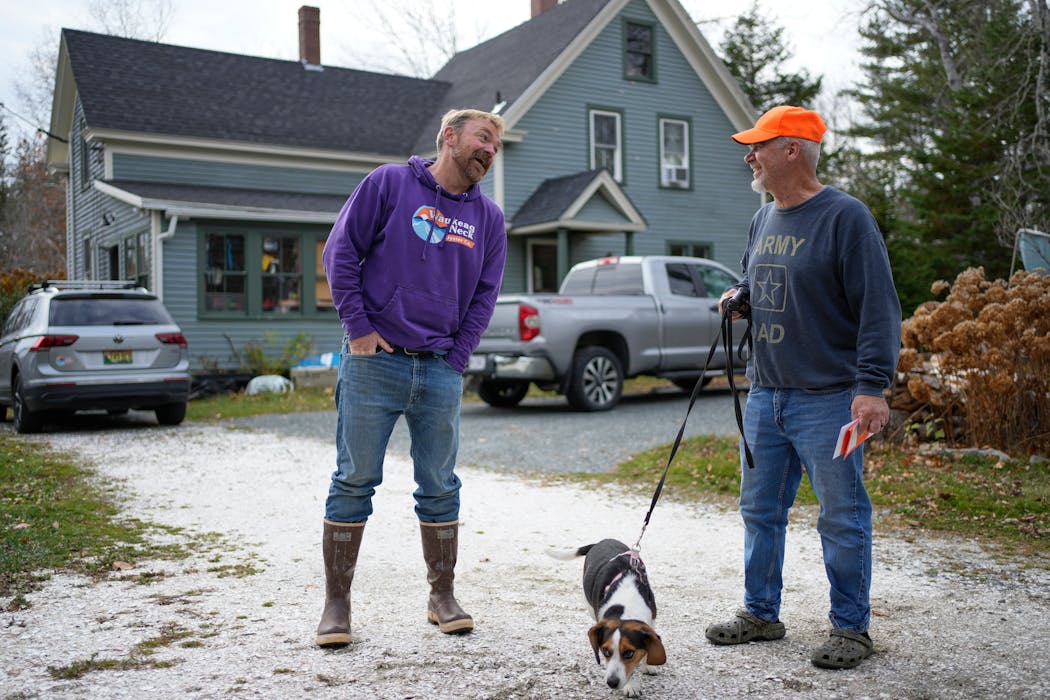
Graham Platner, left, Democratic candidate for U.S. Senate, chats with his neighbor, Denis Nault, on Nov. 3, 2025, in Sullivan, Maine. AP Photo/Robert F. Bukaty
Every few years, Democrats try to convince themselves they’ve found the one – a candidate who can finally speak fluent rural, who looks and sounds like the voters they’ve lost.
In 2024, that hope was pinned on Tim Walz, the flannel-wearing, “Midwestern nice” governor whose small-town roots were supposed to unlock the rural Midwest for a Harris–Walz victory.
Now those expectations have migrated to New England, onto Graham Platner – the tattooed veteran and oyster farmer from Maine who swears from the stump, wears sweatshirts instead of suits, and, some believe, could be the party’s blue-collar savior against Sen. Susan Collins, the Republican incumbent running her sixth campaign for U.S. Senate.
I study rural politics and live in rural Maine. I’m skeptical whether Platner can reach the independents and rural moderates Democrats need. But I also see why people think he might: He’s speaking to grievances that are real, measurable and decades in the making.
Platner represents Democrats’ anxieties about class and geography – a projection of the authenticity they hope might reconcile their national brand with rural America. On paper, he’s the kind of figure they imagine can bridge the divide: a plainspoken Mainer.
Yet Platner’s immediate hurdle isn’t rural Maine at all. It is the Democratic primary, and those voters do not live where his campaign imagery is set.
Crowd members at a town hall meeting in the southern Maine town of Ogunquit listen to U.S. senatorial candidate Graham Platner on Oct. 22, 2025. Sophie Park/Getty Images
Opportunity zone
In 2024, nearly 6 in 10 registered Democrats in Maine lived south of the state capital Augusta. That part of the state would not constitute an urban metropolis anywhere else in the U.S., but it is a drastically different world than the one Platner is fighting for.
The party’s gravitational center sits in Cumberland and York counties: Greater Portland and the southern coastal strip. That electorate is more educated, affluent and urban than the state as a whole, clustered in Portland’s walkable neighborhoods, college towns such as Brunswick and artsy coastal communities that swell with summer tourists.
Southern Maine – closer in feel to Boston’s suburbs than to the paper mills and potato fields up north – is where Democrats are already strong. Collins’ vulnerability lies instead among independents in small cities and towns, in deindustrialized and rural counties drifting rightward for two decades.
Collins outperformed Donald Trump in every county. She built commanding margins in rural Maine, offsetting Democratic gains in Portland and the southern coast. Her real breakthrough came in the kinds of small towns where Trump lost and she won or closed the margin: Ellsworth, Brewer, Machias, Gardiner and Winterport.
Those former mill towns and service hubs once anchored the Maine Democratic Party. They’re home to exactly the kinds of voters who, in principle, might give someone like Platner a hearing: not deeply ideological, modestly skeptical of both parties and wary of national polarization.
But they are also the voters least represented in the Democratic primary electorate or the donor class fueling Platner’s campaign.
Platner’s in-state share is higher and more geographically diffuse than Gideon’s 2020 campaign. Then, in what became Maine’s most expensive Senate race, just 4% of Gideon’s war chest was homegrown. Most of that Maine money was heavily concentrated in Portland and the southern coastal corridor.
While 64% of Gideon’s Maine total fundraising amount came from the three southernmost counties, 88% of Platner’s current in-state funding is from outside the urban-suburban core of southern Maine.
That divergence matters. It suggests that while Platner’s campaign is still fueled by national money, its local base – however small – extends beyond the usual Portland orbit.
And there is a reason Platner’s message has not been dead on arrival.
The economic populism he’s advancing speaks directly to the material frustrations many rural residents express – frustration with corporate consolidation, rising costs and the feeling that prosperity never reaches their communities.
The 2024 Cooperative Election Study shows that rural independents and moderates often share progressive instincts on precisely these issues: Large majorities of rural, moderate/independent New Englanders support higher taxes on the wealthy and expanded health coverage. Platner is emphasizing those issues – corporate power, health costs, infrastructure, wages – where the urban–rural divide is narrowest.
Platner may be closing that gap. In an October 2025 survey, 58% of likely Democratic primary voters named him as their first choice for the 2026 Senate nomination. While that support has likely changed in the aftermath of two controversies – his chest tattoo that resembled a Nazi icon and recent posts on Reddit, including one in which he says rural people “actually are” “stupid” and “racist” – that poll’s most notable finding is the consistency of support across income and education levels.
Still, while his message may bridge income and education, the biggest obstacle facing Platner is the simplest one: He’s trying to do all of this as a Democrat.
Republican U.S. Sen. Susan Collins speaks on Nov. 4, 2020, in Bangor, Maine, after Democratic challenger Sara Gideon called her to concede. AP Photo/Robert F. Bukaty
Hearing, not speaking
Being anchored in metropolitan and professional networks far removed from rural life shapes not only what Democrats stand for but how they speak, focusing on moral and cultural commitments that resonate nationally but feel abstract in smaller, locally based communities.
That’s why even an economically resonant message struggles once it meets the national brand.
Rural independents and moderates often agree with Democrats on taxes, health care and wages. Those alignments fade when policy is framed through the institutions and moral language of a party many no longer see as compatible with rural ways of living.
It’s not clear yet how Platner will respond on issues that don’t poll well in rural Maine – environmental regulation, gun control or immigration – where loyalty to the national agenda has undone many would-be reformers before him.
And that schism is not because rural voters misunderstand their “self-interest” or because racial dog whistles have led them astray. It is hostility toward a party that, with rare exception, sees the future as something rural America must adapt to, not something it should help define.
That is the danger of treating biography as the solution to a decades-long realignment. Platner might be as close as Democrats have come in years to a candidate who can talk credibly to rural voters about power, place and policy. But he still has to do it while wearing the “scarlet D” – the weight of a party brand built over generations.
Whether he wins or loses, his campaign already points to a deeper question: Can Democrats do more than rent rural authenticity? Put more bluntly, the real test is not whether Platner can speak to rural Maine, it is whether his party can finally learn to hear it.
Nicholas Jacobs does not work for, consult, own shares in or receive funding from any company or organization that would benefit from this article, and has disclosed no relevant affiliations beyond their academic appointment.
We know fans are excited about the upcoming release of Wicked: For Good, but one Singapore resident let his enthusiasm get the best of him at a recent premiere event.
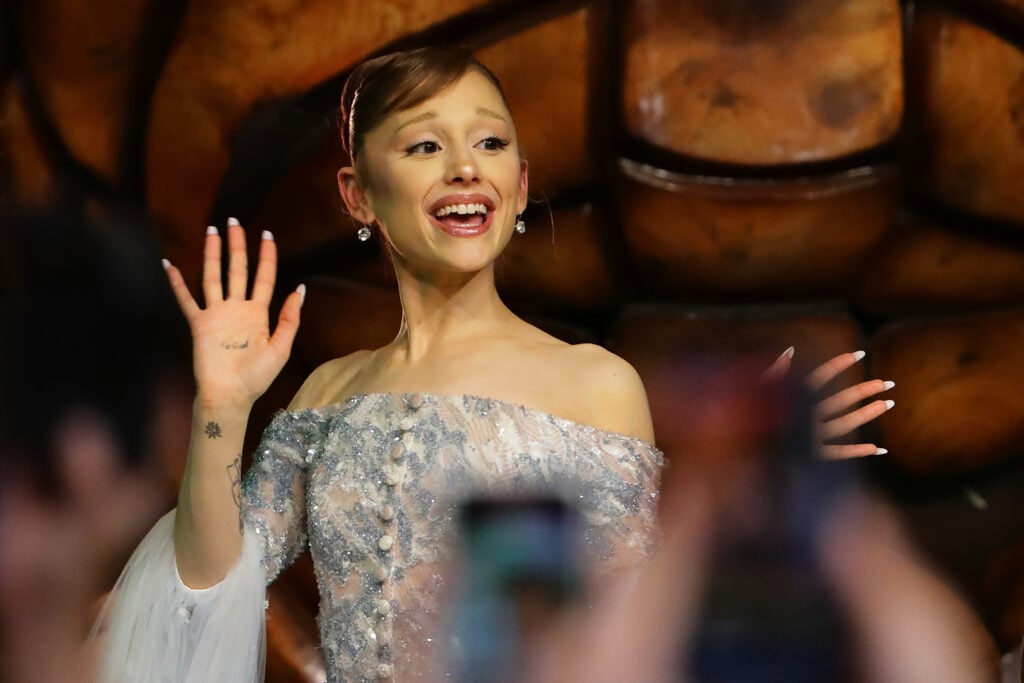
Along with the rest of the film’s stars, Ariana Grande was in Singapore today to promote the film.
The event took a turn for the dangerous when a fan rushed the red carpet and accosted Ariana.
Ariana Grande attends the “Wicked: For Good” Asia-Pacific Premiere at Universal Studio Singapore on November 13, 2025 in Singapore. (Photo by Suhaimi Abdullah/Getty Images)
The frightening moment was caught on video by numerous attendees at the event.
Many noted that Ariana looked absolutely horrified as the man grabbed her and seemingly posed for a photo while grinning.
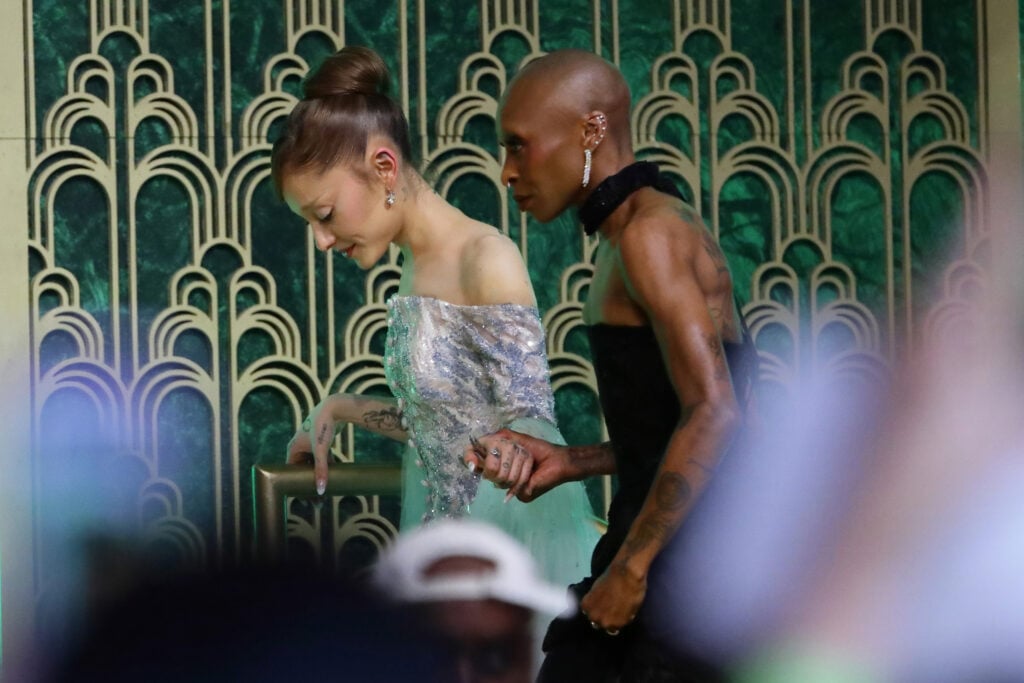
Thankfully, Ari’s friend and co-star Cynthia Erivo was on hand to intervene.
As you can see in the clip below, Cynthia rushed over and inserted herself between Ariana and the assailant.
Security guards arrived on the scene seconds later, but Cynthia was the first to get involved.
Like most weird, annoying things that happen in 2025, this incident can be chalked up to the rising tide of influencer culture.
According to the New York Post, the man who accosted Grande is Johnson Wen, known as “Pyjama Man” on social media.
He had nearly ten thousand followers on Instagram, and naturally, he’s been posting about the incident nonstop.
Cynthia Erivo and Ariana Grande attend the “Wicked: For Good” European Premiere at Cineworld London Leicester Square on November 10, 2025 in London, England. (Photo by Kate Green/Getty Images)
“@arianagrande @wickedmovie Dear Ariana Grande Thank You for letting me Jump on the Yellow Carpet with You,” Wen wrote this afternoon.
Yes, acting like Ariana or anyone else had any say in the matter is more than a little gross.
But Johnson’s following will likely grow thanks to this wildly stupid stunt.
As for possible ramifications, Wen revealed that he was arrested on the scene, but released shortly thereafter:
“I’m free after being arrested,” he wrote in his Instagram Stories, according to the Post.
Ariana Grande and Cynthia Erivo attend the “Wicked: For Good” Asia-Pacific Premiere at Universal Studio Singapore on November 13, 2025 in Singapore. (Photo by Suhaimi Abdullah/Getty Images)
Wen apparently has a history of this sort of behavior, having been arrested after rushing the stage at performances by The Weeknd and Katy Perry.
Singapore has a notoriously harsh criminal justice system, but apparently, accosting a woman is considered a less serious offense than various forms of property crime.
Anyway, Ariana looked a bit shaken up by the incident (quite understandably!), but she stuck it out and remained at the premiere, much to the delight of her fans.
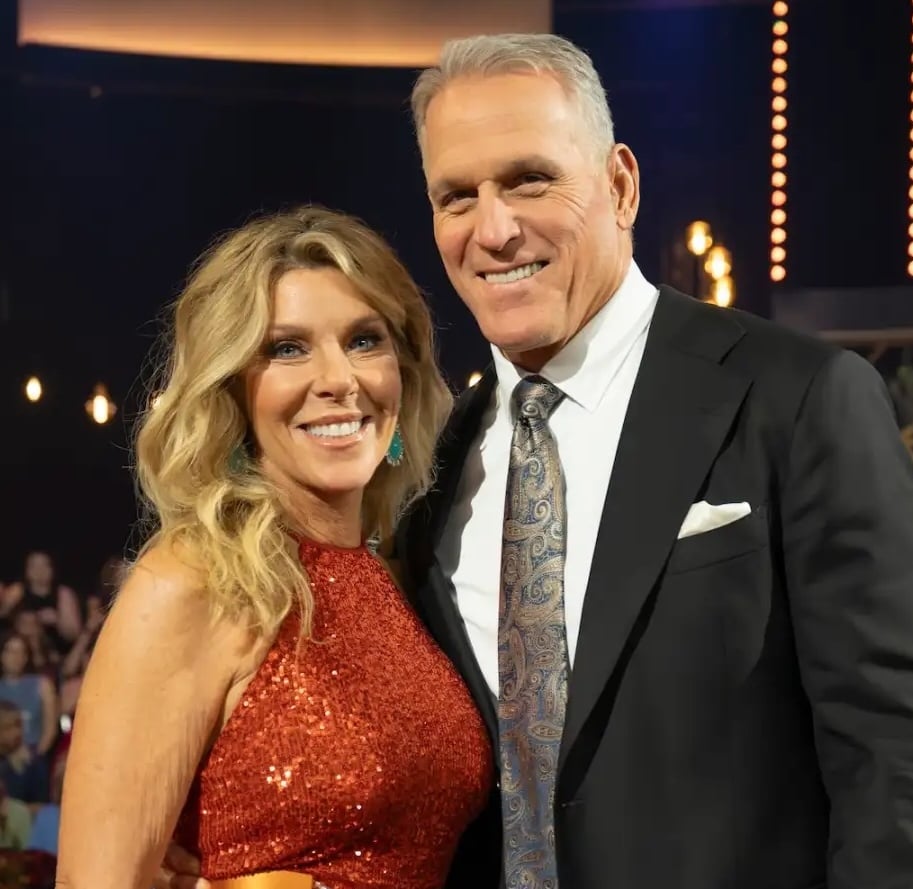
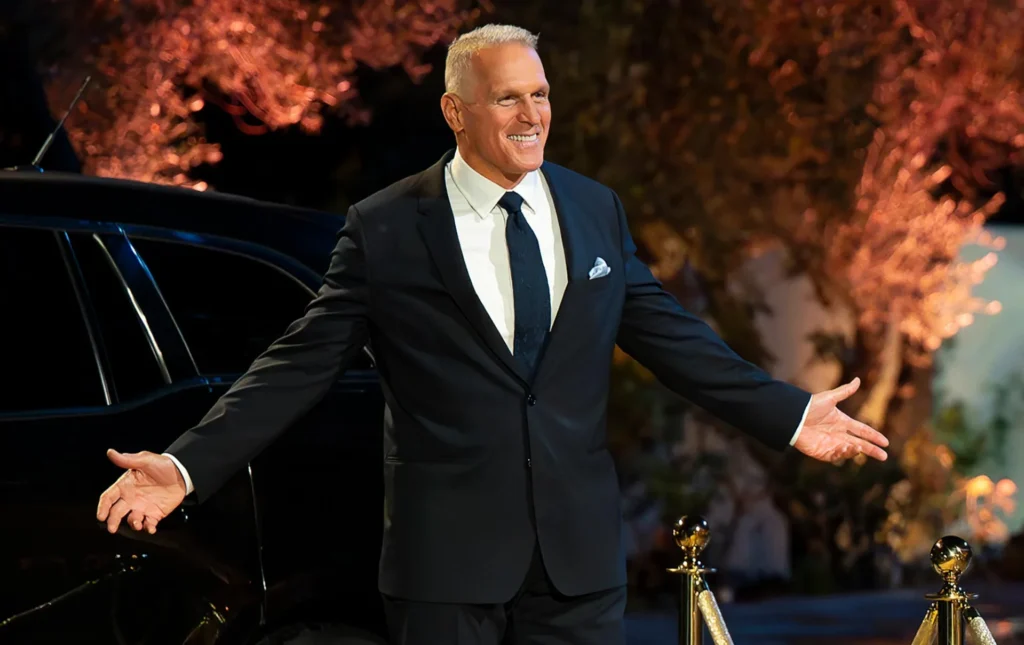
On Wednesday night, Mel Owens and Peg Munson sealed their journey on The Golden Bachelor Season 2 with a kiss.
And also with a diamond ring.
Not an engagement ring, however, but a “commitment” ring that Owens presented to Munson to prove that he was committed to… whatever future the pair might have together.
Fast forward all the months since this finale was filmed and, well, do Owens and Munson still have a future? Are they still together?
(Disney/John Fleenor)
“We’re feeling great. We’re feeling really good,” Munson told Us Weekly one day after the finale and the After the Final Rose special aired on ABC. “We’re feeling relieved and excited that we’re at this point in the journey and now we’re able to move forward.”
In a surprising moment on this concluding episode, Cindy Cullers chose to self-eliminate ahead of the fantasy suites because Owens wasn’t prepared to get engaged.
“If we had written a book, if we had gotten on the same page, it would’ve been, like, the best fairy tale. It was a start of something remarkable. It could have been amazing,” Cullers told host Jesse Palmer on the After the Finale Rose special, adding:
“He wanted a comic book. He wanted something shorter and lighter and no commitment. And I’m ready for everything.”
Owens was asked by Us Weekly to respond to this remark.
(ABC)
“I’m not gonna comment on her frivolous, you know, trite little comment because it’s just not worth commenting on,” he said. “But, like I told her, me, personally, I know that I’m not gonna take a leap of faith like that. My life doesn’t work that way.”
For her part, Munson said that she wasn’t looking for “a knight in shining armor to rescue and save” and that it makes perfect sense to make sure they’re ready for marriage… if that day ever comes.
“Like Peg said, there’s more to it than just going through the journey and then at the end, just because the show says you’re supposed to get married or propose, [you do]. That’s just not real,” Owens explained to this tabloid.
“[Cindy] wanted to have the ending before the journey was over. And that’s just not how the journey goes. She didn’t want to go through the entire journey to see what happened. She wanted the answers to the test before the test was given. So, I’m not worried about it at all.”
(Disney/John Fleenor)
Peg emphasized just how much “integrity” her boyfriend possesses, while Owens made a strong point in the interview.
“I’ve seen The Bachelor enough where the person told the other contestants or the other people that, ‘I love you. I love you. I love you.’ So you got three ‘I love yous’ out there and they’re all misled.
“And then there’s panic and heartbreak. I didn’t do that because that’s not who I am. I’d never do it outside of the show and I wouldn’t do it inside of this show. I just stay true to myself and that’s what happened.”
We sort of dig it.
After all, how many Bachelor Nation engagements that started on the show actually ended with the couple walking down the aisle?!?
Megyn Kelly picked a weird time to split hairs about Jeffrey Epstein and pedophilia.
This week, the world first saw Epstein’s emails about Donald Trump. They are unflattering, describing Trump spending time with victims and keeping quiet.
To be blunt, it’s clear that much more is poised to come out. Political commentators expect damning photographs of Trump in the mix.
In what appears to be an effort to pave the way politically, Kelly really wants to talk about how Epstein wasn’t a “pedophile” but rather into “barely legal” 15-year-olds. (Oh no!)
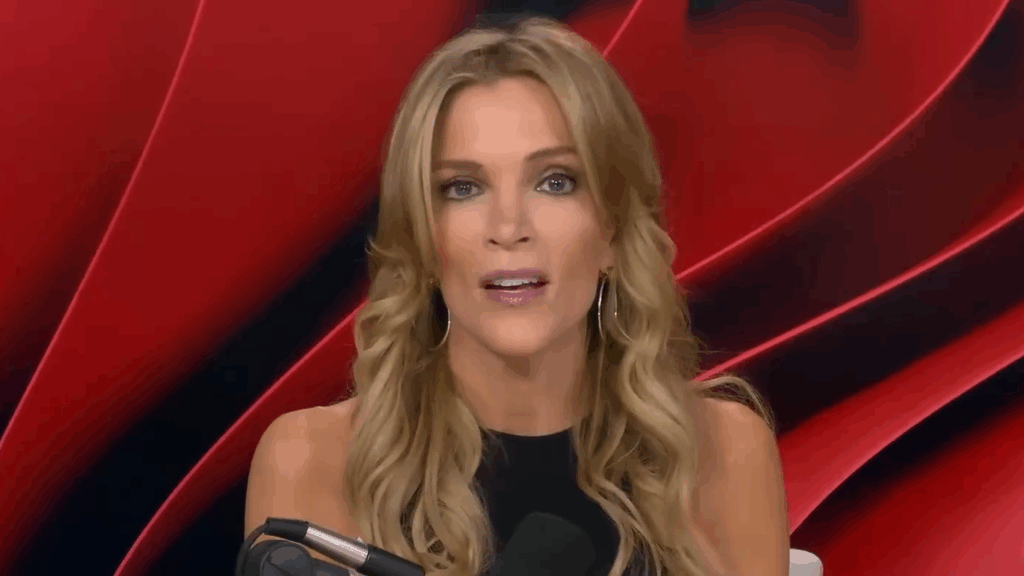
Former television host Megyn Kelly delved into the technical distinctions between what is and is not “pedophilia” on her podcast. (Image Credit: YouTube)
Megyn Kelly says that Jeffrey Epstein was probably not a pedophile, preferred ‘barely legal’ 15-year-old girls
With just a handful of Republican defectors pushing for the release of Epstein documents over the objections of Donald Trump and his loyalists, Megyn Kelly appears to be doing damage control.
During the Wednesday, November 12 episode of her podcast, Kelly claimed that she knows “somebody very, very close to this case who is in a position to know virtually everything. Not everything, but virtually everything.”
Kelly continued: “And this person has told me from the start years and years ago that Jeffrey Epstein, in this person’s view, was not a pedophile.”
As you may have guessed, she’s drawing the line between children who have not yet started puberty and children who have started puberty.
“He was into the barely legal type. Like, he liked 15-year-old girls,” Kelly described. There is nothing barely legal about a grown man preying upon 15-year-olds. It is a crime! Not barely legal, but fully illegal.
Megyn Kelly: “I know somebody very close to this case…Jeffrey Epstein, in this person’s view, was not a pedophile…He was into the barely legal type, like he liked 15 year old girls…He wasn’t into like 8 year olds…There’s a difference between a 15 year old and a 5 year old.” pic.twitter.com/a7wmT3BRJU
“And I realize this is disgusting,” Kelly admitted. She claimed: “I’m definitely not trying to make an excuse for this.”
Nonetheless, she continued, noting that Epstein”wasn’t into, like, 8-year-olds.”
(There are often legal distinctions between the sexual abuse of children below certain age thresholds, but it remains a crime nonetheless)
“But he liked the very young teen types that could pass for even younger than they were,” Kelly described, “but would look legal to a passerby.”
Kelly noted that Pam Bondi has claimed that authorities found CSAM on Epstein’s devices, saying “they used to call it kiddie porn, now they call it child sexual abuse material” and adding: “I don’t really trust Pam Bondi’s word on the Epstein matters anymore.”
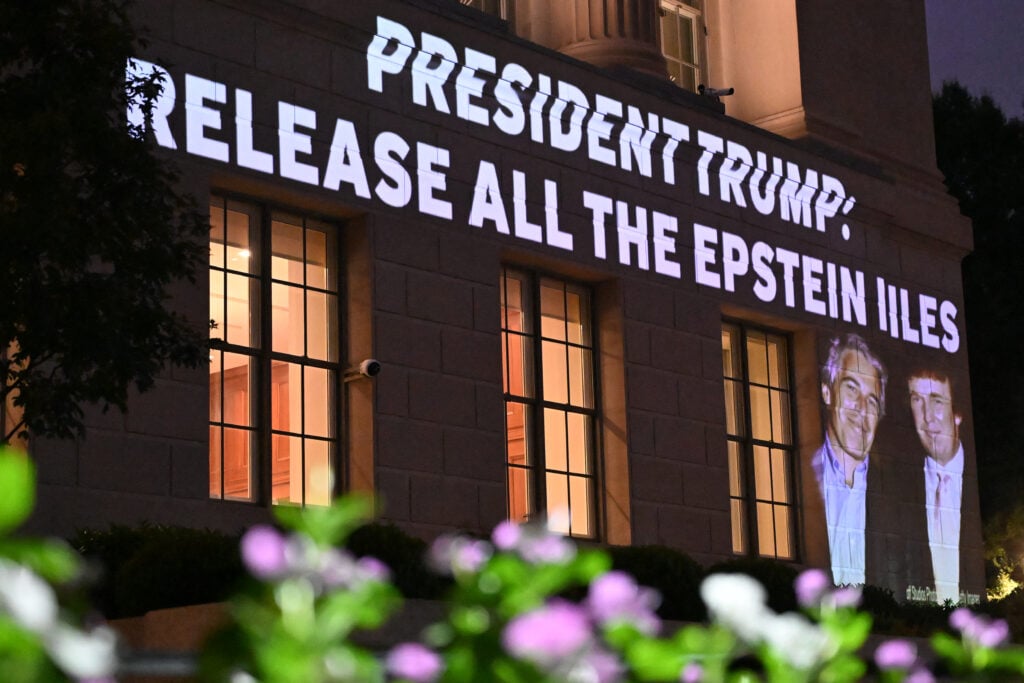
A message calling on Donald Trump to release all files related to Jeffrey Epstein is projected by an activist group onto the US Chamber of Commerce building across from the White House in Washington, DC, on July 18, 2025. (Photo Credit: ALEX WROBLEWSKI/AFP via Getty Images)
‘There’s a difference between a 15-year-old and a 5-year-old’
“Yeah, so I don’t know what’s true about him,” Megyn Kelly said of late sex trafficker Jeffrey Epstein.
“But we have yet to see anybody come forward and say I was under 10, I was under 14 when I first came within his purview,” she added.
For the record, Epstein’s youngest known victim was 14 years old. That could be as young as an eighth grader.
“You can say that’s a distinction without a difference. I think there is a difference,” Kelly insisted. “There’s a difference between a 15-year-old and a 5-year-old, you know?”
There is a difference, sure. But, when we are talking about decades-older adult men — not, say, slightly older teens — does the distinction matter? What, one wonders, is the point of quibbling over words, here?
In fairness, when it comes to the facts of what a pedophile is and is not, Kelly is correct.
A pedophile is someone with sexual interest in a prepubescent child. A hebephile has an interest in more tween-aged victims. And an ephebophile is more interested in teens (some of whom may be legal adults, others not).
There is a reason that we don’t really toss around these other two labels. Because, like someone being a little too familiar with age of consent laws from state to state and country to country, it doesn’t sound like a fun fact.
It sounds like you’re being overly technical and splitting hairs because you’re a creep. Sometimes, when drawing a distinction sounds like defending an evil man, you just need to focus less upon being technically accurate.
Comedian Gianmarco Soresi has a stand-up about this. He has even repurposed it more recently to discuss Epstein and Trump this very week.
Donald Trump arrives to the White House in Washington, DC, following a trip to Palm Beach, Florida with a stop at a Washington Commanders football game on November 9, 2025. (Photo Credit: ALLISON ROBBERT/AFP via Getty Images)
Right now, Trump loyalists are circling the wagons and bracing for the truth to come out
These sorts of distinctions come up in other contexts. For example, people will say “murderer” about someone who may have committed manslaughter.
(In this area, being technically correct may help you avoid a lawsuit — whereas “your honor, I am merely a hebephile and this person is defaming me” is unlikely to get you far in court)
The real question here is why Megyn Kelly is choosing to mince words so carefully about Jeffrey Epstein at this particular time.
We do not claim to know the former Fox host, former NBC host, current podcaster’s inner-most thoughts.
However, at this time, the release of extremely damning material connecting Donald Trump to young teenage girls — like the “barely legal” 15-year-olds to whom Kelly referred — appears imminent.
Where others in the MAGA cult are looking beyond Trump, others like Mike Johnson and Megyn Kelly appear desperate to do damage control. If that isn’t their goal, one has to wonder just what is.
Of all the political sex scandals to emerge in recent months, few have been more shocking than that of Matt Gaetz.
And new allegations that emerged today might cost the former congressman his few remaining supporters.
As you may recall, just last year, Gaetz was the frontrunner for the position of U.S. Attorney General.
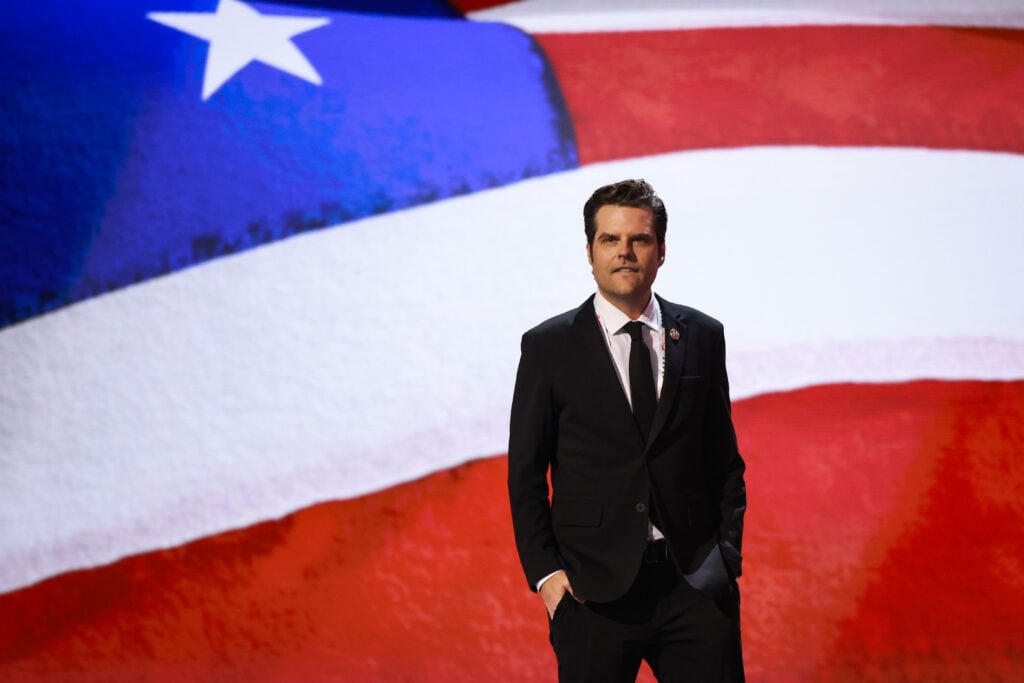
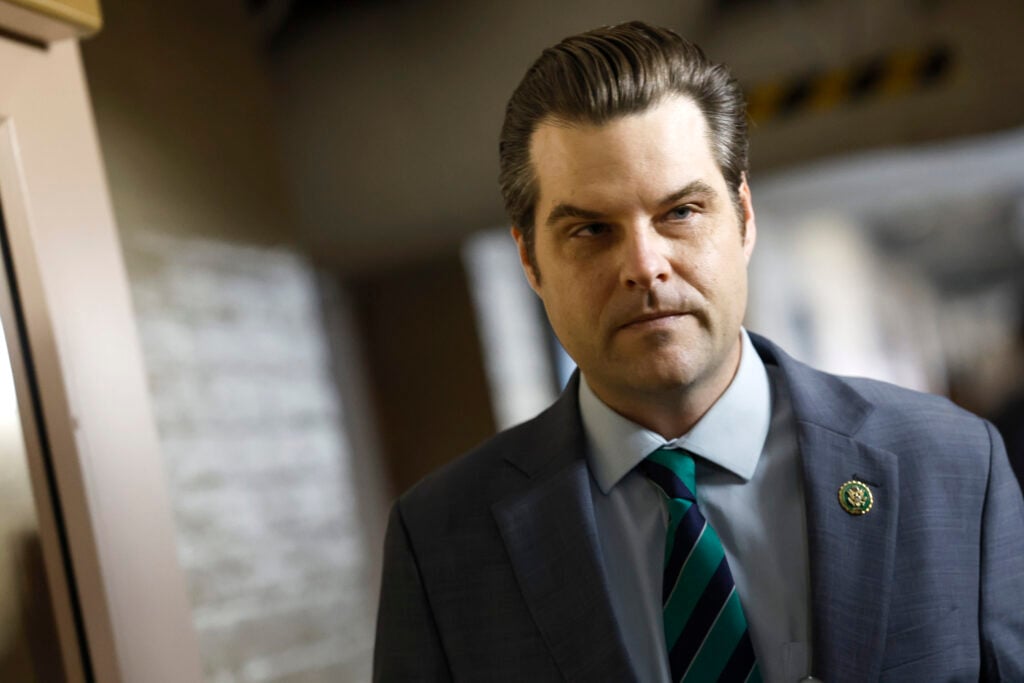
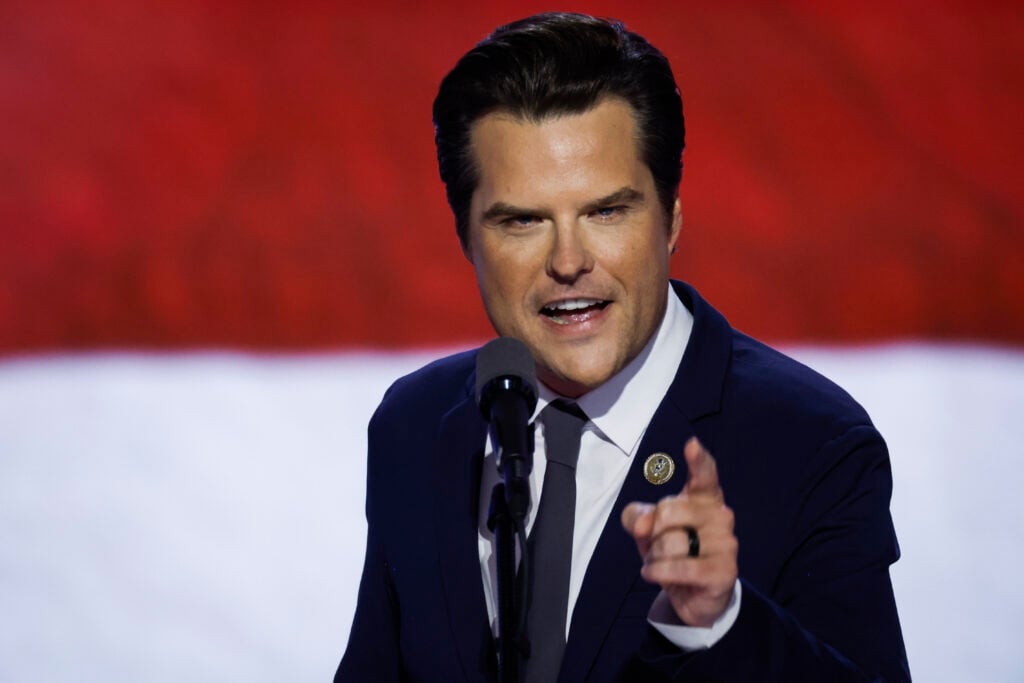
U.S. Rep. Matt Gaetz (R-FL) is seen on the second day of the Republican National Convention at the Fiserv Forum on July 16, 2024 in Milwaukee, Wisconsin. (Photo by Joe Raedle/Getty Images)
He was an odd choice for the role, considering he had already been investigated for child sex trafficking.
And now, it looks as though allegations that Gaetz thought has been buried for good have resurfaced in very public fashion.
In November of 2024, Gaetz abruptly resigned from the House of Representatives, just days before the House Ethics Committee was set to release its findings on his alleged sexual encounters with underage girls.
Gaetz withdrew his nomination for attorney general, and House Speaker Mike Johnson said he would “strongly request that the Ethics Committee not issue the report.”
It looked as though the committee’s findings would forever remain a mystery,
Rep. Matt Gaetz (R-FL) arrives to a meeting with House Republicans at the U.S. Capitol Building on October 19, 2023 in Washington, DC. The Republicans held hours-long meetings to consider empowering Speaker Pro Tempore Rep. (Photo by Anna Moneymaker/Getty Images)
But on Thursday, roughly one year after Gaetz’s resignation, The New York Times published a dramatic report about the life and circumstances of one of the former congressman’s alleged victims.
“She was 17 and a high school junior in Florida. She was working at McDonald’s. And she was living in and out of a homeless shelter,” the article begins.
“Hoping to save up to buy braces to fix her teeth, she falsely advertised herself in 2017 as 18 years old on a website that matches men looking for ‘companionship’ with young women looking to make money.
“What followed would set off a chain of events that would have a dramatic impact on her life and help upend the political career of one of the men she would encounter, Representative Matt Gaetz, the Florida Republican.”
The report contains quotes from the girl’s lawyer, Laura B. Wolf, who spoke with the Times after a Florida judge ruled that certain files pertaining to the Gaetz investigation should be unsealed.
U.S. Rep. Matt Gaetz (R-FL) walks on stage on the third day of the Republican National Convention at the Fiserv Forum on July 17, 2024 in Milwaukee, Wisconsin. (Photo by Chip Somodevilla/Getty Images)
“The vulnerable circumstances most crime victims face are rarely known to the public,” Wolf said.
“Although my client’s circumstances were revealed outside of her control, I hope it helps for the public to see a fuller and more human picture of her than the press has reported on to date.”
Wolf added: “Power imbalances can be age, but they can also be financial. My client had little economic security, which allowed for financial leverage over her.”
The girl was to serve as the chief witness against Gaetz, but the investigation came to an end when the Justice Department under President Trump declined to bring charges.
“I never had sex with this person. This person threatened me with a lawsuit if I didn’t pay her $2.3 million dollars,” Gaetz told the Times via text message on Thursday. “She never sued me because her story is fiction.”
The new information regarding Gaetz comes as politicians on both sides of the aisle are demanding the release of the Epstein files, which could incriminate Trump and others.
We will have further updates on this developing story as new information becomes available.