A rape victim was arrested by police as she desperately tried to track down her Tinder attacker who faked his own death and fled the UK, Sky News can reveal.The Latest News from the UK and Around the World | Sky News










A rape victim was arrested by police as she desperately tried to track down her Tinder attacker who faked his own death and fled the UK, Sky News can reveal.The Latest News from the UK and Around the World | Sky News
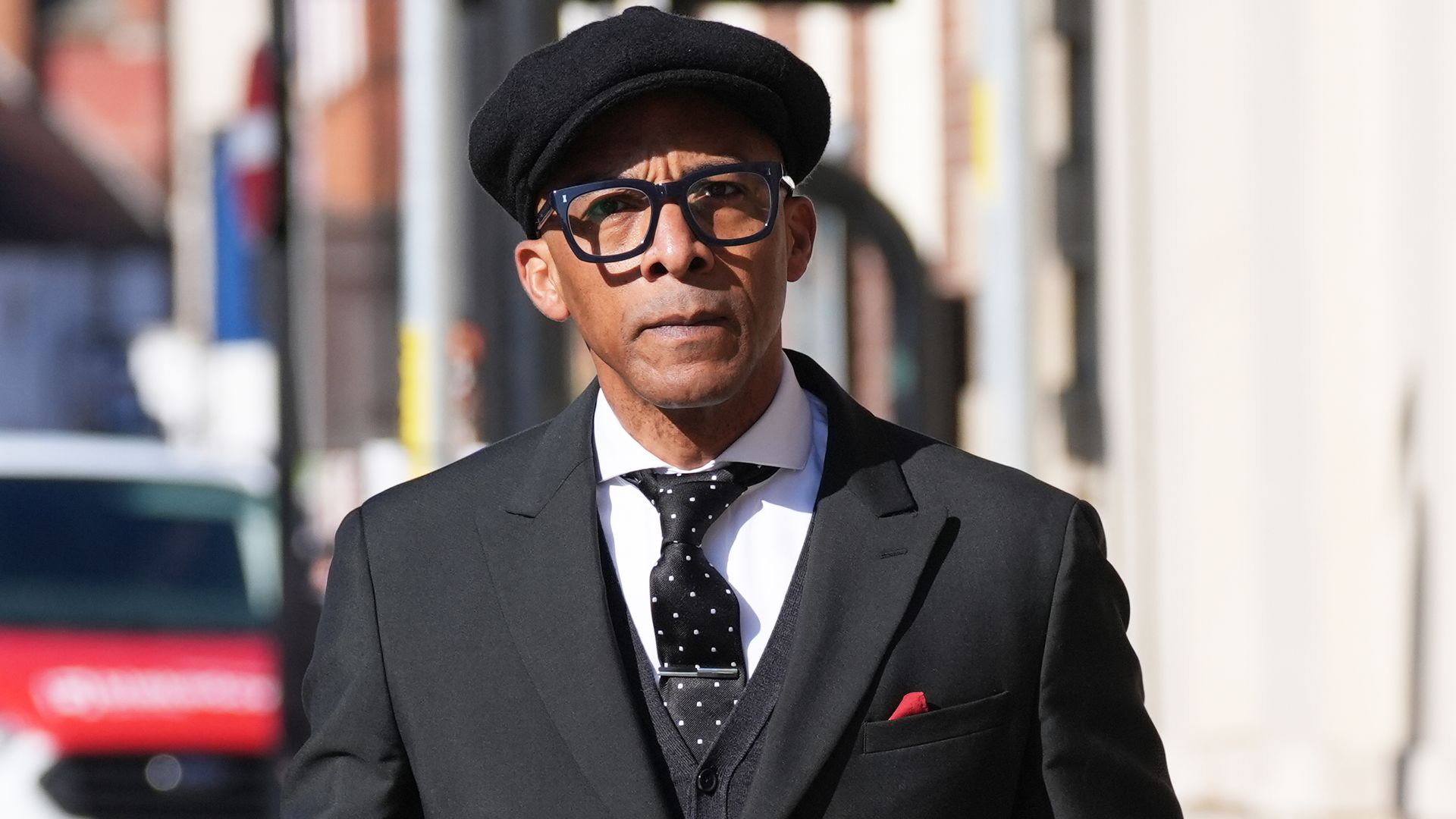
TV presenter Jay Blades has pleaded not guilty to two counts of rape.The Latest News from the UK and Around the World | Sky News
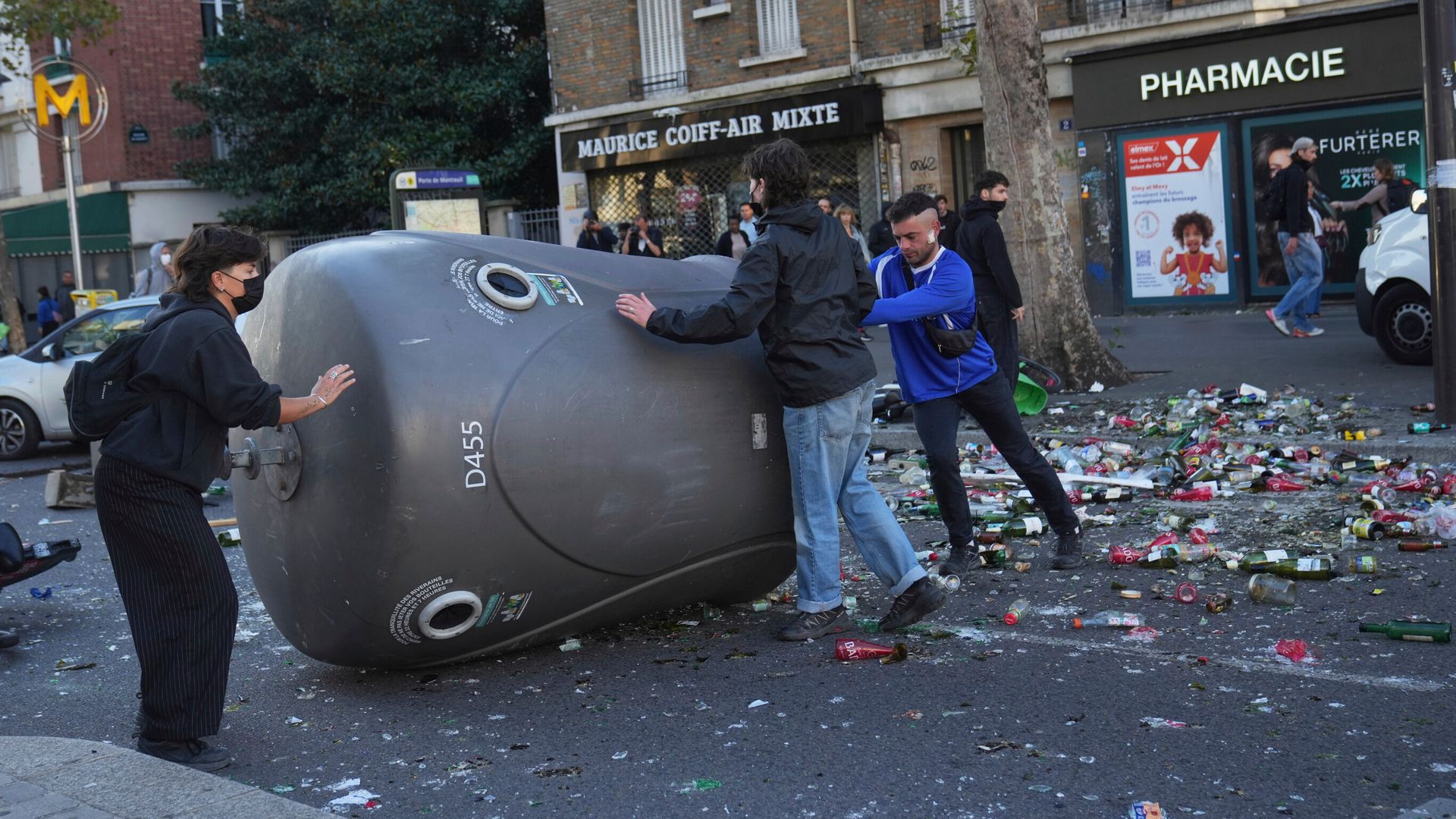
Riot police have clashed with protesters in Paris after they took to the streets in response to calls to ‘Block Everything’ over discontent with the French government.The Latest News from the UK and Around the World | Sky News

“I’m incredibly patriotic,” says Ross, “I love our flag.”The Latest News from the UK and Around the World | Sky News

Immigration and asylum is back as the top issue of public concern the first time since Brexit, according to exclusive polling for Sky News.The Latest News from the UK and Around the World | Sky News
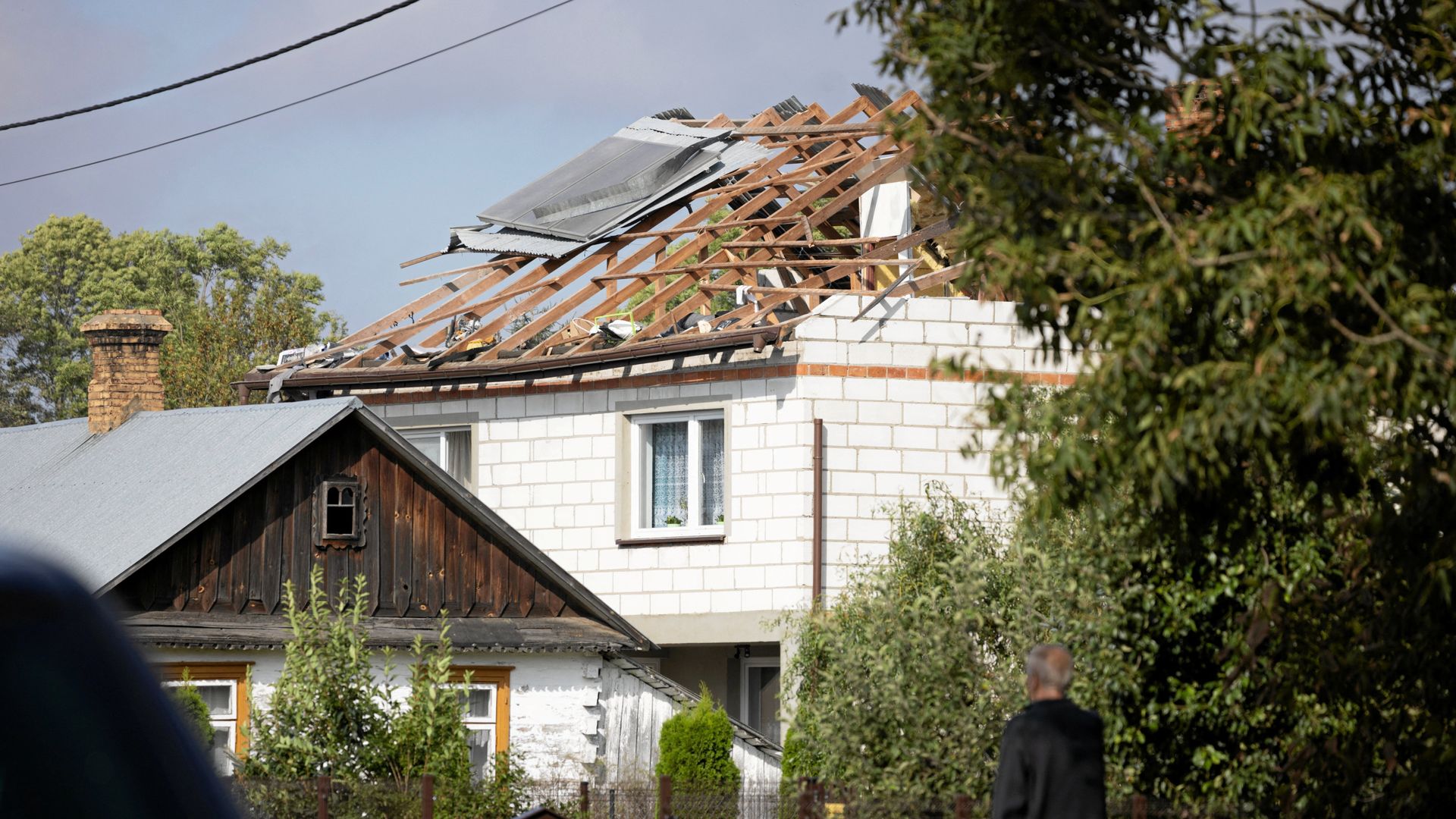
What was Russia’s intent? That’s the pivotal question as Poland and its NATO allies consider their response to drones violating its airspace.The Latest News from the UK and Around the World | Sky News
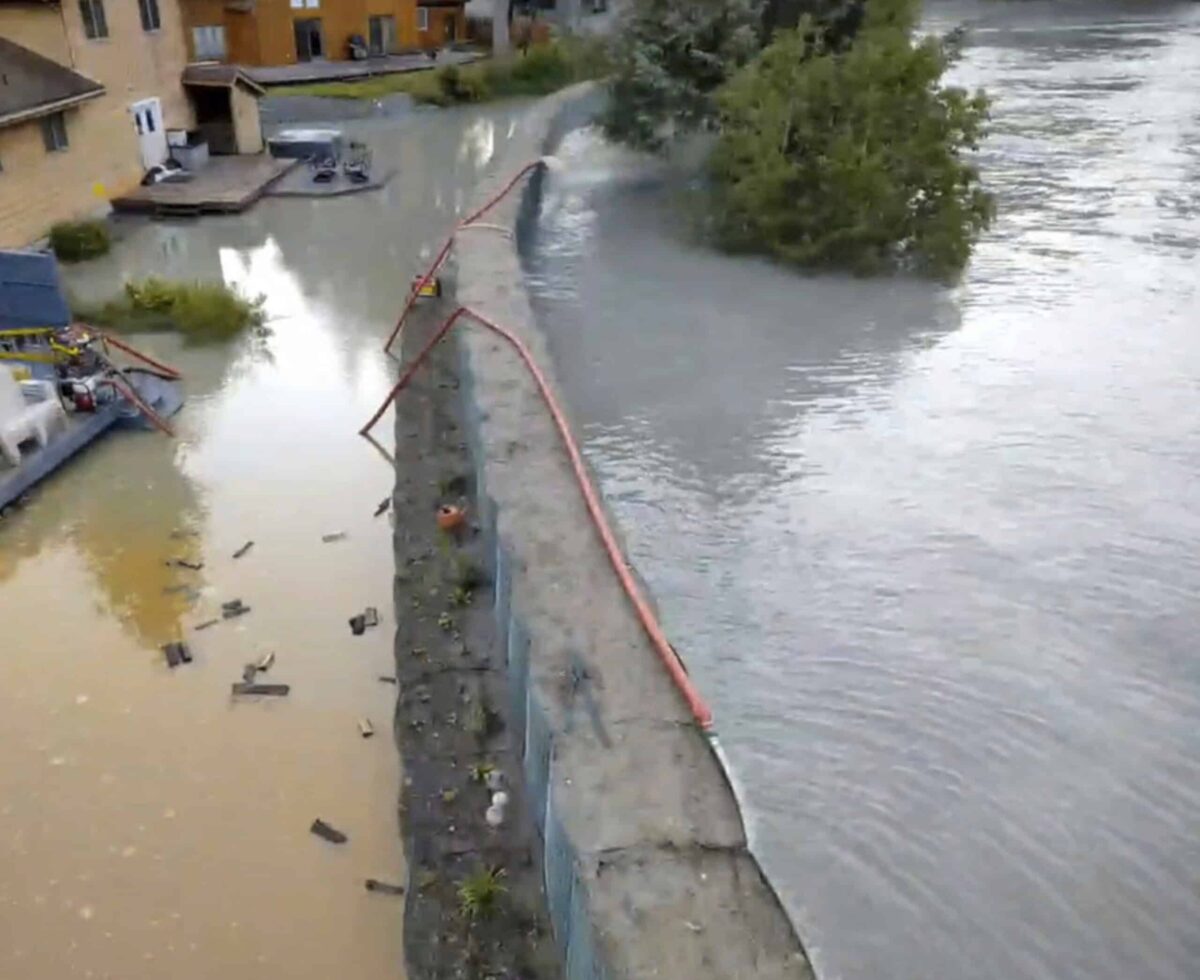

NOTN- Juneau officials say repairing damaged flood barriers and planning for long-term protection along the Mendenhall River will be a top priority in the wake of August’s glacier outburst flood.
At a Monday night work session, the Assembly said that Phase One of the HESCO barrier project, temporary flood walls installed to protect neighborhoods, sustained an estimated $1 million in damage.
“We are still gathering a lot of information on what happened this year, so folks are looking at, how did the basin change? How did the river change? So we still need a lot of information from our scientists before we’re ready to make any decisions.” Said Christine Woll head of the Finance Committee, “Essentially, last night, we started talking abou are we going to extend the barriers? Last year, we prioritized protecting the areas that had flooded in 2024, but as we think about the potential for this flood to increase in size, we start thinking about, do we want to extend the barriers to essentially the rest of the river? What’s the cost for that going to be and how are we going to pay for it? It starts to get kind of increasingly more expensive for the other areas of the river just because they’re trickier, and those areas are less likely to flood. So it makes for interesting policy decisions about how much the city can afford.”
The Assembly discussed whether to build barriers to a 17-foot or 18-foot model, this carries implications for construction depth, bank armoring, and overall cost. Expanding protection both north and south of the current installation could require substantial outside funding.
Members also considered long-term options for the View Drive neighborhood, where flood protection is difficult to build.
“There’s lots of challenges, but one of them is definitely View Drive, which meets the criteria of being significantly impacted every year by this flood, and yet, you know, has engineering challenges to put HESCOs up” said Woll.
Deputy City Manager Robert Barr said a potential buyout program could be pursued, but cost is the leading question.
“There’s some unanswered questions there that we need to resolve. Specifically, how much is going to cost and how many of the folks in the View Drive area need to participate for that to be a program that the federal government will participate in.” Barr said.
Last nights meeting was a Work Session however the Assembly took one actionable step, voting unanimously to shift $5 million from the Capital Civic Center project into flood mitigation. That money will help repair existing HESCO barriers and support the next phases of protection planning.
“These are decisions we’re going to have to tackle in the coming months,” he said. “We’ll keep looking for federal and state help, but ultimately we have to prepare for what may come next summer.”
The August flood, caused by an outburst from Suicide Basin above the Mendenhall Glacier, inundated neighborhoods and left behind millions in property damage.

NOTN- A trial is scheduled to begin this week for a man accused of fatally shooting another man in the Mendenhall Valley in 2023.
Court records show 46-year-old Andre P. Lawrence is set to appear before Juneau Superior Court Judge Amy Mead on Wednesday.
He is charged with first- and second-degree murder in the death of 23-year-old James T. Newman.
Newman was found dead from a gunshot wound on Cinema Drive on the night of July 20, 2023.
Investigators said video surveillance showed him approaching a black Dodge pickup before collapsing. A witness later identified Lawrence as the driver.
Police said the truck linked to the shooting had blood on the driver’s side door.
Lawrence was arrested the next morning at a residence on Riverwood Drive after what police described as an overnight investigation.
If convicted, Lawrence could face up to 99 years in prison.
By: James Brooks, Alaska Beacon

During a pair of public panel discussions during the last week of August, attorneys general from five conservative Republican states said they see climate ‘superfund laws’ passed by Democratic states as major threats to the fossil fuel industries of their state.
“I think that the group of people that are on this panel are all united in making sure that all of the expertise in all of our offices are being utilized to make sure that this doesn’t keep going, because it’s very, very dangerous,” said J.B. McCuskey, attorney general of West Virginia, at the annual meeting of the Alaska Oil and Gas Association.
Alongside him were attorneys general Kris Kobach of Kansas, Liz Murrill of Louisiana, Marty Jackley of South Dakota, and then-attorney general of Alaska, Treg Taylor.
The attorneys general said they are also concerned by lawsuits from states and local governments that could result in financial penalties against fossil fuel companies for disasters attributed to climate change.
Vermont made history in 2024 when it enacted a law that allows the state to hold fossil fuel companies financially liable for the negative impacts of climate change on that state. New York followed suit with a similar law later in the year.
Under both laws, fines levied by the states and paid by fossil fuel companies would go into a large fund that would be spent on projects that could mitigate natural disasters or subsidize clean energy projects.
Other Democratic-led states, including Massachusetts, New Jersey and California, are considering similar laws.
“Now that we have a friendly EPA and a friendly administration, the blue states are deciding that they’re now going to be the EPA,” McCuskey said, speaking at a different panel hosted by the Republican Women of Anchorage.
The attorneys general, plus Ken Paxton of Texas, who was not present at the industry panel, nodded along as McCuskey spoke.
“Their argument is that every single permitted operation that happened in Alaska caused $75 billion worth of damage to the people of New York. It’s completely outrageous. And the problem isn’t just that it’s New York, it’s that Illinois has one. California is going to have one. Vermont’s going to have one. Massachusetts is going to have one. You name a place that has radical environmentalists running their government, and then it becomes an amount of money that’s not withstandable,” McCuskey said.
Taylor, who has since resigned as Alaska’s attorney general and is expected to run for governor, said he believes that in states with budget holes, “it’s pretty convenient just to raise taxes on oil and gas, right? And those states that don’t have oil and gas, that’s their way of dealing with their budget shortfalls, is to take it out of oil and gas through these types of acts.”

Fossil fuel businesses and trade groups, including the American Petroleum Institute and the U.S. Chamber of Commerce, filed suit last year against the Vermont law.
A group of Republican attorneys general, led by McCuskey, sued New York in February. Another McCuskey-led suit, filed in May, targets Vermont.
The Trump administration has also gotten involved by filing lawsuits against both states and against states like Hawaii that have filed lawsuits against fossil fuel companies.
Those suits say companies should be financially liable for harm caused by climate change.
Speaking at the Alaska oil panel, Kobach said he’s concerned about climate lawsuits filed by cities and counties and believes they’re being encouraged by national environmental law firms and groups.
“The reason I’m so energized about fighting back against that is Ford County, Kansas, which you probably never heard of, where Dodge City is — little tiny county, rural county, very low population — somehow, they were convinced by some very well-heeled attorneys in California to be a plaintiff in one of these lawsuits. And so we’re chasing them around. My office is chasing them around, trying to get them kicked out of court because they don’t speak for the people of Kansas,” he said.
Taylor said he sees the same issue.
“We’re seeing those opportunistic plaintiffs’ attorneys convince municipalities and boroughs and cities to take on litigation that’s really not in their best interest and really puts money into their own pockets,” he said during the panel discussion.
McCuskey, of West Virginia, said his state is considering a law that would restrict the ability of local governments to sue.
Nationally, the fossil fuel industry is lobbying Congress to pass a liability shield law akin to the one passed in 2005 to protect the gun industry against lawsuits attempting to hold gun manufacturers responsible for gun crimes.
In June, McCuskey and other attorneys general wrote a letter to the U.S. Attorney General to offer support for a national liability shield to protect fossil fuel companies.
The National Association of Counties and the National League of Cities have each adopted resolutions opposing such a liability shield. Both organizations say that local governments should retain the power to file lawsuits.
McCuskey, speaking at the oil panel, got a laugh from the audience when he asked attendees what they thought West Virginians would say if New York tried to collect a fine from the state of West Virginia.
“Our big joke is that the people in New York are literally looking down on us from the skyscrapers that were built with coal from West Virginia,” McCuskey said at the oil and gas association panel. “So they’re not just looking down on us figuratively, but both literally and figuratively, and they just have no contemplation of why their economies were built by the people who do the work that’s happening here.”
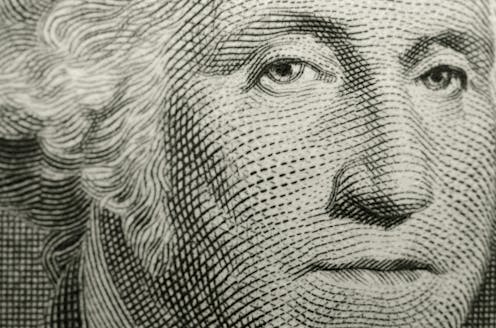
The United States will celebrate the 250th anniversary of the Declaration of Independence, the country’s founding document, in 2026. Twenty years later, America will celebrate the 250th anniversary of President George Washington’s Farewell Address, which was published on Sept. 19, 1796.
The two documents are the bookends of the American Revolution. That revolution began with the inspirational language of Thomas Jefferson, who wrote much of the Declaration of Independence; it ended with somber warnings from Washington, the nation’s first president.
After chairing the Constitutional Convention in Philadelphia and serving eight years as president, Washington announced in a newspaper essay that he would not seek another term and would return to his home in Mount Vernon. The essay was later known as the “Farewell Address.”
Washington began his essay by observing that “choice and prudence invite me to quit the political scene” while “patriotism does not forbid it.” The new nation would be fine without his continued service.
But Washington’s confidence in the general health of the union was tempered by his worries about dangers that lay ahead – worries that seem startlingly contemporary and relevant 229 years later.

Washington’s Farewell Address is famous for the admonitions “to steer clear of permanent alliances” and to resist the temptation to “entangle our peace and prosperity in the toils of European ambition.”
Important as those warnings are, they are not the main topic of Washington’s message.
During the four decades that I have taught the Farewell Address in classes on American government, I have urged my students to set aside the familiar issues of foreign policy and isolationism and to read the address for what it says about the domestic challenges confronting America.
Those challenges included partisanship, parochialism, excessive public debt, ambitious leaders who could come to power playing off our differences, and a poorly informed public who might sacrifice their own liberties to find relief from divisive politics.
Washington’s address lacks Jefferson’s idealism about equality and inalienable rights. Instead, it offers the realistic assessment that Americans are sometimes foolish and make costly political mistakes.
Partisanship is the primary problem for the American republic, according to Washington.
“It serves always to distract the public councils and enfeeble the public administration,” he wrote. Partisanship “agitates the community with ill founded jealousies and false alarms, kindles the animosity of one part against another, foments occasionally riot and insurrection” and can open “the door to foreign influence and corruption.”
Though political parties, Washington observes, “may now and then answer popular ends,” they can also become “potent engines by which cunning, ambitious, and unprincipled men will be enabled to subvert the power of the people and to usurp for themselves the reins of government, destroying afterwards the very engines which have lifted them to unjust dominion.”
Washington’s fear that partisanship could lead to destruction of the Constitution and to the rule of “ambitious, and unprincipled men” was so important to him that he felt compelled to repeat the warning more than once in the Farewell Address.

The second time Washington takes it up, he says that “the disorders and miseries” of partisanship may “gradually incline the minds of men to seek security and repose in the absolute power of an individual.”
Sooner or later, he writes, “the chief of some prevailing faction, more able or more fortunate than his competitors, turns this disposition to the purposes of his own elevation on the ruins of public liberty.”
So why not outlaw parties and rein in the dangers of partisanship?
Washington observes that this is not possible. The spirit of party “is inseparable from our nature, having its root in the strongest passions of the human mind.”
Americans naturally collect themselves into groups, factions, interests and parties because that’s what human beings do. It’s easier to be connected to local communities, states or regions of the country than to a large and diverse nation; even though that large and diverse nation is, by Washington’s assessment, essential to the security and success of all.
The central problem in American politics is not a matter of devious leaders, foreign intrigue or sectional rivalries — things that will always exist.
The problem, Washington warned, lies with the people.
By their nature, people divide themselves into groups and then, if not careful, find those divisions used and abused by individual leaders, foreign interests and “artful and enterprising” minorities.
Political parties are dangerous, but can’t be eliminated. According to some people, Washington observes, the competition between parties might serve as a check on the powers of government.
“Within certain limits,” Washington acknowledges, “this is probably true.” But even if the battles between political parties sometimes have a useful purpose, Washington worried about the excesses of partisanship.
Partisanship is like “a fire not to be quenched, it demands a uniform vigilance to prevent its bursting into a flame, lest instead of warming it should consume.”
Where is America today? Warmed by the fires of partisanship or consumed by the bursting of flames? George Washington suggested that provocative question more than two centuries ago on Sept. 19, 1796. It’s still worth asking.

Robert A. Strong does not work for, consult, own shares in or receive funding from any company or organization that would benefit from this article, and has disclosed no relevant affiliations beyond their academic appointment.
Politics + Society – The Conversation