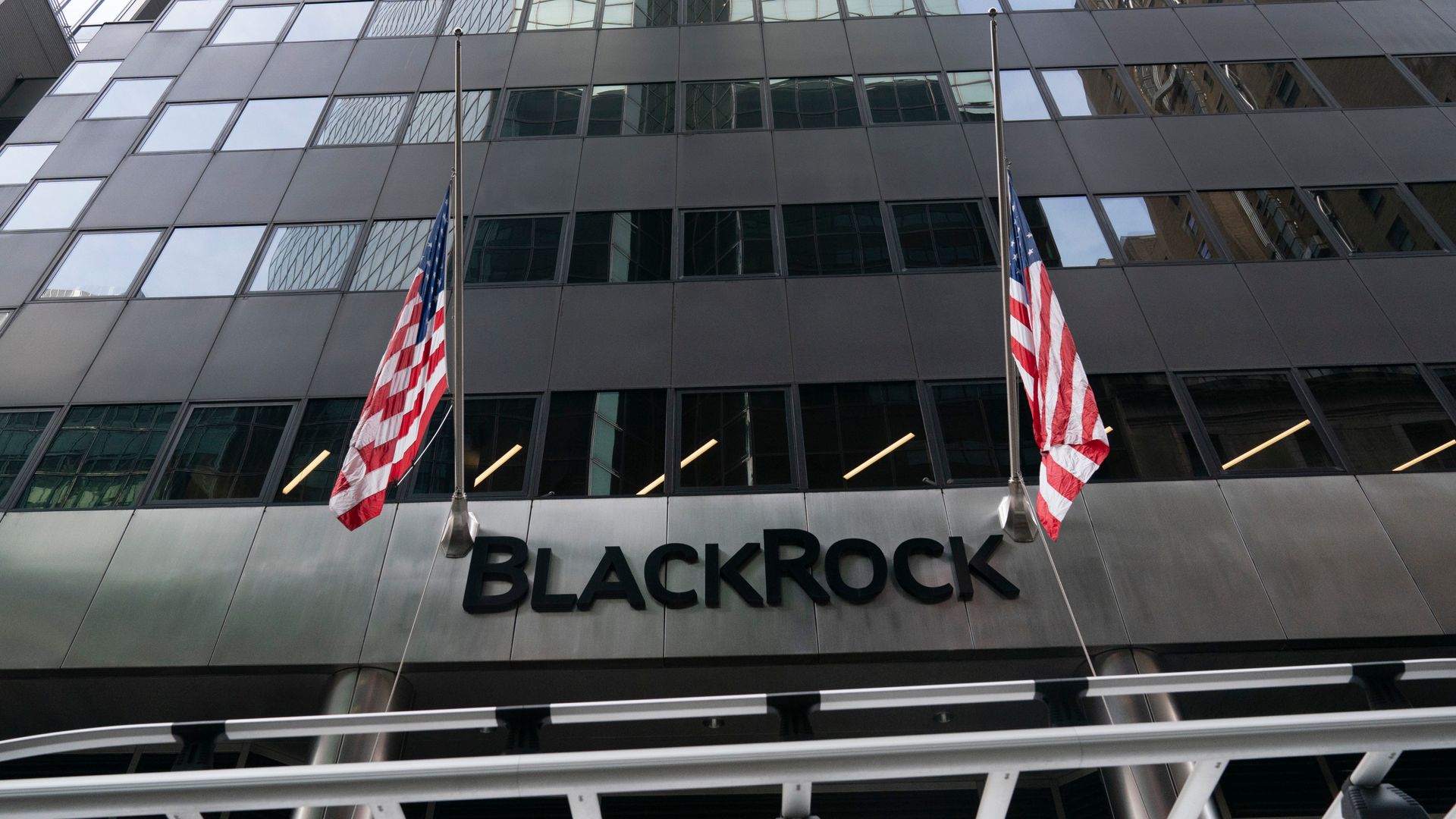
The world’s largest money manager will use President Trump’s state visit to the UK next week to unveil a £500m plan to invest in UK data centres, one of the fastest-growing areas of global infrastructure spending.The Latest News from the UK and Around the World | Sky News
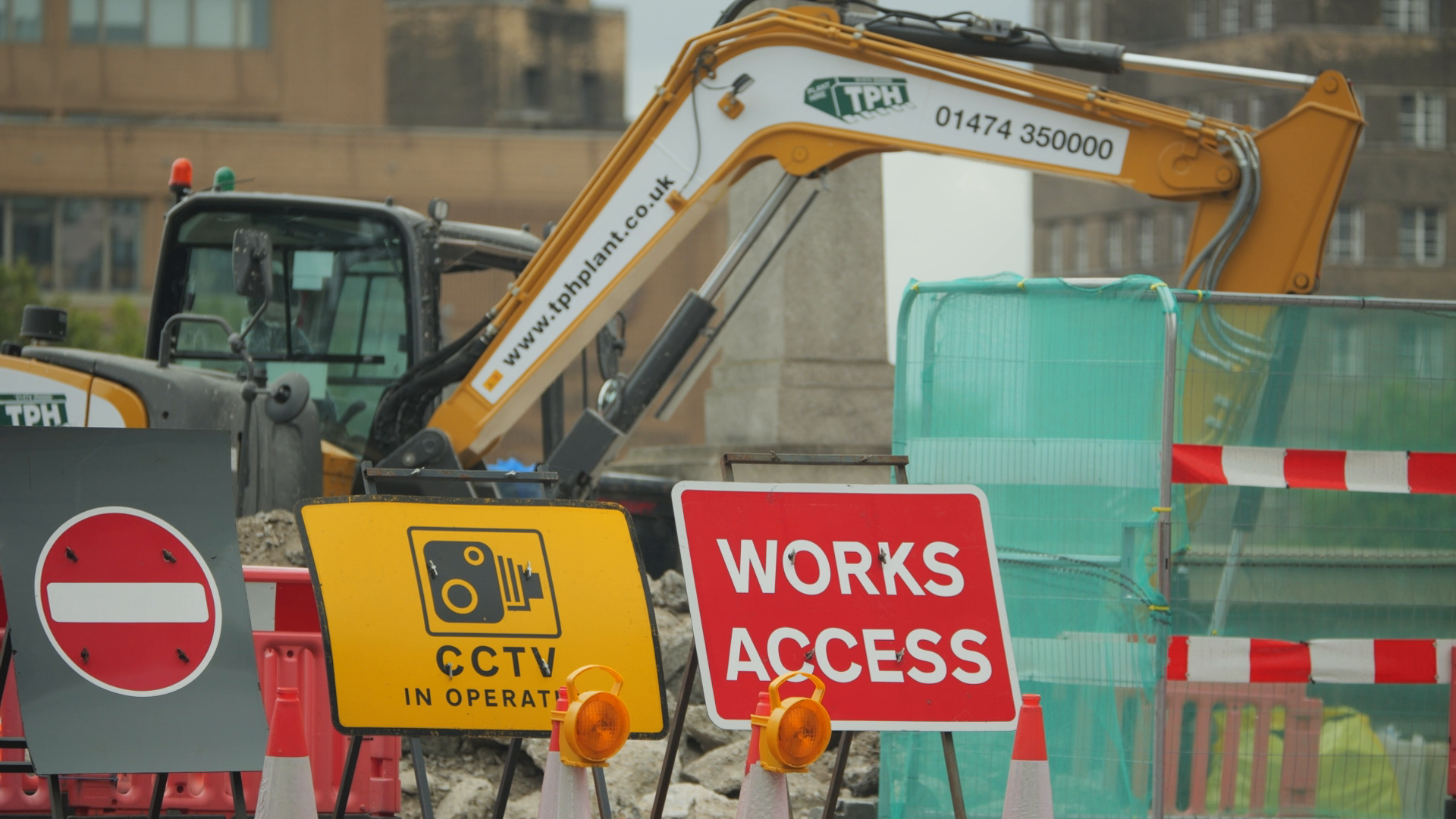
The number of roadworks in Britain has more than doubled in the past two years – and frustrated drivers are more likely than ever to get stuck behind temporary traffic lights.The Latest News from the UK and Around the World | Sky News
Dozens of people have gathered at a Sikh temple to attend an emergency meeting after police in the West Midlands said they are investigating the rape of a woman as a “racially motivated attack”.The Latest News from the UK and Around the World | Sky News
It took great courage for her to talk to us. Her story and her experience is a stark glimpse into the life of an undocumented person in America today. The Latest News from the UK and Around the World | Sky News
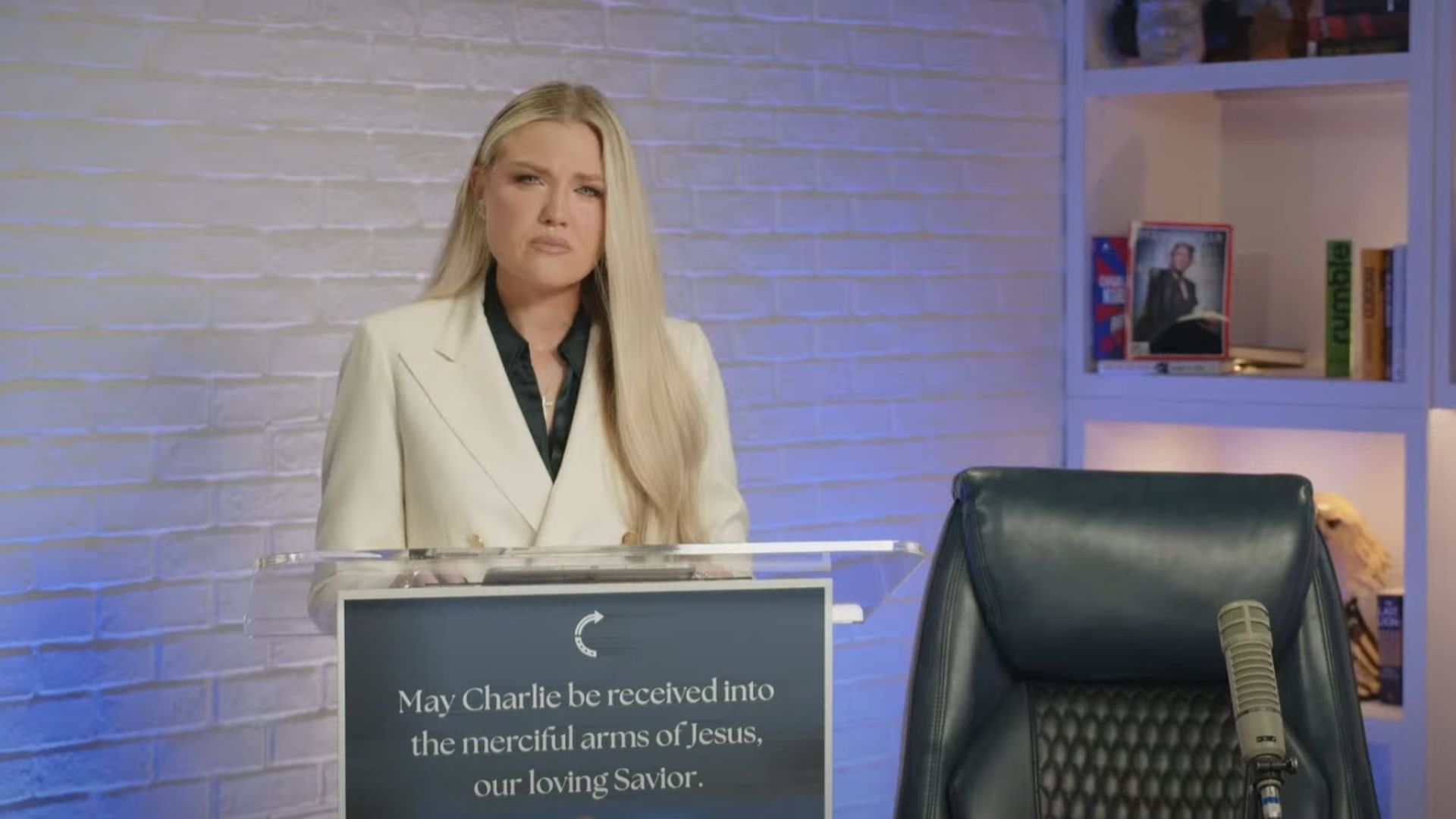
Erika Kirk, the widow of conservative activist Charlie Kirk, described him as a “perfect” husband and father, and said the “evildoers” who assassinated him have no idea what they have unleashed.The Latest News from the UK and Around the World | Sky News
From the Southeast rainforest to the Arctic tundra, warming conditions are creating a variety of Alaska landslide hazards, some of them posing extreme hazards to human safety and others creating expensive problems for important infrastructure.
Just how many hazardous sites are out there? Bretwood “Hig” Higman, a geologist based in the Kenai Peninsula town of Seldovia, has done a basic inventory.
From 2012 to early this year, there have been more than 1,000 slow-moving slides of different varieties, with triggers that include receding glaciers, thawing permafrost, extreme weather or combinations of those factors, according to his calculations.
A Ketchikan landslide covers the Tongass Highway at a spot called Wolfe Point on March 20, 2025. The slide closed that part of the highway for days after, but there were no injuries that resulted from it. (Photo provided by the Alaska Department of Transportation and Public Facilities)
In a state where people contend with earthquakes, floods, wildfires and erupting volcanoes, it may be difficult to add another type of natural disaster to the public’s list of worries, Higman said. But elevating landslide awareness and preparedness is necessary as events increase, he said.
“It is vastly more risky than most things we deal with,” said Higman, a partner in an Alaska landslide science program created by the Massachusetts-based Woodwell Climate Research Center.
Shallow, sudden slides triggered by rain
The lesson has been learned in Southeast Alaska, where catastrophic slope failures triggered by extreme rains have proved deadly. Since 2015, 12 people have been killed by landslides in Sitka, Haines, Wrangell and Ketchikan. Victims included an entire family of five killed by a sudden slide in Wrangell in late 2023.
In Southeast Alaska, steep mountains that were created through tectonic processes rise from the water’s edge, and rain is frequent. It is naturally susceptible to landslides.
A rainstorm-caused landslide in Haines is seen on Dec. 3, 2020. Extreme rainfall caused several slides in that Southeast Alaska town, including one that killed two people. (Photo by Lt. Erick Oredson/U.S. Coast Guard)
“One of the primary processes that sculps the landscape in southeast Alaska is landslides and glaciers and rivers,” said Dennis Staley, a U.S. Geological Survey scientist and Alaska landslide program leader. “When you combine rapid uplift with steep slopes with junky rock and lots of rainfall, you have all of the key ingredients for landslides.”
Southeast Alaska landslides are classified as shallow slides because they involve the soil, trees and other materials atop the bedrock rather than the rock itself. Those slides are numerous; the USGS recorded 162 news-reported slides in Southeast Alaska from 1990 to 2024. They are longstanding threats. A 1936 landslide in Juneau, for example, killed 15 people.
Now climate change is compounding the threat by creating more extreme rainfall events, driven by atmospheric rivers, as well as bringing more winter rain that, in other years, would be snowfall.
That means efforts to monitor landslide risks extend not just to topography studies but also the details about precipitation. Whether it is rain or snow – or rain-on-snow – has implications for slope stability, and the multiagency team studying landslide risks in Southeast Alaska has developed a prototype monitoring station to record precise qualities of the precipitation, as well as wind and temperature.
Dennis Staley, the U.S. Geological Survey’s Alaska landslide team leader, stands in the agency’s Anchorage warehouse on Aug. 20, 2025, by a prototype of a monitoring device that scientists hope to use in Southeast Alaska. The device has instruments to measure wind, precipitation and discern whether precipitation is rain or snow. (Photo by Yereth Rosen/Alaska Beacon)
Beyond federal and state agencies’ work and that of university organizations like the Alaska Earthquake Center at the University of Alaska Fairbanks, there is focused work by tribal governments and community organizations.
The Sitka Sound Science Center, previously known for its fisheries and ocean science work, now has one of the most well-developed landslide programs. The center’s landslide program was launched in 2015, after a slide there killed three. The center now maintains a local landslide hazards dashboard, and it participates in and coordinates a variety of research projects and educational programs.
One is the Kutí project, a partnership with the Central Council of the Tlingit & Haida Indian Tribes of Alaska and other tribal partners. Named for the Lingit word meaning “weather,” the program is funded by a National Science Foundation grant awarded in 2022. The purpose is development of a more regional Southeast Alaska monitoring, warning and educational system.
The Sitka center’s work has been hampered by Trump administration budget cuts and policies. A landslide conference that the center was set to host last spring was canceled because Trump administration policies prevented federal partners from attending.
Permafrost thaw and frozen lobes
A sign seen on May 5, 2023, advises travelers that the road through Denali National Park is closed at about its midway point because of the landslide at Pretty Rocks. (Photo by Yereth Rosen/Alaska Beacon)
Farther north, slopes are shifting and creeping as permafrost thaws, creating hazards for infrastructure. The best-known case may be in Interior Alaska at Denali National Park and Preserve, where one of the more than 140 detected landslides along the park’s sole road interfered with travel.
That slide, at a site called Pretty Rocks at the midpoint of the 92-mile road, had been ongoing for years, creating maintenance headaches for park staffers trying to keep the road open. In 2021, it finally made the road impassable there.
A project is underway to create a bridge over the slide area, but it is proving more complicated than originally envisioned. Early on, it was estimated to cost a bit under $100 million and expected to be completed by the 2025 tourist season. Since then, the completion date has been pushed back, with full road access expected to resume in 2027. The cost is now estimated at $150 million, a figure that does not include potential work at other landslide sites along the park’s road.
More than infrastructure at risk from Interior landslides. Last summer, when a guided rafting expedition encountered a landslide on the Nenana River just outside the park, a woman in the party was killed.
A frozen debris lobe in Gates of the Arctic National Park and Preserve is seen in 2020. This lobe of frozen material was stable and nearly completely vegetated until about 2005, when it began to thaw and move downslope. (Photo provided by the National Park Service)
Yet farther north, masses of frozen material are working their way down to the corridor that holds the trans-Alaska pipeline. University of Alaska Fairbanks and state scientists have identified more than 200 of them in the Brooks Range. As of last year, said UAF’s Margaret Darrow, there were 99 identified along the Dalton Highway, the road that parallels the trans-Alaska pipeline and the sole land route to the Prudhoe Bay oil complex.
The conglomeration of moving ice, water, crumbling rock and vegetation have their own descriptive name: “frozen debris lobes.” Darrow, the principal investigator on various UAF projects, began studying them in 2011, when she drove up the Dalton Highway for a two-family camping trip with a colleague.
The lobes, which move more quickly than thawing permafrost but are not causing sudden collapse, proved enough of a threat to the highway that the Alaska Department of Transportation and Public Facilities rerouted a section in 2018, part of a $25 million project that addressed thaw problems along the highway.
The reconfiguration proved necessary. The leftover section of highway was left in place as a test site, and the frozen debris lobe continued to flow. By late 2023, it had shoved the leftover highway section about a foot to the side, according to research led by Darrow.
Margaret Darrow, in her University of Alaska Fairbanks office on Oct. 10, 2024, holds a piece of thin, brittle slate retrieved from a far-north site where thawing lobes of ice, rock, soil and vegetation are creeping down mountain slopes. The geology in those areas contributes to the slides. Darrow leads the UAF team studying the frozen debris lobes along the Dalton Highway and elsewhere in the Brooks Range. (Photo by Yereth Rosen/Alaska Beacon)
In the Arctic, in Alaska and elsewhere, permafrost thaw caused by warming temperatures has triggered widespread landslides known as retrogressive thaw slumps.
Among the affected sites is the Noatak Valley in mountainous Gates of the Arctic National Park and Preserve, considered a hotpot for such slides. In that remote region, the safety of people and property is not much of an issue, but water quality can be. Numerous retrogressive thaw slumps have dumped tens of thousands of cubic meters of sediment into a single creek, according to the National Park Service.
Keeping abreast of the hazards from all types of unstable slopes in Alaska requires coordination by agencies at all levels of government, universities and other entities, said Jillian Nicolazzo, a geologist who leads the state’s landslide hazards program.
“At the moment, we can’t do it all,” said Nicolazzo, a geologist who leads the landslide program at the Alaska Division of Geological and Geophysical Surveys. “Everyone pitches in a little bit, because it is just too much for any one agency.”
A retrogressive thaw slump in the Noatak National Preserve is seen in this photograph. The escarpment on the top is about 10 feet tall. (Photo provided by the National Park Service)
Addressing federal uncertainty
The state program gets funding from the USGS, and a big boost for U.S. landslide monitoring has been provided by the National Landslide Preparedness Act signed into law in 2021. Through that act, Congress in 2021 appropriated $4 million specifically to landslide hazards in Prince William Sound.
But the law, which authorized federal funding for landslide programs, expired in 2024.
Legislation is pending in Congress to reauthorize it, with sponsors from Alaska and Washington, states with deadly slides in recent years. One bill is sponsored by U.S. Sen. Lisa Murkowski, R-Alaska, and U.S. Sen. Maria Cantwell, D-Washington. Another is sponsored by U.S. Rep. Suzan DelBene, D-Washington.
Without reauthorization, prospects for future funding are clouded.
The Trump administration’s proposed budget for the coming fiscal year would cut funding for USGS natural hazards work – which includes landslide hazards – by about a quarter, from $203 million to $157 million, according to a Congressional Research Service report.
As with the canceled Sitka conference, Trump administration policy interrupted landslide work last spring in Prince William Sound. Massive federal layoff and spending freezes prevented some planned maintenance work at the Barry Arm landslide site.
If federal support for Alaska landslide monitoring becomes spotty, there is a potential backstop: citizen science.
Sen. Lisa Murkowski, R-Alaska, speaks on April 22, 2025, at the Alaska Infrastructure Development Symposium in Anchorage. Murkowski and Sen. Maria Cantwell, D-Washington, are sponsoring a bill to reauthorize the National Landslide Preparedness Act. A similar bill is pending in the U.S. House. (Photo by Yereth Rosen/Alaska Beacon)
The Division of Geological and Geophysical Surveys earlier this year launched an online app through which members of the public can report the landslide risks they encounter. Those could be actual slides, small rockfalls, cracks or anything unusual, and the division encourages people to submit photographs.
The hope is that important information will be gathered “if people are out hunting and fishing and recreating, especially if they see a lot of landslides that we don’t,” Nicolazzo said.
Without help from the public, scientists like her have to rely a lot on things like satellite imagery, she said. “I mostly sit at a computer and look at Google Earth. The images can be years old,” she said.
So far, the Alaska Landslide Reporter app has not been promoted or used much. But Nidolazzo is hopeful about its eventual utility.
Public awareness is, for now, the prime solution to the landslide problem in a place as big, mountainous, wild and fast-changing as Alaska, Nicolazzo said.
“I think educating people about the risk is the best we can do at this point. Because the area is so large and people are everywhere,” she said.
The U.S. Capitol on July 2, 2025. (Photo by Ashley Murray/States Newsroom)
Alaska Republican U.S. Sens. Lisa Murkowski and Dan Sullivan joined fellow Senate Republicans Wednesday night in voting to set aside a budget amendment that would have compelled the U.S. Department of Justice to release files related to the late sex offender Jeffrey Epstein.
The vote to table the amendment, stopping the Senate from considering it, was 51-49.
All of the Senate’s Democrats voted in favor of the amendment, as did Republican Sens. Josh Hawley of Missouri and Rand Paul of Kentucky.
The failure of either of Alaska’s Republican senators to vote for the amendment drew criticism from the Alaska Democratic Party.
Alaska Republican U.S. Sens. Lisa Murkowski and Dan Sullivan (Alaska Beacon file photos)
Murkowski, talking by phone on Thursday, said the amendment, proposed by Senate Minority Leader Chuck Schumer, D-New York, came as a surprise, and she voted against it for procedural reasons, not because she opposes the idea of a release.
“What Schumer did was nothing more than a political stunt,” Murkowski said.
In July, Murkowski and other members of a Senate budget subcommittee voted unanimously to amend a proposed appropriations bill to mandate that the U.S. Department of Justice compile a report on the activities of Epstein, a sex trafficker with extensive ties to rich and powerful people worldwide. Epstein died in jail while awaiting trial in 2019.
The final text of the bill requires a report, but not the release of original documents in the possession of the federal government.
President Donald Trump campaigned on releasing the documents during last year’s presidential election, but this summer has since broken that campaign pledge, downplaying the case
In February, U.S. Attorney General Pam Bondi said she had Epstein’s client list “sitting on my desk right now.” But in July the FBI announced in a memo that there was no “client list” and no more public information would be released. The announcement caused a public outcry, and the federal government still has not released the documents.
Trump’s social relationship with Epstein was well-documented, and this week, the Wall Street Journal published a copy of a birthday greeting Trump sent to Epstein in 2003. Trump has claimed the letter doesn’t exist, but it bears his signature.
The letter was released to the public after being obtained by U.S. House members investigating the Epstein case.
“I have been — I don’t know if it’s fair to say one of the rare Republicans — certainly a very early Republican on the Senate side who said, ‘Look, just, just release these Epstein files. Just get this stuff out there,” Murkowski said.
The appropriations bill with Murkowski’s preferred Epstein language would fund the U.S. Department of Justice and other commerce and science-related parts of the federal government. For that reason, it’s been nicknamed the “CJS bill.”
It has not yet come to a floor vote, and with senators hurrying to pass budget bills before the end of the federal fiscal year on Sept. 30, it isn’t clear when it will come up.
“Will we see the CJS as part of a floor package that could move through the Senate? It’s not impossible, but we are kind of running out of daylight,” Murkowski said.
Schumer’s amendment would have forced the Senate to debate the Epstein issue immediately, as part of the annual defense authorization bill now under debate.
In response to a request for comment, Sullivan’s office issued a written statement that also criticized Schumer’s amendment and defended his vote.
It said in part, “Senator Sullivan has repeatedly said that he believes the DOJ should release as much information as possible on Epstein’s horrific crimes, while protecting survivors. Chuck Schumer tried slipping the Epstein provision into the National Defense Authorization Act (NDAA), knowing full well it would be stripped out as the bill went through the process, leaving no doubt he’s using Epstein’s atrocious crimes as a political pawn instead of focusing on building up our military in the NDAA, which Schumer has never shown any interest in doing.”
Murkowski said the amendment disrupted normal work on the defense bill and “threw a real wrench into the whole negotiated process that had really been moving along in a positive way.”
She said she believes Schumer brought up the Epstein issue because Senate Republicans are preparing to change the rules for the confirmation of Trump’s executive-branch nominations.
Ordinarily, the Senate approves uncontroversial nominees without a roll-call vote to make the process more efficient. Since the beginning of Trump’s second term, none of his nominees have been approved without a roll-call vote, an unprecedented change in the Senate, and one that has slowed both the Senate and the Trump administration’s confirmations.
In response, Senate Republicans are planning to change the Senate’s rules to allow the approval of multiple nominees with a single vote.
“I think he was trying to kind of change the narrative,” Murkowski said of Schumer’s proposed amendment. “I don’t think he was making much headway on his pushback on some of the nominations. And he made a decision that, I think, is going to be short-lived in its political fire. He really kind of poisoned the waters around here in terms of good-faith negotiations.”
The day after the vote, Alaska Democratic Party Chair Eric Croft released a statement, saying by email: “Just two months ago, Dan Sullivan called on the Department of Justice to release the documents to shine a light on convicted sex offender Jeffrey Epstein’s horrific crimes. But last night, Dan Sullivan was a deciding vote to continue the cover-up and block an effort to force the DOJ to release the Epstein files. Instead of listening to Alaskans and the victims of Jeffrey Epstein, Sullivan acted in his usual fashion – like a spineless politician who’s only loyal to his billionaire buddies. Alaskans and survivors deserve better.”
Sullivan faces re-election in 2026 and is running for another term in Congress.
To date, no Democrat has filed with the Alaska Division of Elections to challenge Sullivan. Filings with the Federal Elections Commission show Republican Christopher Miklos of Homer and Democrat Ann Diener of Fairbanks have filed forms necessary to begin fundraising.
The U.S. House, meanwhile, is close to having enough support to force a vote on the Epstein issue. While Speaker of the House Mike Johnson, R-Louisiana, opposes bringing up the topic, a bipartisan petition could override the Speaker if it has 218 signatures. As of Wednesday night, it had 217. Alaska’s lone member of the House of Representatives, Rep. Nick Begich, has not signed the discharge petition. His office did not respond to questions about his position on the Epstein issue and whether he will sign the petition.
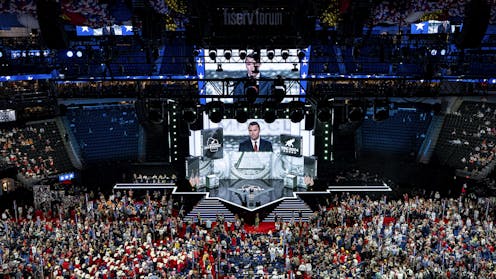
Charlie Kirk addresses the 2024 Republican National Convention on July 15, 2024. Al Drago/Getty Images
The fatal shooting of conservative activist Charlie Kirk during a speaking engagement at Utah Valley University on Sept. 10, 2025, has drawn widespread condemnation and renewed attention to the climate of political violence in the United States. To many, Kirk was not just another partisan commentator.
To understand the significance of the attack — and why the reactions to it have been so strong — it helps to know who Kirk was, what the organization he built stood for, and the role he and his allies have played in national debates.
President Donald Trump shakes hands with conservative activist Charlie Kirk at a forum dubbed the Generation Next Summit at the White House on March 22, 2018, in Washington, D.C. Mark Wilson/Getty Images
Raised in the Chicago suburbs, he made national headlines at 18 for founding Turning Point USA, a conservative youth movement. Kirk only briefly attended college. Instead, he chose to devote himself full time to conservative organizing.
That decision became central to the mythos surrounding him: He represented a choice among promising young conservatives to skip higher education in protest of the alleged left-leaning bias of universities.
Over the next decade, Kirk grew into a national figure. Beginning in 2016, he frequently spoke at Trump rallies, which helped him to build an extensive media profile.
Kirk’s program featured political commentary and interviews with prominent Republican personalities and politicians – guests included Tucker Carlson, Missouri Sen. Josh Hawley, and Florida Gov. Ron DeSantis. These conversations amplified Kirk’s reach well beyond student audiences.
Connecting college students and GOP
Turning Point USA was founded in 2012 by Kirk and Bill Montgomery. Kirk met Montgomery, a retired businessman, after Kirk gave a speech at a conservative youth summit in Illinois. Montgomery urged him not to pursue college but to instead dedicate himself fully to building a youth conservative movement.
Kirk described the early days as lonely: driving to campuses, handing out flyers and trying to recruit students to talk about free markets and limited government.
Turning Point drew significant financial backing from high-profile conservative donors, including Foster Friess, the Wyoming financier; the Richard and Helen DeVos Foundation; and Illinois businessman Richard Uihlein and his family foundation.
By 2024, Turning Point claimed chapters at more than 1,000 campuses, employed more than 400 staffers and had grown its annual budget to over US$8 million
U.S. conservatives gather at The People’s Convention hosted by Turning Point USA in Detroit, Mich., on June 15, 2024. Adam J. Dewey/Anadolu via Getty Images
Most controversially, the group’s Professor Watchlist webpage publishes the names of academics it accuses of bias against conservatives.
Turning Point has also spun off like-minded subsidiaries, including Turning Point Action and TPUSA Faith. These organizations expand Turning Point’s reach into electoral politics and church organizing. TPUSA’s media division produces a steady stream of popular videos, livestreams and podcasts, a legacy that should ensure Kirk’s influence lasts despite his death.
Expanding national role for Turning Point
Kirk and Turning Point provided important connections for younger conservatives and the Republican Party. In 2016, Turning Point mobilized thousands of students for Trump’s campaign, and Kirk was invited to speak at the Republican National Convention.
By 2020, the organization was playing a more overt political role. Turning Point Action ran voter-registration drives in battleground states, and the group sponsored buses and advertising to bring supporters to Washington, D.C., ahead of the Jan. 6, 2021, “Stop the Steal” rally. Kirk tweeted at the time that Turning Point would be sending “80+ buses full of patriots” to the event.
While he later deleted the message and distanced himself from the violence, it underscored the group’s entanglement in the most contested moments of the Trump era.
Kirk also acted as a crucial media surrogate for Trump. He used his podcast, social media, and speaking tours to amplify Trump’s message and attack critics. He was an early and persistent promoter of Trump’s baseless claims of voter fraud in the 2020 election, helping translate them for younger conservative audiences.
Spreading misinformation, inflaming tensions
Critics argued that Kirk thrived on outrage and intimidation rather than debate.
The Professor Watchlist has been denounced by faculty associations as a blacklist that chills academic freedom. Journalistic investigations by outlets such as The New Yorker raised questions about Turning Point’s finances, including allegations of blurred lines between nonprofit educational work and partisan campaigning.
Kirk was criticized for spreading misinformation, such as false claims of voter fraud in the 2020 election and misleading statements about COVID-19 vaccines and mask mandates. He suggested that public health measures were a form of government control, rhetoric that public health experts argue undermined trust during a crisis.
More broadly, his sharp attacks on political opponents – he framed them not merely as wrong but as dangerous – drew accusations that he fueled polarization and inflamed tensions on American college campuses and beyond.
Correction: This story has been updated to give the correct state, Illinois, in which Charlie Kirk met Bill Montgomery.
Stephanie A. (Sam) Martin does not work for, consult, own shares in or receive funding from any company or organization that would benefit from this article, and has disclosed no relevant affiliations beyond their academic appointment.
A boy in Scottsdale, Ariz., attends a Catholic rosary prayer vigil for Charlie Kirk after he was killed during a Utah college event on Wednesday, Sept. 10, 2025.AP Photo/Ross D. Franklin
The fatal shooting of prominent conservative activist Charlie Kirk on Sept. 10, 2025, has brought renewed attention to the climate of political violence in America. Kirk’s death reflects a sizable increase in threats against officeholders and politicians at the local and federal level.
Alfonso Serrano, a politics editor at The Conversation, spoke with University of Massachusetts Lowell scholar Arie Perliger after Kirk’s shooting. Perliger studies political violence and assassinations and spoke bluntly about political polarization in the United States.
Serrano: What were your initial thoughts after Charlie Kirk’s fatal shooting?
Perliger: It was a bit unusual that the attack was not against an elected official. Rarely have we seen political assassinations that are aimed at the nonprofit political landscape. Usually those people are not deemed important enough.
Secondly, and it’s something I see a lot in my research, political assassinations come in waves. We see that not only in the United States but other countries. I’ve looked at political assassinations in many democracies, and one of the things I see in a fairly consistent manner is that political assassinations create a process of escalation that encourages others on the extreme political spectrum to feel the need to retaliate. And that is my main concern. That this process creates legitimization and acceptance, that it provides the sense that this is an acceptable form of political action. This will not end here.
In 2024, there were two attempts to assassinate Donald Trump. Then, in early 2025, the residence of Gov. Josh Shapiro in Pennsylvania was firebombed on Passover, and within months the U.S. witnessed the killing of Minnesota state lawmaker Melissa Hortman and her husband, among other acts of political violence. The U.S., of course, is not immune to political violence, as we saw in the 1960s. But what stands out about this latest wave?
The data shows that there’s a substantial increase in the level of threats against officeholders at the local and federal level. What’s different now is we see an increased support in political violence from both sides of the political spectrum. Consistently, almost a quarter of the public is willing to support political violence in some form, or see that as a legitimate form of political action.
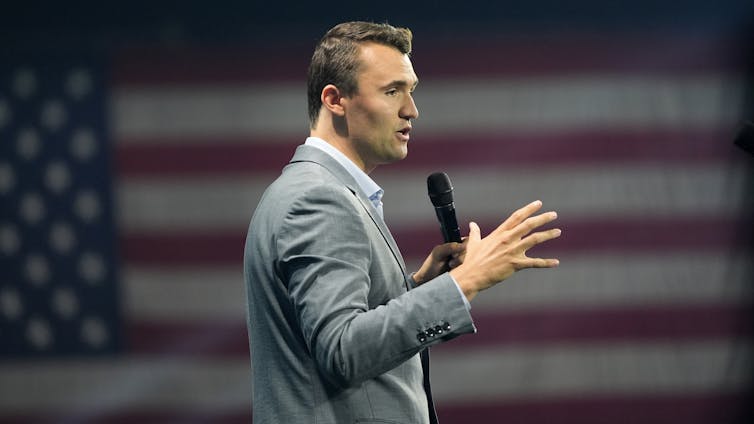
Turning Point USA founder Charlie Kirk speaks in West Palm Beach, Fla., on July 26, 2024. AP Photo/Alex Brandon, File
We’ve had political polarization in the U.S. in the past, but usually it was around a specific issue like civil rights in the 1960s and the Vietnam War. But this time there is no specific issue that we can say, “If we solve this, we solve the political polarization.” The problem is that there’s no space for convergence from both sides where they can work together, so there’s no bridges they can rely on to come together.
Does it strike you that Kirk’s assassination occurred on a college campus? It seems as if college campuses have become a flash point of violence in the U.S.
Campuses are becoming more and more contentious spaces. They were always intellectual hubs where political views were debated intensively. Activism was always part of campus life. But what we’ve seen in the past year is that campus life has become in some cases more violent. And the fact that Kirk was killed on a campus is, I think, heartbreaking because campuses symbolize a place where you can engage in political debate in a way that encourages intellectual exploration.
What’s happened in the past year is that campuses are not those spaces anymore. Yes, we still see political activism, but it’s the activism that doesn’t leave any room for actual debate. It’s just two sides that are completely hostile to each other and unwilling to hear each other.
Trump on Wednesday night blamed the media and the “radical left” for language used to describe people like Kirk. He said this rhetoric is “responsible for the terrorism that we’re seeing in our country today.” Any thoughts?
I agree that language and rhetoric impact people’s behavior. I’ve seen that again and again in my studies, that the discourse of political figures impacts the way people think of the legitimacy of violence. Of course, we need to understand the context here, which is that Trump himself was willing to pardon thousands of people who engaged in political violence.
So, on the one hand, I agree with him that political leaders should be responsible for how they discuss political issues. It’s important for them to convey that political discourse can be constructive. However, we need to acknowledge that our own government, in many cases, sends signals that provide encouragement and support that legitimize violence. I think it’s important for politicians on both sides to be consistent in understanding that the way they discuss their political rivals is important.
You’re an expert on the history of political assassinations. How do countries untangle themselves from waves of political violence?
Political leaders need to insist on working together. There are lots of policy areas where politicians can work together. When we see that people can work together within the political system, that sends an important message, that there is a space where we can work together. The second thing is trying to think about how the U.S. can restructure part of the political process to ensure that there is a real competition of ideas, to incentivize a constructive, productive approach that will legitimize those who are willing to engage in constructive policymaking.
Any last thoughts?
As part of my work, I track the most extremist online social media accounts, and what we see right now is a strong sense that this assassination is being celebrated by parts of the left. And that has created an escalation of language from those in the extreme right social media ecosystem. There is much more willingness to discuss issues of retaliation, an actual civil war.
And that’s my biggest worry. If you look at social media, what we see is that both sides embrace this kind of rhetoric that really concerns me. More than ever, I’ve seen calls for retaliation and a strong sense that the other side is unwilling to show any sympathy to what happened. Emotions are running very high, and I’m very worried about what may happen in the next few weeks.
Arie Perliger does not work for, consult, own shares in or receive funding from any company or organization that would benefit from this article, and has disclosed no relevant affiliations beyond their academic appointment.