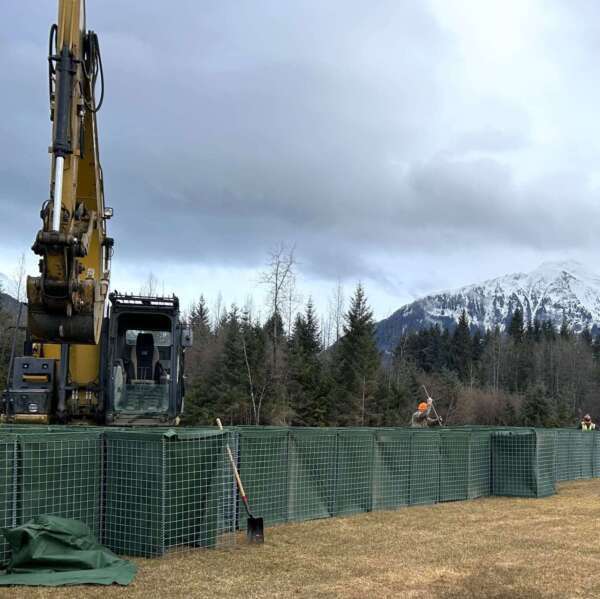
Photo provided by CBJ following the installation of the HESCO barrier project
Photo provided by CBJ following the installation of the HESCO barrier project
NOTN- A memo from City Manager Katie Koester says the city could be responsible for 25% of the cost of an accelerated Army Corps of Engineers project, rather than the 10% local share associated with previous proposals.
First reported by the Juneau Independent, Koester writes Juneau could establish a new service area and tax to help pay for ongoing flood protection and the city’s share of a permanent solution to the annual glacial lake outburst floods.
The Assembly Committee of the Whole will meet on Monday to discuss.
The city has spent millions of dollars on temporary flood protection, including HESCO barriers, while the U.S. Army Corps of Engineers pursues a permanent solution for annual flooding from Suicide Basin.
Koester said the Corps is seeking proposals from industry for an emergency water conveyance prototype capable of permanently addressing the floods. The goal is to keep water levels in Suicide Basin below 1,100 feet so any eventual release would be significantly smaller.
The project is being pursued under the federal Flood Control and Coastal Emergencies authority, which allows for a faster process but requires a 25% local share of construction costs for permanent flood control projects.
The city is working with Alaska’s congressional delegation to change that cost share to 10%, similar to the federal share available for projects involving tribal lands.
The total cost of a permanent project has not yet been determined, but the city expects it to exceed the amount currently available through the federal emergency account. The account receives about $40 million annually for flood control projects nationwide, meaning Juneau will need to advocate for additional federal funding.
Koester recommends the Assembly consider putting a bond or debt proposition before voters once the Corps provides a more reliable estimate of the project’s total cost.
In the meantime, Juneau is continuing to spend money on temporary protections. Nearly $50 million in federal, state and local funding was spent this summer on flood mitigation in the Mendenhall Valley, according to the memo.
Koester said the city expects to remain responsible for regular HESCO maintenance, including inspections, repairs from settling, responding to vandalism and refilling the barriers. The city also must continue coordinating with homeowners, maintaining property access and handling permitting.
She writes the work has also diverted city staff and resources from other projects, according to the memo.
One option under consideration is creating a service area with its own mill rate to fund flood protection and related services. The tax could apply either to properties within the protected area or citywide.
A service area would require approval by voters living within its boundaries. Koester said a citywide property or sales tax could also be appropriate because the annual floods have been characterized as an existential threat to Juneau as a whole, rather than a localized disaster affecting only the Mendenhall Valley.
Koester also recommended that the city push the Alaska Legislature to make construction of a lake emergency water conveyance prototype a state priority during the next legislative session, which begins in January.
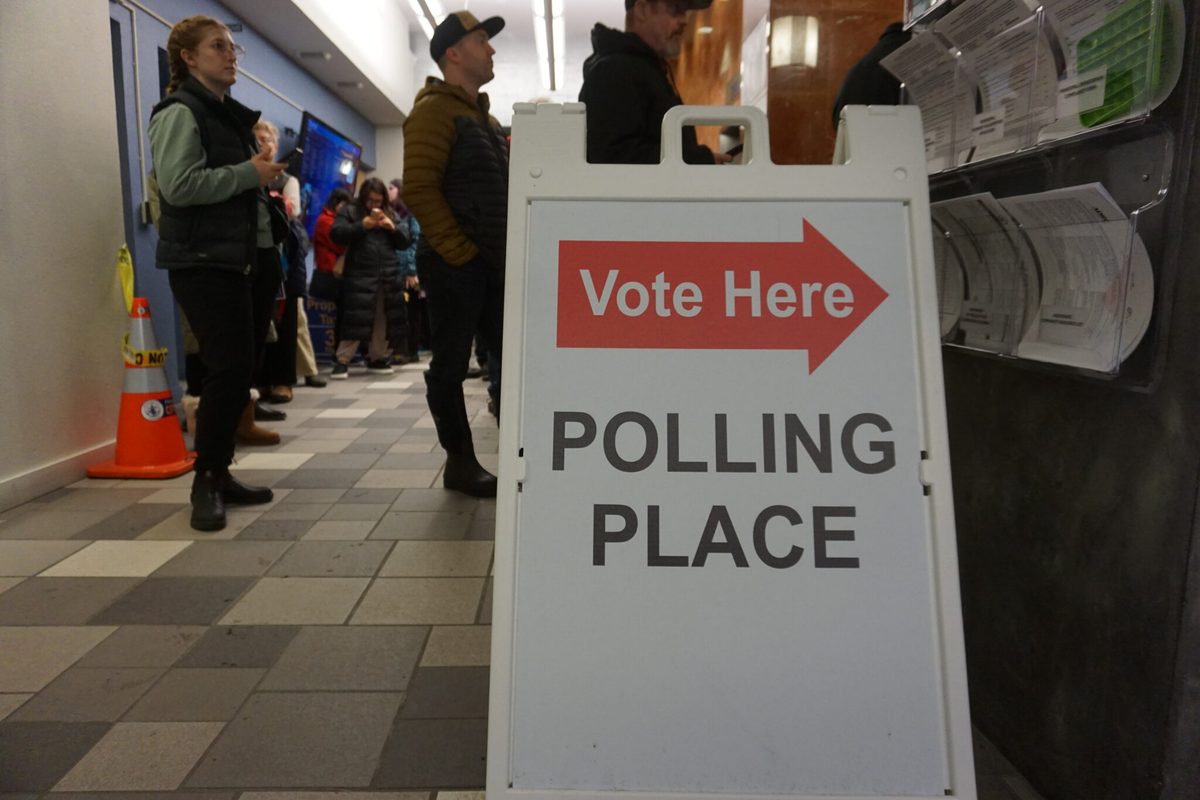
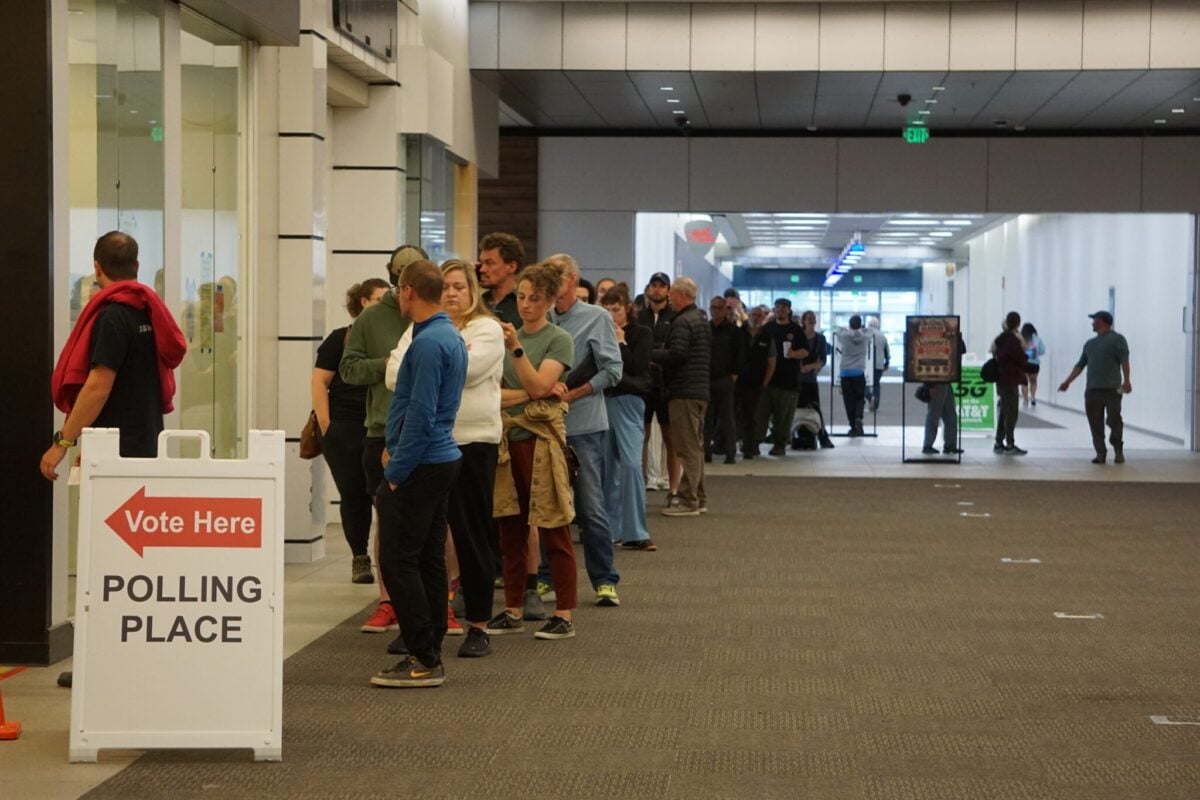
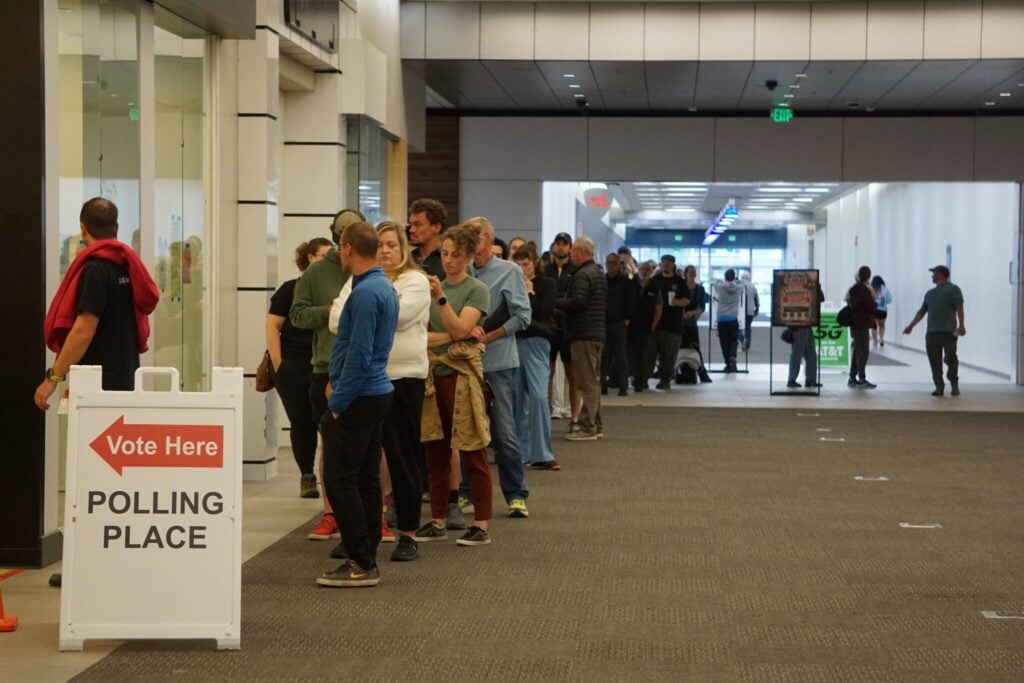
Voters at Anchorage City Hall wait in line to cast their ballots on Nov. 4, 2024, the day before Election Day. City hall, in downtown Anchorage, was one of the designated early voting sites in the state’s largest city. (Photo by Yereth Rosen/Alaska Beacon)
The Alaska Supreme Court heard oral arguments on Tuesday on legal challenges brought by two groups on opposing sides of the state’s current ranked choice voting election system. The two groups of plaintiffs brought lawsuits against the Alaska Division of Elections challenging the language of a ballot measure, set to go before voters in November, abolishing the voting method along with other changes.
Ballot Measure 2, which will appear on the ballot as 24ESEG, would overhaul the state’s elections system via three major components: repeal ranked choice voting; rescind the nonpartisan, open primary system; and repeal campaign disclosure rules enacted by voters in 2020.
A Superior Court ruled in June that the state’s ballot summary was “true and impartial,” siding with the Alaska Division of Elections, overseen by Lt. Gov. Nancy Dahlstrom.
Plaintiffs have appealed that decision to the Alaska Supreme Court, which is expected to issue a fast-tracked ruling before a division deadline of Sept. 2 to print general election ballots.
The Alaska Supreme Court heard oral arguments in a case challenging the Alaska Division of Elections’ language of a ballot measure that would overhaul state elections on Aug. 25, 2026. (Screenshot of hearing via Gavel Alaska)
One group of plaintiffs are represented by attorney Scott Kendall, an author of the 2020 ballot measure implementing Alaska’s ranked choice voting and open primary system. They argued that the current ballot measure language is unclear, partisan and omits serious implications of the repeal effort.
The other group of plaintiffs, drafters of the measure, is called the “Repeal Now” campaign. The measure’s primary sponsors are Republican gubernatorial candidate Bernadette Wilson, along with former Anchorage library director Judy Eledge and former Alaska House Rep. Ken McCarty of Eagle River.
In court, attorneys representing Repeal Now argued against the lawsuits being combined and for a series of language changes, including changing of the term “repeal,” which they say is not easily understood by voters, and the term “true source” of campaign disclosures as “inflammatory partisan suasion.”
Under Alaska law, the division is required to prepare a ballot measure with a “true and impartial” summary of the proposed law. It must be “free from misleading tendency, whether the amplification, of omission, or of fallacy, and … must contain no partisan coloring.”
In the June ruling, a Superior Court judge found the division fulfilled its legal obligation and “if ballot summary language is true and impartial, the Court will not invalidate the language just because better language could be written.”
On Tuesday, the division, represented by attorney Laura Fox with the Alaska Department of Law, argued that the ballot language could be edited thousands of ways, but the division fulfilled its legal duty and prepared the ballot with a “true and impartial” summary and title.
“This case is not an editing exercise,” Fox argued. “We’re not assembled here as a big team of editors trying to polish a piece of writing by committee, as fun as that might be. Instead, the question here is just whether the summary clears the basic hurdle of being true and impartial. Because it does, the court should affirm.”
The Alaska Supreme Court justices will either uphold the lower court’s decision or order the division to revise the language. They’re expected to issue a ruling before Sept. 2 and then follow sometime later with an extended legal opinion.
Timeline of ballot measure and legal challenges
Alaska voters narrowly rejected a similar initiative to repeal ranked choice voting in 2024. Proponents quickly restarted the campaign in 2025, collecting more than 34,000 signatures to again place the question on the ballot in 2026. The division first published the ballot language last December.
A group of plaintiffs represented by Kendall filed a lawsuit challenging the ballot language in January. Plaintiffs include Anchorage Republican Sen. Cathy Giessel, AFL-CIO union president Joelle Hall, and former member of the Juneau Borough Assembly and vice president of Ocean Conservancy ‘Wáahlaal Gidaak Barbara Blake. They argued the ballot language was biased and inaccurate.
The division subsequently revised the ballot language in February with significant changes to the title and summary. The plaintiffs dropped the lawsuit without prejudice, according to court documents.
In mid-February, the Repeal Now group filed a lawsuit challenging the new language, arguing “opponents got their preferred language” adding the term “repeal” three times, and the summary was not “true and impartial.”
Giessel and fellow plaintiffs filed a new lawsuit, and the two suits were consolidated by the Superior Court judge in April.
Both groups of plaintiffs filed suggested ballot language with the court, and the state filed a motion defending their ballot language.
Court arguments
On Tuesday, Kendall argued before the Supreme Court that the ballot language should be a clear map for voters to understand what the measure does.
“But the state’s language here isn’t a map. It’s effectively an obstacle course where a voter can only understand Ballot Measure 2 by doing independent research outside the four corners of the ballot language. The state’s language is unclear, contains partisan suasion, and omits details that would give voters significant pause,” he said.
In particular, Kendall raised concerns the ballot measure does not clarify that if passed, nonpartisan or Independent voters would be excluded from voting in party primaries, unless registered with that party.
“It fails to make clear that Ballot Measure 2 specifically empowers political parties at the stroke of a pen to make it illegal for undeclared and nonpartisans to vote in the primary election,” he said. “I think voters need to be put on notice, especially the two-thirds of voters that don’t belong to either party, that you may not be able to vote in the primary election at all.”
Kendall also argued the language related to campaign finance disclosure rules was inadequate, and fails to give details of the implications.
If passed, the measure would repeal campaign disclosure rules and limits enacted by the ballot measure passed in 2020, including rules that individuals and entities who contribute more than $2,000 to candidates or campaigns must disclose the true source, as defined by law.
Attorney Julie Pack, representing the group of plaintiffs with the Repeal Now campaign and supporting the ballot measure, argued against the use of the term “repeal” because she said campaigners collecting signatures for the ballot measure found voters were not familiar with the term.
“Many people do not use that word on a daily basis. It’s not common parlance. It is for lawyers. It’s not for people who are not lawyers, and it’s not a term that is readily understood,” she said.
Justices pushed back, pointing out the term is in the name of their organization.
“My organization named itself before they canvassed, got all the signatures, talked to over 31,000 Alaskans, and understood that repeal is not a word that lots of people understand,” she replied. “So my client named itself before it learned that repeal is a term that’s mildly to moderately sophisticated.”
“There is no need to use words that are sophisticated,” she added. “When ‘redo,’ ‘remove,’ ‘undo,’ ‘get rid of’ are perfectly fine, and they would protect Alaskan voters’ right to know what they’re voting on.”
Pack also raised concerns with the term “true source” related to campaign finance disclosures, and argued the measure would maintain “open primaries.”
Arguing on behalf of the Division of Elections, Fox urged the justices to reject the plaintiffs arguments and affirm the lower court’s decision that the division met its legal obligations and should print the ballot measure as is.
Ballot Measure 2 as currently proposed by the Alaska Division of Elections:
An Act Restoring Political Party Primaries, Ending Ranked Choice-General Elections, and Repealing Recent Campaign Finance Laws
This Act would get rid of open primary elections, where all candidates appear on one ballot. It would also get rid of ranked-choice general elections. It would bring back political party primaries and single-choice general elections. It would also repeal certain campaign finance rules that were added by a 2020 ballot measure.
Elections would occur as they did before open primaries and ranked choice elections. In the primary election, voters would choose a party’s ballot, unless prohibited by the party’s bylaws. They would only vote for candidates on that ballot. The winning candidates from each primary would be the party’s nominee. In the general election, voters would vote for only one candidate in each race. Party petitions, special runoff elections, and other processes would return.
This act would repeal campaign finance rules that were passed in 2020. It would remove the limits on donations to joint campaigns for governor and lieutenant governor. It would remove limits and disclosure rules under current law, including for digital ads, out-of-state donations, undisclosed donations and the true source of donations. It would change the meaning of a campaign expenditure and remove some fines.
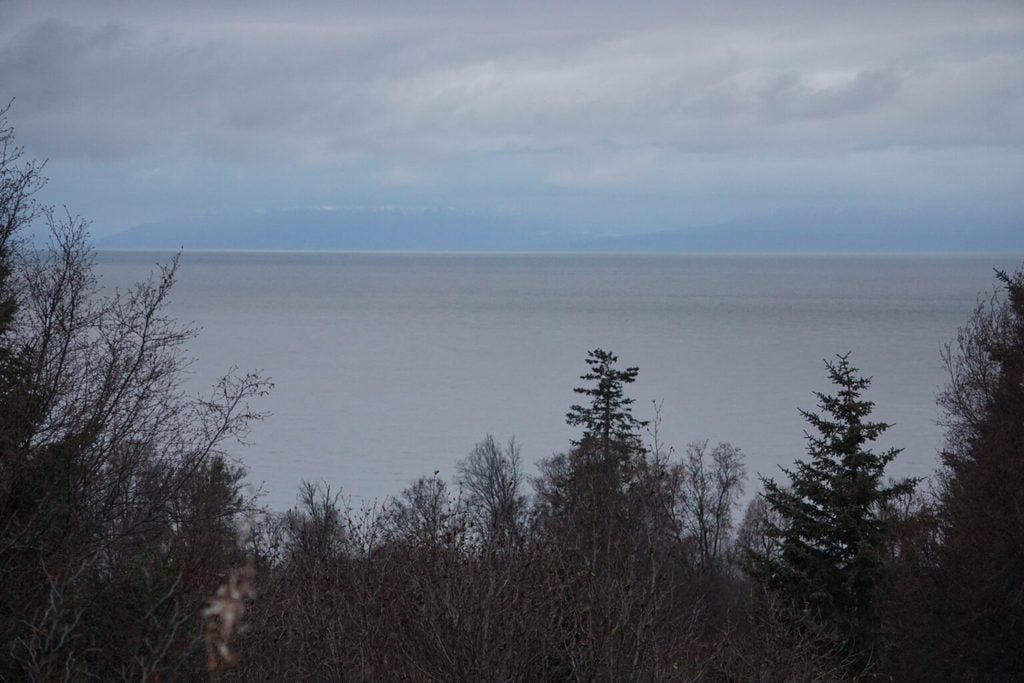
Cook Inlet near Clam Gulch is seen on Oct. 23, 2025. (Photo by Yereth Rosen/Alaska Beacon)
State and industry officials and the U.S. Coast Guard were responding on Tuesday to an unexplained oil spill roughly 60 miles southwest of Anchorage in Southcentral Alaska’s Cook Inlet.
The spill, which produced a long oil sheen on the water near the Trading Bay area on the western side of the inlet, was first spotted by a pilot on Monday. His report prompted a multiagency response.
The multiagency unified command is composed of the Alaska Department of Environmental Conservation, the U.S. Coast Guard and Hilcorp, the dominant oil and gas operator in Cook Inlet.
The sheen was seen near the idled Spark platform, one of 17 oil and gas platforms in the inlet. Six of those, including Spark, are now inactive. The Spark platform was acquired by Hilcorp as part of its 2012 purchase of Marathon Oil’s Cook Inlet assets. It has been inactive since 1992, said a statement issued by the unified command responding to the spill. The wells associated with the Spark platform were plugged and abandoned by a previous owner in 2009, the statement said.
As of Tuesday afternoon, however, the ongoing investigation has not pinpointed a source of the spill, its size or even the substance, DEC officials said.
An oil-response vessel sent by Hilcorp to the site arrived shortly after 2 a.m. on Tuesday, but its crew was not able to spot the sheen with infrared imaging technology, said the incident command statement. The spill-response vessel, the Endeavor, has been sailing in a grid pattern to search for the spilled material and its possible source, the statement said.
A closeup view of a 2022 Alaska Division of Oil and Gas map shows the pipelines and oil and gas platform locations in Cook Inlet. (Map provided by the Alaska Division of Oil and Gas)
There were no reports of impacts to fish or wildlife as of Tuesday afternoon, said a DEC situation report issued on Tuesday afternoon.
Fish could be potentially at risk, the situation report said. All five species of Pacific salmon swim in the affected waters, and coho and sockeye salmon were migrating through the area at the time the spill was reported, the situation report said.
Representatives of area environmental groups said Tuesday that the event was a warning about risks to the inlet.
Satchel Pondolfino, the clean water lead for Cook Inletkeeper, said she and others are concerned about the apparent association with the idled but still-standing Spark platform.
“It’s just another reason why it’s so important that Alaska use its authority to hold Hilcorp and every other operator accountable for dismantling the infrastructure,” she said.
Activists have called for the removal of such unused infrastructure from the inlet, but the state so far has not ordered any company to do that.
Cooper Freeman, Alaska director of the Center for Biological Diversity, said numerous natural resources continue to be at risk from the incident and others like it.
“It’s gut-wrenching to see the inlet’s beleaguered salmon and belugas take a hit they can’t afford from a miles-long oil spill,” he said in an emailed statement. “We need Cook Inlet’s fish and wildlife to recover, and we can’t keep treating their home like an industrial waste zone. This is yet another wake-up call that our over-reliance on fossil fuels imperils not just our region’s long-term energy stability, but the vitality of our environment for all future Alaskans.”
FILE - Dan Sullivan, a candidate in Alaska's U.S. Senate race who shares his name with the incumbent seeking reelection, talks with a reporter, July 3, 2026, in Petersburg, Alaska. (AP Photo/Becky Bohrer, File)
FILE – Dan Sullivan, a candidate in Alaska’s U.S. Senate race who shares his name with the incumbent seeking reelection, talks with a reporter, July 3, 2026, in Petersburg, Alaska. (AP Photo/Becky Bohrer, File)
AP- A candidate with the same name as Alaska’s incumbent U.S. senator has advanced to the general election in what will be one of the most closely watched races in the country this fall.
Dan J. Sullivan, who goes by Dan Sullivan, was among the top four finishers after the Aug. 18 primary and on Tuesday moved on to the November matchup, which is a ranked choice contest. The incumbent, Republican Sen. Dan Sullivan, and Democratic former U.S. Rep. Mary Peltola also have advanced.
The challenger Sullivan, a retired teacher from the island community of Petersburg, sued for a spot on the ballot and succeeded after a judge invalidated a decision by a top state elections official who said he had filed his candidacy with an intent to confuse voters. The allegation was driven by claims raised by the senator and his GOP allies. The state Supreme Court ultimately ordered Dan J. Sullivan eligible for the ballot.
While the challenger sought to appear on the ballot as Republican Dan J. Sullivan, the Division of Elections listed him as Daniel J. Sullivan Jr., with no party affiliation. The senator was listed as Dan S. Sullivan, Republican and incumbent.
A call seeking comment from the challenger was not immediately returned Tuesday, and emails to campaign staff for the senator also were not immediately returned.
President Donald Trump endorsed Sen. Sullivan for reelection and called the other Sullivan’s candidacy an attempt to trick voters. Dan J. Sullivan criticized the incumbent for embracing Trump’s endorsement and said the president was “more interested in raising tariffs on our allies than in lowering the cost of groceries, housing and energy.”
It was too early to determine who would fill the fourth and final slot in the Senate general election race.
The Senate race was one of three major contests on Alaska’s primary ballot, which also featured races for the state’s lone U.S. House seat and governor.
In the congressional race, Republican Rep. Nick Begich, seeking a second term, advanced earlier to the general election along with independent Bill Hill. The other two spots remained too early to call.
Democrats Jonathan Kreiss-Tomkins and Tom Begich, former state lawmakers, advanced on election night in the race for governor, topping a field of mostly Republican candidates all vying to succeed Republican Gov. Mike Dunleavy. Tom Begich is Nick Begich’s uncle. Republican Bernadette Wilson also advanced on Tuesday, with the fourth spot remaining too early to call.
The state accepts absentee and overseas ballots up to 10 days after the primary as long as they were postmarked by election day.
The incumbent Sullivan and Peltola are the leading candidates in the Senate race, after raising the most money and having statewide name recognition. It’s one of a handful of Senate races around the country considered competitive and pivotal for both parties’ hopes of controlling the chamber.
Dan J. Sullivan’s presence on the general election ballot adds a twist to the race because of Alaska’s ranked choice voting system. Under it, candidates who finish third or fourth in the general election can play a crucial role in deciding the eventual winner if their supporters rank other choices beyond them.
Glenda Douglas of Shungnak, in the Northwest Arctic Borough, shared this photo on social media of a gasoline purchase she made on Friday, Aug. 21, 2026. (Glenda Douglas photo)
By: James Brooks, Alaska Beacon
Glenda Douglas of Shungnak, in the Northwest Arctic Borough, shared this photo on social media of a gasoline purchase she made on Friday, Aug. 21, 2026. (Glenda Douglas photo)
It’s not a typo. The price of a gallon of gasoline in the northwest Alaska village of Shungnak was $26.82 on Friday, local residents and regional officials said, likely giving the community the dubious honor of having the most expensive gasoline in the United States.
“It is very much real,” said Glenda Douglas, who manages the store in Shungnak and posted a picture of the price on Facebook.
Shungnak is about 280 river miles east of Kotzebue, up the Kobuk River, or 150 miles as the airplane flies. Air travel is the only reliable, year-round form of transportation.
In summer, the river is usually navigable by boat. In winter, residents travel by snowmachine. Last fall and for parts of this summer, water levels on the Kobuk were low enough to interrupt barge traffic, which contributed to the high price of gasoline.
“We sell groceries, diesel and gas,” Douglas said via Facebook message. “We had to get gas flown in twice this summer since (the) barge isn’t able to make it this way because the river water levels (are) too low. Just yesterday, the price was 13.99, but now it is 26.82.”
Shareholders in NANA Regional Corp. are eligible for a discount — they can buy gas for $21.46 per gallon.
Albie Dallemolle is NANA’s vice president of economic development and sustainability.
“Confirmed, Shungnak gasoline price is $26.82 per gallon, which had to be flown into the community,” she said by text message. “This price does reflect the highest cost for gasoline in the region … for now. Unfortunately, prices for gasoline and diesel are expected to increase once communities receive their fall barge deliveries.”
That’s because the current price is based in part on an average of the air-delivered fuel and cheaper barge-delivered fuel. New barge-delivered fuel, bought after the Iran War began, is expected to be more expensive than fuel bought before the war.
Shungnak frequently endures some of the highest fuel prices in Alaska.
In 2007, a gallon of regular unleaded was already $8.11 per gallon, so costly that the Wall Street Journal used the village as an example of what rural Alaska was experiencing that year. By 2022, the price was $14.03 per gallon, according to figures from the Northwest Arctic Borough.
In a message, Douglas said one thing that particularly concerns her is the fact that hunting season has arrived in the region.
Many people in the region practice a subsistence lifestyle, hunting and fishing for food they use to survive.
“(That price) is really going to hurt our hunters that pay for gas to hunt,” she said.
David Leslie, who’s currently sitting in fourth place in preliminary results in Alaska’s U.S. Senate race, says he’s not a “perennial candidate.” (Photo courtesy David Leslie)
This story was originally published in the Anchorage Press. Subscribe here.
Leading up to Alaska’s high-profile U.S. Senate primary, political groups spent millions of dollars to boost not only the leading Republicans and Democrats, but also fringe candidates who could tip the balance of a tight race in November.
Most of those efforts fell flat — namely, those that tried to boost spoiler candidates who don’t even live in Alaska, like Arizona resident and Green Party candidate Richard Grayson, who garnered just 343 votes in preliminary counts.
One novice candidate who did crack the top four, though, and is now poised to appear on the general election ballot is David Leslie — a Democrat, Democratic Socialist and Fairbanks resident who, unlike some of the other longshot candidates, has spent years in Alaska politics.
If preliminary results hold, Leslie’s presence on the general election ballot, as a Democratic candidate, could represent a win for conservatives who want to see as few Republicans as possible in the race, to avoid competition for votes for incumbent GOP U.S. Sen. Dan Sullivan.
But if Leslie were to drop out before an Aug. 31 withdrawal deadline, it could bump the fifth-placed finisher, Republican Gerald Heikes, onto the ballot — which some politically operatives say would boost the chances of Democratic challenger Mary Peltola.
We wanted to know what Leslie was thinking: why he’s in the race, and whether he might drop out. So, on Thursday, the Anchorage Press called him.
Below is a transcript of the interview, edited for clarity and length.
Nathaniel Herz: For people who don’t know David Leslie, who is he?
David Leslie: I am Iñupiaq. My mom was born in Kotzebue. She was sent to Nome for school when she was four or five, and she was raised in Fairbanks by my white adoptive grandparents, Chuck and Carol Leslie. Chuck was really high up in the plumber pipefitters union, Local 375. I grew up going to all of the union holiday parties. And I was born in Louisiana — my mom finished high school there. My mom was in a terrible car accident when she was pregnant with me — she survived, but that’s why, as soon as I could get on a plane when I was a few weeks old, we moved from Louisiana back to Fairbanks so my grandparents could raise me.
My biological grandfather was John Schaeffer, the first president and CEO of NANA.
Herz: What’s your history in politics?
Leslie: I first really got involved in activism when I was 16 years old, a junior in high school at Lathrop High School (in Fairbanks). I became the vice president of the Gay-Straight Alliance, especially because I was the only openly queer guy in my class. As an Iñupiaq person, raised by my white family, I’ve been on a journey of reconnecting and rediscovering my Iñupiaq family. I actually met a lot of my aunts and uncles through organizing around NANA’s ICE detention contracts, and that has been a silver lining — to realize that I’m not just against these contracts, but my family, who I’ve never met before, we all share these same values.
I was involved with Occupy Fairbanks when that went down in 2011, 2012. I was out there protesting for, like, six months at 50 below. I also was the union steward for the Fairbanks Pioneer Home, and for biographical purposes, I’m still on the board of the Northern Alaska Environmental Center.
If you follow politics, you know that I have been involved. I’m not this weird outsider person, a perennial candidate. I am someone who cares deeply about the community, and I’m deeply involved in many different facets of Alaska politics, and this is just the obvious next step.
Herz: How do your values differ from Mary Peltola’s, and why did you feel the need to run against her?
Leslie: There are three main issues why I decided to primary Mary Peltola. There also was ranked choice voting, which is an important part of why I made this decision. If we did not have ranked choice voting, I would not be running, because it is so important that we get Dan Sullivan and Republicans out of power.
But the biggest issue was the genocide in Palestine. Alaska Native people are still enduring a genocide here in Alaska. And if you can deny that blowing up children, blowing up grandparents, starving tens of thousands of people is a genocide — if you can deny that, you can deny the genocide of Alaska Native people happening in front of us here.
Herz: What do you mean by ongoing genocide of Native people?
Leslie: You talk to our elders, they remind us that this genocide never ended.
Our languages are still dying off, and the state and federal government are not ensuring that we don’t lose these languages. We have an epidemic of murdered and missing Indigenous women, two-spirit people, and just people in general. The cops still kill Alaska Native people at higher rates. And also we see our land being continually encroached upon by industry in ways that harm not only our people, but also make us less able to live off the land in our traditional ways — which is both harming us physically, but also harming us culturally. And we still have not seen a proper reckoning of the boarding school era, which didn’t end until the 1990s.
All of these things compound to show that there is still a genocide. There has not been reparations for boarding schools. There has not been a full-on attempt to stop the dying of our languages, and there has not been an investment in investigating all the murdered and missing Indigenous people in the state.
Herz: When it comes to Israel and Palestine, you’re critical of Mary Peltola’s position there?
Leslie: I really wanted to see Mary Peltola explain why she took AIPAC money, and then commit to not taking it, to saying that there are allegations of human rights abuses and crimes against humanity and genocide, and address that. But her Alaska-centric campaign is better fit for a gubernatorial candidate, and the fact that she has not answered these yet is such a huge issue.
Democrat Mary Peltola is leading in preliminary results in Alaska’s U.S. Senate election. (Nathaniel Herz/Northern Journal)
Another issue I decided to primary her on is the environment. Her support for the Willow project, as climate change is destroying our actual villages. You know, Kotzebue, my people’s ancestral homeland, damn near eroded into the ocean from one of the typhoon remnants. We saw how those typhoons destroyed other villages. We cannot continue to ignore how the oil companies are causing climate change, which is destroying our homelands and making them unlivable.
And then, third, when the U.S. Customs and Border Protection agents, ICE, murdered Alex Pretti and Renée Good, we need someone who’s going to say, ‘These ICE agents are murdering people. They are tools of violence. They’re equivalent to brown shirts, and that their camps are concentration camps that are crimes against humanity and must be shut down.’
( Peltola’s campaign did not respond to a request for comment on Leslie’s statements.)
Herz: What’s your take on Peltola, generally?
Leslie: Mary Peltola is obviously better than Dan Sullivan in so many ways, but we can’t be running campaigns on not being as bad as the other person. We need someone with strong vision and a strong value that actually aligns with our Alaska Native values to be the leaders in our country. And running concentration camps, continuing this rhetoric that borders are not under control — which has led to the murder and rape of immigrants — is not our Alaskan Native values. Native people don’t know borders. The borders crossed us.
Herz: Obviously, there is a concern among liberals, progressives — I think even among some folks who are very closely aligned with you politically — that your presence in the race, assuming the results hold, risks making you a spoiler to Peltola. I’m wondering what your response is to that contention.
Leslie: I have met so many people who will not vote for Mary Peltola because of her stance on the genocide in Gaza.
By having someone who will take a strong stance on Palestine and Gaza, I am encouraging people to show up to the ballot who normally wouldn’t, and will rank her second. These people have strong moral convictions, which is good — but they need someone to get them to the polls in the first place. I am that candidate that will allow these people to vote their values, and then they will rank Mary Peltola second. If I was not in this race, they would not be there at all.
Herz: Do you encourage them to rank Mary second?
Leslie: I do. When I first announced my declaration of candidacy, I said, ‘I will ask people to rank Mary Peltola second, because Dan Sullivan and the Republicans are the party of white supremacy, Christian nationalism, and genocide on our own lands. We must remove them from office, no matter what.’ (A Sullivan spokesman, Nate Adams, said in a statement: “Alaskans can come to their own conclusions about David Leslie’s radically liberal worldview, but at least he has principles.”)
I am running so that more progressives, liberals, and Democrats show up — so they will at least rank me and Peltola, so we can get Dan Sullivan out of office.
Herz: There are clearly, though, some Republicans that see you and your presence on the general election ballot as advantageous to them. How confident are you that your participation won’t hurt Peltola?
Leslie: I have had people express concern that people will only vote for who they believe in the most, and ultimately end up submitting an exhausted ballot. I really, truly believe we are still fully understanding the importance of ranked choice voting, as we continue to relitigate it.
There is so much power in ranked choice voting. It has been so important for us to have that in Alaska. We are setting the path for so many other states to join us. We have to believe that ranked choice voting operates as it should.
There are some people who are only going to vote for one person, and that is their right. But we must exercise our rights and tools of democracy to make sure that we get the best candidates we can. And I believe ranked choice voting is that way, and again, I am only running because we have it. It is so important that we maintain it and we use it to its fullest extent.
Herz: What consideration will you give to dropping out before the Aug. 31 deadline, if you do end up being the fourth-placed candidate in the primary?
Leslie: The things that I am running on, the values I hold, are strong. I am not here to waver in my beliefs. I think it’s good that we have two progressives in the race. I believe that by dropping out, I would be platforming dangerous Republicans who are white supremacists and Christian nationalists, and we must not allow their rhetoric to take hold. That is also dangerous.
Herz: Have you heard from Peltola or the Alaska Democratic Party since Tuesday?
Leslie: I’ll be meeting with someone from the leadership of the Alaska Democrats later today.
Herz: Is there a world in which, if there was a commitment from Peltola or others on the issues that matter to you, you would entertain the idea of dropping out?
Leslie: A lot can happen between now and Aug. 31. I don’t want to take any options off the table. But at this point in time, there’s so many huge issues that are important, and these issues will determine whether or not tens of thousands of people will die.
New students at the University of Alaska Southeast attend orientation at the Egan Library on the Juneau campus on Aug. 21, 2026. (Photo by Corinne Smith/Alaska Beacon)
Under a driving Juneau rain, dozens of new students at the University of Alaska Southeast gathered Friday for orientation and to kick off the fall semester. This year, the public university saw a boost in enrollment of out-of-state students, which officials and students say is largely due to a new policy eliminating the non-resident tuition rate.
UAS piloted the new tuition policy this year, called Alaska Unlocked, which offers the standard in-state tuition rate for all undergraduate courses, regardless of the student’s residency.
That’s resulted in an estimated 36% increase this year in out-of-state students enrolling at UAS compared to last year, according to university officials.
New students at the University of Alaska Southeast attend orientation at the Egan Library on campus in Juneau on Aug. 21, 2026. (Photo by Corinne Smith/Alaska Beacon)
“We are so thrilled with that much of an increase,” said UAS Chancellor Aparna Palmer, in an interview after her welcoming remarks to students at the Egan Library. “We know that a high percentage of our graduates stay in Alaska and work in Alaska within one year of graduation. And so most of these students are our future Alaskans.”
New students have arrived from 28 states, according to university data, with the top home states including Washington, California, Colorado, Idaho, Minnesota and Wisconsin.
The in-state tuition rate was a draw for 22-year-old Nicole Wilson of Phoenix, Arizona. After classes at community college, she enrolled at UAS to pursue a bachelor’s degree in marine biology with a focus on mammals. “I decided to come here both based on the in-state tuition and also because it was such, like, an ‘open to marine biology’ type school. My original plan was to go out to Hawaii, but it’s extremely expensive from out of state,” she said.
Wilson said housing was also a factor. “I did the math. If I were to take a dorm, which I would have had to, at any of the major universities in Arizona, it was actually more expensive than coming out to Alaska,” she said.
Cost of housing was the main consideration for 20-year-old Owen Kellon of Portland, Oregon, who is pursuing a bachelor’s degree in environmental sciences. “It was the bigger concern when it came to the cost of schooling, just because tuition was like a couple hundred bucks per class, which is perfectly reasonable. It’s about how much I was paying back at my community college in Portland, but the housing cost was the biggest factor.”
The John Pugh Hall student dorms houses 120 beds for students on-campus in Juneau, seen on Aug. 21, 2026. (Photo by Corinne Smith/Alaska Beacon)
The standard in-state tuition rate is expected to be available across the University of Alaska system next year. Earlier this month, the UA Board of Regents moved to eliminate out-of-state tuition rates for all locations and degree types, aiming to draw more students to Alaska.
Currently, out-of-state tuition is double to quadruple the amount of resident tuition, depending on degree type. The Board of Regents is expected to take up a final vote on the policy change in November.
UAS has the smallest student population of Alaska’s public universities, with roughly 3,600 students last year across campuses in Juneau, Ketchikan and Sitka.
This year’s preliminary enrollment data shows roughly the same number of students as last year, signalling Alaskan student enrollment may have declined. But Palmer emphasized that it’s too soon to tell, as enrollment numbers are subject to change in the next few weeks with more Alaska students possibly signing up for dual enrollment programs or classes beginning later in the fall.
University of Alaska Southeast Chancellor Aparna Palmer welcomes new students at orientation in Juneau on Aug. 21, 2026. (Photo by Corinne Smith/Alaska Beacon)
This year, UAS saw a 21% increase in applications from out-of-state students, and a 36% increase in newly enrolled out-of-state students. More than 80 new out-of-state students have enrolled this year, compared to 60 students last year, according to university officials.
UAS is an open access enrollment institution, Palmer noted. “What that means is, no matter where you are in life, whether you just graduated from high school, in high school, or whether you’re, you know, in your sixties or seventies, there is a way in which you can access UAS,” she said.
Most students are working adults or part-time students, Palmer said, and can enroll in classes in-person or online. “So, we do have a really diverse group of students,” she said.
In Juneau, new students had a jam-packed schedule for orientation week. On Friday, students were welcomed by UAS administrators, a Tlingit elder and student leaders, followed by a campus tour and briefings on campus resources, student clubs, tutoring, career counseling, and anti-discrimination and Title IX rights and reporting.
Students expressed excitement for the new school year and to be in Alaska, including Owen Kellon of Oregon.
“I love the rain,” he said. “ I am excited to see how the winter months will look like with only like six hours of sunlight. I’m scared, but I’m also excited.”
New students at the University of Alaska Southeast pose for a photo by Auke Lake during a campus tour as part of orientation in Juneau on Aug. 21, 2026. (Photo by Corinne Smith/Alaska Beacon)
Correction: This story has been updated to correct the number of students enrolled at UAS, which was roughly 3,600 students last year.
Gubernatorial candidate Jonathan Kreiss-Tomkins hoists a campaign sign on the morning of Aug. 18, 2026, Alaska’s primary election day. Kreiss-Tomkins and his supporters spent part of the morning at the intersection of Northern Lights Boulevard and Minnesota Drive in West Anchorage. (Photo by Yereth Rosen/Alaska Beacon)
Democratic governor candidates Jonathan Kreiss-Tomkins and Tom Begich, and Republican candidates Bernadette Wilson and Dave Bronson led in early vote counting for Alaska’s Tuesday primary election for governor.
Seventeen people, including two Democrats, 12 Republicans and three independents, are seeking to replace Gov. Mike Dunleavy, who is term-limited and unable to run again this year.
As of 2 a.m. Wednesday, with 378 of 402 precincts reporting results from election day, Kreiss-Tomkins had 21.7% of the vote, Begich had 20.1%, Wilson had 10.5% and Bronson had 8.4%.
The first candidate outside the top four was Republican Treg Taylor, with 7.5%, followed by Republican Click Bishop, with 7.1%.
Ballot-counting is expected to continue through Aug. 28, the deadline for mailed absentee ballots to reach the Alaska Division of Elections.
Candidates who finish in the top four have until Aug. 31 to decide whether they will remain in the race or withdraw. In 2022 and 2024, several high-finishing candidates have withdrawn from statewide races in order to consolidate party support, and the leading governor candidates have said that they are considering their options.
Kreiss-Tomkins, 37, would be the youngest governor in Alaska history if elected in November and has campaigned as a progressive Democrat.
“Today, Alaskans took the first huge step in choosing a new direction for our state,” he said in a written statement Tuesday night.
Begich, a former state senator, has likewise run as a progressive Democrat. He is the son of former Democratic U.S. Rep. Nick Begich, brother of former Democratic U.S. Sen. Mark Begich and the uncle of current Republican U.S. Rep. Nick Begich III.
Wilson, a businesswoman from Anchorage, has been active in statewide Republican politics for decades but never before as a candidate. An opponent of the state’s existing open-primary/ranked-choice general election system, she has offered a platform similar to that of incumbent Gov. Dunleavy.
Bronson is a former mayor of Anchorage whose sole term was marred by repeated controversies and scandals before he was voted out of office. He has likewise offered a platform similar to Dunleavy.
While the two Democratic candidates are almost certain to finish with the highest vote tally in the primary, success in the primary doesn’t always signify a win in November.
Two years ago, incumbent Democratic Rep. Mary Peltola earned almost 51% of the vote during that year’s pick-one primary for U.S. House, outpacing all Republican candidates combined. In the general election, the result flipped and Republican challenger Nick Begich III defeated Peltola.
On Tuesday, the combined vote total of Begich and Kreiss-Tomkins appeared on track to be less than 50% of all votes cast.
Voter turnout appeared to be high; with only 60% of precincts reporting results, participation was already above the 2024 primary and inching toward the near-record turnout of 2022, when the primary coincided with a special election to fill out the term of U.S. Rep. Don Young, who had died in the spring.
As of Tuesday morning, voters had returned only 47% of the 21,266 absentee ballots that were sent out, indicating that thousands more ballots are likely to be added to the tally in coming days.
In the 2024 primary, 86% of absentee ballots were returned, and in the 2022 primary, almost 98% were returned.
Ahead of the election, President Donald Trump had sought to ban states from counting absentee ballots received after election day.
In addition to the absentee ballots, there were 25,407 early votes, cast in person at 10 locations on the Railbelt, in Juneau and in Nome, between Aug. 3 and Aug. 17.
Only early votes cast through Aug. 13 were included in the election day count; ballots cast during the final five days of early voting are sequestered by the division to prevent double voting.
While the number of Alaskans casting ballots at early voting centers set a primary-election record, most votes this year came on election day, at more than 400 polling places spread across the state.
Voters line up on Aug. 17, 2026, at the early voting station set up in Anchorage’s Midtown Mall. Voters reported waiting about an hour to cast their primary election ballots. (Photo by Yereth Rosen/Alaska Beacon)
Over a month ago, Shelley Cotton cast the first vote in Alaska’s statewide primary election, downloading a blank ballot and sending it quickly by mail from Texas to Alaska.
Since then, more than 31,000 other Alaskans have cast their ballots, and starting at 7 a.m. today, tens of thousands more residents will vote in an election that will start to decide who Alaska’s next governor will be.
What’s on the ballot?
Seventeen people are vying to replace Gov. Mike Dunleavy, who is term-limited and unable to run this year. In that race and all others on the ballot, voters will pick one candidate. The top four vote-getters, regardless of party, advance to November.
There are 15 candidates for U.S. House, including Republican incumbent Nick Begich III, independent challenger Bill Hill, and Democratic challenger Matt Schultz, who suspended his campaign last month and decided to back Hill.2026 Voter Guide
The candidates, the ballot measures, and the tools you need to cast your vote.
As in the governor’s race, voters pick one candidate for each of those races, and the top four candidates advance to November.
There are 40 state House races and 10 state Senate races; each part of the state has one House race, and only half of the state has a state Senate race.
If there are four or fewer candidates for one or both of the legislative races, all candidates advance to November. Only five of the 50 legislative races have more than four candidates.
On the back of the ballot, there’s also an up or down vote on Ballot Measure 1, which would reimpose limits on how much money that people can donate to political candidates.
Ballot Measure 2, which has been the subject of extensive advertising, isn’t until November.
Where do I vote and what do I need to vote?
You can find your polling place by entering your information here. Bring a governmental ID; it doesn’t have to have your photo. If you don’t have an ID, bring a piece of mail with your name and address.
If you can’t make it to your polling place on election day, you can go to another polling place and vote there, but you’ll be asked to provide additional identity information because that polling place won’t have a way to immediately check that you’re registered to vote.
What do I do if I want to vote by mail?
It’s too late to request a blank ballot. If you already have your blank ballot and need to return it, DO NOT just drop it into a mailbox. Your ballot must be postmarked by election day, and in Alaska, it may take a day or more for a ballot to be postmarked after it is mailed. Instead, go into a post office with your sealed ballot and ask the postal clerk to postmark it by hand.
If you’re near a polling place, you can also drop your sealed ballot in the box there.
How many people have already voted?
As of noon Monday, according to statistics published by the Division of Elections, almost 22,000 Alaskans had already voted early, in person at 10 polling stations in the Railbelt, Juneau and Nome. Another 9,000 voters had cast absentee ballots.
That’s less than 5% of all eligible voters.
In early voting, a voter’s ID is checked when they cast their ballot, guaranteeing that the vote is counted. In absentee voting, the voter’s ID is checked later, and their ballot could be disqualified if elections officials aren’t able to verify that it was cast by an eligible voter.
In 2020, 2022 and 2024, absentee ballots leaned Democratic, with election day results favoring Republicans and then leaning away from Republican candidates as additional votes were counted.
This year, through Sunday, the division had received absentee ballots from 2,702 registered Republicans, 1,996 registered Democrats, and 4,467 undeclared and nonpartisan voters.
Importantly, of the 22,838 blank absentee ballots requested by Alaska voters, only 9,232 had been returned by Sunday, indicating many more filled-out ballots could still be in the mail.
When do we know the results?
The Division of Elections has said the first partial, preliminary results will be available on its website about 9 p.m. Tuesday night. As more votes are counted, those results will be updated until early Wednesday morning, when elections officials take a break and go to sleep.
More counting may be needed on Wednesday or later this week to complete the election day tally.
Mailed ballots will be counted through Aug. 28, with results updated regularly through then.
Governor and lieutenant governor run on a single ticket, and a governor can change out his or her lieutenant governor candidate until then as well.
Entering election day, six big questions remain unknowns.
Who will be the finalists in the governor’s race?
Pre-election polling indicated Democratic candidate Tom Begich was likely to finish first among the 17 candidates for governor. Because there are only two Democratic candidates, fellow Democratic candidate Jonathan Kreiss-Tomkins also appeared likely to finish in the top four.
What was less clear was which of the 12 Republican candidates would finish in the top four, and whether independent former Gov. Bill Walker would also make the cutoff.
Will there be voting problems in rural Alaska?
In previous years, the Division of Elections has struggled to find election workers in rural towns and villages across Alaska. On Monday, observers tracking the division said the polling station in the North Slope community of Point Lay would open late because workers would not arrive until the morning flight.
In addition, prior elections saw elections officials reject an unusually large number of absentee ballots cast in rural Alaska. It isn’t yet clear whether that trend will continue this year.
On Saturday, the early voting station in Nome failed to open on time, an issue that helped prompt the Alaska Federation of Natives — in conjunction with other groups — to issue a statement saying they were deeply concerned by potential staffing issues and any effects on rural voters.
How enthusiastic are Democratic voters this year?
In other states that have already held their primary elections, Democratic voters turned out in large numbers, motivated by the desire to vote for candidates who oppose Republican President Donald Trump.
If the number of votes cast for statewide Democratic candidates exceeds or approaches the number of votes cast for statewide Republican candidates, that could indicate strong Democratic enthusiasm in Alaska as well, something that could affect the November result.
Two years ago, Democratic candidates posted unusually strong results in the August primary — but Alaska still voted for Trump by six percentage points and elected Republicans to statewide office.
Will any incumbents be voted out early in the Alaska Legislature?
Of the 50 state House and Senate races on the ballot Tuesday, there are only five with more than four candidates. Three of those races — two in the Matanuska-Susitna Borough and one in Eagle River — have incumbents.
Incumbent lawmakers traditionally have an advantage in crowded primary elections because of name recognition and popularity, but it’s possible that one or more could lose.
Rep. Garret Nelson, R-Sutton, was appointed to his office by Gov. Mike Dunleavy and is running for election for the first time against five challengers. Rep. Jamie Allard, R-Eagle River, is facing four challengers, as is Rep. Kevin McCabe, R-Big Lake.
In Bristol Bay, Speaker of the House Bryce Edgmon, I-Dillingham, is competing with four other candidates to replace Sen. Lyman Hoffman, D-Bethel, who is retiring as the longest-serving state legislator in Alaska history.
Seven people are competing to replace Edgmon in the state’s most crowded legislative race.
Will donation limits return to Alaska’s state political campaigns?
In 2006, 73% of participating voters approved a ballot measure that limited the amount of money that a political candidate can receive from a person or group.
A three-judge panel of the 9th U.S. Circuit Court of Appeals overturned those limits in 2021, and the Dunleavy administration declined to fight the issue further.
Now, voters will be asked to reimpose some limits. The new measure isn’t as comprehensive as the last measure, in part because the U.S. Supreme Court ruled in 2010 that states cannot limit third-party spending by groups acting independently of campaigns.
Those groups have flooded Alaskans’ mailboxes with mailers ahead of the primary, but stanching the flow could require an amendment to the U.S. Constitution or a new ruling by the Supreme Court.
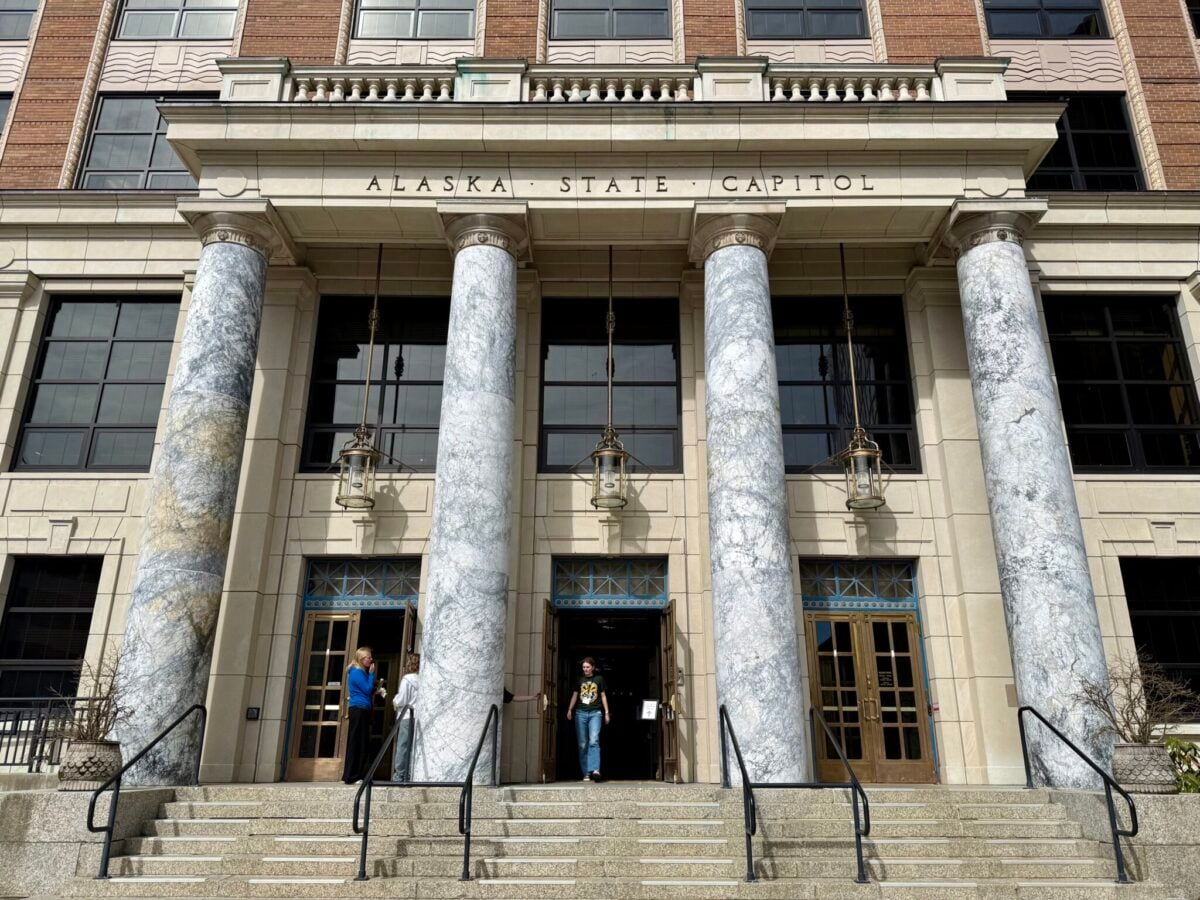
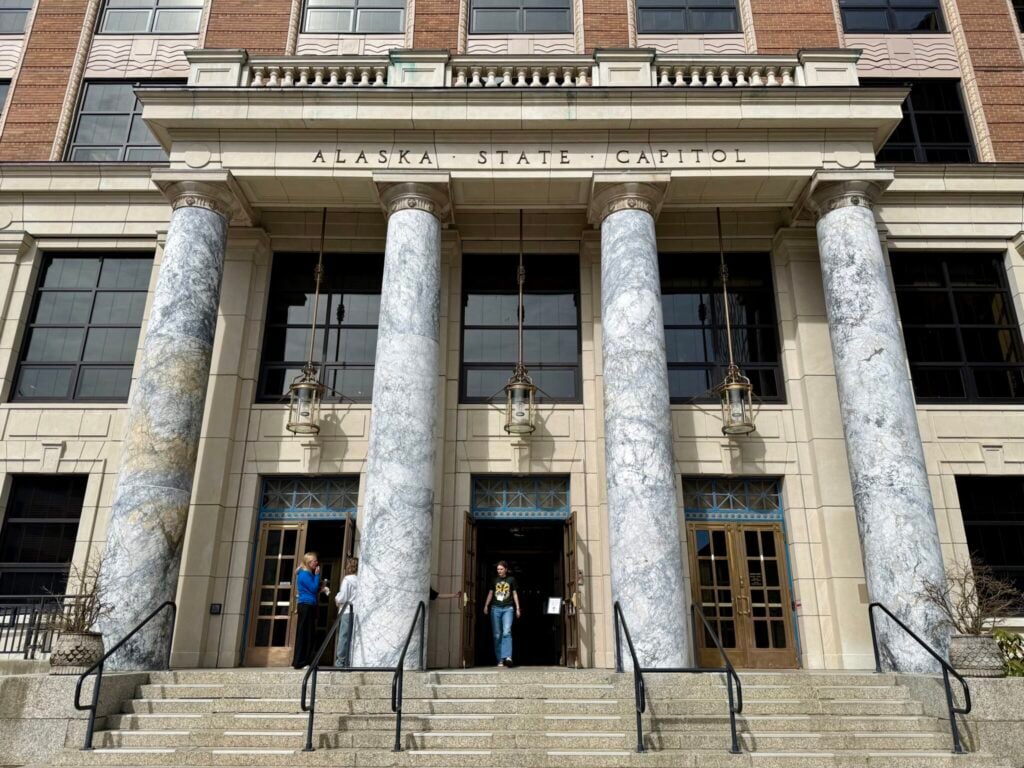
The Alaska State Capitol in Juneau is seen on Apr. 24, 2026. (Photo by Claire Stremple/Alaska Beacon)
There are five competitive races for the Alaska House and Senate in this year’s primary election, where candidates are vying for the top four places in order to advance to the ranked choice general election in November.
Early voting has begun across Alaska, and ends on Tuesday with polls closing at 8 p.m. Mail-in ballots must be postmarked by Tuesday, Aug. 18.
All 40 members of the Alaska House are up for election; 10 of the 20 Senate seats are up for election.2026 Voter Guide
The candidates, the ballot measures, and the tools you need to cast your vote.
In those races with four or fewer candidates, all are expected to advance to the general election unless they decide to drop out by an Aug. 31 deadline.
Those competitive primary races include one of the largest Senate districts that extends from Western Alaska to the Aleutian Islands, as well as House districts in Southwest Alaska, Eagle River and in the eastern and western districts of the Matanuska-Susitna Borough.
In the Western Alaska Senate District S, longtime incumbent Bethel Democrat Sen. Lyman Hoffman is retiring. The district extends from Western Alaska to Lake Clark and south across the Aleutian Islands, and the Senate seat represents approximately 36,800 Alaskans.
The candidates are current House Speaker Independent Rep. Bryce Edgmon of Dillingham, Republican Darren Deacon of Aniak, Democrat Wassilie Guy of Napaskiak and Independents Wayne Morgan of Aniak and Rick Robb of Bethel.
The winner of the Senate race in November will serve a four-year term.
Alaska House seats represent approximately 18,335 Alaskans each, and representatives serve two-year terms.
Edgmon is vacating a seat representing House District 37, which includes Southwest Alaska communities from Bristol Bay to the Aleutian Islands.
Seven candidates are running for the top four spots this race: Independents Peter Angasan of King Salmon, Kimberly Johnson of Dillingham, Mark Smith of Aleknagik and Cade Woods of Dillingham; Democrats Dennis Robinson of Unalaska and Evelynn Trefon of Newhalen; and Republican Brenda Wilson of King Cove.
Five candidates are running for House District 23, which encompasses Eagle River, a northern suburb of Anchorage near the Joint Base Elmendorf-Richardson. Incumbent Republican Rep. Jamie Allard is running for re-election, challenged by Republicans Nick Capozzi and Ruby Jones, and Democrats Jim Arlington and Lee Hammermeister.
In the eastern district of the Manatuska-Susitna Borough, House District 29 covers communities in the Palmer-Fishook area eastward to Valdez. Incumbent Republican Rep. Garret Nelson is running for the seat for the first time. He was appointed by Gov. Mike Dunleavy to the seat last year, after former Rep. George Rauscher, R-Sutton, was appointed to the Alaska Senate to fill a seat vacated by Shelley Hughes who is running for governor.
Challenging Nelson are Independents Amber Hansen of Wasilla and Jessica Kusner-Kalarchik of Palmer, Republican Steve Menard of Palmer, Democrat Kimberly Slone of Wasilla and Libertarian Candice Frisby of Palmer.
In House District 30, in the western region of the Mat-Su Borough from Big Lake to Talkeetna, four candidates are challenging incumbent Republican Rep. Kevin McCabe. He was first elected to the seat in 2020. McCabe will face Democrat Sandra Loomis of Talkeetna and Republicans Mike Alexander of Big Lake, Doyle Holmes of Willow and Doug Massie of Wasilla.
In the House, 36 races are expected to be competitive in the general election. Four incumbents are running unopposed: Rep. Sara Hannan, D-Juneau, in District 4; Rep. Chuck Kopp, R-Anchorage in District 10, Rep. Genevieve Mina, D-Anchorage in District 19; Chuck Kopp, R-Anchorage in District 10, and Rep. Will Stapp, R-Fairbanks in District 32.
In the Senate, seven races are expected to be competitive in the general election. Three Senate incumbents are running unopposed, including Sitka Republican Sen. Bert Stedman, and Anchorage Democrats Bill Wielochowski, and Löki Tobin.