NOTN- The Juneau School Board has selected Shawn Arnold as the next superintendent of the Juneau School District, according to an announcement.
Arnold currently serves as principal of Thunder Mountain Middle School and previously led Thunder Mountain High School. He has also worked as the district’s director of student services.
Before coming to Juneau in 2021, Arnold served as superintendent of both the Valdez City School District and Nome Public Schools.
In a statement, Arnold said he was honored to be chosen for the role.
“Juneau is my home, and I care deeply about this community, our students and the staff who serve them every day,” Arnold said. “Together, we will focus on supporting our staff, strengthening relationships and ensuring that Juneau’s schools remain a source of pride in our community.”
The selection follows a three-month search process led by the Juneau School Board with assistance from national recruiting firm McPherson and Jacobson. The process included community surveys, meetings with stakeholders and public candidate forums.
Arnold was selected from a group of finalists that also included Dr. Carlee Simon and Kevin Shipley.
Monday night’s assembly meeting, as seen on CBJ’s livestream
NOTN- Packed public testimony at a Juneau Assembly meeting Monday showcased public tensions over the city’s budget, flooding, and looming cuts.
The public comment period stretched nearly 2 hours before the assembly could continue its regular agenda.
While much of the evenings testimony focused on budget pressures and big upcoming projects, one resident voiced their gratitude to the assembly for holding public comment saying, “I wanted to take the opportunity to say thank you to the assembly and to say that, you look at any scale of global events, down to national events, down to local events, there’s a lot to be fearful of and a lot to be anxious about. That being said, it’s too easy to displace that on, what you can yell at your local assembly.” Testifiers said social media can further exacerbate tensions, “Huge thanks to you guys, I know you have tons of stuff on your plate, and I know that it seems like you can’t catch a break, because I feel like, if it’s not one thing, it’s another.”
Multiple residents demanded the city halt or delay demolition of historic homes on city owned Telephone Hill, which the city hopes to redevelop for potentially, over 150 housing units.
“The CBJ is facing a $10 to $12 million budget shortfall. This will affect everyone in Juneau. It doesn’t make sense to spend $5.5 million on the discretionary demolition of Telephone Hill when there are so many pressing municipal needs.” Said Maureen Conerton, “Many Juneau residents have valid concerns and have testified against this project. including a former administrator, judge, an architect, a retired project manager, in addition to the more than 1000 Juneau residents who signed the Stop the Bulldozers Petition that was presented to you last fall.”
Juneau currently has a housing shortage. In an assembly meeting at the end of February, Finance Chair Christine Woll noted that demand is sure to rise with the arrival of Coast Guard personnel in the coming years.
Some speakers said they support building more housing in Juneau, especially downtown, but oppose the current Telephone Hill plan.
Others voiced concern for escalating cost estimates for the gondola project at Eaglecrest Ski Area, saying the price has ballooned far beyond early figures.
“I disagree with what’s been said about social media, I mean, that is the way a lot of people on short notice communicate.” Said Shannan Greene, she mentioned comments in articles by KTOO and the Juneau Independent and encouraged the Assembly to view them as public testimony as well, “This is an example of informal but honest public testimony from your everyday citizens. These are the people who are growing increasingly frustrated with your decisions.”
Residents spoke on flooding in the Mendenhall Valley and said the city has been too slow to address recurring flooding and erosion.
“Residents in the valley are left dealing with flooding, higher costs and the feeling that our concerns are always pushed down the list.” Said Amy Miller, “It isn’t frustrating, it’s driving people away. I’ll be honest with you, myself and many of my friends and neighbors are actively planning to leave Juneau as soon as we can, not because we don’t love this community we do, but because we no longer feel like the city is working for the people who live here, if the city continues to treat the valley’s flooding as a problem to study instead of a problem to solve.”
The Army Corps of Engineers recently, and without explicit reason, pulled back from pursuing the Lake Tap enduring solution, which had its own federal timeline.
The project was endorsed by Tlingit and Haida, the USDA Forest Service and Alaska’s Delegation, city leaders have been ‘Deeply concerned’ about the Army Corp’s shift in priorities.
City Manager Katie Koester said new federal discussions later this month could reshape the city’s strategy.
“We are very much committed to an enduring solution and committed to working on developing and furthering the lake tap.” She said, “We have received great news that Secretary Adam Telle and a large delegation of his high up staff will be traveling to Juneau at the end of this month, and as part of that, we anticipate new information and new strategy.”
Assembly Member Alicia Hughes-Skandijs said because Assembly rules limit speakers to two minutes and do not allow any back-and-forth, some of the most productive conversations happen informally. “You pour out your heart for two minutes, which is a very short time, or you’re trying to identify to someone you’re upset. When we’re in that process, we can ask clarifying questions, but we don’t engage. So the best follow up steps are the conversations that happen in the room, in between, on the breaks, things like that. So I was able to get some contact information and follow up with some folks and I think that happens pretty commonly, that it’s those one on one interactions.”
Concern also came from social service providers, who said potential cuts of up to 30% to city‑supported grants would shrink or shutter essential programs.
Leaders from the Southeast Alaska Food Bank, school counseling programs, the Glory Hall shelter and housing project, youth and senior services, mental health organizations and Alaska Legal Services all reported record demand and rising costs.
“I want to first off, take this opportunity to thank the assembly for the investment that they have made in our organization over the last couple of years. But with that in mind, I want remind you all that we work as social service organizations, many of which are present in the room tonight in partnership with the city. And we’re concerned to hear that the assembly is considering a reduction of investment in the social services block grant, what that would amount to is a reduction in services.” Said Dan Parks, speaking for the Southeast Alaska Food Bank, “I can only speak for our organization, but demand is at record highs. A couple of years ago, when I started with the food bank, we were serving about 300 individuals a week. Now we’re serving about 500 through our public pantry. We’re seeing more and more people slip from what used to be called the middle class into poverty. We also know that hunger doesn’t exist in a vacuum. It’s an indicator, a canary in the coal mine, if you will, of other social ills.”
They told the Assembly that fewer local dollars would mean fewer meals, beds, and legal and mental health services, pushing more people toward homelessness, emergency rooms and law enforcement.
Hughes-Skandijs said the Assembly welcomes the surge in civic participation, even when emotions run high.
“We welcome, public engagement. We always want more of that.” She said, “We want people to come and talk to their local officials, and we want to know how people are feeling. A room charged with emotion is sometimes going to be because there’s just so much happening. If someone’s brave enough, and we want them to be brave enough,this is where they should be. It’s their local government. And so we want them to get involved.”
This article has been edited to correct the spelling of Shannan Greene’s name and to adjust misleading language on Social Media in early testimony.
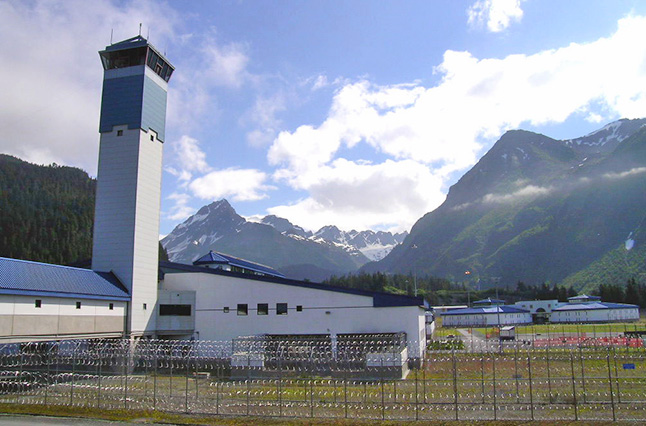
Spring Creek Correctional Center is seen in an undated photo. (Photo courtesy of Alaska Department of Corrections)
The Dunleavy administration has proposed a $523 million budget for the Alaska Department of Corrections for the next fiscal year, which House lawmakers with a finance subcommittee advanced without substantial changes last week.
It’s the largest corrections budget proposal to date, according to state data. It includes just over $514 million requested in state funding, $475.5 million of which is unrestricted general funds for the agency’s 13 state prisons and jails and estimated 2,127 employees. DOC officials expect an additional $9.3 million in federal funding for inmates held on federal charges.
The Department of Corrections has become one of the state’s most expensive departments in recent years. This year the Department of Health, which has requested $1.1 billion in unrestricted general funds, and the Department of Education and Early Development, which has requested $1.4 billion, would spend more. The Permanent Fund dividend could also be a bigger expense — if the state pays out a $1,000 dividend like last year, it would cost the state $660 million.
While the number of people in Alaska’s prisons and jails has remained relatively consistent, costs are soaring. Last year, DOC officials reported that state corrections booked nearly 26,000 people and just over 16,000 unique individuals, so roughly 9,000 people were repeat offenders. DOC also held nearly 450 people in involuntary commitments, which is for those who are deemed a danger to themself or others, or gravely disabled as a result of mental illness. The state cost for incarcerating an individual is an average of $223 per day.
Initially, corrections officials submitted a $500 million budget request, but later added an additional request for $20 million for staffing and inmate transportation, and $3.3 million for healthcare and medical staffing.
The proposed budget breaks down to roughly 60% for state prison institutions, lawmakers heard on Feb. 24. Roughly 20% is for health and rehabilitation, 10% for pretrial, probation and parole, 4% for administration, 3% for maintenance and operations and just 0.4% to administer the Board of Parole.
Costs to staffing Alaska’s prisons have ballooned in recent years, along with healthcare costs for an aging inmate population and increasing health needs, DOC officials told members of a House finance subcommittee for corrections.
“Staffing being the first, and then the second being our medical costs,” Jen Winkelman, corrections commissioner, told lawmakers. “The fees for medical in Alaska is through the roof, and every single individual that’s coming to us — that we don’t know we’re going to be getting — have significant medical issues.”
DOC has a 11.5% staff vacancy rate statewide, according to a spokesperson in February. DOC officials told lawmakers that recruitment and retention is an ongoing challenge, especially because prisons must be staffed 24/7.
DOC reports staffing and decade of ‘policy changes’ as major cost drivers
April Wilkerson, deputy commissioner for the department, told lawmakers in a presentation on Feb. 24 that DOC officials analyzed the budget over the last ten years, and saw a total increase of an estimated $182 million for operational costs in that time. She said roughly one third of cost increases since fiscal year 2016 were driven by employee contracts, salary and benefit increases.
April Wilkerson, deputy DOC commissioner, and Kevin Worley, DOC administrative services director answer questions from lawmakers on the department’s budget on Feb 12, 2026. Jen Winkelman, DOC commissioner is seen in the audience. (Photo by Corinne Smith/Alaska Beacon)
“Collective bargaining agreements, salary adjustments and health insurance changes — that makes up over 30% of the growth of the general funds within the department’s budget, which is outside of the department’s control,” Wilkerson said.
Wilkerson said an estimated 40% of cost increases have been due to “policy changes” from the Legislature. She pointed to the repeal of Senate Bill 91 enacted in 2020, when lawmakers increased prison sentences for most felonies and misdemeanors, and increased penalties for violating conditions of release. She also pointed to the state’s increased contributions to employees’ retirement benefits in 2022.
Lawmakers asked DOC officials for policy recommendations to curb costs across the department. Rep. Donna Mears, D-Anchorage, also asked the commissioner to address the problem of the department spending over its allocated budget.
“Funds allocated to DOC last year included cuts that the department just said, ‘Nope, we can’t do that.’ I think on a larger basis, there needs to be more discussions about that,” Mears said. “There’s this tension between the executive branch and requests for the department to make cuts, and that’s not happening.”
DOC officials reported all 13 state prisons spending over budget for the fiscal year ending in June, resulting in the department requesting an additional $20 million from the legislature to cover personnel costs, plus an estimated $3 million to cover health care costs.
Winkelman said the department had to partially make up for legislative cuts in their budget last year. A department spokesperson confirmed the supplemental budget request makes up for a $13.8 million reduction made by lawmakers last year.
Winkelman told lawmakers the department has not been able to fill its vacancies, which has resulted in high overtime costs. She said DOC has had to manage a legislative directive to cut costs by closing a housing unit at Spring Creek Correctional Center in Seward. “We were tasked with closing a housing unit, and we did that, and it is not achieving the savings, and as a matter of fact, it’s bottlenecked some of our population management,” she said.
Winkelman also pointed to unexpected health care costs for inmates as a driver of the department’s increased budget need. “We just recently had an inmate leave us that was with us for a year, that cost us over a million dollars in medical. We didn’t plan for that. We didn’t know that she was going to have that much of a cost associated. So going back to your question, and not being able to achieve some of these,” she said, referring to state budget allocations. “Because we don’t know what’s going to come through the back door.”
Winkelman recommended the creation of a new task force to tackle the question of how to curtail and manage the corrections budget.
“We were going to need some sort of a task force with other agencies, with the legislature, with law enforcement,” Winkelman said. “Some sort of a group to take a look at the broader system to figure out which policy changes are going to make that difference in order for us to be able to stay within our means.”
Rep. Ky Holland, D-Anchorage, said he found the proposal concerning: “If a task force is needed, why aren’t all the folks that are doing these jobs coming together and doing the work of a task force? Why do we have to somehow create that and then fund it?”
Holland said it was difficult for him to see that lawmakers are required to pay increasing budgets for DOC because of legal staffing requirements and said he wished the state’s education system had the same safeguards. “I wish we could tell our teachers that they had a maximum class size of the number of students that they had in a classroom because we had a standards council that had the force of law,” he said.
Winkelman said DOC officials are trying to address the budget challenges. “We are constantly at the table trying to figure out how to solve this, if you will,” she said.
She then walked back the task force idea, and said hiring a consultant could be another option. “I think our recommendation is to maybe hire a consultant, hire an expert in this world, to kind of take all the pieces together,” she said.
Winkelman acknowledged Holland’s concerns about the state’s financial pressure with competing budget priorities, and said she understands the corrections budget is eating into funding for schools.
“Right now, above working for the Department of Corrections for 25 years and fighting this battle, I’m a mom with two kids in school, and that’s most important,” she said. “I’m fighting this battle every day of how expensive Corrections is, and I know it is taking from our school systems.”
House members with the finance subcommittee for corrections heard several weeks of presentations about the department’s budget and asked questions of DOC officials. Rep. Mike Prax, R-North Pole, introduced several amendments to the budget, proposing millions in cuts until the department could provide further explanation on how the items would be spent and fulfill the department’s goals. But the committee voted them down before advancing the budget proposal without changes.
The corrections budget now moves to the full House Finance Committee for further consideration.
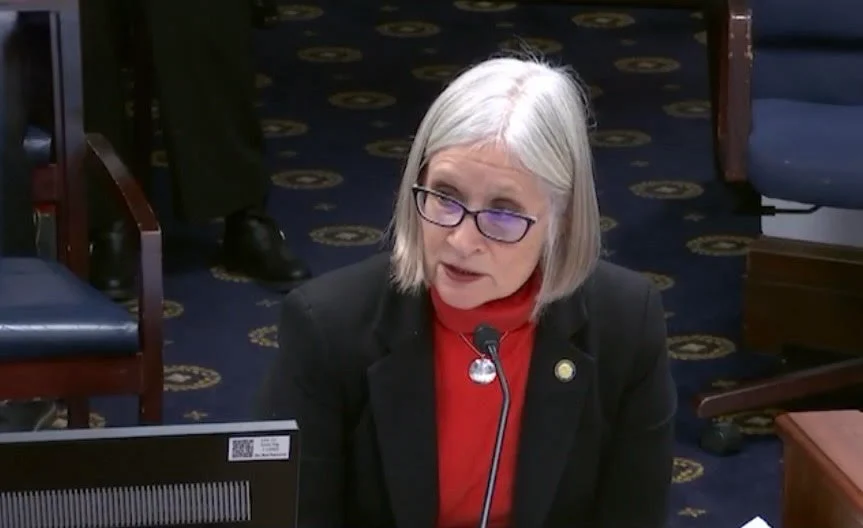
Representative Andi Story presenting to the House Education Committee, Screengrab courtesy of Gavel Alaska and KTOO
NOTN- Alaska lawmakers are weighing a proposal to let school districts use a three-year average of student counts or the prior year’s enrollment to calculate state funding.
This bill, supporters say would give districts more certainty as they build budgets and issue teacher contracts.
“We force school districts to budget in such an irrational way.” Said Representative Andi Story, “This backwards budgeting consumes a great deal of valuable time to reshuffle numbers, from personal experience this causes great pain in the community.”
The biggest change in the bill is how Alaska calculates average daily membership, or ADM, which is the student count used to determine state education funding.
According to the Alaska Department of Education and Early Development, the ADM is a count of enrolled K-12 students taken for 20 days ending the last Friday in October of each year, the ADM is adjusted due to a few factors including school size, district cost, and special needs.
Under the bill, districts would generally receive funding based on the higher of their most recent student count or a three-year average.
“Alaska should create a 3 year averaging approach statewide to replace the current Hold Harmless Provision.” Story said during her presentation.
The Hold Harmless Provision currently protects school funding if their ADM drops by 5% or more each year, which allows the previous year’s student count to be used as a base to mitigate a drop in funding.
“It could also provide districts with greater stability and planning.” Story said, “As districts would not be so concerned about unexpected changes in enrollments at the October count period. About 19 states use an approach that either averages, combines or provides the better of multiple years of student counts.”
Under the framework discussed at today’s House Education Committee meeting, if the policy took effect July 1, 2026, districts could choose a three-year average from the 2022, 2023 and 2024 October counts, or they could use the single-year count from 2025 once that data is finalized.
That choice, according to Story, would allow growing districts to lean on their most recent numbers, while stable or declining districts might favor a three-year average that smooths out drops.
Lawmakers on the panel pressed for more data on how the change would affect different districts over time. Story said she plans to bring back a committee substitute incorporating feedback and allowing further amendments.
A plume of smoke rises after an explosion on Feb. 28, 2026 in Tehran, Iran. (Getty photo)
All three members of Alaska’s delegation to Congress showed their support for the new war with Iran last week, voting against resolutions intended to restrain President Donald Trump.
The Alaska legislators’ votes were in line with their past actions. Last year, when Trump ordered a bombing campaign against Iranian nuclear facilities, all three said they supported the strikes.
The current war is significantly larger than last year’s attacks, and Trump has said he is seeking Iran’s “unconditional surrender” and wants to have a role in picking its next leader.
Neither he nor senior administration officials have given firm long-term plans, and they have not ruled out the deployment of soldiers on the ground in Iran.
Begich issued a statement on Feb. 28 calling the war “a necessary and targeted response” and said he supports regime change in the country.
“The path forward cannot be centered on further appeasement but the removal of this corrupt, fanatical leadership that has brought suffering to the Iranian people and threatens our peace at home. In so doing, we can provide the people of Iran the opportunity to change leadership, reclaim their sovereignty, and chart a new course,” the statement said in part.
Begich is in the middle of a re-election campaign, and his two leading challengers issued statements opposing the war.
By email, Democratic U.S. House candidate Matt Schultz criticized Begich’s vote and suggested he would have chosen differently.
“Our tax dollars should build schools and hospitals here at home, not bankroll endless foreign wars. But Washington always seems to find billions for war while Alaskans pay the price with sky-high costs and watch investments in our future get delayed, downsized, or ignored,” he said.
“The cost of war isn’t just dollars and cents, it’s measured in human lives and suffering. As a pastor, I believe every life is sacred. That’s why the Constitution requires Congress to approve war: so no president can send Americans into conflict without a real plan and the support of the American people.”
A spokesperson for independent U.S. House candidate Bill Hill referenced that candidate’s posts on social media when asked about his position.
“Our leaders should be investing in lowering costs and making life better for working Americans, not putting American lives at risk in foreign wars without congressional approval,” Hill wrote in a Wednesday post on Facebook.
“Six U.S. service members have died and billions of dollars have been spent in a matter of days. Meanwhile here at home, our schools are in crisis, healthcare costs keep rising, veterans are at risk of losing benefits, and everyday costs are just too damn high,” he wrote. “We can’t afford a costly war with no end in sight.”
On the Senate side, Murkowski said the resolution presented to her this week would have required the removal of soldiers from hostilities, stopping military operations immediately.
“The abrupt cessation of all offensive operations would not leave any Americans — soldiers, diplomats, or civilians — in the Middle East in a safer position,” her statement said in part.
Murkowski said Trump has “committed U.S. troops to active engagement in combat with an enemy that has targeted and killed Americans for decades. We have lost six soldiers in this fight with the potential for more casualties. What our troops need now is for our Congress, and this country, to know that they are supported. It is for this reason that I oppose Senator Kaine’s War Powers Resolution — based on the practical implications of its passage.”
Sullivan has supported military action against Iran for years and told reporters on Feb. 28, “I’m not someone that, in general, would support kind of taking out world leaders,” he said. “But I think these guys, … my belief is that they’re less world leaders than terrorists, right?”
“This country’s been at war with us for almost a half century,” he said, referring to Iran, “and they’ve killed thousands and wounded thousands of our best and brightest.”
Sullivan is also facing a re-election campaign this year, but unlike on the House side, there isn’t a bright line between the incumbent and his leading opponent on this issue.
Democratic U.S. Senate candidate Mary Peltola hasn’t made any public statements about the Iran war, and her campaign social media accounts have been silent on the subject.
When contacted Thursday, her campaign spokesperson said she had no comment.
That makes it unclear whether she supports or opposes the war.
NOTN- Tonight at Centennial Hall, Juneau will honor community leaders and raise funds for AWARE at the Women of Distinction gala.
AWARE, serves survivors of domestic violence and sexual assault and has been doing so since the 1970s.
AWARE relies on community support to keep shelters, transitional and permanent housing, and advocacy services running.
“AWARE does many things, number one is that there’s a lot of education about what domestic violence and sexual assault and all forms of violence are, what a healthy relationship looks like.” Said Christina Love, Women of Distinction Honoree, “I would say, the heart of AWARE really is the advocates, people who are trained to listen to these stories, to sit with you and give you that experience of somebody who really understands what you’ve gone through and will support you in whatever decision you are choosing to make.”
Organizers say this year’s Women of Distinction Gala theme, “The Butterfly Effect,” highlights how small acts create big change.
“I think one of my favorite things about Women of Distinction is listening to stories, because someone always talks about this event that happened, when they were 7 or when they were 23, and it changed the way they looked at their relationship with the world.” Love said, “And so what we thought about for this year’s theme, is just to imagine that all of these women who are so strong and capable and smart were at one point little girls who had these events happen to them and then also made things happen for themselves. It’s just so powerful to hear when they reflect back on their lives, what are the things that motivated them? That’s my favorite part of Women of Distinction.”
This year’s honorees, who according to AWARE are celebrated women of distinction in the Juneau community, whose work (paid and/or volunteer) has benefited the lives of women and children in Juneau; are Maria Gladziszewski, Seikoonie Fran Houston, Christina Love, and Dr. Alice Taff.
“The Women of Distinction, what we do is for the people.” Said Houston, “We have the heart and we have the energy, and what we do is for the good of the people around us.”
Brian Jackson, elections program manager for the Alaska Division of Elections, holds an SD card containing results from Alaska's Aug. 16, 2022 state primary. The cards and paper ballots from the primary are shipped to state elections headquarters in Juneau after the election. (Photo by James Brooks/Alaska Beacon)
By: James Brooks, Alaska Beacon
Brian Jackson, elections program manager for the Alaska Division of Elections, holds an SD card containing results from Alaska’s Aug. 16, 2022 state primary. The cards and paper ballots from the primary are shipped to state elections headquarters in Juneau after the election. (Photo by James Brooks/Alaska Beacon)
The head of the Alaska Division of Elections will not share legal advice that led to the state’s decision to send an extended voter list to the U.S. Department of Justice.
Alaska is one of only two states — Texas is the other — to hand over the data since the administration asked all 50 states last year. Ten others have said they plan to comply, according to records kept by the Brennan Center, a critic of the administration’s request.
Neither elections officials nor the Alaska Department of Law have explained why the state voluntarily complied with the request and signed the memo, or how compliance fits within the Alaska Constitution’s right to privacy.
That state’s Secretary of State said in a letter to federal officials that filings in a lawsuit showed that the department had shared sensitive information, including Social Security numbers, with “unauthorized persons,” and as a result, he could not guarantee that Idahoans’ identities would be safe.
In a pair of legislative hearings this week, Alaska lawmakers were unable to learn why Lt. Gov. Nancy Dahlstrom, Beecher, and the Alaska Department of Law reached a different conclusion.
Sen. Bill Wielechowski, D-Anchorage, grilled Beecher during a Wednesday hearing, pressing her to release the legal advice she received before the Division of Elections turned over its voter list.
“This is an issue of grave concern for hundreds of thousands of Alaskans, and you have the ability to provide us with those documents. You have the ability to waive any potential privilege. Would you be willing to do that?” he asked.
“At this point, I am not willing to waive that privilege,” she said.
Sen. Elvi Gray-Jackson, D-Anchorage, asked Beecher whether the department made a mistake by sharing the voter data and signing the memo that would allow the federal government to single out individual Alaskans.
“I do not, at this juncture, believe that the division made a mistake in signing the MOU,” she said.
This week’s toughest questions came from Democratic lawmakers. Beecher and Dahlstrom are both Republicans, and Dahlstrom is also a candidate for governor in this fall’s elections.
Republican lawmakers were generally silent in this week’s hearings.
Rep. Andrew Gray, D-Anchorage and chair of the House Judiciary Committee, said he was “in an awkward position” and reached out to a variety of experts in an attempt to avoid bias in a hearing he held on Monday.
During that hearing, Rep. Kevin McCabe, R-Big Lake, said he sees the state’s compliance as something like following the speed limit.
“When the federal government makes a law, we’re expected to follow it … it’s the federal government’s job, through whomever, to ensure that law is followed, and from what I understand, the federal government was merely attempting to make sure that Alaska followed the National Voter Registration Act,” he said.
The information transmitted to the Department of Justice goes beyond the publicly available voter information purchasable from the Division of Elections for $20.
It contains personally identifying information, such as birthdates, driver’s license numbers and partial Social Security numbers.
In a legal analysis performed last month, legislative attorneys called the DOJ’s request “unprecedented” and said the division’s handover would be legal only if the federal government requested the information “in compliance with federal law” and used “the information only for governmental purposes authorized under law.”
As of Wednesday, three separate federal judges — in Oregon, California and Michigan — have ruled that the federal government’s request is not in compliance with federal law.
Of the 48 states and the District of Columbia that have been asked for their voter lists, 29 and DC are fighting the federal government in court. The federal government has won none of those cases to date.
Legislative attorney Andrew Dunmire said he is also unaware of any federal law that allows the federal government to single out individual voters for removal from voter lists, as the MOU states.
On Wednesday, Beecher said the Department of Justice has not yet requested that any voters be removed from Alaska’s list. In addition, Dahlstrom said in December that the state would comply with the MOU only if the federal government’s actions are legal.
But with the Alaska Department of Law and the Division of Elections stonewalling legislators, it isn’t clear what the state considers a legal request.
Speaking to legislators this week, former Alaska attorney general Bruce Botelho advised lawmakers to continue searching for the legal advice given to elections officials by the Alaska Department of Law.
He also suggested that legislators consider filing a lawsuit to have the agreement with the Department of Justice declared illegal.
In this screenshot from Gavel Alaska, Alaska Supreme Court Justice Aimee Oravec speaks during a hearing on Wednesday, March 4, 2026. (Screenshot)
For years, politically conservative members of the Alaska Legislature have attempted to restrict state-paid abortion care via language in the annual state budget.
That maneuver and similar actions could be ruled unconstitutional by the Alaska Supreme Court, which on Wednesday heard oral arguments in a lawsuit that may determine the limits of the Alaska Constitution’s confinement clause, which requires that budget bills be limited to spending and not include policy changes.
Legislators said the contract, at more than $600,000, was too expensive, and in 2020 and 2021, they carved the budget for the Alaska Department of Law into two segments in an attempt to limit the contract.
Two of the governor’s attorneys general said they believed the Legislature was actually targeting the union dues plan, and its actions thus represented an unconstitutional infringement of the executive branch’s power.
Dunleavy vetoed the contract-specific language, technically eliminating all funding for the defense, and his administration kept on spending.
The Legislature’s auditor concluded in 2023 that the Dunleavy administration likely violated state law and the Alaska Constitution by continuing to spend money that had been eliminated from the budget.
Lawmakers sued in January 2024.
By that time, the Alaska Supreme Court had ruled that the union-dues changes had been enacted illegally. Four days after the Legislature filed its lawsuit, the U.S. Supreme Court said it would not hear an appeal requested by the administration, an act that leaves the state supreme court’s ruling in place.
In 2025, over the Legislature’s objections, Anchorage District Court judge Dani Crosby ruled that lawmakers’ lawsuit was moot because the money had already been spent, and she dismissed it.
Legislators appealed to the Supreme Court, arguing that there is a public interest in having the issue resolved, because it is likely to return again.
“That idea of no funding for this, some funding for that, these conditions are a regular feature of the budgeting process,” he said in Wednesday’s oral argument, arguing that the issue is not moot.
Deputy Solicitor General Jessie Alloway represented the state in Wednesday’s hearing and said the abortion issue is an example of why the court should decline to take up the Legislature’s arguments.
“This is exactly why the court should say this is moot and not take a more abstract view … because there is an unlimited number of hypotheticals that we could come up with that would be problematic,” she said.
If the court does overrule Crosby, both sides asked the justices to give them a firm answer rather than having Crosby take up the issue again.
The justices would then have to decide whether legislators overreached by attempting to restrict the executive branch, whether the executive branch overreached by continuing to spend, and where exactly the line rests between legislative and executive power.
“That’s what we keep coming back to: Who gets to decide this, whether these contracts are necessary?” asked Justice Aimee Oravec.
One prior Supreme Court case discussed Wednesday may offer some clues. In 2001, the court ruled on a legislative lawsuit against then-Gov. Tony Knowles over a series of budget vetoes.
One of those vetoes involved a dispute over bed space bought by the state prison system in private facilities. Legislators wrote in the budget that the space had to be bought from private contractors.
The supreme court upheld that language in its ruling.
“Conditions are permissible, as this court held in the Knowles case,” said Cuddy, the Legislature’s attorney, “including saying what types of services, public versus private, or private versus public, the money can be spent upon.”
But Alloway, arguing for the state, said legislators were attempting to define purchases that had already happened. That’s different from Knowles.
“What was happening was the (attorney general) had already retained outside counsel via his statutory authority. The Legislature knew about it, and then the appropriation targeted that decision by eliminating the amount the AG could spend on the contract,” she said.
During Wednesday’s argument, chief justice Susan Carney was absent. Staff for the court said she was recovering from surgery and out on medical leave.
Justice Dario Borghesan, a former Department of Law attorney, recused himself from the case, leaving three justices, all Dunleavy appointees, for Wednesday’s hearing. Justice Jennifer Henderson, presiding over oral arguments, said Carney may be involved in deliberations before a final decision is published at a later date.
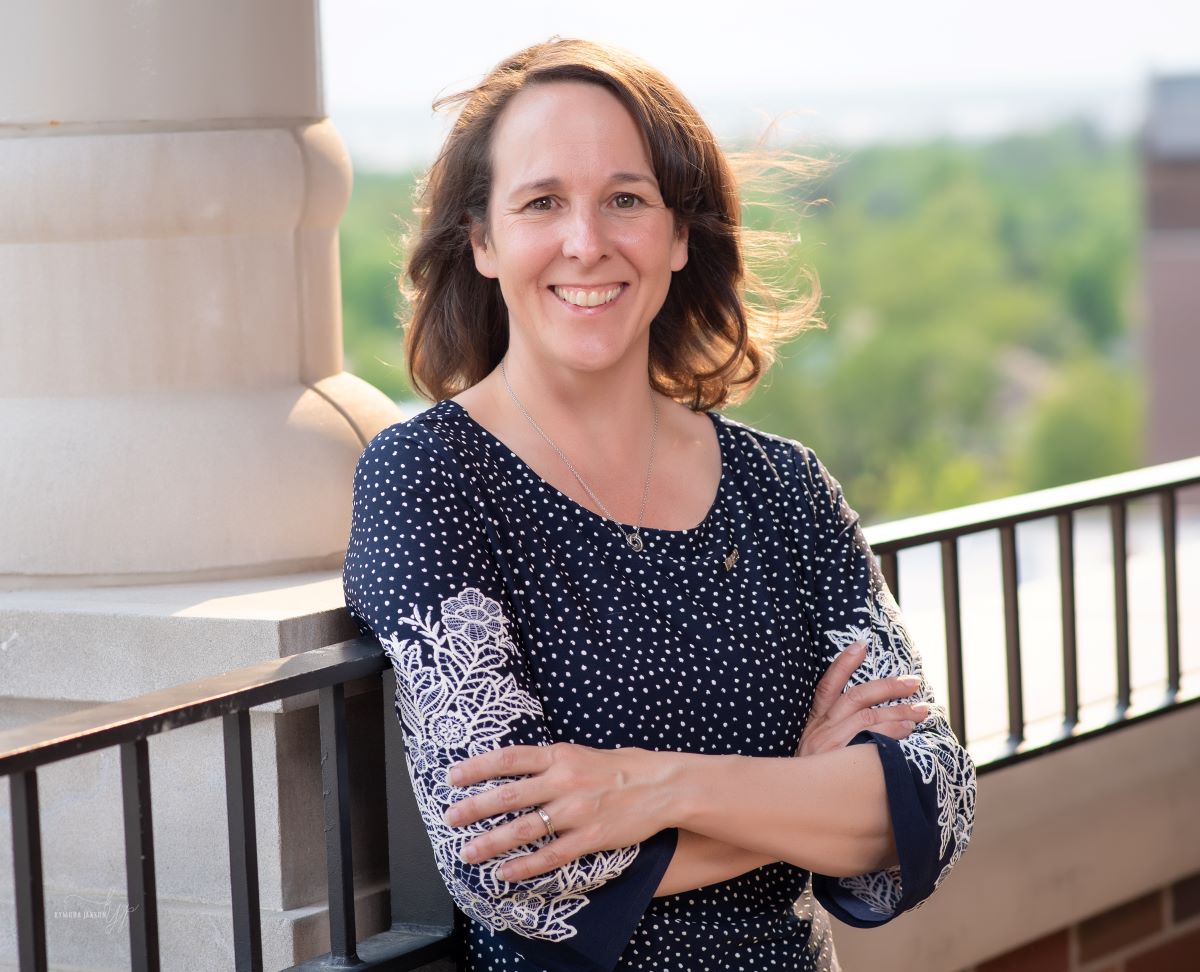
Cheryl Siemers began her role as interim chancellor of the University of Alaska Anchorage on May 16, 2025, succeeding chancellor Sean Parnell. (UAA Photo)
The University of Alaska president appointed Cheryl Siemers to the permanent role as University of Alaska Anchorage chancellor, following ten months serving as interim chancellor, the university announced on Wednesday.
UA President Pat Pitney appointed Siemers to the interim role last May after former Alaska governor Sean Parnell retired, and then extended her tenure in October. Pitney said the decision followed an extensive hiring process, and after reviewing the four finalists and community and stakeholder feedback, decided to extend Siemer’s interim term to provide “needed certainty and consistency at the leadership level.”
Siemers will step into the permanent chancellor role on March 8. UAA serves an estimated 12,000 students on the Anchorage campus, at the Kenai Peninsula College, Kodiak College, Matanuska-Susitna College and Prince William Sound College.
“She’s been embraced by the UAA community, and it’s clear that her continued leadership will provide critical institutional stability and forward momentum,” Pitney said in a statement with the announcement on Wednesday.
“Cheryl has been a steady hand at the wheel for UAA; her commitment to the institution, community partnership, leading enrollment growth, and enthusiastic support for UAA’s dual mission vocational and workforce training make her the ideal person to continue leading UA’s largest institution,” Pitney said.
A spokesperson for the university said that Siemers’ salary information as chancellor was not immediately available on Wednesday.
Siemers thanked the university for its confidence in her leadership.
“I am grateful for the opportunity to continue to serve our students, faculty, staff and university community,” Siemers said in a statement on Wednesday. “Stepping into the permanent role now offers the opportunity to extend continuity with a long-term strategic focus to ensure that the progress we’ve made together accelerates forward.”
Prior to the UAA interim chancellor position, Siemers served as the director of UAA’s Kenai Peninsula College. She joined the college in 2002, and taught as an adjunct then full-time faculty member in the Department of English, then as assistant director before becoming director of the college. She holds a master’s in English from UAA and a Ph.D. in rhetoric and linguistics from Indiana University of Pennsylvania.
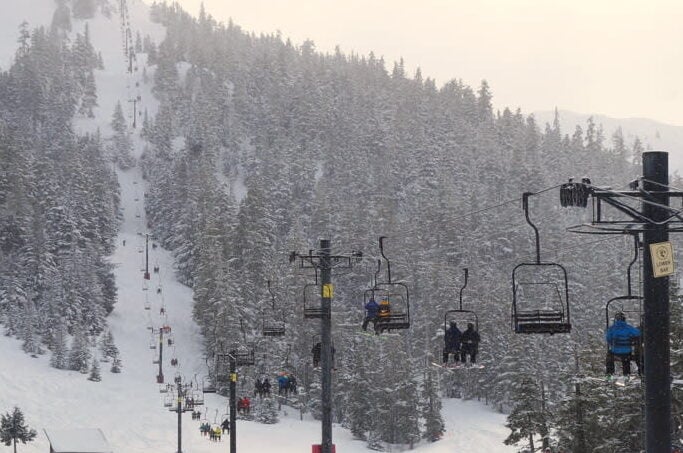
NOTN- Leaders of Juneau’s Eaglecrest Ski Area told city officials last night they are facing mounting financial and maintenance challenges, even as they press ahead with plans for a gondola and expanded summer operations to make the resort self-sustaining.
Meeting jointly with the Juneau Assembly, Eaglecrest board members and managers described aging infrastructure, declining season-pass sales and heavy reliance on city support that now pushes the ski area into a negative fund balance.
Board chair Brandon Cullum said the ski area is still recovering from a string of poor snow years, lift problems and price increases that have shaken public confidence.
“I think that the idea of restoring confidence is key,” Cullum said. “It may not be any one thing, but we’ve lived through a bit of a perfect storm here.”
Eaglcrest officials told the city that Eaglecrest opened 61 days so far this season, compared with 86 budgeted days, and has recorded about 305 inches of snowfall. While recent storms have helped, operations remains vulnerable to the inconsistent weather and equipment failures.
Aging lifts are at the top of the worry list. Many of Eaglecrest’s chairlifts are older models, built by a company that shut down in 2003.
“We’ve worked really hard through the summer, through the fall and even through this winter, things are costing us a little bit more, and we are trying to be mindful and responsible on what we’re focusing on.” Said Acting general manager Erin Lupro, “We have some aging infrastructure at Eaglecrest, between lifts, buildings, even our parking lot with those fun little dips that you experience in the upper lot. One of the things that I definitely lose sleep about is the lifts.”
Board member Jim Calvin walked officials through the financial trends, saying season-pass prices have risen sharply in recent years while adult, teen and youth pass sales all declined.
“We would achieve a break-even status in FY 32 or 33 again, under a certain set of assumptions about the gondola being built and being online.” Calvin said
Offcials said the ski area’s long-term strategy hinges the gondola and developing summer attractions aimed at Juneau’s roughly 2 million annual visitors, most of them cruise passengers. He said, expanded summer business could eventually eliminate the ski area’s need for general fund subsidies.
Until then, Eagle Crest is drawing heavily on city support.
Staffing is another challenge.
Officials said the mountain has the equivalent of just over seven full-time positions vacant, representing about 22 individual jobs, including three year-round posts.
The looming decision, board members acknowledged, is what happens if the city decides not to proceed with the gondola, or no longer allows Eagle Crest to operate with a negative fund balance.
“With the maintenance requirements, with our operating cost, with revenue where we anticipate it to be, to not carry a negative fund balance not only hobbles our ability to position ourselves for summer operations, but it hobbles our ability to contemplate winter operations,” Cullum said. “It’s definitely a question of whether we could continue to operate.”
Board members said they will provide the Assembly with a prioritized capital project list and are seeking to hire a professional mountain recreation planner to craft a detailed strategic and business plan for Eaglecrest’s future.
The Assembly is scheduled to receive a separate, in‑depth presentation on the gondola project April 1.