Gerald “Jerry” Everett Blood, beloved husband of Barbara Blood and devoted father and grandfather, passed into the Lord’s presence surrounded by his family Sunday, March 22, 2026, in Fairbanks after a 10-year battle with chronic lymphoma and heart disease.
He was born on August 22, 1944, in Douglas, Ariz., while his father served in the U.S. Army. He and his parents moved to Seattle when he was 2 years old. In 1955, the family moved to Fairbanks, where his father worked as a meat cutter at a local grocery store.
Jerry graduated from Lathrop High School in 1963 and attended University of Alaska for one year. He was drafted into the Army in 1965 and served one year in Vietnam from 1966 to 1967.
After discharge, he joined his family in Anchorage and followed in his father’s footsteps as a meat cutter, working at Anchorage Cold Storage. In 1978, he began work at Park’s Place grocery in Glennallen. He met Barb while she was serving as a missionary nurse at Faith Hospital.
They went on their first date in July 1980, got engaged in September and married in December of that same year. Barb described it as a “whirlwind romance,” but one that would last 45 years.
They were blessed with two children, Janie in 1983 and Matthew in 1985. The family moved to Haines in 1990 for Jerry to begin work as a meat cutter at Food Center. After serving 13 years as a volunteer firefighter/EMT, he was hired by the Haines Volunteer Fire Department as a paid employee for the remaining years of his working life, retiring at 66.
Jerry turned his life over to his Lord and Savior, Jesus Christ, through the ministry of Victory Bible Camp in 1972. For five years, he would leave his job in Anchorage for the summer and volunteer as the horse wrangler at the camp. He went on to become an elder and deacon, Sunday School teacher, and kids’ club leader, both at Glennallen Community Chapel, and later at Port Chilkoot Bible Church in Haines.
Throughout his years in Glennallen and Haines, he was known as a good and kindhearted man, hard worker and committed volunteer. He was well known for his woodcutting skills. Even after he didn’t need wood to heat his own home, he continued cutting, splitting and stacking wood as a gift for others. He was famous for his neat stacks of firewood, having three years’ worth of wood stacked, ready and dried for the cold winters.
He was a loving husband, father and grandfather. He adored his five grandchildren, both in Sitka and in Fairbanks. In 2020, he and Barb bought a condo to be “snow birds” in Sitka, but because of his failing health, they made Sitka their permanent residence in 2025. He loved living near his two Sitka granddaughters, but made frequent trips to Fairbanks to see the grandkids there as well. His Fairbanks family loved traveling to Sitka to spend time with him.
Survivors include his wife, Barbara; two children, Janie Hall (Tim) and Matthew Blood (Holly); five grandchildren, Natalie and Grace Hall and Taylor, Makenna and Charlie Blood; one brother, Derryl Blood (Jenett); and two brothers- in-law, Bob (Carol) and Paul (Wendy). He was preceded in death by his parents and two brothers.
His ashes will be laid to rest at Sitka National Cemetery at a later date.
Donations in his memory may be to Echo Ranch Bible Camp Haines, PO Box 210608, Auke Bay, AK 99801.
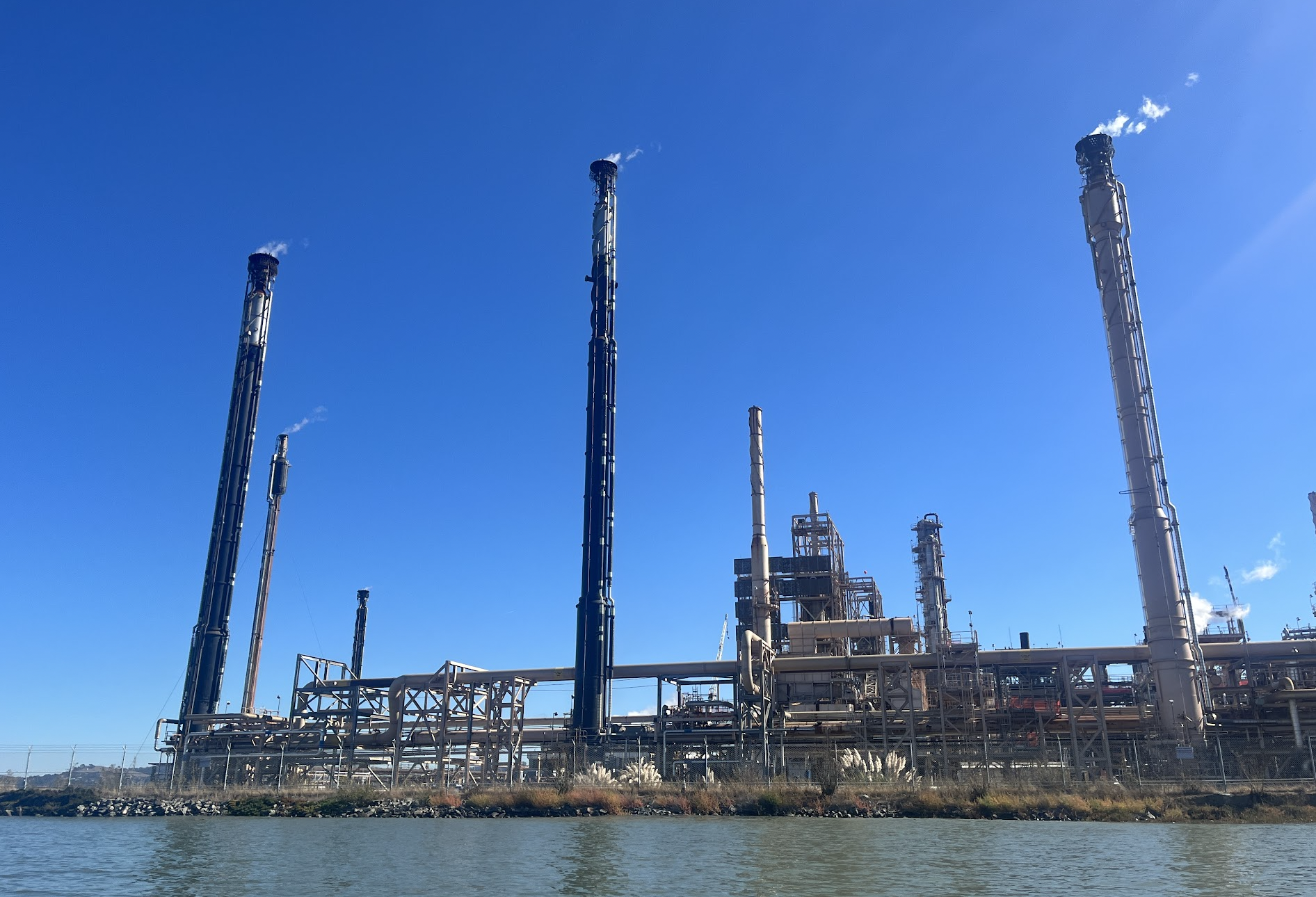
Healy Power Plant is seen in this undated photo. (Image courtesy of Dan McIntosh)
Earlier this month, Golden Valley Electric Association held a community meeting in response to growing frustration among its members. The standing-room-only crowd at the Noel Wien Library included many familiar faces involved in Fairbanks energy issues. But what stood out were the people I didn’t recognize: residents who don’t typically show up to these kinds of meetings, clearly searching for answers to their high energy bills. A military mom with a toddler. A retired, disabled veteran trying to make ends meet.
GVEA CEO Travis Million laid out some of the key challenges facing the Interior — not only around cost, but supply as well. One issue that received particular attention was the absence of inexpensive “economy power” from Southcentral via the Alaska intertie.
Historically, GVEA has had two primary ways to access lower-cost power from Southcentral, much of it associated with Cook Inlet gas. One is to purchase gas directly from producers and contract with Southcentral utilities to generate electricity using that gas and send it north over the intertie. The other is to purchase excess generation from those same utilities — regardless of the fuel source — which can often be produced at relatively low marginal cost.
But with tightening gas supply in Cook Inlet, neither option is available — there simply isn’t surplus to go around. As a result, deliveries of lower-cost gas-fired power to the Interior have been declining for some time, but last year was the first time they effectively dropped to zero.
The result is that Fairbanks is replacing that lower-cost supply with much more expensive diesel-based generation — this winter, that has averaged around 250,000 gallons per day. And much of that fuel is being burned in older, less efficient units. GVEA has been trying to move away from fuel oil for years, so investing in new oil-based generation hasn’t made much sense.
The cost implications are significant. As GVEA noted during the meeting, changes in global diesel prices due to the war in Iran are now translating more directly into local electricity costs, not to mention the cost of heating oil.
To put this in perspective, each $1 increase in diesel prices corresponds to roughly $250,000 per day in additional expenses for GVEA — about $7.5 million more per month in generation costs.
The implications are being felt directly in residents’ pocketbooks. Right now, residential customers in GVEA’s service territory pay an effective rate of about 32.9 cents per kilowatt-hour (kWh). That’s roughly 7–10 cents per kWh higher than what residents in Anchorage and the Mat-Su pay. Nearly all of that difference comes from the Cost of Power Adjustment — the COPA. This is the line item on your bill that reflects how current fuel costs compare to a set base rate. At around 12.8 cents per kWh, GVEA’s COPA is two to three times higher than that of Anchorage residents. That’s the story: we are spending far more on fuel. And that takes us right back to the 250,000 gallons of diesel per day.
To close out the presentation, GVEA outlined several steps it is taking to address the high cost of fuel, including plans for new local generation such as a second LM6000 in North Pole — essentially a jet engine adapted for power generation. It would join an existing unit running on naphtha refined at the Petro Star facility from oil pulled directly off the pipeline. The project is expected to go before the board next month, but even if approved, it would likely take three years to come online. A 30-megawatt wind project in Delta is also in the works, but it has recently encountered permitting delays at the federal level.
When the floor opened for questions, hands shot up immediately. What about solar? Nuclear? How much power do the military bases consume? How much is your salary—can’t we cut costs somewhere? And don’t we have cheap local coal?
The bottom line is that none of these options fully address the immediate challenge of high energy costs — at least not in the short term. Fundamentally, Fairbanks is not particularly well positioned geographically when it comes to energy resources. We lack significant hydro potential, and we are not located near a major natural gas resource like Cook Inlet or the North Slope.
We do have coal, and it is already an important resource. The two mine-mouth plants in Healy make up a significant share of GVEA’s baseload and are, arguably, among the lowest-cost sources of reliable generation available to the system. But they’re not without challenges. I’ve heard anecdotally that Healy Unit 2 has been giving operators and dispatchers fits this winter. It’s definitely not performing like the steady, dependable baseload resource that coal is often assumed to be.
Then there’s the UAF coal plant. I work on campus, and around mid-winter I started to notice that emissions from the smokestack were less consistent than I expected. So I began paying closer attention. By my count, the plant has operated roughly 28 days since January 1st — about a quarter of the time.
When it’s offline, UAF shifts to burning heating oil to heat the campus, which is a higher cost fuel than coal. It then purchases electricity from GVEA, which in turn places even more demand on a system that is already relying heavily on diesel generation. This layering effect increases overall liquid fuel use locally, putting additional strain on supply to the point where fuel is now being trucked up from the refinery in Valdez to meet demand. I suspect we’re in for a sobering financial realization when UAF’s energy bills are finally tallied.
The Healy Power Plant is seen in this undated image. (Photo courtesy of Dan McIntosh)
Is Fairbanks Rural Alaska?
In rural Alaska, energy costs are a major burden — one that families and communities deal with every day. Fuel must be imported over long distances, and power systems remain largely diesel-dependent, driving electricity prices to very high levels. To address this issue, the State of Alaska developed Power Cost Equalization, or the PCE program, around 40 years ago. The idea was that when investments were made by the state, such as in hydroelectric projects that benefited one community or region, other money would be put aside to help subsidize costs in diesel dependent communities.
In statute, the PCE program is designed to equalize the cost of electricity for residential customers to something close to the average of Anchorage, Fairbanks and Juneau. These locations were selected as the major population centers at the time the program was created. It was assumed that each one of these communities would have access to relatively low-cost power that was at least in part state-subsidized: Juneau through the Snettisham hydroelectric project, and Anchorage, the Kenai Peninsula and Fairbanks through interconnected infrastructure supported by state investment in both generation and the transmission backbone now known as the Alaska Intertie.
Under this framework, rural communities would receive a subsidy to bring residential rates closer to that urban benchmark. The intent was that, at least in theory, all residential customers across the state would have access to reasonably comparable electricity rates — something akin to a shared, or “postage stamp,” average.
In practice, however, things work differently. The relatively high rates in Fairbanks are effectively canceled out by the very low-cost hydropower in Juneau. And because Chugach Electric Association in Anchorage sells the largest share of electricity, Anchorage ends up disproportionately influencing the so-called “PCE base rate” — the “floor” price that rural residents pay after the subsidy is applied.
For example, the PCE base rate last year was 19.92 cents per kWh, which in turn was largely derived from Chugach’s 2024 average rate of around 21 cents per kWh. If a rural utility is well run and doesn’t have a lot of non-allowable costs inflating its rates, rural residential customers should pay something close to that level — at least for the first 750 kWh per month which is covered by the program, which is a reasonable amount for most households.
This has worked out well for rural residents, and is a cornerstone program for making living costs slightly more affordable in rural Alaska. But Fairbanks is struggling.
In 2025, Fairbanks residents paid about 11.5 cents per kWh more than residents in places like Akiak, Akutan, Anaktuvuk Pass, Atmautluak, and Atqasuk. Those are just the communities starting with the letter “A” in the annual PCE report published by the Alaska Energy Authority, that have managed to hit that PCE floor of about 20 cents per kWh.
Looking across all 188 communities that received PCE last year, Fairbanks residents paid more than about 140 of them. That’s sobering. And if the goal of the program is to offset diesel costs, consider this: GVEA burned more diesel fuel last year than all of rural Alaska combined. This year, it won’t even be close. Our 250,000 gallons per day dwarfs the roughly 70,000 gallons rural Alaska consumes on average for power generation.
So what does this mean? It raises questions about how Fairbanks fits within the broader structure of Alaska’s energy system. Should it be viewed more like rural Alaska in certain respects? Should we consider expanding the PCE program to cover Fairbanks residents? For many, that idea is heretical — and not without reason. PCE currently serves about 80,000 residential customers; extending it to GVEA would effectively double the program.
Some of my colleagues have suggested this is a temporary disparity, driven by the loss of gas-fired economy power, and that rates could moderate over time. But looking at historical data, Fairbanks has always been above the PCE base rate benchmark — roughly 10 cents per kWh higher for virtually all of the past decade.
So why are we noticing it so much more now? It may be that rates are reaching a breaking point for local residents. Crossing the 30 cents per kWh threshold stands out as a kind of high-water mark — likely because, historically, it is. But the floodwaters are still rising. I would not be surprised to open my bill in July and see rates approaching 35 cents per kWh.
So what about the Alaska intertie?
When Alaska lawmakers began shaping their vision for an equitable energy system, the solution for Fairbanks was, in part, the Alaska Intertie. The idea was that physical interconnection would allow lower-cost power to move across regions, benefiting everyone connected to the grid. So why hasn’t it worked as intended?
Part of the challenge is that while the system is connected physically, it’s not integrated operationally. This means the system is not dispatched as a single, coordinated grid where the lowest-cost generation is brought online first for the benefit of all customers. Instead, it continues to function more like three loosely connected regions — the Kenai, Southcentral, and the Interior — each making decisions within its own boundaries.
The result is that some of the most efficient generation is not fully utilized, while higher-cost resources continue to run elsewhere on the system. This dynamic is a classic prisoner’s dilemma: the best overall outcome comes from cooperation, but each utility is incentivized to act in its own interest because that is what it can directly control.
If this were happening in the Lower 48, utilities would likely be required to operate under a more coordinated system due to regulatory frameworks established decades ago to support regional power markets. Alaska, however, falls largely outside of thoseFederal Energy Regulatory Commission requirements, which are tied to interstate transmission and wholesale power markets. Because Alaska’s grid does not cross state lines, it is exempt from many of these rules.
One result is that the governance structure of the Railbelt has evolved differently — and in some ways, more slowly. Without the same regulatory drivers, the system has remained more fragmented, with each utility continuing to operate largely within its own footprint.
This has implications across the grid, but the effects are not evenly distributed. Communities at the edges of the system tend to feel these dynamics most acutely. While this commentary has focused on Fairbanks, similar pricing pressures can be seen in other peripheral areas, including Homer Electric Association and the City of Seward, albeit for somewhat different reasons.
The fix is ultimately a governance fix when it comes to the Railbelt. We can’t build our way out of high energy prices — at least not in the near term. And the reality is that high prices are going to be with us for a while. That doesn’t mean we are without options. But it does mean that the most meaningful progress will come not from the next project, but from how we choose to operate the system we already have.
Today, we are not consistently dispatching the lowest-cost resources across the grid, nor are we planning and operating the system as a single, coordinated network. That gap has real consequences. It means we carry unnecessary costs, underutilize our best assets and expose some regions — particularly those at the edges of the system — to higher and more volatile prices.
We have done hard things before. We built legacy hydropower projects around the state that continue to benefit residents with access. We also created mechanisms to share resources across communities through the PCE program. And we have taken meaningful steps toward greater coordination on the Railbelt as well. In Southcentral, utilities now operate more closely together through coordinated dispatch arrangements, and regionally we have established organizations like the Railbelt Reliability Council and the Railbelt Transmission Organization to support more integrated planning and operations.
These are important steps in the right direction — but they are still incomplete. The next step is less about infrastructure and more about alignment: establishing the structures and incentives needed to operate the Railbelt as a single system. Until we do that, we will continue to fall short of what this grid was designed to deliver.
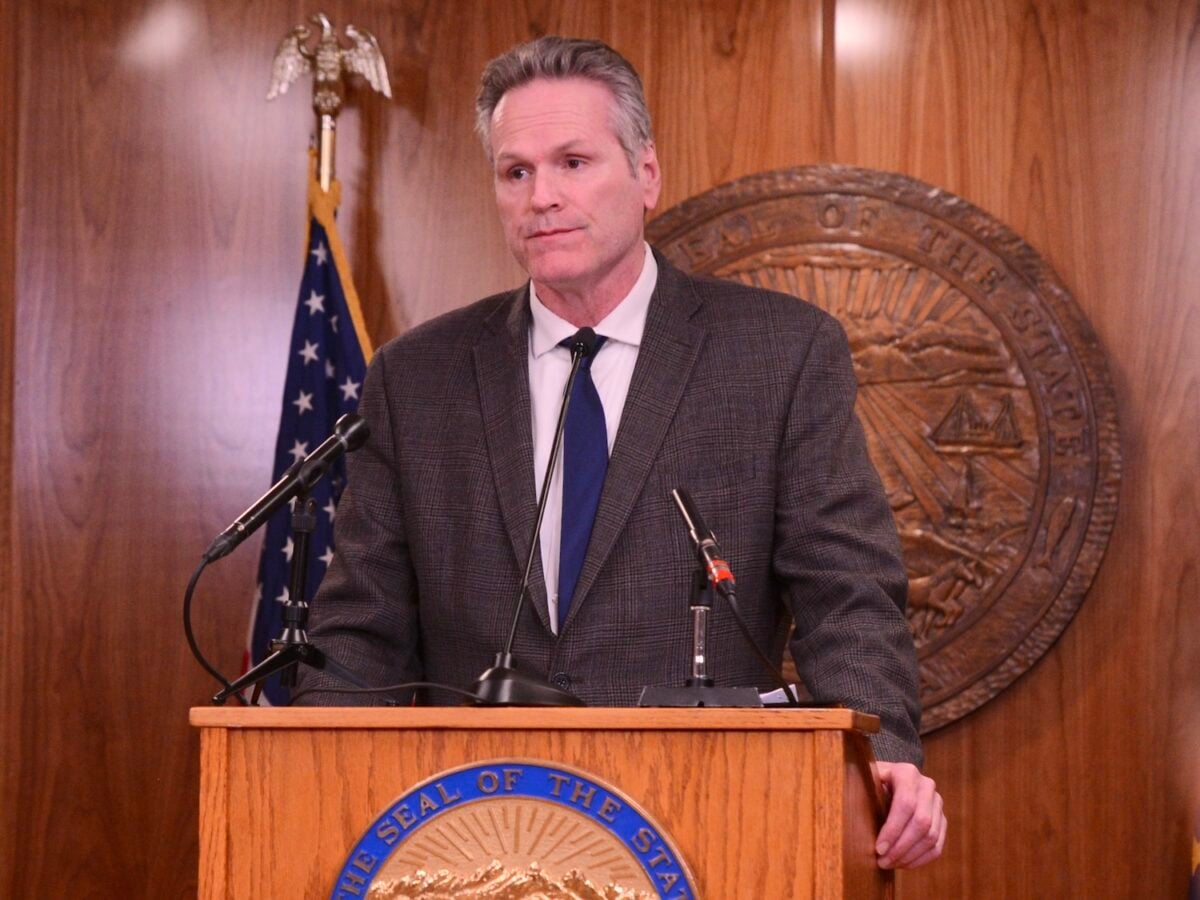
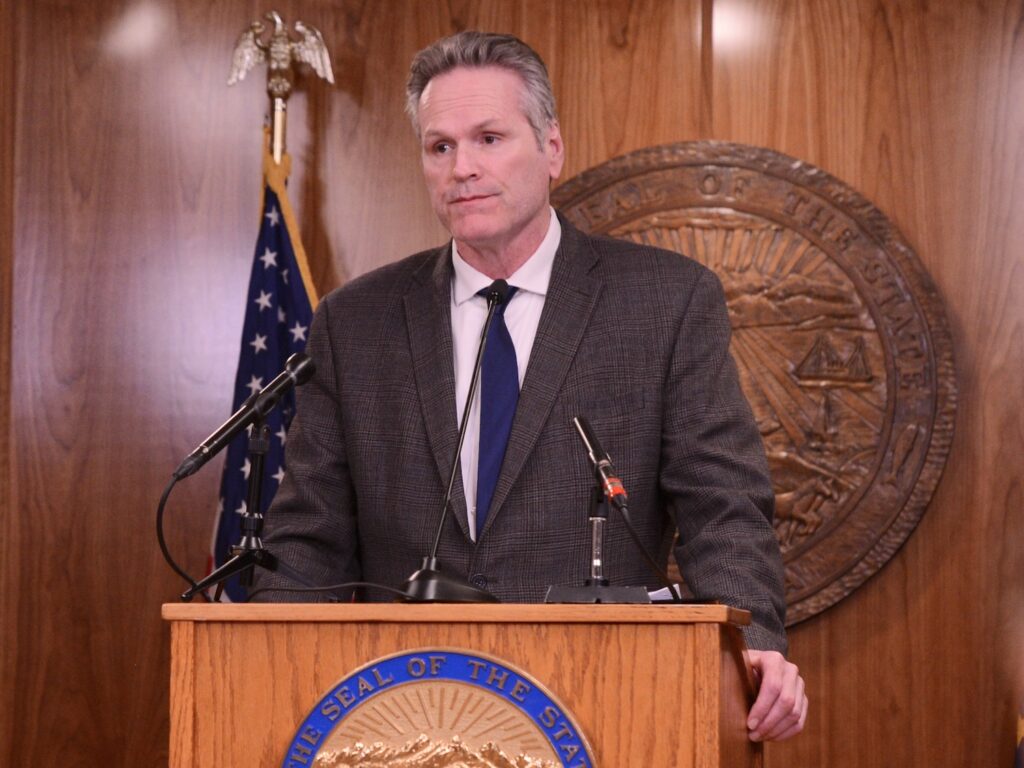
Alaska Gov. Mike Dunleavy talks to reporters during a news conference on Monday, May 19, 2025. (Photo by James Brooks/Alaska Beacon)
Yereth Rosen, Alaska Beacon
Alaska Gov. Mike Dunleavy talks to reporters during a news conference on Monday, May 19, 2025. (Photo by James Brooks/Alaska Beacon)
Alaska Gov. Mike Dunleavy has been appointed to the U.S. Arctic Research Commission at a time when the federal agency is pivoting from its longtime focus on environmental science to more emphasis on military defense and economic development.
Dunleavy is an ally of President Donald Trump. Dunleavy’s presidential appointment, announced by the commission this week, comes five months after Liz Qaulluq Cravalho’s position on the commission was terminated. Cravalho is vice president of lands at NANA Regional Corporation, the Alaska Native corporation for the state’s northwest region. She was initially appointed by then-President Joe Biden in 2021 and reappointed in 2024.
The commission, created in 1984, advises the president and Congress on research policy. Its seven commissioners are appointed by the president.
Dunleavy is the first sitting governor to be appointed to the commission, which advises the president and Congress on Arctic research. Past Alaska lieutenant governors have served on the commission, but not during their time in state office. Mead Treadwell chaired the commission prior to being elected in 2010 as lieutenant governor in the Parnell administration, and Fran Ulmer chaired it after serving as lieutenant governor in the Knowles administration and after serving as chancellor of the University of Alaska Anchorage.
In 2019, his first year in office, Dunleavy used his veto powers to cut state funding of the University of Alaska system by 41%, an action that at the time was characterized as devastating to the university’s Arctic research, among other activities. Much of the funding was later restored through a compromise Dunleavy made with the university.
In a statement released by the commission, Dunleavy praised the role of Arctic research, saying it helps Alaskans.
“Alaska sits at the forefront of the Arctic, and our communities, resources, and strategic position make us essential to advancing responsible research, economic development, and national security in the region,” he said in a statement released by the commission. “I look forward to working with fellow commissioners to ensure that Arctic research reflects the needs of Alaskans while strengthening America’s leadership in the Arctic.”
The Trump-appointed chair of the commission, speaking Wednesday at the Arctic Encounter Summit in Anchorage, said the organization is “tremendously thrilled” to have Dunleavy as a member.
Thomas Emanual Dans, appointed by President Donald Trump as chair of hte U.S. Arctic Research Commission, speaks at the Arctic Encounter Summit in Anchorage on April 15, 2026. (Photo by Yereth Rosen/Alaska Beacon)
“We’re super excited about that,” said Thomas Emanual Dans, appointed in December. “We’ve got the very experienced hand and voice at our commission, and we’re looking to do big things here.”
A pivot to security needs
Dans, who also served on the commission during the first Trump administration, expressed an expansive view of the Arctic that he likened to that of 19th century explorers.
“We want to create the conditions that really unleash human flourishing. We want more. We want human life. We want people to have big dreams,” he said.
Rather than focusing on pure science, the commission is focused on security, as Dans described it.
“Security is probably the overriding, overarching theme of things,” he said.
But security has several facets, he said. It includes military security, international security, energy security and community security, “which can be interpreted broadly in terms of health and well-being” for Arctic residents and others in the nation and the world, he said.
Dans, who lives in Texas and spent most of his career in finance, served on the U.S. Arctic Research Commission during the first Trump administration. But his comments on Wednesday indicated some gaps in his Arctic and Alaska knowledge.
He mentioned Russia’s Wrangel Island, off the northern coast of Siberia, as a security threat. Wrangel island “is close to Alaska here,” he said in his speech. “And for a long time it was incorporated as part of the United States. Today we face missiles pointing at us from Wrangel Island.”
Canadian government brochures and fliers, displayed April 15, 2026, at the Arctic Encounter Summit in Anchorage, describe that country’s countribution to U.S. national defense. U.S. Arctic policy now has a stronger emphasis on national security. (Photo by Yereth Rosen/Alaska Beacon)
Wrangel Island was never part of the United States. There is a place with a similar name – Wrangell Island – that is located in Southeast Alaska. Since 2004, Russia’s Wrangel Island, located 300 miles from the nearest point in Alaska, has been designated as a UNESCO World Heritage Site. It is famous for its Arctic biodiversity, including the world’s largest concentration of Pacific walruses.
A decade ago, Russia built a military base on the island with a focus on radar systems to monitor airspace. The military use of the island is part of Russia’s military buildup in the Arctic, which has worried U.S. officials, and it is also considered to pose a potential threat to the natural resources there.
In his Arctic Encounter Summit comments, Dans hailed the planned expansion of the U.S. Coast Guard’s icebreaker fleet, saying the fleet has “gone from zero to maybe 14.” However, the Coast Guard for decades has operated two polar-class icebreakers: the Healy, which performs annual missions in Alaska and the wider Arctic, and the Polar Star, which usually sails in the Antarctic. The Coast Guard recently acquired another icebreaker for Arctic operations. Originally an oil industrial vessel called the Aiviq, the ship was renamed Storis and commissioned in a Juneau ceremony in August. The fleet is poised to expand: there was funding for more than a dozen new icebreakers in the Trump administration spending bill known as the One Big Beautiful Bill Act.
Concerning Russia, which holds more Arctic coastline and land than any other nation, Dans urged more cooperation and communication. “I’d love to have the younger generation in Alaska learn Russian,” he said.
Within a few miles from the Dena’ina Civic and Convention Center, where Dans spoke at the Arctic Encounter Summit, classes were being conducted in Russian language at elementary, middle and high schools through the Anchorage School District’s Russian immersion program. It was launched as a full-time program in 2024, according to the school district.
Alaska Gov. Mike Dunleavy talks to reporters during a news conference on Monday, May 19, 2025. Dunleavy was appointed by President Donald Trump to the U.S. Arctic Research Commission. (Photo by James Brooks/Alaska Beacon)
Alaska Gov. Mike Dunleavy has been appointed to the U.S. Arctic Research Commission at a time when the federal agency is pivoting from its longtime focus on environmental science to more emphasis on military defense and economic development.
Dunleavy is an ally of President Donald Trump. Dunleavy’s presidential appointment, announced by the commission this week, comes five months after Liz Qaulluq Cravalho’s position on the commission was terminated. Cravalho is vice president of lands at NANA Regional Corporation, the Alaska Native corporation for the state’s northwest region. She was initially appointed by then-President Joe Biden in 2021 and reappointed in 2024.
The commission, created in 1984, advises the president and Congress on research policy. Its seven commissioners are appointed by the president.
Dunleavy is the first sitting governor to be appointed to the commission, which advises the president and Congress on Arctic research. Past Alaska lieutenant governors have served on the commission, but not during their time in state office. Mead Treadwell chaired the commission prior to being elected in 2010 as lieutenant governor in the Parnell administration, and Fran Ulmer chaired it after serving as lieutenant governor in the Knowles administration and after serving as chancellor of the University of Alaska Anchorage.
In 2019, his first year in office, Dunleavy used his veto powers to cut state funding of the University of Alaska system by 41%, an action that at the time was characterized as devastating to the university’s Arctic research, among other activities. Much of the funding was later restored through a compromise Dunleavy made with the university.
In a statement released by the commission, Dunleavy praised the role of Arctic research, saying it helps Alaskans.
“Alaska sits at the forefront of the Arctic, and our communities, resources, and strategic position make us essential to advancing responsible research, economic development, and national security in the region,” he said in a statement released by the commission. “I look forward to working with fellow commissioners to ensure that Arctic research reflects the needs of Alaskans while strengthening America’s leadership in the Arctic.”
The Trump-appointed chair of the commission, speaking Wednesday at the Arctic Encounter Summit in Anchorage, said the organization is “tremendously thrilled” to have Dunleavy as a member.
Thomas Emanuel Dans, appointed by President Donald Trump as chair of the U.S. Arctic Research Commission, speaks at the Arctic Encounter Summit in Anchorage on April 15, 2026. (Photo by Yereth Rosen/Alaska Beacon)
“We’re super excited about that,” said Thomas Emanuel Dans, appointed in December. “We’ve got the very experienced hand and voice at our commission, and we’re looking to do big things here.”
A pivot to security needs
Dans, who also served on the commission during the first Trump administration, expressed an expansive view of the Arctic that he likened to that of 19th century explorers.
“We want to create the conditions that really unleash human flourishing. We want more. We want human life. We want people to have big dreams,” he said.
Rather than focusing on pure science, the commission is focused on security, as Dans described it.
“Security is probably the overriding, overarching theme of things,” he said.
But security has several facets, he said. It includes military security, international security, energy security and community security, “which can be interpreted broadly in terms of health and well-being” for Arctic residents and others in the nation and the world, he said.
Dans, who lives in Texas and spent most of his career in finance, served on the U.S. Arctic Research Commission during the first Trump administration. But his comments on Wednesday indicated some gaps in his Arctic and Alaska knowledge.
He mentioned Russia’s Wrangel Island, off the northern coast of Siberia, as a security threat. Wrangel island “is close to Alaska here,” he said in his speech. “And for a long time it was incorporated as part of the United States. Today we face missiles pointing at us from Wrangel Island.”
Canadian government brochures and fliers, displayed April 15, 2026, at the Arctic Encounter Summit in Anchorage, describe that country’s countribution to U.S. national defense. U.S. Arctic policy now has a stronger emphasis on national security. (Photo by Yereth Rosen/Alaska Beacon)
Wrangel Island was never part of the United States. There is a place with a similar name – Wrangell Island – that is located in Southeast Alaska. Since 2004, Russia’s Wrangel Island, located 300 miles from the nearest point in Alaska, has been designated as a UNESCO World Heritage Site. It is famous for its Arctic biodiversity, including the world’s largest concentration of Pacific walruses.
A decade ago, Russia built a military base on the island with a focus on radar systems to monitor airspace. The military use of the island is part of Russia’s military buildup in the Arctic, which has worried U.S. officials, and it is also considered to pose a potential threat to the natural resources there.
In his Arctic Encounter Summit comments, Dans hailed the planned expansion of the U.S. Coast Guard’s icebreaker fleet, saying the fleet has “gone from zero to maybe 14.” However, the Coast Guard for decades has operated two polar-class icebreakers: the Healy, which performs annual missions in Alaska and the wider Arctic, and the Polar Star, which usually sails in the Antarctic. The Coast Guard recently acquired another icebreaker for Arctic operations. Originally an oil industrial vessel called the Aiviq, the ship was renamed Storis and commissioned in a Juneau ceremony in August. The fleet is poised to expand: there was funding for more than a dozen new icebreakers in the Trump administration spending bill known as the One Big Beautiful Bill Act.
Concerning Russia, which holds more Arctic coastline and land than any other nation, Dans urged more cooperation and communication. “I’d love to have the younger generation in Alaska learn Russian,” he said.
Within a few miles from the Dena’ina Civic and Convention Center, where Dans spoke at the Arctic Encounter Summit, classes were being conducted in Russian language at elementary, middle and high schools through the Anchorage School District’s Russian immersion program. It was launched as a full-time program in 2024, according to the school district.
Editor’s Note: The story has been updated to correct the spelling of Thomas Emanuel’s middle name.
Family Fun Night at Dimond Park Field House, photo courtesy of Juneau Parks and Recreation
NOTN- The Juneau Assembly held a special budget listening session last night as the city faces a steep drop in revenue following last fall’s municipal election.
Assembly and staff said voter-approved changes, including a property tax mill rate cap and new sales tax exemptions on essential food and residential utilities. have created a larger-than-expected budget gap.
“As I’m sure most of or all of you know, we’re in a difficult position of having to come up with a balanced budget after significant revenue loss.” Finance Chair Christine Woll said, “People are paying less in taxes, which is a good thing. The flip side is we have less resources available to fund city services.”
Finance staff now project roughly a $14 million reduction in sales tax revenue heading into fiscal year 2027.
The Assembly is searching for $2-4 million in service cuts and potential new revenue.
“No question, there’s reduced revenue, but we’re really trying to be measured in how they approach it, which means you will be hearing from us and having this conversation over the course of two years, and you’ll get very tired of it, but expect us to be in this conversation of, ‘how do we live within our means for a couple of years?’ Because he certainly wants to make sure that it’s done thoughtfully and with lots of engagement.” Said City Manager Katie Koester.
Public testimony at the listening session focused largely on protecting Parks and Recreation services, including the Treadwell Arena, Diamond Park Field House, pools, and the Jensen-Olson Arboretum.
Testifiers told heartwarming stories about their experiences, memories and use of these city facilities emphasizing to the assembly their importance to Juneau life year round but especially during long winters like this one.
“I understand that the city has some tough decisions to make regarding funding, and while fields, playgrounds and a field house may not seem vital parts to our community, I’m here to tell you they are.” Said one testifier, Lexi, “Parks and Rec is vital to the Juneau community because it organizes sports for youth to participate in, without the high price tag of club teams. It also provides facilities that youth can play organized or pick up games. Any large cuts to Parks and Rec will substantially hurt the youth of Juneau, the parents that support them and the adults that still feel like they’re youths on the field.”
Residents argued those facilities are critical to Juneau’s physical and mental health, youth opportunities and community retention, especially through long winters.
“I made the possibly questionable decision to start playing hockey at 59 years of age.” Said testifier Kieth, “Since I started I have found a community that is incredible. What’s important to our community is what’s going to keep young people and families here in Juneau, and I’m afraid that recreation opportunities are underestimated in their value there. It’s hard to quantify. People make decisions about whether they’re going to stay here or not based upon what kind of opportunities there are. There’s a wide range of people that I’ve met there, from all across the community that I would never have met before, spans all generations. And during the dark, wet winter months, it’s always light and dry, well lit. And so, I just think it’s a very important place to maintain and I hope we can keep the full funding for the for the rink.”
Some speakers urged the city to raise or revisit certain tax exemptions, while others called for expanded use of user fees, volunteers, and public‑private partnerships rather than deeper cuts to specific city entities.
“Maintain existing services within your existing revenue stream. I don’t think that you ought to adjust taxes, particularly sales tax. I do think that reasonable adjustments to fees are acceptable to users, if they enjoy the service that you’re providing, or the community is providing, then they ought to pay for those and they should understand that we’re in tough times.” Said testifier Don.
Assembly members repeatedly warned, that even with strong public support, some services are still likely to be reduced as they work to balance the budget over the next two years.
Budget discussions will continue, with more public input opportunities expected before the city passes next year’s budget.
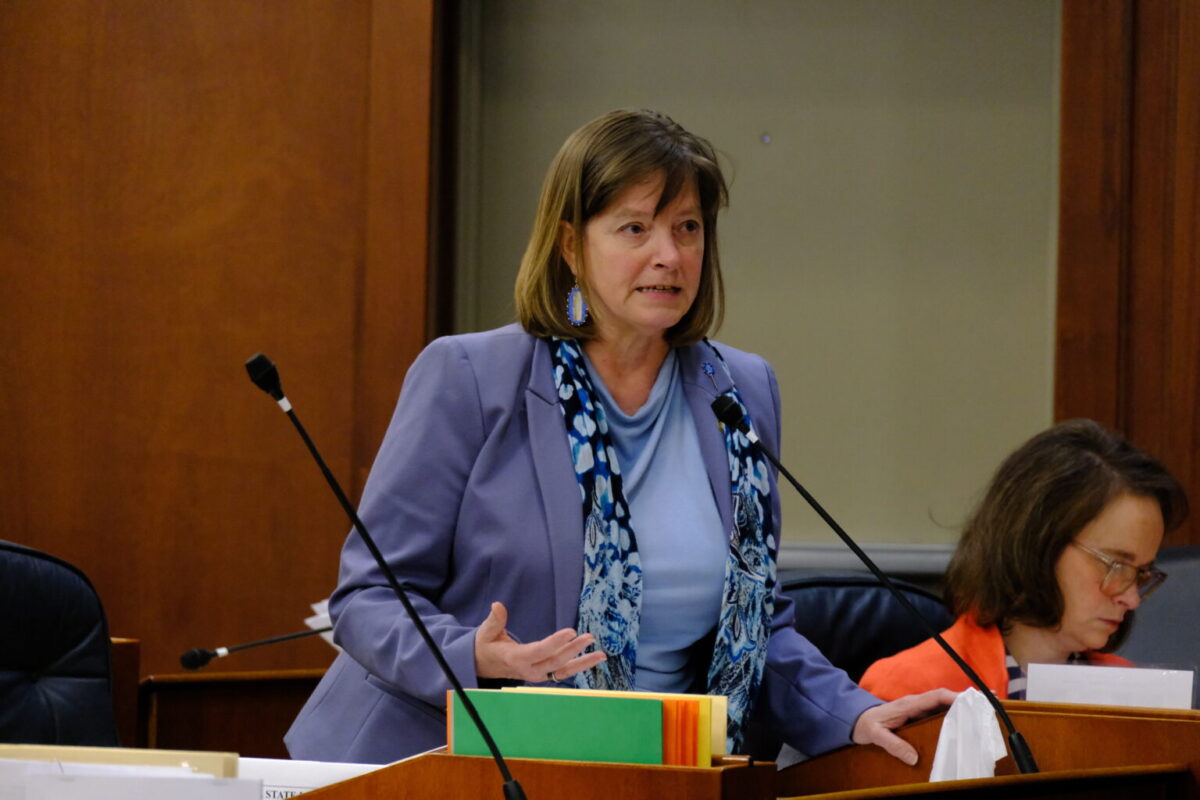
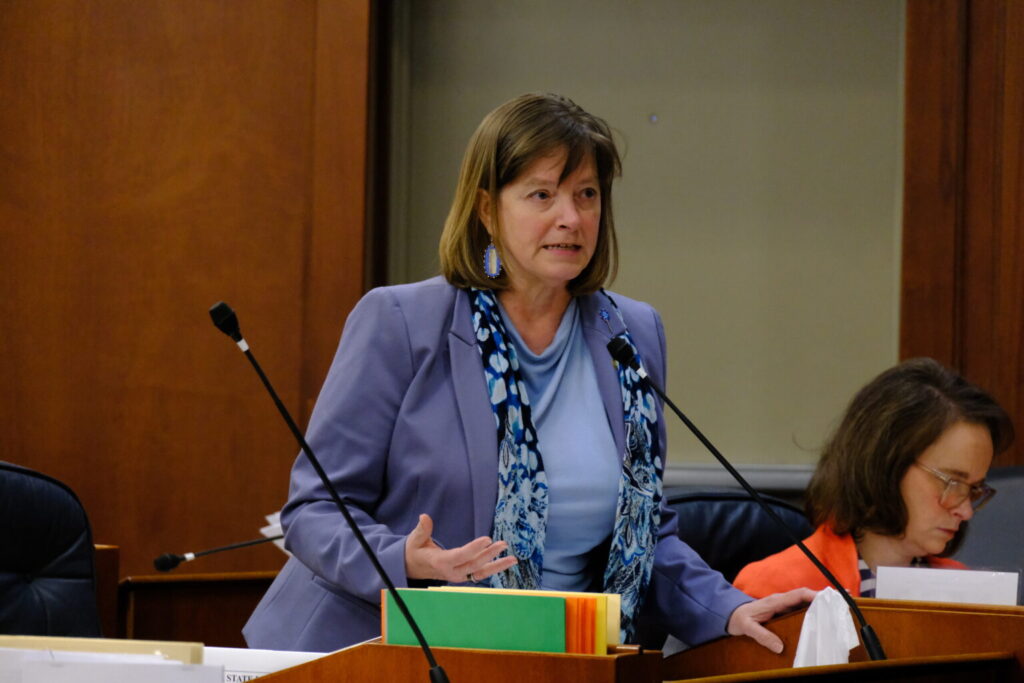
Rep. Alyse Galvin, I-Anchorage, speaks on the House floor on Apr. 13, 2026. (Photo by Corinne Smith/Alaska Beacon)
The Alaska House of Representatives on Monday rejected a bill passed by the Senate that would have applied state corporate income taxes to privately owned oil and gas companies that currently do not pay them. Supporters said the bill would have generated up to $100 million in new revenue for Alaska.
The proposal would have required companies licensed as S corporations or as limited liability companies to pay state corporate income taxes for profits earned in the state, which they currently do not pay. The largest company affected would have been Hilcorp, a privately run Texas-based company that operates the Prudhoe Bay oil fields as well as most of the oil and gas operations in Cook Inlet.
The state does not levy a tax on income earned by S corporations and LLCs because their profits go to owners or shareholders. In many states, those people would pay personal income tax on the money, but Alaska does not have a personal income tax, so such companies avoid taxation on profits. Traditional corporations, or C corporations, are publicly traded and already subject to existing state tax law.
Four members of the multipartisan House majority caucus objected to the proposal, and split to join the all-Republican minority members to reject the Senate’s version of House Bill 194 by a 23 to 17 vote.
House Majority Leader Rep. Chuck Kopp, R-Anchorage, was among those to oppose the bill.
House Majority Leader Chuck Kopp, R-Anchorage, speaks on Monday, March 24, 2025, in favor of House Joint Resolution 11. (Photo by James Brooks/Alaska Beacon)
“This policy creates uncertainty at the exact moment Alaska needs more energy development,” Kopp said on Monday on the House floor. “These are the people that are actually keeping our energy crisis at bay right now.”
Kopp argued the change would potentially hamper new oil and gas development. “It’s been a cold winter in Southcentral and along the Railbelt, and this is at the same time we’re asking these folks to drill more, to produce and store more gas, to explore more and to sign long term gas contracts. So it seems shortsighted to hamstring gas producers when we need them to invest a lot more right now, just to keep our schools warm, our homes heated and our businesses going,” he said.
Anchorage Independent Rep. Alyse Galvin, and Democratic Reps. Carolyn Hall of Anchorage and Robyn Frier of Utqiagvik also joined the minority caucus to oppose the bill on Monday.
Anchorage Democrat Sen. Forrest Dunbar sponsored the amendment to levy the corporate tax on privately owned oil and gas companies on a bill that would have been a routine renewal of a state oil royalty lease agreement, which passed the Senate last month.
Dunbar criticized the House decision in a Wednesday interview, saying it was a missed opportunity to bring in revenues for Alaska.
“They took potentially $100 million or more and rather than put it towards schools or the state of Alaska, they hand it to a billionaire in Texas. I think that was a mistake,” Dunbar said. “This is some of the lowest of low hanging fruit.”
“So I’m very disappointed in their actions,” he added. “And frankly, I’m surprised that some of the members of my party voted the way they did.”
On Monday, Big Lake Republican Rep. Kevin McCabe argued against the bill saying a tax focused on specific corporations that could result in lawsuits against the state. “I would suspect that this will lead directly to the courts,” he said. “This is just plain wrong. We shouldn’t be doing this.”
Galvin, a member of the multipartisan majority caucus, said she opposed that the measure was added to the underlying bill, but said she sees the need for more revenue. “I do think that it’s confusing when we add one bill to another, and haven’t properly vetted (it),” she said.
Galvin said she has proposed legislation, House Bill 152, which would include the corporate income tax provision, as well as a 4% state income tax on individuals earning more than $150,000 and an annual $150 tax per Alaskan to help pay for state services like education. It’s now being considered by the House Finance Committee.
“In a bill that I’m working on, I’m certainly careful to not call out one company,” she said. “But we do need to look at fairness also in all of our taxation. And I think that there is a place for us to address this.”
Galvin also requested to be excused from the vote citing a conflict of interest, but there was an objection on the House floor and she was required to vote. She told the Anchorage Daily News her husband works for Great Bear Pantheon, an Alaska subsidiary of Pantheon Resources, a Texas-based oil and gas exploration company.
Several members argued in support of strengthening corporate income taxes to provide much-needed revenues for Alaska.
Rep. Ky Holland, I-Anchorage is seen during debate on the operating budget on Apr. 13, 2026. (Photo by Corinne Smith/Alaska Beacon)
Rep. Ky Holland, I-Anchorage, supported the provision saying it was a defining moment for the Legislature to take action to address what he called the “Alaska disconnect” — being a resource rich state without capturing the economic value and benefits for residents.
“I believe this is a defining question for many of us, who I think, recognize that our state has moved past looking for the fiscal cliff and is now out beyond it,” he said. “And it’s now time for us to decide, are we willing to take some difficult votes and take some difficult action?”
Holland said failing to change the tax code could create a scenario where other businesses incorporate as S corporations or LLCs to avoid corporate income taxes. “This bill offers a way to address a point of fairness in the taxation that we have,” he said.
The amended bill now returns to the Senate, which can remove or change the provision. Those acts could result in a conference committee made up of representatives from both chambers to reach agreement on the bill.
The original legislation was introduced by the governor and passed the Alaska House last year. It would renew a three-year oil royalty agreement between the state and Marathon Petroleum Corporation, for state owned oil to be processed at its refinery in Nikiski, on the Kenai Peninsula, valued at between $4 million and $18 million in state revenue.
Several lawmakers in the House, including Kopp, said the company was no longer interested in the state contract, voiding the need for the legislation. A spokesperson for Marathon declined to comment on Wednesday, saying the company does not comment on its crude oil sourcing.
Nome gas station, April 10, 2026. (Photo by Yereth Rosen/Alaska Beacon)
The war in Iran is risking what could be a catastrophic spike in the price of fuel in the rural villages and hub communities across Alaska’s coast — and distributors are also warning of possible supply shortages.
Even before the war, fuel prices in the state’s off-road system communities were eye-wateringly high: Unleaded gas was $6.72 a gallon this winter in the Western Alaska hub town of Bethel, while in the Northwest Alaska village of Ambler, the price of gas and heating fuel has been $17.50 a gallon for the past year, according to local officials.
Vendors that sell bulk fuel to those regions are now warning that prices could rise 50% due to the war-driven supply crunch, according to Ingemar Mathiasson, energy manager for the Northwest Arctic Borough, which held a meeting attended by fuel company representatives last week in the regional hub town of Kotzebue.
Rural communities can receive as little as a single bulk fuel delivery during a shipping season that runs only through the summer — meaning that rates can be locked in at that price for the whole next year, even if global commodity prices fall. Government and Native corporation subsidies can help offset costs, but prices are still high and about to get higher.
“We’re looking at, maybe, a survival scenario for rural Alaska,” Mathiasson said in a phone interview Monday. “At those prices, I would imagine that people are going to try to move into Anchorage. I don’t know if you can heat your house at over $20 a gallon.”
Policymakers say they’re tracking the problem but haven’t announced concrete steps to protect consumers.
“This is one of the things that is top of my list right now, this week, here in Washington — to raise this within the administration to try to get in front of it,” said U.S. Sen. Lisa Murkowski. “It has to be a full-on effort to make sure that these communities are not left high and dry.”
The energy shock from the Iran war is landing worldwide, as Iran’s effective shutdown of the Strait of Hormuz keeps some 20% of global oil production out of the markets.
The effects have landed particularly hard in Asia, the destination of 80% of the oil that typically transits the Strait. And Asian refineries produce much of the supply for the more than 160 Western Alaska communities that receive maritime fuel deliveries during the May through October season, according to the Alaska Chadux̂ Network, a tanker and fuel distribution industry trade group.
Buying fuel from other sources “may be possible,” but likely at “significantly elevated prices,” the network’s chief executive, Buddy Custard, wrote in a recent letter received by Alaska policymakers.
“Despite best efforts, a supply gap remains a credible risk,” Custard wrote in his letter, dated March 31. “An undefined portion of the estimated 140 million gallons of fuel may be at risk of non-delivery, affecting dozens of communities, regional hubs, and critical infrastructure that serve as lifelines for surrounding villages.”
West Coast oil refineries, like this one operated by Chevron in Richmond, California, have also been hit hard by shortages in imports from the Middle East. (Nathaniel Herz/Northern Journal)
Custard said he was unavailable for an interview, but he shared additional correspondence with a state House member’s office from last week in which he said it’s difficult to “confirm specific outcomes or timelines” given the “highly dynamic and unpredictable” situation in the Middle East.
“It is not that alternative sources are entirely unavailable, but rather that they are constrained by a combination of limited refining capacity for the required fuel types, existing contractual commitments, and significantly higher costs,” Custard wrote. “In short, limited supply may be available, but not necessarily in the volumes, timeframe, or at the price points required to support Western Alaska communities.”
The uncertain outlook poses a dilemma for leaders at rural institutions that purchase fuel, including village governments and utilities, who are questioning whether to commit to fuel purchases now, later, in full, or in multiple orders to spread out the cost.
“I don’t know what to tell members who say, ‘Should I wait?’ I don’t know what to tell members who say, ‘I can do this much now, this much later,’” said Nils Andreassen, executive director of the nonprofit Alaska Municipal League, which supports local governments. “I don’t know how to keep ahead of it. And the current global uncertainty is not giving me a lot of confidence.”
Fuel vendors — which for Western Alaska include Vitus, Crowley and Delta Western — are urging customers to not delay placing their orders in hopes that prices will improve, according to a written summary of their comments from last week’s meeting in Kotzebue.
“We’re really getting squeezed on all this,” Tom Atkinson, the general manager of Kotzebue’s electric utility, said in a phone interview. “Nobody wants to lock in at this high price.”
Atkinson said that his utility’s diesel fuel supply for the past year cost $3.10 a gallon. This year’s delivery of a million gallons, he said, could come in at more than $6 a gallon.
In prior years, fuel companies have sometimes loaded their tankers with more supply than communities have ordered, expecting to sell the excess once the cargo arrives in Alaska. But this year, vendors say the price is too high for them to buy and transport fuel that risks going unsold.
A cold winter has also produced more sea ice than usual, which could shorten the delivery season. If communities miss the tanker delivery window, those that end up with shortages may have to turn to deliveries by plane, at even higher prices.
The Northwest Alaska hub town of Kotzebue sits on the Baldwin Peninsula. (ShoreZone under Creative Commons License)
“We end up with situations where if the communities don’t fill their tanks, we don’t have enough airplanes in Alaska to help,” said Mathiasson, the Northwest Arctic Borough energy manager. “You just can’t wait until the last minute.”
Energy shocks have hit Alaska before, notably in a major price spike in 2008. That year, lawmakers used a huge windfall in taxes paid by Alaska’s oil-producing companies to help fund a “resource rebate” added to the annual checks written by state government to residents. The total paid to each recipient that year was $3,269, double the amount of the previous year.
This year, given the state’s tighter budget, advocates are pushing for measures that more narrowly target the communities in need. One concept supported by the municipal league is boosting the $750,000 cap on a state program that offers loans to local governments and utilities when they make their bulk fuel purchases.
“I’m not done turning over every stone and seeing what we can do,” House Speaker Bryce Edgmon, who represents a rural legislative district centered in the Bristol Bay region, said in a phone interview from Juneau. “If this war continues, there’s no question it’s going to be catastrophic.”
Edgmon noted that rural Alaska communities already were seeing higher costs for groceries and goods delivered through a federal program called bypass mail, which had a 9% rate increase last year.
A spokesperson for Gov. Mike Dunleavy declined to comment on the outlook for rural Alaska fuel prices and policies under consideration to address them.
In a worst-case scenario of a $5-a-gallon increase, the overall hit to rural Alaska from the war-driven fuel price spike could reach hundreds of millions of dollars, according to one economist’s estimate.
Each rural Alaskan, on average, requires some 1,200 gallons of fuel a year to meet their demand for heat, transportation and electricity, according to economist Steve Colt, who works with the Alaska Center for Energy and Power. By Colt’s calculation, the added expense could reach $6,000 per person and $450 million across the state’s rural communities.
Even before the spike, electricity and heating fuel can cost households in one region of Western Alaska, the Kusilvak Census Area, some 45% of their income, according to data collected by the energy center’s founding director, Gwen Holdmann. That area already faces a poverty rate of more than 30%, triple the statewide level.
“It’s definitely a serious issue that we’re raising up to the highest level,” Mathiasson said.
Nathaniel Herz welcomes tips at natherz@gmail.com or (907) 793-0312. This article was originally published in Northern Journal, a newsletter from Herz. Subscribe at this link.
A ballot box containing absentee ballots dropped off at Anchorage City Hall is seen on Aug. 19, 2024. (Photo by Andrew Kitchenman/Alaska Beacon)
The Alaska Legislature will hold a public hearing Thursday afternoon on election-related ballot initiatives. The Division of Elections certified three ballot initiatives that will be on Alaskan’s ballots in November.
State law requires the legislature to hold at least two public hearings on each certified ballot measure.
The sponsors of all three ballot measures and a group supporting Alaska’s current voting system are scheduled to testify.
The hearing will begin at 3:30 p.m. Thursday. The hearing will be streamed online at akl.tv and ktoo.org/gavel/.
The first ballot measure, 23RCF2, seeks to increase limits on campaign contributions to campaigns for state and local offices.
If passed, individuals would be able to donate $2,000 to candidates and $5,000 to political parties. Groups that are not political parties could give $4,000 to candidates and $5,000 to another group or political party. Individuals could also give $4,000 to joint campaigns for governor and lieutenant governor, and groups could give $8,000. Campaign contribution limits would increase with inflation every 10 years starting in 2031.
This ballot measure was sponsored by former Alaska attorney general and former Juneau Mayor Bruce Botelho, Trail Breaker Kennel owner David Monson and Representative Calvin Schrage, I-Anchorage.
The second ballot measure, 24ESEG, primarily aims to repeal the state’s open top four primary election system and ranked-choice general election system. It would bring back political party primaries and single-choice general elections. The ballot measure seeks to reverse the changes to Alaska’s election system made by Ballot Measure 2, which narrowly passed in 2020.
The ballot initiative also seeks to make changes to the poll watcher statute, reinstate requirements for certain appointees to the Alaska Public Offices Commission, repeal campaign contribution rules that were passed in 2020, remove the requirement for the paid-for-by disclaimers in communications, remove disclosure requirements relating to dark money, remove fines for certain disclosure violations and bring back party petitions and special runoff elections.
This ballot measure was sponsored by former Anchorage Republican Representative Ken McCarty, former Anchorage Public Library deputy director Judy Eledge and Republican gubernatorial candidate Bernadette Wilson.
A group supporting Alaska’s current voting system, Protect Alaska’s Elections, is scheduled to voice its opposition to the appeal of ranked choice voting. According to the group’s registration with the Alaska Public Offices Commission, Protect Alaska’s Elections aims “to defend dark money disclosure, open primaries, and ranked choice voting from repeal.”
The third ballot initiative, 25USCV, would require that only United States citizens may be qualified to vote in Alaska elections. The Alaska Constitution and current statute state that only United States citizens may vote in Alaska’s elections and this ballot measure would not change the requirements to vote.
This ballot measure was sponsored by former Fairbanks Republican Senator John B. Coghill Jr., former Nikiski Republican Representative Charles Michael Chenault and former Anchorage Republican Senator Joshua Revak.
Caller on PIedad Road reported a stolen car battery. An officer responded.
A caller on Deishu Drive reported a person trespassing on their property. Officers responded.
Tuesday, April 7
A caller on the 800 block of Main Street reported a moose in the area.
A caller in the 400 block of Main Street reported a verbal altercation. An officer was advised.
Wednesday, April 8
A caller on Third Avenue at Main Street left an item description for a lost wallet and contact information with dispatch.
A Haines police officer placed a 72-hour notice sticker on a vehicle in the 600 block of the Haines Highway.
Thursday, April 9
A caller on Mud Bay Road turned in a pair of prescription glasses they found.
A driver on Tower Road received a verbal warning for speeding.
A driver at Second Avenue at Mission Street received a verbal warning for failure to stop at a stop sign and not meeting turn signal requirements.
Friday, April 10
A caller on Small Tracts Road reported a utility cover in the roadway. An officer responded and replaced the cover.
A property owner on Second Avenue reported an accidental alarm activation.
A caller left information about his lost keys and contact information with the dispatcher.
A driver received a verbal warning for basic speeding at 1.5 mile of the Haines Highway.
A driver received a citation for speeding on the Haines Highway.
A caller reported a vehicle struck an animal on Deishu Drive. The fire department responded.
A driver received a verbal warning for license plate display requirements on the Haines Highway at Second Avenue.
A driver received a verbal warning for failure to stop at a stop sign on Mud Bay Road.
Saturday, April 11
A caller reported almost getting hit by a speeding vehicle on the Haines Highway near Second Avenue. Officers responded.
A caller turned into dispatch a debit card they found on Second Avenue.
A caller reported leaving their vehicle in a parking lot because it would not start. Caller reported that they’d pick up their vehicle in the 50 blok of the Haines Highway later.
A driver in the 50 block of the Haines Highway was ticketed for not having proof of insurance.
A driver received a verbal warning for speeding in the 30 block of Blacksmith Road.
An officer saw an open door in the 300 block of First Avenue. He closed it and the homeowner was notified.
A driver was given a verbal warning for failing to meet headlight requirements at Mile 1 of the Haines Highway.
There were 3 9-11 hangup calls, 12 EMS calls and 17 burn permits issued during this reporting period.