American Senator Ted Cruz has broken ranks with fellow US conservatives and hit out at talk show host Jimmy Kimmel’s suspension, saying it was “mafioso” behaviour.The Latest News from the UK and Around the World | Sky News









American Senator Ted Cruz has broken ranks with fellow US conservatives and hit out at talk show host Jimmy Kimmel’s suspension, saying it was “mafioso” behaviour.The Latest News from the UK and Around the World | Sky News

Commons Speaker Sir Lindsay Hoyle has protested to the home secretary after prosecutors dropped charges against two men accused of spying for China and targeting MPs.The Latest News from the UK and Around the World | Sky News

Banned from Eurovision after its invasion of Ukraine, Russia will hold a rival international song contest on Saturday, with an emphasis on “traditional values”.The Latest News from the UK and Around the World | Sky News

Four people were injured in a shooting at a nightclub in Birmingham in the early hours of Saturday.The Latest News from the UK and Around the World | Sky News

The UK has to be “careful” and protect free speech as debate becomes “more and more toxic” on both sides of the Atlantic, a British satirist has said.The Latest News from the UK and Around the World | Sky News

Former British athlete Lynsey Sharp has told Sky News she would have won a bronze medal at the Rio Olympics in 2016 had today’s gender testing rules been in place then.The Latest News from the UK and Around the World | Sky News

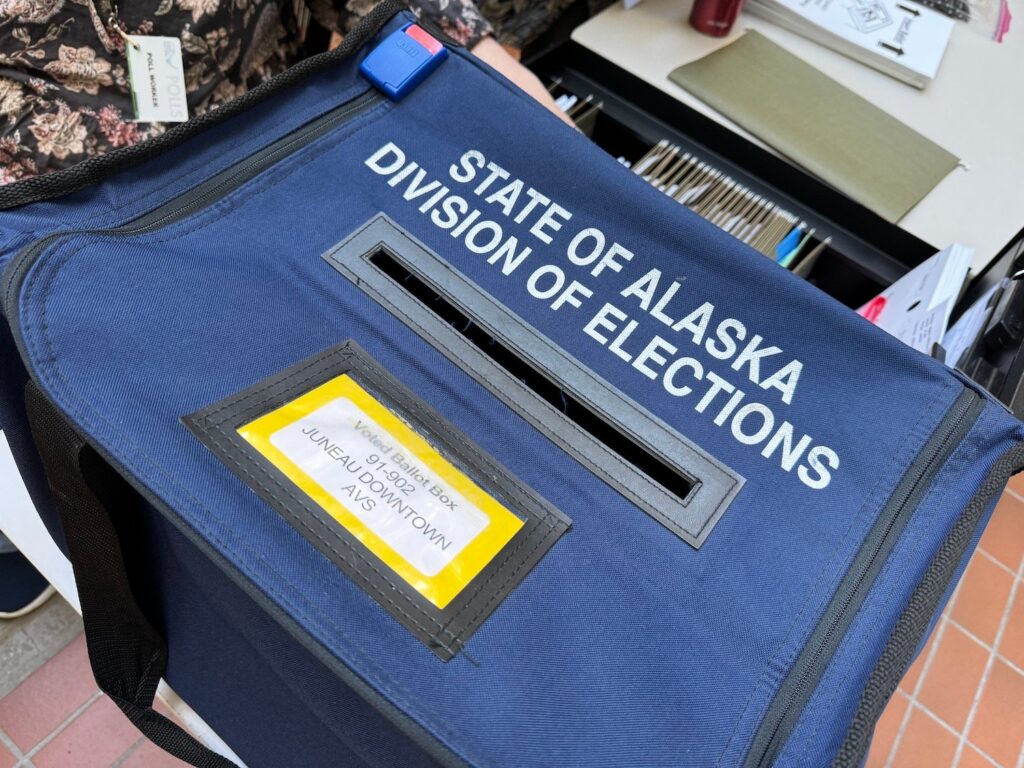
NOTN- Ballots for the 2025 City and Borough of Juneau municipal election are being mailed today to all registered voters, marking the official start of the election period that runs through Oct. 7.
Voters can return their ballots by mail, deposit them in one of five secure drop boxes located around Juneau, or vote in person at City Hall or the Mendenhall Valley Public Library.
Drop boxes open today and will remain available 24 hours a day until 8 p.m. on Election Day.
This year’s ballot includes races for three Assembly seats, an areawide member, and representatives from Districts 1 and 2 , along with three Board of Education positions.
Ballots must be postmarked by Oct. 7 to be counted.
Official results are scheduled to be certified and published Oct. 21, following the review of ballots.

AP- A retreating glacier revealed a new island in Alaska this summer, as lake water filled in to surround a land mass once hugged by ice.
Mauri S. Pelto, a glaciologist at Nichols College in Massachusetts, had anticipated for some time that the Alsek Glacier in southeast Alaska’s Glacier Bay National Park and Preserve would detach from the land mass referred to as Prow Knob. As the glacier has retreated, it has eroded a basin now filled by Alsek Lake, which is fed by the nearby Alsek River, glacier melt and icebergs, he said.
Pelto for years has used satellite imagery as part of his work chronicling changes in glaciers, and he had been checking images of the area at least once a month as he watched for the separation to occur, he said. It appears to have happened sometime between late July and early August.
Glacier Bay has over 1,000 glaciers, according to the park. While many glaciers in Alaska are retreating, not many new islands of size are revealed by their retreat, Pelto said. Prow Knob is roughly 2 square miles (5 square kilometers), and its highest point is just over 1,000 feet (304.8 meters), he said.
Imagery from the early 1980s, shared by NASA Earth Observatory, shows the Alsek Glacier largely surrounding Prow Knob, with Alsek Lake on one side. The glacier at that time shared a connection with Grand Plateau Glacier, the images show.
Over time, the lake has expanded as the glaciers have retreated. Alsek Lake is one of three lakes next to glaciers in the region that has seen marked growth since the 1980s, Pelto said.
By: Yereth Rosen, Alaska Beacon

Federal regulators will accept no public comments on a pending environmental study of oil leasing in Alaska’s Cook Inlet, a U.S. Department of the Interior agency announced through a Federal Register notice published Thursday.
There will be no public comment period and no public hearing on a draft supplemental environmental impact statement for a Cook Inlet lease sale that was held in 2022 but found to be legally flawed, said U.S. Bureau of Ocean Energy Management, which manages oil and gas development in federal offshore areas.
The rejection of public comments is in accordance with Trump administration changes to the National Environmental Policy Act, the 55-year-old law that guides federal decisions about activities that may have environmental impacts. The changes are aimed at speeding up environmental reviews and developing infrastructure projects.
BOEM is following the administration’s updated NEPA regulations and a new department handbook on the law, which went into effect on July 3, said Elizabeth Pearce, a U.S. Department of the Interior senior public affairs specialist.
“This Supplemental Environmental Impact Statement is narrowly focused on addressing the court’s concerns, without a separate public-comment round – streamlining what is typically a protracted, multi-year process down to a few months.” Pearce said by email on Thursday.
Although no public comments will be accepted, the public will be able to read the new environmental impact statement when it is finished, Pearce added. “The completed Supplemental EIS will be posted online so Alaskans and other stakeholders can see exactly how we addressed the court’s limited concerns,” she said.
The Cook Inlet environmental study stems from a federal lease sale that was held on Dec. 30, 2022. It drew only one bid.
Earlier in the year, the Biden administration had planned to cancel the sale because of lack of industry interest. But at the urging of former Sen. Joe Manchin of West Virginia, the Inflation Reduction Act that narrowly passed Congress that year included a mandate for the sale to take place. Hilcorp Inc., the dominant oil and gas operator in Cook Inlet, submitted the only bid.
In response to a lawsuit filed by environmental groups days before the lease sale was held, U.S. District Court Judge Sharon Gleason ruled in 2024 that the lease sale had been held without adequate study of impacts to endangered Cook Inlet beluga whales. Her ruling put the lease sale results on hold, and she ordered BOEM to conduct a new review addressing impacts to the belugas.
BOEM’s announcement about the lack of public comment opportunities was blasted by environmental plaintiffs in the case.
“BOEM’s decision to exclude the public from its supplemental environmental statement is unacceptable. Public participation is not a box to check — it is the heart of NEPA,” Loren Barrett, co-executive director the water conservation non-profit Cook Inletkeeper, said in an emailed statement.
BOEM’s earlier lapses concerning Cook Inlet belugas were “not minor oversights; they are serious errors that must be corrected with rigor and transparency and a proper review that allows the time for public input,” Barrett added.
Kristen Monsell, oceans legal director for the Center for Biological Diversity, also cited risks to the endangered beluga population, which is estimated to number a little over 300.
“This secrecy around exploiting public waters for fossil fuels is completely unacceptable. It would only take one oil spill to devastate Cook Inlet and its beluga whales, which is why the law requires transparency for these dangerous sales,” Monsell said in a statement. “The court found that federal officials failed to look at several important factors that could harm endangered belugas, including vessel noise. If the agency hides its analysis, we won’t know whether these critical issues have been addressed to better protect the belugas.”
Hilcorp currently holds eight federal leases in Cook Inlet, including the sole lease acquired in the disputed 2022 sale. The company relinquished seven other federal leases in Cook Inlet. The BOEM website does not list any Hilcorp plans for exploring its remaining leases in the inlet.
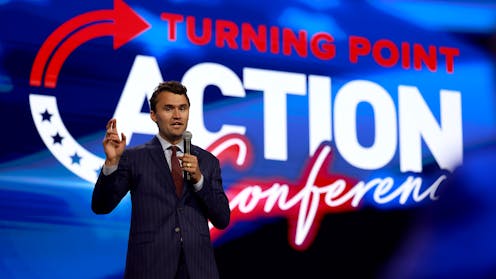
Following the Sept. 10, 2025, death of conservative activist Charlie Kirk in Utah, the Trump administration signaled that it intends to expand investigations into “leftist groups” for possible links to the suspect.
Kirk, who was 31 when he died, founded and led Turning Point USA, a conservative nonprofit that counted hundreds of thousands of young Americans among its members. Tyler Robinson, a 22-year-old Utah man, is accused of killing Kirk with a single bullet at a crowded outdoor debate. He was, according to many accounts, raised by Republican parents in a conservative community. Although Robinson reportedly had recently adopted different political views, his precise motives remain unclear.
The Conversation U.S. asked Beth Gazley, an Indiana University scholar of nonprofits, local governance and civil society, to explain the significance of the Trump administration’s response to Kirk’s death in terms of free speech and nonprofit norms.
High-ranking members of the Trump administration, including Vice President JD Vance and Deputy Chief of Staff Stephen Miller, are accusing certain progressive organizations of encouraging violence against right-wing public figures and suggesting they played a role in Kirk’s death.
Miller, for example, has likened those groups to “a vast domestic terror movement.”
Vance has said the government will “go after the NGO network that foments, facilitates and engages in violence,” in a reference to nonprofits he alleges are supporting illegal activities.
President Donald Trump has blamed Kirk’s death on “a radical left group of lunatics” that doesn’t “play fair.” He has stated that they are “already under major investigation,” although no such probe has been disclosed to date.
Trump has raised the possibility of criminal charges under the Racketeer Influenced and Corrupt Organizations Act, known as the
RICO statute, which is typically used to prosecute gangs and organized crime rings.
But, to be clear, the Trump administration has not yet produced evidence to support any of its allegations of wrongdoing by nonprofits and their funders.

Some conservative media outlets and Trump administration members have singled out specific nonprofits and funders.
Their targets include billionaire George Soros, whose Open Society Foundations are among the country’s largest philanthropies, and the Ford Foundation, another of the nation’s top grantmakers. The outlets and officials claim that both foundations allegedly provided money to as-of-yet unnamed groups that “radicalized” Tyler Robinson and led to what the White House has called “organized agitation.”
Another target is the Southern Poverty Law Center, a civil rights organization that regularly reported comments Kirk made disparaging Black, LGBTQ and other people.
The Ford Foundation is among more than 100 funders that signed onto an open letter posted to the Medium platform on Sept. 17, in which they objected to these Trump administration’s attacks. Open Society Foundations also signed the letter, and, in a post on the X platform, it denied the specific allegations directed at it by the Trump administration. The Southern Poverty Law Center has posted its own denial on Facebook.
Most but not all of the organizations Trump and his officials have accused of wrongdoing are charitable nonprofits and foundations. These organizations operate in accordance with the rules spelled out in Section 501(c)(3) of the U.S. tax code.
What can count as a charitable activity is defined very broadly due to the language that Congress approved over a century ago. It includes public policy advocacy, a limited amount of direct lobbying, social services and a broad range of other activities that include running nonprofit hospitals, theaters and universities. Churches and other houses of worship count as U.S. charities too.
The rights of nonprofits are also protected under the First Amendment to the U.S. Constitution, which entitles them to freedom of speech, freedom of the press, freedom of religion, and the right to assemble and “petition the government for a redress of grievances” – which cements their right to participate in public policy advocacy.
Obviously, institutions – including nonprofits – and the people who lead them can’t promote criminal activity or incite political violence without breaking the law. U.S. Supreme Court precedents have set the bar very high on what counts as an incitement to violence.
The Republican Party has previously attempted, and failed, several times in the past few years to expand the executive branch’s power to deregister charities for partisan purposes.
Most recently, GOP House members drafted an amendment that was cut from the final version of the big tax-and-spending bill Trump signed on July 4.
But many nonprofit advocates remain concerned about the possibility of the Trump administration using other means to limit nonprofit political rights.
Under the Bill of Rights, the U.S. has strong protections in place that shield nonprofits from partisan attacks. Still, there are some precedents for attempts to repress them.
The Johnson Amendment to a tax bill passed in 1954 is a well-known example. This law ended the ability of 501(c)(3) charities, private foundations and religious organizations to interfere in political campaigns.
Despite strong support from the public and the nonprofit sector for keeping it in place, the Trump administration has attempted to repeal the Johnson Amendment. What is largely forgotten is that Lyndon B. Johnson, then a member of Congress, introduced the measure to silence two conservative charities in his Texas district that supported his political opponent.
The Republican Party has also claimed in recent years that conservatives have been victims of efforts to suppress their freedom to establish and operate charitable nonprofits. A notable case was the GOP’s accusation during the Obama administration that the Internal Revenue Service was unfairly targeting Tea Party groups for extra scrutiny. Following years of outrage over that alleged partisanship, however, it later turned out that the IRS had applied extra scrutiny to progressive groups as well.
Some political observers have suggested that the Trump administration’s inspiration for targeting certain nonprofits and their funders comes from what’s going on in other countries. Hungary, Russia, Turkey and other countries have punished the activities of their political opponents and nongovernmental organizations as crimes.
The economic and political freedoms that are the bedrock of a true democracy rely on a diversity of ideas. The mechanism for implementing that ideal in the U.S. relies heavily on a long-standing Supreme Court doctrine that extends constitutional rights to individuals and organizations alike. Nonprofits, in other words, have constitutional rights.
What this means for American society is a much greater proliferation of nonprofit activity than you see in many other countries, with the inevitable result that many organizations espouse unpopular opinions or views that clash with public opinion or the goals of a major political party.
That situation does not make their activities illegal.
Even Americans who disagree with the missions of Turning Point USA or the Southern Poverty Law Center should be able to agree that both institutions contribute to what Supreme Court Justice William O. Douglas once called the “market place of ideas” necessary for an open democracy.
This situation leaves open the question of whether the public has a right to know who is bankrolling a nonprofit’s activity.
Following the money can be frustrating. Federal law is somewhat contradictory in how far it will go to apply democratic ideals of openness and transparency to nonprofit activity. A key example is the long-standing protection of donor privacy in U.S. law, a principle that conservatives generally favor.
The courts have established that making a charitable gift is a protected free speech activity that entitles donors to certain privacy rights. In fact, the most recent U.S. Supreme Court ruling related to charitable giving, handed down in 2021, upheld a conservative nonprofit’s right to strip donors’ names from reporting documents.
This privacy right extends to foundations: They can decide whether to disclose the names of their grant recipients. Still, all nonprofits except churches need to make some disclosures regarding their finances on a mandatory form filed annually.
Looking forward, organizations that advocate for the charitable sector as a whole, such as the National Council of Nonprofits, are closely following the efforts of the Trump administration. Their role is to remind the public that nonprofits on both the right and left side of the political spectrum have strong advocacy rights that don’t disappear when bad things happen.

Beth Gazley does not work for, consult, own shares in or receive funding from any company or organization that would benefit from this article, and has disclosed no relevant affiliations beyond their academic appointment.
Politics + Society – The Conversation