







Categories
Featured Juneau News Juneau Local Ketchikan Local News Feeds Sitka Local

Climate change is straining Alaska’s Arctic. A new mining road may push the region past the brink

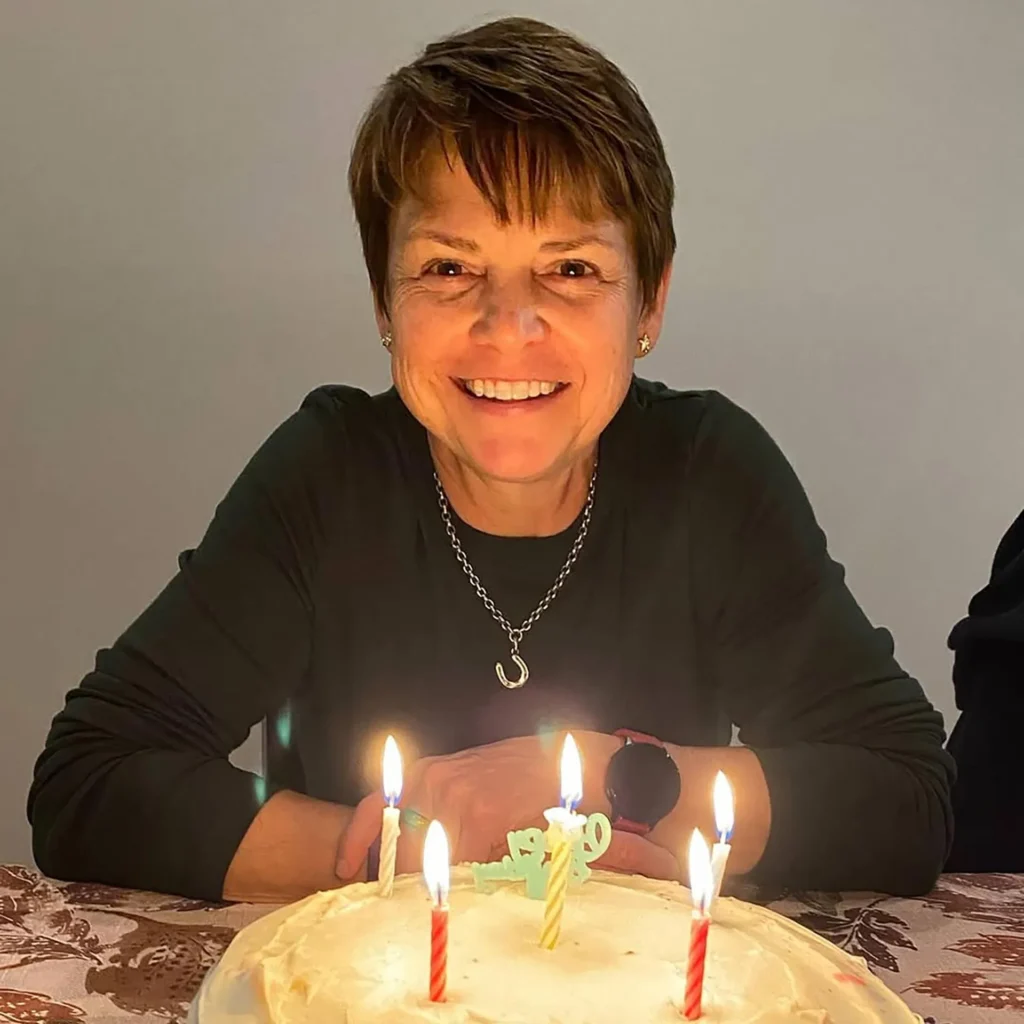
Karmen Monigold, a member of Protect the Kobuk, a Northwest Arctic advocacy group opposed to the Ambler Access Road, poses for a portrait in Kotzebue, Alaska, Saturday, Oct. 4, 2025. (AP Photo/Annika Hammerschlag)

AP- Ice blocks drift past Tristen Pattee’s boat as he scans the banks of Northwest Alaska’s Kobuk River for caribou. His great uncle Ernest steadies a rifle on his lap. It’s the last day of September, and by every measure of history and memory, thousands should have crossed by now. But the tundra is empty, save for the mountains looming on the horizon — the Gates of the Arctic National Park.

Days after Pattee’s unsuccessful hunt, the Trump administration approved construction of the Ambler Access Road — a 211-mile (340-kilometer) route designed to reach massive copper deposits that would cut through that wilderness, crossing 11 major rivers and thousands of streams where salmon spawn and caribou migrate. The approval, which is facing lawsuits though proponents believe construction could start next year, came as record rainfall in Northwest Alaska flooded villages and ripped through fish spawning habitat — the latest climate-driven blow to Indigenous communities already watching caribou and salmon numbers plummet.

As the co-owner of a wilderness guiding company in Ambler, Pattee’s livelihood depends on keeping this landscape intact. An Inupiaq hunter, his ability to feed his family and continue the subsistence traditions of his ancestors depends on healthy caribou and fish populations.

Yet he supports building the road.

“Everything takes money nowadays,” said Pattee, who serves on Northwest Arctic Subsistence Regional Advisory Council, a federal advisory group. Jobs in local villages are scarce, and with gasoline at $17.50 a gallon, the ability to power all-terrain vehicles and boats needed to hunt is out of reach for many. Pattee estimates a single caribou hunting trip from Ambler costs $400. Mining jobs, he believes, would offer a lifeline, and the minerals could slow the climate shifts that are threatening his subsistence way of life.

It’s the irony of climate change in Northwest Alaska: the minerals needed to power the green energy transition sit beneath some of the continent’s last pristine wilderness — a landscape already on the frontlines of the climate crisis, where temperatures are rising four times faster than the rest of the planet.

“I see the climate changing. I’ve been seeing it for years now. It’s scary,” said Pattee. “Losing our culture, our tradition, is very concerning. So let’s do anything we can to help mitigate it.”

The decline before the road

Over the last two decades, the Western Arctic Caribou Herd has plummeted from nearly half a million to some 164,000 — a 66% decline, according to the Alaska Department of Fish and Game. Of those that remain, fewer now cross the Kobuk River during fall migration, where Pattee and other Inupiaq hunters would historically gather in late summer to stockpile meat for winter. While caribou populations naturally fluctuate, scientists say the increasingly delayed cold and snow that triggers the migration south has caused caribou to remain in the Brooks Range, where they are difficult for hunters to access.

The day after Pattee’s unsuccessful hunt, the first snow fell. On Oct. 6 — far later than historical norms — caribou began trickling across the Kobuk. Then the rains came, bringing heavy, late-season downpours that scientists say are becoming more common in the warming Arctic and devastating for salmon. Intense rainfall can damage and dislodge eggs, while rising water temperatures reduce oxygen levels fish need to journey upstream.

One recent study found dozens of clear streams in the Brooks Range have turned orange with toxic levels of metals — changes researchers believe is the result of permafrost thaw — which may help explain recent drops in salmon numbers. Chinook and chum salmon in particular are experiencing “sustained and dramatic declines” with periodic population crashes, which has led to complete closures of some fisheries, according to NOAA Fisheries.

Experts worry about what this year’s record storms will mean for future runs.

“Elders who’ve lived here their entire lives have never seen environmental conditions like this and they’ve never seen fish conditions this poor,” said Alex Whiting, Environmental Program Director for the Native Village of Kotzebue.

Adding pressure to a buckling landscape

The Ambler Road would add its own pressures. Thousands of culverts and nearly 50 bridges would disrupt water flow and fish passages, and more than 100 trucks would traverse the road daily over the decades-long production period. Federal biologists warn the region’s rocks contain naturally occurring asbestos and that heavy traffic would kick up dust that would settle on thousands of waterways as well as the vegetation caribou depend on. The road would also fragment the habitat of the Western Arctic Caribou Herd, potentially hindering migration patterns. The Bureau of Land Management designated some 1.2 million acres of nearby salmon spawning and caribou calving habitat as “critical environmental concern.”

Then there’s the mine. Vast amounts of water would be drawn from rivers and lakes, while groundwater levels and permafrost would be permanently disrupted. The operation would generate enormous quantities of waste rock and require a tailings facility to store toxic slurry, risking spills that could send heavy metals into waterways.

Given the record-breaking rainfall the region has seen in recent years, residents downstream worry about breaches. In Kotzebue, a hub of 3,000 at the mouth of the Kobuk where flooding prompted an emergency declaration this fall, many fear contamination could harm drinking sources and traditional Inupiaq foods like fish and bearded seals, which are already threatened by disappearing sea ice.

Poop “rolls downhill — and that’s where Kotzebue’s at,” said Karmen Monigold, an Inupiaq member of Protect the Kobuk, a grassroots effort working to stop the road, and co-chair of the Kotzebue Sound Subsistence Advisory Council.

Monigold learned to live off the land as a child from her grandparents. Determined to share her connection to nature, she taught her four sons and their cousins to hunt and fish. She’s watched climate change erode the subsistence lifestyle she fought to preserve and fears the road would accelerate that loss.

Like many opponents, she doubts promises that the road would remain private and notes other Alaska roads, such as the Dalton Highway, opened to the public despite similar assurances. An influx of outside hunters and fishers, they fear, would further stress fish and caribou populations. Even Pattee’s support for the road hinges on it being closed.

“We lose so much every generation,” Monigold said. “But right now we still have enough of a culture for it to be worth fighting for.”

In an emailed statement, Kaleb Froehlich, Managing Director of Ambler Metals, the company behind the mining project, said the operation would use proven safety controls for permafrost and will treat all water from the mining process to strict standards. The company also tracks precipitation to size facilities for heavier rainfall and has a binding agreement with NANA, an Alaska Native corporation, to prioritize recruitment from nearby communities.

Ambler Metals declined to comment on concerns specific to the road, including naturally occurring asbestos, traffic impacts, public access and habitat fragmentation, noting the company is not the road developer, though it has contributed to pre-development costs and would be its primary user. The Alaska Industrial Development and Export Authority, the state-owned investment bank developing the road, did not respond to a request for comment.

The carbon footprint of decarbonizing

Critical minerals are becoming increasingly vital — growing demand for green energy technologies could scale production by nearly 500% by 2050, according to a 2020 World Bank report. The Arctic deposit would yield not just copper, but also zinc, lead, silver and gold. At an estimated 46.7 million tons of mineral reserves, it ranks among the largest undeveloped polymetallic deposits in North America.

But there’s no guarantee the minerals would fuel clean energy. President Donald Trump has spoken openly about his disdain for electric vehicles and wind power, and the majority of copper in the U.S. goes to construction projects, according to the Copper Development Association.

The Trump administration has framed the issue as one of national security and deemed reliance on “hostile foreign powers’ mineral production” an acute threat. In March, the White House issued an executive order instructing the Secretary of the Interior to prioritize mineral production and mining as the primary land use on all federal lands known to hold mineral deposits.

Yet even that argument doesn’t quite fit. While the U.S. is heavily reliant on China for some 20 different minerals, the Arctic deposit’s primary minerals — copper and zinc — are not among them, according to the 2025 USGS report. The U.S. sources 45% of its refined copper from Chile, Canada, Mexico and Peru, and 73% of its zinc from Canada and Mexico. The rest is mined domestically.

The real issue isn’t whether the minerals are needed — it’s who gets to decide, said Andrea Marston, an associate professor of geography at Rutgers University who studies mining and Indigenous rights in the Americas. Mining projects like Ambler are sometimes located on Indigenous lands, creating what she calls a false ethical dilemma: mine to save the climate, or protect the land and perpetuate warming. That framing, she argues, obscures other possibilities like investing in mass public transportation, recycling minerals that already exist and designing systems that consume less.

“You cannot justify steamrolling Indigenous lands with a kind of global story of climate change because that just ends up reiterating colonial plunder in a new way,” she said. “The starting point should be: it is their land to decide what to do with.”

A community divided

Ambler mayor Conrad Douglas recognizes the exorbitant cost of living in his village and the desperate need for jobs. But he also knows the Canadian and Australian mining companies that hold the rights to the Ambler deposits may source workers from elsewhere, and he fears what it would all do to the land.

His concerns are layered: fugitive dust, tailings runoff and a cruel cycle where increasingly heavy rains wipe out fish runs, forcing people to rely more on caribou just as the road threatens to further disrupt those herds. With gas prices already putting hunting out of reach for many families, the equation becomes impossible.

“I don’t really know how much the state of Alaska is willing to jeopardize our way of life, but the people do need jobs,” he said, dressed in a pro Ambler Road hoodie.

Douglas worked at Red Dog Mine in the early 1990s and has seen how it benefited neighboring villages with jobs and community support. But he worries the companies behind Ambler won’t take the same approach.

For Pattee, the jobs represent more than income — they would allow people to reconnect with their culture. Young Inupiaq hunters once took immense pride in providing for their families, he said.

“That was their proud moment. That was what they lived for,” he said. “Nowadays, without being able to afford hunting, a lot of that’s been taken away.”

As for impacts on fish and caribou, Pattee believes mining safeguards work. In addition to wilderness guiding, he works as an environmental technical supervisor at Red Dog Mine and has seen good practices firsthand.

Still, “there’s always a worry,” he said.

What would be left

Nick Jans, an author who moved to Ambler in 1979, has watched the landscape transform over 46 years. When he first arrived, permafrost banks held firm against the rivers and caribou poured through by the hundreds of thousands.

The road, he argued, would deliver the final blow to a landscape already stressed by climate change.

“This isn’t about my backyard — this is about your backyard. This is the world’s backyard,” he said, his voice catching. “We have to protect something that was this planet as it was before us. Otherwise, we’re gonna lose our way. And I would say we already have.”

The night after his unsuccessful hunt, Pattee and his family gathered around a table of bowhead whale, beluga, seal and moose — a rare meal all together as relatives had flown in from Anchorage. Like many in Ambler, Pattee’s family members have left over the years to find jobs. In a village this small, each departure is felt — the population has dwindled from 320 in 2010 to some 200 today.

“We’re losing our community. We’re literally losing it,” he said. “People want to be home but they just don’t have the opportunities to keep them there.”

___

Categories
Featured Juneau News Juneau Local Ketchikan Local News Feeds Sitka Local

Alaska DOT is planning a new dock for one of Alaska’s most remote ferry terminals

By: James Brooks, Alaska Beacon

The Cold Bay dock is seen in 2021 during a visit by the ferry Tustumena. (Photo by Sean Maguire/contributed image)

The Alaska Department of Transportation and Public Facilities is planning a new dock at Cold Bay, one of the most remote stops on the state ferry system’s route map.

More than 600 miles southwest of Anchorage, on the Alaska Peninsula, the town of just 56 people is the gateway to the Izembek National Wildlife Refuge and home to a 10,000-foot runway used as an emergency stop for trans-Pacific flights. 

Cold Bay is a stop on the ferry route between Kodiak and Dutch Harbor, but the dock serves more than ferries — it connects the town with ships that supply groceries, water and almost everything else it needs.

State surveys have found that the existing dock “is nearing the end of its serviceable life and is at risk of failing.”

Most of the funding for the new dock is expected to come from the federal government; the Infrastructure Investment and Jobs Act passed by Congress during the Biden administration included $43.4 million for the dock, and the state will contribute another $8.7 million in matching funds.

The final cost of the dock may be higher than that; inflation has driven the cost of all construction projects higher than they were in 2023, when the federal government awarded a construction grant.

Under DOT’s timeline, the project will go out to bid in spring 2027, with construction beginning the following year, and projected to be completed in 2029.

The new dock is expected to be large enough to support the planned replacement for the ferry Tustumena.

One public meeting about the project has already taken place; a second is planned for Tuesday evening, Dec. 16, by Zoom.

Categories
Entertainment

Wenne Alton Davis Cause of Death: Marvelous Mrs. Maisel Actress Gone at 60

Reading Time: 2 minutes

Very sad news out of Hollywood this week:

Wenne Alton Davis, a veteran actress best known for having portrayed a police officer on the hit Amazon Prime show The Marvelous Mrs. Maisel, has been killed after getting hit by a car.

She was 60 years old.

(Amazon)

Various celebrity gossip and entertainment news outlets have confirmed that the star was lost her life in an accident in New York City on Monday night.

Davis was reportedly out to dinner with friends and was walking to the train station when a motorist struck her in Midtown Manhattan.

She was rushed to Mount Sinai West Hospital, where she was pronounced dead from her injuries.

The driver, who has thus far not been charged with a crime, remained on the scene after the crash took place.

“I can only describe Wenne Davis as a bright light,” Davis’ agent Jamie Harris said late Wednesday in a statement.

“She had a huge love for New York, for acting, for her colleagues at JFK and, most of all, her family and her circle of friends (which was also huge). She was someone for whom friendliness and kindness were not what she did but more who she was as a person.”

Harris went on on to say that “many of her friends in the past few days … spoke of her generous spirit and love of life,” and that she will be greatly missed “by all who knew and loved her.”

The agent added:

“We all agree that she had much more to do in her career as an actor and her life. Literally, no one I’ve spoken to can believe that she’s no longer with us.”

(Instagram)

Aside from the cop she played on The Marvelous Mrs. Maisel, Davis had parts in the 2011 Michael Fassbender drama Shame and the 2004 short film Ladies Room.

She also appeared on TV in episodes of Rescue Me, Girls5eva, New Amsterdam, Blindspot, and American Odyssey.

While working as an actress, Davis also supported herself in a security job at John F. Kennedy International Airport in New York.

May Wenne Alton Davis rest in peace.

Wenne Alton Davis Cause of Death: Marvelous Mrs. Maisel Actress Gone at 60 was originally published on The Hollywood Gossip.

​The Hollywood Gossip

Categories
Entertainment

Kim Kardashian & Britney Spears & Khloe Kardashian Cozy Up in Sleepover Pic

Reading Time: 3 minutes

Kim Kardashian, Britney Spears, and Khloe Kardashian look so cozy together.

And yes, there’s a delightful new sleepover photo.

It’s good to remember that you don’t need to chase down Britney in a car like a maniac to see pics of her.

Kim shared a snap featuring all three lovely ladies cuddling together in bed.

Kim Kardashian and Britney Spears in 2012.
TV Personality Kim Kardashian and and Singer Britney Spears attend Clive Davis and the Recording Academy’s 2012 Pre-GRAMMY Gala and Salute to Industry Icons Honoring Richard Branson held at The Beverly Hilton Hotel on February 11, 2012. (Photo Credit: Larry Busacca/Getty Images For The Recording Academy)

What were Kim Kardashian, Britney Spears, and Khloe Kardashian doing together?

In the night on Tuesday, December 10, Kim Kardashian posted a series of photos to Instagram.

Only her most avid fans — those willing to swipe through to see all 18 photos — got to see the best part of the array.

The snap showcases Kim Kardashian and sister Khloe Kardashian in bed, snuggling up to none other than the Britney Spears.

This photo comes from a still fairly recent sleepover that the sisters had with the phenomenal pop star.

Britney looks delighted, grinning from ear to ear as she’s sandwiched between the Kardashians.

This is actually not the first that fans have seen of the Kardashian-Spears pajama party.

The sleepover went down in November.

At the time, Britney even filmed herself giving Kim a peck on the cheek.

Khloe even poked fun at the coziness of the bed, quipping that it was a “geriatric bed” on the grounds that it vibrates.

So Kim is only prividing the latest look at the fun get-together — not our first glimpse.

Britney Spears com Kim e Khloe Kardashian recentemente. 💗

[image or embed]

— Tracklist (@tracklist.com.br) November 15, 2025 at 7:49 AM

What else did Kimberly share with the class?

As we mentioned, Kim Kardashian saved the best — the photo with Britney Spears — for last.

Her other photos included a wide array of selfies.

One snap highlighted her toned bikini body.

Like so many celebrities, Kim seems to enjoy tropical getaways throughout the year. We’d normally say that she’s missing out on late autumn weather, but in Los Angeles, that doesn’t really mean much.

Careful in the tropics, Kim. That’s how Britney got injured just days ago!

Kim Kardashian for Vanity Fair, a screenshot from a YouTube video.
During a video for Vanity Fair, Kim Kardashian submitted to a “lie detector” test. (Image Credit: Vanity Fair/YouTube)

Recently, Kim’s brand has taken some hits.

We don’t necessarily mean the business side of things. Rather, we mean public perception of her.

Kim failed the bar exam after confessing to using ChatGPT for legal advice, which is cringefail behavior at best.

Her new show on Hulu is legendarily bad despite a slew of talented actresses.

And, perhaps worst of all, Kim believes that the moon landing was fake. She’s a grown woman with access to virtually endless information and experts. There is truly no excuse for this brand of brainrot.

Kim Kardashian has a breakdown.
Oh no! Kim Kardashian is going through it on ‘The Kardashians’ Season 7. (Image Credit: Hulu)

Is Kim using Britney for clout?

Over the years, many people have used any association — real or imagined — with Britney Spears for clout . . . but is Kim Kardashian one such person?

Britney has been a legend since long before anyone but the most obsessed O.J. Simpson biographer heard Kim’s name.

However, even with Kim seemingly on the verge of becoming Kringe Kardashian, we don’t think that she needs this boost.

Rather, she just shared a photo from a girls’ night. If anything, it’s a reminder that the hysteria surrounding Britney is manufactured, and doesn’t show you the real her. (As always)

That said, Kim definitely made the photo last on that photo roll to make people swipe through the rest of her pics, right? You can’t hold that against her, though.

Kim Kardashian & Britney Spears & Khloe Kardashian Cozy Up in Sleepover Pic was originally published on The Hollywood Gossip.

​The Hollywood Gossip

Categories
Entertainment

Jeff Garcia Cause of Death: ‘Jimmy Neutron’ Star Was 50

Reading Time: 2 minutes

We have sad news to report from the world of television today.

Jeff Garcia — the actor and comedian who was best known for voicing the character Sheen Estevez on the Nickelodeon series Jimmy Neutron — has passed away.

He was just 50 years old.

Actor Jeff Garcia arrives at the premiere of Paramount Picture's "Barnyard" at the Cinerama Dome Theater on July 30, 2006 in Los Angeles, California.
Actor Jeff Garcia arrives at the premiere of Paramount Picture’s “Barnyard” at the Cinerama Dome Theater on July 30, 2006 in Los Angeles, California. (Photo by Kevin Winter/Getty Images)

News of Garcia’s passing comes courtesy of his family, who confirmed that he died after being taken off of life support at a Los Angeles hospital.

No cause of death has been announced, but insiders tell TMZ that Garcia had been dealing with numerous health issues in recent months.

Earlier this year, he reportedly suffered a brain aneurysm that led to a fall and serious head injury.

He was able to leave the hospital, but it now looks as though he never fully recovered.

Jeff Garcia was known for voicing Sheen Estevez on 'The Adventures of Jimmy Neutron' and 'Planet Sheen.'
Jeff Garcia was known for voicing Sheen Estevez on ‘The Adventures of Jimmy Neutron’ and ‘Planet Sheen.’ (Nickelodeon/YouTube)

Sources say Garcia also suffered a stroke at some point in the last year.

He had canceled multiple stand-up shows because of health issues, and he reportedly battled pneumonia last month.

Insiders say that after being successfully treated for pneumonia, Garcia returned to the hospital on Monday with difficulty breathing.

On Tuesday, his lung collapsed, and shortly thereafter, his loved ones made the difficult decision to remove him from life support.

In addition to his long and varied career as a voice actor, Garcia had been working as a stand-up comic since he was 15 years old.

“With a very heavy heart, I would like to inform everybody that my father, Jeff Garcia, has passed away,” Garcia’s eldest son wrote on Instagram today.

“My father was a unique soul. He was unapologetically himself and I will always admire the love, compassion, and drive that he had. He taught me so much and gave me advice that I live by every single day,” he continued, adding:

“From voice acting to stand up comedy, he shined with his quick wit, brash humor, and charm. He has made such an impact on people’s lives internationally, whether you grew up watching Jimmy Neutron, or shared a laugh with him at one of his shows. He was my hero… I idolized him. He may be gone, but he will NEVER be forgotten.”

Our thoughts go out to Jeff Garcia’s loved ones during this incredibly difficult time.

Jeff Garcia Cause of Death: ‘Jimmy Neutron’ Star Was 50 was originally published on The Hollywood Gossip.

​The Hollywood Gossip

Categories
Entertainment

Kelly Osbourne Goes After Body-Shamers, Tells Folks to “F-ck Off”

Reading Time: 3 minutes

Kelly Osbourne seemingly clapped back at critics who have recently gone after her appearance following the death of her famous father, Ozzy Osbourne.

During an interview with Piers Morgan this week, Sharon Osbourne was showed a video of her daughter clapping against the insensitive morons out there who have been trashing her extreme weight loss of late.

Kelly Osbourne attends the 32nd annual Race To Erase MS Gala at Fairmont Century Plaza on May 16, 2025 in Los Angeles, California. (Photo by Leon Bennett/Getty Images)

“To the people who keep thinking they’re being funny and mean by writing comments like ‘Are you ill,’ or ‘Get off Ozempic, you don’t look right.’ My dad just died, and I’m doing the best that I can, and the only thing I have to live for right now is my family,” Kelly wrote in footage that has been deleted.

“And I choose to share my content with you and share the happy side of my life not the miserable side of my life.”

The former reality star added, “So to all those people, ‘f— off.”’

Sitting opposite Morgan, Sharon was quick to agree and defend her daughter.

Kelly Osbourne attends The Serpentine Gallery Summer Party 2025 at Serpentine on June 24, 2025 in London, England. (Photo by Joe Maher/Getty Images)

“She’s right,” Sharon told the host. “She’s lost her daddy, she can’t eat right now.”

Kelly, 41, who first rose to fame as a 15-year-old on her family’s reality show The Osbournes, has long been open about her struggles with body image and weight.

“I have been a drug addict, an alcoholic … I’ve been a complete mess, disrespectful to people, horrible — but I got more sh-t for being fat than I did for anything else. It’s insane,” she told People Magazine last May, later adding:

“I tried probably everything that there is out there, whether it be surgery, medication, diet and exercise. I got my mind where I needed it to be, and everything started to fall into place.”

Kelly Osbourne attends Clarins Celebrates Beauty Icons at Academy Museum of Motion Pictures on March 21, 2025 in Los Angeles, California. (Photo by Phillip Faraone/Getty Images for Clarins)

Back in August, Osbourne reflected on her dad’s passing via an emotional social media post. It read as follows:

I’ve sat down to write this a hundred times and still don’t know if the words will ever feel like enough.. but from the bottom of my heart, thank you.

The love, support, and beautiful messages I’ve received from so many of you have truly helped carry me through the hardest moment of my life. Every kind word, every shared memory, every bit of compassion has meant more than I can ever explain.

Grief is a strange thing-it sneaks up on you in waves — I will not be ok for a while-but knowing my family are not alone in our pain makes a difference. I’m holding on tight to the love, the light, and the legacy left behind.

Kelly Osbourne Goes After Body-Shamers, Tells Folks to “F-ck Off” was originally published on The Hollywood Gossip.

​The Hollywood Gossip

Categories
Entertainment

Jewel STUNS in Ageless, Sizzling Bikini Thirst Traps

Reading Time: 3 minutes

Jewel had her first hits in the 1990s.

But, to look at her sizzling bikini thirst trap, you might think that she was born in that decade.

If she keeps posting pics like this, more dating rumors are bound to crop up.

We’re not complaining, though.

Jewel in August 2021.
Singer-songwriter Jewel performs on the Main Stage during the first day of The Wellness Experience by Kroger at The Banks on August 20, 2021. (Photo Credit: Duane Prokop/Getty Images for The Wellness Experience by Kroger)

Jewel looks incredible

This week, Jewel took to her Instagram to share some tropical snaps with followers.

She captioned the post: “#Barbuda for a few days of sun before more winter snow.”

Sure enough, the photos show the iconic singer vacationing in Barbuda, half of the Caribbean twin-island state of Antigua and Barbuda.

In a couple of pics, Jewel wears only a brown-and-white striped bikini.

Truly, zebra stripes have never looked so good.

Jewel’s pics range from beach pics that look postcard-perfect to a mirror selfie from, one assumes, her hotel room.

We can also see some of the dining options — including a seafood grill that’s practically right on the water.

Not everyone would enjoy abandoning a winter wonderland (it’s autumn for another week or so, but still) for sunshine and surf, but some people love summer and miss the hot weather when it’s gone.

Assuming that the singer is one such person, she must have been enjoying herself.

It’s also possible that she just enjoys a bit of climate variety. Either way, we hope that she had a blast.

Jewel in August 2019.
Jewel signs copies of her book at the Wellness Your Way Festival at the Colorado Convention Center on August 17, 2019. (Photo Credit: Tom Cooper/Getty Images for Wellness Your Way Festival)

‘Absolutely stunning’

Fans and followers were quick to flood the comments under Jewel’s dazzling photos.

“Thirst trap!!!” declared one — a comment echoed by countless others. There were those who, seemingly robbed of their ability to write, simply showered her with emojis of admiration.

Another proclaimed: “You’ve aged like a fine wine! Absolutely stunning!”

It is probably worth remembering that Jewel was born in May of 1974.

She is 51 years old. But you wouldn’t know that from her beachgoing photos.

Jewel on November 27, 2025.
Holland America Line Alaska-themed float featuring multi-platinum singer-songwriter Jewel at The Macy’s Thanksgiving Day Parade on November 27, 2025. (Photo Credit: Slaven Vlasic/Getty Images for Holland America Line)

Obviously, everyone is aware that Jewel is gorgeous.

However, it wasn’t that long ago that people saw her take part in the Macy’s Thanksgiving Day Parade.

There, she was understandably bundled up. (Thursday, November 27 was a pleasantly cold day on the East Coast)

These bikini photos make it impossible to ignore how gorgeous — and seemingly ageless — Jewel looks these days.

She’s 51, but could pass for a woman in her thirties.

Jewel in August 2021.
Singer-songwriter, mental health expert Jewel speaks during Educating Mindfully on the Inspire Lounge stage during the first day of The Wellness Experience by Kroger at The Banks on August 20, 2021. (Photo Credit: Duane Prokop/Getty Images for The Wellness Experience by Kroger)

This year got up to a rough start

On a grim note, Jewel did start the year with a major misstep — performing at Robert F. Kennedy Jr’s ironically named Make America Healthy Again ball.

RFK Jr. is indefensible, and his dismantling of American healthcare and suppression of medical science is already costing people their lives. There will be more death, disease, and preventable disability in the years to come — all stemming from his inhumane actions.

To her credit, Jewel apologized on social media, acknowledging that she had “caused pain.” She highlighted the LGBTQ+ community (always a sizable portion of her fan base), calling them “treasures.”

Simply put, public figures agreeing to perform for evil men will face backlash. How they respond after the fact can tell you a lot about their character.

Jewel is not the only person who’s come to realize that RFK Jr. is an untouchable disgrace this year.

Jewel STUNS in Ageless, Sizzling Bikini Thirst Traps was originally published on The Hollywood Gossip.

​The Hollywood Gossip

Categories
Politics

Trump administration’s immigrant detention policy broadly rejected by federal judges

Federal agents search for undocumented immigrants in Chicago on Nov. 6, 2025. Scott Olson/Getty Images

In federal courtrooms across America, a pattern has emerged in cases in which immigrants are being rounded up and jailed without a hearing. That’s a departure from fundamental constitutional protections in the U.S. that provide the right to a hearing before indefinite imprisonment.

In response, federal judges are systematically rejecting the Trump administration’s attempt to drastically expand who can be locked up without a hearing while awaiting deportation proceedings.

The Trump White House policy has been challenged in at least 362 cases in federal district courts, according to a recent ruling by U.S. District Judge Lewis A. Kaplan. Challengers have prevailed in 350 of those cases – decided by over 160 different judges sitting in about 50 different courts across the United States.

Behind those numbers are thousands of people whose freedom hangs in the balance while courts decide whether their imprisonment is lawful.

Trump administration officials claim they are targeting only “the worst of the worst” in immigration enforcement. Yet nearly three-quarters of people detained had no criminal history at all. Of those with criminal histories, many involved only minor offenses such as traffic violations.

The immigrants are in civil immigration proceedings to determine whether they can remain in the United States. Yet under the administration’s new policy, many are being held in jail-like facilities indefinitely, including “state-run prisons located in remote areas, soft-sided tent structures, military bases, and even in prisons in other countries,” according to a report from the Migration Policy Institute think tank.

As a law professor who studies due process in immigration proceedings, I view the overwhelming judicial consensus against this policy as the federal courts performing their essential constitutional function: checking executive overreach. The courts are enforcing fundamental due process protections.

Whether this consensus will prevail, however, depends on appeals courts and, ultimately, the Supreme Court.

Men dressed in military gear stand near a car.
U.S. Customs and Border Patrol Commander Gregory Bovino, center, stands with agents in Metairie, La., on Dec. 3, 2025.
Adam Gray/AFP via Getty Images

A radical reinterpretation

The current controversy centers on a policy shift the Department of Homeland Security implemented in July 2025.

In an internal memo, DHS reinterpreted decades-old immigration law to classify virtually all undocumented immigrants in the U.S. as “applicants for admission” who are subject to mandatory detention under the Immigration and Nationality Act.

For 30 years, this provision applied primarily to people apprehended at the border shortly after entering the country. The new interpretation extends it to anyone present in the U.S. illegally. That includes people who entered years or decades ago, have established families and businesses and are pursuing legal pathways to remain in the U.S.

The practical effect of the change is that people who were previously entitled to request release on bond while their deportation cases proceeded are now subject to automatic, indefinite detention without court review of whether their imprisonment is justified.

Courts overwhelmed by petitions

Within months of the July policy announcement, more than 700 emergency habeas petitions – legal challenges to unlawful imprisonment – reached federal courts nationwide.

In Michigan alone, U.S. District Judge Hala Jarbou – a Trump appointee – received more than 100 individual cases from detainees challenging their imprisonment. Then, 97 additional detainees filed a joint lawsuit. Cases arose across the country as immigrants who were arrested at workplaces, courthouses or during routine check-ins with immigration officers asked federal courts to order their release or grant them bond hearings.

The Trump administration has fought these cases on multiple fronts. It has argued that the detention policy is lawful and that federal courts lack jurisdiction to review it at all. The government has invoked provisions of the Immigration and Nationality Act that it claims strip courts of jurisdiction over certain immigration decisions.

Protesters gather in front of a federal building.
Protesters gather outside an Immigration and Customs Enforcement processing facility in Broadview, Ill., on Nov. 21, 2025.
AP Photo/Nam Y. Huh

But federal judges have largely rejected these jurisdictional arguments. They have found that courts retain the power to review whether detentions comply with the Constitution and federal law.

As one district court judge explained, accepting the government’s position would mean the executive branch could detain noncitizens indefinitely without ever having to justify that detention to a court. It’s a result that would raise “serious constitutional concerns” about suspending habeas corpus, the fundamental right to challenge unlawful imprisonment.

Judge Kaplan similarly concluded that the “current administration’s unilateral decision that all noncitizens … are to be mandatorily detained affords to such individuals no process, let alone due process. It is unconstitutional.”

An explanation on what “due process” means.

The policy’s ripple effects extend beyond the courts.

Immigration and Customs Enforcement detained a record 66,000 people in November 2025 – more than any previous administration had ever held at one time. The American Immigration Council, which advocates for immigration rights, documented 23 deaths in ICE detention during fiscal year 2025. The previous four years combined saw 24 such deaths.

A nationwide remedy

The piecemeal nature of hundreds of individual court rulings creates its own problems. Each emergency petition requires rushed briefing and a hearing. That strains the courts and detained immigrants’ ability to secure representation. Outcomes can vary based on which judge hears a case, creating geographic disparities in who remains detained and who is released.

That’s why the November decision in Maldonado Bautista v. Santacruz is potentially transformative. U.S. District Judge Sunshine S. Sykes certified a nationwide class of noncitizens subject to the policy and separately ruled that the government’s interpretation of the law was wrong – detainees are entitled to bond hearings. Combined with the nationwide class certification, this ruling could require the Trump administration to provide bond hearings to thousands of people currently in mandatory detention.

But implementation has been uneven. Immigration judges – who are Justice Department employees, not independent federal judges – have responded inconsistently to Judge Sykes’ order.

In a recent immigration court decision in Memphis, Tenn., a judge denied a bond hearing request. The judge stated that further guidance from the Executive Office for Immigration Review, a Department of Justice office, was required before complying with Sykes’ order.

Attorneys representing the class say they’ve seen similar resistance from some immigration judges, while others have begun granting bond hearings. They plan to return to federal court in January 2026 to present evidence of this confusion and seek further relief.

The near-unanimous rejection by federal judges – insulated from political pressure by lifetime appointments – demonstrates why the Constitution grants judges life tenure. Federal courts remain the final check when executive action threatens fundamental due process rights.

The Conversation

Cassandra Burke Robertson does not work for, consult, own shares in or receive funding from any company or organization that would benefit from this article, and has disclosed no relevant affiliations beyond their academic appointment.

​Politics + Society – The Conversation

Categories
Politics

2026’s abortion battles will be fought more in courthouses and FDA offices than at the voting booth

Medication abortions are increasingly common in states with abortion bans. Anti-abortion forces are pushing the courts and the White House to gut that access. Charlie Neibergall/AP Images

In 2026, the biggest battles over abortion will not be at the polls.

There will be a few contested measures on state ballots. Next year, Nevada’s government will ask residents to approve constitutional protection for abortion rights for the second time, as required by state law. The same measure passed in 2024 with just over 64% of the vote.

Virginians will likely see a similar ballot initiative. In November 2025, voters there cemented a majority for Democrats in the state legislature, and the House of Delegates is expected to put forth an abortion rights ballot measure to voters in 2026.

Anti-abortion proponents in Missouri want to undo an amendment protecting abortion rights that voters passed in 2024. They’re advancing a new measure that could strip residents of the reproductive rights that are now constitutionally enshrined.

However, the most consequential questions about abortion in 2026 could be answered at the federal level, by the Trump administration or in the courts. As a scholar of reproductive health law, I’m watching how federal judges and agencies respond to conservative efforts to restrict or end people’s access to mailed abortion medication.

Medication abortion in the courts

Over 25 years ago, the Food and Drug Administration approved mifepristone – one of two drugs commonly paired together to end a pregnancy. Since that time, medication abortion has been closely regulated by the FDA and is under attack.

In 2022, the Alliance for Hippocratic Medicine, a coalition of anti-abortion physicians, sued the FDA for approving mifepristone in 2000 and for each time the agency eased a restriction on mifepristone thereafter, in 2016 and 2021. The complaint argued that the FDA failed to consider evidence establishing the harm caused by medication abortion – claims roundly rejected by decades of rigorous, peer-reviewed research.

The Supreme Court in 2024 ruled that the Alliance for Hippocratic Medicine lacked standing to sue because FDA regulation of medication abortion caused no actual injury to the doctors it represented, who do not prescribe mifepristone or perform abortions.

Yet the case lives on in lower federal courts. There is ongoing litigation, and politicians are taking up the fight over mailed medication abortion.

Kansas, Missouri and Idaho intervened in the Alliance lawsuit in 2023, seeking to establish standing, and Louisiana sued the FDA in a separate case challenging the FDA’s regulation of mifepristone.

The pending actions focus on the FDA’s decision in 2021 to lift the requirement that patients pick up mifepristone in person, which has permitted patients to receive medication abortion by mail. These states claim this development is dangerous and threatens their right to enforce their abortion bans.

In October 2025, a federal court in Hawaii came to a different conclusion. The court concluded that because mifepristone is very safe, the FDA must reconsider whether the drug necessitates any restrictions at all.

The politics of medication abortion

The dispute over medication abortion is playing out in Washington, D.C., too.

In 2025, 51 Republican senators and 22 Republican attorneys general asked the FDA to reinstate the 2021 in-person restriction and upend the transit of abortion pills.

In response to Republicans’ push to restrict or withdraw the availanlity of mifepristone, 47 Democratic senators and 20 attorneys general issued letters supporting mifepristone’s safety. The letters questioned a pledge by Health and Human Services Secretary Robert F. Kennedy Jr. and his FDA chief to commence a “review” of the drug. The Democratic senators’ letter pressed the agency to remove all remaining restrictions on mifepristone.

In early December, Bloomberg reported that the FDA had quietly postponed its planned mifepristone “review” until after the 2026 midterm elections.

The battle over telehealth abortion care

Decades of research demonstrates that medication abortion is safe and effective. When commenced before 10 weeks’ gestation, the two-drug method is effective about 98% of the time. Complications, such as infection or hemorrhage, are rare; they occur in perhaps a fraction of a percent of all medication abortions.

Yet courts and legislators cannot agree on basic facts, in part due to widespread disinformation about abortion care, and anti-abortion forces have waged a concerted national campaign to stop mailed abortion pills.

Today, no part of the medication abortion process needs to be done in person: The patient, provider and pharmacy can all interact virtually.

Mailed medication abortion is popular nationwide, particularly in states with abortion bans. Because of mailed medication abortion, the average number of abortions nationwide has actually increased since the U.S. Supreme Court in 2022 overturned Roe v. Wade, reversing abortion protections under the U.S. Constitution.

Providers in so-called “shield” states are a key reason for this. Eight U.S. states have laws that shield providers from civil, criminal and professional consequences for delivering reproductive health care to out-of-state patients.

In these shield states, doctors may prescribe abortion medication no matter where the patient lives, so long as that care is delivered by a provider licensed and located in the shield state, complying with the shield state’s laws.

These laws are the subject of legal conflicts between anti-abortion states and shield states.

Late in 2024, Texas sued a doctor in New York, a shield state, for violating Texas abortion and licensure laws. In early 2025, Louisiana indicted the same New York physician.

Texas won its case in a Texas court and then asked New York to enforce the judgment of more than $100,000 in fines and fees. A New York court has refused to do so, citing its shield law. New York also rejected Louisiana’s request to extradite the doctor to stand trial for the same reason.

On Dec. 4, 2025, Texas officially enacted the first bill in the country that explicitly targets shield laws. Passed in September 2025, HB 7 allows private citizens to file lawsuits against a person or entity for attempting or intending to mail abortion pills into the state.

Watch the courts and the FDA

Having written about shield laws extensively, I believe these interstate conflicts will land, sooner or later, before the Supreme Court. Right now, state and federal courts are deciding the issues.

If judges determine that shield laws are unconstitutional or that the FDA acted illegally, courts could substantially alter people’s ability to gain access to medication abortion.

So could the FDA. If it reimposes an unnecessary restriction on mifepristone, meaning the drug would no longer be widely available through telehealth, that decision would curb how 1 in 4 women in the U.S. receive abortion care today.

But opinion polls indicate that the majority of Americans do not think abortion should be illegal in all circumstances, and they vote accordingly.

In November 2025, Democrats won significant elections, for example, in New Jersey, Virginia and Pennsylvania. Abortion was absent from ballots in these states this year, but these races still held significance for abortion rights.

The election of a pro-choice governor and legislature in Virginia, for example, all but guarantees that abortion will continue to be legal in the last Southern state to protect broader abortion rights. Likewise, Pennsylvanians opted to keep the state supreme court’s liberal majority, which struck down the state prohibition on Medicaid payment for abortion.

In 2024, two years after the fall of Roe v. Wade, 14 states put forth ballot initiatives to enshrine abortion as a constitutional right. Eleven passed.

With little political support to pass a nationwide abortion ban, making it illegal to mail abortion pills is the most immediate way to obstruct reproductive health care in states with abortion bans.

The question for abortion in 2026, then, is: Will courts or federal forces do what democratic processes cannot?

This story was published in collaboration with Rewire News Group, a nonprofit newsroom dedicated to covering reproductive and sexual health.

The Conversation

Rachel Rebouché does not work for, consult, own shares in or receive funding from any company or organization that would benefit from this article, and has disclosed no relevant affiliations beyond their academic appointment.

​Politics + Society – The Conversation

Categories
Politics

The POLITICO Poll, December 2025 – Trump and leaders

The POLITICO Poll conducted by Public First from Dec. 5 – Dec. 9.

​Politics