Qatar’s prime minister said Israel has “killed any hope” of seeing more hostages returned from Gaza after carrying out an attack targeting Hamas leadership in his country. The Latest News from the UK and Around the World | Sky News












Qatar’s prime minister said Israel has “killed any hope” of seeing more hostages returned from Gaza after carrying out an attack targeting Hamas leadership in his country. The Latest News from the UK and Around the World | Sky News

In an hour of complex and heated disagreement, there were two moments of unity in Sky News’ immigration debate.The Latest News from the UK and Around the World | Sky News
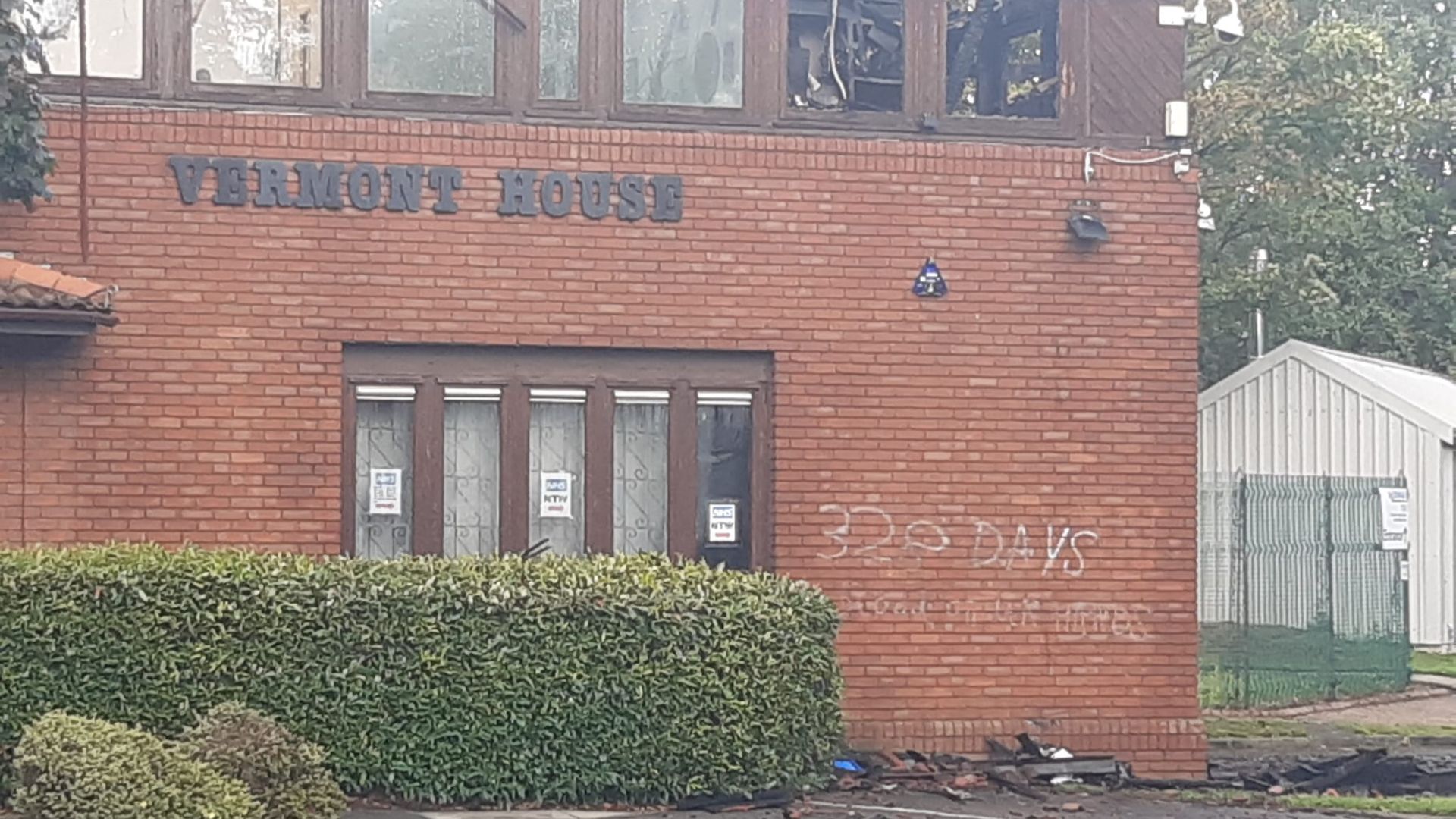
A police investigation has been launched following an “incident” at the constituency office of Labour MP Sharon Hodgson.The Latest News from the UK and Around the World | Sky News
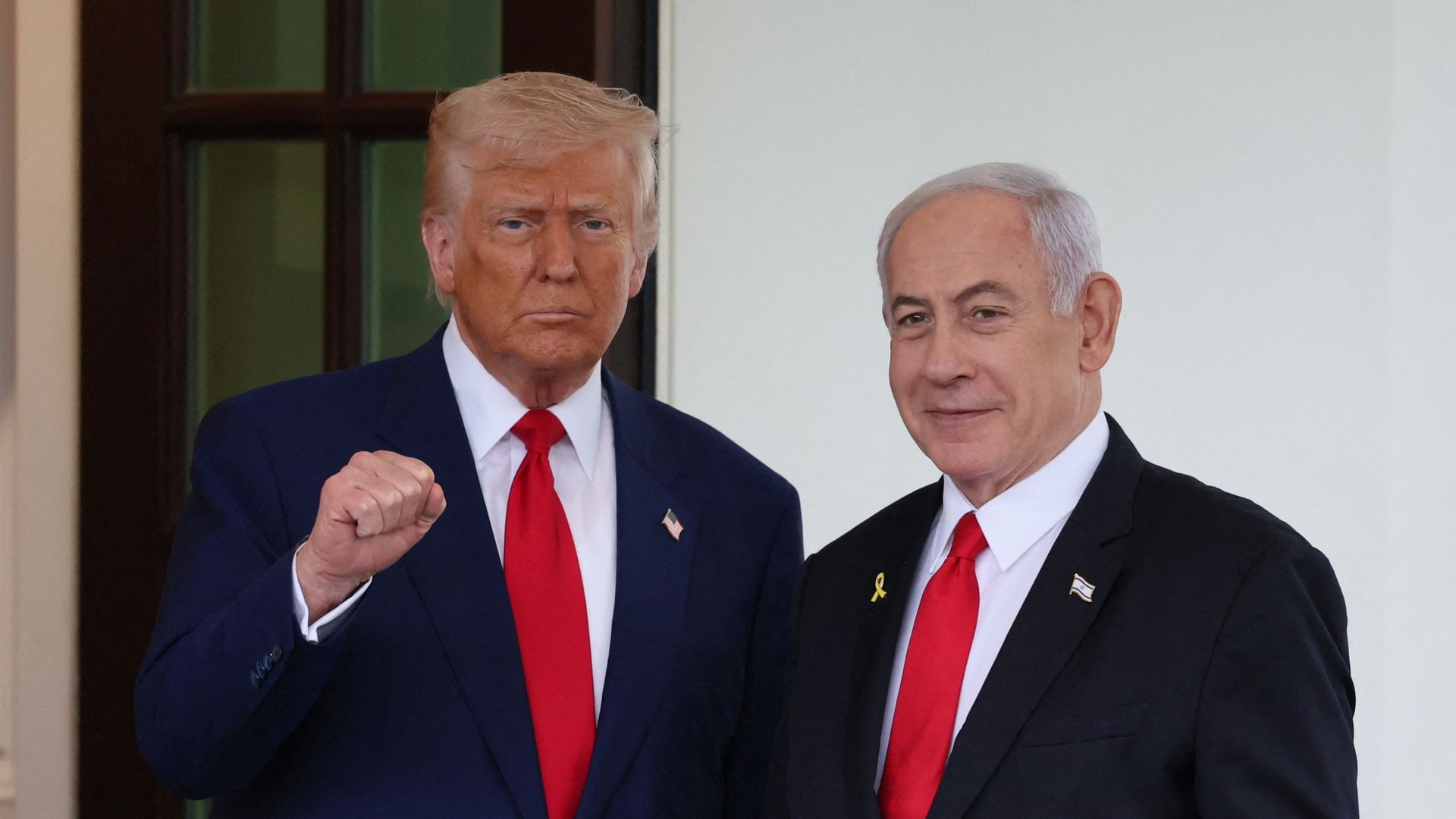
Donald Trump had a heated phone call with Israeli Prime Minister Benjamin Netanyahu after his military targeted Hamas inside Qatar, according to a report.The Latest News from the UK and Around the World | Sky News

Representatives from the four main political parties took part in Sky News’ Immigration Debate on Wednesday evening.The Latest News from the UK and Around the World | Sky News
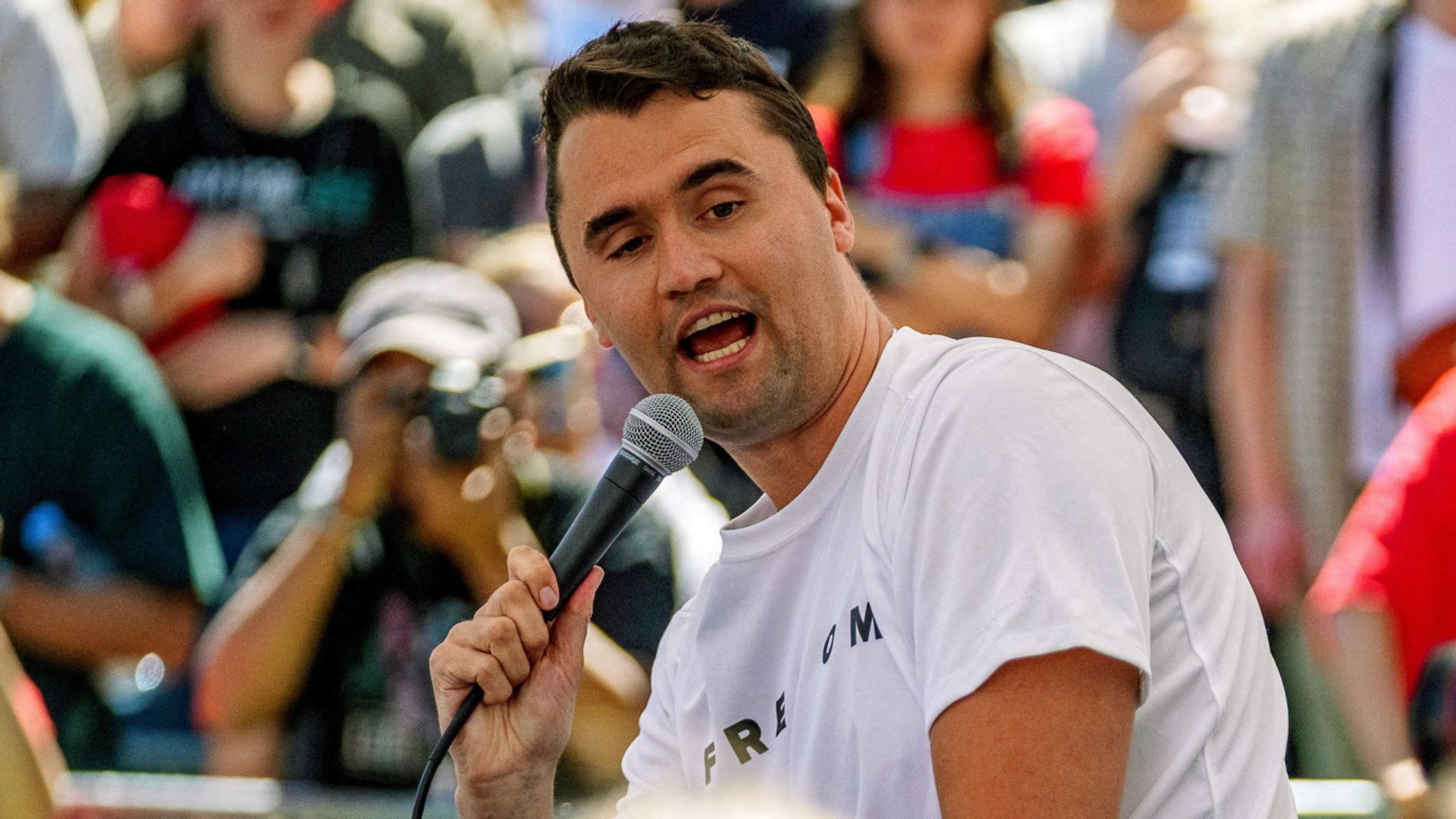
For many young people on the right of American politics, Charlie Kirk was an icon.The Latest News from the UK and Around the World | Sky News
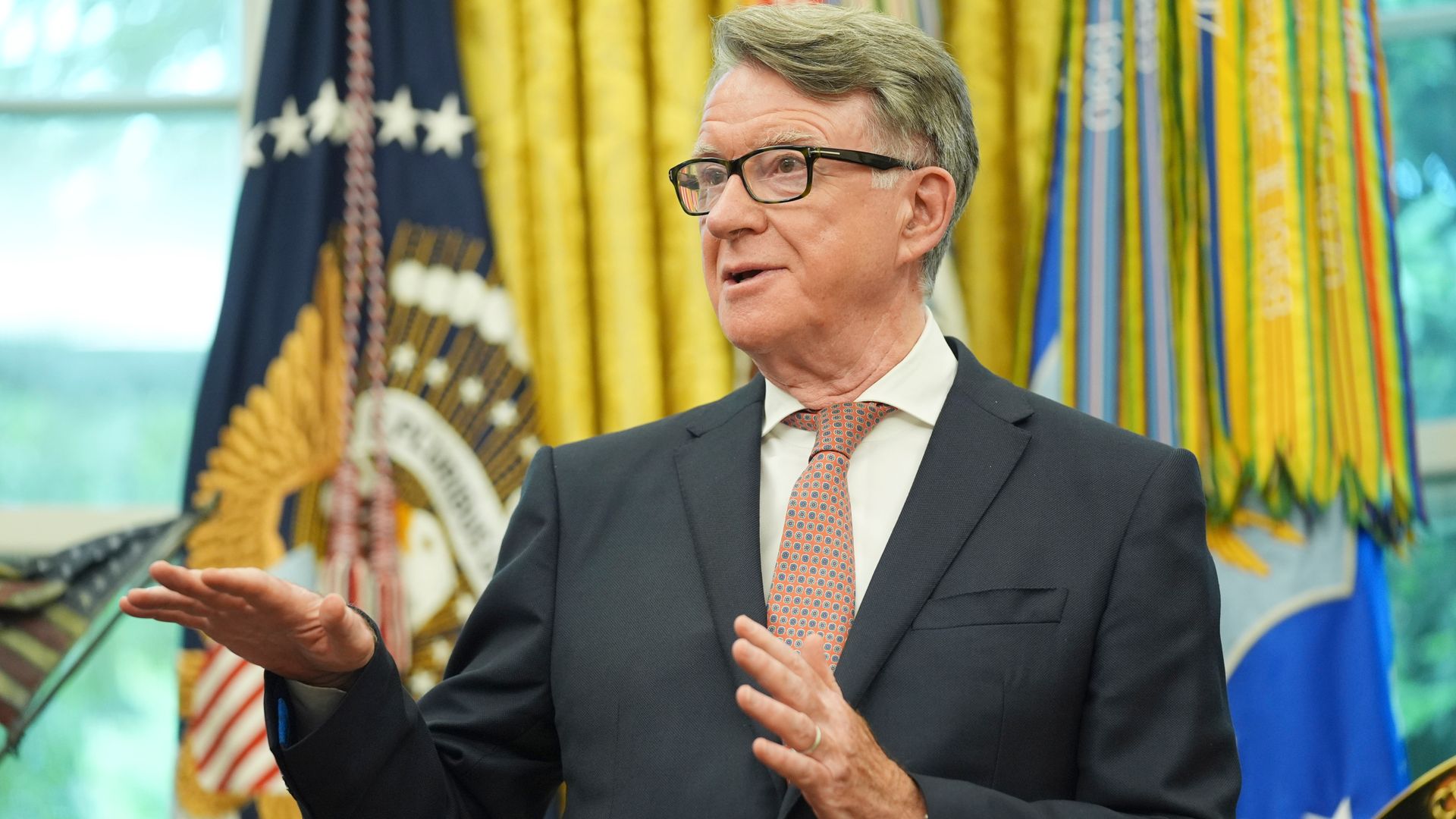
Peter Mandelson, the UK ambassador to the US, has been sacked from his role as scrutiny builds over his relationship with disgraced financier Jeffrey Epstein.The Latest News from the UK and Around the World | Sky News

NOTN/AP- An Alaskan resident attending Brigham Young University said she was just feet away when conservative commentator Charlie Kirk was shot and killed during a campus event on Wednesday.
Margie Brown of Kasilof, Alaska, described the scene as “surreal” and said she is still processing what she witnessed.
“I’m okay. I definitely know I’m probably still in a little bit of shock,” Brown said in an interview with News of the North. “As he was setting his microphone down, you heard the crack, it was behind me, and I saw him, with my own eyes, get shot in the neck, and I knew it was the neck because there was a lot of blood.”
Videos posted to social media from Utah Valley University show Kirk speaking into a handheld microphone while sitting under a white tent emblazoned with the slogans “The American Comeback” and “Prove Me Wrong.” A single shot rings out and Kirk can be seen reaching up with his right hand as a large volume of blood gushes from the left side of his neck. Stunned spectators are heard gasping and screaming before people start to run away.
Brown, a history major finishing her last semester at Brigham Young University in Provo, Utah, said she and a friend signed up to attend Kirk’s appearance and they found seats near the stage, about 50 feet from where Kirk was speaking.
Immediately before the shooting, Kirk was taking questions from an audience member about mass shootings and gun violence.
Brown said she hit the ground hard before urging others to run.
Authorities continue to investigate the shooting.

AP-Interior Secretary Doug Burgum on Wednesday proposed canceling a public land management rule that put conservation on equal footing with development, as President Donald Trump’s administration seeks to open more taxpayer-owned tracts to drilling, logging, mining and grazing.
The rule was a key part of efforts under former President Joe Biden to refocus the Interior Department’s Bureau of Land Management, which oversees about 10% of land in the U.S. Adopted last year, it allowed public property to be leased for restoration in the same way that oil companies lease land for drilling.
Industry and agriculture groups were bitterly opposed to the Biden rule and lobbied Republicans to reverse it. States including North Dakota, where Burgum served as governor before joining Trump’s Cabinet, pursued a lawsuit hoping to block the rule.
Wednesday’s announcement comes amid a flurry of actions since Trump took office aimed at boosting energy production from the federal government’s vast land holdings, which are concentrated in Western states including Alaska, California, Nevada, New Mexico, Utah and Wyoming.
Interior officials said the Biden rule had sidelined people who depend on public lands for their livelihoods and imposed unneeded restrictions.
Burgum said in a statement that it would have prevented thousands of acres from being used for energy and mineral productions, grazing and recreation. Overturning it “protects our American way of life and gives our communities a voice in the land that they depend on,” Burgum said.
“The previous administration’s Public Lands Rule had the potential to block access to hundreds of thousands of acres of multiple-use land – preventing energy and mineral production, timber management, grazing and recreation across the West,” Burgum said.
Environmentalists had largely embraced the rule that was finalized in April 2024. Supporters argued that conservation was a long-neglected facet of the land bureau’s mission under the 1976 Federal Lands Policy Management Act.
“The administration cannot simply overthrow that statutory authority because they would prefer to let drilling and mining companies call the shots,” said Alison Flint, senior legal director at The Wilderness Society.
While the bureau previously issued leases for conservation purposes in limited cases, it never had a dedicated program for it.
Critics said the change under Biden violated the “multiple use” mandate for Interior Department lands, by catapulting the “non-use” of federal lands — meaning restoration leases — to a position of prominence.
National Mining Association CEO Rich Nolan said Burgum’s proposal would ensure the nation’s natural resources are available to address rising energy demands and supply important minerals.
“This is a welcome change from the prior clear disregard for the legal obligation to balance multiple uses on federal lands,” Nolan said.
The rule also promoted the designation of more “areas of critical environmental concern” — a special status that can restrict development. It’s given to land with historic or cultural significance or that’s important for wildlife conservation.
In addition to its surface land holdings, the land bureau regulates publicly-owned underground mineral reserves — such as coal for power plants and lithium for renewable energy — across more than 1 million square miles (2.5 million square kilometers). The bureau has a history of industry-friendly policies and for more than a century has sold grazing permits and oil and gas leases.
The pending publication of Burgum’s proposal will kick off a 60-day public comment period.
House Republicans last week repealed land management plans adopted in the closing days of former President Joe Biden’s administration that restricted development in large areas of Alaska, Montana and North Dakota. Interior officials also announced a proposal aimed at increasing mining and drilling in Western states with populations of greater sage grouse. Biden administration officials proposed limits on development and prohibitions against mining to help protect the grouse.
By: James Brooks, Alaska Beacon

Last year, Alaska and Canada set a new, lower goal for the number of king salmon returning up the Yukon River and into Canada’s Yukon Territory.
Now, fish counters show 2025 returns have again failed to meet that lower target after missing in 2024 as well.
Through Aug. 28, when officials at the Alaska Department of Fish and Game stopped counting, an estimated 23,806 Chinook salmon — informally known as kings — had been counted by workers at the sonar site at Eagle, just west of the Yukon border.
Under international agreements, the United States is supposed to allow a minimum number of fish to travel upriver and into the Yukon to maintain the king salmon run and allow fishing in the territory.
Last year, following years of poor returns, officials in Alaska and Canada agreed to restrict king salmon fishing, including Indigenous subsistence fishing, of king salmon on the river until escapement — the number of king salmon crossing into Canada — exceeds 42,500 fish.
The ultimate goal of the agreement is to rebuild the number of king salmon returning until 71,000 kings reach Canada each summer.
This year’s figures are slightly lower than they were last year, when 24,183 kings reached Canada, but are nearly double the low of 2022, when only an estimated 12,025 kings returned.
King salmon returns on the Yukon River have steadily declined since 2017, when 73,313 fish passed the sonar at Eagle.
Attention now falls on the Yukon River’s much larger chum salmon run, which is also expected to fail international treaty obligations. As of Sept. 7, ADF&G estimates 276,000 fall chums in the Yukon River, less than a third of the historical run size.
“A run size below 300,000 fall chum salmon is not anticipated to be large enough to meet U.S. tributary goals or Canadian treaty objectives for fall chum salmon,” the department said in an estimate published Tuesday.
As a result of the shortfall, subsistence fishing for chum salmon, a vital part of Alaska Native traditional culture, continues to be suspended.
Changes in deep-ocean conditions caused by climate change, warming river conditions caused by climate change, commercial fishing, and endemic disease have all been cited as possible reasons for the declining salmon runs.