T.J. Holmes and Amy Robach have been engaged since last summer.
Now, they’re revealing that they’ve set the date for their much anticipated wedding.
As it turns out, they shared even more about their plans than they’d intended.
Amy Robach amd TJ Holmes attend the 2022 ABC Disney Upfront at Basketball City – Pier 36 – South Street on May 17, 2022. (Photo Credit: Arturo Holmes/WireImage)
“Are you okay with that date?” she asked her fiance. “I had a date that I really wanted.”
Amy marveled: “You’re just telling me now on the podcast that you’re okay with that date?”
According to T.J., he’d been hesitant until faced with the question. That was when he knew.
“Being here with them made me more comfortable,” he explained.
Truth be told, it is not uncommon for people to appear indecisive or even unaware of something important until faced with a question. Our thoughts are complex and thinking can be more contextual than we’d care to admit.
With that out of the way, there is one natural question that follows.
When are T.J. and Amy getting married?
So, when is the big day?
T.J. and Amy declined to share their planned wedding date on the podcast.
However, they did shed light on aspects of their plans.
“There is a way we want to get married that we haven’t revealed necessarily,” T.J. teased, “but it would be very special to us.”
He continued: “We can’t say what that is. That’s a big thing for us.”
For the moment, Amy went on to explain, their priority is spending plenty of quality time together.
“This will be our third marriage, both of us,” Amy pointed out.
“We’ve both been married twice before, and we want to maximize the amount of time we have together,” she continued.
Amy affirmed: “We want to enjoy as much of that as we can.”
Sometimes, people who have been cheated on, or people who grew up with a cheating parent, overcompensate and become joined-at-the-hip with their next partner.
It arguably makes sense that a couple who ended up together before their respective marriages ended might have a similar reaction, even if they were not the victims of cheating.
Anyway, we’ll look forward to wedding details as they continue to share them.
Democrats’ long-awaited autopsy of the 2024 election backfired almost immediately after it was released on Thursday.
The Democratic National Committee’s biting and gloomy portrait of the party immediately kicked off a fresh round of infighting, with strategists and party officials lambasting chair Ken Martin for releasing a haphazard, typo-ridden report that failed to fully capture why, exactly, the party was crushed by President Donald Trump.
Martin explained his reasoning to DNC members on a private call Thursday afternoon, according to three people on the call granted anonymity to share details. One person said Martin’s post as chair is “absolutely at risk,” though they were not sure “if DNC members have enough votes to actually pass a vote of no confidence.”
Martin appeared to acknowledge his shaky standing at the end of his remarks to members, thanking them for their “continued support.”
“Being a leader at any level means you own every single mistake — those of your creation and frankly those not of your creation. This was a major mistake. I own it,” he said, per a recording of the call obtained by POLITICO. “And now it’s time for us to move forward at the DNC, and I hope that you’ll move forward with me.”
The 192-page document — which the DNC only made public after it had been published by CNN — made no mention of Israel or Gaza and included sparse references to former President Joe Biden’s decision to run for reelection, two key elements that contributed to Trump’s 2024 win.
“We should take this autopsy with a massive grain of salt. Clearly, the people who put it together ran a highly ineffective, ill-researched process. Therefore it’s difficult to draw constructive conclusions,” said Adrienne Elrod, a senior adviser on the Biden and then Harris campaigns.
“What’s important is what’s missing, what they’re not releasing,” said Ashley Etienne, a former communications director for Vice President Kamala Harris who left the administration in 2021.
“It feels like what the DNC is doing is cherry-picking the parts of it that it wants to actually release, that [are] less problematic for the party going forward, because most of the stuff that we’re reading right now is … not groundbreaking.”
The Democratic Party is still navigating its path forward while it remains fully locked out of power in Washington and struggles to match Republicans’ cash-on-hand advantage. The report’s release comes after months of internal and external pressure on the DNC to provide lessons from 2024 in order to move forward with the looming midterms.
Martin released a lengthy statement apologizing for how he handled the autopsy, which was written by Democratic strategist Paul Rivera, although his name does not appear on the released copy and he is no longer working for the DNC. The DNC never received a finished report, according to a person within the party granted anonymity to share details, and the author did not turn over a list of interviewees or transcripts despite multiple requests. The post-election analysis contains interviews with hundreds of operatives from all 50 states.
Asked why in an interview with POLITICO Thursday, Hogg responded: “I mean, have you read the report?”
“This cannot be the best person to lead us in this moment,” Hogg said, emphasizing the missing elements of the report like Biden’s age and the war in Gaza. “I can think of 100 different people that could do a better job.”
One Democratic operative who worked for the DNC and the Harris campaign called the autopsy a “self-inflicted wound and unfortunate given victories in New Jersey and Virginia.” Another senior Democratic operative close to the process who was granted anonymity to speak candidly said simply: “The report’s so stupid, it’s hard to make sense why something’s in there and why it’s not.”
Still, James Zogby, a longtime DNC member, said the backlash to Martin may be overblown.
“I’m getting calls from people saying ‘do I think he should step down?’ And the answer is no, not at all,” he said. “The people who are making the biggest fuss are the people who didn’t want him in the first place.”
Even in its draft-like state, the report drew scathing conclusions as to why the party lost.
Rivera, in the autopsy, wrote that Democrats “have proven incapable of projecting strength, unity, and leadership, and voters have drifted away,” citing Latino voters’ shifts to Trump and highlighting the GOP’s immense spending.
The report also dings the Biden White House for saddling Harris with the immigration portfolio, which Trump and running mate JD Vance used to great effect after she took over the Democratic ticket. And simply put, Rivera implies that Republicans are better at running campaigns.
“At times, it seems Democrats are trying to win arguments while Republicans are focused on winning elections,” the report says. “Democrats operate in an ecosystem defined by reason even in cycles when the electorate is defined by rage.”
The Harris campaign in particular struggled to respond to an attack ad the Trump campaign ran featuring statements on transgender Americans: “They all recognized the attack was very effective,” Rivera wrote, “and felt the campaign was boxed.”
Not every Democrat was upset by the release Thursday. Prominent centrist groups that argue the party has drifted too far to the left found validation in the report.
“Ken Martin’s autopsy of the autopsy was excellent!” said Liam Kerr, co-founder of the centrist WelcomePAC. “After spending a decade accepting all edits from every progressive interest group, better to just delete all DNC strategy docs and admit we need to start from scratch. Admitting incompetence is much better than denial.”
Jonathan Cowan, president of center-left group Third Way, suggested the report was shelved because it would anger progressives. “I think it’s very clear why this report was buried, because as it says in the opening, it calls for Democrats to return to the vital center,” Cowan said. “Now I understand why a lot of very Twitter-friendly, super liberal DNC staff didn’t want this to come out.”
The overwhelming takeaway from the autopsy, after conversations with dozens of Democrats on Thursday, was that it’s time to move on.
“Folks want to point fingers and navel gaze, and this internal fight doesn’t get us where we want to go,” said Tory Gavito, president of Way to Win, a Democratic donor table. “We are months away from an existential election period. The economy is in free fall, but the Constitution is in shreds. Democrats have to win and have to focus on what they need to do to win, and we weren’t waiting for the DNC to release a report to do that.”
The postmortem’s release ends a monthlong fight within the DNC over whether or not it should have been made public at all. Martin pledged to release the document publicly in January 2025, then reversed course in December. The move infuriated Democrats at war with themselves over what went wrong in the election even as Martin said he was attempting to steer the party toward focusing on a series of post-2024 overperformances rather than continuing to publicly rehash its botched presidential effort.
But pressure continued to build on the DNC to release it, with liberal groups like RootsAction flooding DNC officers with thousands of emails, as activists and allies traded conspiracy theories about what could be in the report that the organization didn’t want publicly aired.
Martin reversed course — again — on Thursday, acknowledging in a Substack post that by trying to avoid creating a distraction after the party’s wins last November, “I created even bigger distraction. For that, I sincerely apologize.”
By putting a bright red disclaimer atop every page noting that the “document reflects the views of the author, not the DNC” — the party made one thing very clear: It still hasn’t formed its own conclusion of what went wrong, or where it’s headed next.
Dasha Burns, Samuel Benson, Gregory Svirnovskiy and Liz Crampton contributed to this report.
The voting board in the Alaska House of Representatives is seen on Wednesday, May 20, 2026, as legislators vote on House Bill 16. (James Brooks photo/Alaska Beacon)
The Alaska Legislature has approved new limits on the amount of money that can be donated to political candidates, but opponents of those limits are seeking to start those rules in the middle of the current election, something that could lead to a lawsuit that snarls the new rules altogether.
If Dunleavy vetoes the bill, a substantially similar measure will be presented to voters on the August primary election ballot. If he signs the bill or allows it to become law without his signature, the ballot measure likely would be removed from the August vote because Article XI, Section 4 of the Alaska Constitution says passage of a law “substantially similar” to an upcoming ballot measure will cancel the vote.
What do HB 16 or the ballot measure do?
Both the bill and the ballot measure install new individual limits on campaign donations: $2,000 per donor per candidate in each two-year election cycle. For the governor’s race, where a lieutenant governor candidate and governor candidate run together on a single ticket, the limit would be $4,000. The limit for donations from one person to a political party or group would be $5,000.
If a group wants to donate to a candidate, the limit is $4,000 per candidate, or $8,000 for the governor’s race.
Those limits would be adjusted for inflation every 10 years.
As written, HB 16 would take effect Jan. 1, after the 2026 elections.
But under Article II, Section 18 of the Alaska Constitution, a bill takes effect 90 days after the governor’s approval, unless two-thirds of legislators agree with a different date.
In this case, they didn’t. On Wednesday, the “effective date clause” vote failed by a 24-16 margin. That negates the Jan. 1 start date and means the bill would take effect in the middle of this year’s elections, depending on when it is sent to the governor for final action.
Rep. Calvin Schrage, I-Anchorage, speaks on Wednesday, May 20, 2026, as legislators vote on House Bill 16. (James Brooks photo/Alaska Beacon)
Rep. Calvin Schrage, I-Anchorage, sponsored HB 16 and helped organize the ballot measure campaign.
Speaking Tuesday night, he said he would have preferred that limits go in place before 2026 elections campaigns began. With that now impossible, he said he prefers waiting until 2027.
Implementing new limits in the middle of an election campaign is “impractical,” he said.
“The reality is … if we were to impose contribution limits mid-cycle, it would create all sorts of consequences for candidates where maybe they’ve already received donations that are above that limit. Certainly, in the gubernatorial campaigns, I would expect that. And then, do you have to refund those?” he asked.
Affected candidates or contributors could sue, he said on Wednesday.
All of the votes against the bill and against the effective date clause came from Republicans who are members of the House’s minority caucus.
Seven said they thought their “no” votes on the effective date clause were a mistake. Most bills have immediate effective dates, and voting no on the clause typically delays a bill.
“I think it was just a misunderstanding,” said Rep. Julie Coulombe, R-Anchorage, who voted no.
But Rep. Justin Ruffridge, R-Soldotna, voted against the effective date and said there was also a strategic reason for doing so.
“It gives the governor a reason to veto it,” he said, giving a thumbs-down for emphasis.
Legislators already believed the governor was likely to veto HB 16.
Speaking in 2022, Dunleavy implied that he’s generally opposed to campaign finance limits.
“You know me: I’m the guy that wants people to be able to drive four wheelers on the road. I’m a freedom guy,” he said. “My tendency is to just let people do what they want in campaign finance law, as long as it’s disclosed and it’s accurate.”
Rep. Jeremy Bynum, R-Ketchikan and a member of the House minority, said he thinks the governor will veto HB 16.
“I don’t think that bill will survive the process,” he said.
If that happens, Alaska voters will get a chance to decide the issue on August 18, primary election day.
Colorado Democrats censured Gov. Jared Polis late Wednesday for his decision to grant clemency to Tina Peters, a former county clerk who is serving a prison sentence after being convicted of allowing unauthorized access to voting machines in the aftermath of the 2020 election.
The two-term governor’s decision, which he made last week, “materially harmed the Colorado Democratic Party’s institutional credibility and efforts to defend democratic institutions and election integrity,” the party said in a statement.
“Colorado has spent years building trust in our elections and proving they are secure,” the party said. “At a time when democracy and voting rights are under attack across the nation, weakening accountability for someone convicted of undermining that trust is a mistake.”
The state was forced to spend nearly one million dollars to replace it all, Secretary of State Jena Griswold said.
In the years since, her case has become a rallying cry for Republicans who continue to falsely insist that the 2020 presidential election was stolen from Trump. Trump himself has championed Peters’ cause.
“The Governor made this decision based on the facts of the case and what he believed was the right thing to do,” Eric Maruyama, Polis’ press secretary, said in a statement. “Sometimes the right thing isn’t the popular thing with everybody. Democracy is strongest when disagreement is met with debate and dialogue, not censorship.”
Polis shortened Peters’ sentence from nine years to 4.5, and she is eligible for parole soon. The governor, who has been careful to insist that his move to halve Peters’ prison term did not constitute a pardon, told CNN last week that the 2024 sentence was draconian and connected to Peters’ political beliefs.
“There should be no consideration of what we say — how unpopular it is, how inaccurate it is — in sentencing or in criminal proceedings,” he said.
But Democrats, including Polis’ potential successor in Colorado, were harshly critical of his decision.
Sen. Michael Bennet, who is running for the state’s governor post in November, told CNN this week that Polis’ “terrible” Peters decision would disqualify him from being considered for the open Senate seat should Bennet win.
“She is a stone-cold election denier,” Bennet said. “She’s never said anything other than that.”
According to at least one member of the family, she started living with him when she was 15.
During a livestream that was preserved online, June Shannon and her husband leaked a claim about her most famous daughter. (Image Credit: YouTube)
When she was 15, he was already an adult
We already talked about how deeply embarrassing Lauryn “Pumpkin” Shannon’s video over the weekend was.
(Lauryn was only a small portion of the embarrassment — ex-husband Josh Efird, sister Jessica Shannon, Jessica’s wife Shyann McCant and their “revenge threesome” took the cake.)
Not to be outdone, Mama June had a TikTok Live that same weekend.
There, she and her husband, Justin Stroud, leaned into some unfortunate stereotypes enough to have a shouting match.
This is when Justin, in a fit of anger, blurted out an apparent family secret about Alana.
As you can see in this Instagram clip from the live, Justin yelled at June, claiming that she and Josh continue to “tell lies” and blame each other.
He claimed that Josh’s complaint that he “had to raise Alana” during June’s downward spiral drug binge is one such deception.
Why? Because Alana, at age 15, allegedly went to live with boyfriend Dralin Carswell, who would have been at least 19 at the time, if not older.
“Alana left [Josh’s] house when she was 15 years old!” Justin ranted. “She lived by herself with Dralin and [his friend] Draco from 15 til now!”
With June in apparent agreement, Justin continued, as if lecturing Josh: “So you didn’t have her this whole time to where it made your whole life fall apart! You had her for two years!”
She’s 20 now, but this deception is getting attention from fans
As far as the public was concerned, Alana officially started living with Dralin later in her teens — when it was time to go off to college, where she is getting her nursing degree.
Now, fans have long suspected that something was up.
Remember, June became a mother when she was in her very early teens.
(June became a grandmother at age 32. Extreme poverty is essentially a generational curse, and not one that money cures overnight.)
Even Lauryn, who some would argue has led a somewhat normal life (relative to her older sisters), became a mom in her late teens. Many of us breathed a sigh of relief when Alana turned 20 without first becoming a parent.
So, whose fault is it that a 15-year-old allegedly lived with her adult boyfriend (which is illegal in Georgia, by the way) in secret?
Lauryn had custody, but that’s complex. Alana and Lauryn are sisters, and while Lauryn had a legal responsibility, we’re talking about siblings who were only about 5 years apart. Siblings who also had zero “normal” role models for behavior or age milestones while growing up.
Why did Lauryn have custody? Because June was busy getting high with her now ex, Geno Doak, spending 7 figures and losing everything that she’d built for herself in the process.
To be clear, this is also on Dralin, albeit to a limited degree. 19 can feel very close to 15 at the time, but Alana is not the first minor girl whom he is accused of pursuing.
Maybe it’s moot. Alana is an adult now. She is on track to have a much better life than her mother or siblings ever had. Hopefully she’ll exercise better judgment if she ever has kids one day.
Or maybe she’ll deny this whole thing. Justin and June are not exactly reliable source of, well, anything.
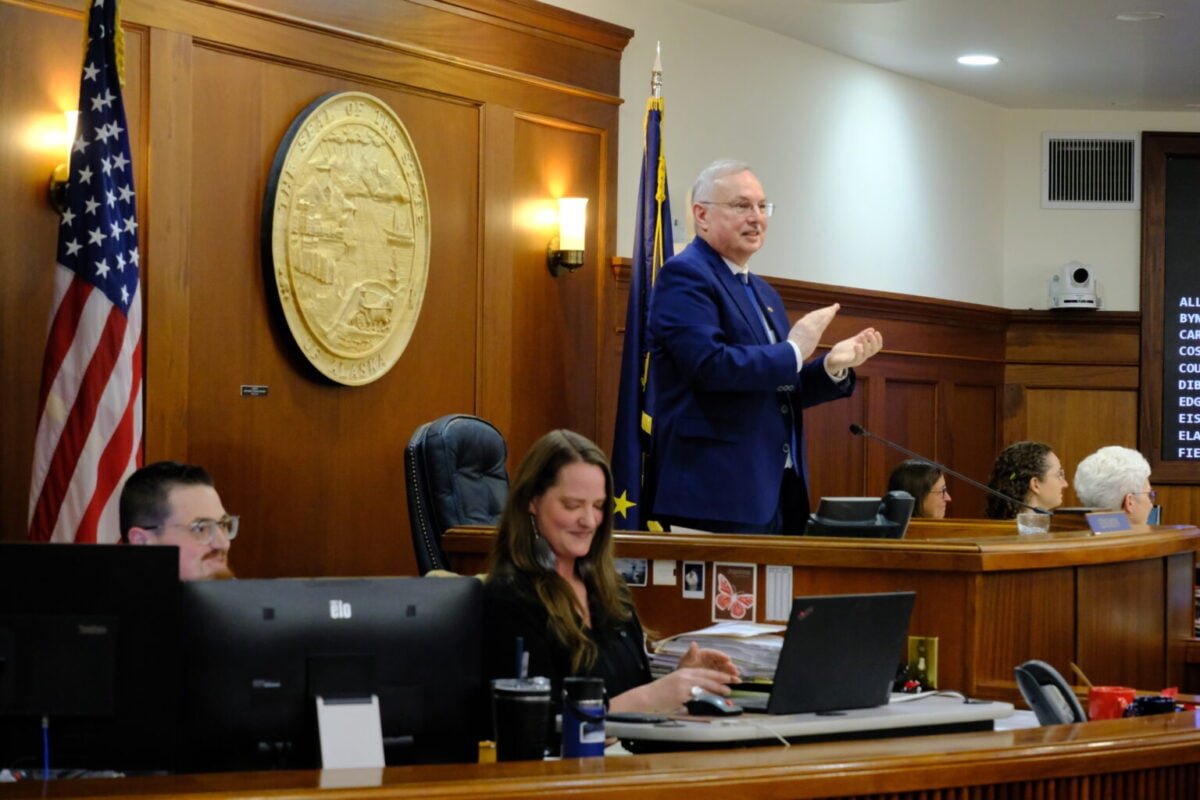
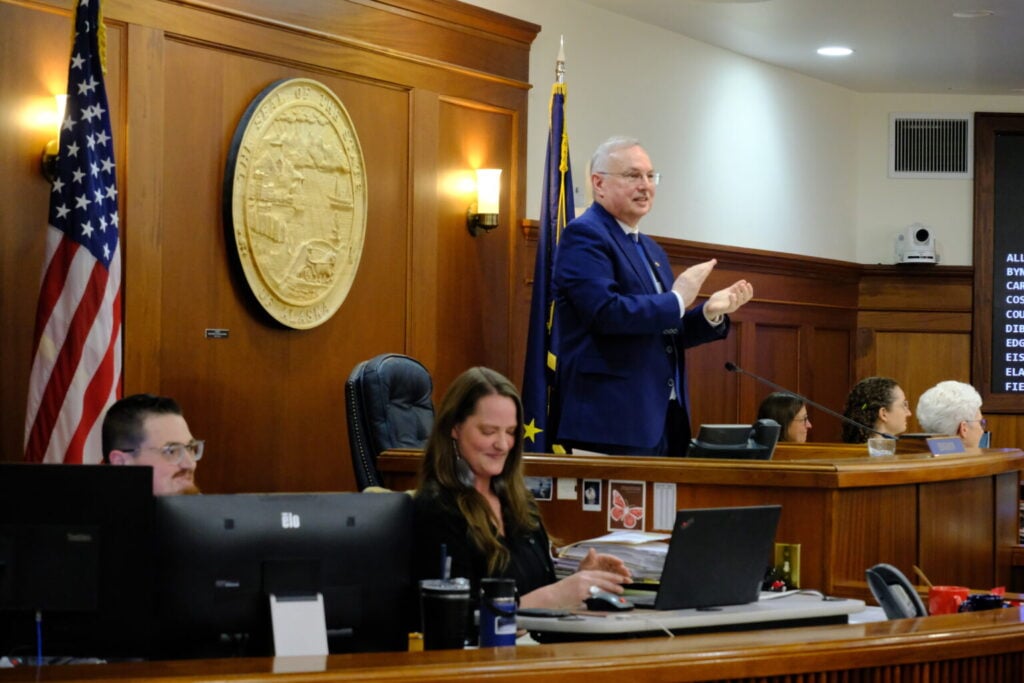
House Speaker Bryce Edgmon, I-Dillingham, stands to applaud the House pages, staff and clerks at the end of the 34th Legislative session on May 20, 2026. (Corinne Smith/Alaska Beacon)
An Alaska Legislature defined by its conflicts with Gov. Mike Dunleavy came to an end at 9:43 p.m. Wednesday night as legislators officially adjourned their second regular session.
Lawmakers will return to work Thursday as they open a special session focused on the planned trans-Alaska natural gas pipeline. As with other topics, the Legislature and the governor appear far apart on the issue.
“I would say farewell, except I get to see you at 10 a.m.,” said Speaker of the House Bryce Edgmon, I-Dillingham, shortly before final adjournment.
Before adjourning, the 34th Alaska State Legislature passed a large, multi-part crime bill that raises the state’s age of consent and criminalizes the act of using AI to create child sexual abuse material. Lawmakers voted to ban foam food containers, named the giant cabbage the state vegetable, approved a fast lane through airport security and passed dozens of small bills that were priorities for local communities and individuals across Alaska.
Bills that fail to pass before adjournment die and must be reintroduced at the start of the next Legislature. Among this year’s casualties were a proposal to offer paid leave for new parents, a bill to stabilize public school budgets, a right-to-repair bill, and all of the proposed constitutional amendments.
This fall is an election year and many incumbents are retiring, which means that when lawmakers return next year, the House and Senate will include many new faces. They also will work with a new governor: Because of term limits, Dunleavy may not run for re-election.
The Alaska Legislature is the only one in the United States controlled by multipartisan coalitions in both the House and Senate.
“The Senate majority and the House majority have worked extremely well together. We’ve been on the same page through this entire two years,” said Senate President Gary Stevens, R-Kodiak.
Senate President Gary Stevens, R-Kodiak, Sens. Cathy Giessel, R-Anchorage, and Bill Wielechowski, D-Anchorage are seen at a news conference after the Senate adjourned on May 20, 2026. (Photo by Corinne Smith/Alaska Beacon)
In their two-year term, the 34th Legislature passed 111 bills, on par with the 33rd Legislature, which passed 101 bills, and the 32nd Legislature, which passed 112.
Of the 111 bills passed by the 34th Legislature, Dunleavy has vetoed 12, including one he vetoed less than three hours before lawmakers adjourned on Wednesday.
Dunleavy is vetoing bills at a higher rate than any governor since statehood. Though other governors have issued more vetoes, Dunleavy’s represent a higher proportion of the number of bills passed through the Capitol.
At the start of the 34th Legislature, the House and Senate majority coalitions set education funding as their top priority.
Last year, they voted to permanently increase the core of the state’s public school funding formula, putting themselves at odds with the governor and setting up a historic set of veto override votes with the help of some Republicans from the House and Senate minority caucuses.
This year, the majorities passed a significantly less ambitious package of education policy reforms but also approved $144 million in one-time bonus payments to public schools and millions more in funding for maintenance and construction projects across the state. Some of the bonus payments are contingent on oil prices remaining high through July 1.
Rep. Andy Josephson, D-Anchorage, thanks his staff and colleagues in remarks on the House floor acknowledging he will retire from the Legislature this year and not seek reelection on May 20, 2026. (Photo by Corinne Smith/Alaska Beacon)
They were less successful with other stated priorities, including pension legislation. Alaska has been without a public pension program since 2006, and the 34th Legislature was the first since then to pass a bill creating a new pension plan.
The governor’s veto came after legislators failed to reach agreement with him on one of their other stated priorities, energy.
Dunleavy has urged lawmakers to cut the state’s petroleum property tax in order to incentivize the proposed trans-Alaska natural gas pipeline. Building the pipeline, the governor has said, is critical for lowering energy prices and improving the state’s economy.
Many legislators are skeptical of those claims.
This week, Dunleavy and House Majority Leader Chuck Kopp, R-Anchorage, had negotiated a deal in which the governor would allow the pension bill to become law if legislators approved a gas pipeline bill that aligned with his vision.
The Senate Majority also prioritized elections reform and passed a bill on the topic earlier this year, but Dunleavy vetoed it.
Legislators fell two votes short of an override because two Republican supporters flip-flopped and voted to sustain the governor’s choice. They had previously voted in favor of the bill.
“We passed the bills, and that’s all we can really get. It’s out of our hands at that point,” said Senate Majority Leader Bill Wielechowski, D-Anchorage.
The House Majority’s fourth priority was balancing the state’s budget, and while lawmakers successfully did so this year, the budget was balanced on the back of high oil prices caused by the Iran war, not because of a particular legislative action.
“In the beginning, we were worried about just keeping the (Permanent Fund dividend) alive and getting a balanced budget,” said Sen. Bert Stedman, R-Sitka, “and talking about how long our (Constitutional Budget Reserve) is going to last. Then, within a period of a couple of months, things totally changed, and the revenue forecast jumped up.”
When oil prices recede, legislators expect the state will again face major budget deficits.
“Next year will be a very, very difficult session,” Wielechowski said.
In the meantime, the state treasury is reaping wartime rewards, and lawmakers were able to balance the budget without spending from savings.
“Folks, this is what we accomplished, and we accomplished it on time and under budget,” said Rep. Andy Josephson, D-Anchorage, as he presented the final version of the operating budget bill on the House floor.
Members of the Republican House minority criticized the adopted budget for not spending more wartime oil revenue on the dividend.
“My primary objection to this budget is that in FY26, the state is absolutely swimming in money,” said Rep. Will Stapp, R-Fairbanks.
“We should have waterfalled that extra money into the Permanent Fund dividend,” he said.
Both the operating budget and the capital budget are subject to the governor’s line-item veto powers. The governor can eliminate or reduce individual items, but he cannot add or increase them.
Kopp gave the majority coalition a “B” for its performance. Senate President Gary Stevens, R-Kodiak, thought the majority coalition there warranted an “A,” while Senate Minority Leader Mike Cronk, R-Tok, thought the Legislature overall merited a “B”.
The last day of the session saw several lawmakers offer their goodbyes, including some who had not previously announced their retirement.
“I am not planning on being back here for the 35th Alaska Legislature,” said Rep. Dan Saddler, R-Eagle River. Saddler has served for 12 nonconsecutive years in the House.
Rep. Dan Saddler, R-Eagle River, tears up after an emotional speech announcing his retirement from the Legislature and declining to run for re-election, on the House floor at the conclusion of the 34th Legislature on May 20, 2026. (Photo by Corinne Smith/Alaska Beacon)
Rep. Andy Josephson, D-Anchorage, is retiring after 14 years in the House and received multiple rounds of applause. Rep. Louise Stutes, R-Kodiak, is leaving the House as well, but for a state Senate run rather than retirement.
Speaker of the House Bryce Edgmon, I-Dillingham, has not announced plans to leave the House, but he has been repeatedly named as a possible replacement for Sen. Lyman Hoffman, D-Bethel. Hoffman is retiring as the longest-serving state legislator in Alaska history.
Senate President Gary Stevens, R-Kodiak and the oldest member of the Legislature, is also retiring. The Legislature’s youngest member is also leaving — Rep. David Nelson, R-Anchorage, is getting married this summer.
After the final gavel fell, staff and legislators cheered and filed out of the chambers.
Within an hour, Saddler was leading a group of them in songs that echoed up and down the Capitol’s stairwell.
Corinne Smith contributed reporting from Juneau.
Rep. Dan Saddler, R-Eagle River, serenades legislators and staff in the Capitol stairwell shortly after the 34th Legislature adjourned on May 20, 2026. (Photo by Corinne Smith/Alaska Beacon)
Juneau’s Assembly Finance Committee is staring down a major budget deficit for fiscal year 2027.
They inched their way through a long night of budget cutting at a work session last night, trimming around the edges while sparing some of the city’s most debated programs.
Finance Director Angie Flick warned the city cannot afford to end the year in the red.
“You should be projected to be at zero at worst case scenario,” Flick told the committee, “I think my predecessor and the prior city manager had some conversations with the assembly at the time and suggested $5 or $7 million as a fund balance, and that was based on the spending and the projects that the assembly liked to do. When I went back and looked over the last three years, I would, if I were making a recommendation based on your past to predict your future, I would say you would want $11 to $12 million in your fund balance. There were some significant general fund dollars that went to support the school district when it was in need, there’s been significant one-time dollars that have gone to flood fighting, and then there have been other community priorities that the body has decided to fund, and so you know, based on how the body has approached spending in the past, that would be the kind of fund balance that I would suggest. I think the real pressing concern that’s going to be hard to get around, would be flood fighting as we move forward, and that’s just going to be a tricky one to deal with.”
The current draft budget uses about $8 million in fund balance to cover operating costs, leaving Juneau projected at negative $1.7 million in unrestricted fund balance. Even if a package of fast‑tracked sales tax changes passes, that only improves the outlook modestly.
Members were split over strategy.
Some pushed for deeper cuts now and said they were aiming to leave roughly $5 million in fund balance. Others favored relying more on one‑time project cuts until they know whether new revenue measures or fall ballot initiatives will pass.
In terms of action taken, prior to the June 8 public hearing, members voted 5-4 to cut $75,000 a year from the city’s landscape budget.
Assembly member Neil Steininger was one of those who objected to the cuts saying, “I feel like when we just call this the landscaping budget, it’s kind of a misnomer, because so many other things fit in there. This is a parks maintenance budget, it’s not the flowers downtown, it is not beautification landscape, it is safety considerations, it is cleanliness, it is all of those things. I don’t think when people hear landscape budget they think about trail maintenance. I think it’s an important thing that we spend money on to keep Juneau safe.”
Supporters, said the cut will make residents more aware of what those services cost.
The Assembly also approved a $261,000 recurring cut to the Juneau City Museum, staff said this will mean two layoffs and reduced public access.
Members also voted 5-4 for a one‑time $300,000 cut to the city’s grant for the Juneau Economic Development Council.
A $300,000 cut to staff travel and training was rejected.
Assembly members rejected a deeper, one‑time $250,000 cut to the Affordable Housing Fund, but later agreed to a smaller $150,000 reduction. Several members argued this is the wrong time to pull back on housing dollars.
“It is very hard for me to look at our actions and look at our process and look at where we are trying to go, and the things that people have said no to for cuts, speaking to the importance of their value to the community, and then turn around and say that we can afford a cut like this to the affordable housing fund.” Said Assembly member Alicia Hughes-Skandijs, “It does not make sense to me that rationale.”
The Assembly also kept a subsidy in place for Bartlett Regional Hospital’s home health and hospice program, while directing Bartlett to cover a separate, one‑time $247,000 substance use treatment grant for Gastineau Human Services.
They also approved a $20,000 one‑time cut to the city’s accessory dwelling unit grant program and voted to eliminate general fund support for the Jensen‑Olson Arboretum.
The Assembly declined to reduce funding for the Juneau Arts and Humanities Council or the Small Business Development Center.
A proposal to lease out the Douglas Fire Station failed after the fire chief warned it would worsen the island’s insurance rating and emergency response.
Committee members repeatedly emphasized that none of the reductions are final.
“These are not final decisions, what we are trying to do tonight is come to a holistic budget that we can pass to the full Assembly so that the public can get one more opportunity to give us feedback on it.” Said Finance Director Christine Woll, “Nothing is set in stone until we vote as a full Assembly on June 8.”
A complete budget, including any service cuts and use of savings is expected to go to the full Assembly and the public for a final vote June 8.
Vanessa shared the news with her Instagram followers in a message posted Wednesday night:
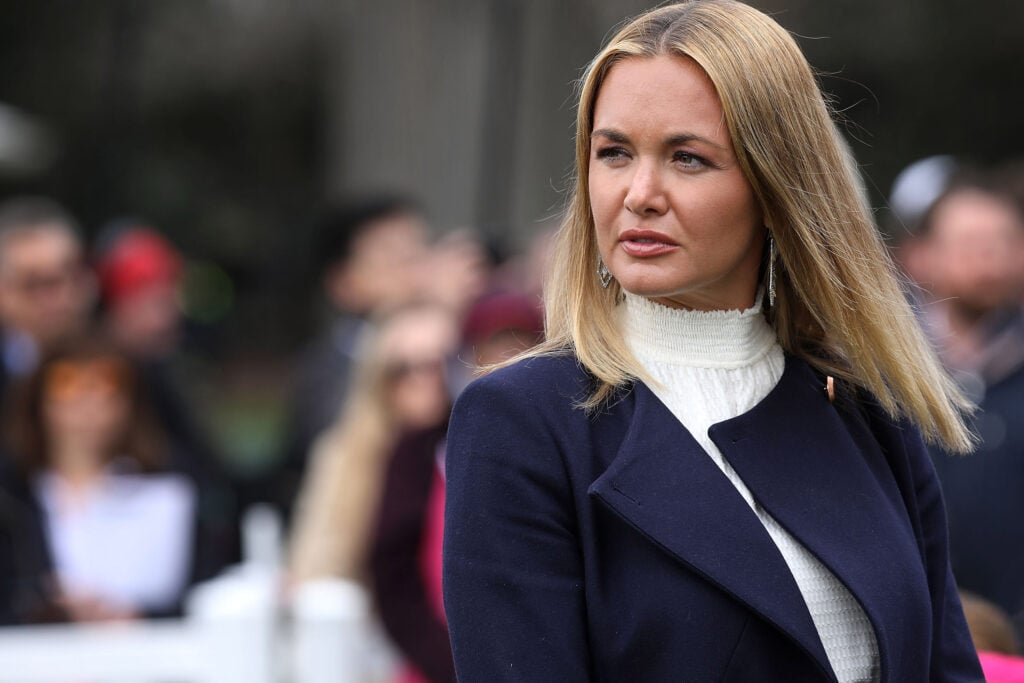
Vanessa Trump, wife of Donald Trump Jr., attends the 140th annual Easter Egg Roll on the South Lawn of the White House April 2, 2018 in Washington, DC. (Photo by Chip Somodevilla/Getty Images)
“I want to share a personal health update,” she began.
“I’ve recently been diagnosed with breast cancer,” she continued, adding:
“While this isn’t news anyone expects, I’m working closely with my medical team on a treatment plan.
“I would like to thank my doctors for performing a procedure earlier this week on me. I am staying focused and hopeful while surrounded by the love and support of my family, my kids, and those closest to me.
“Thank you for your kindness and support it truly means more than I can express. I kindly ask for privacy as I focus on my health and recovery.”
Vanessa Trump reveals that she’s battling breast cancer. (Instagram)
Several members of the Trump family were quick to offer supportive comments on Vanessa’s post:
“Praying for your continued strength and a swift recovery. Love you mama,” wrote Vanessa’s former sister-in-law Ivanka Trump.
“Love you! Strongest person ever,” added Vanessa’s 19-year-old daughter, Kai Trump.
Vanessa and Tiger were recently reunited after he spent six weeks in a Swiss rehab facility. Despite rumors that Tiger wants to take a break to focus on his sobriety, it seems that the couple is very much together.
“They kept in touch while he was away. Both of them have responsibilities outside of their personal lives and that factors [into] how much time they can spend together,” a source close to the situation tells Page Six, adding:
“He’s like the hottest bachelor of Palm Beach. He’s the biggest golfer in the world, and he’s a gazillionaire. There aren’t that many options.”
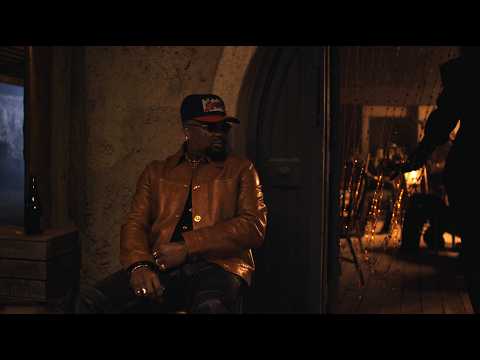
The-Dream has released the official music video for “Bring That Body.” The single previews his upcoming studio album Love/Hate II, arriving soon through RadioKilla Records and Republic Records. The video places The-Dream in a late-night setting built around dim lighting, a saloon backdrop, and a private-night-out atmosphere.
Click to load video
“Bring That Body” arrives as The-Dream prepares Love/Hate II, the sequel to his 2007 debut album. In the press release, he describes the project as a record about the current state of love. “I want to make a record about where love is now,” he said. “Relationships became cheapened. People used to fight for their love.” The announcement also follows recognition from The New York Times, which named The-Dream among “The 30 Greatest Living American Songwriters” and cited his work on Rihanna’s “Umbrella,” Beyoncé’s “Single Ladies (Put a Ring on It),” Mariah Carey’s “Touch My Body,” and Justin Bieber’s “Baby.”
The-Dream has spent nearly 20 years as a singer, songwriter, and producer whose catalog spans R&B, pop, country, and hip-hop. In 2024, he won the Grammy Award for Album of the Year for his contributions to Beyoncé’s Cowboy Carter. His recent credits also include The Clipse’s “All Things Considered,” Rosalía’s “Sauvignon Blanc,” and Summer Walker’s “Allegedly.” The new video follows press attention for “Bring That Body” from Variety, Complex, and VIBE, with VIBE including the song among “The 50 Hip-Hop And R&B Releases You Need On Your Playlist.”