Fatima Bosch Fernandez, of Mexico, has been crowned Miss Universe 2025, rounding off a dramatic and controversy-ridden competition in Bangkok.The Latest News from the UK and Around the World | Sky News










Fatima Bosch Fernandez, of Mexico, has been crowned Miss Universe 2025, rounding off a dramatic and controversy-ridden competition in Bangkok.The Latest News from the UK and Around the World | Sky News
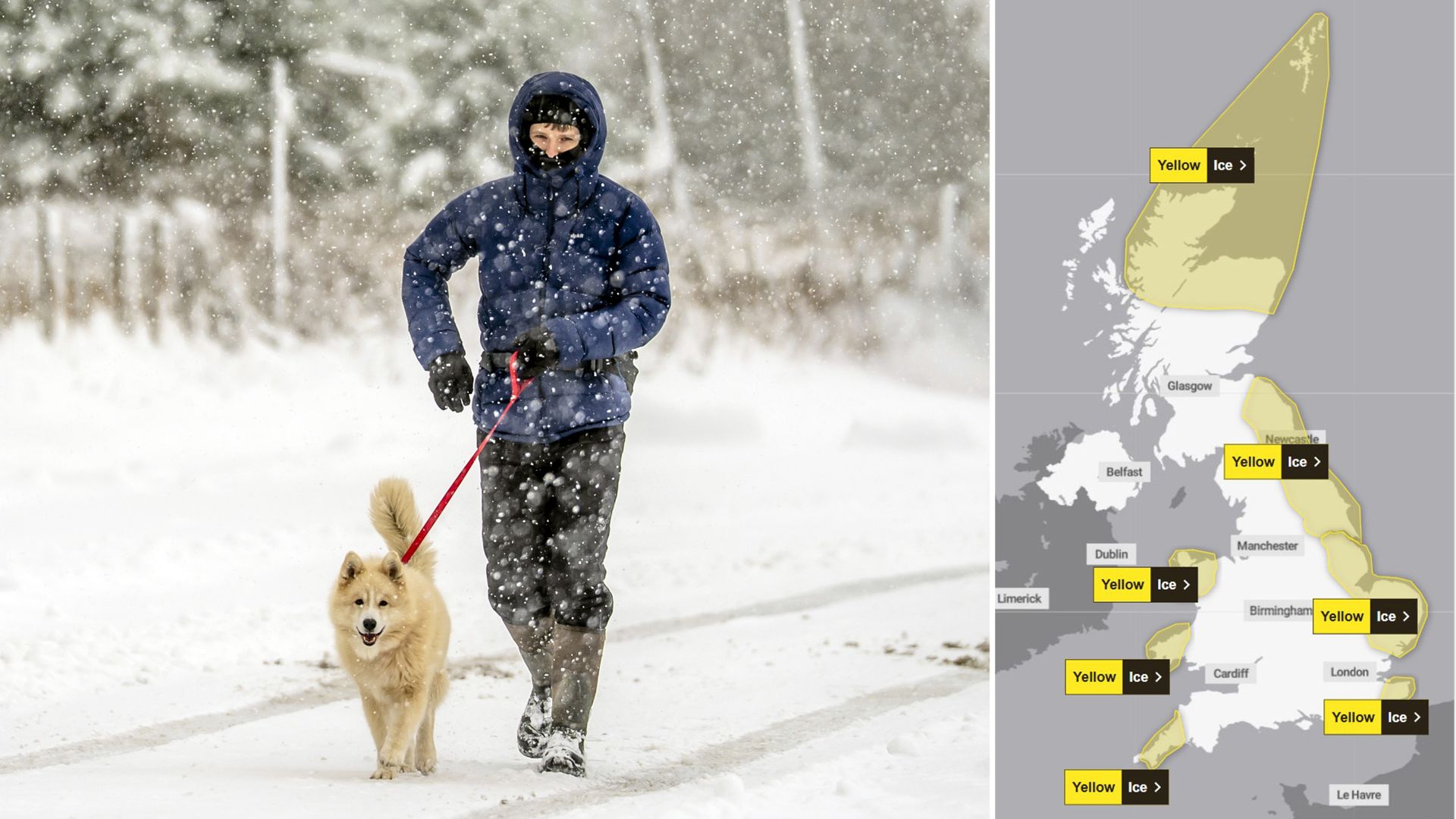
The UK has shivered through what could be the coldest night of the year so far – with seven yellow weather warnings for ice in force this morning.The Latest News from the UK and Around the World | Sky News

Sir Keir Starmer said Nigel Farage needed to “explain” himself after a newspaper published allegations that he used antisemitic and racist language when he was at school.The Latest News from the UK and Around the World | Sky News

Britons buying cocaine on a Friday night could be inadvertently funding Russia’s war in Ukraine.The Latest News from the UK and Around the World | Sky News
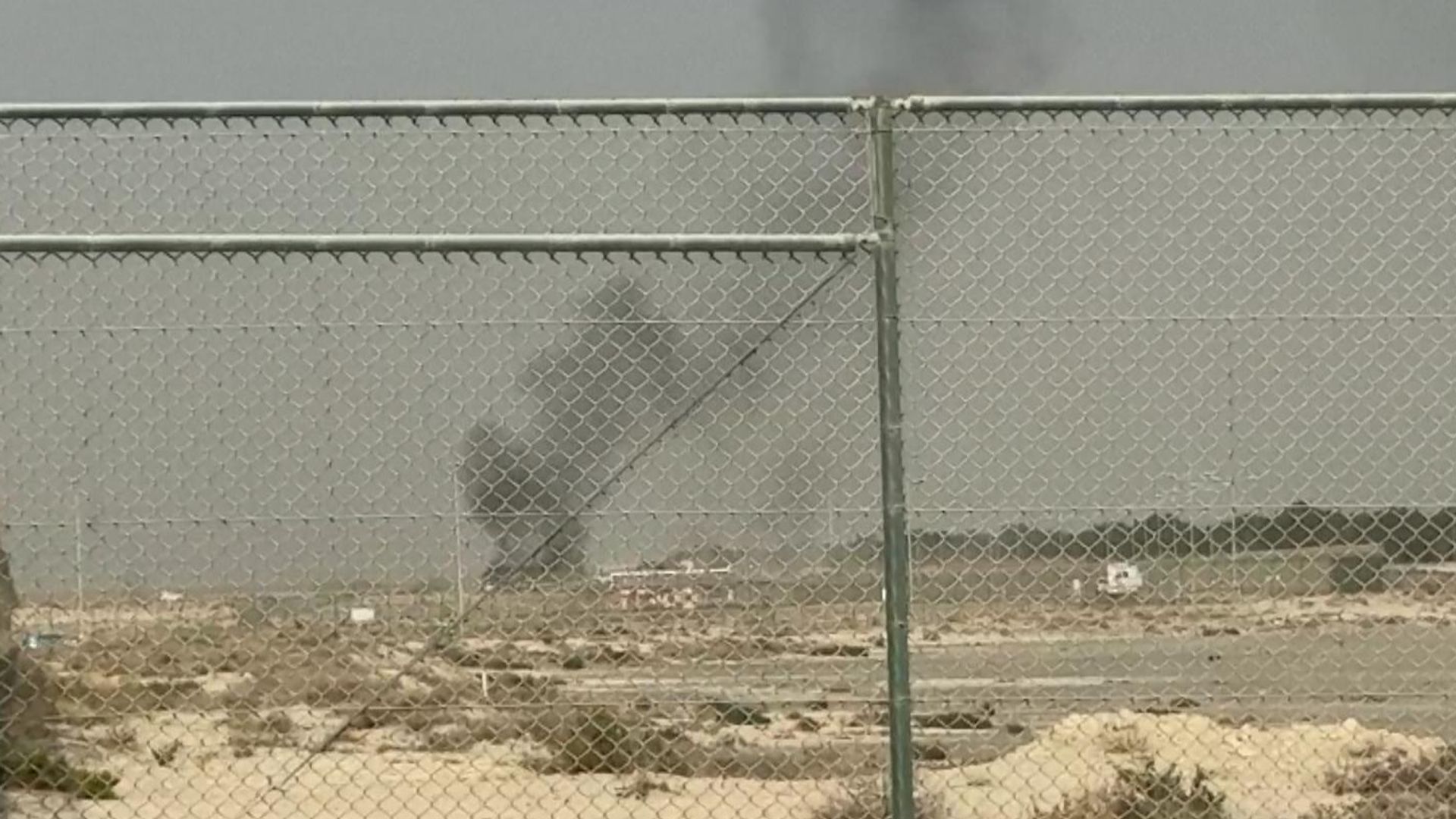
A plane has crashed at the Dubai Air Show, killing the pilot.The Latest News from the UK and Around the World | Sky News

Households and businesses will have to wait for energy bills to fall significantly because “there’s no shortcut” to bringing down prices, the energy minister has told Sky News.The Latest News from the UK and Around the World | Sky News
By: Corinne Smith, Alaska Beacon

Officials with the Alaska National Guard said they are preparing and training a response force of 100 service members to deploy to Washington D.C. and support civil authorities, as directed by the Pentagon and Gov. Mike Dunleavy.
The update on Tuesday from Maj. Gen. Torrence Saxe, Adjutant General of the Alaska National Guard and Commissioner of the Alaska Department of Military and Veterans Affairs, was in response to a letter from state legislators on the Alaska Joint Armed Services Committee. The lawmakers raised concerns around the implications of a Pentagon’s directive to Alaska to prepare 350 National Guard personnel for rapid deployment for “civil disturbance operations.”
In his letter, Saxe said Gov. Mike Dunleavy requested that the force be deployed to Washington D.C. to join a joint federal task force in March of 2026.
A spokesperson with the governor’s office confirmed Thursday the request came from the U.S. Secretary of the Army and Dunleavy approved it.
“Governor Dunleavy approved the request because he wants to help the Trump Administration restore public trust and improve the quality of life in the nation’s capital,” said Jeff Turner, the governor’s director of communications, by email.
But the request may turn out to be moot, after a federal judge temporarily blocked the deployments to Washington D.C. on Thursday, declaring the use of troops is likely unlawful. There is a pause on the order until Dec. 11, which gives the Trump administration time to appeal.
Turner declined to comment on the federal ruling.
Saxe said in the letter that 100 Alaska service members are being trained to align with “national level requirements.”
“The team will consist of Alaska Army and Air National Guard personnel trained in mission sets that may include site security, roadblocks and checkpoints, civil disturbance control, critical infrastructure protection, and personnel security,” Saxe wrote. “All training activities are integrated into existing unit schedules and do not alter the organization’s operational commitments.”
The Alaska National Guard is currently active in the disaster relief effort after Typhoon Halong devastated communities of Western Alaska, with an estimated 200 service members deployed there, officials said.

Saxe repeated that the development of this “quick response force” is not new for the National Guard, and it will be structured to “respond quickly to protect lives, property, and critical infrastructure.”
“At the request of Alaska Gov. Mike Dunleavy, members of the Alaska NGRF (National Guard Response Force) will activate to Washington, D.C., in March 2026 to support Joint Task Force–District of Columbia, a federally coordinated effort that brings together National Guard elements, civic leaders, and partner agencies to enhance safety, stewardship, and community engagement,” he wrote.
Officials with the National Guard declined interview requests on Wednesday and Thursday.
In August, officials with the governor’s office said there were “no plans” to deploy the Alaska National Guard to Washington D.C., as reported by the Anchorage Daily News.
The Trump administration’s deployment of National Guard troops to primarily Democratic-led cities has been challenged and repeatedly blocked as illegal in federal courts. On Monday, a Tennessee judge barred the National Guard deployment to Memphis, and said it was only allowable if there was a rebellion or invasion. On Thursday, a federal judge temporarily ordered an end to the monthslong deployment of National Guard to Washington D.C. to tackle crime, declaring the use of troops as likely unlawful.
Rep. Andrew Gray, D-Anchorage and co-chair of the Alaska Joint Armed Services Committee, said he was grateful for the commissioner’s response and additional information on the specialized force, but remains concerned about the capacity and purpose of such a mission.

“It’s important to note that the American taxpayer will be paying their salary while they’re on this mission. They’ll be paying for their room and board,” he said. “So when the National Guard does a mission like this, we just don’t have unlimited money. So we are redirecting money away from training and work here in Alaska.”
Gray said while the Trump administration may have the authority to call the National Guard to Washington, a federal district, he remains concerned at military service members being deployed against civilians and used for police or immigration enforcement.
“Are these police departments saying that they’re overrun, that they’re unable to perform their law enforcement mission, that they need to have their force doubled, tripled, quadrupled in numbers?” he said. “Because that’s what’s happening.”
There are currently 2,866 National Guard service members enlisted in the state, with 1,676 in the Alaska Air National Guard and 1,190 in the Alaska Army National Guard.
Gray, a veteran of the Alaska National Guard who deployed to Kosovo in 2019, said he also worries about the erosion of trust and regard for the military doing these kinds of missions, and deploying against civilians.
“I love the U.S. military. I am proud of my service in the Alaska Army National Guard,” he said. “I think this is going to hurt the military’s standing in the public’s mind. I think that this is going to cause folks to lose some of the admiration that has been so foundational in our country for the military. Our country has long admired, respected and praised its military, and the moves that we are seeing, directed by Secretary Pete Hegseth and the President of the United States are going to lose our military’s standing, not only internationally, but domestically as well.”
Gray said he has requested a meeting with Saxe, and is asking for continued public communication and transparency as the quick response force is developed.
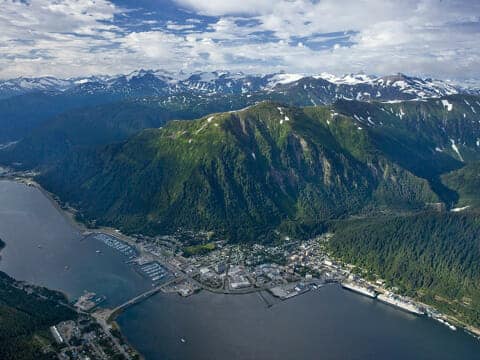
NOTN- Juneau Mayor Beth Weldon says Assembly members are finalizing their annual list of priorities, steps taken to determine which city projects will be forwarded to state lawmakers and Alaska’s congressional delegation for potential funding.
“We won’t have a meeting on Monday. It’s our homework, so we have to have it due in by Monday. And all we do is, we look at all of our different projects, capital projects that we want to send before the legislature that will help with the congressionally directed spending.” Weldon Said, “this does not mean that this is necessarily ranking order of our preference of the projects. It’s more of a order of preference on whether we think we’re going to get money or not for it.”
Among the projects the city is submitting this year are a new Solid waste transfer station covering both design and construction, Gold Creek flood control rehabilitation, Glacial outburst flood response, the North Douglas crossing, Mendenhall wastewater treatment upgrades, Bartlett Regional Hospital emergency department renovations and Peterson Hill housing development.
Weldon said each Assembly member ranks the projects individually, and staff compile the results into a final list, which will return to the full Assembly, likely in December, for approval before being sent to the Legislature.
“If your project’s not on our list, it doesn’t mean that we’re not trying to do that project. It just means this particular time, we don’t think we’re going to either get state or federal money.” Weldon said.
Weldon encouraged residents to share their thoughts on the list once its been published.
By: Claire Stremple, Alaska Beacon

Alaskans who qualify for the Supplemental Nutrition Assistance Program received half of their benefits nearly a week late as a result of the federal government shutdown this month. Their full benefits were two weeks late, even though the state had emergency funds to prevent that.
Officials say the state never used the $5 million per week it set aside to keep people from waiting for food benefits because the state’s system had to be reconfigured to use state money rather than its usual federal funding source. SNAP is a federal food assistance program that is run by the state.
Division Director Deb Etheridge said the state is now prepared to react quickly if a similar situation arises in the future.
“We went through all the steps we needed to create an opportunity for a state-only benefit to be issued through our EBT contractor,” she said. “So in the event that anything like this happens again, we can move swiftly to issue that state-only benefit.”
Gov. Mike Dunleavy signed an emergency order declaration on Nov. 3, following a request by state legislators and similar action by other states.
Etheridge said information technology and system operations teams had to scramble to come up with solutions, but by the time they found a way to get money to Alaskans, the federal government had begun to partially fulfill its obligations.
She said the state was closing in on a solution when the federal government released 50% of the money for benefits on Nov. 4. She said that money was processed and ready for Alaskans to spend by Nov. 6.
Etheridge said the eligibility technicians that process benefits were not excessively burdened by the shutdown.
“Eligibility workers were doing business as usual, processing cases and managing, obviously, increased phone calls — people wanted to know where their benefits were,” she said. “The pressure came on our system operations and our IT.”
The shutdown delayed service in a state division with a history of slowdowns in recent years. The DPA has battled long backlogs in processing food benefit applications as a result of staff shortages and technology issues since 2022. The division made progress against its backlog before slipping again in 2023. Paperwork slowdowns kept thousands waiting again earlier this year.
Etheridge says the division is currently working to make sure people displaced by the October storms in Western Alaska continue to receive benefits, even if they have lost access to critical paperwork.

AP- Congress has passed a measure to overturn a plan enacted during the Biden administration that put off limits to oil and gas leasing nearly half a vast petroleum reserve in Alaska. Critics see the vote as political meddling that creates confusion over the future management of the National Petroleum Reserve-Alaska.
Tuesday’s House vote followed passage by the Senate during the government shutdown of the resolution disapproving a management plan for the reserve that was finalized in 2022 under then-President Joe Biden. The offices of Alaska’s Republican congressional delegation members have said the resolution “fulfills the objectives” of an Alaska-specific executive order signed by President Donald Trump earlier this year. The executive order called for reinstating a plan dating to the first Trump administration that sought to make available for leasing about 80% of the reserve.
The measure next goes to Trump for consideration.
There has been outsized attention on Alaska since Trump’s return to office, with moves to expand development of oil and gas and other resources cheered by state political leaders who had considered the Biden administration overly restrictive in its approach.
The votes are among the latest taken under the Congressional Review Act that are aimed at nullifying land management plans adopted under Biden. A statement from the congressional delegation last month said the review act provides an expedited way to overturn certain federal rules and forbids an agency from issuing another substantially similar rule unless it’s authorized by law.
But Alex Cohen, director of government affairs for the Alaska Wilderness League, called use of the act a “super, super blunt instrument.” Regulatory policy instead requires “very careful, considered stakeholder engagement, scientific analysis,” he said.
The approach taken by Congress also raises questions about what constitutes a substantially similar rule, Cohen said, adding there is a lack of clarity around what happens when a plan is overturned.
A bill passed earlier this year calls for oil and gas lease sales in the petroleum reserve, for which the last sale was held in 2019, and in the Arctic National Wildlife Refuge.
Major companies sat out the first two lease sales held for the Arctic National Wildlife Refuge; the first was at the end of Trump’s first term and the second near the end of Biden’s.