This drone image provided by the City and Borough of Juneau shows flooding from a release of water and snowmelt at Mendenhall Glacier covered some roads and threatened homes along the Mendenhall River in Juneau, Alaska on Wednesday, Aug. 13, 2025. (City and Borough of Juneau via AP)
This drone image provided by the City and Borough of Juneau shows flooding from a release of water and snowmelt at Mendenhall Glacier covered some roads and threatened homes along the Mendenhall River in Juneau, Alaska on Wednesday, Aug. 13, 2025. (City and Borough of Juneau via AP)
NOTN- Juneau officials say repairing damaged flood barriers and planning for long-term protection along the Mendenhall River will be a top priority in the wake of August’s glacier outburst flood.
At a Monday night work session, the Assembly said that Phase One of the HESCO barrier project, temporary flood walls installed to protect neighborhoods, sustained an estimated $1 million in damage.
“We are still gathering a lot of information on what happened this year, so folks are looking at, how did the basin change? How did the river change? So we still need a lot of information from our scientists before we’re ready to make any decisions.” Said Christine Woll head of the Finance Committee, “Essentially, last night, we started talking abou are we going to extend the barriers? Last year, we prioritized protecting the areas that had flooded in 2024, but as we think about the potential for this flood to increase in size, we start thinking about, do we want to extend the barriers to essentially the rest of the river? What’s the cost for that going to be and how are we going to pay for it? It starts to get kind of increasingly more expensive for the other areas of the river just because they’re trickier, and those areas are less likely to flood. So it makes for interesting policy decisions about how much the city can afford.”
The Assembly discussed whether to build barriers to a 17-foot or 18-foot model, this carries implications for construction depth, bank armoring, and overall cost. Expanding protection both north and south of the current installation could require substantial outside funding.
Members also considered long-term options for the View Drive neighborhood, where flood protection is difficult to build.
“There’s lots of challenges, but one of them is definitely View Drive, which meets the criteria of being significantly impacted every year by this flood, and yet, you know, has engineering challenges to put HESCOs up” said Woll.
Deputy City Manager Robert Barr said a potential buyout program could be pursued, but cost is the leading question.
“There’s some unanswered questions there that we need to resolve. Specifically, how much is going to cost and how many of the folks in the View Drive area need to participate for that to be a program that the federal government will participate in.” Barr said.
Last nights meeting was a Work Session however the Assembly took one actionable step, voting unanimously to shift $5 million from the Capital Civic Center project into flood mitigation. That money will help repair existing HESCO barriers and support the next phases of protection planning.
“These are decisions we’re going to have to tackle in the coming months,” he said. “We’ll keep looking for federal and state help, but ultimately we have to prepare for what may come next summer.”
The August flood, caused by an outburst from Suicide Basin above the Mendenhall Glacier, inundated neighborhoods and left behind millions in property damage.
NOTN- A trial is scheduled to begin this week for a man accused of fatally shooting another man in the Mendenhall Valley in 2023.
Court records show 46-year-old Andre P. Lawrence is set to appear before Juneau Superior Court Judge Amy Mead on Wednesday.
He is charged with first- and second-degree murder in the death of 23-year-old James T. Newman.
Newman was found dead from a gunshot wound on Cinema Drive on the night of July 20, 2023.
Investigators said video surveillance showed him approaching a black Dodge pickup before collapsing. A witness later identified Lawrence as the driver.
Police said the truck linked to the shooting had blood on the driver’s side door.
Lawrence was arrested the next morning at a residence on Riverwood Drive after what police described as an overnight investigation.
If convicted, Lawrence could face up to 99 years in prison.
Attorneys general (from left to right) Treg Taylor of Alaska, Marty Jackley of South Dakota, Kris Kobach of Kansas, J.B. McCuskey of West Virginia, and Liz Murrill of Louisiana participate in a panel discussion on Thursday, Aug. 28, 2025, at the Alaska Oil and Gas Association conference in Anchorage. (Photo by James Brooks/Alaska Beacon)
During a pair of public panel discussions during the last week of August, attorneys general from five conservative Republican states said they see climate ‘superfund laws’ passed by Democratic states as major threats to the fossil fuel industries of their state.
“I think that the group of people that are on this panel are all united in making sure that all of the expertise in all of our offices are being utilized to make sure that this doesn’t keep going, because it’s very, very dangerous,” said J.B. McCuskey, attorney general of West Virginia, at the annual meeting of the Alaska Oil and Gas Association.
Alongside him were attorneys general Kris Kobach of Kansas, Liz Murrill of Louisiana, Marty Jackley of South Dakota, and then-attorney general of Alaska, Treg Taylor.
The attorneys general said they are also concerned by lawsuits from states and local governments that could result in financial penalties against fossil fuel companies for disasters attributed to climate change.
Vermont made history in 2024 when it enacted a law that allows the state to hold fossil fuel companies financially liable for the negative impacts of climate change on that state. New York followed suit with a similar law later in the year.
Under both laws, fines levied by the states and paid by fossil fuel companies would go into a large fund that would be spent on projects that could mitigate natural disasters or subsidize clean energy projects.
“Now that we have a friendly EPA and a friendly administration, the blue states are deciding that they’re now going to be the EPA,” McCuskey said, speaking at a different panel hosted by the Republican Women of Anchorage.
The attorneys general, plus Ken Paxton of Texas, who was not present at the industry panel, nodded along as McCuskey spoke.
“Their argument is that every single permitted operation that happened in Alaska caused $75 billion worth of damage to the people of New York. It’s completely outrageous. And the problem isn’t just that it’s New York, it’s that Illinois has one. California is going to have one. Vermont’s going to have one. Massachusetts is going to have one. You name a place that has radical environmentalists running their government, and then it becomes an amount of money that’s not withstandable,” McCuskey said.
Taylor, who has since resigned as Alaska’s attorney general and is expected to run for governor, said he believes that in states with budget holes, “it’s pretty convenient just to raise taxes on oil and gas, right? And those states that don’t have oil and gas, that’s their way of dealing with their budget shortfalls, is to take it out of oil and gas through these types of acts.”
Republican attorneys general from five states speak at an event hosted by the Anchorage Republican Women on Thursday, Aug. 28, 2025, in Anchorage. (Photo by James Brooks/Alaska Beacon)
Fossil fuel businesses and trade groups, including the American Petroleum Institute and the U.S. Chamber of Commerce, filed suit last year against the Vermont law.
A group of Republican attorneys general, led by McCuskey, sued New York in February. Another McCuskey-led suit, filed in May, targets Vermont.
Those suits say companies should be financially liable for harm caused by climate change.
Speaking at the Alaska oil panel, Kobach said he’s concerned about climate lawsuits filed by cities and counties and believes they’re being encouraged by national environmental law firms and groups.
“The reason I’m so energized about fighting back against that is Ford County, Kansas, which you probably never heard of, where Dodge City is — little tiny county, rural county, very low population — somehow, they were convinced by some very well-heeled attorneys in California to be a plaintiff in one of these lawsuits. And so we’re chasing them around. My office is chasing them around, trying to get them kicked out of court because they don’t speak for the people of Kansas,” he said.
Taylor said he sees the same issue.
“We’re seeing those opportunistic plaintiffs’ attorneys convince municipalities and boroughs and cities to take on litigation that’s really not in their best interest and really puts money into their own pockets,” he said during the panel discussion.
McCuskey, of West Virginia, said his state is considering a law that would restrict the ability of local governments to sue.
Nationally, the fossil fuel industry is lobbying Congress to pass a liability shield law akin to the one passed in 2005 to protect the gun industry against lawsuits attempting to hold gun manufacturers responsible for gun crimes.
In June, McCuskey and other attorneys general wrote a letter to the U.S. Attorney General to offer support for a national liability shield to protect fossil fuel companies.
McCuskey, speaking at the oil panel, got a laugh from the audience when he asked attendees what they thought West Virginians would say if New York tried to collect a fine from the state of West Virginia.
“Our big joke is that the people in New York are literally looking down on us from the skyscrapers that were built with coal from West Virginia,” McCuskey said at the oil and gas association panel. “So they’re not just looking down on us figuratively, but both literally and figuratively, and they just have no contemplation of why their economies were built by the people who do the work that’s happening here.”
President George Washington warned in his farewell address about partisanship, sectionalism, excessive public debt, ambitious leaders and a poorly informed public.Mike Rosiana/iStock via Getty Images Plus
After chairing the Constitutional Convention in Philadelphia and serving eight years as president, Washington announced in a newspaper essay that he would not seek another term and would return to his home in Mount Vernon. The essay was later known as the “Farewell Address.”
Washington began his essay by observing that “choice and prudence invite me to quit the political scene” while “patriotism does not forbid it.” The new nation would be fine without his continued service.
But Washington’s confidence in the general health of the union was tempered by his worries about dangers that lay ahead – worries that seem startlingly contemporary and relevant 229 years later.
George Washington’s Farewell Address printed in the Virginia Herald with this introduction: ‘The importance of the following Address has induced us to lay it before our Readers; as early as possible, for their gratification.’ Courtesy of The Mount Vernon Ladies’ Association, CC BY
Focus on the domestic
Washington’s Farewell Address is famous for the admonitions “to steer clear of permanent alliances” and to resist the temptation to “entangle our peace and prosperity in the toils of European ambition.”
Important as those warnings are, they are not the main topic of Washington’s message.
Those challenges included partisanship, parochialism, excessive public debt, ambitious leaders who could come to power playing off our differences, and a poorly informed public who might sacrifice their own liberties to find relief from divisive politics.
Partisanship is the primary problem for the American republic, according to Washington.
“It serves always to distract the public councils and enfeeble the public administration,” he wrote. Partisanship “agitates the community with ill founded jealousies and false alarms, kindles the animosity of one part against another, foments occasionally riot and insurrection” and can open “the door to foreign influence and corruption.”
Though political parties, Washington observes, “may now and then answer popular ends,” they can also become “potent engines by which cunning, ambitious, and unprincipled men will be enabled to subvert the power of the people and to usurp for themselves the reins of government, destroying afterwards the very engines which have lifted them to unjust dominion.”
Washington’s fear that partisanship could lead to destruction of the Constitution and to the rule of “ambitious, and unprincipled men” was so important to him that he felt compelled to repeat the warning more than once in the Farewell Address.
Politicians’ ‘elevation on the ruins of public liberty’
The second time Washington takes it up, he says that “the disorders and miseries” of partisanship may “gradually incline the minds of men to seek security and repose in the absolute power of an individual.”
Sooner or later, he writes, “the chief of some prevailing faction, more able or more fortunate than his competitors, turns this disposition to the purposes of his own elevation on the ruins of public liberty.”
So why not outlaw parties and rein in the dangers of partisanship?
Washington observes that this is not possible. The spirit of party “is inseparable from our nature, having its root in the strongest passions of the human mind.”
Americans naturally collect themselves into groups, factions, interests and parties because that’s what human beings do. It’s easier to be connected to local communities, states or regions of the country than to a large and diverse nation; even though that large and diverse nation is, by Washington’s assessment, essential to the security and success of all.
The central problem in American politics is not a matter of devious leaders, foreign intrigue or sectional rivalries — things that will always exist.
The problem, Washington warned, lies with the people.
Excesses of partisanship
By their nature, people divide themselves into groups and then, if not careful, find those divisions used and abused by individual leaders, foreign interests and “artful and enterprising” minorities.
Political parties are dangerous, but can’t be eliminated. According to some people, Washington observes, the competition between parties might serve as a check on the powers of government.
“Within certain limits,” Washington acknowledges, “this is probably true.” But even if the battles between political parties sometimes have a useful purpose, Washington worried about the excesses of partisanship.
Partisanship is like “a fire not to be quenched, it demands a uniform vigilance to prevent its bursting into a flame, lest instead of warming it should consume.”
Where is America today? Warmed by the fires of partisanship or consumed by the bursting of flames? George Washington suggested that provocative question more than two centuries ago on Sept. 19, 1796. It’s still worth asking.
Robert A. Strong does not work for, consult, own shares in or receive funding from any company or organization that would benefit from this article, and has disclosed no relevant affiliations beyond their academic appointment.
Since returning to office, President Donald Trump and his administration have waged a war on diversity, equity and inclusion efforts, including those of private businesses across the country.
Trump fired the first shot on Jan. 21, 2025 – his first full day back in office – when he signed an executive order that denounced DEI as “immoral” and “illegal discrimination.” The order claimed that, under such policies, “hardworking Americans” were being “shut out of opportunities because of their race or sex.”
A week later, Trump dismissed two Democratic commissioners of the Equal Employment Opportunity Commission, the federal agency that helps enforce workplace antidiscrimination laws. Because these officials were forced out years before their terms expired, their firing was arguably illegal. But it allowed Trump to dramatically shift the commission’s focus.
Andrea Lucas, named by Trump to be the agency’s acting chair, quickly announced a commitment to what she described as “rooting out unlawful DEI-motivated race and sex discrimination.”
Since then, there’s been a steady drumbeat of anti-DEI statements from the administration and its supporters. But these proclamations fail to explain what is illegal about so-called “illegal DEI.” As professors and workplace law experts, we recognize that companies may have trouble distinguishing political rhetoric from legal obligations. That’s why we recently co-founded The Legal DEI Project, a free resource providing clear information on DEI policies and practices and the law.
Chilling effect
The Trump administration’s statements about DEI are generally broad in scope and short on details, leading to an overall chilling effect on private businesses.
For example, one of Trump’s executive orders suggests, without evidence, that corporations and other large employers have replaced a commitment to “hard work” with an “unlawful, corrosive, and pernicious identity-based spoils system.” It then instructs federal agencies to compile lists of the businesses and other institutions they believe are the “most egregious and discriminatory DEI practitioners” and pursue compliance investigations against them.
Some employers have responded to this threat by aggressively slashing their programs and personnel dedicated to ensuring fairness at work. That reaction is understandable. But it is also deeply mistaken, as many tried-and-true practices that effectively reduce workplace discrimination are getting caught in a dragnet of anti-DEI fever.
Employers who act rashly by simply abandoning all efforts related to diversity and inclusion may actually increase rather than decrease their risk of being sued by workers who believe they have experienced discrimination – the overwhelming majority of whom are members of racial minority groups rather than white workers.
DEI is a generic, umbrella term used to describe organizational efforts to treat all people fairly. While such initiatives have been around for decades, the DEI label became common only in the past decade as the Black Lives Matter and #MeToo movements highlighted pervasive discrimination and inequality in U.S. society.
The term, however, has no legal meaning. DEI is instead a collection of aspirational objectives used as corporate or institutional branding, which Trump has turned into a straw man by repeatedly condemning what he alleges is “illegal DEI.”
Workplaces are governed by antidiscrimination laws. Those laws prohibit employers from making hiring or other personnel decisions based on workers’ protected characteristics such as race, sex or religion, just as they did before DEI programs became popular.
This means that employers generally cannot implement preferences for, or limit opportunities to, employees based on these traits. If DEI programs include improper preferences, those preferences were illegal before Trump took office. They should be discontinued.
Importantly, U.S. employment law requires employers to do more than just punish individual employees who make biased decisions or harass co-workers. Employers must also, at a minimum, take proactive steps to prevent harassment and reasonably accommodate workers with qualifying disabilities, pregnancy-related limitations and religious needs.
President Lyndon B. Johnson signs the Civil Rights Act into law on July 2, 1964, while many people, including the Rev. Martin Luther King Jr., stand behind him and observe. LBJ Library photo by Cecil Stoughton
What those orders primarily do is set presidential agendas. Presidents use them to direct some actions of the federal government and its contractors, but executive orders do not directly apply to most private companies, nonprofits or other nongovernmental employers.
Employees, not the government, file most complaints
When employers attempt to conform to the Trump administration’s political goals by removing any guardrails they’ve put in place to prevent discrimination, they put themselves at greater legal risk. That is because most discrimination lawsuits are brought by employees, not the federal government.
On average, individual employees file 60,000 to 90,000 EEOC charges annually and tens of thousands of lawsuits arising from those charges in federal and state court. By comparison, the EEOC has brought fewer than 150 cases annually in recent years.
Adopting such human resource practices also makes good business sense. When properly executed, they reduce the risk of workplace discrimination lawsuits and liability by flagging any potential discrimination and allowing employers to proactively address it.
Antidiscrimination law has always required employers to judge all workers fairly and on the basis of their merit. Making changes that aim to reduce bias against some employees is not an act of discrimination against white men or others who do not belong to a group that has historically experienced discrimination.
Those changes instead help employers comply with antidiscrimination laws – the same laws that have governed U.S. workplaces for over 60 years and continue to do so today.
Deborah Widiss serves on advisory boards for the Indiana Community Action Poverty Institute.
Rachel Arnow Richman receives funding from the University of Florida for academic research purposes.
Stephanie Bornstein and Tristin Green do not work for, consult, own shares in or receive funding from any company or organization that would benefit from this article, and have disclosed no relevant affiliations beyond their academic appointment.
The firing of Federal Reserve board member Lisa Cook isn’t just about Lisa Cook − it’s about presidential power. DNY59/Getty Images
President Donald Trump’s penchant to act first, ask later was on full display recently when he became the first president in American history to fire a member of the Federal Reserve Board.
Trump’s axing of federal employees is nothing new – thousands have been terminated, including the heads of agencies that, like the Federal Reserve, are designed to be insulated from presidential control.
But in removing Lisa Cook, Trump has entered into a morass of legal questions and challenged long-standing beliefs about the power of the president to control the U.S. economy.
Trump’s action, if upheld by courts, would upend the Fed’s century-long practice of formulating the nation’s monetary policy free from political pressure. It also could affect the budget of every American household, with the cost of goods and services influenced by political ideology more than financial expertise.
As a scholar of the American courts, I believe that, depending upon how courts resolve the case, it could also mark a significant shift in the ability of the judicial branch to check executive power.
Before he fired Lisa Cook, President Trump had spent months publicly attacking Federal Reserve Board Chairman Jerome Powell, right. Saul Loeb/AFP via Getty Images
Cook then filed suit in federal court on Aug. 28, asking U.S. District Judge Jia Cobb to issue an emergency order blocking her removal. The litigation is ongoing.
Among the multitude of cases about Trump’s ability to fire employees of federal agencies, this one is different – because the agency is different.
Created by Congress in 1913 after a series of banking panics, the Federal Reserve is charged with managing the nation’s economy. It acts as the national bank, monitors the health of other financial institutions, and, most critically, develops monetary policy, which includes setting interest rates, the primary tool with which it manages inflation and ensures long-term economic growth and stability.
But a president actually firing a board member is something else entirely.
Supreme Court warning
The Fed is just one of dozens of what are termed “independent agencies.” These are part of the executive branch but designed by Congress to operate insulated from the president’s preferences and pressure. Over time, precisely because it is so powerful, the Fed’s ability to act free from the president has become particularly sacrosanct.
The primary mechanisms through which Congress ensures agency independence are “removal provisions,” statutory directives that define when and why the president can fire agency leadership. The Federal Reserve Act, the law that creates the Fed and sets out its structure and mission, provides that members of the board, called “Governors,” serve 14-year terms, “unless sooner removed for cause by the President.”
“For cause” may sound familiar because its appearance in a different law also recently triggered litigation. That happened when Trump removed the heads of two other independent agencies, Gwynne Wilcox of the National Labor Relations Board and Cathy Harris of the Merit Systems Protection Board. The Supreme Court decided in April that the restriction on the president’s ability to fire those two independent agency heads violated Article 2 of the Constitution.
In that same opinion, however, the court took pains to specify that its ruling did not apply to the Federal Reserve Board. Calling the Fed a “uniquely structured, quasi-private agency” with a “distinct historical tradition,” the majority signaled to Trump that booting members off the Federal Reserve Board was a no-go.
When he fired Cook, Trump flouted this directive. A legal battle was inevitable.
Lisa Cook, second from right, at a Federal Reserve board meeting in Washington, D.C., on June 25, 2025. Saul Loeb/AFP via Getty Images
Notably, the parties are not arguing about the constitutionality of the removal provision itself, as they were in the Wilcox case. Instead, the dispute centers primarily around the meaning of “for cause” – that is, what reasons can legally justify firing a board governor. Unlike other statutes, which use additional terms such as “inefficiency, neglect or malfeasance of duty while in office,” the Federal Reserve Act provides no further guidance.
Trump argues that the – alleged – mortgage fraud is sufficient “cause” to remove Cook, particularly from an agency charged with managing the nation’s finances. Cook claims that mere allegations about private conduct before she was appointed to the board cannot justify her termination, particularly when those allegations appear to be a pretext for a political disagreement.
But lurking in the background of this seemingly picayune fight over a single word in a 111-year-old statute are fundamental questions about separation of powers, checks and balances, and which branch of government determines the law.
‘Say what the law is’
Trump’s fuller argument is actually quite bold.
As he is doing in other lawsuits, the president is asserting that he – and he alone – gets to determine the meaning of “cause.” The term, his lawyers write, is “capacious” and its meaning is entirely vested by Congress in the president. No court can second-guess his judgment.
The claim is striking and seems to fly in the face of the country’s system of checks and balances. In addition, if the branch of government charged with carrying out the law – the executive branch – also gets to define it, separation of powers also appears to be left by the wayside.
Cook counters that judicial review of termination decisions is critical.
If courts abandon their responsibility here, she argues, they will obliterate the independence of the Federal Reserve and subject the national economy to the short-term whims of a president rather than the long-term vision of economic experts.
And given the clear and continued acquiescence of Congress to this president’s broad assertions of power, they would also remove what, at least until the next presidential election, may be the last remaining check on executive power.
The case will likely reach the Supreme Court this fall, and the outcome is hard to predict. Trump has benefited from a string of victories there issued by a conservative majority that believes strongly in executive power and judicial deference to the president.
At the same time, it will be difficult to ignore the sentiments about the independence of the Fed that those same conservative justices expressed in the Wilcox case and the potential economic consequences a ruling for Trump might generate.
The court’s ultimate decision may actually depend upon what role it wants to play in the country’s fraying democratic system. The legendary Chief Justice John Marshall famously wrote in 1803 that it is “emphatically the province and duty of the judiciary department to say what the law is,” a sentiment inscribed on the marble wall of the Supreme Court building in D.C.
This case provides the opportunity to see whether the maxim still holds true.
Claire B. Wofford does not work for, consult, own shares in or receive funding from any company or organization that would benefit from this article, and has disclosed no relevant affiliations beyond their academic appointment.
Britney Spears knows exactly how to cheer herself up during a bad date.
Her latest dancing video shows how she does just that — during the date. Arguably, while hiding from Mr. Disappointment.
She is once again baring her body. In this case, it’s her twerking booty on display.
How bad does a date have to be to end up like this? Not that we’re complaining, of course.
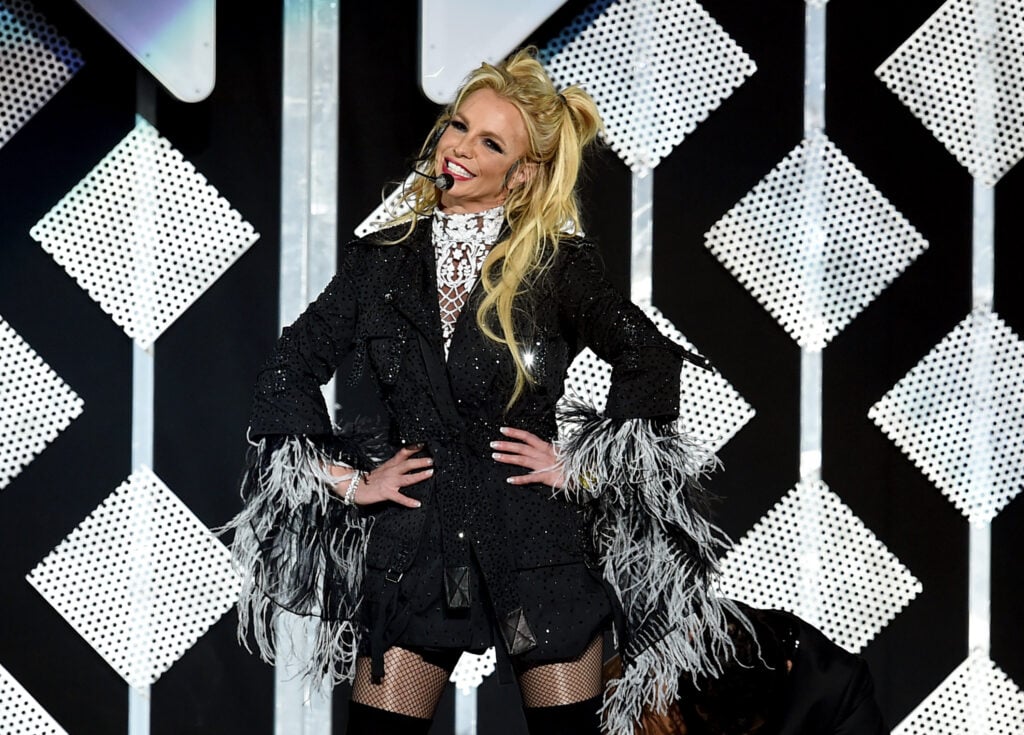
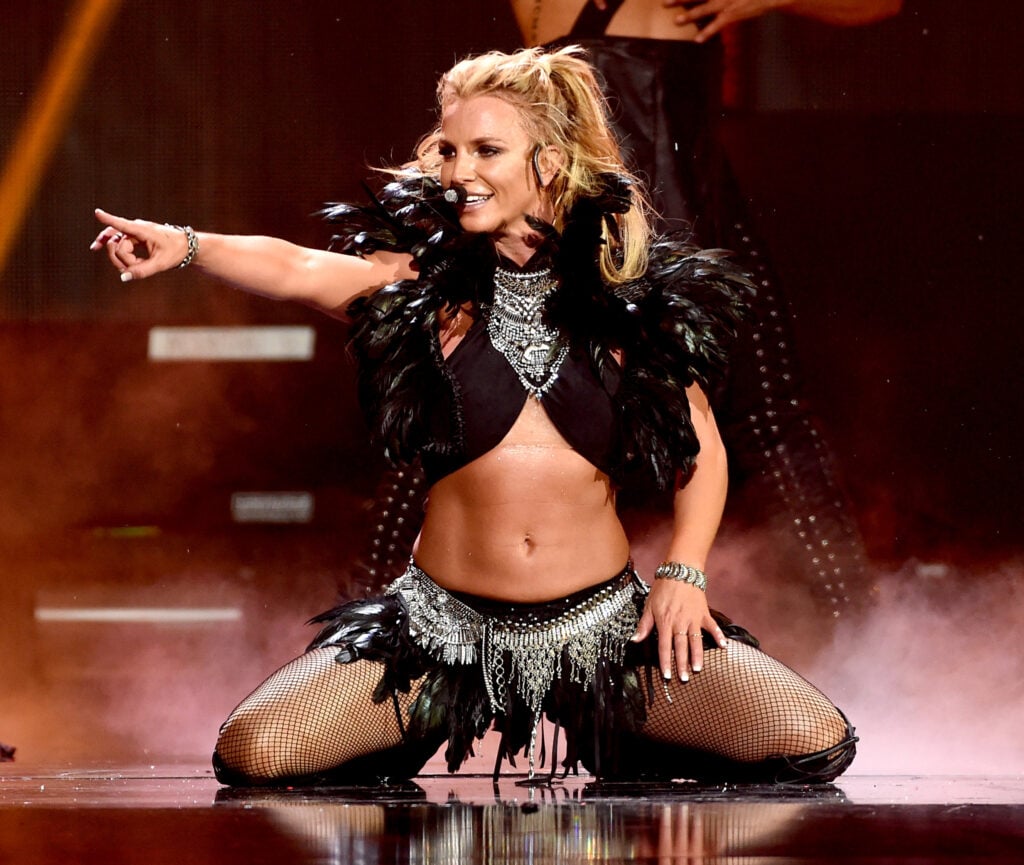
Singer Britney Spears performs onstage during 102.7 KIIS FM’s Jingle Ball 2016 presented by Capital One at Staples Center on December 2, 2016. (Photo Credit: Kevin Winter/Getty Images for iHeartMedia)
Britney Spears is twerking up a storm
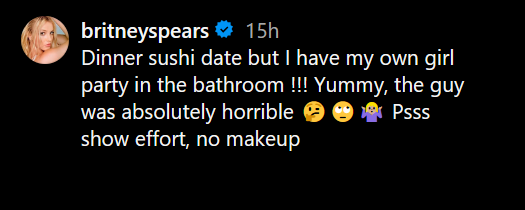
On Sunday, September 7, the incomparable Britney Spears took to her Instagram page to share that she had gone on a date.
Before we get to her caption, let’s talk about the video itself.
At an undisclosed sushi restaurant, Britney took her time in the bathroom, dancing around during a self-imposed break during a date.
Britney Spears in new post:
“Dinner sushi date but I have my own girl party in the bathroom !!! Yummy, the guy was absolutely horrible.🤔🙄🤷🏼♀️ Psss show effort, no makeup” pic.twitter.com/rdazKrC6Al
Britney wore an alluring black dress, one that helped her to flash her peach to the camera as she twerked and twirled in what was clearly an upscale bathroom.
This was a party for one, however.
As she explained, her date had proven to be a major disappointment.
Singer Britney Spears performs onstage during 102.7 KIIS FM’s Jingle Ball 2016 presented by Capital One at Staples Center on December 2, 2016 (Photo Credit: Kevin Winter/Getty Images for iHeartMedia)
‘I have my own girl party’
“Dinner sushi date but I have my own girl party in the bathroom,” Britney Spears shared in her Instagram caption.
“Yummy,” she said of the sushi itself.
However, Britney divulged:
“The guy was absolutely horrible.”
In her Instagram caption on September 7, 2025, Britney Spears shared an upbeat vibe despite a lousy date. (Image Credit: Instagram)
“Psss show effort,” Britney then wrote, apparently recommending that people on dates act like they care about the date.
(There is a toxic dating strategy that some just awful men employ where they feign disinterest during a date as a manipulative ploy; that in and of itself is worse than actual disinterest)
It is unclear what she specifically meant when she added “no makeup.”
To our inexpert eyes, she appears to be wearing eyeshadow.
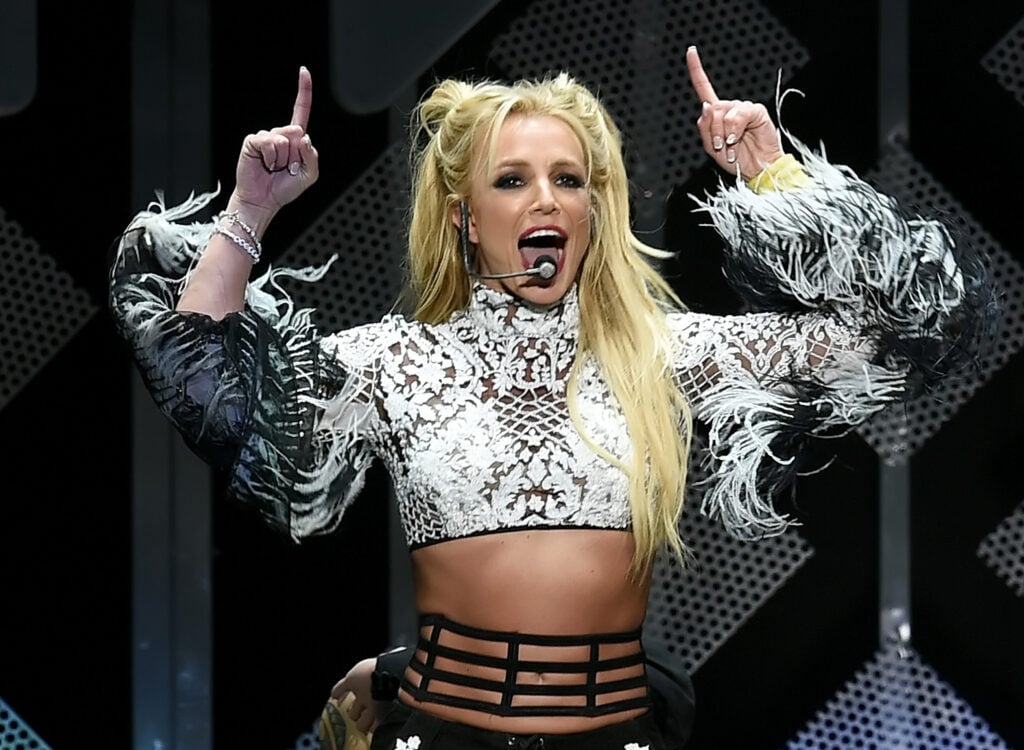
Singer Britney Spears performs onstage at the iHeartRadio Music Festival at T-Mobile Arena on September 24, 2016. (Photo Credit: Kevin Winter/Getty Images)
Who was Mr. Wrong?
As of yet, there’s no word on who the disappointing date may have been.
It sounds like Britney Spears figured out the situation pretty early and found a way to “quiet quit” the evening.
It is, we will admit, entertaining to imagine going on a date with a celebrity, possibly thinking that it went well, and then seeing a post of your date avoiding and trash-talking you. Whoops!
Just remember: bad dates are not always universal.
A disappointment for Britney might be exactly what someone else is looking for.
Now, the president has set his sights on an equally beloved entertainer: two-time Oscar winner Tom Hanks.
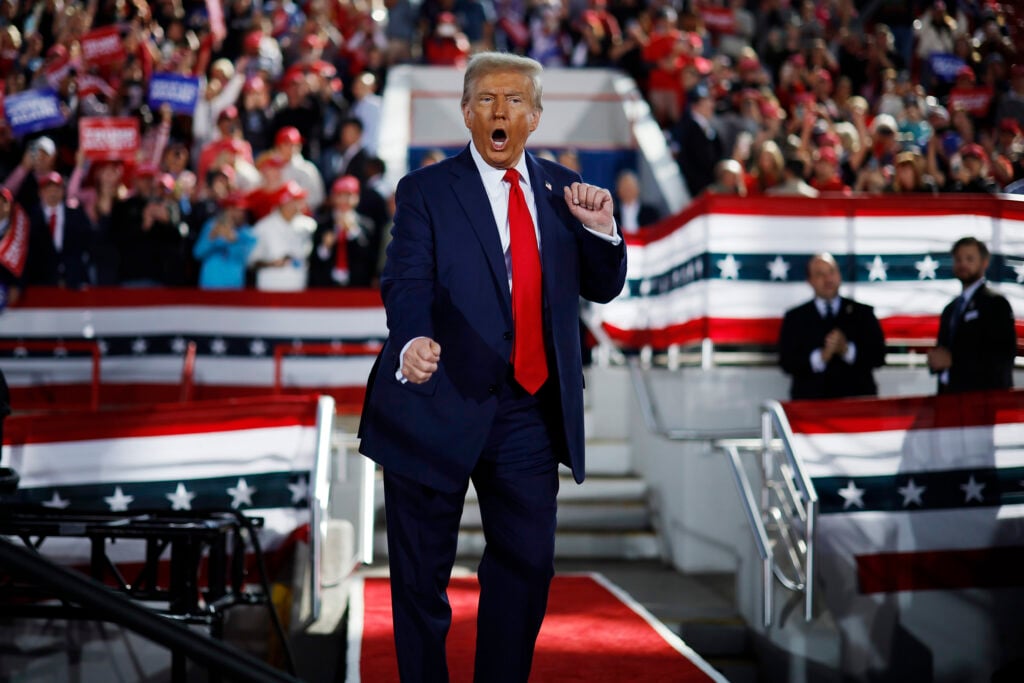
Republican presidential nominee, former President Donald Trump dances off stage at the conclusion of a campaign rally at the J.S. Dorton Arena on November 04, 2024 in Raleigh, North Carolina. (Photo by Chip Somodevilla/Getty Images)
Trump praises West Point for canceling Hanks event
Until very recently, Hanks was set to be honored by West Point’s alumni association for his “service and accomplishments in the national interest.”
The beloved star has been involved in numerous projects highlighting America’s military history, including the modern cinematic classic Saving Private Ryan and the HBO limited series Band of Brothers.
But the academy abruptly rescinded Hanks’ invitation last week, a move that is now being praised by Trump.
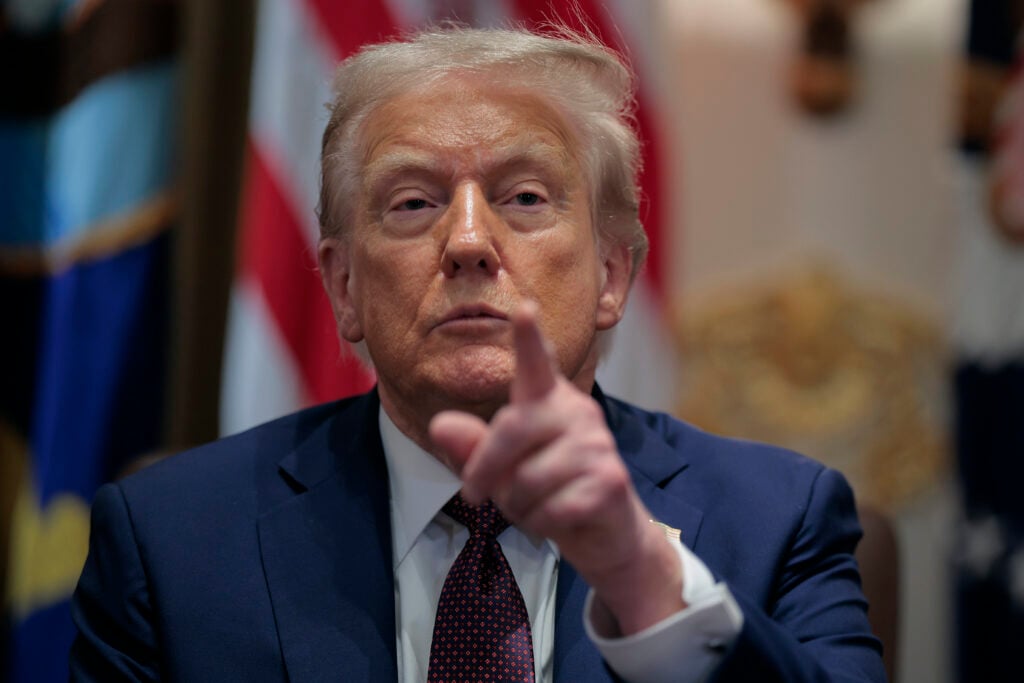
“Our great West Point (getting greater all the time!) has smartly cancelled the Award Ceremony for actor Tom Hanks. Important move!” Trump wrote on his Truth Social media platform on Monday.
“We don’t need destructive, WOKE recipients getting our cherished American Awards!!! Hopefully the Academy Awards, and other Fake Award Shows, will review their Standards and Practices in the name of Fairness and Justice. Watch their DEAD RATINGS SURGE!”
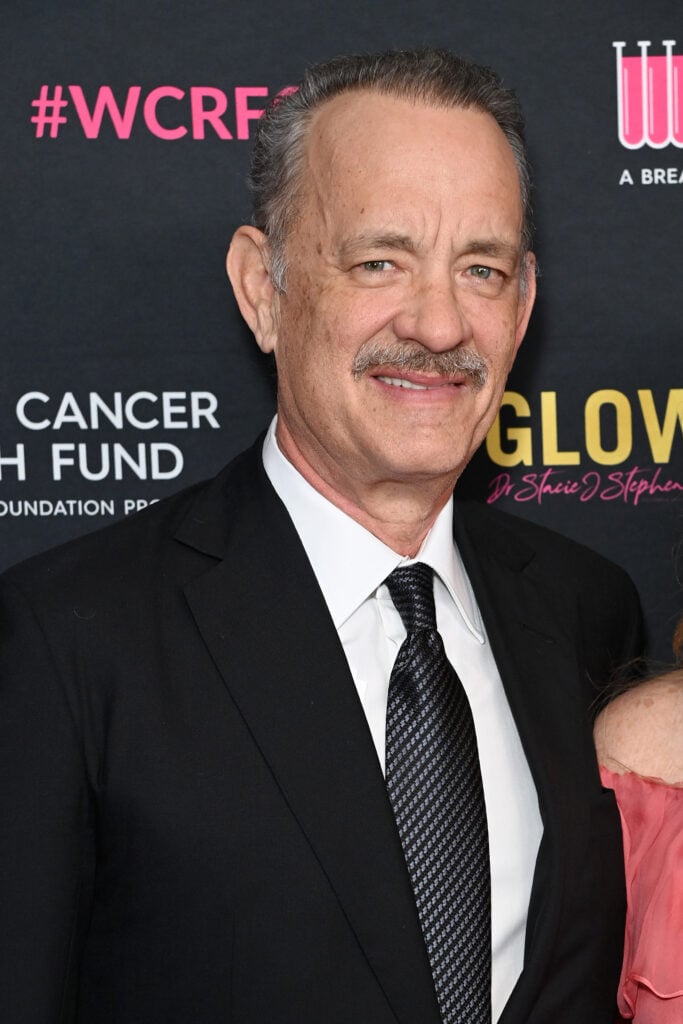
Tom Hanks attends “An Unforgettable Evening” benefiting the Women’s Cancer Research Fund at Beverly Wilshire, A Four Seasons Hotel on April 10, 2024 in Beverly Hills, California. (Photo by Jon Kopaloff/Getty Images)
Trump seems to be suggesting that the recent decline in viewership for award shows like the Oscars is a result of the organizers’ “woke” agenda.
The decision not to go forward with the September 25 ceremony honoring Hanks was revealed on Friday by Retired Army Col. Mark Bieger, the president and CEO of the West Point Association of Graduates.
“This decision allows the Academy to continue its focus on its core mission of preparing cadets to lead, fight, and win as officers in the world’s most lethal force, the United States Army,” Bieger wrote, according to the Washington Post.
U.S. President Donald Trump calls on a reporter during a cabinet meeting with members of his administration in the Cabinet Room of the White House on August 26, 2025 in Washington, DC. (Photo by Chip Somodevilla/Getty Images)
Hanks had been set to receive the Thayer Award, given to citizens who did not attend West Point but whose “service and accomplishments in the national interest exemplify personal devotion to the ideals expressed in West Point’s motto: ‘Duty, Honor, Country.’”
Hanks has not yet publicly responded to West Point’s decision or to today’s provocation from Trump.
The screen legend has successfully steered clear of high-profile feuds throughout his 50 years in the industry.
But this situation might require a rare show of vitriol from America’s Dad.
Donna Farizan has been part of The Today Show for 12 years.
Viewers grow close with the hosts and contributors. They follow along with real-life highs and lows, not just updates on news, trends, and more.
Now, Farizon is moving on.
NBC played a powerful tribute to her time on The Today Show, using Farizan’s own words and a dozen years of footage.
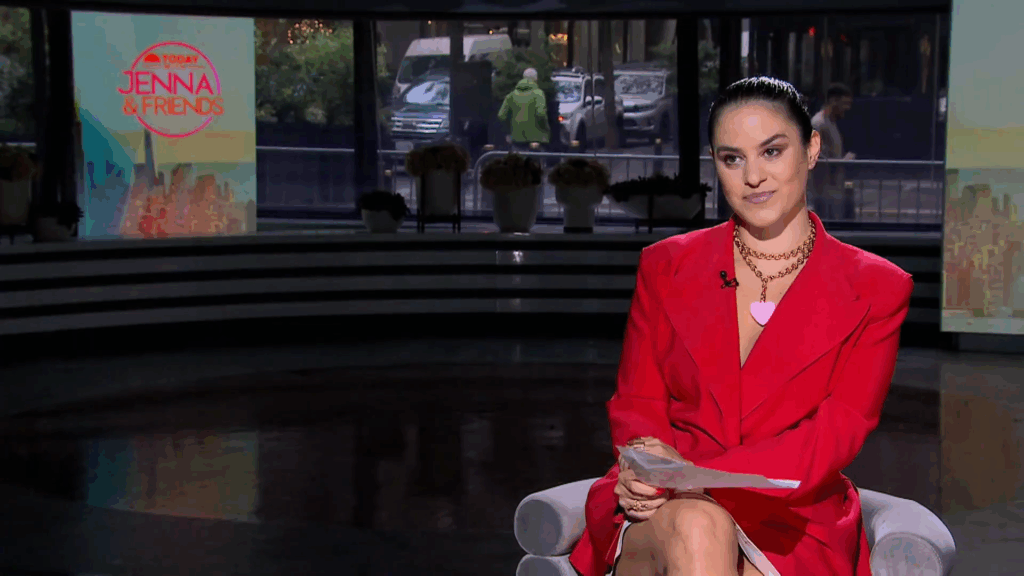
Contributor Donna Farizan speaks about her departure from The Today Show. (Image Credit: Today)
Farewell, Donna Farizan!
On Monday, September 8, Donna Farizan joinedJenna & Friends hosts Jenna Bush Hager and Savannah Guthrie on the couch.
Farizan has been a longtime contributor to and correspondent for the Today segment. This time, however, her message blended the professional and the personal.
“A year ago, I launched a series called Own Your Power, where I challenged myself to speak my truth,” Farizan began. “And now, after 12 years with Today, I’m challenging myself to spread my wings beyond the show.”
Farizan expressed her desire “to see what new and exciting opportunities await me professionally.”
She continued: “But before I do, I wanted to take a moment to reflect on my time here and the lessons learned.”
Farizan then read a letter to herself. At the same time, retrospective footage of her 12 years on Today played.
Donna Farizan, Sheinelle Jones, Jenna Bush Hager and Hoda Kotb attend Hudson River Park Friends Playground Committee Fourth Annual Luncheon at Current at Chelsea Piers on January 25, 2019. (Photo Credit: Jamie McCarthy/Getty Images for The Hudson River Park Friends Playground Committee)
‘The unknown can be scary’
“The time has come to start my next chapter. The unknown can be scary, but it’s also exhilarating, so let’s embrace it,” Donna Farizan counseled herself.
“Since I started college and had my heart set on television internships, I didn’t know where the road would lead,” she acknowledged. “But I knew to follow my curiosity and spark.”
Farizan affirmed: “I created a path that taught me lessons that expanded my growth as a human being.”
A sad day on The Today Show. Donna Farizan is saying her goodbyes. (Image Credit: NBC)
“Everywhere I turn surrounding the perimeter of 30 Rock, I’m reminded of ways in which I’ve pushed myself outside of my comfort zone,” Farizan remarked.
“Now it’s time to do that again,” she announced. “Because that’s how you grow — and I yearn to grow.”
“The world of TV and content can sometimes feel overwhelming because there is no roadmap,” Farizan acknowledged.
Donna Farizan attends the 66th GRAMMY Awards at Crypto.com Arena on February 04, 2024. (Photo Credit; Frazer Harrison/Getty Images)
‘I am so grateful’
“But I am so grateful to have gone to the school of Kathie Lee Gifford, the school of Hoda Kotb, and the school of Jenna Bush Hager,” Donna Farizan expressed.
“Because now, it’s time for me, Donna Farizan, to create my own map,” she affirmed.
We of course wish Farizan the best on her next adventure. Many of Today‘s viewers parasocially bond with hosts and contributors to the program due in part to a sense of loneliness or isolation. These figures provide a sense of companionship. We’re sure that they will miss her.
If you’re one of the millions of Netflix subscribers who have streamed the true crime doc Unknown Number: The High School Catfish, then you already know the strange story of Kendra Licari.
For the uninitiated, here’s the deal (spoilers lie ahead, obviously):
For nearly two years, Licari’s daughter, Lauryn, and her boyfriend, Owen McKenney, were terrorized by an anonymous bully who harassed them with an endless barrage of vile text messages.
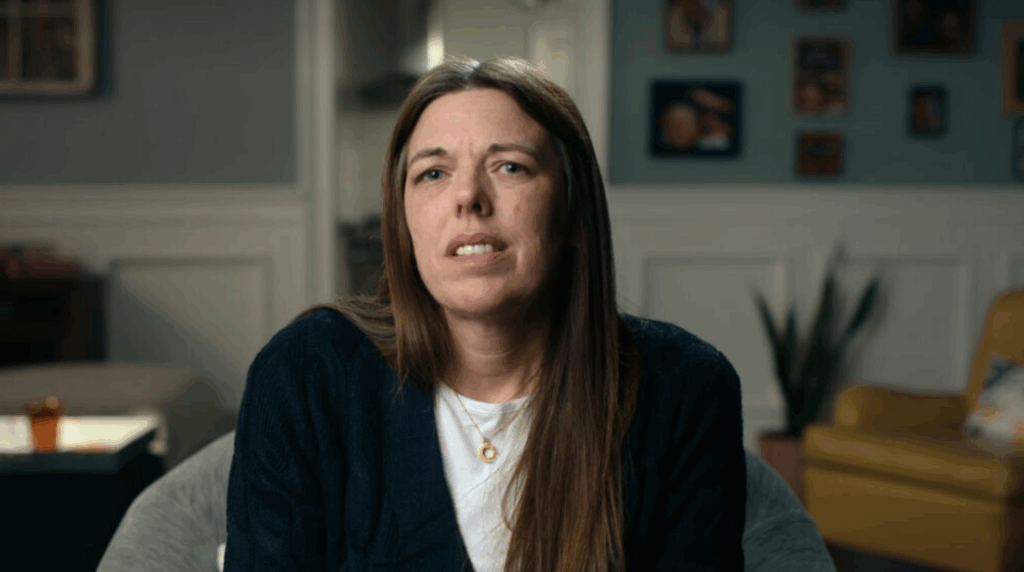
Kendra Licari speaks to producers in the Netflix documentary ‘Unknown Number.’ (Netflix)
In addition to hurling insults at Lauryn, the texter would frequently instruct her to take her own life.
And the doc’s shocking third-act twist is that the messages were sent by none other than Lauryn’s mother, who — to the shock of her husband and everyone else in her community — had long ago been fired from her job and had dedicated her days to verbally abusing her only child.
Needless to say, Kendra Licari is not exactly the hero of this story.
So why would she agree to appear on camera and discuss her crimes with the film’s producers?
‘Unknown Number’ producers say Kendra ‘loved the experience’ of telling her story
Unknown Number director Skye Borgman recently opened up about her experience with Kendra, and she offered a theory as to why she might have decided to open up.
“She was nervous about going on camera, because just sitting down and telling your story is a nerve-racking thing sometimes,” Borgman told Variety this week.
“But she was so great, and she actually ended up really loving the experience. At the end of it, she said it was kind of fun. She laughed about things, and I think it was really an opportunity for her to think about things a little bit more in depth.”
In order to understand how bonkers it is that Kendra enjoyed telling her story, you need to bear in mind that her texts consisted of some of those vile sentiments ever transmitted via iPhone.
“It is obvious he wants me, his attention is constantly on me … Not sure what he told you but he is coming to the Halloween party and we are both DTF,” Kendra told her daughter of her then-boyfriend, Owen.
“He wants nothing to do with you … He thinks you’re annoying and an ugly a-s b–ch and wishes you would leave him the f–k alone … Why do you think he is on his phone all the time texting me?” she continued, adding:
Kendra and Lauryn Licari in ‘Unknown Number.’ (Netflix)
“You didn’t get invited to sleep with him, I did. I’m spending the night with him, I’m sharing a bed with him, not you.”
And then, of course, there were the many, many messages in which Kendra instructed Lauryn to kill herself.
Toward the end of the doc, Kendra — having served 18 months for felony harassment — attempted to explain her actions.
And while it makes sense that her past trauma might have inspired such horrific deeds, there’s really no explaining such appalling behavior.
Of course, we’re kind of glad she tried. Despite its many horrors, Unknown Number is a damned entertaining watch.