Categories
Featured Juneau News juneau Juneau Local Juneau Local Ketchikan Local News Feeds Sitka Local

Anchorage Republican spending lots of his own money in governor’s race, early campaign records show

By: James Brooks, Alaska Beacon
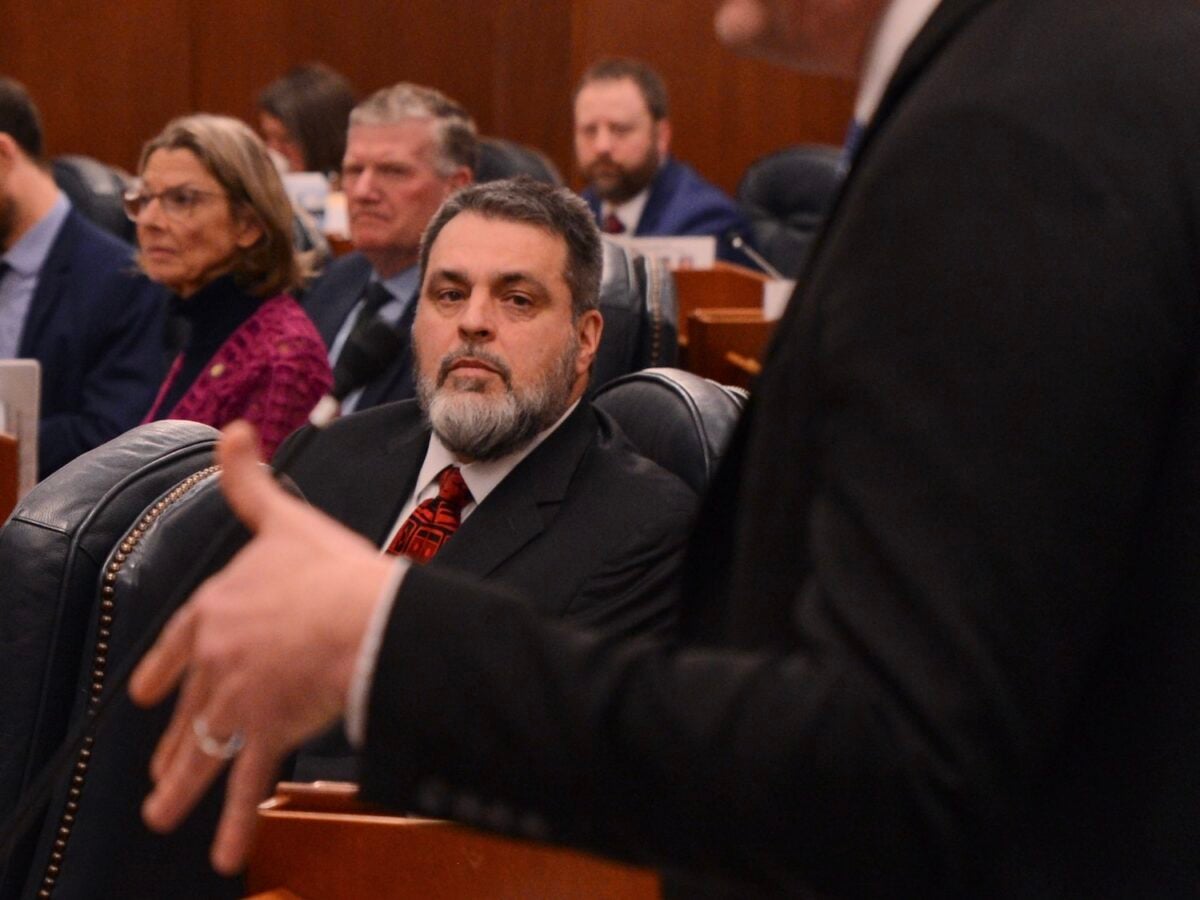
Matanuska-Susitna Borough Mayor Edna DeVries looks up at fellow Alaska Republican governor candidate Matt Heilala during a candidate forum on Feb. 11, 2026, in Juneau. (James Brooks photo/Alaska Beacon)

An Anchorage doctor and his wife have put almost $1.3 million of their own money into his campaign for Alaska governor, an extraordinary act that puts him atop early fundraising totals in figures published this week by the Alaska Public Offices Commission.

With more than $1 million remaining in the bank after early spending, Republican candidate Matt Heilala stands out among a field of candidates that expanded to 17 this week with the entry of community organizer Meda DeWitt. 

State law requires political candidates to disclose their financial support on an irregular basis; the next report isn’t due until July, so this week’s figures represent an early look at who might be a competitive candidate. 

Campaign fundraising doesn’t guarantee success at the polls, experts say, but it can act like  gas in a car’s tank: Even a campaign with a high-powered engine can fall short if it doesn’t have enough gas in the tank. 

‘Zero chance’ of getting elected without money

“Money is the mother’s milk of politics,” said Jim Lottsfeldt, an experienced Alaska campaign consultant. “I didn’t coin that phrase, but it is true. If you’re not raising sufficient money to float an organization, you have zero chance of getting elected.”

Lottsfeldt hasn’t signed a contract with any candidate in the race but was planning to personally host a fundraiser for Democratic candidate Jonathan Kreiss-Tomkins. 

Former Alaska attorney general Treg Taylor, another Republican candidate, reported having more than $724,000 in his campaign accounts as of Feb. 1, the reporting deadline for the information published this week. He also made a significant contribution to his own campaign — records show a $250,000 donation from Taylor to his campaign.

Both he and Kreiss-Tomkins stood out from the field in terms of dollars available to spend: The only other candidates who reported having more than $226,201 available were Heilala and Democratic candidate and current state Sen. Matt Claman.

Kreiss-Tomkins said in a news release that his campaign had raised more than $750,000 since entering the race this month; because he entered the race after Feb. 1, those figures were not included in this week’s APOC reports. 

It also wasn’t clear how much of that total he has already spent. Several candidates reported that they had already spent much of the money they raised since starting their campaigns.

Republican businesswoman Bernadette Wilson has raised almost $306,000 since becoming the third candidate to enter the governor’s race, but she has spent more than two-thirds of that total. Similarly, former state Sen. Click Bishop has spent more than half of the $283,605 he reported raising since he started his campaign last summer.

Anchorage doctor seeks to fill a niche

Heilala, the self-funded candidate, spent more than any other candidate in the early going but still has the largest stockpile of campaign cash.

By phone on Wednesday, he said he hopes to fill a niche on the ballot.

“A lot of people claim they want a non-politician, non-bureaucrat, but how do you raise funds if nobody knows who you are?” he asked. 

He said he and his wife have “worked our tail off” in their lives and have enough financial freedom to afford their spending. 

He said that while he is a podiatrist, he also is “a fairly diverse business guy.”

“And that’s where my success has come from — investing and property developing and a lot of other things,” he said.

Self-funding the campaign to such a large degree means they can’t be swayed as much by donors, he said.

Heilala is a member of the state medical board but hasn’t served in public office before. At a candidate forum in Juneau, he praised President Donald Trump and said that he and his wife are golfing buddies with the president. 

That they’re willing to spend so much of their own money shows they’re serious about their campaign, he said.

“From this point forward, it will be a little easier to get larger donors,” he predicted. 

Matt Larkin is president of Dittman Research, which conducts polls and advises candidates in Alaska. Early fundraising figures can “serve sort of the same function as a primary” election, he said.

“When you have this many candidates … it’s really hard for donors to make a decision on who they’re going to support. And what you’ll typically see is donors will kind of support maybe multiple candidates at this stage in small amounts, but they’re really kind of waiting to see who emerges,” he said. “And so, this first fundraising update, I think will probably narrow the field some.”

Among well-known candidates, incumbent Lt. Gov. Nancy Dahlstrom, a Republican, reported having just $4,880 in cash on hand, less than Matanuska-Susitna Borough Mayor Edna DeVries, another Republican candidate.

Former state Sen. Click Bishop reported $130,258 in cash on hand, putting him in the bottom half of candidates, but his list of donors was an unusually multipartisan list that included former state Sen. John Coghill, a conservative Republican from Nenana, and current state Sen. Jesse Kiehl, a progressive Democrat from Juneau, among others. 

Former state Rep. Joe Hayes, a Democrat, was a donor, as was Leslie Hajdukovich, a Republican who unsuccessfully challenged Hayes’ current employer — Democratic state Sen. Scott Kawasaki — in a 2024 Fairbanks Senate race. 

In Alaska, there are no limits on donations — for now

Alaska has no limits on the amount of money an individual can donate to a political campaign. The state’s prior limits were eliminated by the U.S. 9th Circuit of Appeals in 2021, and the state declined to appeal the decision.

The Alaska Legislature has not passed a bill to reimpose limits, but voters will be asked in August whether they want to approve a ballot measure that reimposes them

Those new limits would take effect after the November general election.

Several third-party groups registered with the public offices commission last month to support various candidates, but none have reported significant spending or donations.

In the 2022 race for governor, Republican Mike Dunleavy’s campaign spent more than $2 million. A supporting campaign backed by the Republican Governors Association, added almost $3 million in a parallel effort.

Independent Bill Walker’s campaign spent more than $2.4 million, and Democratic candidate Les Gara’s campaign spent almost $1.6 million. Republican Charlie Pierce, the fourth candidate, spent less than $150,000

Gara said that with early fundraising numbers, “you can get a sense for how hard somebody’s working, and I think that’s the most important thing.”

In general, Lottsfeldt said, “the reason you want this money is you need to spend it mostly when people are paying attention and are going to cast a ballot. And so that is really, mid-July through the third week in August.”

“Unfortunately for all the guys and women running for governor,” he said, “there’s this U.S. Senate iceberg floating in the middle of the channel.”

Lottsfeldt expects that the U.S. Senate race between Democrat Mary Peltola and Republican incumbent Dan Sullivan will take up most of the available TV and radio ad slots because those candidates will have more money and be able to outbid governor candidates. 

For that reason, he thinks a successful governor candidate will invest in things like yard signs, supporters going door-to-door, and other parts of a “field game.”

“It’s funny: Yard signs don’t win campaigns, but it is a marker of, ‘oh, that campaign is active. There’s people behind that. There’s enthusiasm. … Whether it’s a door stop, a yard sign, word of mouth, that is going to be huge when we have 16 people who are running.”

Even as Lottsfeldt talked, that number had already increased by one.

The deadline to sign up as a candidate is June 1. Candidates may drop out of the race as late as June 27. 

In Alaska, the top four finishers in the August primary, regardless of political affiliation, advance to the November general election, where voters use ranked choice voting to sort the candidates in order of preference and pick a winner.

Larkin, of Dittman Research, doesn’t have a contract with any candidate but has done polling on the governor’s race. While money is important, he said, “how you use that money is more important.”

“Increasingly, it’s the message that these candidates will go with will end up being the difference,” he said. “… I think the candidate with the best ideas is going to win this race, bottom line.”

Categories
Featured Juneau News juneau Juneau Local Juneau Local Ketchikan Local News Feeds Sitka Local

In legislative speech, Dan Sullivan reiterates support for Trump administration, denounces Democrats

By: James Brooks, Alaska Beacon

U.S. Sen. Dan Sullivan, R-Alaska, leaves the Alaska Legislature on Wednesday, Feb. 18, 2026, after his annual address to state legislators. (James Brooks photo/Alaska Beacon)

Facing a potentially difficult re-election campaign, U.S. Sen. Dan Sullivan came to the Alaska Legislature with praise for President Donald Trump’s administration and damnation for Democrats.

The Republican senator endured a gauntlet of protesters before he delivered his annual address to state lawmakers, saying his theme was an “Alaska comeback” brought about by the change between the Democratic presidency of Joe Biden and Trump’s Republican administration.

“We’re now beginning to see the beginnings of a real comeback and real progress on goals we’ve dreamed about collectively for decades,” he said, referring to the way the Trump administration has opened more parts of the North Slope to oil and gas drilling, and its stated support for a trans-Alaska natural gas pipeline.

Sen. Lyman Hoffman, D-Bethel, leads U.S. Sen. Dan Sullivan, R-Alaska, through a group of protesters in the Alaska Capitol on Wednesday, Feb. 18, 2026. Hoffman has endorsed Sullivan in this year’s U.S. Senate elections. (James Brooks photo/Alaska Beacon)

He reiterated his support for the Republican-drafted budget plan known as the Big, Beautiful Bill Act. It’s since been rebranded the “Working Families Tax Cuts Act.”

That plan calls for multiple oil and gas lease sales in Alaska, new military and Coast Guard construction in the state, and large personal tax cuts.

It also offered large one-time health care funding grants to compensate for a cut to Medicaid, cut federal food stamps and imposed work requirements for both programs. 

More Alaska-specific benefits in the Big Beautiful Bill were objected to by Senate Democrats and removed before the bill’s final passage, including a Medicaid increase that Sullivan had sought.

In his speech, Sullivan repeatedly criticized Democrats in the U.S. Senate.

“Alaskans should know who wants to help us and who wants to hurt us,” Sullivan said.

One of the legislators listening in the audience was state Sen. Forrest Dunbar, D-Anchorage.

“That was the most partisan speech I’ve ever heard a member of the congressional delegation give in the Alaska Legislature,” he said afterward.

“There was no critique of what the Trump administration has done in canceling projects in Alaska. There was no critique of what Trump has done, whether it comes to rule of law or democracy,” Dunbar said.

U.S. Sen. Dan Sullivan, R-Alaska, receives applause from the Alaska Legislature on Wednesday, Feb. 18, 2026, during his annual address to state legislators. (James Brooks photo/Alaska Beacon)

Also listening was state Sen. George Rauscher, R-Sutton. Afterward, Rauscher said he always appreciates the volume of Sullivan’s speeches and the range of subjects.

Did it feel like a campaign speech to him?

“If it felt like that, there’s probably a reason,” Rauscher said.

Until Sullivan was prompted by reporters and lawmakers, he didn’t address some of the nation’s most inflammatory issues, including the actions of Immigration and Customs Enforcement officers nationwide.

The day before Sullivan’s speech, ICE agents detained a Soldotna family, including a mother, two teenagers and a five-year-old.

Rep. Alyse Galvin, I-Anchorage, asked Sullivan about the incident. He responded that he hadn’t heard about it.

Answering reporters’ questions after his speech, Sullivan voiced soft disagreement with ICE policies nationwide, saying he supports deporting illegal immigrants with violent criminal records.

“I think that should be the focus of the administration’s efforts,” he said.

About ICE’s violent tactics in Minnesota, Sullivan said, “I put out statements, but also, importantly, weighed in with senior folks in the administration, saying, look, it’s really important to bring the temperature down on both sides — which ended up happening — and then very much that ICE needs to refine its techniques and tactics.”

Sullivan said he doesn’t believe protesters killed by ICE agents are “domestic terrorists,” as the White House has claimed.

“American citizens have the right to their Second and First Amendment rights, and I don’t think they should be targeted for that reason,” he said.

Categories
Featured Juneau News juneau Juneau Local Juneau Local Ketchikan Local News Feeds Sitka Local

Alaska Supreme Court upholds constitutionality of campaign ad disclosure statements

By: James Brooks, Alaska Beacon

Wooden gavel with books in background.

Alaska’s legally required campaign ad disclaimers do not violate the First Amendment, the state supreme court ruled Friday, deciding a six-year-old dispute between the Alaska Policy Forum and state campaign regulators.

Justice Dario Borghesan wrote the 61-page decision on behalf of the court, which ruled unanimously and upheld minor fines against APF that were issued by the Alaska Public Offices Commission five years ago.

At issue were a series of news releases, opinion pieces and a video embedded in the group’s website, all opposing ranked-choice voting. 

“We uphold the agency’s decision, concluding that the cited publications had to be reported and required a ‘paid for by’ disclosure,” Borghesan wrote. “We also hold that the statutory standards are not unconstitutionally vague because they give fair notice of what kind of speech must be reported and must contain a disclosure. And we conclude that the First Amendment challenges to these laws are unavailing.”

APF organized with a variety of groups across the country to produce the video embedded in its website, the opinion notes.

“APF did not just happen to find a video on the internet and share it on social media. APF engaged in discussions with organizations around the country to create a national coalition that developed or gathered content on ranked-choice voting and allowed APF to republish that content. Such efforts required significant time, and someone paid for that time. Alaskans have a genuine interest in knowing who,” the opinion states.

The case dates from 2020, when Alaskans voted to approve Ballot Measure 2.

That measure installed open primary elections, required disclosure of some political donations and installed ranked-choice voting in general elections. 

That system remains in place today but has been challenged by a new repeal initiative. A prior repeal effort failed in 2024.

In September 2020, Alaskans for Better Elections, a group that supports the current voting system, filed a complaint with the commission, stating that APF was violating state law because its statements on ranked-choice voting did not list their three top contributors, something required for campaign communications.

APF contended that its statements were about ranked-choice voting in general, not about Ballot Measure 2 in particular, because they didn’t specifically name the Alaska measure.

APOC commissioners disagreed and cited APF, requiring it to file disclosure forms but waiving fines. APF appealed to Superior Court Judge Frank Pfiffner, who ruled in the commission’s favor, finding that the commission “reasonably concluded that APF’s activities amounted to an express communication that was an exhortation to vote against (Ballot Measure 2).”

Pfiffner rejected technical arguments against the commission’s actions, the argument that state laws were improperly vague, the idea that the First Amendment gave APF a right to publish its material without a disclosure, and APF’s challenge to a state law that requires political groups to disclose contributions starting with the “first dollar” they spend.

Individuals are not subject to the same disclosure requirement. 

APF appealed to the Supreme Court, which heard oral arguments in September 2023 and ruled more than two years later.

In Friday’s order, Borghesan repeatedly refers to past rulings by the 9th U.S. Circuit Court of Appeals, which holds jurisdiction over Alaska. 

Relying on that precedent, the court concluded that given the context and language of APF’s communications, there was no other way to view them than as urging a particular vote in the 2020 campaign.

“In the context of an upcoming election in which ranked-choice voting is on the ballot,” Friday’s order states, a “video’s reference to a ‘push’ by ‘interest groups’ for ranked-choice voting and its call to ‘SAY NO TO RANKED CHOICE VOTING’ is a clear, albeit indirect, reference to voting against the Initiative.”

The Alaska Supreme Court’s ruling could be appealed to the U.S. Supreme Court.

“APF is disappointed by the decision,” said attorney Stacey Stone, who represented the group in court. “The ruling allows the state to treat protected educational speech about public policy as regulated campaign activity. That approach threatens to chill core First Amendment expression. We are reviewing the opinion carefully and evaluating our options.”

Attorney Scott Kendall represented Alaskans for Better Elections.

“Alaskans for Better Elections has been focused on campaign finance transparency since its founding. This victory affirms those values,” he said, explaining that the group is “very pleased with this outcome.”

Kendall noted that Alaskans have an interest in knowing who is funding ads in their elections.

“Hopefully, the Policy Forum will now comply with the law and disclose its donors, as it should have done years ago,” he said.

Categories
Featured Juneau News juneau Juneau Local Juneau Local Ketchikan Local News Feeds Sitka Local

Federal government may seek removal of individual Alaskans from state voter rolls

By: James Brooks, Alaska Beacon

Reject stickers await ballot envelopes Wednesday, June 15, 2022 at the Division 1 office of the Alaska Division of Elections in Juneau, Alaska during counting for Alaska’s special U.S. House primary election. (Photo by James Brooks/Alaska Beacon)


When the state of Alaska turned over a copy of the state’s voter rolls to the Department of Justice in December, it also signed an agreement that allows the DOJ to ask the state to put individual Alaskans on track for removal from the state’s voter list.

Officially labeled a “confidential memorandum of understanding,” the document was signed Dec. 19 by Carol Beecher, director of the Alaska Division of Elections, and U.S. Assistant Attorney General Harmeet Dhillon.

Alaska is one of at least a dozen states that have signed similar documents, even as more states continue to fight the requests in court. 

In part, the document says “the Justice Department will securely notify you or your state of any voter list maintenance issues … i.e., that your state’s (list) only includes eligible voters.”

It goes on to state “that within forty-five (45) days of receiving that notice from the Justice Department of any issues … your state will clean its (list) by removing ineligible voters and resubmit the updated (list) to the Civil Rights Division of the Justice Department” to confirm that the state is following federal law.

Alaska’s signed agreement was obtained by the Alaska Beacon on Tuesday via a public records request.

Beecher and Kelly Howell, chief of staff to Lt. Gov. Nancy Dahlstrom, said the agreement does not allow DOJ to purge voters — a term that means removing them from the voter roll altogether.

Instead, the DOJ’s picks, if any, would be placed on the state’s inactive voter list. Anyone on that list must provide ID and have their identity verified if they wish to vote.

People on the inactive list are also placed on the state’s path to removal, a process that takes four years according to a timeline set by federal and state law

The agreement says in part that it was “entered into at your state’s request,” but by email, Dahlstrom’s office said that isn’t correct and that the Department of Justice provided the agreement.

The lieutenant governor is in charge of Alaska’s elections, and in a cover letter dated Dec. 19, she said the memo was “entered at the request of the Department of Justice” and state law.

That law, Dahlstrom said, “allows the Division of Elections to share voters’ confidential information with a federal government agency, such as the Department of Justice, provided it uses ‘the information only for governmental purposes authorized under law.’”

If the Department of Justice were to seek faster removal of Alaskans from the voter rolls, it could violate that clause.

Responding to questions from the Beacon, the lieutenant governor’s chief of staff said the state has not received any notices from the Justice Department about problems with its voter list, that no “ineligible voters” have been removed and that the state isn’t aware of any times when Alaska’s rolls were used for “pre-litigation or litigation purposes,” as defined in the agreement.

Concerns about states’ rights being overridden

The U.S. Supreme Court has repeatedly upheld the right of states to set the rules for local and state elections; changing voter rolls would represent a new expansion of powers by the Department of Justice.

Former Democratic state Sen. Tom Begich, posting about the issue on social media, said he is “outraged” by the agreement between the state and the federal government.

“That kind of federal interference threatens our constitutional right to run our own elections,” he said.

He later issued a statement calling on the Alaska Legislature to investigate the issue.

Dahlstrom, a Republican, is also a candidate for governor.

Writing in an opinion column published by the Juneau Independent on Friday, former Alaska Attorney General Bruce Botelho, a Democrat, said “it is alarming that the federal government has demanded” the copy of the voter roll with personally identifying information.

Nationally, at least 11 other states have signed agreements similar to the one signed by Alaska, according to federal court testimony in December over a lawsuit that challenged the state of California’s refusal to turn over its voter rolls to the federal government.

The text of Alaska’s agreement is almost identical to ones previously disclosed in court and by the American Civil Liberties Union in a lawsuit by the federal government against the state of Colorado.

“We will not comply with the Trump Department of Justice’s request for Coloradans’ sensitive voting information,” said Colorado Secretary of State Jena Griswold, a Democrat, in December. “The DOJ can take a hike; it does not have a legal right to the information. Colorado will not help Donald Trump undermine our elections and hurt the American people.”

Nationally, the federal government has sued more than two dozen states, including Colorado, that refused to send voter rolls to the federal government.

Those states generally have provided copies of publicly available rolls, but the federal government is seeking more detailed information, including lists of personally identifying information that may include birth dates, driver’s license numbers and Social Security numbers in part or whole.

“The manner in which the Department of Justice has acted makes clear that what is at stake is not voter integrity, but voter privacy,” Botelho said.

The Justice Department has said that its requests are necessary to make sure that states are following federal laws that require them to regularly maintain their lists and keep noncitizens from voting.

The Department of Justice has been sharing the voter rolls with the Department of Homeland Security, searching for noncitizens.

As of this week, federal judges had ruled against the Department of Justice in lawsuits covering Oregon, California and Michigan. The department has not prevailed in any case so far.

In the Oregon ruling, published on Feb. 5, Judge Mustafa Kashubhai wrote that the federal government cannot be trusted about its true motives.

“When Plaintiff, in this case, conveys assurances that any private and sensitive data will remain private and used only for a declared and limited purpose, it must be thoroughly scrutinized and squared with its open and public statements to the contrary,” he wrote.

Alaska-specific implications may be broad

The national ACLU has opposed the federal government’s requests in general. When contacted Friday about the Alaska memo, the Alaska chapter of the organization said it did not have immediate comment and was still researching the issue.

The agreement between the state of Alaska and the Department of Justice could have broad consequences here. 

Days before signing the agreement, the Alaska Division of Elections disclosed that dozens of noncitizens had accidentally been registered to vote by the Alaska Department of Motor Vehicles.

Under guidelines imposed by the Trump administration, those noncitizens could be deported, because federal law strictly prohibits noncitizens from registering to vote, and appearing on a voter list prompts special review when someone is attempting to become a citizen.

The state has also criminally charged 11 American Samoa-born Alaska residents for voting in state elections. People born in American Samoa are American nationals, but not citizens, and thus are ineligible to vote.

When the Alaska Beacon reviewed Division of Elections files that were turned over to the Department of Justice last year, it found 70 people labeled as noncitizens who either voted or attempted to vote in the state between 2015 and 2025.

Those people were on the state’s inactive voter list, which was not provided to the Department of Justice.

In addition, the violent federal crackdown against noncitizens in Minnesota and other states has ensnared many American citizens, indicating that the federal action is resulting in many false positives or is targeting Americans regardless of citizenship. 

Correction: The initial version of this article incorrectly stated that the memo would allow the Department of Justice to direct the purge of individual voters. It only permits DOJ to identify Alaskans for eventual removal and does not immediately prevent them from voting.

Categories
Featured Juneau News juneau Juneau Local Juneau Local Ketchikan Local News Feeds Sitka Local

Alaska Senate votes to require public schools to teach CPR

By: James Brooks, Alaska Beacon

Sen. Elvi Gray-Jackson, D-Anchorage, talks to a colleague on the floor of the Alaska Senate, Wednesday, May 1, 2024. (Photo by James Brooks/Alaska Beacon)

Alaska public school students would be required to learn hands-only CPR under a proposal advancing through the state legislature.

In a 19-0 vote on Wednesday, the Alaska Senate approved Senate Bill 20, which requires the Alaska Department of Education and Early Development to “adopt curricula to instruct public school students on hands-only cardiopulmonary resuscitation.”

Conventional CPR involves chest compressions and mouth-to-mouth breathing, whereas hands-only CPR uses compressions alone.

Sen. Robert Yundt, R-Wasilla, was absent from the vote.

Existing state law says that each state school district is “encouraged” to teach CPR; the new bill, if approved by the House and Gov. Mike Dunleavy, would change CPR to a requirement.

The department said in a fiscal note that it will be able to implement the new requirement at no additional cost to the state.

“It’s time for Alaska to align with the growing national standard that ensures students learn these life-saving CPR techniques,” said Sen. Elvi Gray-Jackson, D-Anchorage and the sponsor of the bill.

Heart diseases are the No. 2 cause of death in Alaska, according to the latest available state statistics. CPR can be used to keep someone’s blood flowing if they experience sudden cardiac arrest. That can triple a victim’s chances of survival, Gray-Jackson said, noting that CPR has even been used in the Capitol on occasion.

SB 20 advances to the House for further consideration. A companion measure, House Bill 92, is in the House Education Committee and has not yet been heard.

Categories
Featured Juneau News Juneau Local Juneau Local Ketchikan Local News Feeds Sitka Local

Among Alaska’s 16 candidates for governor is a ‘pissed off’ single mother of five

By: James Brooks, Alaska Beacon

Independent Alaska governor candidate Jessica Faircloth is seen in a photo distributed by the candidate on Feb. 5, 2026. (Handout photo)

The first independent candidate in Alaska’s 2026 gubernatorial election is a single mother of five who says she’s frustrated with the condition of Alaska’s fisheries, its economy and the Permanent Fund dividend.

Jessica Faircloth filed her letter of intent in January, making her the 15th person to sign up for this year’s gubernatorial race. A 16th candidate announced his candidacy this week

She’s from Kasilof, a rural community on the Kenai Peninsula. 

Faircloth hasn’t held public office before, but she decided to run after one of her oldest children surprised her with the happy news that she’ll be a grandmother soon.

“I was overjoyed,” she said, “but then I started thinking. My kids are the fourth generation of my family to live in (our) house, and they didn’t get to grow up in the same Alaska I did.”

She recalls digging for clams, always having moose and caribou in the freezer — and then, there were the king salmon.

“We caught so many kings when I was a kid, we turned them loose if they were too small, or they didn’t fight hard enough, or we caught them too early in the day, or they were a little pink,” she said.

“I realized three of my five children have caught a king salmon, and only one of them was over 50 pounds, and they don’t remember digging clams,” she said.

As she was contemplating the future her first grandchild might experience, she said: “It’s like a light bulb went on, and I started to see that Alaska is not being managed for Alaskans.”

The Permanent Fund dividend needs to be guaranteed in the Alaska Constitution, she said. 

Faircloth noted that some oil and gas companies have been able to use writeoffs and exemptions to reduce their taxes to zero. 

“If you look at our oil and gas, the tax structure allows zero tax years … and our Legislature hasn’t done anything to fix them,” she said.

Fisheries are big in her mind, too.

“The whole West Coast doesn’t have any salmon. I don’t have any king salmon. I love them more than anything in the world,” she said.

“It doesn’t matter if it’s the PFD, our state budgeting — none of it, none of it, is being managed to benefit Alaskans. It’s benefiting outside corporate interests, mainly, and I am absolutely morally and ethically appalled and pissed off,” Faircloth said.

Faircloth was one of more than 19,000 Alaskans registered as members of the Alaskan Independence Party when it dissolved last year. Now, she’s registered as “undeclared” and campaigning independently of any party. 

“I’m one of those people that doesn’t just sit back and complain … that’s the mentality I grew up with. You either do something or you stop complaining,” she said.

Independent Alaska candidate for governor Jessica Faircloth is seen with a king salmon in this undated photo provided by the candidate. Preserving salmon runs is a major priority for the candidate. (Campaign handout photo)

Faircloth’s policy positions don’t fit into the standard Alaska political boxes. 

She supports a constitutional dividend, something Republicans in the Alaska Legislature tend to champion. She also wants to see more support for public school teachers, a position typically held by legislative Democrats.

“There’s no pension. There’s no benefits. It’s underfunded,” she said of the state’s public school system.

“I just — I’m watching my teacher friends, especially some of the younger ones, and they are so discouraged,” Faircloth said.

She’s a fan of the “Stop Alaskan Trawler Bycatch” Facebook page and supports anti-trawl appointees to the North Pacific Fishery Management Council and other fishery regulators.

“I understand that the governor actually has very little power (on fisheries), but the power that the governor does have is who they appoint as commissioners and on boards, and that is where the strength of Alaskan government comes from,” she said.

Eight years ago, she voted for current Gov. Mike Dunleavy, but she’s soured on him. 

“I really believed, you know, that he was going to be able to get the dividend in the Constitution. And I just expected great things from him. And after eight years, I’m kind of let down,” she said.

Dunleavy is term-limited and unable to run for a third term, a fact that has encouraged a large number of candidates to enter the race.

So far, there are three Democrats, 12 Republicans and Faircloth. 

The deadline to register with the Alaska Division of Elections is 5 p.m. June 1.

The four candidates who receive the most votes in the August primary election will advance to the November general election.

“I’ve been a broke-ass single mom with a backbone and the ability to budget, and that is what our state needs right now,” she said. “Somebody to walk in there and say, ‘OK, listen, you’re not doing your job, and we’re all in this together. So I need everyone to step up and to do what they’re supposed to.’ I just think that Alaska should be managed for Alaskans first. And that’s not being done.”

Governor candidates so far

  • Former state Sen. Tom Begich (Democrat)
  • Former state Sen. Click Bishop (Republican)
  • Former Anchorage Mayor Dave Bronson (Republican) and Lt. Gov. candidate Josh Church (Republican)
  • Former state revenue commissioner Adam Crum (Republican)
  • Current state Sen. Matt Claman (Democrat)
  • Lt. Gov. Nancy Dahlstrom (Republican)
  • Matanuska-Susitna Borough Mayor Edna DeVries (Republican)
  • Kasilof resident Jessica Faircloth (Undeclared)
  • Anchorage podiatrist and state medical board member Matt Heilala
  • Former state Sen. Shelley Hughes (Republican)
  • Former state Rep. Jonathan Kreiss-Tomkins (Democrat)
  • Author Hank Kroll (Registered Republican) with Lt. Gov. candidate Tommy Nicholson (Undeclared)
  • Angoon resident and former teacher James William Parkin IV (Republican)
  • Former Attorney General Treg Taylor (Republican)
  • Palmer resident Bruce Walden (Republican)
  • Businesswoman Bernadette Wilson (Republican) with Lt. Gov. candidate Mike Shower (Republican)
Categories
Featured Juneau News Juneau Local Juneau Local Ketchikan Local News Feeds Sitka Local

Lawmakers advance bill to add state felony charges for AI-generated child sexual abuse material

By: Corinne Smith, Alaska Beacon

Rep. Sarah Vance, R-Homer, speaks Friday, April 26, 2024, on the floor of the Alaska House of Representatives. (Photo by James Brooks/Alaska Beacon)

Alaska lawmakers advanced a bill on Friday that would create new state felony charges for the crime of using artificial intelligence to generate child sexual abuse material.

The House Judiciary Committee unanimously passed House Bill 47, sponsored by Rep. Sarah Vance, R-Homer on Friday. CSAM, formerly referred to as child pornography, is any material that visually depicts sexually explicit or obscene conduct involving a child under the age of 18.

Vance told lawmakers that AI-generated CSAM is a growing problem that is already affecting Alaska communities. “AI-generated CSAM poses serious risk to children by enabling perpetrators to produce highly realistic virtual images of child abuse,” Vance said in a presentation to lawmakers ahead of the vote. “These images are often indistinguishable from real ones, complicating identification by experts and overwhelming law enforcement’s ability to identify real victims.”

Additionally, she said AI-generated images can be used as blackmail. “These realistic, synthetic images create new avenues for predators to exploit minors and their families through extortion and financial coercion, significantly escalating harm and trauma,” she said.

Vance said she introduced the legislation after an Army soldier stationed at Joint Base Elmendorf-Richardson was arrested for creating AI-generated CSAM in 2024. 

Vance said the case revealed to her that Alaska law does not have a statute addressing AI-generated CSAM. “But that soldier was prosecuted under federal law, not state law,” Vance said. “Currently, Alaska must rely on federal prosecutions due to our lack of a statute addressing this issue.”

She said she has heard from constituents that the state’s lack of AI-specific CSAM laws is a concern. 

“I also had some mothers in Homer contact me probably about a year and a half ago now that their 13-year-old daughters had been subject to the use of AI,” Vance added. “They went to law enforcement, and Homer Police Department said, ‘Alaska statutes do not address AI-generated use of images.’ And so this hit really close to home for me.”

Homer Police Department officials said they investigated the case and the Kenai District Attorney’s Office charged two middle school boys with exploitation of a minor after they created AI-generated nude images of classmates. 

While there is no Alaska state law specifically addressing AI-generated CSAM, there are statutes that prohibit the viewing, possession or distribution of CSAM. 

“Basically, any depiction of photograph, audio, video recording, drawing, anything like that, if it depicts children being involved in certain sexual simulations or exploitation, then that’s considered exploitation of a minor,” said Lt. Ryan Browning with the Homer Police Department. “We felt like that was enough to meet the probable cause for the statute.”

Statewide, the Alaska Department of Public Safety works with local and federal law enforcement agencies to investigate each CSAM case reported, said Austin McDaniel, director of communications for the agency.

McDaniel said the department does not have data available on the number of recent cases involving AI generated materials. By email, he said the department has received reports of AI-generated CSAM, but he said those reports are not “prevalent.”

He said a team of more than ten investigators work in a unit within the Alaska Bureau of Investigation focused solely on CSAM-related crimes. 

“All that they do is child sexual abuse material investigations, or CSAM investigations, and they certainly and unfortunately, stay busy throughout the year,” he said. He noted a “vast number” of cases are reported to the Anchorage Police Department. 

State public safety officials received 330 reports of alleged CSAM or child exploitation related crimes in 2024, the most recent year of publicly available data. “We go through and investigate those instances, refer charges to state prosecutors, or work very closely with our federal partners when it might be better to pursue federal charges against somebody versus state charges,” McDaniel said. 

Sexual violence is prevalent across Alaska — and 51% of reported victims were minors in 2024. McDaniel noted the most common age of victims of sexual offenses is 13 years old. 

“So between our CSAM investigations or child sexual abuse investigations, you know, we are certainly kept very busy,” he said. “And we are working across the state, around the clock to investigate those instances and to hold anyone that victimizes Alaska’s kids accountable for their actions.” 

Angela Kemp, deputy attorney general for the criminal division of the Alaska Department of Law, said currently the state has to prove that an actual child was used to create the sexual abuse material to prosecute the case. She said investigators use digital forensic tools to determine if the material is AI-generated, or whether there is a child victim. 

“For cases where we cannot prove an actual child was used, law enforcement works with our federal partners to determine whether the conduct can be prosecuted under federal law,” she said. 

Vance said if the legislation is passed, it would criminalize all possession of AI-generated CSAM. “It’s hard to distinguish if there was a real victim involved, or if it is all generated through AI technology, this bill would allow them to say all of it is prosecutable,” she said. 

The bill would also enact new sentencing guidelines for AI-generated CSAM, and depending on the charges and prior felony convictions, offenders could face two to 99 years in prison. 

The bill has been referred to the House Rules Committee, which will determine whether it will go to the full House of Representatives for a vote. If passed, the bill would need to be considered and approved by the Senate to become law.

Categories
Featured Juneau News Juneau Local Juneau Local Ketchikan Local News Feeds Sitka Local

Anchorage judge dismisses defamation lawsuit against Anchorage Daily News, Alaska Public Media

By: James Brooks, Alaska Beacon

 The Anchorage Daily News office in Midtown Anchorage is seen on Sept. 16, 2024. (Photo by Yereth Rosen/Alaska Beacon)

This article was updated at 7:35 p.m. Wednesday with comment from the plaintiff.

Two of Alaska’s largest news organizations and two top reporters did not commit defamation when they described a former state employee’s statements about rape, a state judge ruled on Tuesday in Anchorage.

Jeremy Cubas, a former aide to Gov. Mike Dunleavy, sued Alaska Public Media, the Anchorage Daily News, Nat Herz and Curtis Gilbert last year. American Public Media, a national organization, was also named in the suit. 

Cubas resigned in 2023, shortly before the publication of an article that described comments he made in two podcast episodes. He filed suit almost two years later, seeking more than $5 million in damages and lost wages.

Cubas specifically challenged two parts of the article — a paraphrase that said Cubas “said it’s fine for a man to force himself on his wife” and the statement that Cubas “made comments about rape.”

In a 22-page order, Judge Christina Rankin said the second statement “is an accurate quote of Cubas’ own statement” in the podcast.

“Defendants used accurate, direct quotes from Cubas in the article. Therefore, Cubas can prove no set of facts that Statement Two is unfairly abridged, mischaracterized, distorted, or littered with slight inaccuracies,” Rankin said.

For the first statement, which was a paraphrase rather than a direct quote, Rankin concluded that it is “a fair abridgement” of Cubas’ words.

Cubas had argued that his belief that it is impossible to rape one’s wife — something he said during the two podcast episodes — is not the same as saying it is fine to “force yourself” on one’s wife.

Cubas’ core argument, Rankin concluded, was that the wording of the paraphrase was such that it implied Cubas believed it was OK for a spouse to “violently rape one’s own wife.”

“However, it is the alleged defamatory statement itself that the Court needs to review for truth, not the plaintiff’s inflamed version of the statements,” Rankin wrote.

She concluded that given the context given in the article, a reasonable reader would not share Cubas’ perceived implication but would instead “believe what defendants assert he said.”

Because Rankin concluded that the article is accurate, she did not take up Cubas’ other arguments, which included the idea that Cubas was not a public figure and that the reporters had malice against him. 

“The court recognizes that this was good, solid journalism,” said Ed Ulman, president and CEO of Alaska Public Media. “The opinion lays things out thoroughly, but in the end it was simple. Truth is a defense in a libel case.”

By text message, Cubas said he will have more to say later.

“This case is in no way over. I’m working on the appeal,” he said.

Categories
Featured Juneau News Juneau Local Juneau Local Ketchikan Local News Feeds Sitka Local Uncategorized

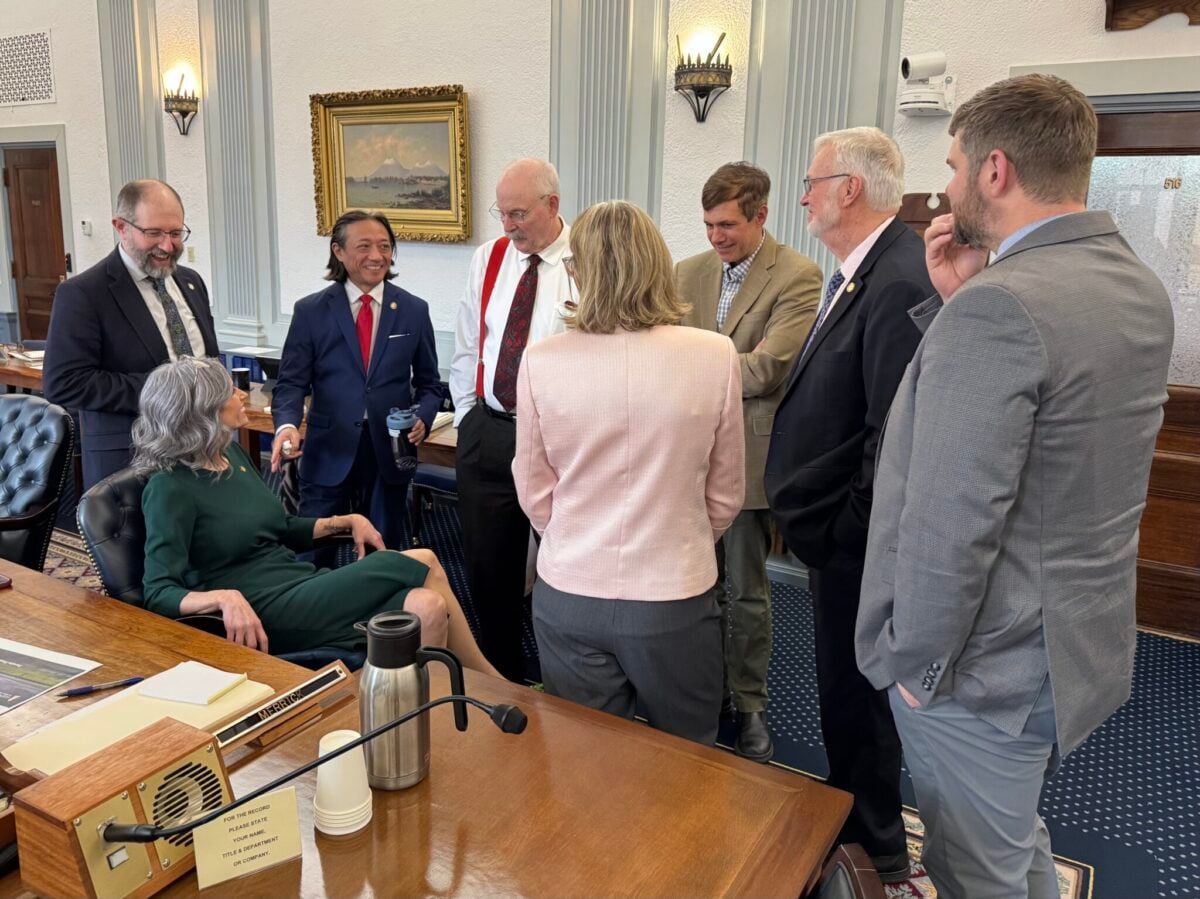
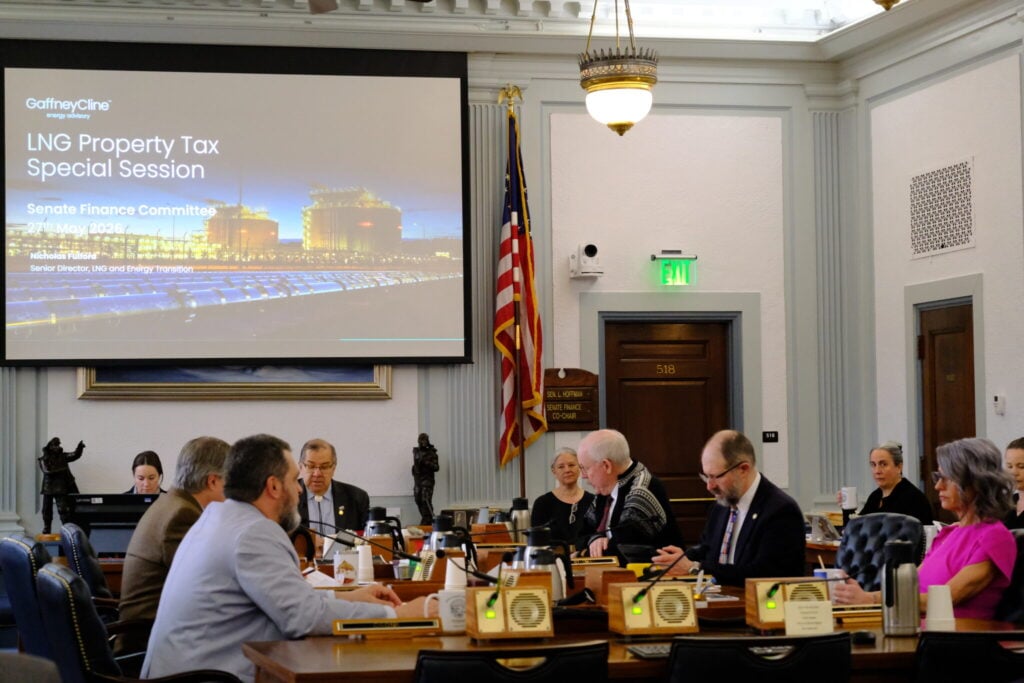
Legislature proposes changes to session length

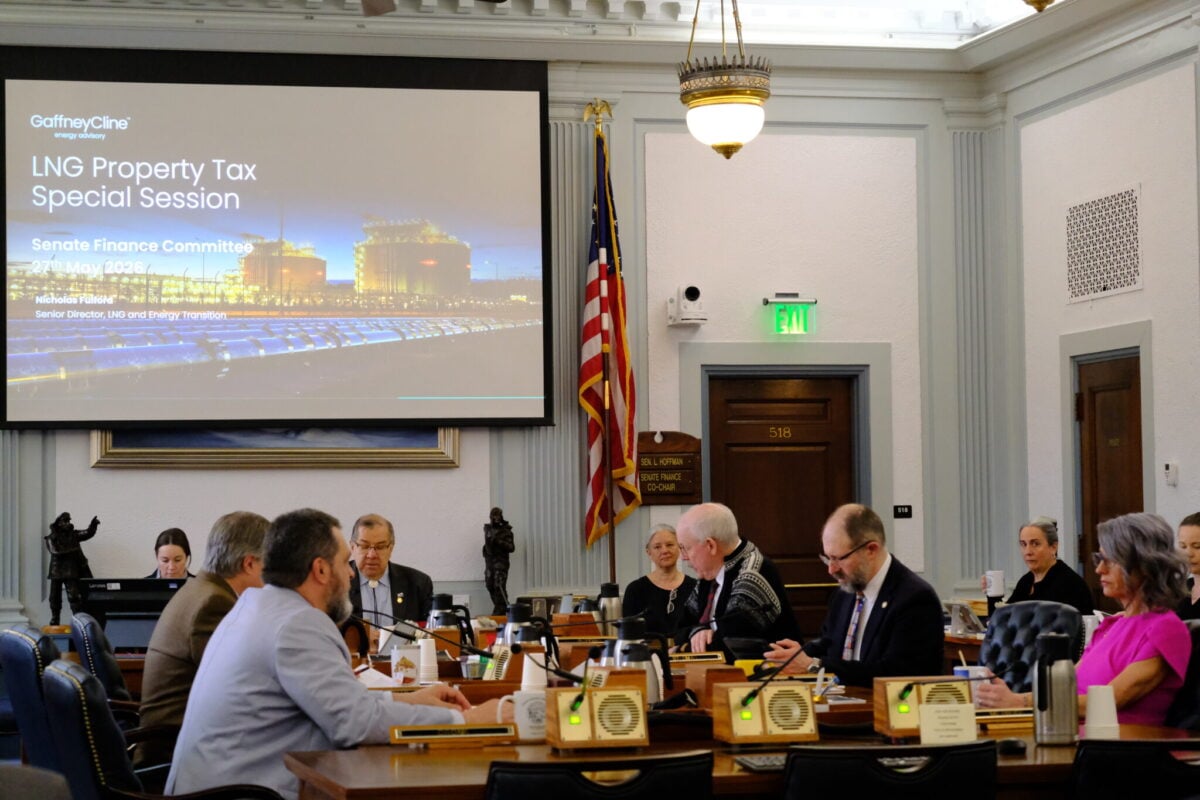
The Senate Finance Committee

NOTN- A bill introduced in the Alaska Senate would repeal the state’s voter-approved 90-day limit on regular legislative sessions, arguing the restriction has failed to improve efficiency and has instead led to longer, more costly extended and special sessions.

“This bill repeals a law that was in place, it was a citizen’s initiative.” Said Senator Cathy Giessel, “This table certainly, understands more than anyone the complexity of the issues we face, and adjourning mandatorily by 90 days is unrealistic.”

Senate Bill 34 would eliminate a statute that shortened regular legislative sessions from up to 121 days to 90 days. The bill does not establish a new session length, allowing the Legislature’s flexibility to meet for the full duration allowed under the Alaska Constitution.

In a sponsor statement, the bill argues that the 90-day limit has proven “impractical”.

Since the measure took effect, lawmakers have completed their work within 90 days only a handful of times.

“The Alaska Legislature has completed its work within that timeframe on only three occasions.” The statement reads, “Two of these instances occurred in the early years of the measure’s adoption, and the third took place during the COVID-19 pandemic in 2020. However, these instances were exceptions, not the norm, and have highlighted the inherent flaws of the 90-day restriction.”

In most years, the Legislature has exceeded the 90-day limit and continued work through extended sessions or special sessions, sometimes well beyond the original constitutional limit of 121 days.

The statement says 90 day sessions have not reduced costs or improved productivity. Instead, it argues the deadline has contributed to rushed decision-making, repeated extensions and added expenses associated with convening additional sessions.

SB 34 does not automatically lengthen legislative sessions, but would remove the legal restriction.

“And with that the legislature can adjourn anytime it wants if it gets its business done.” Said Senator Lyman Hoffman.

Categories
Featured Juneau News Juneau Local Ketchikan Local News Feeds Sitka Local

Alaska’s Rep. Nick Begich votes against 3-year extension of federal health care subsidies

By: James Brooks, Alaska Beacon

Rep. Nick Begich, R-Alaska, speaks during the commissioning ceremony for the Coast Guard icebreaker Storis on Sunday, Aug. 10, 2025, in Juneau, Alaska. (Photo by James Brooks/Alaska Beacon)

The U.S. House of Representatives voted 230-196 on Thursday to extend Affordable Care Act subsidies for three years and reverse massive cost increases that went into effect with the new year.

The reversal must still be approved by the U.S. Senate and President Donald Trump before becoming effective.

Alaska’s lone member of the House, Republican Rep. Nick Begich III, voted against the extension, as did 195 other Republicans.

Seventeen Republicans voted for the extension of subsidies that were enacted during the COVID-19 pandemic emergency, joining all of the chamber’s Democrats. 

The House’s Republican leaders opposed the extension, but a handful of Republicans signed a petition in December to force a vote.

Begich did not sign that petition, and on Wednesday, he joined other Republicans in an unsuccessful procedural vote intended to block Thursday’s decision.

In a written statement explaining his vote on Thursday, Begich said extending subsidies would not fix the problems he sees with the Affordable Care Act, commonly known as Obamacare.  “The health insurance system created by Democrats under Obamacare has proven completely unaffordable for the American healthcare customer,” the statement said. “An extension of Obamacare COVID subsidies does not fix what is broken.”

He said he would like to see reforms to the Affordable Care Act, without which he said the extension “has no credible pathway forward in the Senate.”

In December, Begich voted in favor of a Republican-proposed alternative to the extension. That alternative, which focuses on drug costs, would not stop or reverse the new cost increases and has thus far been rejected by the Senate. 

The Congressional Budget Office reported that the alternative would reduce health insurance premiums for insured Americans but would also reduce the number of Americans who are insured. 

“I remain committed to working on reforms that lower costs, expand access, and improve outcomes for all Americans,” Begich said in his statement. “Temporary extensions without meaningful reform are not the solution. Real reform that puts patients first is.”

In December, Alaska’s two U.S. Senators, Lisa Murkowski and Dan Sullivan — both Republicans — joined Senate Democrats in an unsuccessful attempt to advance a condition-free extension similar to the one passed by the House on Thursday.

That was a change in position for Sullivan, who had previously opposed extensions that were not coupled with changes to the Affordable Care Act.

Begich and Sullivan are each up for election this fall. Sullivan does not have a Democratic Party-backed opponent yet, but former U.S. House Rep. Mary Peltola is widely expected to enter the race this month.

Begich is being opposed by Anchorage pastor Matt Schultz. Alaska Democratic Party Chair Eric Croft said by email that Thursday’s vote will be a campaign issue in the fall.

“After allowing lifesaving ACA tax credits to expire on December 31, Nick Begich doubled down on his betrayal of Alaska families and blocked the extension of these credits,” he wrote. “We cannot afford these health care price hikes, and we won’t forget about Nick Begich’s betrayal this November.”