Categories
Alaska News

Alaska House passes elections overhaul bill amid national debate around voter access

A polling place sign at the State Office Building in Juneau on Aug. 15, 2022. (Photo by Lisa Phu/Alaska Beacon)

A polling place sign at the State Office Building in Juneau on Aug. 15, 2022. (Photo by Lisa Phu/Alaska Beacon)

The Alaska House of Representatives passed an elections bill aimed at streamlining the state’s voting process and updating the voter rolls with a bipartisan vote on Monday. If signed into law, the bill would implement a new ballot tracking system, provide paid postage for all absentee mail-in ballots and implement provisions for faster election results, among other changes. 

The House passed Senate Bill 64 by a 23 to 16 vote on Monday evening, with Rep. Ashley Carrick, D-Fairbanks, absent. Three members of the House minority caucus joined the majority in supporting the legislation: Rep. Sarah Vance, R-Homer, Rep. Kevin McCabe, R-Big Lake, and Rep. Jeremy Bynum, R-Ketchikan. 

Sen. Bill Wielechowski, D-Anchorage, sponsored the legislation as chair of the Senate Rules Committee and said at a news conference on Tuesday the bill was at least a decade in the making and the result of a bipartisan effort. 

“We’re going to agree on the things that we can agree on, things that just fundamentally make our elections better. And after 10 years, I think this bill does that,” he said. “It’s not a perfect bill. There are still things that need to be worked on, but this goes a long way towards improving our election system for every single person in the state of Alaska.”

The House made a variety of changes to the bill that the Senate passed last year, and the bill now goes back to the Senate for a concurrence vote on Wednesday. If signed into law by Gov. Mike Dunleavy, some elections changes would be implemented immediately, like a review of the voter rolls. Changes to ballot tracking and curing would go into effect after the August primary. 

Lawmakers have focused on updating the state’s voter rolls to make sure voters are currently living in Alaska. Wielechowski said the new system will help the state maintain active voter rolls. 

“We have 105% more registered voters than we have eligible citizens in the state of Alaska,” Wielechowski said, calling the discrepancy a “fundamental problem.”

“Everyone in Alaska knows that our elections in Alaska are probably the most difficult elections to conduct in the United States for a variety of reasons, but mostly because of geography, because of weather, because people are just spread out over such a vast area,” he said.

Under SB 64, the Division of Elections would send a notice to confirm address and residency in Alaska if the voter has:
  • Registered to vote in a another state
  • Received a driver’s license in another state
  • Registered a vehicle in another state
  • Served on a jury in another state
  • Receives a residential property tax exemption in another state
  • Receives public assistance in another state

If the bill passes, the Alaska Division of Elections will review the voter rolls and, based on a list of factors, send a postcard by mail to verify a voter’s address and establish residency. Once the notices are sent, voters have a period of 45 days to respond and confirm their Alaska residency to the division — or be moved to an inactive voter list for a period of 28 months or two elections. 

Some members of the Republican House minority caucus expressed concern that military members stationed overseas would be kicked off the voter roles. 

Rep. Sarah Vance, R-Homer and a member of the minority caucus, spearheaded the House version of the bill and said that even if voters are inactive, they will still be on a master voter list for eight years, under federal law.

“We cannot cancel, according to federal law, someone off of the master register for eight years. So this includes the military voters,” she said. “But I want to make sure that everyone else understands they’re not going to be inadvertently canceled either.”

Under the bill, voters would be able to show identification issued from a federally recognized tribe to register to vote or for voting. To confirm active voting status, voters would be able to  contact the division by calling, emailing or by voting.

Under the Senate’s version of the bill, the state would have done away with the requirement of a witness signature for all absentee mail-in ballots, but the House objected to that change and opted to keep the witness signature.  

If passed, the bill would also allow voters to fix mistakes on their ballot – a process called ballot curing — by requiring the division to contact the voter by phone or email within 24 hours. Within two to five days, the division would send notification by mail. The voter would have to return a form to correct the ballot with a copy of identification by email or by mail within 10 days of the election for their ballot to be counted.  

If passed, the bill would require the state to provide paid postage for all absentee mail-in ballots. The state would also enact a new tracking system so that voters will be notified when their ballot is received and counted. 

Wielechowski said that will help with transparency, as will new provisions to get election results published faster. Additionally, the elections department will start reviewing ballots 12 days ahead of Election Day — five days earlier than under current law — to allow more ballots to be counted on Election Day.

Other provisions in the bill include:

  • Require all absentee ballots to be received within 10 days of Election Day; 
  • Establish a new rural community liaison position within the Division of Elections to support rural districts, including recruitment and training of poll workers;
  • Require the Permanent Fund Dividend Division to share data to improve the accuracy of the voter rolls’
  • Require the state to develop a cybersecurity program, and notify the public if there is a data breach;
  • Require the division to publish results for all rankings in the precinct results.
  • Require presidential ballots to include a line for write-in votes for president and vice president 
  • Updates crimes of unlawful interference with an election, ballot tampering and election official misconduct

Wielechowski said the new rural liaison established by the bill would be charged with helping small, rural communities prepare to hold their elections, coordinate equipment and polling places, and hire poll workers to improve operations on Election Day.

“That person is responsible for working with the local villages … working with those communities to ensure that all the citizens are able to exercise their fundamental right to vote,” he said.

He pointed to recent examples of rural residents missing out on opportunities to vote due to issues with poll workers.

“The polls never opened in Wales in 2024 in the primary. The polls in Anaktuvuk Pass in 2024 opened up 30 minutes before closing, and roughly seven people out of about 250 were able to vote in that election in person,” Wielowski said. 

The changes to Alaska’s process of voting and elections this year could come amid potential sweeping changes to national elections.

The U.S. Supreme Court is considering a case that would require all ballots to be received by Election Day in order to be counted for federal elections. 

All ballots received after that deadline would be thrown out, which could potentially disenfranchise thousands of Alaska voters who cast ballots that may be delayed by weather, flight delays or election logistics challenges. 

“It’s going to create some havoc in our election system, and it may very well require a special session for us to come in and deal with it,” Wielechowski said. “And so you could get in a situation where you have ballots coming in that don’t count for the federal election, but do count for the state election. And so there would have to be some kind of way that you figure out how to process those ballots in a different manner.”

The Supreme Court is expected to rule next summer. 

Meanwhile, the Trump administration is putting pressure on the U.S. Congress to pass the SAVE America Act, which would, in part, require voters to present identification and proof of U.S. citizenship in person when they vote. 

Alaska Republican U.S. Sen. Lisa Murkowski has loudly opposed the bill, saying it’s logistically impossible for most Alaskans, as the state only has six in-person elections offices and fewer than a dozen DMV offices. Republicans U.S. Sen. Dan Sullivan and U.S. Rep. Nick Begich III have supported the bill, saying they don’t think it would be hard to comply with its requirements. 

The U.S. Senate is currently debating the bill amid another contentious debate around funding for the U.S. Department of Homeland Security and ending a five-week partial shutdown for the department. On Tuesday, Senate Majority Leader John Thune said the Senate may drop the voting bill in order to reach an agreement with Democrats over funding DHS, and return to it after Easter, according to reporting by Politico.


SUPPORT: YOU MAKE OUR WORK POSSIBLE

Categories
Alaska News

Four people died in B.C. avalanches Sunday, including one in Haines Pass

Estimated dimensions of the avalanche. (Courtesy/Robert Thor Haraldsson, Avalanche Canada)

A group of skiers triggered a wind-slab avalanche Sunday just northwest of Mount McDonell in the Haines Pass, killing one person and injuring another, according to a preliminary report released by Avalanche Canada.  

The avalanche triggered as a group of five descended a slope northwest of Mount McDonell. The fourth person to descend triggered it during the descent at just above 4,400 feet in elevation.

One person was fully buried in nearly 5 feet of snow, and another was partially buried, according to Avalanche Canada’s report. 

Someone in the group sent out a Garmin SOS alert about 3:26 p.m., and, according to a media release, Atlin Royal Canadian Mountain Police received it about 310 miles away.  

When emergency officials got the call, one person was reported unconscious and receiving CPR.  

Atlin Search and Rescue responded with a helicopter and flew out all five people, including the deceased group member. No identities were released.

On an avalanche scale of 1-5, Avalanche Canada rated this one has been rated as a 4, which can destroy large trucks, buildings or railway cars. It began as a wind slab, formed when snow is picked up from the upwind side of an area and deposited into thick drifts on the downwind side. 

According to Avalanche Canada, as the avalanche slid, it broke deeper into a weak layer, causing an even larger slope failure toward the bottom.  It slid nearly 2,300 feet and spread more than 1,300 feet wide at its base, according to preliminary reports. 

Haines Avalanche Center director Jeff Moskowitz warns of deeply cold temperatures that create weak layers in the snowpack, which gett buried with each successive snowfall. One in particular is a persistent weak layer that formed about Feb. 14, he said, and has been called the Valentine’s layer. As the snow piles up on top of it, danger signs are more difficult to see. 

The area where the avalanche happened, also known as Rainy Hollow, Moskowitz said has a unique snow climate – particularly when compared with nearby Chilkat or Haines Pass, which is a popular destination for backcountry recreation. 

An overview photo of the avalanche taken the day of the incident (Courtesy/Robert Thor Haraldsson, Avalanche Canada)

“Basically, we’ve had these really strong northerly outflows for months, and a lot of the upper pass has been totally windhammered. The snow has been stripped,” he said. “Rainy Hollow has been wind protected, so it was protecting these weak layers as they were getting buried. It’s a unique spot that has overlapping maritime and continental snow characteristics.”  

Avalanche Canada rated the area’s danger at “considerable,” which Moskowitz reaffirmed saying that human-triggered avalanches are likely.

Moskowitz said he has seen shooting cracks — a visible fracture in the top of the snowpack — while out in the backcountry. Shooting cracks occur because of weight from above, often caused by skiers traveling on the surface. He has also gotten reports of human-triggered whumpfing sounds, or collapsing, which occurs when the snowpack drops with weight from above. 

Moskowitz said that the strong-over-weak layering is “fairly widespread.” This occurs when a cohesive slab, essentially snow layers that are densely packed together either because of  settling or to the wind adding load, lies on top of weak, sugary-faceted snow, creating poor bonds between layers.

Such layering occurs when stiff snow, often from snow drifts, sits on top of a layer of sugary snow – or snowflakes that don’t stick together well.

For those traveling into the backcountry, Moskowitz advises to “make conservative terrain choices while the snowpack adjusts, and that could include sticking to slopes less than 30 degrees.” Additionally, he said skiers should carefully assess conditions and layers before committing to steeper slopes and be aware of the high degree of uncertainty. 

Since 2012, eight people have died because of avalanches around Haines, in addition to an avalanche partially burying one person.

Elsewhere in British Columbia, three heli-skiers died north of Terrace in the northwestern part of the province. At least nine people have died in avalanches since December, according to the Canadian Broadcasting Corporation. 

The post Four people died in B.C. avalanches Sunday, including one in Haines Pass appeared first on Chilkat Valley News.

Categories
Alaska News

Haines starts strong at Gold Medal

Haines’ Tyler Swinton wins the tip-off over Klawock’s Nathan Yockey. Sunday, March 22, 2026. (Will Steinfeld/Chilkat Valley News).

Through two rounds, the Deishú Merchants look like a team to beat at this year’s Gold Medal basketball tournament in Juneau. 

The tournament could not have started more comfortably for Haines’ B Bracket team, which steamrolled Klawock 98-58 to open the tournament. 

The Merchants this year return a number of Gold Medal veterans, including Kyle Fossman and Tyler Swinton, who led the team in scoring against Klawock. Fossman’s 26 points came nearly all from outside shooting. Swinton, in addition to his 22 points, was a menace on the other end, where Klawock struggled to deal with his shotblocking. 

But big minutes have also been going to fresher faces: Recent Mt. Edgcumbe grad Jake Friske has taken the bulk of the primary ballhandling duties and added 10 points against Klawock. First-time Haines player Kyle Tompkins scored 14 points. And Colton Combs, just coming off his high school season with the Glacier Bears, added five. 

Rounding out the scoring against Klawock were Ryan Olsen with 10 points, James Hart with five, and Chevy Fowler four. 

On the Klawock side, only wing Nathan Yockey was able to make much of a scoring dent, leading his team with 23 points. 

Colton Combs attacks the rim. Monday, March 23, 2026. (Will Steinfeld/Chilkat Valley News)

The win against Klawock earned Haines a second-round game against a Hoonah team coming off a one-point win over Angoon. 

It was quickly clear, as many fans had predicted, that Hoonah would be a different sort of challenge. First evidence was from the team’s warmup, where it seemed half the Hoonah lineup was throwing down thunderous dunks. 

It was more of the same after the opening whistle, where Hoonah’s starters were able to elevate and finish at the rim. 

But it was Haines that jumped out to the early lead, with balanced scoring. Combs was the first off the bench, giving Haines a three-guard lineup with Fossman and Friske. What they gave up in size they made up for in quickness, on and off the ball — Friske in particular making inroads inside and diving for loose balls. 

Tompkins, too, left his mark on the quarter, with a sequence of back-to-back buckets and then a three-pointer made from well beyond the arc. 

Tyler Swinton goes up for a layup. Monday, March 23, 2026. (Will Steinfeld/Chilkat Valley News)

Through the second quarter, Haines maintained a single-digit lead, but it didn’t feel like much of a cushion. Part of that was high-energy play from Hoonah’s Sean Oliver, RJ Didrickson, and Kayden Lamebull-Ingram. The Hoonah core was aggressive on defense and quick to run, the second quarter at times turning into something of a track meet. 

Hoonah’s Orion Dybdahl at times struggled with a tough matchup defending Swinton, but led his team in scoring with 17 points. 

In the open floor, Haines leaned on Friske, a fast ballhandler and tough finisher. But Hoonah had the athletes to more than make life difficult, with Oliver at one point chasing down and pinning a Haines layup against the backboard. 

That got a pop of noise from the crowd — the other major factor on the day. The Hoonah rooting contingent accounted for around a quarter of the packed bleachers, but nearly 100% of the noise. After the chasedown block, big Hoonah buckets, or any number of missed Haines shots, there very well could have been seismic risk: even on the gym floor you could feel the movement coming from the bleachers. 

Haines, to their credit, seemed largely unfazed. In what was certainly an away-game environment, they shot free-throws well, which paid dividends down the stretch. 

But before then, Haines had to manage a series of Hoonah runs which kept the Merchants’ lead to single digits through most of the second half. 

Coach Steve Fossman talks to his team during a fourth quarter timeout. Monday, March 23, 2026. (Will Steinfeld/Chilkat Valley News)

Much of their resilience came from the defense, which looks to be a strength of this Haines team so far. The backcourt doesn’t give up much off the dribble, and coach Steve Fossman noted after the game that even the smaller Combs holds up when teams try to target him down low with bigger players. And the team has plenty of size on the backline. 

But the offense looks smooth, even early on in the tournament. Coach Fossman said the team used the first game to practice some of their halfcourt sets, and through the Hoonah game he was vocal from the sideline, telling players to keep moving off the ball. 

“When guys are tired, as a coach I try to tell them, just keep running your routes and getting the ball,” Fossman said. “Sometimes no matter how tired you are you have to figure out how to get the ball.” 

The team showed off a number of options. Swinton, who can be a high-volume outside shooter — and was for much of the Klawock game — scoring much of his team-leading 31 points under the basket. 

The fourth quarter was a test of late-game execution. That’s not necessarily an easy task for a group that doesn’t formally practice together, or play together as a full squad, before the tournament. 

Colton Combs fights to secure a ball in the fourth quarter. Monday, March 23, 2026. (Will Steinfeld/Chilkat Valley News)

Hoonah’s Oliver was a force, trying to keep his team in it with a pair of made threes. But Haines, with an 11-point lead and three minutes to go, had the luxury of slowing the game down and managing the clock. They did it well initially. The younger Fossman, on the court, was a vocal presence directing traffic around the court. But in the closing two minutes, Haines began to slip up trying to play keep-away. That prompted a pair of timeouts from the older Fossman. 

“We were making some real fundamental mistakes, like getting caught in the corner or losing our dribble just across halfcourt,” he said afterward. 

As for what happened in the huddle, it wasn’t anything too complicated, Fossman said. 

Tyler Swinton secures a rebound against Hoonah. Monday, March 23, 2026. (Will Steinfeld/Chilkat Valley News)

“(At Gold Medal) you rely a lot on past basketball experience. Guys that have grown up playing the game, they know where they need to be.” 

With generally solid free-throw shooting Haines closed out the game, winning 79-71. 

Scoring leaders for Haines were Swinton with 31 points, Combs with 13, Tompkins with 11, and Friske with 11. Fossman added 3 points and Olsen 2. 

For Hoonah, outside of Dybdahl’s 17 points, Oliver added 16, Didrickson 11, Lamebull-Ingram 9, Malakai Nichols 7, Samuel Lamebull 7, Tyrell Cramer 2, and Jaylin Prince 2. 

With the win, Haines advances to a Thursday night game against Yakutat — essentially a quarterfinal. If they lose, they’ll still have one more shot to get to the Saturday night championship game through the back-door bracket. 

The post Haines starts strong at Gold Medal appeared first on Chilkat Valley News.

Categories
Alaska News

Alaska mariculture industry, though dwarfed by those in other states, continues to grow

Margo Reveil of Jakolof Bay Oyster Company holds a shucked oyster at a March 10, 2026 reception at the Mariculture Conference of Alaska in Anchorage. (Photo by Yereth Rosen/Alaska Beacon)

Margo Reveil of Jakolof Bay Oyster Company holds a shucked oyster at a March 10, 2026 reception at the Mariculture Conference of Alaska in Anchorage. Oysters in Alaska grow more slowly than those in farther-south locations, but the final product is premium, an expert from New York told the conference audience. (Photo by Yereth Rosen/Alaska Beacon)

Alaska’s mariculture industry is continuing to grow, even though it is in its infancy compared to that in other states.

Alaska’s shellfish farms reported just under $1.5 million in sales of oysters and mussels in 2024 and $48,713 in aquatic plant sales, according figures collected by Emily Gettis, a the state Department of Natural Resources.

In comparison, Washington state in 2022 sold $166.4 million worth of farmed mollusks, according to the McKinley Research Group. Washington is the top U.S. state in production of farmed shellfish; Alaska is not even in the top 10 on that list, according to the McKinley Research Group.

Also dwarfing Alaska’s output is Maine’s booming seaweed-harvesting industry, which generated $1.6 million in sales in 2020, according to reports from that state. Maine supplies about 60% of the edible seaweed that is farmed in the United States, according to industry reports.

Still, Alaska’s industry is expanding, thanks to research, strategic investment and a desire to bolster coastal communities’ economies.

Michelle Morris, permit coordinator for the Alaska Department of Fish and Game, described some of that growth in a presentation at the annual Mariculture Conference of Alaska, organized by the Alaska Sea Grant program and held March 9 to 12 in Anchorage.

The number of aquatic farm applications received by the department over the last 10 years is about triple that received over the previous 10-year period, rising to more than 150 from the 46 received between 2006 and 2015. “So that’s pretty crazy,” she said.

There are potentially more sites that could spur permit applications.

The National Oceanic and Atmospheric Administration has published a new atlas identifying 77 areas in the Gulf of Alaska that are suitable for shellfish or seaweed farming. NOAA researchers analyzed over 4 million acres across those 10 study areas and identified 77 locations totaling 13,000 acres, said Alicia Bishop of NOAA Fisheries’ Alaska regional office.

Seawan Gehlbach, owner of Simpson Bay Oyster Company in Cordova, serve oysters on March 10, 2026, to attendees at the Mariculture Conference of Alaska. (Photo by Yereth Rosen/Alaska Beacon)

The atlas is part of a wider multiyear program to establish sites formally designated as Aquaculture Opportunity Areas, Bishop said.

“The whole goal of this planning process is to find locations that may be environmentally, socially and economically suitable for aquaculture,” she said.

There are also environmental considerations: effects on mariculture and effects created by mariculture, both positive and negative.

Higher water temperatures, a problem increasing with climate change, are tied to increased risks of harmful algal blooms and parasites that can cause shellfish eaters to become ill. Fending off those risks requires regular monitoring of water temperatures and diligence about keeping farmed oysters chilled, issues that were detailed at a special food-safety workshop that was part of the conference.

Shellfish farms can also attract otters and other wild marine mammals seeking easy meals, though there are ways to fend off such raids, experts said at the conference.

Ocean acidification, the result of atmospheric carbon dioxide being absorbed in the water, inhibits shellfish growth and can affect all sectors of the seafood industry.

At the same time, shellfish and kelp farms can, if properly managed, enhance marine ecosystems in localized areas and help native species there develop resilience to environmental changes, said Ester Kennedy of the University of Alaska Southeast.

Activities like kelp farming, however, cannot be seen as panaceas to environmental degradation, Kennedy cautioned. “Kelp is great, but it’s not going to fix the water chemistry problem,” she said.

Packages of fertilizer made from kelp are displayed on March 10, 2026, at the Mariculture Conference of Alaska. The Sea to Sprout Fertilizer is made by Kachemak Kelp. In the background is Lily Westphal, Kachemak Bay's site manager. (Photo by Yereth Rosen/Alaska Beacon)
Packages of fertilizer made from kelp are displayed on March 10, 2026, at the Mariculture Conference of Alaska. The Sea to Sprout Fertilizer is made by Kachemak Kelp. In the background is Lily Westphal, Kachemak Bay’s site manager. The Sea to Sprout fertilizer is an example of kelp farmers’ product diversity. (Photo by Yereth Rosen/Alaska Beacon)

There are also important social issues affected by mariculture, conference participants said.

A key issue is the protection of Indigenous rights as the industry grows, said Keolani Booth of the Native Conservancy, a Native-led organization based in Cordova.

“The waters off the coast of Southeast Alaska, the Gulf, the Aleutians, these are not empty waters. These are ancestral places,” he said in his presentation at the conference. “They carry Indigenous knowledge accumulated over thousands of years, and right now those waters are being permitted, farmed and profited, often by people with no connection to land or the communities nearby. It’s an injustice we feel, and we’re here to change that.”

The Native Conservancy, through partnerships with other organizations, is conducting research and providing technical assistance to support community-based mariculture.

Alaska’s mariculture industry has benefited from big infusions of grant money, including $49 million awarded by the Biden administration in 2022. The funds are being administered by an organization called the Alaska Mariculture Cluster, a coalition led by Southeast Conference, an economic development organization in Southeast Alaska. The Alaska Mariculture Cluster is engaged in projects spanning several years, and it shares a goal with state officials of creating an industry in Alaska worth $100 million a year.

The Exxon Valdez Oil Spill Trustee Council, which administers settlement funds that Exxon paid to the state and federal governments to settle claims for the 1989 disaster, is another source of funding. The trustee council has distributed grants for local research and development projects.

Research has included investigation of ways to expand shellfish farming to other types of bivalves, some of which have diminished native populations.

The Seward-based Alutiiq Pride Marine Institute has engaged in experimental projects to enhance natural clam beds in the Cook Inlet region, where stocks have been depleted, and in Southeast Alaska, where a partnership is ongoing with the Organized Village of Kake.

Examples of pinto abalones grown to different sizes in a research project are displayed with a poster on March 10, 2026, at the Mariculture Conference of Alaska, held in Anchorage. The project is collaborative effort with researchers from the University of Alaska Fairbanks, the Metlakatla Indian Community and Sea Quester Farms. (Photo by Yereth Rosen/Alaska Beacon)

And University of Alaska Fairbanks researchers have teamed with the Metlakatla Indian Community on a project investigating the possibility of farming pinto abalones. The species is listed as endangered in Washington and British Columbia, and numbers in Alaska have declined enough to justify a “species of concern” classification in the state.

For seaweed, potential markets go beyond people who eat kelp and kelp-containing food like seasoning. Alaska companies are exploring opportunities in fertilizer, cosmetics and health products. Some of those new products were available for sale at the conference.

The small size of Alaska’s mariculture industry notwithstanding, it has some special advantages, said one expert who spoke at the conference.

Julie Qiu, a New York-based shellfish connoisseur who founded an educational and training organization called the Oyster Master Guild, said Alaska’s farmed bivalves are of high quality.

“They are really remarkable oysters,” Qiu said during a keynote address at the conference.

She praised Alaska oysters’ texture, delicacy and flavor developed over the extra-long growing period in the state’s cold waters.

“I think fresh and clean come to mind immediately,” she said.

 But there is a shortcoming, she added: “They’re just a little bit hard to get in New York City.”

Oysters from Jackolof Bay Oyster Company is displayed on ice at the Mariculture Conference of Alaska on March 10, 2026. (Photo by Yereth Rosen/Alaska Beacon)

SUPPORT: YOU MAKE OUR WORK POSSIBLE

Categories
Alaska News Featured Juneau News juneau Juneau Local Juneau Local Ketchikan Local News Feeds Sitka Local

Alaska prepares to get rid of historic ferry Matanuska, one of state’s oldest

By: James Brooks, Alaska Beacon

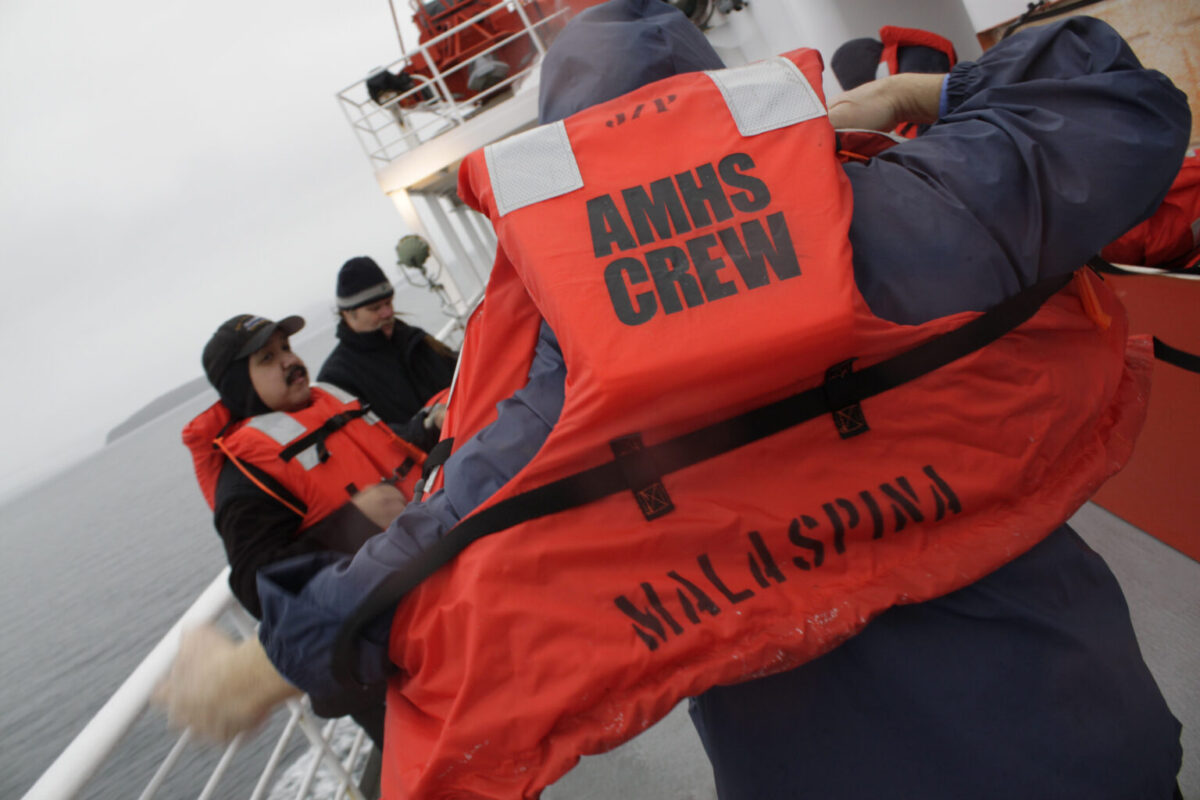
A crewman aboard the Alaska Marine Highway System ferry Malaspina dons a life jacket during a rescue boat drill Monday, Nov. 24, 2014 in Lynn Canal. (James Brooks photo)

The state of Alaska is looking for someone to take the Matanuska, one of the first three ships built as part of the Alaska Marine Highway System after statehood.

In a public notice published Friday afternoon, the Alaska Department of Transportation and Public Facilities said it is now looking for “interested parties regarding the opportunities to dispose of the vessel in a manner that honors its historic significance while allowing it to continue serving Alaska in new innovative ways.” 

DOT is primarily looking for people or groups interested in operating the Matanuska “as a museum vessel, maritime training ship, tourism or hospitality venue, community facility, research platform, heritage site, or other maritime or public-serving use,” according to a detailed document accompanying the public notice.

Any applicant would have to demonstrate that they have the financial resources necessary to take care of the ship.

Retired ferries are notoriously expensive to operate, and idealistic plans for other ships have repeatedly fallen apart. The former Washington state ferry Kalakala was turned into a cannery in Kodiak, recovered and towed back to Washington, but fell derelict and almost sank into a canal before being scrapped in 2015.

The Alaska ferry Taku was intended for use as a hotel after its retirement, but it ultimately ended up being scrapped in India. 

The ferry Malaspina was retired by the Alaska Marine Highway System in 2022 and is now being used as housing at a cruise ship terminal in Ketchikan. The business partners behind that effort are now fighting in court over a variety of issues.

Built in 1963, the Matanuska served as an active ferry for almost 60 years and still has a gold-painted funnel indicating its status as the “Queen of the Fleet,” the oldest operating ship in state service.

Despite that honor, the Matanuska has been out of regular service for at least three years, and has been laid up in Ketchikan for use as a “hotel ship” by the ferry system. Last year, DOT officials said the ferry system lacked the money needed to return the ship to service, and they recommended fully retiring it.

Proposals for the Matanuska’s future are due to DOT by 2 p.m. April 14. 

“Letters of interest proposing scrapping, dismantling, or scuttling the vessel may be submitted for informational purposes,” the agency said, but for the time being, it’s looking at ideas to reuse the ship.

Categories
Alaska News Featured Juneau News juneau Juneau Local Juneau Local Ketchikan Local News Feeds Sitka Local

Juneau Leaders, Army Corps committed to trio of Short-, Medium- and Long‑Term GLOF solutions

Tuesday morning press briefing with City Officials and the Army Corp of Engineers.

NOTN- Juneau is hosting the U.S. Army Corps of Engineers this week as the community presses for answers on long-term protections against glacial lake outburst flooding.

Mayor Beth Weldon said the Corps arrived in Juneau Monday afternoon, taking a helicopter tour to inspect the basin area and visiting the city’s HESCO barrier installations before holding formal meetings today.

At a Committee of the Whole meeting in February, City and Borough of Juneau leaders detailed new modeling that shows a worst-case glacial lake outburst flood could send an estimated 118,000 cubic feet per second of water down the Mendenhall River, far beyond anything the city has experienced.

Maps presented at the meeting showed that a maximum event could push water beyond the Central valley, crossing Riverside Drive and Mendenhall Loop Road, affecting neighborhoods on both sides of the river.

Scientists from the University of Alaska Southeast, the National Weather Service, the U.S. Forest Service, and Tribal representatives from Tlingit and Haida identified a “lake tap” of Suicide Basin as the preferred enduring solution.

During a press conference this morning, U.S. Army Corps of Engineers leaders outlined plans to expand and reinforce temporary flood barriers along the Mendenhall River while continuing to study more permanent solutions to GLOFs.

“We’re here today because we wanted to make sure that we are in tight, close communication with the local government here, ahead of the 2026 glacial outburst flood that we expect.” Said Assistant Secretary of the Army Office for Civil Works, “This is something that when I was a nominee for this position and going through Senate confirmation, Senator Sullivan called me into his office, and he very effectively impressed upon me the criticality of this issue to this community. Every time I’ve spoken about this publicly, including in a public hearing in September, and most recently in a public hearing last month, I’ve said we have to look at this short term, medium term and long term. And I’ve consistently conveyed that from the very first time I’ve ever spoken about this issue until now, short term, medium and long term. And we’ve had an outstanding discussion this morning with our Senate offices, local community leaders, and then all four levels of our Corps of Engineers organization to make sure that we’re all on the same page in terms of what we’re doing to address this challenge. And so we’ll get into some of that as the questions come but that’s really the reason we’re here.”

Officials said immediate work for 2026 includes raising existing HESCO barriers by 1 to 2 feet and extending the system by roughly 4 to 4.5 miles along both sides of the river, officials also the Corp is adding more armoring along the riverbanks and deploying pumps and technical experts to manage any water that gets behind the barriers.

Telle also mentioned a ‘Medium’ term solution, and here is what he said when asked the clarify.

“In the medium term, we’re looking at more permanent and more survivable barriers that can be implemented, as well as continuing to look at potential channel modifications. Those are all on the turn on the table for the short, medium term, we’re obviously continuing to look at long term options that will require significant technical analysis and engineering. We’re getting down that path every single day.” He said, “In my view, we can’t wait a decade to deliver, or six years, or 15 years, we can’t wait that long to deliver results for the citizens in this community, and so we’re tackling short medium with the same aggression that we’re tackling
long.”

Those potential channel modifications could look like dredging or reshaping.

“There’s been conversation within the community for years about straightening the channel. This can be done relatively quickly and for low cost. The question is, does that straightening actually just move the risk to a different part of the community? And so we want to be very careful about that. We’ve got extensive modeling underway right now.” Telle said.

The long-term solution remains under study.

“This is, I’ll just say, glacial outburst flooding is a unique challenge here in Juneau. This phenomenon that we have here is unique to the Corps of Engineers entire portfolio. I think with that uniqueness comes a lot of uncertainty from an engineering and technical perspective, and we’re trying to really reduce that uncertainty as fast as we can.” Telle said.

Telle said that among the “big universe of options” for a long-term solution, a tunnel or lake tap “at this moment appears to be the most viable technically” Still, he emphasized that no option has been taken off the table and that significant technical and cost uncertainties remain.

When asked by The Juneau Independent’s Mark Sabbatini what had changed since last month’s announcement suggesting the Army Corps had “pulled back” from the lake tap solution, officials said their position had remained consistent, saying “nothing has changed other than the reporting.”

“That’s one of the reasons we appreciate the Secretary and the Generals and the Colonel for coming here face to face.” Said Mayor Beth Weldon, “There’s not going to be a miscommunication problem at all. We appreciate their enthusiasm and dedication to a short, medium and long term solution.”

“You know, the HESCO barriers are exactly what needed to happen. They showed they were, but they also showed they were just a triage method.” Said President Richard J. Peterson of Tlingit and Haida, “We’re trying to make sure we come together. We had a charrette last year, we came together all unanimously on an enduring solution, but in the meantime, they have to do their job and look at all solutions. And I think that might have been where the miscommunication came in. It wasn’t pivoting away from this, but the messaging was, ‘we’re doing our due diligence to look at everything’. We have to turn to them. And this meeting was that opportunity for us to understand where we’re at.”

Authorities say they are mindful of the clock the community is under, and said coordination between federal agencies, the City and Borough of Juneau and tribal partners will continue as preparations accelerate in the months ahead.

And for those wondering, despite our recent poor weather, work on flood-protection infrastructure has continued.

Brotherhood Bridge has officially closed starting today for installation of Phase 2 HESCO barriers.

Categories
Alaska News

In the wake of the storm

After resigning from her work with the federal government, the author sailed through the Northwest Passage with her family to conduct in-person research for a forthcoming book about wildlife response to climate change. (Photograph by Caroline Van Hemert)

A stocky brown-and-white shorebird scurried along the beach, pausing midstride to probe the mud for tiny pink clams that are a lifeline for rock sandipers and many other species that call Alaska home. Nearby, my friend and former colleague Dan Ruthrauff collected observations to enter into eBird, a public reporting platform, recording data as diligently as he had during the months we’d worked together in the field. The bird’s delicately painted breast and long, slender beak belied its remarkable hardiness; during his PhD research, Ruthrauff had shown me photographs of overwintering rock sandpipers waiting out a cold snap, their feathers ruffled and their legs encased in ice like tiny popsicle sticks. Now, while he tracked the sandpiper’s movements, I took pictures of several seabird carcasses that had washed up on the beach, documenting another of the growing number of wildlife mortality events that I’d been studying for the past decade.

We’d arrived by sailboat to this rain-drenched cove in the Shumagin Islands of southwestern Alaska, where fields of eelgrass nudged crumbling sea stacks and black-legged kittiwakes perched on steep rock walls. We weren’t there in our official capacity as biologists, but we’re always on the job when it comes to paying attention to the ecosystems and species we’ve long studied and cared for. Until recently, Ruthrauff and I were research biologists for the U.S. Geological Survey in Alaska, with more than 50 years of experience between us. Ruthrauff was a shorebird and waterfowl specialist; I focused largely on wildlife and environmental health.

Daniel R Ruthrauff/U.S. Geological Survey Alaska Science Center)
Rock sandpipers flock on the mudflats near Kasilof on Dec. 18, 2007. (Photo by Daniel R Ruthrauff/U.S. Geological Survey Alaska Science Center)

We left our respective positions in April 2025 as the Trump administration’s assault on federal science reached its initial climax. This was not an easy departure, but it felt untenable to stay in the climate of hostility and uncertainty that was building at USGS and other federal agencies. My decision was cemented when I heard Doug Burgum, a billionaire businessman who had recently been appointed Secretary of the Interior, describe the country’s public lands as a “balance sheet,” with the explicit desire to profit from their development and exploitation. The Department of the Interior oversees USGS, and thus Burgum had become our highest-level boss. In his “welcome” speech, he revealed both the depths of his team’s scientific ignorance and its intent to dismantle key components of our research, with severe implications for not only our careers but the nation’s wildlife, lands, and waters.

On top of what many of my colleagues and I saw as the administration’s pro-extraction, anti-science agenda, we faced another onslaught. Over the preceding weeks, we’d received threatening emails instructing us to “turn in” our colleagues for any suspected promotion of diversity and equity initiatives, including benign programs intended to support women or underrepresented groups in science. We were informed, on a near-daily basis, that we were likely to lose our jobs and all programmatic funding, and were advised to prepare a statement to send to partners in other agencies in case we faced sudden termination. Such messages were often routed through fabricated email addresses and used demeaning, unprofessional language.

The effect was both disheartening and chilling. The federal employees I worked alongside were not rabble-rousers but committed public servants, focused on providing unbiased scientific information to help manage species and ecosystems and protect human safety. Among our collective roles, we forecasted earthquakes and other natural hazards, measured toxin levels in subsistence foods, gauged streamflow that boaters and aquatic life depend on, mitigated human-wildlife conflicts, and provided early warning for infectious diseases like avian influenza. Far from being elite academics, my colleagues worked directly for the benefit of others. In Southeast Alaska, for example, USGS scientists used decades of mapping data to identify deadly landslide hazards as the warming climate brings more intense rainfall. On the Yukon River, my colleagues investigated the crash of chinook salmon stocks that left Alaska Native communities without a critical food source and brought the commercial fishing industry to a standstill.

A king salmon is seen in an undated photo. (Photo by Ryan Hagerty/USFWS)

By spring of 2025, however, our workplace felt less like a top-tier public science institution and more like an environment intended to cultivate submission via intimidation. We were fearful of losing our jobs, or worse. As a writer and concerned citizen, I knew my ability to speak out would be compromised. And as a researcher, I couldn’t, in good conscience, abandon the scientific transparency and conservation ethics that had formed the backbone of my training.

Federal employees like me were thus left with two impossible options: stay and tolerate whatever abuse and forced complicity came next, or leave and forfeit an entire career. Some of my colleagues simply could not leave: They had hospitalized children who couldn’t risk a break in health care, single-income mortgages to pay, or elderly family members to support. Others believed that the system of law would ultimately prevail. Most did not have a second career option at the ready, yet many nonetheless lost their jobs—sometimes with a few hours’ notice, and other times with no notice at all.

Ruthrauff and I were fortunate: He was eligible for early retirement, and I had a second job as a freelance writer to fall back on, with a new book contract in the works. Still, it was a decision neither of us wanted to make. We were given less than a week to collect our belongings, sign off from projects that were years in the making, and archive as much data as we could before permanently losing access to our email.

Dan Ruthrauff, a shorebird and waterfowl specialist with the U.S. Geological Survey, is among the estimated 352,000 employees who have been fired or left the federal workforce since February 2025. (Photograph by Caroline Van Hemert)

We are among the estimated 352,000 employees who have so far been fired or left the federal workforce in response to the Trump administration’s policies. Science has been hit especially hard, with climate, environment, health, and wildlife budgets specifically targeted. Some 7,800 research grants have been frozen or terminated, and further proposed cuts could result in additional losses to programs and personnel. And although Congress is pushing back, much of the damage has already been done. With programs and staff gone and employee morale tanked, it’s simply not possible to pick up where we left off.

For all of its promised cost savings, the Trump administration’s chaotic cuts over the past year haven’t actually saved taxpayers money. The federal budget grew by $220 billion in the first hundred days of the administration compared to the same period the prior year—yet our nation has lost more than many people realize. We have long relied on weather and natural hazard forecasting for our safety; we have trusted that our national parks will be sustained in perpetuity; we have hunted, fished, and recreated with the assurance that someone is looking after our natural resources. That someone might have been me, or Dan Ruthrauff, or any of my other colleagues who took an oath of public service only to find that they were no longer able to deliver on their promises—not because they weren’t qualified or didn’t care, but because the current government has failed us all.

After resigning, I took the opportunity to sail with my husband and 9- and 11-year-old sons on our small expedition sailboat through the Northwest Passage, a goal we’d been working toward for years. The same passions that drew me to my work as a biologist have long dovetailed with my personal interests. I’d walked, paddled, skied, and sailed across much of my home state; the four-month-long sailing trip was a chance to connect the dots across the broader Arctic and to report on what I’d witnessed. Along the way, I conducted in-person research for my forthcoming book about wildlife response to climate change.

Our route passed many places familiar to me from my work as a federal biologist. I glimpsed the snow-covered peaks of the Brooks Range backing up to the Arctic Coastal Plain, where I’d lived out of a tent while studying the effects of climate-driven storm surge on nesting common eiders. We stopped in communities where I’d partnered with local residents to document the risks to wildlife and people from harmful algal blooms, an emerging environmental health issue. The landscape had changed dramatically in the two decades since I began my career. Barrier islands where I’d done fieldwork were now routinely battered by what had once been described as hundred-year storms; hungry polar bears had become regular summer visitors; and sea ice had given way to large areas of open water. We saw historical sites that had flooded and seawalls that had been breached. It was impossible not to worry about how the isolated communities in this part of the world will feel the loss of federal support when salmon fail to return or wildfires rip through boreal forests or permafrost slumps into the sea.

Ruthrauff joined us for the 800-mile sailing leg from Nome to Sand Point, both in Alaska, offering an extra set of hands and an endless source of bird facts for my curious 9-year-old. It was our first reunion since we’d exchanged hasty goodbyes while packing up our USGS offices five months earlier.

Initially, as we scanned the horizon with binoculars and washed dishes with seawater, it felt as though we’d just stepped into another field stint. Only later, as we sailed past stretches of coastline where we’d each worked did we discuss our departure. I learned that a multiyear project to investigate the impacts of climate change on Arctic-nesting geese that Ruthrauff helped organize had been halted. The research I’d been doing on harmful algal blooms no longer had a program lead or a budget. Long-term monitoring studies—on caribou, polar bears, walruses, fishes, and birds—that provide basic population inventories necessary for endangered species assessments, sustainable hunting limits, and other applications had been shelved indefinitely. Meanwhile, employees were prohibited from speaking to the media, including about topics such as avian influenza and other issues that pertain to animal and human health. Our remaining colleagues and their expertise had been effectively silenced.

Other federal programs, such as those that focused on weather forecasting, were losing funds so quickly they couldn’t perform essential public services. Those gaps would soon become evident.

We had ventured into the Bering Sea at a time when the weather gods were smiling, but before long the mood would change, with disastrous effects. Far to our west, the anomalously warm waters of the North Pacific were stirring up trouble. Three weeks later, after we’d continued south and out of harm’s way, a Category 4 storm called Typhoon Halong hit the coastal villages of Kipnuk and Kwigillingok, changing course so quickly residents weren’t able to evacuate. Survivors, many of whom are now temporarily living in my hometown of Anchorage nearly 500 miles away, have become not only climate refugees, but victims of federal funding cuts: A $20 million coastal resilience grant was canceled in the months prior to the storm, at the same time that federal weather balloons were grounded and forecasting budgets were slashed.

Though no amount of preparation could have changed the storm’s track or severity, the lack of resources and information made a bad situation worse. Rick Thoman, a longtime Alaska meteorologist, wrote that while it’s not entirely clear whether the lack of weather balloons affected the forecast, “it seems likely that that had some effect on the model performance.” Emergency funding intended to help communities respond to extreme weather events, meanwhile, is no longer available under the Trump administration. That makes the future even more uncertain for the people of Kipnuk and Kwigillingok, many of whom are attempting to maintain their cultural roots while living out of temporary accommodations in the state’s biggest city.

These are not scientists or disgruntled employees, but real people feeling the real effects of a federal workforce in crisis. It doesn’t take a PhD to recognize that these and other losses will reverberate for decades to come, and that the true price of dismantling our federal science programs is far higher than any supposed cost-cutting measures have saved.

On the last day before we dropped Ruthrauff in the Unangax̂ community of Sand Point, where I’d spent one frigid December chasing sea ducks as a USGS employee, we did a final eBird survey. It was a drizzly afternoon with fickle sailing conditions, gusty one minute, dead calm the next. Ruthrauff sat in the cockpit with binoculars trained on the jumpy horizon; I held onto an overhead rail and steered through the waves. 

As we called out our sightings—sooty shearwater, common murre, black-legged kittiwake—we knew that these observations were nothing more than lone data points in a sea of information needs. But we also knew that even the most seemingly mundane reports, taken together, can provide valuable insight. Public data platforms such as eBird will never replace detailed monitoring studies, but in the absence of federal support, having extra eyes on the water, in the sky, and in the trees might help fill some of the gaps. 

Turning our collective attention to the natural world also offers the sort of inspiration we need in a time of crisis. From hardy rock sandpipers waiting out a deep freeze to the millions of seabirds that survived Typhoon Halong, we need look no farther than our own backyards to find examples of resilience. We, too, must find a way to weather this storm. 

This commentary was originally published in BioGraphic Magazine and is republished here with Permission.

SUBSCRIBE: GET THE MORNING HEADLINES DELIVERED TO YOUR INBOX

Categories
Alaska News

Alaska prepares to get rid of historic ferry Matanuska, one of state’s oldest

A crewman aboard the Alaska Marine Highway System ferry Malaspina dons a life jacket during a rescue boat drill Monday, Nov. 24, 2014 in Lynn Canal. (James Brooks photo)

A crewman aboard the Alaska Marine Highway System ferry Malaspina dons a life jacket during a rescue boat drill Monday, Nov. 24, 2014 in Lynn Canal.
(James Brooks photo)

The state of Alaska is looking for someone to take the Matanuska, one of the first three ships built as part of the Alaska Marine Highway System after statehood.

In a public notice published Friday afternoon, the Alaska Department of Transportation and Public Facilities said it is now looking for “interested parties regarding the opportunities to dispose of the vessel in a manner that honors its historic significance while allowing it to continue serving Alaska in new innovative ways.” 

DOT is primarily looking for people or groups interested in operating the Matanuska “as a museum vessel, maritime training ship, tourism or hospitality venue, community facility, research platform, heritage site, or other maritime or public-serving use,” according to a detailed document accompanying the public notice.

Any applicant would have to demonstrate that they have the financial resources necessary to take care of the ship.

Retired ferries are notoriously expensive to operate, and idealistic plans for other ships have repeatedly fallen apart. The former Washington state ferry Kalakala was turned into a cannery in Kodiak, recovered and towed back to Washington, but fell derelict and almost sank into a canal before being scrapped in 2015.

The Alaska ferry Taku was intended for use as a hotel after its retirement, but it ultimately ended up being scrapped in India. 

The ferry Malaspina was retired by the Alaska Marine Highway System in 2022 and is now being used as housing at a cruise ship terminal in Ketchikan. The business partners behind that effort are now fighting in court over a variety of issues.

Built in 1963, the Matanuska served as an active ferry for almost 60 years and still has a gold-painted funnel indicating its status as the “Queen of the Fleet,” the oldest operating ship in state service.

Despite that honor, the Matanuska has been out of regular service for at least three years, and has been laid up in Ketchikan for use as a “hotel ship” by the ferry system. Last year, DOT officials said the ferry system lacked the money needed to return the ship to service, and they recommended fully retiring it.

Proposals for the Matanuska’s future are due to DOT by 2 p.m. April 14. 

“Letters of interest proposing scrapping, dismantling, or scuttling the vessel may be submitted for informational purposes,” the agency said, but for the time being, it’s looking at ideas to reuse the ship.

SUBSCRIBE: GET THE MORNING HEADLINES DELIVERED TO YOUR INBOX

Categories
Alaska News Featured Juneau News juneau Juneau Local Juneau Local Ketchikan Local News Feeds Sitka Local

Alaska legislators advance stopgap spending bill intended to address construction and disasters

By: James Brooks, Alaska Beacon

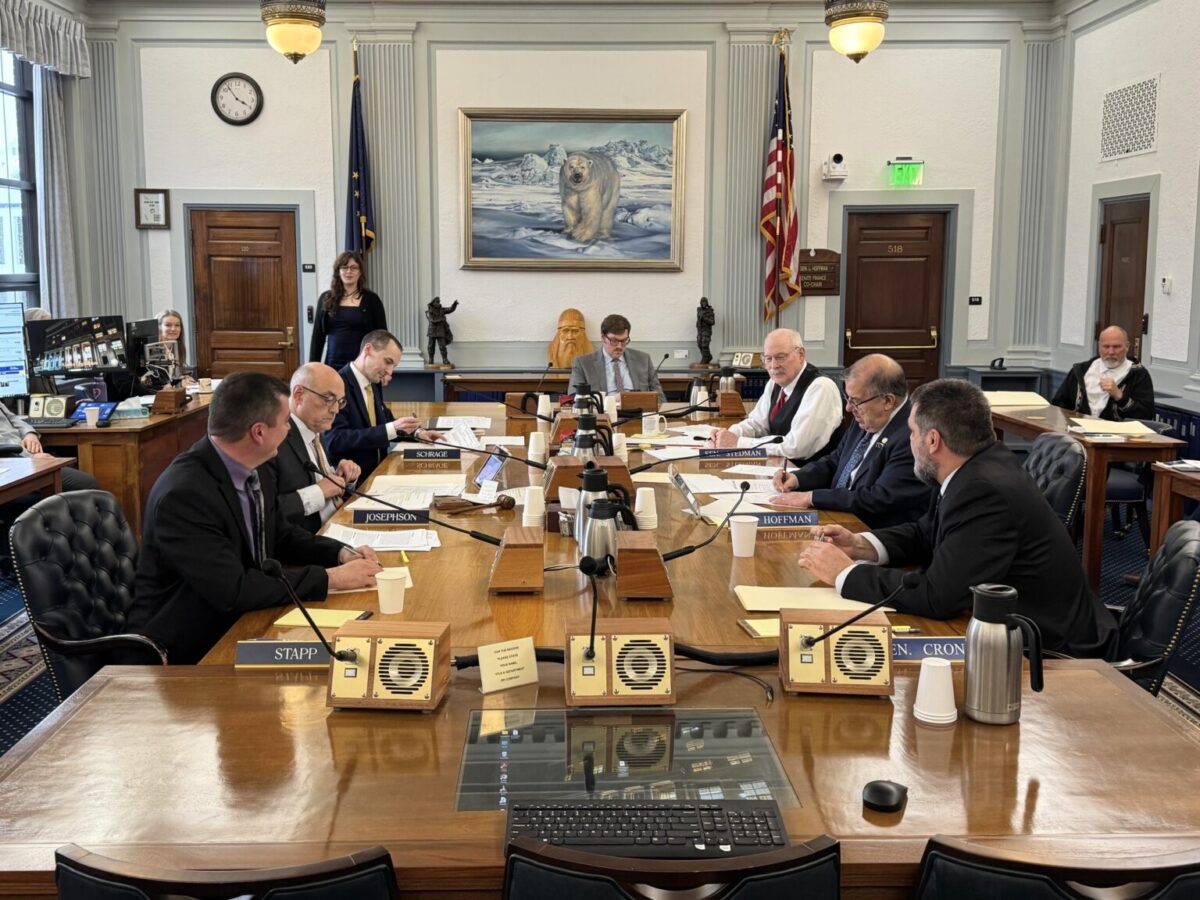
Members of the bicameral conference committee charged with writing a compromise supplemental budget sign the final documents on Monday, March 23, 2026, at the Alaska Capitol in Juneau. (James Brooks photo/Alaska Beacon)

The Alaska Legislature is preparing to re-vote on a key spending bill that will cover millions of dollars in disaster response and construction projects in the current fiscal year.

On Monday, a bicameral conference committee voted 5-1 to send an amended version of the bill to final votes in the House and Senate. Those votes may take place Wednesday.

The state’s fast-track supplemental budget contains $449.3 million in spending — expenses accrued since legislators and Gov. Mike Dunleavy adopted the state budget last year.

Legislators are separately working on a budget for the next fiscal year, which begins July 1. A vote on that is expected at the end of the legislative session in May. 

The supplemental budget bill includes $70.2 million to unlock grant-funded construction projects principally paid for by the federal government — a major lobbying priority for the state’s construction industry.

It also includes tens of millions for the state response to last year’s wildfire season and millions more as a down payment for the state’s response to ex-Typhoon Halong, which devastated Western Alaska last fall.

The new spending would largely be paid for with new revenue the state expects because of higher oil prices caused by the Iran war. 

As long as prices remain high through June 30, the end of the fiscal year, legislators expect there will be enough general-purpose money to cover the expenses, plus a smaller package of budget amendments already proposed by Dunleavy. 

Those amendments arrived too late to be added to the supplemental bill. 

If oil prices don’t match expectations, the bill contains language that would allow the state to use the Constitutional Budget Reserve, the state’s principal savings account, to cover the difference plus $20 million in “headroom.” 

That clause may run into problems in the House, where the 19-person House Republican minority caucus has voted several times against spending from the reserve.

It takes 30 votes in the House and 15 in the Senate to spend from the reserve; while the Senate has met that threshold and is expected to do so again this week, it isn’t clear whether the House will do so.

The 21-person, predominantly Democratic coalition that controls the House would need to attract at least nine minority votes, and in earlier votes, it was unable to do so — something that forced the bill into a bicameral conference committee for further negotiations.

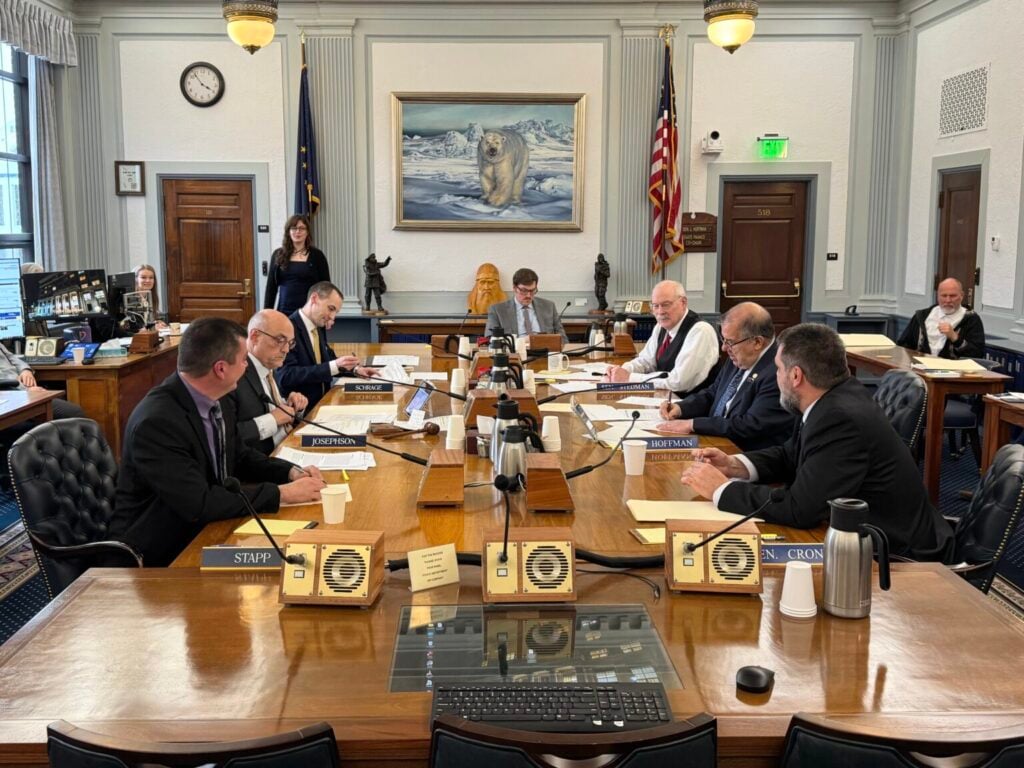
Rep. Will Stapp, R-Fairbanks and the minority’s negotiator on the conference committee, was the only lawmaker to vote against the revised bill on Monday, saying he doesn’t believe any kind of spending from the reserve is necessary at this point.

Members of the House majority have argued that allowing reserve spending — if necessary — would provide surety for construction businesses making summer plans. 

They have also argued that time is of the essence: Delaying action on the bill would mean those companies might have to defer purchasing and hiring decisions ahead of the summer construction season.

Members of the House minority argued that as previously written, the bill would have allowed members of the majority to direct the spending of hundreds of millions from the reserve, even if it wasn’t needed to balance the supplemental budget.

That version was cut to less than $375 million in spending, an attempt to attract minority votes, but while that approach worked in the Senate, it did not succeed in the House.

When the House failed to pass the reserve vote, lawmakers there sent the bill to the conference committee for further work.

While that committee was able to finalize a draft compromise, it won’t be clear until later whether that compromise can pass out of the Legislature.

Categories
Alaska News

Several historic oil spill sites in Alaska’s Prince William Sound are now deemed safe

A sheen of oil spreads into Prince William Sound from the grounded Exxon Valdez tanker on March 24, 1989. (Photo provided by the U.S. Coast Guard)

A sheen of oil spreads into Prince William Sound from the grounded Exxon Valdez tanker on March 24, 1989. In the decades since the spill, which was the nation’s worst until the 2010 Deepwater Horizon disaster, regulators and scientists have monitored the oil that remains buried on some of the beaches. (Photo provided by the U.S. Coast Guard)

Thirty-seven years ago the Exxon Valdez tanker grounded in Prince William Sound and spilled 11 million gallons of crude oil in what was for decades the nation’s worst oil spill. Now, state environmental officials are proposing to remove some of the spill sites from a list of polluted waters.

Of the more than 1,300 miles of coastline fouled by the spill, there are now 11 sites where lingering oil is too degraded, too deeply embedded and too immobile to pose any more water quality problems, according to analysis performed for the Alaska Department of Environmental Conservation.

The department is proposing to remove “impaired” designations from 11 spill-affected sites in its 2026 Integrated Water Quality Monitoring and Assessment Report, a tally required under the federal Clean Water Act.

Among the sites that may be reclassified are some that became famous for the thick coating of spilled oil they received in the immediate aftermath of the tanker’s grounding. They include Sleepy Bay on Latouche Island and Bay of Isles and Herring Bay on Knight Island.

Impaired water body lists, which identify sites that fail to meet water quality standards, are required by federal law of all states every two years.

For Alaska, the assessment of whether specific locations affected by the Exxon Valdez oil spill should still be on the list depends on whether they met state and federal water quality standards, according to the DEC.

“Just as water near a permitted sewage outfall may have pollutants present but remain in ‘attainment’ because it meets strict safety and environmental thresholds, some EVOS beaches may still contain traces of lingering oil while now meeting the legal standards for water quality,” a department statement said.

The draft proposes moving the 11 sites from Category 4b, used for sites that are impaired but have recovery plans in place, to Category 2, used for sites where water quality standards have been attained for at least one designated use.

The state agency’s draft 2026 list also contains another change: a consolidation of sites with lingering oil.

Two years ago, the state’s impaired water body list identified 36 such sites. As of now, the department has merged some of those, leaving a total of 16 sites.

Workers steam-blast rocks soaked in oil from the leaking tanker Exxon Valdez on March 28, 1989, days after the supertanker ran aground on Bligh Reef in Prince William Sound and spilled 11 million gallons of North Slope crude. (Photo provided by the U.S. Coast Guard)
Workers steam-blast rocks soaked in oil from the leaking tanker Exxon Valdez on March 28, 1989, days after the supertanker ran aground on Bligh Reef in Prince William Sound and spilled 11 million gallons of North Slope crude. Despite the massive response, only about 10% of the spilled oil was ever recovered, according to state environmental officials. Some oil remains buried on beaches today. (Photo provided by the U.S. Coast Guard)

Five of those sites are still considered impaired at the Category 4 level, under the draft list. Those sites are on Smith Island, Knight Island, Eleanor Island and Green Island, and altogether they account for a little under 16 miles of coastline, according to the DEC.

The lingering oil is a reminder of the environmental damage wreaked by the Exxon Valdez disaster and the difficulties encountered in the response to it.

Despite a massive cleanup effort, only about 10% of the spilled oil that fouled waters and beaches was ever recovered, according to the DEC.

Lingering oil posed environmental problems for several years after that, according to the Exxon Valdez Oil Spill Trustee Council, the federal and state organization that administers the funds paid by Exxon to settle government damage claims. Lingering oil leaching out from beach sites slowed the recovery of some species for more than two decades, including sea otters, and some research indicates that long-term impacts from lingering oil were as bad or worse than the initial acute impacts of the spill, according to the trustee council.

As of 2007, after years of weathering and degradation, an estimated 23,000 gallons of spilled oil remained on the beaches. That is about 0.2% of the original spill volume, according to the trustee council. A follow-up survey in 2015 revealed no significant change in that amount, according to the council.

Alaska’s draft 2026 impaired water body list is subject to public review, with comments accepted through April 6. After comments are analyzed, a final list will be produced and sent to the Environmental Protection Agency, DEC said.

The Exxon Valdez sites make up just part of the state’s draft impaired water body list, which includes numerous recommendations for category changes. Impaired water bodies have been identified in places stretching from Interior Alaska to the Aleutians and the southern tip of Southeast Alaska.

Some of those sites have been designated as Category 5, used for water bodies with the worst pollution problems. There were 20 such sites on DEC’s 2024 list, with fecal coliform affecting 13 of them.

The draft 2026 list proposes moving two of those sites, the Katlian River near Sitka and the Little Susitna River in the Matanuska-Susitna Borough, to Category 2 after there were improvements in their turbidity measurements. The draft also proposes moving a different site, Ketchikan Creek, to Category 5 because of fecal coliform problems.

SUBSCRIBE: GET THE MORNING HEADLINES DELIVERED TO YOUR INBOX