Most people credit policing or the lack of it, but the real story tracks three trends that rose and fell together.









Most people credit policing or the lack of it, but the real story tracks three trends that rose and fell together.


The Juneau Police Department says a recent Southeast Alaska Cities Against Drugs Task Force investigation resulted in an arrest and the seizure of suspected fentanyl, methamphetamine and cocaine, below is JPD’s press release.
JPD- On June 24, 2026, members of the Southeast Alaska Cities Against Drugs (SEACAD) Task Force executed a search warrant on a box van in the 9000 block of Gee Street in Juneau as part of an ongoing narcotics trafficking investigation.
The investigation began in late May 2026 after investigators identified the location as a source of fentanyl distribution within the community. During the execution of the search warrant, investigators contacted and arrested 39-year-old Jonathan Henry Smith of Juneau.
Search of the vehicle associated with Smith resulted in the seizure of the following suspected controlled substances:
Total estimated street value of seized narcotics: $23,600
Smith was arrested and lodged at the Lemon Creek Correctional Center on the following charges:
The SEACAD Task Force remains committed to disrupting the trafficking and distribution of illegal narcotics throughout Southeast Alaska. This investigation highlights the continued cooperation between local, state, and federal law enforcement agencies working together to protect our communities from the harmful impacts of illegal drugs.
SEACAD, Southeast Alaska Cities Against Drugs, is a regional task force comprised of municipal police departments from Juneau, Ketchikan, Sitka, Haines, Skagway, Petersburg, Hoonah, Wrangell, Craig, and Yakutat, the Alaska State Troopers, Federal Bureau of Investigation, Drug Enforcement Administration, United States Postal Inspection Service, and Coast Guard Investigative Service. Together, they work to investigate drug importation and distribution in the Southeast Alaska region.

Rep. Sarah Vance, R-Homer, speaks on the House floor on Feb. 27, 2026. (Photo by Corinne Smith/Alaska Beacon)
A legislative ethics committee found that Homer Republican Rep. Sarah Vance violated Alaska ethics law when she used official legislative letterhead to publicly condemn a Homer News story last September. The story was about a local vigil she helped organize for Charlie Kirk, a right-wing political activist who was assassinated last year.
The House Subcommittee on the Select Committee on Legislative Ethics launched a probe into Vance’s conduct after receiving 18 ethics complaints from September to December last year. On June 26, the seven-member ethics committee, by a majority vote, found probable cause that Vance violated the Legislative Ethics Act “by using Alaska State Legislature letterhead for a nonlegislative purpose, for involvement in or support of or opposition to partisan political activity.”
The committee determined that Vance’s use of official legislative letterhead violated Alaska statute that states that legislators may not use “public funds, facilities, equipment, services, or another government asset or resource for a nonlegislative purpose, for involvement in or support of or opposition to partisan political activity.”
The committee determined no corrective reaction is warranted, other than adhering to the authorized use of official legislative letterhead in the future.
Vance opposed the ethics committee’s decision, saying in an interview on Wednesday her letter was not partisan activity and it was within her free speech rights to communicate with constituents. “I respectfully disagree,” she said. “The letterhead is mine, and my free speech should not be limited on how I can speak on behalf of my constituency.”
At issue in the probe is how Vance responded to a Homer News story published on September 17, 2025 that covered a local vigil for Charlie Kirk. Kirk was shot and killed at a public event on a college campus in Utah the week before. One suspect was arrested and is currently standing trial. Kirk was a vocal ally of President Donald Trump focused on mobilizing conservative students on college campuses, and many conservative supporters staged vigils and events around the country to memorialize him.
Vance wrote to the newspaper’s publisher, Sound Publishing, Inc. owned by Carpenter Media Group, an international chain, on her official legislative letterhead condemning the coverage of the Homer vigil. She also posted the letter to her official legislative Facebook page. The story described Kirk as a “far-right activist and Christian-Nationalist icon,” and described his views as “often racist” and “controversial,” characterizations to which Vance objected.
“In the letter Representative Vance expressed her displeasure with portions of the content of the article and her perception that the Homer News is biased, engages in partisan rhetoric and political talking points,” the committee wrote in their decision.
The committee identified several key phrases in her letter that violated Alaska statute, including that Vance noted a “growing movement to boycott” the Homer News that she said would result in potential financial repercussions. “If the paper continues to treat community events as opportunities for partisan spin, the consequence will be financial as well as reputational,” Vance wrote.
The committee members invited Vance to answer questions and appear before them, but she filed a request to dismiss the ethics investigation and declined to appear. On June 26, the committee held a public hearing with public comment, then moved to a nearly four hour executive session before announcing the majority vote finding probable cause that Vance violated ethics law.
Rep. Kevin McCabe, R-Big Lake, one of two House members on the committee, penned a dissenting opinion, which the committee issued with the decision. He questioned whether the authority of ethics law extends to official letterhead and defended Vance’s First Amendment right to free speech.
The committee dismissed three other statutory violations cited in complaints, related to political fundraising and campaigning, legislative employee political parties and campaigning, and donations. The 18 complaints are confidential, and were not made public with the decision.
In an interview, Vance said she believes the complaints were politically partisan and should have been dismissed. She said she is aware of the ethics rules barring the use of letterhead for campaigning for a specific candidate or fundraising. She rejected the finding that her letter was politically partisan.
“I called out the media for being biased and engaging in partisan activity, that doesn’t make me partisan, that’s just providing accountability,” she said. “Just like when I write letters to the Board of Fish for not following the public process, and I call them to account and say ‘you need to take a look at this and redo your actions.’ It’s the same advocacy on behalf of my constituents.”
Vance said she was expressing her free speech right and communicating with constituents with her letter and on her social media page. She said that includes noting the potential boycott and financial repercussions for the Homer News.
“I wanted them to know the seriousness of what was happening with their paper that had been for a long time, and it wasn’t a threat, it was just saying ‘you need to know what’s going on.’ I meant it more informational, but people perceived it differently,” she said.
Vance said she is still deciding whether to appeal or take further action on the issue.
Nationwide, Kirk’s killing prompted a pressure campaign by Republicans and conservatives to clamp down on language deemed critical of Kirk. A Reuters investigation found more than 600 people were fired, suspended or investigated for comments about Kirk’s death within the first two months of his killing. Some have successfully sued for First Amendment retaliation and have received large settlements or monetary damages.
The fallout from Vance’s letter was significant, though it was not mentioned in the ethics committee’s decision.
In response to Vance’s letter, the management of Sound Publishing, Inc. and parent-company Carpenter Media Group changed the story, removing some of the language Vance objected to without consulting the reporter or editor at the Homer News, who later resigned over the decision.
In a joint letter, four reporters and editors with the Homer News and the Peninsula Clarion — also owned by Carpenter Media Group — said they did not have a problem with Vance’s criticisms, but voiced strong objections to the management changing a story “at the behest of a local official.” They called the decision a betrayal of the journalists on staff and the company’s integrity.
“We believe this destroys the credibility the public has placed in us as reporters and editors,” they wrote. The group said they could not continue doing their job knowing the possibility of future pressure from an elected official could result in stories being changed without their consultation.
Vance said she was surprised that the publisher responded and changed the article, and learned later that reporters and editors were not consulted.
“It was never my intent for anyone to lose their job or to create a disagreement within the inner workings of the paper, but what it did do that was highlighted by those articles is it revealed there were long term issues that had been going on for quite some time,” she said.
“People say that I bullied and intimidated the media, I don’t believe that for one minute,” Vance said. “Sound Publishing is a pretty big corporation, and it was never my intent to bully, but just to say ‘no, this is wrong. You need to be aware of what’s going on in this community.’ And I’m going to speak up on behalf of my constituents, because their voice has been drowned out down here.”
Jake Dye, one of the reporters that quit the Peninsula Clarion, said by email on Wednesday that voters will decide whether they approve of Vance’s actions in the November election where she is running for re-election in House District 6. He said Vance’s comments implying financial repercussions crossed a line and “represents a problematic effort to explicitly intimidate the press.”
He said he doesn’t blame Vance for what happened and said Sound Publishing and Carpenter Media management are responsible for their response.
“There are three fewer journalists on the Kenai Peninsula today than there were a year ago,” Dye wrote. “That’s not because Vance wrote a letter, but because our corporate overlords chose to fold under her pressure and let down the talented people they employed to do reporting in the state.”

“I voted” stickers are seen on display in the headquarters offices of the Alaska Division of Elections in Juneau on Tuesday, Nov. 12, 2024. (Photo by James Brooks/Alaska Beacon)
Every election, Alaska’s candidates for public office are bombarded by questionnaires from politically active groups, individuals and members of the media.
To cut down on the workload and increase response rates, some of Alaska’s biggest statewide news organizations are trying something new — collaboration.
The Alaska Beacon, Alaska Public Media, KTOO and the Anchorage Daily News are cooperating this year on a single questionnaire for candidates. We’ll use the answers to build a voter guide that will help Alaskans make an informed choice when they vote.
You can help by asking your candidates to answer our survey.
The survey won’t replace debates, forums and public statements. Instead, it’s something extra, aimed at informing voters about what candidates believe and providing a tool to hold them accountable once elected.
The Beacon is coordinating the legislative questions, the Daily News is handling the questions for Alaska’s governor race, and Alaska Public Media and KTOO are managing the questionnaires for the candidates running for Alaska’s federal offices.
The questionnaires were the result of months of work.
Each news organization solicited its readers, viewers and listeners, asking a basic question: What do you want candidates to talk about?
That’s what’s called the “citizens agenda” — we think that good election reporting is less about journalism that tries to determine “who’s ahead,” and more about what a candidate’s positions are and how they would affect things if elected.
In June, each news group combed through your responses and settled on draft lists of questions. The number of questions, any limits on length and the style of the questions were decided by the respective news organizations.
We held meetings to decide the final lists of questions, and they have now been sent to state legislative candidates, governor candidates, candidates for the U.S. House and candidates for the U.S. Senate.
The deadline to respond is July 13. We’re now calling candidates to double-check that they’ve received the questionnaires and to remind them to respond.
You can help us with that. When you see a candidate, or if you know a candidate, ask them to fill out and return the questionnaire.
This is how the Beacon presented its 2024 questionnaire results, and we expect to do something similar this year. The Daily News, KTOO and Alaska Public Media will share the questionnaire results as well.
Complete the following sentences in 5-20 words.
Complete the following sentences in 5-20 words:
SUBSCRIBE: GET THE MORNING HEADLINES DELIVERED TO YOUR INBOX.

Part of the Anchorage skyline is reflected in the south-facing windows of downtown’s Robert B. Atwood Building on June 17, 2026. Anchorage, Alaska’s biggest city, had a cost of living that was 25.5% above the national urban average in 2025, according to the Alaska Department of Labor and Worforce Development. (Photo by Yereth Rosen/Alaska Beacon)
Alaska’s three major cities continue to have higher living costs than most of the nation’s urban areas, according to a newly released analysis published by the Alaska Department of Labor and Workforce Development.
Juneau, Anchorage and Fairbanks are in the top 25 among 257 metropolitan national areas. Among the three, Juneau had the highest overall cost of living, at 31.7% above the national urban average in 2025, according to the analysis, published in the July issue of Alaska Economic Trends, the department’s monthly research magazine. Anchorage’s cost of living was 25.5% above the national average, while Fairbanks’s costs were 22.9% above the national average, according to the analysis.
While significantly higher than the national urban average, the Alaska cities last year were much cheaper than cities like New York, where the borough of Manhattan has overall living costs that were 139% above the national average, or Honolulu, where overall costs were 83.9% above the national average.
The Alaska cities’ rankings are driven in large part by two categories – health and groceries.
Alaska’s three major cities continue to have some of the nation’s highest health care costs, according to the 2025 statistics. But in a departure from past years, the Alaska cities no longer top the health-cost list. Winchester, Virginia, wound up with the highest health costs last year, at 49.4% above the national average, followed by New York City’s Manhattan Borough, at 43.3 % above the national average. Anchorage had the third highest health costs, at 42.7% above the national average, followed by Juneau at 39.5% and Fairbanks at 35.4%, according to the statistics.
“It was surprising, a little, to see them fall to three, four and five this year,” said Sam Tappen, the state labor economist who authored the report.

The three cities also continue to have significantly higher grocery costs than other U.S. cities, according to the analysis. In Juneau, grocery costs in 2025 were 28.4% above the national average. Anchorage’s grocery costs were 23.7% above the national average, while groceries in Fairbanks ran 23% above the national average.
Fairbanks had modest costs in one important category in 2025. Housing costs last year in the Interior city were actually 1% lower than the national urban average, the analysis found. But that is more than offset by the high costs of energy — with utility costs that were 113% higher than the national urban average, according to the analysis. Fairbanks had the highest utility costs of all the metropolitan areas in the study group.
Overall, urban Alaska’s 2025 inflation rate was a modest 2.1%, below the state’s long-term average of 3.3%, according to a companion report in the July issue that was also authored by Tappen. The state’s 2025 inflation rate was also below the national rate of 2.6%, and it was the third consecutive year in which the U.S. inflation rates outstripped Alaska’s rate.
Tappen said that probably reflects a lingering influence of the COVID-19 pandemic.
“Alaska took longer to recover from the COVID recession than the nation did, so our economy has just been a little bit cooler than in the Lower 48,” he said.
The calculations reflect conditions before the U.S. invasion of Iran, which started at the end of February and which have caused energy costs to spike.
The annual inflation rate calculated for 2026 will almost certainly be higher than the 2025 rate, both nationally and in Alaska, Tappen said. It is hard to say whether Alaska’s rate of inflation will outstrip that in the Lower 48, but it is likely that the state’s stretch of higher prices will persist longer.
That is thanks to Alaska being at the end of the national transportation chain, he said.
“Our energy prices and the prices of our products that depend on energy are going to stay higher than the rest of the nation,” he said.
Even before the Iran war, Alaska had higher energy prices than the rest of the nation. Gasoline prices in urban Alaska averaged $3.66 a gallon in January, compared to the national average of $3.10, according to the analysis. Costs in rural Alaska were much higher, with six villages in Western or Interior Alaska posting average January gasoline prices above $10 a gallon.
Higher fuel prices are the norm in Alaska, even in urban areas, despite Alaska’s status as a major oil producer, Tappen said.
“Even though we are the fifth highest producer of oil among states, very little of that oil is refined in-state for consumers,” he said. Most of what is refined goes to the military or industry, and for the small amount that is produced in-state for consumers, “it’s just more expensive to make it here,” he said.

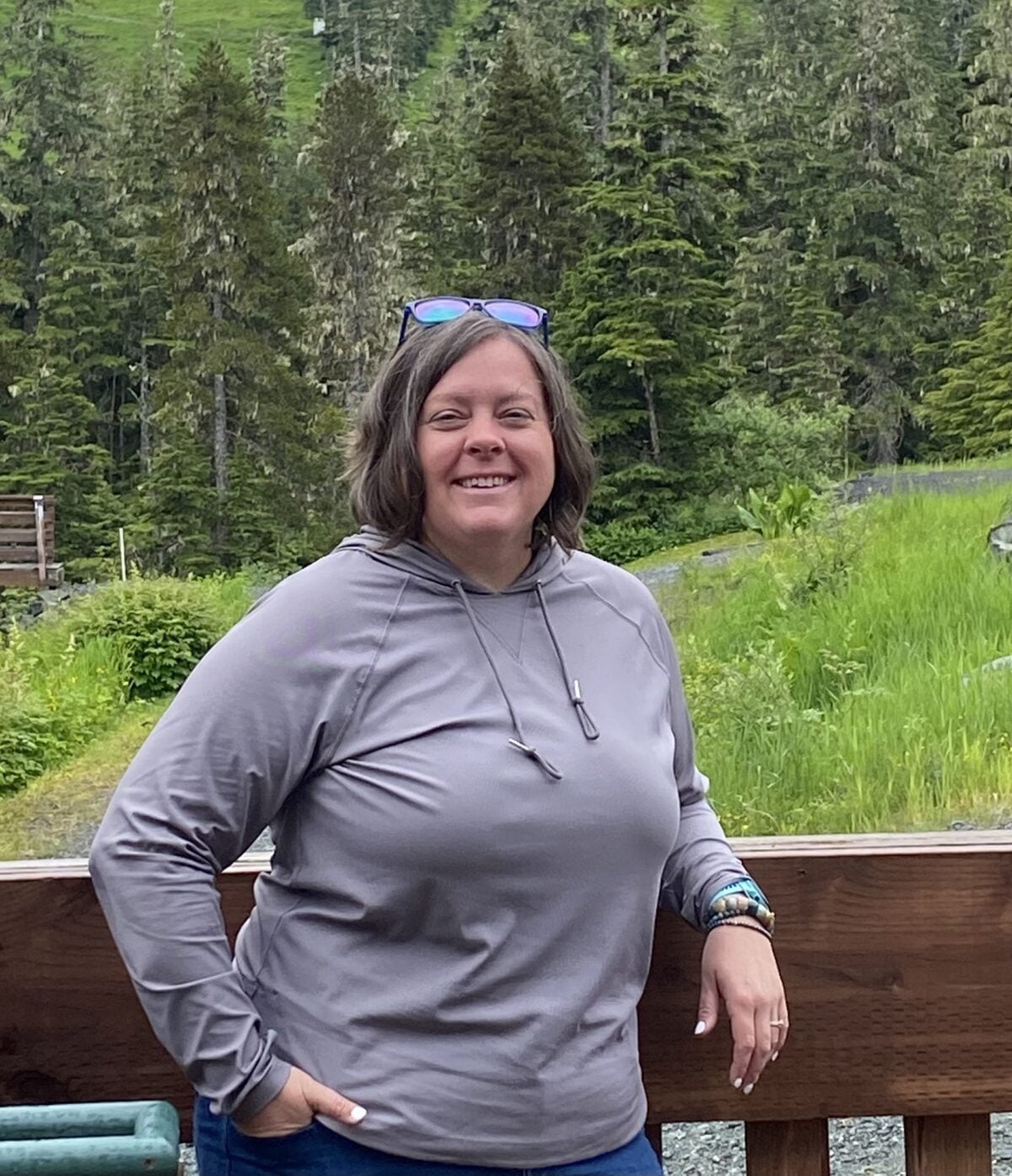
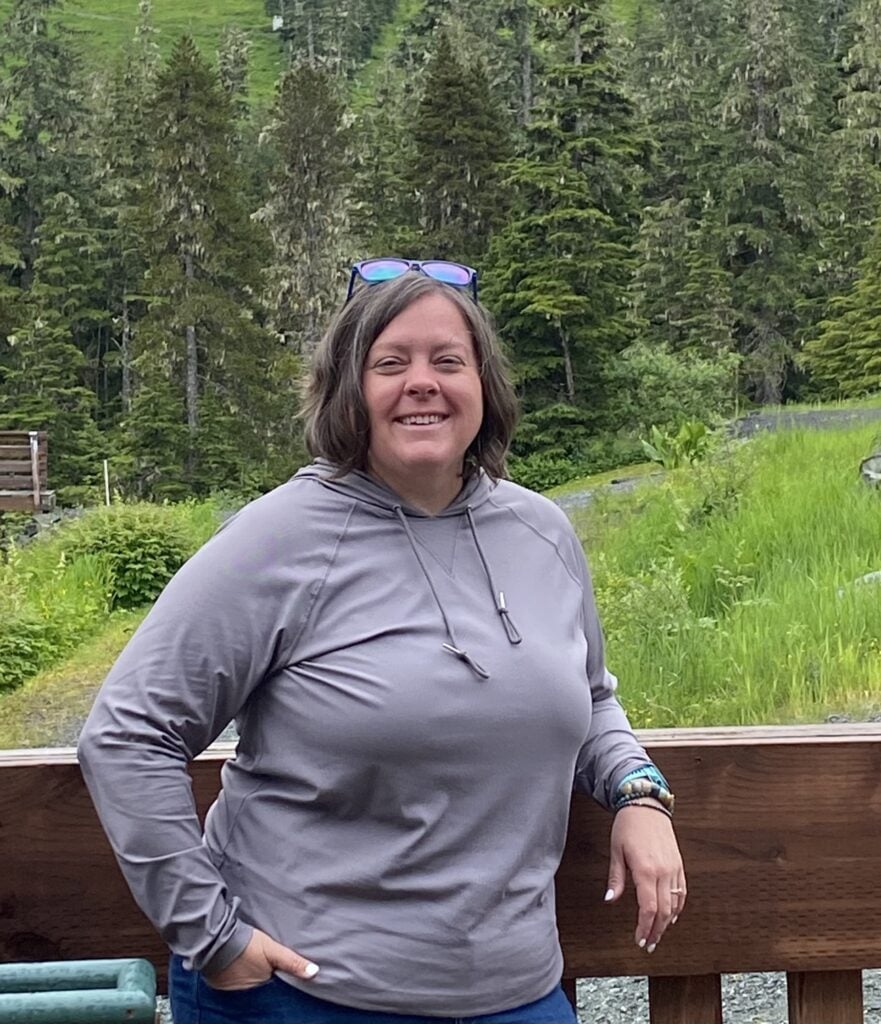
CBJ- The Eaglecrest Board of Directors is pleased to announce the selection of Julie Jackson Piper as the next General Manager of Eaglecrest Ski Area. Piper was appointed to the role at the July 7 Eaglecrest Board special meeting.
“I am excited to welcome Julie Jackson Piper back to Eaglecrest as our ski area’s general manager,” said Brandon Cullum, Eaglecrest Board President. “Julie is the right person to lead our staff, support the board, and help inspire confidence with the Assembly as we move into the 2026/2027 ski season and work to address Eaglecrest’s longer-term sustainability concerns.”
Piper is currently employed as the Recreation Manager for the City of Richland, Washington, where she has served in that role since 2018. Her prior experience includes being the Aquatics Manager for the City and Borough of Juneau and Youth & Community Outreach Coordinator & Snowsports School Supervisor at Eaglecrest. Piper also has a Bachelor of Science in Ski Area Business Management from Northern Michigan University.
“I am honored to join Eaglecrest’s dedicated staff and engaged Board of Directors as we build upon the mountain’s remarkable legacy,” Piper said. “Together, we have an incredible opportunity to strengthen our connection with the community, enhance the year-round mountain experience, and ensure Eaglecrest continues to thrive for generations as we begin its next 50 years.”
Piper will begin her new role on August 31, 2026 and be paid an annual salary of $134,014.40.
The Eaglecrest General Manager is selected and supervised by the Eaglecrest Board. Following an initial applicant screening by the City and Borough of Juneau Human Resources Department, the Board Human Resources Committee interviewed candidates remotely before selecting a finalist for an in-person interview at the Eaglecrest Board meeting last week.
For more information, contact Dallas Hargrave, CBJ’s Human Resources/Risk Management Director, at dallas.hargrave@juneau.gov or 907-586-0225.
By: James Brooks, Alaska Beacon
If built as proposed, the trans-Alaska natural gas pipeline is expected to create thousands of jobs. Many, if not most, will go to people who don’t live in Alaska.
A six-year-old study, commissioned by the Alaska Gasline Development Corp. as part of the project’s environmental statement, says “an estimated 22 to 68 percent of the construction jobs would likely be filled by non-residents, depending on the construction year.”
The high end of that estimate is significantly higher than the state’s norm — last year, 23.4% of all construction jobs in Alaska were held by people who don’t live in the state.
The difference is likely because specialty jobs needed during construction — pipeline welders, for example — aren’t common in Alaska. Last year, more than 42% of all welding jobs in the state were held by nonresidents, according to figures published by the Alaska Department of Labor and Workforce Development.
Joelle Hall, president of the Alaska AFL-CIO, said that while new hires might not all be Alaskans, they will have the opportunity to become Alaskans, just as the builders of the trans-Alaska oil pipeline system did.
“There will be, just as it was on TAPS — most of those were not Alaskans, they became Alaskans. That’s one of the opportunities to look at here,” she said.
As the Alaska Legislature debates a multibillion-dollar tax break for the pipeline project, legislators are considering whether to tie that tax break to labor requirements that could require pipeline developers to hire more Alaskans.
Last month, the Alaska Senate voted 16-4 to mandate a certain level of apprentice hiring, something that could increase the number of jobs available to new Alaskans or those starting to learn a trade.
The latest version of the tax-break bill, released last week by legislative negotiators, eliminates that mandate but requires project-labor agreements that maximize opportunities for Alaskans who already have needed qualifications, said Sen. Jesse Kiehl, D-Juneau and author of the apprentice hiring proposal.
Hall said she hopes the apprenticeship mandate returns, but even if it doesn’t, the project would offer young Alaskans a chance to be trained as electricians, plumbers and in other construction-related trades.
They would be able to keep those skills and replace retiring construction workers.
“We are going to have such an opportunity to get these jobs … and then they can go on to full careers,” Hall said. “The graying of the construction workforce is such a big problem, and this is an opportunity to change that graying.”
Current estimates suggest the project would create a large number of temporary and permanent jobs but significantly fewer than were created by the trans-Alaska oil pipeline in the 1970s.
“I’ve read that during the development stage, there’ll be something like 12,000 jobs attached to this project,” said Speaker of the House Bryce Edgmon, I-Dillingham, in a June 27 hearing.
Adam Prestidge, president of Glenfarne Alaska, jumped in.
“Just to clarify, when we talk about jobs created, it’s approximately 7,000 for the construction of the pipeline, an additional 5,000 for the construction of the LNG facility. When it goes into full operation, you’re looking at a much lower number, around 1,000 permanent, 1,500 permanent operational jobs,” he said.
Tim Fitzpatrick, a spokesman for Glenfarne Alaska, confirmed the figures by email and added: “These are direct jobs and these numbers do not include additional indirect jobs. Glenfarne has not provided an update to the in-state/out-of-state estimates.”
In 1978, the Alaska Department of Labor concluded that more than 23,000 people were simultaneously employed at the peak of oil pipeline construction.
As currently planned, the gas pipeline project would be built in two phases, with the pipeline first and supporting infrastructure second. That means the 12,000 jobs expected by the project won’t come all at once, and peak employment will be well below what happened during the oil pipeline boom.
In addition, Alaska’s population is much larger than it was during the 1970s, further diluting the impact of construction employment. Last year, the state had 321,500 workers in January and 360,000 in July — the boom created by pipeline employment will be smaller than the one that already occurs each summer with tourism and fishing jobs.
What would be different is the value of each job — lawmakers are planning to mandate agreements that would require workers be paid high wages.
“There’s going to be a level of rearranging of the workforce that’s going to be pretty dramatic. If you’re a guy working at the Jiffy Lube, you could probably go … and be dispatched to do the same job on the pipeline and make vastly more money,” Hall said.
A successful project would create permanent, high-paid jobs.
“Project operation would require about 980 permanent personnel per year,” AGDC estimated in 2020, predicting that most jobs would be based in Anchorage and would go to in-state residents.
For the moment, those benefits remain hypothetical, and the state’s 1978 study provides an inadvertent cautionary note.
“Construction of the proposed gas pipeline project is planned to begin in 1981 – less than three years from now,” it said. “Alaska citizens and lawmakers are now meeting to lay out guidelines in preparation for pipeline construction in an attempt to maximize stable growth and to minimize the disruption which will result from such a large scale construction project.”

If built as proposed, the trans-Alaska natural gas pipeline is expected to create thousands of jobs. Many, if not most, will go to people who don’t live in Alaska.
A six-year-old study, commissioned by the Alaska Gasline Development Corp. as part of the project’s environmental statement, says “an estimated 22 to 68 percent of the construction jobs would likely be filled by non-residents, depending on the construction year.”
The high end of that estimate is significantly higher than the state’s norm — last year, 23.4% of all construction jobs in Alaska were held by people who don’t live in the state.
The difference is likely because specialty jobs needed during construction — pipeline welders, for example — aren’t common in Alaska. Last year, more than 42% of all welding jobs in the state were held by nonresidents, according to figures published by the Alaska Department of Labor and Workforce Development.
Joelle Hall, president of the Alaska AFL-CIO, said that while new hires might not all be Alaskans, they will have the opportunity to become Alaskans, just as the builders of the trans-Alaska oil pipeline system did.
“There will be, just as it was on TAPS — most of those were not Alaskans, they became Alaskans. That’s one of the opportunities to look at here,” she said.
As the Alaska Legislature debates a multibillion-dollar tax break for the pipeline project, legislators are considering whether to tie that tax break to labor requirements that could require pipeline developers to hire more Alaskans.
Last month, the Alaska Senate voted 16-4 to mandate a certain level of apprentice hiring, something that could increase the number of jobs available to new Alaskans or those starting to learn a trade.
The latest version of the tax-break bill, released last week by legislative negotiators, eliminates that mandate but requires project-labor agreements that maximize opportunities for Alaskans who already have needed qualifications, said Sen. Jesse Kiehl, D-Juneau and author of the apprentice hiring proposal.
Hall said she hopes the apprenticeship mandate returns, but even if it doesn’t, the project would offer young Alaskans a chance to be trained as electricians, plumbers and in other construction-related trades.
They would be able to keep those skills and replace retiring construction workers.
“We are going to have such an opportunity to get these jobs … and then they can go on to full careers,” Hall said. “The graying of the construction workforce is such a big problem, and this is an opportunity to change that graying.”
Current estimates suggest the project would create a large number of temporary and permanent jobs but significantly fewer than were created by the trans-Alaska oil pipeline in the 1970s.
“I’ve read that during the development stage, there’ll be something like 12,000 jobs attached to this project,” said Speaker of the House Bryce Edgmon, I-Dillingham, in a June 27 hearing.
Adam Prestidge, president of Glenfarne Alaska, jumped in.
“Just to clarify, when we talk about jobs created, it’s approximately 7,000 for the construction of the pipeline, an additional 5,000 for the construction of the LNG facility. When it goes into full operation, you’re looking at a much lower number, around 1,000 permanent, 1,500 permanent operational jobs,” he said.
Tim Fitzpatrick, a spokesman for Glenfarne Alaska, confirmed the figures by email and added: “These are direct jobs and these numbers do not include additional indirect jobs. Glenfarne has not provided an update to the in-state/out-of-state estimates.”
In 1978, the Alaska Department of Labor concluded that more than 23,000 people were simultaneously employed at the peak of oil pipeline construction.
As currently planned, the gas pipeline project would be built in two phases, with the pipeline first and supporting infrastructure second. That means the 12,000 jobs expected by the project won’t come all at once, and peak employment will be well below what happened during the oil pipeline boom.
In addition, Alaska’s population is much larger than it was during the 1970s, further diluting the impact of construction employment. Last year, the state had 321,500 workers in January and 360,000 in July — the boom created by pipeline employment will be smaller than the one that already occurs each summer with tourism and fishing jobs.
What would be different is the value of each job — lawmakers are planning to mandate agreements that would require workers be paid high wages.
“There’s going to be a level of rearranging of the workforce that’s going to be pretty dramatic. If you’re a guy working at the Jiffy Lube, you could probably go … and be dispatched to do the same job on the pipeline and make vastly more money,” Hall said.
A successful project would create permanent, high-paid jobs.
“Project operation would require about 980 permanent personnel per year,” AGDC estimated in 2020, predicting that most jobs would be based in Anchorage and would go to in-state residents.
For the moment, those benefits remain hypothetical, and the state’s 1978 study provides an inadvertent cautionary note.
“Construction of the proposed gas pipeline project is planned to begin in 1981 – less than three years from now,” it said. “Alaska citizens and lawmakers are now meeting to lay out guidelines in preparation for pipeline construction in an attempt to maximize stable growth and to minimize the disruption which will result from such a large scale construction project.”
The post Many gas pipeline construction jobs will go to non-Alaskans, 2020 study indicates appeared first on Chilkat Valley News.
A quarter millennium after its founding, the United States faces a stark choice that will define its future.
In the years ahead, the country can continue to follow the path blazed by President Donald Trump, who is attempting to bring states under the authority of a more powerful federal government led by him. Or it can move in a different direction, one where states become a heavier counterweight to an aggressive White House and rebalance the relationship between the states and the federal government.
The United States’ foundations are undergoing a significant stress test, experts say, raising questions about whether a radical reconception of the nation lies ahead. The federalism that has helped bind the states — and therefore, the nation — together is fraying, pulled apart by a president who demonstrates little regard for many of the nation’s core principles.

“I wonder if we will come to a breaking point in which the institutions of government no longer serve the society in which we live,” said David Adkins, a former Kansas Republican state lawmaker who’s now the executive director and CEO of the Council of State Governments, a national group that represents all three branches of state government.
“And again,” he said, “we will be required to balance personal liberty and freedoms against what powers we want the government to exercise.”
While a long line of modern presidents have expanded the powers of their office, Trump has wielded the executive branch as a weapon to punish states and those state leaders he views as enemies. Federal dollars and resources have become a form of leverage he has tried to use to pursue his political aims and deliver the retribution he promised to, if reelected. He is trying to assert an unprecedented level of White House control over state-run elections.
How states — and the people — respond will forever shape the nation.

As the United States marks the 250th anniversary of the country’s founding, Stateline has been exploring how the Trump era is transforming the relationship between the states and the federal government. This article is the fourth in an occasional series examining the fraught moment and what evolving — and often deteriorating — state-federal ties mean for the country, now and in the future.
As the Trump administration has been aggressively pursuing its agenda on immigration, election restrictions and other issues, Democratic states have been developing playbooks of resistance that could endure even after Trump’s time in office. They have enacted laws aimed at regulating the behavior of federal agents and preventing any attempts to illegally subvert the November midterm elections, for instance.
At least eight states have adopted laws limiting masking by law enforcement, according to Prosecutors Alliance Action, a nonprofit advocacy group that supports the legislation. The mask restrictions are in response to the widespread use of masks by Immigration and Customs Enforcement, Border Patrol and other federal agents, as well as anger over the deployment of agents in places such as Minneapolis and Los Angeles.
Some states have also taken action to thwart any federal attempt to take over elections, which under the U.S. Constitution are run by the states. Administration officials have refused to rule out sending federal agents or troops to the polls, something already prohibited under federal law except in extremely narrow circumstances.
In late May, California Democratic Gov. Gavin Newsom signed into law a bill that prohibits election officials from providing federal agents with access to voter lists or technology absent a court order. And New Mexico lawmakers earlier this year passed a bill to prohibit troops at polling places.

More recently, officials in some states threatened legislation to undercut Trump’s Anti-Weaponization Fund by taxing payments at 100%. Critics argued that the fund would be used to pay off the president’s allies. The U.S. Department of Justice has said it is backing off plans for the fund amid bipartisan opposition in Congress, but leaders have refused to confirm that in writing and a federal judge has said a lawsuit against the fund can proceed.
Collectively, these efforts offer a window into how states are testing ways to push back against the White House. While the Trump administration is challenging some of these measures in court, Democratic state lawmakers have demonstrated that state-level resistance to increasingly aggressive exercises of federal power is possible.
“It is incumbent upon state legislators and state governments to protect their people from this incredible overreach and this display of horrors and egregious behaviors we are seeing from the federal government,” said Pennsylvania state Sen. Amanda Cappelletti, a Democrat who has been pushing restrictions on ICE.
In response to Stateline’s questions for this series, White House spokesperson Davis Ingle said in a statement: “The Trump Administration faithfully upholds our Constitution and the immortalized American principles of federalism, the rule of law, and the separation of powers.”
Conservatives have long complained that the federal government has grown too large and too powerful. As Democrats fight Trump, some Republicans see an opportunity to forge a new bipartisan consensus in favor of states’ authority.
Pennsylvania state Sen. Cris Dush, a Republican, said the federal government has been overreaching since at least Woodrow Wilson’s presidency in the early 20th century. He argues that too many powers have been ceded to the executive branch that belong to legislators.
“And that’s why we have a republic, not a democracy and not a king. It’s not supposed to go with the whims of either the public or whoever the chief executive is, and that’s why you’re now starting to see Democrats get on board with this,” Dush said.
“I’m glad to welcome anybody to this party that wants to come, because it’s all about getting the legislative authority back.”
Dush supports a convention of the states to draft proposed changes to the Constitution that limit federal power. The idea of calling a convention has long percolated in statehouses, especially among Republicans, but support for the idea appears to have grown in recent years.
Article V of the Constitution requires Congress to call a constitutional convention if two-thirds of state legislatures demand one but sets out few details about how such a gathering would operate. Any amendments proposed by a convention would need to be approved by three-fourths of the states.
Several different campaigns are pushing states to demand a convention, including one focused on a balanced budget amendment and another that seeks term limits. Collectively, 28 state legislatures have called for a convention, according to the good government group Common Cause, which opposes a convention. Thirty-six states must call for a convention to trigger one.

Former Utah Republican Gov. Gary Herbert has pushed for a balanced budget amendment to rein in federal spending and the ballooning national debt for more than 15 years. He said that states must lead the effort because Congress lacks the courage to confront the issue.
“The burgeoning debt is just the result of not having appropriate balance between the state and federal government,” he said.
While conservatives and liberals fear a so-called runaway convention that could radically reshape the face of American government, Herbert said those same fears were present 250 years ago as the Founding Fathers met in Philadelphia to reshape the Articles of Confederation into the current Constitution.
“Well, the result was pretty good,” he said. “You know, we got this great Constitution everybody says was really a divinely inspired kind of a thing. … The Founding Fathers were brilliant in putting the Constitution together and said, ‘Here’s a role for the federal government, but here’s a larger role even for the states.’”
Stitt, the Oklahoma governor, said he wants states to have more control of federal spending. Bypassing Washington, D.C.’s bureaucracy would give states more authority and stewardship over federal taxpayer dollars, he said, forcing states to live within their means and end incentives to freely accept federal dollars rather than lose them to another state.
“So we have to change that incentive, and I think that’s a reasonable way to do it,” he said in an interview. “Now, Oklahoma would handle our own roads, bridges, etcetera, and I just think that the incentive would be totally different, and there would truly be 50 laboratories of democracy.”

Stitt is chair of the bipartisan National Governors Association. He’s criticized Trump’s deployment of the National Guard into blue states. But he said presidents of both parties have wielded the growing might of the federal government to influence policies across the country.
He pointed to Trump’s efforts to kill already-approved offshore wind energy projects, and he highlighted the Keystone Pipeline extension, which was thwarted by Democratic Presidents Barack Obama and Joe Biden but embraced by Trump. He called those sorts of turnabouts “un-American.”
“We’re in a terrible situation if this continues to happen in our country,” he said. “This is like what we’ve made fun of in these Third World countries from dictator to dictator.”
Unlike Stitt, critics of a convention of the states fear it could result in a dramatic overhaul of the Constitution that would endanger core liberties and freedoms. And because the Constitution provides few rules for how a convention would work, they worry the process would be susceptible to influence by wealthy interests.
Adkins, the Council of State Governments CEO, said a convention of the states could become more likely as state-federal tensions increase. He said states should begin having dispassionate conversations about how they would respond if a convention is called, what it would look like, and who would be in charge.
“Those are a lot of questions that we just don’t know about,” Adkins said. “But that’s sort of the ultimate nuclear option for the states in a dysfunctional federal system.”
Whether a convention of the states ever takes place, the conversation surrounding the idea underscores the depth of frustration with the current state-federal relationship.
Last year a Gallup survey found that 62% of Americans believe the federal government has too much power, the highest percentage recorded since 2002. It was also the first time since 2007 that Democrats were more likely than Republicans to say the federal government is too powerful.
But what happens once Trump leaves office?Will at least some anger at the federal government dissipate?
Trump is a very unpopular president when compared against the past four executives to hold the White House. His disapproval rating stood at 58% on July 2, according to a New York Times daily average of polling on the president. Just 39% of Americans approve of the job he’s doing, down from nearly 50% in the weeks after his inauguration in January 2025.
Kansas Gov. Laura Kelly, a Democrat, said the way Trump has pushed the envelope could become a new normal “if the wrong people get elected.” But few people who run for president want to bully states, she said.
“They’re not looking to be king. They’re not looking to be a dictator,” Kelly said. “And there is plenty to do just with the responsibilities and the authority that the federal government traditionally has that there’s no need to go that way.”

A presidential administration that makes clear it will give states as much leeway as possible as it advances its agenda will go far in rebuilding relationships between the states and the federal government, said former New Jersey Republican Gov. Christine Todd Whitman.
But if not, states have learned from the Trump era.
“The states know what the potential dangers are,” Whitman said, “and they’re getting better prepared.”
In the birthplace of the nation, Philadelphians this spring were gearing up for a raucous Independence Day celebration. But feelings were mixed in this liberal stronghold, said Pennsylvania House Speaker Joanna McClinton, a Democrat who represents parts of Philadelphia.
She said Trump misunderstands the distinct powers of the states and is “trampling the American order” by seeking to upend American federalism.
She and other Democrats in the closely divided commonwealth are trying to push back on the federal government through words and deeds.
But she said this administration hasn’t soured the excitement and pride in the American experiment. Republican and Democratic lawmakers were eager to participate in special sessions outside of Harrisburg this year in Philadelphia, where the founders signed both the Declaration of Independence and the U.S. Constitution.
“People recognize the challenges of the hour, and they make every effort to engage politically so we can get out of this mess,” she said. “But it doesn’t fully dampen the mood of being grateful for what this country still represents, and the potential that it still has.”
States Newsroom reporter Jonathan Shorman can be reached at jshorman@statesnewsroom.com. Stateline reporter Kevin Hardy can be reached at khardy@stateline.org.
This story was originally produced by Stateline, which is part of States Newsroom, a nonprofit news network which includes Alaska Beacon, and is supported by grants and a coalition of donors as a 501c(3) public charity.
The post States will shape America’s future as nation confronts a pivotal choice appeared first on Chilkat Valley News.

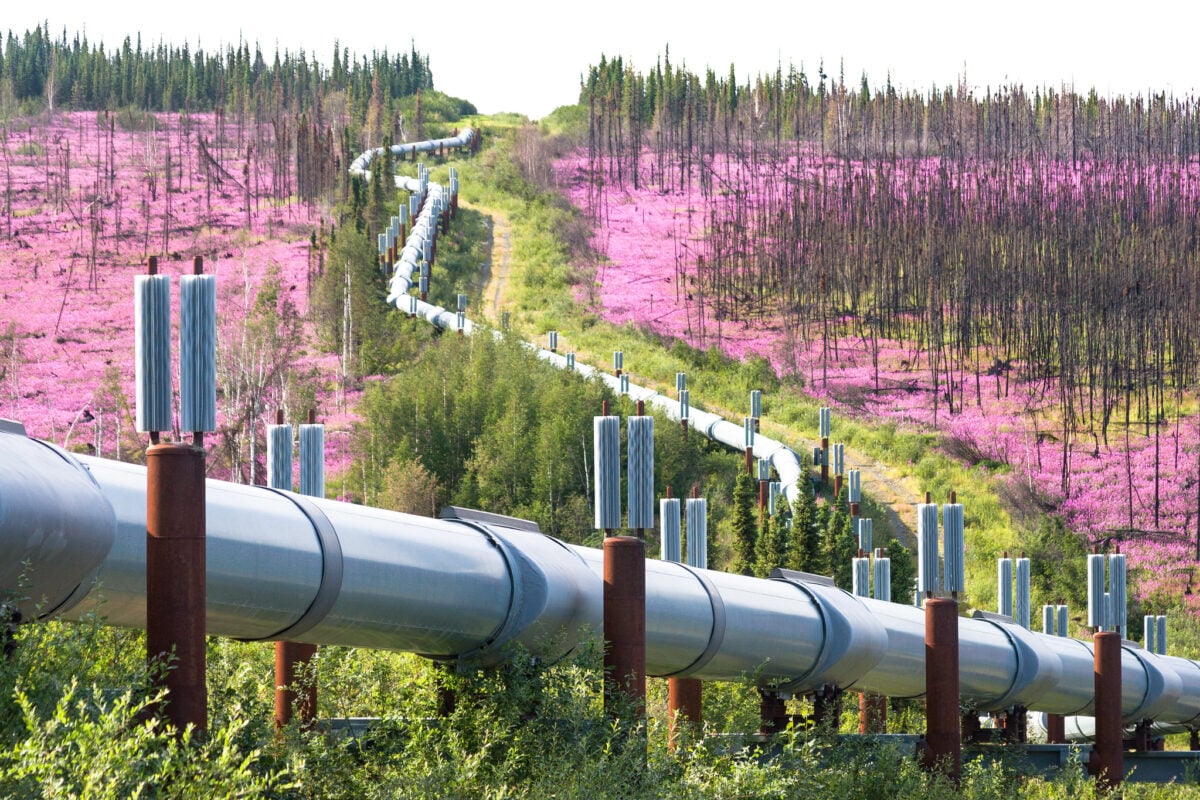
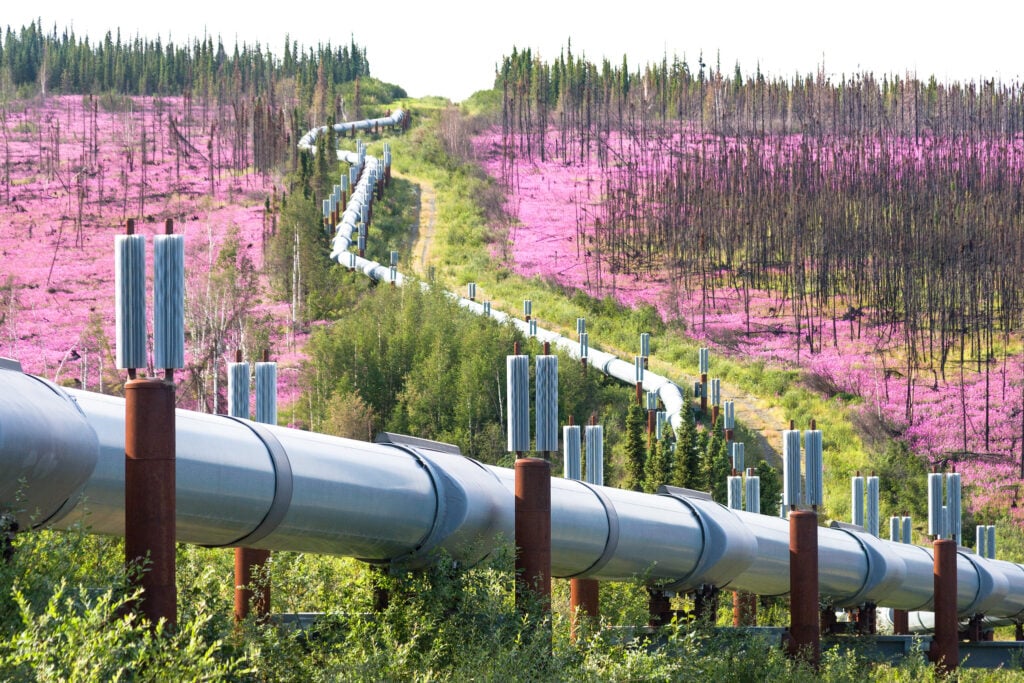
Fireweed blooms on either side of the trans-Alaska pipeline near mile post 86, Dalton Highway in 2006, two years after the 2004 Dall City fire. (Photo by Craig McCaa/BLM Alaska)
If built as proposed, the trans-Alaska natural gas pipeline is expected to create thousands of jobs. Many, if not most, will go to people who don’t live in Alaska.
A six-year-old study, commissioned by the Alaska Gasline Development Corp. as part of the project’s environmental statement, says “an estimated 22 to 68 percent of the construction jobs would likely be filled by non-residents, depending on the construction year.”
The high end of that estimate is significantly higher than the state’s norm — last year, 23.4% of all construction jobs in Alaska were held by people who don’t live in the state.
The difference is likely because specialty jobs needed during construction — pipeline welders, for example — aren’t common in Alaska. Last year, more than 42% of all welding jobs in the state were held by nonresidents, according to figures published by the Alaska Department of Labor and Workforce Development.
Joelle Hall, president of the Alaska AFL-CIO, said that while new hires might not all be Alaskans, they will have the opportunity to become Alaskans, just as the builders of the trans-Alaska oil pipeline system did.
“There will be, just as it was on TAPS — most of those were not Alaskans, they became Alaskans. That’s one of the opportunities to look at here,” she said.
As the Alaska Legislature debates a multibillion-dollar tax break for the pipeline project, legislators are considering whether to tie that tax break to labor requirements that could require pipeline developers to hire more Alaskans.
Last month, the Alaska Senate voted 16-4 to mandate a certain level of apprentice hiring, something that could increase the number of jobs available to new Alaskans or those starting to learn a trade.
The latest version of the tax-break bill, released last week by legislative negotiators, eliminates that mandate but requires project-labor agreements that maximize opportunities for Alaskans who already have needed qualifications, said Sen. Jesse Kiehl, D-Juneau and author of the apprentice hiring proposal.
Hall said she hopes the apprenticeship mandate returns, but even if it doesn’t, the project would offer young Alaskans a chance to be trained as electricians, plumbers and in other construction-related trades.
They would be able to keep those skills and replace retiring construction workers.
“We are going to have such an opportunity to get these jobs … and then they can go on to full careers,” Hall said. “The graying of the construction workforce is such a big problem, and this is an opportunity to change that graying.”
Current estimates suggest the project would create a large number of temporary and permanent jobs but significantly fewer than were created by the trans-Alaska oil pipeline in the 1970s.
“I’ve read that during the development stage, there’ll be something like 12,000 jobs attached to this project,” said Speaker of the House Bryce Edgmon, I-Dillingham, in a June 27 hearing.
Adam Prestidge, president of Glenfarne Alaska, jumped in.
“Just to clarify, when we talk about jobs created, it’s approximately 7,000 for the construction of the pipeline, an additional 5,000 for the construction of the LNG facility. When it goes into full operation, you’re looking at a much lower number, around 1,000 permanent, 1,500 permanent operational jobs,” he said.
Tim Fitzpatrick, a spokesman for Glenfarne Alaska, confirmed the figures by email and added: “These are direct jobs and these numbers do not include additional indirect jobs. Glenfarne has not provided an update to the in-state/out-of-state estimates.”
In 1978, the Alaska Department of Labor concluded that more than 23,000 people were simultaneously employed at the peak of oil pipeline construction.
As currently planned, the gas pipeline project would be built in two phases, with the pipeline first and supporting infrastructure second. That means the 12,000 jobs expected by the project won’t come all at once, and peak employment will be well below what happened during the oil pipeline boom.
In addition, Alaska’s population is much larger than it was during the 1970s, further diluting the impact of construction employment. Last year, the state had 321,500 workers in January and 360,000 in July — the boom created by pipeline employment will be smaller than the one that already occurs each summer with tourism and fishing jobs.
What would be different is the value of each job — lawmakers are planning to mandate agreements that would require workers be paid high wages.
“There’s going to be a level of rearranging of the workforce that’s going to be pretty dramatic. If you’re a guy working at the Jiffy Lube, you could probably go … and be dispatched to do the same job on the pipeline and make vastly more money,” Hall said.
A successful project would create permanent, high-paid jobs.
“Project operation would require about 980 permanent personnel per year,” AGDC estimated in 2020, predicting that most jobs would be based in Anchorage and would go to in-state residents.
For the moment, those benefits remain hypothetical, and the state’s 1978 study provides an inadvertent cautionary note.
“Construction of the proposed gas pipeline project is planned to begin in 1981 – less than three years from now,” it said. “Alaska citizens and lawmakers are now meeting to lay out guidelines in preparation for pipeline construction in an attempt to maximize stable growth and to minimize the disruption which will result from such a large scale construction project.”