Two senior Labour MPs have suggested the prime minister may have to go within months if the government continues to perform poorly.The Latest News from the UK and Around the World | Sky News
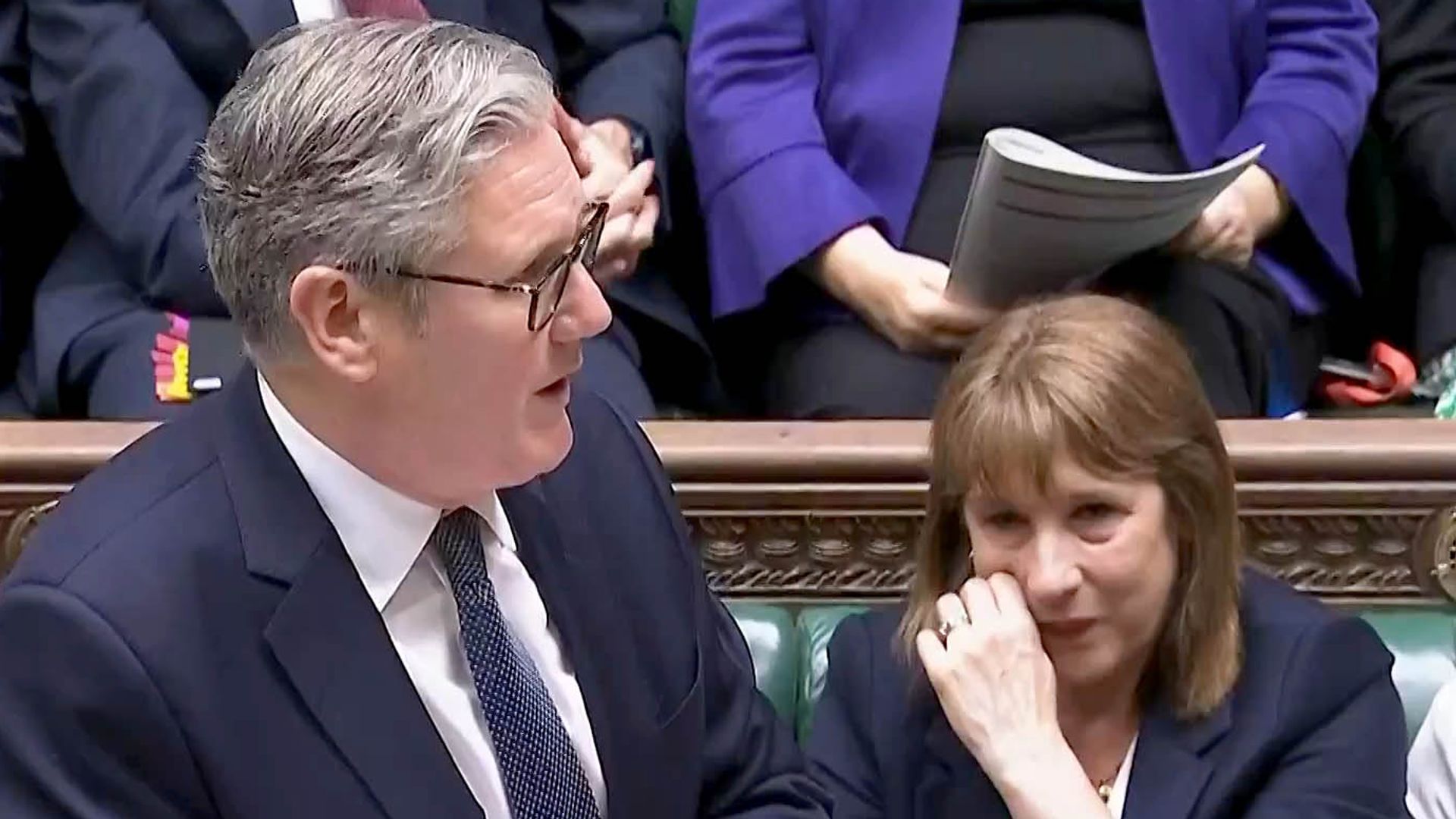











Two senior Labour MPs have suggested the prime minister may have to go within months if the government continues to perform poorly.The Latest News from the UK and Around the World | Sky News

Sean “Diddy” Combs has been found guilty of transportation for prostitution following a landmark trial in New York – but cleared of more serious charges of sex trafficking and racketeering conspiracy.The Latest News from the UK and Around the World | Sky News

A red shipping container sits on the tarmac of Sierra Leone’s Queen Elizabeth II Quay, under swinging cranes and towering stacks of similar steel boxes.The Latest News from the UK and Around the World | Sky News

Liverpool star Diogo Jota has died in a car crash.The Latest News from the UK and Around the World | Sky News
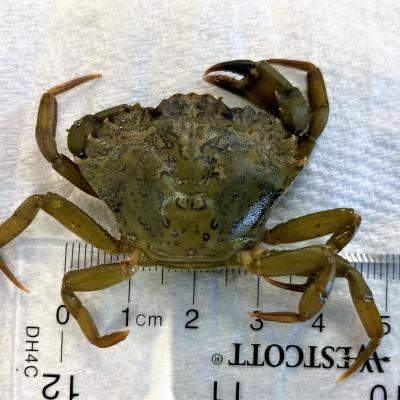
News of the North- The invasive European green crab has been confirmed on beaches along the Ketchikan road system for the first time. The species was first detected in Alaska in July 2022 by the Metlakatla Indian Community on Annette Island, who have since spearheaded local and regional responses.
The green crab is considered one of the most invasive species in the marine environment. It has few predators, aggressively hunts and eats its prey, destroys seagrass, and outcompetes local species for food and habitat. It has been documented that green crab devour juvenile king crab as well as juvenile salmon. They also destroy eelgrass habitat that larval fish use to hide from predators, and outcompete Dungeness crabs for food and habitat. Green crab could potentially damage Alaska’s multi-billion dollar fisheries industries, especially for salmon, crab, and mariculture operations.
Southeast Alaska Tribal Ocean Research, Alaska Fish & Game, and Alaska Sea Grant provide public resources about European green crabs in Southeast Alaska including detection, identification, and impact information, The best way to identify green crab is to count the spines. There are 5 spines behind the eye on each side of the shell.
Green crabs live on rocky shores, cobble beaches, sandflats and tidal marshes. They can often be found near eelgrass beds or other shoreline vegetation. Green crabs tolerate a wide range of water salinity and temperature. They can also survive upstream of river mouths in some estuarine environments.
Report your sightings via the ADF&G Invasive Species Reporter or by calling the Invasive Species Hotline: (877) INVASIV ((877) 468-2748). If you locate invasive green crab on Annette Islands Reserve, you can call (907) 886-FISH to make a report.

By: Corinne Smith and James Brooks, Alaska Beacon
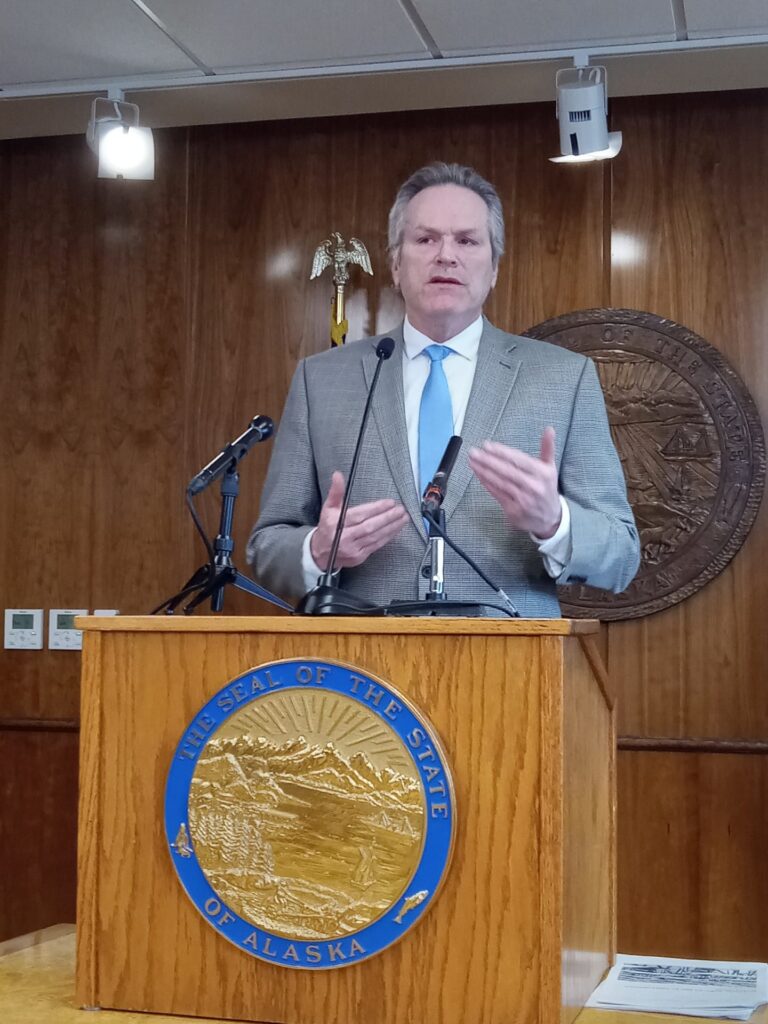
Alaska Gov. Mike Dunleavy is calling state legislators back to Juneau for a surprise special session.
On Wednesday, the governor issued a proclamation stating that the session, which begins Aug. 2, will cover education reform and his executive order creating a new Department of Agriculture.
The proclamation also forces an early vote on whether to override or sustain several of the governor’s vetoes, including an unprecedented cut to the base student allocation, core of the state’s per-pupil funding formula for public schools.
Under the Alaska Constitution, legislators must vote on an override in the first five days of the next session, in this case a special session.
That’s significant, because 45 votes are needed to override a budget veto, and while there were 46 votes in favor of a prior veto override this spring, at least one legislator who voted in favor of that override is expected to be unavailable in August.
In a prepared statement, Dunleavy outlined his stated reasons for calling a special session.
“Enacting a few necessary reforms to our public education system can elevate those children struggling in Alaska’s school system,” Dunleavy said. “As elected officials we must do all we can to put the next generation on the path to a successful and prosperous future, and that starts with a solid public education.”
The governor’s office declined to answer an emailed question asking whether the special session’s goals included an early vote. Some legislators said that seemed apparent.
House Minority Leader Mia Costello, R-Anchorage, said members of the House’s Republican minority were preparing to meet with the governor Wednesday afternoon.
Asked whether she thinks the governor called the session to force a veto override early, she said, “undoubtedly, the governor is aware that those issues would be taken up in the first five days in the Legislature. So, I do believe that is a part of the plan.”
She said she doesn’t know whether calling the vote early will decrease the chances of an override. Though some lawmakers may be absent, “people are home, talking to their constituents … how that translates into their votes is a hard thing to tell.”
Sen. Bill Wielechowski, D-Anchorage and chair of the Senate Rules Committee, did not mince words: “Oh yeah, this is all about the veto override,” he said. “Because he knows there’s people that are not in the state. You know, that’s actually the day that the National Conference of State Legislatures starts to meet also. So I know there’s some people who are scheduled to go to that. So, yeah, this is all about trying to game the system so we don’t have enough votes to override his veto.”
Legislators uniformly said that the governor’s special session proclamation came as a surprise. Rep. Andy Josephson, D-Anchorage, was hiking in Denali when reached by phone. Speaker of the House Bryce Edgmon, I-Dillingham, was at his town’s boat harbor.
“It’s a stunning announcement,” Edgmon said. “It’s extraordinary to get the Legislature back to Juneau, and it takes a tremendous amount of organization, cooperation, dialogue, you know, conversations, particularly when you’re throwing a topic like education policy in the mix, which normally could take up an entire two years of a legislative session.”
Senate President Gary Stevens, R-Kodiak, said the Legislature will reconvene but the votes for an override are uncertain. “I suspect that’ll be the first thing we deal with, if not the only thing we deal with, and we’ll see how the votes go.”
Under the Alaska Constitution, governors have the power to call special sessions, with the subjects limited to those chosen by the governor and the reconsideration of vetoed bills. While the Legislature is required to convene, it’s not required to actually discuss the chosen subjects.
Stevens said there’s no guarantee that the Legislature will take up Dunleavy’s agenda items. “It should be no secret to anyone that we’re going to, when we do meet — it’s my intention — on Aug. 2 to bring up first the issue of the override. And then we could, after we’ve done that, pass or fail, then we probably … can easily adjourn and deal with these issues the governor brought up at a later date.”
Sen. Forrest Dunbar, D-Anchorage, is currently deployed in Poland as part of U.S. National Guard service, and Stevens says it’s unlikely he would be able to make the special session. “He’s doing a service to the country, and it’d be very hard for him to get back. I don’t know if the military would even allow him to leave at this point, he’s in a training session, and so we’ll certainly look into that. But I would say it’s probably unlikely that he can be back.”
Dunbar did not respond to requests for comment by Wednesday afternoon.
“But he’s not the only one,” Stevens added. “There are others that are traveling, which makes it even more difficult to get to 45 votes.”
That threshold matters because overriding a governor’s budget veto requires 45 of 60 legislators, meeting in joint session.
This spring, 46 lawmakers voted to override the governor’s veto of a bill increasing the base student allocation in state policy. But authorizing spending the money was a separate vote, as part of passing the budget. If Dunbar is absent, all 45 remaining supporters of the veto override would have to stand firm in order to restore public school funding cut by the governor.
“I don’t know where people are going to be, but it’s really going to come down to probably one vote on a number of these overrides. So, not having that one vote, it’s going to be tough,” Wielechowski said.
In addition to the budget vetoes, the governor had vetoed three policy bills, including Senate Bill 183, increasing the powers of the legislative auditor.
Legislators said that bill, which passed with bipartisan support, was needed because the executive branch has stopped providing reports needed to verify the work of oil tax auditors on state taxes owed. Dunleavy said legislators’ criticism of the administration’s handling of the issue insinuated that it was acting unethically or illegally and undermined public trust in government. He demanded in a letter to lawmakers last week that they stop.
Afterward, at a meeting of the Legislative Budget and Audit Committee, lawmakers voted to authorize subpoenas against members of the administration over the issue.
Calling a special session makes an override of the SB 183 veto more difficult, Wielechowski said.
“If you’re an oil company, today’s a great day. They’re probably popping champagne bottles in Houston, Texas, today, and also all across the oil basins, because they know that it’s going to be harder to audit their taxes and probably likely to cost the state hundreds of millions of dollars,” he said.
Josephson said there will likely be several veto override votes taken up by the Legislature. “There will be attempts on multiple overrides. Multiple, multiple overrides,” he said, and hopes it includes an override vote to restore a policy bill addressing funding for teacher housing and Mount Edgecumbe High School in Sitka, and budget increases for infant learning programs. “So that’s going to be sort of interesting as well, because those veto override attempts must occur.”
After addressing the overrides, lawmakers could adjourn the special session without taking up either of the topics on the formal agenda.
Rep. Kevin McCabe, R-Big Lake, said he hopes that doesn’t happen and lawmakers consider creating a Department of Agriculture separate from the Department of Natural Resources.
Agriculture is currently overseen by a division within DNR, and McCabe said that recent wildfires in the Denali Borough show the need for DNR to be free to concentrate its attention on more important things without taking time away from agriculture.
Dunleavy addressed the issue in his statement announcing the session: “Splitting the Division of Agriculture away from DNR into a department will elevate food security and support our hard-working farmers while growing the agricultural sector.”
In May, lawmakers voted 32-28 to deny an executive order by Dunleavy to create a new Department of Agriculture, citing the proposal’s costs as well as creation through an executive order rather than as legislation, with public input.
Sen. Löki Tobin, D-Anchorage, chair of the Senate Education Committee, said by phone Wednesday that the Legislature passed legislation related to many of the governor’s policy priorities for education in May, including taking steps toward easing access for new charter school applications and expanding funding for career and technical education, as well as creating a task force to examine open enrollment and other measures.
She said she was unclear what further education reforms the governor wants: “I haven’t heard from the governor nor any of his staff, about anything else that he would like to see happen within our public education system.”
In a video Dunleavy released when he vetoed the school policy bill, he said it “fell short” on the policies he sought, including on charter schools, reading improvement incentives and open enrollment.
Other legislators were skeptical that the special session would accomplish its stated goals.
“I don’t think it’s going to work, is it?” said Rep. Jamie Allard, R-Eagle River, on talk radio Wednesday morning.
Senate Minority Leader Mike Shower, R-Wasilla, said he hadn’t spoken to the governor or any of his staff about the special session but said that sustaining the vetoes could be a primary objective.
“Honestly, I don’t know exactly what the intent is, or what the hope is for accomplishing (something), whether it’s PR or some kind of vote with people missing, or anything like that,” he said.
“Personally,” Shower said, “I’m not the biggest fan of special sessions, only because in my eight-plus years here, I’ve never seen them actually accomplish anything.”


Search and rescue crews in Juneau are looking for a missing cruise ship passenger who didn’t return from a hike Monday.
Police say 62-year-old Marites Buenafe, a Kentucky resident and passenger aboard the Norwegian Bliss, disembarked around 7:30 a.m. on July 1 and told family she planned to take the tram up the mountain and hike alone.
She never returned to the ship, which departed at 1:30 p.m.
Buenafe is described as 5’1″, about 110 pounds, with short black hair and brown eyes.
The Alaska State Troopers and Juneau Mountain Rescue launched a search operation, which remains ongoing.
Anyone with information is urged to contact authorities.
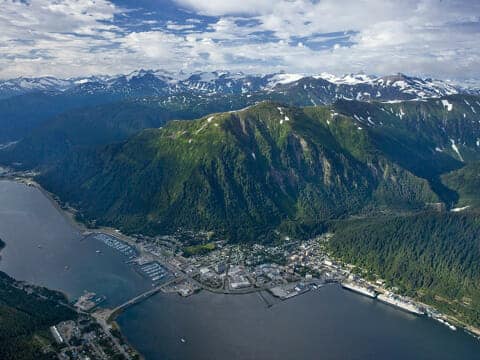
News of the North- Two tax-related propositions will appear on Juneau’s municipal ballot this fall. One seeks to cap the city’s property tax rate at nine mills, plus any extra needed to pay off voter-approved debt.
“The cap on the mill rate will make Juneau more affordable,” local attorney Joe Geldhof said. “Instead of just raising property taxes and getting more revenue, they’ll have to start making some considered choices on what it is Juneau really needs.”
Another proposal would include a sales tax exemption on groceries for personal consumption and sales of heating fuel, including wood, wood pellets and fuel oil for non-commercial use.
“For years now, the politicians down there have been talking about eliminating taxes primarily on groceries, and they never get around to doing it,” Geldhof said. “Pretty much everybody says, gee, why should a low-income or middle-income family pay sales tax on an essential like food or on their heating fuel? And a bunch of us finally decided they can’t figure it out, so we’re going to.”
Both initiatives aim to lower the cost of living.
A third petition to reinstate in-person voting didn’t gather enough signatures.
“By-mail voting is convenient in one sense, especially for the bureaucrats,” Geldhof added. “It also turns out to be fantastically more expensive than the old way where you’d go to your polling station. It also turns out to be way slower.”
City officials warn these changes could cut millions from the city’s budget, potentially leading to reduced services, Property taxes make up roughly 40% of the city’s general fund revenue.
Voting in this year’s municipal election ends on Tuesday, Oct. 7.
By: Corinne Smith, Alaska Beacon
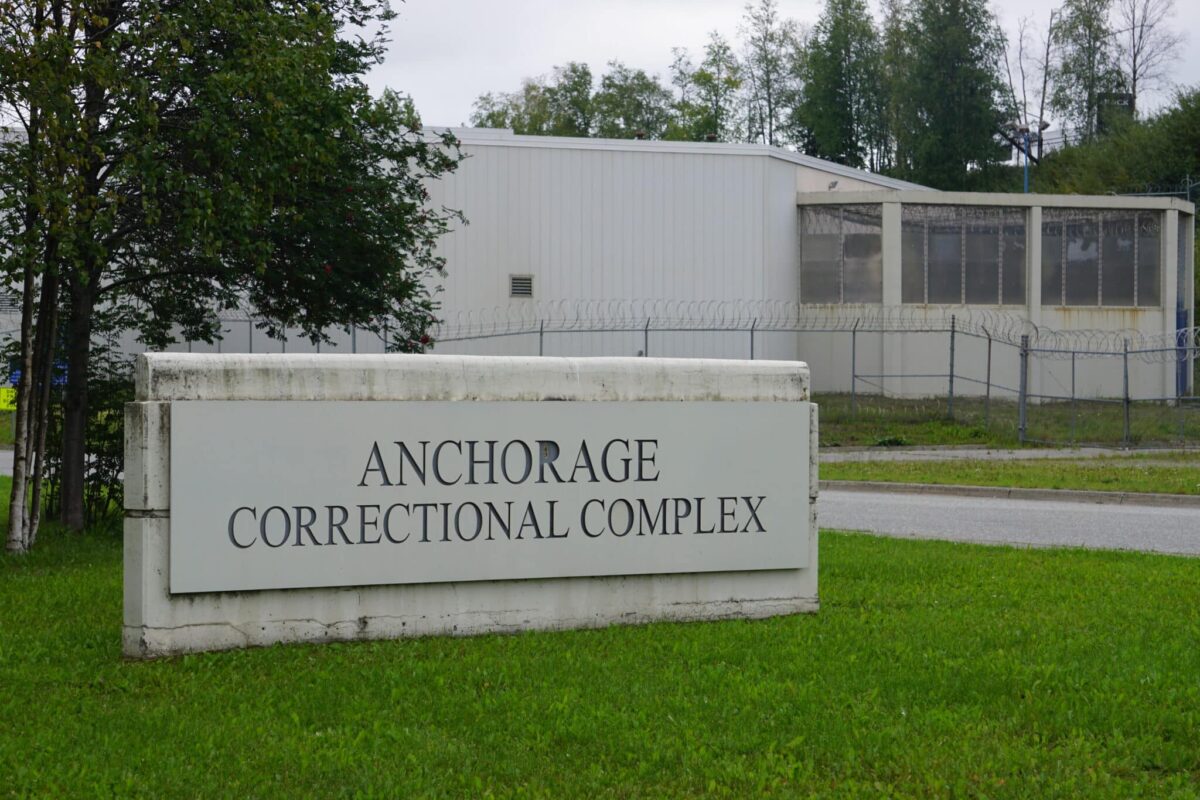
The Alaska Department of Corrections announced that 35 men that were arrested and detained by the U.S. Immigration and Customs Enforcement from out of state and held at the Anchorage Correctional Complex were transferred out of state on Monday.
ICE transferred 42 men to Alaska from out of state on June 8, as part of an ongoing agreement between the Department of Corrections and the U.S. Department of Justice, amid a nationwide deportation crackdown. The move sparked daily protests, a fact-finding hearing by the Alaska House Judiciary Committee, and concerns from attorneys and the American Civil Liberties Union of Alaska around the punitive conditions of detention, violations of due process and criminal confinement.
A spokesperson for the Department of Corrections said department Commissioner Jen Winkelman was not available for an interview on Tuesday to discuss the transfer, concerns around conditions of detention, and ongoing plans to house ICE detainees in Alaska.
“The ICE detainees who were transferred due to severe overcrowding in the Washington facility are no longer in the custody of the Alaska Department of Corrections,” said DOC spokesperson Betsy Holley in an email, in which she included the italics and underlining. She added that all questions on the details of the transfer should be directed to DHS/ICE.
Cindy Woods, a senior immigration law and policy fellow with the ACLU of Alaska, said the transfer was not unexpected, since DOC had said they agreed to hold detainees for 30 days. She also said she and several other attorneys were not notified of the transfers.
“Yesterday evening, I flagged the attorneys that I know represent folks who had been transferred, to let them know that they were being transferred again, and but none of them had been told by ICE prior to that,” she said.
Woods said all the detainees were going through civil immigration proceedings, and faced no criminal charges.
“These individuals were all in civil detention, so they were not being detained as part of an ongoing criminal proceeding. They were all in administrative immigration proceedings,” she said, and a number of the men have applied for or received asylum protections.
“And then there were also a handful of folks who were waiting for their immigration proceedings to commence,” she said. “And so (they) were waiting for the opportunity to speak with a judge about either a potential asylum claim or some other request for immigration relief.”
The ICE transfer of detainees to Alaska DOC custody raised serious concerns around standards of detention from legislators and advocates. Attorneys testified before the June 20 hearing of the Alaska House Judiciary Committee that despite no criminal charges, their clients reported that they were subject to lengthy lockdowns, overuse of handcuffs and overcrowding — sleeping three to a cell. In addition, they were denied or had limited access to calls with family and attorneys, regularly strip-searched after visits with attorneys, and subjected to use of force by DOC staff members, who pepper-sprayed a unit to stop a “verbal demonstration” on June 12, the attorneys said.
The ACLU of Alaska sent a letter on Saturday to Alaska state officials and ICE demanding detainees be removed from Anchorage Correctional Complex custody, and a stop to any additional transfers “unless and until constitutionally adequate conditions of confinement and attorney access can be guaranteed.”
The letter provided further detail on the pepper-spray incident: “This ‘verbal demonstration’ consisted of detainees requesting access to their belongings, including an individual who was trying to access his property to get the phone number for his consulate. Following the incident, many individuals experienced respiratory distress, including coughing, burning sensations in their mouth, nose, and eyes, and nosebleeds, and did not receive medical attention. They were also unable to change their clothes for an extended period of time.”
Holley said in the Department of Corrections’ emailed response to an interview request that the state did not make the call to transfer the detainees.
“The decision to transfer these detainees out of Alaska rested solely with the federal government. The decision was not influenced by the recent House Judiciary Committee hearing or the letter issued by the ACLU this past weekend,” Holley said.
“It is important to note the Alaska DOC routinely houses both civil detainees and federal prisoners. While we do not currently know whether ICE will request additional placements in the future, the Alaska DOC remains fully prepared to support DHS/ICE in coordinated efforts that prioritize public safety and the efficient use of government resources.”
The ACLU filed a class action lawsuit against the Department of Corrections in May challenging what they say is “inadequate, dangerous and inhumane” health care provided for incarcerated Alaskans.
Woods said the DOC protocols and detention conditions are unnecessary, and violated the men’s right to due process. “The conditions that they were all held in were punitive, whether or not that was the intention of the government, and such punitive nature are clearly outside the scope of the law, and especially when it comes to the standards and the requirements for civil detainees, who are not being held under criminal charges,” she said.
ICE did not respond to requests for comment about why the detainees were transferred to and from Alaska. Woods said she was able to search in the ICE inmate locator and confirm the men were transferred back to the ICE detention facility in Tacoma, Washington, with reportedly better conditions.
Woods said detainees reported the experience in DOC custody as humiliating.
“They were being held in really substandard conditions, being subjected to pepper spray and strip searches, and handcuffs, and all of those things. And so it was really hard for a lot of people to deal with that shift,” she said, referring to being transferred from Washington state to Alaska custody. “And especially because they were also largely cut off from those outside relationships that sustained them, particularly those who, you know, regularly spoke with their children and their parents and their loved ones who were not located in the United States — having that kind of completely shut off really impacted the individuals who experienced that.”
On Friday, seven U.S. congressional representatives from Washington and Oregon sent a letter to the U.S. Department of Homeland Security questioning why detainees were transferred to Alaska, as well as the cost and criteria for who is transferred. The letter also raised concerns that “ICE is wasting taxpayer dollars, flying dozens of people between detention centers thousands of miles apart, in efforts that do nothing to help protect Americans.”
In his second term, President Donald Trump has not taken many actions that draw near-universal praise from across the political spectrum. But there is at least one of these political anomalies, and it illustrates the broad appeal of environmental protection and conservation projects – particularly when it concerns an ecosystem of vital importance to millions of Americans.
In May 2025, Trump issued a presidential memorandum supporting the construction of a physical barrier that is key to keeping invasive carp out of the Great Lakes. These fish have made their way up the Mississippi River system and could have dire ecological consequences if they enter the Great Lakes.
It was not a given that Trump would back this project, which had long been supported by environmental and conservation organizations. But two very different strategies from two Democratic governors – both potential presidential candidates in 2028 – reflected the importance of the Great Lakes to America.
As a water policy and politics scholar focused on the Great Lakes, I see this development not only as an environmental and conservation milestone, but also a potential pathway for more political unity in the U.S.
Perhaps nothing alarms Great Lakes ecologists more than the potential for invasive carp from Asia to establish a breeding population in the Great Lakes. These fish were intentionally introduced in the U.S. Southeast by private fish farm and wastewater treatment operators as a means to control algae in aquaculture and sewage treatment ponds. Sometime in the 1990s, the fish escaped from those ponds and moved rapidly up the Mississippi River system, including into the Illinois River, which connects to the Great Lakes.
Sometimes said to “breed like mosquitoes and eat like hogs,” these fish can consume up to 40% of their body weight each day, outcompeting many native species and literally sucking up other species and food sources.
Studies of Lake Erie, for example, predict that if the carp enter and thrive, they could make up approximately one-third of the fish biomass of the entire lake within 20 years, replacing popular sportfishing species such as walleye and other ecologically and economically important species.
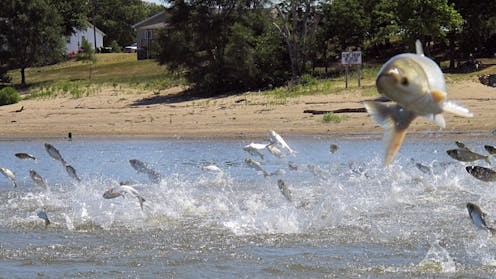
Invasive carp are generally not eaten in the U.S. and are not desirable for sportfishing. In fact, silver carp have a propensity to jump up to 10 feet out of the water when startled by a boat motor. That can make parts of the Illinois River, which is packed with the invasive fish, almost impossible to fish or even maneuver a boat.
Originally, the Great Lakes and the Mississippi River were not connected to each other. But in 1900, the city of Chicago connected them to avoid sending its sewage into Lake Michigan, from which the city draws its drinking water.
The most complete way to block the carp from invading the Great Lakes would be to undo that connection – but that would recreate sewage and flooding issues for Chicago, or require other expensive infrastructure upgrades. The more practical, short-term alternative is to modify the historic Brandon Road Lock and Dam in Joliet, Illinois, by adding several obstacles that together would block the carp from swimming farther upriver toward the Great Lakes.
The barrier, estimated to cost US$1.15 billion, was authorized by Congress in 2020 and 2022 after many years of intense planning and negotiations. For the first phase of construction, the project received $226 million in federal money from the Bipartisan Infrastructure Law to complement $114 million in state funding – $64 million from Michigan and $50 million from Illinois.
On the first day of Trump’s second term, however, he paused a wide swath of federal funding, including funding from the Bipartisan Infrastructure Law. And that’s when two different political strategies emerged.
Illinois, a state that has voted for the Democratic candidate in every presidential election since 1992, has the most financially at stake in the Brandon Road project because the project requires the state to acquire land and operate the barrier. When Trump issued his order, Illinois Gov. JB Pritzker, a Democrat, postponed the purchase of a key piece of land, blaming the “Trump Administration’s lack of clarity and commitment” to the project. Pritzker essentially dared Trump to be the reason for the collapse of the Great Lakes ecosystem and fisheries.
Another Democrat, Gov. Gretchen Whitmer of Michigan, a swing state with the most at stake economically and ecologically if these carp species enter the Great Lakes, took a very different approach. She went to the White House to talk with Trump about invasive carp and other issues. She defended her nonconfrontational approach to critics, though she also hid her face from cameras when Trump surprised her with an Oval Office press conference. When Trump visited Michigan, she stood beside him as they praised each other.
When Trump released the federal funding in early May, Pritzker kept up his adversarial language, saying he was “glad that the Trump administration heard our calls … and decided to finally meet their obligation.” Whitmer stayed more conciliatory, calling the funding decision a “huge win that will protect our Great Lakes and secure our economy.” She said she was “grateful to the president for his commitment.”

Whether coordinated or not, the net result of Pritzker’s and Whitmer’s actions drew praise from both sides of the aisle but was little noticed nationally.
Trump’s support for the project was a rare moment of political unity and an extremely unusual example of leading Democrats being on the same page as Trump. I attribute this surprising outcome to two key factors.
First, the Great Lakes region holds disproportionate power in presidential elections. Michigan, Wisconsin and Pennsylvania have backed the eventual winner in every presidential race for the past 20 years. This swing state power has been used by advocates and state political leaders to drive funding for Great Lakes protection for many years.
Second, Great Lakes are the uniting force in the region. According to polling from the International Joint Commission, the binational body charged with overseeing waterways that cross the U.S.-Canada border, there is “nearly unanimous support (96%) for the importance of government investment in Great Lakes protections” from residents of the region.
There aren’t any other issues with such high voter resonance, so politicians want to be sure Great Lakes voters are happy. For example, Vice President JD Vance has been particularly vocal about the Great Lakes. And Great Lakes restoration funding was one of the few things in the presidential budget that Democrats and Republicans agreed on.
Both Pritzker and Whitmer likely had state-based and national motivations in mind and big aspirations at stake.
Their combined effort has put the project back on track: As of May 12, 2025, Pritzker authorized Illinois to sign the land-purchase agreement he had paused back in February.
And perhaps the governors have identified a new area for unity in a divided United States: Conservation and environmental issues have broad public support, particularly when they involve iconic natural resources, shared values and popular outdoor pursuits such as fishing and boating. Even when political strategies diverge, the results can bring bipartisan satisfaction.

Mike Shriberg was previously the Great Lakes Regional Executive Director of the National Wildlife Federation, which entailed being a co-chair (and, for part of the time, Director) of the Healing Our Waters – Great Lakes Coalition.
Politics + Society – The Conversation