 Not all press-on nails are created equal, especially not during a long day of travel. That’s why I was in awe when this Glamnetic set stayed on through wrangling my suitcase through security, a…
E! Online (US) – Top Stories









Not all press-on nails are created equal, especially not during a long day of travel. That’s why I was in awe when this Glamnetic set stayed on through wrangling my suitcase through security, a…
E! Online (US) – Top Stories

 Sharon Stone isn’t afraid to kiss and tell.
In fact, the actress was so confident about her smooch with Robert De Niro in Casino that she had no hesitation declaring him the “best kisser in the…
E! Online (US) – Top Stories
By: Sean Maguire, Alaska Beacon

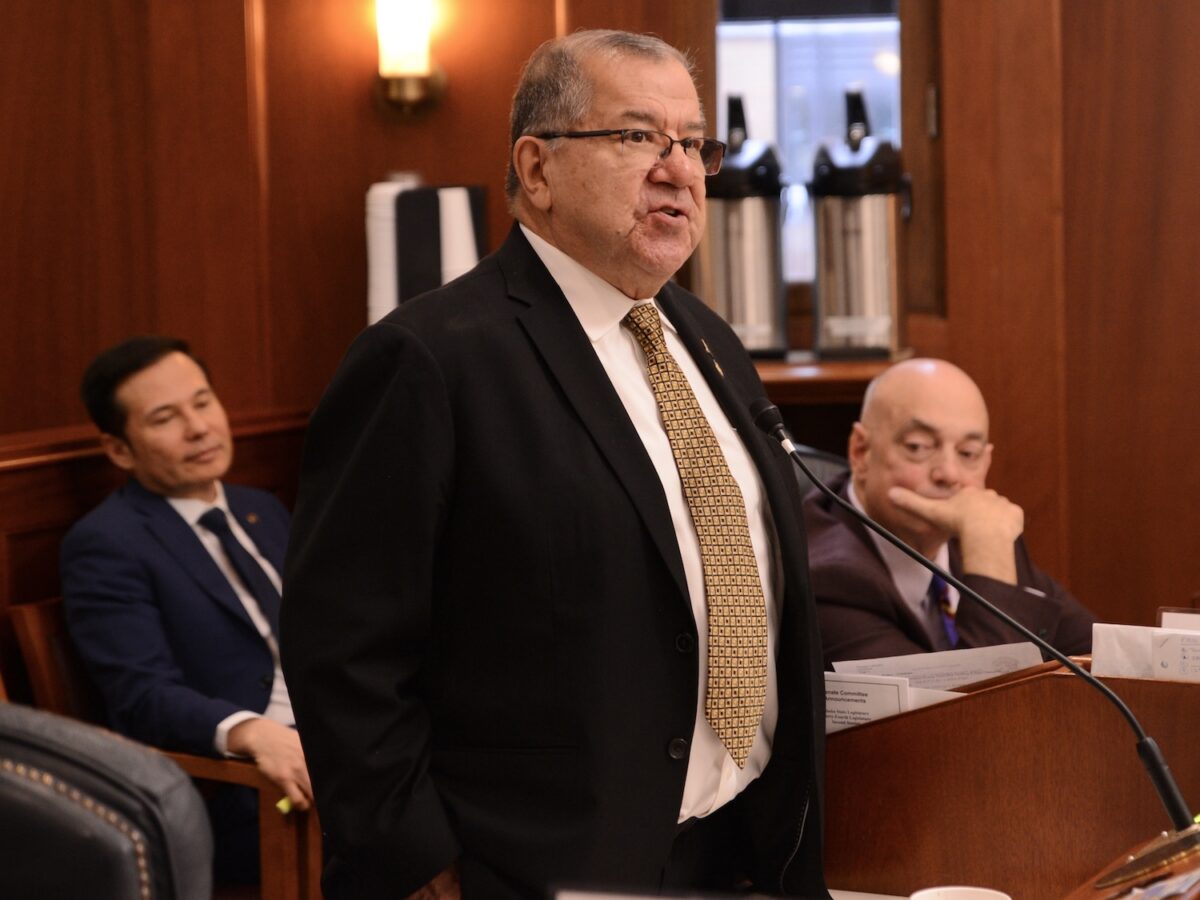
The Alaska Senate on Wednesday advanced a constitutional amendment that would establish a dedicated fund for public education.
If passed, lawmakers could design a new source of state revenue to go toward the fund that would be used specifically for schools. The resolution states that the Legislature could only appropriate money from the fund for public education.
The Alaska Constitution explicitly prohibits the dedication of funds in most cases. Supporters say that prohibition was intended to give the Legislature flexibility in budgeting, and avoid mandated funds.
Bethel Democratic Sen. Lyman Hoffman said before Wednesday’s vote that education is his No. 1 priority. A dedicated education fund could be a “tremendous tool” to improve schools in Alaska, he said. Hoffman co-chairs the Senate Finance Committee which sponsored the constitutional amendment.
The Legislature last year approved an historic increase in school funding through the state’s complex formula, overriding two separate vetoes by Republican Alaska Gov. Mike Dunleavy. Still, advocates say that substantially more school funding is needed with school districts facing sizable budget shortfalls and decades of deferred maintenance.
Two Alaska school districts in January sued the state, arguing that Alaska’s education funding levels violate a constitutional duty to fund schools adequately. School districts across Alaska have long complained about crumbling buildings that have reached crisis level.
Republican Sen. Bert Stedman represents Sitka, home of Mt. Edgecumbe High School, a state-run boarding school which has reported leaking roofs and buildings in disrepair. Stedman said Alaska is one of the nation’s richest states, but the condition of its schools is “kind of embarrassing.”
Surrounded by school children in the Senate’s public galleries, Stedman said that “we should be doing better for our kids.”
“Every generation needs to make a little step forward and this is our little step,” he said in support of the resolution before the final vote.
The Alaska Senate approved the resolution on a 17-3 vote. At least 14 of 20 senators are needed to support a constitutional amendment. Two-thirds of the Alaska House of Representatives would need to vote for the same resolution to put the proposal before voters at the November election.
All 14 members of the bipartisan Senate majority supported the constitutional amendment, alongside three minority Senate Republicans — Sens. Robert Yundt of Wasilla, Mike Cronk of Tok and James Kaufman of Anchorage.
Three minority Senate Republicans voted no: Sens. Robb Myers of North Pole, Cathy Tilton of Wasilla and George Rauscher of Sutton.
Myers said the drafters of the Alaska Constitution sought to block the proliferation of dedicated funds, which would consume the annual budget.
He said that establishing a dedicated fund for education “removed any sort of flexibility for the Legislature.” He said that avoiding annual debates about school funding was “not necessarily a good thing.” Education spending could effectively be “out of sight, out of mind,” he said.
Myers said the state has numerous other priorities such as health care and natural resource management, but they would not receive the same dedicated funds.
The resolution now advances to the House. If approved by 27 of 40 House members, it would then be placed before voters at the Nov. 3 election. A simple majority of voters is needed to approve an amendment to the Alaska Constitution.
A governor cannot block a constitutional amendment from appearing on the ballot with their veto pen. The Alaska Constitution was last amended in 2004.

While In-N-Out first offered Pepsi-Cola products, the company switched to Coca-Cola in the early ’90s – yet it still serves 7Up instead of Sprite. Why?

Food Republic – Restaurants, Reviews, Recipes, Cooking Tips
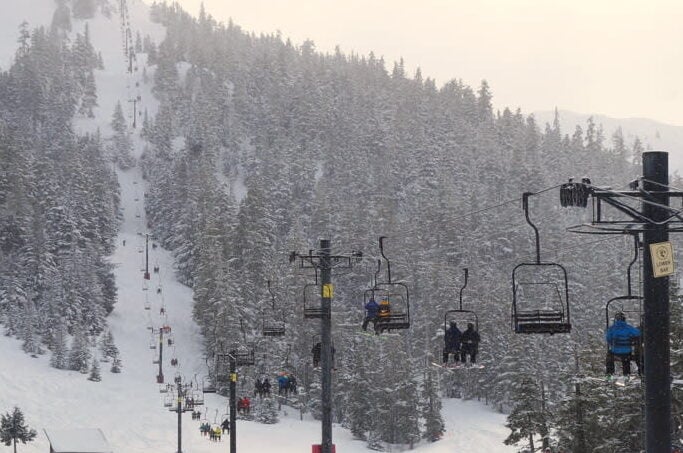
NOTN- The City and Borough of Juneau is scrapping its participation in the long-planned gondola project at Eaglecrest ski area after costs ballooned from single-digit millions to an estimated $37 million, leaving the city on the hook to repay Goldbelt during an already tight budget season.
Finance Committee Chair Christine Woll said the Juneau Assembly voted Wednesday night to move forward with pulling out of its agreement with Goldbelt, which had helped finance the project. The city expects to repay about $12 million that Goldbelt invested, roughly $9 million of which has already been spent.
“We knew that increases at Eaglecrest were going to be significant over time, just because of aging infrastructure, and we knew that the public tax dollars probably couldn’t sustain paying for those increases at Eaglecrest.” Woll said, “So the vision was that by installing a gondola that could help take advantage of summer revenue from our visitor industry, we could
provide a more reliable, non-taxpayer dollar-funded income stream at Eaglecrest, but for a price tag that big, it no longer becomes something that the city has funds to invest in.”
The gondola was originally projected to cost about $7 million, later revised to around $9 million when the city and Goldbelt signed their deal, Woll said. The latest estimate, about $37 million to install, pushed the project far beyond affordability for the City.
“It’s just terrible, what a waste of money, but we’re gonna have to figure out how to pay it back.” Woll said.
The decision to cancel the project now leaves Eaglecrest in a precarious financial position. Its future budgets had assumed new income from gondola operations during the summer months.
Woll said the Assembly has directed Eaglecrest to return with a much-reduced operating budget that fits within the traditional taxpayer subsidy the ski area receives.
The gondola reversal comes as Juneau is just beginning to create it’s annual budget for FY 27.
“Ultimately, the assembly is going to have to make some hard decisions about service reductions. We’re aiming to make about $2 million more in cuts before June, when we have to pass the budget.” Said Woll.

Sunlight reflects off solar panels lining the student recreation building at the University of Alaska Fairbanks campus on June 2, 2018. (Photo by Yereth Rosen/Alaska Beacon)
Alaska is about to see $22 billion invested in energy production and storage over the next five years. That’s real money, real opportunity and something we shouldn’t take for granted. What we do with that investment matters far beyond Alaska.
When you have a diverse energy grid, it’s harder to disrupt and less vulnerable to foreign pressure. That’s just common sense. Alaska can offer that diversity: oil and gas, hydropower, wind, solar. But only if we build it.
We should support programs that upgrade and modernize our electric grid and energy systems. Updated systems will be more efficient and can better handle extreme weather. They’ll be more secure from hackers and foreign interference. With clean energy, we can diversify our energy portfolio to prepare for any interruptions. For Alaska’s remote communities, renewable power is the innovation we need to make sure their power needs are met reliably.
For years, Senator Murkowski has been involved in shaping federal energy policy that supports responsible development of Alaska’s resources and strengthens long-term energy security. These efforts have helped maintain Alaska’s role as a key player in energy innovation. But we have more work to do.
Investing in a clean energy economy will result in more manufacturing jobs here at home and not outsourced to other countries like China. It will ensure we have greater control over our energy supplies in a system built in America by American workers. If we don’t build it here, someone else will build it somewhere else. Right now, China is dominating clean energy manufacturing globally. They’re winning the race to produce solar panels, batteries and wind turbines. If America wants energy independence, we can’t outsource it. We must build these technologies here using American supply chains.
For Alaska specifically, that means jobs. Good-paying manufacturing and construction work for communities that need it. Fuel-free power sources also help stabilize electricity prices. I’ve watched communities like Kodiak and Juneau manage their energy costs in ways most Alaskans can’t. Kodiak used hydropower and wind to displace millions of gallons of diesel. Juneau runs almost entirely on hydropower. The result has been some of the lowest, most predictable electricity rates in the state. When your power comes from water or geothermal or wind instead of fuel markets, families and businesses are better protected from market shocks. Recent instability tied to the conflict in Iran has underscored how quickly global fuel supplies can be disrupted, driving up oil and gas prices and reinforcing the value of reliable, locally produced renewable energy.
Modernizing Alaska’s grid is equally critical. Extreme weather, cyberattacks and foreign interference aren’t hypotheticals. Our systems need to withstand all of it. That infrastructure work pays dividends for years.
The practical opportunities are in front of us right now. Hydropower projects like the Dixon Diversion, a 50 percent expansion of Bradley Lake, could add real, affordable, clean power to the Railbelt while Cook Inlet gas is tightening up. We have the expertise and know-how to build things in harsh environments because we’ve been doing it for decades.
An America First energy agenda doesn’t mean picking one fuel over another. It means producing every kind of energy we can here at home: oil, gas, wind, solar and hydropower. It means building and deploying these technologies in Alaska, strengthening American manufacturing and securing supply chains.
Alaskans have always believed in using what we have and building things that last. That same practical mindset should guide what we build next. More Alaska-made energy where it makes sense, more American manufacturing and more control over our own energy future. That’s not just good for Alaska. That’s good for the rest of the country, too.
SUBSCRIBE: GET THE MORNING HEADLINES DELIVERED TO YOUR INBOX

 A pair of strappy heels will never do you wrong. A go-to shoe for spring and summer, they go with every warm-weather look you can think of, from sundresses to low-rise jeans.
Whether you’re…
E! Online (US) – Top Stories

 Gucci Mane was allegedly held captive during a harrowing experience.
Nine individuals have been charged after allegedly kidnapping and robbing three victims at gunpoint at a music studio in Dallas…
E! Online (US) – Top Stories
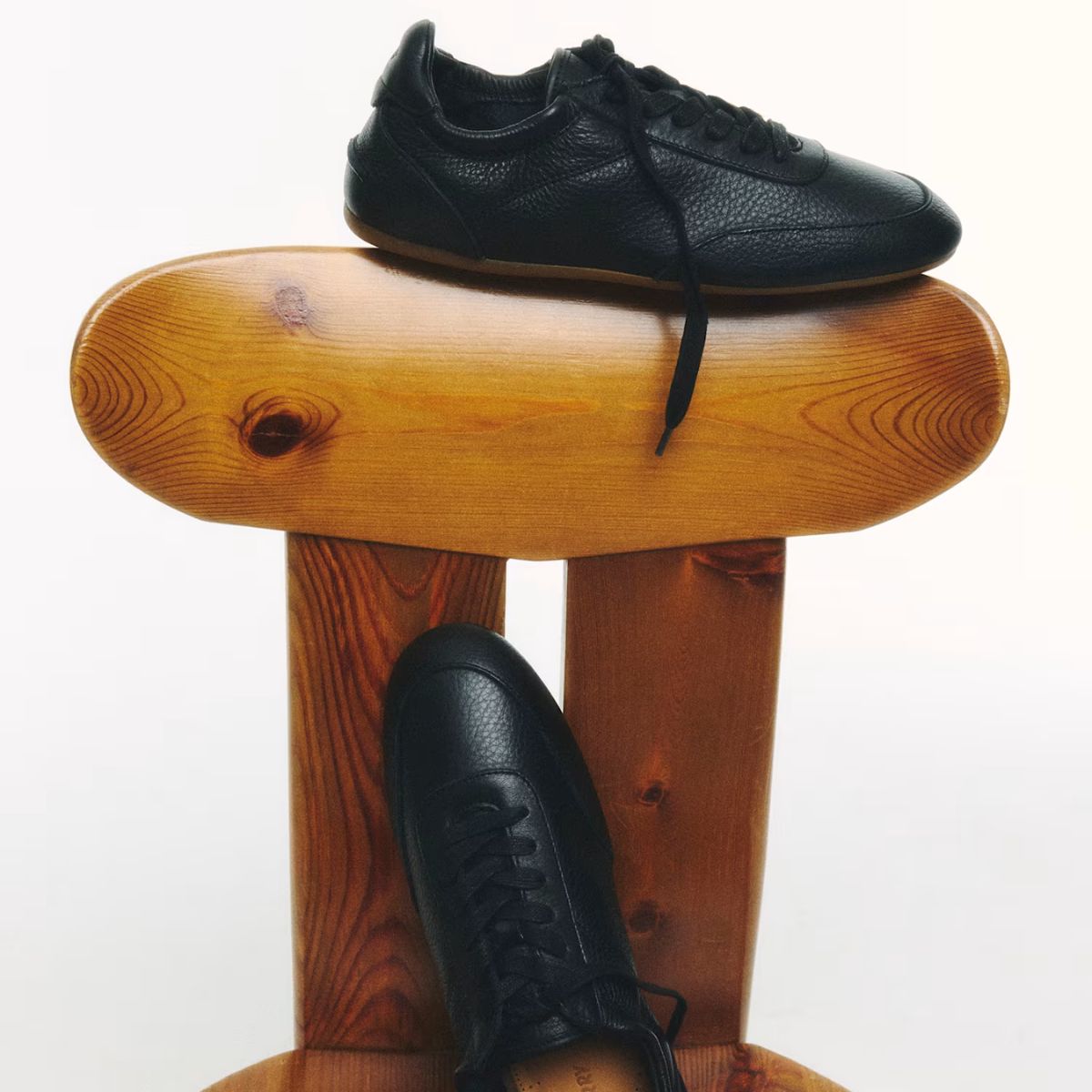
 There’s only smooth sailing ahead thanks to Aritzia’s new exclusive Sperry shoes.
The brands previously teamed up in 2025 on a shoe release, and are back again with two new styles getting added to…
E! Online (US) – Top Stories
By: Grace Dumas
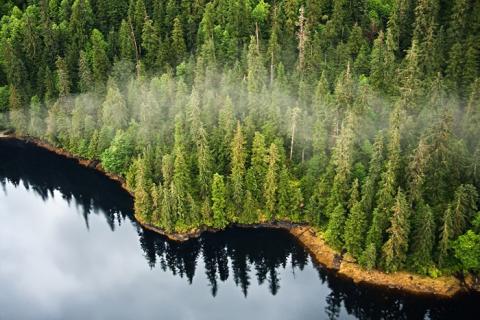
As the federal government advances plans to roll back Roadless Rule protections on 58 million acres of national forests, Southeast Alaska conservation advocates are racing to mobilize public opposition, warning that repealing the Roadless Rule could open the Tongass National Forest to expanded clear-cut logging and place subsistence, fisheries and tourism in peril.
Nathan Newcomer, Southeast Alaska Conservation Council (SEACC) Tongass Campaigner, said the current administration has signaled from “day one” that it intends to eliminate the federal Roadless Rule, a regulation that limits road-building and industrial development on certain undeveloped national forest lands.
“They signed an executive order to try to get rid of the Roadless Rule. The Secretary of Agriculture, Brooke Rollins, also issued a statement intending to rescind the Roadless Rule nationwide.”
Despite the administration’s push, the conservation group says public sentiment has been overwhelmingly in favor of keeping the rule.
A Notice of Intent, the first step in the rulemaking process, opened a 21-day public comment period nationwide. During that brief window, the public submitted more than 627,000 comments Newcomer said.
“Over half a million people submitted public comments. There’s a group called the Center for Western Priorities that did an analysis of those public comments, and they found that 99% of the public comments were in favor of keeping the roadless rule in place. When do you see 99% of American citizens agreeing on something? That just goes to show you that people really like the Roadless Rule.”
In 2001 when the Rule was enacted by the Clinton Administration, more than 600 public hearings were held around the nation, and the public provided more than 1.6 million comments on the Rule, more comments than any other rule in the nation’s history.
Now, Newcomer says, the government is trying to unwind those protections without holding any comparable meetings.
“They’re not holding any public meetings anywhere, not only for Alaska, but nothing down south either. So that’s why we’re organizing these public hearings, not just in Juneau, but throughout southeast.” Said Newcomer.
Juneau’s hearing was scheduled for yesterday evening at the JACC downtown.
The event featured a panel discussion with President Mike Jones of the Organized Village of Kasaan, Atagan Hood, Vice President of Alaska Youth for Environmental Action, Jamalea Martelle of Artemis National Wildlife Federation and Nicole Weston, Owner of NW Photography.
A moderator guided the conversation, about why roadless protections matter in their communities. The event then shifted into a public hearing where attendees offered testimony themselves.
“We’re going to have several videographers on hand that are going to document everything, record everybody’s public testimony, then we’re going to transcribe that testimony, and then we’re going to officially submit it to the public record once the public comment period for the draft EIS (Environmental Impact Statement) is open.”
If the roadless rule is repealed, Newcomer warned, “If you get rid of protections for federal public lands, you’re talking about more large scale clear cut logging, that’s the main threat. And of course, when you start to clear cut, it’s going to have huge impacts on the wildlife, on our subsistence ways of life here in the Tongass, on the tourism, recreation economy. How many people came up on cruise ships to Juneau last year?”
Despite the scale of public opposition documented in the comment record, Newcomer said he does not believe the federal government, under current leadership, is likely to change course.
“But that doesn’t mean that we shouldn’t make our voices heard and make a lot of noise and make sure that we’re all on the record saying that we don’t want this. Because there are also other elections that happen, right? And so power can shift, so it’s about demonstrating that the people care about these things, and that’s just kind of the work that I have to do, and that’s the work that we’re doing to make sure that the public’s voice is heard.”
He said he’s seen community organizing make a difference over longer timelines, even when initial decisions seemed foregone.
“Historically, Americans have said we would like to keep the Roadless Rule in place, and now this administration is trying to ram a policy through that the vast majority of us don’t want to see happen. That’s not the role of government.” Newcomer said, “Government needs to be by the people for the people. I think highlighting that is really critical, so that people understand that they have agency, Because there’s a lot going on in the world, right? And it’s really easy to get overwhelmed and to become apathetic, but you really do have agency. I’ve seen it time and time again in my life, where you might feel like the the clouds are closing in on you, and it’s getting dark and gloomy, but really, when you stand together and you speak in a solid voice in unity, it can have really powerful change. It might not happen today or tomorrow, but it could make a huge difference.”