City planners are asking Juneau residents to help shape the community’s future as work continues on a major update to the city’s Comprehensive Plan.
Senior planner Minta Montalbo said the plan, which covers topics ranging from housing and transportation to natural hazards and economic development, is one of the most important planning tools the city has.
“Juneau’s had Comprehensive Plans on the books for decades, since the 1900s, so it’s basically a big picture guide that helps us decide where and how to develop, usually, over the next 20 to 30 years.” Montalbo said, “I think it’s important to keep in mind that the Comprehensive Plan reflects community priorities, and it connects our values and goals with CBJ decision makers, with policies and actions. It’s like a reference point for decisions on how to best use our land and where to focus our resources.”
After lengthy public engagement, Montalbo said there are three distinct community priorities; hazard mitigation, housing, and economic diversification.
“Folks are focused mainly on flooding and protecting the homes in the valley, but we’re also hearing renewed discussion about landslide dangers and avalanches, so we’re going to want to be looking at that in the new comp plan.” Montalbo said, “Not surprisingly, housing for all definitely remains a huge priority, and when we’re talking about housing, housing options that suit a variety of needs. And then I think the third biggest category is economic diversification. Again, not a new topic, but we’re hearing a lot of concern about trying to strengthen year round industries, and find a balanced approach to tourism. We want to recognize the economic contribution, but people are also asking that we care for Juneau’s unique small town characteristics at the same time.”
While the Comprehensive Plan is long-term in nature Montalbo said it directly impacts daily life.
“It’s a guide for decisions about what types of housing we have in this town, what kind of housing in different neighborhoods, how much access to trails and parks do we get? How are we getting to school and to work? It’s these kinds of things that have a tremendous impact on our daily lives.” She said.
The city is currently hosting a series of workshops, with the next one taking place November 19, designed to help residents weigh tradeoffs in future development. Participants work in small groups to assess land use options and test how different strategies might perform under unpredictable conditions, such as increased flooding or loss of federal funding, Montalbo says it’s a way to “future proof” the Comprehensive Plan.
“We’re asking people to basically put yourself in the seat of a planner.” Montalbo said.
Residents who can’t attend in person can weigh in and provide feedback through an online survey available here.
For more information or to join the city’s update list, residents can email OurFuture@juneau.gov.
This article has been edited to adjust punctuation errors.
Low clouds hang over Cook Inlet north of Anchor Point on Oct. 23, 2025. The Trump administration is planning an oil and gas lease sale in federal territory of the inlet. It is set to be the first of at six Cook Inlet lease sales that Congress has mandated by held between now and 2032. (Photo by Yereth Rosen/Alaska Beacon)
The Trump administration on Monday outlined its plans to auction 1 million acres of federal offshore territory in what it has called the “Big Beautiful Cook Inlet Oil and Gas Lease Sale.”
The lease sale, to be held early next year under terms detailed in a notice published Monday in the Federal Register, is to be the first of at least six mandated for Cook Inlet through 2032 under the sweeping budget bill that Congress passed this summer. The bill also mandated 30 lease sales through 2040 in federal waters of the Gulf of Mexico.
“President Trump’s signing of the One Big Beautiful Bill Act marked the beginning of a new chapter for oil and gas development in the Gulf of America and Alaska’s Cook Inlet,” Matt Giacona, acting director of the Bureau of Ocean Energy Management, said in a news release issued Friday. “BOEM is now moving forward with a predictable, congressionally mandated leasing schedule that will support offshore oil and gas development for decades to come.”
In the statement, the agency, which is the Department of the Interior division that oversees offshore oil and gas drilling in federal waters, touted the 12.5% royalty offered in the lease sale as an incentive to bidders. The agency statement noted that 12.5% is the lowest royalty rate allowed for offshore oil and gas production in federal territory.
Lease sale bids are to be opened on March 4.
Cook Inlet lease sales held in recent years, whether in federal or state territory, have drawn little industry interest. That is despite the use of some incentives, such as royalty-free terms.
There are only eight active leases in federal waters of Cook Inlet, all held by Hilcorp, the inlet’s dominant operator. One of those leases was acquired in a sale held at the end of 2022 under a requirement inserted into the Inflation Reduction Act; Hilcorp’s bid was the only one in that lease sale.
Hilcorp also was the sole bidder in a 2017 federal Cook Inlet lease sale, when it acquired 14 leases. Last year, it relinquished seven of those leases.
A map shows the planning area for the federal Cook Inlet oil and gas lease sale scheduled for early 2026. The lease sale is the first of six mandated under the budget bill passed by Congress and signed by President Donald Trump in July. (Map provided by the U.S. Bureau of Ocean Energy Management)
There is no pending exploration plan for Hilcorp’s eight federal Cook Inlet leases, according to the BOEM website.
Muted industry interest in past sales
Annual areawide Cook Inlet lease sales held by the Alaska Division of Oil and Gas, for both offshore and onshore state territory, have also produced few bids in recent years.
The 2025 state sale drew five bids, according to results released by the division in June. The 2024 sale drew three bids. The 2023 state sale drew six bids. Each sale offered more than 700 tracts spread over about 3 million acres, and in two of those lease sales, Hilcorp was the sole bidder.
The agency’s Federal Register notice kicked off a 60-day comment period — but only for Alaska’s governor and for local governments. It is unclear whether tribal governments or any other organizations are included among those invited to comment; a question posed to the Department of the Interior press office was not answered by Monday afternoon.
An automatic emailed message from BOEM spokesperson Jennifer Russo said she could not respond to questions on Monday because of the federal government shutdown.
One environmental group that opposes the lease sale plans to submit public comments nonetheless.
“They’re not asking for comments from the public. But we are still planning to make sure that the people who live in Cook Inlet and Alaska and around the country, their voices will be heard,” said Cooper Freeman, Alaska director of the Center for Biological Diversity.
There appears to be no prohibition on public comments, Freeman noted.
Even though recent Cook Inlet lease sales have drawn little industry interest, he said the center has worries about future leasing.
“We hope that there’s no bids, but we’re taking it very seriously,” he said. “All it takes is one drill rig, one pipeline to burst, and it would be over for the inlet.”
The upcoming Cook Inlet lease sale process is separate from a court-mandated review of the 2022 lease sale.
A lawsuit filed by the Center for Biological Diversity and other organizations resulted in a federal court ruling last year that found the presale analysis to be flawed. U.S. District Court Judge Sharon Gleason ordered BOEM to conduct further analysis of leasing impacts to endangered Cook Inlet beluga whales and other natural resources.
BOEM, in a Federal Register notice published in September, said it plans to complete the supplemental impact statement by the end of the year.
The agency said that it will not release the draft study for public comment and will hold no public hearings on the draft, a departure from procedures followed in past environmental studies.
The lack of public comment opportunities or planned public hearings has angered some Cook Inlet area organizations.
Cook Inletkeeper, an environmental group, has launched a petition drive calling for the normal public process to be reinstated.
The Alaska state crime lab in Anchorage seen on May 6, 2024. (Photo by Yereth Rosen/Alaska Beacon)
State and local law enforcement officials announced a breakthrough on a more than 25 year old cold case in Juneau this summer, thanks in part to a DNA analysis tool at the Alaska Scientific Crime Detection Lab.
Darryl Bruce Fawcett, an Alaska Native man, was 28 years old when he went missing in 1999. His remains were found by divers in the Gastineau Channel in 2004. In July, with the help of a tool that analyzes DNA from bones, officials said they were able to compare a sample with a family member’s DNA and identify Fawcett.
Darryl Bruce Fawcett was identified in July of 2025, after going missing in 1999. (Photo from Juneau Police Department’s missing persons page)
“It is pretty rare, especially (with) that amount of time to have passed,” said Juneau Deputy Chief Krag Campbell, in August. “So I’m just happy that the family was able to get some closure on this.”
The forensic method is not new, but the Alaska Scientific Crime Detection Laboratory was able to adopt it with new federal grant funding, said crime lab chief David Kanaris. Forensic scientists are able to extract DNA from bones or teeth, which can be compared to DNA of a missing person or relative to make an identification.
Previously, bone samples would be sent out-of-state for testing, usually to the University of North Texas, Kanaris said. The state may continue that practice as needed. “We saw real value in bringing on an ability to do most of the work here in Alaska, where we can,” he said.
Cheryl Duda, a forensic scientist and DNA technical leader at the crime lab, said this forensic method is one of many that investigators use when unidentified remains are recovered.
“For many years now, our laboratory has been able to do testing on a very wide variety of body tissues like blood, saliva, hair roots and skin cells, but all of those are very soft tissue types,” she said. “What is different about this technology that we’re bringing online is it’s a method to extract DNA from bones.”
Duda said that first, any unidentified remains reported to the state go through the Alaska State Medical Examiner’s Office, which determines first if they are human or animal. If deemed human, and a bone or tooth is recoverable, the agency will send a sample to the crime lab for analysis. The DNA is then entered into a national DNA database, the Combined DNA Index System, commonly called CODIS, where investigators can search for a match.
The database can compare the sample with samples of known missing persons, family members, or other samples that law enforcement has collected from crimes or that have been submitted by the public.
“That’s the big first step for us, is generating this profile in the hopes of getting that match or that association in state, so that we can report those results,” Duda said.
Jennifer Foster is a forensic scientist and supervisor at the crime lab, and said that the next step requires coordination across agencies. State employees work with the Federal Bureau of Investigation that governs CODIS, other forensic labs, and local and state law enforcement departments conducting investigations. “So there’s a lot of communication,” she said.
Officials at the crime lab say they’re working on a list of remains to be tested from the Alaska Medical Examiner’s Office, and cases are prioritized as they come into the lab. Once DNA samples are entered into the national database, the search continues.
“So that profile routinely searches every night,” Duda said. “It does missing persons searches monthly. Relatives of missing person searches monthly. So as long as it doesn’t need to be removed for whatever reason, it stays in there and will search.”
Austin McDaniel, director of communications for the Alaska Department of Public Safety, said the state has analyzed three more cases since August, but no identifications have been made.
McDaniel said each case of unidentified remains is prioritized as it comes in through the Medical Examiner’s office, and investigators pursue and coordinate leads for identification. He said the new tool won’t necessarily unlock the state’s cold cases.
“If pulling DNA from bone fragments would have been helpful before, you know, either the crime lab or the medical examiner could have sent that out to other labs to have it completed. So I wouldn’t say there’s, like, this huge backlog of cases that just haven’t ever been worked,” he said.
There are currently 60 unidentified persons cases open in Alaska, according to the National Missing and Unidentified Persons Database, which goes back to 1968. The most recent unidentified remains on that list are bones found in a creek on Aug. 24 in Anchorage.
McDaniel said new DNA samples also get shared with the national database by the public through commercial at-home genetic testing, which can be shared with law enforcement. “That’s usually a box people can check, something like that might happen. Or maybe we go through and have family members reach out to us and offer familial DNA samples that can be compared against,” he said.
McDaniel said local law enforcement investigators can request the DNA analysis as they pursue leads. “An investigator from any number of agencies, not just the Troopers, as they’re trying to go through and maybe work on some of these cases they might go through to reach out to a family member proactively that they suspect might be related to the decedent, and see they can collect a voluntary sample from from them,” he said.
Kanaris, as head of the crime lab, acknowledged these are sensitive cases, especially as Alaska grapples with a crisis of missing and murdered Indigenous people. Alaska Native residents are disproportionately victims of violent crime. At least 27% of the 1,268 known cases on the state’s Missing Persons Clearinghouse database, managed by the Alaska Department of Public Safety, involve Alaska Native people.
“We have worked with the tribal liaisons, understanding that a lot of these bones may come from Alaska Native remains,” Kanaris said. “And so we want to handle these samples as sensitively as we can and be as culturally aware as we can.”
He said another benefit of having this DNA analysis tool in the state’s crime lab, is handling cases more promptly.
“They’re going to involve less transit time. The bones are going to stay in state, and they will, hopefully, be able to be returned to the families for closure as soon as possible. That would be one of the benefits of this,” he said.
“I’d like to see us be able to work as many of the samples, not just with bones, but across the board, with forensic science samples in Alaska, at the Alaska crime lab,” he said. “So I think this is a big step forward for us.”
If all the scheduled executions are carried out, that would make 2025 the year with the most executions since 2010, when 46 inmates were put to death. That year, Texas led the way with 17 executions, while Florida carried out only one.
But this year, the Sunshine State is leading the charge. Florida has executed 15 prisoners in 2025 – the most ever in a single year since 1976, when a brief national moratorium on the death penalty was lifted. Two of the five remaining executions scheduled for 2025 are set to happen in Florida. Texas and Alabama are tied for a distant second, with five executions each.
As someone who has studied the death penalty for decades, what is happening in Florida right now seems to me to be especially important. While in some ways the state is distinctive, in many others it is a microcosm of America’s death penalty system.
Almost 100 years later, in 1923, Florida replaced hanging with the electric chair as its method of execution. After a brief pause in the use of capital punishment in the 1970s, it was one of the first states to get back in the death penalty business.
Over the years, the U.S. Supreme Court has taken the state to task for various constitutional defects in its death penalty laws and practices. In its 1982 decision in Enmund v. Florida, the court ruled that Florida could not use the death penalty to punish people who were minor participants in a crime that led to a murder. And in 2014, the Supreme Court found that Florida was unconstitutionally denying the kind of intellectual disability claims by people with low IQ scores that made them ineligible to be given death sentences.
But these rulings have not stopped the state from continuing to go its own way in death penalty cases. In 2020, the Florida Supreme Court ended the practice of having a court review capital sentences. This review was meant to ensure that those sentences met the U.S. Constitution’s requirements that they be meted out only in cases that truly warrant them and that they be proportional. To determine proportionality, the court undertaking such a review would compare the case in front of them with similar cases in the same jurisdiction in which the death penalty had been imposed.
Then in 2023, Florida enacted legislation ending the requirement of jury unanimity in death cases. Now, it takes only eight out of 12 jurors to send someone to death row. Only three other death penalty states do not require jury unanimity. In Missouri and Indiana, a judge may decide if the jury’s decision isn’t unanimous, and in Alabama, a 10-2 decision is sufficient.
This is actually lower than the approximately 40% of inmates on death row who are Black nationwide, despite the fact that Black people make up just 14% of the U.S. population.
Across the nation, 13 of the 41 inmates executed so far in 2025 have been Black or Latino men.
As Florida’s governor, Ron DeSantis is responsible for issuing death warrants. In 2025, he has signed a record-setting 15 so far. That’s the most death warrants in the state in a single year since 2014, when Gov. Rick Scott signed off on putting eight people to death.
Though he is Catholic, DeSantis does not subscribe to the church’s staunch opposition to the death penalty. The Florida Catholic Conference of Bishops has been outspoken in taking him to task for his position on capital punishment and for presiding over an execution spree. But that has not stopped him.
Critics of Florida Gov. Ron DeSantis, seen here speaking during the 2024 Republican National Convention, allege that his record-setting number of executions in 2025 is a bid for attention on the national political stage. Matt Rourke/AP Photo
Indeed, on Nov. 3, 2025, the governor said that capital punishment is “an appropriate punishment for the worst offenders.” He added that it could be a “strong deterrent” if the state carried out executions more quickly.
DeSantis has served as governor since 2019, and prior to 2025, he had signed nine death warrants. He says that he was focused on other priorities early in his term and during the COVID-19 pandemic.
The governor, who is term limited, is in his second and last term. DeSantis’ critics allege that the recent uptick in executions is an attempt to garner attention and prove his tough-on-crime bona fides to a national audience.
Florida: Setting the trend, or bucking it?
The total number of executions in the U.S. went from a high of 98 executions in 1999 to a low of 11 in 2021. But that number has increased every year since.
While only one state, Indiana, has resumed executions after a long hiatus, no other state has increased its use of the death penalty as quickly as Florida has. Elsewhere, the common pattern of allowing people to languish on death row for decades, and in some states seemingly permanently, has held.
And although the problems that have long plagued Florida’s death penalty system remain unaddressed, it now stands alone in dramatically escalating its own pace of executions and is leading America to its own 2025 execution revival.
Read more stories from The Conversation about Florida.
Austin Sarat does not work for, consult, own shares in or receive funding from any company or organization that would benefit from this article, and has disclosed no relevant affiliations beyond their academic appointment.
We have tragic news to report from the world of social media today.
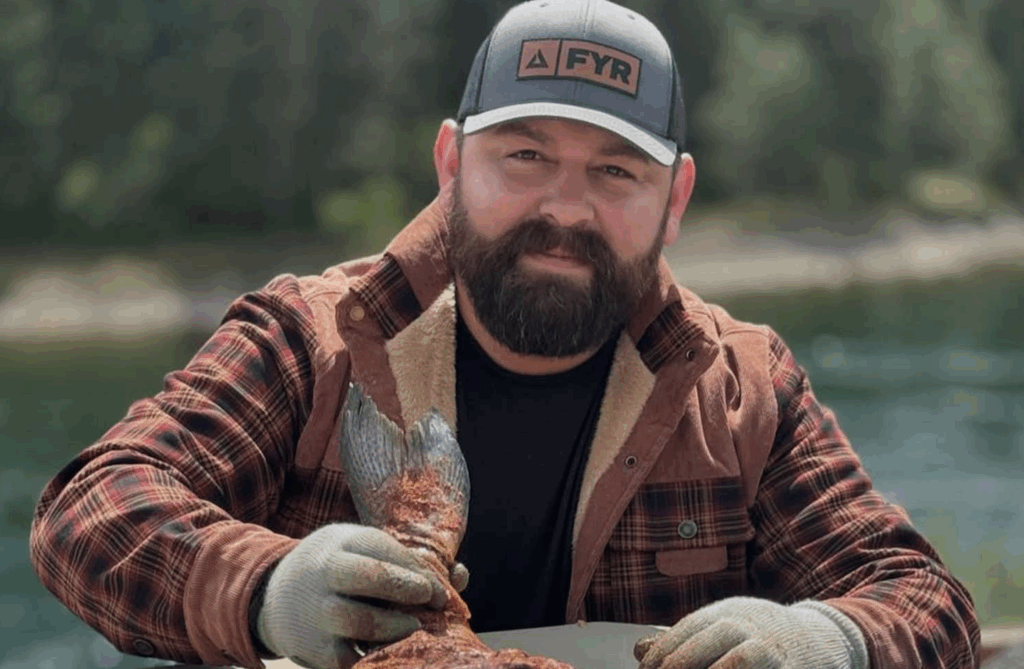
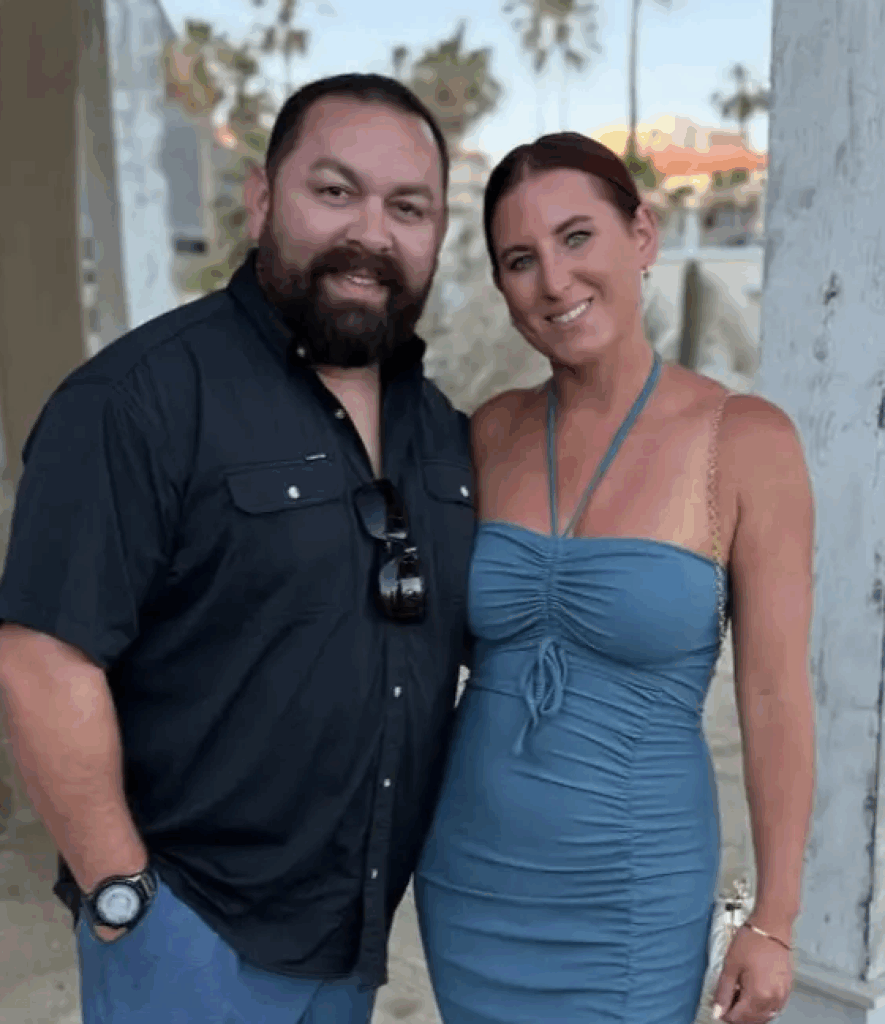
Beloved content creator Michael Duarte, better known as FoodWithBearHands, has passed away unexpectedly.
While details are still scarce, Duarte’s loved ones have confirmed that he passed away in a “horrible accident” while traveling with his family in Texas.
Food influencer Michael Duarte has passed away in a tragic accident. (YouTube)
News of Duarte’s passing comes to us courtesy of his talent agency, Alooma Media Group.
“It is with profound sadness that we share the passing of our valued client and dear friend, Michael Duarte,” the company said in a statement (via People).
“He was a true & loyal partner, a trusted collaborator, and above all, a remarkable person. His passion, professionalism, and creativity left a lasting mark not only on our team but on everyone who had the privilege of working with him,” the statement continued.
“We ask that you lift Michael’s family up in prayer during this extremely difficult time. This heartbreak came without warning, leaving Jessica to incur the expense of bringing him back home to California and covering funeral expenses.”
Michael’s loved ones echoed those remarks in a GoFundMe page created for the benefit of his wife and daughter.
Food influencer Michael Duarte has passed away in a tragic accident. (YouTube)
The page describes Mike as a “devoted husband to his wife Jessica, a loving father to his daughter, brother and a loyal friend to so many around the world.”
“His warmth, kindness, and generosity were felt in every interaction, and he had a way of making everyone around him feel valued and inspired,” the post continued.
“Michael’s passing is a tremendous loss to all who knew him. His legacy of integrity, compassion, and dedication will continue to live on through the lives he touched.”
Mike started making food-related videos after checking into rehab for issues related to his mental health during the Covid pandemic.
“My first one was with my daughter,” he wrote in a post explaining his background. “That’s when I realized how happy creating content made me. Over time, I began to see it wasn’t just a hobby — it could be a business, something bigger than myself.”
In the years since, his barbecue and grilling content has been viewed by millions of people across Instagram, TikTok, Facebook, and YouTube
Michael is survived by his wife of nine years, Jessica, and their six-year-old daughter, Oakley.
The GoFundMe page notes that his death occurred just three days after his wedding anniversary.
Our thoughts go out to Michael Duarte’s loved ones during this incredibly difficult time.
We will have further updates on this developing story as new information becomes available.
Coco Austin breastfed her daughter until little Chanel was ready to stop.
As it turns out, she was no longer so little when that time came. She was six years old.
Coco knows that critics have a lot to say about that.
Well, she has a lot to say right back at them.
Chatting on the ‘Dumb Blonde’ podcast, Coco Austin weighs in on a number of topics. (Image Credit: YouTube)
Coco Austin knows that her breastfeeding choices are controversial
On the Sunday, November 9 episode of Bunnie XO’s Dumb Blonde podcast, Coco Austin — wife of Law & Order: SVU actor Ice-T — sat down to discuss an array of experiences.
One of those was motherhood, which included breastfeeding her daughter … until she was 6 years old.
“It wasn’t like I was feeding her because she needed a meal,” Coco clarified.
(We suspect that this is not the issue for critics)
“She was able to eat by a year, full solids,” Coco detailed of Chanel’s development.
“It was more that she wanted to be around me,” Coco recalled.
“It was mostly when she went to sleep,” she explained, adding that “she wanted me to be there.”
Coco summarized: “So it was more of a comfort thing.”
Thinking back to that time, she explained that she decided: “I’m going to let her stop when she wants to stop.”
Many parents do this with their children — with some babies weaning themselves before their parents had imagined. But, in this case, that’s not what happened for Coco and Chanel.
Chatting on the ‘Dumb Blonde’ podcast, Coco Austin discusses her feet. (Image Credit: YouTube)
‘That happened around 6’
Coco Austin discussed the “bonding experience” with her now-9-year-old daughter, Chanel.
“She’s not going to be 16 on my boob,” she reasoned.
Coco recalled thinking: “:She’s eventually going to figure out that this is kinda strange or weird and stop.”
She continued: “And that happened around 6.”
Coco did acknowledge that she knows that this was “an extremely long time” to nurse.
Over the years, Coco has heard from “so many people who loved” that she unabashedly breastfed her daughter until she was 6 years old.
However, there are numerous critics. Some worry about Chanel’s social development, where others just seem squicked by the whole thing.
“In Europe, they’re doing it until 7,” Coco claimed, sounding defensive. “There, it’s nothing to them. We Americans think that’s weird. But I don’t think there’s anything wrong with it as long as it’s just in your home, you know?”
While there may be individuals in Europe breastfeeding to such extremes, that is no more “normal” there than in America. In Europe, one year is standard for breastfeeding, with two years considered the extreme end of normal.
Coco may be thinking of higher exclusive breastfeeding rates in some European countries (lower in the UK but higher in places like Norway) — which stems from maternity leave policies that give parents many months to bond with babies.
On the ‘Dumb Blonde’ podcast, Coco Austin shares her desire to balance being sexy with being a great mother. (Image Credit: YouTube)
‘I’m loving every moment I can’
Now, Coco Austin was right to condemn those who “sexualize” breastfeeding. “It’s not a big thing,” she reasoned. “It’s a boob.”
She shared that 9-year-old Chanel remains “obsessed with boobs … to this day.”
Additionally, they still have a good rapport, cuddling even years after breastfeeding has ended.
“It’s just a really nice moment because it’s not going to be like this when they get into the teenage years,” Coco reasoned. “I’m loving every moment I can with Chanel.”
Critics are not unreasonable for recoiling at the thought of a child growing up with conscious memories of having breastfed. It is well outside of the experiences of most people on the planet. Yes, even in Europe.
Cleto Escobedo III — who had served as the bandleader on Jimmy Kimmel Live since the show began back in 2003 — has passed away.
He was just 59 years old.
News of Escobedo’s passing comes courtesy of a social media statement posted by Kimmel on Tuesday afternoon.
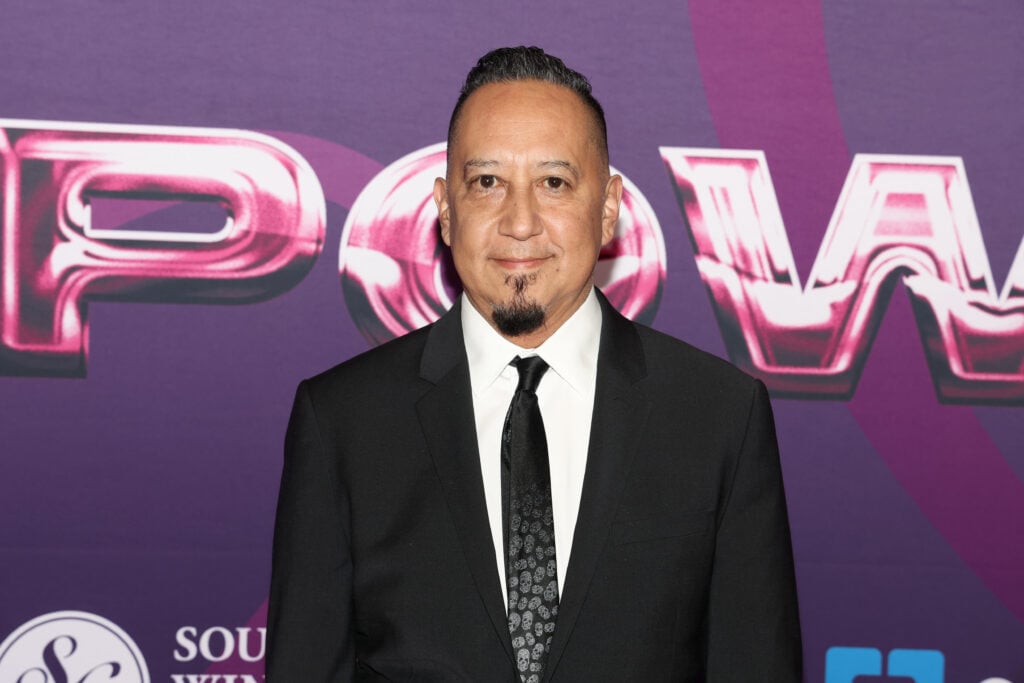
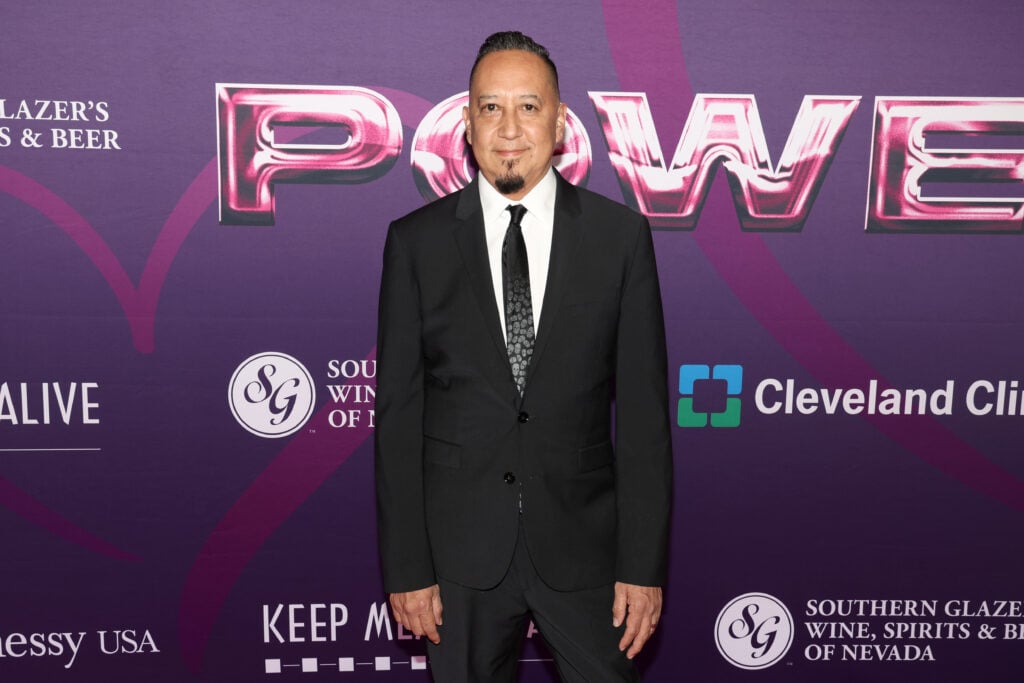
Cleto Escobedo attends as Keep Memory Alive hosts star-studded lineup at annual “Power Of Love” gala at MGM Grand Garden Arena on February 22, 2025 in Las Vegas, Nevada. (Photo by Gabe Ginsberg/Getty Images for Keep Memory Alive)
Jimmy Kimmel announces death of lifelong friend
“Early this morning, we lost a great friend, father, son, musician and man, my longtime bandleader Cleto Escobedo III,” Kimmel wrote.
“To say that we are heartbroken is an understatement. Cleto and I have been inseparable since I was nine years old.
“The fact that we got to work together every day is a dream neither of us could ever have imagined would come true. Cherish your friends and please keep Cleto’s wife, children and parents in your prayers.”
The cause of Escobedo’s death is unknown at this time.
Kimmel and Escobedo were childhood friends, and the host has stated on numerous occasions that there’s no one else he would’ve hired to lead his band.
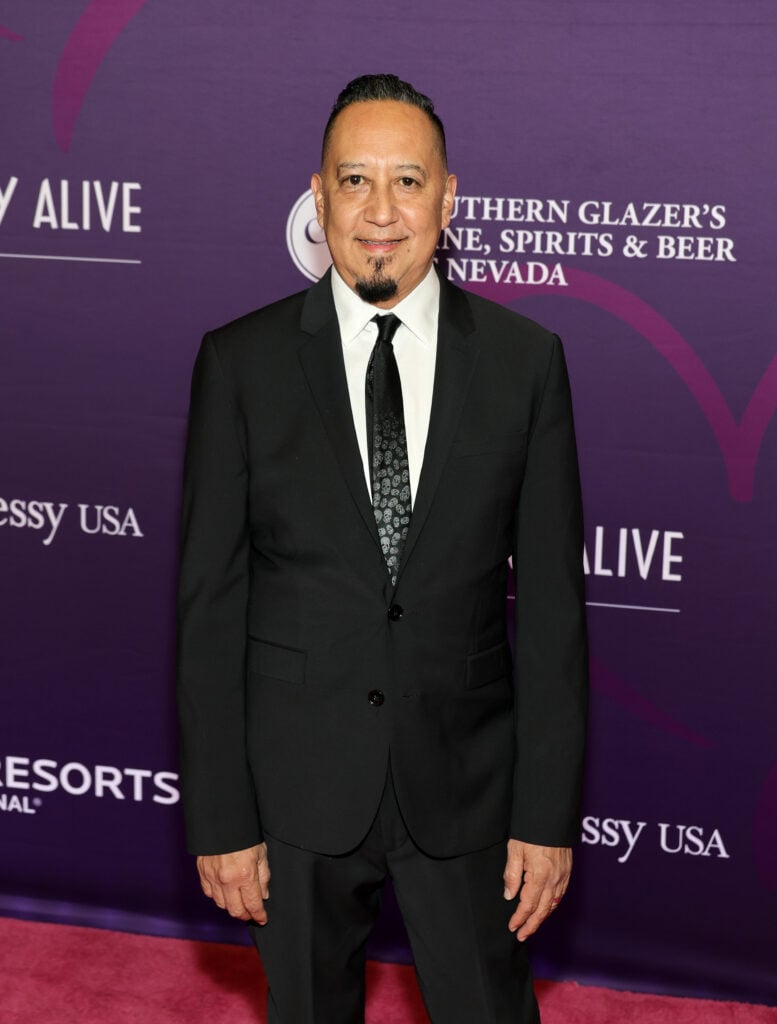
Cleto Escobedo III attends the annual Keep Memory Alive “Power of Love” gala benefit for the Cleveland Clinic Lou Ruvo Center for Brain Health honoring Jimmy Kimmel at MGM Grand Garden Arena on February 22, 2025 in Las Vegas, Nevada. (Photo by Ethan Miller/Getty Images)
Kimmel paid tribute to their friendship in a 2016 segment for Escobedo’s 50th birthday.
“Cleto had a bicycle with a sidecar attached to it. We called it the side hack. I would get in the sidecar and then Cleto would drive me directly into garbage cans and bushes,” the comic recalled at the time.
He added that Escobedo could often be found “on the lawn with his BB gun just shooting at me” and that they would steal his dad’s shotgun and “shoot kites out of the sky,”
In a later interview with ABC7, Kimmel described his bandleader as “a child prodigy.”
“The whole school would gather to watch. He’d get standing ovations. It was a crazy thing.”
Escobedo, Kimmel explained, “toured with Earth, Wind and Fire, Paula Abdul” and “had his own record deal” before joining his show.
Kimmel recalled that hiring Escobedo was non-negotiable when he landed his late night gig.
Cleto Escobedo attends as Keep Memory Alive hosts star-studded lineup at annual “Power Of Love” gala at MGM Grand Garden Arena on February 22, 2025 in Las Vegas, Nevada. (Photo by Gabe Ginsberg/Getty Images for Keep Memory Alive)
“I’ll tell you one thing. It had to have my band leader, Cleto,” the host told ABC7, adding:
“I was nervous, because I thought they’d say, ‘We don’t want your friend to be the band leader.’ So I took the president of ABC to see him play with his band, and he loved it.”
“Of course I wanted great musicians, but I wanted somebody I had chemistry with. And there’s nobody in my life I have better chemistry with than him,” Kimmel explained.
Cleto’s father, Cleto Escobedo Sr., is also a member of Kimmel’s house band.
His passing comes at a time when Kimmel’s show has been making headlines due to the host’s ongoing feud with Donald Trump.
Our thoughts go out to Cleto Escobedo’s loved ones during this incredibly difficult time.
In a single new interview, Hailey Bieber manages to come across as both hopeful and also pessimistic about the future of her marriage to Justin Bieber.
“We’re just taking it a day at a time,” the 28-year old tells GQ of her seemingly rocky relationship with the artist.
“We both feel very protective of our son and I don’t think that’s ever going to change, but our life is our life and it is really public, so I think we’re just going to cross every bridge that we need to when we get there.
“But as of right now, I feel really comfortable about the way we are sharing things and not sharing things.”
Justin Bieber and Hailey Bieber watch game three of the 2025 World Series between the Toronto Blue Jays and the Los Angeles Dodgers at Dodger Stadium on October 27, 2025 in Los Angeles, California. (Photo by Patrick Smith/Getty Images)
There have been endless rumors that a divorce is imminent, especially in the wake of her husband sort of falling apart and even struggling (allegedly) with drug use.
If Hailey truly wants to shoot down this sort of talk, one would think she’d come across as more forceful than a generic “one day at a time” type of statement, you know?
Hailey Bieber attends 2nd Annual Academy Museum Gala at Academy Museum of Motion Pictures on October 15, 2022. (Photo Credit: Jon Kopaloff/Getty Images)
Hailey and Justin welcomed their first child, a son named Jack Blues, in August 2024.
The spouses have since dealt with the aforementioned rumors of tension in their relationship, but an insider told Us Weekly that the two were able to “reconnect” earlier this year.
“There’s a sense of relief on both sides,” the source told this tabloid in August.
“Justin’s behavior has been more relaxed. He felt a lot of pressure hanging over him and has been in a better mental headspace these last few weeks. He is very happy there have been positive reviews of [his album Swag] and that fans like it.”
Justin Bieber and Hailey Bieber arrive for the 64th Annual Grammy Awards at the MGM Grand Garden Arena in Las Vegas on April 3, 2022. (Photo Credit: ANGELA WEISS/AFP via Getty Images)
For her part, the model has had to deal with both her marriage being in the spotlight at the same time she has entered the challenging world of motherhood.
“Being postpartum is the most sensitive time I’ve ever gone through in my life, and learning a new version of myself is very difficult,” Bieber told Vogue for a cover story published in May.
“And to be doing that all the while going on the internet every day and people being like, ‘They’re getting divorced and they’re this and they’re not happy’: It is such a mindf-ck. I cannot even begin to explain it. It’s a crazy life to live.”
All this said, Hailey is pushing through.
She wants to expand her family someday.
“I don’t think there’s anything someone can tell you about it that will ever, ever, ever prepare you until you do it yourself,” she also told GQ this week.
“But I feel much more prepared to do it again, as opposed to how not prepared I felt doing it for the first time. And I think for me personally, there’s so much unknown to it, but so much happens and so much changes and you evolve in a totally different way that you would never be able to prepare for until you do it.”
But she received some long-overdue good news today, as a top Manhattan neurologist determined that the embattled TV personality does not have frontotemporal dementia.
TV personality Wendy Williams attends the 2019 NYWIFT Muse Awards at the New York Hilton Midtown on December 10, 2019 in New York City. (Photo by Lars Niki/Getty Images for New York Women in Film & Television)
News of her re-diagnosis comes courtesy of Page Six. And the ramifications are massive.
As a result of her alleged illness, Williams was placed in a treatment facility against her will.
Insiders say the controversial host began to “lose words” and “act erratically” in 2022, leading to a series of tests.
She was placed under a guardianship and eventually committed to inpatient care.
Wendy Williams attends Spotify x Cash Money Host Premiere of mini-documentary New Cash Order at Lightbox on February 20, 2020 in New York, New York. (Photo by Ilya S. Savenok/Getty Images for Spotify)
Wendy has been aided in her fight for freedom by her second ex-husband, Kevin Hunter, who filed a $250 million lawsuit seeking to end her conservatorship.
Hunter alleged that Wendy’s conservatorship under a Sabrina Morrissey had “become a weapon, not a shield” and a tool for financial exploitation.
“[Williams is] being abused, neglected, and defrauded under the care of court-appointed guardians,” Hunter alleged.
“The guardianship … serves no therapeutic purpose, no protective function. It is punishment—pure and simple,” the court docs read.
Wendy Williams attends Apple TV+’s “The Morning Show” World Premiere at David Geffen Hall on October 28, 2019 in New York City. (Photo by Astrid Stawiarz/Getty Images)
He also claimed that his ex was being “confined against her will at one of Coterie’s assisted living facilities with restricted access to her own phone and meaningful contact with her friends and family.”
It’s unclear at this time what Wendy’s new diagnosis might mean for her future.
But while she likely has many legal hurdles ahead, this is certainly a step in the right direction.
We probably don’t need to tell you that Wendy is a highly controversial figure who has made quite a few enemies during her years in the spotlight.
But no one deserves to be locked up because of an inaccurate diagnosis, and watching Williams beg for help over the past couple of years has been truly heartbreaking.
We hope this is the beginning of a blissful new chapter in Wendy’s life.
Latino voters, who swung toward President Donald Trump in 2024, boomeranged back to Democrats last week, signaling the fraying of his coalition less than one year into his second term.
Few places across the country epitomize that swing like New Jersey’s Passaic County, a densely populated, geographically diverse region where Latinos comprise a plurality. Voters there supported Trump by a narrow margin in 2024, only to back Democratic Gov.-elect Mikie Sherrill by double-digits last week. Union City, which is the most Latino city in the state, swung 47 points toward Democrats. And Sherrill seized the Trump-supporting 9th Congressional District, home to a large Latino population, by around 19 points.
In Virginia, the other state with a gubernatorial contest last week, the two most heavily Latino cities swung toward Democratic Gov.-elect Abigail Spanberger by more than 15 points each.
And in California, support for a Democratic-backed ballot measure exceeded Kamala Harris’ share by roughly 12 points in Imperial County, where Latino residents make up 77 percent of the population. That marks the biggest swing of any county in the state.
Just one year after Trump soared to victory with 48 percent of the Latino vote nationally, these results demonstrate that Republicans have yet to cement them into their coalition. Democrats, feeling emboldened after an epic shellacking last year, have been predicting Latinos would turn on the GOP out of dissatisfaction with Trump’s handling of the economy.
Not unlike Trump in 2024, Democrats were able to capitalize on those cost-of-living concerns to lure voters this year, proving correct a series of polls that portended this trend. It is giving the beleaguered party new optimism about their chances of taking back the House in next year’s midterms, as many of the districts up for grabs have substantial Latino populations.
“There was a lot of conversation heading out of the last election about a monolithic realignment, and I think it missed the fact that Trump is a unique beast who was able to persuade Latinos that he has their interests at heart,” said Tory Gavito, president of progressive donor network Way to Win. “In the last 11 months, he’s done everything but think about Latinos’ interests.”
Democrats’ success with Latinos during this off-cycle election may not necessarily translate to races across the country in 2026, when the minority party will fight to retake control of Congress. And Latino voters in Florida and South Texas are likely to vote differently from those in New Jersey or California.
Further muddling the midterm picture is the Trump question. The president successfully turned out low-propensity Latino voters, some of whom may be more likely to participate in a midterm race than an odd-year election, especially if Trump decides to play a role in next year’s showdown.
So Republicans, who have made a big bet on majority-Latino districts in order to keep their majority next year, have some cause for hope amid an otherwise brutal Election Day for them. While GOP candidates underperformed Trump with Latinos last week, they still put up better numbers than the Republicans of a decade ago (in New Jersey in 2017 for example, Republicans won just 17 percent of the Latino vote, compared to roughly a third this time). And Tuesday’s elections also gave the GOP a new foil in New York City Mayor-elect Zohran Mamdani, whom they think can further tarnish Democrats’ standing with Latino voters across the country who oppose socialism. (Mamdani won 58 percent of the vote in election districts where Latinos made up the largest share of the population, according to data compiled by The City.)
The day after the election, the National Republican Congressional Committee launched Spanish-language ads in 11 swingy congressional districts decrying the “socialist” soon-to-be New York City mayor as “the future that Democrats want” and warning voters their city could be next.
“Democrats have ignored Hispanic communities over the past nine years while millions of working families rejected their radical, socialist agenda,” Christian Martinez, the NRCC’s national Hispanic press secretary, said in a statement. “Republicans will continue to earn the support of Hispanic voters because we are working to deliver opportunity, security, and a better life.”
Democrats largely credited their messaging on affordability and blaming Trump for not following through on his economic campaign promises for their rebound with Latino voters.
“Latinos are rejecting Republicans’ broken promises of lower costs and a strong economy,” Democratic Congressional Campaign Committee spokesperson Bridget Gonzalez said in a statement last week. “Groceries, utilities, and health care are unaffordable and that’s why Latinos will help Democrats take back control of the House next November.”
In California, the Prop 50 campaign to bolster Gov. Gavin Newsom’s redistricting push leaned heavily on immigration in its messaging, using imagery of ICE and Border Patrol raids to argue Trump’s power must be checked. The campaign’s Spanish-language ads focused predominantly on the immigration crackdown, with cursory mention of Trump’s tariffs.
“The Latino revolt was economic and personal — Trump hit their wallets with tariffs and our communities with raids,” said Juan Rodriguez, a senior strategist for Newsom. “From California to races across the country, the message for 2026 couldn’t be clearer.”
A lot could change with the state of the economy that could either bolster or weaken their message. And some are cautioning Democrats not to get too comfortable with last week’s results — and not to rely strictly on affordability messaging.
“This doesn’t mean that Democrats have it in the bag,” said Vanessa Cárdenas, executive director of America’s Voice, an immigration reform group, who added that she hopes to see Democrats message more on immigration in addition to the economy during the midterms. “We’ve seen it before — there’s a lot of distrust of Democrats on immigration issues because of promises that have been made.”
“They have a lot to vote against,” she continued. “The challenge for Democrats is giving them something to vote for.”
In New Jersey, Sherrill’s victory looms large over the state’s 9th congressional district, a plurality-Latino seat that encompasses parts of Bergen and Passaic counties. Sherrill won both by double digits, a major swing after Trump flipped Passaic and lost Bergen by just 3 points in 2024. Republicans are targeting the district’s first-term representative, Democrat Nellie Pou, largely because Trump won the seat in 2024.
But ticket-splitting in the district’s further down-ballot races may demonstrate that Democrats’ work isn’t done there. In Hawthorne, a borough where Latinos make up around one-quarter of the population, preliminary results show Sherrill won but incumbent Republicans prevailed in mayoral and council races.
Carlos Cruz, a Republican strategist who worked on a super PAC backing Sherrill’s opponent, Jack Ciattarelli, said that last year’s election was a “referendum” on leadership in Washington and the economy, and people cast a ballot this year for the same reasons.
“There were people who voted for the president who wanted to see more,” Cruz said. “For Democrats to overreact and say ‘Nellie is safe now’ is fundamentally misreading this year’s elections.”
Morghan Cyr, Pou’s campaign manager, said that the results “solidified one thing for Democrats above all: Latino communities are key to success across the board.”
“Early, intentional investment in and engagement with these communities is essential to Democrats taking back the House in 2026,” Cyr said in a statement last week. “The progress that was made this week is good, but we have to keep building on it.”