By: James Brooks, Alaska Beacon
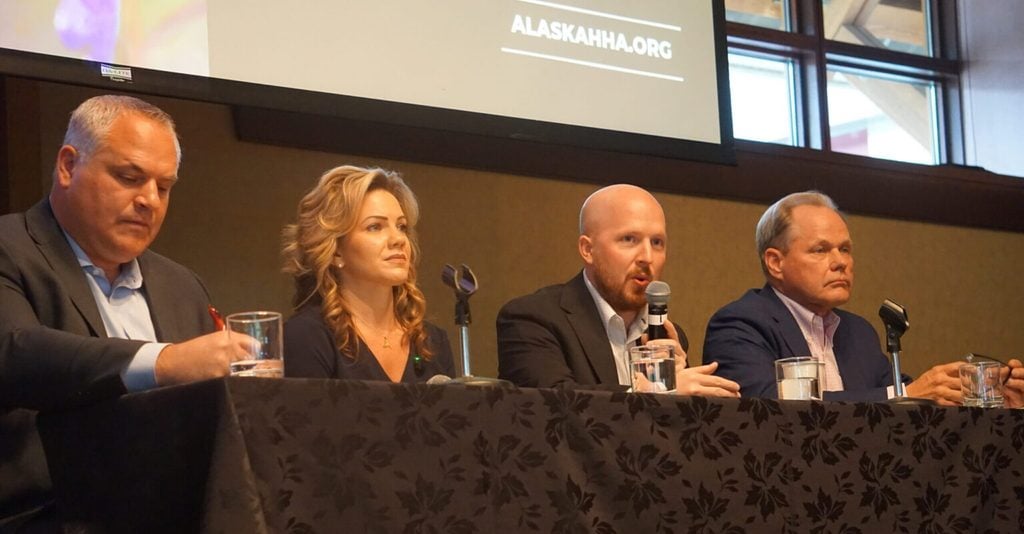
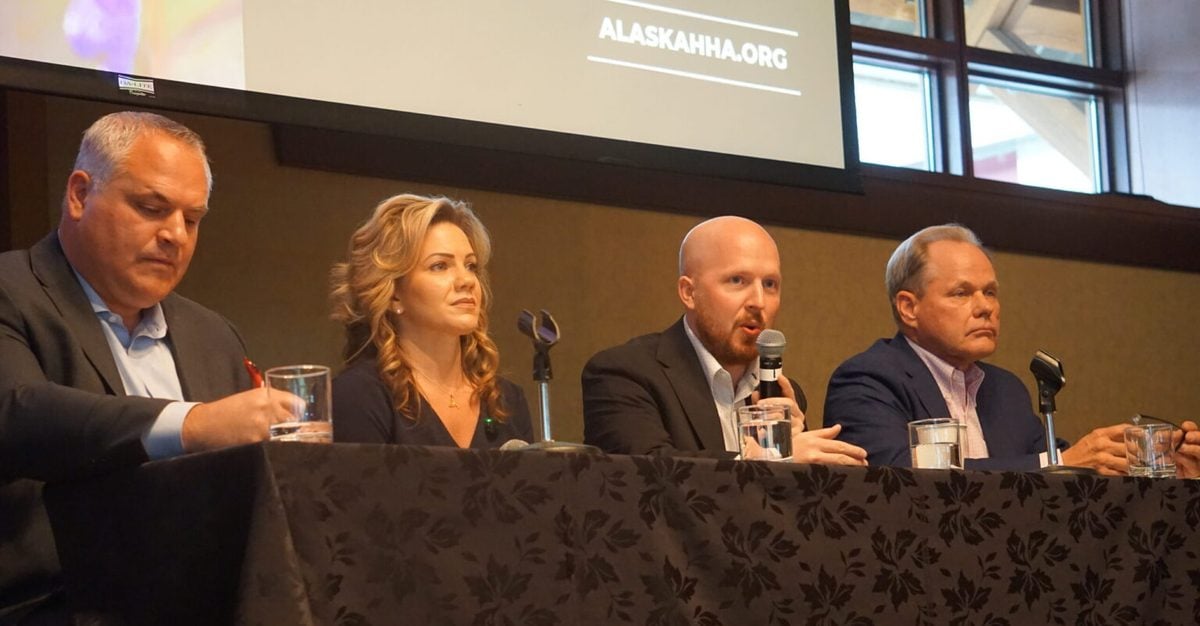
In a candidate forum Thursday, three of the four candidates to be Alaska’s next governor voiced support for a long-debated plan to restructure the Alaska Permanent Fund in order to permanently cap the amount of money that can be spent from it without a statewide vote.
“You’ve got to protect the Permanent Fund. You simply have to,” said Republican candidate and former Anchorage Mayor Dave Bronson, speaking at the Commonwealth North forum.
Bronson referred to the Permanent Fund as “one of the two big engines” driving the state’s future. The other, he said, is developing Alaska’s natural resources.
Created in 1976, the Alaska Permanent Fund has been the No. 1 source of revenue for state services and the annual Permanent Fund dividend since 2018, when legislators and then-Gov. Bill Walker enacted a law that automatically diverts a portion of the now-$88 billion fund to the state treasury annually.
Even in years like this one, when oil prices are high and the state’s oil revenue booms, the annual transfer is worth more than oil and all other taxes combined and accounts for more than half of the state’s general-purpose revenue.
Currently, the Permanent Fund is divided into two parts. There’s the constitutionally protected corpus, which can only be spent via a statewide vote, and the earnings reserve, which collects the investment earnings of the corpus.
Money in the reserve can be spent by a simple majority vote of the Legislature and the assent of the governor.
Currently, only the 2018 law restricts spending from the earnings reserve, and that law is a flimsy limit — it could be overridden at any time by the Legislature and governor.
The trustees of the Alaska Permanent Fund have advocated that the two funds be combined into one, both to prevent overspending and to eliminate the possibility of the earnings reserve being drained, which would cause an instant state fiscal crisis.
“I think this is arguably the single most important question laying in wait for the next governor and the forthcoming Legislature,” said Democratic candidate Jonathan Kreiss-Tomkins. “I share Mayor Bronson’s belief that the Permanent Fund is a cornerstone of the state, and it is the single most important reform I want to pass as governor, working with the Legislature.”
Merging the two accounts would require a constitutional amendment. That needs the assent of two-thirds of the state House and two-thirds of the state Senate, plus a majority of voters in a statewide general election.
While serving as a member of the state House, Kreiss-Tomkins proposed such an amendment. His proposal passed through two legislative committees but was never voted upon by the full House or the full Senate.
Other, similar amendments have also failed to reach a vote of the House or Senate for two main reasons.
First, legislators would have to agree on the size of the Permanent Fund spending cap. Over the past eight years, the fund has struggled to earn enough money from its investments to make up for the annual transfer.
But reducing the size of the transfer means less money for services and dividends.
In 2025, state budgeters estimated that reducing the transfer by half a percentage point would open a $380 million gap in the budget. Reducing it by a full percentage point — to a level common in trust funds — would require finding $760 million per year in new revenue or cost cuts.
The second issue is the Permanent Fund dividend. Currently, legislators split the annual transfer from the Permanent Fund on an ad hoc basis, deciding each year how much to spend on dividends and services.
In practice, the Legislature has followed a “surplus dividend” strategy, setting the amount of the dividend based on what’s left over after services are paid for.
As operating costs have risen, the amount of money left for the dividend has shrunk. Some legislators now believe that without a policy change, the dividend is on course to disappear by the end of the decade.
State law mandates that dividends be paid using a specific formula in state law, but legislators have ignored that formula since 2016, and the Alaska Supreme Court upheld the legality of that approach.
Republican candidate Bernadette Wilson has said that she believes the dividend formula creates an obligation to Alaskans, one that should be repaid even if it means breaking the existing spending limit from the Permanent Fund.
“I’m going to fight like hell for that Permanent Fund dividend,” Wilson told Alaska Public Media in August.
She said she feels strongly about the issue because resources in Alaska are collectively owned by the state’s residents.
“It has nothing to do with the amount of a check. It has everything to do with the fact that Alaskans own the rights to those resources. And when you concede on that Permanent Fund dividend, you’re not just conceding on the amount of a check. You are conceding on the very idea that Alaskans no longer own those resources,” she said.
While permanently capping spending from the Permanent Fund does not directly alter the amount of the Permanent Fund dividend, it does eliminate a way to pay for larger dividends. Lawmakers who want larger dividends would have to either find new revenue or cut services in order to make money available for the dividend.
Some legislators have proposed that any revised structure for the Permanent Fund transfer reserve a portion of the transfer for dividends specifically, effectively guaranteeing a minimum payment.
Former Alaska attorney general Treg Taylor, speaking at an event in Kodiak, said he sees the Permanent Fund in the same way as the state’s fisheries — a resource that must be handled carefully in order to stay renewable.
Overfishing, or overspending, could endanger it.
“I think we have to lock up the Permanent Fund,” Taylor said, reiterating his position at this week’s Commonwealth North forum. “We have to protect that corpus. If we do not, there’s so much — I mean, JKT had it right. There’s just too much temptation to raid that. We’ve got to lock it up because that is our future.”