The deal that finally settles the real-life succession drama of the Murdoch family was driven by a desire to preserve the animating forces of the media mogul’s remarkable career; power and money.The Latest News from the UK and Around the World | Sky News
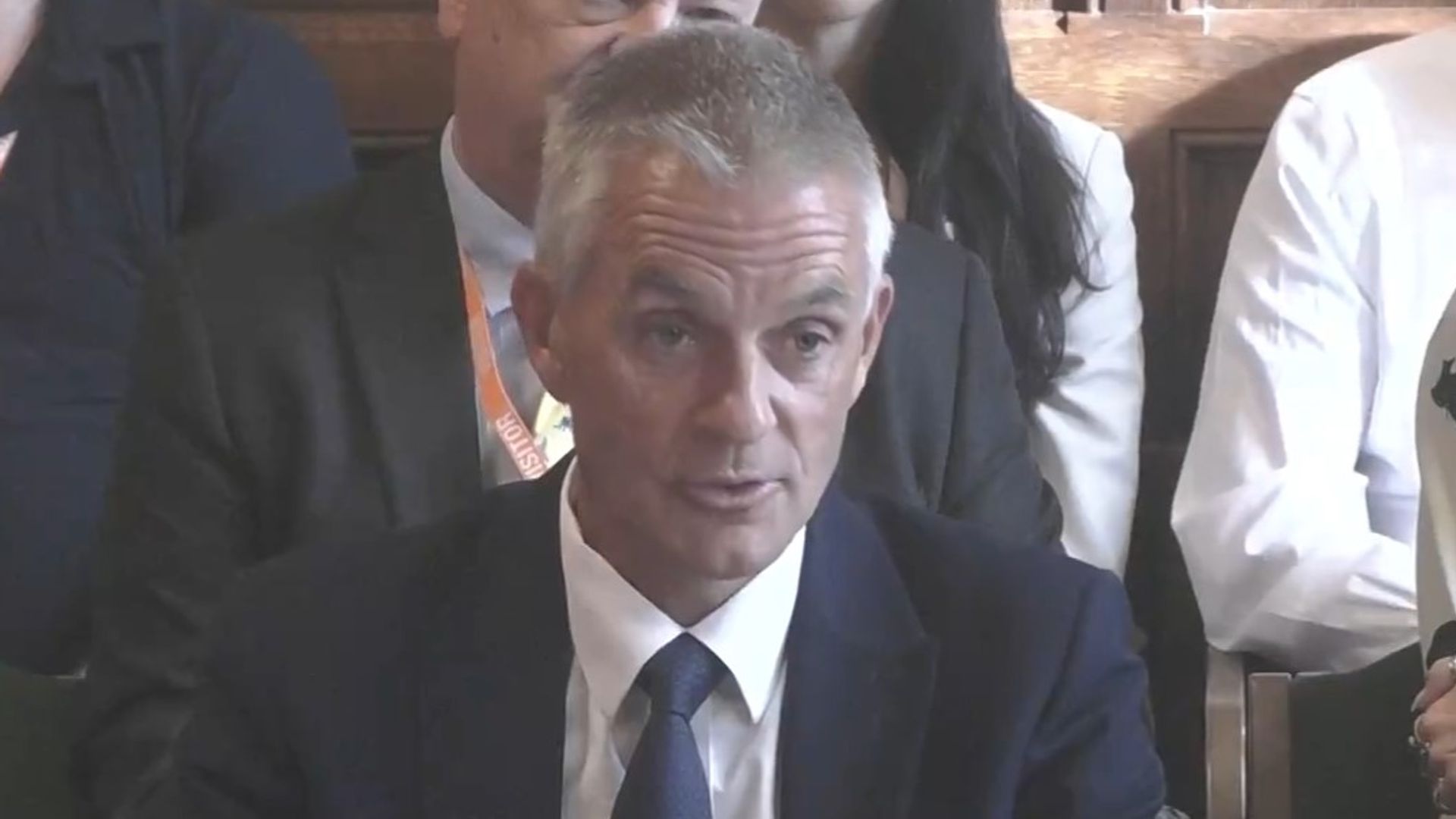
BBC director-general Tim Davie has told MPs that “we may see more things coming out” after being asked for assurance there will not be another “scandal of BBC talent abusing their position”.The Latest News from the UK and Around the World | Sky News
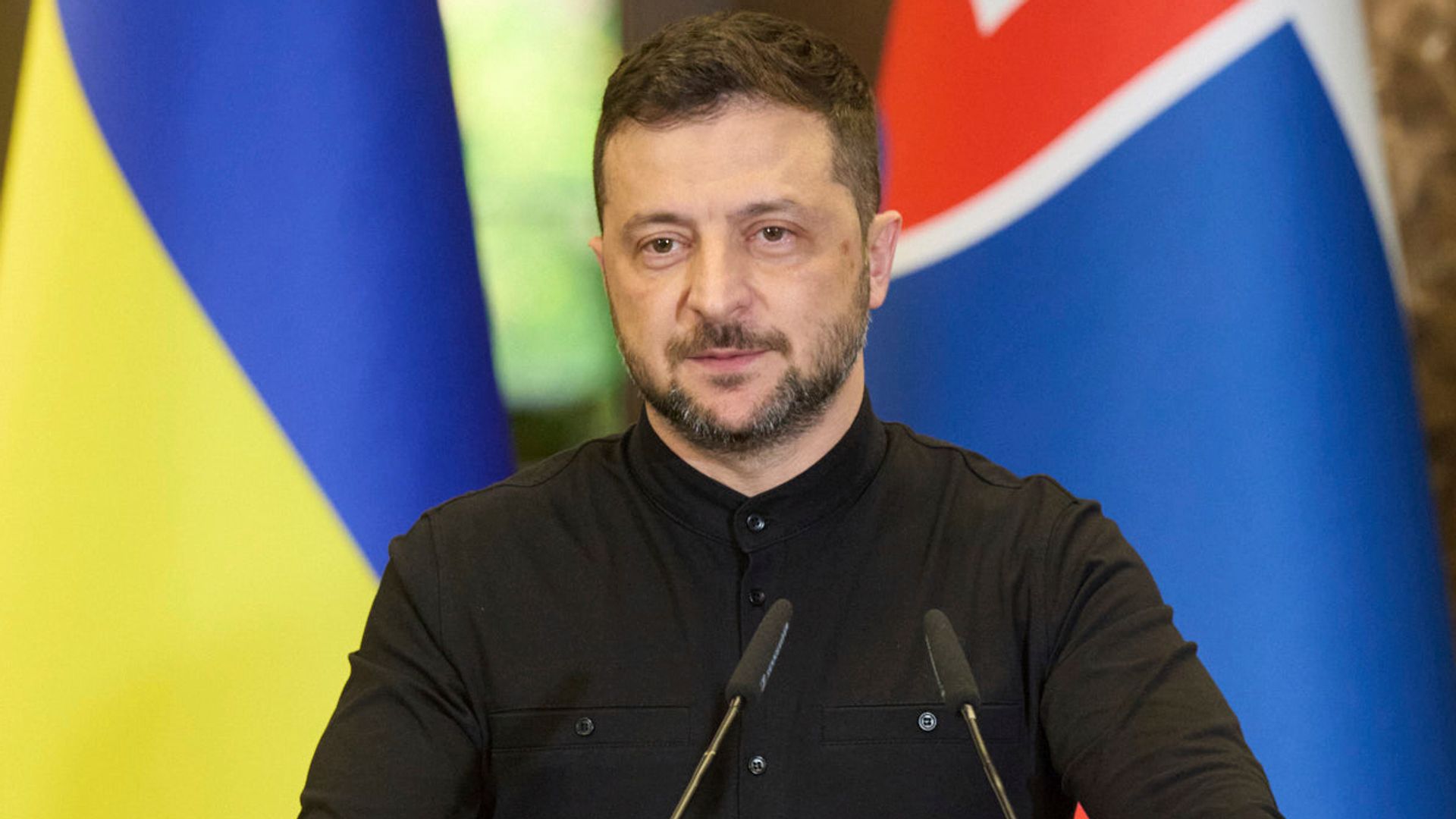
More than 20 civilians have been killed in a Russian airstrike on a village in Ukraine’s Donetsk region, Volodymyr Zelenskyy has said.The Latest News from the UK and Around the World | Sky News
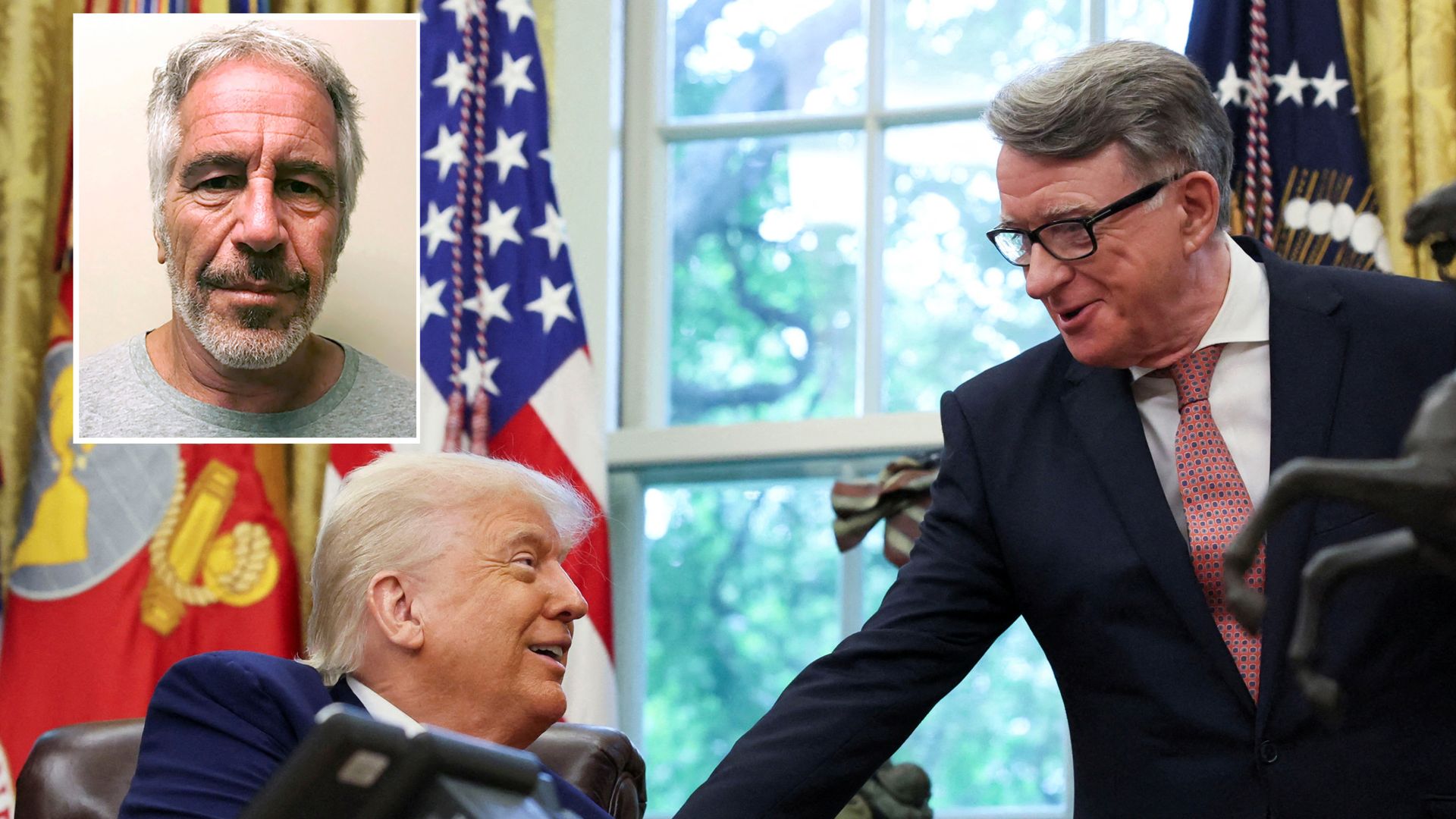
Files from a “birthday book” compiled for the sex trafficker Jeffrey Epstein appear to include a glowing contribution from the current UK ambassador to Washington, Peter Mandelson.The Latest News from the UK and Around the World | Sky News
NOTN- Jim Duncan, a former Alaska House Speaker and longtime labor leader, is looking back on more than four decades in public life in a new memoir he says shows how politics is a lot like making sausage.
Duncan, who served in the Legislature from the 1970s through the 1980s eventually becoming Speaker of the House. Over that time, he sponsored dozens of bills and says he learned that compromise was the only way to get things done.
Duncan also lead Alaska’s largest public employee union and said his book Making Sausage aims to put Alaska’s political issues into perspective, he says much of what was covered in the 70s and 80s is still applicable today.
“It was a long process, but it was worthwhile in my mind, because it really brought me back to how important the issues are that we were addressing and how those issues are still alive today.” Said Duncan, “The one thing I mentioned in the book is that it’s, about history, but it’s not ancient history, because what we did when I was serving in the legislature and after, are still alive today, those issues still need to be addressed. And I hope that there will be some encouragement given to some folks too, if they read this and say, Okay, let’s get busy and try to resolve these issues. They need to be done.”
Duncan recalled sifting through nearly 20 boxes of legislative files to piece together the book, which details his work on oil taxes, education, and labor negotiations.
He said one of his proudest achievements was securing finality in collective bargaining for school employees, a fight that spanned 15 years.
“Education funding has been at the top of the list for past legislators and legislators for a number of years.” Duncan said, “You know, we didn’t adequately address it when I was in the legislature. We tried to, and we put together a foundation, a formula program, but unfortunately, that hasn’t been kept up to date, and there hasn’t been adequate funding. And we complain about our schools and the fact that we don’t think that they’re providing a good education, but we’re asking our teachers to do more with less. There’s less teachers. The classroom sizes have increased. They’ve got to bring in their own supplies, so it’s very difficult.”
Locally, he pointed to helping secure funding for the University of Alaska Southeast library, which he argued cemented the campus’ future in Juneau.
Much of Duncan’s book also revisits Alaska’s battles over oil taxes, a debate he said shaped his career and even led to his removal as House Speaker.
“You know, the fact that the state doesn’t have a long-term fiscal plan, so we can really clearly set our goals and attain those, it’s got to be resolved.” Said Duncan, “And the one reason that hasn’t happened is because, so far, when they talk about creating fiscal plan, what they look at is decreasing spending and increasing the permanent fund dividend, but they forget about the fact they need more revenues, and unfortunately, revenues, the ones that we can get would come from oil companies.”
Duncan said that Alaska’s state issues like education and state funding are also federal issues.
“Education is being attacked with the current administration, the Department of Education is being decimated, and they’re reworking the way that the federal government helps provide education, health care is under attack, as we know, there’s talks about trying to repeal parts of Obamacare, doing away with Medicaid funding and or reducing it and Medicare, and that’s going to have a tremendous impact.” Duncan said “So the important thing I think here, is that the issues that we were addressing, trying to address years ago, are still alive today and need to be addressed. And I hope that this might spur some if folks read this.”
Duncan spoke on today’s political landscape and expressed concerns on partisanship, “I think Alaska, we do better working on a bipartisan nature than some other states do, and what they do on the federal level.” he said, “I think there’s good ideas on both sides, whether you’re Republican or Democrat. The goal you is to try to bring folks together, and you gotta be willing to accept their thoughts and views. Also, I think unfortunately, on the federal level, that’s not happening. It’s become very strident.”
Duncan also weighed in on the Alaska Permanent Fund Dividend, which he helped establish during his time in office. While he said he supports a larger dividend to benefit rural and low-income residents, he argued it must be paired with new revenue sources, including changes to oil production taxes.
“The challenge is, how do you maintain the dividend, provide government services and see the dividend grow? You know, the dividend has been going down in recent years. It’s going to be the lowest this year than it has been for some time. And in fact, it’s probably the lowest it’s ever been.” Duncan said “The reason is because so much of those earnings needs to be used to help support government services, I support that we should have a larger dividend, because it does a lot of good for people who really need it in rural Alaska and elsewhere, in order to do that, you need to find revenues outside of the permanent fund earnings and outside of the general fund money that’s just generated from other sources.”
Making Sausage is available online through Amazon and Google Books, with audio and additional formats expected soon.
The China-flagged research vessel JIDI operates approximately 265 miles northwest of Utqiagvik, Alaska, September 2, 2025. The Coast Guard Arctic District deployed USCGC Healy (WAGB-20) to monitor and query the vessel. (U.S. Coast Guard Courtesy Photo)
The U.S. Coast Guard shadowed two Chinese research ships operating in disputed waters within the Arctic Ocean this week, the Coast Guard announced Wednesday.
The icebreakers Ji Di and Zhong Shan Da Xue Ji Di were traveling more than 200 miles offshore of Utqiagvik, America’s northernmost town, in what’s known as the “extended continental shelf” under the International Law of the Sea Treaty.
Ordinarily, international law restricts a nation’s fishing, oil drilling and scientific exploration to within 200 nautical miles of its coast, in what’s known as its “exclusive economic zone.” Under the United Nations Convention on the Law of the Sea, a nation can extend that exclusive limit if the continental shelf — a place of generally shallower water — stretches beyond 200 miles.
More than 160 countries and the European Union have ratified the Law of the Sea agreement, but the United States has not, despite the urging of members of Alaska’s congressional delegation.
The agreement says foreign vessels may pass through extended continental shelf waters, but they must have the owner’s consent in order to perform scientific studies or seafloor mapping there.
The United States claims the extended continental shelf near its shorelines and in 2023 began the international process to have its claims recognized, but the United Nations committee that regulates the agreement has not finalized the American claims, a process that could take decades because the United States is not a party to the agreement.
Meanwhile, despite the lack of international recognition, the United States has continued to claim sovereignty over the extended continental shelf in the Arctic Ocean.
China, which operates more Arctic icebreakers than does the United States, has contended that the Arctic Ocean should remain open to free navigation.
This week, when the two Chinese research icebreakers crossed into the disputed area, the Coast Guard dispatched the icebreaker Healy, which was already operating in the Arctic Ocean under a different mission.
“They were pretty close to the standard 200 nautical mile EEZ boundary. They were outside of that by a few miles, which is directly over that portion that is being claimed right now … by the United States,” said Troy Bouffard, director of the Center for Arctic Security and Resilience at the University of Alaska Fairbanks.
“It’s deliberate in several ways,” he said of the Chinese action. “It’s meant to get attention but not go over the line.”
He said some of China’s actions in the Arctic have been to “promote it as a global commons that belongs to everybody, and to minimize sovereign rights as much as possible. So that’s a pretty obvious reason why they would have done this at the location they did.”
Chief Petty Officer Travis Magee, assistant public affairs officer for the U.S. Coast Guard’s Arctic District, said that in cases like the ones that occurred this week, the typical response is to “monitor, and query the vessels” over the radio, frequently using a pre-prepared script.
The script he said, often goes like this:
“You are currently operating over the United States Extended Continental Shelf (ECS). Under international law, the United States has rights to conserve and manage the living and non-living natural resources of its ECS as well as to regulate marine scientific research by foreign scientists relating to its ECS. In all cases where marine scientific research is pursued on the Extended Continental Shelf, appropriate official channels must be used to obtain U.S. consent.”
The Coast Guard also flew a long-range patrol aircraft from Kodiak to shadow the two ships.
Rear Adm. Bob Little, commander of the Arctic District, said in a prepared statement that “the U.S. Coast Guard is controlling, securing and defending the northern U.S. border and maritime approaches in the Arctic to protect U.S. sovereignty, and Healy’s operations demonstrate the critical need for more Coast Guard icebreakers to achieve that.”
While the U.S. Navy frequently operates submarines in the Arctic Ocean, it does not have any icebreakers; the Coast Guard operates the federal government’s only icebreaking ships.
The recently approved Republican budget package known as the “Big Beautiful Bill Act” included billions of dollars for the Coast Guard to construct new heavy icebreakers.
The first of those ships is expected to enter service in 2030, though some medium-weight icebreakers are being planned and could arrive sooner.
This week, Kate took to her TikTok page to reveal that she lost a seventh child while pregnant with her six youngest children.
TV personality Kate Gosselin arrives at NBCUniversal’s 2015 Winter TCA Tour – Day 2 at The Langham Huntington Hotel and Spa on January 16, 2015 in Pasadena, California. (Photo by Angela Weiss/Getty Images)
Kate opens up about loss of seventh fetus
“We had our first ultrasound at six weeks and there were seven babies,” Kate said in her latest TikTok.
“I think they had us come back the next week — it was either the next week or two weeks, I can’t honestly remember — to see how they had progressed,” she continued, adding:
“In between that time, the seventh baby stopped growing.”
She went on to explain that the sextuplet pregnancy was high-risk in numerous respects:
“Along the way there was another emergency — besides the kidney stones, besides the hyper-stimulated ovaries before that — there was another emergency, at some point I started bleeding,” she shared.
“I, of course, thought this was the beginning of a miscarriage [and] I was losing them all.”
Kate explained that she was “on pins and needles” while waiting for a new round of ultrasound results.
“At some point, she just got really quiet and I thought, “Here we go, it’s done,’ and I was really, really scared,” she added.
“All of a sudden, she said, ‘I see six.’ And I said, ‘You see six what?!’ And she said, ‘I see six heartbeats, they’re there,’” Kate continued, adding:
“From that point on, I was in it. I was going to fight for them. I was going to do whatever. Not that I wasn’t before, but just the fact that it was dangled, I was threatened with losing them, it made me realize how much I already loved them. So that was very miraculous.”
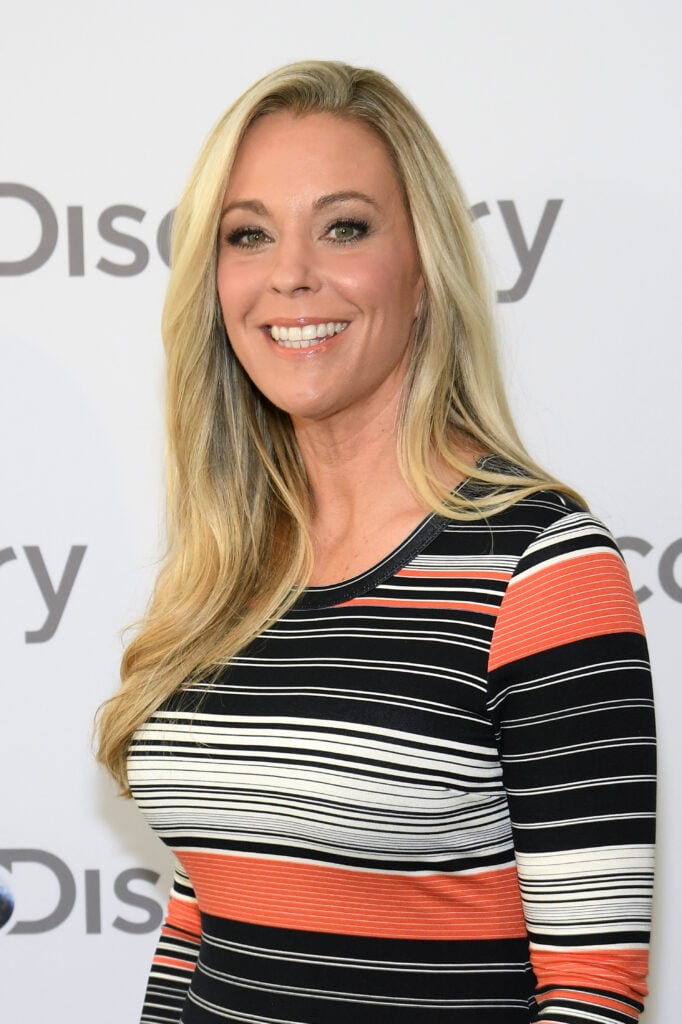
Kate Gosselin attends the Discovery Upfront 2018 at the Alice Tully Hall at Lincoln Center on April 10, 2018 in New York City. (Photo by Dimitrios Kambouris/Getty Images for Discovery)
In the comments, Kate stated that she “always thought” the seventh child would have been a girl.
But her account of the difficulties she encountered during her pregnancy reminds us that troubling behavior is often the result of past trauma, and sometimes the healing process begins with speaking out.