Categories
Featured Juneau News Juneau Local Ketchikan Local News Feeds Sitka Local

Alaska Revenue Commissioner Adam Crum to quit, expected to run for governor

By: James Brooks, Alaska Beacon

Adam Crum, commissioner of the Alaska Department of Revenue, testifies Friday, Jan. 20, 2023, at a meeting of the Alaska Senate Finance Committee in the state Capitol at Juneau, Alaska. (Photo by James Brooks/Alaska Beacon)

Adam Crum, commissioner of the Alaska Department of Revenue, will leave his job Aug. 8, according to an announcement published Friday by Gov. Mike Dunleavy’s office.

A person familiar with Crum’s plans said he intends to run for governor in 2026, joining seven other Republican candidates. No independents or Democrats have filed for the primary election, which is 13 months away. 

Asked whether he will run for governor, Crum said by text message, “I’ve accomplished a lot to put Alaska on sound economic footing. I’ll have a formal statement on my last day, August 8th. Stay tuned.”

Crum has been part of Dunleavy’s cabinet since the governor took office in 2018. He initially served as commissioner of the Alaska Department of Health and Social Services, occupying that position during the COVID-19 pandemic and during an executive order that split the agency into two separate departments.

In 2022, Dunleavy named Crum as revenue commissioner, and he assumed a seat on the board of the Alaska Permanent Fund Corp., whose revenues are the No. 1 source of general-purpose dollars for state services and the Permanent Fund dividend.

Jason Brune, former commissioner of the Alaska Department of Environmental Conservation, now fills a public seat on the Permanent Fund Corp. board.

Brune said he knows Crum has been considering a run for governor but could not confirm his plans.

“His departure is a big loss for the state,” Brune said by text. 

“It was an honor working with him for the five years we served together,” he said, referring to the time they spent on the Dunleavy cabinet.

In a written statement Dunleavy praised Crum’s performance during his time with the state.

“Commissioner Crum has been an exemplary leader whose unwavering dedication and innovative approach have significantly benefited Alaskans,” Dunleavy said. “During his time leading both the Department of Health and Social Services and the Department of Revenue, Adam consistently prioritized Alaska’s economic well-being, public health, and fiscal stability. His collaborative spirit and commitment to serving our communities have made a lasting, positive impact.”

The governor’s office said an acting commissioner will be named soon.
Categories
Featured Juneau News Juneau Local Ketchikan Local News Feeds Sitka Local

New federal law reshapes Medicaid rules, opens fund for rural health

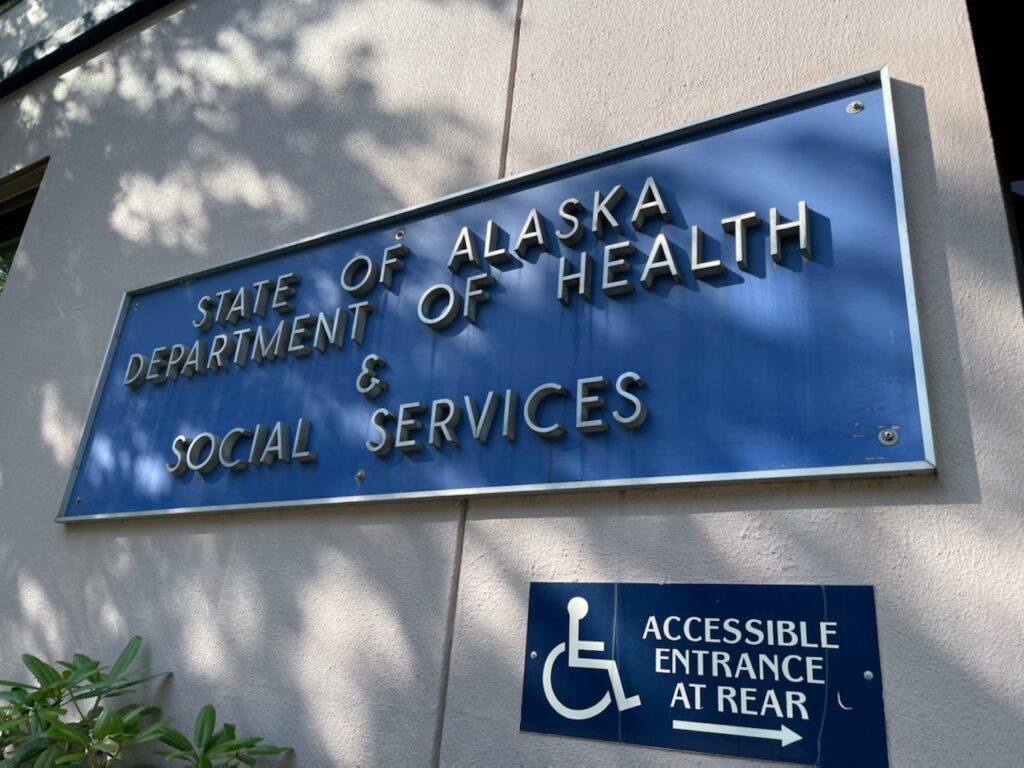
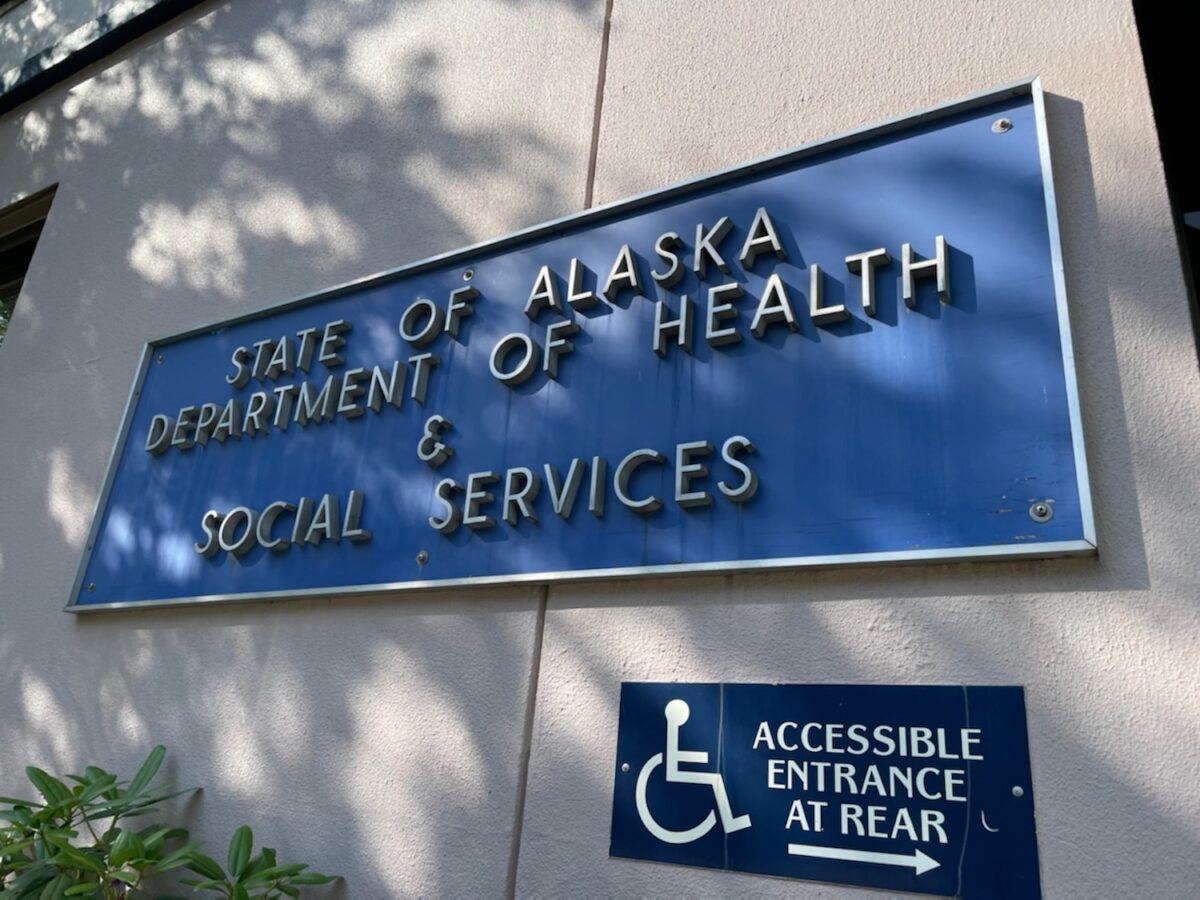
 The offices of the Alaska Department of Health and Social Services are seen in Juneau on Friday, July 1, 2022. (Photo by Lisa Phu/Alaska Beacon)

A new federal law signed by President Donald Trump on July 4, 2025, enacts wide-ranging changes to public policy, including major revisions to Medicaid, the Supplemental Nutrition Assistance Program (SNAP), and federal tax laws.

According to officials, Alaska’s Medicaid funding is more stable than other states because Alaska is not subject to some of the structural changes affecting others.

Medicaid is a joint federal and state public health insurance program for people with low incomes, including children, pregnant women, older adults, and individuals with disabilities. 1 in 3 Alaskans are enrolled in Medicaid. While not all enrollees use services every year, about 40% received care in FY25. Most Medicaid enrollees in Alaska are children or adults under the age of 65.

According to current information, the State cannot reliably say how many Alaskans will be affected.

According to the Department of Health, The One Big Beautiful Bill (the bill) establishes new community engagement requirements and requires states to check Medicaid eligibility twice a year for some Medicaid enrollees.

The requirements primarily apply to the Medicaid expansion population – able bodied adults ages 19 to 65 who qualify for Medicaid based on their income.

Many Alaskans will be exempted from the new requirements, making the full impact of the changes complicated to project, they say further analysis is underway.

The bill requires that most able-bodied adults ages 19–64 enrolled through Medicaid expansion must complete 80 hours per month of work or other qualifying activities to qualify for Medicaid coverage. These activities include job training, education, or volunteer service. Individuals must show they met the requirements at least one month before applying and must meet the same requirements when they renew. 

Advocates say individuals who use these programs already work, or are unable to do so, and adding qualifying work requirement paperwork could make it more difficult for recipients to apply.

According to the Department of Health, The bill includes mandatory exemptions for individuals who are:

  • Meet SNAP or TANF work requirements
  • Pregnant or within the postpartum coverage period
  • Alaska Native or American Indian 
  • Have a significant physical, intellectual, or developmental disability 
  • Are blind or disabled
  • Have a substance use disorder or disabling mental health condition
  • Have a serious or complex medical condition 
  • Veterans with a total disability rating
  • Enrolled in Medicare
  • A parents or caregiver for a child under 14 or someone with a disability
  • Recently incarcerated (within 90 days)
  • Under age 26 and formerly in foster care

The Department of Health also notes the creation of the Rural Health Transformation Fund, a $50 billion initiative aimed at improving health care in rural communities across the country.

Funds may be used for a wide variety of activities to improve rural health care, including technology modernization, workforce development, innovative care models, and prevention measures for chronic disease and substance use disorder. 

Officials say the state is “well-positioned” to secure a strong share of those dollars, helping improve access to health care and supporting long-term improvements to health outcomes in underserved areas.

Categories
Featured Juneau News Juneau Local Ketchikan Local News Feeds Sitka Local

New Alaska law establishes quick deadlines for insurers’ decisions on medical care

By: Yereth Rosen, Alaska Beacon

Health care costs. Stethoscope and calculator symbol for health care costs or medical insurance (Photo by Valeriya, provided by Alaska Beacon and Getty Images)

Health insurers must provide speedier responses to prior authorization requests for certain medical treatments and services, under a bill that went into law on Monday without Gov. Mike Dunleavy’s signature.

The measure, Senate Bill 133, requires insurers to notify patients within 72 hours whether the requested services are authorized in cases when requests are sent by fax or by other routine means. In cases of expedited requests, the insurer must provide answers within 24 hours, under the bill.

The bill, which passed unanimously in both the Senate and House, is intended to prevent delays in patient treatment, said the main sponsor, Sen. Jesse Bjorkman, R-Nikiski.

“Alaskans should not have to fight with their insurance company to get the care they need,” Bjorkman said in a statement. “This bill makes the process quicker, clearer, and fairer for everyone.”

The bill was officially sponsored by the Senate Labor and Commerce Committee, which Bjorkman chairs.

It was supported by medical organizations, including the Alaska Hospital and Healthcare Association, the Alaska State Medical Association and the Alaska Native Health Board.

It also got some qualified support from Premera Blue Cross Blue Shield of Alaska, the state’s largest health insurer.

In a March 25 letter to Bjorkman and members of the Senate Labor and Commerce Committee, Premera said that the version that emerged through the committee process had “some reasonable sideboards as well as incentives that will help plans modernize and improve their prior authorization systems so that these systems optimally serve providers, patients and plans alike.”

Premera said in its letter that it requires prior authorizations for care in only about 2% of cases, unlike insurers that “have been exceedingly aggressive in this space,” requiring prior authorization for up to 20% of all claims.

The bill has some exceptions, caveats and special provisions. For example, it does not prevent insurers from requiring generic versions of medicines prescribed by providers. It also has a section giving guidelines for insurers to grant exceptions for cancer patients who are covered by “step therapy” protocols. Those protocols provide patients with the least expensive medications first before advancing to more expensive medications.

Additionally, the bill gives insurers up to 14 working days to obtain more information from providers if they determine that there is a lack of sufficient information for decisions on prior authorization requests.

The new law goes into effect on Jan. 1, except for a portion that directs the state Division of Insurance to start drafting regulations. That portion went into effect immediately.

Categories
Featured Juneau News Juneau Local Ketchikan Local News Feeds Sitka Local

Compensation program for health damage from Alaska weapons tests is extended

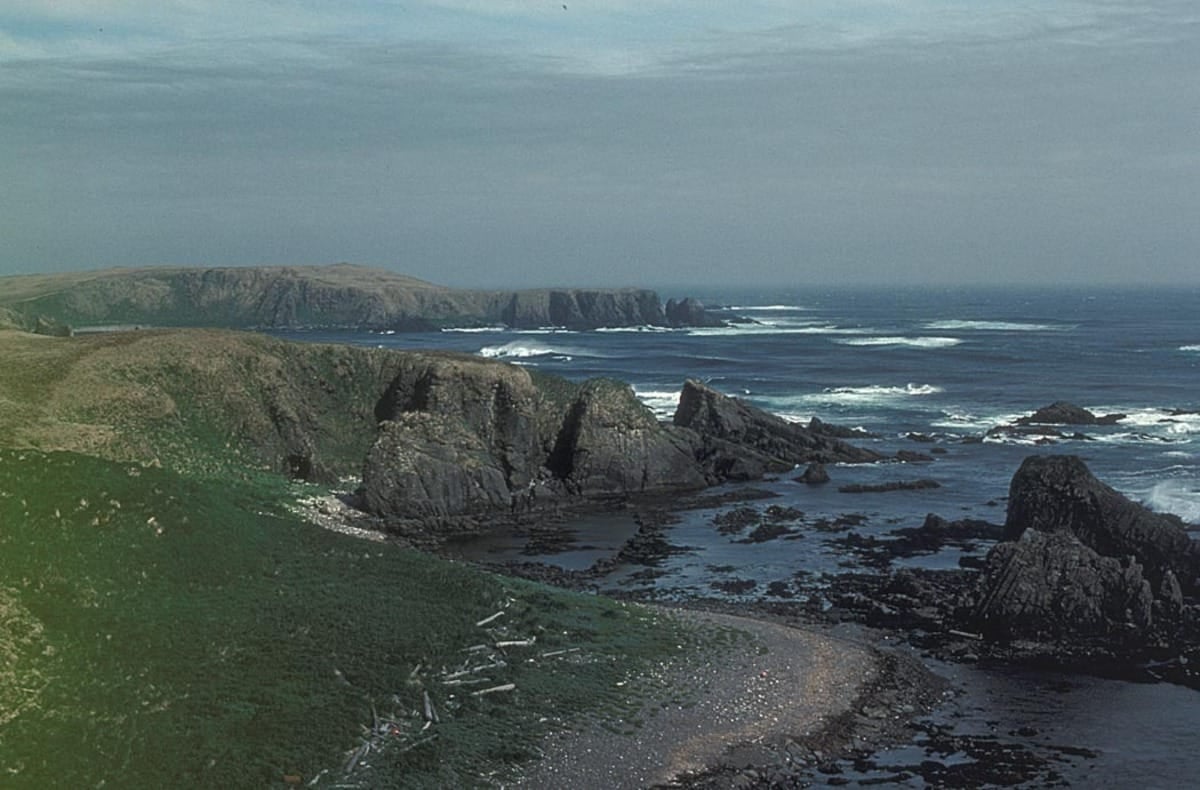
Harlequin Beach on Amchitka Island is seen in this undated photo. The island, now part of the Alaska Maritime National Wildlife Refuge, was the site of atomic weapons tests in 1965, 1969 and 1971. (Photo provided by the U.S. Fish and Wildlife Service)

By: Yereth Rosen, Alaska Beacon

People who might have been exposed to radiation from atomic weapons tests conducted in the Aleutians half a century ago have extra time to apply for compensation from a federal program, under the sweeping tax and budget bill passed by Congress and signed into law last week.

The bill, which was signed by President Donald Trump on July 4, includes a provision reviving the Radiation Compensation Exposure Act, which was enacted in 1990.

The act’s compensation system distributed one-time payments to people who were exposed to radiation from the weapons tests and who later were diagnosed with certain types of cancer. The program has distributed about $2.7 billion to date, according to the U.S. Department of Justice.

While most of the tests covered by the act were conducted in Nevada, the program also covers health damages from underground weapons tests conducted on Alaska’s Amchitka Island in 1965, 1969 and 1971.

The program covers former uranium mine workers, as well, many of whom were Navajo Nation members.

The compensation program had been on track to expire, with a previous deadline of June 10, 2024, for any new claims.

The budget bill extends the deadline for new claims to Dec. 31, 2027, and it sets a Dec. 31, 2028, sunset date for the trust fund that administers the claims.

The bill also raises compensation amounts. For “downwinders,” people who were not on site at the time of the tests but may have been exposed to radiation carried by the wind, the compensation is hiked from $50,000 to $100,000. For on-site workers, the compensation is raised from $75,000 to $100,000.

Of the Alaska weapons tests, the third — called Cannikin — was the most controversial.

It was the biggest underground nuclear test ever conducted by the United States. The tested bomb was 5 megatons, about 250 times as powerful as the bomb dropped on Hiroshima, Japan, in 1945. There was widespread opposition to the project, including from environmentalists who later founded the organization Greenpeace.

Legal opposition to the test went all the way to the U.S. Supreme Court, which ultimately allowed the project to proceed.

The test created what was the equivalent of a magnitude 7 earthquake, killing up to 2,000 sea otters and thousands of fish.

The island continues to undergo environmental monitoring, for which the U.S. Department of Energy is responsible. The Alaska Department of Environmental Conservation and the Aleutian Pribilof Islands Association, a tribal organization, are partners.