Categories
Alaska News Featured Juneau News juneau Juneau Local Juneau Local Ketchikan Local News Feeds Sitka Local

Alaska gubernatorial forum puts healthcare at center stage

By: Yereth Rosen, Alaska Beacon
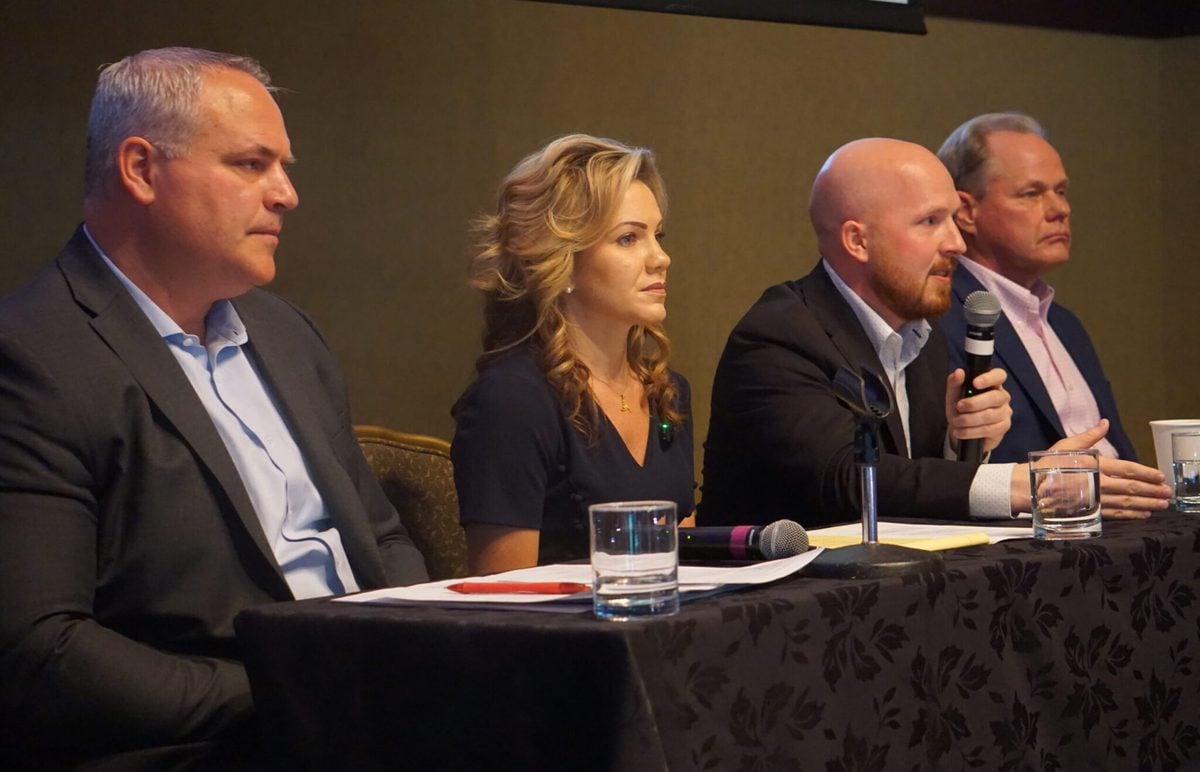
Former state Rep. Jonathan Kreiss-Tomkins, third from left, speaks at a gubernatorial candidate forum on Wednesday, while former Attorney General Treg Taylor, Anchorage business owner and talk-show host Bernadette Wilson and former Anchorage Mayor Dave Bronson listen. The forum was held by the Alaska Hospital and Healthcare Association and the organization’s annual conference in Girdwood. Taylor, Wilson and Bronson are Republicans. Kreiss-Tomkins is a Democrat. (Photo by Yereth Rosen/Alaska Beacon)

The three Republicans and one Democrat seeking to become Alaska’s next governor pitched their visions for state healthcare policy on Wednesday to an audience of experts: members of the Alaska Hospital and Healthcare Association.

The organization capped its two-day annual conference in Girdwood with a forum among the gubernatorial candidates who are running under Alaska’s ranked-choice voting system.

Along with addressing healthcare issues, all four candidates repeated talking points they have used at past events.

Former State Rep. Jonathan Kreiss-Thomkins, the only Democrat on the general election ballot, spoke about consensus-building across party lines, and he criticized outgoing Republican Gov. Mike Dunleavy for failing to do so.

Kreiss-Tomkins recounted his experience in a bipartisan coalition focusing on problems rather than party. “That’s a real North Star for me,” he said. “That philosophy of government, that principle has been painfully absent in the governor’s office for the last eight years, and it has really distressed me to see the direction Alaska is going as a consequence of that leadership in our governor’s office the last eight years. And I’m running to change that.”

Former Attorney General Treg Taylor spoke about his desire to cut bureaucratic red tape, including his experience with a real estate license that took a year and a half to transfer, an account he has described at numerous other gubernatorial events.

“We need to have government run at the speed of business,” he said, repeating a slogan he has used elsewhere.

Talk show host and business owner Bernadette Wilson, who has never held public office, pitched herself as an outsider and “the only one up on this stage that has never taken a check from government.” She said she breaks with past practices, including bipartisanship, that she said do not work. The current debates are about many of the same issues that faced gubernatorial candidates in past years, she said.

“And the question that each of us will have to answer is, ‘What are we going to do differently this time?’” she said.

In contrast, former Anchorage Mayor Dave Bronson touted the experience he gained in his three years as chief executive of the state’s largest municipal government.

Former Anchorage Mayor Dave Bronson, a Republican, speaks at a gubernatorial candidate forum held in Girdwood on Sept. 16, 2026, by the Alaska Hospital and Healthcare Association. (Photo by Yereth Rosen/Alaska Beacon)

“I ask you to just look at the resumes. I’ve already held the closest job in this state to the governor’s job. I governed 40% of the population of the state as the mayor,” he said. He “paid in blood” for the hard lessons that he learned, he said, experience that will serve him well as governor, a job for which “there’s no time for on-the-job training.” 

Lost Medicaid coverage

On specific health topics, the candidates had many areas of agreement, but the discussion also revealed some key differences.

One divide emerged during a discussion about the loss of Medicaid coverage over the past two years for low-income Alaskans. At least a quarter of those being dropped from enrollment are not losing coverage because of lack of eligibility, Alaska Hospital and Healthcare Association President Jared Kosin said as he posed the question. Rather, they are being dropped because of long wait times and the bureaucratic hurdles they face in getting their applications considered.

Kreiss-Tomkins, who said he is proud of his record as a lawmaker working with the administration of Gov. Bill Walker to expand Medicaid coverage, said staff shortages are causing some of the problems. And he said some are caused by new rules imposed by the Trump administration, such as the  work requirement that was embedded in the sweeping budget bill called the “One Big Beautiful Bill Act,”, have exacerbated problems for qualified Medicaid recipients, who are among society’s most vulnerable members.

And he made a veiled jab at U.S. Sen. Dan Sullivan and U.S. Rep. Nick Begich, both Alaska Republicans who voted for the bill and are running for reelection.

It is important to be “very clear about who voted for that legislation that is about to make it harder for Alaskans to get the care they need,” he said. “We need to be very clear-eyed about that.”

Taylor, in contrast, said he supports the bill’s requirement that Medicaid recipients work at least 80 hours a month, either at a paid job or in volunteer service or training.

“It is not unreasonable for an able-bodied adult, without dependents,” he said. Medicaid funds are not infinite,” so stewardship is needed to make sure they are spent properly, he said. Additionally, he said, fewer people on Medicaid could be a good sign. He said unemployment rates in Alaska have dropped.

“So that’s good. That’s the program working,” he said.

Alaska’s unemployment rate, though following a volatile pattern, has been on a long-term decline, according to the Federal Reserve Bank of St. Louis. In recent years, the rate bottomed out at 3.9% in August of 2022, rose to 4.8% in December 2025 and then declined again, falling to 4.3% as of July, according to the Federal Reserve bank’s statistics. Alaska’s rates have been above the national rate for most of the years in the past decade, according to the U.S. Bureau of Labor Statistics.

Former State Rep. Jonathan Kreiss-Tomkins, a Democrat, speaks at a gubernatorial candidate forum held in Girdwood on Sept. 16, 2026, by the Alaska Hospital and Healthcare Association. (Photo by Yereth Rosen/Alaska Beacon)

Wilson said a business-like approach is needed to fix the Medicaid problems.

“We need to treat Medicaid like a business that is failing Alaskans,” she said. “We need to come in and we need to look at how can we hire people from the private sector that know processes and can hold these processes to a more accountable timeline.”

Bronson said Kosin’s statistics show that a large percentage of qualified Alaskans are being dropped from services.

“We are failing at a state level, especially in the Department of Health,” he said. Upon taking office as governor, “I would direct the Department of Health to conduct a review of all operations, and that includes the processing of paperwork for Medicaid,” he said.

Bronson also said that the One Big Beautiful Bill Act is causing extra problems for Alaska, and that he would seek an extension of the national Jan. 1 deadline for states to comply with all of its provisions.

Rural health ideas

On the subject of rual health care in general and, more specifically, what to do with “rural health transformation” funds granted from the federal government to the state, two of the candidates referred to their own family experiences.

Kreiss-Tomkins, who is from Sitka, spoke about his mother, an Indian Health Service doctor who spent her entire career at the Southeast Alaska Regional Health Consortium. He said he got his own health care from that tribal organization.

Wilson, noting that her grandmother was born in the Bristol Bay community of Naknek and that she is of part Aleut ancestry, said she has experience as a patient at the Alaska Native Medical Center.

As for the $272 million in rural health transformation funds that the state got from the federal government and that the Department is disbursing in a series of grants, the candidates offered a variety of suggestions.

Wilson said the state should invest in technology, especially technological advances that might help rural Alaskans avoid the need to travel to Anchorage or elsewhere for care.

Former Attorney General Treg Taylor, a Republican, speaks at a gubernatorial candidate forum held in Girdwood on Sept. 16, 2026, by the Alaska Hospital and Healthcare Association. (Photo by Yereth Rosen/Alaska Beacon)

She sees the travel-related challenges when she is at the Alaska Native Medical Center, she said. “You have people who are pulled out of their community, pulled out of their village, they’re coming into Anchorage. Sometimes it’s for an unknown length of time,” she said. The state needs to try to find ways to ensure that rural patients can be treated at home, she said.

Bronson made similar observations about the need to minimize travel for rural patients, citing “robust telehealth” as one tool.

Kreiss-Tomkins said the state should be seeking to make the rural transformation grants “leverage structural and systems change that will have lasting and enduring benefit to the system” rather than use them for construction or for one-time projects. The state should not count on getting similar money in the future, he said.

Taylor called the funding a “gift” that he hopes will be used “to help reinvent healthcare in Alaska.”

There was a split among the candidates over mandatory staffing ratios for nurses, as proposed in a bill that emerged late in this year’s session, Senate Bill 283. The Alaska Hospital and Healthcare Association opposed the bill, which did not advance out of the Senate Labor Committee.

Three of the gubernatorial candidates said they also opposed the idea of codifying such ratios into law, but Taylor spoke out in support. He cited a 2016 study in Australia that found that for each patient taken off a  a nurse’s workload, there was a 7% drop in the likelihood of death and a 3% shorter hospital stay.

However, establishing firm ratio requirements would also necessitate related action to ensure sufficient numbers of nurses in the state, he said.

“You cannot mandate nurses into existence,” he said.

The other three candidates said mandatory staffing ratios would not be workable in Alaska’s diverse healthcare settings.

However, Kreiss-Tomkins said, the idea behind the proposal is laudable. “I appreciate where the impulse comes from,” he said. “I mean, everybody wants safe standards of care for patients, and you don’t want nurses or other practitioners spread thin.”

Complex subjects

Concerning mental and behavioral health, Bronson repeatedly defended his controversial attempt as Anchorage’s mayor to build a huge shelter and “navigation center” in the city’s university-medical district to serve the unhoused.

Anchorage business owner and talk-show host Bernadette Wilson, a Republican, speaks at a gubernatorial candidate forum held in Girdwood on Sept. 16, 2026, by the Alaska Hospital and Healthcare Association. (Photo by Yereth Rosen/Alaska Beacon)

“That facility, I think, was the right answer to dealing with a lot of the healthcare issues we face in the city of Anchorage and across the state because we’re kind of  the homeless center for the  state,” he said. “We almost had it done. We actually started pouring concrete.”

Bronson’s plan was for a tented facility to house and serve hundreds of people at a site across the street from the Alaska Native Tribal Health Consortium campus. The Anchorage Assembly rejected the plan after it was revealed that the Bronson administration awarded a contract and started construction illegally. The plan had drawn backlash from residents in the area, which currently is the site of ballfields and recreational trails.

Taylor said Alaska’s mental health challenges are daunting, with suicide and alcohol death rates that are twice the national average.

But there has also been positive movement under the Dunleavy administration, he said. He cited a bill that the governor signed in 2022, House Bill 172, that supports the use of crisis centers and teams to treat patients in emergencies.

There are now mobile crisis centers in four communities, Taylor said. “The added effect of that is keeping people out of your emergency rooms,” he said. “Youth suicides are down sharply now.”

It was unclear whether Taylor was referring only to the communities where the mobile crisis teams are operating or to the state as a whole.

Statewide, the rate of youth suicide fatalities reached a 10-year high in 2025, according to the Department of Health’s epidemiology section.

Other subjects discussed at the forum included the rising cost of health insurance in Alaska and qualities that the candidates are seeking in officials they would hire to manage healthcare services.

At the event’s conclusion, Kosin thanked the candidates for delving into healthcare topics that are complex.

“This is not always the most comfortable environment, and you guys were here. And that says a lot about your character,” Kosin said to the candidates.


Former Attorney General Treg Talor speaks at a gubernatorial candidate forum on Sept. 16, 2026, while Anchorage business owner and talk-show host Bernadette Wilson, former state Rep. Jonathan Kreiss-Tomkins and former Anchorage Mayor Dave Bronson listen. At the lecturn is Jared Kosin, president of the Alaska Hospital and Healthcare Association. The organization held the forum in Girdwood, and the event was focused on healthcare issues. (Photo by Yereth Rosen/Alaska Beacon)
Categories
Alaska News Featured Juneau News juneau Juneau Local Juneau Local Ketchikan Local News Feeds Sitka Local

Alaska plans to limit advance reservations for public cabins, update system

By: James Brooks, Alaska Beacon

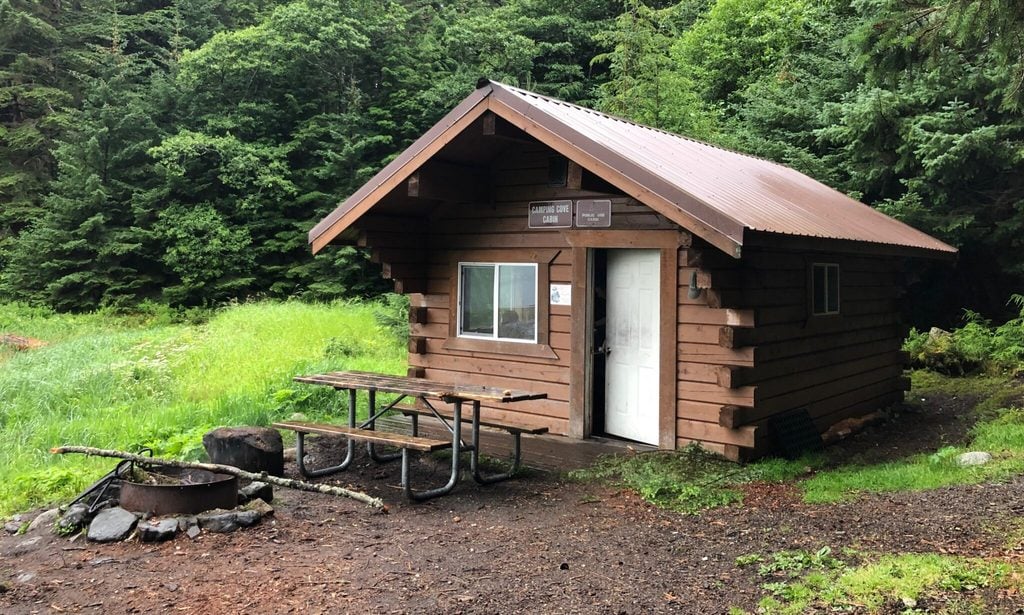
Camping Cove Cabin at Point Bridget State Park near Juneau is seen on July 18, 2020. (James Brooks photo/Alaska Beacon)

If you use Alaska’s public cabins, get ready for a change. 

On Oct. 1, the Alaska Department of Natural Resources will begin limiting how far in advance reservations can be made to three months, down from six months. 

The only exceptions to the three-month reservation window will include the Wood-Tikchik Region and cabins on Afognak and Shuyak Islands in the Kodiak region, which will continue to allow reservations up to six months in advance.

The change is part of a shift to a new online booking system and website that also opens Oct. 1. Cabin-seeking Alaskans will be unable to change, modify or cancel their existing reservations from Sept. 28 through Sept. 30 as part of the transition.

Beginning Oct. 1, reservations for all facilities can be made for Jan. 1, 2027 and the 3-month rolling window will begin.

Wendy Sailors, community engagement manager for Alaska State Parks, said by email that the new shorter reservation window is the result of feedback from Alaskans who said “that it is difficult to plan that far out, often people forget that they had the reservation and have to cancel last minute or just don’t use it, etc. So in addition to the three-month rolling reservation window, we are incorporating a few new features like an email reminder 7 days out.”

Categories
Alaska News Featured Juneau News juneau Juneau Local Juneau Local Ketchikan Local News Feeds Sitka Local

Alaskans just voted to limit campaign cash. A second vote could change that.

By: James Brooks, Alaska Beacon

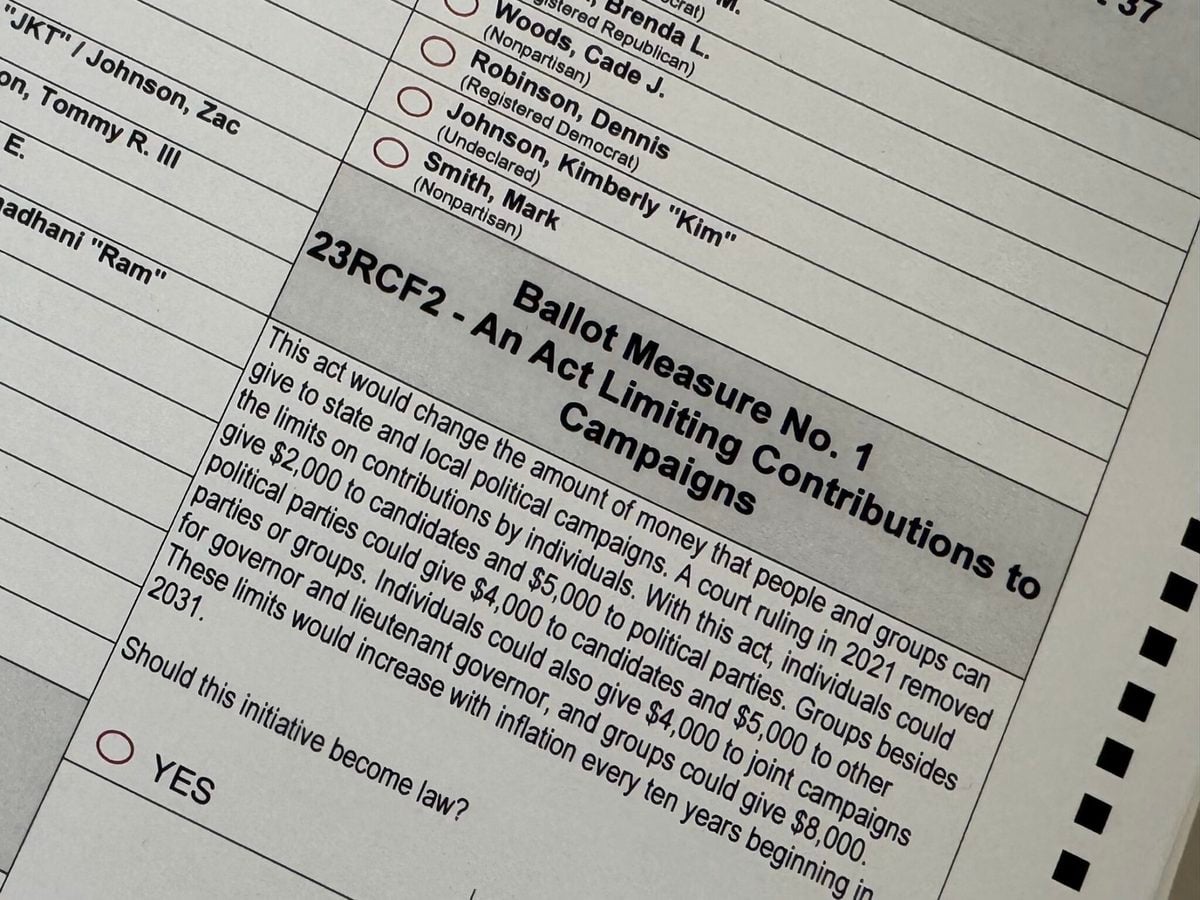
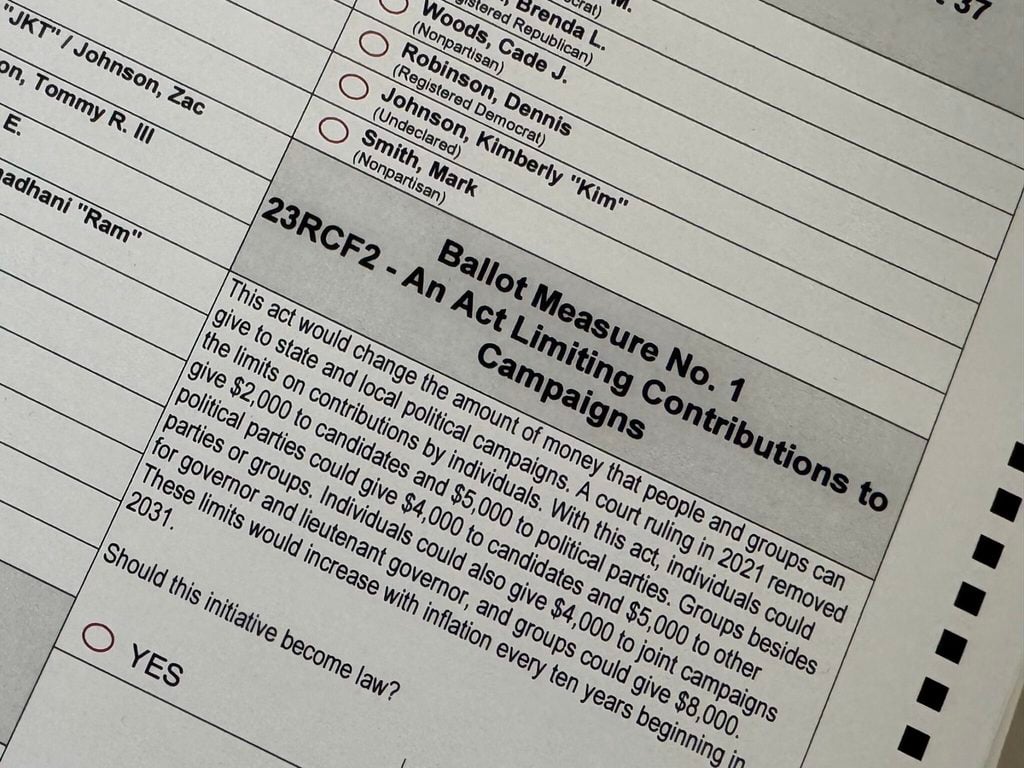
A sample ballot seen at the headquarters of the Alaska Division of Elections on Thursday, July 9, 2026, shows the language for the campaign finance ballot measure. (James Brooks photo/Alaska Beacon)

In August, more than 70% of participating Alaska voters supported Ballot Measure 1, voting to restrict the amount of money that individuals can contribute to campaigns for state office.

On Nov. 3, Alaskans will vote on Ballot Measure 2, and an overlooked section of that measure — intended to roll back the state’s election system to what it was in 2020 — almost certainly would repeal part of Ballot Measure 1.

“I mean, people are like, why didn’t you raise this earlier? I’m like, it’s got 91 sections, and I literally didn’t notice,” said Scott Kendall, the author of Alaska’s existing elections system and an attorney fighting Ballot Measure 2.

In 2020, Alaskans passed a different Ballot Measure 2. It installed three major changes to the state’s election system: An open primary, where all candidates run together, and the top four advance to the general election; a ranked choice general election, where voters sort those four candidates in order of preference; and a disclosure law requiring third-party groups to disclose their donors when the groups donate to political candidates and causes.

This year’s Ballot Measure 2 seeks to repeal all three parts, returning Alaska elections to what they were in 2020.

There’s also a new wrinkle because of this year’s Ballot Measure 1.

Passed by voters in August, Ballot Measure 1 limits the amount of money that someone can donate to a candidate. That includes governor and lieutenant governor candidates who run together as a single ticket.

That single-ticket system was installed in 2020’s Ballot Measure 2. Ballot Measure 1 limited donations to that single ticket, putting the limits in Alaska Statute 15.13.070(g).

Ballot Measure 2 seeks to get rid of the combined single-ticket campaign, and Section 5 states, “AS 15.13.070(g) is repealed.”

That would get rid of the combined donation limit for governor and lieutenant governor. But some state officials say another law may then come into play. 

Because candidates would — if Ballot Measure 2 passes — be running separately, they may be limited by a different part of Ballot Measure 1, AS 15.13.070(b), which applies to individual candidates.

That’s the position held by Alaska Public Offices Commission director Heather Hebdon. APOC is in charge of enforcing Alaska’s campaign finance laws.

By email, Hebdon said that if Ballot Measure 2 passes, “contribution limits for gubernatorial candidates would fall under those found in AS 15.13.070(b)(c) and (f).”

She believes APOC would likely write new regulations to deal with those limits’ applicability to governor and lieutenant governor candidates.

Kendall said he isn’t sure about that. 

“I will say it’s really legally tenuous. I think when you have a statute that says a thing and you explicitly repeal that thing, you get what you get,” he said.

He also observed that in 2021, when the 9th U.S. Circuit Court of Appeals struck down Alaska’s prior limits on political donations, APOC attempted but failed to preserve a limit for the state’s 2022 elections.

Supporters of Ballot Measure 2 said they don’t have a position on the issue.

“Repeal Now wrote Ballot Measure 2 as a full and complete repeal of the 2020 ballot measure that brought ranked choice voting to Alaska. We are unaware of any effect on Ballot Measure 1 and thus can’t comment on that,” said Bethany Marcum, treasurer of Repeal Now, the leading group behind Ballot Measure 2. 

Craig Richards, a former attorney general who represented Repeal Now in court, said he was unfamiliar with the issue.

The Alaska Department of Law also declined to make a definitive statement on the topic.

Sam Curtis, a spokesman for the department, said by email that attorneys within the Alaska Legislature would make the final determination of what happens if Ballot Measure 2 passes.

That’s because the revisor of statutes — an obscure staff official — is in charge of mediating disputes between enacted laws.

Emily Nauman, the Legislature’s chief attorney, declined to say how the Legislature might interpret any conflict. 

Rep. Calvin Schrage, I-Anchorage and a sponsor of Ballot Measure 1, said earlier this month that he has requested that Nauman’s office deliver a written ruling on the issue, but as of Tuesday afternoon, that memo had not yet been completed.

The Alaska Supreme Court has dealt with similar issues before. In 2021 and in 2006, the court ruled that later laws trump earlier ones.

“In general, if two statutes conflict, then the later in time controls over the earlier, and the specific controls over the general,” the court wrote in a 2006 decision.

On Sept. 11, Schrage said he doesn’t like the idea of repealing a campaign finance limit.

“It seems to fly in the face of what Alaskan voters have time and time again reaffirmed as a priority for them,” he said.

The Alaska Supreme Court had an opportunity earlier this month to address the issue but declined to take it up.

During arguments over the proper description of Ballot Measure 2 on the November election ballot, Kendall sought to bring up the Section 5 issue.

The court rejected Kendall’s attempt, saying it hadn’t been properly briefed beforehand.

As a result, the final description on the ballot says only that Ballot Measure 2 would “remove the limits on donations to joint campaigns for governor and lieutenant governor.” 

It doesn’t say whether anything will replace them. 

Categories
Alaska News Featured Juneau News juneau Juneau Local Juneau Local Ketchikan Local News Feeds Sitka Local

Juneau assembly tables nonprofit sales tax changes indefinitely amid confusion

City Hall on a sunny day.

NOTN- The Juneau Assembly has indefinitely tabled a proposal that would have required nonprofits to collect sales tax on purchases, after a marathon debate that Mayor Beth Weldon described as increasingly confusing for the public.

Speaking on Monday night’s meeting, Weldon said the measure drew intense public interest, but efforts to carve out protections for smaller nonprofits only muddied the policy.

“We were just creating confusion. Just for instance, what’s intermediate fundraising? How do the raffle tickets fit in there? 14 days isn’t long enough for a raffle ticket period, and so at the end, especially after talking with the finance, Ms. Woll proposed an amendment to table it indefinitely. And what that means is, unless we bring it up at our next meeting, it dies at this time.” Weldon said.

At the meeting, 17 nonprofit leaders testified against the measure, raising concerns about fairness, added financial burdens and more confusion over how the ordinance would work.

“What I have a hard time understanding is the policy rationale for carving out certain types of non-profits as ineligible for the sales tax exemption, though we have an important charitable mission, it sends a message that it’s not important enough. Crafting tax law is tricky. Our Internal Revenue Code is 3000 pages. The regs are another 70,000. I get it. I understand interpretations have to be made and lines drawn, and I also understand-I truly do-the desire to protect basic human services, food, and shelter to those who need it most. But I question whether the city should be in a position of determining where to draw that line and what services and missions are important.” Said Bridget Lujan, Executive Director of Juneau Dance Theater.

The proposal was projected to raise closer to $1–2 million in new revenue, down from earlier estimates of $3 million, according to Weldon. She said the financial benefit no longer justified the level of community angst.

The Assembly also approved funding for Hesco barriers and other work related to glacial outburst flood mitigation.

The meeting stretched until about 9:45 p.m.

Categories
Alaska News Featured Juneau News juneau Juneau Local Juneau Local Ketchikan Local News Feeds Sitka Local

Leading candidates in Alaska US House race endorse bycatch limits in fisheries debate

By: Corinne Smith, Alaska Beacon

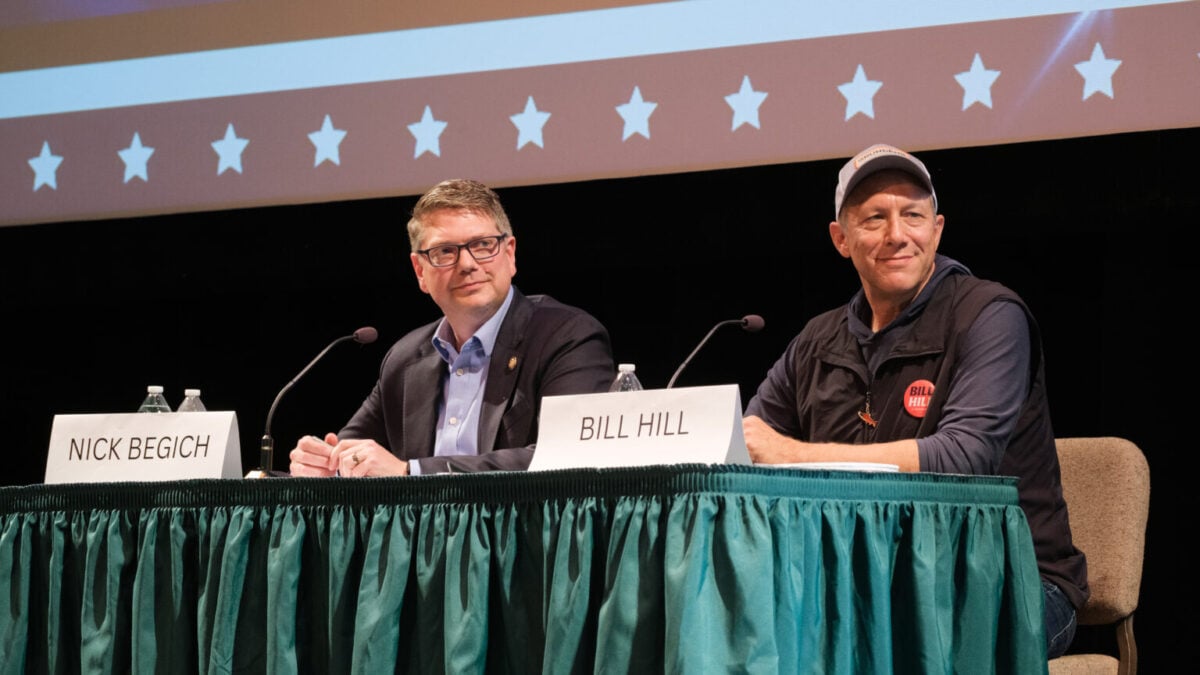
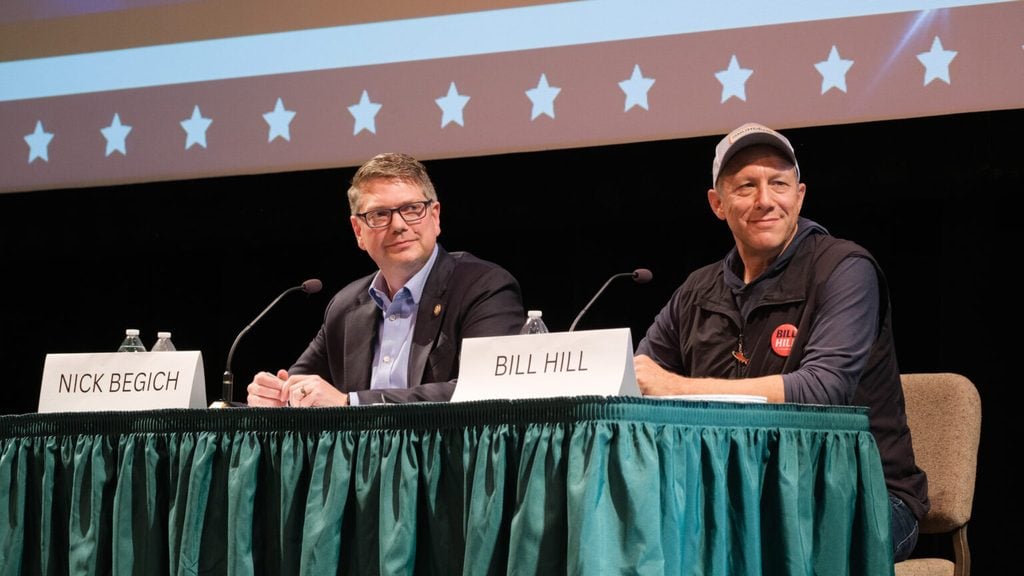
Alaska candidates for the U.S. House race incumbent Republican Nick Begich III (left) and independent challenger Bill Hill (right) squared off at a fisheries debate in Kodiak on Sep. 12, 2026. (Photo by Brian Venua/Alaska Beacon)

Front-runner candidates for Alaska’s sole U.S. House of Representatives seat expressed strong support for the fishing industry and coastal communities at a debate in Kodiak over the weekend. 

Incumbent Republican U.S. Rep. Nick Begich III and independent challenger Bill Hill took very similar positions on issues including fisheries bycatch, declining fish stocks and representation in federal fisheries management, but there were some differences. 

Begich touted his legislative record in his first two-year term as beneficial to Alaska fisheries, while Hill said his personal history as a lifelong fisherman in Bristol Bay is advantageous for representing Alaska in Congress.

Begich, a technology entrepreneur and business executive, garnered 44.6% of the vote in the primary election, while Hill, a former school superintendent and commercial fisherman, received 32.5% of the vote. Third and fourth place finishers in Alaska’s ranked choice general election include Eric Hafner — a registered Democrat serving a federal prison sentence in New York – with 3.8% of the vote, and Libertarian Jim McDermott of Fairbanks with 1.2%. 

The winner of the November election will serve a two-year term as one of the 435 members of the U.S. House of Representatives. 

Begich promoted his legislative record as a freshman in the Republican-controlled U.S. House. This spring, six bills he sponsored passed Congress to become law — a tie with another Arizona lawmaker for most bills passed as a freshman — but none of those bills directly address fisheries issues.

“I have passed more legislation than any freshman on record,” Begich said. “And those are good Alaska bills — they are bills that unlock lands for Alaskans, and they are bills that, in many cases, we’ve been working to achieve for decades.”

Hill repeatedly referenced his experience growing up subsistence and commercial fishing in Bristol Bay. “I raised three of my kids on my fishing boat, and understand the importance that state, national and international politics play in what happens on our back decks with our children, what happens in the income that we can take home, what taxation does to us, what tariffs do to us,” he said. “I’ve lived a life of fish.”

Bycatch

Several debate questions focused on bycatch, the accidental harvest of nontargeted fish. Bycatch has raised public concern around Alaska’s industrial trawl fleet, which has many vessels harbored in Kodiak, where the debate took place. 

Both candidates said they support broader representation on the North Pacific Fishery Management Council, which oversees fishing policy in federal waters, including bycatch regulations. 

Begich said he supports increasing representation for subsistence, sport fishers and small commercial operators, as well as large operators, in council decisions. He pointed to a bill he introduced, the Bycatch Reduction Act, which would require the council to implement gear performance standards to reduce bycatch, to make investments in fishing gear and fisheries research and to increase monitoring and reporting from the industry and the council, among others. 

“We need transparency — more transparency for folks who may have conflicts of interest that currently serve on the NPFMC,” Begich said. He also expressed support for a chum bycatch limit established by the council this year for the Bering Sea pollock fishery.

Hill said he supports bycatch limits to protect salmon runs, and additional seats representing subsistence and tribal groups. 

“Subsistence is sacred, and the very first thing that needs to happen, and I think you hear it from across the state — this is why there’s such a loud outcry — is because some of our subsistence users have not been able to access their resource, which is more than just protein, for quite a few years now,” he said. 

In a question about Congress’ role in reducing bycatch, debate moderators noted all fisheries produce some bycatch harvest and said “a goal of zero bycatch isn’t reasonable.”

But both candidates pushed back on that framing and said that zero bycatch should be the ultimate goal. 

The industrial trawl fleet, particularly boats that target pollock, has been the focus of public criticism because it contributes substantially to the state’s bycatch numbers for species including juvenile halibut, cod and salmon returning to spawning grounds throughout Alaska.

Begich said he agreed that every fishery produces some level of bycatch and it’s up to the council to manage each complex fishery. But he said the goal should be “aggressive.” 

“I do think the goal should be zero. It’s going to be a long road to get there. But we also have to recognize that in every single fishery, whether it be subsistence, sport, small commercial or large commercial, they have a bycatch responsibility as well,” Begich said.

Hill said the goal should be zero bycatch. “We need to work towards that. We need to work towards a very low-threshold for our trawling industry, especially the out-of-state corporate trawlers,” he said. 

And Hill expressed confidence that the trawl industry would be able to meet required limits. 

“My perspective is when you set something out for industry to accomplish, they always find a way, and we’ve seen over and over again that our trawl fleet has met the standards that are being set for them. So, can we get to 0%? That would be everybody’s desire, but should we be working towards it? Yes, we should be,” Hill said. “But those who are bad actors, you’ve got to leave the fishery.”

When asked about the primary causes of king and chum salmon run declines, Begich responded it was “largely bycatch related.”

“You look at the Yukon, you look at the Kuskokwim — those runs are way down. We’re seeing some recovery in chums. I think that the cap that we put in with NPFMC is sort of that initial shot saying, ‘Hey, we’re going to be managing these more carefully,’” Begich said. “But I think that historical bycatch is the root cause.”

Hill said he agreed, and added that climate change driven factors are affecting Alaska’s salmon runs. “Climate change is a real thing, and we need to start mitigating for that,” he said. “But yes, we need to end bycatch.” 

Processing and protecting Alaska’s fisheries

Both candidates said they would support investments in building the workforce in fishing and processing sectors, as well as more visas for hiring international workers in processing.

In a lightning round of questions, the candidates agreed on every issue. They supported science-based fisheries management, more investment in research and engaging with a wide range of fisheries interest groups prior to introducing new legislation or policies. They also agreed that rural and tribal communities should have more say in decisions affecting fish. 

When asked how they would ensure the economic value of federally-managed fisheries would not come at the expense of Alaska communities, Begich said he supports labeling rules for farmed vs. wild-caught fish.

“Alaska seafood is competing with penned fish and farmed fish, and the end consumer doesn’t know it,” Begich said. “And so, when you’re buying an Alaska seafood product, we need to make sure that it’s labeled Alaska. That’s transparent because it gives us the best price for our product and it reduces some of the pressure on our fisheries.”

Hill said he would support more investment in in-state seafood processing to diversify processors to which fishing fleets can sell their harvests. “More processing in our state that’s not a consolidated, vertically integrated type of processing,” he said. “And we need to make sure that we’re legislating to make sure that farmed fishing does not come to our seas and that we keep them off for as long as we possibly can.”

Geopolitics

Both candidates expressed support for tariffs on international seafood to protect Alaska markets.

Hill also condemned the U.S. war in Iran for driving high costs of fuel and affecting fisheries. 

“The Iran war is a terrible, terrible thing in terms of how it’s impacted our industry,” he said. “The fuel costs I paid this summer were $2 per gallon more than last year, and they were already high. And then we start talking about things like food and groceries, and the things that allow our crews to do good work for us while we’re fishing hard.”

Begich has expressed support for the Trump administration’s military action against Iran, and voted against a war powers resolution that passed Congress in June calling on President Donald Trump to remove armed forces against Iran, unless authorized by Congress or a declaration of war.

Categories
Alaska News Featured Juneau News juneau Juneau Local Juneau Local Ketchikan Local News Feeds Sitka Local

Report used to justify reinstatement of Alaska Republican governor candidate appears flawed

By Corinne Smith and James Brooks

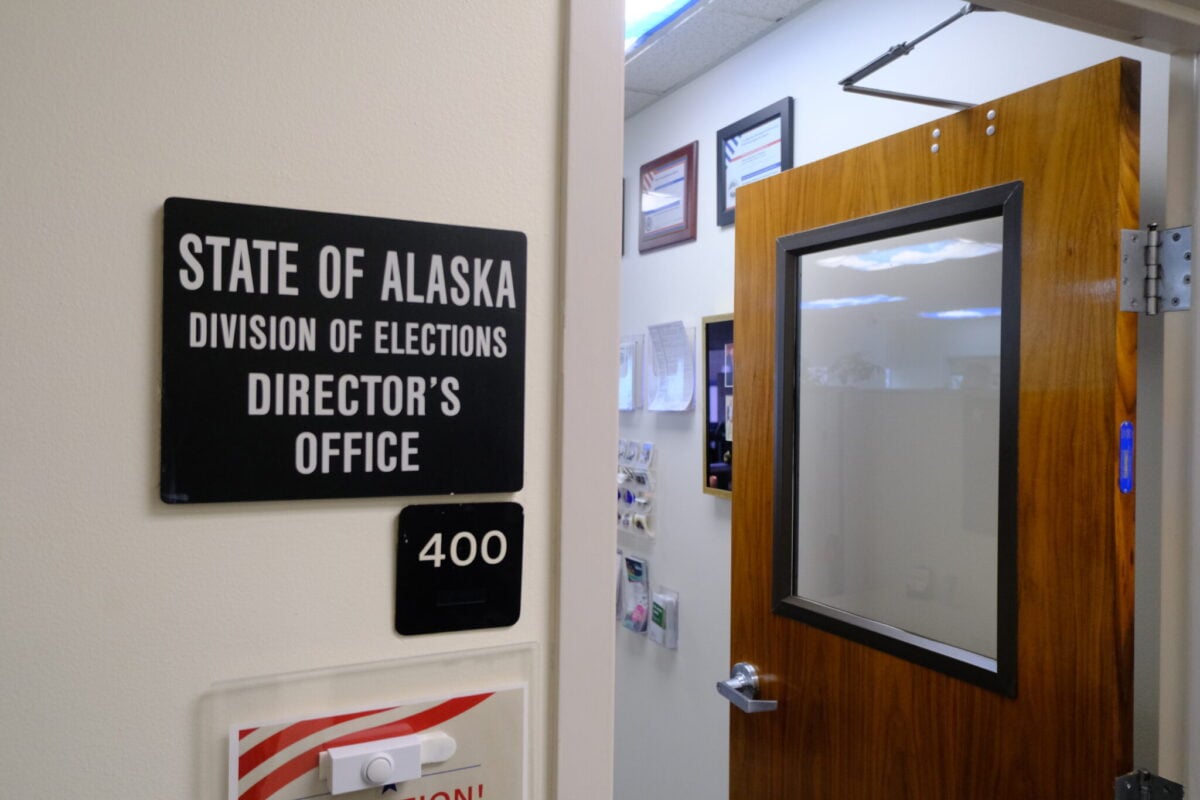
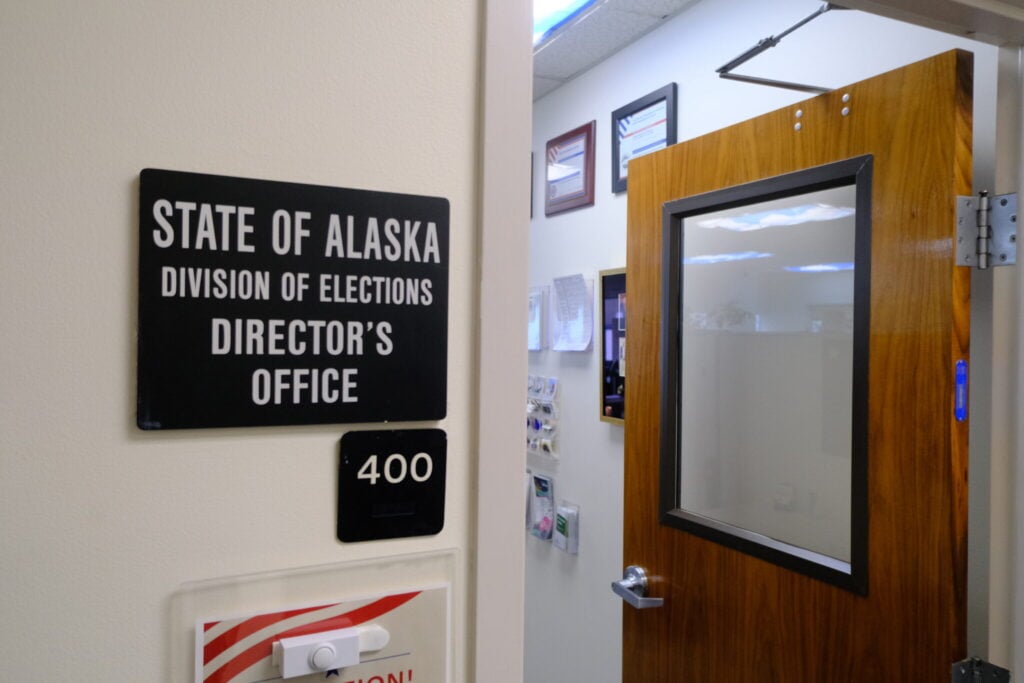
The Alaska Division of Elections director’s office in Downtown Juneau is seen on Aug. 26, 2026. (Photo by Corinne Smith/Alaska Beacon)

Rep. Andrew Gray of Anchorage is not a Swiss businessman. Speaker of the House Bryce Edgmon is not selling fire sprinkler systems. Lieutenant governor candidate Zac Johnson isn’t running an equestrian fox-hunting club in Indiana.

Days after the Alaska Department of Law said it found possible gaps in dozens of political candidates’ financial disclosure forms, a review by the Alaska Beacon and interviews with the affected candidates found many of the problems identified by the department either don’t exist, rely on old information, or amount to minor errors. 

“I’ve talked to probably 10 legislators, and probably eight of them had something on that list that was just bogus,” said Rep. Julie Coulombe, R-Anchorage and one of the candidates in the report, “property they don’t even own anymore, businesses they don’t own, and yet they’re on the list.”

The department’s errors matter because Lt. Gov. Nancy Dahlstrom, who administers the state’s elections, used the Department of Law report on Sept. 4 as justification to restore Republican governor candidate Treg Taylor and state House candidate Jose Tagle to Alaska’s general election ballot. 

“On the basis of that additional information, the Lieutenant Governor will certify the two candidates,” said a statement released by Dahlstrom’s office at the time. 

That restoration reversed one Dahlstrom took just five days before. On Aug. 31, Dahlstrom followed recommendations from the Alaska Public Offices Commission and disqualified Taylor and Tagle based on the fact that they had not submitted full Public Official Financial Disclosure forms within a 30-day deadline set by state law.

Former Attorney General Treg Taylor speaks at a Sept. 8, 2026, gubernatorial candidate forum held by the Last Frontier Republican Club at the Petroleum Club of Anchorage. (Photo by Yereth Rosen/Alaska Beacon)

Taylor, a former attorney general who used to lead the Department of Law, had been asked in 2025 to provide a list of tenants at his rental properties in Anchorage. He did not provide a partial list until late July, about three weeks before the primary election.

“My biggest issue is that APOC never reached out to me with any discrepancies when I filed the disclosure,” Coulombe said. “And so the difference with Treg (Taylor) is that he knew that there was an issue and chose not to change it.”

The Department of Law’s review was extraordinary. When they register to run for office, candidates are required to submit a form listing their personal finances from the previous year. If they don’t submit one, they cannot run. Normally, any gaps in a disclosure only come to light when someone files a complaint with the commission.

Officials with the Department of Law said at a Monday news conference with Dahlstrom and Gov. Mike Dunleavy that they initiated their review last week, expediting it ahead of ballot printing deadlines.

Rachel Witty, director of the civil division of the Department of Law, said the review was done in the course of a day and a half. 

“So I can’t emphasize enough that this is a preliminary review. We didn’t have time to contact candidates. We didn’t have time to verify every apparent match. Nor is it our role to do that. There might be mistaken identities. It was not conducted with the kind of due diligence that APOC would do before making a determination that someone had violated the law.”  

Witty said paralegals, not attorneys, conducted a search by reviewing business licensing databases, property records, and a large national database called TLOXP. 

It’s unclear whether APOC, the agency that regulates financial and political disclosures, will follow up with candidates or take any enforcement actions. 

Among the candidates flagged for review were all four lieutenant governor candidates and all four candidates for governor.

Republican candidates Dave Bronson and Democrat Jonathan Kreiss-Tomkins, through a campaign spokesperson, denied the department’s findings, and defended their financial disclosures. Kreiss-Tomkins immediately corrected one error that was identified.

Taylor and Republican Bernadette Wilson did not respond to requests for comment. 

“This is getting more absurd by the moment,” said Edgmon when informed by the Beacon that the Department of Law had identified him as director and president of Inland Empire Fire Protection, a fire sprinkler company in Spokane, Washington.

That company is a subsidiary of Choggiung, Ltd., an Alaska Native corporation based in Dillingham. 

Until 2017, Edgmon served as chairman of the board for Choggiung, but he hasn’t been in that role for almost a decade. 

“I’ve never had a personal relationship with them,” he said of the fire sprinkler company.

The Department of Law report also said Edgmon failed to properly disclose some rental properties in Dillingham — they’re listed, but in the “debts” section of the report, rather than under “interests.”

The Department of Law flagged Rep. Will Stapp, R-Fairbanks, as possibly being the owner of William B Stapp LLC but also noted that the firm was dissolved in 2015, five years before Stapp first ran for office.

“I’m not actually sure why they even flagged me,” Stapp said on Friday.

Rep. Andrew Gray, D-Anchorage, published a video on social media after the report listed him as owning a business in Switzerland. Gray said he’s both never been to Switzerland and never owned a business. 

In a comment posted by Fairbanks writer Dermot Cole, independent state House candidate Joy Beth Cottle of Fairbanks said that the Department of Law review incorrectly flagged her as having an out-of-date disclosure form. 

Cottle filed to run for office in 2025, a year ahead of the deadline, and thus filed a form covering the 2024 tax year. State law doesn’t require an updated POFD in that case. Several other candidates were dinged for the same reason. 

Cottle also noted that she was linked to a property she “sold in 2013 and has since burnt to the ground and changed owners several times. I drove by and took a picture of it — it’s a vacant lot.”

In Anchorage, Coulombe said she was faulted for not listing her husband’s last name. After 40-plus years of marriage, she said, she thought it would be assumed that they had the same last name.

She was also faulted for listing only the zip code of a rental property. She’s since submitted a revised form to fix the problem.

“If a mistake or something happened, then OK, email me and I’ll fix it,” Coulombe said. “But you know, the whole idea of putting this big list out like we’re all hiding something is just — I have no words for that.”

Coulombe and other legislators named in the report said they are suspicious of the way the Department of Law and Gov. Mike Dunleavy’s administration handled it.

Anchorage Republican Sen. Cathy Giessel was surprised to hear she was flagged by the review. The department said she failed to disclose being a director of Anchorage Community Mental Health Services, Inc., but that is the old name of Anchorage Behavioral Health which was changed in 2020. Giessel is president of the board, which is listed on her disclosure report. 

“Well, see, the Department of Law is going after anyone that is not a staunch radical right Republican,” she said. “So that is really immaterial to me.”

The list of candidates in the department’s review include 24 Democrats, 49 Republicans and 17 independents.

“I have huge concerns about what the Dunleavy administration is doing with the departments under its control,” she said. “This is unbelievable — the overreach that’s happening, the inappropriate behavior, the obvious interference in elections. It’s no wonder, many of my constituents, as I knock door-to-door, don’t trust this election system because they’re seeing all of this, very — I’ll call it ‘very unusual’ in quotes — behavior by state government and the federal government.”

Witty responded to Giessel’s comment by email on Friday.

“I have worked for the Department of Law for 20 years, through five administrations, and I can tell you unequivocally, that what occurred last week was not motivated by politics. The informal review was done completely internally by line level staff who only want to do good work for the people of Alaska,” she said. “The list includes candidates from all party affiliations and does not target one political party over another. By its nature, it had to be done on an extremely expedited timeline and could not be as thorough as anyone would have wanted it to be. We have been very open that the list likely contained errors and we have consistently messaged this to the candidates and to the public. However, the preliminary findings contained enough potential discrepancies to raise questions about whether the law was being applied fairly across the field of candidates. The bottom line is that candidates were added back onto the ballot and the field remains broad — allowing voters to have the final say.”

Categories
Alaska News Featured Juneau News juneau Juneau Local Juneau Local Ketchikan Local News Feeds Sitka Local

US marks 25 years since the Sept. 11 attacks

People attend a memorial on the 25th anniversary of the September 11, 2001, terrorist attacks, Friday, Sept. 11, 2026, in New York. (AP Photo/Pamela Smith)

AP- Americans commemorated the 25th anniversary of 9/11 on Friday, remembering the shock, the dead and the sweeping consequences of the al-Qaida attacks on symbols of U.S. might and prosperity.

The milestone anniversary brought memorial rituals — wreath-laying, flag-flying, moments of silence, vigils and readings of victims’ names — and volunteer projects in tribute to a day that about half of U.S. adults remember as the most historic event of their lifetime, according to a new poll. On Sept. 11, 2001, al-Qaida extremists hijacked four commercial jets and crashed them into New York’s World Trade Center, the Pentagon and a field near Shanksville, Pennsylvania, killing nearly 3,000 people.

Elsie Caldwell carried a photograph of her son Kenny Caldwell to the trade center to hear his name and all the others read aloud Friday morning. She last spoke to him that morning a quarter-century ago.

“Mom, I just want to let you know that I love you,” her son told her in a final phone call, she recalled. His remains, like those of many other victims, have never been recovered.

Trump attends Pentagon observance

The attacks brought down the World Trade Center’s twin towers — icons of U.S. economic power, and among the tallest buildings on Earth — and blew a hole in the Pentagon, the U.S. military’s fortress-like headquarters near Washington. The fourth plane was headed for Washington, officials concluded, but the aircraft went down in Pennsylvania after passengers and crew members stormed the cockpit and fought the hijackers.

“Sept. 11 reminded us of the terrible power of hate,” President Donald Trump said Friday at the Pentagon’s anniversary ceremony.

“The 25 years since have shown us the even greater power of the American spirit to endure and prevail, and to win,” added the Republican, who was in his native New York on 9/11.

Former President George W. Bush, who was in office on 9/11, attended the observance at the National Sept. 11 Memorial in New York, along with former Presidents Bill Clinton, Barack Obama and Joe Biden, and current Vice President JD Vance. Commerce Secretary Howard Lutnick wiped away a tear as he revisited the place where the attacks killed 658 of his colleagues — including his brother, Gary Lutnick — at the investment firm Cantor Fitzgerald.

Interior Secretary Doug Burgum laid a wreath at the Flight 93 National Memorial in Pennsylvania after hailing the courage of the plane’s passengers and crew: “The actions they took should inspire us all.”

At ground zero, a new tribute to those who fell ill

For Angilic Casalduc, attending the New York commemoration “helps to show you’re not alone.” She lost her mother, Vivian Casalduc.

“There’s no timeline for grief, and unfortunately, no one can say how you can grieve, but coming here once a year makes it feel just a little bit better,” she said.

Traditionally, there are no political speeches at the ground zero commemoration, where victims’ relatives read aloud the long list of names and added personal messages. They thanked first responders and the military, invoked religious faith, appealed for national unity and touched on the U.S. relationship with Saudi Arabia. The kingdom was the homeland of most of the hijackers but denied any involvement in the attacks.

Mostly, relatives spoke of, and to, loved ones — whom some were too young to remember.

“You dreamed my whole life for me, and you only got eight months of it,” said Trisha Pakka, who lost her mother, Deepa Pakkala.

Kiersten Haub, who was 16 months old when the attacks killed her father, firefighter Michael Helmut Haub, said: “I carry you through every milestone.”

Besides moments of silence at key points in the attack timeline, this year’s ceremony added another moment to honor people who were exposed to the clouds of toxic dust released by the twin towers’ fiery collapse and have since died of cancer and other illnesses. Questions remain about how many people developed health problems linked to the dust.

The impact of 9/11 endures

It’s a reminder of how the attacks’ long shadow has reached into many corners of life in the U.S. and beyond.

The U.S.-led global war on terrorism included invasions of Iraq and Afghanistan — the latter Washington’s longest war — and detentions and harsh interrogation of terror suspects in an international network of secret CIA prisons. The U.S. found and killed al-Qaida leader Osama bin Laden in Pakistan in 2011, but the accused 9/11 mastermind Khalid Sheikh Mohammed still awaits a trial 23 years after his capture.

The attacks changed U.S. air travel, led to the creation of the Department of Homeland Security, prompted new federal surveillance and intelligence-gathering powers and banking regulations and generated ongoing debate over the balance between security and freedom.

Sept. 11 engendered a culture of individual vigilance summed up by the slogan, “ If you see something, say something,” while a wave of patriotism propelled some Americans to join the military, fire departments and police forces.

Casey Kloepfer was 4 when his father, police Officer Ronald Kloepfer, was killed at the trade center. The son became an officer himself this June, wearing his dad’s badge number.

“It’s big footsteps to fill, but it’s definitely something that I take very seriously and want to continue to honor him and be the best police officer I can,” he said by phone this week.

New York’s mayor comes under scrutiny

Amid the post-9/11 calls to service and appeals for national unity, the attacks also fanned mistrust, prejudice and hate crimes directed at Muslims.

In the quarter-century since, Muslim Americans have played a growing role in public life from statehouses to Congress to New York City Hall, where Zohran Mamdani is the city’s first Muslim mayor. Yet he faced some criticism for attending the anniversary ceremony at ground zero.

Republican ex-Gov. George Pataki and 9/11 victims’ relatives cited, among other things, past remarks that some of Mamdani’s political associates have made about the attacks. Former Mayor Rudy Giuliani, a Republican, also opposed Mamdani’s attendance, though the two shook hands there Friday.

Mamdani, a Democrat, said this week he loves the city and country and that he wanted the anniversary to focus on victims’ families, first responders and New Yorkers who helped one another after the attacks, which he called a “horrific act of terror.” The 34-year-old mayor was an elementary school student in New York on 9/11.

One victim’s son and namesake, Michael Massaroli, used his time at the podium Friday to deplore people “using this tragedy to spread hate” against Muslims and others.

“That’s wrong, and that does no honor to the victims here,” he said.

Times Square billboards pause advertisements

Remembrances extended far from the attack sites, including beams of light projected from New Hampshire’s Mount Washington, a stair climb at Mississippi State University’s football stadium and a ceremony at Honolulu’s 9/11 memorial.

Sept. 11 isn’t a federal holiday, but Congress has designated it both Patriot Day and a National Day of Service and Remembrance.

“One appropriate way to remember is by serving,” said Jay Winuk, who lost his brother Glenn Winuk and then co-founded the organization 9/11 Day with friend David Paine. The group coordinates volunteer opportunities and this year arranged for dozens of Times Square billboards to pause their advertising at 9:11 a.m. Friday.

Instead, they simply displayed the time.

Categories
Alaska News Featured Juneau News juneau Juneau Local Juneau Local Ketchikan Local News Feeds Sitka Local

Trump indicates Department of Justice may bring case against Petersburg’s Dan Sullivan

By: James Brooks, Alaska Beacon

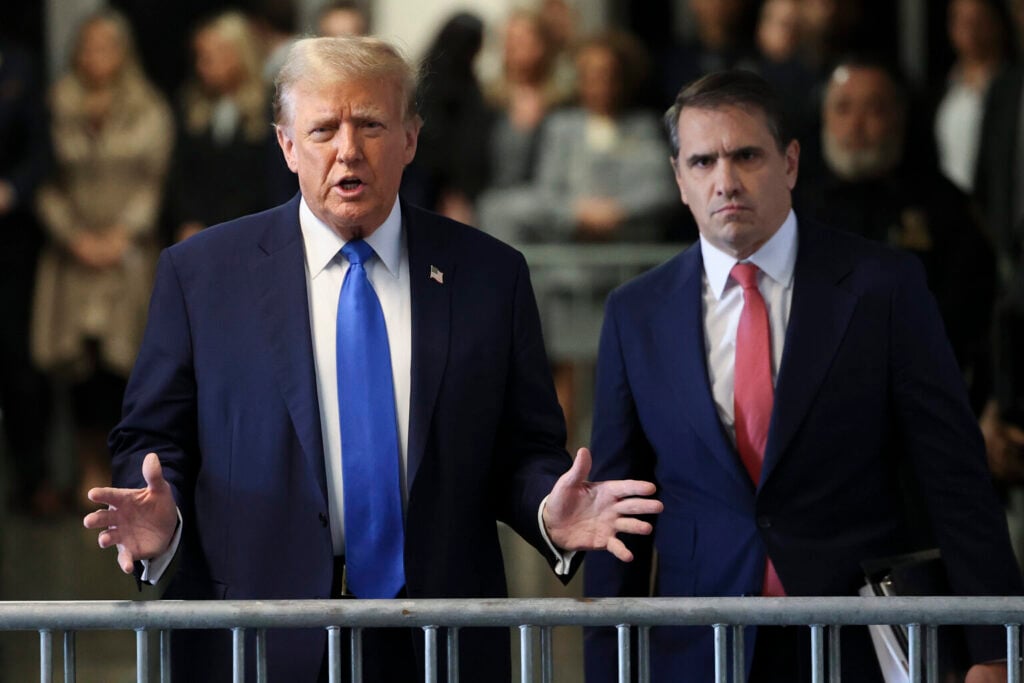
 President Donald Trump speaks to the media as he arrives with his then-personal attorney Todd Blanche in court for opening statements in his trial for allegedly covering up hush money payments at Manhattan Criminal Court on April 22, 2024, in New York City. Trump was convicted of falsifying business records in the first of his criminal cases to go to trial. Since his election, he’s nominated Blanche to be attorney general of the United States. (Photo by Yuki Iwamura-Pool/Courtesy of Alaska Beacon, Getty Images)

During a lengthy, meandering series of remarks last week, President Donald Trump offered another hint that his administration may seek to disrupt Alaska’s U.S. Senate election.

Fairbanks political writer Dermot Cole first noted Trump’s remarks.

On Aug. 18, NBC News — relying on unnamed sources — reported that the U.S. Department of Justice had issued grand jury subpoenas as it sought to investigate the campaign of Republican candidate Dan J. Sullivan of Petersburg. 

The Alaska Beacon has been unable to verify that reporting, but on Sept. 2, Trump alluded to a possible investigation.

Dan J. Sullivan has repeatedly said his campaign was inspired by his dissatisfaction with incumbent Republican U.S. Sen. Dan S. Sullivan, and that he did not work with officials from Democratic candidate Mary Peltola’s campaign on his initial run for office.

Despite that, Trump and Dan S. Sullivan have repeatedly claimed — without providing evidence — that Dan J. Sullivan is a fraudulent candidate. 

On Sept. 2, speaking to reporters in the Oval Office, Trump said he would travel to Alaska before the Nov. 3 general election in order to campaign for Dan S. Sullivan. 

Hours later, talking with Republican lawmakers at a dinner in the Rose Garden, Trump again brought up the Alaska race.

“I’m going to go up to Alaska for Dan Sullivan. Think of it,” Trump said. “They have a man named Dan Sullivan running against him, the Democrats.”

“I think, Todd, you have a legal case on that,” the President said, referring to Attorney General Todd Blanche.

The U.S. Senate confirmed Blanche by a 50-49 margin on Aug. 8. Sen. Dan S. Sullivan was one of the decisive votes in favor of confirmation.

In the August primary election, Democratic candidate Mary Peltola had 49.5% of the vote, Dan S. Sullivan had 41.4%, and Dan J. Sullivan had 2.5% of the vote.

Under Alaska’s election system, the top four candidates advance to the November general election. The fourth-place finisher in the primary, Democratic candidate David Leslie, withdrew after the results were finalized, which advanced the fifth-place finisher, Gerald Heikes, who had 1.1% of the vote.

Trump, speaking on Sept. 2, said that even though Dan J. Sullivan had only 2.5% of the vote, his appearance on the November ballot could be decisive in a close contest between Peltola and Dan J. Sullivan.

“Let’s say he takes two or three points away. That’s the difference between winning and losing. It should be illegal. I don’t know how the judges are ruling (on) it, but it really is terrible,” Trump said.

Dan J. Sullivan did not immediately respond to an inquiry from the Beacon about the President’s remarks, but after the publication of this article, he answered by email: “I will not let President Trump’s threats of retribution force me out of this race. I’m running to give a voice to the Alaskans who voted for me and to honor the intent of our ranked choice voting system.”

Editor’s note: This article was updated on Sept. 9, 2026, at 9:03 a.m. with a response from Dan J. Sullivan.

Categories
Alaska News Featured Juneau News juneau Juneau Local Juneau Local Ketchikan Local News Feeds Sitka Local

Alaska Department of Law says it found dozens of potential gaps in candidates’ financial disclosures

By: James Brooks, Alaska Beacon

Gov. Mike Dunleavy, Lt. Gov. Nancy Dahlstrom and Stephen Cox, general counsel to Dunleavy, speak at a news conference on Sep. 7, 2026 defending the decision to re-certify Treg Taylor as a candidate for governor on the general election ballot, citing issues with multiple candidates’ financial disclosure reports and litigation risks if he were disqualified. (Photo by Wil Courtney)

A decision that reversed Alaska Republican governor candidate Treg Taylor’s disqualification was motivated in part by a review that found 91 possible disclosure problems among 121 state-office candidates, Lt. Gov. Nancy Dahlstrom said Monday.

“My decision, I believe, was necessary for the integrity and the orderly administration of the election, and I believe this decision serves the public,” she told reporters during a news conference in Anchorage.

“There’s going to be a lot of people that think there were nefarious things going on. We don’t think so,” said Gov. Mike Dunleavy.

[GET MORE: What possible gaps were found in filings by Alaska’s four governor and lieutenant governor candidates?]

It wasn’t immediately clear whether any of the disclosure problems put candidates at risk of violating state law or if the state would require candidates to fix those problems.

Dahlstrom disqualified Treg Taylor and an Anchorage state House candidate on Aug. 31, following the recommendations of the Alaska Public Offices Commission, which cited flaws in their Public Official Financial Disclosure forms.

APOC is a regulatory agency of the Alaska Department of Administration that oversees campaigns and public officials’ financial disclosures, as well as lobbying activities.

Elected officials, members of state boards and commissions, and the governor’s cabinet, are required to use the POFD to disclose all business dealings worth more than $1,000 in order to discourage corruption. 

Taylor, Dunleavy’s former attorney general, and Republican state House candidate Jose Tagle failed to file complete forms within 30 days after they registered as candidates, causing APOC to recommend that they be disqualified from advancing past the August primary.

Dahlstrom followed that recommendation but then reversed herself four days later, restoring Taylor and Tagle to the ballot on Sept. 4.

Rachel Witty, the top civil attorney for the Alaska Department of Law, said during Monday’s news conference that the department had conducted a “limited and expedited” review of other candidates’ POFDs after Taylor’s disqualification in order to judge whether Dahlstrom’s action was legally defensible.

“This was done over the course of a day and a half. So I can’t emphasize enough that this is a preliminary review. We didn’t have time to contact candidates,” she said.

The resulting review found dozens of potential problems, including some with every other finalist candidate for governor — Democratic candidate Jonathan Kreiss-Tomkins, Republican Bernadette Wilson and Republican Dave Bronson.

Wilson and Kreiss-Tomkins’ lieutenant governor candidate, Zac Johnson, were the subject of APOC complaints on Friday about their disclosures, according to the Anchorage Daily News. 

APOC had not published the complaints as of Monday evening.

Dahlstrom said she was not aware of those complaints before making the decision to restore Taylor’s candidacy.

Candidates appeared to be surprised by Monday’s disclosure. None of the four candidates for governor responded to questions on Monday afternoon and evening about the issues raised by the Department of Law. 

“And just because there are potential discrepancies, that doesn’t mean that those candidates violated the law,” said Stephen Cox, attorney to Gov. Dunleavy.

Cox was appointed as attorney general following Taylor’s departure, but was rejected by the Alaska State Legislature in May.

Cox said he worked with Witty and the Department of Law on the review; the extent of his involvement wasn’t immediately clear. 

The Department of Law’s investigation is unusual, if not unprecedented. APOC typically operates on a complaint-based system, with most actions taken when a member of the public alerts the commission to a potential problem. 

The agency is chronically underfunded and understaffed. Ten years ago, it had 13 staff; today it has nine, and APOC has struggled at times to fill those positions.

Until last year, Taylor served as attorney general, head of the Department of Law. He’s now running as a Republican for governor, and the decision to both disqualify him and restore him came from a Republican elected official.

Witty said that “unequivocally,” the review “was completely an initiative of the Department of Law as we assess litigation risk.”

When asked whether candidates will be fined or required to correct the potential discrepancies before the general election, Witty said that’s within the jurisdiction of APOC to investigate. 

“We don’t know what APOC is going to do,” she said. “If  they find there’s reason to believe there is a violation, they can refer that to the APOC commission to take action on, and at that point, we’re talking about different fines and in the form of penalties.”

Moving forward, Dunleavy said, he intends to recommend that the next governor and next Legislature review APOC laws and regulations with a group of former elected officials.

“That’s something that I’ve been thinking about quite honestly for some time, and this just kind of hits home that it’s long overdue,” he said.  

Categories
Alaska News Featured Juneau News juneau Juneau Local Juneau Local Ketchikan Local News Feeds Sitka Local

Alaska schools set to receive $115M in war-driven oil revenue bonus, state announces

By: Corinne Smith, Alaska Beacon

A school bus passes in front of the Alaska State Capitol on Wednesday, May 20, 2026. (James Brooks photo/Alaska Beacon)

The Alaska Department of Revenue announced on Monday that Alaska’s K-12 public schools will receive an additional $115 million in state funding this year, prompted by a boost in oil revenues driven by the U.S. war on Iran.

Legislators earmarked the additional oil revenue for schools as part of the state budget approved by Gov. Mike Dunleavy in June. 

The additional funding is a relief to school districts statewide. Many districts have faced severe budget shortfalls in recent years due to funding not keeping pace with rising costs. This year, a record 12 elementary and middle schools closed across the state.

Following the announcement, Luke Meinert, superintendent of the Fairbanks North Star Borough School District — the state’s third-largest district by student count — welcomed the news, and said the district is appreciative of the Legislature for making it a priority.  

“(We’re) very excited that the projected numbers came through and that we will see a sizable increase in funding for our school district through the one-time funds that are being allocated,” he said in an interview Tuesday. 

Officials with the Department of Revenue announced the state had collected sufficient revenue funds to meet the special appropriation of nearly $600 million. 

Lawmakers designated funding for four priorities areas, in sequential order: nearly $128 million to the Permanent Fund to allocate one-time energy relief payments of $200 per eligible Alaskan along with dividend checks; $115 million to K-12 schools through the Alaska Department of Education and Early Development; $15 million to the bulk fuel loan program; and $341 million to the state’s budget reserve account.

According to the announcement, the Monday revenue estimates are expected to be revised and finalized this fall. The revenue amounts are expected to “change slightly,” impacting the exact amount that will land in the budget reserve fund, the state’s savings account, officials said. 

The $115 million will be distributed to school districts according to the state’s education funding formula, which is based on student enrollment counts in October.  

For Fairbanks, that’s estimated to be roughly $10.2 million this year. Meinert said the district designed its budget this year anticipating about half of that amount, and the additional funding will go toward teachers and staff, as the district is currently in union contract negotiations are ongoing, and other areas. “So that will help us in our negotiation discussions for this school year,” he said. 

“Student activities have been an area that’s been cut pretty hard over the past several years,” he continued. “So potentially adding some funding there to ensure that families aren’t having to pick up a bigger burden of paying for student activities. And then, additionally, I think there may be some smaller investments for teacher mentoring, teacher coaching, and possibly some funding in our nutrition services department.”

School board members with Fairbanks and Anchorage called on the state in June to release estimates earlier, ahead of the school year — “the earliest practical information available,” they wrote in an op-ed for the Anchorage Daily News. They asked the state to announce whether “funding is likely, unlikely or still uncertain,” to help districts plan, particularly for hiring teachers. 

But the Department of Revenue did not change its scheduled announcement.

Lisa Parady, executive director of the Alaska Council of School Administrators, said they were “elated” and “grateful” at the announcement. But she said it underscores Alaska schools’ needs for prior notice and consistent state funding. 

“We do have to get to the place where we have predictable, reliable funds in advance of needing to extend contracts. That’s the biggest issue,” she said Tuesday. 

“Because we’re in the greatest education shortage in the history of Alaska and in the nation, it allows for the recruitment and retention of quality educators and that ability to lock in those contracts sooner,” she said.

Among the state’s largest districts, the Anchorage School District is expected to get $32 million. The Matanuska Susitna Borough School District is expecting $16.1 million, the Kenai Peninsula School District is expecting $7.6 million. Both districts closed schools this year. 

Parady said it’s difficult to say if the additional funding earlier in the year would have prevented school closures.

Districts cited surging costs of operations, as well as declining enrollment as more families opting for homeschool programs or leaving the state. 

“Each school district is in their own unique place in terms of overall education funding in their budgets,” Parady said. “Having a long term fiscal plan that allows for timely, reliable, and predictable revenue for schools … is the only way that school boards and our school district leaders can have the tools they need to make the best decisions as they’re managing their budgets. And school closures are obviously a piece of that, and so I can’t say for sure that it could have changed an outcome, but it’s certainly possible.”

Anchorage Democrat Sen. Löki Tobin, who chairs the Senate Education Committee expressed her reaction Tuesday as “mixed.” “We know that our schools are in desperate need of resources,” she said. 

“We have nonpartisan financial memos from our Division of Legislative Finance that says to adequately address the years that inflation has eroded the purchasing power of our base in funding, we need to appropriate significant financial resources per student to our schools, and while $115 million is a significant amount of dollars, it’s clearly not enough. And one-time funds do not create stability nor predictability.”

Tobin also acknowledged the moral dilemma of the upswing of Alaska oil revenues and state funding driven by the U.S. war on Iran. 

“It is gut-wrenching to know the reason that Alaska has been able to receive these resources,” Tobin said. “It is not without contemplation or thought that I have been thinking about the children that were bombed in these recent years in a place that is very far away from us, but is no less important and nor no less critical for the health and well-being of all of our kids, and how those choices are driving the record increases in the price of a per barrel of oil.”

With the boost in state revenues, Tobin also credited the efforts of lawmakers across political divides in designating funding for schools. “Folks who work to get this funding into our budget not only crossed the aisle but also were bicameral in nature, and that is absolutely critical,” she said.

Lawmakers allocated roughly $144 million in one-time additional funding for K-12 schools, plus $148 million for school repairs and construction this year to address an extensive maintenance backlog. They approved $29 million to offset districts’ rising energy costs beginning in 2028 and subject to future lawmakers approving the funding.