We at the Four Winds Resource Center want to send our heartfelt gratitude to the Chilkat Valley Community Foundation for supporting our mission year after year with their generous grants.
This past year, CVCF gave us the ability to “Power Up” our organization by funding the purchase of requested tools for our Tool Library, yoga equipment, building materials for a permanent compost structure and needed chairs for community events.
Southeast Alaska Independent Living (SAIL) wishes to extend our gratitude to our community and the Chilkat Valley Community Foundation (CVCF) for continued phenomenal support of the Haines SAIL program. Thanks in part to a CVCF grant, SAIL is well on our way to serving even more seniors and people with disabilities in Haines and Klukwan this year! We are proud to empower local seniors and adults and youth with disabilities to live independent lives right…
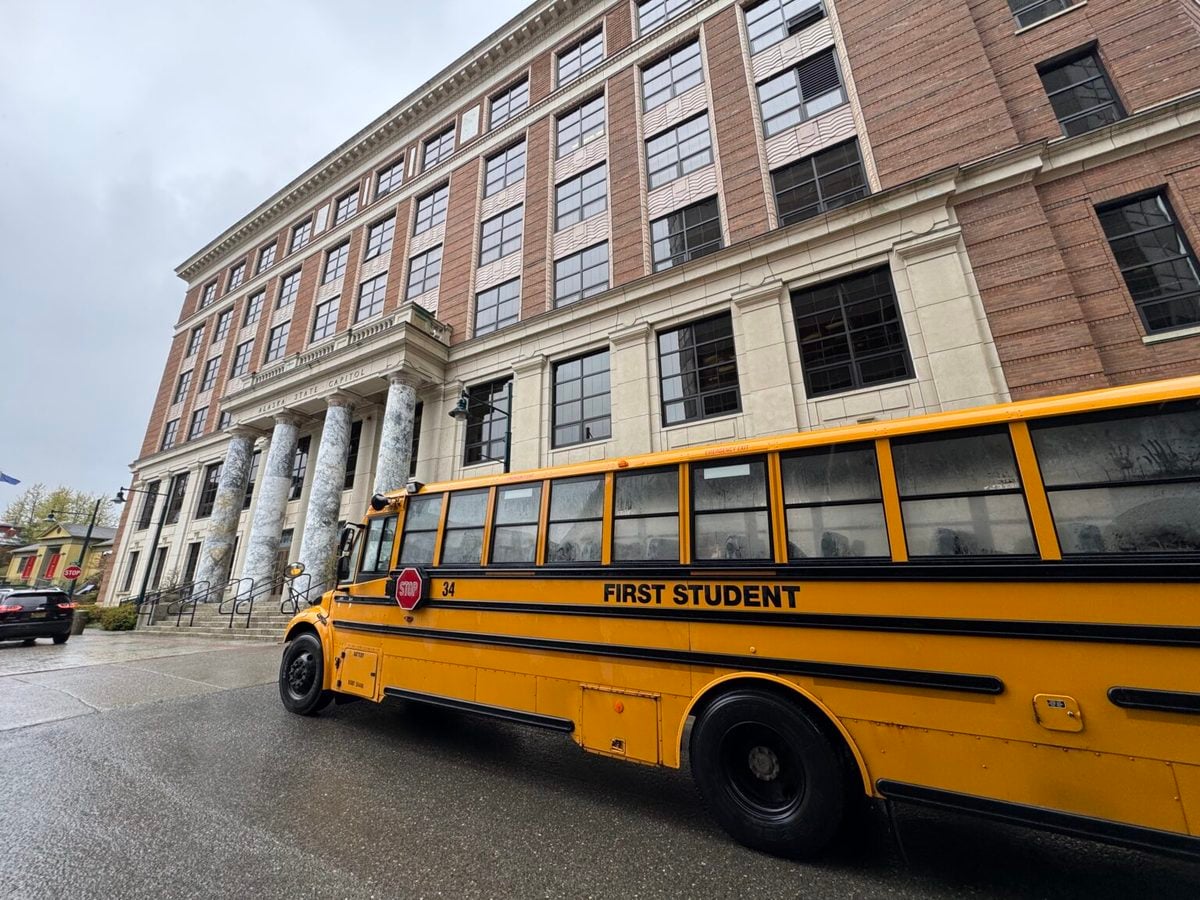
A school bus passes in front of the Alaska State Capitol on Wednesday, May 20, 2026. (James Brooks photo/Alaska Beacon)
The Alaska Department of Revenue announced on Monday that Alaska’s K-12 public schools will receive an additional $115 million in state funding this year, prompted by a boost in oil revenues driven by the U.S. war on Iran.
Legislators earmarked the additional oil revenue for schools as part of the state budget approved by Gov. Mike Dunleavy in June.
The additional funding is a relief to school districts statewide. Many districts have faced severe budget shortfalls in recent years due to funding not keeping pace with rising costs. This year, a record 12 elementary and middle schools closed across the state.
Following the announcement, Luke Meinert, superintendent of the Fairbanks North Star Borough School District — the state’s third-largest district by student count — welcomed the news, and said the district is appreciative of the Legislature for making it a priority.
“(We’re) very excited that the projected numbers came through and that we will see a sizable increase in funding for our school district through the one-time funds that are being allocated,” he said in an interview Tuesday.
Officials with the Department of Revenue announced the state had collected sufficient revenue funds to meet the special appropriation of nearly $600 million.
Lawmakers designated funding for four priorities areas, in sequential order: nearly $128 million to the Permanent Fund to allocate one-time energy relief payments of $200 per eligible Alaskan along with dividend checks; $115 million to K-12 schools through the Alaska Department of Education and Early Development; $15 million to the bulk fuel loan program; and $341 million to the state’s budget reserve account.
According to the announcement, the Monday revenue estimates are expected to be revised and finalized this fall. The revenue amounts are expected to “change slightly,” impacting the exact amount that will land in the budget reserve fund, the state’s savings account, officials said.
The $115 million will be distributed to school districts according to the state’s education funding formula, which is based on student enrollment counts in October.
For Fairbanks, that’s estimated to be roughly $10.2 million this year. Meinert said the district designed its budget this year anticipating about half of that amount, and the additional funding will go toward teachers and staff, as the district is currently in union contract negotiations are ongoing, and other areas. “So that will help us in our negotiation discussions for this school year,” he said.
“Student activities have been an area that’s been cut pretty hard over the past several years,” he continued. “So potentially adding some funding there to ensure that families aren’t having to pick up a bigger burden of paying for student activities. And then, additionally, I think there may be some smaller investments for teacher mentoring, teacher coaching, and possibly some funding in our nutrition services department.”
School board members with Fairbanks and Anchorage called on the state in June to release estimates earlier, ahead of the school year — “the earliest practical information available,” they wrote in an op-ed for the Anchorage Daily News. They asked the state to announce whether “funding is likely, unlikely or still uncertain,” to help districts plan, particularly for hiring teachers.
But the Department of Revenue did not change its scheduled announcement.
Lisa Parady, executive director of the Alaska Council of School Administrators, said they were “elated” and “grateful” at the announcement. But she said it underscores Alaska schools’ needs for prior notice and consistent state funding.
“We do have to get to the place where we have predictable, reliable funds in advance of needing to extend contracts. That’s the biggest issue,” she said Tuesday.
“Because we’re in the greatest education shortage in the history of Alaska and in the nation, it allows for the recruitment and retention of quality educators and that ability to lock in those contracts sooner,” she said.
Among the state’s largest districts, the Anchorage School District is expected to get $32 million. The Matanuska Susitna Borough School District is expecting $16.1 million, the Kenai Peninsula School District is expecting $7.6 million. Both districts closed schools this year.
Parady said it’s difficult to say if the additional funding earlier in the year would have prevented school closures.
Districts cited surging costs of operations, as well as declining enrollment as more families opting for homeschool programs or leaving the state.
“Each school district is in their own unique place in terms of overall education funding in their budgets,” Parady said. “Having a long term fiscal plan that allows for timely, reliable, and predictable revenue for schools … is the only way that school boards and our school district leaders can have the tools they need to make the best decisions as they’re managing their budgets. And school closures are obviously a piece of that, and so I can’t say for sure that it could have changed an outcome, but it’s certainly possible.”
Anchorage Democrat Sen. Löki Tobin, who chairs the Senate Education Committee expressed her reaction Tuesday as “mixed.” “We know that our schools are in desperate need of resources,” she said.
“We have nonpartisan financial memos from our Division of Legislative Finance that says to adequately address the years that inflation has eroded the purchasing power of our base in funding, we need to appropriate significant financial resources per student to our schools, and while $115 million is a significant amount of dollars, it’s clearly not enough. And one-time funds do not create stability nor predictability.”
Tobin also acknowledged the moral dilemma of the upswing of Alaska oil revenues and state funding driven by the U.S. war on Iran.
“It is gut-wrenching to know the reason that Alaska has been able to receive these resources,” Tobin said. “It is not without contemplation or thought that I have been thinking about the children that were bombed in these recent years in a place that is very far away from us, but is no less important and nor no less critical for the health and well-being of all of our kids, and how those choices are driving the record increases in the price of a per barrel of oil.”
With the boost in state revenues, Tobin also credited the efforts of lawmakers across political divides in designating funding for schools. “Folks who work to get this funding into our budget not only crossed the aisle but also were bicameral in nature, and that is absolutely critical,” she said.
Lawmakers allocated roughly $144 million in one-time additional funding for K-12 schools, plus $148 million for school repairs and construction this year to address an extensive maintenance backlog. They approved $29 million to offset districts’ rising energy costs beginning in 2028 and subject to future lawmakers approving the funding.
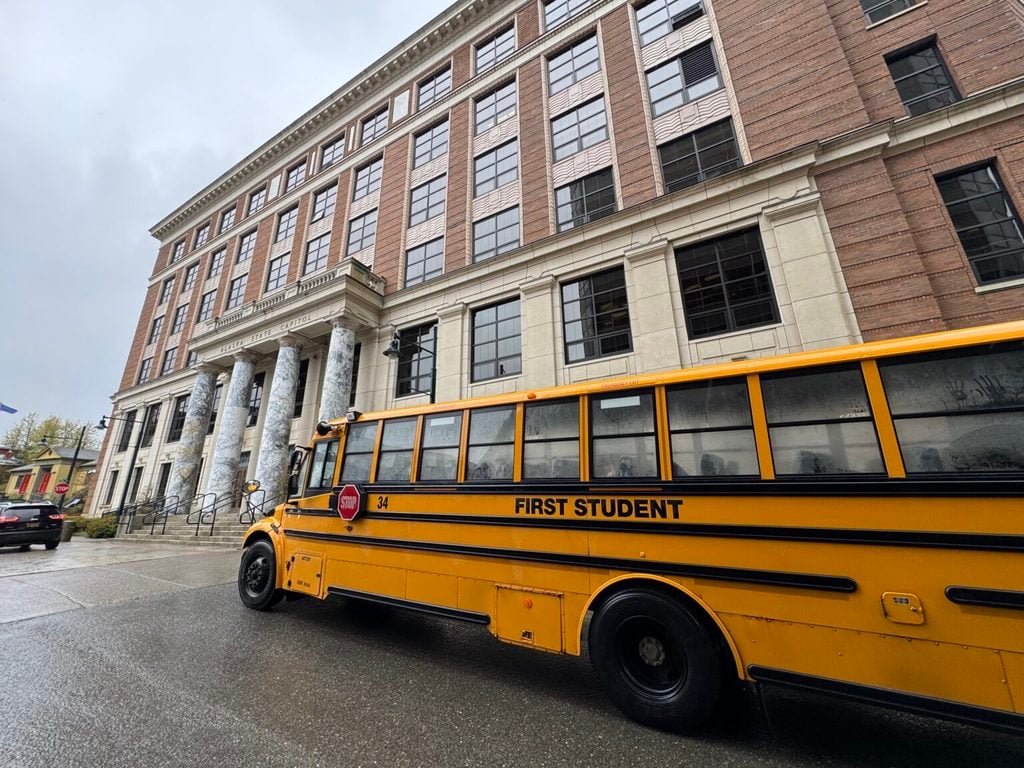
A school bus passes in front of the Alaska State Capitol on Wednesday, May 20, 2026. (James Brooks photo/Alaska Beacon)
The Alaska Department of Revenue announced on Monday that Alaska’s K-12 public schools will receive an additional $115 million in state funding this year, prompted by a boost in oil revenues driven by the U.S. war on Iran.
Legislators earmarked the additional oil revenue for schools as part of the state budget approved by Gov. Mike Dunleavy in June.
The additional funding is a relief to school districts statewide. Many districts have faced severe budget shortfalls in recent years due to funding not keeping pace with rising costs. This year, a record 12 elementary and middle schools closed across the state.
Following the announcement, Luke Meinert, superintendent of the Fairbanks North Star Borough School District — the state’s third-largest district by student count — welcomed the news, and said the district is appreciative of the Legislature for making it a priority.
“(We’re) very excited that the projected numbers came through and that we will see a sizable increase in funding for our school district through the one-time funds that are being allocated,” he said in an interview Tuesday.
Officials with the Department of Revenue announced the state had collected sufficient revenue funds to meet the special appropriation of nearly $600 million.
Lawmakers designated funding for four priorities areas, in sequential order: nearly $128 million to the Permanent Fund to allocate one-time energy relief payments of $200 per eligible Alaskan along with dividend checks; $115 million to K-12 schools through the Alaska Department of Education and Early Development; $15 million to the bulk fuel loan program; and $341 million to the state’s budget reserve account.
According to the announcement, the Monday revenue estimates are expected to be revised and finalized this fall. The revenue amounts are expected to “change slightly,” impacting the exact amount that will land in the budget reserve fund, the state’s savings account, officials said.
The $115 million will be distributed to school districts according to the state’s education funding formula, which is based on student enrollment counts in October.
For Fairbanks, that’s estimated to be roughly $10.2 million this year. Meinert said the district designed its budget this year anticipating about half of that amount, and the additional funding will go toward teachers and staff, as the district is currently in union contract negotiations are ongoing, and other areas. “So that will help us in our negotiation discussions for this school year,” he said.
“Student activities have been an area that’s been cut pretty hard over the past several years,” he continued. “So potentially adding some funding there to ensure that families aren’t having to pick up a bigger burden of paying for student activities. And then, additionally, I think there may be some smaller investments for teacher mentoring, teacher coaching, and possibly some funding in our nutrition services department.”
School board members with Fairbanks and Anchorage called on the state in June to release estimates earlier, ahead of the school year — “the earliest practical information available,” they wrote in an op-ed for the Anchorage Daily News. They asked the state to announce whether “funding is likely, unlikely or still uncertain,” to help districts plan, particularly for hiring teachers.
But the Department of Revenue did not change its scheduled announcement.
Lisa Parady, executive director of the Alaska Council of School Administrators, said they were “elated” and “grateful” at the announcement. But she said it underscores Alaska schools’ needs for prior notice and consistent state funding.
“We do have to get to the place where we have predictable, reliable funds in advance of needing to extend contracts. That’s the biggest issue,” she said Tuesday.
“Because we’re in the greatest education shortage in the history of Alaska and in the nation, it allows for the recruitment and retention of quality educators and that ability to lock in those contracts sooner,” she said.
Among the state’s largest districts, the Anchorage School District is expected to get $32 million. The Matanuska Susitna Borough School District is expecting $16.1 million, the Kenai Peninsula School District is expecting $7.6 million. Both districts closed schools this year.
Parady said it’s difficult to say if the additional funding earlier in the year would have prevented school closures.
Districts cited surging costs of operations, as well as declining enrollment as more families opting for homeschool programs or leaving the state.
“Each school district is in their own unique place in terms of overall education funding in their budgets,” Parady said. “Having a long term fiscal plan that allows for timely, reliable, and predictable revenue for schools … is the only way that school boards and our school district leaders can have the tools they need to make the best decisions as they’re managing their budgets. And school closures are obviously a piece of that, and so I can’t say for sure that it could have changed an outcome, but it’s certainly possible.”
Anchorage Democrat Sen. Löki Tobin, who chairs the Senate Education Committee expressed her reaction Tuesday as “mixed.” “We know that our schools are in desperate need of resources,” she said.
“We have nonpartisan financial memos from our Division of Legislative Finance that says to adequately address the years that inflation has eroded the purchasing power of our base in funding, we need to appropriate significant financial resources per student to our schools, and while $115 million is a significant amount of dollars, it’s clearly not enough. And one-time funds do not create stability nor predictability.”
Tobin also acknowledged the moral dilemma of the upswing of Alaska oil revenues and state funding driven by the U.S. war on Iran.
“It is gut-wrenching to know the reason that Alaska has been able to receive these resources,” Tobin said. “It is not without contemplation or thought that I have been thinking about the children that were bombed in these recent years in a place that is very far away from us, but is no less important and nor no less critical for the health and well-being of all of our kids, and how those choices are driving the record increases in the price of a per barrel of oil.”
With the boost in state revenues, Tobin also credited the efforts of lawmakers across political divides in designating funding for schools. “Folks who work to get this funding into our budget not only crossed the aisle but also were bicameral in nature, and that is absolutely critical,” she said.
Lawmakers allocated roughly $144 million in one-time additional funding for K-12 schools, plus $148 million for school repairs and construction this year to address an extensive maintenance backlog. They approved $29 million to offset districts’ rising energy costs beginning in 2028 and subject to future lawmakers approving the funding.
NOTN- After another glacial outburst flood on the Mendenhall River, Juneau officials are turning their focus to how the city will pay for long‑term protection of flood‑prone neighborhoods.
City Manager Katie Koester told the Assembly that the U.S. Army Corps of Engineers is moving ahead with an industry led solution, which could move on a faster time-line than one directed by the Army Corp.
The project would be designed to Suicide basin below 1,100 feet and hold future events to minor flood levels.
While final designs and costs are still unknown, Koester said the overall price tag could reach hundreds of millions of dollars, leaving Juneau responsible for an estimated $40 million to $100 million depending on the federal cost share, 10 to 25 percent.
According to Koester, after speaking with Alaska Senator Dan Sullivan’s office, Alaska’s congressional delegation is now working to change federal law so Juneau can receive the same 90-10 cost share available for Army Corps projects on tribal lands under the conventional process.
“I do think our state having some participation in the funding of an enduring solution is important… we have local government, federal government, tribal government, and state government all working together.” Koester said.
The city has already spent nearly $10 million in local funds on HESCO barriers and related work over recent flood seasons, and staff time has been pulled away from other core capital projects such as water, wastewater and facilities maintenance. Koester said engineering, public works and emergency management have been “absorbing” much of the response workload, and warned that can’t continue indefinitely without tradeoffs or added staff.
“We have spent a little under $10 million of CBJ taxpayer money, and that is thanks to grants and partnerships. Army Corps has spent significantly more more than that.” Koester said, “There will be maintenance responsibilities that we’ll be in charge of, including inspection, unfortunately protecting against vandalism. We’ve already seen the barrier slashed. We’ve already seen warming fires being built right up against the barriers.”
Assembly members are weighing a mix of options, including a special service area tax for roughly 1,800 homes in and around the flood zone currently protected by HESCOs, bonds backed by area‑wide taxpayers, and potential contributions from the state. A one‑mill levy in a HESCO service area would likely raise less than $1 million a year, meaning the general fund would still play a major role.
The Assembly is also debating whether to compensate homeowners who host HESCO barriers on their land through temporary easements, and whether to limit new development in the flood corridor while it asks voters to help finance a permanent solution. A small Assembly “strike team” will work with staff to refine funding options before they return to the full body for public debate.
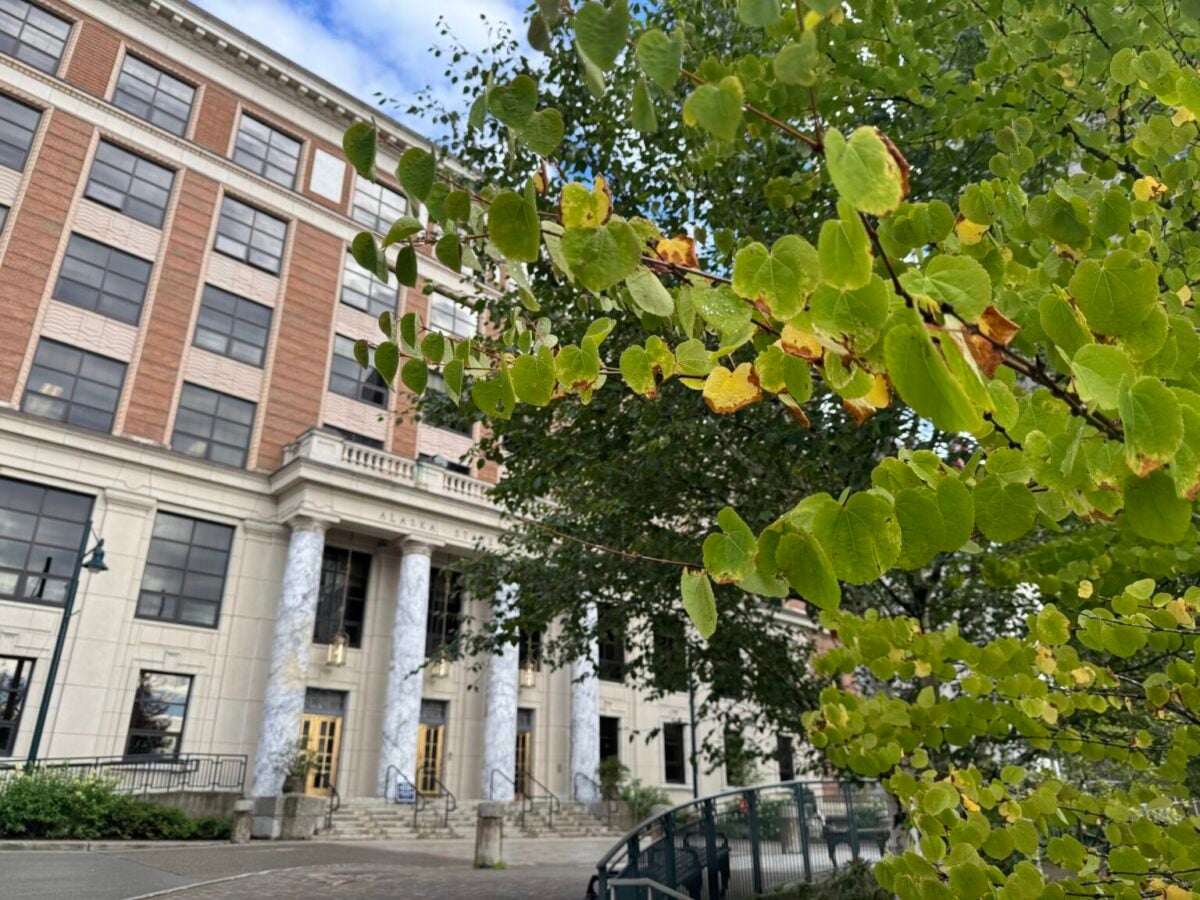
The first leaves begin to take their fall colors on the trees in front of the Alaska State Capitol on Tuesday, Sept. 1, 2026. (James Brooks photo/Alaska Beacon)
By: James Brooks, Alaska Beacon
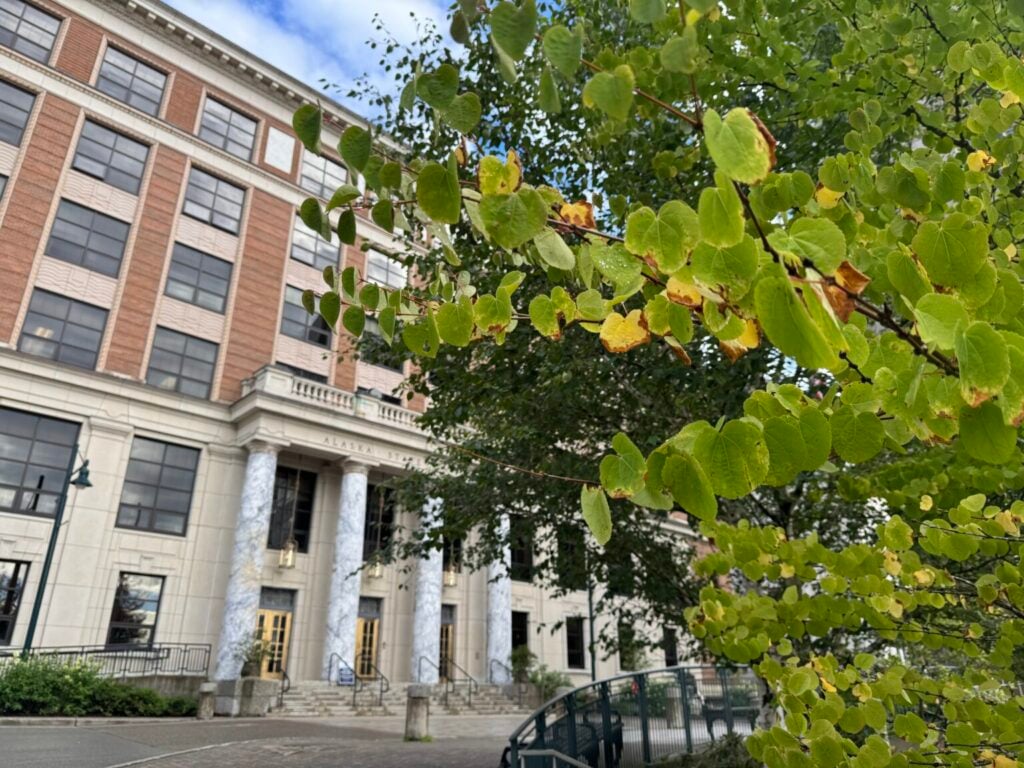
The first leaves begin to take their fall colors on the trees in front of the Alaska State Capitol on Tuesday, Sept. 1, 2026. (James Brooks photo/Alaska Beacon)
Final results from Alaska’s August primary election indicate existing coalition majorities in the state House and Senate are likely to continue after November’s general election and could even grow.
Alaska is the only state in the country where the state House and Senate are both controlled by coalitions of Democrats, independents and Republicans, something that forces bipartisan and multipartisan negotiations and compromises.
In Monday’s certified primary results, coalition-leaning candidates led 24 of 40 state House races. The current coalition majority includes 21 lawmakers — two Republicans, 16 Democrats and three independents.
In the state Senate, 10 of 20 seats are up for election this year. Coalition members or coalition-inclined candidates lead in seven of those races. Seven other coalition members are not up for election this year.
“I think you have a chance for one of the strongest coalitions in a very long time,” said Andrew Halcro, a former state legislator and moderate Republican who commentates on Alaska politics via a popular podcast.
Any majority group that controls the House and Senate dictates the agenda — who chairs committees, what bills advance and which ones do not.
Five people signed up to replace him, including current Speaker of the House Bryce Edgmon, I-Dillingham. Edgmon was the top finisher in the primary, with 37.9% of the vote.
The other finalists in November’s election will be Republican Darren Deacon (23.9%), Democrat Wassilie Guy (18.9%), and nonpartisan Richard Robb (11.5%). None filed withdrawal paperwork before Monday’s deadline.
The fifth-place finisher was undeclared candidate Wayne Morgan (7.9%). He is eliminated and will not advance to November.
This year, 4,184 people voted in the district, and turnout was up significantly from two years ago, when 2,899 people voted in the primary.
In 2022, during a primary that coincided with a special general election, 4,257 people voted in the district and Hoffman earned 66.2% of the vote in a two-way race against Veterans Party candidate Willy Keppel.
House District 37 – Bristol Bay and the Aleutian Islands
Edgmon’s decision to run for Senate means there is no incumbent in the race to represent House District 37, which covers Bristol Bay and the Aleutians.
Seven candidates registered for the primary, the most of any state House race in Alaska.
The district is a tossup politically — two years ago, 50.8% of participating voters picked Republican Donald Trump for President, but 52.9% voted for Democratic U.S. House candidate Mary Peltola and 72.5% went for Edgmon for U.S. House.
Four years ago, the district went for Peltola and Republican U.S. Sen. Lisa Murkowski in the general election.
In the August primary, Republican Brenda Wilson of King Cove had 22.6% of the vote, the most among the seven candidates for state House.
The other three finalists are Democratic candidate Evelynn Trefon (19.8%), nonpartisan Mark Smith (17.5%) and nonpartisan Cade Woods (9.2%).
Democratic candidate Dennis Robinson had 15.1% of the vote but withdrew before Monday’s deadline, as did undeclared candidate Kimberly Johnson, who had 10.7% of the vote. Their withdrawals cleared the way for Woods to be promoted into the fourth spot.
As a result, there will be one Democrat, one Republican and two independents to pick from in November.
House District 23 – Eagle River
Incumbent Republican Rep. Jamie Allard was the top vote-getter in a five-way primary election for the state House seat representing half of Eagle River, earning 39.8% of the vote in a strongly Republican district.
Democratic candidate Jim Arlington advanced to the November election with 31.9% of the vote, followed by Republican Ruby Jones (13.9%) and Democrat Lee Hammermeister (5.8%).
Republican Nick Capozzi finished ahead of Hammermeister with 8.6% of the vote but withdrew before Monday’s deadline. In a statement on Facebook, he said he was withdrawing to fulfill a pre-election pledge to stop his campaign if he was “soundly defeated” in the primary.
Capozzi said he is not endorsing Allard and believes there is “growing dissatisfaction” with her in the district.
“While I sincerely hope District 23 is well represented, I believe the Republican Party should carefully evaluate who is best positioned to earn and maintain the confidence of District 23 voters in future elections,” he wrote.
Incumbent Republican Rep. Garret Nelson of Sutton was appointed by Gov. Mike Dunleavy to represent the district after Dunleavy appointed its former representative, Republican George Rauscher, to the state Senate.
In the August primary, Nelson finished second, behind Republican Steve Menard, who had 39.4% of the vote in a six-way race that was the second most crowded among legislative contests last month.
Nelson had 23.2% of the vote, just ahead of Democratic candidate Kimberly Slone, who had 23.1% of the vote as the sole Democrat in a strongly Republican district.
Nonpartisan candidate Jessica Kusner-Kalarchik was fourth, with 8%.
Libertarian candidate Candice Frisby (4.2%) and undeclared candidate Amber Hansen (2%) were eliminated after finishing fifth and sixth, respectively.
House District 30 – Big Lake
A five-way race for the state House district representing Big Lake, the Denali Borough and the western Matanuska-Susitna Borough resulted in just three candidates advancing to the November election after the two lowest finishers withdrew ahead of Monday’s deadline.
Incumbent Republican Rep. Kevin McCabe had 32.4% of the vote in the heavily Republican district, followed by Democratic candidate Sandra Loomis with 29.2%.
Republican challenger Doug Massie was third, with 20.6%.
Withdrawals leave two more candidates running unopposed
Among Alaska’s 40 state House elections, four incumbents ran unopposed in August and will be unopposed in November, except for write-ins.
After one candidate was disqualified and another withdrew on Monday, two more races will also have candidates running unopposed.
Tagle’s disqualification leaves Democratic incumbent Ted Eischeid as the only candidate for the Anchorage district.
Elsewhere in Anchorage, former Anchorage Assembly member Felix Rivera quit the House District 13 race ahead of Monday’s deadline.
That district is currently represented by Democrat Andy Josephson, who is retiring and isn’t seeking re-election. Rivera’s departure leaves Democrat Lisa Keller as the only option on the ballot in November.
The other four unopposed state House legislators are Reps. Sara Hannan, D-Juneau; Chuck Kopp, R-Anchorage; Genevieve Mina, D-Anchorage; and Will Stapp, R-Fairbanks.
In the Senate, three of 10 races are unopposed: Sens. Bert Stedman, R-Sitka; Löki Tobin, D-Anchorage; and Bill Wielechowski, D-Anchorage, all remain on track to return to the Capitol in January.
In open districts, conservative Republican candidates tended to trail
While Republican candidate Brenda Wilson led all challengers in the primary for House District 37, her performance wasn’t repeated by all Republicans in open state House and Senate seats
In Senate District C, which covers Kodiak, Cordova and parts of the southern Kenai Peninsula, Rep. Louise Stutes, R-Kodiak, earned 49.4% of the vote to replace Sen. Gary Stevens, R-Kodiak.
Stevens is retiring, and the seat has no incumbent. Stutes is a moderate, one of two Republican members of the House’s coalition majority, and is expected to replace Stevens in the Senate’s coalition majority if elected.
Two more conservative Republicans, Heath Smith of Homer (37.8%) and Carrie Harris of Anchor Point (12.9%) finished behind Stutes in second and third.
In Stutes’ House District 5 in Kodiak, nonpartisan candidate Kathy Simpler had 61.4% of the vote against Republican challenger Sheldon Prout in a head-to-head race.
In Anchorage, where Democratic candidate Cliff Groh is attempting a return to the state House in the district covering Government Hill and Joint Base Elmendorf-Richardson, he had 67.2% of the vote against Republican challenger Dan Sager. The seat is currently held by Republican Rep. David Nelson, who is not seeking re-election.
Farther north, in Eagle River, Republican Rep. Dan Saddler is retiring. Republican Ken McCarty, a former legislator himself, led a three-way race to replace Saddler, earning 46.8% of the vote.
One of the other candidates in the race, former Rep. Sharon Jackson, withdrew ahead of Monday’s deadline. That leaves Republican Gina Wall, who earned 33.8% of the primary vote, as McCarty’s sole challenger.
In Fairbanks, Republican Rep. Frank Tomaszewski is running for the state Senate seat being vacated by Republican Robert Myers. Primary results showed him with 60.9% of the vote in a head-to-head race against Democratic challenger William Hunt.
Four incumbents trail in primary, but outcomes could change in November
In Anchorage’s Sand Lake neighborhood, Democratic candidate Denny Wells had 52.7% of the vote in a head-to-head race against Republican incumbent Rep. Mia Costello.
That’s a reversal of the general-election result two years ago, when Costello had 51.5% of the vote in a race against Wells and perennial candidate Dustin Darden, running as a Democrat.
The district has a slight Republican lean — it went for Trump two years ago, but the Republican candidate had less than 50% of the district’s vote for president.
In Homer, Republican Rep. Sarah Vance finished the primary more than 13 percentage points behind nonpartisan challenger Brent Johnson, who earned 56.9% of the vote in a head-to-head race.
Vance has been in office since 2019 and has governed as a Christian conservative, but she appeared to alienate some conservative Republicans this year when she worked across party lines on a bipartisan election reform bill.
In Fairbanks, Rep. Tomaszewski’s wife, Harmony, is the lone Republican candidate in the strongly Republican district being vacated by Tomaszewski. But in final primary election results, Harmony trailed nonpartisan candidate Joy Beth Cottle by 6 percentage points.
The two will appear on the ballot again in November.
In Western Alaska, Rep. Nellie Unangiq Jimmie was the only incumbent Democrat who didn’t finish first in the primary.
With 29% of the vote, she finished second to former Democratic Rep. CJ McCormick, whom she defeated in 2024.
Republican Willy Keppel was third with 24.3% of the vote, followed by nonpartisan candidate Joseph Amik, with 14.7%.
Turnout in the Democratic-leaning district was low by comparison with the rest of the state — fewer than 16% of eligible voters cast ballots in the primary.
Primary success isn’t a guarantee of success in November, even in head-to-head contests: Two years ago, Sen. Scott Kawasaki, D-Fairbanks, received fewer votes in the August primary than his Republican challenger, Leslie Hajdukovich.
Just three months later, Kawasaki reversed that result and remains a member of the Senate today.
(The Center Square) – American voters across the political spectrum are divided on whether the rise of Democratic Socialists within the Democratic Party is a sign of positive change or creeping extremism, new polling shows.
September can be one of the best months at farmers markets in many parts of the country, and the reason goes beyond variety. Cool overnight … Read moreThe post There is a scientific reason September produce tastes different, and it…
A two-minute walk in San Antonio separates a converted 19th-century brewery from a former glass factory that now holds two Michelin-starred restaurants. Five minutes away … Read moreThe post Food halls have become a destination in their own right, and…