Categories
Alaska News Featured Juneau News juneau Juneau Local Juneau Local Ketchikan Local News Feeds Sitka Local

Alaska House backs resolution urging waiver for $100k visa fee for international teachers

By: Corinne Smith, Alaska Beacon
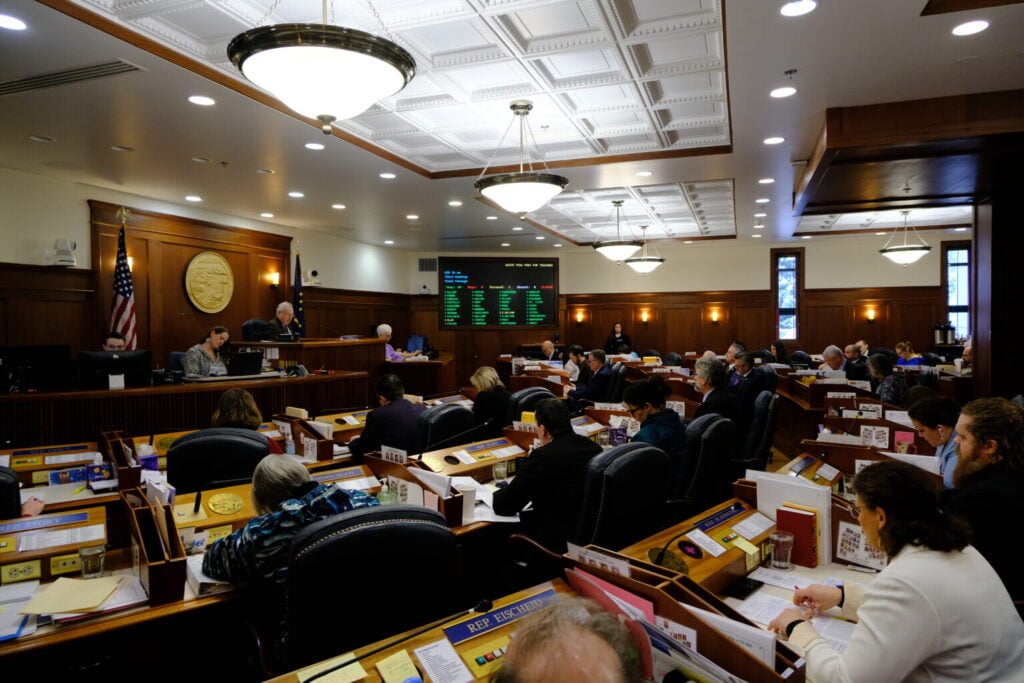
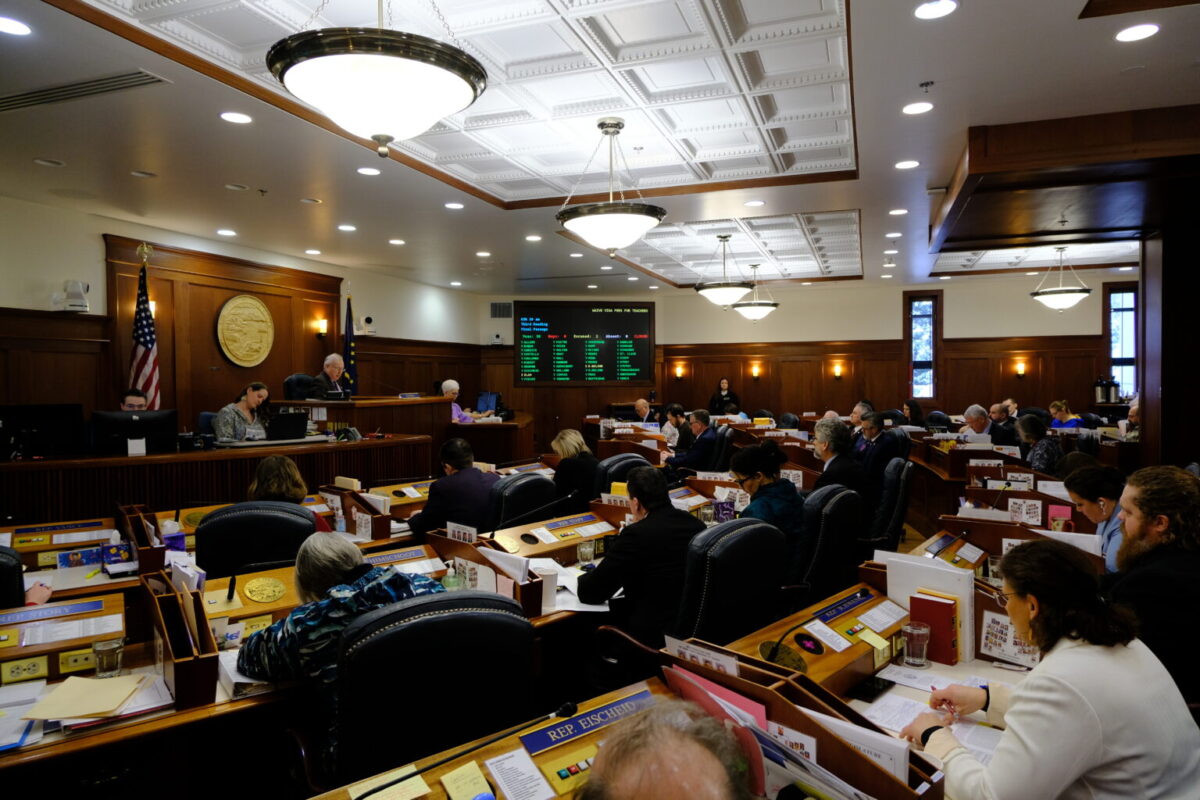
The Alaska House of Representatives passes a resolution to urge the Trump administration waive a $100,000 visa fee for international teachers on Mar. 20, 2026. (Photo by Corinne Smith/Alaska Beacon)

The Alaska House of Representatives approved a resolution urging the Trump administration to waive a steep visa fee for international teachers. The vote comes amid a growing teacher shortage throughout the state. 

Lawmakers are calling for the Trump administration to waive the fee for teachers hired through the H-1B visa program, which allows employers to recruit highly-skilled workers from overseas. The federal government raised the fee from $5,000 to $100,000 for each new applicant to the H-1B visa program in September.

The House passed the resolution by a 38-0 vote on Friday, with Reps. Bill Elam, R-Kenai, and David Nelson, R-Anchorage, absent. 

Rep. Alyse Galvin, I-Anchorage, sponsored the resolution. The former teacher said the cost is impossible for Alaska school districts.

Rep. Alyse Galvin, I-Anchorage, speaks on the House floor on Mar. 20, 2026. (Photo by Corinne Smith/Alaska Beacon)

“We know it’s a deep concern,” Galvin said on the House floor Friday. “In Alaska, in particular, in our rural areas, we are desperate for more teachers, qualified teachers in the classroom before our students. We have a true need here that can be met, and this is one tool that I hope all of us will raise our voice together and send to our federal delegation so they can use it.”

Rep. Ted Eischeid, D-Anchorage, a former science teacher, noted international teachers are also employed in urban districts like Anchorage.

​​”At last count, we had 66 teachers that work for the Anchorage School District providing critical education,” Edischied said, referring to the number of international teachers. “So if the most important educational reform is to have a highly qualified teacher in front of kids every day, this resolution moves us in that direction. So I support this.”

Rep. Nellie Jimmie, D-Toksook Bay, said 60% of teachers in the Kuspuk School District in her district are international hires. “The Kuspuk district cannot recruit teachers fast enough off the road system. You can’t train somebody to be a teacher overnight,” she said. “Ten teachers at a $100,000 rate visa, that’s a million dollars. Do we have a million dollars in our budget to spare for these teachers? I don’t think so.” 

Jennifer Schmitz is director of the Alaska Center for Recruitment and Retention, a division of the Alaska Council for School Administrators, which supports districts in recruiting and hiring teachers and staff. After the vote, Schmitz said she was glad to hear legislators’ support because districts are hiring now. 

“I’m thrilled that it passed, especially that it was unanimous,” Schmitz said. “Legislators all seem to understand that this is an issue and that they’re supportive of helping our international teachers get here more easily.”

There are nearly 600 teachers in Alaska hired through the H-1B visa program, which lasts for five years. Despite that, Schmitz said the center’s job board has over 700 job openings across the state, including for teachers, administration, para-professionals and staff.

“Special education is always at the top and then often harder to fill,” Schmitz said. “Positions can be secondary specialties like math, science, and chemistry, those higher level classes, those are often harder to fill and harder to find qualified candidates. But we have openings in every possible position.”

Schmitz said the center recently held several job fairs, including connecting University of Alaska students with education jobs as well as recruiting from around the United States and internationally.

“We are hopeful that people can find teachers from that. But we’re just really at a standstill,” she said for international hiring because of the visa fee. “And our attorney is looking at ways around that and other kinds of visas, but we just don’t know if they’re going to work… And we need to get their paperwork going now if we want them here by fall.”

The resolution now goes to the Senate where it is expected to garner support. The initiative backs federal action in the U.S. Congress, where Alaska Republican U.S. Sens. Lisa Murkowski and Dan Sullivan are cosponsoring a bill in the Senate to waive the $100,000 visa fee for all public school employees. A similar bill in the U.S. House is urging the Trump administration to waive the visa fee for health care workers.

Categories
Alaska News

Alaska House backs resolution urging waiver for $100k visa fee for international teachers

The Alaska House of Representatives passes a resolution to urge the Trump administration waive a $100,000 visa fee for international teachers on Mar. 20, 2026. (Photo by Corinne Smith/Alaska Beacon)

The Alaska House of Representatives passes a resolution to urge the Trump administration waive a $100,000 visa fee for international teachers on Mar. 20, 2026. (Photo by Corinne Smith/Alaska Beacon)

The Alaska House of Representatives approved a resolution urging the Trump administration to waive a steep visa fee for international teachers. The vote comes amid a growing teacher shortage throughout the state. 

Lawmakers are calling for the Trump administration to waive the fee for teachers hired through the H-1B visa program, which allows employers to recruit highly-skilled workers from overseas. The federal government raised the fee from $5,000 to $100,000 for each new applicant to the H-1B visa program in September.

The House passed the resolution by a 38-0 vote on Friday, with Reps. Bill Elam, R-Kenai, and David Nelson, R-Anchorage, absent. 

Rep. Alyse Galvin, I-Anchorage, sponsored the resolution. The former teacher said the cost is impossible for Alaska school districts.

Rep. Alyse Galvin, I-Anchorage, speaks on the House floor on Mar. 20, 2026. (Photo by Corinne Smith/Alaska Beacon)

“We know it’s a deep concern,” Galvin said on the House floor Friday. “In Alaska, in particular, in our rural areas, we are desperate for more teachers, qualified teachers in the classroom before our students. We have a true need here that can be met, and this is one tool that I hope all of us will raise our voice together and send to our federal delegation so they can use it.”

Rep. Ted Eischeid, D-Anchorage, a former science teacher, noted international teachers are also employed in urban districts like Anchorage.

​​”At last count, we had 66 teachers that work for the Anchorage School District providing critical education,” Edischied said, referring to the number of international teachers. “So if the most important educational reform is to have a highly qualified teacher in front of kids every day, this resolution moves us in that direction. So I support this.”

Rep. Nellie Jimmie, D-Toksook Bay, said 60% of teachers in the Kuspuk School District in her district are international hires. “The Kuspuk district cannot recruit teachers fast enough off the road system. You can’t train somebody to be a teacher overnight,” she said. “Ten teachers at a $100,000 rate visa, that’s a million dollars. Do we have a million dollars in our budget to spare for these teachers? I don’t think so.” 

Jennifer Schmitz is director of the Alaska Center for Recruitment and Retention, a division of the Alaska Council for School Administrators, which supports districts in recruiting and hiring teachers and staff. After the vote, Schmitz said she was glad to hear legislators’ support because districts are hiring now. 

“I’m thrilled that it passed, especially that it was unanimous,” Schmitz said. “Legislators all seem to understand that this is an issue and that they’re supportive of helping our international teachers get here more easily.”

There are nearly 600 teachers in Alaska hired through the H-1B visa program, which lasts for five years. Despite that, Schmitz said the center’s job board has over 700 job openings across the state, including for teachers, administration, para-professionals and staff.

“Special education is always at the top and then often harder to fill,” Schmitz said. “Positions can be secondary specialties like math, science, and chemistry, those higher level classes, those are often harder to fill and harder to find qualified candidates. But we have openings in every possible position.”

Schmitz said the center recently held several job fairs, including connecting University of Alaska students with education jobs as well as recruiting from around the United States and internationally.

“We are hopeful that people can find teachers from that. But we’re just really at a standstill,” she said for international hiring because of the visa fee. “And our attorney is looking at ways around that and other kinds of visas, but we just don’t know if they’re going to work… And we need to get their paperwork going now if we want them here by fall.”

The resolution now goes to the Senate where it is expected to garner support. The initiative backs federal action in the U.S. Congress, where Alaska Republican U.S. Sens. Lisa Murkowski and Dan Sullivan are cosponsoring a bill in the Senate to waive the $100,000 visa fee for all public school employees. A similar bill in the U.S. House is urging the Trump administration to waive the visa fee for health care workers.

SUPPORT: YOU MAKE OUR WORK POSSIBLE

Categories
Alaska News Featured Juneau News juneau Juneau Local Juneau Local Ketchikan Local News Feeds Sitka Local

Federal ‘SAVE Act’ risks denying thousands of Alaskans the ability to vote, Murkowski says

By: James Brooks, Alaska Beacon

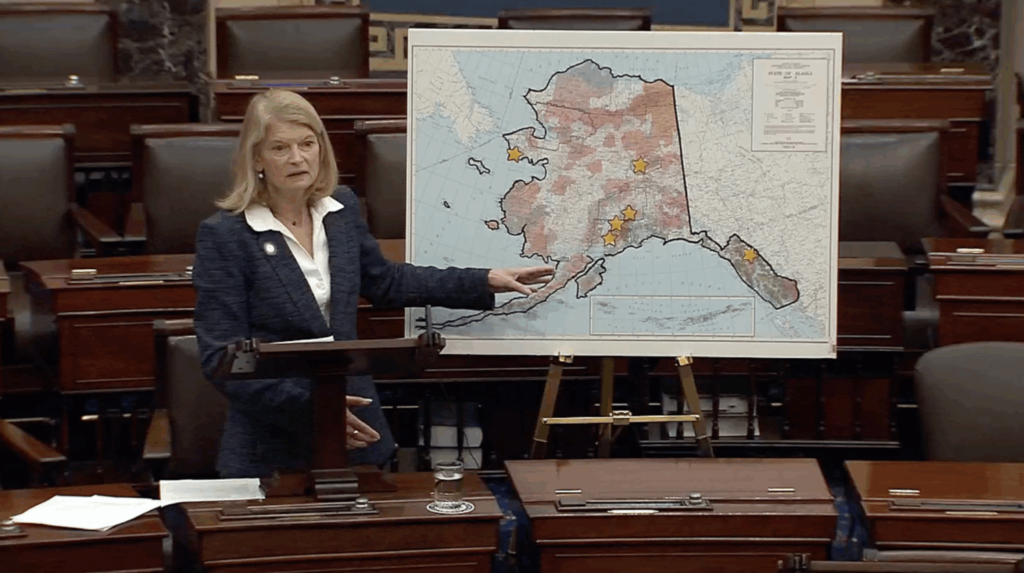
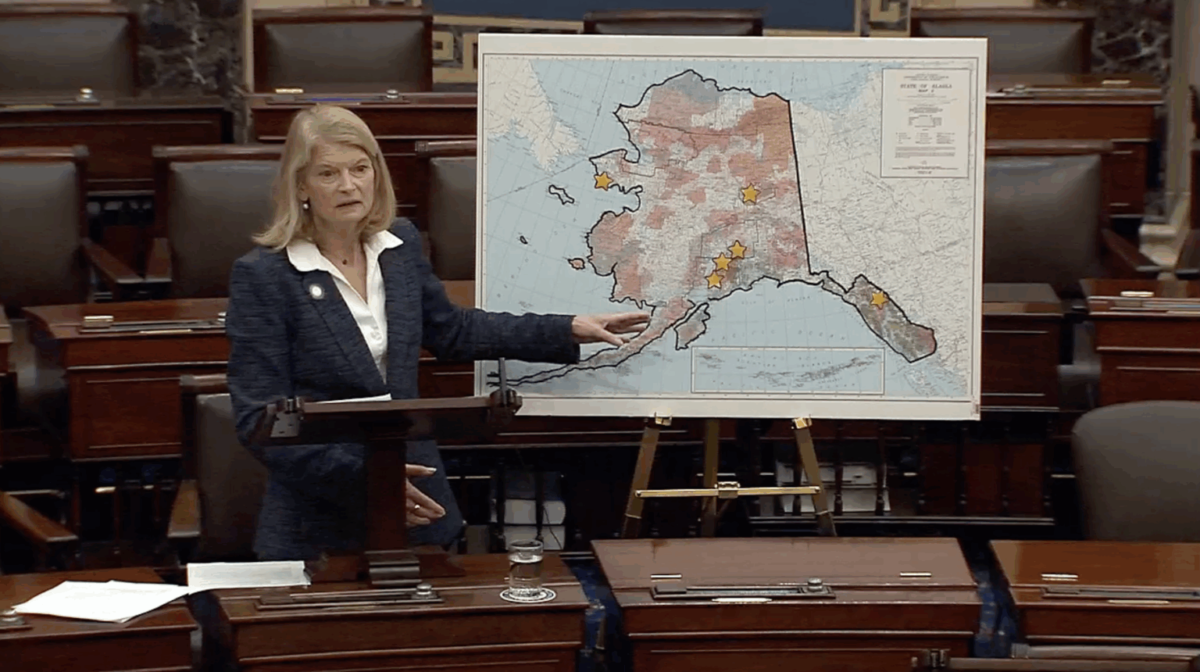
U.S. Sen. Lisa Murkowski, R-Alaska, speaks Thursday, March 19, 2026, on the floor of the U.S. Senate, in this screenshot of a video broadcast by the Senate. (Screenshot)

An elections bill being debated by the U.S. Senate could cost thousands of Alaskans the ability to vote in this year’s elections, Sen. Lisa Murkowski said Thursday in a lengthy speech on Capitol Hill.

The SAVE America Act, supported by President Donald Trump and most congressional Republicans, is ostensibly intended to prevent noncitizens from voting in American elections, but its implementation could prevent many Americans from being able to vote. 

“While disenfranchisement may not be the intent of the SAVE America Act … I think that we will see that. In fact, I fully expect it to be an outcome of this,” Murkowski said.

The act would require that voters present photo ID when they vote, and that people present documentary proof of citizenship when they register to vote. That would mean presenting proof of citizenship in person at an elections office or other specially licensed state license.

“This would be a major, major departure from how most Alaskans currently register to vote,” Murkowski said. 

In 2024, about 29,000 Alaskans registered to vote. Most of those — 25,000 or so — would have run into problems if the current bill had been law at that time, she said.

Most of Alaska’s voter registrations are done online or through the state’s motor-voter or PFD voter process. The bill could allow citizenship verification, but it’s not clear how that would happen, Murkowski.

Mandating in-person registration would have big effects in Alaska. 

The state has only six in-person elections offices, mostly on the Railbelt, and fewer than a dozen DMV offices where residents could present proof of citizenship. 

Some other state agencies might also be able to accept that proof, but the bill’s requirements take effect immediately, and it contains no funding for states to make changes that would allow remote offices to verify ID.

In practice, that means the bill would require rural residents to fly to urban Alaska, Murkowski said.

In addition, anyone seeking to register would have to have either a passport — roughly 50% of Alaskans don’t have one, Murkowski said — or some other form of appropriate ID. 

Alaska driver’s licenses wouldn’t be good enough to register to vote, nor would most tribal IDs, because they don’t specifically label someone as a citizen or not.

The bill allows someone to self-certify their citizenship if they sign an affidavit, but that clause only applies if the person has already made “reasonable efforts” to obtain a copy of a valid ID.

It isn’t clear what that means, Murkowski said.

The bill also would end Alaska’s practice of allowing anyone to cast an absentee ballot for any reason. It would restrict absentee voting to a subset of specifically identified voters, including people living out of the state where they are registered to vote.

Murkowski said she hasn’t seen evidence that these kinds of measures are needed to address a small-scale problem.

Voting by noncitizens is rare in Alaska. A report obtained by the Alaska Beacon through a public records request showed 70 possible cases since 2015. At least 11 people on that list have been charged in state court. 

“That’s basically seven a year,” Murkowski said.

“You look at what we’re trying to chase here with this balance — with disenfranchising so many who would be faced with almost insurmountable challenges in order to register or vote — I look at this and on balance, it doesn’t weigh,” she said.

Earlier this year, Rep. Nick Begich III, R-Alaska, voted in support of the bill as it passed out of the House, saying afterward that he doesn’t think it will be hard to comply with the bill.

Sen. Dan Sullivan, R-Alaska, has said he supports the act despite its ramifications for the state.

“I do think that having the ability to show an ID and proof of citizenship to keep elections safe is important, and it’s supported by the vast majority of Americans,” he said in response to a question during a February forum hosted by the Juneau Chamber of Commerce.

At that forum, he was confronted by an angry attendee who questioned how he could speak on Elizabeth Peratrovich Day, a state holiday honoring an Alaska Native civil rights leader, and support a bill that would have detrimental effects on Alaska Native voters.

“I have a very, very, very strong record as it relates to the franchise for our people, in particular, the Alaska Native community,” he said, referring to actions he took during the 2010 Alaska election, when he served as attorney general. 

“I think voting, in my view, should be easy, but cheating on voting should not be,” Sullivan said.

While Sullivan has said he supports the bill, he also told reporters last month that he doesn’t support overriding the Senate’s filibuster to pass it.

In practice, the filibuster means that the bill would require 60 votes, not 50 and the vice president, to advance through the Senate.

With all of the Senate’s Democrats and Murkowski opposed to the SAVE Act, the bill — at least as of Friday — lacks the support it needs to become law.

Categories
Alaska News Featured Juneau News juneau Juneau Local Juneau Local Ketchikan Local News Feeds Sitka Local Uncategorized

Alaska disability advocates praise progress and push for more at state Capitol

By: Corinne Smith, Alaska Beacon

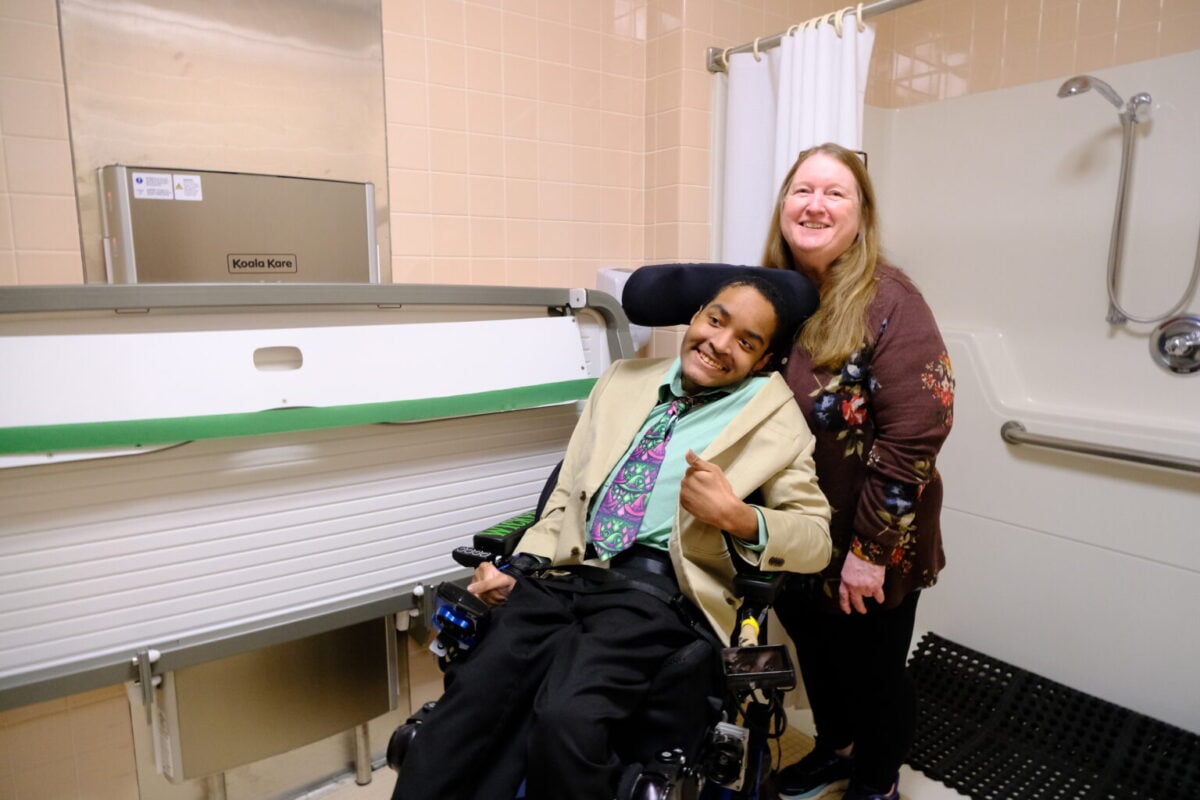
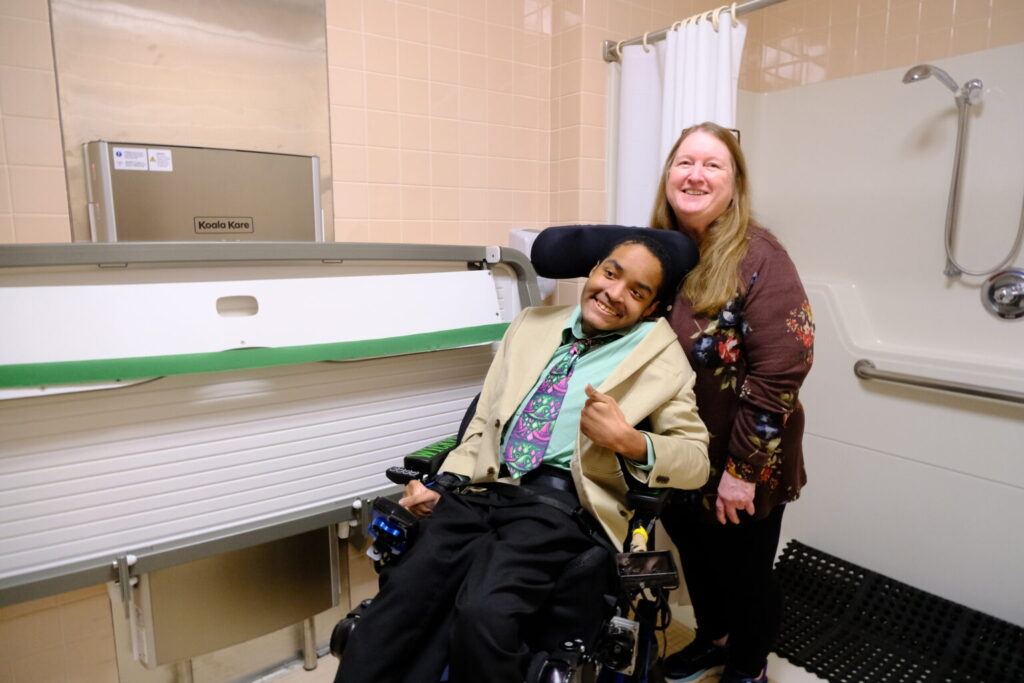
Judy and Eric Edwards pose for a photo at a ribbon cutting ceremony for a new universal changing station installed on the first floor of the Alaska State Capitol on Mar. 19, 2026. (Photo by Corinne Smith/Alaska Beacon)

Judy Edwards and her son Eric traveled from Palmer to advocate for people with disabilities at the Alaska State Capitol in Juneau this week, and now one part of that process is a bit easier.

A newly installed universal changing station on the first floor of the Capitol is a clean, safe space for people who need assistance when using the restroom. The changing station is adult-size and adjustable, for people who use adult diapers and need help changing them. This is an upgrade for Eric, who is 18-years-old and has quadriplegic cerebral palsy with dystonia and uses a power wheelchair. 

Previously he and his mother would have had to use the floor. 

“This will make life easier for everybody,” Judy said. “Parents, especially younger parents, they just deal with things, but they shouldn’t have to. You know, parents hurt themselves because they’re trying to lift from the floor.”

At a ribbon cutting ceremony on Thursday, lawmakers and advocates with the Key Coalition — a group of people with disabilities, their caregivers, service providers and supporters — gathered to applaud the new installation. 

Judy and Eric Edwards gather with Reps. Sara Hannan, D-Juneau and Ashley Carrick, D-Fairbanks, and Capitol facilities manager Serge Lesh for a ribbon cutting ceremony for the installation of a new universal changing station at the Alaska State Capitol on Mar. 20, 2026. (Photo by Corinne Smith/Alaska Beacon)

“I am so sorry that you’ve had to advocate for this and that those of us who are able bodied don’t automatically think about it,” said Rep. Sara Hannan, D-Juneau, who oversees a committee that runs maintenance in the Capitol. 

Hannan said the universal changing station cost the state less than $20,000 total, including the cost of the device, shipping and electrical costs for installation. She said the committee is in the process of reviewing and making accessibility upgrades around the Capitol, including plans to widen the door frame and install an automatic door opener for the first floor accessible restrooms.  

The Edwards family travel often for medical care. They are among the advocates who have been raising concern and pushing for more changing stations around the state. A new bill now introduced in the legislature, House Bill 141, would require at least one universal changing station be included in construction or renovation of all state or local government owned public buildings. 

Rep. Ashley Carrick, D-Fairbanks, sponsored the bill.

“We’re looking at different ways to approach the issue, whether just on a funding level or policy, but ultimately, the goal is to just have types of changing facilities across the state,” Carrick said in an interview. “As legislators, the more we can do to just help all Alaskans have their basic needs met — that’s really where the motivation for this bill came from, and the awareness around this being a major challenge is so important.”

Advocates and lawmakers are focusing first on Alaska airports. The Edwards family was involved in raising awareness around access, resulting in a new universal changing station being installed at the Ted Stevens Anchorage International Airport in 2024. 

There is also a changing station at the Mat Su Health Foundation, and a temporary station was installed last summer at the fairgrounds of the Alaska State Fair. Edwards said she also wants to see one installed at Providence Alaska Medical Center hospital in Anchorage. 

Advocates with the Key Coalition flew to Juneau for an advocacy day on Wednesday, when they held a march and rally in front of the Capitol and met with lawmakers urging policy changes to increase access and services.

Demonstrators with the Key Coalition march through downtown Juneau to rally at the Alaska State Capitol for disability rights and increased services on Mar. 18, 2026. (Photo by Corinne Smith/Alaska Beacon)
Demonstrators with the Key Coalition rally at the Alaska State Capitol calling for disability rights and increased services on Mar. 18, 2026. (Photo by Corinne Smith/Alaska Beacon)

“Having a disability could happen to any one of us,” said Michele Girault, board president for the Key Coalition. “So we’re creating communities where accessibility is at the top of the leaderboard, access to housing and good workforce and all the things that you might need to be supported, are available when you need it.” 

Advocates are pushing for the state to eliminate the waitlist for people with disabilities applying for Medicaid services. Girault said they also want to reduce wait times for reimbursements for service providers.

“So that people who provide the service to people with disabilities and elders across the state are reimbursed at a rate that keeps them in business,” Girault said. “Some people have left the state because they were tired of waiting for services, and some families are opting not to even put their names on the wait list.” 

Girault said the Key Coalition is continuing to support increased funding and expanded access for infant learning programs and early intervention services for youth experiencing developmental delays, which support families and children from infancy to age three.

Last year, Gov. Mike Dunleavy vetoed a bill to provide $5.7 million to increase funding for the state’s 17 infant learning programs. But lawmakers are trying again this year, with Senate Bill 178, sponsored by the Senate Health and Social Services Committee, to expand eligibility for the programs and increase funding. 

A bill to update the state’s guardianship statutes is also supported by the Key Coalition. Girault said Senate Bill 190 would strengthen protections for people involved in the state guardianship system, including for medical guardians, partial guardians and in conservatorship. They’re also pushing for  improvements to access to public transportation.

Sara Kveum speaks to the crowd rallying at the Alaska State Capital for disability rights and increased services on Mar 18, 2026. She is beside Michele Girault, director of the Key Coalition of Alaska, which organized the rally as part of an annual legislative fly-in, and includes people with disabilities, their families, service providers, educators and advocates. (Photo by Corinne Smith/Alaska Beacon)

“Transportation is in the top five barriers for people with disabilities. When you think about all the snow we’ve had this winter, how do you get to the bus stop? Once you’re at the bus stop, is the bus stop cleared?” Girault said. The Key Coalition is supporting House Bill 26, which would require a new state transportation plan to include access for people with disabilities. 

“This transportation bill requires the state to create a plan that actually thinks about all of the points of access for people across the state of Alaska, not just in major cities, but in rural areas as well,” Girault said.

More than 1 in 4 adults in the U.S. have some type of disability, including mobility, hearing, vision or cognition disabilities, and advocates say they want to see improvements across Alaska to expand access, care and dignity for all. 

For the Edwards family, and many advocates and families with disabilities, flying to Juneau isn’t easy, but Judy Edwards said it’s worthwhile — and she wants to see more changes to increase access across Alaska.

“I’m 67, but when I was a kid, you didn’t see people with disabilities out in public, really, much,” Edwards said. “And so today, it’s like, why not? I mean, we’ve come such a far way. Why not? We need to keep going.”

Categories
Alaska News

Federal ‘SAVE Act’ risks denying thousands of Alaskans the ability to vote, Murkowski says

U.S. Sen. Lisa Murkowski, R-Alaska, speaks Thursday, March 19, 2026, on the floor of the U.S. Senate, in this screenshot of a video broadcast by the Senate. (Screenshot)

U.S. Sen. Lisa Murkowski, R-Alaska, speaks Thursday, March 19, 2026, on the floor of the U.S. Senate, in this screenshot of a video broadcast by the Senate. (Screenshot)

An elections bill being debated by the U.S. Senate could cost thousands of Alaskans the ability to vote in this year’s elections, Sen. Lisa Murkowski said Thursday in a lengthy speech on Capitol Hill.

The SAVE America Act, supported by President Donald Trump and most congressional Republicans, is ostensibly intended to prevent noncitizens from voting in American elections, but its implementation could prevent many Americans from being able to vote. 

“While disenfranchisement may not be the intent of the SAVE America Act … I think that we will see that. In fact, I fully expect it to be an outcome of this,” Murkowski said.

The act would require that voters present photo ID when they vote, and that people present documentary proof of citizenship when they register to vote. That would mean presenting proof of citizenship in person at an elections office or other specially licensed state license.

“This would be a major, major departure from how most Alaskans currently register to vote,” Murkowski said. 

In 2024, about 29,000 Alaskans registered to vote. Most of those — 25,000 or so — would have run into problems if the current bill had been law at that time, she said.

Most of Alaska’s voter registrations are done online or through the state’s motor-voter or PFD voter process. The bill could allow citizenship verification, but it’s not clear how that would happen, Murkowski.

Mandating in-person registration would have big effects in Alaska. 

The state has only six in-person elections offices, mostly on the Railbelt, and fewer than a dozen DMV offices where residents could present proof of citizenship. 

Some other state agencies might also be able to accept that proof, but the bill’s requirements take effect immediately, and it contains no funding for states to make changes that would allow remote offices to verify ID.

In practice, that means the bill would require rural residents to fly to urban Alaska, Murkowski said.

In addition, anyone seeking to register would have to have either a passport — roughly 50% of Alaskans don’t have one, Murkowski said — or some other form of appropriate ID. 

Alaska driver’s licenses wouldn’t be good enough to register to vote, nor would most tribal IDs, because they don’t specifically label someone as a citizen or not.

The bill allows someone to self-certify their citizenship if they sign an affidavit, but that clause only applies if the person has already made “reasonable efforts” to obtain a copy of a valid ID.

It isn’t clear what that means, Murkowski said.

The bill also would end Alaska’s practice of allowing anyone to cast an absentee ballot for any reason. It would restrict absentee voting to a subset of specifically identified voters, including people living out of the state where they are registered to vote.

Murkowski said she hasn’t seen evidence that these kinds of measures are needed to address a small-scale problem.

Voting by noncitizens is rare in Alaska. A report obtained by the Alaska Beacon through a public records request showed 70 possible cases since 2015. At least 11 people on that list have been charged in state court. 

“That’s basically seven a year,” Murkowski said.

“You look at what we’re trying to chase here with this balance — with disenfranchising so many who would be faced with almost insurmountable challenges in order to register or vote — I look at this and on balance, it doesn’t weigh,” she said.

Earlier this year, Rep. Nick Begich III, R-Alaska, voted in support of the bill as it passed out of the House, saying afterward that he doesn’t think it will be hard to comply with the bill.

Sen. Dan Sullivan, R-Alaska, has said he supports the act despite its ramifications for the state.

“I do think that having the ability to show an ID and proof of citizenship to keep elections safe is important, and it’s supported by the vast majority of Americans,” he said in response to a question during a February forum hosted by the Juneau Chamber of Commerce.

At that forum, he was confronted by an angry attendee who questioned how he could speak on Elizabeth Peratrovich Day, a state holiday honoring an Alaska Native civil rights leader, and support a bill that would have detrimental effects on Alaska Native voters.

“I have a very, very, very strong record as it relates to the franchise for our people, in particular, the Alaska Native community,” he said, referring to actions he took during the 2010 Alaska election, when he served as attorney general. 

“I think voting, in my view, should be easy, but cheating on voting should not be,” Sullivan said.

While Sullivan has said he supports the bill, he also told reporters last month that he doesn’t support overriding the Senate’s filibuster to pass it.

In practice, the filibuster means that the bill would require 60 votes, not 50 and the vice president, to advance through the Senate.

With all of the Senate’s Democrats and Murkowski opposed to the SAVE Act, the bill — at least as of Friday — lacks the support it needs to become law.

SUBSCRIBE: GET THE MORNING HEADLINES DELIVERED TO YOUR INBOX

Categories
Alaska News

USFS to release details on formulating forest plan

Sun shines through the canopy in the Tongass National Forest. (Brian Logan/U.S. Forest Service)

The U.S. Forest Service’s Tongass Plan Revision Team announced in a press release on Monday, March 16, that it would be releasing a document online March 23 detailing the process of formulating a forest plan and a proposed Species of Conservation Concern list.

The plan, still in its drafting stages, will be outlined in what the press release called “a content document … (that) will give you a look at how the draft plan is taking shape, and help inform comments and conversations.”

The Monday of the release will mark the beginning of a 45-day public comment period, which will be open until May 7. During this time, members of the public can view and share their positions on the current state of the Tongass National Forest Plan.

USFS Tongass Forest Plan Revision Coordinator Erin Mathews told the Ketchikan Daily News via email that the plan is supposed to guide the management of the Tongass National Forest for the next 15 or so years. While it doesn’t implement specific projects or decisions, it establishes principles and best practices to maintain the forest’s integrity.

“The content being shared is just a portion of what goes into a full forest plan, providing review opportunity of desired conditions, goals, preliminary direction, potential management areas and more—and we want more public input before drafting the plan this summer,” Mathews added.

The USFS will also be holding a virtual town hall at 5:30 p.m. on Wednesday, which the press release stated will be recorded. The release described the town hall as “an opportunity to better understand what’s included in the content document, and how it fits into the overall revision process.”

“The full Draft Plan will be a comprehensive document containing all proposed changes to the forest plan,” Mathews said. She also told the Daily News that public comment “will be considered as the team creates the draft plan.”

Additionally, the Species of Conservation Concern Report and proposed SCC list will be on the USFS’s website. This report aims to identify native species not already protected under the Endangered Species Act, whose survival is a matter of substantial concern.

Once SCCs are identified, plans to sustain these species’ ecological conditions and maintain their populations must be developed by the USFS.

To access the town hall, in-person workshops, public comment portal and proposed SCC list, visit the Tongass National Forest Plan webpage available through the USFS website.

This story was originally published by the Ketchikan Daily News.

The post USFS to release details on formulating forest plan appeared first on Chilkat Valley News.

Categories
Alaska News

One of Alaska’s flagship mines soon could draw energy from the sun

The operator of Alaska’s massive Red Dog mine says it wants to use the sun to help power the sprawling zinc operation, which currently burns expensive, imported fossil fuels.

If built, a newly proposed 8.8-megawatt solar farm at Red Dog would have slightly more capacity than the state’s largest existing farm, in the Susitna Valley north of Anchorage. 

Unlike some of the state’s other large mines, Red Dog is completely off grid in a remote area of Northwest Alaska, hundreds of miles from the gas-, coal-, and oil-fired plants that power urban areas. That means the mine relies on millions of gallons a year of pricey, barged-in diesel for energy. 

The new solar array and an accompanying battery system, according to mine operator Teck Resources, would boost energy supply in summer months, when power demand surges. And it’s expected to lower costs by reducing the amount of diesel Red Dog burns — roughly 40,000 gallons each day. 

The project also aims to curb Red Dog’s greenhouse gas emissions — a company-wide goal for Teck and other global mining corporations. 

The solar farm would be built at a pivotal moment for the mine. 

Red Dog has been a major economic driver in rural Northwest Alaska for some three decades, sustaining high-paying jobs and substantial revenue for the borough government. But it’s running low on ore and is slated to close in 2032. 

To keep the mine running, Teck has been studying whether tapping into two new mineral deposits could be profitable. The company plans to spend between $150 million and $180 million on the extension project this year alone. And future power demand is expected to exceed existing supply, the company said in a recent submission to state regulators.  

The solar array could add capacity if the company decides to mine the new deposits. But it also would support mine closure, Teck said. After Red Dog stops operating, the company expects to continue treating more than one billion gallons of wastewater annually, according to the mine’s reclamation plans.

The solar farm would supply about 2 megawatts of electricity during the summer, according to Teck. That’s a fraction of the roughly 25 megawatts that Red Dog typically needs.

But “it is currently the most direct, achievable, and timely option for delivering a meaningful portion of required capacity,” Teck said. 

The project would “return the most value” if Teck extends the mine’s life, a company spokesperson, Treena Wood, said in an email. But the extension project “must still advance through the planned project stages” independent of the solar proposal, she added. 

Teck still anticipates a few more years of exploratory drilling and analysis before deciding whether to move ahead with the extension. 

The solar farm, however, would likely happen a lot sooner: Teck wants construction to start by June. That’s a crucial deadline because lucrative federal tax credits created under the Biden administration expire in July — and without those incentives, the solar farm would not be financially viable, according to Teck. 

Teck’s rush echoes a separate push by Anchorage’s urban utility, Chugach Electric Association, to build a solar farm on the west side of Cook Inlet in time to qualify for the credits. That project could produce up to 10 megawatts of power. 

Other, larger-scale renewable energy projects — namely big wind farms — have stalled in Alaska as federal support and investment opportunities have dried up under the Trump administration. 

But Red Dog’s proposal aligns with a global trend of mining companies moving away from fossil fuels to power their operations. And it shows that even in a political climate hostile to wind and solar, renewables are still attractive purely for economic reasons, according to Phil Wight, an energy historian and professor at University of Alaska Fairbanks. 

Teck’s plans offer a glimpse of “what is economically rational in the private sector,” he said. 

Other large mining companies operating in Alaska have warned in recent years that the state’s high energy costs and reliance on fossil fuels could thwart future investment. 

Mines use huge amounts of energy to dig up ore and then crush and grind it to separate out valuable minerals. They’re among the state’s biggest power consumers. And electricity is among their biggest operating expenses. 

Looking to cut costs, some companies that operate Alaska mines have been encouraging the state’s cooperatively-owned urban utilities — particularly in the Interior, where the grid runs partly on pricey, oil-based fuel — to expand their limited use of wind and solar power.  

Red Dog would be the first large mine in the state to draw substantial energy from an on-site solar array. 

The farm would span 30 acres, partly on land owned by Northwest Alaska’s regional Native-owned corporation, NANA. 

A Canadian company, Tugliq Energy, would build and operate the project, according to Teck.

Teck and Tugliq are working out a contract that would set the price and other terms of power purchases, said Wood, the Teck spokesperson. 

Tugliq is responsible for funding the project, she added. She declined to provide a cost estimate.

This piece was originally published in Northern Journal, a newsletter and news website. Subscribe here.

The post One of Alaska’s flagship mines soon could draw energy from the sun appeared first on Chilkat Valley News.

Categories
Alaska News

Alaska officials step toward wider oil and gas exploration on state land near Yukon River

The Yukon Flats National Wildlife Refuge is seen from the air on Sept. 1, 2006. (Photo provided by U.S. Fish and Wildlife Service)

The Yukon Flats National Wildlife Refuge is seen from the air on Sept. 1, 2006. (Photo provided by U.S. Fish and Wildlife Service)

The Alaska Department of Natural Resources has tentatively decided that oil and gas exploration should be allowed on state land in the vicinity of the Yukon River.

In a public notice published March 4, the agency said its determination for the Yukon Flats “comports with constitutional direction to encourage the development of the state’s resources, and with the legislature’s direction that it is in the state’s interest to develop the state’s oil and gas resources.”

The flats are a large area of wetlands and lowlands at the confluence of the Yukon and Porcupine rivers in Interior Alaska. 

DNR’s preliminary approval is subject to a public notice process, and public comments on the agency’s position are due by April 6. They may be emailed to dog.bif@alaska.gov.

This month’s public notice comes as the oil and gas firm Hilcorp enters another year of operations in the area with Doyon Ltd., the regional Alaska Native Corp. for Interior Alaska. 

Last summer, Hilcorp drilled for oil on land leased from Doyon near the village of Birch Creek, south of Fort Yukon. Doyon’s subsidiary, Doyon Drilling, conducted much of the work.

As that drilling took place, Hilcorp applied for permission to conduct oil and gas exploration on state land nearby.

Most of the surrounding territory is within the Yukon Flats National Wildlife Refuge, an area prized for its waterfowl nesting and breeding grounds. 

The only state land within the requested area is on “subsurface waters,” riverbeds and lake beds controlled by the state under federal law and a 2019 U.S. Supreme Court decision.

Hilcorp’s permit application is on hold until the state completes the regulatory process covered by this month’s public notice.

The Yukon Flats are in what the state has colorfully labeled “Middle Earth” — a vast swath of Alaska between the North Slope and Cook Inlet that has no active oil and gas production and hasn’t been thoroughly surveyed for oil and gas.

The determination signed this month by Derek Nottingham, director of the Division of Oil and Gas, states that “the land within the Yukon Flats determination area has unknown oil and gas potential and there is limited access to existing oil and gas infrastructure in much of the region. Although oil and gas exploration has occurred in the past, technological advancements may facilitate more effective and efficient exploration. Further, the state would benefit from geological and geophysical data that may result from potential exploration.”

If the state does determine that oil and gas exploration is appropriate in the area, it would then have to go through a separate process to determine whether Hilcorp in particular should be given permission to explore.

A similar process took place in the Susitna River valley last year.

State permission in the Yukon Flats doesn’t automatically mean that a company could plop a drilling rig in the middle of the Yukon River. That kind of development plan would be subject to many different levels of regulation by several state and federal agencies.

Instead, the biggest impact is likely to be in cases where subsurface rights are split between the state and Native corporations. If an underground oil pool is beneath land with split ownership, ownership of that pool could be complicated.

An explorer working from corporate land wouldn’t have to worry about ownership issues if it also holds a permit from the state.

In Hilcorp’s case, the Birch Creek area being leased from Doyon is dotted with lakes whose bottoms could be state-owned.

Hilcorp has not yet announced its plans for the summer 2026 season. Last year, it had plans to drill two exploration wells but ended up drilling only one, according to data published by the Alaska Oil and Gas Conservation Commission. 

That well stopped work in October, but significant amounts of equipment, including a drill rig, remain on site at Birch Creek. 

Sarah Obed, a spokeswoman for Doyon, said by email that the company will be sharing an update with shareholders soon and is grateful for local residents’ collaboration on the project.

“As always, Hilcorp and Doyon will prioritize shareholder employment when opportunities arise and will continue to work closely with partners and our communities through this upcoming season and beyond,” she wrote by email.

Categories
Alaska News

Forest service staffing in Southeast down 30% from a year ago

U.S. Forest Service leadership is in flux as the agency takes sweeping actions in managing the 17-million-acre Tongass National Forest, and making regulatory and administrative changes at all levels, Alaska-based officials reported this week.

At the beginning of a four-day federal subsistence Regional Advisory Council meeting in Juneau on Tuesday, Tongass Supervisor Monique Nelson spoke about shifts in the Forest Service since President Donald Trump took office in January 2025.

Nelson said staffing on the Tongass is down 30% from this time last year; in the wake of federal workforce reductions by the U.S. Department of Government Efficiency, 270 USFS employees are currently working in Southeast Alaska.

Nelson, who’s worked for the Forest Service in Alaska for several years, stepped into the Tongass supervisor role last spring. She said that “since the changes in the administration, we have shifted our work from the focus on the Southeast Alaska Sustainability Strategy to other agency priorities that include active forest management, disaster recovery, minerals and energy and access to outdoor recreation.”

“While I say that there is a shift, those things are always our agency priorities, and so we are certainly happy and dedicated to doing that work in front of us,” she said.

USFS personnel are currently working through planning processes for logging, mining, and energy projects, Nelson said. 

The largest of the planned logging projects are the South Revilla project east of Ketchikan and the Twin Mountain II project on eastern Prince of Wales Island, both of which include old-growth timber harvest, Nelson said.

“For both of those projects, we did find a significant likelihood of impacts to subsistence resources,” Nelson told the subsistence council members.

Among its energy projects, USFS is continuing to work on the Angoon-area Thayer Creek Hydropower project.

“With regard to minerals, I’ll say that really there is not a change. We are required to be very responsive to minerals needs,” Nelson said, noting there is currently a high price on gold. 

The service is preparing for tourist season by hiring seasonal staff to take care of Tongass National Forest day-use sites, bear viewing areas, camp grounds and visitor centers.

Following Nelson’s presentation, council member Ted Sandhofer remarked on the size and scope of current USFS projects on the Tongass.

Sandhofer worked with USFS for about 35 years, starting in 1987 as a forester based in Hoonah, and retiring in 2021 as the head of the Petersburg Ranger District.

He said that the current USFS project list is “a big workload, as big as I’ve seen on the Tongass.”

“I know that there’s a reduction in (workforce), so it seems like you’re going to be doing more with less. … Do you have enough people?” Sanhofer asked.

Nelson told him the agency currently is working through “interim operations” while adjusting to staffing reductions.

“Our regional offices and our Washington office are acting as consolidated units where we have that high-level expertise working in much larger groups across much larger land masses,” Nelson said. “Now, we in Alaska are now working as part of a larger Pacific team with California, Oregon, Washington and Hawaii, overseen by a (Pacific Northwest) Regional Forester on their executive leadership team.”

Acting Regional Forester for Alaska, Jerry Ingersoll, started in the role in October. He previously worked with USFS in Ketchikan and Juneau for about seven years.

Introducing himself at the council meeting Tuesday, Ingersoll said that he’ll be retiring at the end of April. 

The permanent Regional Forester for the Pacific Northwest Region, Jacque Buchanan, spoke to the transition in USFS leadership for Alaska.

“When Jerry steps out, I’m going to step fully into it, to get us through the interim place to you getting back to a full staff at the Alaska level,” Buchanan said.

“This is the interim space,” Buchanan said. “I think we will probably be in this space for the next six to eight months. And so what the future is exactly going to look like, we don’t know.”

“I have pretty high assurance that, especially here in Alaska, there will remain a state-level leadership,” Buchanan said “It may be called something different, you know, it’s probably, it’s not going to be (an Alaska) Regional Forester, but it would be a state leadership at the same level.”

Buchanan said she’d like to help USFS get back to full staffing levels.

Nelson said that, with reduced staffing levels, “a lot of the local projects will be harder to address, and the emphasis on partnerships is really what’s going to make a difference for us to be able to make sure that we’re attending to those very local needs.”

She said partnerships remain a priority for USFS.

“Just recently, we entered into a shared stewardship agreement with the State of Alaska, and that agreement is focused on providing wood to the wood products industry, and pairing that with restoration actions on the forest,” Nelson said. 

“We also have the opportunity to enter into more shared stewardship agreements, and we hope to be able to do so with many tribes and tribal partners, as well as other landowners in Southeast,” Nelson said. 

Nelson said the Trump administration is prioritizing “deregulation and organizational efficiency, and then also an emphasis on partnerships as part of the deregulation agenda.”

Forest Service personnel in Washington, D.C., are working through the process to repeal the 2001 Roadless Rule, which could open the Tongass to more logging. A draft environmental impact statement is expected this spring, and will be released for a public comment period. 

Last month the Forest Service issued a notice of intent for its ongoing Tongass National Forest Management Plan; public comments are due by March 20 as to “purpose and need for action” driving the Tongass plan revision by USFS. 

Meanwhile, personnel in Washington, D.C., are working on changing the agency’s National Environmental Policy Act regulations and administrative review regulations, Nelson said. 

This story was originally published by the Daily Sitka Sentinel.

The post Forest service staffing in Southeast down 30% from a year ago appeared first on Chilkat Valley News.

Categories
Alaska News

Second body recovered from barge accident near Ketchikan

The Coast Guard today identified two crew members who died in an accident Sunday aboard a freight barge as 21-year-old Ben Fowler of Sitka, and 28-year-old Sidney Mohorovich of Washington state.

U.S. Coast Guard Capt. Stanley Fields, commander of Sector Southeast Alaska, offered his condolences and said the Coast Guard is conducting a thorough investigation into the cause of the accident.

“This is a heartbreaking reminder that confined spaces on vessels can contain extremely dangerous, invisible hazards,” he said. “The Coast Guard is committed to a thorough investigation to understand what happened and prevent a tragedy like this from occurring again.”

Coast Guard Arctic District staff said the “fatal confined space incident” occurred aboard the barge Waynehoe while it was moored in Skowl Arm, 25 miles northwest of Ketchikan.

Rescue crews from the Coast Guard and fire department in Ketchikan responded after the crew of the tugboat Chukchi Sea reported at 9:14 a.m. Sunday that they had lost contact with four individuals who were in a confined space on the Waynehoe.

Two of the four crew members were recovered and responsive on Sunday. The third crew member was recovered Sunday and later declared deceased. The fourth was unaccounted for on the barge on Sunday; today the Coast Guard reported that he was recovered and declared deceased on Tuesday, after the barge had been towed to the Ketchikan area.

The Coast Guard worked with partner agencies in Ketchikan on Tuesday to access the confined space on the barge in a safe manner, and find the crew member who was unaccounted for, USCG said.

The South Tongass Volunteer Fire Department of Ketchikan helped the Coast Guard respond to the emergency on Sunday. Its chief, Steve Rydeen, told the Sentinel that the Coast Guard search and rescue boat received the call to the barge, and called the STVFD fire hall.

A paramedic and two EMTs from STVFD went with the Coast Guard aboard the USCG vessel on Sunday; Rydeen said the department provides limited medical care for Coast Guard search and rescue cases.

The barge was moored in McKenzie Inlet within Skowl Arm on the east side of Prince of Wales Island.

Ketchikan North Tongass Volunteer Fire Department Chief Jerry Kiffer said the barge is operated by the Bellingham-based Hamilton Marine Construction.

After the accident a Boyer Towing vessel took the barge to Ward Cove, north of Ketchikan, Kiffer said.

The 92-foot-long tugboat Chukchi Sea, owned by Hamilton Marine Construction, was returned to the Ketchikan harbor by its owner on Monday.

This story was originally published by the Daily Sitka Sentinel.

The post Second body recovered from barge accident near Ketchikan appeared first on Chilkat Valley News.