Categories
Alaska News

How Alaska’s governor found himself on an Emirati falcon hunt

Alaska Gov. Mike Dunleavy, center, on his falcon hunting trip in the United Arab Emirates last year. (Courtesy photo)

When dignitaries visit Alaska Gov. Mike Dunleavy’s home state in the summer, their hosts often take them fishing for salmon.

But what does Dunleavy do as a visiting dignitary himself, traveling on official business to far-flung locales such as the United Arab Emirates?

Alaskans now have a glimpse of the red-carpet treatment afforded to their famously hunting-obsessed chief executive on a trip last year to the Middle East to solicit investment — courtesy of a legally required gift disclosure Dunleavy filed recently with state regulators.

In it, he shared details of an overnight traditional falcon hunt he took with the Emiratis — one that involved a journey by helicopter, a stay at a private camp and the avian pursuit of rabbits and a fluffy desert prey bird called a houbara.

“It reminded me of Alaska,” Dunleavy said in a phone interview this week. “Wide open spaces — kind of like western and northern Alaska, in terms of low-lying, rolling hills made out of sand.”

Dunleavy valued the hunting trip at $8,420, of which $5,000 was the estimated cost of the helicopter trip. In all, the governor and his wife accepted gifts valued at at least $54,000 in 2025, including travel to speaking gigs and events; luxury box access at a professional hockey game from the chief executive of Trident Seafoods; and a fall moose hunt supplied by a renowned Alaska guide, according to Dunleavy’s disclosure.

High-level state executives like Dunleavy are required to file the financial disclosures — which report gifts, income and other business affairs — in part to ensure that public officials are “free of the influence of undisclosed private or business interests,” according to state law.

Dunleavy, in the interview, dismissed the idea that the free falcon hunt from his Emirati hosts would lead to favorable terms if the region’s wealthy investment funds ultimately choose to do deals in Alaska.

“‘Since we invited you on a falcon hunt, we’re wondering if you can give us a reduced cost in oil and gas?’ No — there was no ask for any of that stuff,” Dunleavy said, chuckling. “‘Dunleavy sells out Alaska for an invited falcon hunt.’ No, that didn’t happen.”

Dunleavy said his week-long trip to the Middle East was facilitated by the Trump administration’s ambassador to the United Arab Emirates at the time, Martina Strong, who previously attended an Alaska energy conference organized by the governor’s office.

Dunleavy, accompanied by officials from at least three state agencies, appeared at multiple events during the trip and met with representatives from Middle East airlines, ports and oil and gas companies. He spoke at an energy summit hosted by a global research company, and pitched investors on developments like Alaska’s partially state-owned LNG export project.

No major deals have been announced, however.

In the lead-up to the trip, Emirati officials, knowing Dunleavy’s love of hunting, contacted the governor’s office to invite him out to a hunting preserve, he said.

If you visit another place on business and get there early, he said, “they want you to partake in whatever the local culture is.”

“If you go to Louisiana, it’s going to be the Louisiana blues fest. If you go to Florida or you go to California, it might be golf,” he said. “If you go to the United Arab Emirates, they’re going to get excited if somebody they know is an outdoor person. Because they have a long tradition of raising falcons, for thousands of years.”

Dunleavy, who’s hunted bears and musk ox in Alaska, said the day-and-a-half long hunting trip entailed a night’s stay at a “modern tent compound,” which he acknowledged could be described as “glamping.” The hunt itself was from a pickup truck, he added.

Dunleavy stands next to a taxidermied mountain goat at an Anchorage event in March. (Office of the Governor)

“You put the falcon on your arm, and when they see the bird, you take the hood off the falcon; the falcon sees the bird,” he said. “They get the bird, they knock it out of the sky or they get it on the ground. They stay on it, and then the guys come over and they take the falcon off the bird — and that’s how they hunt.”

The houbara was taken back to camp, cooked and sampled by Dunleavy, who said it tasted good.

The experience also included a gift of a tailored traditional robe called a kandura, which Dunleavy acknowledged donning on the trip. But Alaskans may never get to judge the fit: Dunleavy’s office would not release any images from the governor’s trip in response to a formal public records request from Northern Journal.

Later, after the phone interview, Dunleavy, through an aide, agreed to share a single photo. It showed him wearing jeans and a long-sleeved shirt outside a tent, standing on artificial turf with a group of locals — and no falcons in sight.

Asked why no photos were released in response to the earlier request under the Alaska Public Records Act, Dunleavy’s records access officer, Guy Bell, said the image shared by the governor was “personal,” and “not acquired or used for state business.”

“Therefore, it is not considered a public record,” Bell said.

Nathaniel Herz welcomes tips at natherz@gmail.com or (907) 793-0312. This article was originally published in Northern Journal, a newsletter from Herz. Subscribe at this link.


Categories
Alaska News Featured Juneau News juneau Juneau Local Juneau Local Ketchikan Local News Feeds Sitka Local

University of Alaska staff vote to unionize

Corinne Smith, Alaska Beacon

 One of the outdoor sculptures at the University of Alaska Anchorage campus is integrated into a fountain, pictured here on May 16, 2022. More than half of the University of Alaska system students attend UAA or one of its satellite campuses. (Photo by Yereth Rosen/Alaska Beacon)

University of Alaska staff announced a vote to form a union on Wednesday. The union would represent 2,300 permanent staff across the three universities and a dozen community campuses. 

Staff voted to form the union Coalition of Alaska University Staff for Equity, or CAUSE, which would be part of the national United Auto Workers union, in a 1,106 to 610 vote, with 64% voting yes. 

UA staff that would be represented by the union include student services staff, researchers, fiscal and administrative staff, development staff, science communicators, information systems specialists, library workers, athletics coaches and many others, according to a statement announcing the vote. 

“Amid growing uncertainty around state and federal funding for the University, staff cited several reasons for forming a union: consistency and competitiveness in pay and benefits; greater transparency in promotion, career development, and retention; fair workload; and more,” the statement said. 

“This is an exciting day for staff at UA,” said Mike DeLue, a researcher with the International Arctic Research Center at the University of Alaska Fairbanks, in the emailed statement. 

“We did our research, discussed and debated, and overwhelmingly chose to unionize. As soon as the result is certified, we’re ready to sit down with the University and work constructively on addressing the issues that motivated us to form a union in the first place. Improving our working conditions will help us serve more students, enhance UA’s research capacity, and support Alaska communities,” he said. 

The results of the union vote are expected to be certified on April 8, barring any objections or challenges filed by either of the parties, said Jonathon Taylor, director of UA public affairs, by email on Wednesday. 

Taylor also cited financial uncertainty as one of the reasons the university opposed the union effort, which he said was communicated to employees ahead of the vote.

“The university opposed unionization because we believed it would reduce flexibility, slow decision-making, and limit our ability to respond to financial uncertainty,” he said. “That position was operational, not ideological.”

“UA respects the outcome and the right of staff to organize,” he said by email. “We’ll be bargaining in good faith with CAUSE-UAW in accordance with Alaska labor law.”

Taylor noted that existing wages and working conditions will remain in place while the contract is negotiated. He said initial contracts take roughly 400 days to negotiate. He said a 3% salary increase the university requested of the Alaska State Legislature in next year’s budget for all unionized and non-union staff will not apply to the new union members since they are in the process of forming the union and have not yet negotiated a new contract.

“Under Alaska labor law and case law, a contract with a bargaining unit must be in place for negotiated raises to be requested and approved by the legislature,” he said. Taylor said the issue was communicated to staff ahead of the union vote. 

“Non-represented staff remain eligible for that increase,” he said. 

But Charlie Banks, an organizer for the union effort and an academic advisor with the University of Alaska Anchorage, said Thursday that it is the university’s choice, and the new union members should be eligible.

“We believe that the university has the ability to issue the pay increases to us,” she said in a phone interview.

She said support for salary increases is also a show of support for retaining staff, which she says is a common goal of both the union and the university.

“We agree with university admins concerns about difficulties with recruitment and retention. One of the main reasons for this is that Alaska is not keeping up with its peers in maintaining competitive packages for workers,” she said. “Not surprisingly, our peer institutions that have staff unions have much stronger recruitment tools because their contracts are responsive to their needs.”

The new staff union follows the 2024 unionization of UA graduate workers to form the Alaska Graduate Workers Association within the United Auto Workers Local 1907. The union represents graduate teaching assistants, researchers and fellows. They bargained their first three-year contract within 96 days, which secured higher pay, an updated grievance process and a change from at-will to just-cause employment, according to reporting from the student-run newspaper The Northern Light. 

The new staff union joins the national UAW union, which includes approximately 120,000 higher education workers across the country, including staff at the University of Washington and University of California. 

Categories
Alaska News

University of Alaska staff vote to unionize

One of the outdoor sculptures at the University of Alaska Anchorage campus is integrated into a fountain, pictured here on May 16. More than half of the University of Alaska system schools attend UAA or one of its satellite campuses. (Photo by Yereth Rosen/Alaska Beacon)

One of the outdoor sculptures at the University of Alaska Anchorage campus is integrated into a fountain, pictured here on May 16, 2022. More than half of the University of Alaska system students attend UAA or one of its satellite campuses. (Photo by Yereth Rosen/Alaska Beacon)

University of Alaska staff announced a vote to form a union on Wednesday. The union would represent 2,300 permanent staff across the three universities and a dozen community campuses. 

Staff voted to form the union Coalition of Alaska University Staff for Equity, or CAUSE, which would be part of the national United Auto Workers union, in a 1,106 to 610 vote, with 64% voting yes. 

UA staff that would be represented by the union include student services staff, researchers, fiscal and administrative staff, development staff, science communicators, information systems specialists, library workers, athletics coaches and many others, according to a statement announcing the vote. 

“Amid growing uncertainty around state and federal funding for the University, staff cited several reasons for forming a union: consistency and competitiveness in pay and benefits; greater transparency in promotion, career development, and retention; fair workload; and more,” the statement said. 

“This is an exciting day for staff at UA,” said Mike DeLue, a researcher with the International Arctic Research Center at the University of Alaska Fairbanks, in the emailed statement. 

“We did our research, discussed and debated, and overwhelmingly chose to unionize. As soon as the result is certified, we’re ready to sit down with the University and work constructively on addressing the issues that motivated us to form a union in the first place. Improving our working conditions will help us serve more students, enhance UA’s research capacity, and support Alaska communities,” he said. 

The results of the union vote are expected to be certified on April 8, barring any objections or challenges filed by either of the parties, said Jonathon Taylor, director of UA public affairs, by email on Wednesday. 

Taylor also cited financial uncertainty as one of the reasons the university opposed the union effort, which he said was communicated to employees ahead of the vote.

“The university opposed unionization because we believed it would reduce flexibility, slow decision-making, and limit our ability to respond to financial uncertainty,” he said. “That position was operational, not ideological.”

“UA respects the outcome and the right of staff to organize,” he said by email. “We’ll be bargaining in good faith with CAUSE-UAW in accordance with Alaska labor law.”

Taylor noted that existing wages and working conditions will remain in place while the contract is negotiated. He said initial contracts take roughly 400 days to negotiate. He said a 3% salary increase the university requested of the Alaska State Legislature in next year’s budget for all unionized and non-union staff will not apply to the new union members since they are in the process of forming the union and have not yet negotiated a new contract.

“Under Alaska labor law and case law, a contract with a bargaining unit must be in place for negotiated raises to be requested and approved by the legislature,” he said. Taylor said the issue was communicated to staff ahead of the union vote. 

“Non-represented staff remain eligible for that increase,” he said. 

But Charlie Banks, an organizer for the union effort and an academic advisor with the University of Alaska Anchorage, said Thursday that it is the university’s choice, and the new union members should be eligible.

“We believe that the university has the ability to issue the pay increases to us,” she said in a phone interview.

She said support for salary increases is also a show of support for retaining staff, which she says is a common goal of both the union and the university.

“We agree with university admins concerns about difficulties with recruitment and retention. One of the main reasons for this is that Alaska is not keeping up with its peers in maintaining competitive packages for workers,” she said. “Not surprisingly, our peer institutions that have staff unions have much stronger recruitment tools because their contracts are responsive to their needs.”

The new staff union follows the 2024 unionization of UA graduate workers to form the Alaska Graduate Workers Association within the United Auto Workers Local 1907. The union represents graduate teaching assistants, researchers and fellows. They bargained their first three-year contract within 96 days, which secured higher pay, an updated grievance process and a change from at-will to just-cause employment, according to reporting from the student-run newspaper The Northern Light. 

The new staff union joins the national UAW union, which includes approximately 120,000 higher education workers across the country, including staff at the University of Washington and University of California. 

SUBSCRIBE: GET THE MORNING HEADLINES DELIVERED TO YOUR INBOX

Categories
Alaska News Featured Juneau News juneau Juneau Local Juneau Local Ketchikan Local News Feeds Sitka Local

Alaska Senate advances constitutional amendment to establish education fund

By: Sean Maguire, Alaska Beacon

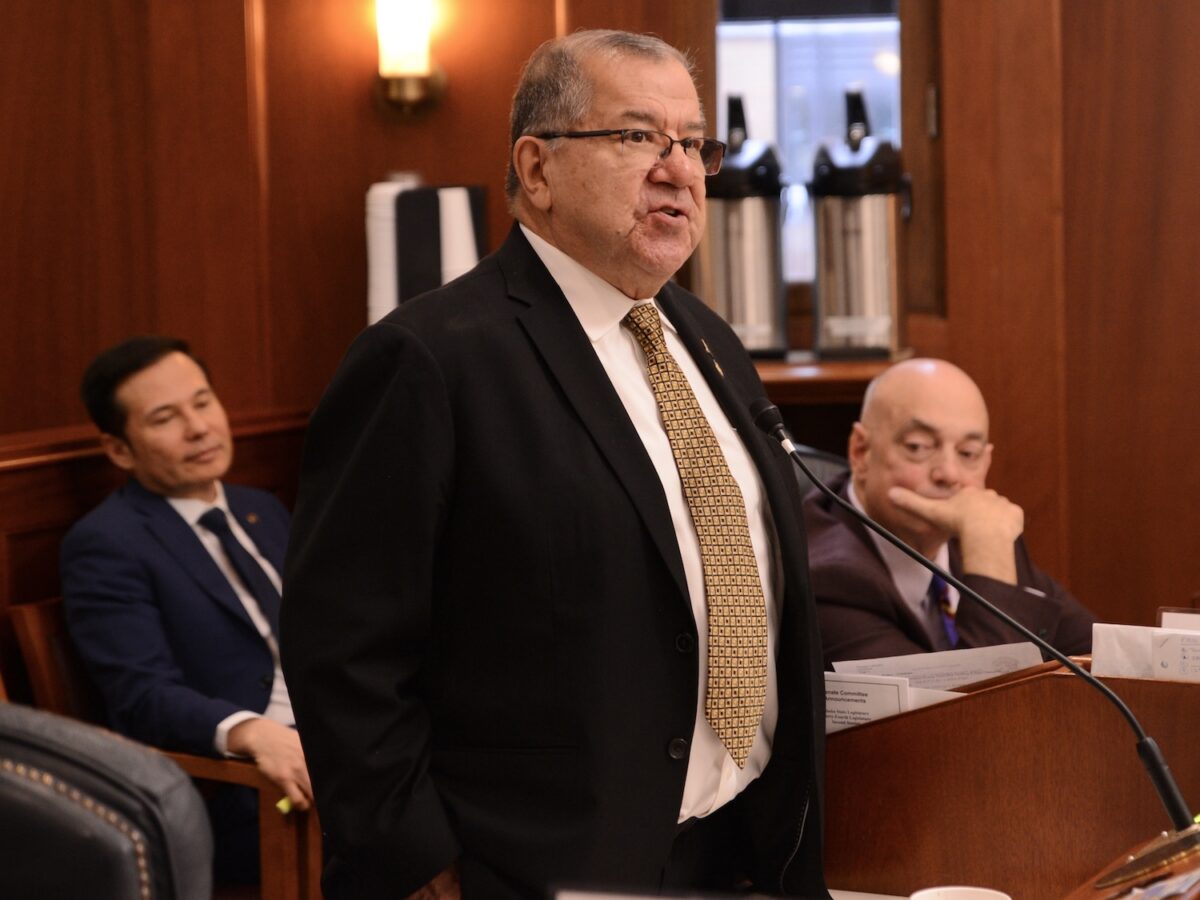
Sen. Lyman Hoffman, D-Bethel, speaks during a joint session of the Alaska Legislature on Tuesday, March 10, 2026. (James Brooks photo/Alaska Beacon)

The Alaska Senate on Wednesday advanced a constitutional amendment that would establish a dedicated fund for public education.

If passed, lawmakers could design a new source of state revenue to go toward the fund that would be used specifically for schools. The resolution states that the Legislature could only appropriate money from the fund for public education. 

The Alaska Constitution explicitly prohibits the dedication of funds in most cases. Supporters say that prohibition was intended to give the Legislature flexibility in budgeting, and avoid mandated funds.

Bethel Democratic Sen. Lyman Hoffman said before Wednesday’s vote that education is his No. 1 priority. A dedicated education fund could be a “tremendous tool” to improve schools in Alaska, he said. Hoffman co-chairs the Senate Finance Committee which sponsored the constitutional amendment.

The Legislature last year approved an historic increase in school funding through the state’s complex formula, overriding two separate vetoes by Republican Alaska Gov. Mike Dunleavy. Still, advocates say that substantially more school funding is needed with school districts facing sizable budget shortfalls and decades of deferred maintenance.

Two Alaska school districts in January sued the state, arguing that Alaska’s education funding levels violate a constitutional duty to fund schools adequately. School districts across Alaska have long complained about crumbling buildings that have reached crisis level. 

Republican Sen. Bert Stedman represents Sitka, home of Mt. Edgecumbe High School, a state-run boarding school which has reported leaking roofs and buildings in disrepair. Stedman said Alaska is one of the nation’s richest states, but the condition of its schools is “kind of embarrassing.”

Surrounded by school children in the Senate’s public galleries, Stedman said that “we should be doing better for our kids.”

“Every generation needs to make a little step forward and this is our little step,” he said in support of the resolution before the final vote. 

The Alaska Senate approved the resolution on a 17-3 vote. At least 14 of 20 senators are needed to support a constitutional amendment. Two-thirds of the Alaska House of Representatives would need to vote for the same resolution to put the proposal before voters at the November election. 

All 14 members of the bipartisan Senate majority supported the constitutional amendment, alongside three minority Senate Republicans — Sens. Robert Yundt of Wasilla, Mike Cronk of Tok and James Kaufman of Anchorage.

Three minority Senate Republicans voted no: Sens. Robb Myers of North Pole, Cathy Tilton of Wasilla and George Rauscher of Sutton. 

Myers said the drafters of the Alaska Constitution sought to block the proliferation of dedicated funds, which would consume the annual budget.  

He said that establishing a dedicated fund for education “removed any sort of flexibility for the Legislature.” He said that avoiding annual debates about school funding was “not necessarily a good thing.” Education spending could effectively be “out of sight, out of mind,” he said. 

Myers said the state has numerous other priorities such as health care and natural resource management, but they would not receive the same dedicated funds. 

The resolution now advances to the House. If approved by 27 of 40 House members, it would then be placed before voters at the Nov. 3 election. A simple majority of voters is needed to approve an amendment to the Alaska Constitution.

A governor cannot block a constitutional amendment from appearing on the ballot with their veto pen. The Alaska Constitution was last amended in 2004. 

Categories
Alaska News Featured Juneau News juneau Juneau Local Juneau Local Ketchikan Local News Feeds Sitka Local

Gondola reversal puts Eaglecrest, Juneau budget under strain

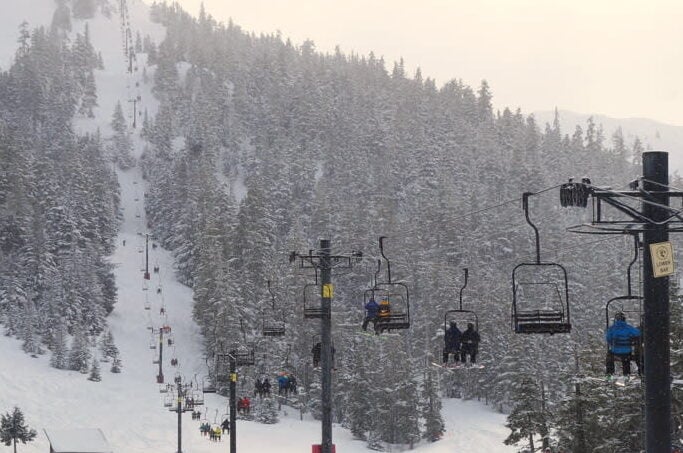
NOTN- The City and Borough of Juneau is scrapping its participation in the long-planned gondola project at Eaglecrest ski area after costs ballooned from single-digit millions to an estimated $37 million, leaving the city on the hook to repay Goldbelt during an already tight budget season.

Finance Committee Chair Christine Woll said the Juneau Assembly voted Wednesday night to move forward with pulling out of its agreement with Goldbelt, which had helped finance the project. The city expects to repay about $12 million that Goldbelt invested, roughly $9 million of which has already been spent.

“We knew that increases at Eaglecrest were going to be significant over time, just because of aging infrastructure, and we knew that the public tax dollars probably couldn’t sustain paying for those increases at Eaglecrest.” Woll said, “So the vision was that by installing a gondola that could help take advantage of summer revenue from our visitor industry, we could
provide a more reliable, non-taxpayer dollar-funded income stream at Eaglecrest, but for a price tag that big, it no longer becomes something that the city has funds to invest in.”

The gondola was originally projected to cost about $7 million, later revised to around $9 million when the city and Goldbelt signed their deal, Woll said. The latest estimate, about $37 million to install, pushed the project far beyond affordability for the City.

“It’s just terrible, what a waste of money, but we’re gonna have to figure out how to pay it back.” Woll said.

The decision to cancel the project now leaves Eaglecrest in a precarious financial position. Its future budgets had assumed new income from gondola operations during the summer months.

Woll said the Assembly has directed Eaglecrest to return with a much-reduced operating budget that fits within the traditional taxpayer subsidy the ski area receives.

The gondola reversal comes as Juneau is just beginning to create it’s annual budget for FY 27.

“Ultimately, the assembly is going to have to make some hard decisions about service reductions. We’re aiming to make about $2 million more in cuts before June, when we have to pass the budget.” Said Woll.

Categories
Alaska News

Alaska’s energy leadership means American energy independence

Sunlight reflects off solar panels lining the student recreation building at the University of Alaska Fairbanks campus on June 2, 2018. (Photo by Yereth Rosen/Alaska Beacon)

Sunlight reflects off solar panels lining the student recreation building at the University of Alaska Fairbanks campus on June 2, 2018. (Photo by Yereth Rosen/Alaska Beacon)

Alaska is about to see $22 billion invested in energy production and storage over the next five years. That’s real money, real opportunity and something we shouldn’t take for granted. What we do with that investment matters far beyond Alaska.

When you have a diverse energy grid, it’s harder to disrupt and less vulnerable to foreign pressure. That’s just common sense. Alaska can offer that diversity: oil and gas, hydropower, wind, solar. But only if we build it.

We should support programs that upgrade and modernize our electric grid and energy systems. Updated systems will be more efficient and can better handle extreme weather. They’ll be more secure from hackers and foreign interference. With clean energy, we can diversify our energy portfolio to prepare for any interruptions. For Alaska’s remote communities, renewable power is the innovation we need to make sure their power needs are met reliably.

For years, Senator Murkowski has been involved in shaping federal energy policy that supports responsible development of Alaska’s resources and strengthens long-term energy security. These efforts have helped maintain Alaska’s role as a key player in energy innovation. But we have more work to do. 

Investing in a clean energy economy will result in more manufacturing jobs here at home and not outsourced to other countries like China. It will ensure we have greater control over our energy supplies in a system built in America by American workers. If we don’t build it here, someone else will build it somewhere else. Right now, China is dominating clean energy manufacturing globally. They’re winning the race to produce solar panels, batteries and wind turbines. If America wants energy independence, we can’t outsource it. We must build these technologies here using American supply chains.

For Alaska specifically, that means jobs. Good-paying manufacturing and construction work for communities that need it. Fuel-free power sources also help stabilize electricity prices. I’ve watched communities like Kodiak and Juneau manage their energy costs in ways most Alaskans can’t. Kodiak used hydropower and wind to displace millions of gallons of diesel. Juneau runs almost entirely on hydropower. The result has been some of the lowest, most predictable electricity rates in the state. When your power comes from water or geothermal or wind instead of fuel markets, families and businesses are better protected from market shocks. Recent instability tied to the conflict in Iran has underscored how quickly global fuel supplies can be disrupted, driving up oil and gas prices and reinforcing the value of reliable, locally produced renewable energy.

Modernizing Alaska’s grid is equally critical. Extreme weather, cyberattacks and foreign interference aren’t hypotheticals. Our systems need to withstand all of it. That infrastructure work pays dividends for years.

 The practical opportunities are in front of us right now. Hydropower projects like the Dixon Diversion, a 50 percent expansion of Bradley Lake, could add real, affordable, clean power to the Railbelt while Cook Inlet gas is tightening up. We have the expertise and know-how to build things in harsh environments because we’ve been doing it for decades.

An America First energy agenda doesn’t mean picking one fuel over another. It means producing every kind of energy we can here at home: oil, gas, wind, solar and hydropower. It means building and deploying these technologies in Alaska, strengthening American manufacturing and securing supply chains.

Alaskans have always believed in using what we have and building things that last. That same practical mindset should guide what we build next. More Alaska-made energy where it makes sense, more American manufacturing and more control over our own energy future. That’s not just good for Alaska. That’s good for the rest of the country, too.

SUBSCRIBE: GET THE MORNING HEADLINES DELIVERED TO YOUR INBOX

Categories
Alaska News Featured Juneau News juneau Juneau Local Juneau Local Ketchikan Local News Feeds Sitka Local Uncategorized

Alaska Advocates defend Roadless Rule

By: Grace Dumas

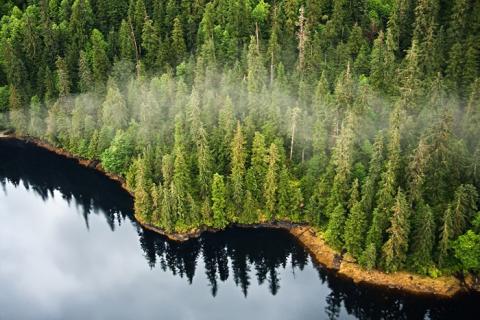
The Tongass National Forest

As the federal government advances plans to roll back Roadless Rule protections on 58 million acres of national forests, Southeast Alaska conservation advocates are racing to mobilize public opposition, warning that repealing the Roadless Rule could open the Tongass National Forest to expanded clear-cut logging and place subsistence, fisheries and tourism in peril.

Nathan Newcomer, Southeast Alaska Conservation Council (SEACC) Tongass Campaigner, said the current administration has signaled from “day one” that it intends to eliminate the federal Roadless Rule, a regulation that limits road-building and industrial development on certain undeveloped national forest lands.

“They signed an executive order to try to get rid of the Roadless Rule. The Secretary of Agriculture, Brooke Rollins, also issued a statement intending to rescind the Roadless Rule nationwide.”

Despite the administration’s push, the conservation group says public sentiment has been overwhelmingly in favor of keeping the rule.

A Notice of Intent, the first step in the rulemaking process, opened a 21-day public comment period nationwide. During that brief window, the public submitted more than 627,000 comments Newcomer said.

“Over half a million people submitted public comments. There’s a group called the Center for Western Priorities that did an analysis of those public comments, and they found that 99% of the public comments were in favor of keeping the roadless rule in place. When do you see 99% of American citizens agreeing on something? That just goes to show you that people really like the Roadless Rule.”

In 2001 when the Rule was enacted by the Clinton Administration, more than 600 public hearings were held around the nation, and the public provided more than 1.6 million comments on the Rule, more comments than any other rule in the nation’s history.

Now, Newcomer says, the government is trying to unwind those protections without holding any comparable meetings.

“They’re not holding any public meetings anywhere, not only for Alaska, but nothing down south either. So that’s why we’re organizing these public hearings, not just in Juneau, but throughout southeast.” Said Newcomer.

Juneau’s hearing was scheduled for yesterday evening at the JACC downtown.

The event featured a panel discussion with President Mike Jones of the Organized Village of Kasaan, Atagan Hood, Vice President of Alaska Youth for Environmental Action, Jamalea Martelle of Artemis National Wildlife Federation and Nicole Weston, Owner of NW Photography.

A moderator guided the conversation, about why roadless protections matter in their communities. The event then shifted into a public hearing where attendees offered testimony themselves.

“We’re going to have several videographers on hand that are going to document everything, record everybody’s public testimony, then we’re going to transcribe that testimony, and then we’re going to officially submit it to the public record once the public comment period for the draft EIS (Environmental Impact Statement) is open.”

If the roadless rule is repealed, Newcomer warned, “If you get rid of protections for federal public lands, you’re talking about more large scale clear cut logging, that’s the main threat. And of course, when you start to clear cut, it’s going to have huge impacts on the wildlife, on our subsistence ways of life here in the Tongass, on the tourism, recreation economy. How many people came up on cruise ships to Juneau last year?”

Despite the scale of public opposition documented in the comment record, Newcomer said he does not believe the federal government, under current leadership, is likely to change course.

“But that doesn’t mean that we shouldn’t make our voices heard and make a lot of noise and make sure that we’re all on the record saying that we don’t want this. Because there are also other elections that happen, right? And so power can shift, so it’s about demonstrating that the people care about these things, and that’s just kind of the work that I have to do, and that’s the work that we’re doing to make sure that the public’s voice is heard.”

He said he’s seen community organizing make a difference over longer timelines, even when initial decisions seemed foregone.

“Historically, Americans have said we would like to keep the Roadless Rule in place, and now this administration is trying to ram a policy through that the vast majority of us don’t want to see happen. That’s not the role of government.” Newcomer said, “Government needs to be by the people for the people. I think highlighting that is really critical, so that people understand that they have agency, Because there’s a lot going on in the world, right? And it’s really easy to get overwhelmed and to become apathetic, but you really do have agency. I’ve seen it time and time again in my life, where you might feel like the the clouds are closing in on you, and it’s getting dark and gloomy, but really, when you stand together and you speak in a solid voice in unity, it can have really powerful change. It might not happen today or tomorrow, but it could make a huge difference.”

Categories
Alaska News

U.S. Forest Service overhaul sows confusion, concern

On March 31, the U.S. Forest Service announced plans to move its headquarters from Washington, D.C., to Salt Lake City, Utah. It will also close or repurpose all nine of its regional offices, create 15 state offices, and shutter research and development facilities in more than 30 states. According to a news release, the plan is intended to make the agency more “nimble, efficient [and] effective.” Forest Service leaders told staff on a call after the announcement that no changes will be made to fire and aviation management programs or field-based operational firefighters.

Since first announcing its intent to reorganize the agency last July, the Trump administration has marketed the plan as a way to streamline Forest Service operations, with a focus on boosting timber production and communicating more closely with local communities. But during a congressional hearing and public comment period on the subject last summer, more than 80% of the 14,000 public comments submitted were negative, with many tribal representatives, conservation groups and former Forest Service staffers opposing the move. A U.S. Department of Agriculture summary of public comments included concerns that relocating Forest Service staff and further cuts to its budgets “could compromise ecological management, public access, and employee morale.” The current plan incorporates many elements of the original proposal, including the move to Salt Lake City and the closure of regional offices.

“Nobody is asking for this,” said Robert Bonnie, who oversaw the Forest Service as a Department of Agriculture undersecretary during the Obama administration. “None of the farm groups want this. No one in conservation wants this. Nobody.” To Bonnie and other former Forest Service staff, the plan, which will uproot thousands of employees, looks like it will only make the agency’s existing troubles worse, especially given the past year of deep cuts and chaos.

“This is not going to strengthen the Forest Service, it is going to weaken it,” Bonnie said. “It’s not about solving problems, it’s about blowing things up.”

None of the farm groups want this. No one in conservation wants this. Nobody.

Mary Erickson, a retired Custer Gallatin National Forest supervisor, had more questions than answers after the announcement. “I’m not going to say if it’s good or bad at this point,” she said. “It’s just such a sweeping change with no real analysis about if there would be cost savings.”

Under the new proposal, some states will have their own offices and others will be lumped together, similar to the organization of the Bureau of Land Management. This will be a new approach for the country’s 154 national forests, which have long been managed by the nine regional offices that will be shuttered or repurposed. Now, forests in Washington, Oregon, Montana, Alaska and Idaho will each be managed by their own state office. Forests in Nevada and Utah, however, will be managed together, as will forests in Colorado and Kansas.

Some Forest Service research facilities, including the Rocky Mountain Research Station in Fort Collins, Colorado, will stay open. Others, including the research station in Portland, Oregon, which is responsible for critical work on species like spotted owls, will be closed. Losing local leadership “is not going to improve the programs,” said former Forest Service wildlife biologist Eric Forsman. Forsman, who retired in 2016, studied spotted owls and red tree voles at the agency’s Forestry Sciences Laboratory in Corvallis, Oregon, which will remain in operation. “It may help budgets,” he added, “but it won’t improve the quality of the research or the amount of research that gets done.”

Erickson and others were also concerned about the plan to move high-level bureaucrats out of D.C., where the nation’s law- and policymakers reside. “I would push back on this idea that moving out of D.C. is moving closer to the people you serve. That’s not the role of the national office,” Erickson said. The national office, she added, is supposed to coordinate and create guidance based on national policy. “Forests and districts have always been the heart of local communities and local delivery.”

After talking with current and former Forest Service staffers following Tuesday’s announcement, she also worries that, at least in the short term, disarray created by the reorganization will hamstring the agency’s ability to address the complex and worsening challenges that modern forests face. Those include tree disease outbreaks, the growing wildland-urban interface and climate change-induced drought. The Forest Service is already reeling from the loss of thousands of employees during the last year, through the terminations and deferred resignations effected by the now-defunct Department of Government Efficiency, or DOGE.

The reorganization may also lead to states playing an even bigger role in forest management, said Kevin Hood, executive director of Forest Service Employees for Environmental Ethics, who retired in 2025 after decades working in the Forest Service throughout the West. While local coordination isn’t bad in theory, he said, he’s concerned the new structure will be a step toward ceding the management of national forests and other public lands to states.

Tribal representatives, several of whom declined to comment for this story, voiced concerns during the July public comment process that the reorganization would lead to losses of expertise and fractured relationships. Mass staff relocations, one representative wrote, would “destroy irreplaceable knowledge about Treaty rights, forest conditions, and working relationships built over decades, and new staff unfamiliar with the land will make mistakes.”

For many people in conservation, the Forest Service reorganization feels like déjà vu, or even a recurring nightmare.

In 2019, during Trump’s first term, his administration announced a plan to move nearly all Bureau of Land Management staff out of the agency’s D.C. headquarters to Grand Junction, Colorado — then a 66,000-person city located hundreds of miles from a major airport. As with the March 31 Forest Service announcement, the administration said the change would put high-level staff closer to the mostly-Western lands they manage. Instead, many of those staff left the agency altogether, said Tracy Stone-Manning, who directed the BLM under President Joe Biden and is now president of The Wilderness Society.

In fact, by the time the Grand Junction office opened in 2020, only 41 of the 328 BLM employees expected to move West chose to do so, according to a High Country News investigation. For many, moving meant uprooting their entire family, and required a spouse to find a new job in a much smaller market.

The reorganization cost taxpayers $28 million. And the Biden administration ended up moving many high-level positions back to D.C., though it did keep some agency leaders in the Grand Junction office, which it renamed the agency’s “Western Headquarters.” John Gale, who headed the office for two years under Biden, sees merit in searching for ways to improve public-lands management. But restructuring and relocation need to be done thoughtfully and carefully to be effective, he said.

That’s because agencies lose irreplaceable institutional knowledge when people with decades of experience are forced out the door, said Stone-Manning. And while that may not have been the first Trump administration’s intention, it was indeed the outcome of the BLM reorganization. She and others expect the Forest Service to suffer the same fate, with even more dire results for the public.

“Our public lands are not being cared for the way they need to be,” she said. “And what that means is ultimately people will throw up their hands and say the federal government can’t manage them, let’s sell them off.”

We welcome reader letters. Email High Country News at editor@hcn.org or submit a letter to the editor. See our letters to the editor policy.

This story is part of High Country News’ Conservation Beyond Boundaries project, which is supported by the BAND Foundation and the Mighty Arrow Family Foundation.

This article first appeared on High Country News and is republished here under a Creative Commons Attribution-NonCommercial-NoDerivatives 4.0 International License.

The post U.S. Forest Service overhaul sows confusion, concern appeared first on Chilkat Valley News.

Categories
Alaska News

Alaska Senate advances constitutional amendment to establish education fund

Sen. Lyman Hoffman, D-Bethel, speaks during a joint session of the Alaska Legislature on Tuesday, March 10, 2026. (James Brooks photo/Alaska Beacon)

The Alaska Senate on Wednesday advanced a constitutional amendment that would establish a dedicated fund for public education.

If passed, lawmakers could design a new source of state revenue to go toward the fund that would be used specifically for schools. The resolution states that the Legislature could only appropriate money from the fund for public education. 

The Alaska Constitution explicitly prohibits the dedication of funds in most cases. Supporters say that prohibition was intended to give the Legislature flexibility in budgeting, and avoid mandated funds.

Bethel Democratic Sen. Lyman Hoffman said before Wednesday’s vote that education is his No. 1 priority. A dedicated education fund could be a “tremendous tool” to improve schools in Alaska, he said. Hoffman co-chairs the Senate Finance Committee which sponsored the constitutional amendment.

The Legislature last year approved an historic increase in school funding through the state’s complex formula, overriding two separate vetoes by Republican Alaska Gov. Mike Dunleavy. Still, advocates say that substantially more school funding is needed with school districts facing sizable budget shortfalls and decades of deferred maintenance.

Two Alaska school districts in January sued the state, arguing that Alaska’s education funding levels violate a constitutional duty to fund schools adequately. School districts across Alaska have long complained about crumbling buildings that have reached crisis level. 

Republican Sen. Bert Stedman represents Sitka, home of Mt. Edgecumbe High School, a state-run boarding school which has reported leaking roofs and buildings in disrepair. Stedman said Alaska is one of the nation’s richest states, but the condition of its schools is “kind of embarrassing.”

Surrounded by school children in the Senate’s public galleries, Stedman said that “we should be doing better for our kids.”

“Every generation needs to make a little step forward and this is our little step,” he said in support of the resolution before the final vote. 

The Alaska Senate approved the resolution on a 17-3 vote. At least 14 of 20 senators are needed to support a constitutional amendment. Two-thirds of the Alaska House of Representatives would need to vote for the same resolution to put the proposal before voters at the November election. 

All 14 members of the bipartisan Senate majority supported the constitutional amendment, alongside three minority Senate Republicans — Sens. Robert Yundt of Wasilla, Mike Cronk of Tok and James Kaufman of Anchorage.

Three minority Senate Republicans voted no: Sens. Robb Myers of North Pole, Cathy Tilton of Wasilla and George Rauscher of Sutton. 

Myers said the drafters of the Alaska Constitution sought to block the proliferation of dedicated funds, which would consume the annual budget.  

He said that establishing a dedicated fund for education “removed any sort of flexibility for the Legislature.” He said that avoiding annual debates about school funding was “not necessarily a good thing.” Education spending could effectively be “out of sight, out of mind,” he said. 

Myers said the state has numerous other priorities such as health care and natural resource management, but they would not receive the same dedicated funds. 

The resolution now advances to the House. If approved by 27 of 40 House members, it would then be placed before voters at the Nov. 3 election. A simple majority of voters is needed to approve an amendment to the Alaska Constitution.

A governor cannot block a constitutional amendment from appearing on the ballot with their veto pen. The Alaska Constitution was last amended in 2004. 

The post Alaska Senate advances constitutional amendment to establish education fund appeared first on Chilkat Valley News.

Categories
Alaska News

School district’s needs dire, possible lifeline in legislature

As the borough’s school district warns of potential “insolvency,” higher state oil revenue has increased the likelihood of a lifeline.

For years, the state’s school funding formula has stagnated, decreasing 26% in real dollars from 2011 to 2025 if adjusted for inflation.

Last year, the legislature closed some of that gap by increasing the base state funding formula to schools by $700 per-student. But that was well under half of what would have been needed to fully return to 2011 inflation-adjusted funding levels.

Meanwhile, the Haines Borough School District’s finances remain dire, district officials warn.

In testimony to the House Education Committee earlier this month, superintendent Lilly Boron said the district may “not be able to remain solvent” absent another funding formula increase.

The lack of funding has been felt most with “uncompetitive” staff salaries, making it difficult to recruit and retain staff, superintendent Lilly Boron said in an interview this week.

The district has averaged a 40% yearly staff-turnover rate over the past five years, and has been unable to fill vacant special education and technology positions this year.

Some districts in the state have turned to foreign teachers to solve staffing shortages, and Boron said nearly all of the district’s applicants for the upcoming school year would require either an H-1B or J-1 visa. But now H-1B visas are off the table for the district due to a $100,000 per-visa fee put into place by the Trump Administration, and rural districts like Haines are not eligible to sponsor teachers under J-1 visas, Boron said.

“I think what we’re recognizing is, if you have no qualified people applying for open positions and staying in open positions, you don’t have a school,” Boron said in an interview afterward.

Operating costs are also an issue.

During last year’s budgeting process, the district initially projected an $880,000 shortfall.

After the funding formula increase and an influx of money from the borough, the district balanced its operating budget, but continued to run deficits on transportation and food service, district business manager Judy Erekson said. Currently the district has only $233,000 in its main savings account.

As funds dwindle, cuts could be particularly hard because of the Haines district’s size. Having only one school building, and often one class per grade, it’s more difficult for the district to consolidate classes than larger districts.

Boron, who was joined in Juneau by school board member Kevin Shove, is just one of many local officials that have come to the legislature to lay out their districts’ needs. In committee hearings, members of the bipartisan House and Senate majorities have expressed support for sending more money the districts’ way.

In the House Education Committee, Rep. Rebecca Himschoot, an independent from Sitka, described further education funding increases as a constitutional obligation.

The Education Committee, also co-chaired Rep. Andi Story, whose district covers the Chilkat Valley, has introduced a bill to once again raise the base funding formula.

“I am only asking the state to hold up our end of the bargain, which is to maintain a system of education open to all the children of our state,” Himschoot said.

The issue remains money to address those needs, and a governor willing to approve the spending. Last year, the funding-formula boost only went through after the legislature held a special session and assembled a supermajority vote overriding Gov. Mike Dunleavy’s veto.

That scenario remains a possibility for this year. But on the other issue — money to put toward a funding increase — the landscape has suddenly changed.

Through the past month, war with Iran has sent oil prices skyrocketing, including Alaska North Slope crude. According to the state’s Department of Revenue, that could add over a half billion dollars in tax and royalty payments to state coffers this year compared with pre-war projections.

There’s been talk of some of that unexpected cash going toward education funding, said Sen. Jesse Kiehl, whose district covers the Chilkat Valley, and a member of the powerful Senate Finance Committee, which drafts the state’s budget.

“There isn’t unlimited money from this war and the eternal tug of war over where you put it is going on,” he said this week. “But I think we invest in our kids, and there’s a group of us who are committed to that.”

Under the general umbrella of education, a number of buckets need filling.

On the one hand, there’s the House Education Committee bill, which would boost the state’s base funding formula by $630 per student to all districts in the state.

The $630 figure is the average funding needed to erase the operating deficits of the state’s five largest school districts, Himschoot said. Out of those five, Fairbanks is the only one operating in the black. But Himschoot also said the district has cut more than 300 staff since 2019 and closed seven schools to achieve that.

A funding formula boost, however, will have to compete against capital funding for school repairs and rebuilds, some of which are in dire condition. Legislators on the powerful Senate Finance Committee have pointed to schools in the state ridden with black mold, asbestos, and collapsing roofs, problems the state has ignored for decades, according to a ProPublica report earlier this year.

The school repairs would be a one-time outlay, whereas increasing the funding formula would obligate an increased annual flow of money.

“I think the legislators are struggling with revenue, and they might not want to use one-time funds to set up an expectation they can’t deliver on in two years,” Boron said. “I appreciate that, but this is the rainy day. We’re at the breaking point.”

Haines does have maintenance needs, and the district is seeking state reimbursement for roof repairs made last year. But relative to some other districts, the major needs are inside the building, primarily teacher wages and rising fixed costs.

According to data presented to legislators by the district, the cost of property insurance alone has increased 62% in the last five years.

If lawmakers do decide to get behind a funding formula boost or capital improvements at schools, both would still have to get past the governor’s desk. That could be a challenge, Kiehl said.

“I don’t think there’s been much receptiveness from the governor yet, but we continue to talk with him and his administration.”

The funding decisions will need to be finalized before May 20, when the legislature hits its adjournment deadline. Even then, a governor’s veto could leave final funding levels in flux, possibly resulting in a special session to consider a veto override.

Meanwhile, the borough’s school district will have to finalize its own budget in early May, even as state funding is uncertain.

The post School district’s needs dire, possible lifeline in legislature appeared first on Chilkat Valley News.