Categories
Alaska News Featured Juneau News juneau Juneau Local Juneau Local Ketchikan Local News Feeds Sitka Local

Dunleavy vetoes nine bills, but Alaska lawmakers override two in special session flurry

By: James Brooks, Alaska Beacon

Sen. Elvi Gray-Jackson, D-Anchorage, speaks in favor of the veto override on Senate Bill 41 on Friday, June 19, 2026. Watching at left is Rep. Louise Stutes, R-Kodiak. (James Brooks photo/Alaska Beacon)

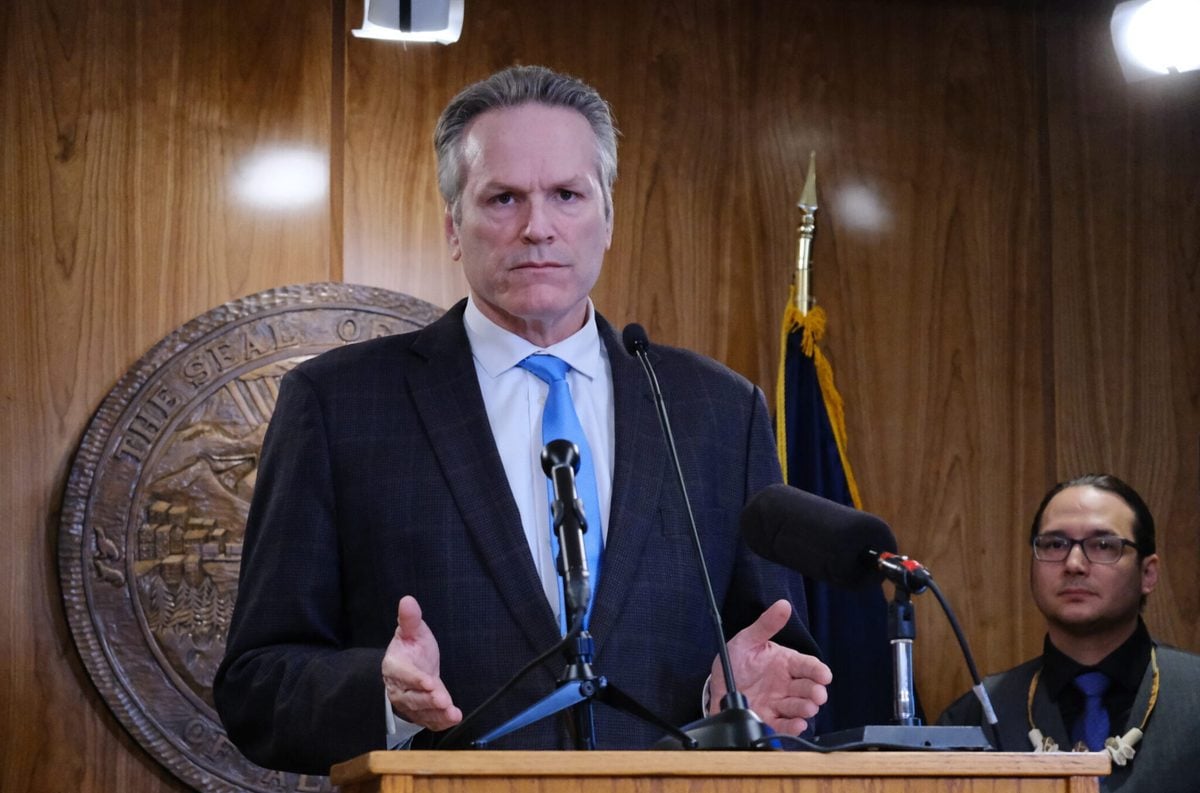
Alaska Gov. Mike Dunleavy extended his record-high veto rate Thursday by vetoing nine of the 82 bills passed by lawmakers in the second year of the 34th Alaska State Legislature.

Among the vetoed bills were measures that would have provided mental health lessons to kids in public schools, created a retirement plan for private-sector workers who don’t have one and updated the state’s corporate income tax system.

Two of the vetoed bills — one expanding the power of pharmacists and the other covering the state’s board of engineers and architects — were put into law Friday after lawmakers overrode the governor.

Dunleavy has now vetoed or attempted to veto almost one-fifth of all bills passed by the 34th Legislature. Other governors have issued more vetoes, but none have vetoed a higher proportion of bills than Dunleavy.

Pharmacists’ powers expanded

State legislators voted 43-17 on Friday to override Dunleavy’s veto of House Bill 195, which gives pharmacists more authority to prescribe medicines and conduct simple medical tests. Forty votes were needed.

Rep. Genevieve Mina, D-Anchorage, spoke in favor of the override, saying the bill will enable Alaskans to get cheaper medical care from pharmacists instead of more expensive providers.

Rep. Zack Fields, D-Anchorage, offered an example: For a parent with a child suffering from strep throat after their pediatrician had closed for the day, going to an urgent care clinic might cost hundreds of dollars, and an emergency room visit could cost thousands. 

“This bill allows a parent to take their child to a pharmacy” and get a strep throat test, he said. 

“We have a growing number of families in Alaska that cannot afford health insurance. If they can’t take their kid to a pharmacy, they’re just not going to get treated,” he said.GET THE MORNING HEADLINES.SUBSCRIBE

Some antiabortion advocates lobbied against the bill, saying they believe the bill could allow pharmacists to more easily dispense abortion-inducing drugs.

Rep. Jamie Allard, R-Eagle River, spoke to that point, but Rep. Mike Prax, R-North Pole and a strong antiabortion advocate himself, said that information is incorrect.

Alaska law limits who may perform an abortion in the state, Prax said.

“It just simply isn’t an issue, and therefore the benefits of this bill clearly outweigh any of the risks,” he said.

Interior designers added to architecture board

Lawmakers also overrode Dunleavy’s veto of House Bill 314 by a 45-15 margin. Forty votes were needed.

A revised version of a bill Dunleavy vetoed last year, HB 314 will regulate some aspects of interior design in the state by adding them to the State Board of Architects, Engineers, and Land Surveyors. 

The bill also renewed the board’s legal authority, and when Dunleavy vetoed HB 314, it could have at least temporarily eliminated the board as a side effect. While the duties of the board would have been assumed by the Alaska Department of Commerce, Community and Economic Development, lawmakers said they did not want to eliminate the board just as the state considers a state-spanning natural gas pipeline.

No extra oversight for for kids’ psychiatric facilities

Forty of the Legislature’s 60 members are needed to override the veto of a policy bill, and legislators failed to reach that threshold on three votes Friday due to the opposition of Republican lawmakers.

On House Bill 52, which would require increased oversight of youth psychiatric facilities, the vote was 36-24. The bill, from Rep. Maxine Dibert, D-Fairbanks, was introduced in response to reports of widespread problems at North Star psychiatric hospital in Anchorage.

If enacted, the bill would have required unannounced state inspections of facilities like North Star and reports on the use of physical and chemical restraints on children, among other items.

In his veto message, the governor said that while he supports oversight, he believes the bill duplicates what the state is already empowered to do.

No mental health education in public schools

Despite an impassioned speech from Sen. Elvi Gray-Jackson, D-Anchorage, the Legislature declined to override Dunleavy’s veto of Senate Bill 41, which would have required the Alaska Department of Education and Early Development to draft a mental health curriculum in the same way that it has a physical education program.

https://alaskabeacon.com/2026/05/15/alaska-legislature-approves-plan-for-mental-health-education-in-schools/embed/#?secret=skcAPQuB3I#?secret=pH0ddaP23e

Local districts would have been responsible for implementing that curriculum.

The override vote was 38-22, two votes short of what was needed.

The issue, Gray-Jackson told legislators Friday, is nothing short of a matter of life and death. 

Alaska has the highest suicide rate in the nation, she said, and “in many rural communities, suicide rates are nearly four times that the national average. Teaching our students how to recognize mental health challenges, to seek help and support one another, is one of the most basic and meaningful steps we can take to address this crisis.”

In his veto message, the governor said, “this bill places the state in the role of imposing upon school districts to mandate the development of mental health education at a time when districts are already working to meet existing requirements.”

“Decisions about sensitive classroom instruction, especially instruction involving a student’s mental and emotional health, should remain as close as possible to parents, local school boards, and communities,” he said.

Gray-Jackson lambasted that statement, saying it repeated “false” and “harmful” misinformation from “online blogs and commentators.”

“SB 41 didn’t remove parents from the conversation, it didn’t strip authority from local school boards, it didn’t replace community values with a one-size-fits-all mandate,” she said. 

“The reality is much simpler,” Gray-Jackson said. “The governor vetoed a bill with the potential to save lives in every community represented in this chamber, and I can’t emphasize that enough.”

No retirement plans for minimum-wage workers

Legislators failed by a single vote to override Dunleavy’s veto of Senate Bill 21, which would have provided state-run retirement plans for workers in businesses that do not currently offer retirement benefits.

The program under SB 21, similar to efforts already launched by other states, would have principally affected minimum-wage workers and those in small businesses. Unless they opt out, eligible workers would have had 5% of their paychecks automatically deducted and deposited into an investment account managed by the state.

In his veto message, the governor said he opposes a mandate, even with an opt-out provision.

“Although employees may opt out, the bill relies on automatic enrollment and places employers in the middle of a state-run investment program. Alaska businesses should not be required to

administer or facilitate retirement savings accounts created by the State when private retirement

and investment options are already available,” Dunleavy wrote.

The vote on an override was 39-21, with Rep. Kevin McCabe, R-Big Lake, casting the last and decisive vote to sustain the governor’s decision.

No updates to corporate or tobacco taxes

Of the governor’s nine vetoes, legislators declined to vote on four, permitting them to stand without a vote. 

Dunleavy vetoed two bills — House Bill 280 and Senate Bill 24 — saying that he is unwilling to approve tax changes without a comprehensive fiscal plan that brings state expenses and revenue into line over the long-term.

Both bills had been passed in different forms by prior editions of the Legislature and were also previously vetoed by Dunleavy. If SB 24 had been enacted, it would have imposed Alaska’s first tax on e-cigarette products. HB 280 would have modernized the state’s corporate income tax system, taking tax revenue for online sales from other states to the Alaska treasury by declaring that sales to Alaskans take place in Alaska, not at the location of a warehouse or computer server operated by the seller.

House Bill 23, also vetoed by the governor, would have subjected nonprofit businesses to the authority of the Alaska State Commission for Human Rights, which handles discrimination complaints against employers.

“While I support protecting Alaskans from unlawful discrimination, this bill expands the commission’s reach over nonprofit employers, including charitable, educational, and religious organizations. That expansion creates uncertainty for small community organizations and risks unnecessary administrative proceedings and litigation,” the governor wrote in his veto message.

The last of the vetoes, Senate Bill 258, would have forbidden the state from signing computer software deals that lock in the state to a particular company or limit the software to a particular geographic area.

The governor’s veto message said in part that the “bill places rigid statutory limits on how the State and political subdivisions may contract for software in a highly technical and rapidly changing marketplace.”

“Software licensing, cybersecurity requirements, cloud services, support, hosting, and pricing

models are complex and often negotiated together. Restricting those negotiations in statute could reduce flexibility, limit access to needed products, and increase costs for agencies and local governments,” he wrote.

Categories
Alaska News Featured Juneau News juneau Juneau Local Juneau Local Ketchikan Local News Feeds Sitka Local

Alaska House rejects Senate’s LNG gas line bill, lawmakers say negotiations will continue

By: Corinne Smith, Alaska Beacon

The Alaska House convened for a third special session and voted to reject a Senate version of a tax break bill for the proposed AK LNG gas line project on June 20, 2026. (Photo by Corinne Smith/Alaska Beacon)

The Alaska House of Representatives on Saturday rejected a Senate-drafted multibillion-dollar tax break for a proposed trans-Alaska natural gas pipeline project, as members of the House declined to abandon a different proposal they drafted.

Members of the House voted down the Senate’s revised bill 12-28, nine votes short of what was needed to adopt the Senate plan. In a separate 0-16 vote, the Senate declined to abandon its version in favor of the House’s plan. Lawmakers will now convene a conference committee with representatives from both bodies to hammer out a compromise agreement.

In an interview following the House vote, House Speaker Bryce Edgmon, I-Dillingham, said objections within the House varied, and lawmakers with the conference committee need time to evaluate the changes.

“Given the breadth and just the wide range of things that happened to House Bill 381 in the Senate last night, you know, we’re going to take that vehicle and use it as a starting point going forward, and we’re going to work very diligently and also with a strong sense of resolve to try to bring it all to an agreement,” Edgmon said. 

Lawmakers agreed to reconvene for potential final votes on July 1.

Members of the all-Republican House Minority Caucus huddle behind the Capitol ahead of a vote to reject the Senate's version of a tax break bill for the proposed AK LNG gas line project on Saturday, June 20, 2026. (Photo by Corinne Smith/Alaska Beacon)
Members of the all-Republican House Minority Caucus huddle outside the House chamber behind the Capitol ahead of a vote to reject the Senate’s version of a tax break bill for the proposed AK LNG gas line project on Saturday, June 20, 2026. (Photo by Corinne Smith/Alaska Beacon)

While conference committees typically negotiate behind closed doors, Edgmon said there will be public meetings as well. 

Lawmakers said negotiations would begin soon but there was no confirmed schedule for the conference committee. 

From the House, the conference committee will include Edgmon, Reps. Calvin Schrage, I-Anchorage, and Justin Ruffridge, R-Soldotna. From the Senate, the committee includes Sens. Lyman Hoffman, D-Bethel, Bert Stedman, R-Sitka, and Mike Cronk, R-Tok.

At issue is the size and scope of a tax break for the proposed trans-Alaska natural gas pipeline project, known as Alaska LNG.

As currently proposed, the project would include construction of a 807-mile gas line from the North Slope to Cook Inlet, in phase one. In phase two, it would include a new large gas-treatment plant on the North Slope and an export facility on the Kenai Peninsula to export gas internationally.

The House passed the bill with a larger tax break on June 12. The Senate revised the bill, reducing the size of the tax break and passed a variety of changes on Friday, with a smaller tax break on the gas tax, known as the alternative volumetric gas tax, and a plan for gradual increases in tax over time. 

Senators also included a variety of changes to the bill, including a previously contentious provision voted down by the House this spring to levy corporate income taxes on privately-owned oil and gas companies that currently do not pay them. That would apply to Hilcorp and Glenfarne, the company developing the LNG project. 

The Senate also included amendments to the bill seeking more protections for the state and Alaskans: one an amendment would limit the gas price cap for residents in Southcentral Alaska to rise with inflation and prohibiting developers from passing on cost overruns to Alaskans; a labor-related proposal would require the pipeline builders to pay prevailing wages in the state and employ Alaskans and apprentices. An amendment would require Glenfarne and developers to disclose their ties to foreign companies. Another amendment declared that if pipeline developers abandon their efforts, the project will return to the state at no cost. Currently Glenfarne owns 75% of the project while the remaining 25% is held by the state-owned Alaska Gasline Development Corp. Glenfarne could not seek a buyout from the state if it failed to move forward with the project.

The Senate imposed deadlines on the project, mandating construction of the pipeline and phase one to be completed no later than 2032, and phase two to be done no later than 2036.

The Alaska Senate convened for the third special session on June 20, 2026, voting to move a tax break bill for the proposed AK LNG gas line project to a conference committee. (Photo by Corinne Smith/Alaska Beacon)

Late Friday night, Gov. Mike Dunleavy voiced objections to the Senate’s version of the bill, saying there were “serious questions about all the amendments.” 

Friday was the last day of a 30-day special session devoted to the gas pipeline project. Dunleavy has proclaimed another 30-day special session, which began Saturday, and legislators spent the morning taking procedural actions that allow them to resume work without interruption.

Dunleavy urged lawmakers to work quickly, but four senators were excused absent from Saturday’s votes, and members of the House rapidly left the Capitol on Saturday afternoon in order to catch flights home from Juneau.

Edgmon said he expects negotiations with the governor’s office to continue. 

“If he’s not involved, and that’s going to make the pathway ahead problematic,” he said.

A spokesperson for Dunleavy’s office said on Saturday that the governor supports the bill moving forward to a conference committee.  

“Governor Dunleavy is encouraged by House and Senate leadership’s decision to send HB 381 to a conference committee,” said Jeff Turner, Dunleavy’s communications director, by email. “It’s an opportunity for both bodies to agree on a version of the bill that can incentivize the Alaska LNG Project while still providing steady, predictable revenue to communities along the pipeline corridor using a volumetric tax mechanism.”

The governor and members of the House were particularly opposed to the corporate income tax provision.

House Majority Leader Chuck Kopp, R-Anchorage, joined a news conference with Gov. Mike Dunleavy on June 19, 2026. (Photo by Claire Stremple/Alaska Beacon)

“It is considered economically counterproductive at the moment the state is trying to attract final investment decisions on phase one and phase two of the gas pipeline,” House Majority Leader Rep. Chuck Kopp, R-Anchorage, said on the House floor ahead of Saturday’s vote, adding that he believes the provision undercuts certainty and competitiveness of the project. 

“These amendments were not vetted or extensively explained on the other body’s floor, and we do not yet know their full impact,” Kopp added.  

But Sen. Bert Stedman, R-Sitka, who co-chairs the Senate Finance Committee said lawmakers still need more financial information from Glenfarne to determine if that’s the case, and to determine the project’s economic viability.  

“They still haven’t clearly delineated how much benefit or burden the property tax existing structure actually is on it,” Stedman said after the Senate vote. “Even if we made no property tax on the gas line, it does not make it economic. It helps economics, it does not get it over the hurdle.” 

“We gotta protect the treasury, that’s our job,” Stedman added. “If you’re going to give concessions, they need to show us why they need them, and the impact.”

If legislators do not adjourn early, the new special session is set to end on July 19.

James Brooks contributed to this story.

Categories
Alaska News Featured Juneau News juneau Juneau Local Juneau Local Ketchikan Local News Feeds Sitka Local

Police continue investigation into death of missing Juneau resident Dion McCabe

Dion McCabe, photo provided by family to the Juneau Police Department

NOTN- Juneau police say a body discovered in a wooded area near the end of Sherwood Lane has been identified as 29-year-old Dion McCabe, who had been reported missing earlier this month.

The full press release can be found below;

 the Juneau Police Department received a report that the deceased body of Dion McCabe had been located in a wooded area near the end of Sherwood Lane. Officers responded to the scene and confirmed the presence of the deceased individual. The area was secured, and an investigation into the circumstances surrounding the death was initiated.

The next of kin has been notified. The body will be transported to Anchorage, Alaska, where an autopsy will be conducted to assist investigators in determining the cause and manner of death.

At this time, the investigation remains ongoing. Anyone with information related to this case is encouraged to contact the Juneau Police Department. Anonymous tips can also be submitted through Juneau Crime Line at JuneauCrimeLine.com.

**********************

On June 5, 2026, the family of 29-year-old Dion McCabe reported him missing to the Juneau Police Department. Family members reported they had not seen or heard from Dion for approximately a week and a half. Dion was last seen by family on May 26, 2026, at Safeway in Juneau.

Dion is described as a 29-year-old white male, approximately 6 feet tall and 186 pounds, with brown hair and blue eyes. He was last seen wearing Rock Revival blue jeans, a white T-shirt, and UGG slipper-style shoes.

A photograph of Dion is being posted on the Juneau Police Department Facebook page to assist in locating him.

Anyone with information regarding Dion McCabe’s whereabouts is encouraged to contact the Juneau Police Department at (907) 586-0600. Anonymous tips may also be submitted through Juneau Crime Line.

Categories
Alaska News

Nonprofit foundation gifts Alaska Legislature 16 apartments in Juneau

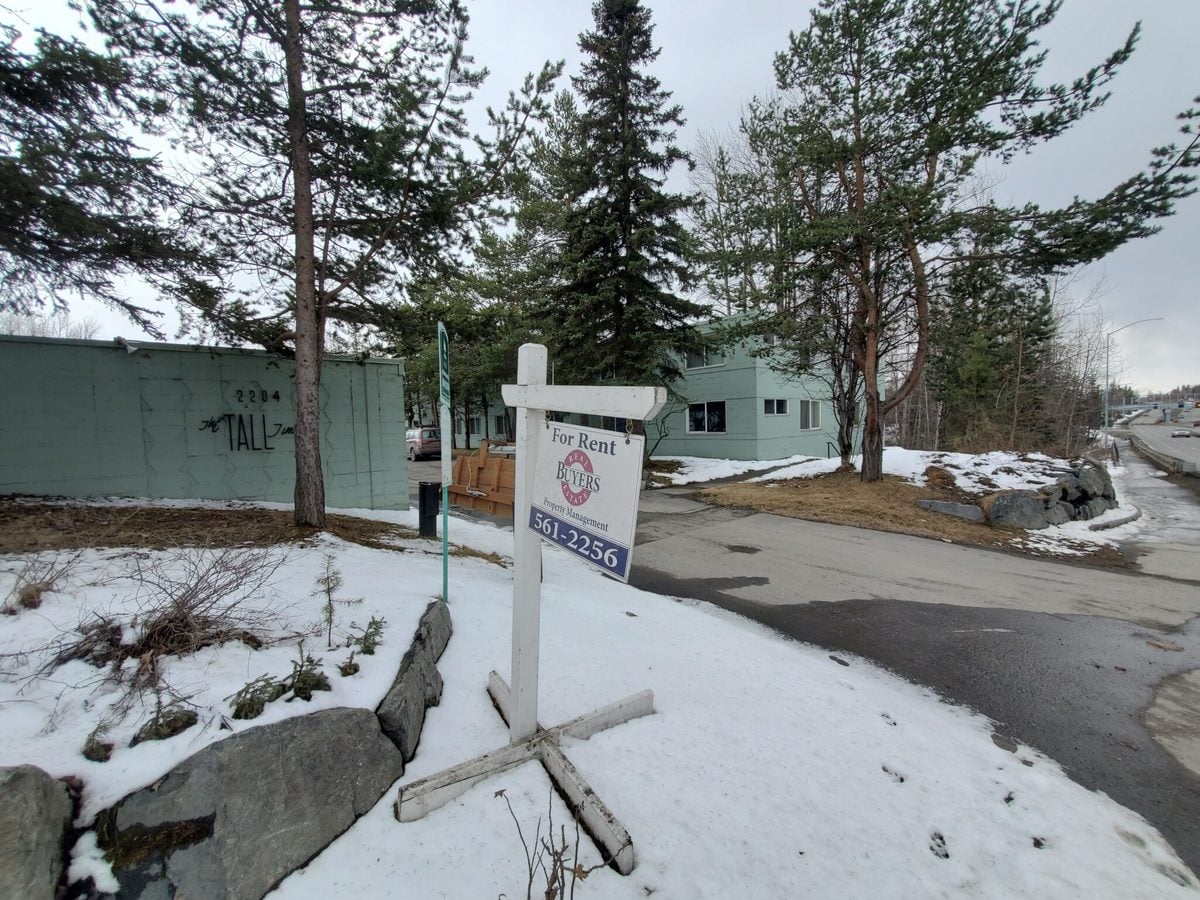
This eight-plex apartment complex in Juneau, seen Thursday, June 18, 2026, will be purchased by the Juneau Community Foundation and donated to the Alaska Legislature under a plan approved Wednesday by lawmakers. (Claire Stremple photo/Alaska Beacon)

This eight-plex apartment complex in Juneau, seen Thursday, June 18, 2026, will be purchased by the Juneau Community Foundation and donated to the Alaska Legislature under a plan approved Wednesday by lawmakers. (Claire Stremple photo/Alaska Beacon)

The Juneau Community Foundation is giving the Alaska Legislature 16 two-bedroom apartments as part of a long-term effort to keep the state’s capital in Juneau.

Members of the House-Senate Legislative Council voted unanimously to accept the apartments, which are spread across two four-plexes and one eight-plex in the Starr Hill and Chicken Ridge neighborhoods, respectively.

The new acquisition follows the Legislature’s acceptance of the Assembly Building by a similar donation in 2022. That building has 33 apartments for legislators and is regularly in use.

Under the terms of the donation, the Juneau Community Foundation will buy the three new buildings, renovate them and turn them over to the Legislature once the renovations are complete.

Fifty-seven of the Legislature’s 60 members do not live permanently in Juneau; there will be 49 legislative housing units when the renovations finish.

Reed Stoops, a lobbyist, is a member of the board of the Juneau Community Foundation and helped organize the latest housing donation.

“Basically any kind of improvement that will make the Legislature function better in Juneau, we’ll do,” he said.

The ultimate goal is to give the Legislature more housing options to keep legislative sessions in Juneau, “especially during a special session like this,” he said.

Juneau is visited by more than 1.5 million tourists per year in the summer, and housing becomes scarce between April and September. Historically, legislators and staff have struggled to find housing for special sessions that take place during the summer.

The Legislature hasn’t yet decided how much rent it will charge legislators who live in the new apartments. Legislators living in the Assembly Building are charged market-rate rents based on the size of the apartment.

“Many on this council are strongly supportive and excited about Juneau Community Foundation’s donation, and just really thankful for it,” said Rep. Ashley Carrick, D-Fairbanks and a member of the Legislative Council.

“Juneau is an incredibly welcoming community, and this is just yet another example of why we should keep the capital in Juneau,” she said.

SUBSCRIBE: GET THE MORNING HEADLINES DELIVERED TO YOUR INBOX.

Categories
Alaska News

Wrangell students help bring Anan bear cams online for third summer

By Leilani Combs

The Anan Wildlife Observatory bear cameras are online for a third summer, bringing the lives of Tongass bears like Scuba Sue and Tatonka to viewers around the world. It’s thanks to the hard work of students participating in the Teaching Through Technology program.

Wrangell T3 students returned earlier this month from their third year of field work to set up the cameras to livestream the black and brown bears of Anan Creek. With support from the international nonprofit online portal explore.org, which hosts the livestream, and the U.S. Forest Service Wrangell Ranger District, these T3 students designed and installed the camera systems that provide four different views of the creek.

Now, with the success of the technical work, they’re turning their energy to communicating the bear’s stories.

“If you had asked me before if this is something students could do, I probably would have said, ‘Oh, I don’t know.’ It might be too complicated,” said Candice Rusch, director of new media at explore.org, “But they really have proven me wrong.”

The cams at Anan are the only student-run cameras of all of the livestreams hosted on explore.org, which shares a variety of wildlife livestreams and documentaries to foster connection and stewardship for the animals. Among the most notable is the Katmai National Park and Preserve bear livestream, famous around the world for the annual Fat Bear Week competition as brown bears come to feast on returning salmon.

Anan is among Wrangell’s top visitor attractions.

Around 390,000 viewers tuned to the Anan cams throughout the first season, but that number more than doubled in its second year with 890,000 total viewers. Rusch said she believes that number will only continue to grow as viewers become more familiar with the individual bears.

Andrei Bardin-Siekawitch, a high school senior who has been a part of the Wrangell team since the beginning, designed the computer-aided system for the solar panels and electrical boxes that power the cameras. He joined the program after seeing the stuff his brother was getting to do. When the Anan project came up, he jumped at the opportunity.

“I knew that it was kind of like the biggest thing that T3 had done yet,” Bardin-Siekawitch said, “Not just in Wrangell, but across the whole state.”

The first year, the students designed and installed the system from scratch, with two cameras. They then added two more cameras the second year to add more views of the bears. This year, the students focused on making things look more professional after cleaning up wire debris and other damage caused by winter storms. 

“It’s always a small miracle when the cameras come back online,” T3 student coordinator Brian Reggiani said. “That is always cool.”

There are four cameras streaming at Anan currently, with plans to add a fifth at the top of the waterfall in the future. This angle would allow viewers into an area inaccessible to those visiting in person and for observation of some of Anan’s shyer bears who hide when visitors arrive in force during prime viewing season July 5 to Aug. 25. 

The team has also been working to set up an underwater salmon camera to give a different view of the bear’s fishing behavior and the salmon that sustain them, but the installation has proven to be tricky. 

“We were standing in a raging river with the pole in our hands, you know. Trying to keep our balance, line it up,” Bardin-Siekawitch said. “Then we realized the bolts didn’t fit through the holes on the pole, so we had to go all the way back up to the platform and start again.”

He said that when they got back down to the river, the concrete drill just stopped working. Thwarted again. 

Reggiani said they plan to go back soon to complete the salmon cam installation that has eluded them the past two seasons. 

In addition to his role at T3, Reggiani also serves on the board of the Friends of Anan nonprofit, formed after the installation of the first cameras. The goal of the organization is to raise money to support the project, with hopes of expanding it to make Anan accessible to even more students in the future.

This year, the Friends of Anan received a $100,000 grant from the Annenberg Foundation, which underwrites explore.org to support that goal. The funds will help cover the cost of the Starlink wireless connection used to access the cameras, staffing, trail maintenance and general operations.

“Our founder will always say that people will protect what they love,” said Rusch, from explore.org.

Paid internships have been provided for all of the students on the team who want to continue their work through the summer. While there will be videocam maintenance, the students are now turning their attention to interpreting Anan’s story and its bears for in-person visitors and international viewers. 

This work will allow students to tap more into their creative side through sharing photos of the site and the students’ work, social media coverage and longer videos, as well as some in-person interpretation at the observatory and in town. 

“I think the communication side is probably the more important of the two sides (of the work), to be completely honest,” said Ander Edens, a photographer, Wrangell High School graduate and rising sophomore at the University of Alaska Fairbanks.

“I’m excited to expand as a photographer … and also learn how to properly manage and run a social media platform.”

The internships are being supported by several organizations including the Friends of Anan, Sealaska Heritage Institute and the Forest Service. 

In addition to Edens and Andrei Bardin-Siekawitch, this year’s student team included Nikolai Bardin-Siekawitch, Natalia Ashton, Lennex Gurule, Turner Garrett, Ava Garrett and 2025 Wrangell graduate Anika Herman.

All of the work at the observatory was done in cooperation with the Forest Service.

The agency’s Tongass National Forest public affairs office did not make anyone available for an interview in time for this story.

The post Wrangell students help bring Anan bear cams online for third summer appeared first on Chilkat Valley News.

Categories
Alaska News

U.S. scientific instruments in oceans off Alaska and elsewhere to remain in place

Hundreds of sophisticated monitoring instruments will remain in place in the nation’s oceans, thanks to a National Science Foundation reversal of its plan to partially dismantle the system.

The federal agency announced on Thursday that it is dropping its plan to remove hundreds of instruments from the Ocean Observatories Initiative program.

The program encompasses more than 900 instruments monitoring ocean currents, temperatures, sea life and other conditions. Information gathered is used to analyze weather and prepare for extreme weather events, manage fisheries, record climate change and other functions. The $386 million system was installed a decade ago and was intended to last for three decades.

News that the Trump administration planned to pull out hundreds of the instruments – including those positioned in Alaska’s ocean waters – triggered outrage from scientists, the fishing industry, members of Congress from coastal states and others.

Late Wednesday, the U.S. Senate approved a bill to prohibit federal spending for decommissioning of any of the Ocean Observatories Initiative without a thorough review, including review by people and organizations using the information provided by the system

The bill was introduced and brought to the floor by Sen. Lisa Murkowski and Sen. Jeff Merkley. Called the “Saving the OOI Act,” it passed by unanimous consent.

The following day, the National Science Foundation announced the reversal of a decision that it previously classified as a mere “descoping” of the observatories network.

“The U.S. National Science Foundation appreciates the concerns raised by the range of stakeholders that have informed us they rely on data from the Ocean Observatories Initiative (OOI),” said a statement released by the agency. “Effective immediately, NSF will not proceed with further removal or descoping of equipment from the remaining arrays and will continue operations including planned maintenance.”

The National Science Foundation said it had already removed part of the system, called the Endurance Array, which is a number of instruments that were placed along the coasts of Oregon and Washington. But now, the agency said, “we are developing plans to redeploy the equipment after servicing.”

Murkowski, one of the prominent defenders of the Oceans Observatories Initiative, emphasized the importance of the system to Alaska, which has more coastline than the rest of the states combined, a fisheries industry worth billions of dollars annually and coastal communities vulnerable to extreme storms.

In a statement, she and Merkley said they welcomed the new decision to keep the Ocean Observatories Initiative intact.

The Sikuliaq. a National Science Foundation research vessel operated by the University of Alaska Fairbanks, heads back to its home port of Seward after the scientists aboard performed maintenance on instruments deployed in the Gulf of Alaska as part of the Ocean Observatories Initiative program. (Photo by Rebecca Travis/Woods Hole Oceanographic Institution/provided by the Ocean Observatories Initiative)

“The National Science Foundation’s decision to leave the Ocean Observatories Initiative’s buoys in place is a massive win for coastal communities and fishermen around the country,” Murkowski said. “The data accessed through OOI is important for so many, and I’m immensely grateful that NSF listened to our calls. Today we saw the federal process at work—with the Senate quickly passing legislation and the executive branch responding to our position. I’m pleased to have partnered with Senator Merkley and a number of my colleagues to preserve this valuable system.”

Merkley said the OOI’s work is vital that he and Murkowski would continue to be champions of the initiative:  “We’ll keep fighting to ensure scientists, fishermen, and coastal communities can continue to utilize the critical data the OOI provides.”

While most of the sponsors of the bill were Democrats from coastal states, a second Republican had signed on as of Wednesday as a cosponsor: Sen. Dan Sullivan, R-Alaska.

Support from senators of both parties was important, said a statement released by the environmental group Oceana.

“We commend the bipartisan group of lawmakers who acted quickly to oppose the dismantling of this critical tool for monitoring the health of our oceans,” Oceana Senior Campaign Director Gib Brogan said in the statement. “Strong ocean science benefits everyone, and this reversal will ensure this tool continues to provide benefits for all of us for years to come.”

The post U.S. scientific instruments in oceans off Alaska and elsewhere to remain in place appeared first on Chilkat Valley News.

Categories
Alaska News

Dunleavy vetoes nine bills, but Alaska lawmakers override two in special session flurry

Alaska Gov. Mike Dunleavy extended his record-high veto rate Thursday by vetoing nine of the 82 bills passed by lawmakers in the second year of the 34th Alaska State Legislature.

Among the vetoed bills were measures that would have provided mental health lessons to kids in public schools, created a retirement plan for private-sector workers who don’t have one and updated the state’s corporate income tax system.

Two of the vetoed bills — one expanding the power of pharmacists and the other covering the state’s board of engineers and architects — were put into law Friday after lawmakers overrode the governor.

Dunleavy has now vetoed or attempted to veto almost one-fifth of all bills passed by the 34th Legislature. Other governors have issued more vetoes, but none have vetoed a higher proportion of bills than Dunleavy.

Pharmacists’ powers expanded

State legislators voted 43-17 on Friday to override Dunleavy’s veto of House Bill 195, which gives pharmacists more authority to prescribe medicines and conduct simple medical tests. Forty votes were needed.

Rep. Genevieve Mina, D-Anchorage, spoke in favor of the override, saying the bill will enable Alaskans to get cheaper medical care from pharmacists instead of more expensive providers.

Rep. Zack Fields, D-Anchorage, offered an example: For a parent with a child suffering from strep throat after their pediatrician had closed for the day, going to an urgent care clinic might cost hundreds of dollars, and an emergency room visit could cost thousands. 

“This bill allows a parent to take their child to a pharmacy” and get a strep throat test, he said. 

“We have a growing number of families in Alaska that cannot afford health insurance. If they can’t take their kid to a pharmacy, they’re just not going to get treated,” he said.

Some antiabortion advocates lobbied against the bill, saying they believe the bill could allow pharmacists to more easily dispense abortion-inducing drugs.

Rep. Jamie Allard, R-Eagle River, spoke to that point, but Rep. Mike Prax, R-North Pole and a strong antiabortion advocate himself, said that information is incorrect.

Alaska law limits who may perform an abortion in the state, Prax said.

“It just simply isn’t an issue, and therefore the benefits of this bill clearly outweigh any of the risks,” he said.

Interior designers added to architecture board

Lawmakers also overrode Dunleavy’s veto of House Bill 314 by a 45-15 margin. Forty votes were needed.

A revised version of a bill Dunleavy vetoed last year, HB 314 will regulate some aspects of interior design in the state by adding them to the State Board of Architects, Engineers, and Land Surveyors. 

The bill also renewed the board’s legal authority, and when Dunleavy vetoed HB 314, it could have at least temporarily eliminated the board as a side effect. While the duties of the board would have been assumed by the Alaska Department of Commerce, Community and Economic Development, lawmakers said they did not want to eliminate the board just as the state considers a state-spanning natural gas pipeline.

No extra oversight for for kids’ psychiatric facilities

Forty of the Legislature’s 60 members are needed to override the veto of a policy bill, and legislators failed to reach that threshold on three votes Friday due to the opposition of Republican lawmakers.

On House Bill 52, which would require increased oversight of youth psychiatric facilities, the vote was 36-24. The bill, from Rep. Maxine Dibert, D-Fairbanks, was introduced in response to reports of widespread problems at North Star psychiatric hospital in Anchorage.

If enacted, the bill would have required unannounced state inspections of facilities like North Star and reports on the use of physical and chemical restraints on children, among other items.

In his veto message, the governor said that while he supports oversight, he believes the bill duplicates what the state is already empowered to do.

No mental health education in public schools

Despite an impassioned speech from Sen. Elvi Gray-Jackson, D-Anchorage, the Legislature declined to override Dunleavy’s veto of Senate Bill 41, which would have required the Alaska Department of Education and Early Development to draft a mental health curriculum in the same way that it has a physical education program.

Local districts would have been responsible for implementing that curriculum.

The override vote was 38-22, two votes short of what was needed.

The issue, Gray-Jackson told legislators Friday, is nothing short of a matter of life and death. 

Alaska has the highest suicide rate in the nation, she said, and “in many rural communities, suicide rates are nearly four times that the national average. Teaching our students how to recognize mental health challenges, to seek help and support one another, is one of the most basic and meaningful steps we can take to address this crisis.”

In his veto message, the governor said, “this bill places the state in the role of imposing upon school districts to mandate the development of mental health education at a time when districts are already working to meet existing requirements.”

“Decisions about sensitive classroom instruction, especially instruction involving a student’s mental and emotional health, should remain as close as possible to parents, local school boards, and communities,” he said.

Gray-Jackson lambasted that statement, saying it repeated “false” and “harmful” misinformation from “online blogs and commentators.”

“SB 41 didn’t remove parents from the conversation, it didn’t strip authority from local school boards, it didn’t replace community values with a one-size-fits-all mandate,” she said. 

“The reality is much simpler,” Gray-Jackson said. “The governor vetoed a bill with the potential to save lives in every community represented in this chamber, and I can’t emphasize that enough.”

No retirement plans for minimum-wage workers

Legislators failed by a single vote to override Dunleavy’s veto of Senate Bill 21, which would have provided state-run retirement plans for workers in businesses that do not currently offer retirement benefits.

The program under SB 21, similar to efforts already launched by other states, would have principally affected minimum-wage workers and those in small businesses. Unless they opt out, eligible workers would have had 5% of their paychecks automatically deducted and deposited into an investment account managed by the state.

In his veto message, the governor said he opposes a mandate, even with an opt-out provision.

“Although employees may opt out, the bill relies on automatic enrollment and places employers in the middle of a state-run investment program. Alaska businesses should not be required to

administer or facilitate retirement savings accounts created by the State when private retirement

and investment options are already available,” Dunleavy wrote.

The vote on an override was 39-21, with Rep. Kevin McCabe, R-Big Lake, casting the last and decisive vote to sustain the governor’s decision.

No updates to corporate or tobacco taxes

Of the governor’s nine vetoes, legislators declined to vote on four, permitting them to stand without a vote. 

Dunleavy vetoed two bills — House Bill 280 and Senate Bill 24 — saying that he is unwilling to approve tax changes without a comprehensive fiscal plan that brings state expenses and revenue into line over the long-term.

Both bills had been passed in different forms by prior editions of the Legislature and were also previously vetoed by Dunleavy. If SB 24 had been enacted, it would have imposed Alaska’s first tax on e-cigarette products. HB 280 would have modernized the state’s corporate income tax system, taking tax revenue for online sales from other states to the Alaska treasury by declaring that sales to Alaskans take place in Alaska, not at the location of a warehouse or computer server operated by the seller.

House Bill 23, also vetoed by the governor, would have subjected nonprofit businesses to the authority of the Alaska State Commission for Human Rights, which handles discrimination complaints against employers.

“While I support protecting Alaskans from unlawful discrimination, this bill expands the commission’s reach over nonprofit employers, including charitable, educational, and religious organizations. That expansion creates uncertainty for small community organizations and risks unnecessary administrative proceedings and litigation,” the governor wrote in his veto message.

The last of the vetoes, Senate Bill 258, would have forbidden the state from signing computer software deals that lock in the state to a particular company or limit the software to a particular geographic area.

The governor’s veto message said in part that the “bill places rigid statutory limits on how the State and political subdivisions may contract for software in a highly technical and rapidly changing marketplace.”

“Software licensing, cybersecurity requirements, cloud services, support, hosting, and pricing

models are complex and often negotiated together. Restricting those negotiations in statute could reduce flexibility, limit access to needed products, and increase costs for agencies and local governments,” he wrote.

The post Dunleavy vetoes nine bills, but Alaska lawmakers override two in special session flurry appeared first on Chilkat Valley News.

Categories
Alaska News

Elon Musk could put his $1 trillion to a good use

Elon Musk is the richest person in the world, probably the universe, though it’s always possible some unknown form of life has blasted to stratospheric economic heights in an unknown galaxy — if they even have an atmosphere or stratosphere — and reaped untold personal wealth in whatever currency they may use.

No matter, Musk is rich in dollars on Earth, where his companies sell their goods and services of electric cars, satellite internet links, rocket launches, artificial intelligence and data center services.

And he got even richer last week when SpaceX, his rocket launch and AI and satellite company, went public, joining earthly companies on the stock exchange. No matter that most of his businesses lose money — investors are eager to ride the rocket and see how high it can go.

Musk, according to numbers from respected financial news services Bloomberg, Forbes and the Associated Press, is now worth an estimated $1.1 trillion to $1.2 trillion. Close enough, since I doubt the guy needs to balance a checkbook or look over a credit card statement.

But millions of Americans do just that every month, and for good reason. They’re in debt, particularly on their credit cards. The balance owed on credit cards held by Americans reached $1.25 trillion in the first quarter of this year, according to the New York Federal Reserve Bank, up from $1.18 trillion a year ago. The $1.25 trillion is the highest first-quarter balance since the bank began measuring the data in 1999. 

No problem for those who pay their balance in full every month, but more than one in eight cards, or 13.12%, the highest level in 15 years, were at least 90 days delinquent in the first quarter of this year, according to data released last month by the New York Fed.

The Alaska Department of Labor also looked at debt and delinquencies last month, reporting the numbers in the June issue of Alaska Economic Trends, the department’s monthly magazine. “Alaska credit card debt delinquency (in 2025) has risen to its highest level in more than 20 years,” close to 10%, the department reported.

Though below the national average of 12.4% last year, Alaska’s nearly 10% delinquency rate is not comforting to the tens of thousands of people who can’t keep up with payments.

Considering the rural nature of much of the state, the remoteness of many homes and the coverage gaps in internet services, no doubt a lot of people who are behind in their credit card bills pay Elon Musk’s Starlink for satellite internet service. Ironic that Starlink raised its rates in the same month that Musk became a trillionaire.

The Wall Street Journal wanted to illustrate for readers just how far a trillion dollars would go. If you could find and stack enough pennies — remember, the U.S. Mint stopped making pennies last year because they lost money on every coin — a trillion dollars would cover the distance between Earth and the moon four times.

That got me thinking: Musk has long promoted colonizing the moon, aboard his rockets, of course. But if he really wanted to help people on Earth, as he claims he does with all of the technology and products he sells, he could use his trillion-dollar wealth to pay off the credit card delinquencies of millions of people. He’d still be worth hundreds of billions of dollars. More than enough to get him to the moon, where he would easily claim the title as the richest person there.

• Larry Persily is the publisher of the Wrangell Sentinel, which first published this column.

The post Elon Musk could put his $1 trillion to a good use appeared first on Chilkat Valley News.

Categories
Alaska News

15 bright early-summer salads that taste like June on a plate

These 15 bright early-summer salads make the most of crisp vegetables, fresh herbs, hearty grains, chicken, shrimp, and pasta for easy lunches, cookouts, and warm-weather dinners.The post 15 bright early-summer salads that taste like June on a plate appeared first…

Categories
Alaska News

13 steak recipes for a special occasion at home

Make dinner at home feel worth celebrating with 13 steak recipes, from creamy filet mignon and grilled pinwheels to loaded nachos, tacos, cheesesteaks, and a thick tomahawk.The post 13 steak recipes for a special occasion at home appeared first on…