The latest news and information from your Alaska news station.









The latest news and information from your Alaska news station.

Spring Creek Correctional Center is seen in an undated photo. (Photo courtesy of Alaska Department of Corrections)
Alaskans who have been wrongfully convicted can now apply to claim Alaska Permanent Fund dividends that were withheld while they were incarcerated, under a new law.
The Alaska Legislature passed Senate Bill 167 by a combined vote of 58 to 2, and Gov. Mike Dunleavy allowed the bill to pass into law without his signature last month.
Under current Alaska law, those who are incarcerated or sentenced as a result of a felony or certain combination of misdemeanor convictions are ineligible for the Permanent Fund dividend. The amount equivalent to those dividends is deposited into a restorative justice fund each year.
Under the new law, past dividends will be granted to people whose convictions were vacated or reversed, or those who had charges against them dismissed. People who were found not guilty after their case was retried are also eligible. Individuals whose charges were dropped as part of a plea agreement in another criminal case would not be eligible.
Exonerees have two years after a dismissal or not guilty finding — or two years after the bill’s effective date — to apply for the past dividends through the Permanent Fund dividend office with the Alaska Department of Revenue. The bill is set to take effect on September 16.

Sen. Scott Kawasaki, D-Fairbanks, sponsored the bill and told lawmakers at a May hearing that the state has a responsibility to those the justice system has failed.
“When an Alaskan has been wrongfully convicted, and then later has had their judgment vacated or reversed, then the state must go beyond merely unlocking the cell,” he said. “We have a duty to make amends for those who have endured an injustice under our laws.”
Prior to the law’s passage, Alaska was one of 12 states that did not provide compensation for wrongful convictions, according to a sponsor statement prepared by Kawasaki’s office. Many states provide financial compensation, or college tuition or job training assistance for exonerees.
Kawasaki said it’s a small step to restore dividend payments. “These funds represent a loss of personal property during that period of time,” he said. “(The bill) is about restoration and not compensation, because really the amount of time that a person has been behind bars can just never be repaid.”
The bill was supported by the Tanana Chiefs Conference and non-profit advocacy groups, including the Alaska Innocence Project and After Innocence, a national advocacy non-profit that provides post-release assistance for those wrongfully convicted.
Jon Eldan, the executive director of After Innocence, said in an interview Monday that the restored PFD money is helpful.
“Because people who have been incarcerated for crimes they didn’t commit typically face a wide range of barriers to rebuilding their lives after that horrible experience, and money helps,” he said. “And so not only is it good because it’s something that is due to them, but also because every dollar matters when you are trying to come back from having your liberty taken away.”
The number of Alaskans who have been wrongfully convicted, or who may be innocent and are in the process of fighting their prior conviction to be overturned is unknown.
The National Registry of Exonerations is a national database of false convictions compiled by Michigan State College of Law, University of Michigan Law and University of California Irvine Newkirk Center for Science and Society. The registry lists over 4,300 wrongful convictions since 1989 nationwide, including nine known cases in Alaska. Those nine cases represent a total of 76 years of incarceration.
“How many more people in Alaska who are incarcerated are factually innocent? And the difficult part is we don’t know,” Eldan said. “Except when these cases resolve in a systemic finding that their conviction needs to be overturned, and have the charges dismissed, etc. and so we don’t know what we don’t know.”
The most infamous cases of wrongful conviction in Alaska are known as the Fairbanks Four — when Marvin Roberts, Eugene Vent, George Frese and Kevin Pease were wrongfully convicted for the killing of a teenager, John Hartman, in 1997. The four Alaska Native men served 18 years in prison each, and were exonerated in 2015 when another man confessed to the killing.
Researchers with the National Registry of Exonerations point to a variety of factors that contribute to wrongful convictions, including police and prosecutorial misconduct, like concealing evidence and witness tampering, false or misleading forensic science, eyewitness testimony or confessions, or inadequate legal defense.
Black and Indigenous people are disproportionately arrested and incarcerated nationwide. Researchers with the National Registry of Exonerations estimate Black Americans are seven times more likely than white Americans to be falsely convicted of crimes.
In Alaska, while Alaska Native people make up less than 20% of the state’s population, they made up 40% of the prison population last year.
“We see an over-representation in our prisons of people of color and minority groups,” Eldan said. “So I wouldn’t be surprised at all — although the numbers are quite small in Alaska, so far, in terms of identified wrongful conviction or innocence cases — to find an over-representation of minority groups, including Alaska Natives.”

A sign to Mt. Edgecumbe High School, the state’s sole public boarding school, and University of Alaska Southeast’s Sitka Campus is seen on Japonski Island, Sitka on Oct. 6, 2025 (Photo by Corinne Smith/Alaska Beacon)
My name is Kadyn Cross, and my hometown is Koyuk, Alaska, which is located in the Bering Strait Region. I’m an upcoming 3rd-year student at Mount Edgecumbe High School and the Student Body President for the coming school year. I serve on the temporary ad hoc committee for the school. I’ve been highly involved in aspects of school life, decisions and processes — and have testified in front of state lawmakers in the House and Senate Education Committees while they discussed MEHS. I’ve seen what’s happened firsthand at Edgecumbe, and wish to make others aware of what the situation is actually like.
This last year, Mt. Edgecumbe High School has faced a year of challenges and problems. It is in a spotlight that no other school would wish for. Following staff turnover of nearly the entire administration and many staff positions, the vacancies and the already-leaking boat essentially imploded in front of Alaska, leaving many stunned and questioning our state’s education priorities.
So, when did the boat, or Edgecumbe, start leaking?
During COVID, MEHS received $5.3 million dollars in funding, according to the Department of Education and Early Development.
But what did Edgecumbe spend those funds on exactly? Well, it turns out a lot of it went into temporary programs, staffing and selective support rather than one-time purchases or investments. That came back to bite the school once the funding dried up and it had to let go of teachers and staff, and remove the recreational activities paid for with COVID aid. As a result, class sizes increased and the overall quality of life for students decreased. The school was unable to afford basic supplies at the end of the 2024-25 school year, causing teachers and staff to have to improvise. This may be your first time hearing of this; well, that’s because none of it came to light, with the school ensuring that the situation was handled as calmly and effectively as possible to streamline the end of the year, preventing any panic or discourse.
Following a change in contractors for the 2025-26 school year, NANA Management Services became the main contractor for the school and took over management of the dorms and the cafeteria. Many students were skeptical and unsure of whether to place their trust in NANA or not. Thoughts on NANA among students are divided following this school year. Let’s just say that at the end of the year, students had had enough of the entire situation and organized a protest in the rain to object to certain changes being implemented without student input.
Student satisfaction with the cafeteria was extremely low at the start of the year, with concern coming from the Student Advisory Board Representative, Martin Karmun, and a cafeteria advisory council of students was formed following the beginning of the year. Still, throughout the year, students slowly warmed up to the contractor as they fine-tuned services for the students, with satisfaction being higher at the end of the year.
Edgecumbe students can take whatever’s available and make it work, just like any other Alaskan, but when the facilities are subpar, staff and teachers are being laid off and changes are being made faster than any other school year, you can expect students, especially freshmen and first-year students, to be unsatisfied and leave.
When I think of Edgecumbe, I think of a close-knit community that strives to live up to our motto to challenge, value and inspire — even through hardship, limited funding and a lack of support. Many people say Edgecumbe will close, but from my perspective, MEHS will not be closing any time soon.
But not all is bad. The future is looking bright for Edgecumbe, as the Alaska Legislature has approved millions in immediate funding for MEHS, and the funds were officially approved in the FY2027 budget, which was just signed in June.
I can’t cover everything that has, will, or could happen in one commentary, but I’m trying to make a point. Mount Edgecumbe High School isn’t just a boarding school; it’s a community and home for many. It’s a school where kids such as myself, can take advantage of the opportunity to become someone who can help change and improve our state, with an environment that encourages growth and independence.
A majority of MEHS students and I look to the future with hope, a hope that is also in every other supporter of MEHS.
Only time will tell whether Mount Edgecumbe High School can rise to the occasion.
SUBSCRIBE: GET THE MORNING HEADLINES DELIVERED TO YOUR INBOX.

A selection of comments filed with state land managers on a proposed lease of Alaska public lands for a data center project on the North Slope. (Image from Nathaniel Herz/Anchorage Press)
Opposition is pouring in against a large data center and power plant proposed for Alaska’s North Slope, as Gov. Mike Dunleavy’s administration considers whether to approve a 50-year lease of state land to the project’s developer.
More than 500 public comments were received before a preliminary deadline set by the Alaska Department of Natural Resources, according to copies of the messages released by the agency.
Fewer than a dozen comments endorsed the project. The vast majority were opposed, often in harsh or strident terms — with subject lines like “HELL NO! To ANY DATA CENTERS” and “NO AI”. One commenter noted explicitly that their message had been written “with my own brain and fingers typing,” rather than generated by artificial intelligence.
“Please incorporate some AI (Alaskan intelligence) into making this decision,” wrote one commenter, who described data centers as “the abandonment of both nature and humanity.”
Comments were initially due to the department’s Division of Oil and Gas in mid-June; the agency has since extended the deadline an extra month, to July 17, due to “the volume of comments received, public interest and requests for extension,” spokesperson Sean Clifton wrote in an email.
Once the deadline passes, the agency will assess the comments before it makes a final decision on the proposed land lease, Clifton said.
An official with Stak Energy, the Anchorage-based company that applied for the lease, said in an emailed statement that the business “is committed to being a responsible steward of the land entrusted to us” and has proposed the lease in an area “far removed from any local communities.”
“Our initial assessment is that the vast majority of the comments are form letters lacking substance other than reflecting an individual’s point of view,” said the official, John Boyle, Stak’s chief strategy officer, who previously served as commissioner of Alaska’s natural resources department from 2023 to 2025. Boyle added: “Some of the comments are more substantive and will be addressed in due course.”
The natural resources department released copies of the comments to the Anchorage Press/Northern Journal after it also released them to Stak, though the agency redacted names and other identifying information.
The company is planning a major development that would use abundant natural gas from nearby North Slope oil fields to run power plants that could support artificial intelligence and cloud computing, according to documents it submitted to the state.
The project, which Boyle said would cost more than $10 billion, would occupy roughly one square mile just off the Dalton Highway, some 25 miles south of the North Slope oil hub of Deadhorse. Its generators could produce a gigawatt or more of power, which is some 30% more than the peak demand of urban Alaska’s entire grid.
Boyle, in his message, stressed that Stak would be focused on generating power and selling it to large-scale computing companies known as “hyperscalers” — and would not operate data centers itself.
“And while we anticipate hyperscalers providing the commercial foundation for our power plant build, Stak will be able to provide power to any entity interested in purchasing it,” he said.
Stak’s project, if built, would be the first large data center development in Alaska. In its lease-related documents, the company said its plans were drafted to avoid the backlash against the industry that’s erupted in other states — where advocates have increasingly protested projects’ land use, pollution and water consumption.
Average annual temperatures at the proposed project site, according to Stak, are 12 F, meaning that the development is expected to need 10% or less of the amount of water that typical data centers use for cooling. There are also no cities or villages within 50 miles of the proposed development except for Deadhorse — an industrial center populated by oil industry employees who live in work camps during multi-day shifts, then fly home.
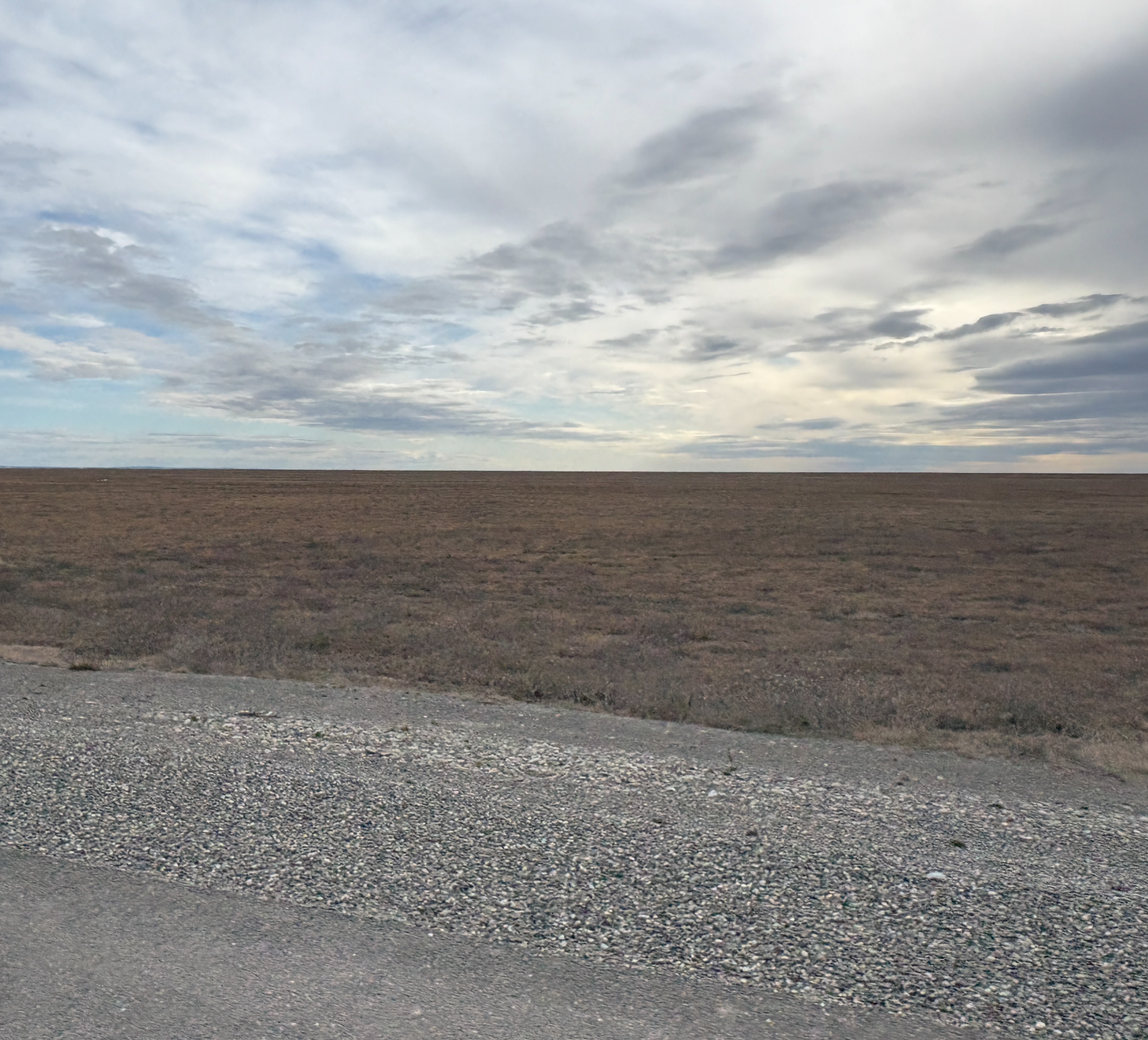
The few positive comments made some of those points. “The location pretty well leaves NIMBY out of the equation,” one commenter said. “I’m all for this application and this project.”
Other comments against the development used identical language and appeared to stem from templates distributed by opponents. Formal opposition or messages of concern also came in from groups including the Northern Alaska Environmental Center, the Alaska Public Interest Research Group and the Alaska chapter of a sportsman’s group called Backcountry Hunters and Anglers.
But many other messages objecting to the project were unique and written by individuals from across the state — from Kodiak and Kotzebue to Seward, Valdez and the North Slope village of Nuiqsut. Those critics were not sold on Stak’s pitch, and expressed themselves in terms ranging from reasoned and factual to strident and misinformed.
Some commenters, for example, argued that Stak’s project and natural gas consumption would have the effect of raising electricity prices for other Alaskans — many of whom also get their power from natural gas plants.
But the North Slope oil fields are hundreds of miles from urban Alaska and disconnected from the state’s power grid, meaning that sales of fuel to Stak would have no direct impact on city-dwellers’ electricity prices.
Others, meanwhile, made factually supported assertions — among them that data centers running on fossil fuels would accelerate climate change, and that the pad that Stak plans to build on the tundra would require huge quantities of gravel, a scarce resource on the North Slope that’s also used by villages and oil developers.
Still others kept their objections short and succinct — and sometimes cheeky.
“No,” was one commenter’s full message, though they added a postscript: “You may build one in Canada though.”
Nathaniel Herz welcomes tips at natherz@gmail.com or (907) 793-0312. This article was originally published in Northern Journal, a newsletter from Herz. Subscribe at this link.
SUBSCRIBE: GET THE MORNING HEADLINES DELIVERED TO YOUR INBOX.
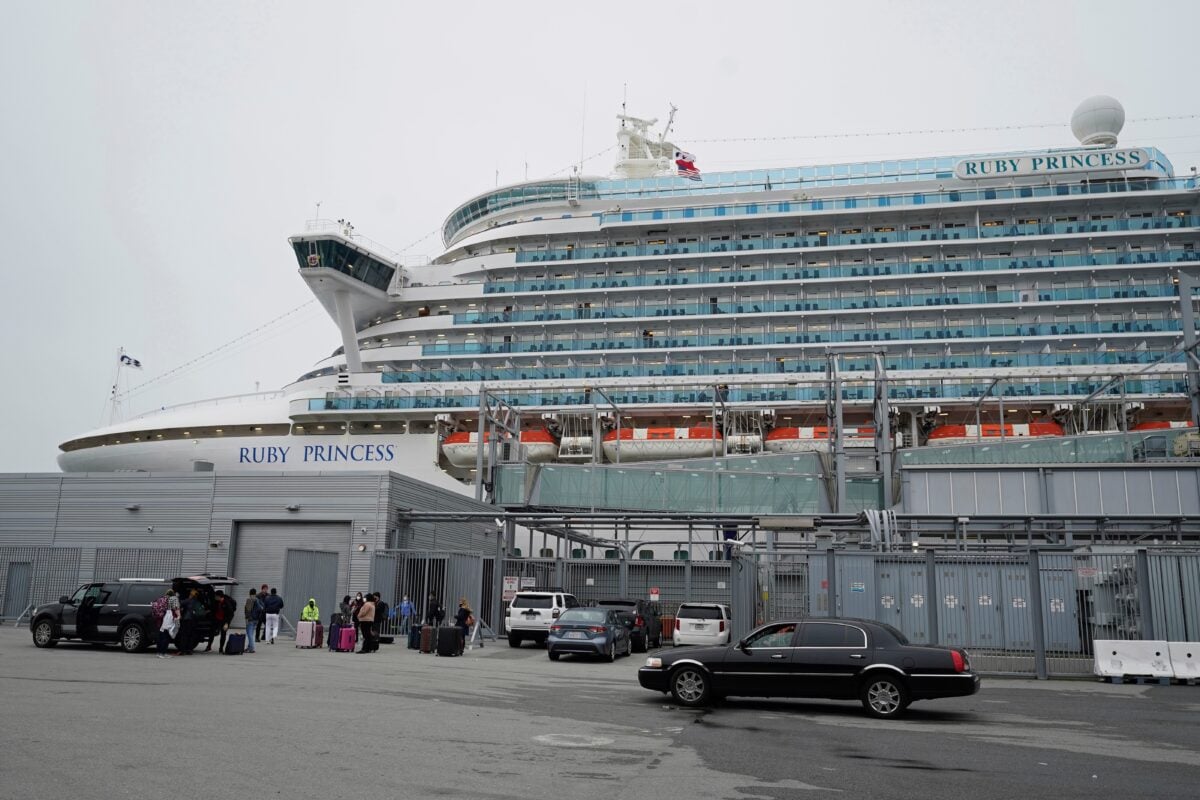
AP- More than 120 passengers and crew members on a Princess Cruises ship that docked in San Francisco on Thursday were infected with a stomach virus while on their voyage, federal health officials said.
The Ruby Princess was on a 20-day round trip journey from San Francisco to Canada and Alaska when 102 passengers and 23 crew members were stricken by norovirus, the U.S. Centers for Disease Control and Prevention said.
Norovirus is highly contagious, often spread by food or on surfaces, particularly in crowded conditions. It is a short-lived illness for many people, but can be dangerous for people with underlying health conditions, young children and those aged 65 and older.
Symptoms include sudden onset of vomiting, diarrhea and stomach pain that can last three days, according to the CDC.
The outbreak on the Ruby Princess, which set sail on June 12, was reported to the CDC on Saturday, officials said, adding that not all the infected people were sick at the same time or when the ship arrived or left port.
There were 3,032 passengers and 1,144 crew members on the Ruby Princess voyage, the CDC said.
Princess Cruises said in a statement that the ship’s crew responded promptly and implemented “enhanced sanitation protocols across the ship.”
The ship will be thoroughly cleaned and disinfected before departing on its next trip later Thursday, the company said.
So far this year, there have been seven illness outbreaks reported on cruise ships in the CDC’s jurisdiction, mostly from norovirus, health officials said.
Most norovirus outbreaks occur when people who are already infected spread the virus to others by direct means, such as through sharing food or utensils. Outbreaks can also be spread through food, water or contaminated surfaces.
Washing hands frequently is key to preventing a norovirus infection, especially after using the bathroom or before eating and drinking. It is best to use soap and water, scrubbing and washing for at least 20 seconds. Hand sanitizer alone doesn’t work well against norovirus, the CDC said.
By: Yereth Rosen, Alaska Beacon
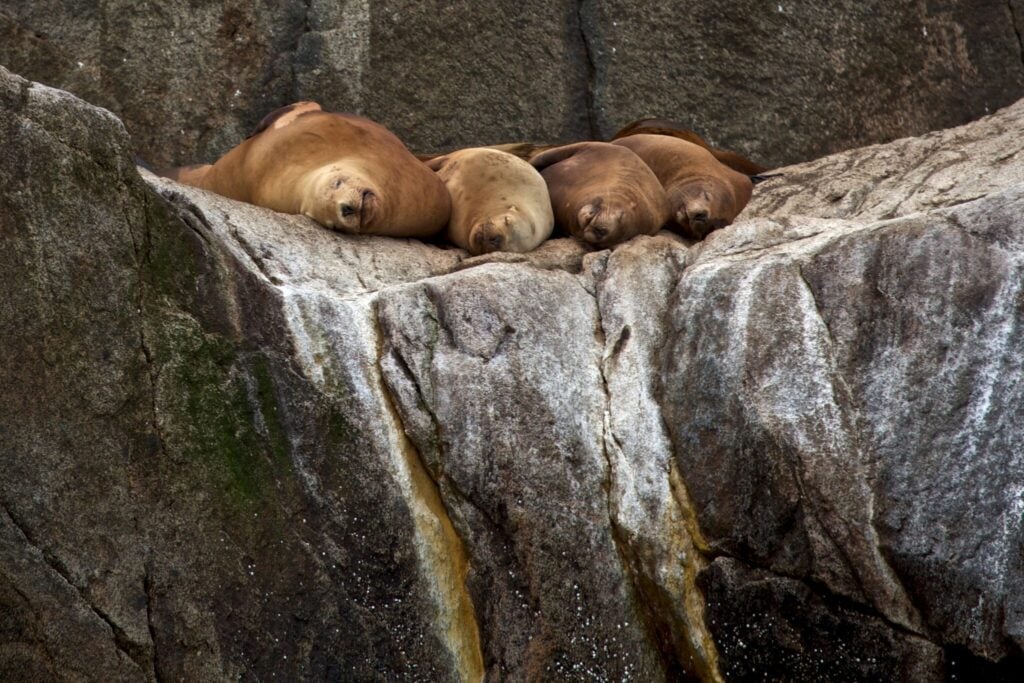
Federal regulators plan to reevaluate fishing closure boundaries established to protect endangered Steller sea lions in Alaska, part of a national Trump administration push to cut regulation of U.S. commercial seafood harvests.
The Steller sea lion protections are among a series of rules that the administration is seeking to relax or change to carry out a mandate from President Donald Trump to increase catches, reduce regulation and ensure that the nation is “the world’s dominant seafood leader.”
The recommended changes were released on Thursday by the National Oceanic and Atmospheric Administration’s Fisheries service and are in response to Trump’s 2025 executive order titled “Restoring American Seafood Competitiveness.” They could affect oceans from New England and the Caribbean to the tropical Pacific and the Bering Sea.
Several months of public consultations resulted in a list of recommendations that “we believe will reduce burdens on domestic fishing, increase production, stabilize markets, improve access, and enhance economic profitability,” NOAA Fisheries Assistant Administrator Eugenio Piñeiro Soler said in a statement.
Steller sea lions in Alaska have suffered a population decline that extended over several decades.
The no-fishing zones intended to protect them are established around sea lion rookeries, places where the animals gather to mate and raise their pups, and major haul-out sites. There are also transit restrictions in areas where the sea lions gather, as well as seasonal harvest limits on fish that are known to be Steller sea lion food: Atka mackerel, Pacific cod and pollock.
Named for naturalist Georg Wilhelm Steller, who sailed to Alaska with explorer Vitus Bering in the 18th century, Steller sea lions are the largest of the “eared seals,” a category that includes all sea lions and fur seals.

The entire population, which ranges from Japan to California but is concentrated in Alaska, was listed as threatened in 1990. Seven years later, the population was divided; the western population from Prince William Sound to the Aleutians, which has had the most dramatic losses, was listed as endangered while the eastern population remained classified as threatened. By 2013 the eastern population had recovered sufficiently to warrant de-listing, but the western population remains classified as threatened and continues to face threats, according to NOAA Fisheries.
After Trump issued the executive order in April of 2015, NOAA Fisheries solicited comments from the regional fishery management councils and other organizations, as well as the general public.
The North Pacific Fishery Management Council, which manages harvests in federal waters off Alaska, responded to the solicitation with 20 recommended regulatory changes. Those included some changes to harvest timing, some changes to allocations among quota holders and some new allowances for record-keeping. A change to Steller sea lion protections was not on the list.
To Oceana, an environmental group focused on marine issues, the language in the NOAA list of recommendations was a bit vague, but any review of Steller sea lion conservation measures “must be grounded in the law and the best available science,” said Lauren Hynes, a marine scientist who is the organization’s North Pacific campaign manager.
“The western distinct population of Steller sea lions remains endangered, and recovery goals have not been met. If anything, more must be done to conserve and recover this vulnerable population and to protect their habitat and prey,” Hynes said by email.
Other Alaska-focused changes in the list of recommendations released Thursday by NOAA Fisheries were some tweaks to sablefish rules.
Trump has already taken other actions that overturn environmental protections to enable more commercial fishing in U.S. waters.
In February, he overturned a fishing ban in the Northeast Canyons and Seamounts Marine National Monument off the New England coast. On June 11, he overturned fishing bans in three protected areas in the Pacific, the Papahānaumokuākea Marine National Monument off Hawaii, the Mariana Trench Marine National Monument near the Mariana Islands and the Rose Atoll Marine National Monument near American Samoa.

Exterior of the Center for Disease Control (CDC) headquarters is seen on Oct. 13, 2014 in Atlanta, Georgia. (Photo by Jessica McGowan/Getty Images)
As beachgoers flock to water during the busy July Fourth weekend, danger could be lurking in some areas.
Researchers this spring discovered flesh-eating bacteria in water in several coastal locations across New York’s Long Island, and town officials in the Hamptons vacation destination posted an alert about the findings. Eight people in Florida have been infected this year, and Mississippi health officials in June urged people to take precautions.
About 1 in 5 people infected by the bacteria die, sometimes within a day or two of becoming ill, according to a Centers for Disease Control and Prevention fact sheet. The bacteria, Vibrio vulnificus, can enter open wounds and cause tissue death and systemic sepsis.
“Many people with Vibrio vulnificus infection can get seriously ill and need intensive care or limb amputation,” the CDC says.
The risk of such public threats is mounting because climate change is expanding the territory of certain pathogens, but researchers say there’s another concern. The Trump administration has cut investments in programs and agencies that prevent, track, and respond to health hazards the federal government is now confronting.
Consider the reemergence of screwworm, which can infest and kill livestock, in the U.S. in June. The U.S. Department of Agriculture lost 18% of its workforce in the first six months of 2025, according to a report from the USDA’s Office of Inspector General, and the agency’s winnowed-down inspection service is helping lead the response to the parasite.
Or malaria. A freeze on foreign aid disrupted international malaria prevention efforts, and new federal guidance in May warned that the U.S. is vulnerable to the reintroduction of the infectious disease.
And when it comes to Vibrio, the Trump administration began removing hundreds of deep-sea instruments that monitor ocean waters and yield data that helps predict conditions that can allow the bacteria to flourish. Researchers have used the data to study Vibrio, which can multiply rapidly when water temperatures and salinity increase.
“It is important to track coastal temperatures, and that will relate to the distributions of Vibrio,” said Christopher Gobler, a professor in the School of Marine and Atmospheric Sciences at New York’s Stony Brook University, though he added that there are also other sources of data for researchers.
The Trump administration reversed its plan to dismantle the ocean monitoring system following bipartisan opposition to the effort in Congress.
But it’s still curtailing Vibrio surveillance. The life-threatening species that’s found in water can also sicken or kill people who eat contaminated seafood, such as raw oysters infected with the bacteria. And infections from Vibrio vulnificus linked to consuming raw or undercooked shellfish have been increasing as the presence of other pathogens in food decrease.
Since 1995, 10 states have participated in a federal program called the Foodborne Disease Active Disease Surveillance Network, or FoodNet. The program, with the CDC, monitors and track cases of foodborne illness caused by eight specific pathogens, including Vibrio. But last year the Trump administration stopped requiring those states to report on all but two pathogens, which means states no longer must report cases to the CDC.
Federal officials deny the moves are putting Americans at risk, saying the CDC continues to monitor these pathogens through other national surveillance systems to ensure ongoing visibility into disease trends and outbreaks.
Meanwhile, some former health leaders say the ramifications of sweeping cuts to health agencies and global prevention programs are becoming more apparent, undermining U.S. response efforts and initiatives that aim to safeguard the country from diseases.
“We are letting down defenses that were necessary to protect against microbial threats,” said Tom Frieden, a former CDC director who is now president and chief executive of Resolve to Save Lives, which works to stop preventable disease. “Instead of protecting, we’re doing the opposite.”
The administration defends its actions, including massive layoffs at government health agencies, as necessary to eliminate wasteful spending.
The Department of Health and Human Services “is advancing the most significant public health reforms in a generation focused on prevention, accountability, scientific transparency, and better health outcomes,” agency spokesperson Emily Hilliard said in an email. “The Department is putting American families at the center of public health decision-making.”
Evidence suggests health risks are rising even as the Trump administration pulls back on resources for research, detection, and response.
Early in his administration, President Donald Trump opted to freeze and review work on global health programs. Trump’s cost-reduction effort, led by billionaire Elon Musk, also dismantled the U.S. Agency for International Development.
As a result, work was disrupted on the President’s Malaria Initiative, a George W. Bush-era program aimed at combating malaria in hard-hit countries that is credited with saving more than 11 million lives. USAID had invested more than $9 billion in the program since 2005.
In addition, 80% of USAID grants for global malaria programs were targeted for termination, according to KFF, an independent research group that includes KFF Health News. The report didn’t include data on the total value of those specific malaria grants.
And the spending freeze halted research for more effective malaria vaccines. The administration dissolved the CDC’s Division of Parasitic Diseases and Malaria, shuffling staffers to other divisions and interrupting work on the disease. HHS didn’t respond to an email asking how many staff members had been moved.
The life-threatening infectious disease spread by mosquitos was eradicated from the U.S. in 1951. But the CDC’s updated guidance on investigating domestic cases warned in May that “the country remains susceptible to malaria reintroduction.”
An outbreak in 2023 resulted in 10 people in Arkansas, Florida, Maryland, and Texas becoming infected locally, and mosquitoes capable of transmitting malaria are found throughout most of the country.
“The majority of U.S. residents lack protective immunity against malaria, rendering persons susceptible to severe illness and death if infected,” the CDC said in the May report.
HHS declined to comment on any of the specific cuts but said the CDC works with domestic and international partners to reduce the burden of malaria and prevent its reestablishment in the U.S.
It’s not just cuts to funding that are raising health risks, say researchers and former health officials. Significant staffing cuts mean there are fewer people working on preventing or tracking diseases, they say.
“Yes, the programs have been cut in terms of reduction in staff, but I would say, equally important, you have reductions in expertise,” said Jeanne Marrazzo, CEO of the Infectious Diseases Society of America. “It’s irreplaceable.”
Screwworm is a species of parasitic blowfly producing larvae that can enter open wounds and devour tissue, infecting people and animals. Like malaria, it has long been eliminated in the U.S., and disease monitoring efforts have been key to keeping it out.
The cuts at USAID stripped more than $300 million from the United Nations’ Food and Agriculture Organization, which focuses on global food security and the monitoring of zoonotic diseases such as screwworm.
In the wake of the administration’s cost-cutting initiatives, more than 20,000 employees are gone from the USDA, which develops and implements agriculture policy and provides resources to producers of livestock vulnerable to the parasite.
On June 3, the first new case of screwworm in the U.S. was confirmed, and there have now been more than a dozen animals infected with parasite. An expanding outbreak could devastate the cattle industry.
Agriculture Secretary Brooke Rollins has denied that any staffing cuts during the Trump administration have led to screwworm’s return. Instead, she has blamed the Biden administration, saying it didn’t do enough to prevent reintroduction into the U.S. Rollins said on X that “uncontrolled illegal migration” under the previous Biden administration was partly to blame, providing no evidence.
The USDA did not respond to an email seeking comment.
Ashish Jha, a doctor who served as the White House covid response coordinator during the Biden administration, said there’s no truth to the claim that immigrants lacking legal status have brought screwworm into the U.S.
Investments in tracking and combating diseases have suffered, he said, because HHS Secretary Robert F. Kennedy Jr. is prioritizing the prevention of chronic disease at the expense of efforts to curtail infectious disease.
“Who doesn’t want a healthier country? It sounds great, but it’s kind of a bait and switch,” Jha said. “They’re doing the opposite. They’re letting down our defenses that are necessary to protect us against microbial threats.”
HHS’ Hilliard disagreed, saying Kennedy’s actions are making the agency more effective.
“Secretary Kennedy is delivering that reform by streamlining operations, reducing redundancies, and returning HHS to pre-pandemic staffing levels,” she said. “At the same time, he is dismantling policies and incentives that contributed to a nationwide chronic disease epidemic.”
Jha pointed to Trump’s decision to withdraw the U.S. from the World Health Organization, which coordinates global responses to public health issues and crises, and to the dismantling of USAID.
The pullback has had implications for the Ebola outbreak in the Democratic Republic of Congo, aid workers say.
Without the same amount of funding from USAID, the International Rescue Committee, which partners to deliver front-line health, surveillance, and outbreak preparedness activities in Congo, curtailed its programs.
“Funding cuts have left the region dangerously exposed,” Heather Reoch Kerr, IRC’s country director for Congo, said in a statement.
The outbreak is roughly 7,000 miles away, but its spread has the U.S. on alert, with stepped-up surveillance and entry restrictions on airline travelers. Federal officials have said that the dismantling of USAID hasn’t hampered detection or response.
“The U.S. government continues to move aggressively to contain the Ebola outbreak at its source in order to protect the American people and prevent further international spread,” the State Department said in a May 23 statement.
Trump’s decision to disengage with the WHO was criticized by health leaders following a hantavirus outbreak this spring on a cruise ship that had set sail from Argentina. Some said the federal response was too slow, and they questioned why the president suggested creating a costly new global disease surveillance system rather than sticking with the WHO — especially, they say, when the U.S. is cutting back on the surveillance programs it already has.
The federal government has tracked Vibrio cases as part of the FoodNet program, which aims in part to identify and curtail outbreaks. Reporting on cases of Vibrio is now optional.
Close to half of the cases of foodborne illness caused by Vibrio vulnificus have resulted in death, and some within 24 hours after consumption of tainted shellfish such as raw oysters. The bacteria can multiply rapidly, leading to septic shock and blistering skin lesions. The pathogen is becoming increasingly resistant to antibiotics.
The CDC estimates that about 80,000 cases of Vibrio infection occur annually, with infections from the most severe species, Vibrio vulnificus, steadily rising. Over the past five years, that species has led to 429 cases due to infections of open wounds and 135 cases from contaminated food.
“The more surveillance you get, you can connect the dots,” said Bill Marler, a Seattle-area food safety lawyer. “If a tree falls in the woods and you don’t hear it, did the tree fall? It’s easier not to report diseases. Then they can say, ‘Look at how safe our food supply is.’”
KFF Health News is a national newsroom that produces in-depth journalism about health issues and is one of the core operating programs at KFF—an independent source of health policy research, polling, and journalism. Learn more about KFF.
This article first appeared on KFF Health News and is republished here under a Creative Commons Attribution-NonCommercial-NoDerivatives 4.0 International License.
SUBSCRIBE: GET THE MORNING HEADLINES DELIVERED TO YOUR INBOX.

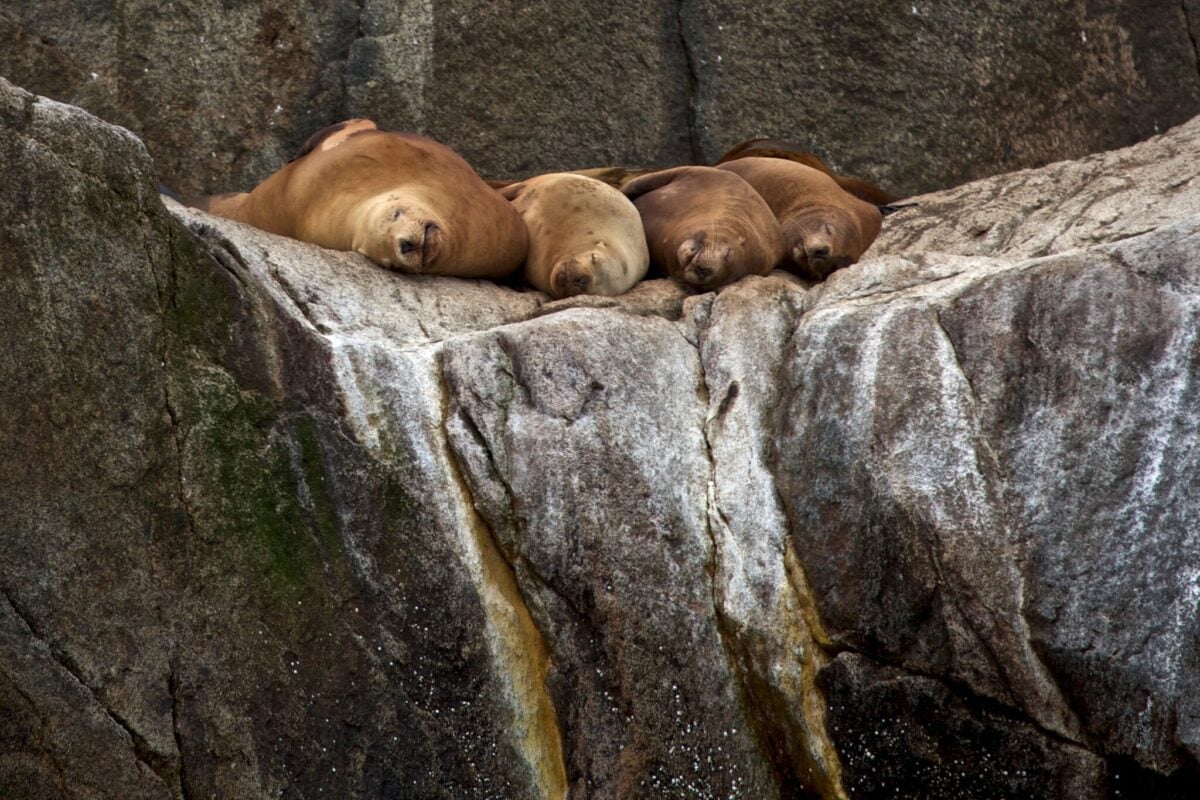
Steller Sea lions rest on a rocky ledge in Kenai Fjords National Park on July 31, 2013. The western population of Steller sea lions is listed as endangered, and fishery managers have imposed protection to limit the impacts to the animals from commercial seafood harvest. (Photo by Kaitlin Thoresen/National Park Service)
Federal regulators plan to reevaluate fishing closure boundaries established to protect endangered Steller sea lions in Alaska, part of a national Trump administration push to cut regulation of U.S. commercial seafood harvests.
The Steller sea lion protections are among a series of rules that the administration is seeking to relax or change to carry out a mandate from President Donald Trump to increase catches, reduce regulation and ensure that the nation is “the world’s dominant seafood leader.”
The recommended changes were released on Thursday by the National Oceanic and Atmospheric Administration’s Fisheries service and are in response to Trump’s 2025 executive order titled “Restoring American Seafood Competitiveness.” They could affect oceans from New England and the Caribbean to the tropical Pacific and the Bering Sea.
Several months of public consultations resulted in a list of recommendations that “we believe will reduce burdens on domestic fishing, increase production, stabilize markets, improve access, and enhance economic profitability,” NOAA Fisheries Assistant Administrator Eugenio Piñeiro Soler said in a statement.
Steller sea lions in Alaska have suffered a population decline that extended over several decades.
The no-fishing zones intended to protect them are established around sea lion rookeries, places where the animals gather to mate and raise their pups, and major haul-out sites. There are also transit restrictions in areas where the sea lions gather, as well as seasonal harvest limits on fish that are known to be Steller sea lion food: Atka mackerel, Pacific cod and pollock.
Named for naturalist Georg Wilhelm Steller, who sailed to Alaska with explorer Vitus Bering in the 18th century, Steller sea lions are the largest of the “eared seals,” a category that includes all sea lions and fur seals.
The entire population, which ranges from Japan to California but is concentrated in Alaska, was listed as threatened in 1990. Seven years later, the population was divided; the western population from Prince William Sound to the Aleutians, which has had the most dramatic losses, was listed as endangered while the eastern population remained classified as threatened. By 2013 the eastern population had recovered sufficiently to warrant de-listing, but the western population remains classified as threatened and continues to face threats, according to NOAA Fisheries.
After Trump issued the executive order in April of 2025, NOAA Fisheries solicited comments from the regional fishery management councils and other organizations, as well as the general public.
The North Pacific Fishery Management Council, which manages harvests in federal waters off Alaska, responded to the solicitation with 20 recommended regulatory changes. Those included some changes to harvest timing, some changes to allocations among quota holders and some new allowances for record-keeping. A change to Steller sea lion protections was not on the list.
To Oceana, an environmental group focused on marine issues, the language in the NOAA list of recommendations was a bit vague, but any review of Steller sea lion conservation measures “must be grounded in the law and the best available science,” said Lauren Hynes, a marine scientist who is the organization’s North Pacific campaign manager.
“The western distinct population of Steller sea lions remains endangered, and recovery goals have not been met. If anything, more must be done to conserve and recover this vulnerable population and to protect their habitat and prey,” Hynes said by email.
Other Alaska-focused changes in the list of recommendations released Thursday by NOAA Fisheries were some tweaks to sablefish rules.
Trump has already taken other actions that overturn environmental protections to enable more commercial fishing in U.S. waters.
In February, he overturned a fishing ban in the Northeast Canyons and Seamounts Marine National Monument off the New England coast. On June 11, he overturned fishing bans in three protected areas in the Pacific, the Papahānaumokuākea Marine National Monument off Hawaii, the Mariana Trench Marine National Monument near the Mariana Islands and the Rose Atoll Marine National Monument near American Samoa.
Editor’s note: This story has been updated to correct the date in the second reference of the Trump executive order to 2025.
(The Center Square) – Tax attorney Todd Bloom says his background gives voters an alternative to his long-serving opponent, Chief Justice Debra Stephens, in this year’s Washington Supreme Court races, as a challenge seeking to block the state’s new income…
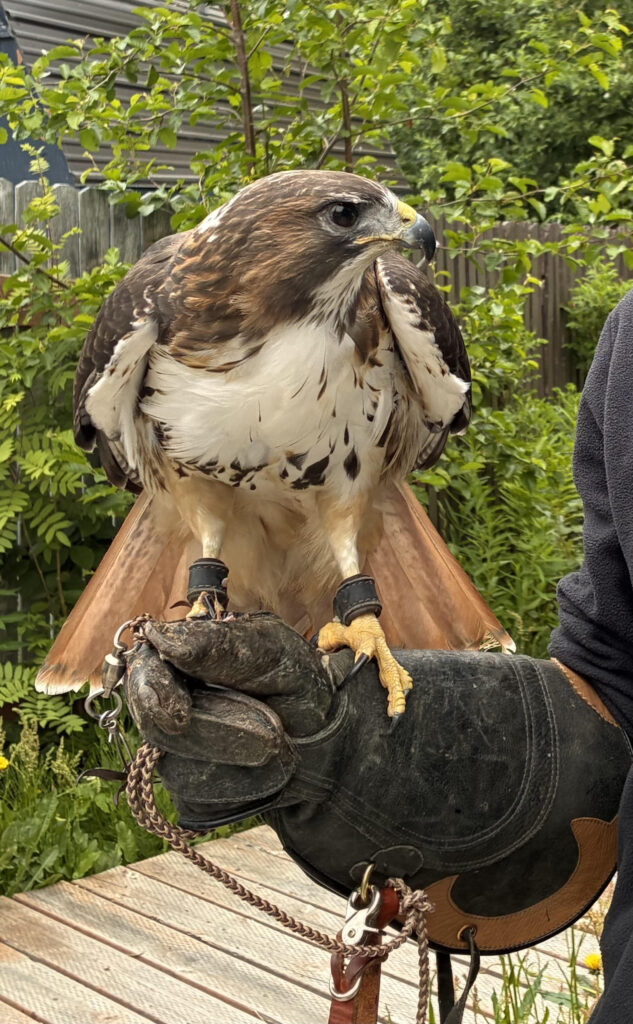
Warrior, a red-tailed hawk blind in one eye and wearing training leather anklets and straps, escaped from American Bald Eagle Foundation staff on Friday afternoon. They have searched for him since he flew away during a training session.
A center media release described the hawk as an elderly ambassador bird, “left his handler during a scheduled exercise. Both the handler and Warrior were participating in the exercise under the supervision of two experienced, senior [curators],” the release said.
Staff tracked him through Friday evening but lost track of him Saturday. They are attempting to recall him using voice commands and food rewards.

Resident crows and ravens are providing some unexpected help as their mobbing behavior has repeatedly indicated Warrior’s location and helped search teams follow his movements, according to the release. However, those crows are also chasing Warrior from area to area and make it difficult for him to settle long enough for staff to recover him.
Foundation staff ask for anyone who sees a red-tailed hawk wearing leather straps or acting calm near people to contact the foundation at 907-766-3094.
He is not a danger to the public and is not likely to approach a stranger, but staff ask people not try to capture or approach him and instead document his exact location and watch him from a safe distance.
The post Ravens, crows complicate recovery of hawk that escaped handler appeared first on Chilkat Valley News.