Michelle Sparck (center) poses for a photo with Bering Straits Native Corporation summer interns in Nome on July 20, 2026 during a voter outreach trip. (Photo courtesy of Michelle Sparck)
A Native-led voter mobilization group is working to boost Alaska Native voter education and turnout this election season.
Get Out the Native Vote is a non-partisan effort now underway to reach voters across the state’s vast and varied geography and get them to cast ballots in the primary elections on August 18 and the midterm elections on November 3.
Alaska Native voters make up roughly one in four Alaskan voters, said Michelle Sparck, director of the initiative, who is Cup’ik from the Southwest village of Chevak. She said part of voter education is raising awareness of when Alaska Native voters came out in force and reached a peak voter turnout of 66% in 1982. Some regions had nearly 80% voter turnout, Sparck said. That’s when decisions on subsistence policy, abortion and moving the Alaska State Capitol from Juneau were on the ballot.
“I call it the birth of the Alaska Native super voter. That generation made it a cultural value,” she said. “With that political capital that the 1980s generation built, they were able to own their sovereignty and self-determination tools.”
An Alaska voter drops their ballot into a ballot box on Nov. 1, 2024, in Anchorage City Hall. (Photo by Andrew Kitchenman/Alaska Beacon)
But voter turnout has declined significantly in the decades since. In the last election in 2024, 30% of Alaska Native voters cast their ballots. That meant Alaska Native voters made up 11% of state voters, according to data compiled by Sparck.
The mission of the campaign is to turn that decline around and reach historic highs again.
“This is what we’re capable of, and this is what this is our potential, and and I’m so excited to hold the mirror up to the communities because a lot of them really just had no idea what their performance is over the last, you know, 40-some years,” Sparck said.
“The challenge to the community is to say: own our power. We need to get out and vote,” she said. “Not should we go out and vote, we should make informed decisions.”
Get Out the Native Vote is supported by a partnership between the Alaska Federation of Natives, First Nations Institute and Cook Inlet Tribal Council with some funding from private foundations and the Carter Center, which was founded by former President Jimmy Carter. The campaign is collaborating with local, state and Tribal governments; regional Native corporations, organizations and service providers; schools; prisons and community groups to host voter education and outreach events around the state. Sparck spoke on a video call on Tuesday after returning from a voter outreach visit in Nome, and before heading to visit Utqiagvik, then the coastal community of Wainwright.
The August 18 primary falls within the summer subsistence fishing season, which is challenging for many people to find time to vote, Sparck said, but she’s found a helpful analogy.
“We’ve realized that if we describe primaries like basketball regionals, light bulbs go off their heads,” she said, smiling. “You have to win at regionals in order to make it to state. So a lot of people now know what primaries mean.”
Spark said 131 voting precincts in the state, more than a quarter, rely entirely on the U.S. Postal Service and air carriers to receive and mail their ballots.
Get Out the Native Vote working to make sure post offices are staffed, and helping the Alaska Division of Elections to recruit staff and volunteers so that each precinct has elections workers, bilingual poll workers and outreach workers to help with Native language translations. Sparck is also finding youth volunteers for a “Youth at the Booth” program, whose goal is to have two 17 and 18 year old volunteers assist at polling places and learn about elections in the process.
Particularly in the Arctic, the initiative is partnering with the North Slope Borough and local community leaders to make sure all precincts are staffed and open, in hopes of avoiding repeats of past election years where rural residents could not vote due to issues with staffing poll workers. In 2024, polling stations in rural villages of Wales and Kaktovik never opened. In Northwest and Western Alaska, voting hours were reduced in Marshall, Shaktoolik,Diomede and Kobuk. Primary ballots arrived late in at least 14 other Native villages.
“I get a lot of (precinct) chairs calling me before an election saying, ‘I don’t think I can do this.’ And we’re like, ‘You can do this. Your community can’t vote without you,’” she said. The organization’s goal is to have a well-staffed polling station in each village.
Alaska Native communities have also had the highest rates of rejected ballots, according to the Alaska Federation of Natives. One of the main issues is an incomplete witness signature on the ballot. In 2022, one in eight rural mail-in ballots were rejected, totalling more than 7,500 ballots rejected from rural Alaska.
A bipartisan elections bill that would have removed the witness signature requirement, among many other measures aimed at improving voting access, passed the Alaska State Legislature this year, but Gov. Mike Dunleavy vetoed it.
An 18 year old Ahtna shareholder registers to vote at a Get Out the Native Vote event at their Convention in June 2026 in Glennallen. (Photo courtesy of Michelle Sparck)
Between now and November, the campaign is working to distribute voter information, with guides on how to register, cast a ballot and find more information on state and federal candidates.
“So we’re trying to make things easier, but we’re building the plane as we’re flying it,” Sparck said. “You know, it’s still a work in progress, and we’re glad to have the alliances we have.”
This year, the annual Alaska Federation of Natives convention, where thousands of people from across the state convene in Anchorage, will be held one week later than usual to accommodate early voting at City Hall across the street. “So we’re excited that we’re going to have an ability to send people across the street to go vote or drop off their absentee ballots,” Sparck said.
The campaign is planning to hold voter outreach events in Alaska Department of Corrections facilities where roughly 40% of incarcerated people awaiting trial and sentencing are eligible to vote. Organizers are also working with service provider organizations to reach people who are unhoused or housing insecure, as well as foster youth who are turning 18, and inform them about their voting rights.
“We try to recognize every avenue to access voters, and especially those that are low propensity or disenfranchised. We try to meet their needs in every way, so it doesn’t mean we’re doing it 24/7, but it means we are trying to dedicate time and create the allyship and coordination with organizations that are more intimate with those groups to to best deliver that,” she said.
Get Out The Native Vote shares outreach events and regional voting updates on their Facebook page, and website at aknativevote.com.
Michelle Sparck (left) and Get Out the Native Vote volunteers smile at a tabling event in Bethel. (Photo courtesy of Michelle Sparck)
Deputy Matanuska-Susitna Borough School District Deputy Superintendent Katie Gardner and Superintendent Randy Trani discuss a concealed-carry weapons proposal during a regular school board meeting at the Matanuska-Susitna Borough School District in Palmer on May 5, 2026. (Photo by Amy Bushatz/Mat-Su Sentinel)
The Mat-Su school board recently passed a policy to arm classroom teachers. I’ve been struggling to find the right word to describe it.
The district claims the policy is about “maintaining a safe and secure learning environment.” In a profession obsessed with research-based decision making, nothing supports the claim that armed teachers make schools safer, especially when there hasn’t been a gun-related death in an Alaskan school in over twenty-five years. The board claims the policy will not “change the educational environment.” When you hide guns in classrooms, the environment changes immediately.
The board’s concealed carry program will cost an estimated four hundred and fifty thousand dollars — roughly forty-five thousand dollars per gun. With forty-nine schools and over one thousand teachers, guns will be in a fraction of schools. The chance a gun related incident will happen near an armed teacher is miniscule. The cost of “protecting” such a tiny number of classrooms is fiscally irresponsible.
This isn’t even the worst part of the policy. The school board is arming themselves. According to the policy, the superintendent can approve to arm board members. If the superintendent denies a board member’s request, they can appeal the decision… to the board!
I don’t support arming teachers, but arming board members is absurd. First, board members are rarely in school buildings. Their usefulness as security is next to nothing. Second, most board members have no training in classroom management, school procedures or deescalation. Third, because board members are not regular participants in classrooms they have no understanding of individual students, classroom dynamics or school culture necessary to understand volatile situations.
Finally, and I can’t stress this enough, board members are not school employees. In fact, they are barred from being employees by Alaska Statute AS14.14.140. It begs the question, why do board members need guns at all? To threaten people in board meetings? Outside a board meeting, individual board members have no authority.
There is simply no logic that justifies arming board members. Then again, logic is hardly a motivating factor these days. Guns don’t belong in classrooms, books do. An expensive lesson the Mat-Su board had to learn from a federal judge. And while they claim this policy will “maintain a safe” environment, they literally struck the phrase “safe spaces” from their library policy and have actively made their schools less safe for LGBTQ students.
All of this brings us to the real problem: school boards. Nothing prevents school boards from enacting irrational policies like this. Many board members have no experience in education. No training is required of board members. Every year we put the fate of our schools into the hands of people whose only requirement for eligibility is a pulse and valid voting registration.
It was a struggle, but I finally found a word to describe this situation: asinine.
The Alaska Native Medical Center is reflected in the campus pond on Sept. 9, 2022. The hospital is among several facilities on the Alaska Native Tribal Health Consortium campus in Anchorage. ANTHC is the nation’s largest Native tribal organization. (Photo by Yereth Rosen/Alaska Beacon)
The federal government has agreed to pay the Alaska Native Tribal Health Consortium $400 million to settle claims of inadequate cost coverage over several years.
The settlement, announced on Tuesday by the U.S. Justice Department, stems from a lawsuit filed by the nonprofit tribal health group in 2021 against the Department of Health and Human Services, which operates the Indian Health Service.
At issue in the case are “contract support costs,” the term for the expenses necessary for administration, facilities maintenance and other functions that support the healthcare services that tribal organizations provide through contracts with the federal government.
In a statement, the Justice Department acknowledged that the federal government owed ANTHC money to cover contract support costs.
“This settlement reflects our commitment to resolving litigation fairly and ensuring that federal resources are appropriately directed toward serving Native communities,” Associate Attorney General Stanley Woodward said in the statement. “We are pleased to have reached an authorized agreement that benefits American Indian and Alaska Native communities and remains consistent with the legal framework established by Congress.”
Natasha Singh, ANTHC’s president and chief executive officer, characterized the settlement as a fair resolution of a longstanding dispute over costs borne by the organization.
“ANTHC welcomes the authorization of this settlement, addressing contract support costs that have long been owed to Tribes that assumed responsibility for delivering healthcare on the federal government’s behalf. This settlement marks an important step toward ensuring that resources accurately reflect the true cost of operating a complex Tribal health system and advancing self-determination in healthcare,” Singh said in a statement.
For more than a decade, different tribal health organizations have claimed that the Indian Health Service was underpaying contract support costs. There is a history of litigation and Congressional action over the issue.
In 2024, the U.S. Supreme Court weighed in. Ruling in a case concerning tribes in Arizona and Wyoming, the court said the Indian Health Service is obligated to pay the full costs of contract support services.
Those costs are necessary for tribal health organizations to provide medical services, the 5-4 ruling said. If the costs are not fully covered by the IHS, “the tribe would have to divert some program income to pay such costs, or it would have to pay them out of its own pocket,” amounting to a penalty for pursuing self-determination under federal law.
The settlement is in line with that 2024 ruling, as well as with the Indian Self-Determination and Education Assistance Act, the federal law through which tribal organizations administer their own healthcare programs, the Justice Department said.
ANTHC is the nation’s largest tribal health organization. At its approximately 140-acre campus in east Anchorage, it operates the Alaska Native Medical Center, which is one of the state’s biggest hospitals, along with various in-patient services, research and epidemiology services and an environmental health program, among other functions. It provides services throughout the state.
The consortium, formed in 1997, has embarked on a facilities expansion program, enlarging the hospital’s emergency department and constructing a skilled nursing facility for patients needing extended care, along with other periodic upgrades.
Singh, in her statement, said the ANTHC board had “committed resources toward long-standing needs across our system of care” in anticipation of the settlement announced Tuesday. Those commitments include the investments in the ongoing construction projects, she said.
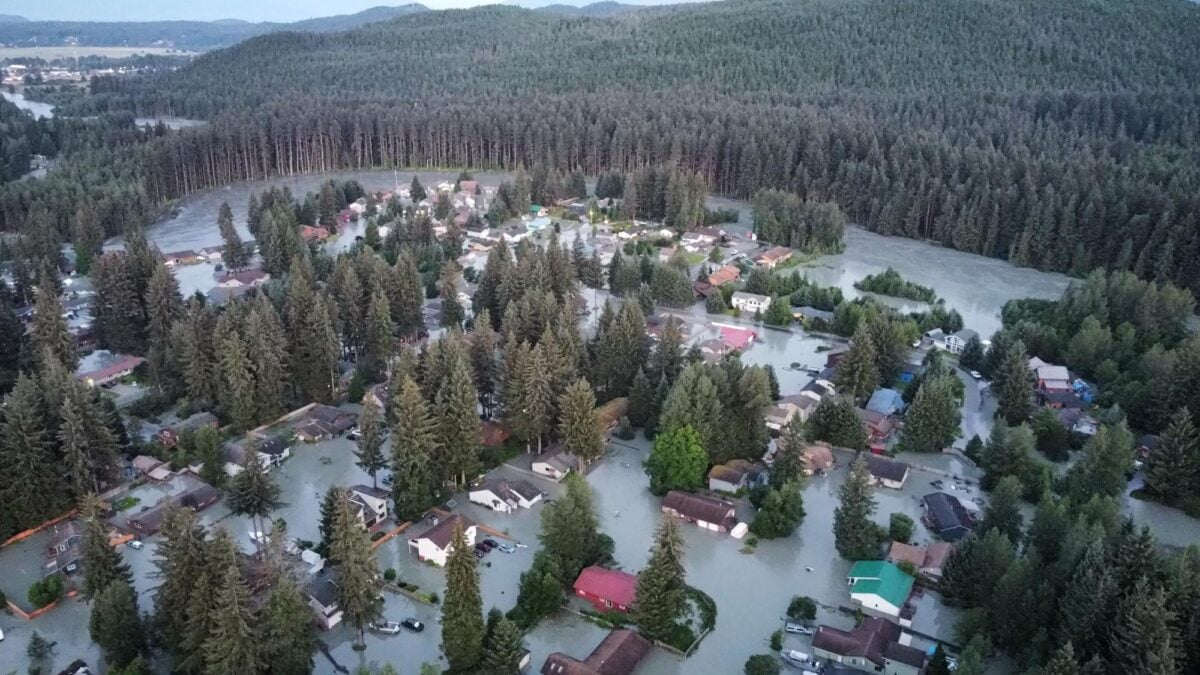
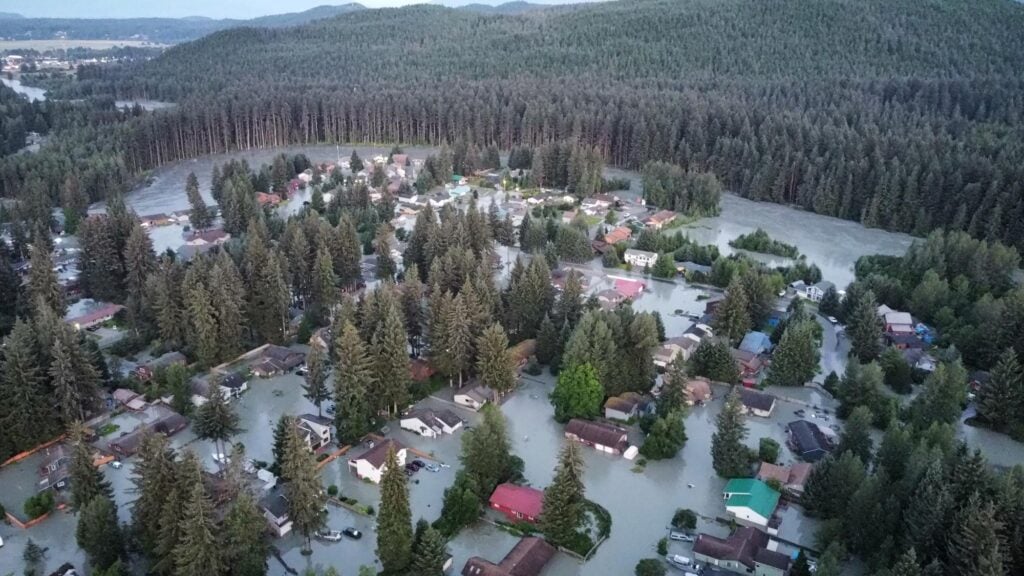
CBJ- The City and Borough of Juneau Flood Information Hotline is now available during weekdays. Residents can call the hotline with non-emergency questions and concerns related to the 2026 glacial lake outburst flood. The hotline is available at 907-500-0890 on Mondays through Fridays from 9 a.m. to 4 p.m.
Once Suicide Basin is filled, the hotline will extend operating hours to include Saturdays and Sundays from 9 a.m. to 4 p.m. Once release has begun – and a wireless emergency alert text message goes out – the hotline will move to 24/7 operations through the event.
Wooden gavel with books in background. Law and justice concept
By: James Brooks, Alaska Beacon
Wooden gavel with books in background. Courtesy of Alaska Beacon.
Two of Alaska’s largest labor organizations have sued Gov. Mike Dunleavy for failing to promptly fill two seats on the board that governs the state’s public employee pension plans.
The Alaska AFL-CIO, National Education Association-Alaska and five individuals filed suit Wednesday in Anchorage Superior Court, seeking a court order that would require the governor to fill seats on the Alaska Retirement Management Board that are designated for the teachers’ and public employees’ unions.
According to the complaint, the seats have been vacant since March 1. The unions sent lists of possible nominees to the governor four months before that, on Dec. 1.
Under state law, “a vacancy on the board of trustees shall be promptly filled.”
The unions sent a warning letter to the governor’s office in late May about the issue.
Stephen Cox, the attorney general designee whose confirmation was rejected by the Alaska Legislature this year, responded to the message. Now working as Counsel to the Governor, Cox said the law reserving seats for the unions “warrants further analysis, as it potentially encroaches upon the Governor’s constitutional appointment authority.”
Cox said the governor will be requesting a formal legal opinion from acting Attorney General Cori Mills.
“The administration does not comment on lawsuits,” said Jeff Turner, the governor’s communications director, when reached for comment.
The Beacon contacted the Department of Law on Monday afternoon as well, seeking comment about the lawsuit. It did not respond by 8 a.m. the following day.
The plaintiffs are being represented by attorney Scott Kendall, who has frequently fought cases against the Dunleavy administration.
By phone on Monday afternoon, Kendall said the issue is “very important” because the board handles billions of dollars’ worth of investments on behalf of state residents.
Two board meetings have already taken place without union representatives.
“This isn’t the, ‘Oops, this slipped through the cracks sort of issue.’ The new nominees were put forward by both unions three months before the prior terms expired. Those filings were acknowledged by the Department of Revenue, which handles this. So everything was done timely,” he said.
In the complaint, the plaintiffs state that if the issue goes to trial, Cox should not have a role because state law requires the Department of Law — through staff attorneys or hired counsel — to represent the state in legal issues.
Kendall said the legality of laws constraining a governor’s appointment powers have been repeatedly tried in court and upheld.
“To be honest, it’s befuddling. There’s a very clear statute. There’s a very clear regulation. They say these people shall be appointed promptly, and they shall be from lists from these two groups,” he said. “So I think it’s quite honestly bizarre that we’re even in this situation, but here we are nonetheless.”
A summary sheet is seen during ballot review on Tuesday, Aug. 27, 2024, at the headquarters of the Alaska Division of Elections in Juneau. (Photo by James Brooks/Alaska Beacon)
By: James Brooks, Alaska Beacon
A summary sheet is seen during ballot review on Tuesday, Aug. 27, 2024, at the headquarters of the Alaska Division of Elections in Juneau. (Photo by James Brooks/Alaska Beacon)
The first two votes in Alaska’s Aug. 18 primary election have already been cast.
According to records published by the absentee and petition office of the Alaska Division of Elections, two voters — one in South Carolina and another in Hawaii — returned their ballots on July 17.
Thousands more voters will cast their ballots in the coming weeks. Absentee ballots were mailed to overseas and military voters starting July 2, and absentee ballots will start going out to the general public on July 24. Early in-person voting starts Aug. 3.
In the primary, voters will pick one candidate for each office. The top four vote-getters for each race, regardless of party, will advance to the general election on Nov. 3.
If there are four or fewer candidates running for a particular office, all candidates advance to the general election.
For Alaska’s statewide races, that isn’t an issue. There are 17 people running for governor, each running on a combined ticket with a lieutenant governor candidate:
If one of the top four finishers withdraws from the race, they are automatically replaced with the fifth-place finisher. If there are multiple withdrawals, the replacement process continues until there are four candidates.
Registration for the primary election has closed, but Alaskans may register for the general election until Oct. 4. Residents can check their voter registration at myvoterportal.alaska.gov.
Stan Zuray’s son Joe hangs salmon to dry several years ago. The fish were dried int he traditional manner; the site was a family fish camp on the Yukon River. (Photo provided by Stan Zuray)
When Stan Zuray began noticing white spots, a mushy texture and a weird “sour watermelon” smell in the Chinook salmon he was pulling from the Yukon River, he knew something was going wrong.
That was back in the 1980s. By about 1990, he and others just stopped fishing what he calls “the ass end of the king run” because the fish were so low in quality, he said.
Everyone stopped fishing earlier than normal, he said. “You just get tired of the bum-looking fish,” said Zuray, who lives in the village of Tanana but still has his Boston accent after spending half a century in the Alaska Bush.
Stan Zuray at home with two of his three daughters, Katlyn and Ariella. (Photo provided by Stan Zuray)
It was an ominous turn for a river famous for producing some of the world’s biggest and most prized wild salmon. Chinook salmon, also known as king salmon, is so exalted among the five Pacific salmon species that it is designated Alaska’s official state fish. And the Yukon River Chinooks were traditionally considered among the best of the best.
The culprit in the mushy, weird-smelling salmon was Ichthyophonus, a parasite found in oceans around the world, but a particular menace to the health of Yukon River Chinook salmon.
Zuray is known nationally as a featured character in the reality TV show “Yukon Men” and from his own YouTube broadcasts and a biographical documentary. Within Alaska fishing circles, he is well known as a former subsistence representative on the Alaska Board of Fisheries.
In the science community, he is known for his work as one of the early Yukon River Ichthyophonus researchers. He set up a program and documented infection rates at Rampart Falls, a spot on the river near the tiny Alaska village of Rampart, collecting data that has become critical to current studies.
Zuray said he could smell the infection as fish dried on racks in the traditional way and the parasite multiplied rapidly in the warm sunlight. He dissected samples and documented how Icthyophonus attacks a salmon’s heart. “I squish it in my hand by closing my fingers, and the heart will ooze out through my fingers,” he said.
White spots in a Chinook salmon heart show the Ichthyophonus infection. (Photo by Stan Zuray)
Waves of infection as salmon runs dwindle
Since Zuray began documenting Icthyophonus in the late 1980s, there have been waves of infections — periods when the parasite was so prevalent that half or more of tested fish were infected, followed by slower periods, followed by new increases.
Those waves, especially the most recent infectious wave around 2022, coincided with a devastating crash in Yukon River Chinook runs. They also coincide with a long-term warming of the Chinooks’ freshwater habitat.
Once thought of as a fungus but now classified as a protist, a category that lies somewhere between fungi and bacteria, Icthyophonus was first identified more than a century ago. It exists in oceans all around the world, as well as in some freshwater bodies. Fish typically become infected by consuming it through prey, but can also get infected through physical contact or absorption of water.
As with other parasites affecting fish, the warming climate is a factor in the spread of Ichthyophonus. It multiplies faster in warmer conditions, and fish enduring warmer conditions are more stressed and weaker, making them more vulnerable to infection.
Alaska fish known to get Ichthyophonus infections include herring, halibut and pollock, for which the parasite can be a minor nuisance.
A graph shows changes in the number of Chinook salmon entering the Yukon River, as measured by sonar at Pilot Station, a Yup’ik village near the river’s Bering Sea mouth. Two years of data, 1996 and 2009, are missing. (Graph provided by the U.S. Fish and Widllife Service and Alaska Department of Fish and Game/2025 Preliminary Yukon River Salmon Fisheries Review, September 2025)Estimated returns of Canadian-origin Chinook salmon into the Canadian portion of the Yukon River are shown in a graph charting changes from 2005 to 2025. The current goal for what is called “spawning escapement,” the return of fish to grouds where they can successfully reproduce, is 71,000 fish. That is the level believed sufficient to rebuild the population to a sustainable level. Previous years’ goals are shown with dotted lines. (Graph provided by the U.S. Fish and Widllife Service and Alaska Department of Fish and Game/2025 Preliminary Yukon River Salmon Fisheries Review, September 2025)
But for Yukon River Chinook, once plentiful and the backbone of commerce, communities and culture, Ichthyophonus is adding to the long-term problems plaguing the runs. It can kill fish, and those that survive infections can be in weakened states, with meat that is not dangerous but unpalatable.
Yukon River Chinook numbers have plummeted. In 2022, the Chinook return to the Yukon River was about 80% below the previous 30-year mean, according to federal scientists.
The picture at the far end of the river’s spawning grounds is especially grim. In recent years, less than a third of the minimum number of adult Chinook salmon needed to sustain the population have made it back to Canadian spawning grounds. Chinook salmon fishing has been closed entirely for several years on the Canadian portion of the river, and closures will likely continue until 2030, under an Alaska-Canada agreement signed in 2024.
Exactly what role Ichthyophonus plays in the decline is yet to be determined, but it could be important, said Alaska Department of Fish and Game pathologist Jayde Ferguson.
“From a research priority perspective, it ranks high to figure it out,” said Ferguson, who works at the department’s fish pathology lab in Anchorage. The lab tracks numerous fish diseases, but Ichthyophonus has become a major focus.
The department and various partners, including the U.S, Fish and Wildlife Service, Alaska Pacific University and tribal entities, are spending a lot of time and money trying to find answers “not because we think we can reverse the infection but to better manage the runs as they are now,” Ferguson said.
A microscopic image shows an Ichthyophonus infection in the tissue of a Chinook salmon. The white spots indicate the infection. (Photo by Jayde Ferguson/Alaska Department of Fish and Game)
The Chinook salmon crash is a multifaceted story that extends far beyond the Yukon River, caused by stressors that scientists say are overlapping and cumulative.
Throughout their North Pacific habitat, Chinook runs have faltered, even as runs of other salmon species such as sockeye have boomed.
Some reasons are directly related to climate change, including recent heat waves, scientists say. Warming in the ocean has shifted salmon food sources from high-fat prey to low-fat and lower-quality prey, affecting not only Chinook salmon but another species important to Yukon River residents, chum salmon. Warming in the rivers where salmon return to spawn creates heat stress: In the summer of 2019, the hottest on record in Alaska, masses of dead chum salmon were found in the river system. Permafrost thaw is releasing mercury and other minerals; some formerly clear rivers are now tinted rust-red, with levels of minerals that are now occasionally toxic.
A spawning Yukon River Chinook salmon captured near Pilot Station in June of 2018 is examined in a study of heat stress effects on the fish. (Photo by Shannon Waters/USGS Alaska Science Center)
Beyond the Yukon, invasive species can degrade the habitat, a problem exacerbated by climate change. In Southcentral Alaska’s Matanuska-Susitna Borough, for example, numerous freshwater bodies are infested with invasive northern pike that are gorging on juvenile salmon, and warmer temperatures increase the predation, University of Alaska Fairbanks researchers have found.
Some reasons for the Chinook crashes, along with crashes of chum salmon, are related to fishery practices at home and abroad. Increasing loads of hatchery fish pumped into the ocean from Asian operations result in depletion of food sources. Subsistence salmon fishers like Zuray have also faulted management decisions that they say favor large-scale commercial harvesters. They are especially concerned about the interception of salmon at sea by trawlers targeting other species like pollock, a phenomenon called bycatch.
The degree to which bycatch at sea is responsible for the declines in the Yukon and other river systems is a subject of heated debate. Trawling industry defenders point out that only a tiny percentage of the Chinook netted in the ocean as bycatch in the Bering Sea is from the Yukon River. But fishers on the river say percentages mean little because every Chinook salmon that fails to return to spawning is another reproduction dead end. The river residents have a slogan: “Every salmon counts.”
Wristbands and buttons bearing the slogan “EVERY SALMON COUNTS” are displayed on a table on Feb. 9, 2026. The wristbands and buttons were distributed by tribal organizations attending the North Pacific Fishery Management Council meeting in Anchorage. The slogan references the argument that every salmon that avoids bycatch and is able to swim to river spawning grounds is important to the population and to the people who depend on salmon runs. (Photo by Yereth Rosen/Alaska Beacon)
The desire to preserve every possible fish affects Ichythophonus research.
Only dead fish can currently be tested for the parasite, as the heart and other tissue must be examined to confirm infections. To limit pressure on the run, the Department of Fish and Game and its partners sample only a few dozen fish a year. The researchers are currently trying to develop nonlethal ways to test, such as muscle biopsies, Ferguson said.
Parasite’s role
The Fish and Game researchers and their partners are examining not only the frequency of infection in runs but also the concentrations of parasites within individual fish. They are trying to understand how much infection salmon can withstand before succumbing, as well as what the sublethal effects are.
Recent years’ troubles pose some specific questions. How many of the missing fish — those unaccounted-for fish that entered the river’s mouth but failed to reach spawning grounds — were lost to infections? And to what extent is the parasite hampering U.S. treaty obligations to allow a sustainable amount of Chinook to reach Canadian spawning ground?
Ferguson and his research partners have some preliminary answers.
Alaska Department of Fish and Game fish pathologist Jayde Ferguson holds samples from Yukon River burbot that became infected with Ichthyophonus, the parasite that has been a problem for Yukon River Chinook. The burbot are presumed to have eaten infected salmon. (Photo by Yereth Rosen/ALaska Beacon)
Using a model based on samples collected between 2022 and 2024, a time of high infection rates, they came up with some percentages, as detailed in a study newly published in the Journal of Applied Ecology.
For Canadian-origin Chinook salmon, between 8% and 15% of the deaths occurring as they swam through the Alaska part of the river during those summers were caused by Ichthyophonus infections, according to the model. That percentage rose to nearly 35% at the Canadian border, the mathematical model shows.
The intensity of infection is emerging as an important factor. Over all three years in that study period, the prevalence of infection was largely unchanged, ranging from 36% to 49% of fish sampled at three different sites. But the intensity of infection was lower in 2024 — and in that year, there was no evidence that Ichthyophonus was responsible for any of the Chinook that were missing and presumed dead.
Indications are that the rate of infection, which was about 35% in 2025, according to preliminary data, is on the wane, Ferguson said.
An Ichthyophonus infection is seen in the flesh of a Yukon River Chinook salmon. The white spots show the infection. (Photo by Stan Zuray)
While money for the three-year project evaluating returns from 2022 to 2024 has ended, there is new federal funding for additional research, thanks to a 2024 budget measure that, through efforts by Sen. Lisa Murkowski, R-Alaska, included money for Pacific salmon health research.
Yukon Chinook: Special, and especially vulnerable
Scientific studies and causal observation have made one thing clear: In Alaska, Ichthyophonus is most troublesome for Yukon River Chinook. What makes those fish special also appears to make them vulnerable.
They spend more time in the ocean than any other of Alaska’s salmon species, and they also make the longest trip to spawning grounds, up a river that extends 2,000 miles. Once they enter freshwater, all their energy goes into the reproduction mission.
The ultra-long migration is also what accounts for their extra-high oil content, something that made Yukon River Chinook the priciest of all Alaska salmon in past decades, when there was enough to support a commercial harvest.
Alaska Department of FIsh and Game fish pathologist Jayde Ferguson stands by fish samples kept in a freezer at the Anchorage lab where he works on Dec. 5, 2025. The samples are from Yukon River fish. (Photo by Yereth Rosen/Alaska Beacon)
Losses from shut-down salmon harvests go well beyond dollars, river residents say.
Christina Changsak, from the Yup’ik village of Russian Mission on the Lower Yukon River, articulated those sentiments at a February fishery management meeting.
She fishes during the summer and tries to teach her grandchildren about traditions, she said. “I teach them how to put away the meat, how to take care of their berries and tend to their fish when they’re drying and how to take care of them, to put them away, so we’ll have all that food security during winter,” she said in testimony to the North Pacific Fishery Management Council, the panel that regulates seafood harvests in federal waters off Alaska. “With the Yukon being shut down, I have no way of teaching my grandkids until we’re reopened again.”
Even if they can harvest other fish, there is no adequate substitute for the missing salmon, she said. “The king salmon have that oil that our body needs,” she said.
Shrinking fish
Yukon Chinook are not just fewer in number but also smaller. On average, they are about 11% shorter in length than they were prior to 1980, according to a research collaboration that includes scientists from the University of Alaska Fairbanks and the Alaska Department of Fish and Game. By weight, they are close to 20% smaller on average, agency and university scientists say.
A woman at Fort Yukon in the early 20th century holds a large Chinook salmon, also known as king salmon. Two men, two boys and a dog are also seen with a cart full of other large salmon fished from the Yukon River (Photo from the Dr. Ernest A. Cook Photographic Collection, 1913-1939/University of Alaska Fairbanks)
The change is noticeable, Zuray said. “I’m sure I forget when the last time I caught a 50-pounder was,” he said.
Scientists say the shrinking size, documented in all Pacific salmon species but most dramatically in Chinook, is linked to warmer conditions in the ocean. Salmon are maturing faster there, thus returning to freshwater earlier and more petite.
That is part of a negative feedback loop, according to UAF-led research: Smaller Chinook salmon carry fewer eggs and are less robust as they make their journey upstream, leading to less reproduction and to yet-smaller runs of returning fish.
Wilson Justin, an Ahtna Athabascan elder from the upper Copper River region, said smaller fish create problems. “They deteriorate faster. And it’s very difficult to take the time to dry the fish right,” he said.
It used to take four to five days to dry them on a rack in the traditional fashion, he said. Now that schedule does not work, he said. It used to take “just a little bit of smoke” to process them properly; now smoking fish in the traditional way no longer works well, so people simply stick them in freezers, he said.
Juvenile Chinook salmon, also known as king salmon, are seen on July 12, 2006, swimming in the water in Togiak National Wildlife Refuge in Southwest Alaska. Salmon in the Togiak refuge migrate out to the Bering Sea. (Photo provided by U.S. Fish and Wildlife Service)
Infections are also part of the shrinking-fish-size negative feedback loop, Justin said. Fish that are infected do not grow as well, but it’s unclear whether infections are the cause or the result of smaller sizes, he said.
“The smaller you get, the more you’re going to be susceptible to parasitic infection,” he said.
To Ferguson, the link between smaller sizes and infections is yet to be understood: “It’s the chicken and the egg. Are they smaller because they’re wormy? Or are they wormy because they’re smaller?”
Beyond the Yukon River, and beyond Icthyophonus
A yet-unsolved mystery is why Ichthyophonus problems are concentrated in Bering Sea-swimming salmon.
Whole troll-caught Chinook salmon, also known as king salmon, are displayed on ice and offered for sale at Anchorage’s New Sagaya Market on June 23, 2023. This salmon is from Southeast Alaska. There have been widespread declines in Chinook runs in much of the Pacific region, but some commercial harvests are ongoing, and the fish sold from those harvests is considered a premium product. (Photo by Yereth Rosen/Alaska Beacon)
Potentially, long-term climate change is a factor, Ferguson said. Reduced ice coverage, shifting of fish stocks north and other changes might have occurred too quickly for Bering Sea salmon to adapt to Ichthyophonus, compared to those runs that use the Gulf of Alaska, where fish might have been exposed to the parasite for centuries.
“But that’s speculation,” he said.
Even though the Gulf of Alaska runs have been resistant to Ichthyophonus, fishing-dependent communities outside of the Yukon River are on the lookout for that and other parasites that multiply faster in warmer waters.
In Justin’s home region, there are concerns for Copper River salmon. Those fish, which also pack on extra fat to support a long migration to spawning grounds, are now among the most-prized commercially caught salmon in the world.
Copper River red salmon, also known as sockeyes, are relatively healthy, but Copper River Chinook runs, like other Chinook runs, have diminished. And some locals have complained about “mushy” fish.
The Ahtna Intertribal Resource Commission, an organization created by the eight tribal governments in the region, operates wide-ranging science programs that include studies of fish health. That program turned up one confirmed case of Ichthyophonus in 2024, but in a sockeye salmon. Other suspected cases were either ruled out or unconfirmed.
Ben Americus, a scientist with the Chickaloon Village Traditional Council, stands on Dec. 8, 2025, at the at the Moose Creek site where he found a sockeye salmon with what he suspected was an Ichthyophonus. The substance causing the white spots in the fish turned out to be a type of bacteria called Lactococcus petauri, which had not been documented before in Alaska but has been found in fish in the Pacific Northwest and elsewhere, and may be present elsewhere in Alaska. (Photo by Yereth Rosen/Alaska Beacon)
Close to Anchorage, in the Dena’ina community of Chickaloon, there was another unusual discovery.
An infected fish turned up at Moose Creek, a waterway traditionally known as Tsidek’etna’. The Dena’ina name translates to “Grandmother Creek,” and the site was so named because it used to be so packed with salmon that even grandmothers could easily catch fish there.
Ben Americus, a scientist working for the Chickaloon Village Traditional Council, found the suspicious fish in 2025: a sockeye salmon, which was one of 107 fish examined as part of a program investigating salmon declines there and how to reverse them. When Americus examined the heart, he found lesions that he’d never seen before in a Moose Creek salmon, and they appeared to be classic symptoms of Ichthyophonus infection.
Investigation by the Fish and Game lab identified the infection as something else: Lactococcus petauri, a type of bacteria seen as an emerging threat in the Lower 48 and elsewhere. It has killed fish, including salmonids like rainbow trout, but has not previously been documented in an Alaska fish. The discovery in Chickaloon was the first documented in an Alaska fish, Ferguson said. But Lactococcus petauri may well exist in other Alaska fish, as this type of bacteria is already endemic farther south in the Pacific Northwest, he said. Additionally, it is unclear whether the infection happened before or after the fish died; there were no overt signs that the bacteria killed that fish, he said.
With climate change, there are reasons to watch for Alaska fish infections beyond Ichthyophonus.
An image of the Yukon River Delta is captured on Sept. 22, 2002, by NASA’s Lansat 7 satellite. The nearly 2,000-mile long river originates in British Columbia and flows through the Yukon Territory and Alaska. At the delta, channels that branch out into a fan pour the river’s water into the Bering Sea. (Photo provided by NASA Earth Observatory)
A 2022 Canadian study found numerous pathogens in four species of salmon in the Gulf of Alaska, all of which increased in quantity and infection load as temperatures increased.
A study published in January that Ferguson co-authored also detailed several parasites that affect Pacific salmon and salmonids like rainbow trout, and it contained a warning.
In the future, “with climate changes leading to warmer water and reduced water flow, it is likely that virulence of certain recognized pathogens in adult salmon will increase,” said the study, published in the journal Pathogens.
The concern about increasing disease risks to fish extends to parts of the north beyond Alaska, including Canada’s Nunavut territory and Greenland, where scientists are studying parasites in fish like Arctic char.
‘Doggiest village’ no more
Back on the Yukon River, Zuray has settled into a different lifestyle than that which made him a reality TV and YouTube star. The dog team that was so important to his identity is no more. Instead of traversing the wilderness by dogsled, he works with his son operating maintenance equipment for the tribal government and the state. He has a single dog, a pet who also occasionally serves as a “bear dog,” giving some protection in the outdoors.
Stan Zuray’s sled dog team during a trapping trip several years ago 35 miles north of Tanana. (Photo provided by Stan Zuray)
At the start of the salmon crash, he gave away half of his dogs because there was not enough fish to feed them. He tried to keep a team together by feeding them commercial dog food, but that proved too expensive; dog food sold on Amazon currently costs about $1.50 to $3 a pound, not including shipping. His son held on to a team for a while, but he also gave it up. The last of his son’s sled dogs were adopted out of the Fairbanks animal shelter, Zuray said.
The loss is keenly felt in Tanana, where residents used to have around 500 dogs altogether, numerous dog teams and a very active mushing community, Zuray said. Now the last dog team has been disbanded, he said.
“This was probably the doggiest village on the Yukon River, without a doubt,” he said. It was possibly even “the doggiest village in the state,” he said.
“And all the teams are gone.”
A section of the upper Yukon River flowing through the Yukon-Charley Rivers National Preserve is seen on Sept. 10, 2012. A U.S.-Canada treaty aims to ensure that Alaskans and Canadians have enough Yukon River salmon to meet their needs. (Photo provided by National Park Service)
Antifa is a scattered movement of local collectives that opposes fascism. It has no leader, command hierarchy, funding structure or record of deadly attacks.