Surging childhood obesity has driven rates of high blood pressure in kids to almost double since 2000, an analysis suggests.The Latest News from the UK and Around the World | Sky News
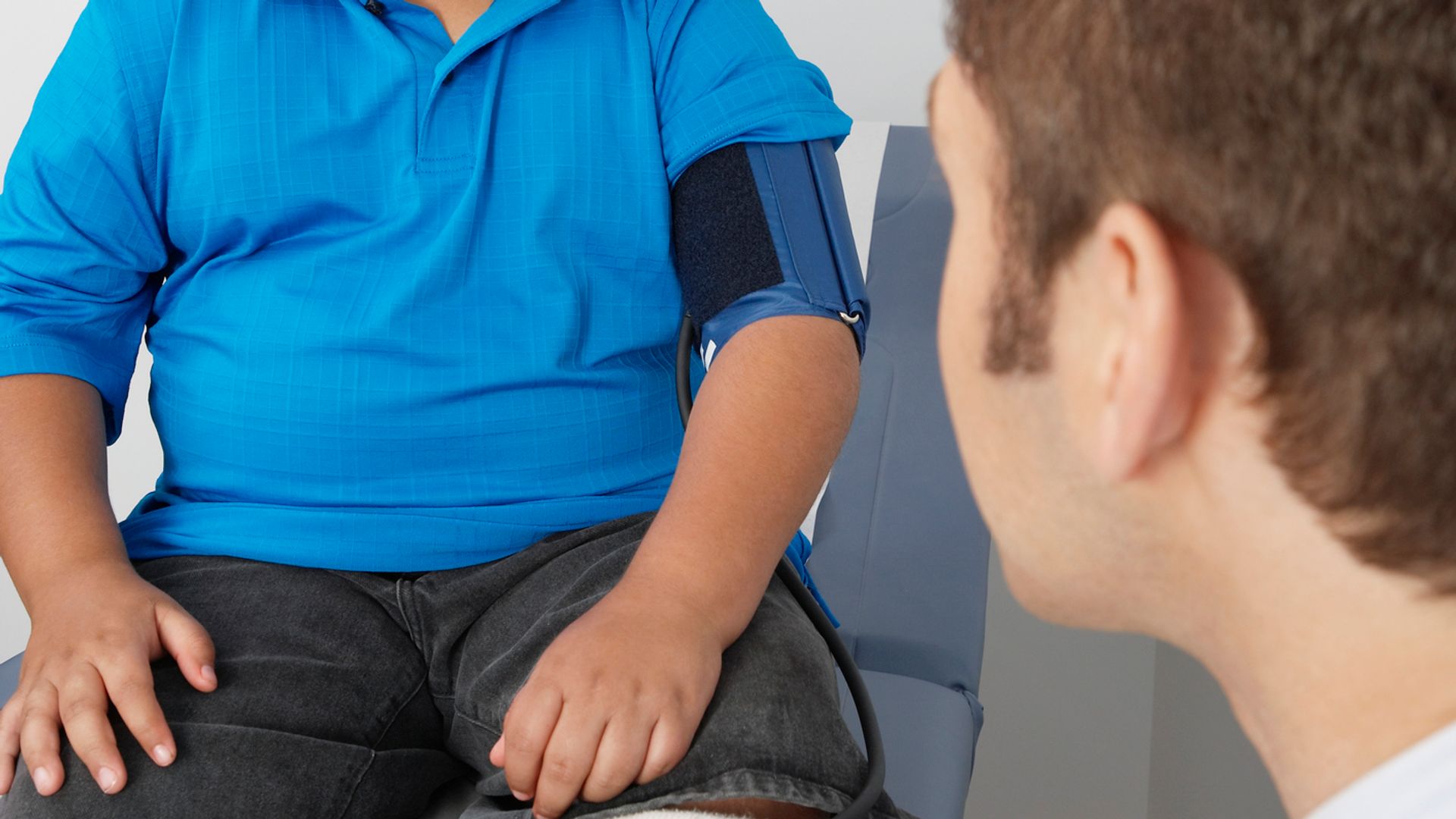










Surging childhood obesity has driven rates of high blood pressure in kids to almost double since 2000, an analysis suggests.The Latest News from the UK and Around the World | Sky News

The British Medical Association (BMA) has defended a new round of resident doctor walkouts starting on Friday, insisting medics’ pay is still “way down” compared with 2008 and that the government has failed to finish “a journey” towards restoring it.The Latest News from the UK and Around the World | Sky News

The UK’s economic slowdown gathered further momentum during the third quarter of the year with growth of just 0.1%, according to an early official estimate that makes horrific reading for the chancellor.The Latest News from the UK and Around the World | Sky News
A man has been charged with murdering a pensioner who was found with fatal injuries at a flat in Northamptonshire.The Latest News from the UK and Around the World | Sky News
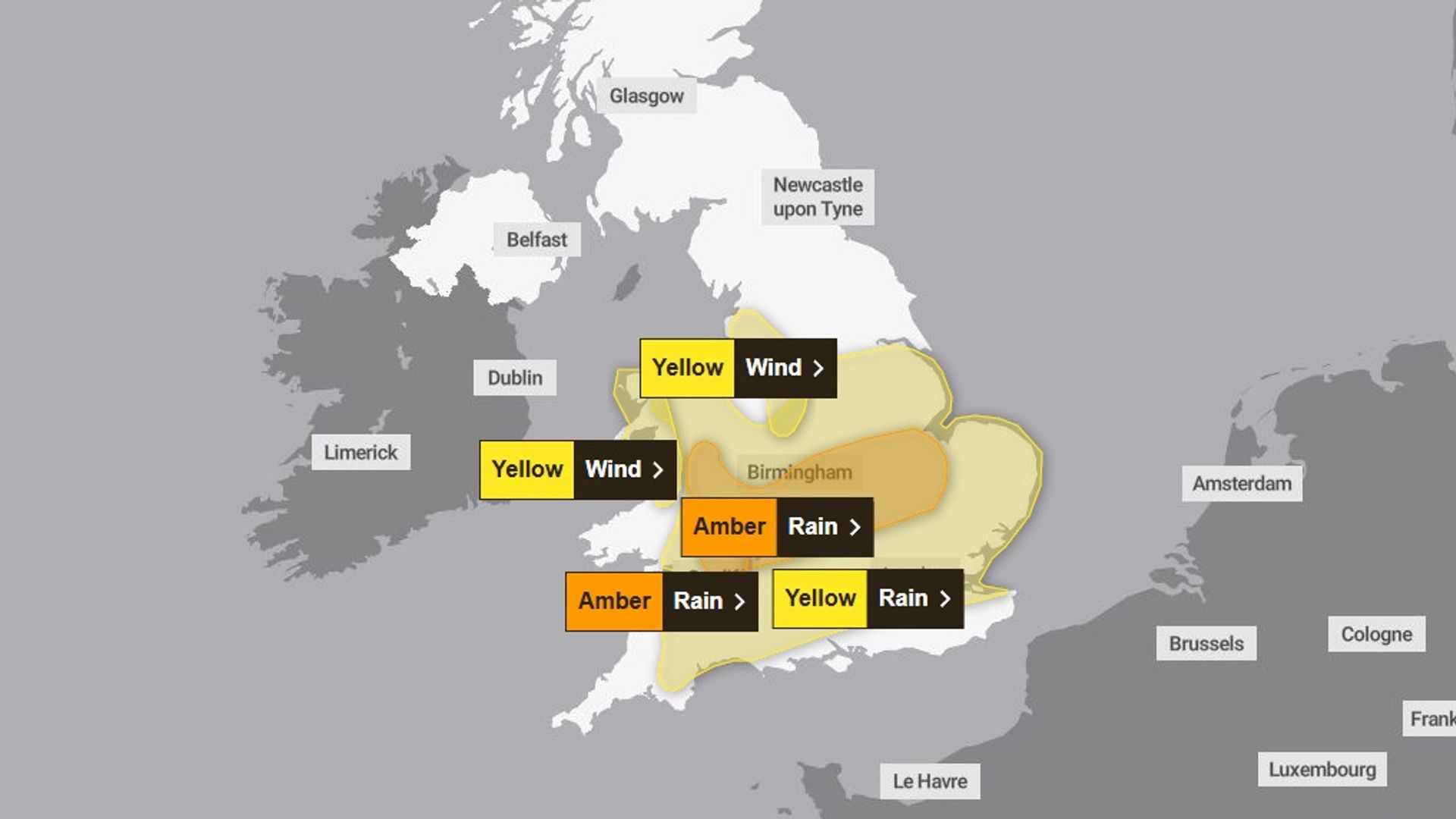
An amber weather warning has been issued as Storm Claudia looks set to batter parts of the UK on Friday.The Latest News from the UK and Around the World | Sky News

A damning independent report into the failings by the various authorities who came into contact with Sara Sharif has said the 10-year-old should never have been placed in the care of her father and stepmother, describing the killers as a “lethal combination”.The Latest News from the UK and Around the World | Sky News
By: Grace Dumas, News of the North
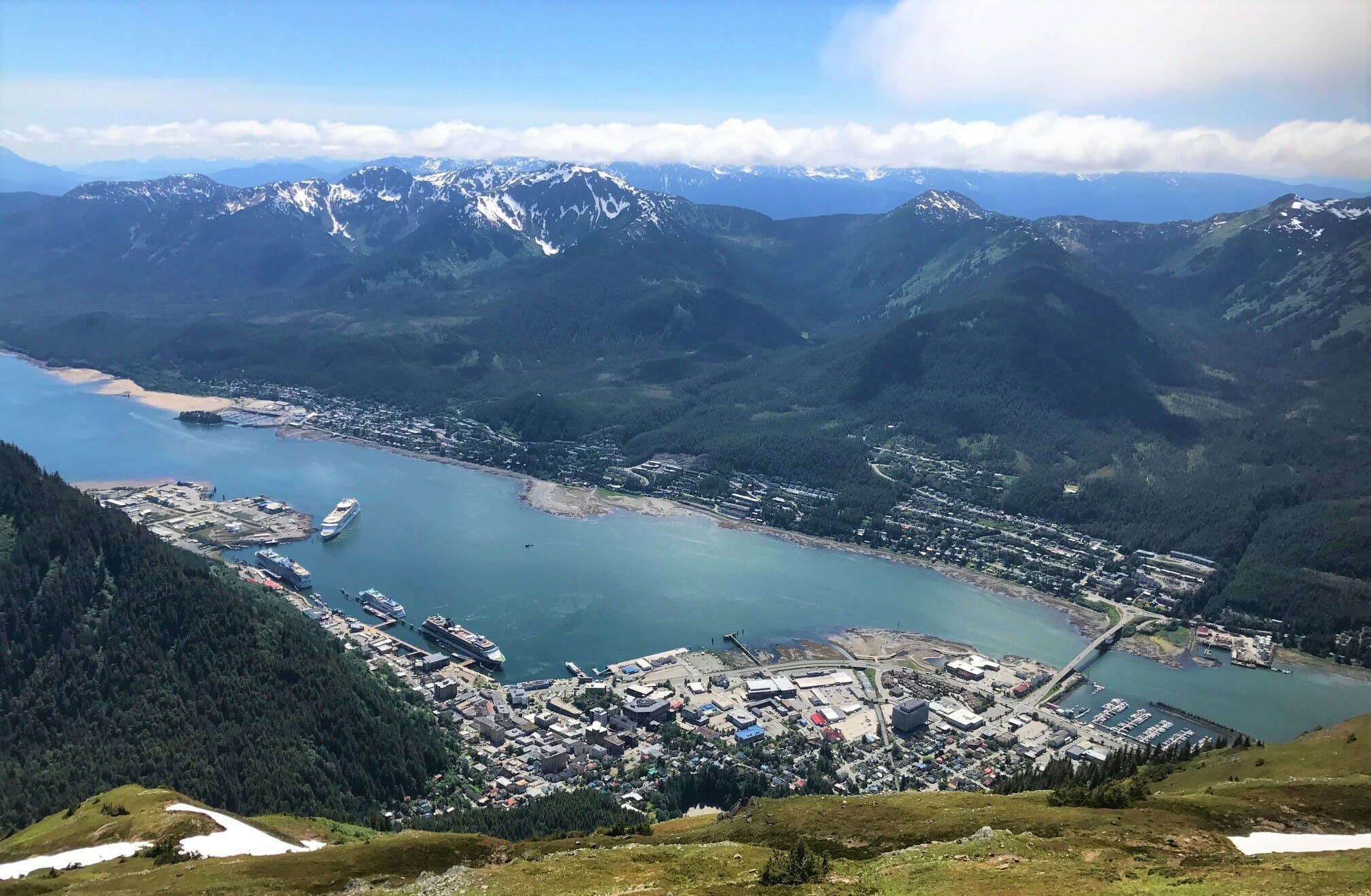
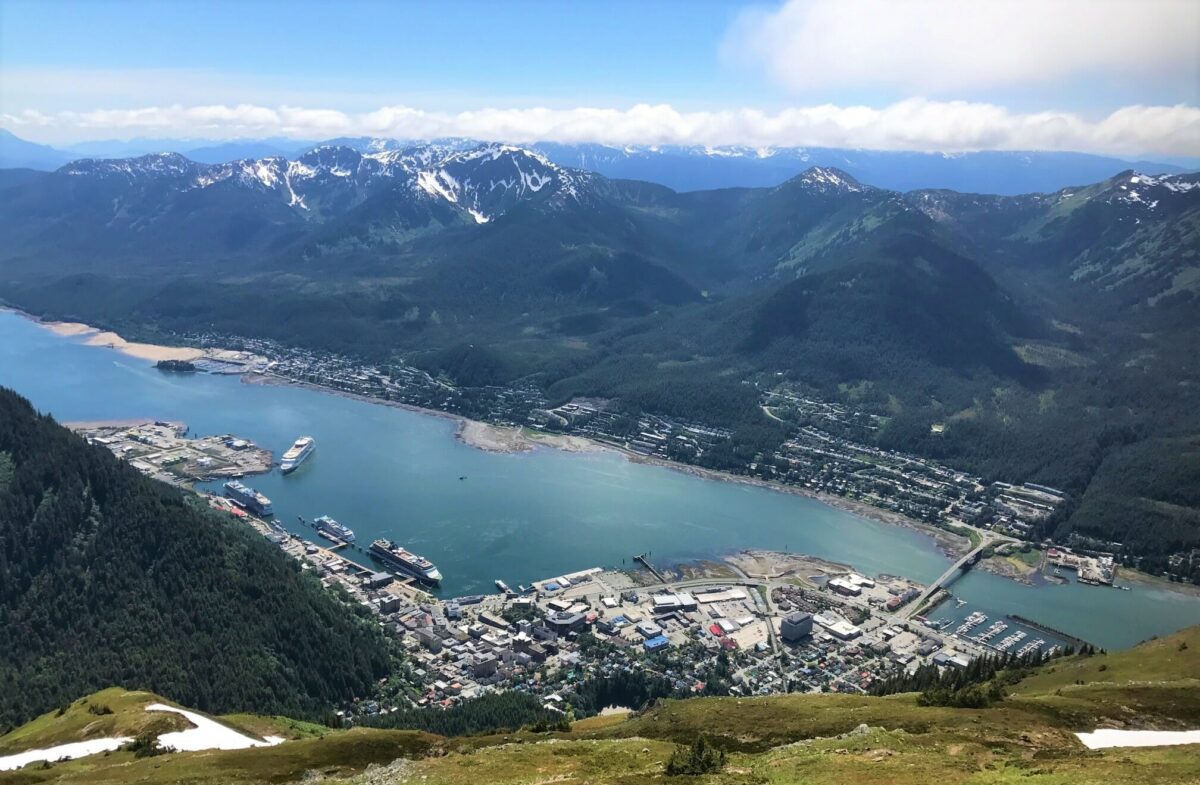
City planners are asking Juneau residents to help shape the community’s future as work continues on a major update to the city’s Comprehensive Plan.
Senior planner Minta Montalbo said the plan, which covers topics ranging from housing and transportation to natural hazards and economic development, is one of the most important planning tools the city has.
“Juneau’s had Comprehensive Plans on the books for decades, since the 1900s, so it’s basically a big picture guide that helps us decide where and how to develop, usually, over the next 20 to 30 years.” Montalbo said, “I think it’s important to keep in mind that the Comprehensive Plan reflects community priorities, and it connects our values and goals with CBJ decision makers, with policies and actions. It’s like a reference point for decisions on how to best use our land and where to focus our resources.”
After lengthy public engagement, Montalbo said there are three distinct community priorities; hazard mitigation, housing, and economic diversification.
“Folks are focused mainly on flooding and protecting the homes in the valley, but we’re also hearing renewed discussion about landslide dangers and avalanches, so we’re going to want to be looking at that in the new comp plan.” Montalbo said, “Not surprisingly, housing for all definitely remains a huge priority, and when we’re talking about housing, housing options that suit a variety of needs. And then I think the third biggest category is economic diversification. Again, not a new topic, but we’re hearing a lot of concern about trying to strengthen year round industries, and find a balanced approach to tourism. We want to recognize the economic contribution, but people are also asking that we care for Juneau’s unique small town characteristics at the same time.”
While the Comprehensive Plan is long-term in nature Montalbo said it directly impacts daily life.
“It’s a guide for decisions about what types of housing we have in this town, what kind of housing in different neighborhoods, how much access to trails and parks do we get? How are we getting to school and to work? It’s these kinds of things that have a tremendous impact on our daily lives.” She said.
The city is currently hosting a series of workshops, with the next one taking place November 19, designed to help residents weigh tradeoffs in future development. Participants work in small groups to assess land use options and test how different strategies might perform under unpredictable conditions, such as increased flooding or loss of federal funding, Montalbo says it’s a way to “future proof” the Comprehensive Plan.
“We’re asking people to basically put yourself in the seat of a planner.” Montalbo said.
Residents who can’t attend in person can weigh in and provide feedback through an online survey available here.
For more information or to join the city’s update list, residents can email OurFuture@juneau.gov.
This article has been edited to adjust punctuation errors.
By: Yereth Rosen, Alaska Beacon

The Trump administration on Monday outlined its plans to auction 1 million acres of federal offshore territory in what it has called the “Big Beautiful Cook Inlet Oil and Gas Lease Sale.”
The lease sale, to be held early next year under terms detailed in a notice published Monday in the Federal Register, is to be the first of at least six mandated for Cook Inlet through 2032 under the sweeping budget bill that Congress passed this summer. The bill also mandated 30 lease sales through 2040 in federal waters of the Gulf of Mexico.
“President Trump’s signing of the One Big Beautiful Bill Act marked the beginning of a new chapter for oil and gas development in the Gulf of America and Alaska’s Cook Inlet,” Matt Giacona, acting director of the Bureau of Ocean Energy Management, said in a news release issued Friday. “BOEM is now moving forward with a predictable, congressionally mandated leasing schedule that will support offshore oil and gas development for decades to come.”
In the statement, the agency, which is the Department of the Interior division that oversees offshore oil and gas drilling in federal waters, touted the 12.5% royalty offered in the lease sale as an incentive to bidders. The agency statement noted that 12.5% is the lowest royalty rate allowed for offshore oil and gas production in federal territory.
Lease sale bids are to be opened on March 4.
Cook Inlet lease sales held in recent years, whether in federal or state territory, have drawn little industry interest. That is despite the use of some incentives, such as royalty-free terms.
There are only eight active leases in federal waters of Cook Inlet, all held by Hilcorp, the inlet’s dominant operator. One of those leases was acquired in a sale held at the end of 2022 under a requirement inserted into the Inflation Reduction Act; Hilcorp’s bid was the only one in that lease sale.
Hilcorp also was the sole bidder in a 2017 federal Cook Inlet lease sale, when it acquired 14 leases. Last year, it relinquished seven of those leases.

There is no pending exploration plan for Hilcorp’s eight federal Cook Inlet leases, according to the BOEM website.
Annual areawide Cook Inlet lease sales held by the Alaska Division of Oil and Gas, for both offshore and onshore state territory, have also produced few bids in recent years.
The 2025 state sale drew five bids, according to results released by the division in June. The 2024 sale drew three bids. The 2023 state sale drew six bids. Each sale offered more than 700 tracts spread over about 3 million acres, and in two of those lease sales, Hilcorp was the sole bidder.
For the upcoming federal lease Cook Inlet lease sale, rules used in the 2017 federal sale will apply, BOEM said.
The agency’s Federal Register notice kicked off a 60-day comment period — but only for Alaska’s governor and for local governments. It is unclear whether tribal governments or any other organizations are included among those invited to comment; a question posed to the Department of the Interior press office was not answered by Monday afternoon.
An automatic emailed message from BOEM spokesperson Jennifer Russo said she could not respond to questions on Monday because of the federal government shutdown.
One environmental group that opposes the lease sale plans to submit public comments nonetheless.
“They’re not asking for comments from the public. But we are still planning to make sure that the people who live in Cook Inlet and Alaska and around the country, their voices will be heard,” said Cooper Freeman, Alaska director of the Center for Biological Diversity.
There appears to be no prohibition on public comments, Freeman noted.
Even though recent Cook Inlet lease sales have drawn little industry interest, he said the center has worries about future leasing.
“We hope that there’s no bids, but we’re taking it very seriously,” he said. “All it takes is one drill rig, one pipeline to burst, and it would be over for the inlet.”
The upcoming Cook Inlet lease sale process is separate from a court-mandated review of the 2022 lease sale.
A lawsuit filed by the Center for Biological Diversity and other organizations resulted in a federal court ruling last year that found the presale analysis to be flawed. U.S. District Court Judge Sharon Gleason ordered BOEM to conduct further analysis of leasing impacts to endangered Cook Inlet beluga whales and other natural resources.
BOEM, in a Federal Register notice published in September, said it plans to complete the supplemental impact statement by the end of the year.
The agency said that it will not release the draft study for public comment and will hold no public hearings on the draft, a departure from procedures followed in past environmental studies.
The lack of public comment opportunities or planned public hearings has angered some Cook Inlet area organizations.
Cook Inletkeeper, an environmental group, has launched a petition drive calling for the normal public process to be reinstated.
By: Corinne Smith, Alaska Beacon

State and local law enforcement officials announced a breakthrough on a more than 25 year old cold case in Juneau this summer, thanks in part to a DNA analysis tool at the Alaska Scientific Crime Detection Lab.
Darryl Bruce Fawcett, an Alaska Native man, was 28 years old when he went missing in 1999. His remains were found by divers in the Gastineau Channel in 2004. In July, with the help of a tool that analyzes DNA from bones, officials said they were able to compare a sample with a family member’s DNA and identify Fawcett.

“It is pretty rare, especially (with) that amount of time to have passed,” said Juneau Deputy Chief Krag Campbell, in August. “So I’m just happy that the family was able to get some closure on this.”
The forensic method is not new, but the Alaska Scientific Crime Detection Laboratory was able to adopt it with new federal grant funding, said crime lab chief David Kanaris. Forensic scientists are able to extract DNA from bones or teeth, which can be compared to DNA of a missing person or relative to make an identification.
Previously, bone samples would be sent out-of-state for testing, usually to the University of North Texas, Kanaris said. The state may continue that practice as needed. “We saw real value in bringing on an ability to do most of the work here in Alaska, where we can,” he said.
Cheryl Duda, a forensic scientist and DNA technical leader at the crime lab, said this forensic method is one of many that investigators use when unidentified remains are recovered.
“For many years now, our laboratory has been able to do testing on a very wide variety of body tissues like blood, saliva, hair roots and skin cells, but all of those are very soft tissue types,” she said. “What is different about this technology that we’re bringing online is it’s a method to extract DNA from bones.”
Duda said that first, any unidentified remains reported to the state go through the Alaska State Medical Examiner’s Office, which determines first if they are human or animal. If deemed human, and a bone or tooth is recoverable, the agency will send a sample to the crime lab for analysis. The DNA is then entered into a national DNA database, the Combined DNA Index System, commonly called CODIS, where investigators can search for a match.
The database can compare the sample with samples of known missing persons, family members, or other samples that law enforcement has collected from crimes or that have been submitted by the public.
“That’s the big first step for us, is generating this profile in the hopes of getting that match or that association in state, so that we can report those results,” Duda said.
Jennifer Foster is a forensic scientist and supervisor at the crime lab, and said that the next step requires coordination across agencies. State employees work with the Federal Bureau of Investigation that governs CODIS, other forensic labs, and local and state law enforcement departments conducting investigations. “So there’s a lot of communication,” she said.
Officials at the crime lab say they’re working on a list of remains to be tested from the Alaska Medical Examiner’s Office, and cases are prioritized as they come into the lab. Once DNA samples are entered into the national database, the search continues.
“So that profile routinely searches every night,” Duda said. “It does missing persons searches monthly. Relatives of missing person searches monthly. So as long as it doesn’t need to be removed for whatever reason, it stays in there and will search.”
Austin McDaniel, director of communications for the Alaska Department of Public Safety, said the state has analyzed three more cases since August, but no identifications have been made.
McDaniel said each case of unidentified remains is prioritized as it comes in through the Medical Examiner’s office, and investigators pursue and coordinate leads for identification. He said the new tool won’t necessarily unlock the state’s cold cases.
“If pulling DNA from bone fragments would have been helpful before, you know, either the crime lab or the medical examiner could have sent that out to other labs to have it completed. So I wouldn’t say there’s, like, this huge backlog of cases that just haven’t ever been worked,” he said.
There are currently 60 unidentified persons cases open in Alaska, according to the National Missing and Unidentified Persons Database, which goes back to 1968. The most recent unidentified remains on that list are bones found in a creek on Aug. 24 in Anchorage.
McDaniel said new DNA samples also get shared with the national database by the public through commercial at-home genetic testing, which can be shared with law enforcement. “That’s usually a box people can check, something like that might happen. Or maybe we go through and have family members reach out to us and offer familial DNA samples that can be compared against,” he said.
McDaniel said local law enforcement investigators can request the DNA analysis as they pursue leads. “An investigator from any number of agencies, not just the Troopers, as they’re trying to go through and maybe work on some of these cases they might go through to reach out to a family member proactively that they suspect might be related to the decedent, and see they can collect a voluntary sample from from them,” he said.
Kanaris, as head of the crime lab, acknowledged these are sensitive cases, especially as Alaska grapples with a crisis of missing and murdered Indigenous people. Alaska Native residents are disproportionately victims of violent crime. At least 27% of the 1,268 known cases on the state’s Missing Persons Clearinghouse database, managed by the Alaska Department of Public Safety, involve Alaska Native people.
“We have worked with the tribal liaisons, understanding that a lot of these bones may come from Alaska Native remains,” Kanaris said. “And so we want to handle these samples as sensitively as we can and be as culturally aware as we can.”
He said another benefit of having this DNA analysis tool in the state’s crime lab, is handling cases more promptly.
“They’re going to involve less transit time. The bones are going to stay in state, and they will, hopefully, be able to be returned to the families for closure as soon as possible. That would be one of the benefits of this,” he said.
“I’d like to see us be able to work as many of the samples, not just with bones, but across the board, with forensic science samples in Alaska, at the Alaska crime lab,” he said. “So I think this is a big step forward for us.”

After years of steady decline in the number of people executed in the United States, there has been a sharp reversal in 2025.
So far this year, 41 people have been killed in 11 states, with five more executions scheduled before the end of the year.
If all the scheduled executions are carried out, that would make 2025 the year with the most executions since 2010, when 46 inmates were put to death. That year, Texas led the way with 17 executions, while Florida carried out only one.
But this year, the Sunshine State is leading the charge. Florida has executed 15 prisoners in 2025 – the most ever in a single year since 1976, when a brief national moratorium on the death penalty was lifted. Two of the five remaining executions scheduled for 2025 are set to happen in Florida. Texas and Alabama are tied for a distant second, with five executions each.
As someone who has studied the death penalty for decades, what is happening in Florida right now seems to me to be especially important. While in some ways the state is distinctive, in many others it is a microcosm of America’s death penalty system.
According to the Death Penalty Information Center, Florida carried out its first execution in 1827, 18 years before it became a state.
Almost 100 years later, in 1923, Florida replaced hanging with the electric chair as its method of execution. After a brief pause in the use of capital punishment in the 1970s, it was one of the first states to get back in the death penalty business.
In the 1990s, the state had several gruesome botched electrocutions. In three cases, the condemned man caught on fire before dying in the chair. To this day, the electric chair remains legal in Florida, though in 2000 the state Legislature enacted a law whereby prisoners may choose between the electric chair and lethal injection.
Over the years, the U.S. Supreme Court has taken the state to task for various constitutional defects in its death penalty laws and practices. In its 1982 decision in Enmund v. Florida, the court ruled that Florida could not use the death penalty to punish people who were minor participants in a crime that led to a murder. And in 2014, the Supreme Court found that Florida was unconstitutionally denying the kind of intellectual disability claims by people with low IQ scores that made them ineligible to be given death sentences.
But these rulings have not stopped the state from continuing to go its own way in death penalty cases. In 2020, the Florida Supreme Court ended the practice of having a court review capital sentences. This review was meant to ensure that those sentences met the U.S. Constitution’s requirements that they be meted out only in cases that truly warrant them and that they be proportional. To determine proportionality, the court undertaking such a review would compare the case in front of them with similar cases in the same jurisdiction in which the death penalty had been imposed.
Then in 2023, Florida enacted legislation ending the requirement of jury unanimity in death cases. Now, it takes only eight out of 12 jurors to send someone to death row. Only three other death penalty states do not require jury unanimity. In Missouri and Indiana, a judge may decide if the jury’s decision isn’t unanimous, and in Alabama, a 10-2 decision is sufficient.
As in the rest of the country, racial discrimination has long been a feature of Florida’s death penalty system.
Thirty-five percent of the 278 people currently on Florida’s death row are Black. But Black people make up only about 17% of Florida’s overall population.
This is actually lower than the approximately 40% of inmates on death row who are Black nationwide, despite the fact that Black people make up just 14% of the U.S. population.
Across the nation, 13 of the 41 inmates executed so far in 2025 have been Black or Latino men.
Florida leads the nation in the number of people – 30 – who have been sentenced to death only to be exonerated later. Of those, 57% were Black.
Today, Florida has the second-largest death row population in the United States, with 256 inmates awaiting executions. Only California has more, with 580 inmates on death row, but it has had a moratorium on executions since 2006.
As Florida’s governor, Ron DeSantis is responsible for issuing death warrants. In 2025, he has signed a record-setting 15 so far. That’s the most death warrants in the state in a single year since 2014, when Gov. Rick Scott signed off on putting eight people to death.
Though he is Catholic, DeSantis does not subscribe to the church’s staunch opposition to the death penalty. The Florida Catholic Conference of Bishops has been outspoken in taking him to task for his position on capital punishment and for presiding over an execution spree. But that has not stopped him.

Indeed, on Nov. 3, 2025, the governor said that capital punishment is “an appropriate punishment for the worst offenders.” He added that it could be a “strong deterrent” if the state carried out executions more quickly.
DeSantis has served as governor since 2019, and prior to 2025, he had signed nine death warrants. He says that he was focused on other priorities early in his term and during the COVID-19 pandemic.
The governor, who is term limited, is in his second and last term. DeSantis’ critics allege that the recent uptick in executions is an attempt to garner attention and prove his tough-on-crime bona fides to a national audience.
The total number of executions in the U.S. went from a high of 98 executions in 1999 to a low of 11 in 2021. But that number has increased every year since.
While only one state, Indiana, has resumed executions after a long hiatus, no other state has increased its use of the death penalty as quickly as Florida has. Elsewhere, the common pattern of allowing people to languish on death row for decades, and in some states seemingly permanently, has held.
And although the problems that have long plagued Florida’s death penalty system remain unaddressed, it now stands alone in dramatically escalating its own pace of executions and is leading America to its own 2025 execution revival.
Read more stories from The Conversation about Florida.

Austin Sarat does not work for, consult, own shares in or receive funding from any company or organization that would benefit from this article, and has disclosed no relevant affiliations beyond their academic appointment.
Politics + Society – The Conversation