The ringleader of a Romanian grooming gang was offered £1,500 by the Home Office to be deported while he was in prison awaiting trial for 10 rapes, a Sky News investigation has found.The Latest News from the UK and Around the World | Sky News











The ringleader of a Romanian grooming gang was offered £1,500 by the Home Office to be deported while he was in prison awaiting trial for 10 rapes, a Sky News investigation has found.The Latest News from the UK and Around the World | Sky News

A former head of MI6 has told Sky News the Navy may be forced to “fire a warning shot” or “cut off” a Russian spy ship loitering off northern Scotland.The Latest News from the UK and Around the World | Sky News

Donald Trump has signed a bill approving the release of files relating to Jeffrey Epstein by the US Justice Department.The Latest News from the UK and Around the World | Sky News
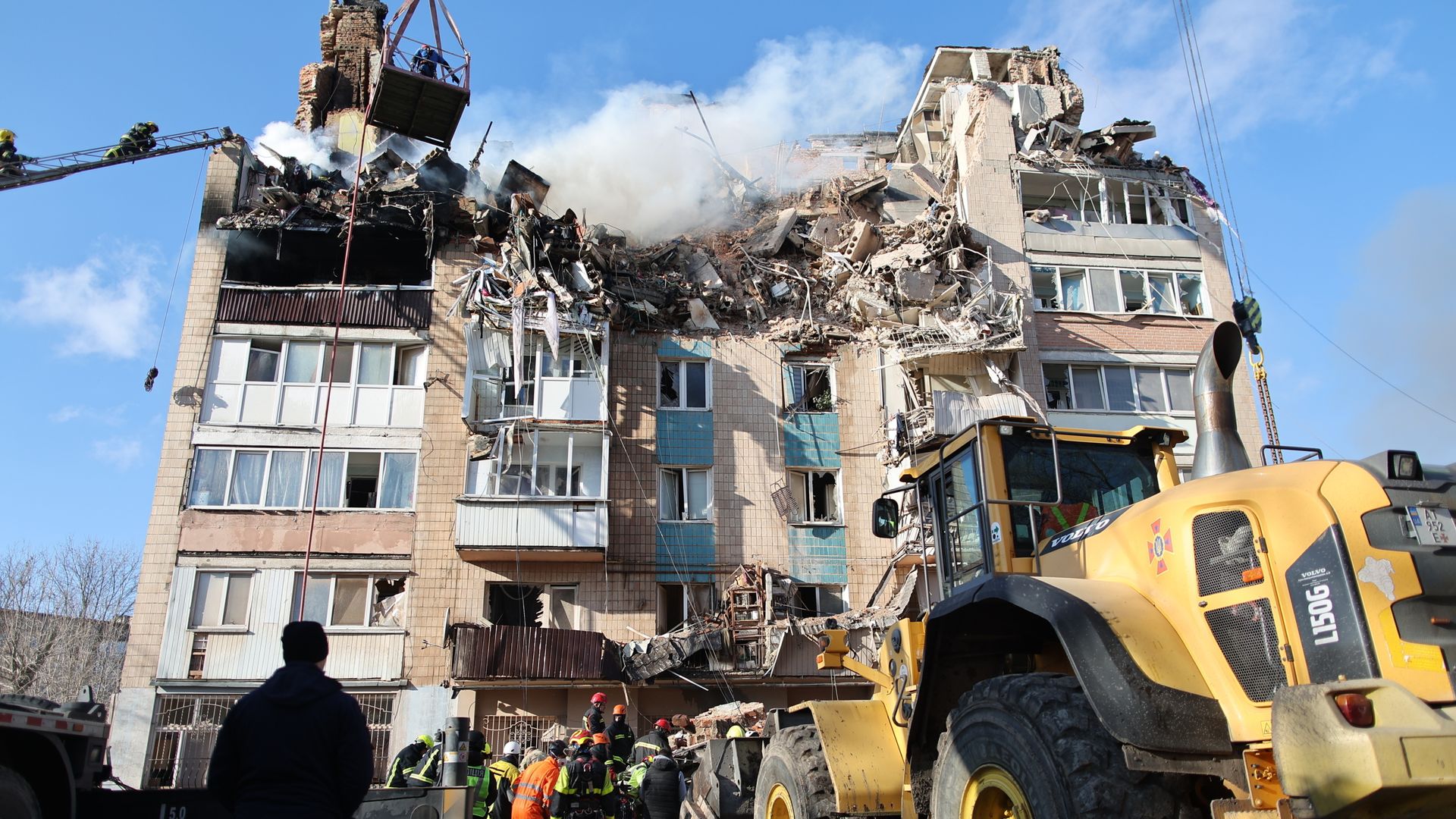
There are developments in the quest for peace in Ukraine. The Latest News from the UK and Around the World | Sky News
By: Yereth Rosen, Alaska Beacon

Fewer Alaska babies were born in 2024 than the year prior, continuing a yearslong decline in the state’s births and women’s fertility rates, a new report shows.
There were 8,950 Alaska babies born last year, down from 9,031 in 2023, according to the Alaska Vital Statistics 2024 Annual Report released by the state Department of Health. The number of births has fallen in each of the past five years, the report showed. In 2020, there were 9,486 babies born in Alaska.

Fertility rates — defined as the number of births per 100,000 women aged 15 to 44 — also continued to decline. In 2024, the statewide fertility rate was 61, down from 61.8 the year before and 65.5 in 2020. Fertility rates were highest in Southwest Alaska in 2024, at 86.9, and lowest in Southeast Alaska, at 48.5, the report said.
The most popular names for boys were Oliver and Theodore. For baby girls, the most popular names were Amelia and Olivia, the report said.
At the other end of the life cycle, there were slightly fewer deaths in Alaska last year than in 2023 — 5,525 in 2024, compared to 5,544 the year before, the report said. Alaska’s death total peaked in 2021, during the COVID-19 pandemic, when 6,227 residents died, the report said. Death numbers have declined since then, and the 2024 total was similar to the 2020 total of 5,204.
Death statistics revealed that the top three causes in 2024 were the same as they were in most years: cancer, which was responsible for about a fifth of all Alaska deaths; heart disease, with totals for those deaths on the decline since 2021 and 2022; and accidents, a category that includes poisonings and drug overdoses.
COVID-19, which was the No. 3 cause of death in 2021, slipped out of the top 10 in 2023, a year when it was cited as the cause of 56 deaths. Its impact on state demographics was still small in 2024, when it was found to be the cause of 58 Alaska deaths.

Embedded in the vital statistics report were some positive signs.
Life expectancy increased to a statewide average of 77.6 years, continuing an upward trend since the COVID-19 pandemic year of 2021, when life expectancy hit a low of 75.4 years.
The teen birth rate was the lowest since 2020, the report said. That rate, which measures the number of births per 1,000 girls aged 15 to 19, was 13.5 in 2024, down from 14.8 the year before.
Use of tobacco by pregnant women has also steadily declined in recent years, according to the report. In 2024, 7% of expectant mothers used tobacco, down from 11% in 2020.
A separate report released by the department detailed cancer statistics through 2022, the year with the last available data.
The Cancer In Alaska 2022 Annual Report showed some positive trends as well.
Cancer incidence overall in Alaska decreased between 1996 and 2022, especially in the years 2009 to 2012, when incidents dropped by an annual average of 3.4%, the report said. Breast cancer remains the most frequent cancer among women, while prostate cancer is the most frequent cancer among men, the report said.
Certain types of cancers have decreased in Alaska since 2016, including leukemia, bladder cancer, lung cancer, ovarian cancer and prostate cancer. There is a caveat, however. “Recent trends have started to show an increase in prostate cancer statewide and nationally,” Shirley Sakaye, a spokesperson for the department, said by email.

Also on the decline in Alaska was colorectal cancer, which ranked fourth on the list of diagnosed cancers in the state in 2022, according to the cancer report.
Colorectal cancer trends are of special concern in Alaska because of a high prevalence among Alaska Natives. Alaska Native people have had the nation’s highest recorded rates of colorectal cancer, according to a recent report by the American Cancer Society. The reasons are not fully understood by health experts, but they may relate to diet, according to the report.
While colorectal cancer numbers have declined in recent years, rates are notably high in one of the most rural regions of the state: the Yukon-Kuskokwim Delta in Western Alaska. The colorectal cancer rate there was 88 per 100,000 people in 2022, compared to the statewide rate of 40.8 per 100,000, according to the report.
Alaska Native tribal health organizations have boosted awareness, and screening has increased over time.
Because of relatively high rates of colorectal cancer among younger adult Alaska Native people, the Alaska Native Medical Center and Alaska Native Tribal Health Consortium recommend that screenings start at age 40, compared to the recommendation for most Americans to start screenings at age 45.
By: James Brooks, Alaska Beacon

The Alaska Supreme Court has upheld state regulators’ decision to grant permits for a large gold mine planned for Southwest Alaska, bringing the proposed Donlin project a step closer to construction.
In a unanimous ruling published Friday, the court’s five justices said the Alaska Department of Natural Resources did not need to consider the environmental impact of the entire proposed Donlin Mine when it approved water use permits and a right-of-way permit needed for a natural gas pipeline intended to power the mine.
Their ruling has implications for many major development projects on private land and likely applies to projects on federal land as well, such as the large oil projects on Alaska’s North Slope.
“This decision is a major win for Alaska,” said Attorney General-designee Stephen Cox in a written statement. “The Court rightly recognized that the State’s permitting process met constitutional standards and that Article VIII (of the Alaska Constitution) does not extend to lands owned by Alaska Native Corporations or other private entities. This ruling not only affirms the integrity of DNR’s work but also protects the rights of Alaska Native Corporations and provides certainty for future development.”
The natural gas pipeline will stretch across state land, but the mine itself will be dug on land whose subsurface rights are owned by Calista Corporation, a regional Alaska Native corporation.
Writing on behalf of the court, Justice Dario Borghesan said the distinction is important.
“Because these are private resources, rather than state resources, the Department was not required to consider the cumulative impacts of their development when deciding whether to allow the use of state waters and access over state lands to develop the mine,” he wrote.
The ruling says that to approve the gas pipeline, regulators needed to consider only the impact of the pipeline, not of the mine it allows.
Until Friday, a 2013 decision by the Alaska Supreme Court known as REDOIL had required regulators to “take into account all aspects of a project” and consider the “cumulative impacts” when issuing permits for work on state land.
Friday’s decision somewhat limits that precedent, particularly for Alaska’s North Slope oil and gas industry, where most new drilling is taking place on federal land, not state land.
“This decision, I believe, makes clear that the REDOIL requirement to assess cumulative impacts only applies to projects that are on state lands,” said Jon Katchen, an attorney familiar with the new decision and author of a friend-of-the-court brief to the Supreme Court.
Friday’s decision covered two lawsuits filed by the Orutsararmiut Native Council and other Alaska Native tribes opposed to the mine’s development.
They appealed the case to the Alaska Supreme Court after an Anchorage Superior Court judge also ruled in favor of the defendants. The high court heard arguments one year ago.
“While this ruling is unfortunate, our work challenging the Donlin gold mine continues,” said Gage Hoffman, Orutsararmiut Traditional Native Council President, in an emailed statement.
ONC, as the tribe is also known, is fighting the mine in federal court, and in June, a federal judge found problems with a federal assessment of part of the project.
ONC and other plaintiffs are being represented by Earthjustice, an environmental law firm, and a spokeswoman for that organization said it has another case on appeal at the Alaska Supreme Court as well as federal litigation.
“We will be pushing to ensure that the supplemental environmental study that the court ordered from our federal victory adequately analyses the risks posed by the mine,” Hoffman said. “Our people deserve to know about these dangers; our ways of life are dependent on healthy lands and waters, and it is our responsibility to ensure they are protected for future generations.”
Friday’s ruling covered separate lawsuits filed over different sets of permits.
One lawsuit involved a permit challenged repeatedly since a preliminary decision in 2019, granting the use of state land needed to build a gas pipeline from Cook Inlet to the mine site.
Referring to legislative history and the text of the state’s Right of Way Leasing Act, Borghesan concluded, “none (of this) can be reasonably read to require the Department to consider the downstream effects of industrial activities by users of gas transported by the pipeline.”
The other suit addressed 12 water use permits issued in 2013 and 2016 by DNR to Donlin.
Plaintiffs argued that the Alaska Constitution, as interpreted by REDOIL, required DNR to consider the impact of the whole project.
Not so, Borgesan wrote.
“In our view, such a rule would extend article VIII (of the Alaska Constitution) far beyond its command to ascertain whether the development of state-owned resources is in the public’s interest.”
He also added that imposing such a restriction would be particularly problematic in the case of Donlin, because it involves land “chosen by ANCSA corporations as compensation for the loss of Alaska Natives’ aboriginal title to their ancestral territories. … These lands and minerals are reserved for their benefit, not for the benefit of Alaskans generally.”
Plaintiffs had argued that DNR failed to consider what will happen after the mine closes, when the mining pit will be filled by rainwater and seepage.
“Pumping will be required in perpetuity to ensure the lake’s water levels do not overtop its banks,” Borghesan wrote, adding that water treatment will also be required forever.
“This is because the water will have high levels of heavy metals due to contact with mining waste, and will have to be treated in perpetuity to protect downstream lands, waters, fish and wildlife, and people.”
Despite that conclusion, he said the justices “are persuaded that the Department was not required to consider the environmental impacts of the pit lake” because that lake will be regulated by state and federal pollution permits and rules, not just the water-use permits.
Friday’s decision emphasized that the justices are not intending to give an open hand to development.
“We hold only that the Department was not required, when deciding whether to issue water appropriation and pipeline right-of-way permits for use in mining privately owned minerals on private lands, to condition those permits on an analysis of the cumulative impacts of the mining itself,” the decision states.
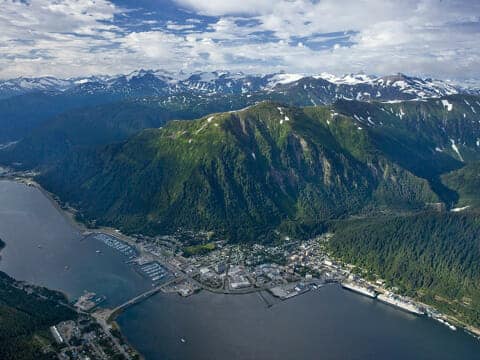
NOTN- Juneau residents will soon see changes at the checkout counter as the city moves to implement Proposition 2, which exempts food and utilities from sales tax starting November 20.
Barr said the goal is to make the transition “as seamless as possible” for both residents and businesses.
“Residents won’t have to do anything. You just simply won’t see sales tax on your receipts or your bills for food and utilities.” He said.
The measure, approved by voters earlier this year, eliminates the city’s 5% sales tax on groceries and household utilities. Barr said some exceptions apply, “There’s a couple of exceptions for utilities that you buy in person, like wood or wood pellets or the retail purchase of fuel. For those specific exemptions folks will have to come downtown or go online and get a card number from us, because, while food is exempt for everyone, utilities aren’t.” said Barr.
He said most utility vendors already have systems in place to differentiate between the two.
Proposition 2 defines “essential utilities” as those sold to individuals for non-commercial use within the City and Borough of Juneau. This includes the sale of electricity, heating fuel, water and wastewater service, refuse and recycling collection at a City and Borough of Juneau resident’s principal place of abode, and the non-commercial use of landfill facilities by CBJ residents.
CBJ released an official statement that clarifies some concerns on extra steps; Because most, if not all, utilities already designate commercial and residential rates for billing purposes, and to ensure that the intent of the ballot sponsors and the will of the voters is honored, CBJ is working with utilities to utilize their definition of residential and commercial while maintaining the intent of the ballot initiative. CBJ also provided definitions for guidance where utilities do not already designate rates as commercial or residential.
In practice, this means that residents are not required to obtain an exemption number or card to receive the exemption for billed utility use (electricity, water, etc.). However, residents may choose to apply for an exemption card if they intend to make retail purchases of eligible essential utilities (wood pellets, propane, etc.). If residents believe they are mistakenly designated as commercial by billed utilities, they may also apply for a utility sales tax exemption card and submit their exemption card to the utility to receive the exemption. Essential utilities exemption card application details will be available at juneau.org/finance/sales-tax and at the CBJ Sales Tax Office prior to the November 20 enactment date.
CBJ is working with utility providers on the implementation process. It may take time for providers to apply the new exemptions to their many thousands of accountholders.
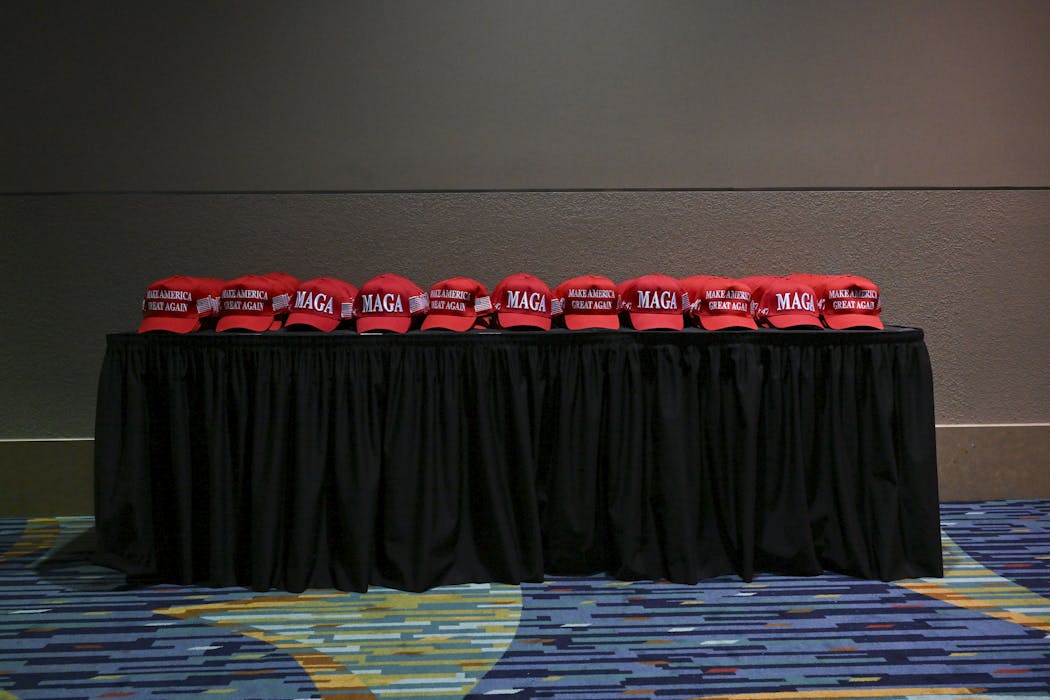
With the latest shift by President Donald Trump on releasing the Epstein files held by the U.S. Department of Justice – he’s now for it after being against it after being for it – the MAGA base may finally get to view the documents it’s long wanted to see. On the afternoon of Nov. 18, 2025, the House voted overwhelmingly to seek release of the files, with only one Republican voting against the measure. The Senate later in the day agreed unanimously to pass the measure and send it on to the president for his signature. The Conversation’s politics editor, Naomi Schalit, talked with scholar Alex Hinton, who has studied MAGA for years, about Make America Great Again Republicans’ sustained interest in the case of accused child sex trafficker Jeffrey Epstein. Hinton explains how MAGA’s interest in the case fits into what he knows about the group of die-hard Trump supporters.
You are an expert on MAGA. How do you learn what you know about MAGA?
I’m a cultural anthropologist, and what we do is field work. We go where the people we’re studying live, act, talk. We observe and sort of hang out and see what happens. We listen and then we unpack themes. We try and understand the meaning systems that undergird whatever group we’re studying. And then, of course, there’s interviewing.

It appears that MAGA, Trump’s core supporters, are very concerned about various aspects of the Epstein story, including the release of documents that are in the possession of the U.S. government. Are they, in fact, concerned about this?
The answer is yes, but there’s also a sort of “no” implicit, too. We need to back up and think, first of all, what is MAGA.
I think of it as what we call in anthropology a nativist movement, a foregrounding of the people in the land. And this is where you get America First discourse. It’s also xenophobic, meaning that there’s a fear of outsiders, invaders coming in. It’s populist, so it’s something that’s sort of for the people.
Tucker Carlson interviewed Marjorie Taylor Greene, and he said, “I’m going to go over the five pillars of MAGA.” Those were America First, this is absolutely central. Borders was the second. You’ve got to secure the borders. The third was globalist antipathy, or a recognition that globalization has failed. Another one was free speech, and another one he mentioned was no more foreign wars. And I would add into that an emphasis on “we the people” versus elites.
Each of those is interwoven with a key dynamic to MAGA, which is conspiracy theory. And those conspiracy theories are usually anti-elite, going back to we the people.
If you look at Epstein, he’s where many of the conspiracy theories converge: Stop the Steal, The Big Lie, lawfare, deep state, replacement theory. Epstein kind of hits all of these, that there’s this elite cabal that’s orchestrating things that ultimately are against the interests of we the people, with a sort of antisemitic strain to this. And in particular, if we go back to Pizzagate in 2016, this conspiracy theory that there were these Democratic elitists who were, you know, demonic forces who were sex trafficking, and lo and behold, here’s Epstein doing precisely that.
There’s kind of a bucket of these things, and Epstein is more in it than not in it?
He’s all over it. He’s been there, you know, from the beginning, because he’s elite and they believe he’s doing sex trafficking. And then there’s a suspicion of the deep state, of the government, and this means cover-ups. What was MAGA promised? Trump said, we’re going to give you the goods, right? Kash Patel, Pam Bondi, everyone said we’re going to tell you this stuff. And it sure smacks of a cover-up, if you just look at it.
But the bottom line is there’s a realization among many people in MAGA that you’ve got to stay with Trump. It’s too much to say there is no MAGA without Trump. There’s certainly no Trumpism without Trump, but MAGA without Trump would be like the tea party. It’ll just sort of fade away without Trump.
People in MAGA are supporting Trump more than more mainstream Republicans on this. So I don’t think there’s going to be a break over this, but it certainly adds strain. And you can see in the current moment that Trump is under some strain.

The break that we are seeing is Trump breaking with one of his leading MAGA supporters, Marjorie Taylor Greene, not the MAGA supporter breaking with Trump.
With Greene, sometimes it’s like a yo-yo in a relationship with Trump. You fall apart, you have tension, and then you sort of get back. Elon Musk was a little bit like that. You have this breakup, and now she’s sort of backtracking like Elon Musk did. I don’t think what is happening is indicative of a larger fracturing that’s going to take place with MAGA.
It seems that Trump did his about-face on releasing the documents so that MAGA doesn’t have to break with him.
It’s absolutely true. He’s incredible at taking any story and turning it in his direction. He’s sort of like a chess player, unless he blurts something out. He’s a couple of moves ahead of wherever, whatever’s running, and so in a way we’re always behind, and he knows where we are. It’s incredible that he’s able to do this.
There’s one other thing about MAGA. I think of it as “don’t cross the boss.” It’s this sort of overzealous love of Trump that has to be expressed, and literally no one ever crosses the boss in these contexts. You toe the line, and if you go against the line, you know what happened to Marjorie Taylor Greene, there’s the threat Trump is going to disown you. You’re going to get primaried.
Trump has probably made a brilliant strategic move, which is suddenly to say, “I’m all for releasing it. It’s actually the Democrats who are these evil elites, and now we’re going to investigate Bill Clinton and all these other Democrats.” He takes over the narrative, he knows how to do it, and it’s intentional. Whoever says Trump is not charismatic, he doesn’t make sense – Trump is highly charismatic. He can move a crowd. He knows what he’s doing. Never underestimate him.
Does MAGA care about girls who were sexually abused?
There is concern, you know, especially among the devout Christians in MAGA, for whom sex trafficking is a huge issue.
I think if you look at sort of notions of Christian morality, it also goes to notions of sort of innocence, being afflicted by demonic forces. And it’s an attack on we the people by those elites; it’s a violation of rights. I mean, who isn’t horrified by the idea of sex trafficking? But again, especially in the Christian circles, this is a huge issue.

Alex Hinton receives funding from the Rutgers-Newark Sheila Y. Oliver Center for Politics and Race in America, Rutgers Research Council, and Henry Frank Guggenheim Foundation.
Politics + Society – The Conversation

Reading Time: 2 minutes
Sister Wives fans suddenly have a cause for concern.
On the November 16 episode of this TLC reality series, Christine Brown and husband David Woolley discussed their financial future.
“So what’s gonna happen down the road when we rely on my income only?” Woolley asked.
“I seriously am up half the night sometimes thinking about [how] I’m just spending too much money,” Christine confessed. “I just know that I am.”
Weird, right?
Why would the couple be relying solely on David’s income? Unless Christine was leaving Sister Wives or the show was being canceled by TLC?
When it came to Christine’s six kids — she shares Aspyn, 30, Mykelti, 29, Paedon, 27, Gwendlyn, 24, Ysabel, 22, and Truley, 15 with ex-husband Kody Brown — she told Woolley that she and Kody used to use a “family account” to fund their education.
“That was like a big deal for Kody, … not [getting into] debt for college,” Christine said in her confessional.
“If I can help take the stress off of them, I don’t see a problem with that, with helping them.”

Christine continued:
“I don’t know what we’re going to do with Truely. She definitely wants to go to college. She’s definitely going to college.
“And I don’t know, things could be very different by then. And if we only have David’s money to go at that point, then we’ll have to talk about that more.”
Another strange comment, right? Christine is clearly thinking ahead, but she doesn’t sound optimistic about her show’s future.
Kody and his former spouses don’t talk. The guy is down to just one spouse. If you stop and think about it, the premise of Sister Wives doesn’t really exist any longer.

After this episode concluded, TikToker Sarah Fraser posted a video speculating that the couple’s conversation could very well indicate the show is ending soon.
From there, fans took to the comment section to share their thoughts and/or predictions.
“All I got from that was eventually it will come to an end, the show,” one person wrote. “We all know it’s true.”
We all know polygamy is awful, too. Even the former sister wives themselves now admit as much.
Sister Wives Canceled? Christine Brown Drops Cryptic Message was originally published on The Hollywood Gossip.
The Hollywood Gossip

Reading Time: 2 minutes
We have horrifying news to report out of Chicago today.
According to a police, a 26-year-old woman was doused in an unidentified liquid and lit on fire after arguing with an unidentified man on a crowded train.
Shockingly, the assailant was able to flee the scene.
Police say they have now apprehended a “person of interest” connected to the crime, but it seems the hunt for the suspect is ongoing.
The attack, which took place around 9:30 pm on Monday night, left the woman in critical condition.
She reportedly stumbled onto a platform and collapsed before being rushed to a nearby hospital.
Witnesses say the victim was conscious and speaking coherently even as she was engulfed in flames.
“She had severe burns all over her upper torso, and half of her scalp was burnt off,” a bystander named Michael Thomas told the Chicago Sun-Times.
“She was lucid and conscious and talking. I believe I overheard something along the lines of, ‘I can’t believe I’m on fire,’” he continued, adding:
“I hope she pulls through. I hope for the very best for her.”
Thomas added that a group of about “a couple dozen people” were able to extinguish the flames before first responders arrived on the scene.
He notes that he was dismayed to see several witnesses taking photos and video on their phones.
“That was a saddening sort of situation to witness,” Thomas said. “I don’t necessarily fault anybody. I think the idea of filming or taking pictures of someone in such a distressed state just shows a lack of compassion and a lack of empathy for the moment.”
The Chicago Transit Authority has issued a written statement assuring the public that everything is being done to apprehend the assailant and assure the safety of all Chigoans.
“The CTA has been working closely with the Chicago Police Department (CPD) and the Public Transportation Unit detectives embedded at the Strategic Decision Support Center (SDSC) dedicated to CTA, to support their investigation and ensure the offender is quickly apprehended,” the statement reads.
We will have further updates on this developing story as new information becomes available.
Chicago Woman Set Ablaze During Argument on Train: ‘I Can’t Believe I’m … was originally published on The Hollywood Gossip.
The Hollywood Gossip