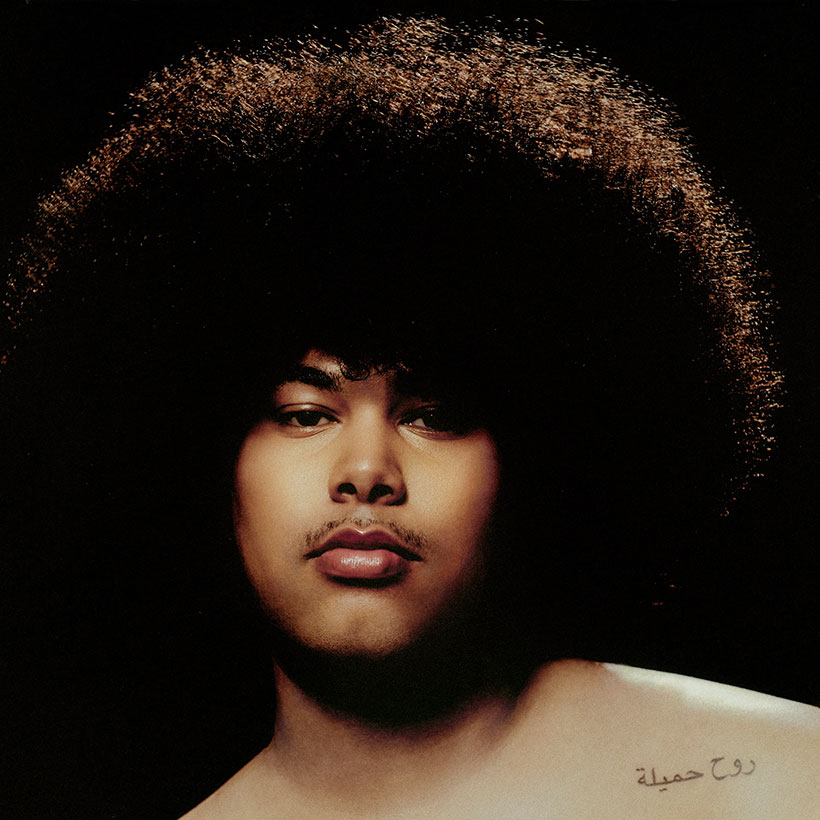
Sekou has returned with his new single “Dangerous Lover,” marking his first new release since last year’s In A World We Don’t Belong Pt. 1. The British singer-songwriter unveiled the track on April 3 as he builds momentum ahead of his upcoming UK and EU headline tour, which includes dates in Brussels, Amsterdam, Paris, Manchester, and London.
On “Dangerous Lover,” Sekou leans further into his R&B influences, shaping a sleek, modern record rooted in honesty and self-reflection. In a statement shared with the release, he described the song as an escape as well as a personal reckoning, explaining that he was focused less on perfection in the studio and more on truth. That perspective carries into the single itself, which arrives as another confident step forward in his evolution as both a vocalist and songwriter.
Click to load video
The new single follows the release of In A World We Don’t Belong Pt. 1, the five-track mixtape that showcased Sekou’s ability to blend familiar melodies with a fresh, contemporary edge. The project included highlights such as “Catching Bodies” and “Never Gunna Give You Up,” helping further establish his sound and deepen his connection with listeners. Next month, Sekou will bring that material and more to the stage when he launches his In A World We Don’t Belong UK and EU Tour. Demand for the run has already been strong, with additional dates added, and the itinerary includes a London stop at EartH Hackney on April 20.
Sekou has also stayed busy in recent months with a series of high-profile appearances and milestones. He played a pop-up show at London’s Rough Trade with Kevin Abstract, opened for Sam Smith during the To Be Free: San Francisco residency, and made his BBC Radio 1 Live Lounge debut with performances of “Catching Bodies” and Justin Bieber’s “Yukon.” He also earned his first MOBO Awards nomination for Best Newcomer.
But before he was extradited to Florida and granted bail, Joe spent several days in the jail that once housed his older brother, Josh Duggar.
During his lockup, Joseph made several recorded phone calls, and he sent and received emails that have now been made public.
Joseph Duggar and Kendra Caldwell were followed by TLC producers on their honeymoon after they married in 2017. (Image Credit: TLC)
(Yeah, it’s sort of messed up, bur prisoners aren’t generally entitled to much privacy. Not that Joseph is entitled to any sympathy at the moment.)
The first email published by TMZ this week shows the accused child molester pitching woo to his wife, Kendra Duggar.
“Hopefully this finds you well. love you sweetie! <3 <3 <3 love you to the moon and back,” he wrote in his first message.
Kendra quickly fired back a brief response, writing, “I got your message! I love you!! Hang in there.”
Counting On’s new trailer shows Joseph Duggar and Kendra Caldwell on their honeymoon, and Kendra looks delighted. (TLC)
“Great talking with you today! iI always love getting to hear your voice! Hope you have a wonderful grade filled day! and in Psalm 54 that’s the one I am praying over each of you and replacing the personal pronouns with your name!” Joseph replied, adding:
“That passage has brought me great comfort! All of the Psalms that have meant a lot to me are 8, 18, 54, 86, 91 119 and 139. Listen to them if you get a chance. Maybe in song form if needed;) love u so much! <3 <3 <3”
Psalm 54, in case you were wondering, has a lot of stuff about God smiting your enemies, which is apparently the kind of stuff that Joseph was thinking of while he was locked up.
Anyway, Joe also received messages of support from Austin Forsyth, the husband of his sister Joy-Anna Duggar.
Joseph Duggar and Kendra Caldwell got married in September 2017. They got engaged just a few months prior. (TLC)
“I want you to know that I love you! Jesus loves you, and continues to draw you closer to Him. I don’t want to discuss your issues over these communications,” Austin wrote, adding:
“You need to only be talking to your attorney. Please know that God works despite the sin of man for his good.
“I am praising God that we started getting closer to you guys within the last year and a half. He knew that Kendra was going to need help. We will, and are helping her!”
Newly arrived South Africans listen to U.S. Deputy Secretary of State Christopher Landau deliver welcome statements in a hangar near Washington Dulles International Airport on May 12, 2025. Chip Somodevilla/Getty Images
Whiteness appears to be an official immigration credential in the eyes of the United States government.
The new refugee cap, however, will mostly benefit white South Africans, known as Afrikaners. The State Department is building infrastructure to process 4,500 refugee applications per month from Afrikaners, a pace that would easily exceed the administration’s global cap.
Elon Musk, born in South Africa, posted on X in March 2025 that “there is a major political party in South Africa that is actively promoting white genocide.” President Donald Trump agreed. “They’re being killed,” he said in May 2025. Casting blame on the news media, he said, “It’s a genocide that’s taking place that you people don’t want to write about.”
Tucker Carlson had spent years on Fox News pushing the claim that white South Africans were being murdered en masse. Trump had apparently been listening. The white genocide claim moved from fringe websites to cable television to the Oval Office.
As a historian who has spent years studying how racial supremacy gets weaponized as policy, I’d say these claims are worth examining carefully. The numbers don’t support the claims.
Over a year in 2023-2024, AfriForum, an Afrikaner civil rights organization, recorded 49 murders of Afrikaners. That’s .2% of the 27,621 murders across the country. As the Institute for Security Studies in Pretoria concluded, “The idea of a ‘white genocide’ taking place in South Africa is completely false.”
Elon Musk listens as reporters ask President Donald Trump and South Africa President Cyril Ramaphosa questions in the Oval Office on May 21, 2025. Chip Somodevilla/Getty Images
A useful fiction
White genocide is a contemporary rallying cry for a project that predates it by over a century: keeping English-speaking nations white. The claim persists because it’s useful. Claims of white genocide, partly rooted in the fear that nonwhite populations are growing while white ones are shrinking, has been a far-right organizing concept for decades. But that fear was called “replacement theory” well before that.
Afrikaner lobby groups have successfully embedded their cause within a transnational far-right network, projecting South Africa as a warning for the U.S. and Europe. The Afrikaner myth is supposed to be a warning: white people are already being crushed in South Africa, and the same fate awaits whites everywhere unless something is done.
Some English-speaking settler colonies explicitly identified themselves as “white men’s countries.” And in the early 20th century they coordinated immigration restrictions to keep them that way through a succession of acts passed in Australia, Canada, New Zealand and the United States between 1901 and 1924.
These were pieces of a linked ideological network, as I trace in the book, with ideas and personnel circulating between countries that understood themselves as outposts of the same white civilization.
Australia passed immigration acts from 1901 onward that largely barred people from East Asia, Eastern Europe and the Pacific Islands. Attorney General Alfred Deakin justified the restrictions to Parliament in 1901 in the name of “the purity of race.”
In that same September 1901 debate, another member of the Australian House warned that Black political power in the United States offered a cautionary lesson: “The black people there have increased to such an extent, and have gained such power, that the jurists and statesmen there pause and look with fear upon them.”
Canada’s Immigration Act of 1910 gave the government authority to exclude “any race deemed unsuitable to the climate and requirements of Canada,” implementing what historians call the “White Canada” policy. The aim was to limit immigration to “healthy, white, preferably British or American agriculturalists.” By the early 1920s, most nonwhite people were categorically excluded.
The United States passed its own Immigration Act in 1924 to preserve what its proponents called an “unadulterated” and “Nordic breed,” restricting immigration from southern and eastern Europe and barring most Asians entirely.
South Africa was part of this network. The career of one eugenicist, who promoted the theory that humans can be improved through selective breeding of populations, shows how it worked.
Harold Fantham, who lived from 1876 to 1937, was educated in London, taught zoology at Cambridge, then moved to South Africa in 1917. There, he took a leading role in promoting racial immigration restrictions, arguing in the South African Journal of Science in 1924 that the goal was “safeguarding our nation from racial deterioration.”
He praised the U.S.’s 1924 act for barring “idiots, feeble-minded, paupers,” and admired Germany’s compulsory sterilization laws. He became president of the South African Association for the Advancement of Science. Fantham bore his ideas across the English-speaking world, picking up American and German models along the way.
Behind all these restrictions was a shared fear: that growing numbers of nonwhite people would overwhelm white populations. Eugenicists imagined a race to make babies that whites were losing. They believed democracy itself was a liability, because more nonwhite immigrants could mean more nonwhite votes.
Woodrow Wilson, who resegregated the federal civil service after taking office in 1913, agreed. His intellectual framework was plain. As he wrote in The Atlantic in 1889, only “races purged of barbaric passions” could be entrusted with self-governance.
Whiteness as proof of citizenship
The Afrikaner program reactivates this logic. It treats whiteness as a refugee status and frames a former colonial ruling class as victims. It sits alongside a deportation campaign targeting people the president says are “poisoning the blood of our country.”
The countries that coordinated a century ago to build white nations are doing the same work again, with the same tools.
The majority of people suffering violence in South Africa are Black South Africans. They are not invited to the United States as refugees.
And while the Trump administration builds a race-based welcome for white South Africans, it’s also building a race-based enforcement apparatus.
In September 2025, in a 6-3 decision, the Supreme Court ruled in Noem v. Vasquez Perdomo that federal agents could use “apparent race or ethnicity” as a factor when stopping people to check their immigration status. Critics call the resulting detentions “Kavanaugh stops,” after Brett Kavanaugh, the justice who wrote the concurrence.
As justice Sonia Sotomayor put it in dissent, “We should not have to live in a country where the Government can seize anyone who looks Latino, speaks Spanish, and appears to work a low wage job.”
Whiteness is functioning as a credential on the streets of American cities. And white skin qualifies Afrikaners for expedited entry. Darker skin qualifies you for a stop.
John Broich does not work for, consult, own shares in or receive funding from any company or organization that would benefit from this article, and has disclosed no relevant affiliations beyond their academic appointment.
Nearby, Gen. George Washington’s army gathered to hear their commander read a document that would forever change the nature of their fight: the Declaration of Independence.
And contrary to how Americans now think of that document – as an inspiring declaration that detailed the grievances of Colonists against the British king and announced their independence from Great Britain – what Washington read to his army was also something else.
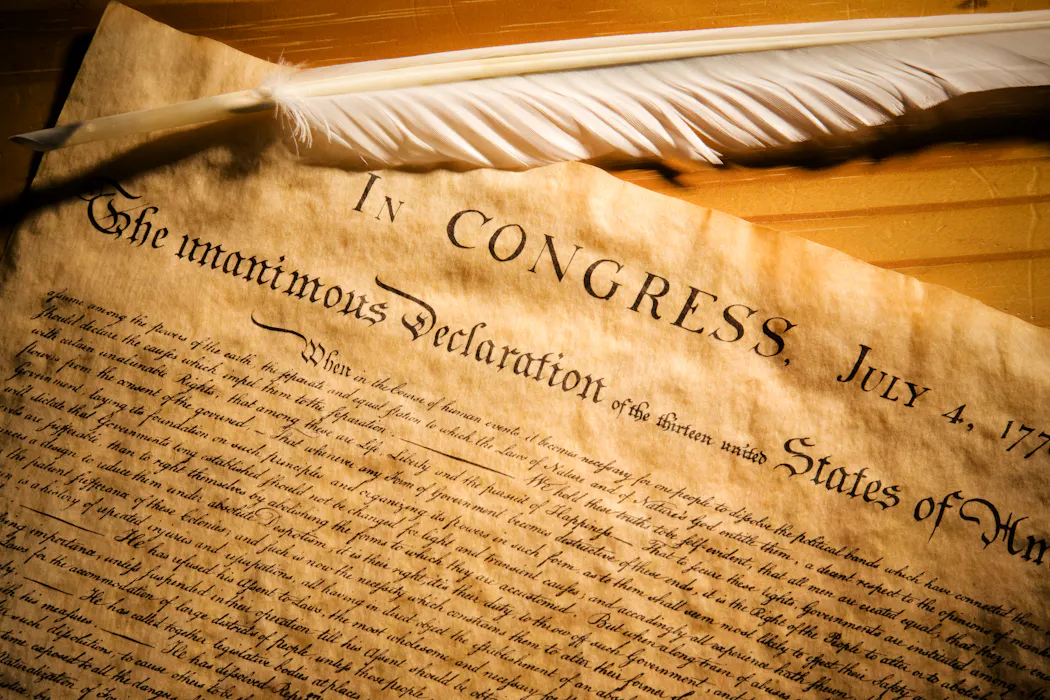
The Declaration of Independence was America’s first formal declaration of war. It planted a symbolic flag for Patriots to rally around. It transformed illegitimate rebels without hope of foreign aid into state-sponsored freedom fighters eligible for military alliances.
This foundational American text wasn’t just a philosophical breakup letter but a strategic move to secure vital support for the American war effort. America’s first declaration of war was a high-stakes geopolitical gamble essential to achieving independence.
British warships bombard the shore of Kip’s Bay, New York, on Sept. 15, 1776. Royal Museums Greenwich
Thomas Jefferson, the foremost writer of the declaration, relied heavily on the Swiss jurist Emer de Vattel’s 1758 treatise “The Law of Nations.” Vattel stressed the fact that in the eyes of European courts, providing aid to rebels was a violation of sovereignty and a dangerous precedent.
Vattel argued that for foreign powers to intervene legally in conflicts, the oppressed party had to formally declare its independence and assume the status of a state. Jefferson kept Vattel’s treatise open while he was working on the Declaration of Independence to ensure he used the specific terminology required to transform the American rebellion into a just war.
By framing independence as “necessary,” Jefferson was not just waxing philosophical. He was satisfying the legal requirement set out by Vattel that all peaceful avenues for reconciliation had been exhausted, which justified war to the “Powers of the Earth.”
A formal declaration of war, approved by Congress, increased support for the American military here at home. It rallied a divided and wary population. Even as late as 1776, there were Americans who remained fence-sitters, uncertain about the risks of a total break with the British Empire.
The declaration functioned as a public rallying flag that allowed Americans to identify themselves as a legitimate, unified group. Like Thomas Paine’s widely read pamphlet “Common Sense,” the declaration educated the uncommitted on the inescapable necessity of breaking away from the British Empire:
“We hold these truths to be self-evident,” the declaration reads, “that all men are created equal, that they are endowed by their Creator with certain unalienable Rights, that among these are Life, Liberty and the pursuit of Happiness.–That to secure these rights, Governments are instituted among Men, deriving their just powers from the consent of the governed, –That whenever any Form of Government becomes destructive of these ends, it is the Right of the People to alter or to abolish it, and to institute new Government, laying its foundation on such principles and organizing its powers in such form, as to them shall seem most likely to effect their Safety and Happiness.”
By framing the fight in the universal language of the preamble, Jefferson sought to inspire and unite disparate Americans through a shared vision of a better life.
In doing so, he helped transform localized resistance movements into a collective national mission. In the words of the declaration, “But when a long train of abuses and usurpations, pursuing invariably the same Object evinces a design to reduce them under absolute Despotism, it is their right, it is their duty, to throw off such Government, and to provide new Guards for their future security.”
This public address was intended to transform the nature of their service. They were no longer disloyal subjects in rebellion against a legitimate sovereign, but soldiers of a new nation defending their own homeland. Through Jefferson’s words and Washington’s address, the declaration fueled enthusiasm for a new political system and rededicated America’s soldiers to a cause that was not yet won.
Washington told the troops he hoped “this important Event will serve as a fresh incentive to every officer, and soldier, to act with Fidelity and Courage, as knowing that now the peace and safety of his Country depends (under God) solely on the success of our arms.”
America’s first declaration of war bolstered troop morale at a pivotal point in the conflict. The Continental Army was going to square off against the largest expeditionary force in British history in the summer of 1776. And Washington’s troops consisted of approximately 19,000 militiamen.
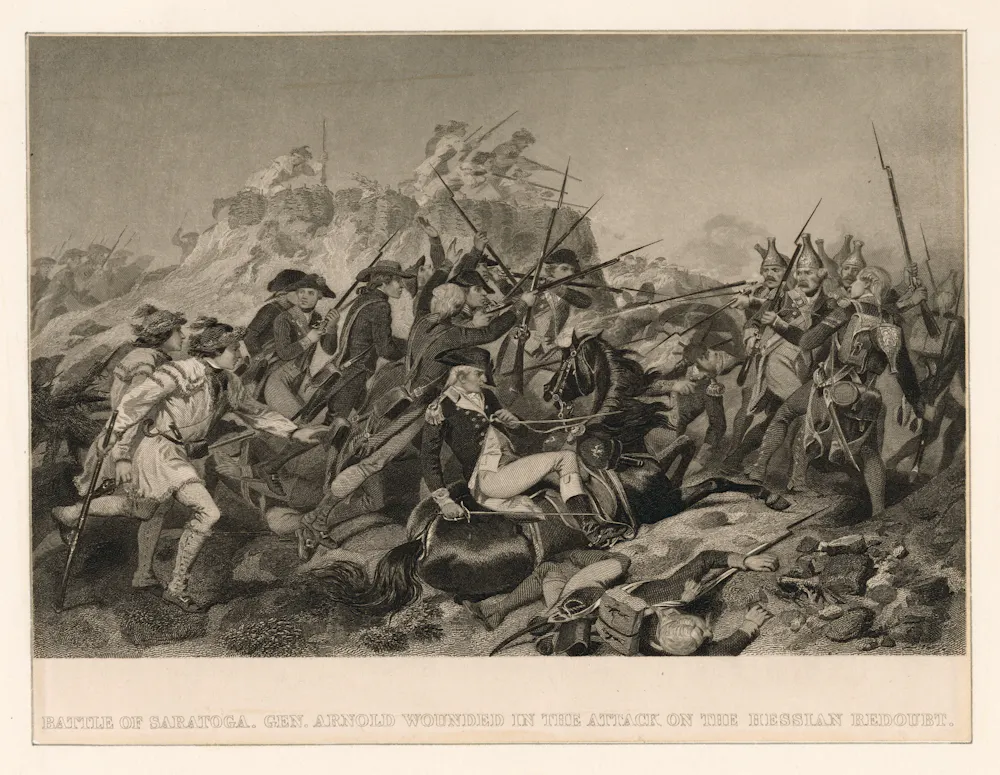
The British army had the British navy. Washington had only minimal naval support. The arrival of the first waves of Hessian mercenaries, auxiliaries for Britain, in July 1776 only deepened American resolve to seek out their own foreign military allies.
Forging alliances
The declaration helped bring about much-needed support for the American war effort among foreign governments.
The primary strategic target of the declaration was the Bourbon monarchies of France and Spain, Britain’s chief rivals. The Continental Congress understood that the fledgling United States could not withstand British military might without receiving overseas shipments of gold and gunpowder, in addition to warships, sailors and soldiers.
Following the declaration, the Continental Congress intensified its appeals to Spain. Bernardo de Gálvez, the governor of Spanish Louisiana, became a central figure in this secret war. Even before Spain formally entered the war in 1779, Gálvez channeled over $70,000 worth of medicine, weapons and uniforms up the Mississippi River to Pittsburgh and Philadelphia. This southern lifeline kept the American war effort viable in the Western theater and forced the British to maintain a defensive posture on multiple fronts.
Reframing the declaration as a strategic war measure highlights the Founding Fathers’ sophisticated understanding of power.
By transforming a localized insurrection into a state-sponsored homeland defense and an international conflict, the declaration ensured that the American Revolution would not be a mere sound of one hand clapping, but a successful geopolitical struggle that brought about independence.
Christopher Magra does not work for, consult, own shares in or receive funding from any company or organization that would benefit from this article, and has disclosed no relevant affiliations beyond their academic appointment.
2BYG have shared their new single “Be Mine,” along with an official video, marking the latest release from the rising Texas R&B quartet. Out now via Waystar Records/Def Jam Recordings, “Be Mine” also arrives as the group prepares to unveil a deluxe edition of their 2025 debut mixtape, The Yearbook: 2nd Semester, in the near future.
On “Be Mine,” 2BYG lean into a classic-minded R&B approach, pairing the song’s lovestruck lyrics with warm harmonies and a sleek arrangement. The track finds the group singing about building up the nerve to tell someone how they feel, giving the single an easy, immediate hook. The newly released visual extends that mood, putting the spotlight on the quartet’s chemistry as performers and continuing the strong visual presentation they have established across recent releases.
Click to load video
The new release follows a string of milestones for the Dallas-Fort Worth group. Earlier this year, 2BYG appeared on Netflix’s Star Search, where they performed *NSYNC’s “It’s Gonna Be Me” for a panel that included Jelly Roll, Chrissy Teigen, and Sarah Michelle Gellar. Before that, they closed out 2025 with the holiday song “One Christmas Wish,” which they also performed live on FOX 4 News Dallas-Fort Worth. Their recent single “Someone Like You” also earned outside attention, with outlets including VIBE and HOT 97 highlighting the group’s momentum.
That momentum has been building since the arrival of The Yearbook, which introduced listeners to 2BYG’s blend of R&B, soul, hip-hop, pop, and gospel across songs including “Oh Yeah,” “Twin,” and “Someone Like You.” Made up of Matt Brown, Tourè, Nixx, and KD, the group has also grown a major following on TikTok through viral covers and behind-the-scenes content, helping establish them as one of the young acts to watch in contemporary R&B.
In addition to being Cardi B’s ex, Offset is also a rapper.
On Monday evening, someone reportedly shot the 34-year-old.
He has been hospitalized.
Police have not named any suspects, despite detaining two individuals. Fans have a lot of questions.
As a podcast guest on ‘Baby, This Is Keke Palmer,’ rapper Offset chatted with the legendary host. (Image Credit: YouTube)
Wait, somebody shot Offset?
On Monday, April 6, rapper Offset — who is perhaps best known as Cardi B’s ex and baby daddy — was shot.
Moments earlier, he had been posing with fans in Hollywood, Florida at the Seminole Hard Rock Hotel & Casino.
From reports, it sounds like this took place in the evening.
The Migos rapper was hospitalized for treatment, as is generally necessary after a gunshot wound.
It does sound like he’s going to make it.
During an interview on ‘Jimmy Kimmel Live’ a few years back, Offset had a lot to say. (Image Credit: ABC)
A rep for the rapper spoke to Page Six to confirm where things stand for him.
“We can confirm Offset was shot and is currently at the hospital receiving medical care,” the representative stated.
The statement included a piece of good news.
According to the rep: “He is stable and being closely monitored.”
Based upon what police had to say, the injury may not have been life-threatening to begin with.
‘Two individuals have been detained by police’
The Seminole County police department also issued a statement to Page Six about the shooting.
“We are aware of an incident that occurred at a valet area after 7 p.m. Monday outside of Seminole Hard Rock Hollywood,” the statement confirmed.
It was an incident “that resulted in non-life-threatening injuries to an individual who was transported to Memorial Regional Hospital in Hollywood.”
According to the statement: “Seminole Police were on site immediately, and the situation was contained quickly. Two individuals have been detained by police.”
Authorities emphasized: “The investigation is ongoing. The site is secure, and there is no threat to the public. Operations continue as normal.”
During a podcast interview, Offset roasted the host’s sense of fashion. Brutal. (Image Credit: YouTube)
We do not know the identity of the shooter — or of the two individuals who police say that they have detained.
Additionally, we do not know the motive of the shooter.
THG has seen rumors circulating which claim that Lil Tjay (not a typo) is the culprit.
That appears to be nothing but a rumor. There is no evidence of Lil Tjay’s involvement in any way, shape, or form.
The longer that it takes before the world knows what happens, the longer that people will have to fabricate new rumors.
Conservative pundit Tucker Carlson tore into Donald Trump on Monday night, calling an Easter Sunday social media post from the U.S. president “vile on every level” and accusing him of threatening to commit a war crime.
“How dare you speak that way on Easter morning to the country?” Carlson said in a monologue on his podcast. “Who do you think you are? You’re tweeting out the f-word on Easter morning.”
On Sunday, a major Christian holiday, Trump posted a profane message on Truth Social, threatening Iran’s civilian infrastructure.
“Tuesday will be Power Plant Day, and Bridge Day, all wrapped up in one, in Iran. There will be nothing like it!!! Open the Fuckin’ Strait, you crazy bastards, or you’ll be living in Hell – JUST WATCH! Praise be to Allah,” the president wrote on his social media platform.
Carlson’s scathing monologue underscores a widening split inside Trump’s MAGA coalition, pitting foreign policy hawks against isolationists over the Middle East.
Trump returned to power on a promise to put “America first” and pledged an end to endless foreign wars, but his attack on Iran — now into its sixth week — has unsettled some of his previous supporters.
Trump’s post “begins with a promise to use the U.S. military — our military — to destroy civilian infrastructure in another country, which is to say, to commit a war crime, a moral crime, against the people of the country whose welfare, by the way, was one of the reasons we supposedly went into this war in the first place,” Carlson said.
The conservative pundit, a former Fox News host and occasional visitor to the White House who has ramped up his criticism of Trump in recent weeks, also slammed the president for his mention of “Allah.”
“So obviously you’re mocking the religion of Iran,” he said. “OK, if you seek a religious war, that’s a good idea. But by the way, no decent person mocks other people’s religions. You may have a problem with the theology — presumably you do if it’s not your religion — and you can explain what that is. But to mock other people’s faith is to mock the idea of faith itself.”
Carlson wasn’t alone among arch-conservatives in rebuking Trump over the Easter missive.
“Everyone in his administration that claims to be a Christian needs to fall on their knees and beg forgiveness from God and stop worshipping the President and intervene in Trump’s madness,” ex-congresswoman Marjorie Taylor Greene, a former Trump acolyte, said Sunday.
“This is not making America great again, this is evil,” she added.
One might expect the 51st Alaska Folk Festival to be a bit tamer than the landmark 50-year bash, but organizers say last year’s golden anniversary get-together set the stage for an even bigger week of music, dance and other activities this year.
“The 50th brought so many new members into the fold,” said Josh Fortenbery, president of the festival’s board, while he and others were setting up Centennial Hall on Sunday for shows starting Monday evening. “And so a lot of people that were excited about the thing last year — or maybe hadn’t been in a while, or never been before — all signed up as members last year. So we have the largest membership we’ve ever had. And so I think that allows us to keep building every year and make it keep getting bigger and better, without ever compromising the idea that it’s always going to be free.”
The festival opens at 6:30 p.m. Monday in the main Centennial Hall ballroom with a 15-minute set by the Juneau Community Chorus and is scheduled to close sometime after the 9 p.m. Sunday concert by featured guest performer Willi Carlisle with a traditional crowd singalong of “Goodnight Irene.” Other workshops and dance band events are scheduled during the week in Centennial Hall’s other rooms and the adjacent Juneau Arts and Culture Center, plus a variety of non-official and “after-hours” events at venues throughout downtown.
Among the new — or least not previously remembered — features at this year’s festival is a neon backdrop of a guitar and stars, a “50 Years of Folk Fest” that will be screened twice on Saturday at KTOO’s studios, and life-size puppets Carlisle is bringing with him as part of his act.
“We need two people to operate these backpack puppets,” said Annie Bartholomew, another festival board member and longtime Juneau musician. “I think it’s a raccoon and a king, and they fight each other.”
Carlisle, 36, who performed a 15-minute set during the 2019 festival, may also be the first person in such a slot who has returned as the festival’s guest artist, Bartholomew said.
Born in Kansas and now based in Arkansas, Carlisle performs “traditional folk music for 21st century problems,” according to a Grammy.com feature following the release of the second of his four current albums. His website proclaims “singing is healing” and “by singing together, he believes we can begin to reckon with the inevitability of human suffering and grow in love.”
Fortenberry said that kind of presence is what motivated the invitation from the festival’s board.
“I think just in the current sort of political climate — the feeling of sort of dread and civil unrest and disconnection — his joy and his model of trying to just bring everyone to the fold just really fits what we think we need sort of culturally right now,” Fortenberry said. “So it’s just a really apt pick for the times we live in.”
The rest of the lineup on the main stage features a multitude of well-known local musicians in 15-minute slots that, as usual, are fully booked with a long standby list (about 85 artists on Monday morning, according to the festival’s website).
The official poster for the 51st annual Alaska Folk Festival, designed by Ketchikan artist Savannah LeCornu. (Alaska Folk Festival)
This year’s poster was designed by Savannah LeCornu, a self-taught Ketchikan artist who is Tsimshian, Haida, and Nimiipuu (Nez Perce), according to the festival’s website. The poster features silhouetted musicians in a zig-zagging line of northern lights above Juneau’s nighttime cityscape.
Dance music is scheduled Thursday through Saturday evenings at the JACC, with four or five bands performing each night. This year’s feature dance band is The Red Hots, a quartet from North Carolina, with Connor Maguire serving as the featured guest caller for that band and some of the other dance performances.
Bartholomew said her banjo teacher, Riley Baugus, is a member of The Red Hots who has toured with musicians such as Willie Nelson and Alison Krauss.
“He’s a great teacher, and the guys he plays with are all really cool,” Bartholomew said. “It’ll be great getting him to dance and teaching people, and bringing in some authentic North Carolina, old-time dance Appalachian stuff.”
She said she’s also familiar with Maguire, having been to dances he’s called in California and Idaho.
“He looks like a lumberjack,” Bartholomew said. “I’m afraid he’ll move to Juneau because he’ll just fall in love with it. But he’s really boisterous and fun.”
Fortenbery said he was barely able to squeeze in the roughly 30 individuals or groups wanting to conduct workshops Saturday and Sunday. Offerings range from introductory sessions on music theory and square dance calling to applying for Rasmuson Foundation Individual Artist Awards, the latter being among the notable new additions.
“This is about the most workshop applications I’ve ever received,” he said.
The confetti has barely settled on the Michigan Wolverines’ 2026 national championship — they topped UConn, 69-63, in a thrilling Men’s NCAA Tournament title game Monday night — but it’s never too early to look ahead. Can’t help it… Both the Wolverines and the Huskies should come back strong next season, regardless of exactly how many players return or opt for the NBA Draft. They’re both toward the top of my extra-early list — but not No. 1. Which players are expected to return, and who might be headed for the NBA or the transfer portal? Let’s get into it. Here’s my way-too-early men’s college basketball rankings for next season: VCU closed out the 2025-26 season with a bang, winning 15 of its last 16 games and notching a memorable upset win over North Carolina in the opening round of the NCAA Tournament. Losing Terrence Hill Jr. to the transfer portal hurts, but there are plenty of veterans returning to Phil Martelli Jr.’s team, which should make this group among the favorites in the A-10. What’s next for Texas Tech’s dynamic duo of Christian Anderson and JT Toppin? Both received All-American honors this past season, marking the first time the Red Raiders have had a pair of All-Americans in the same season. Both have massive decisions surrounding the upcoming NBA Draft. What they ultimately decide to do will dictate where Grant McCasland’s team ranks as we get closer to next season. Sean Miller’s team was one of the surprise stories of this year’s NCAA Tournament. As a No. 11 seed, Texas upset BYU and Gonzaga before falling to Purdue in the Sweet 16. The Longhorns will welcome the No. 12-ranked recruiting class in the nation. Florida has four players that could depart early for the 2026 NBA Draft, which is what makes this such a difficult exercise. Thomas Haugh is a projected first-round pick and is expected to leave for the pros, but will Alex Condon, Boogie Fland and Rueben Chinyelu follow? There aren’t many teams that will have to replace more talent next year than Purdue. Gone are Braden Smith, Fletcher Loyer and Trey Kauffman-Renn, who contributed more than 52% of the team’s scoring this past season. C.J. Cox and Omer Mayer will be looked at to take a big step forward for Matt Painter’s team. Freshman phenom AJ Dybantsa will likely be a top-3 pick in this spring’s NBA Draft, while both Richie Saunders and Keba Keita were honored at this year’s senior night. It will be interesting to see if Robert Wright returns to BYU next season, and if so, how he will gel with an incoming freshman class that ranks No. 16 in the country. John Blackwell sent shock waves through the college basketball world Monday morning when he announced his intention to enter the transfer portal while going through the NBA Draft process. Nolan Winter will have a chance to be a star for Greg Gard’s program next season. Vanderbilt’s roster was built around a group of seniors, outside of standout guard Tyler Tanner. Will he forgo the NBA Draft and return to school for his junior season? If so, Mark Byington will have one of the top guards in the country leading the show next time around. Fresh off the most successful year in program history, can Fred Hoiberg build on the success his team had this past season? Pryce Sandfort, who earned All-Big Ten honors, is expected to return next season for Nebraska and should be one of the top players in the conference. Milos Uzan and Emanuel Sharp are set to graduate, while Chris Cenac and Kingston Flemings are both expected to be first-round NBA Draft picks. That means a bigger role for forward Joseph Tugler. Houston coach Kelvin Sampson will also bring in the top-ranked center prospect in the nation in 7-foot-1 big man Arafan Diane. The Tar Heels will usher in a new era in Chapel Hill with former Denver Nuggets head coach Michael Malone being named the school’s next head coach. Malone hasn’t coached in college since he was an assistant at Manhattan back in 2001. He will be tasked with keeping the team’s 2026 recruiting class intact, which includes a pair of blue-chip prospects in point guard Dylan Mingo and small forward Maximo Adams. With freshman phenom Darryn Peterson likely off to the NBA and forward Flory Bidinga announcing he will test the NBA waters or potentially transfer elsewhere, this will be a new-look team for Bill Self. Don’t be surprised to see the Jayhawks make a big splash or two in the portal this offseason. The Cavaliers are one of the few teams in college basketball that can say this: They are set to return their leading scorer and rebounder next season. Thijs De Ridder, a 6-foot-9 forward from Belgium, enjoyed a breakout freshman campaign and should be one of the top interior players in the sport next season. Rick Barnes’ team enjoyed a memorable run to the Elite Eight this season, but it will be tasked with replacing standout guard Ja’Kobi Gillespie and likely Nate Ament, who is projected to be a first-round pick. Look for veteran forward J.P. Estrella to take a big step next season. Rick Pitino made it clear that it will be near impossible to replace a player like Zuby Ejiofor, who defined everything this program is about. The Red Strom will also have to replace Bryce Hopkins and Dillon Mitchell in the front court, but look for Pitino to go to the portal and fill those voids this offseason. Ian Jackson will need to take another step next season if this group is going to compete for a Final Four next year. Losing Darius Acuff Jr.and Meleek Thomas is a bummer, but Arkansas fans don’t need to worry. D.J. Wagner, Karter Knox, and Billy Richmond III return, and coach John Calipari has added the No. 2-ranked player in the nation in guard Jordan Smith Jr. In T.J. Otzelberger we trust! Iowa State lost hometown leaders Tamin Lipsey and Joshua Jefferson, but the return of Milan Momcilovic and Killyan Toure is a great place to start. The Cyclones also are bringing in a top-20 recruiting class with four freshmen. The Zags move to the new Pac-12, and they bring big man Braden Huff back for a senior season. The backcourt combo of Braeden Smith and Mario Saint-Supéry need to take a big step forward. It might be disrespectful to have UConn this low on any ranking, but the Huskies will be losing Alex Karaban — aka “Captain America” — Tarris Reed Jr. and Braylon Mullins. If Solo Ball and Silas Demary Jr. stick around, UConn’s backcourt should be solid, and center Eric Reibe is ready for his close-up. Alabama coach Nate Oats got a contract extension over the weekend. Even though he’ll lose Lebaron Philon Jr., I expect Amari Allen to return and be poised for a great season. Aden Holloway, Aiden Sherrell and a top-10 recruiting class have me excited about the Crimson Tide. A core group of returnees led by Ivan Kharchenkov and Mo Krivas is enough to justify a top-5 ranking here for Arizona. Dwayne Aristode is expected to break out and five-star shooting guard prospect Caleb Holt is legit. A couple of transfers are needed, but I trust coach Tommy Lloyd to have another stellar group. Tom Izzo’s top initiative this offseason will be to retain All-American point guard Jeremy Fears Jr., as well as fellow backcourt mate Jordan Scott and forward Coen Carr. The combination of those three players and a top-5 recruiting class should have Michigan State in position to compete for a Big Ten title next season. Assuming that either Aday Mara or Morez Johnson Jr. return, I think Michigan is a top-3 team. If both head to the NBA, then incoming five-star Brandon McCoy must deliver immediately. The backcourt of Elliot Cadeau, L.J. Cason, and Trey McKinney will be excellent. Duke coach Jon Scheyer is bringing in another top recruiting class, highlighted by Cameron Williams and Bryson Howard, to go along with returnees Cayden Boozer, Caleb Foster and Dame Sarr. Yes, Illinois will lose Keaton Wagler, but if David Mirkovic, Andrej Stojakovic and Tomislav and Zvonimir Ivisic return, this is going to be one of the best and most experienced teams in the land.Latest Sports News from FOX Sports
Ketchikan is not getting a free, mile-long, 12-foot-diameter tunnel to link the community with its airport across the water.
The Ketchikan Gateway Borough had been one of 16 finalists for a national company’s offer to pay for building a tunnel but did not measure up in the final decision. The Boring Co. will be moving forward with projects in New Orleans, Baltimore and Dallas, selecting three winners rather than the original plan for a single winner of the Tunnel Vision Challenge.
The company, which was founded by Elon Musk, announced the contest winners in a late-night March 23 post on its X social media account.
Ketchikan’s 45-page entry, one of 487 submitted to the company, had proposed four options for tunnel access between Revillagigedo and Gravina islands, linking the town to the airport.
The company’s post on X said the next step for the three winners will be for The Boring Co. “and the project stakeholders (to) enter into a rigorous diligence process.” That will include meetings with “elected officials, regulators, community leaders and business leaders,” in addition to geotechnical borings and utility and subsurface infra investigation.
The company said it would pay 100% of the cost of the due-diligence effort, adding that it would build all three “if all three are feasible.” But, if only one of the tunnels is feasible, it would build just the one.
Ketchikan’s effort started in January, when Assembly Members Rodney Dial and Sharli Arntzen talked of addressing long-standing issues surrounding the aging ferry system between Revillagigedo and Gravina islands.
Dial discovered The Boring Co. contest that promised to finance and construct one mile of 12-foot diameter tunnel infrastructure for the winning project.
The interest in a hard link such as a bridge or tunnel across Tongass Narrows goes back decades. It increased with construction of the state-owned and borough-operated Ketchikan International Airport on Gravina Island in 1973.
Currently, borough-operated shuttle ferries serve the airport.