Categories
Alaska News

NYT report: Peltola campaign, national Democrats helped get Sen. Sullivan’s namesake challenger on ballot

Staffers with Mary Peltola’s U.S. Senate campaign and national Democrats were involved in recruiting efforts that led to the namesake challenger to Sen. Dan Sullivan appearing on the ballot in one of the nation’s most closely followed races, The New York Times reported Wednesday.

The efforts, which allegedly involved the Democratic Senatorial Campaign Committee, were part of a broad Democratic campaign that began last year and sought to recruit spoilers onto the ballot who could potentially siphon votes away from the Republican incumbent, the Times reported.

The campaign for Peltola, a Democrat, has repeatedly denied any involvement in the candidacy of Dan J. Sullivan, a retired teacher from the Southeast Alaska town of Petersburg. Dan. J. Sullivan registered as a Republican when he entered the race to challenge the incumbent senator, fueling accusations from state and national Republicans who have said he is running a campaign in an effort to deceive voters.

Advertisement

The Petersburg Sullivan has since switched his party affiliation from Republican to undeclared, according to his request for an absentee ballot in the primary election, the Alaska Beacon reported Monday.

Elisa Rios, Peltola’s longtime aide who was fired amid a staff shake-up shortly before the August primary election, told the Times that a Democratic operative from the Lower 48 had hunted for Dan Sullivans who could challenge the senator, according to the story.

The operative, an expert in secret ballot maneuvers who was brought into the picture by the Democratic senatorial committee, found a willing participant in the Petersburg Sullivan, the Times reported.

Rios said Peltola was aware of the efforts but not directly involved, according to the report, which was based on interviews with a dozen sources that the Times said had knowledge of, were involved in or were approached for the recruiting effort. The Times also reported that Rios sought to retract her comments last week as it was preparing the article for publication.

Rios did not respond to a request for an interview from the Daily News.

The Times published the story with just six days remaining before Tuesday’s general election. Polls show that Peltola has a shot at winning Alaska’s tight Senate race, which may help determine which party holds control of the chamber. As a result, it has become one of the most hotly contested races in the nation.

Republican President Donald Trump, an ally of Sullivan, last week ordered the Justice Department to file a lawsuit to block certification of the Senate race if the Petersburg Sullivan’s appearance on the ballot fosters voter confusion that leads to the GOP senator’s loss.
In response to the lawsuit brought against Alaska election officials and boards, Peltola and the Democratic Senatorial Campaign Committee filed a motion to intervene in the case and to stop the Trump administration’s effort to block election results certification. On Monday, the state of Alaska also asked the federal court to dismiss the federal government’s lawsuit, arguing that it “has no legal basis.”

The Justice Department withdrew its opposition to the Peltola campaign’s motion to join the lawsuit on Wednesday, citing “the change in circumstances” due to the Times’ reporting. The Justice Department’s short filing said it hopes to use the Peltola campaign and Democratic committee’s involvement in the lawsuit to further investigate the allegations in the article.

“The United States intends to seek expedited discovery from the Campaign regarding the reported conspiracy, including as to whether the Campaign attempted to deceive the Court by seeking an expedited ruling on a motion to dismiss when the Campaign may have been aware of the New York Times reporting before it was published,” the filing said.

Harry Child, a spokesperson for the Alaskans for Mary campaign, said in an email Wednesday that the campaign has no involvement with either Sullivan campaign.

“Like Mary, our campaign is focused on lowering costs and fixing the rigged system in DC,” the statement said.

The national Democratic committee did not respond to requests for comment for this article, but in the Times story it denied participating in the effort to recruit spoilers.

Peltola’s campaign and the committee did not address a detailed list of questions, the Times article said.

Murkowski: ‘Lies and coverups’

Dan J. Sullivan, the Petersburg challenger, did not respond to a request for comment for this article. He also declined to comment in the Times article.

The Petersburg candidate, who filed to run in May shortly before the state’s filing deadline, has maintained that he was not recruited by Democrats and instead is running because he disagrees with the senator’s policies and actions.

He earned 2.5% of the primary vote, enough support that Republicans believe his presence could sway the outcome of the race.

Nate Adams, the spokesperson for Sen. Sullivan’s campaign, said in a prepared statement Wednesday that “Alaskans deserve to know the truth.”

“Mary Peltola, her campaign, and her senior advisors colluded with the DSCC, national Democrat lawyers, and Alaska Democrat operatives to recruit a candidate to deliberately deceive and confuse voters, and then repeatedly lied about it,” Adams said. “We always knew this was a concerted effort to deceive voters, and Mary Peltola was hoping it would stay hidden until after the election.”

Republican U.S. Sen. Lisa Murkowski, who has endorsed the incumbent Sullivan, said in a statement that “ballot-stacking should have no place in our electoral process” and that candidates should run on their policy ideas and accomplishments.

“By contrast, recruiting candidates to manipulate the field and influence voting outcomes is simply wrong,” Murkowski said. “Alaskans deserve the honest truth from Mary and her campaign — what has been revealed is a pattern of lies and coverups and a culture of deception that belongs nowhere in our elections or among our elected officials.”

Trump also weighed in Wednesday, saying, “Mary Peltola should resign from the race. I think she should be prosecuted criminally for what she did.”

“This guy Dan Sullivan just ran against Dan Sullivan,” Trump said. “It turned out it was a scheme by the Democrats.”

Jenny-Marie Stryker, executive directorof the Alaska Democratic Party, said the group is “in no way affiliated” with either of the Sullivan campaigns.

She had no comment when asked if the group was aware of the Democratic senate committee’s efforts to boost the Petersburg Sullivan.

Part of a broader spoiler effort

Partisan attempts to influence ballot choices is nothing new.

Republicans nationwide and in Alaska have been involved in efforts, including this year, to boost spoilers on the ballot as well.

Ahead of Alaska’s U.S. Senate primary, the Republican-aligned Fair Deal Alaska super PAC spent large sums of money to support Democrat Carol Hafner and Green Party candidate Richard Grayson, and to draw votes away from Peltola. Both Hafner and Grayson are fringe candidates who don’t live in Alaska.

During the 2024 U.S. House race, in which then-Rep. Peltola lost to Republican challenger Nick Begich, Republicans in Alaska supported the candidacy of spoiler candidate Eric Hafner — a Democrat who is serving a prison sentence outside Alaska — to also draw votes from Peltola. He is the son of 2026 Senate candidate Carol.

The Alaska Supreme Court determined in 2024 that Eric Hafner could remain on that year’s ballot. He appears on the ballot again this year in the U.S. House race.

Earlier this year, the state Supreme Court also allowed the Petersburg Sullivan to remain on the ballot, upholding a lower court’s ruling that candidates seeking office have no constitutional obligation to demonstrate that they are running in “good-faith.”

Minor candidates describe interactions with operative

The Times article reported on efforts by Peltola’s campaign and the Democratic Senatorial Campaign Committee, which works to elect Democrats to Senate seats, to recruit multiple spoiler candidates onto the primary ballot.

It also detailed an effort by the Democratic political operative to encourage David Leslie, a Fairbanks progressive, to drop off the ballot after the August primary.

Leslie, a Democrat, had finished fourth in the primary, making him eligible to appear before voters in the general election. He agreed to step aside, which elevated the next finisher in the primary, Gerald Heikes — a Republican and perennial long-shot candidate — onto the ballot in the general election.

Leslie said in an interview Wednesday that the call from the operative was only one of the reasons he dropped out of the race.

But Leslie said he was concerned that remaining on the ballot as a Democrat would remove votes from Peltola, causing her to lose and Republicans to remain in control of the Senate.

Leslie said he still plans to vote for Peltola, but he is frustrated that the efforts to recruit spoilers is overshadowing issues such as the need for Trump to be impeached for “corruption and his abuse of power.”

“We should be talking to our friends and neighbors about issues that matter, rather than trying to manipulate a system,” he said.

Heikes, who received 1% of the vote in the primary, said Wednesday that he was recruited by someone from the Lower 48 to run against Sullivan early this year, after he had initially sought to run against Begich in the U.S. House race.

Political groups have so far spent more than $2 million in ads to boost Heikes, one of which is heavily funded by progressive organization Sixteen Thirty Fund, based in Washington, D.C. Social media ads for the candidate touted Heikes as a more socially conservative alternative to the incumbent Sullivan and encourage voters to rank only Heikes on their ballot, instead of ranking multiple choices.

“The man said, ‘We can’t help your campaign, but we’ll back you, and we’ll take care of some advertising,” Heikes said about the unidentified person who recruited him to run for Senate.

Heikes said PACs have used his image in ads in the race, but he’s not sure how they got those images.

“I’m not really all that in tune with what’s going on, except for how I see the biblical part of this thing playing out,” he said. “God will choose the winner and the losers,” he said.

Impact on the Trump administration lawsuit

Whether the details of the Times story will affect the recently filed Trump administration lawsuit is unclear.

The lawsuit seeks to prevent Alaska from certifying the election results if Sen. Sullivan narrowly loses.

The case is moving quickly before Judge Sharon Gleason in U.S. District Court in Alaska.

Legal experts have questioned the suit’s legal basis, arguing that an investigation into voters’ intent after an election is impractical.

Scott Kendall — an Anchorage attorney and an architect of Alaska’s ranked choice voting system, which was approved by voters in 2020 — said he was suspicious of the Petersburg Sullivan’s intentions from the start, and the Times story is no surprise.

Kendall said he doesn’t believe it will influence the lawsuit, which he thinks will be tossed out.

“These really shady allegations do not make a bad lawsuit a good lawsuit,” Kendall said. “That lawsuit’s going to get dismissed because it just doesn’t have any merit.”

“Doesn’t mean I or anyone else likes decoy Dan,” Kendall said, referring to the Petersburg Sullivan. “Doesn’t mean doing what they did was morally correct. They did what toxic national partisans do all the time. They tried to game the system.”

How does ranked choice voting come into play?

Critics of Alaska’s ranked choice voting system say it can encourages “spoiler” candidacies.

Kendall,who is working with the campaign to oppose Ballot Measure 2, which would repeal the state’s open primary and ranked choice voting system, argued that the election system is not responsible for spoiler candidates.

He speculated that Democratic operatives likely would have pushed to get the Petersburg Sullivan on the general election ballot through a third party if the state did not have the open primary election system.

Kendall asserted that ranked choice tabulation ultimately counteracts the effects of a namesake spoiler candidate. Under Alaska’s ranked choice voting system, if no candidate receives more than 50% of first-choice votes, tabulation begins.

The candidate with the fewest first-choice votes is eliminated, and ballots cast for that candidate are redistributed to each voter’s next-ranked candidate still in the race. The process repeats until one candidate receives more than 50% of the votes in the count.

Kendall argued that ranked choice voting can counteract the effects of a namesake candidate. If a voter were to mistakenly rank the Petersburg Sullivan first and Sen. Sullivan second, for example, that vote would transfer to the incumbent senator if the Petersburg Sullivan were eliminated.

“If the voter is confused, they can rank both Dans, and if a voter ranks both Dans, there is zero question, mathematically, that that vote will eventually count for Senator Sullivan,” Kendall said.

In the primary election, the Petersburg Sullivan received most of his votes from more progressive districts.

Kendall said he sees that pattern not as evidence of voter confusion, but as a sign that liberal voters deliberately supported the candidate.

“That didn’t show that it eroded Sen. Sullivan’s support. What it showed was a bunch of progressives kind of foisted this guy on us,” Kendall said.

The post NYT report: Peltola campaign, national Democrats helped get Sen. Sullivan’s namesake challenger on ballot appeared first on Chilkat Valley News.
Categories
Uncategorized

Israel has voted, but what comes next? Dissecting a messy ballot and coalition-building process

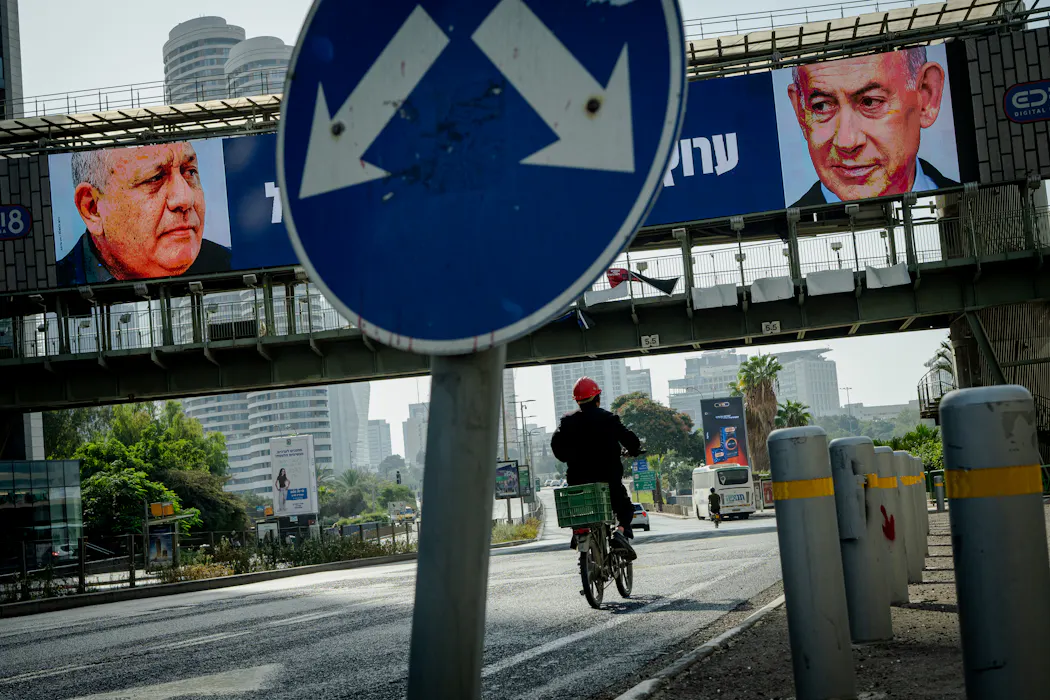
Gadi Eisenkot or Benjamin Netanyahu – under whose direction will Israel head? Erik Marmor/picture alliance via Getty Images

The Israeli election of Oct. 27, 2026, was among the most highly anticipated votes in the country’s history. It was consequential, if not yet conclusive.

With nearly all the votes counted, it is still unclear who will lead the country following the first national ballot since the Oct. 7, 2023, Hamas-led attack, and the devastating wars in Gaza, Lebanon and Iran that Israel has launched since.

The Conversation turned to Dov Waxman, an expert on Israeli politics at the University of California, Los Angeles, to walk us through the main takeaways and the process and difficulties facing anyone trying to form a coalition government following a divided vote.

What can we take away from the election results?

The first thing to note is simply the massive turnout – with a 77.7% turnout of those eligible voting, the highest turnout in more than two decades. That in itself is significant. It underscores how much importance Israelis attached to this vote.

Before the election, many observers were saying that it was one of the most consequential – if not the most consequential – votes, and clearly many Israelis felt the same way.

What drove this high turnout was different types of fears. Israelis of all persuasions were worried about how the outcome would affect what kind of country Israel becomes.

The second big takeaway is that the ruling coalition, formed by Prime Minister Benjamin Netanyahu after the 2022 election, was resoundingly rejected by the majority of Israeli voters – well over 50% cast their vote for parties opposed to the current government.

A man in a white hat takes a picture of someone on a stage.
Likud supporters at an election night event in Jerusalem, Israel.
Alexi J. Rosenfeld/Getty Images

The five parties that make up Netanyahu’s right-wing and religious coalition went into the election with 68 seats in the 120-seat parliament. That same bloc will now have 53 – and that is a significant loss, no matter how Netanyahu tries to spin this as a victory.

It means that those five parties will not be able to form the next government, and as such, the vote stands as a repudiation of the Netanyahu government.

Netanyahu’s Likud party will still be the largest in parliament. But its share of the national vote declined, and it looks like it will have six fewer seats in the next parliament, another blow to Netanyahu.

Netanyahu’s far-right coalition partners fared worse than expected, too. In part, this was due to “wasted votes” going to a new far-right party that failed to make it above the 3.25% of the national vote needed to be represented in parliament. Also, Likud drew some voters away from these far-right parties who had voted for them in the last election.

What drove the Arab parties’ surprise showing?

The performance of the Arab majority parties – the more secular and left-wing Joint List and the more religious and conservative United Arab List – is very important.

Combined, they currently look to have increased their representation by nine seats, bringing their total to 19, a historic high for them.

The reason for that is the massive turnout of Arab voters – much higher than the last election. But also, a less noticed trend is the increase in Jewish votes that those parties received. It is important to note that these are Arab-majority parties, not simply Arab parties.

Protesters hold placards and a loudspeaker.
Israeli left-wing protesters call for the formation of a government including Arab parties.
Ilia Yefimovich/AFP via Getty Images

Aside from Netanyahu, it was also a disappointing result for the main opposition party, Yashar; its leader, Gadi Eisenkot; and the anti-Netanyahu Change Bloc it was part of. The preelection polls suggested that the Zionist opposition bloc would do slightly better than the ruling coalition bloc.

But Yashar ended up with over 200,000 fewer votes than Likud, winning a projected 21 seats compared to Likud’s 26, and the “Change Bloc” is heading to 48 seats, far short of a parliamentary majority.

Ultimately, what is clear is that the Israeli public remains deeply divided. And the fact that there is still a good chance that Netanyahu will emerge as prime minister is remarkable given that many observers had already written his political obituary after the Oct. 7 attack.

Was the vote a referendum on Netanyahu?

Certainly many saw this as a referendum on Netanyahu, Israel’s longest-serving prime minister.

For his supporters, Netanyahu is the only person to be trusted with Israel’s security, especially given the threat from Iran. They credit him for weakening – albeit not defeating – the two non-state actors that most threaten Israeli security, Hezbollah and Hamas, and they praise him for ensuring President Donald Trump’s support for Israel.

But for those who voted against Netanyahu, the fact that he has refused to take any personal responsibility for the Oct. 7 security failure – amid reports that he had advance warning of a major planned Hamas attack – factored into his poor election showing, as did his government’s refusal to establish a state commission of inquiry to investigate the Oct. 7 security failings.

Many also blame Netanyahu for not prioritizing the release of the Israeli hostages held in Gaza and prolonging the war there. He is also held responsible by many for the precipitous decline in Israel’s international standing and for jeopardizing Israel’s crucial alliance with the United States.

But it was domestic issues, rather than external ones, that motivated many of those who voted for anti-Netanyahu parties. Many fear that democracy in Israel is under attack, and they particularly oppose the effort by Netanyahu’s government to weaken the power and independence of the Israeli judiciary, which sparked massive street protests in 2023. They also strongly resent that Netanyahu’s government has allowed ultra-Orthodox men to avoid military service, despite the Israeli military’s growing manpower shortage. And on a personal level, Netanyahu is widely perceived as self-serving and dishonest – he is still on trial for corruption.

Arab voters have other, more specific concerns that drove them to vote in record numbers, in addition to the Netanyahu government’s policies in Gaza and the West Bank, which they strongly oppose. Chief among them is the soaring rates of violent crime in their communities, which the government – particularly the far-right Itamar Ben-Gvir, who oversees the police – has done nothing to address, say his critics. More broadly, many Palestinian-Arab citizens of Israel fear that if the far-right parties remained in power, their civil rights would be under threat.

What should we expect next?

The key thing to underline is what happens on election day in Israel is just the first stage in the process of forming a new government. Since no party ever receives a majority of seats in the parliament, what really matters is what happens after the election when the coalition building begins. This can take weeks, if not longer.

The party with the largest number of seats typically gets the first chance to assemble a governing coalition, but not always. Israel’s president, Isaac Herzog, will choose who gets the first chance to form a government based on who is most likely to succeed.

Right now, it looks like Eisenkot will get the first opportunity, but his only real option is to form a minority government that would depend on the parliamentary support of the Arab-majority parties – which some members of his Change Bloc adamantly oppose.

A man waves a large blue and white flag.
Former Israeli military chief and Yashar party leader Gadi Eisenkot waves an Israeli flag as he addresses supporters on Oct. 28, 2026.
Tomer Neuberg/Middle East Images/AFP via Getty Images

Despite the success of the Arab-majority parties in the election, it is unlikely they will be invited to be formal members of any coalition – although that has happened once in the past, when the United Arab List joined the short-lived government of 2021-22 led by Naftali Bennett and Yair Lapid.

If Eisenkot is unable to form a government, then Netanyahu will get the chance. He could try to entice some leaders of the parties in the Change bloc to defect and join a right-wing government under his leadership, or a broader “national unity” government with a rotating leader. Netanyahu did that in the past with Benny Gantz, but then he later prevented Gantz from becoming prime minister – so I doubt Eisenkot would agree to do this with Netanyahu.

There are reports in the media that the Trump administration would like a national unity government in Israel, so that might increase the pressure on Eisenkot to accept this outcome. And should war with Iran heat up again, that would increase the pressure.

The most likely scenario, I believe, is that neither Netanyahu nor Eisenkot will be able to form a government, and a new election will be called, with Netanyahu as caretaker prime minister until that vote. Netanyahu has reason to hope that his bloc will do better in another election, so that may well be his game plan. In which case, it will be many months until Israel has a new government.

The Conversation

Dov Waxman does not work for, consult, own shares in or receive funding from any company or organization that would benefit from this article, and has disclosed no relevant affiliations beyond their academic appointment.

​Politics + Society – The Conversation

Categories
Alaska News

Trump calls for Peltola to be criminally charged, removed from Alaska’s U.S. Senate race

Mary Peltola listens to a question posed by moderator Michelle Egan at a candidate forum held by the Alaska Oii and Gas Association on Aug. 27, 2026. Next to Peltola is i Sen. Dan Sullivan. Peltola, a Democrat and former U.S. House member, is challenging Sullivan. (Photo by Yereth Rosen/Alaska Beacon)

Mary Peltola listens to a question posed by moderator Michelle Egan at a candidate forum held by the Alaska Oii and Gas Association on Aug. 27, 2026. Next to Peltola is i Sen. Dan Sullivan. Peltola, a Democrat and former U.S. House member, is challenging Sullivan. (Photo by Yereth Rosen/Alaska Beacon)

President Donald Trump on Wednesday called for Alaska Democratic U.S. Senate candidate Mary Peltola to be criminally charged and drop out or be removed from the ballot.

His comments followed the publication of a New York Times article revealing that her campaign worked with the national Democratic Senatorial Campaign Committee to recruit spoiler candidates that could dilute votes for her principal opponent, incumbent Republican Sen. Dan S. Sullivan.

The U.S. Department of Justice has already filed a Trump-directed but legally dubious lawsuit seeking to prevent the state from declaring anyone but Sen. Dan S. Sullivan the winner of the election.

Trump administration sues to block Alaska’s US Senate election result if Peltola wins

Alaska’s U.S. Senate race is one of a handful of “toss-up” races nationally that could be won by either a Democrat or Republican and thus decide which party controls the U.S. Senate.

Peltola has consistently been polling ahead of Sullivan, and the Times article was published less than a week before Election Day, in the middle of early voting, with more than 58,000 Alaskans already having cast ballots.

Third-party Republican and Democratic groups have already spent millions of dollars in all three of Alaska’s statewide races in attempts to boost spoiler candidates. In the U.S. House race, Democratic candidate Eric Hafner — a felon who has never lived in Alaska — is being boosted by Republican groups.

The Times article alleges that early on in the Senate race, Democrats sought to recruit people with the same name as the incumbent — including Petersburg’s Dan J. Sullivan, who is on the general election ballot alongside Peltola, Sen. Sullivan and Palmer Republican Gerald Heikes. The article is based in large part on internal text messages provided by a former Peltola aide. 

Dan J. Sullivan did not return emails and phone calls seeking comment on Wednesday.

The Alaska Beacon has not independently confirmed the Times reporting.

Legal experts, including some in Alaska, said the actions described in the article are not illegal but do amount to a dirty trick. 

Fairbanks political writer Dermot Cole, a Peltola supporter, wrote online, “What Peltola and her backers did was juvenile and stupid. The Peltola campaign lied to Alaskans about this and should come clean. There’s no excuse for how Peltola has handled this.”

Republican U.S. Senator Lisa Murkowski supported Peltola in her 2022 and 2024 campaigns for U.S. House but endorsed Sullivan this year. After the publication of the Times article, she issued a statement criticizing what she called “a pattern of lies and coverups.”

“While some may try to write this off as just how politics works now, ballot-stacking should have no place in our electoral process. Run and win on your merits: your views, your policy ideas, and your accomplishments. By contrast, recruiting candidates to manipulate the field and influence voting outcomes is simply wrong. Alaskans deserve the honest truth from Mary and her campaign,” Murkowski said in a statement.

Peltola and her campaign had denied any relationship with Dan J. Sullivan.

The Peltola campaign issued a statement implying that she will stay in the race, and she has not canceled any scheduled appearances before Election Day.

“Mary got in this race because Alaskans deserve a champion who is fighting to lower their costs and put Alaska first, and no tweet or threat from any DC politician will keep her away from that fight. The Alaskans for Mary campaign has no involvement with either Sullivan campaign,” wrote a campaign spokesperson. 

Alaskans for Mary is a political group formed earlier this year; most of the allegations in the article appear to predate its creation.

At a campaign event Wednesday on the Kenai Peninsula, Peltola did not answer questions from reporters asking about the Times article but alluded to it in public remarks.

“Nobody’s waking up worried about ballot composition,” she said, according to local public radio station KDLL-FM. “Not even me. I’m worried about my bills. I’m worried about affordability in health care.”

Alaska Division of Elections says Petersburg Sullivan is likely ineligible to run for U.S. Senate

Last week, the U.S. Department of Justice, following instructions from Trump, filed a lawsuit against the Alaska Division of Elections, asking a judge to prevent the state from certifying a victory by anyone other than Dan S. Sullivan from being declared the winner of the ongoing Senate election.

Peltola’s campaign and the Democratic Senatorial Campaign Committee have asked to intervene in the lawsuit, and the federal government opposed that intervention until the Times article published.

Now, the DOJ is urging Judge Sharon Gleason to allow Peltola to be part of the lawsuit so it can “seek expedited discovery from the campaign regarding the reported conspiracy.”

The DOJ lawsuit is legally tenuous — under the U.S. Constitution, states and not the federal government have principal jurisdiction over elections — but the Times reporting nevertheless supportsRepublicans who have repeatedly referred to Dan J. Sullivan as “Decoy Dan”, suggesting he was recruited and supported by Democrats.

“Alaskans deserve to know the truth. Mary Peltola, her campaign, and her senior advisors colluded with the DSCC, national Democrat lawyers, and Alaska Democrat operatives to recruit a candidate to deliberately deceive and confuse voters, and then repeatedly lied about it,” said Nate Adams, spokesperson for Sullivan’s campaign. “Not one player in this operation has acted in good faith with Alaska voters. Mary Peltola and her campaign have spent months gaslighting Alaskans, denying a scheme they were running all along. We always knew this was a concerted effort to deceive voters, and Mary Peltola was hoping it would stay hidden until after the election.”

SUPPORT: YOU MAKE OUR WORK POSSIBLE

Categories
Sports Fox

Tom Brady’s NFL Power Rankings: The GOAT Is Taking A Mini Victory Lap With New No. 1

Tom Brady knows that Super Bowls aren’t won in October, but you can get an “I told you so” or two during the fall. That’s what the seven-time Super Bowl champion did when he unveiled his most recent power rankings. With the San Francisco 49ers losing to the Atlanta Falcons in Week 7, Brady has a new team at No. 1 ahead of Week 8, saying that he’s taking a “mini victory lap” as a result. Brady’s new No. 1 team doesn’t reside in the AFC North, even though the division has four teams with a winning record. In fact, Brady doesn’t have any of the four teams from that division in his top 10, suggesting they’re the first four teams out in his power rankings this week. But Brady is enjoying how competitive the AFC North is. “Let’s put the AFC North in an 18-week round-robin every single year, and the winner of it slots into the division round,” Brady said. “You guys cool with that?” Here’s a full look at Brady’s top 10 this week. Week 7 result: Idle Brady’s thoughts: Jacksonville got a bye to travel back from London. You gotta go 1-0 against jet lag in that situation. They’re back Sunday against the Colts with a 2.5-game lead in the AFC South and, by midseason standards, a relatively healthy roster. If Trevor Lawrence keeps up this level of play, this division could turn into a runaway in a hurry. Liam Coen’s the right guy to keep those guys in that aggressive mentality. I’m very impressed with what Liam’s done as head coach. Hats off to Liam. He was a great coordinator for one year, moved on to head coach and he hasn’t missed a beat. Up next: vs. Indianapolis Colts (Sunday) Week 7 result: 30-24 loss at Chicago Bears Brady’s thoughts: Drake Maye dueled with Caleb Williams. It was a great game Thursday night in Chicago, and we don’t get enough of those throughout the year. So that was a nice treat. They couldn’t get the road win in the end, but I still consider this a very strong showing for New England in one of the toughest — yeah, you got it, Chicago — one of the toughest primetime environments in the league. Drake’s last four games: 12 tuddies, two picks. They got a good chance to get back in the win column in Miami on Sunday. Up next: at Miami Dolphins (Sunday) Week 7 result: 20-17 win vs. Green Bay Packers Brady’s thoughts: You guys remember a few weeks ago when I called the Lions the most fun team in football to watch? Well, we got to show the whole country as Jared Goff and co. won a thriller against Green Bay in Detroit. The Jared-to-Jameson Williams connection is on fire right now — four touchdowns in their last two games. KB (Kevin Burkhardt) and I will be back in the booth on Sunday for an NFC North collision with the Vikings. One of the best offenses in the NFL going against the best defense in the NFL. Heart medication will be on deck, KB. I can’t wait for this one. It’s (the Vikings’ defense) as tough as it gets, and it all starts with a lot of film study this week, a lot of walkthroughs, a lot of preparation for that Lions offense. Jared Goff’s doing such a great job as a field general, sorting protections out, making sure he’s got all the blocking assignments pre-snap, but then it comes down to post-snap. How does the line from the Lions handle these different looks, and ultimately, these very good rushers on this Minnesota defense? It’s going to be a tough battle all day. Up next: vs. Minnesota Vikings (Sunday) Week 7 result: 20-3 win vs. Kansas City Chiefs Brady’s thoughts: Seattle handed the Chiefs their first loss of the year with a dominant defensive performance, completely shutting down K9 (Kenneth Walker III) and that rushing offense. JSN (Jaxon Smith-Njigba) did what he always does, going for 150 yards and a tuddy, which should give Sam Darnold some much-needed confidence going forward. The Seahawks got another tough one against the Bears in a massive Monday night game, but we’ll see if the defending champs can really get on a roll. Up next: vs. Chicago Bears (Monday) Week 7 result: 30-16 win at Arizona Cardinals Brady’s thoughts: Another week, another Broncos win — and it’s not always pretty. It’s actually almost never pretty, but who cares when you’re winning games? Their only two losses came against the Niners and the Chiefs, so it’s hard to find a hole in that résumé. And now Kansas City, the team that beat them 31-10 in Week 1, heads to Denver on Sunday. That’s a chance to make a real statement in the AFC. Up next: vs. Kansas City Chiefs (Sunday) Week 7 result: 30-24 win vs. New England Patriots Brady’s thoughts: We talked about Thursday night already, and Caleb Williams has been hot since coming back from that hamstring. He got 300 yards, no turnovers on Thursday and I really don’t think any team is having more fun celebrating their postgame wins than the Bears. And how long until Ben Johnson is popping the top again? As we go down the list, I’m realizing we’ve got an insane slate of games this weekend, so don’t be surprised if we shake things up in next week’s rankings. Can Chicago go from No. 5 to No. 1 with a win in Seattle? I’m just saying. Up next: at Seattle Seahawks (Monday) Week 7 result: 20-3 loss at Seattle Seahawks Brady’s thoughts: Be honest, you were thinking it — we were all thinking it: Was Kansas City about to rip off, like, 12 straight to start the season? Lucky for the AFC West, the answer is no, as the Chiefs stall out in Seattle. Pat Mahomes had a rough night, and it doesn’t happen often. But after the way this offense has played all year, we can cut them all some slack. I have no doubt Pat is itching to get back out on the field in Denver and make things right. That’s the kind of leader he is. Kickstart that offense early, give Pat some time to work receivers open, and yeah, I’ll say it: Can we make some field goals, guys? Up next: at Denver Broncos (Sunday) Week 7 result: Idle Brady’s thoughts: The Bills come off a bye with an extra week to get ready for the Ravens, and they might be getting Lamar Jackson back. Thank God. For the sake of the fans, please give us Josh Allen vs. Lamar. A full-strength Baltimore offense would be a great test for a defense that’s really struggled this year. Luckily, the offense leads the league in points per game, so it can usually make up for it. They moved into a tie atop the AFC with that Chiefs loss, and now they can create some daylight and prove the conference goes through Buffalo. Up next: vs. Baltimore Ravens (Sunday) Week 7 result: 29-20 loss at Atlanta Falcons Brady’s thoughts: Down go the Niners, not very far, and I may have jinxed this last one last week when I said they’ll cruise into their bye at a perfect 7-0. It was one of my first announcer jinxes. My bad, guys. They get a well-timed bye this week because the injuries continue to pile up for the Niners. But as I’ve said before, I think Kyle Shanahan and John Lynch have built a team capable of withstanding it. Brock Purdy was not great in Atlanta, simple as that, and I know he’ll be in the film room and ready to go next time out. It’s all about pliability. Get in there, get those muscles worked out, relieve the tension and be ready to go in a few weeks. Up next: Bye Week 7 result: 16-10 win vs. Indianapolis Colts Brady’s thoughts: Someone alert the media: We’ve got a new No. 1 in the Tom Brady Power Rankings as the Minnesota Vikings beat the Colts to stay unbeaten. I’m taking a mini victory lap here. We were getting some heat early when I had the Vikings up with the Niners and Chiefs of the world, but they’re backing it up. Like I’ve talked about with Denver, the offense is far from efficient at this point, and they’ll have to figure that out fast. But they’re well coached, they get after the quarterback, they take the ball away and they’re rallying around Kyler Murray. We’re going to learn a lot about this team in Detroit on Sunday, and I will be there at 1 p.m. ET on FOX. Up next: at Detroit Lions (Sunday)​Latest Sports News from FOX Sports

Categories
Alaska News

Alaska candidates for governor vary on approaches to outmigration, state support for families

Voters walk across the map of Alaska on the floor of the Alaska State Library, Archives and Museum on Tuesday, Aug. 20, 2024. (Photo by James Brooks/Alaska Beacon)

With affordability top of mind this election, Alaska candidates for governor offered varying perspectives on how their administrations would support working families and cap the ongoing tide of outmigration from the state, if elected. 

Alaska has seen a steady exodus of people leaving the state. Last year, state demographers reported more people left than moved to Alaska —  the 13th consecutive year of net outmigration. The median household income in 2024 was nearly $94,000 according to the U.S. Census Bureau. And a recent study by the non-profit United Way estimates nearly 40% of Alaskans do not earn enough to cover basic expenses like for food, housing, child care and healthcare. 

Coupled with fuel prices at a record high this year, driven by the U.S. war on Iran, Alaskans have seen rising costs of groceries and transportation, as well as housing, healthcare, and child care. Families and officials also point to school districts facing severe budget shortfalls forcing cuts, larger class sizes and some closures as a driver of families leaving the state. 

Three of the four candidates — Democrat Jonathan Kreiss-Tomkins and Republicans Dave Bronson and Treg Taylor — participated in an online forum on Monday with the Alaska Children’s Trust, a non-profit advocacy group that focuses on supporting children and families and preventing child abuse and neglect.

Three of the four Alaska gubernatorial candidates, Republican Dave Bronson (left) Democrat Jonathan Kreiss-Tomkins and Republican Treg Taylor participate in a forum hosted by the Alaska Children's Trust on Oct. 26, 2026. (Screenshot of Facebook livestream)
Three of the four Alaska gubernatorial candidates, Republican Dave Bronson (left) Democrat Jonathan Kreiss-Tomkins and Republican Treg Taylor participate in a forum hosted by the Alaska Children’s Trust on Oct. 26, 2026. (Screenshot of Facebook livestream)

The fourth candidate in the running for governor, Republican Bernadette Wilson, did not participate due to a scheduling conflict, organizers said. 

Trevor Storrs, executive director of the Alaska Children’s Trust, moderated the forum and noted that Alaska’s economy “depends on families, not just resource development” and asked the candidates how they would support working families and stem the tide of outmigration. 

Kreiss-Tomkins said his priority would be the supply side, and boosting state investments across sectors. “There should just be more housing, more abundant energy, more availability of childcare,” he said. “And the scarcity of all of those things is driving up costs in a big way in Alaska, and around the country, and it’s working families that feel that squeeze.” 

On housing, Kreiss-Tomkins said his administration would focus on accelerating construction: finding appropriate state lands to make available, and reducing permitting and regulations for all types of housing. Similarly for child care providers, he said he would seek to reduce state regulations hindering new facilities and available space. 

Taylor said he also supports reducing regulations on new housing projects and on childcare providers. He said his main focus in reducing costs for families and businesses would be reducing the cost of energy. 

“It’s all about energy,” he said. “I would pursue an all of the above approach to energy, (and) reducing energy costs. Whether it be dams, whether it be solar, whether it be the AKLNG line, which I think is absolutely critical for Alaskans to reduce long-term costs for Alaskan families.”

[Voter Guide: 2026 General Election Voter Guide: The candidates, the ballot measures, and the tools you need to cast your vote.]

He said he would also pursue making more state lands available for housing development and reducing regulations in order to build. “I also want to do a modern day Homestead Act where families are able to build a home and create an environment where they can grow and grow their families,” he said.

Bronson said he would work to reduce costs by opposing tax increases on families and businesses. “Adding those on is an expense burden to the people of Alaska. That’s not how you move forward,” he said. 

He said he also opposes imposing family and medical leave as an “interruption to the private enterprise process.”

Widening gap between need and access to Medicaid and SNAP

Candidates were asked how they would address delays and errors in state public assistance programs, including Medicaid and the Supplemental Nutritional Assistance Program, or SNAP.

Nearly 60,000 Alaskans have lost Medicaid coverage since Jan. 2025, including over 20,000 children according to data collected by the Georgetown University Center for Children and Families. Some of those children lost coverage due to paperwork rather than ineligibility, Storrs noted. Thousands more are expected to lose coverage with new eligibility requirements enacted by the Trump administration’s Big Beautiful Bill Act that go into effect in January.

Alaska also has had the highest SNAP error rate in the country for four consecutive years, and some residents face months-long delays in food assistance. But state officials say modernization efforts to improve administration of the program and processing times are underway.

All three candidates agreed the state assistance programs have major problems that need more state investment and focused attention. Kreiss-Tomkins and Taylor said they would publish the backlog numbers so that the public can monitor the progress to reduce it, and hold officials accountable. 

“It’s going to be brutal at the beginning because those numbers are going to be ugly as all heck, but it needs to be out there, and then the numbers need to go in the right direction,” Kreiss-Tomkins said.

Taylor cited his experience as attorney general working on reducing the backlog in processing sexual assault examination kits. He called the SNAP backlog “unacceptable” and pledged to fund technology improvements for the system and improve access to benefits. “This should not be happening,” he said. 

Bronson said he would boost pay for state workers in the Division of Public Assistance to help reduce the backlog in SNAP and Medicaid processing. “We don’t have enough people because we don’t pay enough. I’m a fiscal conservative, a strident fiscal conservative, and I just look at it this way: if we’re going to do certain things in government, if we decide we’re going to do them, we better do them well,” he said.

He criticized Dunleavy for underfunding the state’s social assistance programs and said he supports boosting funding for social services. “We have to smartly, efficiently and economically add money to the pot because if not, this failing is just going to keep going on,” he said. 

All three candidates said they support increased funding for the state’s foster care system, run by the Office of Children’s Services, which has been a focus of lawsuits and legislative scrutiny after an audit showed the agency has failed to implement reforms.  

“Some of that may be resources, I think there’s also potentially a management leadership restructuring question,” Kreiss-Tomkins said.

Youth mental health and suicide prevention

The candidates presented varying approaches to supporting youth mental health and suicide prevention. Last year, Alaska youth suicides hit a 10-year high — a rate that is six times higher than the national average.

Kreiss-Tomkins said he supports expanding access to mental health providers, including through telehealth and easing licensing requirements. He noted that supporting Native cultural activities, particularly in rural Alaska, can help support a sense of cultural identity and belonging, including subsistence activities and language learning.  

Taylor said he would “supercharge” the Alaska Mental Health Trust Authority, a state corporation that manages roughly one million acres of state lands and a trust that generates revenue for mental health services each year. 

“Right now they feel like just handing out a few checks every year to charities is what their duty is. No, their duty is to create a comprehensive system of mental health in the state of Alaska,” Taylor said. 

He said he would also seek to improve the K-12 education system to create more opportunities and pathways for viable jobs for youth: “You have to have economic opportunity for these kids, and they need a sense of purpose, they need a sense of opportunity, they need a sense of hope, and they need a sense of pride.”

Bronson agreed the state needs more mental health providers. He described meeting a woman who is working on suicide prevention in communities along the Yukon River, where salmon runs have crashed dramatically altering residents’ ways of life.

“That’s a trigger,” Bronson said. “And in the immediate, you’ve got to have someone right there in front of them, whether it’s a hotline or a person, so they can call and get to help in the immediate. But then, long term, systemically, you’re going to have to spend money to deal with this. We just are.”

All three candidates expressed support for boosting state spending on K-12 schools, which has been a major topic of discussion this election season. 

Early voting is underway in Alaska, and continues through Election Day at 8 p.m. on Nov. 3.

SUPPORT: YOU MAKE OUR WORK POSSIBLE

Categories
Entertainment

8 Best New Walmart Great Value Food Items Of 2026

Walmart’s Great Value brand got a new look in 2026, and to celebrate, we’ve rounded up the best 2026 food releases the superstore’s house brand has to offer.

​Mashed – Fast Food, Celebrity Chefs, Grocery, Reviews

Categories
Entertainment

3 Costco Steaks Worth Buying In 2026

Costco shoppers, rejoice! The warehouse giant carries quality steaks at great prices, and these are the ones worth spending money on in 2026.

​Mashed – Fast Food, Celebrity Chefs, Grocery, Reviews

Categories
Alaska News

Commentary: Outside interests think Alaska’s U.S. Senate race is a cheap date

Sen. Dan Sullivan, R-Alaska, speaks at a candidate forum held Aug. 27, 2026, by the Alaska Oil and Gas Association. Next to him is his opponent, former U.S. Rep. Mary Peltola, D-Alaska. (Photo by Yereth Rosen/Alaska Beacon)

Sen. Dan Sullivan, R-Alaska, speaks at a candidate forum held Aug. 27, 2026, by the Alaska Oil and Gas Association. Next to him is his opponent, former U.S. Rep. Mary Peltola, D-Alaska. (Photo by Yereth Rosen/Alaska Beacon)

A U.S. Senate seat in Alaska is worth the same as one from any other state when Democrats and Republicans try counting to 51, the number needed to control the chamber. All 100 senators get an equal vote, regardless of whether they represent states of far less than 1 million residents, such as Alaska and Wyoming, or more than 30 million, such as California and Texas.

The men who drafted the U.S. Constitution almost 239 years ago — yes, it was all men, 133 years before women finally won the right to vote — had to find a compromise between the larger and smaller states. They settled on the plan that treated all states the same in the Senate — even Delaware, with about 10% of the population of the biggest state, Virginia, in 1787 — whereas the larger states would get more representation in the House.

Little did the Founding Fathers know that generations later, that compromise would make it a bargain to campaign for a Senate seat in Alaska compared to the more populous states. Alaska, literally, wasn’t even on their map.

Total spending between incumbent Alaska Republican Sen. Dan Sullivan and Democrat challenger Mary Peltola and their supporters as of last week exceeded $123 million, with more to come before the Nov. 3 election. That works out to almost enough for every two-person household of voters to buy a new set of snow tires, not that anyone could afford to buy gas to use the new tires.

As outrageously costly as that sounds, it’s a steal compared to spending on the Senate races in Texas, at $533 million, and Ohio, at $435 million. State pride aside, an Alaska senator counts the same toward 51 as those other, more expensive races.

Which is why there is so much national attention, and national millions, directed at mailboxes, streaming services, social media feeds and radio and TV commercials in Alaska, pounding our brains in the hope that we will vote for the candidate supported by the loudest, most abusive and frequently dishonest messages. A campaign win here is just as valuable as a win in a big state, only more affordable. 

The Founding Fathers likely never anticipated how obscenely expensive, intrusive, insulting and painfully long political campaigns could be, especially for important Senate races. It took less than four months for the group to debate, draft and approve the entire U.S. Constitution, while U.S. Senate campaigns stretch out for years.

Alaska, in particular, has attracted an outsized rush of Outside money in this election, telling us how to think and how to vote, in hopes of getting to 51 senators to run the country. We resent being treated like a cheap date, or at least cheaper than Texas.

But if we were on a date, the appropriate response would be to throw a glass of cold water into the face of Outside interests and leave the table, telling them we will find our own way home. We don’t need or want their advice, and we don’t appreciate their messages, which are as offensive to Alaskans as ordering farmed salmon for dinner.

SUBSCRIBE: GET THE MORNING HEADLINES DELIVERED TO YOUR INBOX.

Categories
Alaska News Featured Juneau News juneau Juneau Local Juneau Local Ketchikan Local News Feeds Sitka Local

Alaska is on pace to match 2024’s record-high early voting numbers

By: James Brooks, Alaska Beacon

A voter casts their ballot on the first day of early in person voting in Juneau on Oct. 19, 2026. (Photo by Corinne Smith/Alaska Beacon)

One week before Election Day, turnout in Alaska’s general election is nearing 10%. 

As of 4:43 p.m. Tuesday afternoon, according to figures published by the Alaska Division of Elections, 58,168 people had cast early or absentee ballots for the Nov. 3 election.

The number of early votes cast through Tuesday afternoon already exceeds the number of early votes cast before the last midterm election, in 2022. 

Other states across the country are seeing a similar surge in early voting.

According to a daily report published by the Alaska Division of Elections, 34,738 people had voted at the state’s 10 in-person early voting stations between Oct. 19 and the end of the day Monday, Oct. 26. 

That tally includes significantly more registered Republicans, which are currently 26.7% of early voters, than registered Democrats, at 18.4%. 

Figures for votes cast on Tuesday are expected to be published Wednesday.https://flo.uri.sh/visualisation/30636856/embed?auto=1

Of Alaska’s 604,771 registered voters, 11.6% are Democrats and 23.5% are Republicans, indicating that while Republican turnout is higher, Democratic turnout is disproportionately high.

Early votes cast through Thursday will be included in the totals published on Election Day, but votes cast from Friday onward will not be included because elections officials will need to check those against the Election Day voter register to prevent double voting. 

There is no set schedule for counting absentee ballots, which must be reviewed by elections officials before being counted.

Absentee ballot review boards — groups of paid, multipartisan temporary workers — were scheduled to begin reviewing absentee ballots on Tuesday and will continue working until the last absentee ballots arrive at various regional headquarters on Nov. 18.

State law allows late-arriving absentee ballots to be counted as long as they are postmarked on or before Election Day. Ballots mailed from within the United States can be counted as long as they arrive by Nov. 13, while ballots mailed internationally must arrive by Nov. 18.

All results until Nov. 18 will only show voters’ first-choice preferences.

Alaska uses ranked choice voting in general elections. If a candidate in a race gets more than 50% of the first-choice votes, they win.

If no candidate does, the candidate with the fewest first-choice votes is eliminated and votes for them go to their voters’ second preference. The process continues until only two candidates are left, and the person with the most votes is the winner.

Alaska performs that ranked choice tabulation on Nov. 18, after the last international absentee ballots are received.

The Division of Elections aims to certify the election results by Nov. 25.

Categories
Alaska News Featured Juneau News juneau Juneau Local Juneau Local Ketchikan Local News Feeds Sitka Local

Report: Peltola’s campaign involved in effort to recruit second Dan Sullivan for Alaska Senate race

FILE – Dan Sullivan, a candidate in Alaska’s U.S. Senate race who shares his name with the incumbent seeking reelection, talks with a reporter, July 3, 2026, in Petersburg, Alaska. (AP Photo/Becky Bohrer, File)

JUNEAU, Alaska (AP) — The Democratic campaign for Alaska’s U.S. Senate seat was involved in efforts to place on the ballot a candidate with the same name as Republican incumbent Dan Sullivan in a bid to confuse voters in a race that could determine which party controls the chamber, The New York Times reported Wednesday.

The newspaper obtained text messages between members of Democrat Mary Peltola’s campaign discussing recruiting other people with the same name as the two-term Republican their candidate was running against. They eventually landed on a retired schoolteacher in the small fishing community of Petersburg named Dan J. Sullivan. He made it through the state’s August open primary and is one of four candidates on the ranked vote ballot for next Tuesday’s general election.

Dan J. Sullivan has long denied he was running at Democrats’ behest and has said he had no contact with Peltola’s campaign: “Zero, none, zilch,” he said in June after announcing his run.

He did not immediately respond to a message seeking comment Wednesday from The Associated Press.

A top state elections official ruled Dan J. Sullivan ineligible for the ballot after he declared his candidacy, claiming it was “filed with a purpose to confuse or mislead and to thereby compromise the ballot’s fairness or neutrality.”

The case went to the Alaska Supreme Court, which ruled he was qualified to run. The U.S. Constitution sets out only age, citizenship and residency requirements to run for the Senate.

President Donald Trump, who directed his Department of Justice to file a lawsuit last week pre-emptively contesting a Peltola win due to the presence of the second Dan Sullivan, called for legal penalties against Democrats over the situation: “Mary Peltola should suffer the Legal and Political consequences for what she has done,” Trump wrote on his social media site on Wednesday.

“Alaskans deserve the truth,” said Nate Adams, a spokesperson for Sen. Sullivan’s campaign. “Mary Peltola, her campaign and her senior advisers colluded with the DSCC, national Democrat lawyers and Alaska Democrat operatives to recruit candidates to deliberately confuse and deceive voters.”

Peltola’s campaign, in a statement Wednesday, said it “has no involvement with either Sullivan campaign.” They issued a similar statement in June after Sen. Sullivan questioned the other Sullivan’s candidacy.

Democrats, including the Democratic Senatorial Campaign Committee, have repeatedly denied that they were involved in any campaign trick.

“The DSCC is not involved with Dan J. Sullivan,” the organization said in a statement Wednesday. The Times report said DSCC staffers were on texts with the Peltola campaign discussing the second Sullivan.

Legal experts said the report about Democrats appearing to recruit Dan J. Sullivan as a way to potentially confuse voters will have no impact on a lawsuit filed recently by the U.S. Department of Justice. President Donald Trump directed the department to file the lawsuit, which seeks to halt certification of a possible Peltola win, citing the presence of the second Dan Sullivan on the ballot.

“It’s a dirty campaign trick, and it’s good reason the Alaska Supreme Court should have permitted the candidate to have been removed from the ballot,” said Derek Muller, a Notre Dame law professor. “But now it’s in the hands of the voters, not litigation.”

It’s not the first time a candidate’s appearance on the Alaska ballot has been questioned. In 2024, the state Democratic Party sued to keep off the U.S. House ballot a man with no apparent ties to the state who is serving time in a federal prison in New York. A divided state Supreme Court allowed him to remain on the ballot. The man is running again this year, also in the House race, and is on the Nov. 3 ranked vote general election ballot.

The Times story about the recruitment of Dan J. Sullivan is based partly on interviews with Peltola’s former campaign manager, Elisa Rios, who was fired in August amid a campaign shake-up. The newspaper said she tried to retract her comments last week. Efforts by the AP to reach Rios were not immediately successful.

As of Monday, 46,204 ballots had already been cast in Alaska, according to AP data. Sen. Sullivan is listed on the ballot as the Republican incumbent. The other Sullivan is listed as Daniel J. Sullivan Jr., with no party affiliation.