A massive 16-day America 250 celebration in Washington will bring together country, rock and hip-hop acts for a World Fair-style event. Continue reading…The Boot – Country Music News, Music Videos and Songs









A massive 16-day America 250 celebration in Washington will bring together country, rock and hip-hop acts for a World Fair-style event. Continue reading…The Boot – Country Music News, Music Videos and Songs
A massive 16-day America 250 celebration in Washington will bring together country, rock and hip-hop acts for a World Fair-style event. Continue reading…Country Music News – Taste of Country
By: James Brooks, Alaska Beacon
The proposed trans-Alaska natural gas line faces a narrow road to profitability, even with Gov. Mike Dunleavy’s proposed multibillion-dollar tax break, according to estimates presented to state legislators.
The more the pipeline costs, the more its builders will need to charge for gas shipped through it in order to make money. But if the cost of Alaska gas is too high, it isn’t competitive with gas from other sources around the world.
On Tuesday, members of the House Finance Committee met for the second time in a 30-day special session devoted to discussing the tax break.
Nick Fulford of GaffneyCline, the Legislature’s hired analyst for the pipeline project, said previously published financial modeling by the Alaska Department of Revenue remains the best public look at whether the project pencils out financially.
“The main question really is: How much bigger and how much more capital cost can the project support before it becomes uneconomic,” he said.

In 2018, officials with the Alaska Gasline Development Corp. suggested that building a pipeline from the North Slope to Cook Inlet — plus large industrial processing plants on either end — would cost roughly $43.4 billion, including money earmarked for possible cost overruns.
Since then, the official cost has risen only slightly, to $46.2 billion, but many state lawmakers have said they are skeptical of that figure, because it does not seem to account for inflation.
Glenfarne, a multinational corporation that now owns 75% of the pipeline project, has not disclosed an updated figure.
Rep. Alyse Galvin, I-Anchorage, said that when she uses the Consumer Price Index to judge how much the cost has grown, it’s significant.
“When I look at cost adjustment, just using CPI, just a straight cut through, that brings us to $57 (billion) to $60 billion,” she said during Tuesday’s hearing.
“I would say it seems highly likely that it would be more than $46 billion given the general inflation that we’ve seen,” Fulford said.

Publicly available estimates suggest gas could be bought from North Slope producers between $1 and $2 per thousand cubic feet. That’s what’s technically known as the “upstream price.”
In a scenario where the pipeline costs Galvin’s suggested figure, the state’s tax laws don’t change to help the project and the upstream price is $1.50 per thousand cubic feet of gas, the Department of Revenue estimates that an end buyer in Japan could expect to pay more than $11 per thousand cubic feet.
That’s likely a problem for the pipeline project, because according to GaffneyCline’s estimates, the average contract price in Japan over the past 10 years has been $10.41 per thousand cubic feet — less than what the Alaska project would have to charge to earn its expected profit target.
Under a tax change proposed by the governor, the end buyer’s price would drop to about $10.40, using Galvin’s cost estimate and the $1.50 upstream price.
But if the cost of upstream gas rises, or if the cost of the pipeline rises, even the governor’s proposed tax break isn’t enough to keep the project economically competitive.
Fulford, speaking to the House Finance Committee, said he thinks Asian LNG prices will rise in the coming years, possibly offsetting any rising costs and keeping the project viable.
But he also acknowledged that with so many unknowns, it’s not clear where the project becomes uneconomic.
“The question is … if the price of LNG goes up and if the capital cost goes up, then where’s that sort of tipping point where the project can still go ahead, even if it’s a much higher capital cost?” he said.
Under Dunleavy’s proposal, the state’s existing petroleum property tax would be largely replaced by a tax on gas that moves through the pipeline.
Speaking last week in Anchorage, Glenfarne CEO Brendan Duval said the governor’s proposed change is necessary for Glenfarne to get financing for the project.
“It won’t be financeable in the form that we’re trying to do it without the tax stabilization law,” he told the Anchorage Daily News.
Legislators appear favorable to the general idea, but they don’t know what tax rate to use for the “alternative volumetric tax,” as it is formally known.
Dunleavy has proposed 6 cents per thousand cubic feet of gas. House and Senate lawmakers are each considering different, higher rates.
They’re also considering mandatory impact payments to compensate cities and boroughs that collectively would lose out on $14 billion in property taxes through 2063 if the governor’s plan is adopted. A mandatory natural gas spur line to Fairbanks is also being discussed. As currently planned, the pipeline runs to the west of Fairbanks.
Rep. Calvin Schrage, speaking Tuesday, said legislators are working with a large amount of uncertainty, and that is slowing their work.
“If we could eliminate some of these variables and have it known, it would really help us in figuring out where this might be going, but we don’t have that right now,” he said. “What this is ultimately showing is that under our current tax structure, there’s a very small window of break-even profitability for a developer.”
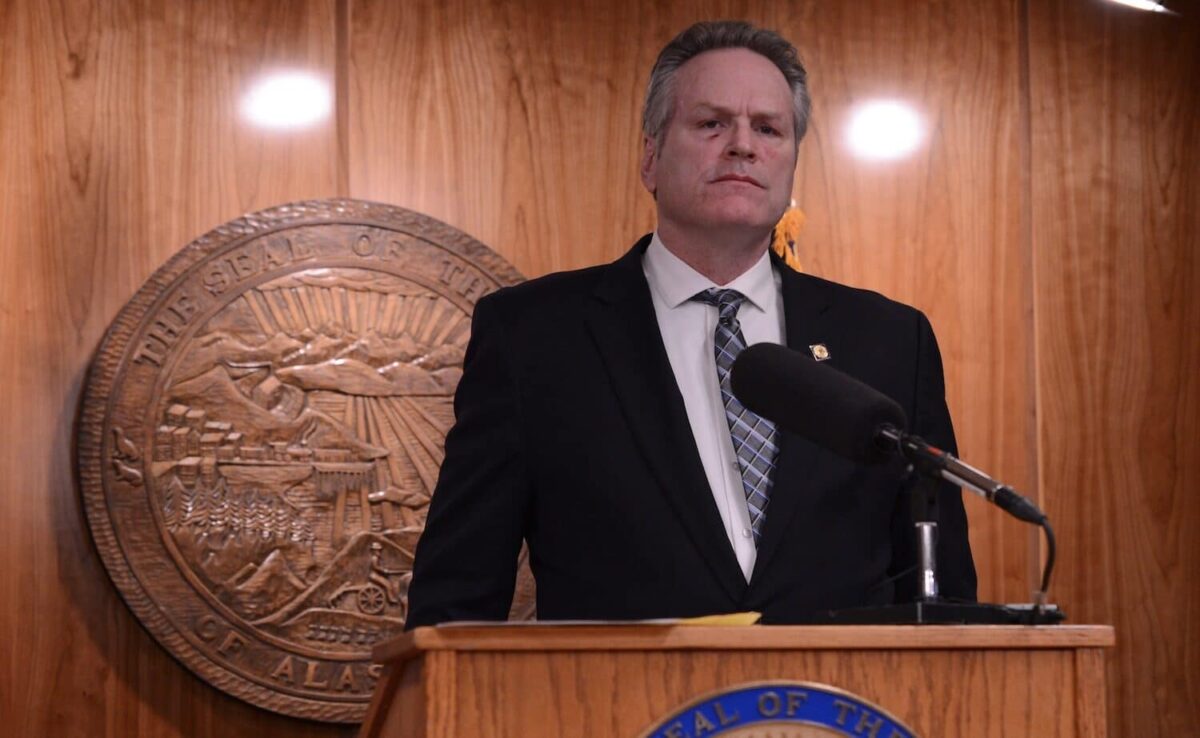
NOTN- Alaska lawmakers will continue holding hearings this week during a 30 day special session on Senate Bill 2001, and separately House Bill 381, the governor-backed gas pipeline tax proposal tied to the proposed Alaska LNG project.
The Alaska State Senate Finance Committee is scheduled to meet today, Thursday and Friday at 9 a.m. in Juneau to hear presentations and discussion on the bill.
Today and Thursday’s hearings will include presentations from consulting firm GaffneyCline. Friday’s meeting is also focused on continued review of the legislation.
The House met yesterday, and will continue work this week in Anchorage.
Governor Mike Dunleavy called the special session after lawmakers failed to pass a gasline bill during the regular session, lawmakers received the governor’s proposal on day 80 of 120.
The governor is pushing for larger tax breaks and incentives for the project’s developers.
According to reporting from the Alaska Beacon following an Energy Conference in Anchorage, state and local governments would eliminate 90% of the property tax that would be levied on gasline-related infrastructure in exchange for future opportunities to tax natural gas as it moves through the yet-to-be-built system.
Though legislators are currently sitting on both sides of the fence, some argue the proposal would reduce future revenue for both the state and local governments along the pipeline route.

We always knew we liked Smokey! Continue reading…The Boot – Country Music News, Music Videos and Songs
We always knew we liked Smokey! Continue reading…Country Music News – Taste of Country

He has built one of the biggest careers in contemporary music, but it all started with his first No. 1 hit. Continue reading…Country Music News – Taste of Country

Reading Time: 3 minutes
Who would be foolish enough to betray legendary broadcast journalist Gayle King?
An ex-husband and an ex-close friend, she discusses.
Gayle is going into detail on how she discovered a heartbreaking affair in a dramatic incident that also involved police.
She called Oprah almost immediately to vent about the double betrayal.
During the Wednesday, May 27 episode of the Call Her Daddy podcast, host Alex Cooper asked Gayle about her erstwhile marriage to William Bumpus.
Infidelity, they both acknowledged, was a major factor in the divorce.
“You know how they say ‘The wife always knows?’ I did not,” Gayle shared.
Instead, she discovered the betrayal when her flight had been canceled. She and both children headed home, accidentally setting off the alarm as they entered the house.
“He comes flying out of the room. He’s got a towel on and he goes, ‘You can’t come in,’” Gayle recalled.
Gayle King tells Call Her Daddy host Alex Cooper about the moment she CAUGHT her husband cheating with one of her best friends after coming home unannounced 😳👀 pic.twitter.com/AXVwkyjdkj
— Killa 🌺 (@KillaKreww) May 27, 2026
“What do you mean I can’t come in? What are you talking about?” Gayle described herself as having asked.
At that, her erstwhile husband — wearing a towel — told her that “someone’s here.” Which is, as far as the words of cheating spouses, not the cleverest invention that we’ve heard.
“I start searching the house because I didn’t believe him. I didn’t believe him,” Gayle admitted.
“I get down and there she is, cowering behind the door in my towel,” she narrated. “It was a nice bath sheet.”
This was no stranger. This was her close friend, someone close enough to refer to her as her “aunt.” Not anymore, obviously.
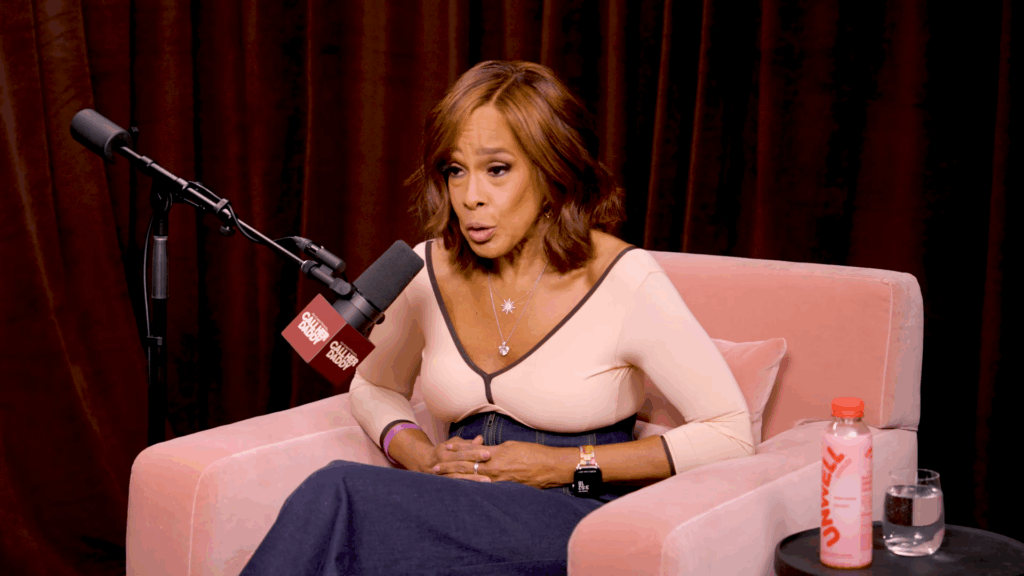
“I said, ‘I can’t believe that you are here and you are doing this,’” Gayle described.
She reflected: “I even said, ‘I thought we were friends.’ I sounded so pitiful.”
Unfortunately, Gayle’s humiliation increased. When the alarm was triggered and not immediately deactivated, the security company dispatched police to her home.
“The police came, and they said, ‘Hey, oh my God, it’s Gayle King!’” the broadcast journalist recalled.
As they asked for autographs, it did occur to her that she had more power here than the average housewife might. “I wanted to say, ‘Could you take out the trash?’ But I didn’t,” she admitted.
Gayle shared a couple of details of what followed — aside from the divorce, that is.
Her ex drove the woman to the train station, so that she could catch a ride back to her own husband. Yes, she was also married.
Gayle also called Oprah, venting to one of the most famous and influential people of the past half-century.
She and William divorced in 1993, after 11 years of marriage.
There is, however, a silver lining to all of this.
In a darker timeline, the world might have known her as iconic broadcast journalist Gayle Bumpus.
Gayle King CAUGHT Ex-Husband & Ex-Bestie Having Affair, Naturally Called Oprah to Vent was originally published on The Hollywood Gossip.
The Hollywood Gossip

Do you want to help Texas Roadhouse appetizers live up to their name in the tastiest way possible? Try making these order modifications and requests.

Mashed – Fast Food, Celebrity Chefs, Grocery, Reviews

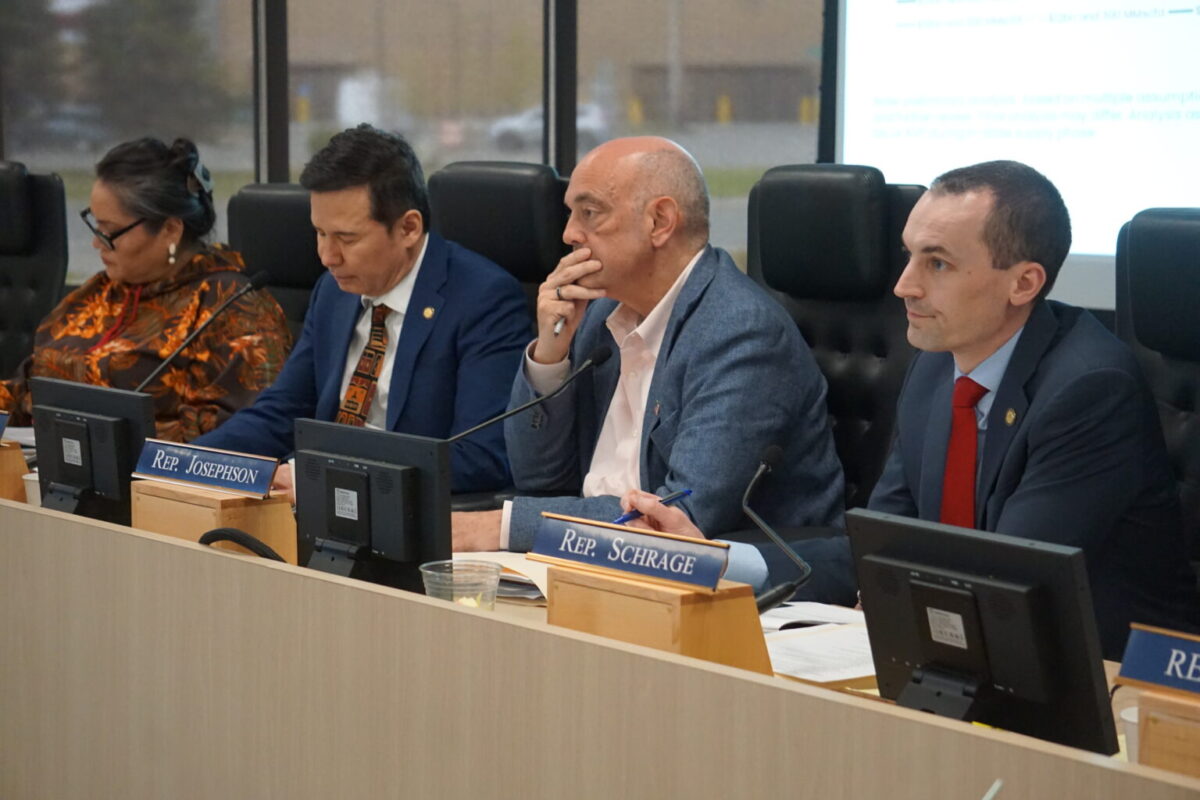
Rep. Nellie Unangiq Jimmie, D-Toksook Bay, Rep. Neal Foster, D-Nome, Rep. Andy Josephson, D-Anchorage, and Rep. Calvin Schrage, I-Anchorage, listen to Nick Fulford, senior director for gas, LNG and energy transition at GaffneyCline Energy Advisory, at a May 26, 2026, House Finanance Committee hearing in Anchorage. (Photo by Yereth Rosen/Alaska Beacon)
The proposed trans-Alaska natural gas line faces a narrow road to profitability, even with Gov. Mike Dunleavy’s proposed multibillion-dollar tax break, according to estimates presented to state legislators.
The more the pipeline costs, the more its builders will need to charge for gas shipped through it in order to make money. But if the cost of Alaska gas is too high, it isn’t competitive with gas from other sources around the world.
On Tuesday, members of the House Finance Committee met for the second time in a 30-day special session devoted to discussing the tax break.
Nick Fulford of GaffneyCline, the Legislature’s hired analyst for the pipeline project, said previously published financial modeling by the Alaska Department of Revenue remains the best public look at whether the project pencils out financially.
“The main question really is: How much bigger and how much more capital cost can the project support before it becomes uneconomic,” he said.
In 2018, officials with the Alaska Gasline Development Corp. suggested that building a pipeline from the North Slope to Cook Inlet — plus large industrial processing plants on either end — would cost roughly $43.4 billion, including money earmarked for possible cost overruns.
Since then, the official cost has risen only slightly, to $46.2 billion, but many state lawmakers have said they are skeptical of that figure, because it does not seem to account for inflation.
Glenfarne, a multinational corporation that now owns 75% of the pipeline project, has not disclosed an updated figure.
Rep. Alyse Galvin, I-Anchorage, said that when she uses the Consumer Price Index to judge how much the cost has grown, it’s significant.
“When I look at cost adjustment, just using CPI, just a straight cut through, that brings us to $57 (billion) to $60 billion,” she said during Tuesday’s hearing.
“I would say it seems highly likely that it would be more than $46 billion given the general inflation that we’ve seen,” Fulford said.
Publicly available estimates suggest gas could be bought from North Slope producers between $1 and $2 per thousand cubic feet. That’s what’s technically known as the “upstream price.”
In a scenario where the pipeline costs Galvin’s suggested figure, the state’s tax laws don’t change to help the project and the upstream price is $1.50 per thousand cubic feet of gas, the Department of Revenue estimates that an end buyer in Japan could expect to pay more than $11 per thousand cubic feet.
That’s likely a problem for the pipeline project, because according to GaffneyCline’s estimates, the average contract price in Japan over the past 10 years has been $10.41 per thousand cubic feet — less than what the Alaska project would have to charge to earn its expected profit target.
Under a tax change proposed by the governor, the end buyer’s price would drop to about $10.40, using Galvin’s cost estimate and the $1.50 upstream price.
But if the cost of upstream gas rises, or if the cost of the pipeline rises, even the governor’s proposed tax break isn’t enough to keep the project economically competitive.
Fulford, speaking to the House Finance Committee, said he thinks Asian LNG prices will rise in the coming years, possibly offsetting any rising costs and keeping the project viable.
But he also acknowledged that with so many unknowns, it’s not clear where the project becomes uneconomic.
“The question is … if the price of LNG goes up and if the capital cost goes up, then where’s that sort of tipping point where the project can still go ahead, even if it’s a much higher capital cost?” he said.
Under Dunleavy’s proposal, the state’s existing petroleum property tax would be largely replaced by a tax on gas that moves through the pipeline.
Speaking last week in Anchorage, Glenfarne CEO Brendan Duval said the governor’s proposed change is necessary for Glenfarne to get financing for the project.
“It won’t be financeable in the form that we’re trying to do it without the tax stabilization law,” he told the Anchorage Daily News.
Legislators appear favorable to the general idea, but they don’t know what tax rate to use for the “alternative volumetric tax,” as it is formally known.
Dunleavy has proposed 6 cents per thousand cubic feet of gas. House and Senate lawmakers are each considering different, higher rates.
They’re also considering mandatory impact payments to compensate cities and boroughs that collectively would lose out on $14 billion in property taxes through 2063 if the governor’s plan is adopted. A mandatory natural gas spur line to Fairbanks is also being discussed. As currently planned, the pipeline runs to the west of Fairbanks.
Rep. Calvin Schrage, speaking Tuesday, said legislators are working with a large amount of uncertainty, and that is slowing their work.
“If we could eliminate some of these variables and have it known, it would really help us in figuring out where this might be going, but we don’t have that right now,” he said. “What this is ultimately showing is that under our current tax structure, there’s a very small window of break-even profitability for a developer.”
SUBSCRIBE: GET THE MORNING HEADLINES DELIVERED TO YOUR INBOX.