Gordon Ramsay is known for his dedication to quality and his many (often fiery) opinions, which has led his launch of a certain item to be seen as ironic.

Food Republic – Restaurants, Reviews, Recipes, Cooking Tips









Gordon Ramsay is known for his dedication to quality and his many (often fiery) opinions, which has led his launch of a certain item to be seen as ironic.
Food Republic – Restaurants, Reviews, Recipes, Cooking Tips
Reading Time: 3 minutes
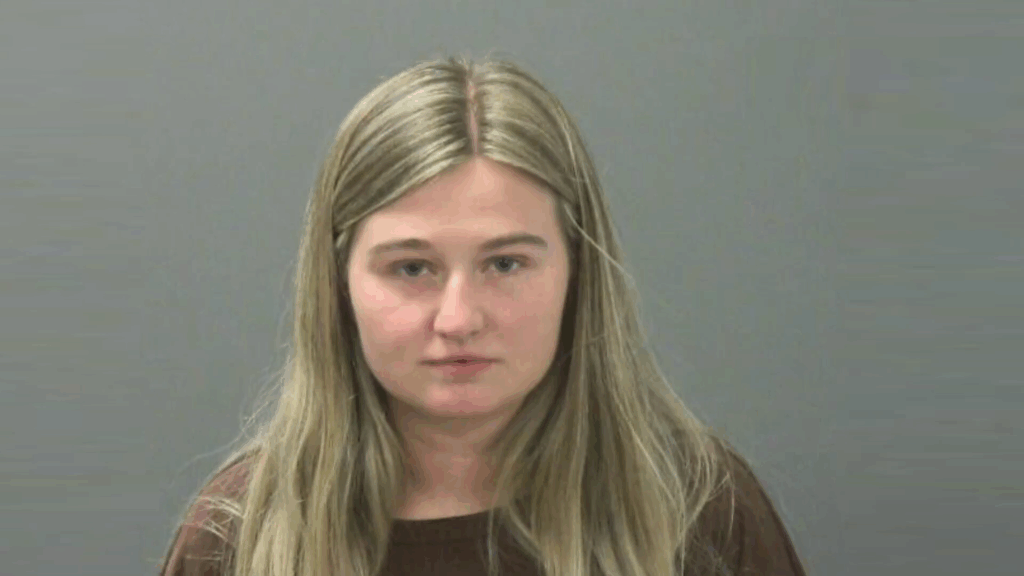
Days after Joseph Duggar’s arrest on charges of molesting a child, his wife was arrested on child endangerment charges.
Immediately, some jumped to conclusions, wondering if Kendra aided and abetted her husband’s alleged crimes.
Others preached caution, suggesting that her arrest was a mere coincidence.
The truth is somewhere in between. Because the charges aren’t related … but the timing of the arrest was no coincidence.
Us Weekly‘s report offers an explanation for why authorities arrested Kendra Caldwell so shortly after Joseph’s arrest for molesting a 9-year-old girl.
“After his charge, they automatically do a home study if minors live there. They came to her house,” an inside source explained.
Joseph and Kendra are the parents of four young children. Two of these children had already been born before the 2020 family vacation during which he allegedly preyed upon a young girl.
So Kendra’s arrest is not directly related to her husband’s charges — but the timing of the arrest is not a coincidence, either.
Her arrest stems from a disturbing discovery that investigators found when searching the Arkansas residence.
Kendra and Joseph are now both facing second-degree false imprisonment charges, a Class A misdemeanor.
“Apparently, they had two rooms where the lock of the doorknob was on the outside instead of inside,” the insider stated.
“They arrested her and took her kids for that,” the source explained, “saying it’s evidence that she wrongly detains her kids.”
Second-degree false imprisonment simply means illegally detaining someone.
Doing so in the first degree would mean confining someone in a dangerous space, such as without access to food or water.
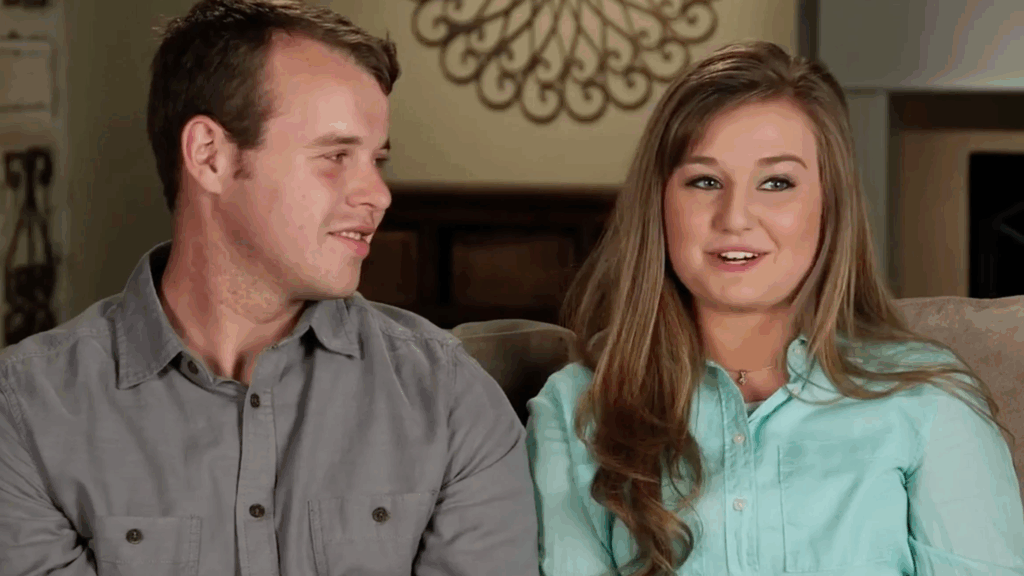
Their charges of second-degree endangering the welfare of a minor seem to be related.
It’s honestly no surprise for members of the cult to not be good parents.
If more Duggar homes were searched by authorities, there would likely be more arrests.
Our society as a whole does not tend to take children’s welfare seriously. This is reflected in our legal system, which bends over backwards for “parents’ rights” and all but ignores that children are people, too.
On the false imprisonment charge, Kendra faces a potential sentence of 1 year behind bars and up to $2,500 in fines.
Truth be told, it seems unlikely that the legal system will hold Kendra accountable for this in a meaningful way.
Typically, even parents who violently abuse their children face limited repercussions — with courts pretending that attending anger management groups means that a person is “cured.”
There are cases of parents sentenced to prison for locking up their children, but this usually means that the children were emaciated or died, or that a host of other crimes were committed in the process.
Perhaps a full investigation will uncover more. Some question whether Joseph only ever had one alleged victim, and whether Kendra’s alleged crimes stopped at doorknobs.
The silver lining, we suppose, is that Joseph’s charges reflect one of the few non-lethal crimes against children that courts do tend to take seriously. Even with his reported confession, it’s likely that he will face a prison sentence.
PHOTO FIVE
Immediately after Joseph’s arrest, his disgraced brother Josh put out a statement defending Joseph, calling the allegations against him “false.”
Meanwhile, the relative silence from Kendra had longtime Duggar-watchers wondering if Kendra will divorce him.
That could still happen. But the same twisted and extreme beliefs that make the cult an ideal stalking ground for predators also forbid divorce.
(That is no coincidence; the ideology of keeping women and children vulnerable and confined is pretty consistent, actually.)
The Duggar family spent years working to present a certain image to the world. But the rot underneath was always there.
Why Was Kendra Caldwell Arrested Just Days After Joseph Duggar? was originally published on The Hollywood Gossip.
The Hollywood Gossip
Reading Time: 2 minutes
We have tragic news to report from the world of social media today.
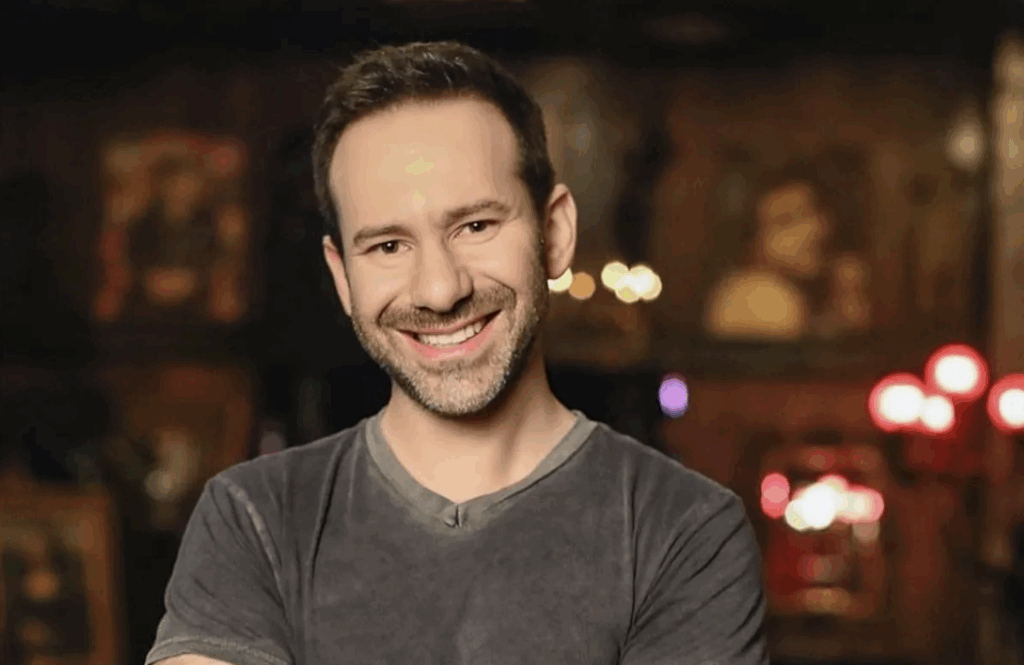
Leonid Radvinsky — the entrepreneur best known for acquiring the company that owns OnlyFans — has passed away.
He was just 43 years old.
News of his death comes courtesy of a statement from OnlyFans:
“We are deeply saddened to announce the death of Leo Radvinsky. Leo passed away peacefully after a long battle with cancer,” the company said.
“His family have requested privacy at this difficult time.”
Multiple outlets have now confirmed that Radvinsky died of complications from cancer.
He had been secretly fighting the disease for several years. The nature of his cancer still has not been made public.
The Urkanian-American entrepreneur acquired Fenix International, the company that owns OnlyFans, in 2018.
As the Financial Times notes, OnlyFans broke records last year when it paid out more than $700 million in dividends.
The site provides a means for celebrities and adult entertainers to provide subscription-based content to their fans.
Radvinsky had reportedly been in talks about a multibillion-dollar sale of the popular platform at the time of his death.
Born in Odessa but raised in Chicago, Radvinsky was as well-known for his philanthropy as he was for his business savvy.
He and his wife were both supporters of a $23 million grant program for cancer research.
Radvinsky also indicated on his personal website that he planned to sign the Giving Pledge, a commitment by wealthy entrepreneurs to donate the majority of their fortune to humanitarian causes.
Our thoughts go out to Leonid Radvinsky’s loved ones during this incredibly difficult time.
Leonid Radvinsky Cause of Death: OnlyFans Owner Was 43 was originally published on The Hollywood Gossip.
The Hollywood Gossip

In the 1970s, potlucks were popular gatherings, and one dish that was always a hit used nothing more than pantry staples to make something delicious.

Food Republic – Restaurants, Reviews, Recipes, Cooking Tips

Jaxon Smith-Njigba won Offensive Player of the Year and a Super Bowl title in 2025. Now, weeks into the 2026 offseason, the Seattle Seahawks’ star is adding a new accolade to his name: highest-paid wide receiver in NFL history. Smith-Njigba has agreed to a four-year, $168.6 million extension with the Seahawks that includes $120 million in guaranteed money, ESPN reported Monday. The contract will pay Smith-Njigba $42.15 million per year, which is nearly $2 million more per year than what Cincinnati Bengals star Ja’Marr Chase is making ($40.25 million). Chase signed a four-year, $161 million extension last offseason to become the highest-paid wide receiver in NFL history. The deal for Smith-Njigba came a few days after the team announced that they would be picking up the fifth-year option on his rookie contract. With that move, Smith-Njigba was set to be under contract through the end of the 2027 season. However, he became extension eligible earlier in March, and with other star receivers (like Puka Nacua of the Los Angeles Rams) due for new contracts, Monday’s extension allowed the Seahawks to set the market rather than react to it. Cornerback Devon Witherspoon, whom the Seahawks took alongside Smith-Njigba in the first round of the 2023 draft, also had his fifth-year option picked up by Seattle recently. Witherspoon can sign an extension this offseason as well. Seattle also extended offensive tackle Charles Cross, its 2022 first-round pick, to a four-year, $104.4 million extension in January as it looks to maintain its core pieces. Smith-Njigba and Witherspoon were both key to the Seahawks’ Super Bowl run this past season. Smith-Njigba had 119 receptions for a league-best 1,793 yards in the regular season, adding 10 touchdowns. His postseason wasn’t as dominant, but Smith-Njigba had 153 receiving yards in the Seahawks’ NFC Championship Game win over the Los Angeles Rams. As for Witherspoon, he had 72 total tackles and an interception this past regular season. On top of that, Witherspoon graded out as Pro Football Focus’ top cornerback for the 2025 season. He allowed opposing receivers to get just 409 receiving yards on 59 targets (8.09 yards per target), per PFF, and he could become one of the game’s highest-paid corners this offseason. The extension for Smith-Njigba followed the departures of a handful of players from the Seahawks’ Super Bowl-winning squad earlier this month. Running back Kenneth Walker III signed a multi-year deal to join the Kansas City Chiefs. Edge rusher Boye Mafe departed Seattle to sign a three-year, $60 million pact with the Cincinnati Bengals. Cornerback Riq Woolen joined the Philadelphia Eagles on a one-year deal. Seattle was able to keep Rashid Shaheed, though, further stabilizing their wide receiver group as quarterback Sam Darnold looks to have another strong year in 2026. Shaheed re-signed with the Seahawks on a three-year, $51 million deal.Latest Sports News from FOX Sports
By: James Brooks, Alaska Beacon
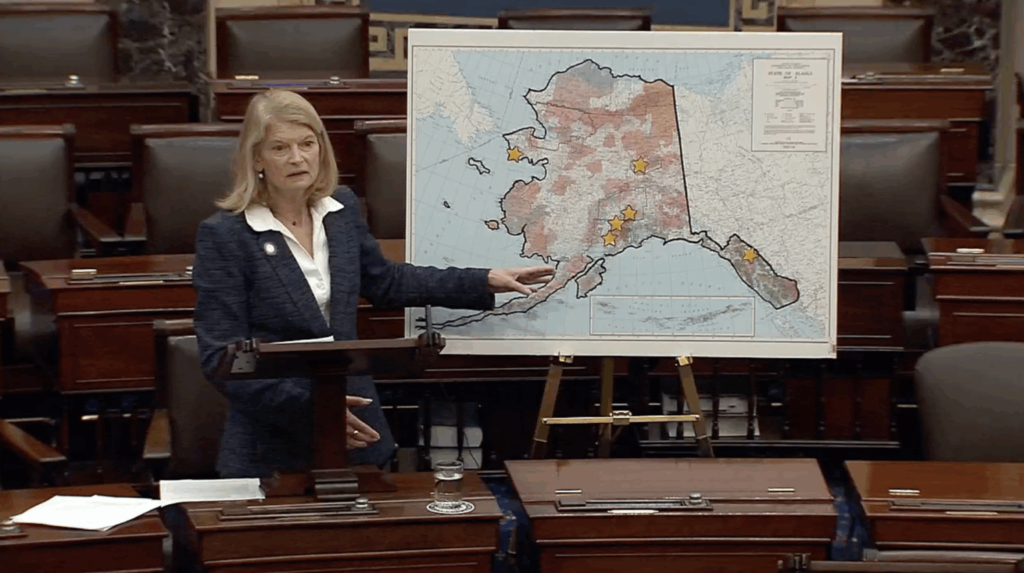
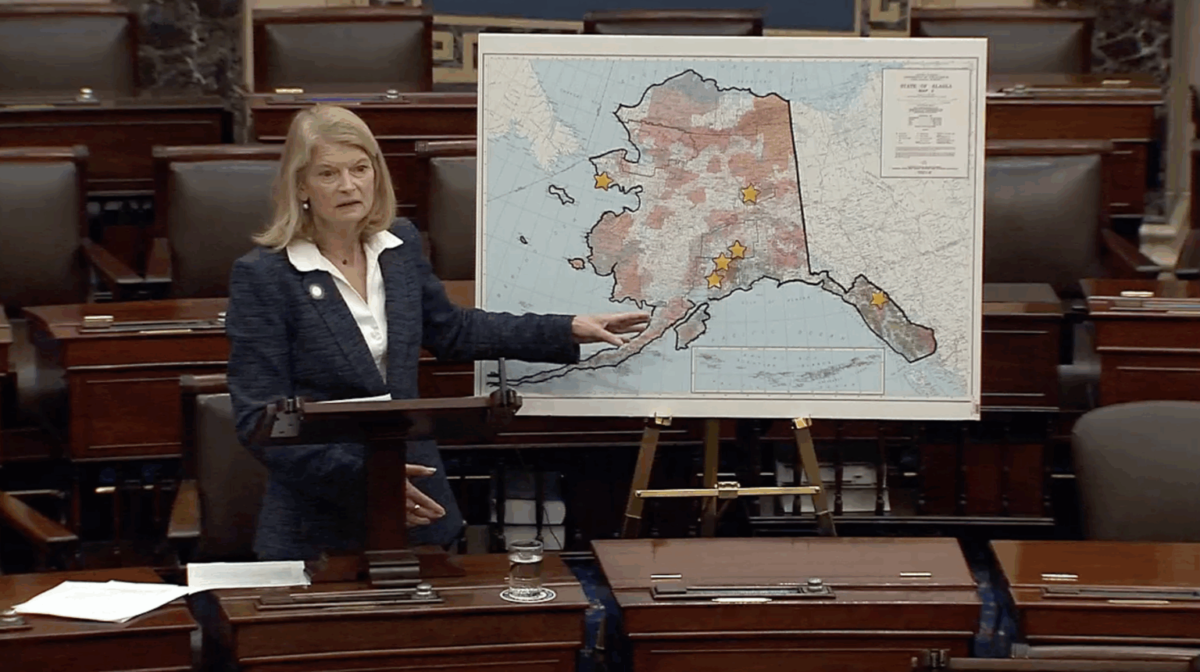
An elections bill being debated by the U.S. Senate could cost thousands of Alaskans the ability to vote in this year’s elections, Sen. Lisa Murkowski said Thursday in a lengthy speech on Capitol Hill.
The SAVE America Act, supported by President Donald Trump and most congressional Republicans, is ostensibly intended to prevent noncitizens from voting in American elections, but its implementation could prevent many Americans from being able to vote.
“While disenfranchisement may not be the intent of the SAVE America Act … I think that we will see that. In fact, I fully expect it to be an outcome of this,” Murkowski said.
The act would require that voters present photo ID when they vote, and that people present documentary proof of citizenship when they register to vote. That would mean presenting proof of citizenship in person at an elections office or other specially licensed state license.
“This would be a major, major departure from how most Alaskans currently register to vote,” Murkowski said.
In 2024, about 29,000 Alaskans registered to vote. Most of those — 25,000 or so — would have run into problems if the current bill had been law at that time, she said.
Most of Alaska’s voter registrations are done online or through the state’s motor-voter or PFD voter process. The bill could allow citizenship verification, but it’s not clear how that would happen, Murkowski.
Mandating in-person registration would have big effects in Alaska.
The state has only six in-person elections offices, mostly on the Railbelt, and fewer than a dozen DMV offices where residents could present proof of citizenship.
Some other state agencies might also be able to accept that proof, but the bill’s requirements take effect immediately, and it contains no funding for states to make changes that would allow remote offices to verify ID.
In practice, that means the bill would require rural residents to fly to urban Alaska, Murkowski said.
In addition, anyone seeking to register would have to have either a passport — roughly 50% of Alaskans don’t have one, Murkowski said — or some other form of appropriate ID.
Alaska driver’s licenses wouldn’t be good enough to register to vote, nor would most tribal IDs, because they don’t specifically label someone as a citizen or not.
The bill allows someone to self-certify their citizenship if they sign an affidavit, but that clause only applies if the person has already made “reasonable efforts” to obtain a copy of a valid ID.
It isn’t clear what that means, Murkowski said.
The bill also would end Alaska’s practice of allowing anyone to cast an absentee ballot for any reason. It would restrict absentee voting to a subset of specifically identified voters, including people living out of the state where they are registered to vote.
Murkowski said she hasn’t seen evidence that these kinds of measures are needed to address a small-scale problem.
Voting by noncitizens is rare in Alaska. A report obtained by the Alaska Beacon through a public records request showed 70 possible cases since 2015. At least 11 people on that list have been charged in state court.
“That’s basically seven a year,” Murkowski said.
“You look at what we’re trying to chase here with this balance — with disenfranchising so many who would be faced with almost insurmountable challenges in order to register or vote — I look at this and on balance, it doesn’t weigh,” she said.
Earlier this year, Rep. Nick Begich III, R-Alaska, voted in support of the bill as it passed out of the House, saying afterward that he doesn’t think it will be hard to comply with the bill.
Sen. Dan Sullivan, R-Alaska, has said he supports the act despite its ramifications for the state.
“I do think that having the ability to show an ID and proof of citizenship to keep elections safe is important, and it’s supported by the vast majority of Americans,” he said in response to a question during a February forum hosted by the Juneau Chamber of Commerce.
At that forum, he was confronted by an angry attendee who questioned how he could speak on Elizabeth Peratrovich Day, a state holiday honoring an Alaska Native civil rights leader, and support a bill that would have detrimental effects on Alaska Native voters.
“I have a very, very, very strong record as it relates to the franchise for our people, in particular, the Alaska Native community,” he said, referring to actions he took during the 2010 Alaska election, when he served as attorney general.
“I think voting, in my view, should be easy, but cheating on voting should not be,” Sullivan said.
While Sullivan has said he supports the bill, he also told reporters last month that he doesn’t support overriding the Senate’s filibuster to pass it.
In practice, the filibuster means that the bill would require 60 votes, not 50 and the vice president, to advance through the Senate.
With all of the Senate’s Democrats and Murkowski opposed to the SAVE Act, the bill — at least as of Friday — lacks the support it needs to become law.

Imagine creamy ice cream mixed with crunchy oatmeal cookie bits—snack lovers are buzzing about the latest treat from Little Debbie and Hudsonville. Continue reading…The Boot – Country Music News, Music Videos and Songs
By: Corinne Smith, Alaska Beacon
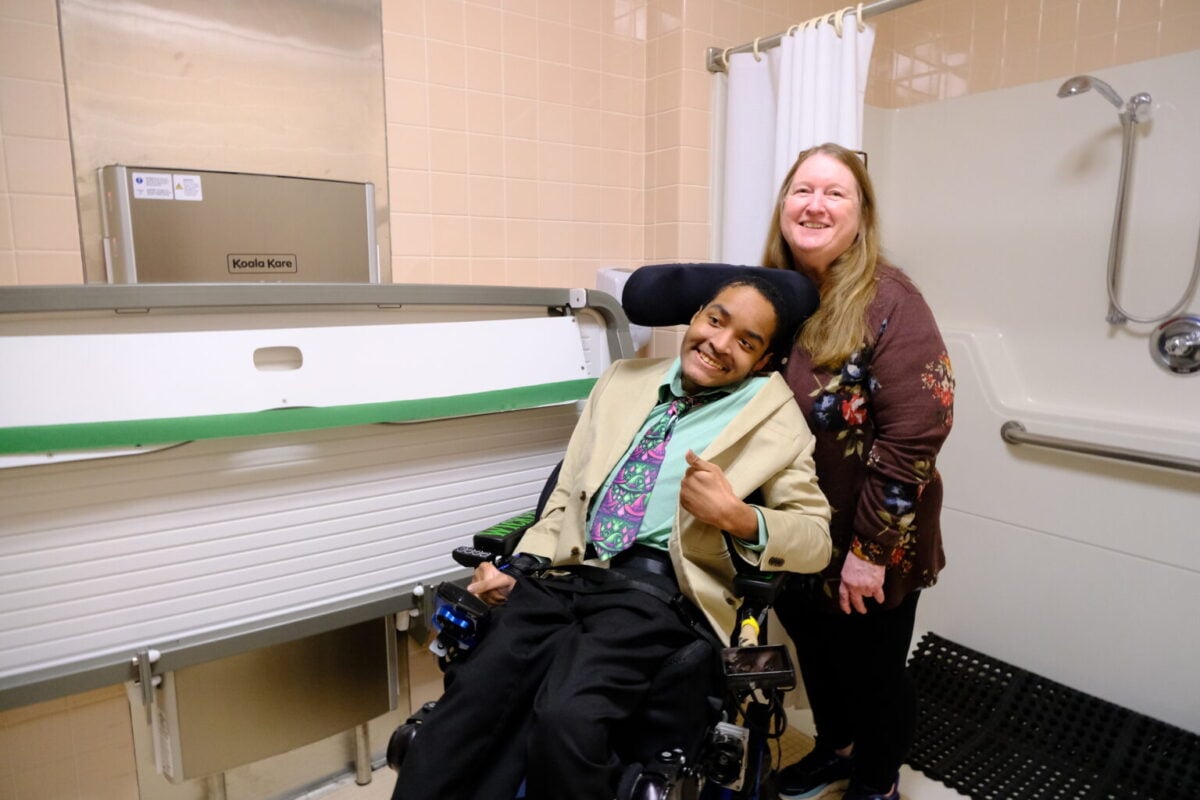
Judy Edwards and her son Eric traveled from Palmer to advocate for people with disabilities at the Alaska State Capitol in Juneau this week, and now one part of that process is a bit easier.
A newly installed universal changing station on the first floor of the Capitol is a clean, safe space for people who need assistance when using the restroom. The changing station is adult-size and adjustable, for people who use adult diapers and need help changing them. This is an upgrade for Eric, who is 18-years-old and has quadriplegic cerebral palsy with dystonia and uses a power wheelchair.
Previously he and his mother would have had to use the floor.
“This will make life easier for everybody,” Judy said. “Parents, especially younger parents, they just deal with things, but they shouldn’t have to. You know, parents hurt themselves because they’re trying to lift from the floor.”
At a ribbon cutting ceremony on Thursday, lawmakers and advocates with the Key Coalition — a group of people with disabilities, their caregivers, service providers and supporters — gathered to applaud the new installation.

“I am so sorry that you’ve had to advocate for this and that those of us who are able bodied don’t automatically think about it,” said Rep. Sara Hannan, D-Juneau, who oversees a committee that runs maintenance in the Capitol.
Hannan said the universal changing station cost the state less than $20,000 total, including the cost of the device, shipping and electrical costs for installation. She said the committee is in the process of reviewing and making accessibility upgrades around the Capitol, including plans to widen the door frame and install an automatic door opener for the first floor accessible restrooms.
The Edwards family travel often for medical care. They are among the advocates who have been raising concern and pushing for more changing stations around the state. A new bill now introduced in the legislature, House Bill 141, would require at least one universal changing station be included in construction or renovation of all state or local government owned public buildings.
Rep. Ashley Carrick, D-Fairbanks, sponsored the bill.
“We’re looking at different ways to approach the issue, whether just on a funding level or policy, but ultimately, the goal is to just have types of changing facilities across the state,” Carrick said in an interview. “As legislators, the more we can do to just help all Alaskans have their basic needs met — that’s really where the motivation for this bill came from, and the awareness around this being a major challenge is so important.”
Advocates and lawmakers are focusing first on Alaska airports. The Edwards family was involved in raising awareness around access, resulting in a new universal changing station being installed at the Ted Stevens Anchorage International Airport in 2024.
There is also a changing station at the Mat Su Health Foundation, and a temporary station was installed last summer at the fairgrounds of the Alaska State Fair. Edwards said she also wants to see one installed at Providence Alaska Medical Center hospital in Anchorage.
Advocates with the Key Coalition flew to Juneau for an advocacy day on Wednesday, when they held a march and rally in front of the Capitol and met with lawmakers urging policy changes to increase access and services.


“Having a disability could happen to any one of us,” said Michele Girault, board president for the Key Coalition. “So we’re creating communities where accessibility is at the top of the leaderboard, access to housing and good workforce and all the things that you might need to be supported, are available when you need it.”
Advocates are pushing for the state to eliminate the waitlist for people with disabilities applying for Medicaid services. Girault said they also want to reduce wait times for reimbursements for service providers.
“So that people who provide the service to people with disabilities and elders across the state are reimbursed at a rate that keeps them in business,” Girault said. “Some people have left the state because they were tired of waiting for services, and some families are opting not to even put their names on the wait list.”
Girault said the Key Coalition is continuing to support increased funding and expanded access for infant learning programs and early intervention services for youth experiencing developmental delays, which support families and children from infancy to age three.
Last year, Gov. Mike Dunleavy vetoed a bill to provide $5.7 million to increase funding for the state’s 17 infant learning programs. But lawmakers are trying again this year, with Senate Bill 178, sponsored by the Senate Health and Social Services Committee, to expand eligibility for the programs and increase funding.
A bill to update the state’s guardianship statutes is also supported by the Key Coalition. Girault said Senate Bill 190 would strengthen protections for people involved in the state guardianship system, including for medical guardians, partial guardians and in conservatorship. They’re also pushing for improvements to access to public transportation.

“Transportation is in the top five barriers for people with disabilities. When you think about all the snow we’ve had this winter, how do you get to the bus stop? Once you’re at the bus stop, is the bus stop cleared?” Girault said. The Key Coalition is supporting House Bill 26, which would require a new state transportation plan to include access for people with disabilities.
“This transportation bill requires the state to create a plan that actually thinks about all of the points of access for people across the state of Alaska, not just in major cities, but in rural areas as well,” Girault said.
More than 1 in 4 adults in the U.S. have some type of disability, including mobility, hearing, vision or cognition disabilities, and advocates say they want to see improvements across Alaska to expand access, care and dignity for all.
For the Edwards family, and many advocates and families with disabilities, flying to Juneau isn’t easy, but Judy Edwards said it’s worthwhile — and she wants to see more changes to increase access across Alaska.
“I’m 67, but when I was a kid, you didn’t see people with disabilities out in public, really, much,” Edwards said. “And so today, it’s like, why not? I mean, we’ve come such a far way. Why not? We need to keep going.”

U.S. Sen. Lisa Murkowski, R-Alaska, speaks Thursday, March 19, 2026, on the floor of the U.S. Senate, in this screenshot of a video broadcast by the Senate. (Screenshot)
An elections bill being debated by the U.S. Senate could cost thousands of Alaskans the ability to vote in this year’s elections, Sen. Lisa Murkowski said Thursday in a lengthy speech on Capitol Hill.
The SAVE America Act, supported by President Donald Trump and most congressional Republicans, is ostensibly intended to prevent noncitizens from voting in American elections, but its implementation could prevent many Americans from being able to vote.
“While disenfranchisement may not be the intent of the SAVE America Act … I think that we will see that. In fact, I fully expect it to be an outcome of this,” Murkowski said.
The act would require that voters present photo ID when they vote, and that people present documentary proof of citizenship when they register to vote. That would mean presenting proof of citizenship in person at an elections office or other specially licensed state license.
“This would be a major, major departure from how most Alaskans currently register to vote,” Murkowski said.
In 2024, about 29,000 Alaskans registered to vote. Most of those — 25,000 or so — would have run into problems if the current bill had been law at that time, she said.
Most of Alaska’s voter registrations are done online or through the state’s motor-voter or PFD voter process. The bill could allow citizenship verification, but it’s not clear how that would happen, Murkowski.
Mandating in-person registration would have big effects in Alaska.
The state has only six in-person elections offices, mostly on the Railbelt, and fewer than a dozen DMV offices where residents could present proof of citizenship.
Some other state agencies might also be able to accept that proof, but the bill’s requirements take effect immediately, and it contains no funding for states to make changes that would allow remote offices to verify ID.
In practice, that means the bill would require rural residents to fly to urban Alaska, Murkowski said.
In addition, anyone seeking to register would have to have either a passport — roughly 50% of Alaskans don’t have one, Murkowski said — or some other form of appropriate ID.
Alaska driver’s licenses wouldn’t be good enough to register to vote, nor would most tribal IDs, because they don’t specifically label someone as a citizen or not.
The bill allows someone to self-certify their citizenship if they sign an affidavit, but that clause only applies if the person has already made “reasonable efforts” to obtain a copy of a valid ID.
It isn’t clear what that means, Murkowski said.
The bill also would end Alaska’s practice of allowing anyone to cast an absentee ballot for any reason. It would restrict absentee voting to a subset of specifically identified voters, including people living out of the state where they are registered to vote.
Murkowski said she hasn’t seen evidence that these kinds of measures are needed to address a small-scale problem.
Voting by noncitizens is rare in Alaska. A report obtained by the Alaska Beacon through a public records request showed 70 possible cases since 2015. At least 11 people on that list have been charged in state court.
“That’s basically seven a year,” Murkowski said.
“You look at what we’re trying to chase here with this balance — with disenfranchising so many who would be faced with almost insurmountable challenges in order to register or vote — I look at this and on balance, it doesn’t weigh,” she said.
Earlier this year, Rep. Nick Begich III, R-Alaska, voted in support of the bill as it passed out of the House, saying afterward that he doesn’t think it will be hard to comply with the bill.
Sen. Dan Sullivan, R-Alaska, has said he supports the act despite its ramifications for the state.
“I do think that having the ability to show an ID and proof of citizenship to keep elections safe is important, and it’s supported by the vast majority of Americans,” he said in response to a question during a February forum hosted by the Juneau Chamber of Commerce.
At that forum, he was confronted by an angry attendee who questioned how he could speak on Elizabeth Peratrovich Day, a state holiday honoring an Alaska Native civil rights leader, and support a bill that would have detrimental effects on Alaska Native voters.
“I have a very, very, very strong record as it relates to the franchise for our people, in particular, the Alaska Native community,” he said, referring to actions he took during the 2010 Alaska election, when he served as attorney general.
“I think voting, in my view, should be easy, but cheating on voting should not be,” Sullivan said.
While Sullivan has said he supports the bill, he also told reporters last month that he doesn’t support overriding the Senate’s filibuster to pass it.
In practice, the filibuster means that the bill would require 60 votes, not 50 and the vice president, to advance through the Senate.
With all of the Senate’s Democrats and Murkowski opposed to the SAVE Act, the bill — at least as of Friday — lacks the support it needs to become law.
SUBSCRIBE: GET THE MORNING HEADLINES DELIVERED TO YOUR INBOX

When your job involves facing the camera daily, there’s pressure to stay slim. These news media celebrities have been open about how GLP-1s have helped them.

Health Digest – Health News, Wellness, Expert Insights