Depending on how broccoli’s cooked, it can be either bland or utterly pungent – but pouring some of this canned soup on it makes it taste absolutely fantastic.

Food Republic – Restaurants, Reviews, Recipes, Cooking Tips









Depending on how broccoli’s cooked, it can be either bland or utterly pungent – but pouring some of this canned soup on it makes it taste absolutely fantastic.
Food Republic – Restaurants, Reviews, Recipes, Cooking Tips

Reading Time: 4 minutes
Over the weekend, Jude Law’s ex’s husband created quite a stir.
The man, a soccer player, claimed that Chappell Roan’s security guard had bullied his 11-year-old stepdaughter.
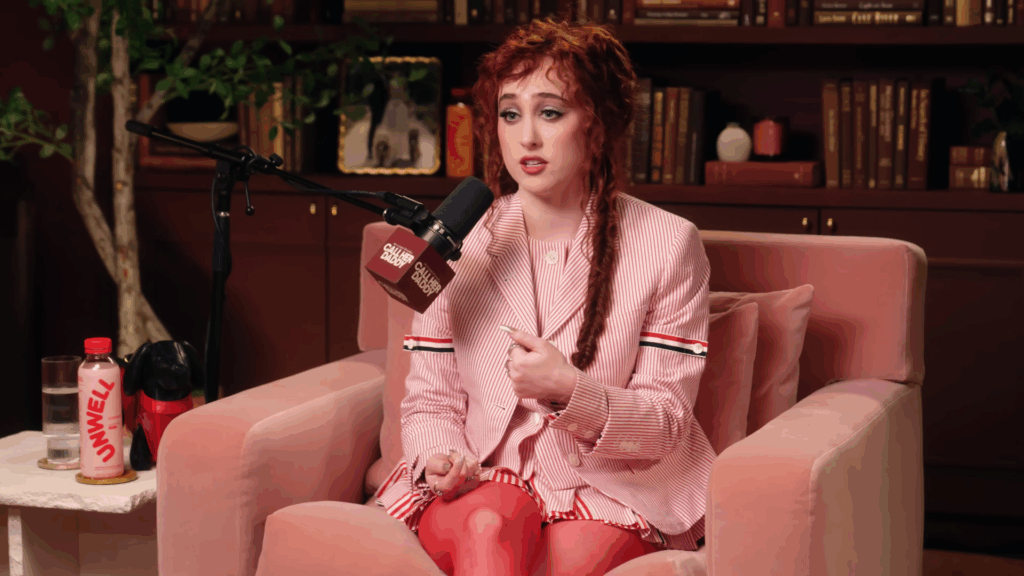
Chappell has pushed back at the claim, saying that she didn’t know anything about the girl or send some goon to bother anyone.
The story has created a rift on social media, revealing gaps in people’s celebrity knowledge — except that everyone knows who Jude Law is.
Jorge Luiz Frello Filho, known professionally as Jorginho, is a soccer player from Brazil.
(It is our understanding that he plays for a team based in Italy, which we’re told is pretty normal for soccer players.)
According to Jorginho, he and his 11-year-old stepdaughter, Ada, were staying at the Palácio Tangará in Sao Paulo with his wife, Catherine Harding.
Harding shares Ada with her ex, Jude Law.
Another guest at the hotel, Jorginho wrote in an Instagram post, was Chappell Roan.
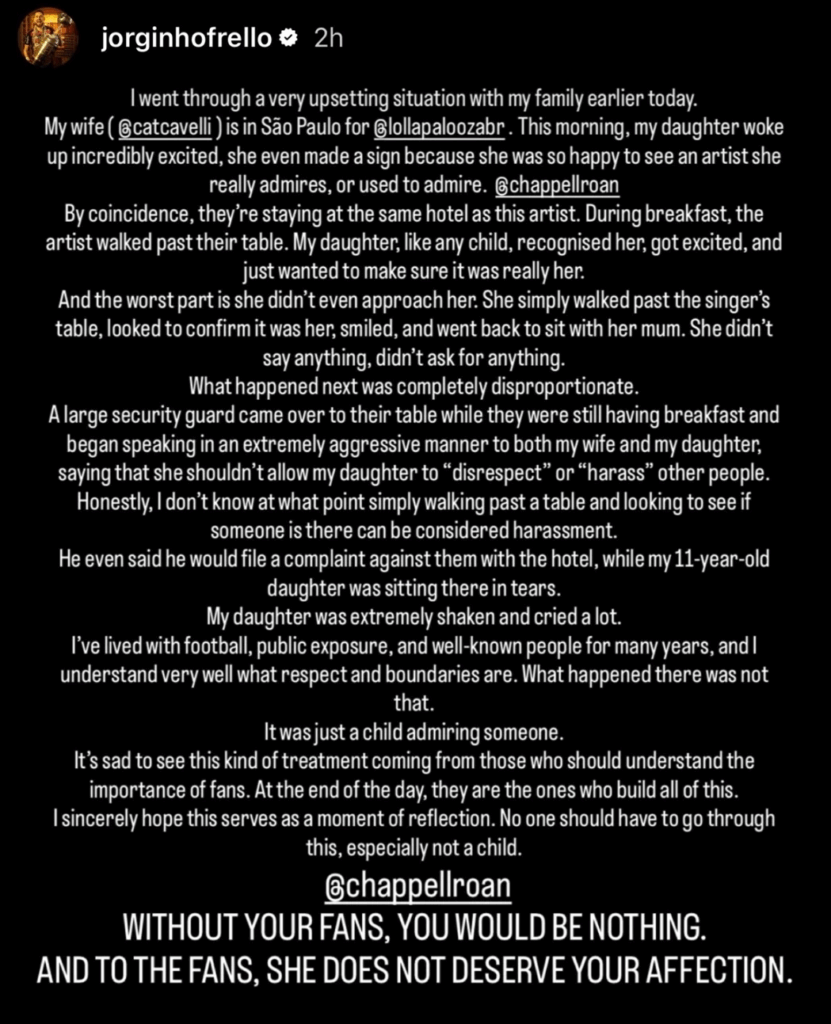
“By coincidence, they’re staying at the same hotel as this artist,” Jorginho wrote. “During breakfast, the artist walked past their table.”
He continued: “My daughter, like any child, recognized her, got excited, and just wanted to make sure it was really her.”
Jorginho’s account continued: “And the worst part is she didn’t even approach her.”
He described: “She simply walked past the singer’s table, looked to confirm it was her, smiled, and went back to sit with her mum. She didn’t say anything, didn’t ask for anything.”
However, Jorginho then alleged a disproportionate reaction from “a large security guard” who confronted them at their table, lecturing Harding and Ada, framing the tween’s actions as disrespectful or harassment.
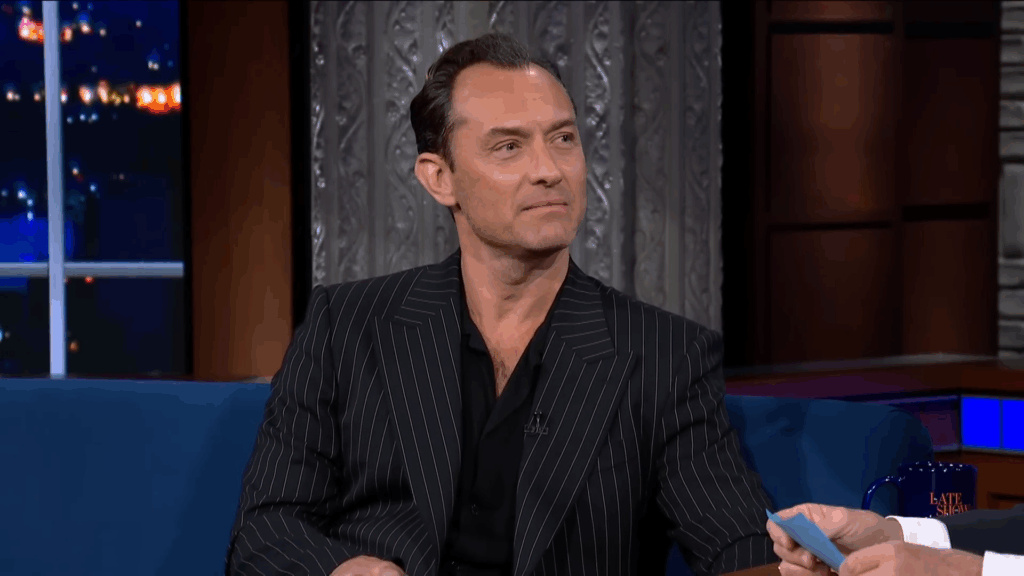
“Honestly, I don’t know at what point simply walking past a table and looking to see if someone is there can be considered harassment,” Jorginho marveled.
He claimed that the guard “even said he would file a complaint against them with the hotel, while my 11-year-old daughter was sitting there in tears.”
Jorginho described: “My daughter was extremely shaken and cried a lot.”
That sounds like a terrible experience for anyone, particularly an 11-year-old.
And while it’s hard to see how exactly this could conceivably be Chappell Roan’s fault, if it happened as described, she received backlash — to the point where the mayor of Rio de Janeiro declared that she’s banned from performing at the Todo Mundo no Rio music festival. Okay.
Chappell Roan’s response to Jude Law’s ex’s husband’s claims.
— fanana hammock (@fananahammock.bsky.social) March 23, 2026 at 8:49 AM
On Sunday, March 22, Chappell Roan took to her own Instagram Story to issue a public response.
“I didn’t even see a woman and a child. No one came up to me,” she clarified from her hotel room. “No one bothered me.”
She added: “Like, I was just sitting at breakfast in my hotel. I think these people were staying at the hotel, as well.”
Chappell’s post not only clarifies how she didn’t ask for this, but also emphasizes that Ada didn’t do anything wrong, either.
“I did not ask the security guard to go up and talk to this mother and child,” she emphasized. “They did not come up to me. They weren’t doing anything.”
For all of the many faults of America’s Next Top Model, it did give us an iconic piece of wisdom.
Natasha offered this sage reminder: “I just want to tell you that some people have war in their countries.”
Obviously, there are many problems in this world that are not as bad as war but still worth addressing. That doesn’t mean that we, as a society, do not need to gain a bit of perspective.
We’re sorry that Ada had a bad encounter with a security guard who was presumably in someone’s employ. But that is and should be where that ends.
The ban from a music festival, real or not, is absurd. There’s no evidence that Chappell did anything wrong. Please be serious.
Did Chappell Roan’s Security Guard Bully Jude Law’s Daughter? Soccer Player … was originally published on The Hollywood Gossip.
The Hollywood Gossip
Reading Time: 2 minutes
We have tragic news to report out of Minnesota today.
NHL reporter Jessi Pierce and her three young children were killed in a house fire in Minnesota’s White Bear Lake over the weekend.
Just one day earlier, she shared photos of a simple, happy outing with her kids — images that have since taken on heartbreaking new meaning.
On Friday, Pierce posted photos from a trip to a local ice cream stand with her children — Hudson, Cayden, and Avery.
In the images, the kids can be seen smiling and enjoying treats after waiting in line, capturing what appeared to be a routine family outing.
“Bag(s) secured,” she captioned the post.
Those photos would be her final social media update. Less than 24 hours later, tragedy struck.
Authorities say Pierce and her three children were found dead after a fire engulfed their home early Saturday morning. A family dog was also killed in the blaze.
Fire crews responded to the scene before dawn, but the structure was already fully ablaze by the time they arrived.
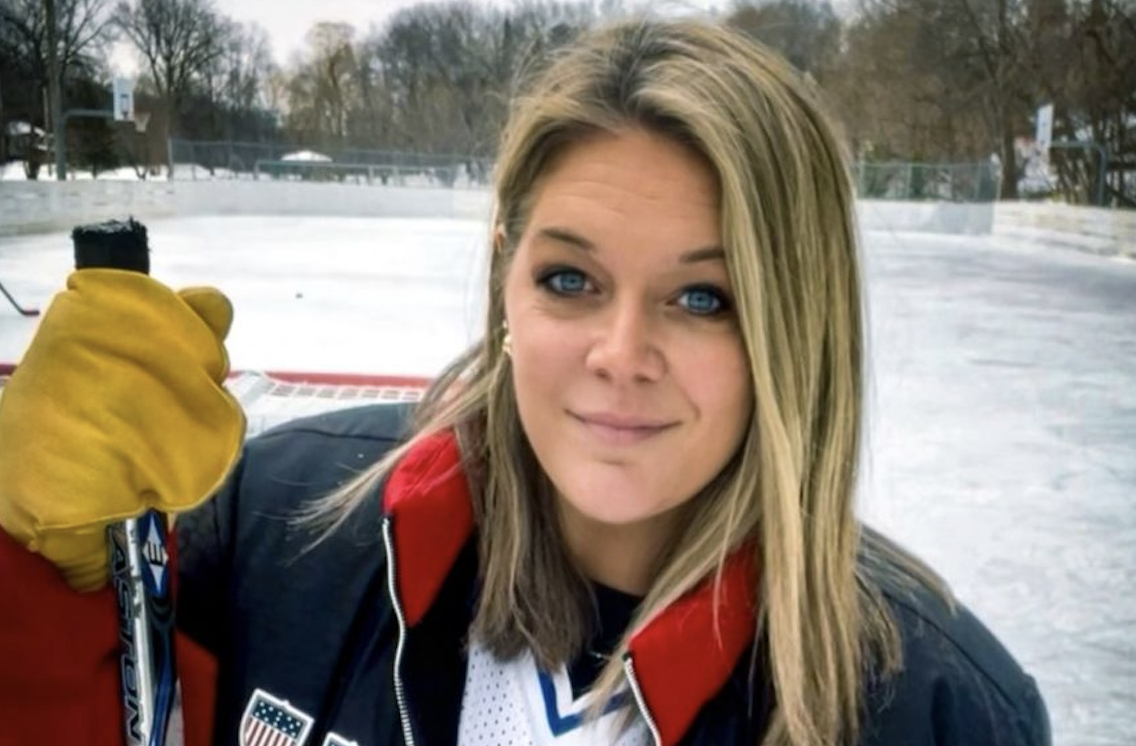
“The entire National Hockey League family sends our prayers and deepest condolences to the Pierce family on the passing of Jessi Pierce and her three young children,” the NHL said in a statement (per Page Six).
“Jessi loved our game and was a valued member of the NHL.com team for a decade. We will miss her terribly.”
“Jessi Pierce (Hinrichs) was the most vibrant person – the life of the party, always with a smile on her face, always bringing a passion to every article and podcast and interview she did,” wrote fellow Minnesota Wild journalist Michael Russo, adding:
“Jessi simply loved covering the Wild and hockey throughout Minnesota and had a way of brightening everyone’s day with her upbeat, bubbly personality. I have literally NEVER met anybody that had a way of being EVERYBODY’s friend.”
“From a [Minnesota Wild] practice in the morning to enjoying ice cream with her kids in the afternoon, if there is any solace in this tragedy, it’s that Jessi’s last day was spent doing the things she loved most—covering hockey and being a mom,” added Minnesota Wild Broadcast Engineer Zach Halverson wrote.
“The rink will never be the same without her smile, her humor, and her passion for the game. There was never a moment that wasn’t made better by her presence,” Minnesota Wild Broadcast Engineer Zach Halverson wrote.
For those who knew her well — and even those who only followed her work — the images from that final outing now stand as a painful reminder of how quickly everything can change.
Pierce is survived by her husband, Mike. Our thoughts go out to her loved ones during this incredibly difficult time.
Jessi Pierce: NHL Reporter and 3 Children Killed In House Fire was originally published on The Hollywood Gossip.
The Hollywood Gossip
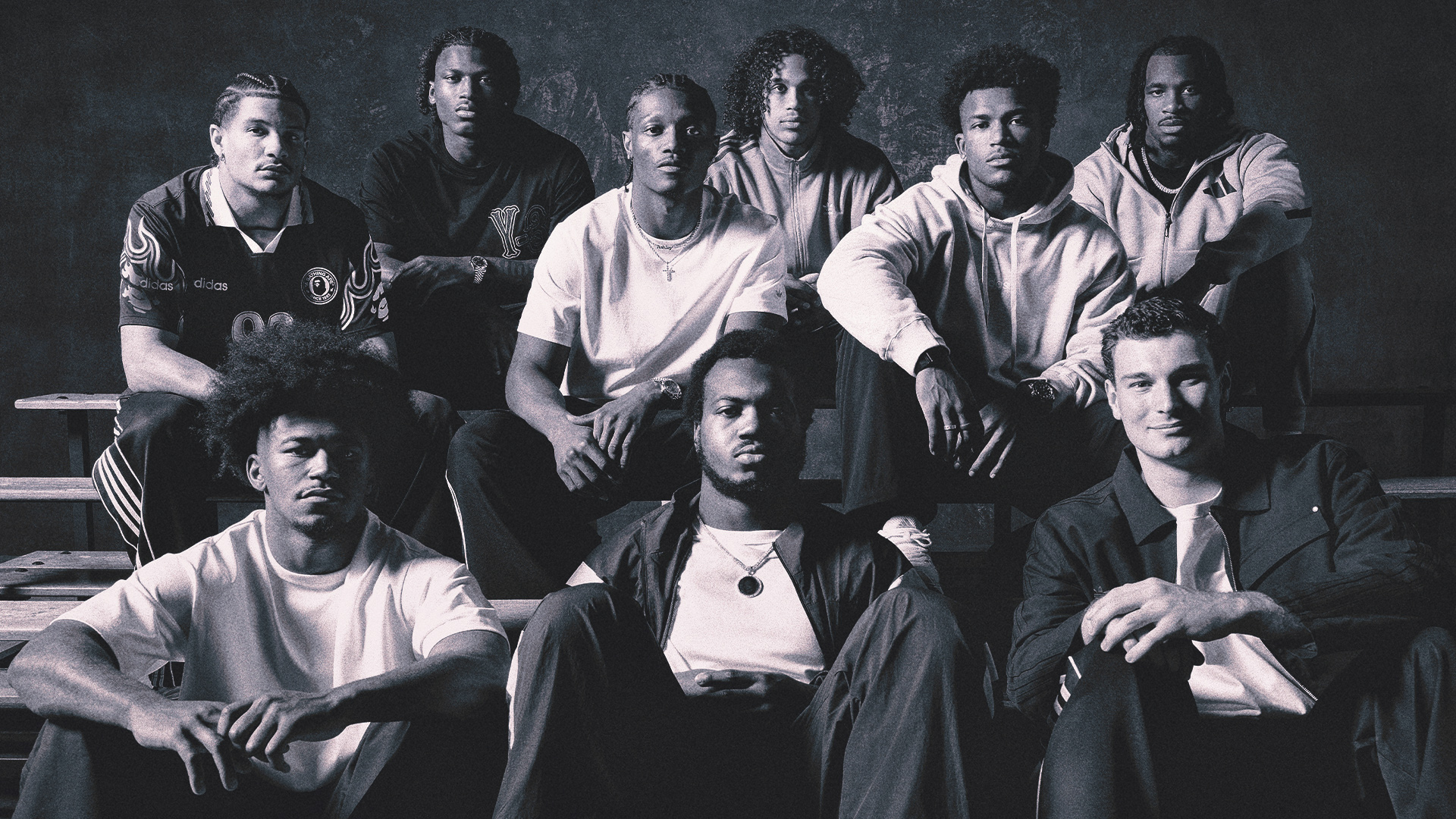
PORTLAND, Ore. — At Adidas’ North American Headquarters last week, Fernando Mendoza held a cleat in his hands that, uncharacteristically, didn’t have the three diagonal stripes the brand is known for. Not yet. That’s because this shoe is a prototype, still in the design process. Those distinctive stripes will be the finishing touch. But first, the Heisman Trophy-winning quarterback and presumptive No. 1 overall draft pick had a few suggestions. This cleat, after all, is special because of its potential for customization. Adidas uses 3-D printing to empower its innovation lab technicians to make a boutique shoe, in this case one specially made for Mendoza. The innovation lab takes up an entire floor and features a small basketball court, a 40-yard dash track, a batting cage and other spaces for athlete-cleat testing. Mendoza was here for Adidas’ first-ever Rookie Pro Day, a promotional event to announce the brand’s 2026 signing class. The class also includes a number of other top NFL prospects: defensive linemen Arvell Reese and Rueben Bain Jr., safety Caleb Downs, receivers Carnell Tate, Jordyn Tyson, Denzel Boston, Makai Lemon and KC Concepcion, and tight end Kenyon Sadiq. At the event, Mendoza sat with seven members of the Adidas innovation team, including Marc Makowski, SVP of creative direction and innovation. “Could you put extra traction on the cleat here?” Mendoza said, pointing to the inside heel of the right cleat. He demonstrated how he pushes off that back foot during his throwing motion, with that heel often sitting at an angle, akin to a receiver breaking out of a cut. One technician asked: “Would that be weird if you only had the extra traction on the back foot?” “No, I think that would be good,” Mendoza replied. The innovation team pulled out a 3-D rendering of Mendoza’s foot. One technician explained that because the QB’s midfoot is a little more advanced than the average person’s, the team could use the surface area for the additional points of grip that Mendoza wants. The group also discussed his toe box — and his bunions. And they discussed different plates they could put in for protection and support. “This is awesome,” Mendoza said. “This is the perfect solution.” For a quarterback who spent the better part of his interviews, including at the NFL Combine, discussing the importance of the “fine details” of the game, this was his sort of meeting. “He’s the perfect face for you,” one Adidas employee said. “Innovation, analytical, scientific.” It’s hard to argue, particularly if Mendoza can live up to the expectations — not only to be the first-overall pick by the Las Vegas Raiders, but also to be a franchise quarterback for years to come. After Mendoza left, the seven innovation lab technicians huddled to discuss how they will accommodate the QB’s requests. One of them asked: “Should we consider a silver-and-black color scheme?” Yup. In 2024, Adidas went through a similar process with Washington Huskies receiver Rome Odunze, who was the Bears’ first-round pick that year. As a result, the company is now known for locking in wideouts, including the top five prospects this year, according to Rob Rang’s big board. Adidas worked with Odunze to develop a shoe that helped him with separation, not just to increase his acceleration out of his cuts but also to improve his deceleration into his cuts. That fueled faster change of direction and, in turn, helped with separation. In the cleat that Adidas designed with Odunze — the “Adizero One Horizon” — the brand reported a 3% improvement in an athlete’s ability to decelerate and a 2% improvement in acceleration. It might not sound like much, but in a league defined as a game of inches, those marginal gains can be huge for a receiver. That’s what made Mendoza’s conversation so compelling. It’s possible that he and Adidas will create a unique cleat that one day will appeal to quarterbacks in the way that the Adizero One Horizon will with receivers when it comes out this fall. “I do think customization is something that has a potential future,” Aaron Seabron, VP/GM of Adidas’ U.S. Sports and Creation Center, told me at the Pro Day. “Because if you think about it, right, the ads on your phone and my phone are different. So I think customization is certainly prevalent in all of our lives, and I think eventually, does that make its way into the product? In time — probably, yeah.” To be clear, Adidas isn’t pivoting away from its receiver emphasis. The wideout position is important to the company, and Seabron echoed a statement that multiple Adidas executives mentioned, which was that they were excited to have signed Ohio State receiver Jeremiah Smith last August and that they hope to retain him when he joins the pro ranks next year. Smith was arguably the best receiver prospect in college football in 2025 despite not being draft-eligible. “We strive to be the fastest brand in football, and we do that by fusing speed and culture,” Seabron told me. “If I can think of one position that is truly a speed and culture position, it’s wide receiver, right? They’re normally the ones that make the biggest plays, the biggest catches, and they’re normally some of the biggest personalities on the field. I think our athlete signings reflect who we’re trying to be as a category.” At the Pro Day, most members of Adidas’ 2026 signing class had their feet and gates measured. They ran through drills and wore sensors to help the innovation lab’s 70 cameras measure their every move. To help with the precision, Adidas has 20 “force plates” embedded into the 40-yard dash track. These force plates are planks in the floor that measure the force and angle at which the players are striking their feet. It’s all designed to deliver a special shoe for Adidas athletes. “They put a lot of detail into [the cleats],” Denzel Boston, who had 20 touchdown catches for Washington the past two seasons, told me. “They discuss what goes into the making of the cleats, when it comes to all the different tests that they do. Not only that, but also the way they design cleats, whether it’s to tell a story or it’s a collaboration through another brand to tell their story. They’re very detail-oriented in both those spaces.” Most of the athletes wanted to undergo extensive testing before they pick a shoe to wear during their rookie NFL seasons. And of course, the color scheme could change on April 23, when they hear their names called on draft day. But while they focus on footwear, the athletes spoke highly of Adidas’ overall presentation at the Pro Day. “I haven’t seen anything like that before,” Arvell Reese, Ohio State’s All-American linebacker, told me. “It was a surprise seeing all the tech. “It’s next level.”Latest Sports News from FOX Sports

There’s something haunting yet beautiful about how country music tackles love and the inevitability of death. Continue reading…The Boot – Country Music News, Music Videos and Songs
There’s something haunting yet beautiful about how country music tackles love and the inevitability of death. Continue reading…Country Music News – Taste of Country
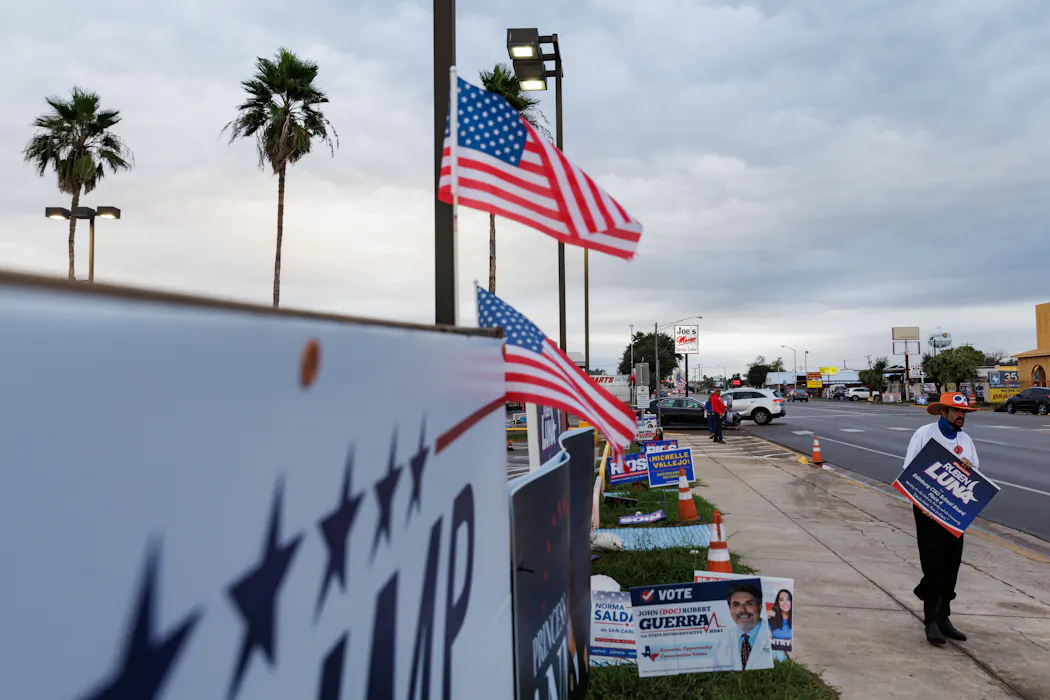
In 2024, Donald Trump dramatically improved his performance among nearly all groups of voters from four years earlier. Trump’s growth among Hispanic voters was especially notable, increasing by more than 10 points from 2020 to 2024, at least according to exit polls.
This led to a considerable amount of commentary speculating that Hispanic voters, historically more supportive of Democrats, might continue shifting toward the GOP.
News reports suggesting Latinos were critical to Trump’s 2024 victory were, in our view, overblown. Even if Latinos had not shifted, Trump still would have won in 2024.
Yet there is no question that over the past three election cycles, Latino voters – Latino men under 40, in particular – have shifted right. That change has benefited GOP candidates, even as the majority of Latinos still voted for Democrats.
However, evidence from general elections in 2025 in places such as New Jersey, New York and Virginia, as well as special elections in 2026, suggest an abrupt correction is underway, with some of the Latino voters who backed Trump now swinging back to the Democrats.
As political scientists and pollsters who study Hispanic voting trends, we are concerned with the question of whether these latest movements are real or simply a function of fluctuating Latino Democratic turnout rates. In other words, are Latinos broadly changing their votes back to Democrats, or are Latinos who remained loyal to the Democrats now more angry and fired up?
Survey and election data suggest it’s a bit of both. So what does this portend for the future of American politics?
The history of the Latino vote nationwide had for decades been one of long-term stability. Historically, Democrats enjoyed an approximate 65% to 35% advantage over Republicans.
That advantage shrank marginally after Republican President Ronald Reagan signed the Immigration Reform and Control Act in 1986, providing a path to citizenship for millions. But the more familiar two-thirds advantage for the Democratic Party returned following passage of Proposition 187, a 1994 anti-immigrant initiative in California that ultimately mobilized Latinos against Republicans.
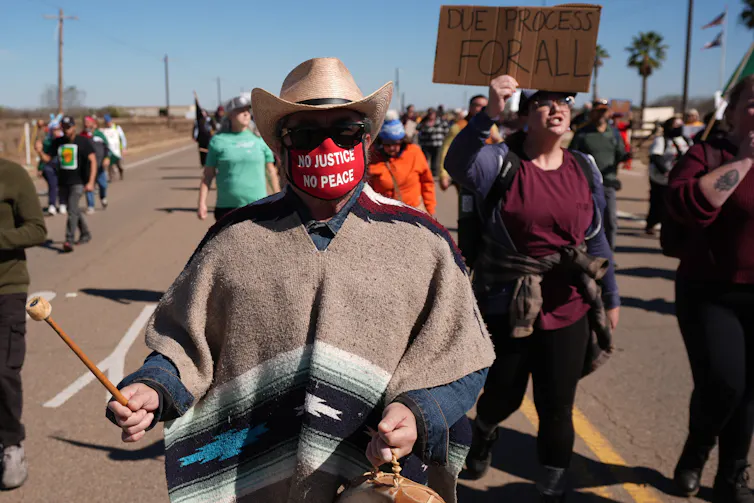
Another effort at GOP outreach to Hispanic voters culminated in President George W. Bush taking approximately 40% of the Latino vote in 2004. That growth, however, soon eroded in the wake of anti-immigrant legislation passed by the Republican-controlled House in 2005 and 2006.
The successful campaigns of Democrat Barack Obama in 2008 and 2012, as well as Hillary Clinton’s unsuccessful 2016 campaign against Trump, saw Democrats reaping a relatively high level of Latino support, peaking at a 3-to-1 advantage in 2012.
That made Trump’s improvements among Latinos in 2020 and 2024 feel, for some, particularly unexpected. He lodged notable breakthroughs in parts of Florida, where he carried Miami-Dade County, and Texas, where he flipped the historically Democratic Rio Grande Valley.
It should not have been such a surprise. There has been a history of sizable shares of Latinos supporting Republican candidates. For instance, both former President George W. Bush and his brother, former Florida Gov. Jeb Bush, performed well with Latinos in Texas and Florida.
For two decades, Democrats have campaigned among Latinos on the promise of comprehensive immigration reform and an economic policy that would level the playing field, including raising the federal minimum wage, providing universal pre-K education and promoting affordable housing.
Many Latinos feel they are still waiting for these Democratic policies to be enacted, let alone improve their lives.
Democratic trifectas in 2009-10 and 2021-22 – when the party held both chambers of Congress, along with the presidency – failed to produce meaningful movement on immigration policy. Many Latinos felt their daily lives had not improved, as they faced high costs of living, expensive housing markets and rising health care costs. While House Democrats did pass numerous bills to address these topics, Senate moderates proved difficult to persuade.
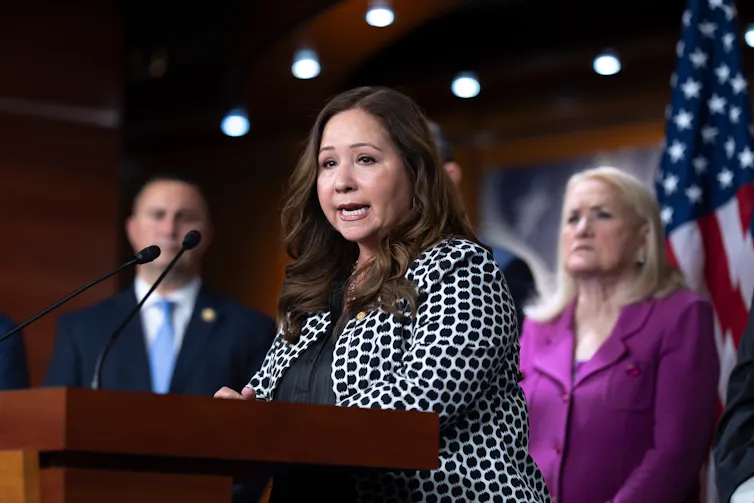
Given these shortcomings, running on the message that “the GOP are bad guys” only gets Democrats so far. In 2024, surveys and focus groups of Hispanic voters made it clear that not everyone was convinced by this characterization. The frustrations of working-class families during the Biden administration were real, whereas fears of mass deportations and other social chaos that a second Trump term might portend were, at that point, conjecture.
The Trump campaign specifically promised widespread action against immigrants, but many of our Latino focus group participants felt this was bluster. They believed that Trump’s actions would be targeted against blatant criminals and that his policies would not affect their families and friends.
They did not believe the worst-case scenarios presented by Vice President Kamala Harris and other Democrats during the campaign. Despite often not liking Trump, his economic promises felt good during the 2024 affordability crisis.
Many Latinos are now quite upset with Trump. The 2025 gubernatorial elections in New Jersey and Virginia point to dramatic 25-point changes in the Latino vote in the Democrats’ direction, compared with Trump’s 2024 performance.
In December 2025, the first Democrat was elected mayor of Miami since 1997, with Latino support. A Democrat won a heavily Republican state legislative district in Texas in February 2026 with an estimated 79% of the Latino vote. Most recently, Latino voter turnout surged to record levels in the March Democratic primary in Texas.
Majorities of Latino voters believe that their economic fortunes have declined since Trump returned to the White House. Moreover, they expect the situation to worsen over the next year. In March 2026, The Economist reported that Trump’s support among Latinos had fallen to 22%.
In a bipartisan poll by UnidosUS released in November 2025, only 14% of Latino voters said their lives were better after one year under Trump, while 39% said they had gotten worse. Looking ahead, 50% expected things to get worse still in 2026, while only 20% were optimistic about their economic future. Two-thirds of Latino voters felt that Trump and the Republicans were not focusing enough on improving the economy for people like them.
What’s more, mass deportations have happened under the second Trump administration. The vast majority of those detained for deportation, including those who have died, had no criminal record.
Latinos are overwhelmingly opposed to federal troops in U.S. cities, according to our polling; 41% fear legal residents and U.S. citizens getting caught up in enforcement actions. The No. 1 immigration concern for Latino voters remains a path to citizenship for Dreamers – the undocumented immigrants brought to the U.S. as children – and for immigrants who have worked and paid taxes in the country for more than 20 years but lack formal status.
Among Latinos who actually voted for Trump, many would not do so again. Our poll suggests that 22% of Latinos who voted for Trump in 2024 would not vote for him again. By contrast, Democrats retain support from 93% of their 2024 Latino voters.
The long-term effects of the Trump presidency on the Latino electorate are difficult to predict, but for now party preferences have shifted firmly back toward the Democrats. Among voters in the UnidosUS poll, 55% said they felt the Democrats “care a great deal” about Latinos, compared with 29% saying they felt that way about the GOP. At the same time, 33% of Latino voters see the GOP as “hostile,” compared with just 7% who believe this about the Democrats.
If the recent leftward shift is sustained, or the earlier shift to the right was illusory, the effects on the politics of 2026 could be large, potentially putting control of Congress in the hands of Latino voters. There are 46 House districts where the number of registered voters who are Latino exceeds the total margin of victory for those seats in 2024, with 23 currently held by Republicans and 23 currently held by Democrats.
Latino voters need to believe that politicians truly care about their concerns and will work to implement a plan to create equal opportunities for the nation’s largest minority group to achieve the American dream. We believe the candidates able to make that pitch convincingly will be the most successful.

Matt A. Barreto is principal and co-founder of the polling firm BSP Research. BSP Research has conducted polling for non-profit and advocacy organizations, businesses, and candidates. Barreto has, in the past, directly consulted with Democratic candidates for House, Senate and the presidency.
Gary M. Segura is principal and co-founder of the polling firm BSP Research. BSP Research has conducted polling for non-profit and advocacy organizations, businesses, and candidates. Segura has, in the past, directly consulted with Democratic candidates for House, Senate and the presidency.
Politics + Society – The Conversation
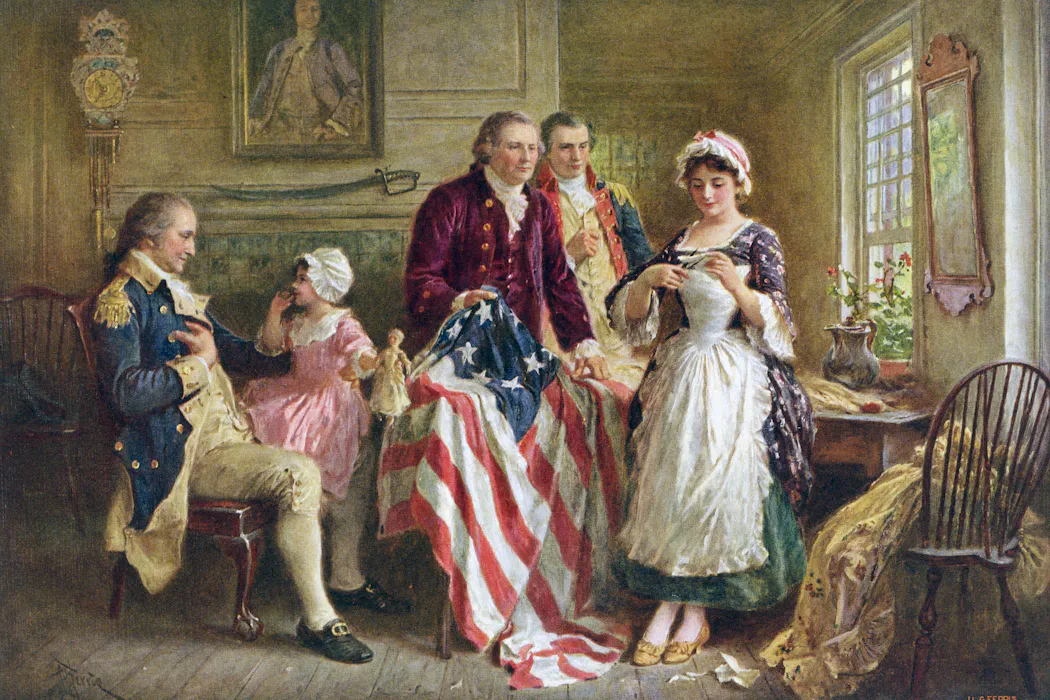
For generations, most Americans knew – and maybe believed – a story about upholstery seamstress Betsy Ross and the making of the nation’s first flag.
In the account passed down through her family, Ross was a young Philadelphia widow when George Washington and a congressional committee asked her to make a flag for the Colonies uniting in rebellion against England.
A sketch showed what they envisioned: red and white stripes and a constellation of six-pointed stars across a blue field.
But, the story continues, Ross folded a piece of paper “just so,” made a single cut, and voila! She produced a perfect five-pointed star. The men approved, she stitched a flag, Congress cheered and history was made.
As a historian of early American craftswomen, including Ross, I have often seen how mythologies – history’s sound bites – can bury richer and deeper understandings of the past. That’s the case with Betsy Ross, whose story was never about designing one flag but about producing many – and being one of thousands of women whose labor was essential to the nation’s origins.
In 1870, Ross’ grandson William J. Canby recounted the family’s story about Betsy Ross and the making of the first flag in a speech to the Pennsylvania Historical Society. Historians and members of the public greeted the tale with skepticism.
Canby’s best efforts notwithstanding, no archival evidence then – or since – has confirmed that Ross fabricated the first U.S. flag.
Still, the story gained traction. For a long while, Ross was a popular historical figure in U.S. culture, up there with the likes of Martha Washington and Abigail Adams. One of the earliest biopics imagined her life story, and her name graced everything from dolls to decanters. Over time, thousands of people began visiting her supposed home at 239 Arch St. in the Old City neighborhood of Philadelphia. The landmark is preserved as a house museum.
As late as the 1980s, history professor Michael Frisch reported that “college students asked to name any person from pre–Civil War America who is not a politician or military figure” included Ross “year after year.”
But in the years following the 1976 U.S. bicentennial, Ross’ fame was already cresting. Today many Americans aren’t entirely sure whether she was real or fictional.
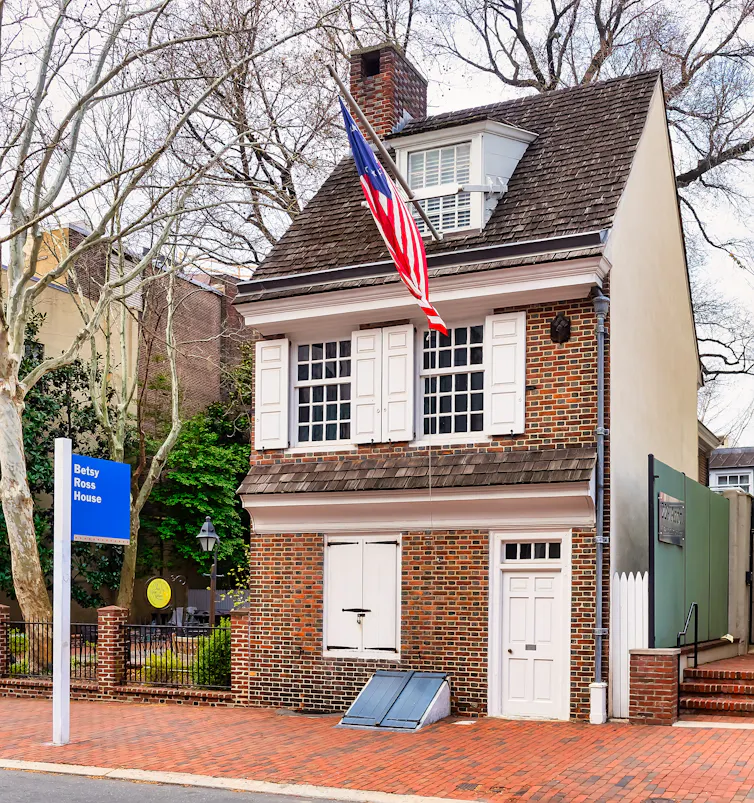
Elizabeth Griscom Ross was indeed real. She was an upholstery worker who lived in Philadelphia from the 1750s to the 1830s. While no written record confirms the flag story, ample evidence survives to document the successful multigenerational flagmaking enterprise that she launched and then sustained with her daughter and granddaughters.
According to an oral history recorded with Ross’ youngest daughter, sometime in the 1760s a young Elizabeth Griscom, who was born in 1752, joined a sister employed by Philadelphia upholsterer John Webster. Ross learned the craft of upholstery as well as the making of tassels and fringe from Ann King, who oversaw women’s work there.
Ross married upholstery apprentice John Ross in 1773, and the pair launched a small shop. John died in January 1776. Ross’ second husband, mariner Joseph Ashburn, served the Revolution as a privateer and died in an English prison. In 1783, another privateer, John Claypoole, became Ross’ third husband, and the couple raised a large family and lived full lives in the city.
My take on the legend’s veracity is that it is partly accurate, partly not, and there isn’t really any “first” flag.
What is certainly true is this: Ross found herself widowed in 1776 just as Philadelphia braced for British forces, an effort that required the building of a navy and new flags representing the Americans. Women all around the seaport were getting contracts to stitch flags, and Ross surely wanted in.
The “Did she or didn’t she sew the ‘first flag’?” question is usually framed as a story of design, but it’s not: It’s a story of production.
Ross, drawing on years of experience, was saying to these potential clients, “If you want a lot of these flags, and fast, five-pointed stars work better.”
When Betsy Ross told this story later to her children and grandchildren, at the heart of the story is a young craftswoman who met the “Father of Our Country” – and believed she taught him something.
Understanding Ross’ real life is important because her story offers a view of women’s massive wartime production of flags, uniforms, tents, knapsacks and more – and because of the deep pride she and women like her felt in their contributions to the independence movement.
Hundreds of Philadelphia women – including, briefly, Ross – manufactured ordnance for the Schuylkill arsenal. White, Black, Indigenous, enslaved and free women provided labor in the form of nursing, cooking, and making and maintaining clothes that was essential to military encampments. Women shaped diplomacy directly, especially among Indigenous peoples, and indirectly as they shared their perspectives with husbands, fathers and sons. They also managed affairs for absent family and stretched scarce resources to sustain wartime households.
Whatever she did or did not offer to the making of the first U.S. flag, Elizabeth Griscom Ross Ashburn Claypoole certainly enjoyed a long career in flagmaking.
The best documentation for this came just before the War of 1812. When Purveyor of public supplies Tench Coxe needed flags, he steered contracts to the onetime Elizabeth Ross, now known as Elizabeth Claypoole. In 1808, for instance, Coxe recorded that yards of blue fabric were en route to her; weeks later, the craftswoman submitted a bill for two garrison flags, two silk flags and seven regimental colors.
In 1810, she was contracted for six 18-by-24-foot garrison flags for a military installation at New Orleans. These flags unfolded to 432 square feet and required more than 100,000 stitches. They must have been well received because another order followed, for 46 garrison flags, which she was to deliver “with all dispatch” to the arsenal. Orders also came in from the Indian Department to produce dozens of flags used in diplomatic exchanges with Native nations.
By the time the U.S. went to war with England a second time in 1812, flags by Elizabeth Claypoole, aka “Betsy Ross,” flew all around the United States.
Over her long career, Betsy Ross produced an unknown number of flags – the hundred or so recorded in archival sources represent a fraction of her total output. As the U.S. observes the 250th anniversary of its independence, Ross’ real life – today fully interpreted by the dedicated staff of the Betsy Ross House – offers a view into the lives of working women across America whose wartime labor helped build a nation.
Read more of our stories about Philadelphia, or sign up for our Philadelphia newsletter on Substack.

Marla Miller receives funding from the National Park Service as a consultant providing expertise on women and the the American Revolution.
Politics + Society – The Conversation
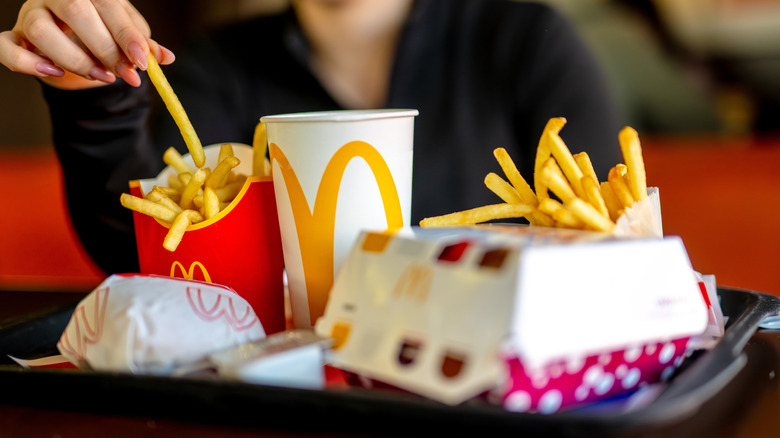
At some point during the day, you might find, unexpectedly, that your favorite McDonald’s is no longer taking card payments, but only accepting cash instead.
Food Republic – Restaurants, Reviews, Recipes, Cooking Tips
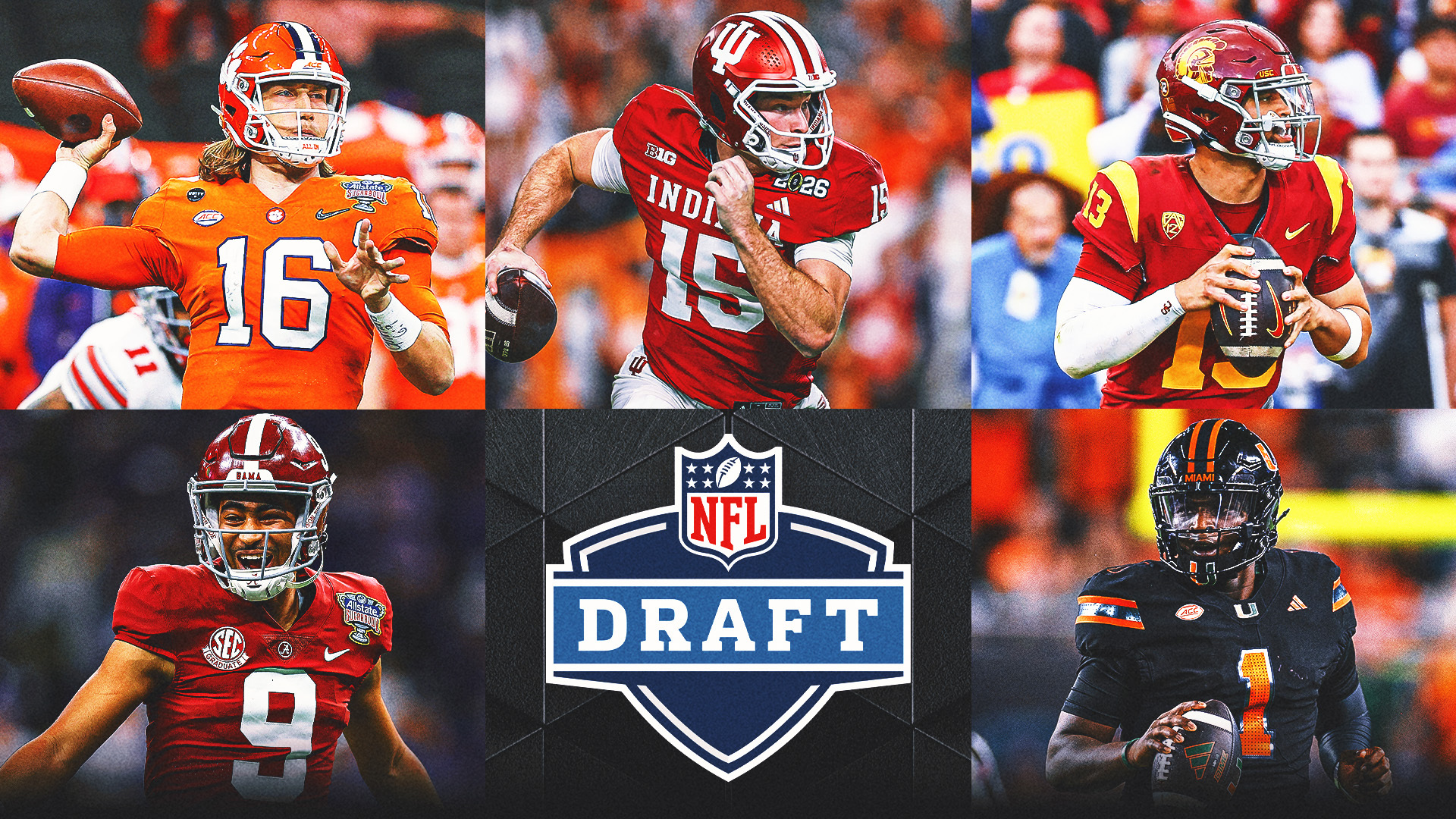
With the NFL Draft just a few weeks away, scouting departments across the league are spending countless hours zeroing in on their favorite prospects in the Class of 2026. The purpose of this article is quite the opposite — we aimed to look back and provide some perspective on Indiana Hoosiers quarterback Fernando Mendoza. He’s the consensus top quarterback of this class, but how does he stack up against recent top-rated prospects at the position? Quarterbacks have been selected No. 1 overall in four of the past five drafts, while Caleb Williams (2024), Bryce Young (2023) and Trevor Lawrence (2021) were also ranked as the top prospects of their respective classes on my annual Big Board. I ranked C.J. Stroud No. 2 overall in my 2023 Big Board. Maye checked in at No. 6 on my 2024 Big Board, albeit amid an elite class with only fellow top-10 picks Marvin Harrison Jr., Malik Nabers, Brock Bowers and Rome Odunze ranked ahead of him. This year’s class isn’t as rich at the top, and Mendoza checks in at No. 4 overall on my latest 2026 Big Board. But back to that 2024 board, for a moment. I had Daniels ranked two spots lower than Maye, with J.J. McCarthy ranked 23rd, Michael Penix Jr. 25th and Bo Nix 40th overall. Nix and Jaxson Dart (ranked 46th on my 2025 Big Board) were the only first-round quarterbacks since 2021 who I did not rank among the top 32 prospects in their respective draft classes. Clearly, I did not give either enough credit for how well their mobility and grit would transfer into immediate success in the NFL. Each has outplayed my expectations. But again, the purpose of this article is to rank Mendoza with regard to where I had the top quarterback prospects entering their respective drafts, and I can’t alter their pre-draft rankings now. As such, I’ll fess up and share the fact that, like many, I was intrigued by the upside offered by Anthony Richardson and Will Levis in 2023. I ranked them as the ninth and 13th best prospects, respectively, that year. And while Trevor Lawrence was the top prospect on my 2021 Big Board, Justin Fields was the second quarterback and ranked ninth overall, with Zach Wilson (10th), Trey Lance (13th) and Mac Jones (15th) also earning first-round grades. Playing quarterback at a high level in the NFL is just as much about poise and leadership as arm talent, and rarely are QBs equipped to handle the pressure after only starting a year or two at the college level. That fact led to several undeniably gifted quarterbacks with obvious first-round traits falling on my Big Boards. Not every year, after all, does a single quarterback even make my top 10. There wasn’t one in either of my 2022 or 2025 final rankings. I was stunned when Shedeur Sanders fell to the fifth round of last year’s draft, as he was my top-rated quarterback, ahead of Cam Ward. I had Sanders ranked as the No. 12 player in the 2025 class (with Ward No. 14), even when it was clear that Ward was going to be the Tennessee Titans’ choice with the first pick. The rankings of others — including by NFL teams — don’t impact the way I grade prospects. And that is nothing new. Back in 2022, I had Malik Willis ranked No. 19 overall and Kenny Pickett — the only quarterback drafted in the first round that year — listed 32nd. I feel confident that I’m evaluating Mendoza fairly without recency bias toward him or any of the quarterbacks who have since played in the NFL. Despite what you might have heard or read elsewhere, Mendoza’s rise to No. 1 overall this year was more steady than surprising. I listed him as a first-round candidate before the year began, and he personified his Hoosiers all year long, silencing critics throughout a magical season that culminated with the national championship and Heisman Trophy. Mendoza is far and away the top quarterback of this class and warrants being ranked among the top overall prospects of this draft. He offers an exciting blend of polish and untapped potential, with a skill set that projects well for the offense Klint Kubiak figures to employ with the Las Vegas Raiders. Along with physical traits like his prototypical frame, quick release and precision passing — including while on the move — Mendoza enters the NFL with above-average pre-snap awareness and proven poise. He projects as a Day 1 starter with the physical tools and intangibles to develop into a true franchise-changer. So, how does he rank among the best QB prospects from the previous five drafts? Here’s my list. My pre-draft ranking of the top QB prospects since 2021 … 22. Jaxson Dart, Ole Miss (No. 25 overall pick in 2025 by New York Giants)21. Bo Nix, Oregon (No. 12 overall pick in 2024 by Denver Broncos)20. Kenny Pickett, Pittsburgh (No. 20 overall pick in 2022 by Pittsburgh Steelers)19. Ty Simpson, Alabama (2026 draft prospect)18. Will Levis, Kentucky (No. 33 overall pick in 2023 by Tennessee Titans)17. Michael Penix Jr., Washington (No. 8 overall pick in 2024 by Atlanta Falcons)16. Mac Jones, Alabama (No. 15 overall pick in 2021 by New England Patriots)15. Malik Willis, Liberty (No. 86 overall pick in 2022 by Tennessee Titans)14. J.J. McCarthy, Michigan (No. 10 overall pick in 2024 by Minnesota Vikings)13. Trey Lance, North Dakota State (No. 3 overall pick in 2021 by San Francisco 49ers)12. Cam Ward, Miami (No. 1 overall pick in 2025 by Tennessee Titans)11. Shedeur Sanders, Colorado (No. 144 overall pick in 2025 by Cleveland Browns) 10. Anthony Richardson Sr., Florida (No. 4 overall pick in 2023 by Indianapolis Colts)9. Zach Wilson, BYU (No. 2 overall pick in 2021 by New York Jets)8. Justin Fields, Ohio State (No. 11 overall pick in 2021 by Chicago Bears)7. Fernando Mendoza, Indiana (2026 draft prospect)6. Jayden Daniels, LSU (No. 2 overall pick in 2024 by Washington Commanders)5. Drake Maye, North Carolina (No. 3 overall pick in 2024 by New England Patriots)4. C.J. Stroud, Ohio State (No. 2 overall pick in 2023 by Houston Texans)3. Bryce Young, Alabama (No. 1 overall pick in 2023 by Carolina Panthers)2. Trevor Lawrence, Clemson (No. 1 overall pick in 2021 by Jacksonville Jaguars)1. Caleb Williams, USC (No. 1 overall pick in 2025 by Chicago Bears) How I’d rank them as of today … 22. Trey Lance, Chargers21. Zach Wilson, free agent 20. Kenny Pickett, Panthers 19. Will Levis, Titans18. Anthony Richardson Sr., Colts17. Justin Fields, Chiefs16. Ty Simpson15. Shedeur Sanders, Browns14. Mac Jones, 49ers13. J.J. McCarthy, Vikings12. Michael Penix Jr., Falcons11. Jaxson Dart, Giants 10. Malik Willis, Dolphins9. Cam Ward, Titans8. Fernando Mendoza7. Bryce Young, Panthers6. C.J. Stroud, Texans5. Jayden Daniels, Commanders 4. Bo Nix, Broncos3. Trevor Lawrence, Jaguars2. Caleb Williams, Bears1. Drake Maye, PatriotsLatest Sports News from FOX Sports