Categories
Featured Juneau News Juneau Local Ketchikan Local News Feeds Sitka Local

Democratic leaders fresh from election wins demand Trump meeting over shutdown


By: Ariana Figueroa, States Newsroom

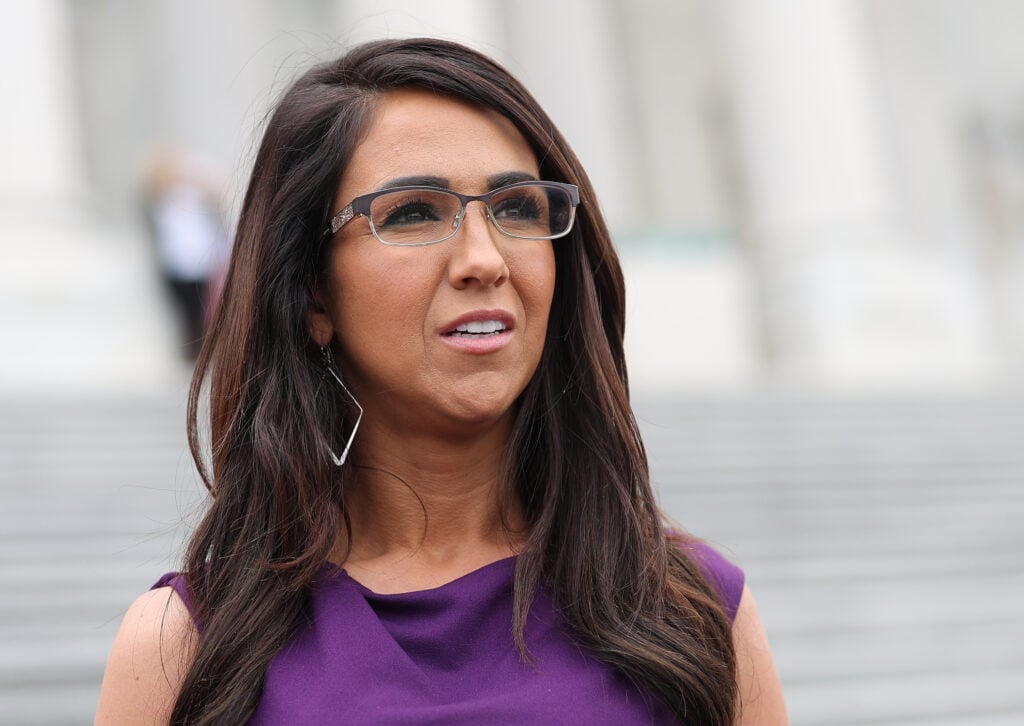
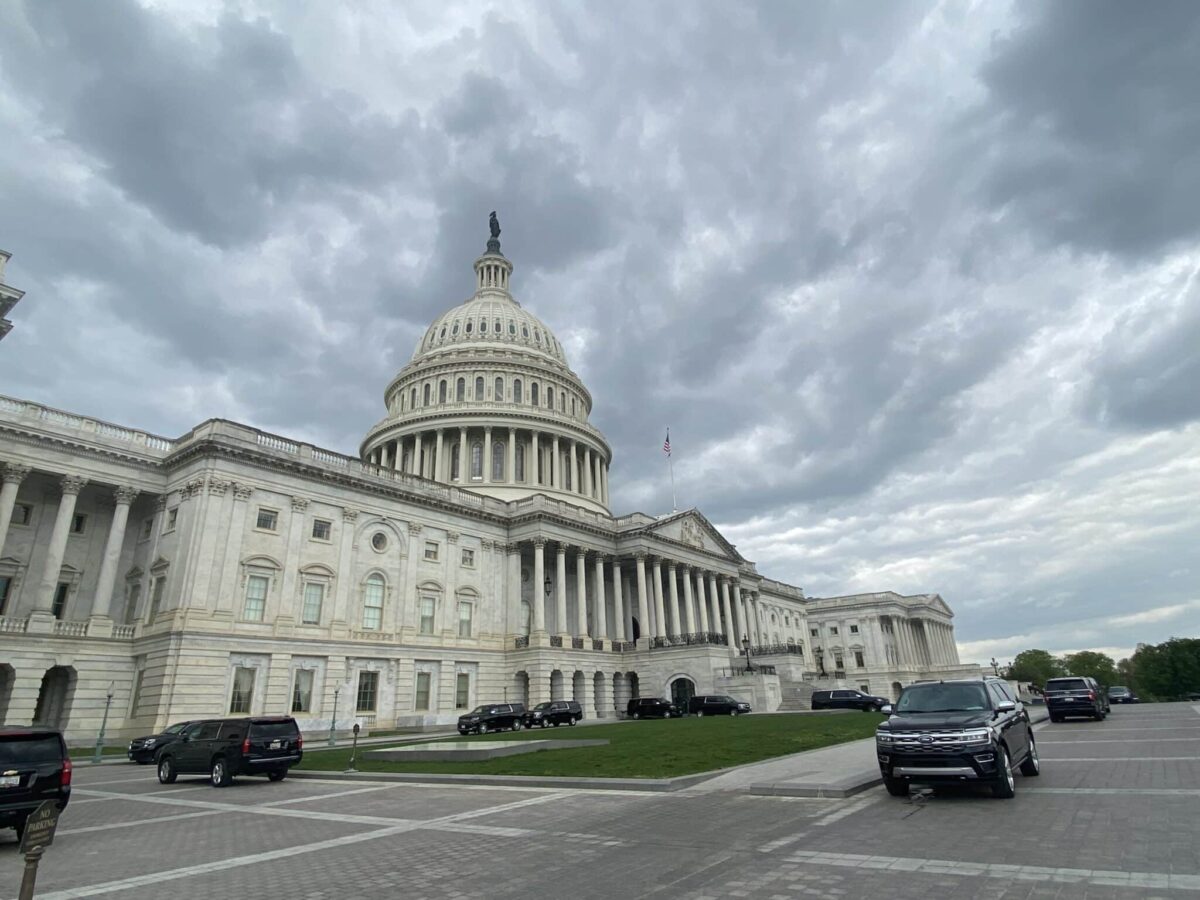
WASHINGTON — Following major Democratic wins in local and state elections across the country on Election Day, top Democratic congressional leaders pushed for a meeting with the president to end the federal government shutdown, which on Wednesday became the longest in U.S. history at day 36.

“The election results ought to send a much-needed bolt of lightning to Donald Trump that he should meet with us to end this crisis, his shutdown,” Senate Minority Leader Chuck Schumer said on the Senate floor Wednesday. “It’s time to hold a bipartisan meeting. The takeaway from last night was simply unmistakable.” 

Schumer and House Minority Leader Hakeem Jeffries, both New York Democrats, sent a Wednesday letter to President Donald Trump, calling for a bipartisan meeting at the White House to end the government shutdown and to address the spike in individual health care premiums.

“Last night, Republicans felt political repercussions,” Schumer said after Tuesday’s Election Day wins for Democrats. They included passage of a redistricting measure in California to offset partisan gerrymandering by GOP states, governorships in New Jersey and Virginia and local races across the country.

For more than a month, Democrats have voted against approving the House-passed GOP stopgap spending measure over concerns that health care tax subsidies will expire at the end of the year. As open enrollment begins, people who buy their health insurance through the Affordable Care Act Marketplace are seeing a drastic increase in premium costs. 

Sanders pushes back on dealmaking

Schumer did not detail what kind of deal Democrats would accept, but said any negotiation “must address the health care needs of the American people.”

However, independent Sen. Bernie Sanders of Vermont said that Democrats should not accept any agreement with the GOP unless there is a commitment from House Speaker Mike Johnson and the president to pass legislation to extend those tax credits.

“Bottom line is, we need to be successful in protecting the health care of the American people, and if it’s just a piece of legislation that passes the Senate … so what? Where does it go? Then it becomes just a meaningless gesture,” Sanders said. 

Republicans have maintained that they will only have a discussion on health care after Democrats agree to resume government funding. 

This week, the Senate failed for the 14th time to pass a stopgap spending measure that would fund the government until Nov. 21. 

Lawmakers have acknowledged that a new stopgap spending bill will need to be extended past the Nov. 21 deadline, but have not come to an agreement on a new deadline.

Thune plays down Democratic victories

Senate Majority Leader John Thune told reporters Wednesday that he was skeptical the government shutdown played into major wins for Democrats across the country. 

“The shutdown doesn’t benefit anyone,” he said.

The South Dakota Republican noted the shutdown may have played a role in suburban Virginia, where a large share of federal workers live and are furloughed due to the government shutdown.

“In Northern Virginia, that has a lot of federal workers, so it certainly could have been a factor in the elections,” Thune said. “But I think it’s hard to draw conclusions.”

But Thune said he’s focused on ending the government shutdown, and hopes progress can continue to be made before senators are scheduled to be out next week for recess due to the Veterans Day holiday. 

Transportation Secretary Sean Duffy this week warned that if the shutdown continues into next week, it could lead to certain airspace needing to be closed due to a shortage of air traffic controllers who have continued to work amid the shutdown.

Trump, in a social media post, blamed two factors for Republicans not performing well on Tuesday: his absence from the ballot, and the government shutdown.

“I think if you read the pollsters, the shutdown was a big factor, negative for the Republicans, and that was a big factor, and they say that I wasn’t on the ballot was the biggest factor,” Trump said during a Wednesday press conference.

Withholding SNAP benefits

As the government shutdown has continued, the Trump administration has tried to get Senate Democrats to agree to the stopgap spending measure by directing the U.S. Department of Agriculture to not tap into its contingency fund to provide food assistance to 42 million people.

Two federal courts found that the Trump administration acted unlawfully in holding back those Supplemental Nutrition Assistance Program, or SNAP, benefits, and USDA agreed that it would partially release SNAP benefits. 

Trump earlier this week wrote on his social media platform that SNAP benefits would only be released when Democrats vote to reopen the government, a move that would likely violate the two court orders.

“SNAP BENEFITS, which increased by Billions and Billions of Dollars (MANY FOLD!) during Crooked Joe Biden’s disastrous term in office (Due to the fact that they were haphazardly ‘handed’ to anyone for the asking, as opposed to just those in need, which is the purpose of SNAP!), will be given only when the Radical Left Democrats open up government, which they can easily do, and not before!,” he wrote.

However, White House press secretary Karoline Leavitt seemed to walk back that statement on Tuesday, arguing that the president’s social media post did not refer to the court order, but to future SNAP payments.

“The president doesn’t want to tap into this (contingency) fund in the future and that’s what he was referring to,” Leavitt said.

Categories
Featured Juneau News Juneau Local Ketchikan Local News Feeds Sitka Local

The number of debt collection cases in Alaska state courts is soaring, following national trends

By: James Brooks, Alaska Beacon

100 US dollars. Macro photo of banknotes of money in the US currency one hundred dollars.

Every morning, Alaska’s court system publishes an updated list of new civil lawsuits filed across the state during the past week.

And every morning, that list is dominated by debt collection cases, newly filed by credit card companies, debt collection firms or businesses seeking repayment. On Tuesday, of the 115 listed cases, 84 were for debt collections.

In the first nine months of 2022, the court system saw 1,869 debt collection cases filed. Every year since then, the number has risen. Through the first nine months of this year, there were 3,447, almost double the figure filed in 2022. 

“It’s pretty wild, the rise of them,” said attorney Stacey Stone, who practices in Alaska and is familiar with the issue.

Alaska isn’t alone in the upward trend — nationally, the number of collection lawsuits is rising after an ebb during the COVID-19 pandemic emergency.

January Advisors, a national data consulting firm that noted the rising trend in August, concluded that multiple factors may be driving it.

During the COVID-19 emergency, many Americans received financial aid that helped them pay down debt and build savings. Those programs have now ended, and American consumer debt is now at record highs, according to figures published by the Federal Reserve Bank of New York.

The number of people who are behind on their credit card payments is also on the rise, the Federal Reserve Bank of St. Louis reported earlier this year, and the number of car repossessions is rising.

Automated software programs also are making it easier for companies to more easily file large numbers of debt collection cases.

In June, the National Center on State Courts concluded that easier access to generative AI software is likely to increase filings in contract cases, like debt collections. 

Typically, a credit card company or medical provider will try first to get payment on an overdue bill directly. But if a bill still goes unpaid, many companies will deem the debt uncollectable. At that point, they sell the rights to the debt to a collections company.

The sale means the company with the unpaid bill will get at least some money, and then it becomes the collections company’s job to try to recoup the debt and earn money for itself.

Court filings in Alaska and elsewhere indicate that debt collection companies are filing more cases in an attempt to collect on the unpaid debts they’ve bought. 

Two researchers with Pew Research Center, in a September analysis, said that can have significant consequences for regular people.

People who are sued for consumer or medical debt rarely hire attorneys, they noted, and in many cases, people may not even be aware that they are being sued.

The Debt Collection Lab — a research group that includes Princeton University — found that in Oregon, private collection agencies filed the bulk of lawsuits on behalf of credit card companies, health care providers and utilities.

Only four percent of debt defendants responded to the cases filed against them, and as a result, Oregon courts awarded default judgments in favor of the debt collectors in almost seven of 10 debt cases filed between 2017 and 2023. 

Data on the result of Alaska cases was not immediately available, but a preliminary examination of court dockets and filing patterns by the Alaska Beacon shows that the trends in Alaska are similar to those in other states.

A frequent filer in Alaska courts, a national debt-buying company called LVNV Funding, increased its filings by 350% in a handful of states between 2019 and 2024, January Advisors found. 

In Connecticut, the top 10 most frequent filers in debt cases accounted for more than 80% of all debt cases filed in that state last year, January Advisors found, indicating that the most frequent filers are stepping up their aggressiveness.

“More people are defaulting on their debt right now because people are living paycheck to paycheck for various reasons, so I think you do have an organic process happening, but also there’s an aggressive process happening that’s uncharacteristic,” Stone said.

In Alaska, even a state representative has faced a debt-collection lawsuit whose details appear typical of the kinds of cases being filed here.

On Oct. 27, a debt collection firm known as Jefferson Capital Systems filed suit in Anchorage District Court against Rep. Jamie Allard, R-Eagle River.

According to the complaint, Allard took out a loan from Celtic Bank in 2023 and didn’t fully repay it. Celtic Bank subsequently transferred the debt — just $1,075 — to Jefferson Capital, which filed the lawsuit. 

The attorney who filed the lawsuit didn’t respond to a request for comment.

Allard didn’t know about the suit until she was contacted by the Alaska Beacon, which was already writing this article.

“Oh my God; I had no idea what this was about,” she said.

Stone is Allard’s attorney and said cases like these seem to come out of left field. She said they tend to be filed in bulk, and as a result, they may be inaccurate, especially when a case is filed by a third-party firm that has purchased debt from another source.

Allard has an attorney; most Alaskans named as defendants in a debt-collection case don’t have that, according to a review of online court records. 

Unlike in criminal cases, the state is not required to assign someone an attorney.

In most instances, that leaves the defendant to represent themselves or to seek help from a group like the Alaska Legal Services Corporation, a nonprofit that provides legal help to many Alaskans in civil lawsuits.

Maggie Humm, the corporation’s director, said it doesn’t have enough funding to take on every request for help that it receives, but it is seeing a surge in the number of requests for help on debt collection cases.

From 2022 through 2024, “there was a 61% increase in applications for all consumer protection matters,” which includes debt collections, said Humm.

Though the group hasn’t closed out this year, Humm said the number of people seeking help is about the same as last year.

If an Alaskan doesn’t respond to a debt collection lawsuit and a court issues a default judgment on behalf of a debt collection agency, a judge could order the garnishment of part of their income.

“Here in Alaska, we know that collectors file more cases because we have the Permanent Fund dividend … and they can garnish a percentage of it if they get a default judgment,” Humm said.

A court order also might allow a debt collector to go after someone’s checking account, other assets or — in the case of a member of the military — their military pay.

Humm said Alaskans who receive a legal complaint for debt collection should do their best to respond. She suggested they ask for help from the corporation, or get other help via online resources.

In September, the New York Times analyzed the surge of debt collection lawsuits and noted that part of the reason for the surge is that people don’t bother to defend themselves in court. 

A court defense may make someone less attractive as a target, the Times found, and if more people defended themselves, debt collectors might begin seeing lawsuits as an unprofitable way to do business.

Categories
Featured Juneau News Juneau Local Ketchikan Local News Feeds Sitka Local

Trump vows no SNAP payments until Democrats cave on shutdown

By: Jacob Fischler, States Newsroom

The Alaska and American flags fly in front of the Alaska State Capitol on Tuesday, April 22, 2025. (Photo by James Brooks/Alaska Beacon)

President Donald Trump backtracked Tuesday on a pledge by his administration in court filings to partially fund November food assistance during the government shutdown, posting on social media that benefits “will be given only when the Radical Left Democrats open up government, which they can easily do, and not before!” 

White House press secretary Karoline Leavitt said later Tuesday that Trump was referring to future uses of a food assistance contingency fund and that the administration was complying with the court order, though that description did not match Trump’s post.

Trump’s declaration appeared to have little effect on the federal court case over food aid. The U.S. Department of Agriculture wrote in a court filing late Tuesday it would continue with a plan to provide partial November payments. 

The benefits usually are provided to some 42 million Americans and, at the moment, are shut off pending the partial payments. 

Before Trump’s post Tuesday, a coalition of cities and nonprofits suing the USDA said the delayed partial payments were not enough.

The coalition that filed suit, led by the Rhode Island State Council of Churches, just prior to Trump’s social media post Tuesday asked a Rhode Island federal court to compel the government to pay full benefits. 

The USDA’s promise Monday that it would provide partial payments to households who use the Supplemental Nutrition Assistance Program, or SNAP, from a roughly $4.5 billion contingency fund, was an insufficient response to a court order, the groups said.

USDA officials said Monday they could not complete partial payments for November benefits by Chief District Court Judge John J. McConnell Jr.’s deadline of Wednesday, and warned it could take several months for beneficiaries to receive the funding because of the administrative difficulties of recalculating and processing partial benefits.

The groups suing said Tuesday that if paying partial benefits created such delays, McConnell should force the government to pay full benefits instead.

“If Defendants cannot comply with the Court’s command to expeditiously resolve the hurdles to making ‘timely’ partial payments, then that is a problem of their own making,” the groups wrote. 

“They chose—unlawfully and contrary to past agency precedent and guidance—to withhold all funding for SNAP,” they continued. “That this unlawful decision may have made it impossible for them to clear the administrative hurdles now is no excuse. They still have a straightforward path to meeting the directives in the Court’s order.”

The department could legally and relatively easily tap into a separate child nutrition program account that holds $23 billion, the groups said. That would more than cover the $9 billion needed for a month of SNAP benefits, they said. 

McConnell ordered the government to respond to the challengers’ motion, and set a hearing on the issue for Thursday afternoon. 

Trump changes course

Within an hour of the groups’ filing, Trump, who had said he was eager to restore SNAP benefits, responded on social media with his defiant message that he would only release any SNAP funding once Democrats in Congress agreed to end the government shutdown that began Oct. 1.

Trump had said Friday he told government lawyers to seek clarification on how the government could legally send out benefits during the shutdown, adding he did not want Americans to go hungry.

“If we are given the appropriate legal direction by the Court, it will BE MY HONOR to provide the funding,” he wrote Oct. 31, following an oral order by McConnell.

McConnell issued a written order the next day that benefits be provided either in full by Monday or partially by Wednesday. 

The USDA responded Monday that it would provide partial benefits from the contingency fund that held about half of a month’s worth of benefits, but that the process could take weeks or even months for states to recalibrate the amount each beneficiary would receive and to process those payments.

Agriculture Secretary Brooke Rollins echoed that commitment just before the challengers submitted their motion to compel full payments.

“This morning, @USDA sent SNAP guidance to States,” Rollins wrote on X. “My team stands by to offer immediate technical assistance. This will be a cumbersome process, including revised eligibility systems, State notification procedures, and ultimately, delayed benefits for weeks, but we will help States navigate those challenges.”

Spokespeople for the USDA did not return messages seeking an explanation for the course change Tuesday morning.

At the White House press briefing Tuesday afternoon, Leavitt said she had just spoken with Trump and sought to clarify his statement.

“We are digging into a contingency fund,” she said. “The president doesn’t want to tap into this fund in the future and that’s what he was referring to.” 

Skye Perryman, the president and CEO of Democracy Forward, an advocacy group representing the groups challenging the administration, said in a Tuesday post to social media that Trump’s post was “immoral” and that the group would make use of it.

“See you in court,” Perryman said.

Shutdown lingers

The dispute over SNAP benefits stems from the lapse in government funding that began when Congress failed to appropriate money for federal programs by the start of the fiscal year on Oct. 1.

The USDA said in a plan published just ahead of the shutdown — and since deleted — that it would use the contingency fund, which then held $6 billion, to cover SNAP benefits if needed.

But the department reversed itself within weeks, telling states in an Oct. 10 letter that benefits would not be paid in November if the government remained shut down on the first of the month.

Members of each party have blamed the other for the lack of SNAP benefits. 

Democrats have demanded the administration reshuffle funds to cover the program, as it has with other federal funding during the shutdown, while Republicans have called on Democrats to approve a stopgap spending bill to reopen the government at fiscal 2025 spending levels.

Democrats in Congress have blocked Republicans’ “clean” continuing resolution to reopen the government in a bid to force negotiations on expiring tax credits for people who buy insurance on the Affordable Care Act marketplace.

As of Tuesday, the parties showed little sign of softening their positions.

Ariana Figueroa contributed to this report.

Categories
Politics

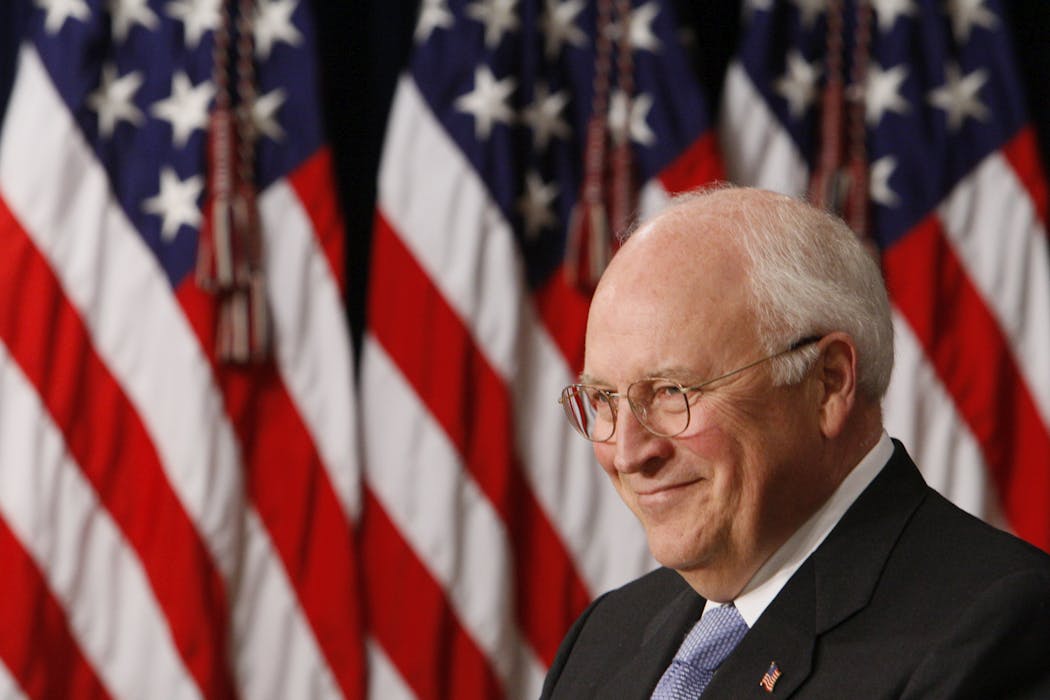
Dick Cheney’s expansive vision of presidential power lives on in Trump’s agenda

Vice President Dick Cheney appears at a Washington D.C., event in 2007. AP Photo/Charles Dharapak

This is an updated version of a story that first published on Oct. 7, 2025.

Former Vice President Dick Cheney will be remembered for many things. He was arguably the most powerful vice president in American history. He was a paragon of conservatism. He was the
architect of many of the more extreme measures in President George W. Bush’s “war on terror.”

But Cheney’s legacy, after his death on Nov. 3, 2025, will also include a crucial development that dates back a half-century, when he served as President Gerald Ford’s chief of staff. Based on his experience in the Ford administration, Cheney felt that Congress had overreacted in its efforts to rein in the presidency after the abuses of President Richard Nixon. He thought that the assertive Congress of the 1970s had gone too far and had emasculated the presidency, making it nearly impossible for the president to get things done.

As Cheney told an interviewer in 2005: “I do have the view that over the years there had been an erosion of presidential power and authority, that it’s reflected in a number of developments – the War Powers Act. … I am one of those who believe that was an infringement upon the authority of the President. … A lot of the things around Watergate and Vietnam, both, in the ’70s served to erode the authority, I think, the President needs to be effective especially in a national security area.”

Cheney’s experience in the Ford years set in place a decades-long effort to enhance presidential power, to reinvigorate an office that he believed Congress had wrongly diminished. When Bush surprisingly picked Cheney to be his vice president in July 2000, Cheney finally had a chance to right that perceived wrong.

Bush was happy to expand his own power, and the Bush administration made bold assertions of presidential power in a variety of areas. In many instances, Bush and others sought to justify his actions by invoking the unitary executive theory, a conservative thesis that calls for total presidential control over the entire executive branch.

Now, nearly two decades later, President Donald Trump is using this theory to push his agenda. He set the tone for his second term by issuing 26 executive orders, four proclamations and 12 memorandums on his first day back in office. The barrage of unilateral presidential actions has not yet let up.

These have included Trump’s efforts to remove thousands of government workers and fire several prominent officials, such as members of the Corporation for Public Broadcasting and the chair of the Commission on Civil Rights. He has also attempted to shut down entire agencies, such as the Department of Education and the U.S. Agency for International Development.

For some scholars, these actions appear rooted in the psychology of an unrestrained politician with an overdeveloped ego.

But it’s more than that.

As a political science scholar who studies presidential power, I believe Trump’s recent actions mark the culmination of the unitary executive theory, which is perhaps the most contentious and consequential constitutional theory of the past several decades.

A prescription for a potent presidency

In 2017, Trump complained that the scope of his power as president was limited: “You know, the saddest thing is that because I’m the president of the United States, I am not supposed to be involved with the Justice Department. I am not supposed to be involved with the FBI, I’m not supposed to be doing the kind of things that I would love to be doing. And I’m very frustrated by it.”

The unitary executive theory suggests that such limits wrongly curtail the powers of the chief executive.

Formed by conservative legal theorists in the 1980s to help President Ronald Reagan roll back liberal policies, the unitary executive theory promises to radically expand presidential power.

There is no widely agreed upon definition of the theory. And even its proponents disagree about what it says and what it might justify. But in its most basic version, the unitary executive theory claims that whatever the federal government does that is executive in nature – from implementing and enforcing laws to managing most of what the federal government does – the president alone should personally control it.

This means the president should have total control over the executive branch, with its dozens of major governmental institutions and millions of employees. Put simply, the theory says the president should be able to issue orders to subordinates and to fire them at will.

President Donal Trump appears seated in the oval office.
President Donald Trump signs executive orders in the Oval Office next to a poster displaying the Trump Gold Card on Sept. 19, 2025.
AP Photo/Alex Brandon

The president could boss around the FBI or order the U.S. attorney general to investigate his political opponents, as Trump has done. The president could issue signing statements – a written pronouncement – that reinterpret or ignore parts of the laws, like George W. Bush did in 2006 to circumvent a ban on torture. The president could control independent agencies such as the Securities and Exchange Commission and the Consumer Product Safety Commission. The president might be able to force the Federal Reserve to change interest rates, as Trump has suggested. And the president might possess inherent power to wage war as he sees fit without a formal authorization from Congress, as officials argued during Bush’s presidency.

A constitutionally questionable doctrine

A theory is one thing. But if it gains the official endorsement of the Supreme Court, it can become governing orthodoxy. It appears to many observers and scholars that Trump’s actions have intentionally invited court cases by which he hopes the judiciary will embrace the theory and thus permit him to do even more. And the current Supreme Court appears ready to grant that wish.

Until recently, the judiciary tended to indirectly address the claims that now appear more formally as the unitary executive theory.

During the country’s first two centuries, courts touched on aspects of the theory in cases such as Kendall v. U.S. in 1838, which limited presidential control of the postmaster general, and Myers v. U.S. in 1926, which held that the president could remove a postmaster in Oregon.

In 1935, in Humphrey’s Executor v. U.S., the high court unanimously held that Congress could limit the president’s ability to fire a commissioner of the Federal Trade Commission. And in Morrison v. Olson the court in 1988 upheld the ability of Congress to limit the president’s ability to fire an independent counsel.

Some of those decisions aligned with some unitary executive claims, but others directly repudiated them.

Warming up to a unitary executive

In a series of cases over the past 15 years, the Supreme Court has moved in an unambiguously unitarian, pro-presidential direction. In these cases, the court has struck down statutory limits on the president’s ability to remove federal officials, enabling much greater presidential control.

These decisions clearly suggest that long-standing, anti-unitarian landmark decisions such as Humphrey’s are on increasingly thin ice. In fact, in Justice Clarence Thomas’ 2019 concurring opinion in Seila Law LLC v. CFPB, where the court ruled the Consumer Financial Protection Bureau’s leadership structure was unconstitutional, he articulated his desire to “repudiate” the “erroneous precedent” of Humphrey’s.

Several cases from the court’s emergency docket, or shadow docket, in recent months indicate that other justices share that desire. Such cases do not require full arguments but can indicate where the court is headed.

In Trump v. Wilcox, Trump v. Boyle and Trump v. Slaughter, all from 2025, the court upheld Trump’s firing of officials from the National Labor Relations Board, the Merit Systems Protection Board, the Consumer Product Safety Commission and the Federal Trade Commission.

Previously, these officials had appeared to be protected from political interference.

President George W. Bush appears with several soldiers.
President George W. Bush signed statements in 2006 to bypass a ban on torture.
AP Photo/Pablo Martinez Monsivais, File

Total control

Remarks by conservative justices in those cases indicated that the court will soon reassess anti-unitary precedents.

In Trump v. Boyle, Justice Brett Kavanaugh wrote, “whether this Court will narrow or overrule a precedent … there is at least a fair prospect (not certainty, but at least a reasonable prospect) that we will do so.” And in her dissent in Trump v. Slaughter, Justice Elena Kagan said the conservative majority was “raring” to overturn Humphrey’s and finally officially embrace the unitary executive.

In short, the writing is on the wall, and Humphrey’s may soon go the way of Roe v. Wade and other landmark decisions that had guided American life for decades.

As for what judicial endorsement of the unitary executive theory could mean in practice, Trump seems to hope it will mean total control and hence the ability to eradicate the so-called “deep state.” Other conservatives hope it will diminish the government’s regulatory role.

Kagan recently warned it could mean the end of administrative governance – the ways that the federal government provides services, oversees businesses and enforces the law – as we know it:

“Humphrey’s undergirds a significant feature of American governance: bipartisan administrative bodies carrying out expertise-based functions with a measure of independence from presidential control. Congress created them … out of one basic vision. It thought that in certain spheres of government, a group of knowledgeable people from both parties – none of whom a President could remove without cause – would make decisions likely to advance the long-term public good.”

If the Supreme Court officially makes the chief executive a unitary executive, the advancement of the public good may depend on little more than the whims of the president, a state of affairs normally more characteristic of dictatorship than democracy.

Judicial approval of the unitary executive theory might well have pleased Cheney by enshrining a significant means of enhancing presidential power. But ironically, the former vice president would be displeased for such power to be accessible to the current president, whom Cheney criticized, calling Trump a “threat to our republic.”

The Conversation

Graham G. Dodds does not work for, consult, own shares in or receive funding from any company or organization that would benefit from this article, and has disclosed no relevant affiliations beyond their academic appointment.

​Politics + Society – The Conversation

Categories
Entertainment

Eria Kirk Says She Rejected Jimmy Kimmel’s Apology

Reading Time: 3 minutes

In the weeks after Charlie Kirk was shot and killed during a speaking engagement, virtually every major media figure felt compelled to comment on the situation.

One such figure was Jimmy Kimmel, whose joke about the politicization of the murder ruffled feathers within the Trump administration.

Kimmel was suspended by ABC after FCC Chair Brendan Carr publicly threatened the network’s parent company, Disney, with retribution.

The host was eventually reinstated, but the debate over his comment continues — and now, Charlie’s widow, Erika Kirk, has broken her silence on the subject.

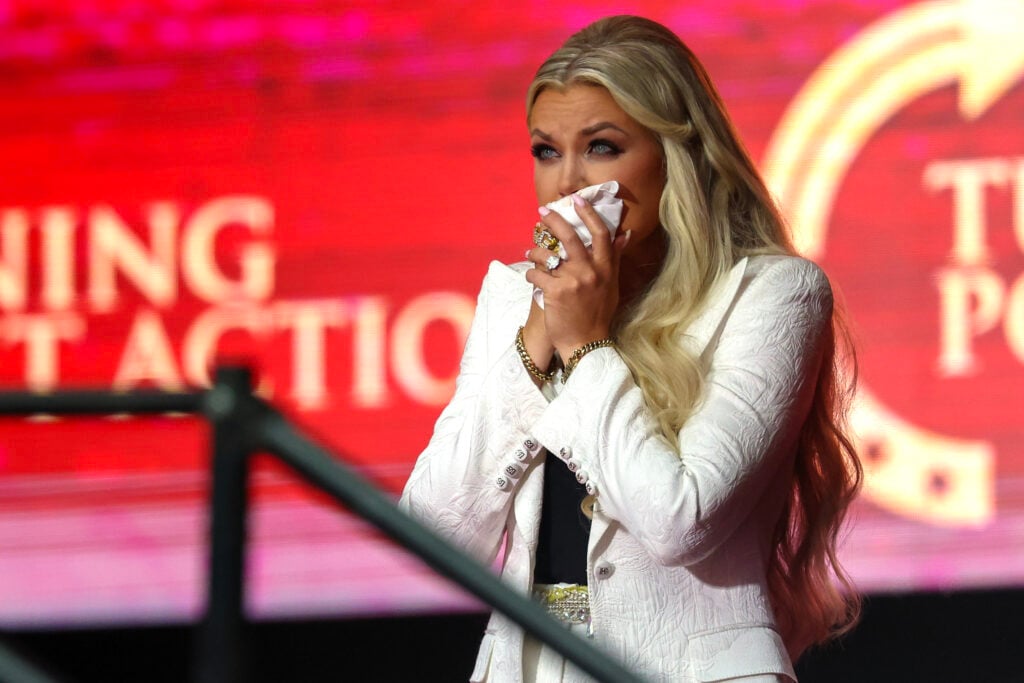
Mrs. Erika Kirk wipes away tears during the memorial service for her husband, political activist Charlie Kirk at State Farm Stadium on September 21, 2025 in Glendale, Arizona.
Mrs. Erika Kirk wipes away tears during the memorial service for her husband, political activist Charlie Kirk at State Farm Stadium on September 21, 2025 in Glendale, Arizona. (Photo by Eric Thayer/Getty Images)

Kimmel controversy continues as Erika Kirk rebuffs apology

On Monday, Kirk participated in her first sit-down interview since her husband’s death.

In a conversation with Jesse Watters of Fox News, she revealed that Sinclair Broadcast Group, which operates numerous ABC stations across the country, asked her if she wanted to appear on Kimmel’s show and receive an apology.

“I told them thank you we received their note. This is not our issue. It’s not our mess,” Kirk told Watters.

“If you wanna say I’m sorry to someone who’s grieving, go right ahead. But if that’s not in your heart, then don’t do it. I don’t want it. I don’t need it.”

Jimmy Kimmel attends "Jeff Ross: Take A Banana For The Ride" Broadway Opening Night at Nederlander Theatre on August 18, 2025 in New York City.
Jimmy Kimmel attends “Jeff Ross: Take A Banana For The Ride” Broadway Opening Night at Nederlander Theatre on August 18, 2025 in New York City. (Photo by Michael Loccisano/Getty Images)

In his first post-suspension monologue, Kimmel did express remorse to anyone close to Charlie who might have been offended by his remarks.

But he also pointed out that his joke was about the political reaction to Kirk’s murder, not the murder itself.

“We hit some new lows over the weekend with the MAGA gang trying to characterize this kid who killed Charlie Kirk as anything other than one of them and doing everything they can to score political points from it,” Kimmel said on the September 15 episode of his show.

Kimmel’s remarks ignited an unexpected firestorm of controversy, as many observers argued that the Trump administration had trampled on the comic’s First Amendment rights by pressuring his employers.

Erika Kirk joins U.S. President Donald Trump onstage during the memorial service for political activist Charlie Kirk at State Farm Stadium on September 21, 2025 in Glendale, Arizona.
Erika Kirk joins U.S. President Donald Trump onstage during the memorial service for political activist Charlie Kirk at State Farm Stadium on September 21, 2025 in Glendale, Arizona. (Photo by Win McNamee/Getty Images)

Even rightwing politicians like Ted Cruz criticized the Trump administration for violating Kimmel’s right to free speech.

Elsewhere in the interview, Kirk was asked if her daughter continues to ask where her father is.

“Yes. My daughter continues to ask. But it’s really sweet because I keep explaining to her a few things,” Erika said.

“And I said, ‘If ever you want to talk to daddy, you just look up to the sky and start talking to him. He can hear you,’” she continued, adding:

“I told her, I said, ‘You know, daddy, daddy is in heaven.’ She goes, ‘You think I could go sometime?’ I said, ‘Baby, we will all go one day. We will all go one day.’”

Erika previously made headlines when she spoke at Charlie Kirk’s memorial and revealed that she had forgiven her husband’s killer.

Eria Kirk Says She Rejected Jimmy Kimmel’s Apology was originally published on The Hollywood Gossip.

​The Hollywood Gossip

Categories
Entertainment

Ben Duncan Cause of Death; Friend of Prince William & Kate Middleton Was 45

Reading Time: 3 minutes

We have tragic news to report out of London today:

Ben Duncan, the UK reality star and longtime friend of Prince William and Kate Middleton, has passed away.

He was just 45 years old.

Ben Duncan becomes the 6th housemate evicted from the 11th and final Big Brother House on July 30, 2010 in Borehamwood, England.
Ben Duncan becomes the 6th housemate evicted from the 11th and final Big Brother House on July 30, 2010 in Borehamwood, England. (Photo by Eamonn McCormack/Getty Images)

News of Duncan’s passing comes courtesy of a statement from the London police.

London police confirm Ben Duncan’s cause of death

According to a statement issued to the Daily Mail, Duncan “fell about 100 feet off a rooftop bar (on the seventh floor) at London’s Trafalgar St. James Hotel.”

A spokesperson says that “officers responded to concerns for a man on the roof of a building in Cockspur Street, Westminster.”

“The man sadly fell from height. Despite the best efforts from the London Ambulance service, he was sadly pronounced dead at the scene,” the statement added. “His death is unexpected but non-suspicious.”

In a separate statement, an insider at a London ambulance service spoke of the efforts to save Duncan’s life.

Ben Duncan has passed away unexpectedly at the age of 45.
Ben Duncan has passed away unexpectedly at the age of 45. (YouTube)

“’We sent resources to the scene, including an ambulance crew, an incident response officer, paramedics in fast response cars and paramedics from our hazardous area response team,” the insider told the Mail.

“We also dispatched a trauma team in a car from London’s Air Ambulance. Very sadly, despite the best efforts of our crews, a man was pronounced dead at the scene.”

An acquaintance of the future king and queen

Duncan competed on the UK version of Big Brother in 2010. He went on to appear on several more reality shows, including Come Dine With Me, Ladette to Lady, and Celebrity Coach Trip.

But he is perhaps best known for the fact that he attended the University of St Andrews at the same time as William and Kate.

Catherine, Princess of Wales and Prince William, Prince of Wales walk in the orchards as they visit to Long Meadow Cider on October 14, 2025 in Craigavon, Northern Ireland.
Catherine, Princess of Wales and Prince William, Prince of Wales walk in the orchards as they visit to Long Meadow Cider on October 14, 2025 in Craigavon, Northern Ireland. (Photo by Chris Jackson/Getty Images)

“Because we’d had Will and Kate in our midst we had royal protection officers swarming the place,” he recalled in a 2010 interview (via Us Weekly). “We knew that they had hit it off and we knew that something was happening, but they were just left alone to get on with it.”

Duncan was also present at the famous student fashion show where Hate first caught William’s eye.

“It was the end of their first year. I was there, and in person there were a lot of attractive girls,” he recalled. “She was in a very daring dress, in a sheer stocking-like dress. He was sitting front row and his eyes were like stalks.”

Duncan added, “She brushed by him on the way to the catwalk and things were never the same again — the whole history of the monarchy had been altered.”

Neither William nor Kate has publicly commented on their former schoolmate’s passing.

Our thoughts go out to Ben Duncan’s loved ones during this enormously difficult time.

Ben Duncan Cause of Death; Friend of Prince William & Kate Middleton Was 45 was originally published on The Hollywood Gossip.

​The Hollywood Gossip

Categories
Entertainment

Lauren Boebert Defends Blatantly Racist Halloween Costume

Reading Time: 4 minutes

Provocateur and Representative Lauren Boebert ignited a firestorm over the weekend.

She and her boyfriend, Kyle Pearcy, went in an appalling couple’s costume.

Boebert could have opted for something funny or harmless. Beeltejuice might have worked.

Instead, her boyfriend dressed as an ICE agent. And Boebert’s costume was nothing more than racism.

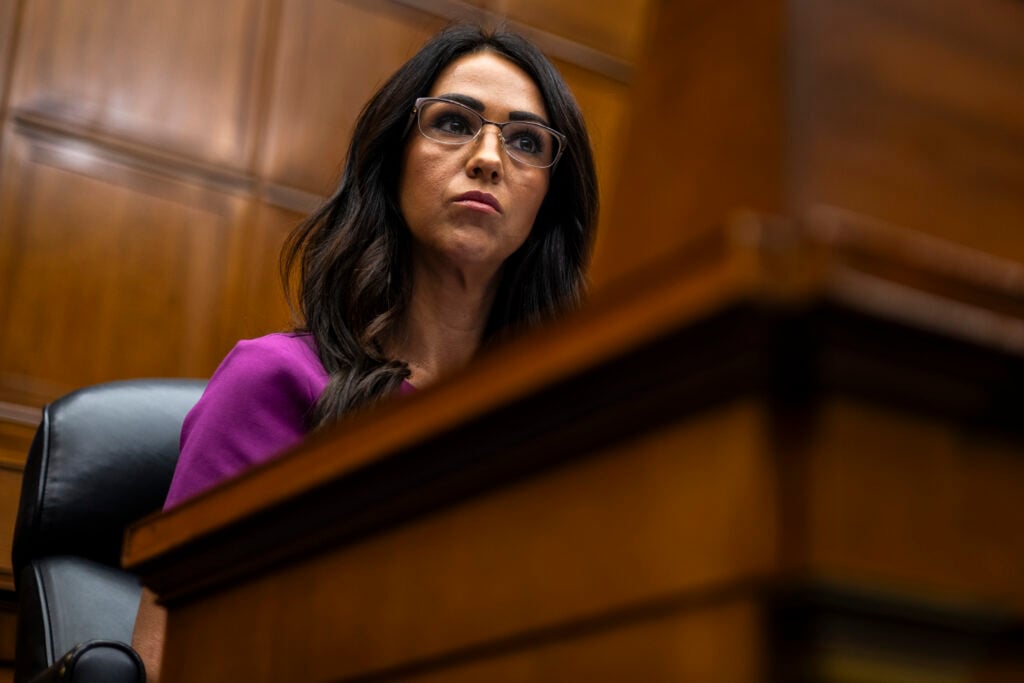
Lauren Boebert in July 2024.
U.S. Rep. Lauren Boebert (R-CO) questions United States Secret Service Director Kimberly Cheatle during a House Oversight and Accountability Committee hearing in the Rayburn House Office Building on July 22, 2024. (Photo Credit: Samuel Corum/Getty Images)

What racist costume did Lauren Boebert wear for Halloween?

On Friday, October 31, Rep. Lauren Boebert and boyfriend Kyle Pearcy attended a Loveland, Colorado Halloween party.

Holiday parties are an opportunity for government officials — even the worst of the worst — to show the world that they are, at the end of the day, human beings who want to live their lives and have fun.

Boebert opted for a different approach.

Her boyfriend wore military-style gear, including camouflage, with an ICE vest over the fatigues. Given that ICE agents are currently terrorizing American communities across the nation, that is abhorrent but grimly unsurprising.

Boebert wore an appallingly racist costume, portraying what appears to be a woman of Mexican descent residing in the United States.

Lauren Boebert’s Halloween costume was so offensive that even the conservatives at the party ghosted her. At this point, “poor judgment” is less a phase for Boebert and more her entire political platform. She’s definitely the bottom of the barrel.www.thedailybeast.com/maga-congres…

[image or embed]

— Karl Kuszaj (@karlkuszaj.bsky.social) November 4, 2025 at 8:13 AM

As you can see, Boebert is wearing a traditional Mexican dress.

She is also wearing a sombrero.

On their own, this could be a racist caricature, but is not explicitly or brazenly racist. But then there is the most important detail.

She is wearing a board with the words: “Mexican Word of the day: JUICY. Tell me if Juicy Ice coming.”

That nonsensical sentence appears to be Boebert mocking anyone who might pronounce “you see” as “juicy.” (We would not personally associate that pronunciation with Mexican-Americans, but that is beside the point)

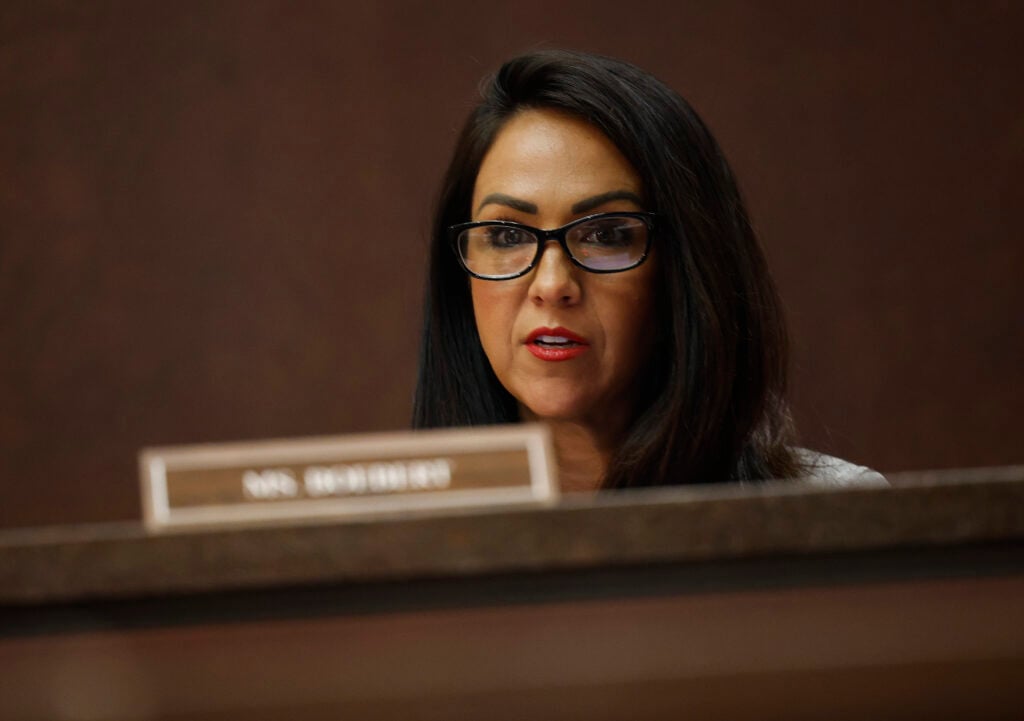
Lauren Boebert in September 2025.
U.S. Rep. Lauren Boebert (R-CO) participates in a House Oversight Committee’s Task Force on the Declassification of Federal Secrets hearing at the U.S. Capitol on September 09, 2025. (Photo Credit: Kevin Dietsch/Getty Images)

This goes beyond the erosion of political norms

Bold-faced racism like this would have been a major scandal from a member of Congress just a decade ago.

Make no mistake: there were and always have been proud racists within the United States government. But, in the decades prior before Trump first took office, most avoided “saying the quiet part out loud.”

Reports say that one of the reasons that Majorie Taylor Greene dislikes Lauren Boebert is that the latter is simply too racist for her.

That is saying a lot, coming from a Trump supporter who made headlines with her “Jewish space lasers” conspiracy theory.

But, looking at Boebert mock the terror afflicting millions of Americans at this very moment while simultaneously portraying a vicious caricature of the entire Latine community … this isn’t just a further eroding of norms. This is evil.

“Rep. Lauren Boebert, R-Colo., attended a Halloween party Friday dressed as a Mexican woman while her boyfriend Kyle Pearcy wore an ICE vest over military-style clothes.”

[image or embed]

— Feena van (@feenavan2099.bsky.social) November 4, 2025 at 1:25 AM

Boebert (who, it turns out, is only 38 years old) was not entirely among friends at the party, according to reports.

Obviously, the others at the gathering were the sorts of people who would either invite someone like her to a party or not leave upon realizing that she’s there.

But even they shied away from Boebert’s racist Halloween costume, ABC News reports.

“It is the most disgusting thing I have ever seen. Even the conservatives [at the party] were in shock. People avoided them,” one attendee described.

To be blunt, it takes a lot to shock people in 2025. Most of us feel more surprised by rare good news than by once-unthinkable horrors or new, inventive displays of bigotry.

Lauren Boebert in May 2024.
U.S. Rep. Lauren Boebert (R-CO) speaks with reporters as she leaves the U.S. Capitol for the weekend on May 17, 2024. (Photo Credit: Kevin Dietsch/Getty Images)

She did not apologize (of course)

As you might have guessed, Lauren Boebert has no interest in apologizing or working to become a decent person.

“It’s a Halloween costume,” her office argued in a statement.

“Tell our Senators to vote for the CR and open the government,” Boebert’s office claimed. “They are choosing to let millions of American families suffer.”

That is not really true, as Trump and his GOP cronies are attempting to hold SNAP recipients and remaining government workers hostage in order to snatch healthcare subsidies away from all Americans.

But that is an unsurprising deflection from a woman willing to sink to new, horrible depths of depravity at every turn.

Lauren Boebert Defends Blatantly Racist Halloween Costume was originally published on The Hollywood Gossip.

​The Hollywood Gossip

Categories
Entertainment

Theresa Nist BLASTS Gerry Turner, Fires Back Against Ex-Husband’s Book Claims

Reading Time: 4 minutes

Theresa Nist would like your attention.

Or, to be more accurate and specific, Theresa Nist would like the attention of her ex-husband.

For those unaware, Gerry Turned has written a memoir titled “Golden Years: What I’ve Learned from Love, Loss, and Reality TV.

In a previous interview with Us Weekly, the original Golden Bachelor — who proposed to Nist on his season’s finale, then married her months later on air and then announced their divorce in April 2024 — said his ex-wife “should be worried” about the contents of this book.

(ABC)

What a weird and rude thing to say, huh?

“I am normally such a calm person. And all I want is peace and joy and good things in my life,” Theresa said on the latest edition of the Dear Shandy podcast.

“I have been so upset. I have been extremely upset. Anytime I talk about anything that I read that he said about any interaction we had, I just go, ‘That’s not how it was.’”

Such as?

According to Theresa, there was “distance” between her and Turner that began on her overnight date.

It wasn’t until the pair were in the fantasy suite — when she began talking about her job — that she felt the dynamic “changed completely.

Is she implying here that Turner was in their relationship for their money?

“He started proclaiming his love for me. [He said], ‘I love you. I love you. I love you. And I’m going to ask you to marry me and whether or not you say yes, that’s up to you.’ I was shocked,” Theresa recalled, noting that she thought Gerry had a stronger connection with runner-up Leslie Fhima.

Gerry Turner and Theresa Nist did not make it as a couple. (ABC)

Elsewhere, Nist said Turner had quite a temper.

For example, she tried to go to sleep one night as early as her husband, only for Turner to reportedly lose it on her.

“I was up for like an hour and I was just about to go to sleep and all of a sudden he comes storming out of the bedroom calling me a liar,” Theresa said on air, claiming that Gerry said the comments in “such a bad temper.”

In his book, Turner said he felt “trapped” the night before the pair’s wedding.

This was news to Nist, however, who says the two never discussed these feelings.

“I have to say that I always said I like to live my life without regrets, but boy I made some mistakes here. I regret getting married so quickly. That shouldn’t have happened,” Theresa did confess on the podcast, emphasizing that Turner should have called off the ceremony if he was really thinking it was a bad idea.

Theresa Nist came out on top of The Golden Bachelor. (ABC)

Also in his memoir, Turner alleged that his now-ex was hesitant to sign a prenuptial agreement.

However, Nist now tells a different story about being confused by which documents to return to him.

“Gerry wanted the prenup and I told him, ‘No, I would never in a million years take your money.’ So he dropped it,” Theresa explained.

Turner, though, changed his mind and ultimately asked Theresa to sign the prenup. Sounds like a lot of miscommunication here.

Gerry Turner and Theresa Nist announce their divorce on Good Morning America.
Gerry Turner and Theresa Nist announce their divorce on Good Morning America. (Image Credit: ABC)

It also sounds as if the former spouses didn’t have the best sex life, to put it bluntly.

When visiting Theresa at her home in New Jersey at one point, Gerry alleged that she “rebuffed” his attempts at physical intimacy and that she made him sleep on the sofa.

Theresa, for her part?

“I haven’t slept with anyone in nine years,” she now says.

“I didn’t sleep the entire night and I’m not a great sleeper. The next morning it came up, ‘How did you sleep?’ I said, ‘I didn’t sleep at all.’ We slept together the first night. He said, ‘Oh, I can sleep on the couch if you want me to.’ He offered to sleep on the couch. I did not ask him to sleep on the couch,” Theresa claimed.

Gerry Turner proposes
Gerry Turner and Theresa Nist are no longer married. (ABC)

About a year ago, Turner was diagnosed with cancer.

Nist said she absolutely would have stuck by Gerry’s side throughout this battle, and that the diagnosis had nothing to do with their divorce.

Fast forward these many months and Nist hasn’t given up on love.

“I really do want to get married. I do want love in my life. That’s what I wanted. That was the whole point of this,” she said on the podcast.

Theresa Nist BLASTS Gerry Turner, Fires Back Against Ex-Husband’s Book Claims was originally published on The Hollywood Gossip.

​The Hollywood Gossip

Categories
Entertainment

Sydney Sweeney Finally Speaks Out About Trump’s Take on American Eagle Controversy

Reading Time: 3 minutes

Two months and roughly 4,000 social media discourses ago, Sydney Sweeney’s American Eagle ad campaign ignited a firestorm of controversy.

The situation got so out of control that even President Donald Trump and Vice President J.D. Vance felt the need to weigh in.

In fact, just about the only person who didn’t toss in her two cents was Sydney herself — but that changed today.

US actress Sydney Sweeney attends Variety's 2025 Power Of Women at the Beverly Hills Hotel in Beverly Hills, California on October 29, 2025.
US actress Sydney Sweeney attends Variety’s 2025 Power Of Women at the Beverly Hills Hotel in Beverly Hills, California on October 29, 2025. (Photo by PATRICK T. FALLON/AFP via Getty Images)

Sydney Sweeney says ‘great jeans’ drama was ‘surreal’

As you’re probably aware, Sydney is currently promoting her new movie Christy.

That’s why she’s been even more omnipresent than usual in recent weeks, appearing everywhere from late night shows to the World Series.

But while she’s been making the media rounds with the energy of a candidate for public office, Sydney skilfully dodged the American Eagle issue until a journalist for GQ asked her about it point-blank in an interview that came out Tuesday afternoon.

In case you forgot, critics said Sydney’s ad had racist undertones due to its central joke about the quality of her genes (the whole campaign was structured around a genes/jeans pun that was corny but probably not intended to offend anyone).

Sydney Sweeney attends the cast Of "Christy" appear on SiriusXM's The Julia Cunningham Show at SiriusXM Studios on October 28, 2025 in Los Angeles, California.
Sydney Sweeney attends the cast Of “Christy” appear on SiriusXM’s The Julia Cunningham Show at SiriusXM Studios on October 28, 2025 in Los Angeles, California. (Photo by Vivien Killilea/Getty Images for SiriusXM)

Speaking about the controversy for the first time, Sydney was mostly dismissive, but she adroitly steered clear of saying anything combative or overtly political.

“I did a jean ad. I mean, the reaction definitely was a surprise, but I love jeans. All I wear are jeans. I’m literally in jeans and a T-shirt every day of my life,” she said.

“The president and the vice president spoke about the jeans ad. What was that like?” GQ‘s Katherine Stoeffel asked.

“It was surreal,” Sydney replied.

When the interviewer posited that Sydney must have felt “thankful” to be defended by “very powerful people,” the actress again demurred.

Sydney Sweeney attends Variety's 2025 Power of Women at The Beverly Hills Hotel on October 29, 2025 in Beverly Hills, California.
Sydney Sweeney attends Variety’s 2025 Power of Women at The Beverly Hills Hotel on October 29, 2025 in Beverly Hills, California. (Photo by Maya Dehlin Spach/Getty Images)

“I don’t think…. It’s not that I didn’t have that feeling, but I wasn’t thinking of it like that, of any of it. I kind of just put my phone away. I was filming every day,” said Sydney.

“I’m filming Euphoria, so I’m working 16-hour days, and I don’t really bring my phone on set, so I work and then I go home and I go to sleep. So I didn’t really see a lot of it.”

Sydney should probably write a book on how to comment on sensitive issues without rubbing anyone the wrong way.

This is probably what all celebrity interviews will sound like in a few years as both sides of the political spectrum continue to subject public figures to ideological purity tests.

We’re sure Sydney has her beliefs, but she’s also a 28-year-old woman who’s been rich and famous for like 10 minutes.

“I would like to continue being rich and famous” is probably chief among those beliefs.

Sydney Sweeney Finally Speaks Out About Trump’s Take on American Eagle Controversy was originally published on The Hollywood Gossip.

​The Hollywood Gossip

Categories
Politics

November 2025

Political cartoons from the desk of Matt Wuerker

​Politics