Tom Hollander says he’s not worried about AI actors replacing real ones and thinks the creation of synthetic performers will only boost the value of authentic, live performance.The Latest News from the UK and Around the World | Sky News









Tom Hollander says he’s not worried about AI actors replacing real ones and thinks the creation of synthetic performers will only boost the value of authentic, live performance.The Latest News from the UK and Around the World | Sky News

A military horse that bolted through London after being startled by construction work has retired.The Latest News from the UK and Around the World | Sky News

Donald Trump has announced the US will impose an additional 100% tariff on China imports, accusing it of taking an “extraordinarily aggressive position” on trade.The Latest News from the UK and Around the World | Sky News

A senior Hamas official has thanked President Donald Trump for his role in securing a ceasefire deal between Israel and Hamas.The Latest News from the UK and Around the World | Sky News

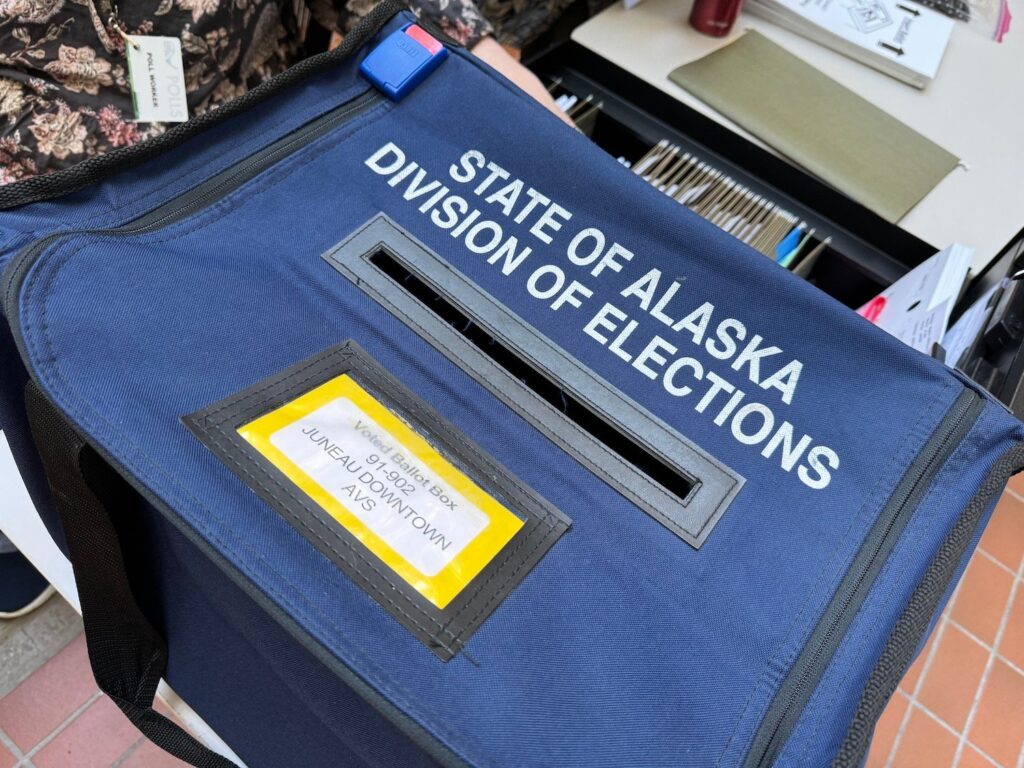
NOTN- Juneau voters are set to approve two tax-cutting measures according to unofficial results from the City and Borough of Juneau’s municipal election released Friday.
Early results show challenger Nathaniel “Nano” Brooks leading incumbent Wade Bryson 4,652 votes to 4,242 in the city’s only contested Assembly race.
Greg Smith and Ella Adkison, both running unopposed, secured their seats for District 1 and the areawide Assembly positions, respectively.
In the race for the Board of Education, Steve Whitney leads, followed by Melissa Cullum, Jenny Thomas, Jeremy “JJJ” Johnson and Deedie Sorensen.
Speaking Wednesday morning, Weldon said due to high voter turnout, preliminary numbers for Ballot propositions 1 through 3 won’t likely change.
“Ballot Proposition 2, taking the sales tax off food, that’s not going to change. The seasonal sales tax is not going to change. Proposition 1 has a possibility of changing, but is likely going to stay that way.” Weldon Said.
Proposition 1, which would lower the city’s property tax cap from 12 to 9 mills, is ahead with 5,002 votes in favor and 4,807 opposed.
Proposition 2, which exempts food and residential utilities from sales tax, passed by a wide margin 6,842 votes to 2,995 .
Proposition 3, which would have created a seasonal sales tax aimed at shifting more of the burden to tourists, was rejected 5,681 to 4,174.
The updated totals include all ballots received and verified through Thursday. Additional mail-in ballots postmarked by Election Day are still being processed, with final certification expected on Oct. 21.
“We’ll just evaluate and figure out where we can fill the hole with cutting services a bit and other things, the biggest hit to the budget was taking sales tax off food without filling that hole. So that’s, you know, somewhere around $8 million.” Weldon said, “It’s easy to cut $8 million one time, but it’s a little more difficult to cut it year after year after year. But we’ll just go back to work and our finance means will be pretty interesting.” She said.

AP- Congressional Republicans have voted to roll back restrictions on mining, drilling and other development in three Western states, including Alaska advancing President Donald Trump’s ambitions to expand energy production from public lands.
Senators voted 50-46 Thursday to repeal a land management plan for a large swath of Alaska that was adopted in the final weeks of Democratic President Joe Biden’s administration. Lawmakers voted to roll back similar plans for land in Montana and North Dakota earlier this week.
The timing of Biden’s actions made the plans vulnerable to the Congressional Review Act, which allows Congress to terminate rules that are finalized near the end of a president’s term. The resolutions require a simple majority in each chamber and take effect upon the president’s signature.
The House approved the repeals last month in votes largely along party lines. Trump is expected to sign the measures, which will boost a proposed 211-mile road through an Alaska wilderness to allow mining of copper, cobalt, gold and other minerals.
Trump ordered approval of the Ambler Road project earlier this week, saying it will unlock access to copper, cobalt and other critical minerals that the United States needs to compete with China on artificial intelligence and other resource development. Copper is used in the production of cars, electronics and even renewable energy technologies such as wind turbines.
The road was approved in Trump’s first term, but was later blocked by Biden after an analysis determined the project would threaten caribou and other wildlife and harm Alaska Native tribes that rely on hunting and fishing.
The Biden-era restrictions also included a block on new mining leases in the nation’s most productive coal-producing region, the Powder River Basin in Montana and Wyoming. On Monday, the Trump administration held the biggest coal sale in that area in more than a decade, drawing a single bid of $186,000 for 167.5 million tons of coal, or about a tenth of a penny per ton.
Trump has largely cast aside Biden’s goal to reduce climate-warming emissions from the burning of coal and other fossil fuels extracted from federal land. Instead, he and congressional Republicans have moved to open more taxpayer-owned land to fossil fuel development, hoping to create more jobs and revenue. The Republican administration also has pushed to develop critical minerals, including copper, cobalt, gold and zinc.
A decision on whether to accept the recent bid from the Navajo Transitional Energy Co. is pending, and the lease cannot be issued until the Montana land plan is altered. The dirt-cheap value reflects dampened industry interest in coal despite Trump’s efforts. Many utilities have switched to cheaper natural gas or renewables such as wind and solar power.
Administration officials expressed disappointment that they did not receive “stronger participation” in the Montana sale. In a statement, Interior Department spokesperson Aubrie Spady blamed a “decades long war on coal” by Biden and former Democratic President Barack Obama.
Republican Sen. Tim Sheehy of Montana said the repeal of the land-management plan in his state was “putting an end to disastrous Biden-era regulations that put our resource economy on life support.”
Republican Sen. Dan Sullivan of Alaska called the Biden-era plan for 13 million acres in the central Yukon region “a clear case of federal overreach that locks up Alaska’s lands, ignores Alaska Native voices … and blocks access to critical energy, gravel & mineral resources.”
The GOP legislation “restores balance, strengthens U.S. energy & mineral security and upholds the law,” Sullivan said in a statement.
Democrats urged rejection of the repeals, arguing that Trump’s fossil fuel-friendly agenda is driving up energy prices because renewable sources are being sidelined even as the tech industry’s power demands soar for data centers and other projects.
“We are seeing dramatic increases in the price of energy for American consumers and businesses and the slashing of American jobs, so that Donald Trump can give an easy pass to the fossil fuel industry,” Democratic Sen. Tim Kaine of Virginia said Wednesday on the Senate floor.
Last week, the administration canceled almost $8 billion in grants for clean energy projects in 16 states that Democratic presidential candidate Kamala Harris won in the 2024 election.
Ashley Nunes, public lands specialist at the Center for Biological Diversity, an environmental group, said Republicans were unleashing “a wholesale assault on America’s public lands.” Using the Congressional Review Act to erase land management plans “will sow chaos across the country and turn our most cherished places into playgrounds for coal barons and industry polluters,” she said.
By: James Brooks, Alaska Beacon

The Alaska Legislature has filed a legal challenge to Gov. Mike Dunleavy in a case that could decide the limits of executive power in Alaska.
In a complaint filed Friday and a motion for summary judgment on Monday, the Legislature’s contracted attorney asks a Juneau Superior Court judge to decide whether or not a governor may issue an executive order during a special legislative session.
The lawsuit had been expected for months.
In August, Dunleavy issued an order seeking to create an Alaska Department of Agriculture, shortly before lawmakers convened for a special session called by the governor. Speaker of the House Bryce Edgmon, I-Dillingham, and Senate President Gary Stevens, R-Kodiak, rejected the validity of the order.
Representatives for the governor’s office said they believed the order was valid and that it would take effect unless lawmakers voted it down.
The leaders of the House and Senate said they did not want to take up the order, because doing so risked setting a precedent, effectively declaring that executive orders could be issued during a special session.
The question that could be decided in court is whether issuing an order in a special session is legal. And does it matter if the order is identical to one that’s already been issued and voted upon?
Legislators rejected a similarly written executive order in March, saying they wanted to create a new Department of Agriculture via legislation instead, during the regular legislative session.
Alaska is one of two states without a cabinet-level Department of Agriculture, and creating one is seen as a key first step for boosting food production in Alaska.
“The parties require the court’s prompt assistance to resolve this legal dispute before January 1, 2026,” wrote attorney Kevin Cuddy. “Otherwise, there is a risk that the state will move forward with a Department of Agriculture that may have been unconstitutionally created, and thus without legal authority to act.”
The Alaska Department of Law, which will represent the governor in the case, has been served with the lawsuit but has not yet filed its reply.
Patty Sullivan, a spokeswoman for the Department of Law, said by email, “We are working on a briefing schedule with the counsel for the Legislature and the court. Our goal is to expedite the case and ensure that a decision is made before the legislative session begins.”
Alaska’s constitution forbids lawsuits by the executive branch against the legislative branch; the inverse is not true. Lawmakers have now sued Dunleavy four times since he took office in 2018.
The Alaska Supreme Court decided two of those cases — dealing with funding education in advance and voting on a governor’s appointees — in Dunleavy’s favor. A third case, dealing with the handling of oil and gas tax settlements, has yet to be decided.

In one of his stand-up sets, comedian David Cross rejects all political commentary that tries to answer the question, “What would America’s Founding Fathers think if they were alive today?”
For Cross, it is pointless to speculate about the present-day views of men who could not have imagined cotton candy, let alone the machine that makes it.
“What’s a machine? What’s a machine???” he screams in their collective voice, recoiling from the sorcery of the state fair.
The first time I saw this bit, something odd happened. Having just read the 1776 political pamphlet “Common Sense,” I could hear its author, one of America’s founders, laughing louder than anybody.
That would be Thomas Paine, the man credited with turning the American Revolution from a complicated Colonial fracas into a titanic struggle for the soul of liberty itself.
If Cross is skeptical that anything 250 years old still holds up, Paine, were he alive today, could probably name one thing: skepticism. Ways of thinking and being do not grow out of the ground; we make them ourselves, then hand them down as best we can. Paine would smile to see his favorite heirloom, the skeptical worldview, still intact.
Saying “no” – especially to those in power – is an underrated American pastime, and Paine was its Babe Ruth. If you plan on joining No Kings rallies and have yet to find a slogan for your sign, Paine’s got you covered: “In America, the law is king!” “No King! No Tyranny!” “Monarchy hath poisoned the republic.”
I could go on. Because he did.

Where did all this anti-monarchical fire come from? Originally, from a small town in Norfolk, England, in 1737. Turning from his father’s trade of corset-making, Paine tried his hand at business, met and impressed Benjamin Franklin in London, sailed to America, and there found his true metier as a pamphleteer and radical.
Using simple yet incandescent prose, Paine renounced, repudiated and ridiculed at a clip seldom witnessed in print before or since. Hereditary privilege, colonialism, the supernatural: no, no, no.
But what Paine made his name lambasting – what he knocked out of the park with almost steroidal force – were kings. All of them, from the figures of ancient legend and Scripture to those who warmed England’s throne during his lifetime.
“Common Sense,” his first major work, was an urgent wake-up call to every light-sleeping lover of liberty within earshot. In that pamphlet, Paine labels kingship “the most prosperous invention the Devil ever set on foot for the promotion of idolatry.” He never minced words; he wanted the right people to choke on them.

Exactly what was Paine’s problem with kings?
The same problem you’ll have, “Common Sense” promises, when you examine the evidence.
This is partly the secret of Paine’s rhetorical power: It’s hard to imagine any wordsmith demanding more vigorously that you not take his word for it.
Paine was a student of history, and history is chock-full of receipts. It shows that abuses of kingly power extend back to the “early ages of monarchy,” when some “principal ruffian” first took power, and “it was very easy, after the lapse of a few generations, to trump up some superstitious tale, conveniently timed … to cram hereditary right down the throats of the vulgar.”
Since that time, says Paine, even those fortunate enough to live under benevolent rule have seldom been more than one generation away from yet another dreadful monarch.
“One of the strongest NATURAL proofs of the folly of hereditary right in kings, is, that nature disapproves it, otherwise she would not so frequently turn it into ridicule by giving mankind an ASS FOR A LION.” What a tweet this would have made, caps and all.
The only thing Paine liked less than monarchical rule was its enablers, anyone who relinquished their freedom willingly to an aspiring tyrant.
This is not only wrong, Paine insists, but against nature, since all of us are created equal.

But even that’s not the worst part. Those who sacrifice their own freedom on the altar of monarchy also sacrifice that of future generations. Their “unwise, unjust, unnatural compact might (perhaps) in the next succession put them under the government of a rogue or a fool.” Ouch.
“Most wise men,” Paine adds, “in their private sentiments, have ever treated hereditary right with contempt; yet it is one of those evils, which when once established is not easily removed; many submit from fear, others from superstition, and the more powerful part shares with the king the plunder of the rest.”
Federal worker firings, court settlements, a government shutdown. Paine would loathe how right the U.S. is proving him.
Besides criticizing both tradition and manipulative elites for their role in abetting monarchs, Paine’s writing gestures toward a more widely accessible sense of false freedom that comes with getting what you want from whoever happens to wear the crown.
This kind of pleasure obscures a painful reality: that the tyrant can strike as well as stroke.
The problem of unchecked power is not nearly counterbalanced by any number of indulgences the wielder of that power deigns to bestow. Freedom, Paine insists, is not transactional; whatever price you name, you’re getting fleeced.
Or, to put it his way: “O ye that love mankind! Ye that dare oppose, not only the tyranny, but the tyrant, stand forth!”

Matthew Redmond does not work for, consult, own shares in or receive funding from any company or organization that would benefit from this article, and has disclosed no relevant affiliations beyond their academic appointment.
Politics + Society – The Conversation
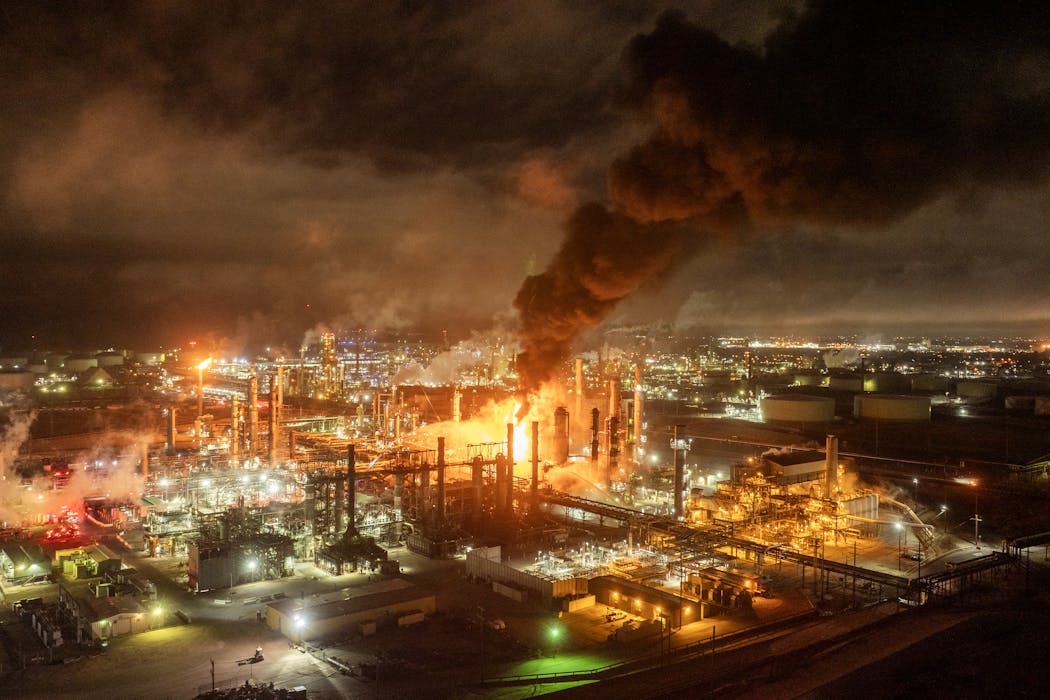
When fire erupted at the Intercontinental Terminals Co. bulk liquid petroleum storage terminal, large plumes of dark smoke billowed into the clear skies over Deer Park, Texas. Despite the efforts of site staff and local firefighters, more than 70 million gallons of petroleum products burned or were otherwise released into the environment over the following three days in March 2019.
Even while the fire was still burning, investigations began looking into what had happened and what was still happening. The Environmental Protection Agency tested air and water samples to determine how much pollution was being released – both to determine cleanup efforts and to assess fines. The Occupational Safety and Health Administration reviewed what had happened, but found that with no workers injured, there was no reason to investigate further or impose fines or other penalties on the company.
A third federal agency, the Chemical Safety and Hazard Investigation Board, often known as the CSB, got to work figuring out what had gone wrong, without assigning legal or financial responsibility, but rather seeking to learn from this disaster how to prevent future accidents. It’s an approach much like the National Transportation Safety Board takes toward airplane crashes, train derailments and other transportation-related tragedies: document what happened and identify every opportunity to prevent or reduce the chances of it happening again.
That deep investigative process reportedly will not happen in the wake of the October 2025 explosion and fire at a Chevron refinery in El Segundo, California, because of the federal government shutdown and lack of funding for the organization.
As scholars of chemical disasters, we believe this absence – and the potential for the board to be eliminated entirely under the proposed 2026 federal budget – raises the risk of more, and more serious, chemical disasters, not just in the U.S. but around the world.

The CSB investigation of that 2019 fire that burned 15 petroleum tanks at the Intercontinental Terminals Co., near the Port of Houston, yielded key recommendations to the company, OSHA and the EPA. They included necessary updates to safety management systems, the need for flammable-gas detectors to identify leaks, and remotely operated emergency shutoff valves so workers could close tanks containing hazardous material without exposing themselves to danger. The company has addressed the first recommendation and is reportedly working on the next two.
The board also recommended to the petroleum industry that storage tanks be spaced farther apart so they would be less likely to catch each other on fire – a recommendation that is still under review.
And the Texas fire was just one of several disasters the Chemical Safety and Hazard Investigation Board investigated that year. Since its activation in 1998, the board has conducted in-depth investigations of 102 chemical disasters in the chemical and industrial sectors – an average of about four per year. And its reports are regularly used worldwide, including in France, South Korea and China.
The U.S. Chemical Safety and Hazard Investigation Board was created by Congress in a 1990 amendment to the Clean Air Act, in the wake of several high-profile chemical disasters around the world.
Those included the 1976 dioxin release in Seveso, Italy, which caused skin lesions on over 600 people and contaminated nearly 7 square miles of land; the deaths of thousands in Bhopal, India, from the 1984 release of methyl isocyanate from a Union Carbide pesticide plant; and the Chernobyl nuclear plant disaster in 1986 in what was then the Soviet Union. The goal was to prevent similar accidents from occurring on U.S. soil by investigating the causes of incidents and providing recommendations for improvement.
Specifically designed to be independent of other organizations and political influence, the CSB cannot be forced to modify its findings by other agencies, branches or political parties, ensuring its impartiality.
It has no power to issue regulations, nor any authority to impose fines or other punishments for wrongdoing. Rather, it is a fact-finding, investigative body designed to learn from past disasters and issue voluntary recommendations so chemical companies can improve their equipment and processes to prevent future tragedies. The vast majority of its recommendations are adopted by the industries affected, usually by the investigated company, though sometimes recommendations become industry standards. These recommendations can range from changes in procedure, the addition of safety devices or even overall facility design recommendations.
There are several kinds of events companies must report to the federal government, including deaths and releases of particular chemicals, such as chlorine, naphthalene and vinyl chloride.
The board reviews those reports and decides on its own which to investigate. When an inquiry is opened, a group of experts who work for the board travel to the incident site to gather evidence to understand not only what happened in the big picture but a detailed view of how events unfolded.
After the investigation, the board issues a report detailing what it found and recommending specific changes to the company to reduce the risk of that sequence of events happening again. The board also delivers its information to other federal agencies, such as the EPA and OSHA, which can determine whether changes would be appropriate to federal regulations that apply to all companies in an industry.
The board had a US$14 million annual budget for 2025, which is a tiny part of the more than $6 trillion the U.S. government spends each year.
The current administration’s justification for eliminating the CSB is that its capabilities are duplicated by agencies such as the EPA and OSHA. But the EPA focuses specifically on environmental violations and potential threats to human life. OSHA investigates regulatory violations leading to personal injury.
In fact, the CSB has helped the EPA and OSHA evaluate and improve regulations, such as for the open burning of waste explosives, and improved methods of investigating accidental chemical releases and implementing new emergency response rules.
The CSB is the only organization that looks into improving processes to prevent future accidents instead of punishing past acts. It’s the difference between investigating who robbed a bank to hold the robbers accountable and improving bank security so another robbery can’t occur.

The authors do not work for, consult, own shares in or receive funding from any company or organization that would benefit from this article, and have disclosed no relevant affiliations beyond their academic appointment.
Politics + Society – The Conversation

Reading Time: 2 minutes
Janelle Brown really moving on.
The Sister Wives star offered followers an update on her major life decision to move to North Carolina, telling folks on Instagram this week that things are coming along.
Slowly. But surely.
“It doesn’t look like much but it is,” the reality star wrote on October 5. “This is real tangible progress towards the new chapter in my life.”
This message was part of a post that featured images of the driveway and concrete footings poured on the 156-acre property she previously purchased with her daughter Maddie and son-in-law Caleb Brush.
Brown described the work-in-progress as the home “designed exactly the way I wanted,” adding:
“In a lot of ways, it feels like my first true home. Houses I have owned before were bought often because it was what worked for my big chaotic family. Often reflecting not what I chose or wanted but what worked.”

Indeed, Janelle walked away from spiritual husband Kody Brown in early 2022.
She has talked since about how she was duped into marrying the polygamist and how she’s been trying to find her own way ever since.
Tragically, the 56-year old was then faced with every parent’s biggest nightmare when her son Garrison committed suicide in March 2024.
“You seem so alive in the millions of photos I have. I sometimes forget I won’t see you again — and then I remember, Grief is so strange,” Janelle wrote in honor of what would have been Garrison’s 27th birthday this year.

In a December19 Instagram Reel, the TLC personality showed off a vast plot of vacant land with several trees and unpaved roads.
“Finally putting down some permanent roots. Doesn’t look like much yet but it will,” she wrote about the land back then.
“I like the wild feel that it has now and we are planning for many acres to stay that way for the benefit of the wildlife.”
The star also tagged Taeda Farms at the time, a company she founded with Madison and Caleb.
As you might expect, Garrison will be remembered on this property well.
“Garrison’s always in our thoughts, right? And we will definitely, probably have a part of the flower garden that’s really more of a memorial to him and to Bob’s Floral, his Hawaiian shirt shop,” she said in a confessional on the Sister Wives Season 20 premiere.
Janelle Brown Documents “Progress” in “New Life Chapter” was originally published on The Hollywood Gossip.
The Hollywood Gossip