Sweetheart Lake, Photo courtesy of Juneau Hydropower
NOTN- The City and Borough of Juneau Planning Commission on Tuesday night heard public testimony and reviewed a Conditional Use Permit request from Juneau Hydropower, Inc. for a proposed hydroelectric project at Sweetheart Lake, south of Juneau.
The Juneau Borough Planning Commission has approved that conditional use permit.
Deputy Mayor Greg Smith confirmed Wednesday morning that the commission approved the project with two conditions: establishing a landform barrier to control sound and light emissions, and requiring a flood zone development permit before construction begins.
“The Planning Commission met to decide on a conditional use permit for the Sweetheart Lake hydropower project. The planning commission for the conditional use permit is a review to say, does this project meet adopted city plans? Does it meet land use and zoning code? and it did.” Said Smith, “They and the director make a recommendation, and they recommended approval with conditions.”
The hydropower project, targeting commercial operations by 2028, is not designed to provide direct consumer electricity choice but will serve specific industrial needs. Smith noted the project cannot power cruise ships docked in the area due to service area limitations.
The Sweetheart Lake Hydroelectric facility proposal calls for the construction of a 280-foot-wide, 111-foot-high dam and related infrastructure at the lake’s natural outlet. The project would also include extending transmission lines from the Lena Point Substation north to Cascade Point, Echo Cove, and the Kensington Mine in Berners Bay, to deliver hydroelectric power.
The Planning Commission evaluated the proposal for compliance with Juneau’s Land Use Code and took public comments from residents and stakeholders. The public comment period, which began Oct. 7, closed on Oct. 24, with all submitted testimony forwarded to commissioners for review ahead of the hearing.
Juneau Hydropower, Inc. was officially granted public utility status by the Regulatory Commission of Alaska in the summer.
According to Juneau Hydropower, Sweetheart Lake Hydroelectric Facility, is designed to produce 19.8 megawatts of renewable energy and generate an average of 116,000 megawatt-hours annually, a projected 25% increase over Juneau’s current electrical generation.
Juneau Hydropower says, the project is intended to help meet the city’s growing demand for electricity while reducing reliance on diesel-based generation. Hydropower, unlike fossil fuels, does not emit greenhouse gases during operation, and proponents argue that the facility will offer both economic and environmental benefits, including lower long-term energy costs and reduced pollution.
However there have been concerns about securing funds for the project before its construction, and building a reliable customer base.
Managing Director Duff Mitchell called the decision “a positive turning point for Juneau’s energy future,” as the project aims to replace diesel generation and expand sustainable power across the region.
NOTN- Monday evening’s Assembly meeting saw the approval of several major funding measures.
By a narrow 5–4 vote, the Assembly approved transferring $3.5 million from the city’s Seawalk project to Marine Park improvements.
“The $3.5 million transferring from the Seawalk to the marine park improvements passed by the skin of its teeth, five to four.” said Mayor Beth Weldon, “Some of us didn’t like the total cost of the project, but it did pass.”
Members also passed an ordinance shifting $5 million from the proposed Capital Civic Center to maintenance and repairs of the city’s HESCO flood barriers.
Additional funds included $700,000 for St. Vincent de Paul to renovate its sobering center and $125,000 for Juneau’s cold weather emergency shelter, supplementing earlier funding to help house residents from homeless encampments during winter.
“Just so people understand what that does, it allows the homeless encampments to go to the shelter during the winter. We already put $435,000 so we had to add another $125,000.” Said Weldon, “Just so people understand, that’s how much it cost to take care of that. Because sometimes we get accused of not doing anything, we do what we can do is we can give money towards something, and that’s what we do.”
Alaska attorney Aaron Peterson, seen here in a February 2024 photo, is expected to be nominated by President Trump to one of two vacancies on Alaska’s federal court bench. (Alaska Division of Forestry photo)
President Donald Trump plans to nominate Aaron Peterson, an attorney with the Alaska Department of Law’s natural resources division, for one of two open federal judgeships on the bench of the U.S. District Court for the District of Alaska.
Trump himself has not formally announced Peterson’s nomination, but state and federal officials confirmed the president’s plans with the Beacon.
Reuters reported that Trump is preparing to nominate two federal judges in other states as well as Peterson.
A message left on Peterson’s work phone was not returned Tuesday afternoon.
According to a copy of Peterson’s questionnaire, a member of Gov. Mike Dunleavy’s federal transition team encouraged him to apply to a committee formed by Sen. Dan Sullivan, R-Alaska, to vet possible candidates for the federal judiciary.
According to state voter records, Peterson is a Republican. He identified himself in the questionnaire as a member of the Federalist Society, whose members generally follow Republican legal principles and support President Donald Trump.
Records published by the Federal Elections Commission and the Alaska Public Offices Commission do not list any political contributions by Peterson.
Attorney General-designee Stephen Cox served on the Sullivan committee. By email, he called Peterson an “outstanding choice.”
“He’s demonstrated a remarkable ability to navigate complex issues with fairness and integrity, including during his representation of the Board of Fisheries. His extensive understanding of both civil and criminal law, honed through his experience as a prosecutor, makes him uniquely qualified for this position. Alaska needs judges who are equipped to handle the complex cases before them and the realities of our state, and I am confident that Aaron will be an excellent addition to the bench,” Cox wrote.
Alaska has three federal judgeships but only one sitting federal judge. Judge Timothy Burgess retired at the end of 2021, and Judge Joshua Kindred resigned in disgrace in 2024 amid a sexual scandal.
Since then, Alaska’s two U.S. senators have been divided about who to pick as replacements and how to pick those replacements. Under longstanding Senate tradition, judge picks normally advance only with the assent of both home state senators.
As a result of the senators’ disagreements and Sullivan’s decision to not attempt to fill a vacancy under President Joe Biden, the judgeship vacated by Burgess is now the fifth-oldest vacancy among 50 in the federal court system.
Sullivan has not disclosed the names of judicial candidates that he examined through a special committee designed to serve as an alternative to the Alaska Bar Association’s traditional review process.
Through a spokesperson, Murkowski said she learned about Peterson’s nomination from the White House.
“After speaking extensively with him last week about his many qualifications, I informed the White House that I would support his nomination. Alaska’s District Court has had two vacancies for far too long, and I hope the White House will soon announce a second qualified nominee whom I can support to fill out the bench,” Murkowski said.
According to Peterson’s questionnaire, he met with Murkowski on Oct. 23, seven months after being interviewed by Sullivan and four months after his initial interview by the White House Counsel’s Office. Since September, according to the questionnaire, he has been in regular contact with White House and Department of Justice officials.
By email, Sullivan said Peterson has “extensive legal experience.”
“Throughout his career, which includes military service, Aaron has demonstrated a commitment to the rule of law and federalism. He also understands the principle that the job of a federal judge is to interpret the law, not to make policy,” Sullivan said. “I’d like to thank each of the members of the Alaska Federal Judiciary Council, who worked with me to fully vet a number of well-qualified Alaska nominees, including Aaron. The council’s diligent work and input are invaluable in ensuring Alaskans are represented by jurists and citizens of the highest caliber. I also want to thank President Trump and his team for working closely with my office on identifying outstanding judges who will serve Alaska and our country well.”
According to the information Peterson submitted to the U.S. Senate’s judiciary committee, he was born in Anchorage in 1981 and served in the U.S. Air Force from 2000 to 2003 before attending the University of Alaska Anchorage, graduating in 2007. He attended Gonzaga University School of Law and graduated in 2010.
After graduation, he returned to Alaska, serving first as a clerk to Justice Michael Spaan of the Alaska Supreme Court, then as a prosecutor with the Municipality of Anchorage.
The Alaska Bar Association’s directory says he was admitted to the state bar on Nov. 16, 2010.
Peterson worked in the Anchorage District Attorney’s office starting in 2012, including on violent felonies, such as murder and sexual assault. He moved to the Department of Law’s office of special prosecutions in 2015 before beginning work with the Department of Law’s natural resources section in 2019.
Since joining that section, he’s prosecuted high-profile criminal cases, including a 2018 incident in which two Matanuska-Susitna Borough men illegally killed a black bear and her two squealing cubs within their den.
More recently, Peterson has represented the state in an ongoing case that challenges the state’s current two-tier system of subsistence fishing management. He also represented the state in a lawsuit that challenged salmon fishery management in Cook Inlet.
“If confirmed,” Peterson said in his questionnaire, “I will recuse myself from any case where I have ever played a role. Further, I will evaluate any potential conflict or issue that could give rise to the appearance of a conflict, on a case-by-case basis and determine appropriate action, including recusal where necessary.”
President Donald Trump speaks at the White House during a meeting on antifa, as Attorney General Pam Bondi, left, and Homeland Security Secretary Kristi Noem listen, on Oct. 8, 2025.AP Photo/Evan Vucci
When Homeland Security Secretary Kristi Noem compared antifa to the transnational criminal group MS-13, Hamas and the Islamic State group in October 2025, she equated a nonhierarchical, loosely organized movement of antifascist activists with some of the world’s most violent and organized militant groups.
It’s a sweeping claim that ignores crucial distinctions in ideology, organization and scope. Comparing these groups is like comparing apples and bricks: They may both be organizations, but that’s where the resemblance stops.
Noem’s statement echoed the logic of a September 2025 Trump administration executive order that designated antifa as a “domestic terrorist organization.” The order directs all relevant federal agencies to investigate and dismantle any operations, including the funding sources, linked to antifa.
Data shows that the movement can be confrontational and occasionally violent. But antifa is neither a terrorist network nor a major source of organized lethal violence.
Antifa, as understood by scholars and law enforcement, is not an organization in any formal sense. It lacks membership rolls and leadership hierarchies. It doesn’t have centralized funding.
The FBI and DHS have classified certain anarchist or anti-fascist groups under the broad category of “domestic violent extremists.” But neither agency nor the State Department has ever previously designated antifa as a terrorist organization.
The data on political violence reinforces this point.
A woman holds a sign while protesting immigration raids in San Francisco on Oct. 23, 2025. AP Photo/Noah Berger
A 2022 report by the Counter Extremism Project found that the overwhelming majority of deadly domestic terrorist incidents in the United States in recent years were linked to right-wing extremists. These groups include white supremacists and anti-government militias that promote racist or authoritarian ideologies. They reject democratic authority and often seek to provoke social chaos or civil conflict to achieve their goals.
By contrast, the organizations Noem invoked – Hamas, the Islamic State group and MS-13 – share structural and operational characteristics that antifa lacks.
In short, they are military or criminal organizations with strategic intent. Noem’s claim that antifa is “just as dangerous” as these groups is not only empirically indefensible but rhetorically reckless.
Turning dissent into ‘terrorism’
So why make such a claim?
Noem’s statement fits squarely within the Trump administration’s broader political strategy that has sought to inflate the perceived threat of left-wing activism.
Casting antifa as a domestic terrorist equivalent of the Islamic State nation or Hamas serves several functions.
Demonstrators hold protest signs during a march from the Atlanta Civic Center to the Georgia State Capitol on Oct. 18, 2025, in Atlanta. Julia Beverly/Getty Images
Noem’s comparison reflects a broader pattern in populist politics, where complex social movements are reduced to simple, threatening caricatures. In recent years, some Republican leaders have used antifa as a shorthand for all forms of left-wing unrest or criticism of authority.
Antifa’s decentralized structure makes it a convenient target for blame. That’s because it lacks clear boundaries, leadership and accountability. So any act by someone identifying with antifa can be framed as representing the whole movement, whether or not it does. And by linking antifa to terrorist groups, Noem, the top anti-terror official in the country, turns a political talking point into a claim that appears to carry the weight of national security expertise.
The problem with this kind of rhetoric is not just that it’s inaccurate. Equating protest movements with terrorist organizations blurs important distinctions that allow democratic societies to tolerate dissent. It also risks misdirecting attention and resources away from more serious threats — including organized, ideologically driven groups that remain the primary source of domestic terrorism in the U.S.
As I see it, Noem’s claim reveals less about antifa and more about the political uses of fear.
Art Jipson does not work for, consult, own shares in or receive funding from any company or organization that would benefit from this article, and has disclosed no relevant affiliations beyond their academic appointment.
When people with mental health problems are in crisis, police often are the first responders. Since many officers have little to no training on how to assess or treat mental illness, these situations can easily become violent.
In 2024, for example, 118 people were killed across the U.S. after police responded to reports of someone having a mental health episode. Such cases can lead to charges of police brutality.
This problem is not new. One of the first cases to receive wide attention and spur reform efforts happened 41 years ago, on Oct. 29, 1984. On that day, a white New York City police officer fatally shot 66-year-old Eleanor Bumpurs, a Black woman. Bumpurs, who lived in public housing and had a history of mental health problems, was killed during an eviction.
Bumpurs’ death ignited one of New York’s most significant social justice campaigns of the 1980s, centering on Black women’s encounters with police. It influenced decades of debate over police response to those with mental illness, which have continued right up to New York City’s current mayoral election.
On the day of the shooting, officers from the New York City Police Department’s Emergency Service Unit and the city housing agency gathered with a city marshal, public housing and welfare workers and medical technicians outside Bumpurs’ apartment. They were there to evict Bumpurs, who was four months behind on her rent and owed the city a little over US$400, equivalent to about $1,240 in today’s dollars. Housing Authority policy required police to accompany city marshals to all evictions.
As I recount in my book, this group believed Bumpurs was violent. Housing officers told the police that she was mentally ill and had a history of throwing lye on strangers.
While Bumpurs had a history of mental illness, she was also an elderly woman in need of medical care. As The New York Times editorial board later pointed out:
“… neither the city’s Housing Authority nor Human Resources Administration seemed able to help. Officials were unable to secure an emergency rent grant, for which she would have easily qualified. A consulting psychiatrist found her unable to function and recommended hospitalization, but no one moved fast enough.”
The officers were tasked with subduing Bumpurs. They had little information about her underlying condition or training to manage it.
Armed with gas masks, plastic shields, a restraining bar and a shotgun, six officers entered Bumpurs’ apartment. Police observed Bumpurs wielding a butcher knife in her right hand. Officer Stephen Sullivan fired two blasts with the shotgun. The first severely damaged Bumpurs’ right hand; the second struck her in the chest. Bumpurs died at a local hospital.
Paton Blough, who has bipolar disorder that triggers delusions, explains what it’s like to be arrested during a mental illness episode.
Public outrage
Bumpurs’ killing shocked New Yorkers. City leaders and community activists condemned what they saw as the NYPD’s use of excessive force against Black people and other people of color, particularly those with mental health conditions.
Bumpurs’ killing was discussed in Sunday morning sermons, university lecture halls, beauty salons and barbershops. Many New Yorkers denounced the shooting, although others praised Sullivan for protecting the lives of his fellow officers.
Artists took up Bumpurs’ cause. In her 1986 poem “For the Record: In Memory of Eleanor Bumpers,” Audre Lorde wrote:
 Who will count the big fleshy women
 the grandmother weighing 22 stone
 with the rusty braids
 and gap-toothed scowl
 who wasn’t afraid of Armageddon
 . . . .
 and I am going to keep writing it down
 how they carried her body out of the house
 dress torn up around her waist
 uncovered
 past tenants and the neighborhood children
 a mountain of Black Woman
 and I am going to keep telling this
 if it kills me
 and it might in ways I am
 learning
In 1989, Brooklyn filmmaker Spike Lee dedicated his movie “Do the Right Thing” to Bumpurs and other Black New Yorkers killed by police officers.
Critics argued that Sullivan should be terminated and charged with homicide. They called for holding city workers responsible for mishandling the eviction and pressed Mayor Edward Koch and U.S. Attorney Rudolph Guiliani to investigate it.
Through rallies, grassroots lobbying and letter-writing campaigns, activists demanded legal justice for Bumpurs. They also called for reforms, including new police policies.
Amid activists’ calls for his arrest, Sullivan said he had been justified in shooting Bumpurs. He insisted that he had followed police procedures.
City action
In response to Bumpurs’ death, the NYPD implemented new procedures. Public pressure from activists inspired policy changes.
Officers were instructed not to confront “an emotionally disturbed person believed to be armed or violent. No action will be taken until the Precinct Commander or Duty Captain arrives and evaluates the situation.”
The new policies prioritized nonlethal methods for responding to these emergencies, instructing officers to use nets, Tasers and restraining bars and shields rather than guns.
Even as the NYPD has adopted various training programs, people with mental illnesses continue to face excessive and deadly force when they confront the police.
Protesters in New York City demonstrate over police violence against Black people, including Eric Garner and Michael Brown, who were both killed by police in 2014. Viviane Moos/Corbis via Getty Images
Nonetheless, New Yorkers continued to confront police violence. On Oct. 18, 2016, police Sgt. Hugh Barry responded to reports that 66-year-old Deborah Danner, who was schizophrenic, had been screaming in the halls of her Bronx apartment building. Barry, who had not received CIT training, fatally shot Danner when she allegedly swung a bat at him. Barry was later indicted and acquitted of murder in 2018.
The B-Heard program dispatches mental health professionals and fire department paramedics to 911 mental health calls. As of 2024, however, it covered only 31 out of 77 NYPD precincts. Police officers still respond to many mental health calls using Tasers or firearms.
On March 27, 2024, for example, 19-year-old Queens resident Win Rozario called 911 because he was experiencing a mental health episode. Since no B-Heard unit served Rozario’s neighborhood, police were dispatched. Rozario was fatally shot minutes after officers entered his home.
More than a dozen U.S. cities are increasingly responding to nonviolent mental health crises with clinicians and EMTs or paramedics instead of police.
Research shows that such initiatives are safer and more effective than relying on law enforcement interventions. They produce better outcomes for people with mental health conditions and help keep communities safer.
In interviews with Bumpurs’ daughter, Mary, I asked what she saw as the legacy of her mother’s case.
She replied, “To keep her spirit moving. To let people know what happened to her.”
More than 40 years after Bumpurs’ death, the public continues to remember her death. Activists and writers have paid tributes and written articles about Bumpurs, signaling the importance of her tragic killing to the current political movement against police violence.
LaShawn Harris does not work for, consult, own shares in or receive funding from any company or organization that would benefit from this article, and has disclosed no relevant affiliations beyond their academic appointment.
Naturally, the tragic loss of her stepson came up in the form of song.
One moving and beautiful performance hit just a little too close to home for Reba. But that wasn’t a bad thing.
Actress Reba McEntire arrives for the 77th Primetime Emmy Awards at the Peacock Theatre at LA Live in Los Angeles on September 14, 2025. (Photo Credit: PATRICK T. FALLON/AFP via Getty Images)
Reba McEntire had a bittersweet experience on ‘The Voice’
On the Monday, October 27 episode of The Voice, Reba McEntire could not help but think of Brandon Blackstock’s passing.
Music is an evocative experience, bringing up emotion and memory — second only to smell when it comes to dredging up the past.
Reba felt that personally when Team Reba artist Aubrey Nicole sang during the episode.
“I’m Gonna Love You Through It” is a Martina McBride song.
The lyrics follow a couple grappling with a cancer diagnosis.
“Martina’s a good friend of mine,” Reba commented after the performance.
She acknowledged: “I lost my oldest son because he did not win with cancer.”
Reba was referring, of course, to stepson Brandon Blackstock. He passed away on August 7, at the age of 48, after a battle with melanoma.
“That was a real reminder that life goes on,” Reba affirmed. “And we sing songs about it so we can remember the ones around us that we love so much, that we lean on at times like this.”
She praised Aubrey Nicole, saying: “You did a great job.”
Producer Narvel Blackstock, singers Reba McEntire, Kelly Clarkson and Brandon Blackstock attend Muhammad Ali’s Celebrity Fight Night XXI at the JW Marriott Phoenix Desert Ridge Resort & Spa on March 28, 2015. (Photo Credit: Michael Buckner/Getty Images for Celebrity Fight Night)
Brandon Blackstock was part of her life for most of his
Sometimes, adults marry and find themselves with an adult stepchild whom they see a few times per year and get to know slowly — if at all.
But that is not how things played out for Reba.
She married Narvel Blackstock in 1989. The two only split in 2015, after Brandon had married Kelly Clarkson.
To put this into perspective, Brandon was part of Reba’s life for the entirety of Taylor Swift’s life.
When she talks about losing him, she’s talking about someone she knew and loved for nearly 40 years.
Last week, my stepson/oldest son Brandon Blackstock went home to be with God. His struggle is over and he is in eternal peace in God’s presence. There is no one else like him, and I’m thankful for the time we had together. His legacy and laughter will be carried on through his… pic.twitter.com/vIQF6CmFdI
In August, it fell to Shelby — Brandon Blackstock’s half-brother, the son of Reba McEntire with Narvel — to share the McEntire family’s grief.
“Words cannot begin to capture the tremendous loss our family has endured,” Shelby wrote at the time.
“Yesterday, we lost a brother, a father, a grandfather, and a son,” he grimly acknowledged.
The statement concluded: “Brandon Blackstock was an irreplaceable part of our family — funny, bright, and full of life — and he will be deeply missed.”
Reba replied to that with a tasteful addition: “Very well said Shelby. Yes we will miss him so much.”
Reba McEntire attends Variety Power Of Women: Nashville on May 01, 2025. (Photo Credit: Tibrina Hobson/Getty Images)
Obviously, she has spoken about this loss before now
Meanwhile, Reba posted her own tribute.
“Last week, my stepson/oldest son Brandon Blackstock went home to be with God,” she wrote in a tweet.
“His struggle is over and he is in eternal peace in God’s presence,” she announced. “There is no one else like him, and I’m thankful for the time we had together.”
Reba concluded: “His legacy and laughter will be carried on through his family. Rest in peace cowboy. Happy trails to you til we meet again.”
As many of us know, grief is not a linear progression. Eventually, you will be fine for days or weeks — and then the loss will hit you anew. A powerful song can be evocative and bittersweet.
That fact was alleged to be pertinent to the case, as Twiggs is believed to be transgender, and it’s been widely reported that the murder was prompted by Kirk’s anti-LGBT remarks.
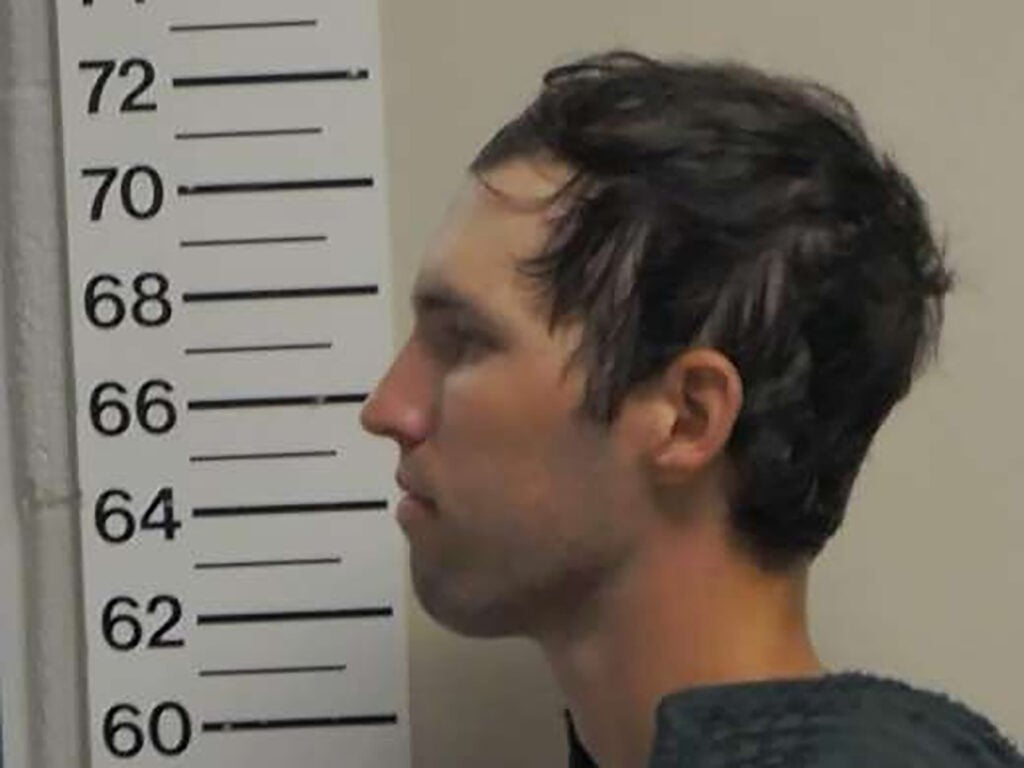
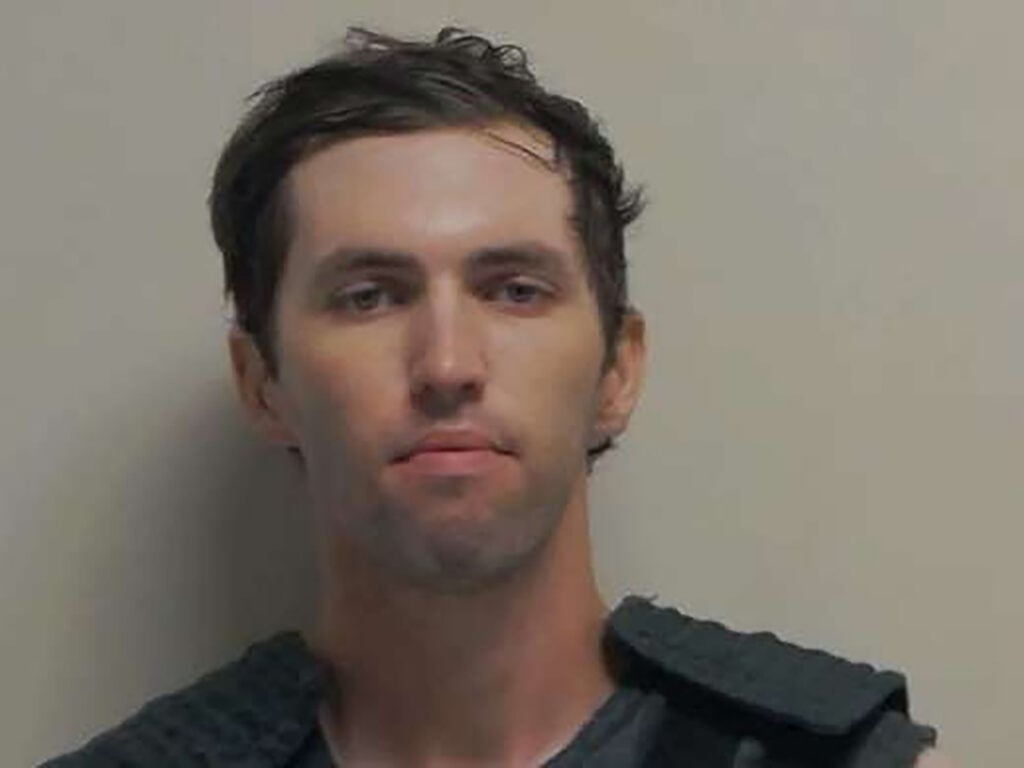
In this handout image provided by the Office of the Governor of Utah, Tyler Robinson stands for a booking photo on September 12, 2025 in Spanish Fork, Utah. (Photo by Office of the Governor of Utah via Getty Images)
Now, the New York Post is reporting that Twiggs has gone missing.
It does not appear that Twiggs has been reported missing, but the Post reports that the 22-year-old “seemingly vanished from his hometown six weeks after the political assassination that shook the country.”
Twiggs reportedly moved out of the apartment he had shared with Robinson shortly after the shooting.
The apartment — which the Post refers to as an “$1,800-per-month love nest” — has been vacant ever since, and there are reports that police have been providing Twiggs with protection.
In this handout image provided by the Office of the Governor of Utah, Tyler Robinson stands for a booking photo on September 12, 2025 in Spanish Fork, Utah. (Photo by Office of the Governor of Utah via Getty Images)
Insiders claimed that Twiggs was cooperating with investigators but had chosen not to speak with the media.
His whereabouts have been unknown since the murder, but the new report from the Post indicates that Twiggs is believed to have fled his hometown of St. George, Utah.
It’s unclear if he had or needed police permission to do so.
It’s also unclear if he’ll be expected to testify when Robinson’s trial begins next year.
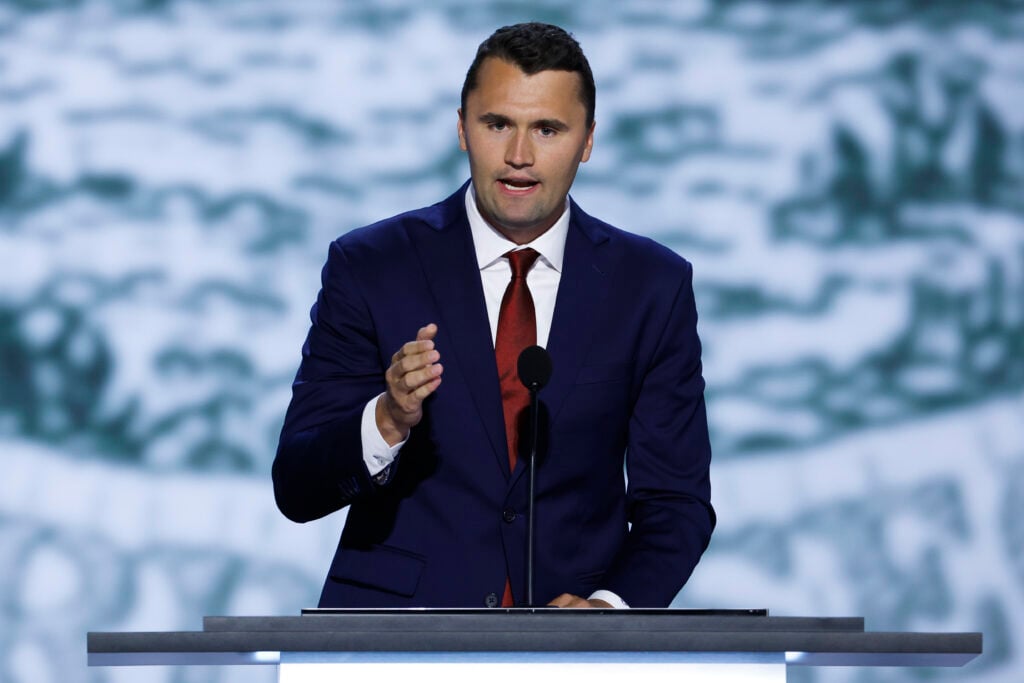
CEO of Turning Point USA Charlie Kirk speaks on stage on the first day of the Republican National Convention at the Fiserv Forum on July 15, 2024 in Milwaukee, Wisconsin. (Photo by Chip Somodevilla/Getty Images)
The judge made the surprisingly controversial decision to allow Robinson to wear civilian clothing at his trial, rather than a prison uniform.
Lawyers for Robinson effectively argued that prison scrubs might result in bias among jury members.
Robinson has been charged with aggravated murder, and he faces the death penalty if convicted.
Police believe Robinson confessed to the murder in text messages to Twiggs, in which he also revealed that he shot Kirk due to his belief that “some hate can’t be negotiated away.”
We will have further updates on this developing story as new information becomes available.
Initially, this was a breakup. The no-fault divorce filing seemed simple.
Now Bernad is accusing the singer of relapsing into addiction.
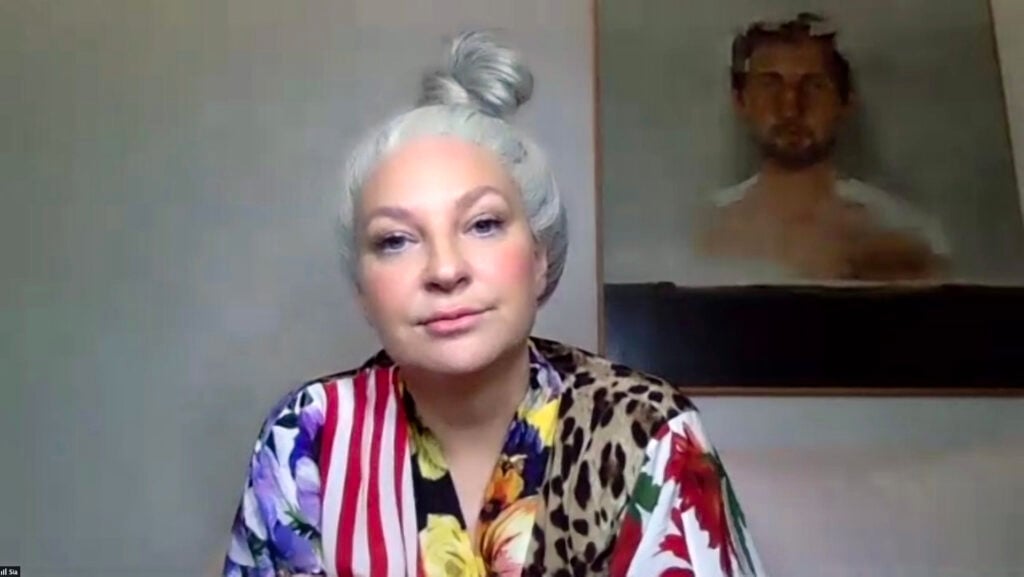
Sia has told the court that her estranged husband was recently investigated for some form of “illicit” images of children on his computer.
In this screengrab, Sia speaks at the 2021 HFPA Women Breaking Barriers Sundance Panel during the 2021 Sundance Film Festival on January 30, 2021. (Photo Credit: Amy Sussman/Getty Images for the HFPA)
Sia is locked in an ugly divorce from Daniel Bernad
Back in March, Sia filed to divorce husband Daniel Bernad after only two years of marriage.
In the court documents, she listed the reason for the breakup as “irreconcilable differences.”
(That is standard fare for no-fault divorce)
Sia requested full custody of their child, Summi, whom the couple welcomed in 2024.
The singer did, at the time, indicate being open to visitation for Bernad.
Ssinger-songwriter Sia arrives for the premiere of Steven Spielberg’s “West Side Story” at the El Capitan Theatre in Los Angeles on December 7, 2021. (Photo Credit: VALERIE MACON/AFP via Getty Images)
Sia and Dan Bernad married in 2022.
They did not make it to their third wedding anniversary.
Earlier this autumn, the two were locked into a disagreement over finances.
Bernad has asked the judge to pay him over $250,000 per month in spousal support. (He was a doctor — an oncologist — when they met, but says that she “ceased funding” to their shared company and thus allegedly left him without income)
He also wants nearly $80k in monthly child-support. However, things are looking much more serious than your standard high-income-bracket financial conflicts.
Recording artist Sia performs onstage at the 2016 iHeartRadio Music Festival on September 23, 2016. (Photo Credit: Kevin Winter/Getty Images)
An alleged CSAM investigation is now part of the custody dispute
According to a report by TMZ, Sia’s divorce from Daniel Bernad has taken a nasty turn.
Bernad is asking for sole custody of their toddler, on the grounds that Sia’s past addiction — it is our understanding that she has been sober for 15 years — makes her a “danger.”
He wants to subject his estranged wife to random, regular drug testing. And he is asking the court to limit her to two-hour visitation, three times per week — with a professional monitor.
However, Sia has informed the court that Bernad is currently restricted to monitored visits with their child.
The reason, she told the judge, is because of a child sex-abuse material (CSAM) investigation.
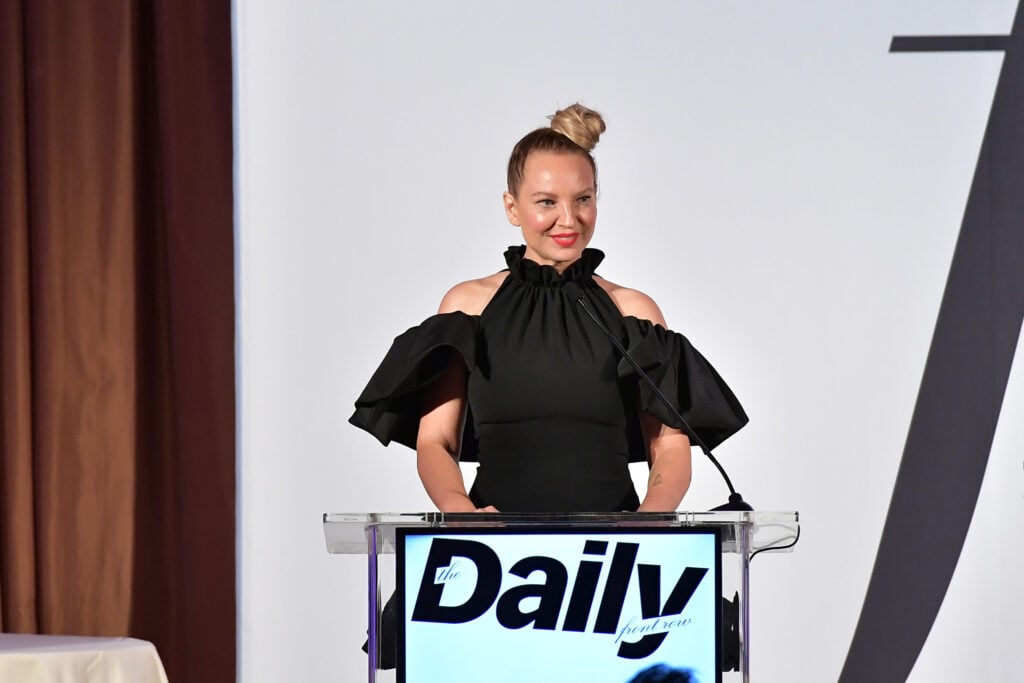
Sia speaks onstage duing The Daily Front Row Fashion LA Awards 2019 on March 17, 2019. (Photo Credit: Neilson Barnard/Getty Images for Daily Front Row)
According to Sia, 1-year-old Summi has remained in her custody since their separation.
In August 2025, the couple allegedly agreed that Bernad would have very restricted visits — with a professional monitor.
The reason was an investigation by the LAPD and DCFS over what she referred to as “illicit child pornography” on his computer hard drive.
Bernad has denied any involvement regarding the investigation, even accusing Sia of having “planted evidence” to reduce his visitation.
In her filing, Sia acknowledged that the investigation was somehow inconclusive and is now closed. But she told the court that she remains wary, and would like for a caretaker like Bernad’s mother or a nanny to be present for future daddy-daughter visitations.
Sia Furler speaks onstage during the 5th Daytime Beauty Awards honoring science behind beauty, health and wellness at Taglyan Complex on October 01, 2023. (Photo Credit: Frazer Harrison/Getty Images)
This is a lot to digest
Obviously, none of us can claim to have secret insider knowledge about Sia’s divorce from Daniel Bernad.
Did Sia relapse into addiction? As anyone who is sober can attest, it can happen to people. But that doesn’t mean that it happened to Sia, or that it would make her a danger to her own child.
We’re unsure how a CSAM investigation could be inconclusive, given that it would hinge entirely upon presumably accessible evidence.
Planting CSAM on someone’s device is an involved process that could likely be traced to, at the very least, a specific timeframe. That is what Bernad accused Sia of doing — which is a very serious allegation.
We can acknowledge that some CSAM investigations turn up nothing because they are based upon false reports. In recent years, teens and young adults have bullied each other online by submitting false reports, often based upon drawings (which, unlike CSAM, involve no victims). But that doesn’t mean that this is what happened here.
One has to imagine that the court will want to review the LAPD and DCFS’ findings, or lack thereof, along with any relevant medical data. The judge, like the rest of us, might not know what to think until there’s more information.
Things are about to get even more dramatic on Seeking Sister Wife Season 6.
In a trailer for episodes still to come, courtesy of Us Weekly, Reise and Billie Jean Williamson get together with another woman as they navigate dating as polygamists.
“Obviously, she’s first wife,” Reise says, gesturing to Billie Jean and asking if the other woman “would be okay” with such an arrangement.
(TLC)
“You know, I am not sure,” she actually tells the couple, before explaining to the camera: “Two dominant women in a relationship with one man could cause problems.”
This is a fact.
Elsewhere in the footage, Nick Davis attempts to reassure girlfriend Teresa that her “insecurities are unfounded” as she tries to find her footing in this unusual plural family.
“I do feel like I’m worthless,” she admits. “And I hope that I can get to a point where I’m as confident as the other girls are.”
This seems rather understandable.
And it also seems to be a reflection of why polygamy is just a really bad idea, especially for the women at the center of it.
One half of one of them, Dani Peralta, sits down with prospective sister wife named Jackie… who says she feels like she’s “getting closer to” Dani’s husband, Yessel.
The conversation takes an emotional turn when Dani brings up the topic of having children.
“The last time we talked about kids, you definitely want more,” Dani says, having difficulty in holding back her tears. “I don’t think I’m able to handle him having another baby with another woman.”
Once again, this seems very understandable.
Dani, for her part, previously expressed her hesitations to Yessel, already a dad of two from former relationships, after making their debut this fall on the series .
“It doesn’t matter to me if they already have a child versus not,” she explained. “But if they don’t, I don’t want another woman to have a child with you. … For me, that’s a non-negotiable.”
(TLC)
Then there’s fellow season 6 newcomers Matt and Anjelica Johnson, who might also face a shake-up in their relationship with girlfriend Shanay.
In the midseason trailer posted by the aforementioned outlet, Shanay asks Matt if he’s been dating other women — and he says yes.
“I feel hurt and betrayal,” Shanay says in response as she storms away.
Seeking Sister Wife debuted on TLC in 2018. It chronicles different couples who are looking for another spouse or adjusting to life with a polygamous relationship.
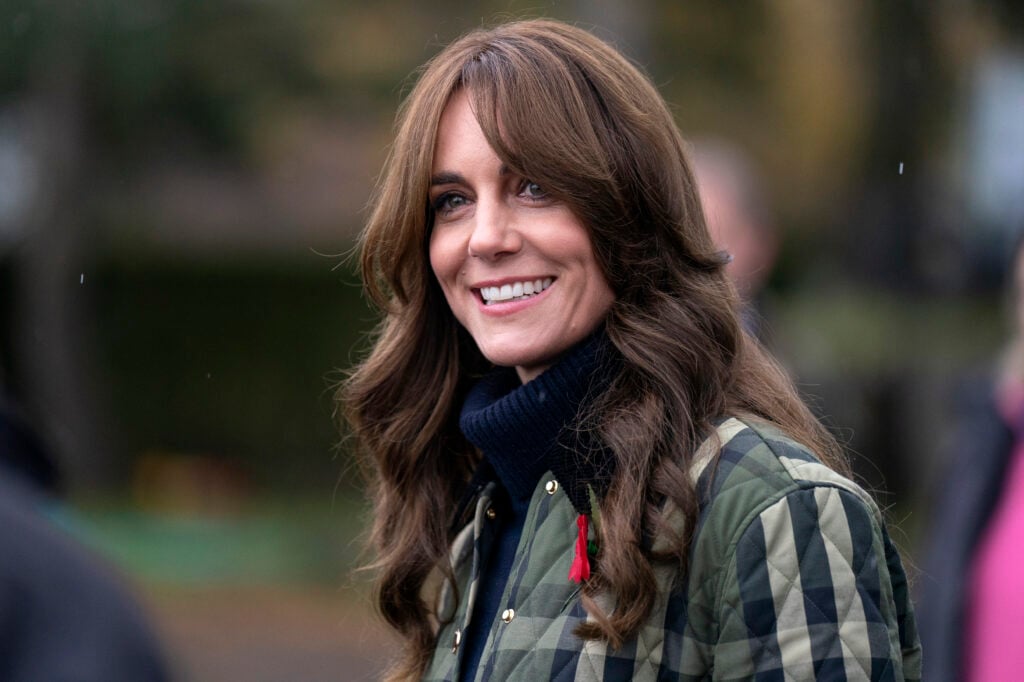
Royal family drama is once again making international headlines, and there are concerns that the situation might be taking a toll on Kate Middleton.
As you’re probably aware, Kate recently battled cancer, and she kept a low profile in the early months of 2024 as she underwent treatment.
We still know very little about her illness — the severity, which organs were affected, etc. — and there are new concerns that Kate is battling another round of health issues.
Catherine, Princess of Wales, known as the Duchess of Rothesay when in Scotland, meets farmers at Brodieshill Farm, Moray, Scotland, to learn about efforts being made to better support the mental health and wellbeing of young people on November 02, 2023 in Moray, Scotland. (Photo by Jane Barlow – WPA Pool/Getty Images)
To be clear, there’s no indication that Kate’s cancer has returned.
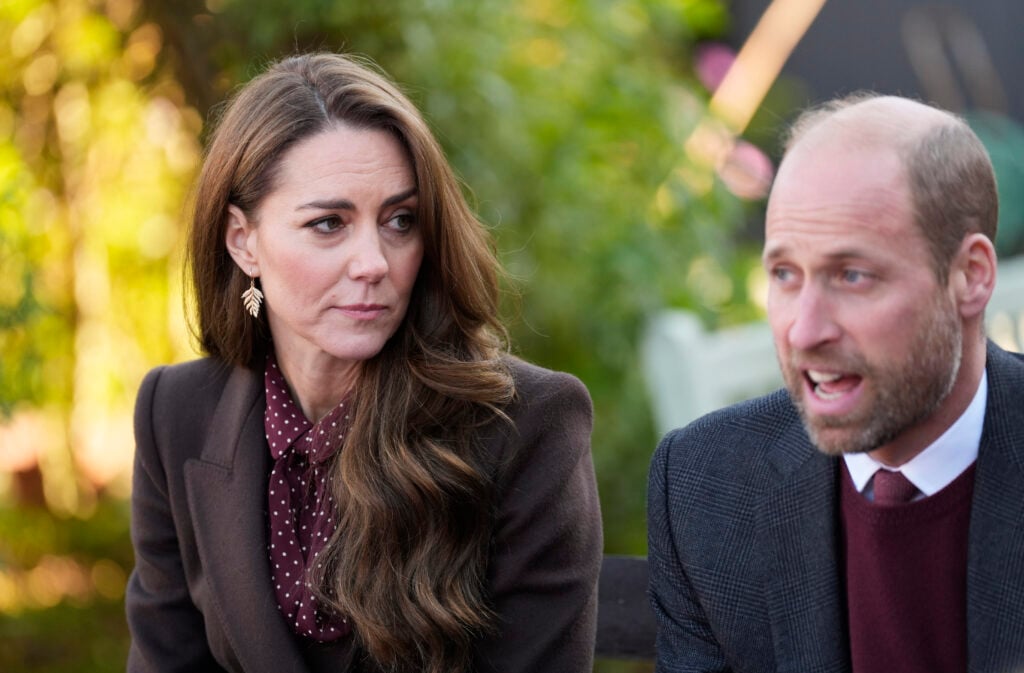
But the royals are notoriously secretive about such matters, and there are rumors swirling around the news that Kate will not be traveling with Prince William when he heads to Rio de Janeiro for the Earthshot Prize awards next week.
William co-founded the Earthshot Prize, which “searches the world for environmental solutions that show the greatest potential.”
A this year’s event, William and a distinguished prize council will announce the five winners who will be awarded prizes of $1.3 million.
Catherine, Princess of Wales attends the Christmas Morning Service at Sandringham Church on December 25, 2023 in Sandringham, Norfolk. (Photo by Stephen Pond/Getty Images)
Kate’s reason for staying home revealed?
As many outlets have pointed out, there’s a good explanation for Kate’s desire to stay home that has nothing to do with her physical health.
Will and Kate are currently in the process of moving from Adelaide Cottage in Windsor to the nearby Windsor Great Park estate at Forest Lodge.
It’s an upgrade for the Waleses and their three kids, going from a four-bedroom home to an eight-bedroom.
Prince William, Prince of Wales and Catherine, Princess of Wales speak with members of the Emergency Services during a visit to Southport Community Centre on October 10, 2024 in Southport, England. (Photo by Danny Lawson – WPA Pool/Getty Images)
And while it’s not a very far move, it is a rather complex one, as Will and Kate are in possession of numerous priceless works of art and historical artifacts.
So these are busy times for Kate.
And while Kate returned to public life back in the summer of 2024, she has been taking it slightly easier on doctor’s orders.
So her decision not to travel to Brazil might have been partially prompted by her health.
But that doesn’t mean that she’s received any new bad news.
We’ll have further updates on this developing story as new information becomes available.