The real story from Tuesday night’s Mansion House was more what didn’t happen than what did happen.The Latest News from the UK and Around the World | Sky News









The real story from Tuesday night’s Mansion House was more what didn’t happen than what did happen.The Latest News from the UK and Around the World | Sky News

At least 20 people have been killed in an incident in Khan Younis, according to the Gaza Humanitarian Foundation (GHF), an Israel and US-backed organisation.The Latest News from the UK and Around the World | Sky News
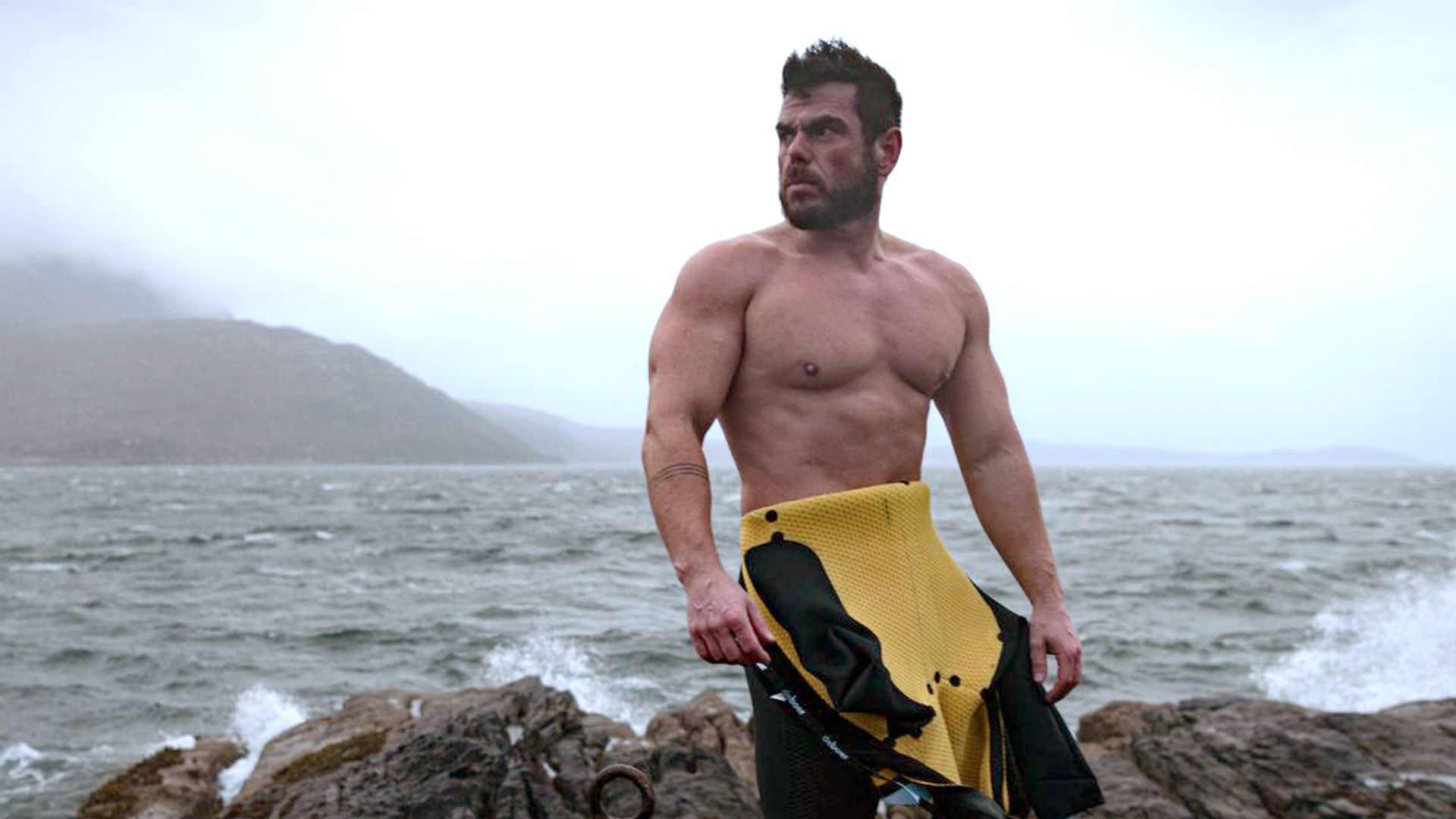
Towering waves, freezing temperatures and even some inquisitive killer whales. Iceland is doing its best to defeat Ross Edgley. The Latest News from the UK and Around the World | Sky News

The parents of a woman who died after her blood clot was misdiagnosed by someone who she thought was a doctor have called a government-ordered review “a missed opportunity”.The Latest News from the UK and Around the World | Sky News

An Afghan man who worked for the British military has told Sky News he feels betrayed and has “completely lost (his) mind” after his identity was part of a massive data breach.The Latest News from the UK and Around the World | Sky News
Ava was heading home from Pizza Hut when she found out her dad had been arrested. The Latest News from the UK and Around the World | Sky News
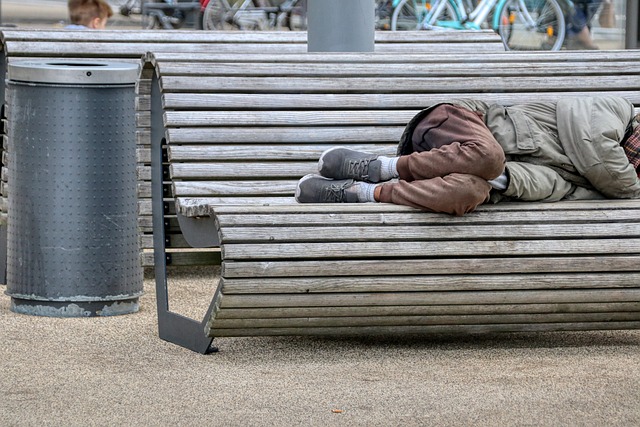
The Juneau Assembly has proposed updates to the city’s disorderly conduct laws, tightening rules around blocking sidewalks, public disturbances, and behavior in public spaces.
The focus of the new updates- making it easier for the Juneau Police Department to arrest individuals, particularly unhoused individuals for disruptive actions in public areas.
The ordinance adds language allowing police to intervene when people stand, walk, or camp in places like sidewalks, stairwells, parking lots, and garages.
“We had a long conversation about the community impacts of public camping, and that was probably the longest agenda item that we discussed.” Said Deputy Manager Robert Barr, “it would make it a bit easier for our police department officers to do some enforcement activity that they already do.”
Deputy City Manager Robert Barr said the changes bring city code in line with state law, removing steps that currently delay enforcement, which lie within officers arresting individuals for trespassing rather than disorderly conduct.
“Our first course of action whenever we’re engaged in that sort of activity with folks who are unhoused, is to try and connect to resources and seek voluntary compliance.” Said Barr, “but sometimes it’s not possible.”
Alaska already grapples with its growing unhoused population, Juneau currently operates under a “dispersed camping” policy for its homeless population, allowing camping on unimproved public land as long as it minimizes impact and doesn’t violate specific regulations like blocking public rights-of-way.
Juneau Police cleared the unhoused encampment on Teal street back in June, Barr said the assembly asked to bring back more information at a future meeting, likely the next Committee of the Whole, on creating a shelter safety zone in the Teal Street area, “just to investigate whether other tools that we could implement would protect our social service providers out there.” said Barr.
Juneau has had the highest average sale price for a single-family home in the state for the past two years and a report from the Department of Labor and Workforce Development, shows that housing costs are nearly half of most Alaska residents’ annual income.
These proposed updates come amid nationwide trends, with the Supreme court ruling that cities can ban people from sleeping and camping in public places last year.
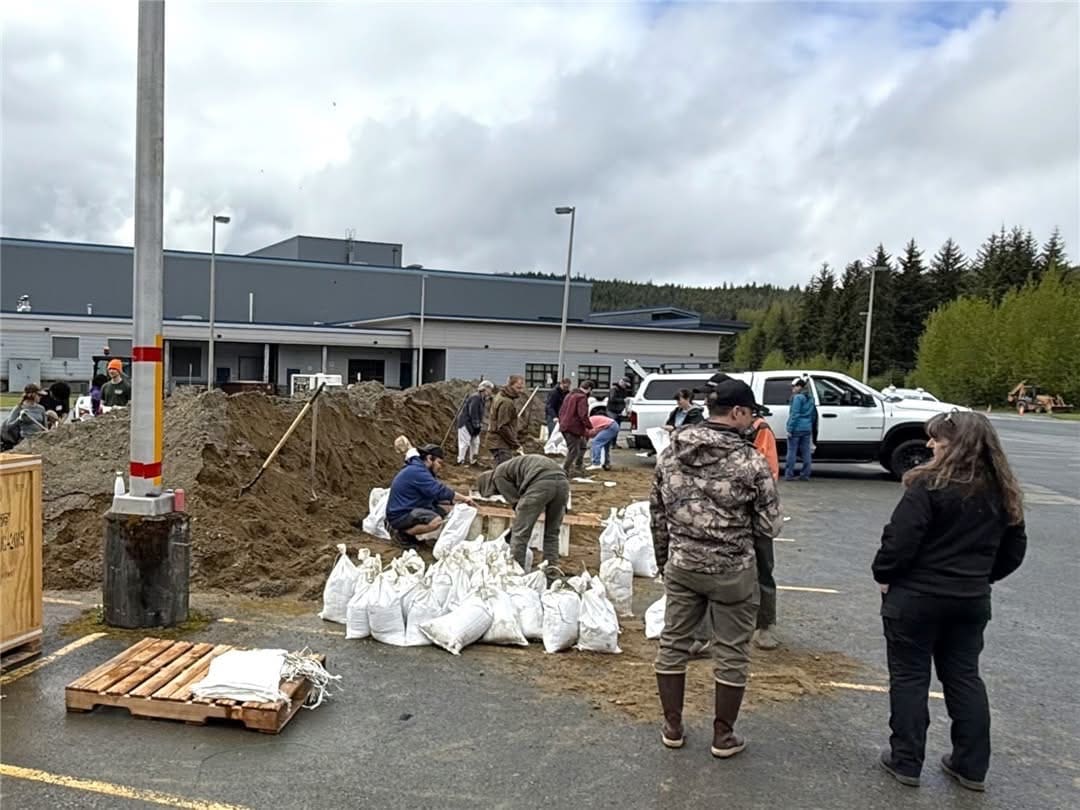
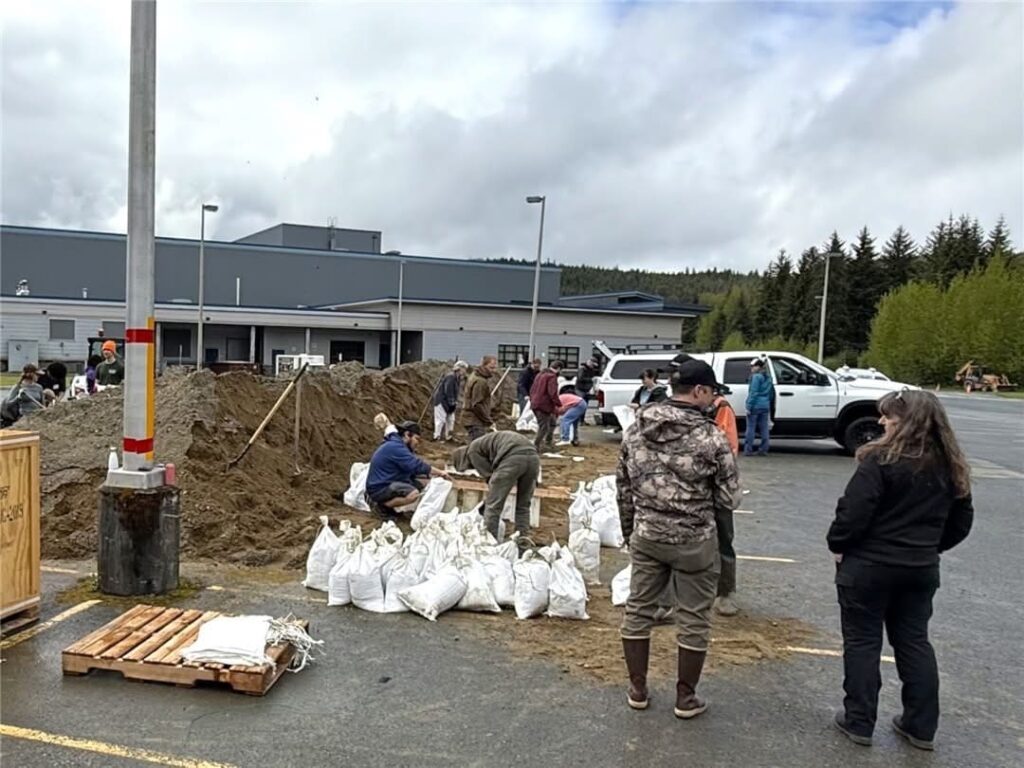
The City and Borough of Juneau and Tlingit & Haida will hold sandbag distribution events on Saturday, July 19 and Saturday, July 26, from 11 a.m. to 3 p.m. at the Dimond Park Field House parking lot in preparation for another glacial outburst flood.
With the summer heat rising and water levels climbing in Suicide Basin, emergency officials, city officials and the National Weather Service are closely monitoring the threat of another glacial lake outburst flood (GLOF) in the Mendenhall River Valley. This threat follows a record flood event on August 6, 2024, which swept through neighborhoods, damaged property, and reshaped how Juneau prepares for these recurring flooding events.
Suicide Basin, located above the Mendenhall Glacier, has released floodwaters nearly every year since 2011. These events occur when meltwater trapped behind the glacier breaks through ice dams, sending torrents into Mendenhall Lake and River below.
As of Saturday, July 12, water levels in the basin are around 1,263 feet, about 108 feet below the spillway level. That’s slightly lower than this time last year, due to a colder spring and early summer.
At the current rate, or around 4 feet per day, the basin could reach full capacity by August 8.
Sand, bags, and shovels will be available for residents to fill on site. Households in the 18-foot flood risk zone may collect up to 75 sandbags total, including from earlier events.
For flood prep info, visit juneauflood.com or bit.ly/JuneauFloodReady, and sign up for alerts at bit.ly/CBJAlerts.


Artist Crystal Worl has completed restoration work on her mural honoring Tlingit civil rights leader Elizabeth Peratrovich in downtown Juneau.
The project was made possible thanks to equipment donated by Tyler Rental, which provided the use of a forklift from July 6 to 12.
The lift allowed Worl to safely access and restore the 60-by-25-foot mural that spans the south-facing wall of the Juneau Public Library and Marine Parking Garage.
The mural that Worl, who is Tlingit and Athabascan, began planning in 2018 was originally installed in September 2021, and is a tribute to Elizabeth Kaax̱gal.aat Peratrovich, a member of the Lukaax̱.ádi (Sockeye Salmon) clan. She is remembered for her advocacy in the fight for equality for Alaska Natives, and for her pivotal role in the passage of the Anti-Discrimination Act of 1945, the first civil rights legislation of its kind in the United States.
The restoration is part of an ongoing commitment to preserving public art that celebrates Alaska Native heritage and leaders. “We appreciate this generous support in helping to maintain a public artwork that honors the legacy of a great Alaska Native leader,” Sealaska Heritage Institute said in their Facebook post.
Located on Áak’w Kwáan territory, the mural is now fully restored.
Crystal Worl writes on her website about the mural, “Educating the public about the local Indigenous values, culture, and history is important for Alaskans and visitors alike. I hope that this mural will contribute to the movement to transform Juneau into the Northwest Coast arts capital of the world and will beautify and enhance the downtown Juneau area. With the world recovering from the COVID pandemic and embracing racial and social justice ideals, artists must also rise to the occasion to tell our history and our stories.”

This November, there will be no candidate for president, governor, senator or even representative on the Pennsylvania ballot.
Pennsylvanians will vote, however, on three members of their seven-member state Supreme Court.
These are retention elections, which means that voters will decide whether to keep the current members of the court or remove them.
The three seats up for grabs are three of the five Democrats that hold the majority on the court. They are Justices Christine Donohue, Kevin Dougherty and David Wecht.
While the typical voter may not think much about judicial elections, political operatives and political scientists, like me, know they have consequences.
I think it’s important that voters understand what a retention election is and why state judicial elections are growing in political importance in the U.S.
Federal judges are appointed by the U.S. president, confirmed by the U.S. Senate, and can serve for the rest of their lives. State judges, however, are put in place in a variety of ways.
The most powerful state courts are the so-called “courts of last resort.” These are essentially the supreme courts of each state. The method for selecting judges in these courts has varied over time and across the states. Currently, states use either gubernatorial appointment, legislative appointment, partisan elections, nonpartisan elections, or a merit process for selecting the judges of their highest courts.
Pennsylvania has partisan elections, meaning judges run for office attached to political parties, just like a candidate would run for governor or president. However, it is only in their first race for office that a judge runs in a competitive partisan election. After they assume the bench, they participate in retention elections every 10 years. These retention elections are considered nonpartisan, since party labels do not appear on the ballot.
Essentially, a retention election is an up or down vote. If more than 50% of voters cast a vote in opposition to a sitting judge, that judge will be out of the office at the end of their term. The governor, who is currently Democrat Josh Shapiro, then makes a temporary appointment to fill the seat with a special election held in the next odd year – in this case, 2027. But any appointments would need to be confirmed by the Republican-controlled state Senate, which may not confirm his picks.
Judges win retention elections over 90% of the time. So why should people bother to cast their vote?
Courts, including state courts, have become highly politicized over the past several decades. A marked increase in politicization occurred for the U.S. Supreme Court after the failed nomination of Robert Bork in the 1980s.
This politicization has since trickled down to lower federal courts and the states.
State supreme courts have always made big decisions, but the nationalization of American politics – where national partisan politics drive voter behavior in local elections – has elevated the controversy over state supreme court decisions on issues such as reproductive rights, trans rights, COVID-19 restrictions, environmental protection and more.
This issue became more acute when courts in battleground states were thrust to the center of adjudicating false claims of election fraud during the 2020 U.S. presidential election. And judges have faced increasing threats, particularly when opposing actions of the Trump administration, as President Donald Trump is prone to calling out specific judges in decisions that he does not like.
The Pennsylvania Supreme Court has received additional attention, in part due to the outsized role it has played in recent redistricting. In 2018, the court threw out the congressional districts drawn by the General Assembly in 2011 and invited a new plan from the governor and General Assembly. The two came to a political loggerhead, so the Supreme Court ended up using its own map as a replacement.
In 2022, the state Supreme Court once again took control of redistricting after Pennyslvania’s then-Gov. Tom Wolf vetoed the congressional district map approved by the General Assembly.
Given the importance of state supreme courts, particularly in federal elections cases in battleground states like Pennsylvania, it is little wonder why their elections are gaining attention.
The April 2025 Wisconsin Supreme Court race was the most expensive state judicial race in U.S. history, with $100 million in spending, including significant contributions from billionaires Elon Musk and George Soros.
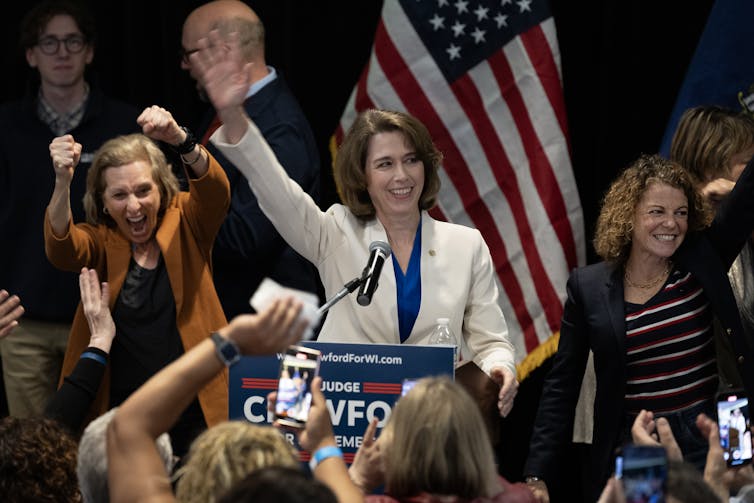
That was one seat.
Pennsylvania has three up for grabs in November 2025, with the potential to swing the current Democratic majority.
And retention elections are politically simple for opponents. As one Republican political consultant told investigative news outlet Spotlight PA: “This is a political consultant’s dream, because your message is just one thing, and that’s ‘No.’”
This can give some advantage to Republicans in a state that Trump won in 2024 and in a low-turnout election. The question will be whether there is more energy motivating opponents to turn out against the Democratic majority or supporters seeking to maintain the status quo.
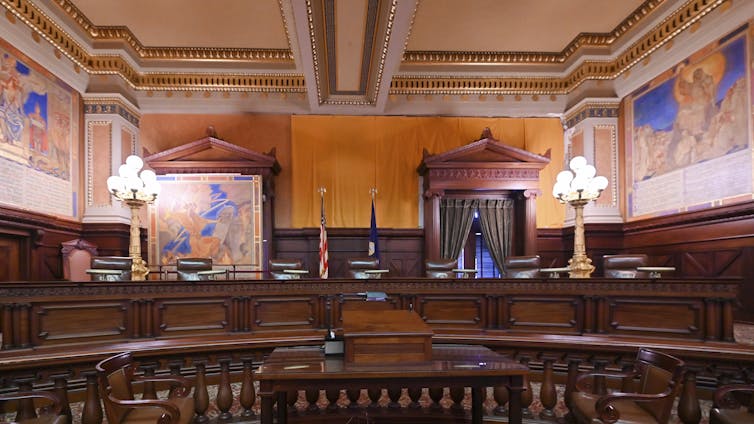
Much is at stake for Pennsylvanians in the fall. Republicans see this as their best opportunity to break the firm 5-2 Democratic majority on the court. This would pave the way for very different judicial decisions. Many of the court’s recent election-related rulings were made on narrow 4-3 votes that could swing differently if the composition of the court changes.
Republicans have had their power in Harrisburg diminished with Shapiro in the governor’s mansion and a one-seat Democratic majority in the state House of Representatives over the past two terms.
A Republican majority on the court would significantly change the balance of power in Harrisburg.
But it is important to focus not only on the top court. The state’s two appellate-level courts – one step below the state Supreme Court – also have two important races and two retention votes in November that will decide the judiciary’s relationship with the governor and General Assembly.
Read more of our stories about Philadelphia and Pennsylvania.

Daniel J. Mallinson does not work for, consult, own shares in or receive funding from any company or organization that would benefit from this article, and has disclosed no relevant affiliations beyond their academic appointment.
Politics + Society – The Conversation