Categories
Featured Juneau News Juneau Local Ketchikan Local News Feeds Sitka Local

Trump leaves Alaska summit with Putin empty-handed after failing to reach a deal to end Ukraine war

Ukrainian forces are increasing the intensity of long-range drone strikes deep into Russia, according to data released by Moscow, ahead of Friday's planned meeting between Presidents Donald Trump and Vladimir Putin in Alaska.
Ukrainian forces are increasing the intensity of long-range drone strikes deep into Russia, according to data released by Moscow, ahead of Friday’s planned meeting between Presidents Donald Trump and Vladimir Putin in Alaska.

 Alaska (AP) — President Donald Trump failed to secure an agreement from Vladimir Putin on Friday to end Russia’s war in Ukraine, falling short in his most significant move yet to stop the bloodshed, even after rolling out the red carpet for the man who started it.

“There’s no deal until there’s a deal,” the U.S. president said, after Putin claimed they had hammered out an “understanding” on Ukraine and warned Europe not to “torpedo the nascent progress.” Trump said he would call Ukrainian President Volodymyr Zelenskyy and European leaders to brief them on the talks.

Trump, who for years has balked at American support for Ukraine and expressed admiration for Putin, had pledged confidently to bring about an end to the war on his first day back in the White House. Seven months later, after berating Zelenskyy in the Oval Office and stanching the flow of some U.S. military assistance to Kyiv, Trump could not bring Putin even to pause the fighting, as his forces make gains on the battlefield.

The U.S. president had offered Putin both a carrot and a stick, issuing threats of punishing economic sanctions on Russia while also extending a warm welcome at Joint Base Elmendorf-Richardson in Anchorage, but he appeared to walk away without any concrete progress on ending the war in Ukraine, now in its fourth year.

Instead, he handed Putin long-sought recognition on the international stage, after years of Western efforts to make him a pariah over the war and his crackdown on dissent, and forestalled the threat of additional U.S. sanctions.

In a sign that the conversations did not yield Trump’s preferred result, the two leaders ended what was supposed to be a joint news conference without taking questions from reporters.

During a subsequent interview with Fox News Channel before leaving Alaska, Trump insisted that the onus going forward might be somehow on Zelenskyy “to get it done,” but said there would also be some involvement from European nations. That was notable since Zelenskyy was excluded from Trump and Putin’s meeting.

The U.S. president had wanted to show off his deal-making skills, while Putin wanted to negotiate a deal that would cement Russia’s gains, block Kyiv’s bid to join the NATO military alliance and eventually pull Ukraine back into Moscow’s orbit.

“We had an extremely productive meeting, and many points were agreed to,” Trump said while standing next to Putin. “And there are just a very few that are left. Some are not that significant. One is probably the most significant, but we have a very good chance of getting there.”

He continued: “We didn’t get there.”

Putin says Trump ‘shows understanding’ that Russia has its own interests

For Putin, just being on U.S. soil for the first time in more than a decade was validation after his ostracization following his invasion of Ukraine.

His meeting with Trump may stall the economic sanctions that the U.S. president had promised unless Moscow worked harder to bring the fighting to a close. It also may simply lead to more meetings, giving his forces more time to make progress on the battlefield.

Putin said Russia and the United States should “turn the page and go back to cooperation.”

He praised Trump as someone who “has a clear idea of what he wants to achieve and sincerely cares about the prosperity of his country, and at the same time shows understanding that Russia has its own national interests.”

“I expect that today’s agreements will become a reference point not only for solving the Ukrainian problem, but will also mark the beginning of the restoration of businesslike, pragmatic relations between Russia and the U.S.,” Putin said.

Despite not reaching any major breakthrough, Trump ended his remarks by thanking Putin and saying, “we’ll speak to you very soon and probably see you again very soon.”

When Putin smiled and offered, “next time in Moscow,” Trump said “that’s an interesting one” and said he might face criticism but “I could see it possibly happening.”

During the interview with Fox News, Trump bragged that Putin echoed many of the U.S. president’s long-standing grievances, including about the 2020 election. This suggests that Putin, a former KGB officer, may have left Trump with the impression that he’d notched a big win even as he left empty handed.

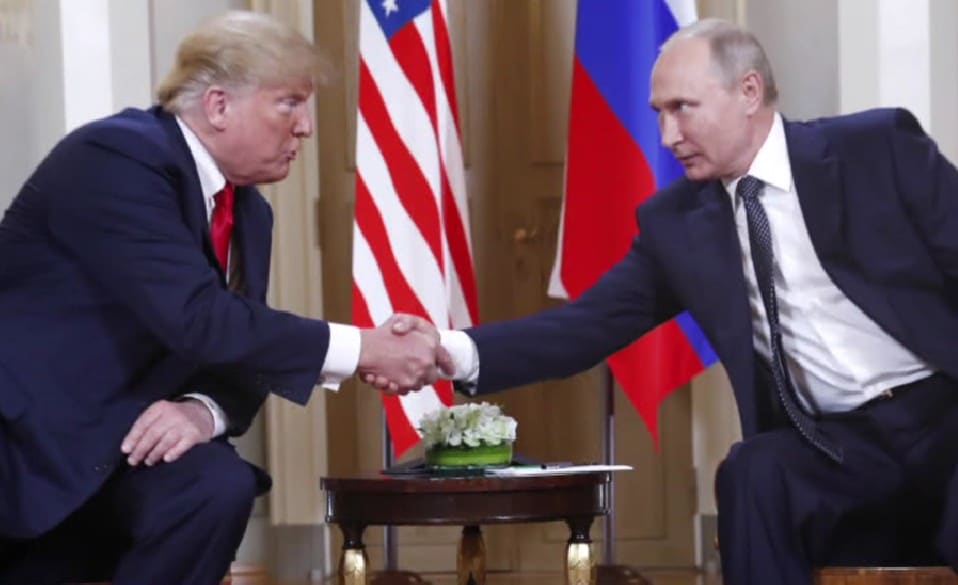
When Trump and Putin arrived in Alaska, they had greeted each other with a warm handshake, chatting almost like old friends, and gripped hands for an extended period on a red carpet rolled out at the military base. As they chatted, Putin grinned and pointed skyward, where B-2s and F-22s — military aircraft designed to oppose Russia during the Cold War — flew overhead. The two then shared the U.S. presidential limo for a short ride to their meeting site, with Putin offering a broad smile as they rolled past the cameras.

It was the kind of reception typically reserved for close U.S. allies and belied the bloodshed and suffering in the war Putin started in Ukraine. Although not altogether surprising considering their longtime friendly relationship, such outward friendliness likely raised concerns from Zelenskyy and European leaders, who fear that Trump is primarily focusing on furthering U.S. interests and not pressing hard enough for Ukraine’s.

Not a one-on-one meeting

White House press secretary Karoline Leavitt said shortly before Air Force One touched down that the previously planned one-on-one meeting between Trump and Putin would be a three-on-three discussion including Secretary of State Marco Rubio and special envoy Steve Witkoff. Putin was joined by Foreign Minister Sergey Lavrov and foreign affairs adviser Yuri Ushakov.

The change seemed to indicate that the White House was taking a more guarded approach than it did during a 2018 meeting in Helsinki, where Trump and Putin met privately with their interpreters and Trump then shocked the world by siding with the Russian leader over U.S. intelligence officials on whether Russia meddled in the 2016 campaign.

Zelenskyy’s exclusion was also a heavy blow to the West’s policy of “nothing about Ukraine without Ukraine.”

War still raging

Russia and Ukraine remain far apart in their demands for peace. Putin has long resisted any temporary ceasefire, linking it to a halt in Western arms supplies and a freeze on Ukraine’s mobilization efforts, which are conditions rejected by Kyiv and its Western allies.

The meeting comes as the war has caused heavy losses on both sides and drained resources. Ukraine has held on far longer than some initially expected since the February 2022 invasion, but it is straining to hold off Russia’s much larger army, grappling with bombardments of its cities and fighting for every inch on the over 600-mile (1,000-kilometer) front line.

Alaska is separated from Russia at its closest point by just 3 miles (less than 5 kilometers) and the international date line.

Joint Base Elmendorf-Richardson was crucial to countering the Soviet Union during the Cold War. It continues to play a role today, as planes from the base still intercept Russian aircraft that regularly fly into U.S. airspace.

___

Categories
Featured Juneau News Juneau Local Ketchikan Local News Feeds Sitka Local

Trump and Putin shake hands to kick off their summit on the war in Ukraine

President Donald Trump greets Russia’s President Vladimir Putin Friday, Aug. 15, 2025, at Joint Base Elmendorf-Richardson, Alaska. (AP Photo/Julia Demaree Nikhinson)

JOINT BASE ELMENDORF-RICHARDSON, Alaska (AP) — President Donald Trump and Russia’s Vladimir Putin kicked off their Alaska summit with a warm handshake on Friday, greeting each other like old friends before heading into hours of discussions that could reshape the war in Ukraine and relations between Moscow and Washington.

After descending from Air Force One, Trump applauded as Putin approached along a red carpet. They gripped hands for an extended period of time, with both men smiling, and Putin eventually grinned and pointed skyward, where B-2s and F-22s — military aircraft designed to oppose Russia during the Cold War — flew overhead to mark the moment at Joint Base Elmendorf-Richardson.

Reporters nearby yelled, “President Putin, will you stop killing civilians?” and Russia’s leader put his hand up to his ear but didn’t answer. Trump and Putin then both climbed in the U.S. presidential limo, with Putin grinning widely as the vehicle rolled past the cameras.

The pair’s chumminess, while not altogether surprising considering their longtime friendly relationship, was striking given the bloodshed and suffering in the war Putin started in Ukraine — the biggest land war in Europe since World War II. It was likely to raise concerns from Ukrainian President Volodymyr Zelenskyy and European leaders, who fear that Trump will primarily focus on furthering U.S. interests and fail to press hard for Ukraine’s.

Zelenskyy and European leaders were excluded from Friday’s meeting, and Ukraine’s president was left posting a video address in which he expressed his hope for a “strong position from the U.S.”

“Everyone wants an honest end to the war. Ukraine is ready to work as productively as possible to end the war,” he said, later adding, “The war continues and it continues precisely because there is no order, nor any signals from Moscow, that it is preparing to end this war.”

The summit was a chance for Trump to prove he’s a master dealmaker and peacemaker. He and his allies have cast him as a heavyweight negotiator who can find a way to bring the slaughter to a close — something he used to boast he could do quickly.

For Putin, it was an opportunity to try to negotiate a deal that would cement Russia’s gains, block Kyiv’s bid to join the NATO military alliance and eventually pull Ukraine back into Moscow’s orbit.

Not meeting one-on-one anymore

White House press secretary Karoline Leavitt said the previously planned one-on-one meeting between Trump and Putin was now a three-on-three discussion including Secretary of State Marco Rubio and special envoy Steve Witkoff. Putin was joined by Foreign Minister Sergey Lavrov and foreign affairs adviser Yuri Ushakov.

The change indicates that the White House is taking a more guarded approach than it did during a 2018 meeting in Helsinki, when Trump and Putin met privately just with their interpreters for two hours and where Trump shocked the world by siding with the Russian leader over U.S. intelligence officials on whether Russia meddled in the 2016 campaign.

Trump and Putin began their discussions Friday by sitting with their aides in front of a blue backdrop printed with “Alaska” and “Pursuing Peace.” Putin and Trump are expected to hold a joint press conference at the end of the summit.

There are significant risks for Trump. By bringing Putin onto U.S. soil — America bought Alaska from Russia in 1867 for roughly 2 cents per acre — the president is giving him the validation he desires after his ostracization following his invasion of Ukraine 3 1/2 years ago. Zelenskyy’s exclusion is a heavy blow to the West’s policy of “nothing about Ukraine without Ukraine” and invites the possibility that Trump could agree to a deal that Ukraine does not want.

Any success is far from assured since Russia and Ukraine remain far apart in their demands for peace. Putin has long resisted any temporary ceasefire, linking it to a halt in Western arms supplies and a freeze on Ukraine’s mobilization efforts, which are conditions rejected by Kyiv and its Western allies.

Trump said earlier in the week there was a 25% chance that the summit would fail, but he also floated the idea that if the meeting succeeds he could bring Zelenskyy to Alaska for a subsequent meeting with himself and Putin.

Trump has also expressed doubts about getting an immediate ceasefire, but he has wanted a broad peace deal done quickly. That seemingly echoes Putin’s longtime argument that Russia favors a comprehensive deal to end the fighting, reflecting its demands, and not a temporary halt to hostilities.

Trump has offered shifting explanations for his meeting goals

Trump previously characterized the sit-down as “ really a feel-out meeting.” But he’s also warned of “very severe consequences” for Russia if Putin doesn’t agree to end the war.

Trump said before arriving in Alaska that his talks with Putin will include Russian demands that Ukraine cede territory as part of a peace deal. He said Ukraine has to decide, but he also suggested Zelenskyy should accept concessions.

“I’ve got to let Ukraine make that decision. And I think they’ll make a proper decision,” Trump told reporters traveling with him to Alaska.

Trump said there’s “a possibility” of the United States offering Ukraine security guarantees alongside European powers, “but not in the form of NATO.” Putin has fiercely resisted Ukraine joining the trans-Atlantic security alliance, a long-term goal for Ukrainians seeking to forge stronger ties with the West.

Gen. Alexus Grynkewich, NATO’s supreme allied commander Europe, is in Alaska to provide “military advice” to Trump and Defense Secretary Pete Hegseth, according to a senior NATO military official who wasn’t authorized to speak publicly and spoke on the condition of anonymity. His presence is likely to be welcomed by European leaders who have tried to convince Trump to be firm with Putin and not deal over Kyiv’s head.

Potentially far-reaching implications

Foreign governments are watching closely to see how Trump reacts to Putin, likely gauging what the interaction might mean for their own dealings with the U.S. president, who has eschewed traditional diplomacy for his own transactional approach to relationships.

The meeting comes as the war has caused heavy losses on both sides and drained resources. Ukraine has held on far longer than some initially expected since the February 2022 invasion, but it is straining to hold off Russia’s much larger army, grappling with bombardments of its cities and fighting for every inch on the over 600-mile (1,000-kilometer) front line.

Alaska is separated from Russia at its closest point by just 3 miles (less than 5 kilometers) and the international date line.

Joint Base Elmendorf-Richardson was crucial to countering the Soviet Union during the Cold War. It continues to play a role today, as planes from the base still intercept Russian aircraft that regularly fly into U.S. airspace.

Categories
Featured Juneau News Juneau Local Ketchikan Local News Feeds Sitka Local

Trump’s meeting with Putin could determine the trajectory of the Russia-Ukraine war

Ukrainian forces are increasing the intensity of long-range drone strikes deep into Russia, according to data released by Moscow, ahead of Friday's planned meeting between Presidents Donald Trump and Vladimir Putin in Alaska.
Ukrainian forces are increasing the intensity of long-range drone strikes deep into Russia, according to data released by Moscow, ahead of Friday’s planned meeting between Presidents Donald Trump and Vladimir Putin in Alaska.

AP- U.S. President Donald Trump is meeting face-to-face with Russian President Vladimir Putin in Alaska on Friday for a high-stakes summit that could determine not only the trajectory of the war in Ukraine but also the fate of European security.

The sit-down offers Trump a chance to prove to the world that he is both a master dealmaker and a global peacemaker. He and his allies have cast him as a heavyweight negotiator who can find a way to bring the slaughter to a close, something he used to boast he could do quickly.

For Putin, a summit with Trump offers a long-sought opportunity to try to negotiate a deal that would cement Russia’s gains, block Kyiv’s bid to join the NATO military alliance and eventually pull Ukraine back into Moscow’s orbit.

There are significant risks for Trump. By bringing Putin onto U.S. soil, the president is giving Russia’s leader the validation he desires after his ostracization following his invasion of Ukraine 3 1/2 years ago. The exclusion of Ukrainian President Volodymyr Zelenskyy from the summit also deals a heavy blow to the West’s policy of “nothing about Ukraine without Ukraine” and invites the possibility that Trump could agree to a deal that Ukraine does not want.

Any success is far from assured, especially as Russia and Ukraine remain far apart in their demands for peace. Putin has long resisted any temporary ceasefire, linking it to a halt in Western arms supplies and a freeze on Ukraine’s mobilization efforts, which were conditions rejected by Kyiv and its Western allies.

“HIGH STAKES!!!” Trump posted on Truth Social as his motorcade idled outside the White House shortly after sunrise in Washington. An hour later, he waved as he boarded Air Force One but did not speak to reporters.

Trump on Thursday said there was a 25% chance that the summit would fail, but he also floated the idea that if the meeting succeeds he could bring Zelenskyy to Alaska for a subsequent, three-way meeting, a possibility that Russia hasn’t agreed to.

When asked in Anchorage about Trump’s estimate of a 25% chance of failure, Russian Foreign Minister Sergei Lavrov told reporters that Russia “never plans ahead.”

“We know that we have arguments, a clear, understandable position. We will state it,” he said in footage posted to the Russian Foreign Ministry’s Telegram channel.

Trump said in a Fox News radio interview Thursday that he didn’t know if they would get “an immediate ceasefire” but he wanted a broad peace deal done quickly. That seemingly echoes Putin’s longtime argument that Russia favors a comprehensive deal to end the fighting, reflecting its demands, not a temporary halt to hostilities.

The Kremlin said Trump and Putin will first sit down for a one-on-one discussion, followed by the two delegations meeting and talks continuing over “a working breakfast.” They are then expected to hold a joint press conference.

Trump has offered shifting explanations for his meeting goals

In the days leading up to the summit, set for a military base near Anchorage, Trump described it as “ really a feel-out meeting.” But he’s also warned of “very severe consequences” for Russia if Putin doesn’t agree to end the war and said that though Putin might bully other leaders, “He’s not going to mess around with me.”

Trump said Friday his talks with Putin will include Russian demands that Ukraine cede territory as part of a peace deal. He said Ukraine has to decide, but he also suggested Zelenskyy should accept concessions.

“I’ve got to let Ukraine make that decision. And I think they’ll make a proper decision,” Trump told reporters traveling with him to Alaska.

Trump said there’s “a possibility” of the United States offering Ukraine security guarantees alongside European powers, “but not in the form of NATO.” Putin has fiercely resisted Ukraine joining the trans-Atlantic security alliance, a long-term goal for Ukrainians seeking to forge stronger ties with the West.

Zelenskyy has time and again cast doubts on Putin’s willingness to negotiate in good faith. His European allies, who’ve held increasingly urgent meetings with U.S. leaders over the past week, have stressed the need for Ukraine to be involved in any peace talks.

Political commentators in Moscow, meanwhile, have relished that the summit leaves Ukraine and its European allies on the sidelines.

Dmitry Suslov, a pro-Kremlin voice, expressed hope that the summit will “deepen a trans-Atlantic rift and weaken Europe’s position as the toughest enemy of Russia.”

The summit could have far-reaching implications

On his way to Anchorage Thursday, Putin arrived in Magadan in Russia’s Far East, according to Russian state news agency Interfax.

Kremlin spokesman Dmitry Peskov said the visit would include meetings with the regional governor and stops at several key sites, including a stop to lay flowers at a WWII-era memorial honoring Soviet-American aviation cooperation.

Foreign governments will be watching closely to see how Trump reacts to Putin, likely gauging what the interaction might mean for their own dealings with the U.S. president, who has eschewed traditional diplomacy for his own transactional approach to relationships.

The meeting comes as the war has caused heavy losses on both sides and drained resources.

Ukraine has held on far longer than some initially expected since the February 2022 invasion, but it is straining to hold off Russia’s much larger army, grappling with bombardments of its cities and fighting for every inch on the over 600-mile (1,000-kilometer) front line.

Andrea Kendall-Taylor, a senior fellow and director of the Transatlantic Security Program at the Center for a New American Security, said U.S. antagonists like China, Iran and North Korea will be paying attention to Trump’s posture to see “whether or not the threats that he continues to make against Putin are indeed credible.”

“Or, if has been the past track record, he continues to back down and look for ways to wiggle out of the kind of threats and pressure he has promised to apply,” said Kendall-Taylor, who is also a former senior intelligence officer.

While some have objected to the location of the summit, Trump has said he thought it was “very respectful” of Putin to come to the U.S. instead of a meeting in Russia.

Sergei Markov, a pro-Kremlin Moscow-based analyst, observed that the choice of Alaska as the summit’s venue “underlined the distancing from Europe and Ukraine.”

Being on a military base allows the leaders to avoid protests and meet more securely, but the location carries its own significance because of its history and location.

Alaska, which the U.S. purchased from Russia in 1867, is separated from Russia at its closest point by just 3 miles (less than 5 kilometers) and the international date line.

Joint Base Elmendorf-Richardson was crucial to countering the Soviet Union during the Cold War. It continues to play a role today, as planes from the base still intercept Russian aircraft that regularly fly into U.S. airspace.

Categories
Featured Juneau News Juneau Local Ketchikan Local News Feeds Sitka Local

US housing secretary visits Alaska to gather insights into urban and rural challenges

By: Yereth Rosen, Alaska Beacon

Scott Turner, secretary of the U.S. Department of Housing and Urban Development, speaks at a news conference on Tuesday in Anchorage. With him is U.S. Sen. Dan Sullivan, R-Alaska, and U.S. Rep. Nick Begich, R-Alaska. Turner is one of several Trump administration cabinet members who have traveled to Alaska this summer. (Photo by Yereth Rosen/Alaska Beacon)

The secretary of the U.S. Department of Housing and Urban Development, visiting Alaska this week, said he hopes to learn about challenges facing both the state’s urban centers and remote rural communities.

“I came here to be a great listener, to understand the needs of the people of Alaska, to understand the challenges of the people of Alaska and particularly when it comes to homelessness and affordable housing,” Scott Turner, the Trump administration’s HUD secretary, said at a news conference Tuesday in Anchorage.

Turner is among several Trump administration cabinet members touring Alaska this summer.

He spent part of Tuesday meeting with Anchorage municipal officials who discussed the challenges of homelessness in the state’s largest city.

It is a national issue, Turner said.

That 770,000 people identified as homeless in the nation “is unacceptable to me, it’s unacceptable to my colleagues and I know it’s unacceptable to you,” he said.

In Alaska, he said, almost 2,700 people are homeless, with about 1,700 of them in Anchorage. “That’s something that we want to attack and eradicate,” he said.

Those numbers show that past efforts by HUD to address homelessness have not been effective, said Turner. To make his point, he referred to his background as a professional football player.  

“One of the things that holds you accountable in the NFL is called game film,” he said. “You can say what you want to on Sunday during the game. You can say, ‘Well, I did the right thing,’ but on Monday, the film will tell the story, and the film does not lie.”

On Wednesday, Turner was touring Bethel, in Western Alaska, to learn about rural Alaska housing problems.

Crowding is a dire concern in rural communities, according to the Alaska Housing Finance Corp., a state agency. Conditions are most severe in the Yukon-Kuskokwim Delta region, where Bethel is located, according to AHFC. Crowded conditions are linked to poor health, including transmission of respiratory diseases like COVID-19.

Turner said HUD wants to add 7 million more units of affordable housing to the national supply and is focused on reducing regulations that reduce housing access in rural areas as well as in urban areas.

Sen. Dan Sullivan, R-Alaska, accompanied Turner and asserted at the news conference that overregulation by HUD is one of the major impediments to housing availability and quality in rural parts of the state.

“You can send all the money you want to rural Alaska, but it’s so smothered in red tape that it costs a million bucks to build a duplex. One duplex. A lot of that, I think, is self-inflicted,” Sullivan said.

Other analysis identified different problems for rural Alaska housing.

The high cost of energy in rural communities, which are unconnected to larger power grids, is one problem that for years has been cited as a key factor making rural Alaska housing unaffordable.

However, the budget reconciliation bill passed by Congress at the end of June, along with various actions by the Trump administration, has created new barriers to renewable energy development in rural Alaska and elsewhere.

Climate change has also exacerbated rural Alaska’s housing crisis, according to reports by government agencies.

A 2019 statewide assessment by the Denali Commission found that 144 rural communities are threatened by increased erosion, flooding, permafrost thaw or some combination of those factors.

More frequent flooding in the Yukon-Kuskokwim region, for example, is attributed to climate change and has affected housing quality and safety.

But the Trump administration is seeking to halt in-state policies intended to mitigate and adapt to climate change, including those in Alaska.

The administration also abolished the Federal Emergency Management Agency’s Building Resistant Infrastructure and Communities program. The program provided grants to help communities prevent damage from natural disasters, many of which are linked to climate change.

Categories
Featured Juneau News Juneau Local Ketchikan Local News Feeds Sitka Local

What to know about the Putin-Trump summit in Alaska

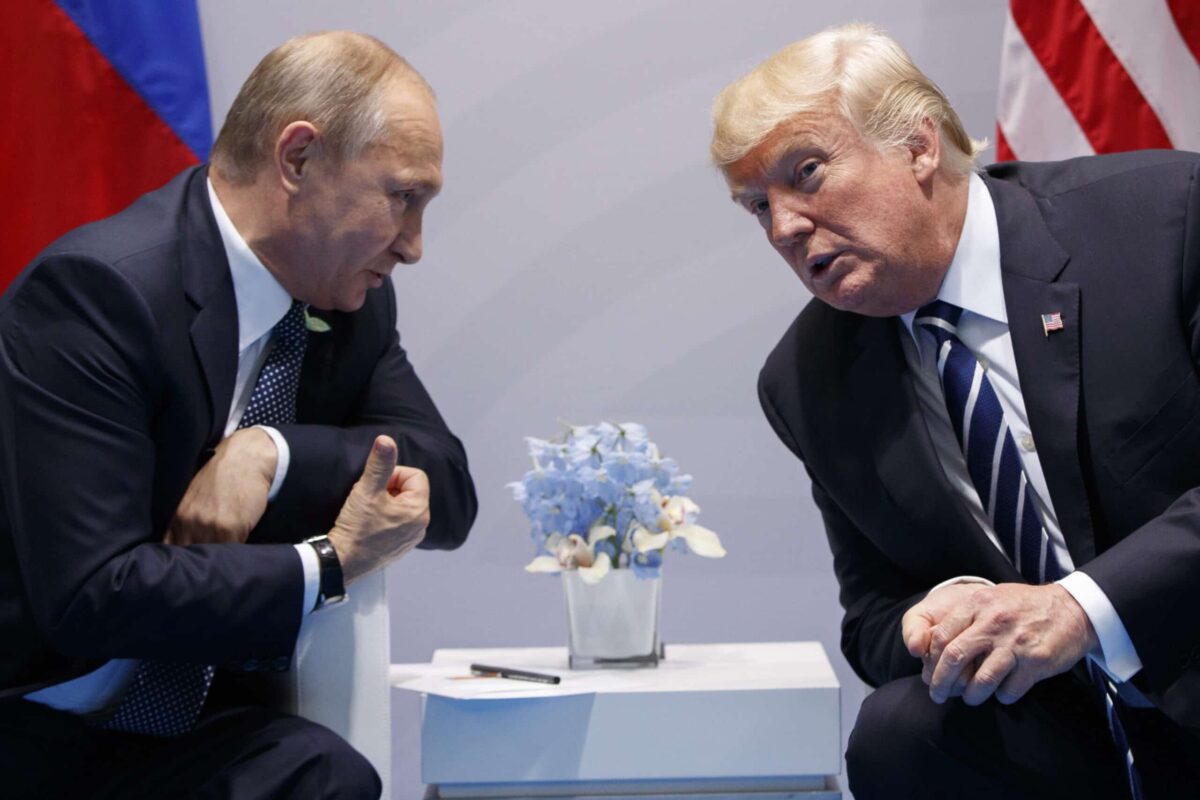
FILE – U.S. President Donald Trump meets with Russian President Vladimir Putin at the G-20 Summit on July 7, 2017, in Hamburg, Germany. (AP Photo/Evan Vucci, File)

AP- The U.S.-Russia summit in Alaska is happening at a site where East meets West — quite literally — in a place familiar to both countries as a Cold War front line of missile defense, radar outposts and intelligence gathering.

Whether it can lead to a deal to produce peace in Ukraine more than 3 1/2 years after Moscow’s invasion remains to be seen.

Here’s what to know about the meeting between Russian President Vladimir Putin and U.S. President Donald Trump, the first summit in four years:

When and where is it taking place?

The summit will take place Friday in Alaska, although where in the state is still unknown.

It will be Putin’s first trip to the United States since 2015, for the U.N. General Assembly in New York. Since the U.S. is not a member of the International Criminal Court, which in 2023 issued a warrant for Putin on war crimes accusations, it is under no obligation to arrest him.

Is Zelenskyy going?

Both countries confirmed a meeting between only Putin and Trump, even though there were initial suggestions that Ukrainian President Volodymyr Zelenskyy might be part of it. But the Kremlin has long pushed back against Putin meeting Zelenskyy -– at least until a peace deal is reached by Russia and Ukraine and was ready to be signed.

Putin said last week he wasn’t against meeting Zelenskyy “but certain conditions need to be created” for it to happen and were “still a long way off.”

That raised fears about excluding Ukraine from negotiations. Ukrainian officials last week talked with European allies, who stressed that peace cannot be achieved without Kyiv’s involvement.

What’s Alaska’s role in Russian history?

It will be the first visit by a Russian leader to Alaska, even though it was part of the czarist empire until 1867, the state news agency Tass said.

Alaska was colonized by Russia starting from the 18th century until Czar Alexander II sold it to the United States in 1867 for $7.2 million. When it was found to contain vast resources, it was seen as a naïve deal that generated remorse and self-reproach.

After the USSR’s collapse, Alaska was a subject of nostalgia and jokes for Russians. One popular song in the 1990s went: “Don’t play the fool, America … give back our dear Alaska land.”

Sam Greene of King’s College London said on X the symbolism of Alaska as the site of a summit about Ukraine was “horrendous — as though designed to demonstrate that borders can change, land can be bought and sold.”

What’s the agenda?

Trump has appeared increasingly exasperated with Putin over Russia’s refusal to halt the bombardment of Ukrainian cities. Kyiv has agreed to a ceasefire, insisting on a truce as a first step toward peace.

Moscow presented ceasefire conditions that are nonstarters for Zelenskyy, such as withdrawing troops from the four regions Russia illegally annexed in 2022, halting mobilization efforts, or freezing Western arms deliveries. For a broader peace, Putin demands Kyiv cede the annexed regions, even though Russia doesn’t fully control them, and Crimea, renounce a bid to join NATO, limit the size of its armed forces and recognize Russian as an official language along with Ukrainian.

Zelenskyy insists any peace deals must include robust security guarantees for Ukraine to protect it from future Russian aggression.

Putin has warned Ukraine it will face tougher conditions for peace as Russian troops forge into other regions to build what he described as a “buffer zone.” Some observers suggested Russia could trade those recent gains for territory still under Ukrainian control in the four annexed regions annexed by Moscow.

Zelenskyy said Saturday that “Ukrainians will not give their land to the occupier.”

But Trump said Monday: “There’ll be some land swapping going on. I know that through Russia and through conversations with everybody. To the good, for the good of Ukraine. Good stuff, not bad stuff. Also, some bad stuff for both.”

What are expectations?

Putin sees a meeting with Trump as a chance to cement Russia’s territorial gains, keep Ukraine out of NATO and prevent it from hosting any Western troops so Moscow can gradually pull the country back into its orbit.

He believes time is on his side as Ukrainian forces are struggling to stem Russian advances along the front line amid swarms of Moscow’s missiles and drones battering the country.

The meeting is a diplomatic coup for Putin, isolated since the invasion. The Kremlin sought to portray renewed U.S. contacts as two superpowers looking to resolve various global problems, with Ukraine being just one.

Ukraine and its European allies are concerned a summit without Kyiv could allow Putin to get Trump on his side and force Ukraine into concessions.

“Any decisions that are without Ukraine are at the same time decisions against peace,” Zelenskyy said. “They will not bring anything. These are dead decisions. They will never work.”

European officials echoed that.

“As we work towards a sustainable and just peace, international law is clear: All temporarily occupied territories belong to Ukraine,” European Union foreign policy chief Kaja Kallas said. “A sustainable peace also means that aggression cannot be rewarded.”

NATO Secretary General Mark Rutte said Sunday he believed Trump was “making sure that Putin is serious, and if he is not, then it will stop there.”

“If he is serious, then from Friday onwards, the process will continue. Ukraine getting involved, the Europeans being involved,” Rutte added.

Since last week, Putin spoke to Chinese leader Xi Jinping, Indian Prime Minister Narendra Modi, Brazilian President Luiz Inácio Lula da Silva, as well as the leaders of South Africa, Kazakhstan, Uzbekistan, Belarus and Kyrgyzstan, the Kremlin said.

That suggested Putin perhaps wanted to brief Russia’s most important allies about a potential settlement, said pro-Kremlin analyst Sergei Markov.

Categories
Featured Juneau News Juneau Local Ketchikan Local News Feeds Politics Sitka Local

Ukraine ramps up drone attacks on Russia ahead of Trump-Putin Alaska summit

Ukrainian forces are increasing the intensity of long-range drone strikes deep into Russia, according to data released by Moscow, ahead of Friday’s planned meeting between Presidents Donald Trump and Vladimir Putin in Alaska.
(Photo courtesy ABC News)

By David Brennan, ABC News

LONDON – Ukrainian forces are increasing the intensity of long-range drone strikes deep into Russia, according to data released by Moscow, ahead of Friday’s planned meeting between Presidents Donald Trump and Vladimir Putin in Alaska.

Russia’s Defense Ministry reported downing another 59 Ukrainian drones overnight into Monday morning, with Moscow Mayor Sergei Sobyanin reporting that at least nine craft were shot down en route to the capital.

Russia’s federal air transport agency, Rosaviatsiya, reported temporary restrictions on flights at airports in Penza, Nizhny Novgorod, Kaluga, Volgograd and Saratov during the overnight attacks.

Monday’s figures bring the total number of long-range Ukrainian drones claimed shot down by Russian forces in August to 1,337 — with a daily average of more than 121 drones each day.

Moscow only provides data on the number of drones it claims to have shot down, and not the overall number of Ukrainian craft launched. Neither Ukraine nor Russia provide public information on the scale of their own cross-border drone attacks.

In July, the total number of Ukrainian drones claimed downed over the course of the month was 3,008, with an average of just over 97 craft per day.

Ukraine’s air force, meanwhile, said Russia launched 100 drones into Ukraine overnight into Monday morning, of which 70 were intercepted or suppressed.

Thus far in August, the intensity of Russian strikes on Ukraine appear to have eased. The first 11 days of this month have seen Moscow launch a daily average of 74 drones and one missile into Ukraine, compared with record-breaking July figures of 201 drones and around six missiles per day.

Ukrainian President Volodymyr Zelenskyy and his officials have said Kyiv will continue and expand its long-range strikes in an effort to force Moscow to the negotiating table.

“They in Russia must clearly feel the consequences of what they are doing against Ukraine,” the president said in a statement posted to Telegram in May. “And they will. Attack drones, interceptors, cruise missiles, Ukrainian ballistic systems — these are the key elements. We must manufacture all of them.”

It is not clear whether Zelenskyy will attend Friday’s summit in Alaska. There, Trump and Putin are expected to discuss proposals to secure a ceasefire and potentially to end Russia’s full-scale invasion, which it launched in February 2022.

Zelenskyy has insisted that any negotiations must include Ukraine. Kyiv will also not officially cede any territory, accept limitations on its armed forces, or jettison its ambitions to join NATO and the European Union, Zelenskyy has said.

Putin, though, is demanding that Ukraine cede several regions — not all of which are controlled by Russian troops — in the south and east of the country, accept curbs on the size and sophistication of its military and be permanently excluded from NATO.

Russia’s demands, Zelenskyy has said, constitute an attempt to “partition Ukraine.”

PHOTO: Ukrainian President Volodymyr Zelensky | Donald Trump | Russian President Vladimir Putin
Ukrainian Presidential Press Service on June 27, 2024, in which Ukrainian President Volodymyr Zelensky looks on during a signature ceremony of Agreement on Security Cooperation and Long-term Support between Ukraine and Estonia during the European Council Summit. )Ukrainian Presidential Press Service/POOL/Sputnik/AFP via Getty Images)

Speaking from the White House on Friday, Trump suggested a settlement could include “some swapping of territories.”

Zelenskyy swiftly rejected the proposal, saying Ukraine “will not give Russia any awards for what it has done” and that “Ukrainians will not give their land to the occupier.”

On Monday, Zelenskyy appealed for more pressure on the Kremlin. “Russia is prolonging the war and therefore deserves stronger pressure from the world,” he wrote on Telegram.

“Russia refuses to stop the killings and therefore should not receive any rewards or benefits,” he added.

Categories
Featured Juneau News Juneau Local Ketchikan Local News Feeds Politics Sitka Local

Trump to meet Putin next week in Alaska, he says on social media

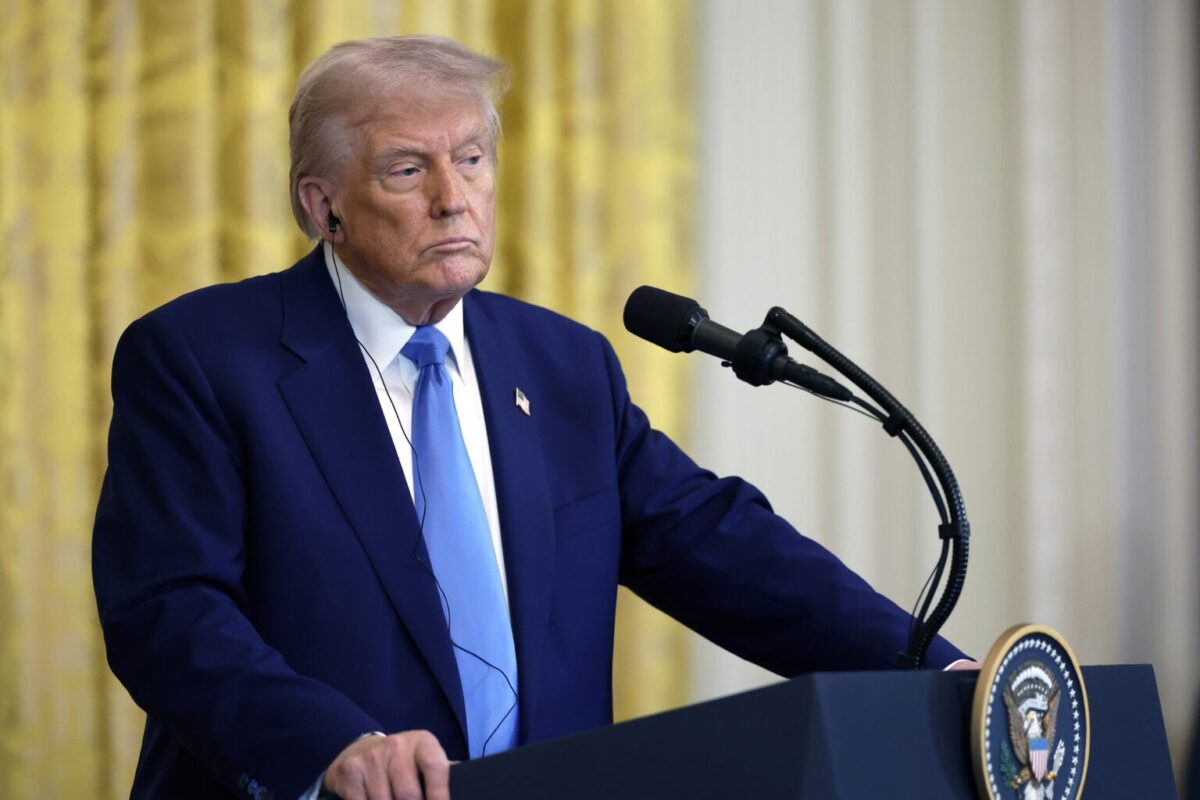
President Donald Trump delivers remarks during a joint press conference with French President Emmanuel Macron in the East Room at the White House on Feb. 24, 2025, in Washington, D.C. (Photo by Chip Somodevilla/Getty Images)

By James Brooks, Alaska Beacon

President Donald Trump will meet with Russian President Vladimir Putin on Aug. 15 in Alaska, Trump said in a social media post Friday.

The location, timing and other details were not immediately available. Staff for all three members of Alaska’s congressional delegation said they were unaware of the announcement ahead of time.

“The highly anticipated meeting between myself, as President of the United States of America, and President Vladimir Putin, of Russia, will take place next Friday, August 15, 2025, in the Great State of Alaska,” Trump wrote on Truth Social.

Trump has repeatedly said on social media that he is interested in negotiating with Putin in order to bring an end to the Russian invasion of Ukraine.

This story is developing and will be updated.

Categories
Featured Juneau News Juneau Local Ketchikan Local News Feeds Sitka Local

Trump’s push for drilling, mining sharpens debate for Alaska Natives about land they view as sacred

Demonstrators hold signs during a protest outside the annual Alaska Sustainable Energy Conference on Tuesday, June 3, 2025, in Anchorage, Alaska. (AP Photo/Jenny Kane, File)

AP- Fish camps still dot the banks of the broad Kuskokwim River in southwestern Alaska. Wooden huts and tarped shelters stand beside drying racks draped with bright red strips of salmon, which Alaska Native families have harvested for generations and preserved for the bitter winters ahead.

But the once-abundant salmon populations have declined so sharply in recent years that authorities have severely restricted subsistence fishing on Alaska’s second-longest river. They’ve imposed even tighter restrictions on the longer Yukon River to the north.

Various factors are blamed for the salmon collapse, from climate change to commercial fishing practices. What’s clear is the impact is not just on food but on long-standing rituals — fish camps where elders transmit skills and stories to younger generations while bonding over a sacred connection to the land.

“Our families are together for that single-minded purpose of providing for our survival,” said Gloria Simeon, a Yup’ik resident of Bethel. “It’s the college of fish camp.”

So when Alaska Natives debate proposals to drill, mine or otherwise develop the landscape of the nation’s largest state, it involves more than an environmental or economic question. It’s also a spiritual and cultural one.

“We have a special spiritual, religious relationship to our river and our land,” said Simeon, standing outside her backyard smokehouse where she uses birch-bark kindling and cottonwood logs to preserve this year’s salmon catch. “Our people have been stewards of this land for millennia, and we’ve taken that relationship seriously.”

Trump policies intensify the debates

Such debates are simmering across the state’s vast tundra, broad rivers, sprawling wetlands and towering mountain ranges. Put a pin just about anywhere on the map of Alaska, and you’re likely to hit an area debating a proposed mine, a new wilderness road, a logging site, an oil well, a natural gas pipeline.

Such debates have intensified during President Donald Trump’s second term. His administration and allies have pushed aggressively for drilling, mining and developing on Alaska’s public lands.

More than 1 in 5 Alaskans identify as Alaska Native or American Indian alone or in combination with another racial group, the highest ratio of any state, according to 2020 U.S. Census figures. Alaska Natives include Aleut, Athabascan, Iñupiat, Tlingit, Yup’ik and other groups. For all their diversity, they share a history in the region dating back thousands of years, as well as cultural and spiritual traditions, including those closely associated with subsistence hunting and gathering.

Native leaders and activists are divided about extraction projects. Supporters say they bring jobs and pay for infrastructure. Opponents say they imperil the environment and their traditions.

Tribal members sometimes even find themselves on opposite sides of the same proposal. Native-run corporations — formed to benefit Alaska Native shareholders — are supporting a mine in southwestern Alaska that a regional tribal coalition opposes, a scenario similar to an oil exploration project underway in Interior Alaska.

Trump singled out Alaska as a priority for extraction projects in an executive order signed on his first day in office.

“Unlocking this bounty of natural wealth will raise the prosperity of our citizens while helping to enhance our Nation’s economic and national security,” the order said.

Increasingly, words are turning to action.

Congress, in passing Trump’s budget bill in July, authorized an unprecedented four new sales of oil and gas leases in the coastal plain of the Arctic National Wildlife Refuge, and still more in other locations.

Trump cabinet officials made a high-profile visit in June to Prudhoe Bay in Alaska’s far north — an aging oil field that is one of the largest in North America. They touted goals of doubling the oil coursing through Alaska’s existing pipeline system and building a massive natural gas pipeline as its “big, beautiful twin.”

Trump’s policy shifts came even as he removed one of the most prominent Alaska Native names from the official map. He returned the federal name of “Mount McKinley” to the largest mountain in Alaska and North America. For all their disputes over extraction, Native and Alaska political leaders were largely united in wanting to keep its traditional Athabascan name of Denali, which translates to “the high one.”

‘We need jobs … to stand on our own two feet’

It takes years for proposed extraction projects to unfold, if they ever do. The extent of oil reserves in the Arctic refuge remains uncertain. Limited infrastructure and harsh weather raise costs. No major oil company bid during the only two lease sales offered to date in the Arctic refuge.

But the measures pushed by the new administration and Congress amount to the latest pendulum swing between Republican and Democratic presidents, between policies prioritizing extraction and environmental protections.

The budget bill calls for additional lease sales in the National Petroleum Reserve-Alaska, west of the Arctic refuge, and opening more areas to potential leasing than authorized under recent Democratic administrations.

Alaska’s political leaders generally have cheered on the push for more extraction, including its Republican congressional delegation and its governor, who has called his state “America’s natural resource warehouse.”

So have some Native leaders, who say their communities stand to benefit from jobs and revenues. They say such projects are critical to their economic prospects and self-determination, providing jobs and helping their communities pay for schools, streets and snow removal. They’ve accused the previous administration of President Joe Biden of ignoring their voices.

“We need jobs. Our people need training, to stand on our own two feet. Our kids need a future,” said PJ Simon, first chief of the Allakaket Tribal Council. He said communities can maintain their traditions while benefiting from economic development — but that it’s crucial that public officials and businesses include them in the planning. “Native people want to be heard, not pushed aside,” Simon said.

Mayor Nathan Gordon Jr. of Kaktovik, the only community within the Arctic refuge, applauded the budget bill. It enables Kaktovik “to strengthen our community, preserve our cultural traditions, and ensure that we can remain in our homelands for years to come,” he said in a statement issued by Voice of the Arctic Iñupiat, a group advocating for oil exploration.

A ‘lack of respect’ for Native subsistence traditions

But Native opponents of such projects say short-term economic gains come at the risk of long-term environmental impacts that will reverberate widely.

“We’re kind of viewed as the last frontier, like we have unlimited resources,” said Sophie Swope, executive director of the environmental advocacy group Mother Kuskokwim Tribal Coalition.

She said Alaska’s most renewable resources — such as salmon, deer and other migratory wildlife — are threatened both by overly aggressive ocean fishing and by extractive industries.

“There’s that lack of respect for our traditional subsistence lifestyles,” she said.

Opponents of oil drilling in the Arctic refuge fear it will permanently disrupt the long-range migration of caribou, which Native people have hunted for millennia. The Tanana Chiefs Conference, a coalition representing dozens of tribes in Alaska’s interior south of the refuge, has long opposed the drilling.

A massive caribou herd goes to the refuge’s coastal plain to calve in the spring before fanning out across a wider area, providing a crucial food source for Native hunters in Alaska and Canada.

If the herd’s migration is disrupted, opponents fear an impact similar to the salmon collapse — a loss not just of food but of a focal point of culture and spirituality.

While the source of the salmon crisis is uncertain, researchers say possible causes include the impacts of commercial fishing, disease, warming waters, other environmental changes and competition between wild and hatchery-reared fish. In a June policy brief, Indigenous leaders, scientists and policy experts called for further study and for easing the disproportionate impact of the crisis on subsistence fishermen.

But if the salmon collapse’s cause isn’t clear, its impact is.

It has meant “no fish camps, no traditional knowledge that’s been passed down to our younger generation,” said Kristen Moreland, executive director of the Fairbanks-based advocacy group Gwich’in Steering Committee.

Moreland said she regularly takes her children to her home village in the north to reconnect with traditional festivals and activities, including those centered around the caribou hunt: “They learn all our traditional knowledge that way. What if the caribou doesn’t migrate up there anymore?”

The yearslong battle over the refuge takes its toll, she said. “How long do we have to advocate for our land and our people?”

Chief Brian Ridley of the Tanana Chiefs Conference said he sympathizes with those tribal leaders supporting development, given the shortage of well-paying jobs in many villages.

But concern over potential long-term environmental damage has prompted the conference to oppose projects such as oil drilling in the Arctic refuge and the nearer Yukon Flats, as well as construction of the so-called Ambler Road, which could open access to mining in more remote areas.

Ridley said he recently attended a national conference with other tribal leaders who echoed a common theme — opposing “development projects on our land or near our land that come in and promise jobs and whatnot, and they come and go and then we get stuck with the long-term negative aspects of cleanup and restoration.”

Empty smokehouses, broken spirits

In southwestern Alaska, a proposed major mine, the Donlin Gold project, has long been debated.

The project, planned by private investors in cooperation with Native corporations owning the land and mineral rights, would require a massive dam to hold back millions of tons of mineral and chemical waste in a valley.

Project proponents say the dam will involve state-of-the-art design, with its wide base anchored to bedrock and the surrounding mountain walls incorporated into containing the debris. Proponents tout benefits including jobs, shareholder payments and funds for such things as village services and education.

“This kind of project, since it’s on our lands, is different than most other resource projects,” said Thomas Leonard, vice president of corporate affairs for Calista Corp., a regional Alaska Native corporation involved. “We literally have a seat at the table, have a voice in the project.”

But opponents, such as Mother Kuskokwim and some area tribes, aren’t convinced and say the risk of a failure on the Kuskokwim watershed is too great.

“Protecting the river and the land and the Earth is part of the partnership and the relationship that we have as caregivers,” Simeon said.

That relationship isn’t abstract, Simeon said. She said the disruption of communal hunting and fishing activities leads to a spiritual rootlessness that she believes contributes to alarming rates of addictions and suicide among Alaska Native people.

“What does it do to your heart and soul when you have to look at an empty smokehouse year after year after year, and you can’t provide for your family?” Simeon said.

Categories
Featured Juneau News Juneau Local Ketchikan Local News Feeds Sitka Local

RFK Jr. pulls $500 million in funding for vaccine development

Protesters hold signs and chant outside the Alaska Native Tribal Health Consortium where U.S. Health Secretary Robert F. Kennedy Jr. met with Alaska Native leaders, in Anchorage, Alaska, Tuesday, Aug. 5, 2025, shortly after the Department of Health and Human Services announced its plans to cancel contracts and pull funding for some vaccines being developed to fight respiratory viruses like COVID-19 and the flu. (AP Photo/Mark Thiessen)

AP- The Department of Health and Human Services will cancel contracts and pull funding for some vaccines that are being developed to fight respiratory viruses like COVID-19 and the flu.

Robert F. Kennedy Jr. announced in a statement Tuesday that 22 projects, totaling $500 million, to develop vaccines using mRNA technology will be halted.

Kennedy’s decision to terminate the projects is the latest in a string of decisions that have put the longtime vaccine critic’s doubts about shots into full effect at the nation’s health department. Kennedy has pulled back recommendations around the COVID-19 shots, fired the panel that makes vaccine recommendations, and refused to offer a vigorous endorsement of vaccinations as a measles outbreak worsened.

The health secretary criticized mRNA vaccines in a video on his social media accounts, explaining the decision to cancel projects being led by the nation’s leading pharmaceutical companies, including Pfizer and Moderna, that offer protection against viruses like the flu, COVID-19 and H5N1.

“To replace the troubled mRNA programs, we’re prioritizing the development of safer, broader vaccine strategies, like whole-virus vaccines and novel platforms that don’t collapse when viruses mutate,” Kennedy said in the video.

Infectious disease experts say the mRNA technology used in vaccines is safe, and they credit its development during the first Trump administration with slowing the 2020 coronavirus pandemic. Future pandemics, they warned, will be harder to stop without the help of mRNA.

“I don’t think I’ve seen a more dangerous decision in public health in my 50 years in the business,” said Mike Osterholm, a University of Minnesota expert on infectious diseases and pandemic preparations.

He noted mRNA technology offers potential advantages of rapid production, crucial in the event of a new pandemic that requires a new vaccine.

The shelving of the mRNA projects is short-sighted as concerns about a bird flu pandemic continue to loom, said Dr. Paul Offit, a vaccine expert at Children’s Hospital of Philadelphia.

“It’s certainly saved millions of lives,” Offit said of the existing mRNA vaccines.

Scientists are using mRNA for more than infectious disease vaccines, with researchers around the world exploring its use for cancer immunotherapies. At the White House earlier this year, billionaire tech entrepreneur Larry Ellison praised mRNA for its potential to treat cancer.

Traditionally, vaccines have required growing pieces of viruses, often in chicken eggs or giant vats of cells, then purifying that material. The mRNA approach starts with a snippet of genetic code that carries instructions for making proteins. Scientists pick the protein to target, inject that blueprint and the body makes just enough to trigger immune protection — producing its own vaccine dose.

In a statement Tuesday, HHS said “other uses of mRNA technology within the department are not impacted by this announcement.”

The mRNA technology is used in approved COVID-19 and RSV shots, but has not yet been approved for a flu shot. Moderna, which was studying a combination COVID-19 and flu mRNA shot, had said it believed mRNA could speed up production of flu shots compared with traditional vaccines.

The abandoned mRNA projects signal a “shift in vaccine development priorities,” the health department said in its statement, adding that it will start “investing in better solutions.”

“Let me be absolutely clear, HHS supports safe, effective vaccines for every American who wants them,” Kennedy said in the statement.

Speaking hours later Tuesday at a news conference in Anchorage, Alaska, alongside the state’s two Republican U.S. senators, Kennedy said work is underway on an alternative.

He said a “universal vaccine” that mimics “natural immunity” is the administration’s focus.

“It could be effective — we believe it’s going to be effective — against not only coronaviruses, but also flu,” he said.

Categories
Featured Juneau News Juneau Local Ketchikan Local News Feeds Sitka Local

Alaska Sen. Murkowski toys with bid for governor, defends vote supporting Trump’s tax breaks package

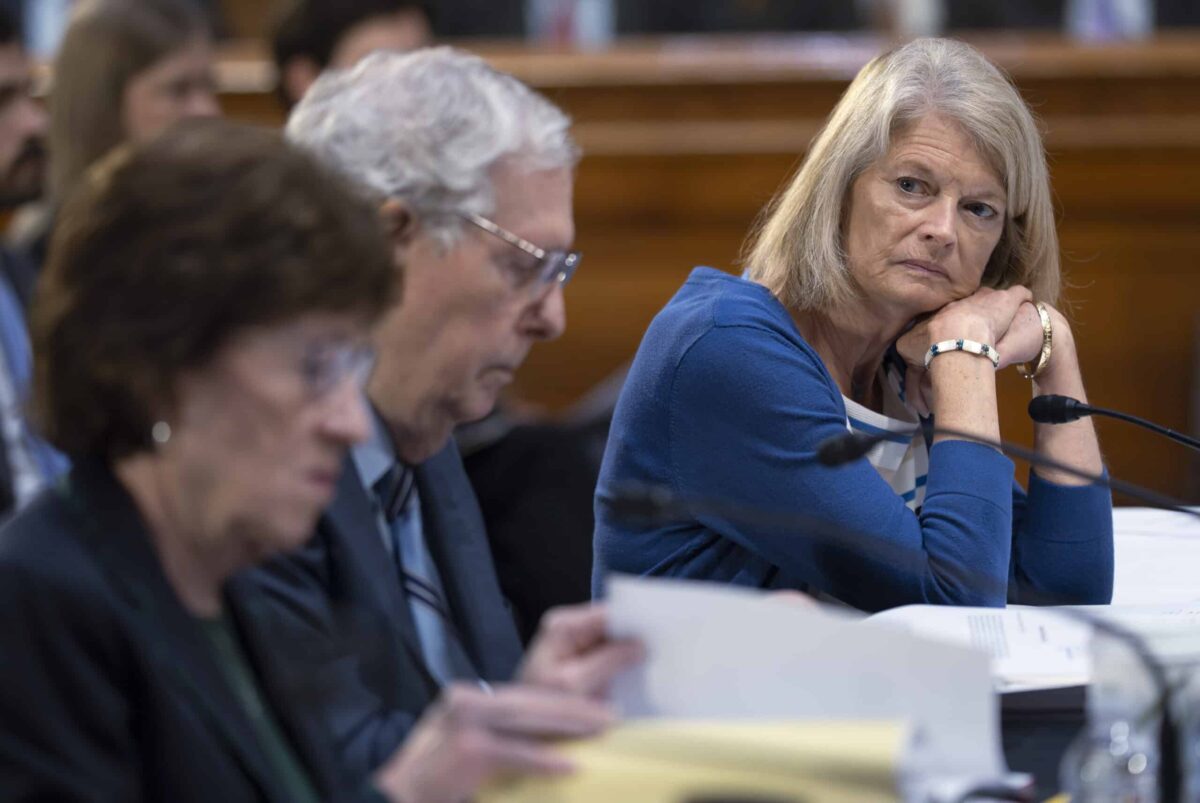
Sen. Lisa Murkowski, R-Alaska, right, listens as the Senate Appropriations Committee marks up the FY2026 spending bill for the Department of the Interior, the Environmental Protection Agency, Department of Transportation, and the Department of Housing and Urban Development, at the Capitol in Washington, Thursday, July 24, 2025. (AP Photo/J. Scott Applewhite)

AP- Republican U.S. Sen. Lisa Murkowski, speaking with Alaska reporters Monday, toyed with the idea of running for governor and defended her recent high-profile decision to vote in support of President Donald Trump’s tax breaks and spending cuts bill.

Murkowski, speaking from Anchorage, said “sure” when asked if she has considered or is considering a run for governor. She later said her response was “a little bit flippant” because she gets asked that question so often.

“Would I love to come home? I have to tell you, of course I would love to come home,” she said. “I am not making any decisions about anything, because my responsibility to Alaskans is my job in the Senate right now.”

Several Republicans already have announced plans to run in next year’s governor’s race, including Lt. Gov. Nancy Dahlstrom. Republican Gov. Mike Dunleavy is not eligible to seek a third consecutive term. Alaska has an open primary system and ranked choice voting in general elections.

Murkowski is not up for reelection until 2028.

A centrist, Murkowski has become a closely watched figure in a sharply divided Congress. She has at times been at odds with her party in her criticism of Trump and blasted by some GOP voters as a “Republican in name only.” But her decision to support Trump’s signature bill last month also frustrated others in a state where independents comprise the largest number of registered voters. She previously described her decision-making process around the bill as “agonizing.”

On Monday, she said it was clear to her the bill was not only a priority of Trump’s but also that it was going to pass, so it became important to her to help make it as advantageous to the state as she could.

“So I did everything within my power — as one lawmaker from Alaska — to try to make sure that the most vulnerable in our state would not be negatively impacted,” she said. “And I had a hard choice to make, and I think I made the right choice for Alaskans.”