Categories
Alaska News Featured Juneau News juneau Juneau Local Juneau Local Ketchikan Local News Feeds Sitka Local

Alaska superintendents drill down on education policy with some gubernatorial candidates

By: Corinne Smith, Alaska Beacon
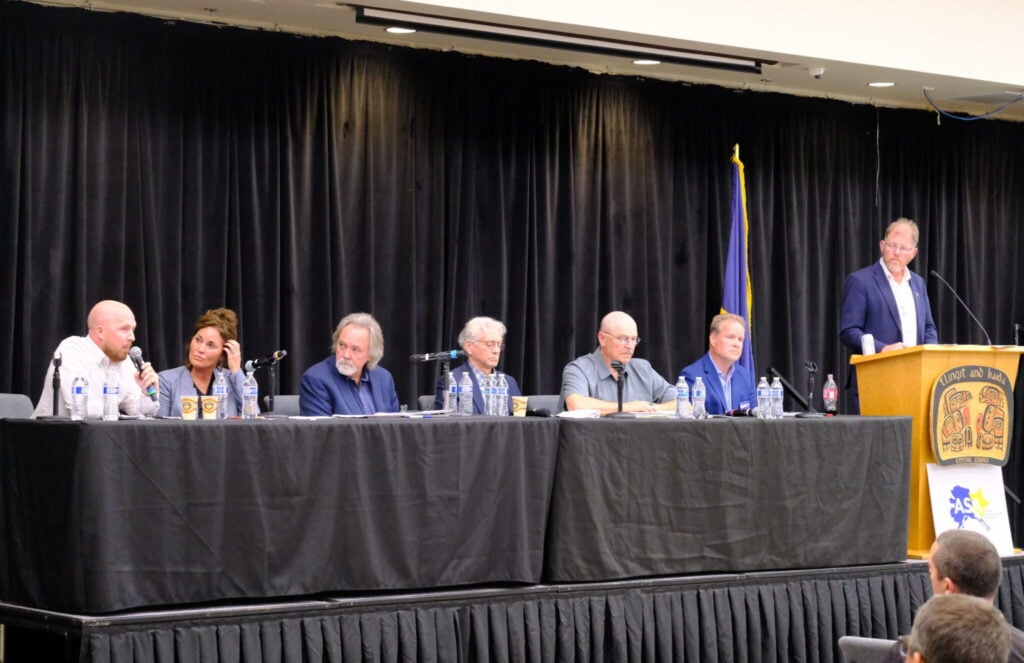
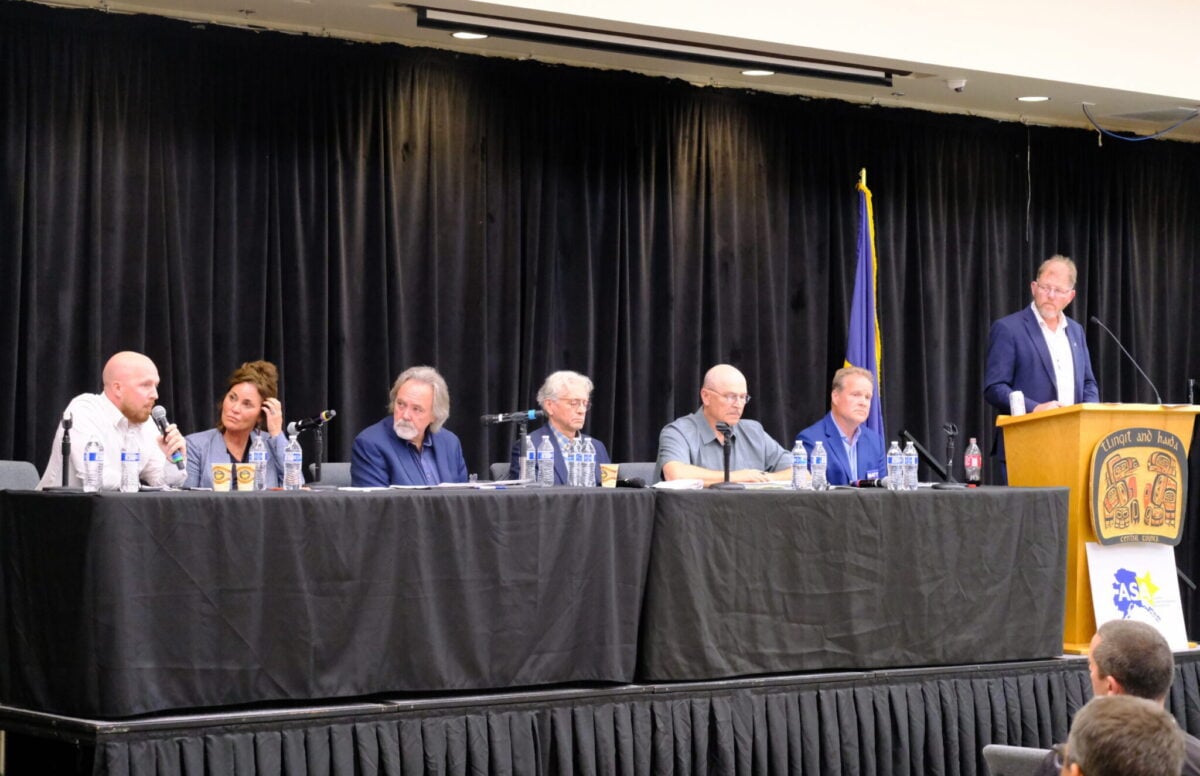
 Six candidates for Alaska governor and lieutenant governor participated in a debate on education hosted by the Alaska Superintendents Association in Juneau on July 30, 2026. (Photo by Corinne Smith)

Six candidates for Alaska governor from across the political spectrum appeared side-by-side in a room full of superintendents and school officials in Juneau and promised that boosting education funding would be a priority of their administration, if elected.

Six candidates participated in the debate, out of 17 running for governor this year. Randy Hoffbeck, a candidate for Lieutenant Governor who stood in for his running mate, Bill Walker. They discussed their plans for education in a two-hour event hosted by the Alaska Superintendents’ Association on July 30. 2026 Voter Guide.

The candidates, the ballot measures, and the tools you need to cast your vote.

Alaska Votes: 2026

The gubernatorial candidates included Republican Click Bishop, Democrat Tom Begich, Republican Matt Heilala, Republican Lesil Maguire, Democrat Jonathan Kreiss-Tomkins, and Independent Hoffbeck.

The panel was moderated by Randy Trani, superintendent of the Matanuska-Susitna Borough School District, with questions organized by the board of the Alaska Superintendents Association. A group of roughly 50 superintendents and school administrators from across Alaska attended as part of the association’s summer conference event in Juneau.

All six candidates agreed Alaska education has been underfunded by the Dunleavy administration, with several candidates characterizing public education as “in crisis.” 

A record 12 schools were closed this year, amid millions in budget shortfalls, and others have cut teachers, programs and extracurricular activities. Districts reported funding has not kept pace with skyrocketing operating costs, amid declining enrollment as families leave the state or move to homeschool programs. 

Trani said afterward he found all the candidates “super impressive,” particularly their ideas for funding education.

“They understand that there’s a fiscal reality problem in the state and it has to be addressed,” he said. “They all have different ideas of how they’re going to do it, but at least they’re leading with it as a top priority.”

Superintendents and school officials from across Alaska gathered for a summer conference in Juneau listen to a gubernatorial candidate debate on education on July 30, 2026. (Photo by Corinne Smith/Alaska Beacon)

Luke Meinert is superintendent of the Fairbanks North Star Borough School District, which has closed seven schools in the past five years due to budget shortfalls and declining enrollment. He said he was impressed with the candidates, their willingness to invest in education and their experience working on education issues in Alaska. 

“They’ve been in the game,” Meinert said. “I think maybe every one of them went to public schools here in Alaska, and so they had experienced public schools at a time where we were investing a lot in our school districts. And it was great to hear that they want to get back to those times because that can improve our retention and recruitment efforts for teachers, and then obviously student outcomes on the other end of that.”

Hoffbeck, who is running for Lieutenant Governor on Bill Walker’s ticket, did not go to Alaska public schools, but Walker did.

The candidates shared their plans for funding for Alaska districts, tackling billions of dollars in deferred maintenance, boosting recruitment and retention of teachers and staff, and providing them healthcare and retirement, as well as views on local control of school boards, fiscal plans for the state and other issues. 

Funding for education

Despite Alaska school districts reporting severe budget shortfalls and cutting teachers and programs, Gov. Mike Dunleavy has opposed sustained increases to per student funding, arguing against more funding without changes to policy. He has particularly sought changes related to charter schools and homeschool programs.

Democrat Tom Begich discusses his education policy platform, with Independent Randy Hoffbeck (left) and Republican Click Bishop (right) at an education debate on July 30, 2026. (Photo by Corinne Smith/Alaska Beacon)

But all six candidates agreed that schools have not been adequately funded under the Dunleavy administration, and that stable and reliable funding for districts is essential. They all said boosting investment in education is a priority of their campaigns.

Begich, Hoffbeck, Kreiss-Tomkins and McGuire said they support “forward funding” education and providing budgets to districts earlier in the year to provide more stability to districts. The state budget is currently finalized in June. 

Begich said he would advocate for an immediate boost to per student funding, known as the base student allocation — the core of the state’s funding formula — to account for rising inflation. He proposed increasing the figure by roughly 15% to $7,680 per child and tie increases with inflation each year. He said he would also support fully funding pre-K to be available in all school districts. 

Bishop said he would focus particularly on investing in career and technical education, referring to his experience growing up in a family of operating engineers and working in construction. “I’m going to push that till the day I die,” he said. “Nothing wrong with four-year degrees or higher. Career and tech ed needs to be improved upon in this state, and I’m the person that can do it working with you.” 

McGuire and Kreiss-Tomkins said they support reviewing and revising the state’s complex funding formula to ensure districts are adequately funded. Both McGuire and Kreiss-Tomkins as well as Heilala said education has become a politically divisive issue which has obstructed progress. Kreiss-Tomkins called education policy a “Pandora’s box” avoided by lawmakers not wanting to take political risks.

Jonathan Kreiss-Tomkins, a candidate for governor, speaks at a debate on education on July 30, 2026. (Photo by Corinne Smith/Alaska Beacon)
Democrat Jonathan Kreiss-Tomkins, a candidate for governor, speaks at a debate on education on July 30, 2026. (Photo by Corinne Smith/Alaska Beacon)

Kreiss-Tomkins and Hoffbeck said they support a constitutional amendment to create a special fund for education separate from the state’s budget. “A constitutional amendment’s only way to dedicate funds in Alaska that can effectively politically de-risk education funding going forward, and also largely account for inflation,” Kreiss-Tomkins said. 

Hoffbeck agreed there is a lack of trust between districts and the state under Dunleavy, which he said must be repaired. He said he believes adequate funding varies by school district across the state, and he and Walker both support a review of state funding for education by an independent third party to study and assess how much funding is needed by each school. 

“Just throwing more money at it doesn’t fix the problem. We need to be surgical on how we add that money,” he said. “Yes, absolutely, we are underfunded. We need more funding, but we need to fund very surgically as we go forward.”

Teacher recruitment and retention

The candidates agreed investing in hiring and retaining teachers is a major priority, but diverged on the question of whether the state should revive a defined benefit retirement plan for educators. 

Bishop and Heilala said they would focus education investments on boosting teacher pay. Heilala said funding should be more focused and efficient, and directed to teachers. “I believe teachers need pay raises. I think they probably need 15 to 30% pay raises, and of course, that’ll happen with a booming economy,” he said.

Randy Hoffbeck, candidate for lieutenant governor running with Bill Waker, speaks at a debate on education on July 30, 2026. (Photo by Corinne Smith/Alaska Beacon)
Independent Randy Hoffbeck, candidate for lieutenant governor running with Bill Waker, speaks at a debate on education on July 30, 2026. (Photo by Corinne Smith/Alaska Beacon)

Hoffbeck said teacher recruitment and retention should focus on training and hiring local teachers, particularly for rural Alaska. “The local teachers would stay in the rural communities,” he said, referring to his time working in the North Slope Borough. “And so I think we need to have a robust local recruitment process, including certification programs that make it possible for somebody in the village that may not have a four-year degree.”

Bishop, Begich and Kreiss-Tomkins support reviving the defined benefit retirement system for teachers, and said they believe offering that again would boost recruitment. 

The state defined benefit retirement system for public employees was ended in 2006, after the system accrued a multi-billion dollar shortfall. Lawmakers passed legislation to revive the program this year, but Dunleavy vetoed it. 

Begich said he would also want the state to provide medical benefits in a new defined benefit retirement plan, as well as grants for teacher housing.

Heilala disagreed, and said the defined benefit system is the “biggest mistake.” He said a 401(k) retirement plan has greater certainty to create income.

Lesil McGuire speaks at a gubernatorial candidate debate on education on July 30, 2026. (Photo by Corinne Smith/Alaska Beacon)
Republican Lesil McGuire speaks at a gubernatorial candidate debate on education on July 30, 2026. (Photo by Corinne Smith/Alaska Beacon)

Hoffbeck said he has concerns about a defined benefit retirement system as some districts would not be able to afford it.

McGuire said she does not support a defined benefit retirement plan, but supports a retirement system that the state can afford. She said she supports a student loan forgiveness program for teaching in Alaska, and low interest loans for housing to boost recruitment and retention. 

“I think housing is a huge issue. Let’s make Alaska the place you want to come teach,” she said.

School maintenance backlog

The candidates all agreed that addressing the state’s multi-billion dollar backlog in deferred maintenance in K-12 schools and the University of Alaska system would be a major priority of their administrations, and presented various ideas on how to fund it.

Click Bishop speaks at a gubernatorial candidate debate on education on July 30, 2026. (Photo by Corinne Smith/Alaska Beacon)
Republican Click Bishop speaks at a gubernatorial candidate debate on education on July 30, 2026. (Photo by Corinne Smith/Alaska Beacon)

Bishop said part of his plan for funding education would be to levy an “education head tax,” a flat-rate tax per Alaskan regardless of income to pay for school maintenance. He said he’d introduced similar legislation when he was a member of the Alaska State Senate. 

“It’s ludicrous that we have this much of a deferred maintenance schedule,” he said. 

Begich said he supports the state paying to help boroughs and districts with school bond reimbursement, which is debt incurred by voter-approved bonds to fund school maintenance. He also supports the state backing a general obligation bond to generate hundreds of millions to address the existing maintenance backlog list. 

McGuire, Hoffbeck and Kreiss-Tomkins agreed issuing bonds was a good idea. Hoffbeck and Kreiss-Tomkins also said prioritizing hiring local contractors for construction and maintenance is important.

Kriess-Tomkins noted maintaining schools is an obligation under Alaska’s Constitution. He also cautioned that there will be changes to schools with declining numbers of students as a result of outward migration from the state and families having fewer children. He said he’d want to invest in a system to keep up with school repairs in order to avoid large costly repairs like roof replacements decades in the making.

Matt Heilala speaks at a gubernatorial candidate debate on education on July 30, 2026. (Photo by Corinne Smith/Alaska Beacon)
Republican Matt Heilala speaks at a gubernatorial candidate debate on education on July 30, 2026. (Photo by Corinne Smith/Alaska Beacon)

Heilala said the deferred maintenance backlog is a challenge, but sees opportunities for consolidating schools with “goodwill.” He said he believes “connectivity” will change infrastructure needs and said he sees artificial intelligence as a “supersonic tsunami” hitting American society now, and creating opportunities for education. “Education is going to be disrupted and changed. I believe in a good way,” he said. “There’s a lot of great opportunity, but we need to approach it with optimism.” 

McGuire said a variety of solutions are needed to address school maintenance and repairs. “We’re so far behind at this point. We’re actually bordering up against litigation,” she said.

She cited legislative hearings and public outcry around the state-run boarding school, Mt. Edgecumbe High School this year when a quarter of students disenrolled sparking public focus on deteriorating school facilities. 

“It was a stomach-turning event,” McGuire said. “So I think there are a variety of solutions. We need to be brave and bold, pull it out, assess what we need to do, and then look at solutions and address it immediately.”
Categories
Alaska News Featured Juneau News juneau Juneau Local Juneau Local Ketchikan Local News Feeds Sitka Local

Federal job cuts in Alaska among the deepest in the nation, analysis shows

By: Yereth Rosen, Alaska Beacon

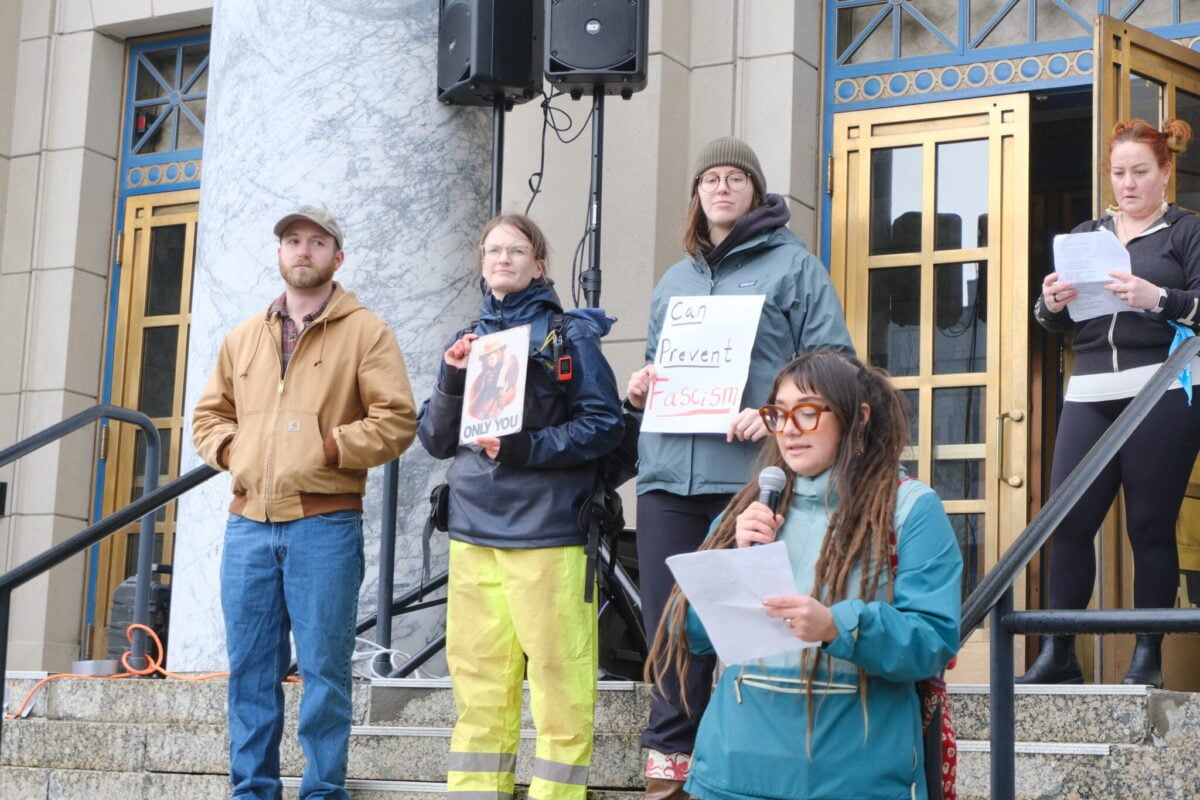
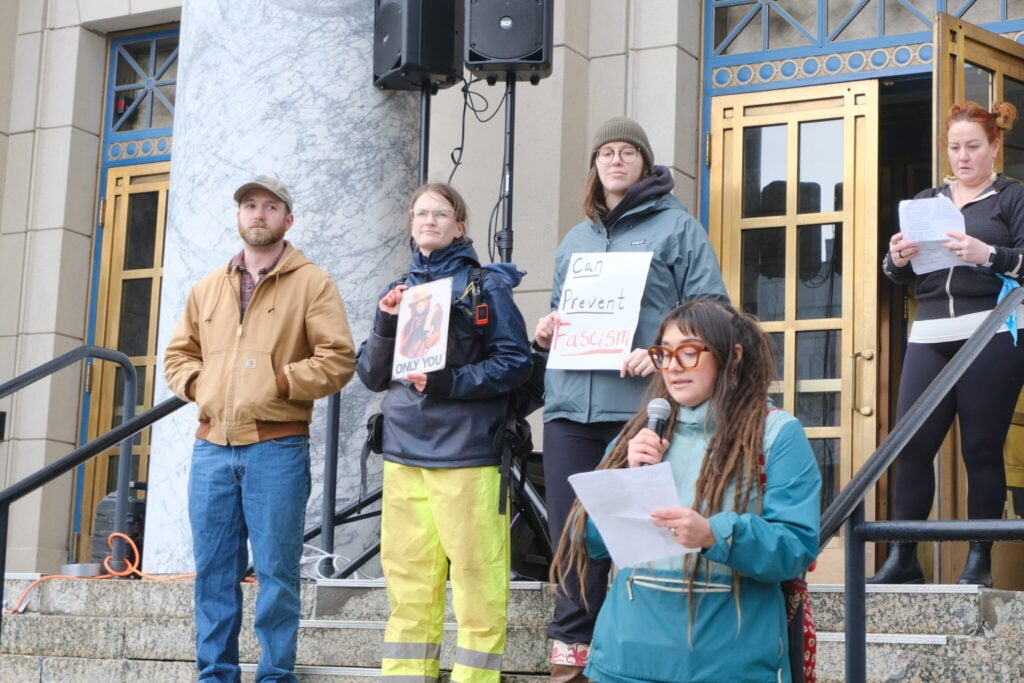
Fired federal workers formerly with the U.S. Forest Service based at the Mendenhall Glacier in Juneau speak at the Alaska State Capito; on March 21, 2025, about their experiences. The Forest Service was among the federal agencies in Alaska most heavily affected by job cuts. (Photo by Corinne Smith/Alaska Beacon)

Alaska lost a higher percentage of its federal workforce last year than almost all U.S. states to sweeping Trump administration cuts, according to a newly published analysis by the Alaska Department of Labor and Workforce Development.

By the end of 2025, Alaska’s federal workforce was 10.5% smaller than it had been at the end of the prior year, according to the analysis, published in Alaska Economic Trends, the monthly magazine of the department’s research section. In the fourth quarter of 2025, after many workers accepted buyouts or early retirement, the state’s federal workforce had dropped by 1,607 from the total in the fourth quarter of 2024, to 13,767 from 15,374 the year prior, according to the analysis.

The job losses came through mass firings and cuts made by the so-called Department of Government Efficiency, or DOGE, the government-reducing campaign led by trillionaire Elon Musk that started shortly after Donald Trump took office for his second term. To a large extent, job losses were concentrated at the end of the year.

Calculated by the annual average, Alaska lost about 4.5% of its federal jobs in 2025. Only Maryland, which lost 6.5% of its federal jobs, and New Mexico, which lost 5.8% of its federal jobs, lost more. 

Federal job losses reduced Alaska’s total earnings by $36.5 million on average in 2025, according to the Department of Labor and Workforce Development analysis, and they brought federal employment in Alaska to the lowest level since at least 1990.

Much of the cutting in Alaska came in the U.S. Department of Defense’s civilian workforce. Calculated by annual average, 340 defense related jobs were lost to the DOGE cuts, but the fourth-quarter loss was calculated at 755 jobs.

The large amount of job losses in the Department of Defense category was a bit surprising, said Karinne Wiebold, the state labor economist who wrote the Trends article. “I assumed early on that the DoD might be one of the less affected departments and that our strong military presence might insulate us,” she said by email.

Federal agencies that sustained high numbers of job losses included the U.S. Forest Service, which had 180 fewer employees at the end of 2025 than in late 2024, the Bureau of Land Management, which had lost 133 jobs at the end of the year, and the National Oceanic and Atmospheric Administration, which had lost 101 of its workers by the end of 2025.

Job losses in the Forest Service and NOAA have affected important Alaska industries and services, including fishery science, weather forecasting, scientific research and tourism.

The fallout from the job losses continues, and the public does not yet have a complete picture, Wiebold said. “I do think the public is aware of the federal job losses and that they have been deep and a bit unpredictable,” she said. “I don’t know if the public generally understands what the ramifications of the cuts will be — federal employees perform a wide variety of oftentimes highly specialized work.”

Certain parts of the state were harder hit than others. The Southeast Fairbanks Census Area, which has been reliant on military-related employment, and parts of Southeast Alaska, where employment related to the Tongass National Forest is important, are among those regions with steeper job losses by percentage, according to the analysis.

Alaska’s ranking among states hit by DOGE-related job cuts could change, Wiebold said. Data from this year has yet to be fully analyzed, she said. “Even in the first parts of 2026, there are reports of the rankings shifting somewhat,” she said.

Categories
Alaska News Featured Juneau News juneau Juneau Local Juneau Local Ketchikan Local News Feeds Sitka Local

Getting ready to vote? Compare candidates with the 2026 Alaska Voter Guide

By: Corinne Smith, Alaska Beacon

The Alaska Beacon, Alaska Public Media, KTOO and the Anchorage Daily News worked together this year and have created a voter guide to help Alaskans make informed choices when they vote.

The 2026 Alaska Voter Guide won’t replace debates, forums and public statements. Instead, it’s something extra, aimed at informing voters about what candidates believe and providing a tool to hold them accountable once elected.

We’ve been working for months on this and are pleased to present it to you today, on the opening day of early in-person voting.2026 Voter Guide

The candidates, the ballot measures, and the tools you need to cast your vote.

Read More

Each news organization asked its readers, viewers and listeners a basic question: What do you want candidates to talk about?

That’s what’s called the “citizens agenda” — where election reporting is less about determining who’s ahead, and more about what a candidate’s positions are and how they would affect things if elected.

We sent emails to every candidate in the first week of July and followed up by phone calls in the second week. We continued reaching out, by email, text message and phone call, throughout July.

In the end, 107 of 132 state legislative candidates responded — 81% of everyone running for the Legislature. That’s a huge improvement over two years ago, when 78 of 115 candidates answered a survey from the Beacon alone, or 67.8%. Four years ago, the Beacon’s rate was below 60%. 

For the governor’s race, 14 of 17 candidates responded. For the U.S. House race, we received responses from 11 of 15 candidates, including Democratic candidate Matt Schultz, who has suspended his campaign but is still on the ballot. In the U.S. Senate race, we have answers from 11 of 16 candidates.

While it isn’t everyone — and we’ll continue pursuing answers — we’re proud to say that this questionnaire is the most complete one that you can find anywhere in Alaska.

When it comes to the Legislative races, the Beacon had the lead role and was in charge of questions. Here’s what we asked candidates and why:

Would you be willing to serve in a coalition majority where members of the other party are in leadership? Why or why not?

Whoever is in the majority controls the agenda and decides which bills advance and which bills fail. Alaska is the only state in the country with coalitions in both the House and Senate. The difference between a Republican-led majority and a coalition one is a big one in terms of what the Legislature does over the next two years. 

What’s the biggest need in your district, and how would you address it?

This is an opportunity for candidates to show how much they know about local needs; it’s also a chance for them to talk about any issues we didn’t bring up.

What do you think should be done to improve public education in the state?

You, our readers, wanted candidates to talk about education more than anything else. This gave candidates a chance to talk about their platform.  

How should the Alaska Legislature handle the Permanent Fund dividend?

This was probably the No. 2 issue that you brought up when we asked you what you wanted candidates to talk about. 

How should lawmakers balance state revenue and expenses in the long term?

This is closely tied to the dividend question and meets your request to ask candidates about a fiscal plan.

When you look at the state budget, what’s the No. 1 thing you’d like to see cut or reduced, and what’s your No. 1 preferred way to raise new state revenue?

Like the previous question, this is a way to test candidates about their knowledge of the state budget and get their thoughts on a fiscal plan. That will be a major topic over the next two years.

What, if any, changes does the state need to make to its elections and voting system?

Voting and elections came up again and again when we asked readers what they wanted candidates to discuss. The Legislature has tried  — and failed — to enact an elections bill over the past six years, so it’s a safe bet that the 35th Legislature will try again.

What threats do you see facing Alaska in the next four years?

This was our way of allowing candidates to show their priorities — what are they most worried about?

What should legislators do to make Alaska a better place for children and families?

This question came in response to your desire to see candidates talk about preschool, daycare, early childhood education and more.

As Alaska’s average age rises, what needs to be done to make the state a better place for older residents?

Alaska is the fastest-aging state in the country, and that trend is expected to continue. It’s something that the next Legislature will have to address. This question allows candidates to speak to older Alaskans directly.

What should Alaska do to keep residents and visitors safe from crime and disaster?

This question gave candidates a chance to talk about crime and climate change, data centers, energy shortages … it was really open-ended.

What, if any, change would you make to state law to support the Alaskans who are dependent on fish harvests and the fishing industry?

Candidates have been talking about fishing quite a bit this year, but it’d be a mistake to ask state-level candidates about trawling, given that most of it takes place in federal waters and there’s little the Legislature can do about it. So this question is more general.

What do people not know about you that you think they should know?

We’re not normally a fan of softball questions in these surveys, but they can be an opportunity to get to know a candidate’s personality, so this was an open-ended opportunity.

What should the Legislature do to help Alaskans with the high cost of living?

Inflation and cost of living came up as issues in a big way later in the spring, and we wanted to make sure we asked candidates about it.

How are the Trump administration’s policies working in Alaska? Where do you see them working well, and where do you see problems?

Our readers wanted very much to hear candidates talk about Donald Trump and whether they’re for or against him and his policies. This is a way to bring that question to a state level and make it applicable to the Legislature.

Categories
Alaska News Featured Juneau News juneau Juneau Local Juneau Local Ketchikan Local News Feeds Sitka Local

Here’s when to expect results in Alaska’s 2026 statewide primary election

By: James Brooks, Alaska Beacon

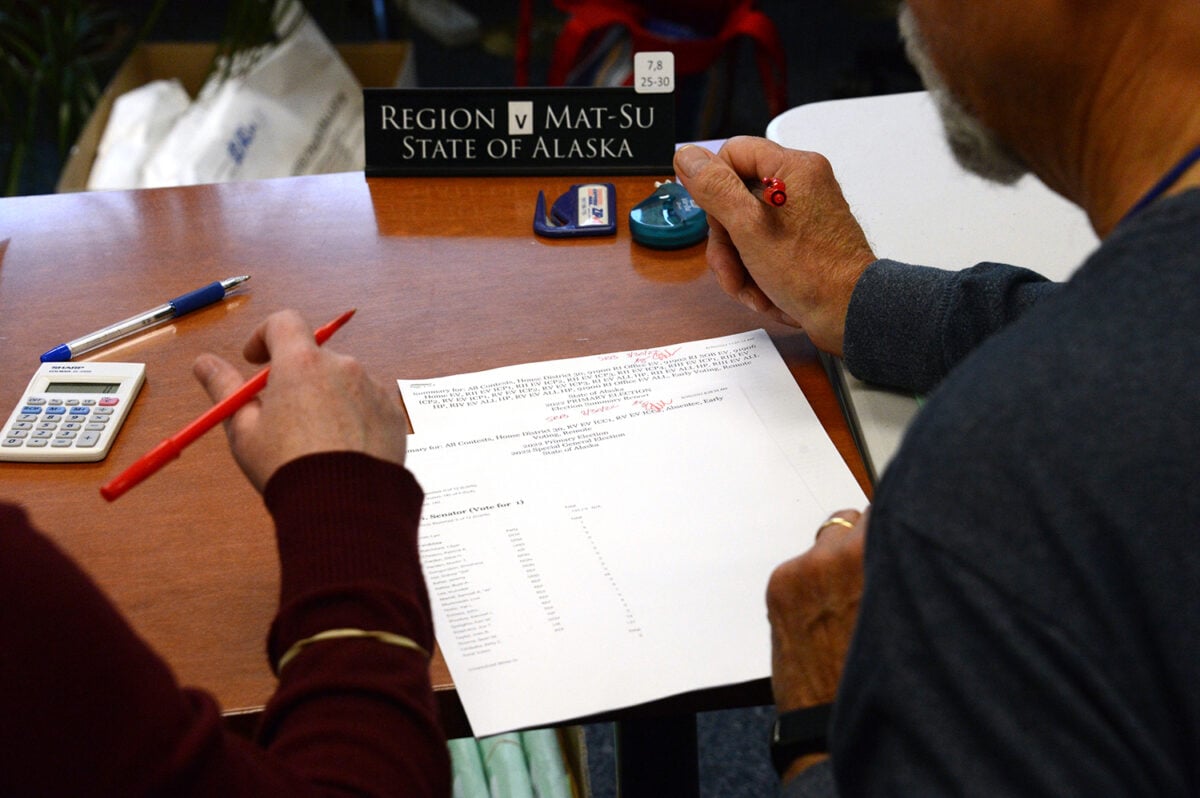
Elections workers double-check the results of Alaska’s Aug. 16, 2022 primary election during a meeting of the state review board on Tuesday, Aug. 30, 2022 at the Alaska Division of Elections in Juneau. (Photo by James Brooks/Alaska Beacon)

Early, in-person voting begins Monday for Alaska’s Aug. 18 state primary election, and thousands of voters have already cast absentee ballots by mail.

Regardless of when — or how — Alaskans vote, ballots will be counted starting on election day, according to a preliminary schedule provided by the Alaska Division of Elections. 

Polls close at 8 p.m. Alaska Daylight Time, and the division expects to have the first preliminary results “between 8:45 p.m. and 9 p.m.”

“There are additional results updates that follow but how many or at what time they will be published will vary,” the division said in an information packet given to reporters.

The final unofficial tally will take place Aug. 28, 10 days after election day, and the division expects to certify official results by Aug. 31.

Any recounts must be requested by Sept. 5, and any lawsuit challenging a result must be filed by Sept. 10.

Timeline of the 2026 primary election

  • Aug. 3 – Early voting begins in person.
  • Aug. 11 – Elections officials begin ID checks on absentee ballot envelopes. Absentee votes in those envelopes are not counted until at least Aug. 18.
  • Aug. 18 – Election day. Polls open across the state. 
  • Late Aug. 18 – Absentee ballots begin to be counted, in-person votes are counted.
  • 9 p.m. Aug. 18 – First results expected online.
  • Early morning Aug. 19 – final election day results expected online.
  • Aug. 25 – Absentee votes counted to this point are added to the unofficial tally.
  • Aug. 28 – Final unofficial results available online.
  • Aug. 31 – Official results certified. Deadline for final four candidates to withdraw from the November election. 
  • Sept. 5 – Deadline to request recounts.
  • Sept. 10 – Deadline to challenge election results in court.

Under Alaska’s election system, voters pick one candidate for each race in the primary election. The top four vote-getters, regardless of political party, advance to the general election in November. If there are four or fewer candidates in a race, all advance to the general election.

In practice since 2022, lower-finishing Republican candidates have preferred to withdraw after the primary rather than compete against another Republican.

The Valley Republican Women, a notable group from the Matanuska-Susitna Borough, are running ads this year to promote the strategy. Those ads urge Republicans to “consolidate the vote” and “don’t split the field.”

In races with many competitors, a withdrawn candidate will be replaced by another until there are four options on the ballot or no more replacements are available. Any replacements may themselves withdraw.

The deadline to withdraw after the primary is Aug. 31. 

Normally, ballots cast in person are counted on election day itself. Since 2020, votes cast in person have leaned Republican. 

It’s common for some rural Alaska precincts to not report results on election night itself.

Two years ago, for example, only 387 of 403 precincts had reported results by 1 a.m. Wednesday, the day after election day. Four years ago, four precincts needed more than four days to report results from election day.

Historically, some rural precincts have had staffing problems that prevented them from opening on election day. In 2024’s primary, two precincts failed to open, and one opened only in the afternoon. In 2022, two precincts failed to open. In both 2024 and 2022, voters in the affected places were able to cast absentee ballots instead.

Absentee ballots are counted starting on election day, but that counting process extends until Aug. 28. Under Alaska law, absentee ballots — if they are postmarked on or before Aug. 18 — can reach the Division of Elections up to 10 days after election day and still be counted.

Counting an absentee ballot requires the division to first verify the identity information on the outside of the ballot envelope. That verification process starts Aug. 11, the division said, though the ballot inside the envelope won’t be counted until at least election day.

The verification process continues after election day, with ballots added to the tally in batches. The division expects to update results on Aug. 25 and again on Aug. 28, with additional updates possible between those two dates.

Categories
Alaska News Featured Juneau News juneau Juneau Local Juneau Local Ketchikan Local News Feeds Sitka Local

Ranked-choice voting? Hold on. Alaskans have another ballot measure to decide first.

By: James Brooks, Alaska Beacon

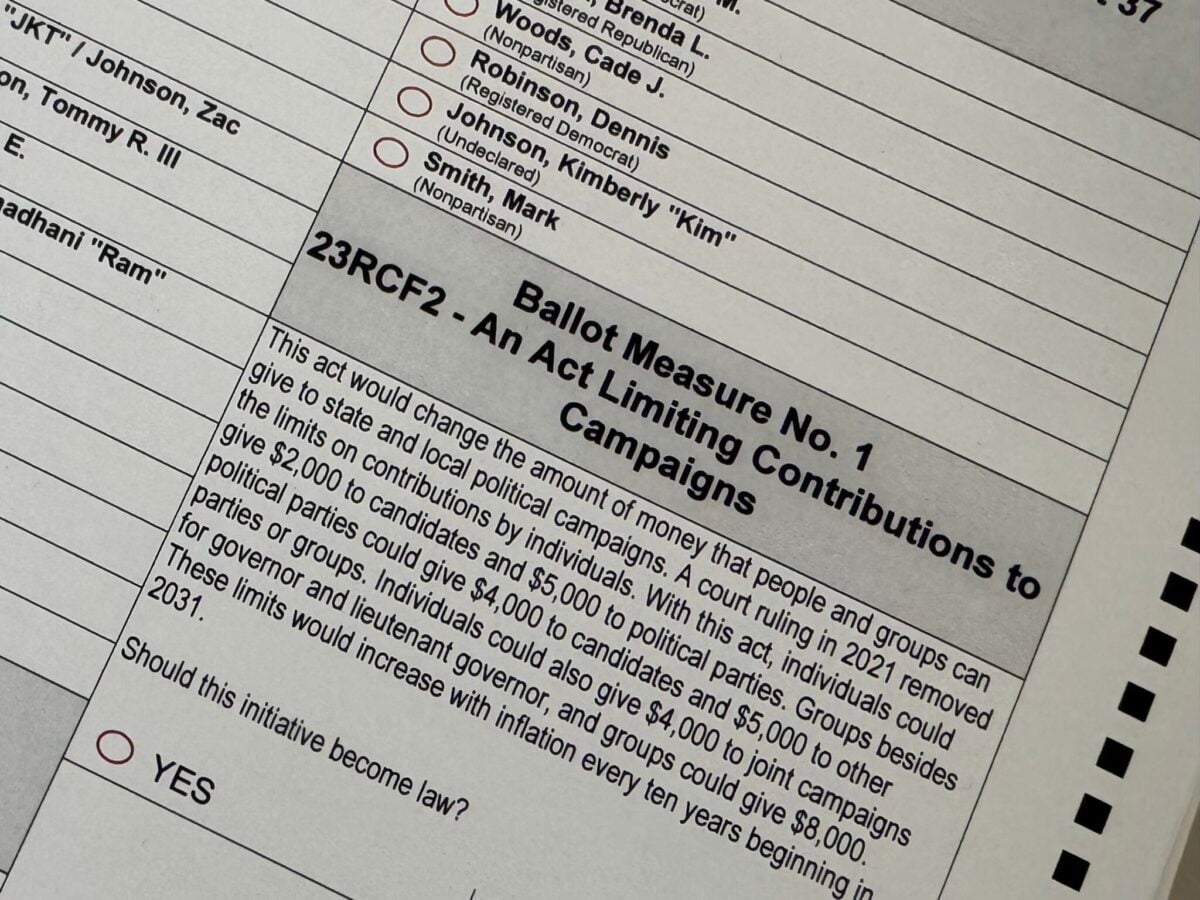
 A sample ballot seen at the headquarters of the Alaska Division of Elections on Thursday, July 9, 2026, shows the language for the campaign finance ballot measure. (James Brooks photo/Alaska Beacon)

On Aug. 18, Alaskans will be asked if they want to change the way the state’s elections operate, but not in the way that most voters are thinking.

The sole ballot measure before voters in the primary election would reimpose limits on the amount of money that individuals and groups can donate to political candidates in state elections.

A well-funded campaign to repeal the state’s system of open primaries and a ranked choice general election — known as Ballot Measure 2 — won’t be voted on until November.

The measure on the ballot in August would prohibit political donors from giving a candidate more than $2,000 per election. Groups would be allowed to give no more than $4,000 per candidate per election.

Both limits would be adjusted for inflation every 10 years, and they would only apply to state-level elections — for governor, state House and state Senate.

Federal elections, those for President, U.S. Senate and U.S. House, operate under different limits enshrined in federal law.

A low-budget group called Citizens Against Money in Politics gathered tens of thousands of signatures in 2024 to put the newly proposed state limits on the ballot. 

In the state’s official election pamphlet, the chairs of the group — former state attorney general Bruce Botelho; Rep. Calvin Schrage, I-Anchorage; dog musher David Monson — state their case, explaining that they view campaign donation limits as “guardrails” on democracy.

“​​Without these guardrails, wealthy individuals and special interests can have an oversized impact and shift a candidate’s focus away from the constituents they are supposed to serve,” they wrote.

Speaking in a public hearing on Monday, Schrage said, “When a single donor can spend hundreds of thousands or even millions of dollars on a single candidate, it creates a dangerous environment. It not only grants undue influence to the ultra-wealthy, but it also exposes our elected officials to the risk and perception of quid pro quo corruption.”

In the pamphlet, three Republicans, all former legislators, argue against the initiative.

“Campaign contributions are a form of political speech. To limit someone’s ability to support a candidate is to limit their voice in the democratic process,” said former Rep. Ben Carpenter, R-Nikiski; former Sen. David Wilson, R-Wasilla; and former Rep. Liz Vazquez, R-Anchorage.

In addition, imposing limits on outside donations gives an advantage to candidates who are wealthy enough to pay for their own campaigns, they said.

In Monday’s hearing, another Republican, Amy Demboski, spoke in support of their position.

“Reintroducing new caps creates a pay-to-play barrier where only those who already possess significant name recognition can thrive, effectively silencing the grassroots support necessary for insurgent or unconventional candidates,” she said.

The U.S. Supreme Court has previously ruled that it is unconstitutional to limit the amount of money that a candidate may spend on their own campaign. 

Ballot Measure 1 also does not limit the amount of money that a third-party group can independently spend to support or oppose a candidate. The U.S. Supreme Court’s 2010 decision, known as Citizens United, allows unlimited amounts of spending by groups that don’t coordinate directly with candidates.

Also this year, the Supreme Court ruled that political parties may spend unlimited amounts of money in coordination with federal candidates. That decision may affect state races in the future.

Ballot Measure 1 is the consequence of a lengthy and successful legal challenge by a group of Republicans inside and outside the state.

Until 2021, Alaska had some of America’s lowest limits on financial donations to candidates — $500 per candidate, per year. Those were installed by a 2006 ballot measure that passed with the support of 73% of participating voters. 

But a group of Republicans challenged the legality of those limits in 2015, arguing that they unduly restricted free speech. The case was appealed and remanded multiple times before a three-judge panel of the 9th U.S. Circuit Court of Appeals struck down the limits in July 2021.

Gov. Mike Dunleavy declined to appeal the issue further, and the limits were removed ahead of Dunleavy’s successful re-election campaign the following year.

In 2022 and 2024, state lawmakers attempted but failed to pass a bill reimposing limits. Legislators this year passed a bill identical to Ballot Measure 1, but Gov. Mike Dunleavy vetoed that bill.

In his veto statement, the governor said the new limits “would radically tilt in the favor of the wealthy when it comes to elected office.”

The lack of limits has had its biggest effect on Alaska’s races for governor. In 2022, all three leading candidates — Dunleavy, independent Bill Walker and Democratic candidate Les Gara — recorded large contributions from individual donors. 

In this year’s race, the two leading Democratic candidates — Jonathan Kreiss-Tomkins and Tom Begich — have received large donations from out-of-state contributors. Both Democrats say they support passage of Ballot Measure 1. 

Most of the other 15 candidates in the governor race, including most of the Republicans, have taken similarly large donations, but not to the extent that the leading Democrats have.

The Republican candidate who has raised the most money, podiatrist Matt Heilala, has spent more than $1.25 million on his own campaign. Click Bishop, a Republican who has raised a middling amount of money, is also being boosted by a large union-funded third-party group. Those latter types of spending would not be affected by Ballot Measure 1.

Categories
Alaska News Featured Juneau News juneau Juneau Local Juneau Local Ketchikan Local News Feeds Sitka Local

Alaska Legislature opens third gasline special session with no fanfare and even less optimism

By: James Brooks and Corinne Smith, Alaska Beacon

The Alaska House gavels in for the third special session in 2026 on the proposed AKLNG gasline project, with House Speaker Rep. Bryce Edgmon, I-Dillingham, presiding and Reps. DeLena Johnson, R-Palmer, and Sara Hannan, D-Juneau, in attendance on July 27, 2026. (Photo by Corinne Smith/Alaska Beacon)

The Alaska Legislature opened its third special session of 2026 with no bill, few lawmakers and little hope.

A handful of legislators gathered Monday in the state Capitol at Juneau to begin a 30-day session called by Gov. Mike Dunleavy after the failure of a compromise bill that would have provided a tax break to the developer of the proposed trans-Alaska natural gas pipeline.

Dunleavy and the state House opposed the addition of a corporate income tax on a handful of privately owned oil and gas companies that don’t currently pay one. That provision was intended to get support for the bill in the Senate.

But on Monday, the governor had no new alternative bill ready for legislators as the special session began. 

In a statement on social media, Dunleavy said, “Before reintroducing the legislation, my administration is going to continue meeting with all parties to determine the best path forward to an agreement.”

Answering questions about those meetings, the governor’s office said it had nothing more to add. 

‘I don’t believe the Legislature can do much now’

The pipeline’s lead developer, Glenfarne, has said that a reduction in the state’s petroleum property tax is necessary for it to obtain the financing needed to build the pipeline.

Passing a bill into law requires 21 votes in the House, 11 in the Senate, and the assent of the governor. In a special session called by the governor, lawmakers may only work on topics designated by the governor. In Dunleavy’s latest proclamation, he limited work to the proposed gas pipeline.

“It sounded like (the governor) is hopeful that there could be maybe some new developments, but that’s going to be his negotiation. I don’t believe the Legislature can do much now at this point,” said House Minority Leader DeLena Johnson, R-Palmer, at the Capitol on Monday.

With no legislation to consider, members of the House and Senate held pro forma “technical sessions” before adjourning until Friday, when a bill could be available.

Because no substantive action was expected on Monday, only two legislators traveled to Juneau on the first day of the special session. Speaker of the House Bryce Edgmon, I-Dillingham, and Johnson were joined by Rep. Sara Hannan, D-Juneau. In the Senate, Sen. Jesse Kiehl, D-Juneau, presided over an otherwise empty chamber.

The state House has 40 members, the state Senate has 20. 

Down the hall from the House and Senate chambers, a group of cruise ship tourists watched a video about the history of the Capitol in a darkened committee room. At 10 a.m., there were more tourists than legislators.

Edgmon said that until the governor introduces a substantive bill, legislators will mostly stay away from the Capitol.

“The plan in the House is to have technical sessions, as you just saw, and to save time and certainly money (by) not bringing the Legislature back until we have something in front of us that’s worthy of bringing the entire body back … because it’s quite expensive to bring the Legislature back into session,” he said.

Typically, legislators have budgeted $1 million for a 30-day special session.

Fate of ‘pass-through’ tax is a key question

The current deadlock in negotiations is a “pass through entities tax” that would levy a form of the state’s corporate income tax on privately owned oil and gas companies, including Armstrong Oil and Gas, HEX, and Hilcorp.

That tax was added to the bill in the Senate to garner the votes of senators who are skeptical of the underlying bill, which would replace the state’s petroleum property tax with a tax on gas pumped through the as-yet-unbuilt pipeline.

The result would be billions of dollars in deferred tax revenue over a 30-year period for the state and municipalities along the route. But some lawmakers worry that the switch could also result in lower oil and gas production taxes because of writeoffs available for companies who spend on oil and gas infrastructure.

The new tax would offset that possibility, but has drawn opposition from the governor and from legislators who worry about the effects of imposing a tax on companies that are actively drilling for oil and gas within the state.

Hilcorp is expected to drill 27 gas wells in Cook Inlet this year, at a time when the region is facing a shortage of natural gas. Some legislators say Hilcorp lobbying was a key factor in the defeat of the compromise bill earlier this month. 

Edgmon said he spoke with Dunleavy on Sunday. With the state’s primary election on Aug. 18 and general elections in November, time is running out for any chance of action, Edgmon said.

“Every day that goes by gets that much more difficult to reconvene the Legislature and to get them refocused on a bill,” Edgmon said. 

“And so I think the clock is ticking very loudly right now, and the governor realizes that.”

Dunleavy cannot run for another term in office, and January will see a new governor and a new Legislature. If a bill doesn’t pass before then, Johnson said, “general fatigue” about the idea of a gas pipeline is part of the reason why.

“I think it’s the years of times that we tried to take this up and we never moved it forward. And so there’s just this sense that somehow it can’t be done,” she said. “I mean, I know there’s a sense of having this roadblock out there, and I think that’s kind of pervasive.”

Categories
Alaska News Featured Juneau News juneau Juneau Local Juneau Local Ketchikan Local News Feeds Sitka Local

Alaska elections division director defends disqualifying U.S. Senate candidate

By: Corinne Smith, Alaska Beacon

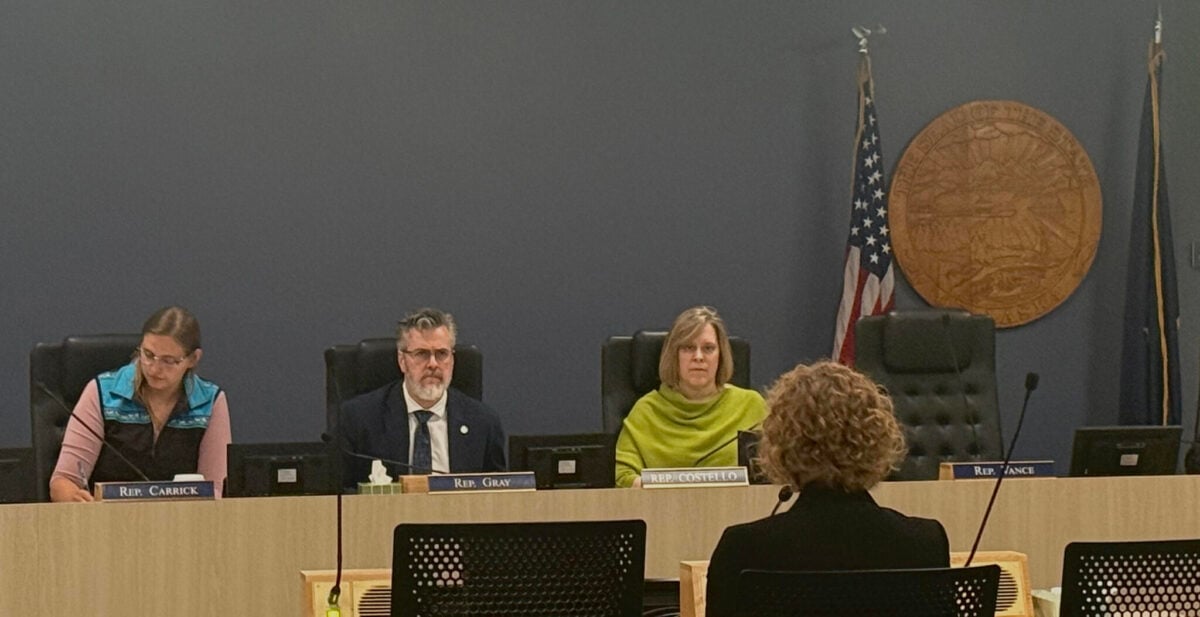
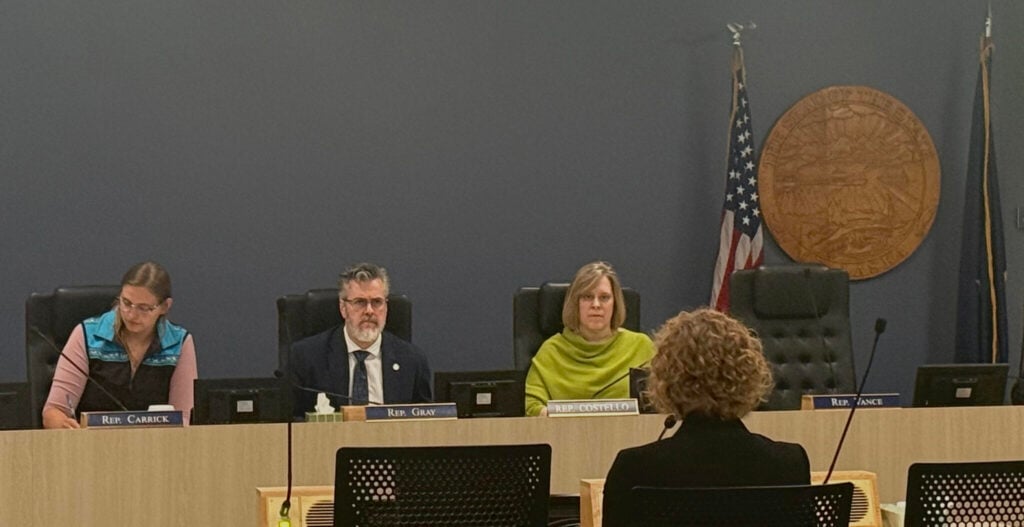
House Judiciary committee chair Rep. Andrew Gray, D-Anchorage, and committee members Rep. Ashley Carrick, D-Fairbanks and Rep. Mia Costello, R-Anchorage, listen to Carol Beecher, director of the Alaska Division of Elections, answer questions about the division’s decision to disqualify a U.S. Senate candidate at a hearing on July 22, 2026. (Photo by Kyle Johansen for Rep. Gray’s office)

Members of the House Judiciary and State Affairs committees questioned Alaska Division of Elections director Carol Beecher on Wednesday about the state’s response to a U.S. Senate candidate with the same name as the incumbent — Dan Sullivan. It was the second investigatory hearing on the subject after elections officials failed to appear at an initial hearing in June. Alaska Lieutenant Governor Nancy Dahlstrom, who oversees the division, declined an invitation to appear.

At issue was the state’s decision to disqualify the U.S. Senate candidate Dan J. Sullivan of Petersburg and its determination that he was not a “good faith” candidate. The Alaska Supreme Court nixed that decision in late June.

Carol Beecher, the new director of the Alaska Division of Elections, answers questions from reporters on Thursday, Feb. 16, 2023. (Photo by James Brooks/Alaska Beacon)

Beecher testified for nearly two hours and defended the division’s actions from the choice to disqualify Sullivan to the choice to list him without a party affiliation on the primary ballot. She also answered questions about how 3,500 Alaskan residents received notices that they have inactive voter status pending verification of citizenship.

Since the first legislative hearing, the Sullivan from Petersburg challenged the state’s decision and the fast-tracked case reached the Alaska Supreme Court. The court upheld a lower court’s ruling that Sullivan was eligible and said the division did not have the authority to add additional eligibility requirements, like whether a candidate was acting in “good faith,” beyond what is outlined in the U.S. Constitution. 

Lawmakers raised concerns about how the division chose to list the candidates on the primary ballot. They asked Beecher about why the division chose to list the challenger as “Sullivan, Daniel J, Jr.” without his party affiliation as a registered Republican. It listed the incumbent senator as “Sullivan, Dan S.” and identified him as the incumbent and a Republican. 

The two Sullivans are among 16 candidates for the U.S. Senate seat, including Democratic former U.S. Rep. Mary Peltola, in the primary election on August 18. The top four vote-getters will advance to the general election on November 3. 

Beecher defended the division’s position that Sullivan was running with the purpose to confuse voters. She cited complaints filed by national and state Republican groups, Sullivan’s party affiliation as Republican and campaign materials as evidence of his intention to mimic the U.S. Senator Dan Sullivan and confuse Alaska voters.

“The division acted then to prevent manipulation of the ballot and to protect voters from purposeful confusion, consistent with its responsibility to maintain fair, neutral, and trustworthy elections,” she said. 

She noted that the division’s action was unprecedented, but said the situation merited such a response. “The division understood all along that this action could be challenged in court, and recognizes the court’s authority to review these important questions,” she said.

Judiciary committee chair Rep. Andrew Gray, D-Anchorage, had several questions about how the division determined Sullivan was not a “good faith” candidate. “Where is the evidence that he did this to trick voters, to mislead the voters whom we are here to protect?” he asked.

“The information that we were presented with painted for us a picture of someone who was trying to confuse the ballot,” Beecher replied. 

Gray probed the division’s criteria later in the hearing.“In your opinion, Director Beecher, what does it mean for a candidate to have a good faith intention to serve?” Gray asked.

“In my opinion, that it would be someone who actually wants to win, and is running because they want to to get the seat,” Beecher replied. “And in this situation, all of the facts that were presented to the division were that this was an individual who was not running to be what I would call a true candidate. This individual was running to confuse the ballot. It was an intentional attempt to gain access to the ballot for the purpose of confusing.”

Lawmakers also raised this issue of of how the candidate was listed on the primary ballot after the state Supreme Court ruling. The challenger was listed as “Daniel J. Sullivan, Jr.” when he has publicly stated he goes by his first name as “Dan.”

Beecher said it was a choice by the division. “And it’s a bit of first in time, first in place, that Dan Sullivan has already been on the ballot prior, as Dan Sullivan is known as Dan Sullivan,” she said, referring to the incumbent senator. “So it was simply a way to differentiate between the two.”

Rep. Genevieve Mina, D-Anchorage, asked Beecher about the division’s decision not to list Sullivan’s Republican party affiliation.

Beecher said she believes it was also within the division’s authority to do so. “Whether or not it has to be on the ballot, we believe that has been left to the discretion of the division, and in line with that, we made that determination,” she said. 

“It also could still be litigated,” Beecher added. 

Rep. Ashley Carrick, D-Fairbanks and chair of the House State Affairs Committee, said she was concerned about the precedent and the agency’s discretion to remove party information that could be informative for voters. 

“Having his party affiliation may help those voters feel like they’re more informed and directed to a candidate they would rather support,” she said. “But not having his affiliation included there seems to provide less information and be more confusing.”

Categories
Alaska News Featured Juneau News juneau Juneau Local Juneau Local Ketchikan Local News Feeds Sitka Local

Neighbors raise safety concerns over ‘Downtown Armed Encampment’

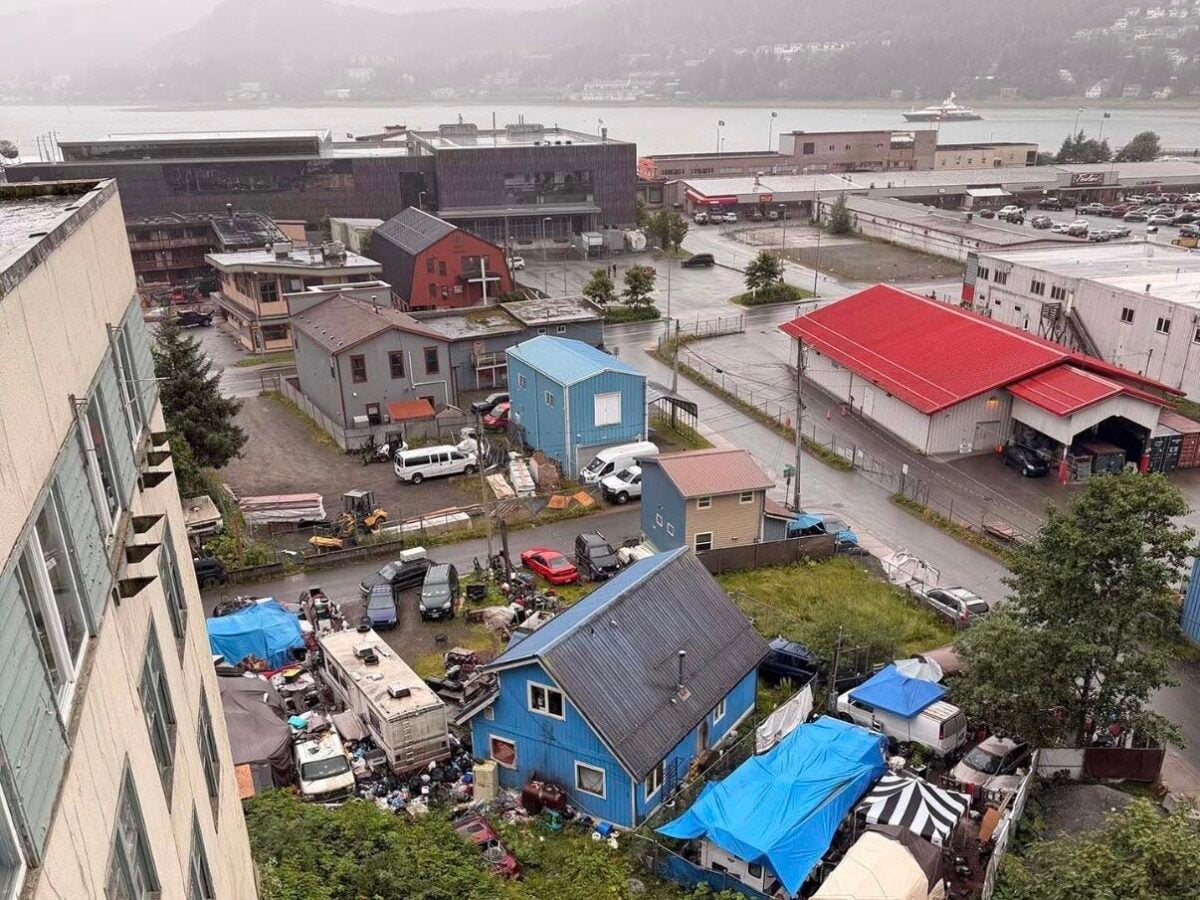
Photo courtesy of Peter Metcalfe via his Facebook post

NOTN- Residents living near the Governor’s Mansion are calling on city officials to address their safety concerns surrounding an “armed encampment” following an incident earlier this month where a young black bear was shot and later euthanized by the Department of Fish and Game due to its fatal injuries.

According to a post on the Juneau Community Collective, concerned residents living above Capital Avenue have sent a letter to the City and Borough of Juneau and nearby property owners saying the July 9 incident has prompted renewed concerns about conditions at the encampment.

The post described the site as an “armed encampment” and said residents are seeking a long-term solution to what they say are ongoing public safety issues and “outrages’ in the neighborhood.

Residents are asking others who have witnessed incidents associated with the encampment to come forward.

Below is the full letter written by Peter Metcalfe with the exclusion of addresses and personal information for resident’s privacy.

To the officials and offices named above:

The encampment on Capital Avenue, a longtime obnoxious nuisance, has become a threat to public safety.

Earlier this month, a person living in that camp shot a young black bear that was up a tree at the edge of the encampment. The animal was grievously wounded, and a Fish and Game officer had to track it down to put the young bear out of its misery. 

The shots that wounded the bear were fired upward, likely toward the Fosbee, a 30-unit apartment building directly above the site. The apartment building is in our densely populated Governor’s Mansion neighborhood. 

We live directly across from the Fosbee Apartments. We ask that the squatter camp on Capital Ave. be removed before someone is seriously hurt.

According to the CBJ Parcel Viewer, this encampment is on city land and shares boundaries with property owned by AEL&P, the Central Council, and a privately owned parcel (701 Capital Ave). All these properties are adversely affected by the encampment and its widely scattered piles of garbage, which are irresistible to bears.

This did not come out of nowhere. For years, the camp has created conditions no neighborhood should have to endure: clouds of toxic smoke, garbage piles measured by the truckload, and human and household waste left directly on the ground. Discarded hypodermic needles litter the area around the camp and have been dragged with other refuse by bears into the surrounding neighborhood, presenting hazards to people, pets, and wildlife. 

When one of us stopped by to ask two of the occupants about the toxic smoke, their twitchy behavior was consistent with heavy methamphetamine or similar stimulant use.

Frequently, in the pre-dawn hours, residents are woken by disturbances from the site, where drugs are used openly and what appear to be drug sales occur. Now that we know the people in this camp are armed and willing to fire weapons with no regard for who is nearby, we have reason to fear for our safety.

Since the encampment is on city-owned property, CBJ clearly has the authority and responsibility to act, and its ownership removes any question of deferring to another party. The city’s own guidance calls for intervention once an encampment repeatedly harms the surrounding community, with trash accumulation and open drug use named as the triggers. This camp crossed that line years ago and has now escalated to gunfire toward occupied homes. Recent court decisions have also made clear that CBJ may enforce limits on camping on public land, so this is well within its authority.

Clearing the camp by itself will not fix this. The city has collaborated with AEL&P to remove encampments like this that have crossed the line, and with the Central Council to clean up this site. 

We are now asking the city, through the Division of Lands & Resources and the Police Department, to clear the Capital Avenue camp, clean up the site, and then secure the area against re-encampment so that this stops being a recurring hazard, and to coordinate any support services the occupants may need as part of that process. 

Photographs documenting current conditions at the site are attached to this letter.

We would appreciate a written response identifying who is handling this matter and what will be done. Thank you for your attention to a serious hazard in the heart of our community.

Respectfully,

Sandra and Peter Metcalfe, and on behalf of the following residents of the Governor’s Mansion neighborhood.

Categories
Alaska News Featured Juneau News juneau Juneau Local Juneau Local Ketchikan Local News Feeds Sitka Local

Get Out the Native Vote initiative galvanizes Alaska Native voters for the 2026 elections

By: Corinne Smith, Alaska Beacon

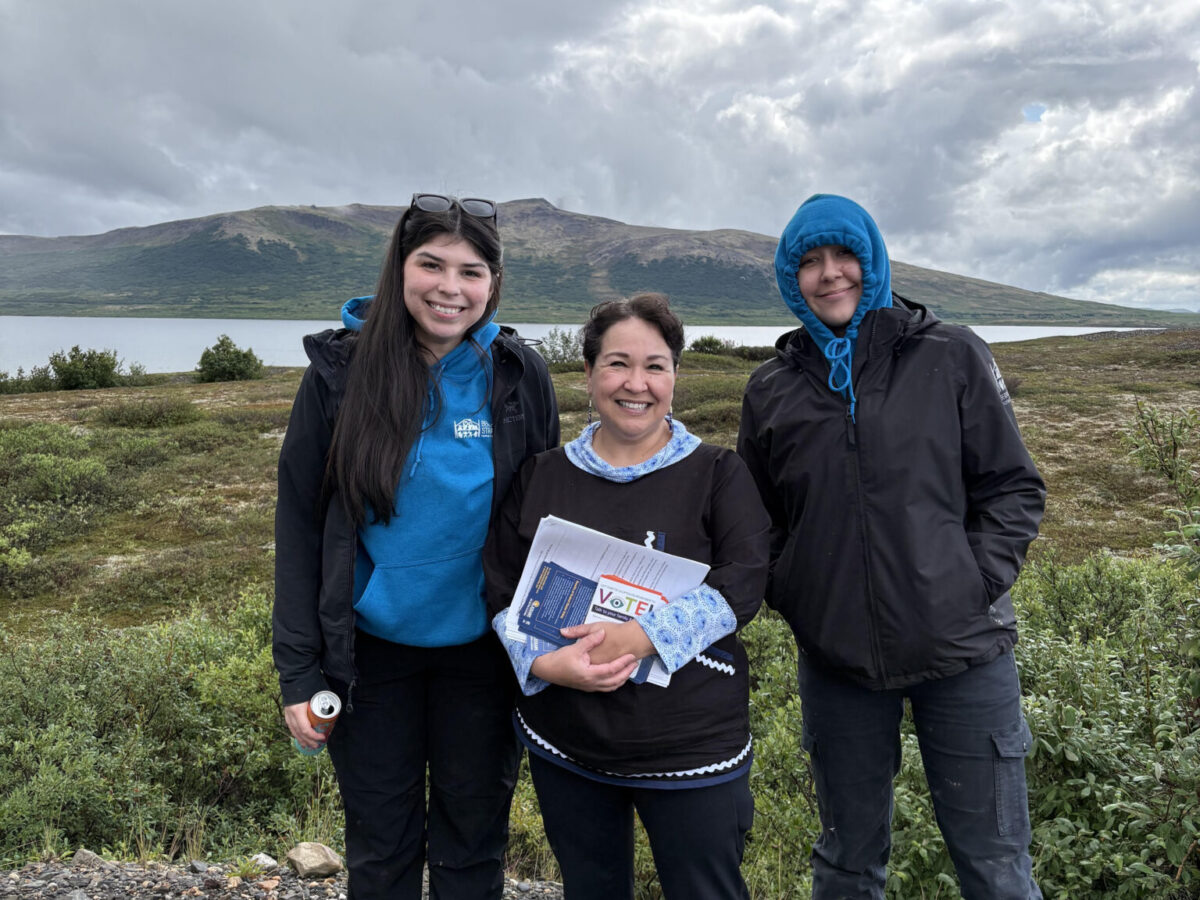
Michelle Sparck (center) poses for a photo with Bering Straits Native Corporation summer interns in Nome on July 20, 2026 during a voter outreach trip. (Photo courtesy of Michelle Sparck)

A Native-led voter mobilization group is working to boost Alaska Native voter education and turnout this election season. 

Get Out the Native Vote is a non-partisan effort now underway to reach voters across the state’s vast and varied geography and get them to cast ballots in the primary elections on August 18 and the midterm elections on November 3.

Alaska Native voters make up roughly one in four Alaskan voters, said Michelle Sparck, director of the initiative, who is Cup’ik from the Southwest village of Chevak. She said part of voter education is raising awareness of when Alaska Native voters came out in force and reached a peak voter turnout of 66% in 1982. Some regions had nearly 80% voter turnout, Sparck said. That’s when decisions on subsistence policy, abortion and moving the Alaska State Capitol from Juneau were on the ballot. 

“I call it the birth of the Alaska Native super voter. That generation made it a cultural value,” she said. “With that political capital that the 1980s generation built, they were able to own their sovereignty and self-determination tools.”

An Alaska voter drops their ballot into a ballot box on Nov. 1, 2024, in Anchorage City Hall. (Photo by Andrew Kitchenman/Alaska Beacon)

But voter turnout has declined significantly in the decades since. In the last election in 2024, 30% of Alaska Native voters cast their ballots. That meant Alaska Native voters made up 11% of state voters, according to data compiled by Sparck. 

The mission of the campaign is to turn that decline around and reach historic highs again. 

“This is what we’re capable of, and this is what this is our potential, and and I’m so excited to hold the mirror up to the communities because a lot of them really just had no idea what their performance is over the last, you know, 40-some years,” Sparck said.

“The challenge to the community is to say: own our power. We need to get out and vote,” she said. “Not should we go out and vote, we should make informed decisions.”

Get Out the Native Vote is supported by a partnership between the Alaska Federation of Natives, First Nations Institute and Cook Inlet Tribal Council with some funding from private foundations and the Carter Center, which was founded by former President Jimmy Carter. The campaign is collaborating with local, state and Tribal governments; regional Native corporations, organizations and service providers; schools; prisons and community groups to host voter education and outreach events around the state. Sparck spoke on a video call on Tuesday after returning from a voter outreach visit in Nome, and before heading to visit Utqiagvik, then the coastal community of Wainwright.

The August 18 primary falls within the summer subsistence fishing season, which is challenging for many people to find time to vote, Sparck said, but she’s found a helpful analogy.

“We’ve realized that if we describe primaries like basketball regionals, light bulbs go off their heads,” she said, smiling. “You have to win at regionals in order to make it to state. So a lot of people now know what primaries mean.”

Spark said 131 voting precincts in the state, more than a quarter, rely entirely on the U.S. Postal Service and air carriers to receive and mail their ballots. 

Get Out the Native Vote working to make sure post offices are staffed, and helping the Alaska Division of Elections to recruit staff and volunteers so that each precinct has elections workers, bilingual poll workers and outreach workers to help with Native language translations. Sparck is also finding youth volunteers for a  “Youth at the Booth” program, whose goal is to have two 17 and 18 year old volunteers  assist at polling places and learn about elections in the process. 

Particularly in the Arctic, the initiative is partnering with the North Slope Borough and local community leaders to make sure all precincts are staffed and open, in hopes of avoiding repeats of past election years where rural residents could not vote due to issues with staffing poll workers. In 2024, polling stations in rural villages of Wales and Kaktovik never opened. In Northwest and Western Alaska, voting hours were reduced in Marshall, Shaktoolik,Diomede and Kobuk. Primary ballots arrived late in at least 14 other Native villages. 

“I get a lot of (precinct) chairs calling me before an election saying, ‘I don’t think I can do this.’ And we’re like, ‘You can do this. Your community can’t vote without you,’” she said. The organization’s goal is to have a well-staffed polling station in each village. 

Alaska Native communities have also had the highest rates of rejected ballots, according to the Alaska Federation of Natives. One of the main  issues is an incomplete witness signature on the ballot. In 2022, one in eight rural mail-in ballots were rejected, totalling more than 7,500 ballots rejected from rural Alaska. 

A bipartisan elections bill that would have removed the witness signature requirement, among many other measures aimed at improving voting access, passed the Alaska State Legislature this year, but Gov. Mike Dunleavy vetoed it. 

An 18 year old Ahtna shareholder registers to vote at a Get Out the Native Vote event at their Convention in June 2026 in Glennallen. (Photo courtesy of Michelle Sparck)

Between now and November, the campaign is working to distribute voter information, with guides on how to register, cast a ballot and find more information on state and federal candidates. 

“So we’re trying to make things easier, but we’re building the plane as we’re flying it,” Sparck said. “You know, it’s still a work in progress, and we’re glad to have the alliances we have.”

This year, the annual Alaska Federation of Natives convention, where thousands of people from across the state convene in Anchorage, will be held one week later than usual to accommodate early voting at City Hall across the street. “So we’re excited that we’re going to have an ability to send people across the street to go vote or drop off their absentee ballots,” Sparck said.

The campaign is planning to hold voter outreach events in Alaska Department of Corrections facilities where roughly 40% of incarcerated people awaiting trial and sentencing are eligible to vote. Organizers are also working with service provider organizations to reach people who are unhoused or housing insecure, as well as foster youth who are turning 18, and inform them about their voting rights. 

“We try to recognize every avenue to access voters, and especially those that are low propensity or disenfranchised. We try to meet their needs in every way, so it doesn’t mean we’re doing it 24/7, but it means we are trying to dedicate time and create the allyship and coordination with organizations that are more intimate with those groups to to best deliver that,” she said.

Get Out The Native Vote shares outreach events and regional voting updates on their Facebook page, and website at aknativevote.com.

Michelle Sparck (left) and Get Out the Native Vote volunteers smile at a tabling event in Bethel. (Photo courtesy of Michelle Sparck)

Categories
Alaska News Featured Juneau News juneau Juneau Local Juneau Local Ketchikan Local News Feeds Sitka Local

Unions sue Alaska Gov. Dunleavy over vacant seats on state’s pension-management board

By: James Brooks, Alaska Beacon

Wooden gavel with books in background. Courtesy of Alaska Beacon.

Two of Alaska’s largest labor organizations have sued Gov. Mike Dunleavy for failing to promptly fill two seats on the board that governs the state’s public employee pension plans.

The Alaska AFL-CIO, National Education Association-Alaska and five individuals filed suit Wednesday in Anchorage Superior Court, seeking a court order that would require the governor to fill seats on the Alaska Retirement Management Board that are designated for the teachers’ and public employees’ unions. 

According to the complaint, the seats have been vacant since March 1. The unions sent lists of possible nominees to the governor four months before that, on Dec. 1.

Under state law, “a vacancy on the board of trustees shall be promptly filled.”

The unions sent a warning letter to the governor’s office in late May about the issue. 

Stephen Cox, the attorney general designee whose confirmation was rejected by the Alaska Legislature this year, responded to the message. Now working as Counsel to the Governor, Cox said the law reserving seats for the unions “warrants further analysis, as it potentially encroaches upon the Governor’s constitutional appointment authority.” 

Cox said the governor will be requesting a formal legal opinion from acting Attorney General Cori Mills.

“The administration does not comment on lawsuits,” said Jeff Turner, the governor’s communications director, when reached for comment. 

The Beacon contacted the Department of Law on Monday afternoon as well, seeking comment about the lawsuit. It did not respond by 8 a.m. the following day.

The plaintiffs are being represented by attorney Scott Kendall, who has frequently fought cases against the Dunleavy administration.

By phone on Monday afternoon, Kendall said the issue is “very important” because the board handles billions of dollars’ worth of investments on behalf of state residents.

Two board meetings have already taken place without union representatives. 

“This isn’t the, ‘Oops, this slipped through the cracks sort of issue.’ The new nominees were put forward by both unions three months before the prior terms expired. Those filings were acknowledged by the Department of Revenue, which handles this. So everything was done timely,” he said.

In the complaint, the plaintiffs state that if the issue goes to trial, Cox should not have a role because state law requires the Department of Law — through staff attorneys or hired counsel — to represent the state in legal issues.

Kendall said the legality of laws constraining a governor’s appointment powers have been repeatedly tried in court and upheld.

“To be honest, it’s befuddling. There’s a very clear statute. There’s a very clear regulation. They say these people shall be appointed promptly, and they shall be from lists from these two groups,” he said. “So I think it’s quite honestly bizarre that we’re even in this situation, but here we are nonetheless.”