







The first-ever Bitcoin Alaska Conference was held July 5–6 at Centennial Hall in Juneau.
The conference brought together policymakers, energy experts, and Bitcoin enthusiasts to examine the role of cryptocurrency in shaping Alaska’s economy and energy future.
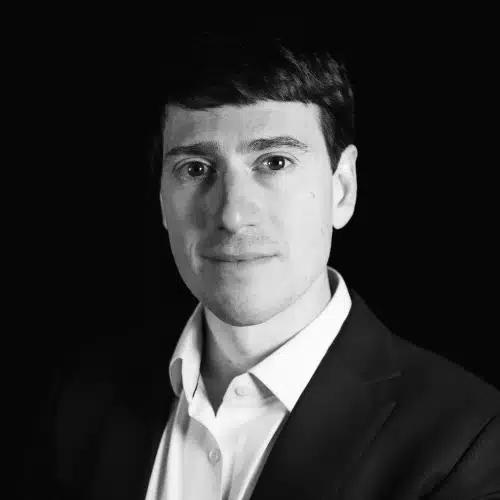
One of those experts was Alex Gladstein, chief strategy officer at the Human Rights Foundation.
Alex Gladstein offers an argument for technology as a critical tool for individual empowerment and freedom in an increasingly complex global landscape.
“So the organization that I worked for, the Human Rights Foundation, was founded with a very specific mission, which was to address authoritarianism.” Said Gladstein , “5.7 billion people live under an authoritarian regime in nearly 100 countries around the world, where they don’t have free speech, rule of law, separation of powers, or property rights. So while our country is not perfect, it is something that you know, billions of people aspire to, and we focus on helping human rights activists, journalists, labor leaders and environmentalists, who live under authoritarian regimes. And that often brings us to look at what the tools are that they’re using.”
Gladstein, working with the Human Rights Foundation since 2007, has witnessed firsthand the power of technology in some of the world’s most restrictive environments. His journey began with underground internet efforts in Cuba, where he and his team would smuggle contraband media and help citizens access information forbidden by authoritarian regimes.
The conversation centers on two primary technological innovations: Bitcoin and open-source AI tools. Bitcoin he says, emerges as a powerful instrument of financial sovereignty.
“even the most hardened skeptic admits that it’s got some sort of speculative investment quality to it, given that it’s been the best performing financial asset in the world since it was created, I think there’s a risk in ending the story there. I mean, that’s really what a lot of people see. They see an investment, and that’s about it.” Said Gladstein “I think what they don’t see is the freedom money part of it, which is that it doesn’t require paperwork to use. You don’t need an account. You can be any gender, any faith, any religion, any nationality, and you can use it and connect to it and trade and commerce and transact with other people. The second part of it is the censorship resistance. You know, it’s unstoppable.”
In Alaska, particularly in the North Slope, where abundant “stranded” natural gas from oil production could power cryptocurrency data centers, Stax Capital Partners, a Wasilla-based startup, recently proposed building a 50 MW Bitcoin mining facility south of Prudhoe Bay, about the same amount of electricity used as Alaska’s largest coal plant, according to the Alaska Beacon.
A New York Times investigation found that U.S. Bitcoin mining operations can require power comparable to small cities, and during crises like Texas’ 2021 Winter Storm Uri, some operations were actually paid to shut down to protect vulnerable power grids, Critics warn that large-scale installations, like those proposed in Alaska, risk similar grid strain and could push fossil fuel consumption higher.
On the technology front, according to Gladstein, it’s a double-edged sword. “there’s the centralizing force of the state, and they are using AI tools to better understand their population, map their population, surveil their population. But at the same time, these open AI tools that are available to anybody, are allowing individuals to have, essentially, a fortune 500 company in their pocket.”
Gladstein acknowledges the risks of digital intrusion and recommends people spend more time offline to reduce their digital surface area as these same technologies can pose a threat to individual privacy.
Yet, he remains fundamentally optimistic about technology’s potential to expand human freedom. “It’s going to be super empowering for individuals and small businesses that don’t have a lot of resources. I’m excited about that.”