Categories
Sports Fox

Mbappé Is The Best Player In The World. Another World Cup Would Make It Undeniable.

Remember the coronation that never quite happened? A few years ago, Kylian Mbappé was the consensus heir. Lionel Messi and Cristiano Ronaldo would eventually ride off, and the kid from Bondy — a World Cup winner as a teenager, the first teenager to score in a final since Pelé — would inherit the throne. In 2022, he nearly took it by force: a Golden Boot, a hat trick in the final, one of the great individual World Cups ever played. Argentina lifted the trophy anyway, and the narrative moved on without him. Four years later, it’s time to move it back. Mbappé, at 27, is the best player in the world right now, and the 2026 World Cup is making his case game by game. Seven goals in five matches — braces against Senegal and Iraq, another against Sweden, the winner from the spot in a street fight with Paraguay. He became France’s all-time leading scorer along the way, passed Ronaldo and Miroslav Klose on the World Cup scoring charts, and now sits on 19 tournament goals, one behind Messi’s all-time record. Nobody in history has scored more World Cup knockout goals. Nobody has scored more World Cup winners. He leads a France team that looks like the most complete side in the tournament — and he hasn’t even needed to be great every night for Les Bleus to win all five. Yes, Messi is having a magical farewell, and Erling Haaland is dragging Norway into places Norway has never been. But Messi is 39, playing his last dance. Ronaldo just exited his final World Cup in the round of 16. And Haaland, for all his ruthlessness, is a specialist — the greatest penalty-box predator alive, and proudly nothing else. Mbappé is the full package. World-class pace that still breaks defensive lines in a dead sprint. The technical ability to beat a man off either side. He can live on the left touchline or through the middle. And he is a clinical finisher through and through. Strikers usually get one or two of those gifts. He got the whole package. So why did some stop saying it? Blame the noise in Madrid. Real Madrid’s season was a soap opera—no trophies, a manager under siege, and Mbappé cast as one of the villains, jeered inside his own stadium in May. Lost in the drama: he won the Pichichi again. His numbers never dipped, but the love did. Now he’s found it, and it shows. Watch him this summer — laughing through hydration breaks, sprinting to embrace Didier Deschamps after scoring against Sweden days after the coach buried his mother, playing with the joy of a man who spent a year being told he was the problem and is now, indisputably, the solution. The smile is back. So is the terror he inspires. Thursday brings Morocco in Boston, a rematch of the 2022 semifinal, and perhaps Messi waiting at the end — the ghost of Lusail, four years later, in New York. You could not script it better. And here’s the kicker: for all he’s done, Mbappé has never won a Ballon d’Or. Win this World Cup as the star of the show — the record within reach, the Golden Boot in play, the best team in the field — and that conversation ends in about four seconds. In 2022, he did everything except lift the trophy. In 2026, he might do everything, period. The throne’s been sitting empty long enough.​Latest Sports News from FOX Sports

Categories
Alaska News

Urban Alaska’s high costs of living driven by health care and groceries

Part of the Anchorage skyline is reflected in the south-facing windows of downtown's Robert B. Atwood Building on June 17, 2026. (Photo by Yereth Rosen/Alaska Beacon)

Part of the Anchorage skyline is reflected in the south-facing windows of downtown’s Robert B. Atwood Building on June 17, 2026. Anchorage, Alaska’s biggest city, had a cost of living that was 25.5% above the national urban average in 2025, according to the Alaska Department of Labor and Worforce Development. (Photo by Yereth Rosen/Alaska Beacon)

Alaska’s three major cities continue to have higher living costs than most of the nation’s urban areas, according to a newly released analysis published by the Alaska Department of Labor and Workforce Development.

Juneau, Anchorage and Fairbanks are in the top 25 among 257 metropolitan national areas. Among the three, Juneau had the highest overall cost of living, at 31.7% above the national urban average in 2025, according to the analysis, published in the July issue of Alaska Economic Trends, the department’s monthly research magazine. Anchorage’s cost of living was 25.5% above the national average, while Fairbanks’s costs were 22.9% above the national average, according to the analysis.

While significantly higher than the national urban average, the Alaska cities last year were much cheaper than cities like New York, where the borough of Manhattan has overall living costs that were 139% above the national average, or Honolulu, where overall costs were 83.9% above the national average.

The Alaska cities’ rankings are driven in large part by two categories – health and groceries.

Alaska’s three major cities continue to have some of the nation’s highest health care costs, according to the 2025 statistics. But in a departure from past years, the Alaska cities no longer top the health-cost list. Winchester, Virginia, wound up with the highest health costs last year, at 49.4% above the national average, followed by New York City’s Manhattan Borough, at 43.3 % above the national average. Anchorage had the third highest health costs, at 42.7% above the national average, followed by Juneau at 39.5% and Fairbanks at 35.4%, according to the statistics.

“It was surprising, a little, to see them fall to three, four and five this year,” said Sam Tappen, the state labor economist who authored the report.

Smokestack emissions rise into the air on Feb. 7, 2025, above Golden Heart Plaza in downtown Fairbanks. Snow dusts the statute of the "Unknown First Family" that is the plaza's centerpiece. (Photo by Yereth Rosen/Alaska Beacon)
Smokestack emissions rise into the air on Feb. 7, 2025, above Golden Heart Plaza in downtown Fairbanks. Snow dusts the statute of the “Unknown First Family” that is the plaza’s centerpiece. Fairbanks in 2025 had the highest energy costs among 257 U.S. metropolitan areas, according to the Alaska Department of Labor and Workforce Development. (Photo by Yereth Rosen/Alaska Beacon)

The three cities also continue to have significantly higher grocery costs than other U.S. cities, according to the analysis. In Juneau, grocery costs in 2025 were 28.4% above the national average. Anchorage’s grocery costs were 23.7% above the national average, while groceries in Fairbanks ran 23% above the national average.

Fairbanks had modest costs in one important category in 2025. Housing costs last year in the Interior city were actually 1% lower than the national urban average, the analysis found. But that is more than offset by the high costs of energy — with utility costs that were 113% higher than the national urban average, according to the analysis. Fairbanks had the highest utility costs of all the metropolitan areas in the study group.

Overall, urban Alaska’s 2025 inflation rate was a modest 2.1%, below the state’s long-term average of 3.3%, according to a companion report in the July issue that was also authored by Tappen. The state’s 2025 inflation rate was also below the national rate of 2.6%, and it was the third consecutive year in which the U.S. inflation rates outstripped Alaska’s rate.

Tappen said that probably reflects a lingering influence of the COVID-19 pandemic.

“Alaska took longer to recover from the COVID recession than the nation did, so our economy has just been a little bit cooler than in the Lower 48,” he said.

The calculations reflect conditions before the U.S. invasion of Iran, which started at the end of February and which have caused energy costs to spike.

The annual inflation rate calculated for 2026 will almost certainly be higher than the 2025 rate, both nationally and in Alaska, Tappen said. It is hard to say whether Alaska’s rate of inflation will outstrip that in the Lower 48, but it is likely that the state’s stretch of higher prices will persist longer.

That is thanks to Alaska being at the end of the national transportation chain, he said.

“Our energy prices and the prices of our products that depend on energy are going to stay higher than the rest of the nation,” he said.

Even before the Iran war, Alaska had higher energy prices than the rest of the nation. Gasoline prices in urban Alaska averaged $3.66 a gallon in January, compared to the national average of $3.10, according to the analysis. Costs in rural Alaska were much higher, with six villages in Western or Interior Alaska posting average January gasoline prices above $10 a gallon.

Higher fuel prices are the norm in Alaska, even in urban areas, despite Alaska’s status as a major oil producer, Tappen said.

“Even though we are the fifth highest producer of oil among states, very little of that oil is refined in-state for consumers,” he said. Most of what is refined goes to the military or industry, and for the small amount that is produced in-state for consumers, “it’s just more expensive to make it here,” he said.

Downtown Juneau is seen on Feb. 16, 2023. (Photo by Yereth Rosen/Alaska Beacon)
Downtown Juneau is seen on Feb. 16, 2023. Juneau is the costliest of Alaska’s three main cities, according to the Alaska Department of Labor and Workforce Development. (Photo by Yereth Rosen/Alaska Beacon)
Categories
Alaska News Featured Juneau News juneau Juneau Local Juneau Local Ketchikan Local News Feeds Sitka Local

Eaglecrest Board Appoints Julie Piper as Next General Manager

CBJ- The Eaglecrest Board of Directors is pleased to announce the selection of Julie Jackson Piper as the next General Manager of Eaglecrest Ski Area. Piper was appointed to the role at the July 7 Eaglecrest Board special meeting. 

“I am excited to welcome Julie Jackson Piper back to Eaglecrest as our ski area’s general manager,” said Brandon Cullum, Eaglecrest Board President. “Julie is the right person to lead our staff, support the board, and help inspire confidence with the Assembly as we move into the 2026/2027 ski season and work to address Eaglecrest’s longer-term sustainability concerns.” 

Piper is currently employed as the Recreation Manager for the City of Richland, Washington, where she has served in that role since 2018. Her prior experience includes being the Aquatics Manager for the City and Borough of Juneau and Youth & Community Outreach Coordinator & Snowsports School Supervisor at Eaglecrest. Piper also has a Bachelor of Science in Ski Area Business Management from Northern Michigan University. 

“I am honored to join Eaglecrest’s dedicated staff and engaged Board of Directors as we build upon the mountain’s remarkable legacy,” Piper said. “Together, we have an incredible opportunity to strengthen our connection with the community, enhance the year-round mountain experience, and ensure Eaglecrest continues to thrive for generations as we begin its next 50 years.” 

Piper will begin her new role on August 31, 2026 and be paid an annual salary of $134,014.40. 

The Eaglecrest General Manager is selected and supervised by the Eaglecrest Board. Following an initial applicant screening by the City and Borough of Juneau Human Resources Department, the Board Human Resources Committee interviewed candidates remotely before selecting a finalist for an in-person interview at the Eaglecrest Board meeting last week. 

For more information, contact Dallas Hargrave, CBJ’s Human Resources/Risk Management Director, at dallas.hargrave@juneau.gov or 907-586-0225. 

Categories
Alaska News Featured Juneau News juneau Juneau Local Juneau Local Ketchikan Local News Feeds Sitka Local

Many gas pipeline construction jobs will go to non-Alaskans, 2020 study indicates

By: James Brooks, Alaska Beacon

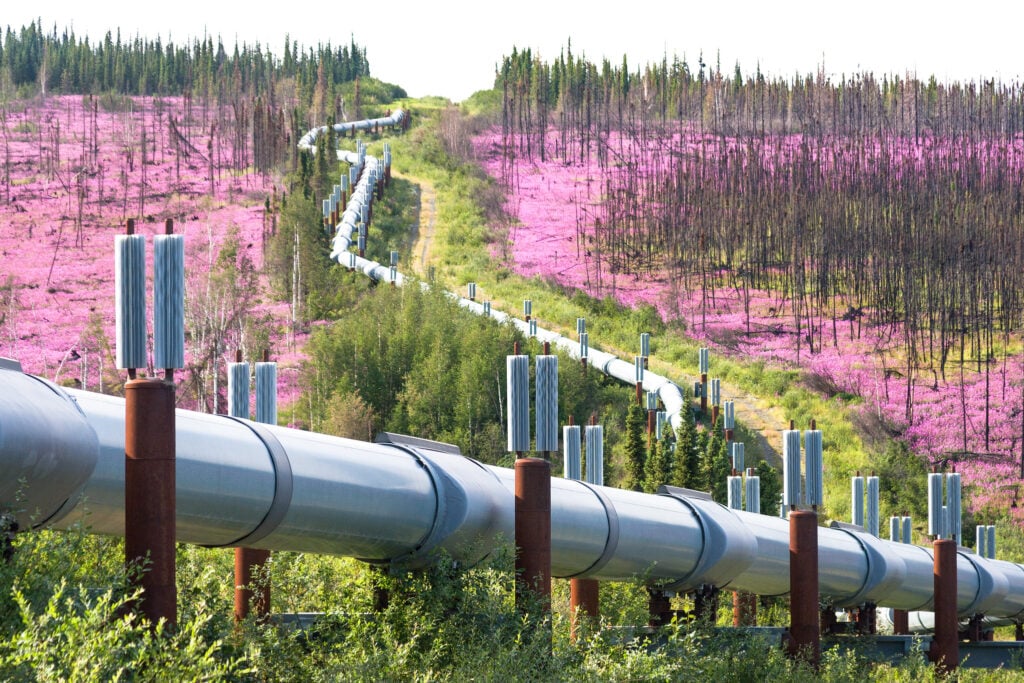
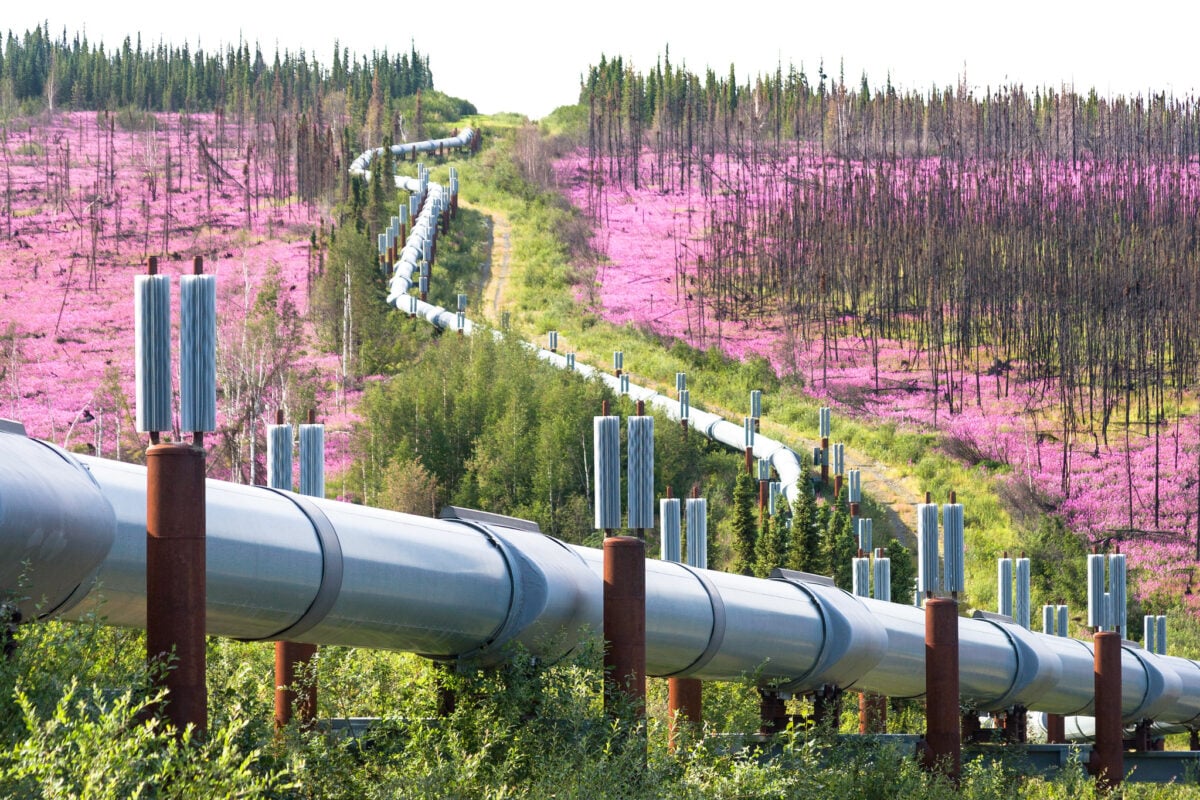
Fireweed blooms on either side of the trans-Alaska pipeline near mile post 86, Dalton Highway in 2006, two years after the 2004 Dall City fire. (Photo by Craig McCaa/BLM Alaska)

If built as proposed, the trans-Alaska natural gas pipeline is expected to create thousands of jobs. Many, if not most, will go to people who don’t live in Alaska.

A six-year-old study, commissioned by the Alaska Gasline Development Corp. as part of the project’s environmental statement, says “an estimated 22 to 68 percent of the construction jobs would likely be filled by non-residents, depending on the construction year.”

The high end of that estimate is significantly higher than the state’s norm — last year, 23.4% of all construction jobs in Alaska were held by people who don’t live in the state. 

The difference is likely because specialty jobs needed during construction — pipeline welders, for example — aren’t common in Alaska. Last year, more than 42% of all welding jobs in the state were held by nonresidents, according to figures published by the Alaska Department of Labor and Workforce Development. 

Joelle Hall, president of the Alaska AFL-CIO, said that while new hires might not all be Alaskans, they will have the opportunity to become Alaskans, just as the builders of the trans-Alaska oil pipeline system did.

“There will be, just as it was on TAPS — most of those were not Alaskans, they became Alaskans. That’s one of the opportunities to look at here,” she said.

As the Alaska Legislature debates a multibillion-dollar tax break for the pipeline project, legislators are considering whether to tie that tax break to labor requirements that could require pipeline developers to hire more Alaskans.

Last month, the Alaska Senate voted 16-4 to mandate a certain level of apprentice hiring, something that could increase the number of jobs available to new Alaskans or those starting to learn a trade.

The latest version of the tax-break bill, released last week by legislative negotiators, eliminates that mandate but requires project-labor agreements that maximize opportunities for Alaskans who already have needed qualifications, said Sen. Jesse Kiehl, D-Juneau and author of the apprentice hiring proposal.

Hall said she hopes the apprenticeship mandate returns, but even if it doesn’t, the project would offer young Alaskans a chance to be trained as electricians, plumbers and in other construction-related trades.

They would be able to keep those skills and replace retiring construction workers.

“We are going to have such an opportunity to get these jobs … and then they can go on to full careers,” Hall said. “The graying of the construction workforce is such a big problem, and this is an opportunity to change that graying.” 

Current estimates suggest the project would create a large number of temporary and permanent jobs but significantly fewer than were created by the trans-Alaska oil pipeline in the 1970s.

“I’ve read that during the development stage, there’ll be something like 12,000 jobs attached to this project,” said Speaker of the House Bryce Edgmon, I-Dillingham, in a June 27 hearing.

Adam Prestidge, president of Glenfarne Alaska, jumped in.

“Just to clarify, when we talk about jobs created, it’s approximately 7,000 for the construction of the pipeline, an additional 5,000 for the construction of the LNG facility. When it goes into full operation, you’re looking at a much lower number, around 1,000 permanent, 1,500 permanent operational jobs,” he said.

Tim Fitzpatrick, a spokesman for Glenfarne Alaska, confirmed the figures by email and added: “These are direct jobs and these numbers do not include additional indirect jobs. Glenfarne has not provided an update to the in-state/out-of-state estimates.” 

In 1978, the Alaska Department of Labor concluded that more than 23,000 people were simultaneously employed at the peak of oil pipeline construction.

As currently planned, the gas pipeline project would be built in two phases, with the pipeline first and supporting infrastructure second. That means the 12,000 jobs expected by the project won’t come all at once, and peak employment will be well below what happened during the oil pipeline boom.

In addition, Alaska’s population is much larger than it was during the 1970s, further diluting the impact of construction employment. Last year, the state had 321,500 workers in January and 360,000 in July — the boom created by pipeline employment will be smaller than the one that already occurs each summer with tourism and fishing jobs.

What would be different is the value of each job — lawmakers are planning to mandate agreements that would require workers be paid high wages. 

“There’s going to be a level of rearranging of the workforce that’s going to be pretty dramatic. If you’re a guy working at the Jiffy Lube, you could probably go … and be dispatched to do the same job on the pipeline and make vastly more money,” Hall said.

A successful project would create permanent, high-paid jobs.

“Project operation would require about 980 permanent personnel per year,” AGDC estimated in 2020, predicting that most jobs would be based in Anchorage and would go to in-state residents.

For the moment, those benefits remain hypothetical, and the state’s 1978 study provides an inadvertent cautionary note.

“Construction of the proposed gas pipeline project is planned to begin in 1981 – less than three years from now,” it said. “Alaska citizens and lawmakers are now meeting to lay out guidelines in preparation for pipeline construction in an attempt to maximize stable growth and to minimize the disruption which will result from such a large scale construction project.”

Categories
Music

Jo Dee Messina Reacts to Viral ‘Bye Bye’ Debate After Fans Question Iconic Line

Jo Dee Messina has sparked a hilarious online debate after fans found themselves questioning the lyrics to a song from her early catalog.

The confusion began when a TikTok user shared a video admitting she was unsure about a line from Messina’s 1998 song “Bye Bye,” which appears on her I’m Alright album. The fan questioned the line “lead foot down on the accelerator,” explaining that she had heard it as “left foot down on the accelerator” and wasn’t sure what the phrase meant.

Photos Courtesy of Jo Dee Messina

The comment section quickly filled with fans sharing what they believed the lyric actually was, with guesses ranging from “lead foot” to “left foot,” “let my foot,” and even the wildly creative “Mike Celerator” at the end of the phrase.

Messina eventually caught wind of the conversations and quickly joined in on the fun, commenting on the original video, “SOOOO FUNNY!!! Your face is precious,” before later sharing her own video in an attempt to settle the debate.

“Hey guys, apparently one of my songs is at the center of a controversy right now,” Messina joked. “I’ve seen videos blowing up about this song and what the lyrics are.”

@jodeemessina Replying to @Gwendy Vanucci Hope this clears things up for everyone😉 @thecryingjoker @Tee #jodeemessina #byebye ♬ original sound – Jo Dee Messina

While strumming her guitar, the country music songstress sang the lyrics herself in hopes that viewers would clearly hear what the actual wording is. However, instead of ending the debate, the video left some fans sticking to their original guess that it’s “left foot” while others stood firm in their belief that “lead foot” is the only correct answer.

“My buddy and I have debated these exact lyrics for 20+ years!!!” one user wrote.

“Not gonna lie, I have always thought it was left foot which was a little odd. 😁”

“I’ve been singling left foot since this song came out when I was like 5 🥲🥲

“How could it be ANYTHING other than lead foot?!?”

The ongoing conversation continued to entertain fans and Messina herself, who returned  with a few more videos reacting to the hilarious interpretations.

@jodeemessina Replying to @Chance Hill405 You guys are awesome!!! Oh and so is Mike, apparently 🤣🤣🤣 #jodeemessina #byebye #viral ♬ original sound – hnmmusic011

Penned by Phil Vassar and Rory Michael Bourke, the breakup anthem has stood the test of time as a song that could get anyone through this difficult point in a relationship. Messina sings from the perspective of someone who is finally walking away from a person who took far too long to commit. At first, they believed they had found the right person, but eventually, they decide they’ve given enough to the other person getting nothing in return and are ready to move on.

The line that sparked the TikTok debate, “Got a lead foot down on my accelerator and the rear view mirror torn off,” uses the imagery to say that the past is officially being left behind and there’s no room for turning back or second guessing. Even though Messina has yet to confirm, it’s safe to say that the lyrics do in fact read, “lead foot” rather than “left foot.”

The recent debate that continues to circulate social media just further proves that even after three decades the powerful message behind “Bye Bye” remains a fan favorite.

The post Jo Dee Messina Reacts to Viral ‘Bye Bye’ Debate After Fans Question Iconic Line appeared first on Country Now.

​Country Now

Categories
Sports Fox

Why The Remaining 8 World Cup Teams Each Could Win It All — And Why They Won’t

Forty teams are out. Just eight left standing. We have reached the quarterfinal round of the 2026 FIFA World Cup, and these eight teams are still in contention to win it all. Now, it is not easy to predict how things will play out in the later rounds of the World Cup, and we are surely due from some big surprises. Here is my ranking of the eight teams remaining with a look at why they could win the title and why they might not. Why: Under head coach Rudi Garcia, Belgium is a team that is gaining steam as the tournament progresses after a slow start. The team starts a relatively older starting lineup that has used its wisdom to its advantage. Against the U.S., Belgium was hardly bothered by the opponent’s home-field advantage, the USA’s equalizer in the first half or the controversy with Folarin Balogun’s red-card suspension being reversed. Belgium is a comfortable and smart team right now that is very effective at attacking from out wide and picking up runners in the box. Why Not: At some point, age might start to work against the Red Devils. On top of that, playing Spain in the quarterfinals requires competing in the midfield against Pedri and Rodri. As well as Charles De Ketelaere played against the United States, he is likely not the caliber of forward that could be a difference maker in the later rounds of the World Cup. Why: As we saw in the shootout win over Colombia in the round of 16, Switzerland is one of the most defensively disciplined teams remaining in the tournament. Spain has conceded no goals but also dominates possession. Switzerland does not possess the ball nearly as often, but its defense typically always has answers. Murat Yakin is one of the best coaches remaining in this tournament and has built up a team that is smart, compact, defends well and picks the right moments to attack. Switzerland is clearly a team on the rise. Why Not: Defending against Argentina is another level from what the Swiss have done thus far. But perhaps an even bigger concern is the injury to Johan Manzambi, who has been one of the tournament’s top breakout performers. The 20-year-old versatile attacker did not play against Colombia due to a knee injury he picked up in the team’s final training session. Not having him against Argentina is a huge blow. Why: Four years ago in Qatar, Morocco advanced to the semifinals of the World Cup. Since then, the team has only continued to improve and grow. Both its senior team and youth national teams indicate this team will be good for years to come. Morocco has an elite right side of the field with winger Brahim Díaz playing well and Achraf Hakimi being arguably the best right back in the world. Central midfielder Ayyoub Bouaddi is also one of the best teenagers in the world. Morocco should be heavily motivated against France, as the two nations have strong historical ties with six Morocco players being born and raised in France. Why Not: Morocco has a significant injury problem with Ismael Saibari likely out for its game against France. Saibari scored in each of its group stage games and was key to the team’s offense. In a game where Morocco needs all hands on deck, the Atlas Lions will be missing its top forward. Morocco is a great team, but it is still behind France. But now facing Les Bleus shorthanded, Morocco has a huge uphill climb. Why: Norway has arguably the best center forward of his generation in Erling Haaland, who has seven goals in four appearances at this World Cup. He is carrying Norway to its best ever tournament run. But the team’s main supporting cast, in Martin Ødegaard and Antonio Nusa, has also been stellar. Why Not: The biggest concern for this team is its depth. Haaland has at least one goal in every game he has played, and Ødegaard has been key to controlling the midfield. But if either of them has a bad game, are the team’s other options good enough to pick up the slack? Probably not. Why: Harry Kane is living up to expectations at this tournament with six goals. He can carry England to wins at times when it is not playing well (such as the 2-1 win over DR Congo). The best news for England was in the round of 16 win over Mexico when Jude Bellingham was the best he has looked all tournament, by far. The same could be said for Anthony Gordon. If that is the case, England is building up an offense that has multiple strong points of attack. Why not: The team’s defense has been too leaky at times. In the last round, Mexico scored two goals, and England’s goalkeeper, Jordan Pickford, had to bail out his teammates several times. Against DR Congo, England was lucky to have only conceded one. England was also poor defensively against Croatia. When better teams come along, it is a major question whether England’s defense can hold up. Why: Argentina knows how to win and fights extremely hard when up against the wall. The win over Egypt shows just how well it handles adversity. The team also has the greatest player of all time in Lionel Messi who can win games by himself. Why not: There is an age factor. La Albiceleste have kept most of its same players from the 2022 team that won the World Cup. It was hard for Argentina to win in 2022, and the 2026 team is likely not as good. Messi is four years older at 39. Plus, the team is still very reliant on him. The first two knockout rounds were especially taxing on this team, as it took 120 minutes to beat Cape Verde, and the 3-2 win over Egypt required a huge push at the end to mount a comeback. How much is going to be left in the tank? Why: Through five games, it has been impossible to break down Spain’s defense, which has conceded zero goals. Luis de la Fuente’s team is getting solid production out of center forward Mikel Oyarzabal with four goals, but a total of five players have scored for Spain in this tournament (not counting an own goal). That gives Spain a balanced attack with a number of ways to win games. Combined with its tournament-best defense and arguably the best central midfield tandem in Rodri and Pedri, Spain has a lot going for it. Why Not: With a 0-0 draw and two 1-0 wins over Uruguay and Portugal, Spain has walked a fine line at times. Oyarzabal is an excellent forward, but is he able to carry this team in a way Kane, Mbappé and Haaland can? Until Yamal gets going in the way he has for Barcelona, Oyarzabal needs to be that guy. Why: From top to bottom, France had the most talented team in this tournament. What is even better for the French is that its top-three players are all in fantastic form. Kylian Mbappé has seven goals at this tournament. Michael Olise has arguably been the best playmaker at the World Cup. Finally, Ousmane Dembélé, who entered this tournament without a World Cup goal, scored. Now the reigning Ballon d’Or winner has four goals and two assists to open a second point of attack. Then surrounding this team are world-class players at every position. Why not: It will take a Herculean effort to knock off France in any of the three remaining rounds. But it is possible. The toughest job for head coach Didier Deschamps is managing the massive egos within the squad. As French 1998 World Cup winner Frank Lebouef recently said: “I would say that the best enemy of France is France itself. Again, if you don’t find the chemistry, if you have ego issues between the players, they’re not going to win anything. And when we are the favorites, it’s never good with France.”​Latest Sports News from FOX Sports
Categories
Politics

Platner campaign quietly polls potential replacements as pressure mounts

Democratic Maine Senate nominee Graham Platner’s team quietly fielded a poll Tuesday gauging the strength of people who could replace him on the ballot, as pressure mounts for him to drop out of the race.

The flash poll, obtained by POLITICO, was conducted by Public Policy Polling and commissioned by Platner’s campaign, according to a person with knowledge of the survey who was granted anonymity to discuss it. It tested head-to-head matchups between Republican Sen. Susan Collins and Platner, along with five possible Democratic replacements for Platner, including former Maine state Senate President Troy Jackson and Secretary of State Shenna Bellows.

The poll was conducted one day after POLITICO reported that a woman who Platner dated said he forced her to have sex with him, which he has denied. The move comes after his campaign dramatically lost support and financial backing across the Democratic Party, and suggests that his campaign is weighing alternatives should he leave the race.

On Tuesday, Platner’s campaign also canceled all its planned fundraisers and took down online ads, further indicating that his candidacy is on the brink of collapse.

Additionally, Platner’s team contacted Maine Democratic Party officials to discuss the process for replacing the embattled candidate on the November ballot — a conversation that turned contentious.

Platner hasn’t appeared in public since the latest scandal erupted. He is expected to speak later Wednesday, though it’s not clear when and whether it will be to staff directly or public, and his campaign is surveying volunteers about next steps, according to one person familiar with the campaign’s internal conversations and a survey obtained by POLITICO.

Platner has denied the sexual assault allegation and said swiftly after the report published that he is “taking the time to reflect” on his candidacy. His campaign has canceled at least a half-dozen planned events that had been scheduled over the coming days, in addition to putting holds on its ads on Facebook and Instagram.

The Platner campaign did not immediately respond to a request for comment.

As pressure builds on Platner to abandon his bid — more than three dozen Democratic senators have called on him to drop out of the race — thejockeying for his replacement has already begun.

Jackson, a former Platner ally, has already filed paperwork exploring a run, while a number of other unsuccessful gubernatorial candidates have signaled they are considering a bid.

The Tuesday poll of 785 Maine voters showed Platner trailing Collins 47 percent to 42 percent. Eleven percent said they were undecided. It also tested Jackson, Bellows, former Senate candidate Jordan Wood, former public health official Nirav Shah and Democratic Gov. Janet Mills — who ended her Senate bid before the primary — in head-to-head match-ups with Collins.

The flash poll was conducted over a 24-hour period, according to the person with knowledge of the survey, and it should be viewed as an early snapshot of the evolving race. The survey document did not list a margin of error.

Of the Democrats tested, Jackson performed the best, leading Collins 49 percent to 44 percent, with 7 percent of voters undecided. Bellows and Shah both essentially tied Collins at 47 percent and 45 percent, respectively. Mills, who has not weighed in publicly on the POLITICO report, trailed Collins 48 percent to 37 percent, while Wood trailed 47 percent to 38 percent. Fifteen percent were undecided in both the Wood and Mills matchups.

The poll included crosstabs examining each candidates’ strength among 2024 voter blocs. Platner performed the best among voters who did not vote in 2024 or voted for someone other than President Donald Trump or former Vice President Kamala Harris, followed by Jackson. Among this group, 40 percent supported Platner and 38 percent supported Jackson, compared with 33 percent for Bellows, 26 percent for Shah, 22 percent for Wood and 21 percent for Mills.

Under state law, if Platner were to withdraw from the race by 5 p.m. on Monday, the Maine Democratic Party would have to pick his replacement by July 27. Party officials have said they are committed to an “open, transparent and inclusive” process to select a nominee if Platner suspends his campaign, adding that “in no scenario is there a legal possibility for a nominee to be selected by an individual campaign.”

On Wednesday, campaign manager Ben Chin sent a text message to volunteers — obtained by POLITICO — accusing the state party of bringing in the Democratic Senatorial Campaign Committee and cutting the Platner campaign out of the process. Platner’s team wants to ensure that an establishment-picked candidate does not take his place if he drops out, a person close to the candidate said Tuesday.

The state party quickly fired back.

“While the Platner campaign remains focused on distracting from the job of defeating Susan Collins in November with false accusations against us, the Maine Democratic Party remains hyper focused on developing a representative, transparent and inclusive process to select a new nominee when he chooses to withdraw from the race,” MDP Executive Director Devon Murphy-Anderson said in a Wednesday afternoon statement.

​Politics

Categories
Food

The Case For Not Sprinkling Parmesan Cheese On Italian Seafood Meals

The “no parmesan with seafood” rule is enshrined in a seemingly untouchable Italian rulebook – but when you delve into it, it actually makes sense.

​Food Republic – Restaurants, Reviews, Recipes, Cooking Tips

Categories
Entertainment

This Classic Italian Dish Is A Favorite Of Kylian Mbappé’s

Kylian Mbappé enjoys this classic, creamy, rich Italian dish, which is probably one of the most popular pasta dishes found throughout the world.

​Mashed – Fast Food, Celebrity Chefs, Grocery, Reviews

Categories
Music

Luke Bryan Announces 2026 Farm Tour Dates And Lineup

Luke Bryan is bringing Farm Tour back this fall with four new shows planned across Pennsylvania and the Midwest.

2026 Farm Tour Dates and Locations

The country superstar has announced the dates and locations for the fan-favorite event, and has now revealed the lineup of special guests joining him for each stop.

Luke Bryan Farm Tour 2026

Set for September 17-20, 2026, Farm Tour will make stops at four family-owned farms across Pennsylvania, Ohio, Indiana and Michigan:

September 17: Latrobe, Pennsylvania — 1846 Farms
September 18: Millersport, Ohio — Miller Family Farm
September 19: Brookston, Indiana — Prairie View Farms
September 20: Allegan, Michigan — John Schaendorf Dairy

Farm Tour Special Guests

Dasha, Kenny Whitmire, the Peach Pickers and DJ Rock have been announced as special guests for the 2026 Farm Tour dates.

Tickets are available now at LukeBryan.com.

Luke Bryan; Photo Courtesy of Facebook

Since launching Farm Tour in 2009, Bryan has used the annual series as a way to honor the hardworking farmers who help feed America while bringing full-production concerts to smaller communities that are often overlooked by traditional tours.

The 2026 Farm Tour is sponsored by Bayer and Fendt.

Beyond the music, Farm Tour continues to make an impact through charitable initiatives. During May’s Farm Tour shows in California, Bryan and Bayer helped address food insecurity in the Central Valley by encouraging concertgoers to donate nonperishable food items. Fans contributed hundreds of pounds of food that will benefit local hunger-relief organizations, including Central California Food Bank and Sacramento Food Bank & Family Services.

Future Farmers of America (FFA) chapters across California also participated in Bayer and Farm Tour’s 2026 “Spirit of 1776” CAN DO Challenge, creating patriotic displays made from donated canned goods in celebration of America’s upcoming 250th anniversary. More than 9,000 cans were collected and donated to local food banks across the state.

Photo Courtesy of Luke Bryan

The upcoming Farm Tour dates will arrive during a major week for Bryan, as his ninth studio album, SIGNS, is set to be released on September 18, 2026.

Fans can pre-order SIGNS now and experience Luke Bryan’s annual Farm Tour tradition this fall.

The post Luke Bryan Announces 2026 Farm Tour Dates And Lineup appeared first on Country Now.

​Country Now