A second person has been arrested after a man was found dead on a bench near the canal in Northampton.The Latest News from the UK and Around the World | Sky News










A second person has been arrested after a man was found dead on a bench near the canal in Northampton.The Latest News from the UK and Around the World | Sky News

Five days before he was killed by a falling aid package, father-of-two Uday al Qaraan called on world leaders to open Gaza’s borders to food – and criticised the use of airdrops.The Latest News from the UK and Around the World | Sky News
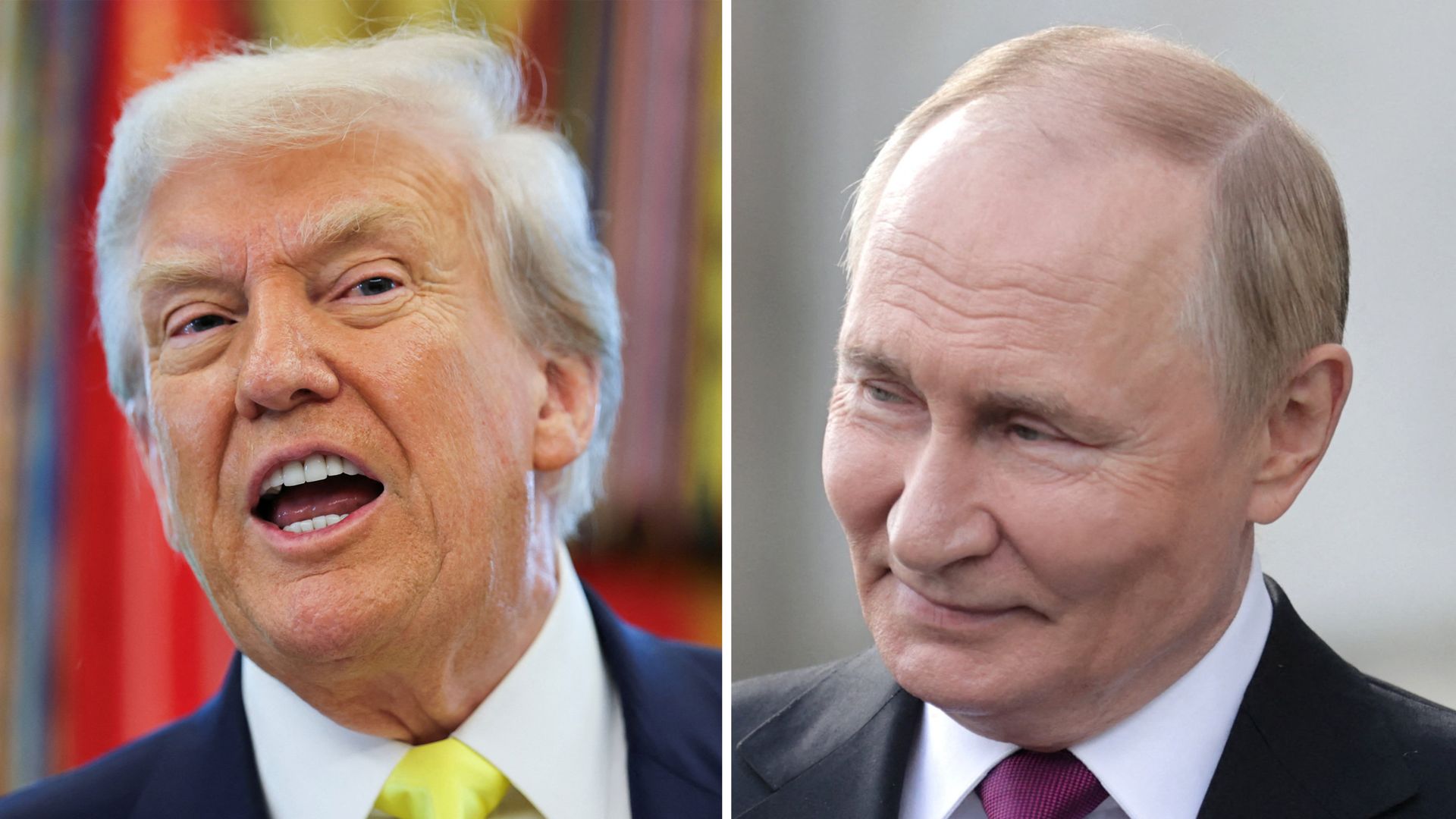
The location of Alaska is unexpected.The Latest News from the UK and Around the World | Sky News
By James Brooks, Alaska Beacon
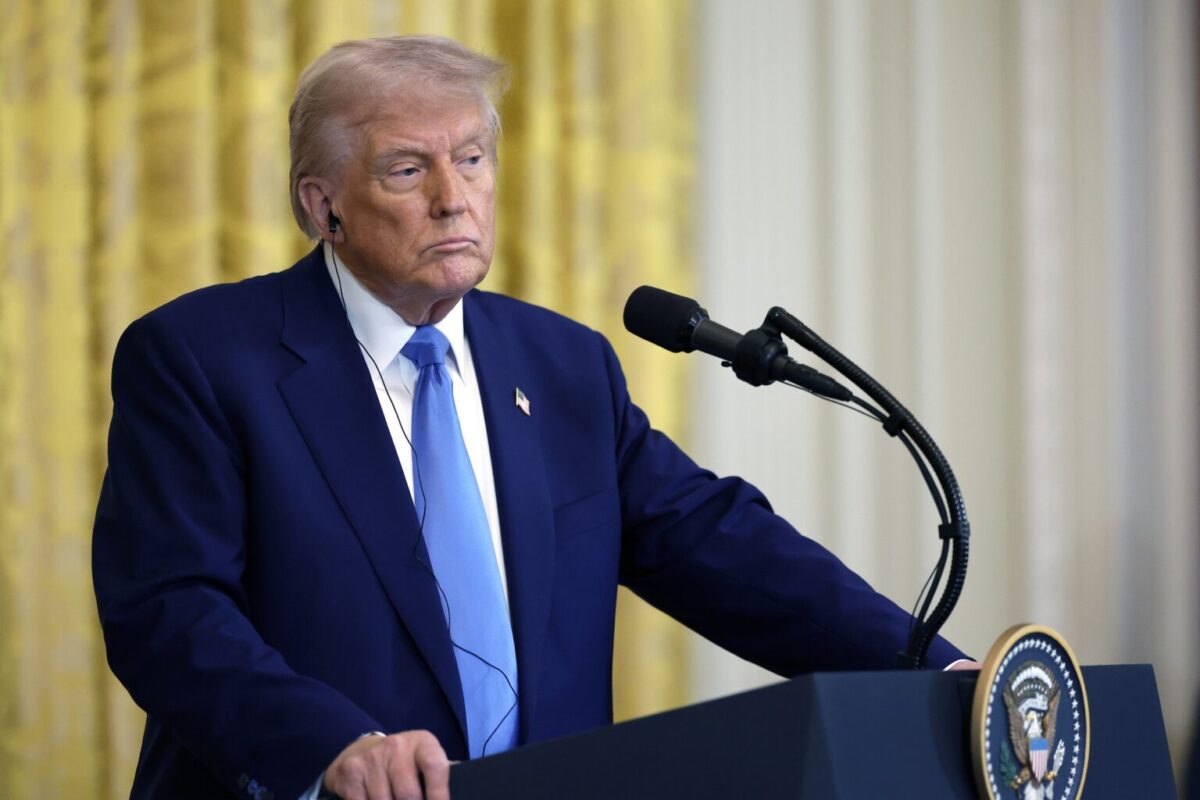
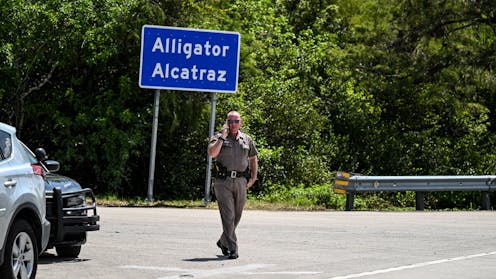
President Donald Trump will meet with Russian President Vladimir Putin on Aug. 15 in Alaska, Trump said in a social media post Friday.
The location, timing and other details were not immediately available. Staff for all three members of Alaska’s congressional delegation said they were unaware of the announcement ahead of time.
“The highly anticipated meeting between myself, as President of the United States of America, and President Vladimir Putin, of Russia, will take place next Friday, August 15, 2025, in the Great State of Alaska,” Trump wrote on Truth Social.
Trump has repeatedly said on social media that he is interested in negotiating with Putin in order to bring an end to the Russian invasion of Ukraine.
This story is developing and will be updated.


JUNEAU – The City and Borough of Juneau and the Central Council of the Tlingit & Haida Tribes of Alaska have issued coordinated emergency disaster declarations ahead of a potentially historic glacial lake outburst flood from Suicide Basin near the Mendenhall Glacier.
Hydrologic data shows the water level could exceed past records, prompting proactive action to protect lives, property, and infrastructure. Officials say while flood barriers are in place, no risks will be taken.
Tlingit & Haida Vice President Jackie Pata says this step ensures “every tool is in place before the water rises,” following last year’s devastating flood.
The declarations allow emergency teams to mobilize now, activate equipment, establish permitting, and to provide public alerts. City Manager Katie Koester says this year, “We’re not just responding, we’re ready.”
Residents are urged to stay informed and prepared for possible evacuation. Visit JuneauFlood.com or the CBJ website for updates and resources.

JUNEAU – Governor Mike Dunleavy has appointed Janelle Earls as acting commissioner of the Alaska Department of Revenue, effective immediately.
Earls steps in following the resignation of Commissioner Adam Crum, announced two weeks ago.
She currently serves as the department’s administrative services director, overseeing the agency’s budget, and brings over 20 years of state government experience.
Earls spent 13 years in leadership roles at the Department of Health and Social Services and joined Revenue in May 2024.
Earls will lead the department during the transition period until a permanent commissioner is named.


NOTN- The U.S. Coast Guard cutter Storis, the Coast Guard’s first polar icebreaker acquired in more than 25 years, will depart Auke Bay on Saturday for its scheduled transit to downtown Juneau, where it will be permanently berthed.
The Storis hosted free public tours Thursday and Friday and will host a media ride-along Saturday.
The Coast Guard will commission this first new icebreaker in 25 years during a ceremony in Juneau on Sunday.
The Coast Guard Cutter Storis will be officially commissioned at 9:30 a.m. at Peratrovich Plaza, 292 Marine Way, the service said. The event will also be streamed online.
Adm. Kevin Lunday, acting commandant of the Coast Guard, is scheduled to attend and take part in a media availability.
The vessel expands America’s operational presence in the Arctic and will support Coast Guard missions while the service awaits the delivery of the Polar Security Cutter class of ships.
It’s the second vessel in Coast Guard history to bear the name Storis. The vessel is manned with a hybrid crew consisting of military and civilian mariners.
The acquisition of the Storis was made possible through the Don Young Coast Guard Authorization Act of 2022 and fiscal year 2024 Congressional appropriations.
The Coast Guard operates more than 250 cutters, 200 aircraft and 1,600 boats to safeguard U.S. ports, waterways and maritime borders.

By: James Brooks, Alaska Beacon
Next week, the National Oceanic and Atmospheric Administration is planning to host a ceremony in Louisiana to mark the start of construction on the NOAA ship the Surveyor, a new charting and mapping ship scheduled to be homeported in Ketchikan.
NOAA announced the keel-laying ceremony, scheduled for Aug. 14, by email.
The Surveyor is expected to be finished in 2027, and its sister ship, the Navigator, is expected to be finished in 2028.
NOAA operates a fleet of 15 charting, mapping and fisheries ships using an unarmed officer corps like a scientific version of the U.S. military. The Surveyor and Navigator will be used primarily for ocean mapping and nautical charting.
Two other deep-sea ships, the Oceanographer and Discoverer, are also under construction and are expected to be complete in 2026.
All four ships are part of an ongoing effort to keep the NOAA fleet afloat; as of 2023, the fleet’s average age was 30 years old, and six of the fleet’s current ships are expected to reach the end of their service life by 2030.
The ships will be built by Thoma-Sea Marine Constructors in Houma, Louisiana, under a $624.6 million contract that would allow NOAA to construct two more ships if funding is available.
A July 2025 CBS/YouGov poll asked Americans, “Do you approve or disapprove of the Trump administration’s program to find and deport immigrants who are in the U.S. illegally?”
The respondents were divided, with 49% of Americans approving and 51% disapproving.
But, as I’ll explain, that survey question addresses only part of the administration’s immigration enforcement agenda.
I’m a lawyer and former adviser to senior state officials in Florida, and to the Clinton and George W. Bush administrations. I also teach human rights and national security courses at Florida State University, including an interdisciplinary seminar called Refugees, Asylees & Migrants.
Immigration issues are complex. Discussing them is challenging, since key terms are often conflated and confused.
Clarifying these terms and their legal implications can help ensure people are talking about the same things – regardless of whether they agree about who should be in the country.
Let’s start with terms describing different aspects of immigration.
Immigrant is a common term meaning a foreign national who intends to remain in the U.S. or another country where they weren’t born.
Migrant is a generic term that doesn’t have any specific legal meaning and is often used incorrectly as a synonym for immigrant.
Immigrants are considered documented if they’ve been issued an immigrant visa or a green card, thereby achieving lawful permanent resident status. Green cards and visas can be revoked – typically a consequence of certain criminal convictions. Visas allow foreign nationals to travel to a U.S. port of entry and request permission to enter but do not guarantee entry.
A lawful permanent resident generally can apply for U.S. citizenship after five years. This process is known as naturalization. In fiscal year 2024, 818,500 people were naturalized.
Once naturalized, revocation of U.S. citizenship – or denaturalization – is rare, traditionally resulting from fraud, omission during the application process or other extraordinary causes. Between 1990 and 2017, about 11 people annually had their naturalized citizenship revoked.
The Trump administration is reportedly expanding the scope of denaturalization and is being called out for allegedly weaponizing it against current political adversaries such as Elon Musk. However, denaturalization numbers remain low. The first Trump administration filed 102 denaturalization cases, and his current administration has filed five so far, according to NBC News.
In May 2025 – a typical month representing some of the most recent data available – about 47,000 immigrants entered the U.S. with one of the many kinds of immigrant visas. For example, the visas may be used for family-based immigration, including legitimate marriages to U.S. citizens and international adoptions. Immigrant visas are also available for employment-based immigration, including foreign nationals who invest substantial capital in the U.S. economy.
Apart from immigrant visas, a variety of nonimmigrant or temporary visas are available.
For instance, there are visas for international students, although the Trump administration has expressed its intention to significantly restrict availability.
There are visas to facilitate travel and tourism, business, temporary workers, and for those with extraordinary abilities or achievements.
There are special visas for victims of human trafficking and other crimes who assist law enforcement.
There are even visas to facilitate international sports competitions.
In fiscal year 2024, the U.S. issued a record 8.5 million visitor visas. Stays are generally limited to six months.
In addition, visitors from more than 40 countries are allowed to travel to the U.S for tourism or business for up to 90 days without obtaining a visa.
Significantly, a foreign national entering the U.S. with a visitor visa, also known as a tourist visa, isn’t authorized to work.
The term undocumented essentially refers to people who didn’t obtain a green card or a visa – or stayed in the U.S.
after their documents expired. An estimated 11 million undocumented immigrants live in the U.S.

Visa “overstays” represent approximately 40% of the undocumented population. As a matter of law, such overstays are civil rather than criminal violations.
Attracting more political attention are foreign nationals who cross U.S. borders outside of an authorized checkpoint without asserting a credible claims for asylum. The Border Patrol recorded an historic high of 249,741 encounters with such migrants in December 2023. That figure dropped 77% by August 2024, according to a Pew Research Center analysis.
The Trump administration’s deployment of the U.S. military at the border has reportedly further reduced the number of encounters to the lowest level in decades, but questions regarding the legality of the deployment remain unanswered.
The Trump administration is also encouraging voluntary departure by offering travel assistance and $1,000 to “illegal aliens” who self-deport.
Being undocumented doesn’t necessarily mean a foreign national is in the U.S. illegally.
Some foreign nationals are admitted into the country without documentation. Asylum-seekers, also known as asylees, are people fleeing persecution in their home countries. They generally must present themselves to federal immigration authorities at a port of entry, or after entering the country by other lawful means, and eventually substantiate their claims.
The Trump administration’s action to ban asylum at the U.S.-Mexico border was recently limited by a federal appellate court. The court’s decision effectively curtails the administration’s practice of deporting people to places where they could be tortured or persecuted, subject to any further consideration by the U.S. Supreme Court.
Migrants escaping desperate economic circumstances are not eligible for asylum.
Refugees, like asylum-seekers, are fleeing a well-founded fear of persecution in their home countries and are protected under the 1951 Refugee Convention as amended by its 1967 Protocol. This identifies five forms of persecution for relief – race, religion, nationality, membership in a particular social group, or political opinion. In 1980, Congress passed and President Jimmy Carter signed the Refugee Act, which incorporated these international standards into U.S. law.
Unlike asylum-seekers, refugees apply for relief and substantiate their claims through the United Nations. They generally don’t get to choose whether or where they may be resettled.
Refugees and people granted asylum may seek lawful permanent resident status and eventually apply for U.S. citizenship.
In 2024, the U.S. accepted about 100,000 of an estimated 43 million refugees worldwide. Refugees are among the 122 million estimated to be forcibly displaced worldwide.
With limited exceptions, the Trump administration has suspended the U.S. Refugee Admissions Program and narrowed relief for women seeking protection from domestic and sexual violence in their home countries.
Foreign nationals admitted into the U.S. as humanitarian parolees are undocumented initially, but their presence is authorized.
The federal government has historically used humanitarian parole to facilitate the admission of people from countries confronting significant violence or other compelling humanitarian crises when other processes are unavailable, overwhelmed or simply too slow.
For example, the U.S. launched a new humanitarian parole initiative in late 2022 to admit foreign nationals from Cuba, Haiti, Nicaragua and Venezuela.
Humanitarian parole also was used to admit foreign nationals following U.S. intervention in Vietnam and in Iraq after 9/11; after American troops withdrew from Afghanistan in 2021; and following Russia’s invasion of Ukraine.
Those granted temporary protected status, or TPS, by the federal executive branch are also believed to face extraordinary dangers if they return to their home countries. However, TPS can be granted only to foreign nationals who are already present in the U.S.
Generally, the federal executive branch has discretion to rescind both humanitarian parole and TPS, subject to certain rule-making requirements, if it concludes recipients can return safely to their home countries.
The Trump administration signaled its intent to terminate humanitarian parole and TPS broadly.
DACA recipients, or Dreamers, who arrived in the country without authorization as children, represent another protected category of undocumented foreign nationals legally living in the U.S. However, their status is uncertain due to ongoing litigation.

Mark Schlakman is Of Counsel to Rambana & Ricci, P.L.L.C., Immigration Attorneys, in Tallahassee, Florida.
Politics + Society – The Conversation

Since World War II, the United States has repeatedly supported governments that have been committing mass atrocities, which are defined by genocide scholar Scott Straus as “large-scale, systematic violence against civilian populations.”
This includes U.S. support for Israel, which has remained consistent despite President Donald Trump’s recent disagreement with Prime Minister Benjamin Netanyahu over whether Palestinians are being starved in Gaza.
We are scholars of genocide and other mass atrocities, as well as international security. In our research for a forthcoming article in the Journal of Genocide Research, we analyzed official statements, declassified documents and media reports across four cases that involve U.S. support for governments as they were committing atrocities: Indonesia in East Timor from 1975 to 1999, Guatemala from 1981 to 1983, the Saudi-led coalition – known as the “Coalition” – in Yemen since 2015, and Israel in Gaza since October 2023.
We identified six rhetorical strategies, which are ways of talking about something, used by U.S. officials to publicly distance the U.S. from atrocities committed by those who receive its support.
This is significant because when Americans, as well as others around the world, accept such rhetoric at face value, the U.S. can maintain impunity for its role in global violence.
When U.S. officials deny any knowledge of atrocities perpetrated by parties receiving U.S. support, we call that feigned ignorance.
For example, after the Coalition bombed a school bus in Yemen, killing dozens of children, U.S. Sen. Elizabeth Warren asked Gen. Joseph Votel whether the U.S. Central Command tracks the purpose of the missions it is refueling.
His response: “Senator, we do not.”
This proclaimed ignorance stands in stark contrast with well-documented Coalition war crimes since 2015. As Yemen expert Scott Paul put it, “No one can feign surprise when lots of civilians are killed anymore.”
When evidence of atrocities can no longer be ignored, obfuscation is used by U.S. officials, who muddle the facts.
When Indonesian forces carried out massacres in 1983, killing hundreds of civilians, the U.S. Embassy in Jakarta sent a telegram to the secretary of state and multiple U.S. embassies, consulates and missions questioning the reports because they had “not received substantiation from other sources.”
Similarly, during the genocide in Guatemala, following Efraín Ríos Montt’s successful coup, U.S. officials skewed reports of violence perpetrated by the government, instead blaming the guerrillas.
In its 1982 report on human rights in Guatemala, for example, the State Department claimed, “Where it has been possible to assign responsibility [for killings in Guatemala] it appears more likely that in the majority of cases the insurgents … have been guilty.”
Yet U.S. intelligence said the contrary.
Reports of state atrocities and abuses in Guatemala can be found in U.S. intelligence documents from the 1960s onward. One 1992 CIA cable explicitly noted that “several villages have been burned to the ground” and that the “army can be expected to give no quarter to combatants and noncombatants alike.”
As evidence of atrocities continue to mount, as well as evidence of who is responsible, U.S. officials have often turned to negation. They don’t deny that U.S. aid is being provided, but rather argue that it was not directly used in the commission of atrocities.
For example, during Indonesia’s atrocities in East Timor, the U.S. was actively training members of Indonesia’s officer corps. When Indonesian security forces massacred as many as 100 people at a cemetery in Dili in 1991, the George H.W. Bush administration’s reaction was simply to say that “none of the Indonesian military officers present at Santa Cruz had received U.S. training.”
When public scrutiny of U.S. support reaches levels no longer easily dismissed, U.S. officials may turn to diversion.
These are highly publicized policy adjustments that rarely involve significant changes. They often include a form of bait-and-switch. This is because the aim of diversion is not to change the behavior of the recipient of U.S. aid; it is merely a political tactic used to placate critics.
In 1996, when the Clinton administration bowed to pressure from activists by suspending small arms sales to Indonesia, it still sold Indonesia US$470 million in advanced weaponry, including nine F-16 jets.
More recently, responding to both congressional and public criticism, the Biden administration paused the delivery of 2,000-pound and 500-pound bombs to Israel in May 2024 – but only briefly. All its other extensive weapons transfers remained unchanged.
As exemplified by U.S. support for Israel, diversion also includes perfunctory U.S. investigations that signal concern with abuses, without consequence, as well as support for
self-investigation, with similarly foreseeable exculpatory results.
When atrocities committed by recipients of U.S. support are highly visible, U.S. officials also use aggrandizement to praise their leaders and paint them as worthy of assistance.
President Ronald Reagan in 1982 praised President Suharto, the dictator responsible for the deaths of more than 700,000 people in Indonesia and East Timor between 1965 and 1999, for his “responsible” leadership. Meanwhile, Clinton officials deemed him “our kind of guy.”
Similarly, Guatemala’s leader Ríos Montt was portrayed by Reagan in the early 1980s as “a man of great personal integrity and commitment,” being forced to confront “a brutal challenge from guerrillas armed and supported by others outside Guatemala.”
These leaders are thus presented as using force either for a just cause or only because they are faced with an existential threat. This was the case for Israel, with the Biden administration stating Israel was “in the throes of an existential battle.”
This aggrandizement not only morally elevates leaders but also justifies the violence they commit.

Finally, U.S. officials also often claim to be engaging in a form of quiet diplomacy, working behind the scenes to rein in recipients of U.S. support.
Importantly, according to U.S. officials, for quiet diplomacy to succeed, continued U.S. support remains necessary. Therefore, continued support for those committing atrocities becomes legitimized precisely because it is this relationship that allows the U.S. to influence their behavior.
In East Timor, the Pentagon argued that training increased “Indonesian troops’ respect for human rights.” When a U.S.-trained Indonesian military unit massacred about 1,200 people in 1998, the Defense Department said that “even if American-trained soldiers had committed some of the murders,” the U.S. should continue training to “maintain influence over what happens next.”
U.S. officials also implied in 2020 that Yemenis under attack from the Coalition, led by Saudi Arabia, are advantaged by U.S. arms support to the Coalition because the support gave the U.S. influence over how the arms are used.
In the case of Gaza, U.S. officials have repeatedly referenced quiet diplomacy as promoting restraint, while seeking to block other systems of accountability.
For example, the United States has vetoed six United Nations Security Council resolutions on Gaza since October 2023 and has imposed sanctions on five International Criminal Court judges and prosecutors because of arrest warrants issued against Netanyahu and former Israeli Defense Minister Yoav Gallant.
U.S. officials have long used a variety of rhetorical strategies to distance the country from, and minimize its contributions to, atrocities committed by others with U.S. support.
With these strategies in mind, Trump’s acknowledgment of “real starvation” in Gaza can be viewed as a diversion from unchanged U.S. support for Israel as famine conditions in Gaza worsen and Palestinians are killed while waiting for food.
From feigning ignorance to minimizing violence and praising its perpetrators, U.S. governments and presidents have long used deceptive rhetoric to legitimize the violence of leaders and countries the U.S. supports.
But there are two necessary elements that allow this framing to continue to work: One is the language of the U.S. government; the other is the credulity and apathy of the public.

The authors do not work for, consult, own shares in or receive funding from any company or organization that would benefit from this article, and have disclosed no relevant affiliations beyond their academic appointment.
Politics + Society – The Conversation