Categories
Alaska News Featured Juneau News juneau Juneau Local Juneau Local Ketchikan Local News Feeds Sitka Local

After 10-year truce, a major tax dispute looms over the trans-Alaska pipeline system

By: Nathaniel Herz, Northern Journal

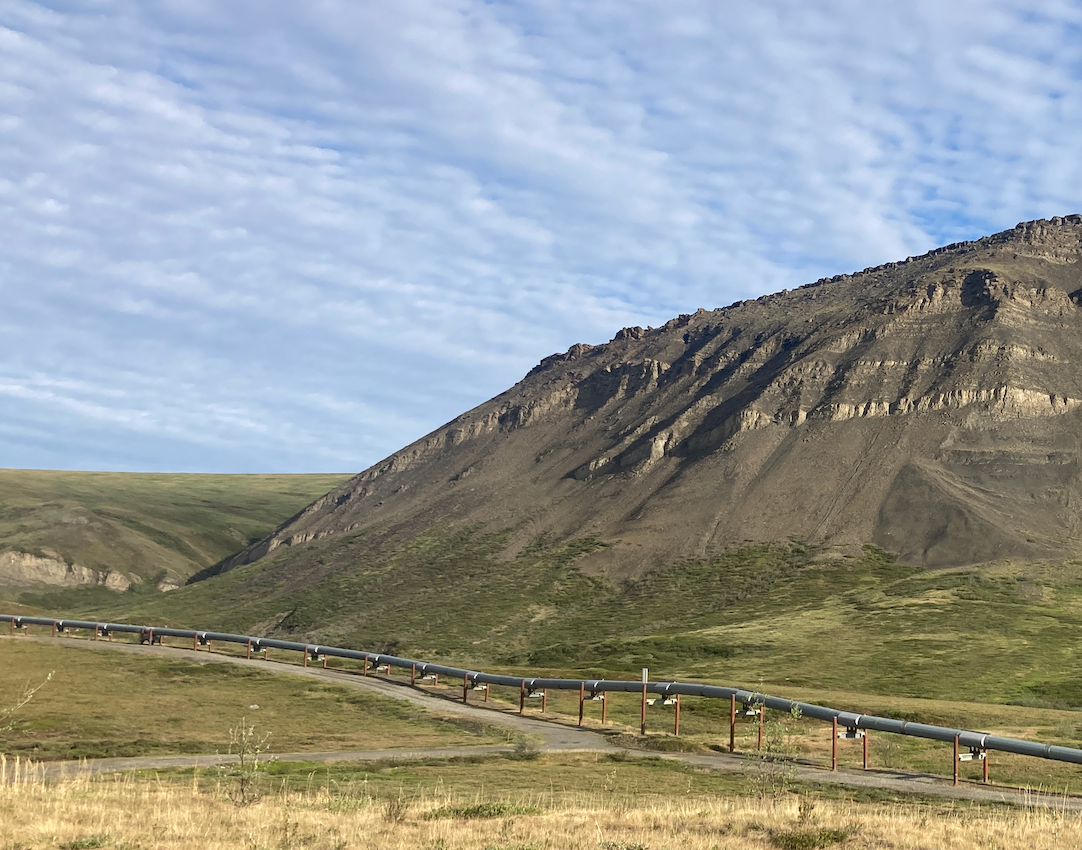
The trans-Alaska pipeline threads along the Dalton Highway in northern Alaska. (Nathaniel Herz/Northern Journal)

Is the value of the trans-Alaska pipeline system $2.8 billion, or $10.3 billion? Or is it $20 billion?

This week, a state review board will hold a formal hearing to determine which figure is the right one — with major financial implications for state government and the three municipalities along the pipeline system’s route.

At stake are hundreds of millions of dollars in property taxes, equal to 2% of the pipeline system’s value, that its oil company owners could owe each year to the state, the North Slope and Fairbanks boroughs and the city of Valdez.

The pipeline’s value had been set at $8 billion by a five-year settlement reached in 2016, which the parties extended through the end of 2025. But before that, the municipalities and the system’s owners spent a decade feuding over annual assessments in the courts — with appeals to the Alaska Supreme Court and one trial that lasted more than two months.

The pipeline system property taxes, in past years, have represented more than half of Valdez’s regular recurring revenue, according to city budget documents, as well as a significant contribution to the state’s yearly unrestricted revenues.

A decision setting the system’s value at the municipalities’ preferred value of at least $20.083 billion would result in pipeline owners paying at least $400 million a year in property taxes — compared to the $56 million that would be owed if the value is set at $2.8 billion, the value favored by the owners.

This week’s hearing, before the governor-appointed State Assessment Review Board, is unlikely to be the last word on the matter. While the board can consider arguments from all sides, its decisions are ultimately appealable to the courts.

The pipeline system’s owners include affiliates of ConocoPhillips, ExxonMobil and Hilcorp, the North Slope’s major oil-producing companies.

With the expiration of the settlement at the end of 2025, the state Department of Revenue’s assessment for 2026 — based on the estimated cost to replace the system, minus depreciation — actually boosted the pipeline system’s value from the settled figure, to $10.3 billion.

Discussions had been underway about a new settlement, Fairbanks finance officials wrote in a letter to borough policymakers in January. But no such deal has been announced.

The trans-Alaska pipeline passes through Fairbanks. (Nathaniel Herz/Northern Journal)

A spokesperson for Alyeska Pipeline Service Co., which operates the pipeline system for the owners, declined to comment on those companies’ behalf, citing the pending review by the state board. A spokesperson for the Department of Revenue also declined to comment.

Robin Brena, a longtime Alaska attorney who for decades has represented the municipalities in their fights over the pipeline system’s value, said he hopes that the parties can mediate their differences and strike a new agreement.

He stressed that historically, the pipeline system’s owners have argued for aggressively low valuations of the property that the courts have rejected. In 2006, the owners argued for an $850 million valuation, before the Alaska Supreme Court ultimately affirmed a lower court judge’s ruling that the value was actually $9.98 billion.

Brena’s clients, the municipalities, wrote in their recent appeal to the board that the state revenue department made a legal mistake in its $10.3 billion valuation by ignoring updated estimates from the municipalities that say replacing the pipeline system today would cost some $40 billion.

Instead, the municipalities say, the state relied on a court decision that set the 2009 replacement cost of the system at $19.1 billion, then made inflation adjustments to produced a 2026 replacement cost of $28.6 billion.

The courts and the state assessment board have preferred new cost estimates to inflation adjustments, the municipalities said, because they better capture updates in the pipeline system’s designs and allow mistakes to be corrected.

A second major error by the revenue department, the municipalities said, was that it used an inappropriate new technique to calculate depreciation: comparing the current flow of oil through the pipeline system, some 460,000 barrels a day, to its peak flow of 2 million barrels, which came in the late 1980s.

That depreciation technique, the municipalities argued, ignores legal precedent that says the calculation should account for the quantity of oil not just actively flowing from, but also available for future production at, Alaska’s big oil fields — a figure known as proven reserves.

A calculation based only on current production neglects the value contained in two huge new oil fields, Willow and Pikka, that are still under construction, according to Brena. Those fields are set to help boost the daily flow through the pipeline system to some 650,000 barrels at a new peak in 2034, according to state projections.

“The department’s calculation completely ignores proven reserves that are not in production,” Brena said.

The oil companies, meanwhile, say in their appeal that the pipeline system is a “depreciating asset” with a value that declines each year. The state, they say, is now proposing to assess a higher value for the pipeline than the $9.25 billion the Alaska Supreme Court affirmed for the 2009 tax year.

“It is fundamentally unreasonable to conclude that a pipeline that is now 17 years older — with 17 fewer years of proven reserves to transport and 17 years of additional depreciation — has an assessed value significantly greater than the value assessed in tax year 2009,” the oil companies wrote.

The companies also say that the state’s assessment fails to account for “operational and economic realities” of the pipeline system — including that the flow of oil is eventually projected to resume its longstanding decline after a “short-term spike.”

The revenue department, the companies said, also ignored the companies’ own “comprehensive” report on the pipeline system’s replacement cost that they shared for the 2026 tax year.

“The owners furnished the department with a significant volume of information relevant to the proper assessment of the subject property,” the companies said. “The department’s assessment ignores all of it in favor of reliance on a 17-year-old appraisal report that is outdated, unsupportable, and fundamentally flawed.”

The board’s hearing on the pipeline system’s value is set to begin Wednesday and finish by the end of the week. Decisions are expected within seven days afterward, according to the board’s support staff.

Nathaniel Herz welcomes tips at natherz@gmail.com or (907) 793-0312. This article was originally published in Northern Journal, a newsletter from Herz. Subscribe at this link.

Categories
Alaska News

Thank you for making a Night on the Steinway concert a success

The Foundation for the Chilkat Center for the Arts wishes to thank everyone who helped make “A Night on the Steinway” such a rousing success.  Thank you to the performers for sharing their talent.  Thank you to the cooks and lobby crew for creating a beautiful and delicious reception.  Thank you to Molly Dwyer and Michael Marks for the lights and sound. Thank you to Krystal Lloyd for the decorations, to Keith Giles for tuning the pianos, and to Deina Davis at the Aspen Hotel for a room for Keith. Thank you, Annette Smith, for everything you do.  And a special thank you to Sam McPhetres for videotaping the performance, which is already on YouTube.  I’ve watched the video, and it’s great!  If you are not one of the lucky people who saw the show, check it out.  If you are one of those lucky people, I want you to know, Haines, that you are a wonderful audience.

Lorrie Dudzik, Foundation for the Chilkat Center for the Arts President

The post Thank you for making a Night on the Steinway concert a success appeared first on Chilkat Valley News.

Categories
Alaska News

Thank you for help with the Haines Health Fair

Thank you to all who attended and participated in the Haines Health Fair on April 25. This event was made possible by a grant from the Chilkat Valley Community Foundation, an Affiliate of The Alaska Community Foundation. Hospice of Haines would particularly like to thank Alaska Health Fair and those who traveled to Haines to help us host the affordable blood screenings and health education including Wendy Carpenter, Denise Schmidt, Kate Slotnick, and Wendy Pangburn.  We would also like to thank our local organizations and businesses that participated.  Thank you to the volunteers who helped with the blood draw.  We appreciate your expertise.  Thank you to the many volunteers who assisted with setup, registration, health education, vision screening, blood pressure checks, health exits, snacks and cleanup.  We are grateful for your time and dedication to your community.  And, a special thanks to Susan Weerasinghe  for co-chairing this event.  

Much thanks,

Shannon McPhetres, Hospice of Haines director and volunteer coordinator

The post Thank you for help with the Haines Health Fair appeared first on Chilkat Valley News.

Categories
Alaska News

After 10-year truce, a major tax dispute looms over the trans-Alaska pipeline system

The trans-Alaska pipeline threads along the Dalton Highway in northern Alaska. (Nathaniel Herz/Northern Journal)

Is the value of the trans-Alaska pipeline system $2.8 billion, or $10.3 billion? Or is it $20 billion?

This week, a state review board will hold a formal hearing to determine which figure is the right one — with major financial implications for state government and the three municipalities along the pipeline system’s route.

At stake are hundreds of millions of dollars in property taxes, equal to 2% of the pipeline system’s value, that its oil company owners could owe each year to the state, the North Slope and Fairbanks boroughs and the city of Valdez.

The pipeline’s value had been set at $8 billion by a five-year settlement reached in 2016, which the parties extended through the end of 2025. But before that, the municipalities and the system’s owners spent a decade feuding over annual assessments in the courts — with appeals to the Alaska Supreme Court and one trial that lasted more than two months.

The pipeline system property taxes, in past years, have represented more than half of Valdez’s regular recurring revenue, according to city budget documents, as well as a significant contribution to the state’s yearly unrestricted revenues.

A decision setting the system’s value at the municipalities’ preferred value of at least $20.083 billion would result in pipeline owners paying at least $400 million a year in property taxes — compared to the $56 million that would be owed if the value is set at $2.8 billion, the value favored by the owners.

This week’s hearing, before the governor-appointed State Assessment Review Board, is unlikely to be the last word on the matter. While the board can consider arguments from all sides, its decisions are ultimately appealable to the courts.

The pipeline system’s owners include affiliates of ConocoPhillips, ExxonMobil and Hilcorp, the North Slope’s major oil-producing companies.

With the expiration of the settlement at the end of 2025, the state Department of Revenue’s assessment for 2026 — based on the estimated cost to replace the system, minus depreciation — actually boosted the pipeline system’s value from the settled figure, to $10.3 billion.

Discussions had been underway about a new settlement, Fairbanks finance officials wrote in a letter to borough policymakers in January. But no such deal has been announced.
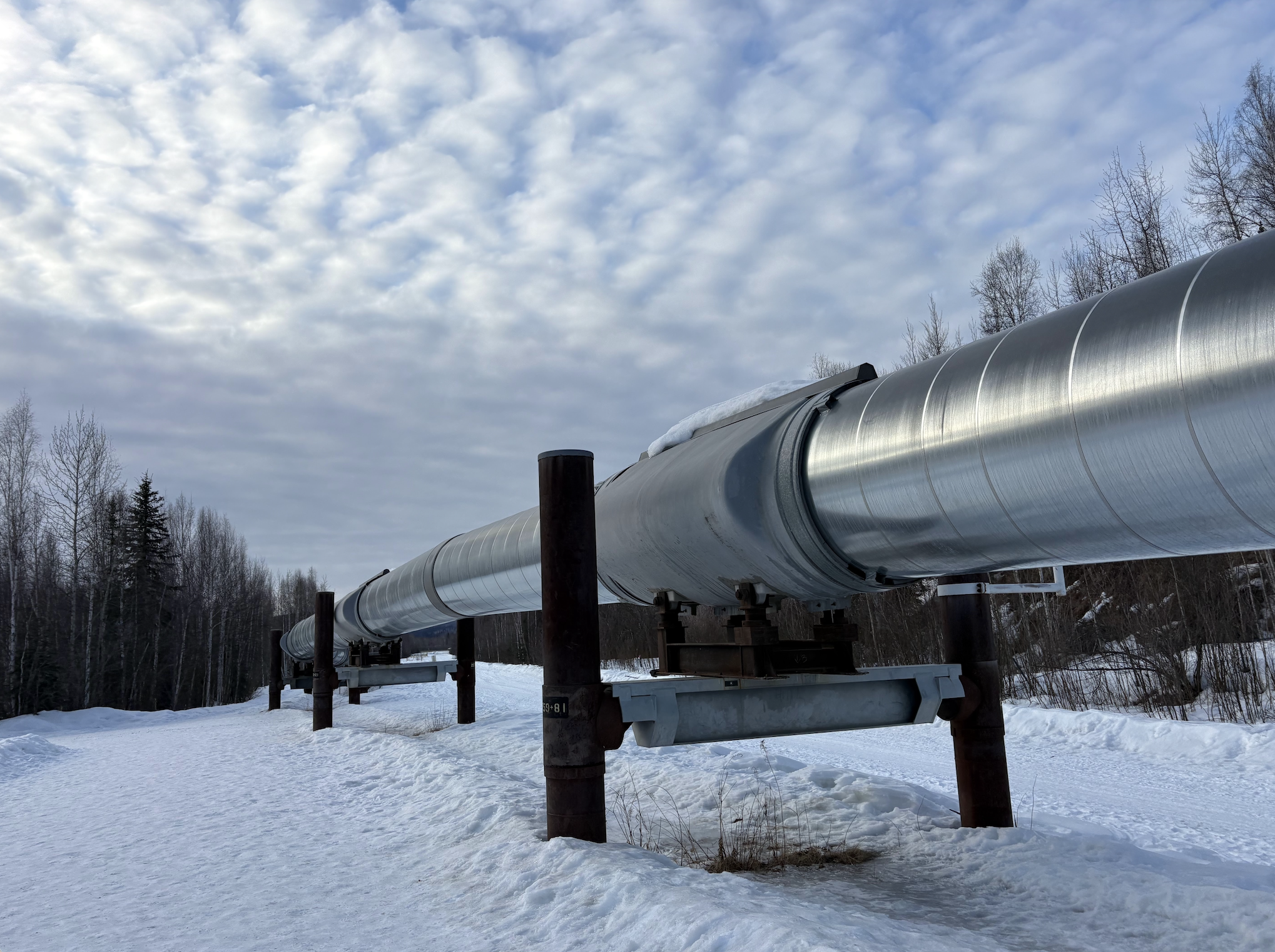
The trans-Alaska pipeline passes through Fairbanks. (Nathaniel Herz/Northern Journal)

A spokesperson for Alyeska Pipeline Service Co., which operates the pipeline system for the owners, declined to comment on those companies’ behalf, citing the pending review by the state board. A spokesperson for the Department of Revenue also declined to comment.

Robin Brena, a longtime Alaska attorney who for decades has represented the municipalities in their fights over the pipeline system’s value, said he hopes that the parties can mediate their differences and strike a new agreement.

He stressed that historically, the pipeline system’s owners have argued for aggressively low valuations of the property that the courts have rejected. In 2006, the owners argued for an $850 million valuation, before the Alaska Supreme Court ultimately affirmed a lower court judge’s ruling that the value was actually $9.98 billion.

Brena’s clients, the municipalities, wrote in their recent appeal to the board that the state revenue department made a legal mistake in its $10.3 billion valuation by ignoring updated estimates from the municipalities that say replacing the pipeline system today would cost some $40 billion.

Instead, the municipalities say, the state relied on a court decision that set the 2009 replacement cost of the system at $19.1 billion, then made inflation adjustments to produced a 2026 replacement cost of $28.6 billion.

The courts and the state assessment board have preferred new cost estimates to inflation adjustments, the municipalities said, because they better capture updates in the pipeline system’s designs and allow mistakes to be corrected.

A second major error by the revenue department, the municipalities said, was that it used an inappropriate new technique to calculate depreciation: comparing the current flow of oil through the pipeline system, some 460,000 barrels a day, to its peak flow of 2 million barrels, which came in the late 1980s.

That depreciation technique, the municipalities argued, ignores legal precedent that says the calculation should account for the quantity of oil not just actively flowing from, but also available for future production at, Alaska’s big oil fields — a figure known as proven reserves.

A calculation based only on current production neglects the value contained in two huge new oil fields, Willow and Pikka, that are still under construction, according to Brena. Those fields are set to help boost the daily flow through the pipeline system to some 650,000 barrels at a new peak in 2034, according to state projections.

“The department’s calculation completely ignores proven reserves that are not in production,” Brena said.

The oil companies, meanwhile, say in their appeal that the pipeline system is a “depreciating asset” with a value that declines each year. The state, they say, is now proposing to assess a higher value for the pipeline than the $9.25 billion the Alaska Supreme Court affirmed for the 2009 tax year.

“It is fundamentally unreasonable to conclude that a pipeline that is now 17 years older — with 17 fewer years of proven reserves to transport and 17 years of additional depreciation — has an assessed value significantly greater than the value assessed in tax year 2009,” the oil companies wrote.

The companies also say that the state’s assessment fails to account for “operational and economic realities” of the pipeline system — including that the flow of oil is eventually projected to resume its longstanding decline after a “short-term spike.”

The revenue department, the companies said, also ignored the companies’ own “comprehensive” report on the pipeline system’s replacement cost that they shared for the 2026 tax year.

“The owners furnished the department with a significant volume of information relevant to the proper assessment of the subject property,” the companies said. “The department’s assessment ignores all of it in favor of reliance on a 17-year-old appraisal report that is outdated, unsupportable, and fundamentally flawed.”

The board’s hearing on the pipeline system’s value is set to begin Wednesday and finish by the end of the week. Decisions are expected within seven days afterward, according to the board’s support staff.

Nathaniel Herz welcomes tips at natherz@gmail.com or (907) 793-0312. This article was originally published in Northern Journal, a newsletter from Herz. Subscribe at this link.


Categories
Alaska News Featured Juneau News juneau Juneau Local Juneau Local Ketchikan Local News Feeds Sitka Local

Alaska House passes bill aimed at stabilizing budgets for school districts

By: Corinne Smith, Alaska Beacon

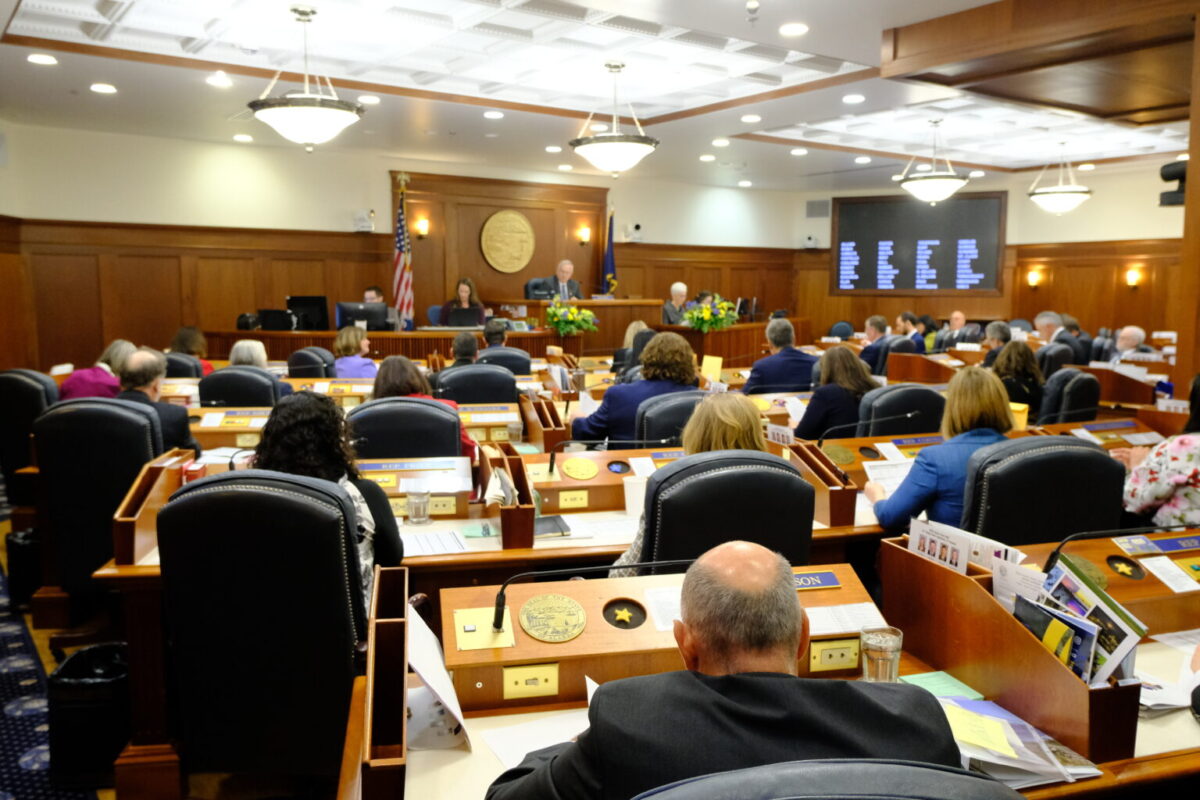
Members of the Alaska House of Representatives convene on the first day of the second session of the 34th Alaska State Legislature on Jan. 20, 2026 (Photo by Corinne Smith/Alaska Beacon)


Lawmakers in the Alaska House passed a bill that aims to stabilize budgets for Alaska school districts by redefining how they calculate their student counts. The student count makes up the base of the state’s education funding formula. 

Lawmakers passed House Bill 261 by a 31 to 9 vote, with bipartisan support, on Tuesday. Under the new calculation of the student count, the bill would provide an additional $143 million in state funding to school districts next year. 

But with competing education funding and policy proposals in the Legislature — and just seven days left in the legislative session — the bill heads to the Alaska Senate for consideration and its future is uncertain.

Rep. Andi Story, D-Juneau, speaks on the House floor on May 11, 2026. (Photo by Corinne Smith/Alaska Beacon)

The legislation, sponsored by Rep. Andi Story, D-Juneau, would allow school districts to make their student counts and budget estimates earlier in the year. Currently, schools make an estimated student count in October, and revise it in the spring. Under the proposed legislation, districts would use the previous three-year average of their student count — or the previous year’s count, if it is more than 5% higher. 

Story described the change as a way for school districts to get off a budgeting “rollercoaster” and allow districts to have firmer budget estimates, including more certainty in offering contracts to teachers and staff in the spring.  

“This is such a policy change that would so help Alaska stabilize education and get more relief and more certainty, and less stress for our families,” she said Tuesday, after the vote. 

Alaska school districts are grappling with major budget deficits and rising costs, which have them planning cuts and teacher and staff layoffs across the state — at least 11 schools are slated for closure — amid years of ongoing debates among legislators and Gov. Mike Dunleavy on how much the state should fund education. 

School districts currently estimate their student counts in October and draft budget estimates in the spring, and sometimes up to the first day of school in the fall. But with declining enrollment and other changes among student populations, those budget estimates can change, leaving districts uncertain about what staff or programs will be offered in the fall — as well as how much state funding they will receive. Under the new legislation, districts would instead have a solid student count number to budget off of in the year ahead. 

Additionally, the bill would change how districts count students who receive intensive special education services. Districts could use the previous year’s count, or the current year’s count in October or in February. 

“And what’s great about smoothing is it can help them plan for their educational programs when they are in a climate of declining enrollment,” Story said. “Other states are doing this, and they don’t have the volatility that we do. Because our process, our funding process timeline, is messed up, it really is.”

Alaska has seen a steady decline in enrollment in public schools in recent years, with more students and families opting to enroll in homeschool programs and private schools, or leaving the state altogether. When student numbers decline sharply, the state has a “hold harmless” provision which protects districts from funding dropping dramatically, and phases funding down over three years. Proponents of the legislation say the more predictable student counts and budgeting will help districts with long term stability, their ability to retain teachers and attract new students.

The adjusted student count would have varying effects on school districts statewide — a state fiscal analysis projects the Anchorage School District would receive $31 million more next year. Sitka would see $2 million more, and Yukon-Koyukuk would see $3.8 million in additional funding. But several districts would see less funding under the new calculation, like the state-run boarding school Mt. Edgecumbe High School. 

Members of the Alaska House debated and passed an amendment to the bill which would also change the calculation for local municipalities’ contribution to school districts in the state’s complex funding formula, known as the local contribution. 

Rep. Justin Ruffridge, R-Soldotna, sponsored the amendment that would cap municipalities’ contribution at a fixed increase of 2% annually, which would relieve boroughs seeing rapidly rising property assessments — those assessments inform how much they contribute to their local schools. Ruffridge said large boroughs like the Kenai Peninsula, Matanuska-Susitna and Anchorage, which are seeing rising property values, are shouldering education funding that should be placed on the state. The adjustment is estimated to cost the state $30 million next year.

Rep. Justin Ruffridge, R-Soldotna, speaks on the House floor on May 11, 2026. (Photo by Corinne Smith/Alaska Beacon)

“What you’re seeing in a lot of districts with high increases to property assessment values is their required local contribution is going up and up,” Ruffridge said in an interview on Wednesday. “As a result, they’re being required to pay a significantly higher portion, so to the state it looks like the state funding to schools is going down. That’s what it looks like. And on the municipal side they’re being asked to pay more and more and more.”

The amendment passed by a 24 to 16 vote, with Story among those opposing. After the vote she called it a “significant change” and said she had concerns about capping funding for education. 

The prospects of the bill are uncertain. Sen. Löki Tobin, D-Anchorage, who chairs the Senate Education committee said Tuesday the policy changes will need to be vetted by the Senate with just days left in the session.

Sen. Löki Tobin, D-Anchorage, speaks in support of a new state pension plan on Apr. 28, 2026. (Photo by Corinne Smith/Alaska Beacon)

“Bringing everybody along while we are also trying to deal with property tax bills and sales tax proposals and a Rural Health Transformation Fund and all these different healthcare compacts, along with the omnibus crime bill, and of course, the budgets, it might just be too much for us to take that large of a bite,” Tobin said. “But I do believe that components of House Bill 261 will end up in the final package.”

“I’m not trying to be a future teller by saying what is and is not going to continue to be considered by this body,” she added, and said that it’s likely the policy changes will be taken up by the Task Force on Education Funding. “This could be a part of that overall package you see introduced in the 35th Legislature.”

The draft bill redefining districts’ student counts would cost an estimated $113 million, plus additional provisions, for a total of roughly $143 million. 

Meanwhile, the Senate is in the process of considering another “mini-bus” education bill, also originally authored by Story, which would fund an additional $82 million for schools, including targeted funding for transportation, energy relief, reading instruction and career and technical education programs. 

A draft budget passed by the Senate includes up to $100 million in one-time funding for schools, if oil prices remain high. The House drafted a budget with nearly $158 million in one-time education funding — the two proposals are currently being negotiated and compiled by a conference committee of three senators and three representatives over the next few days.

The bill is subject to a reconsideration vote on Wednesday at the request of House Minority Leader Rep. DeLena Johnson, R-Palmer, which delays the bill’s transmittal to the Senate.

Categories
Alaska News

Alaska House passes bill aimed at stabilizing budgets for school districts

Members of the Alaska House of Representatives convene on the first day of the second session of the 34th Alaska State Legislature on Jan. 20, 2026 (Photo by Corinne Smith/Alaska Beacon)

Members of the Alaska House of Representatives convene on the first day of the second session of the 34th Alaska State Legislature on Jan. 20, 2026 (Photo by Corinne Smith/Alaska Beacon)

Lawmakers in the Alaska House passed a bill that aims to stabilize budgets for Alaska school districts by redefining how they calculate their student counts. The student count makes up the base of the state’s education funding formula. 

Lawmakers passed House Bill 261 by a 31 to 9 vote, with bipartisan support, on Tuesday. Under the new calculation of the student count, the bill would provide an additional $143 million in state funding to school districts next year. 

But with competing education funding and policy proposals in the Legislature — and just seven days left in the legislative session — the bill heads to the Alaska Senate for consideration and its future is uncertain.

Rep. Andi Story, D-Juneau, speaks on the House floor on May 11, 2026. (Photo by Corinne Smith/Alaska Beacon)

The legislation, sponsored by Rep. Andi Story, D-Juneau, would allow school districts to make their student counts and budget estimates earlier in the year. Currently, schools make an estimated student count in October, and revise it in the spring. Under the proposed legislation, districts would use the previous three-year average of their student count — or the previous year’s count, if it is more than 5% higher. 

Story described the change as a way for school districts to get off a budgeting “rollercoaster” and allow districts to have firmer budget estimates, including more certainty in offering contracts to teachers and staff in the spring.  

“This is such a policy change that would so help Alaska stabilize education and get more relief and more certainty, and less stress for our families,” she said Tuesday, after the vote. 

Alaska school districts are grappling with major budget deficits and rising costs, which have them planning cuts and teacher and staff layoffs across the state — at least 11 schools are slated for closure — amid years of ongoing debates among legislators and Gov. Mike Dunleavy on how much the state should fund education. 

School districts currently estimate their student counts in October and draft budget estimates in the spring, and sometimes up to the first day of school in the fall. But with declining enrollment and other changes among student populations, those budget estimates can change, leaving districts uncertain about what staff or programs will be offered in the fall — as well as how much state funding they will receive. Under the new legislation, districts would instead have a solid student count number to budget off of in the year ahead. 

Additionally, the bill would change how districts count students who receive intensive special education services. Districts could use the previous year’s count, or the current year’s count in October or in February. 

“And what’s great about smoothing is it can help them plan for their educational programs when they are in a climate of declining enrollment,” Story said. “Other states are doing this, and they don’t have the volatility that we do. Because our process, our funding process timeline, is messed up, it really is.”

Alaska has seen a steady decline in enrollment in public schools in recent years, with more students and families opting to enroll in homeschool programs and private schools, or leaving the state altogether. When student numbers decline sharply, the state has a “hold harmless” provision which protects districts from funding dropping dramatically, and phases funding down over three years. Proponents of the legislation say the more predictable student counts and budgeting will help districts with long term stability, their ability to retain teachers and attract new students.

The adjusted student count would have varying effects on school districts statewide — a state fiscal analysis projects the Anchorage School District would receive $31 million more next year. Sitka would see $2 million more, and Yukon-Koyukuk would see $3.8 million in additional funding. But several districts would see less funding under the new calculation, like the state-run boarding school Mt. Edgecumbe High School. 

Members of the Alaska House debated and passed an amendment to the bill which would also change the calculation for local municipalities’ contribution to school districts in the state’s complex funding formula, known as the local contribution. 

Rep. Justin Ruffridge, R-Soldotna, sponsored the amendment that would cap municipalities’ contribution at a fixed increase of 2% annually, which would relieve boroughs seeing rapidly rising property assessments — those assessments inform how much they contribute to their local schools. Ruffridge said large boroughs like the Kenai Peninsula, Matanuska-Susitna and Anchorage, which are seeing rising property values, are shouldering education funding that should be placed on the state. The adjustment is estimated to cost the state $30 million next year.

Rep. Justin Ruffridge, R-Soldotna, speaks on the House floor on May 11, 2026. (Photo by Corinne Smith/Alaska Beacon)

“What you’re seeing in a lot of districts with high increases to property assessment values is their required local contribution is going up and up,” Ruffridge said in an interview on Wednesday. “As a result, they’re being required to pay a significantly higher portion, so to the state it looks like the state funding to schools is going down. That’s what it looks like. And on the municipal side they’re being asked to pay more and more and more.”

The amendment passed by a 24 to 16 vote, with Story among those opposing. After the vote she called it a “significant change” and said she had concerns about capping funding for education. 

The prospects of the bill are uncertain. Sen. Löki Tobin, D-Anchorage, who chairs the Senate Education committee said Tuesday the policy changes will need to be vetted by the Senate with just days left in the session.

Sen. Löki Tobin, D-Anchorage, speaks in support of a new state pension plan on Apr. 28, 2026. (Photo by Corinne Smith/Alaska Beacon)

“Bringing everybody along while we are also trying to deal with property tax bills and sales tax proposals and a Rural Health Transformation Fund and all these different healthcare compacts, along with the omnibus crime bill, and of course, the budgets, it might just be too much for us to take that large of a bite,” Tobin said. “But I do believe that components of House Bill 261 will end up in the final package.”

“I’m not trying to be a future teller by saying what is and is not going to continue to be considered by this body,” she added, and said that it’s likely the policy changes will be taken up by the Task Force on Education Funding. “This could be a part of that overall package you see introduced in the 35th Legislature.”

The draft bill redefining districts’ student counts would cost an estimated $113 million, plus additional provisions, for a total of roughly $143 million. 

Meanwhile, the Senate is in the process of considering another “mini-bus” education bill, also originally authored by Story, which would fund an additional $82 million for schools, including targeted funding for transportation, energy relief, reading instruction and career and technical education programs. 

A draft budget passed by the Senate includes up to $100 million in one-time funding for schools, if oil prices remain high. The House drafted a budget with nearly $158 million in one-time education funding — the two proposals are currently being negotiated and compiled by a conference committee of three senators and three representatives over the next few days.

The bill is subject to a reconsideration vote on Wednesday at the request of House Minority Leader Rep. DeLena Johnson, R-Palmer, which delays the bill’s transmittal to the Senate.

SUBSCRIBE: GET THE MORNING HEADLINES DELIVERED TO YOUR INBOX.

Categories
Alaska News

Gulf of Alaska king salmon are not endangered species, federal government concludes

A king salmon. (Photo by Ryan Hagerty/U.S. Fish and Wildlife Service)

A king salmon. (Photo by Ryan Hagerty/U.S. Fish and Wildlife Service)

The federal government has rejected a request to list three populations of Gulf of Alaska king salmon as endangered, according to a public notice scheduled for publication on Thursday.

The listing was requested in 2024 by a Washington state conservation group amid long-term declines in king salmon numbers in Alaska. 

If the listing had been approved, it could have resulted in new limits on development in Alaska as well as major restrictions on commercial, sport and personal-use fishing in the state.

State officials opposed the listing, and in a written statement Wednesday morning, Alaska Department of Fish and Game Commissioner Doug Vincent-Lang said the decision means Alaska is managing its fish stocks well.

“This decision by NMFS Assistant Administrator Eugenio Piñeiro Soler indicates strong support for Alaska’s management of natural resources,” he said. “Alaska became a state, in large part, to hold authority over our own natural resources such as fisheries. Since then, the sound science and fisheries management by our department has been recognized globally.”

The Wild Fish Conservancy, a conservation group based in Washington state, had requested the listing in January 2024, citing climate change and competition from hatchery-raised fish. 

A preliminary finding by the National Marine Fisheries Service in May 2024 concluded that the petition “presents substantial scientific or commercial information indicating that the petitioned action may be warranted.”

At the time, the agency sought additional information, but it made no final decision before the Biden administration ended and the Trump administration began.

In May 2025, the conservancy filed suit against the federal government, stating that officials had illegally delayed their decision on the listing.

Both sides settled the suit in March this year, agreeing that the federal government would decide the issue by May 13. 

Emma Helverson, Executive Director of Wild Fish Conservancy, said by email, “The scale and geographic extent of the crisis facing Chinook across the Gulf of Alaska make this conclusion deserving of careful scrutiny. We are reviewing both the agency’s scientific conclusions and the legal framework underlying this decision before determining next steps.”

SUBSCRIBE: GET THE MORNING HEADLINES DELIVERED TO YOUR INBOX.

Categories
Alaska News

Honoring ANCSA’s vision means protecting Alaska Native Corporations as pillars of self-determination

Donlin mine camp, June 23, 2025. (photo by Yereth Rosen/Alaska Beacon)

More than a half-century ago, Alaska Native leaders stood at a crossroads as they sought to reconcile two powerful forces – embracing Indigenous self-determination in a rapidly modernizing world and protecting our traditional way of life. 

Our early leaders had to bridge our perpetual connection to the lands and waters that sustained our people for centuries with the realities of a cash economy, recognizing that responsible resource and business development was the only way to safeguard our self-determination for future generations.

This dual need led to the Alaska Native Claims Settlement Act of 1971, which vested ownership of the ancestral lands we retained through the settlement in 12 regional and over 200 village corporations, known as ANCs. However, ANCSA was never simply about settling land claims — it was a promise that we as Alaska Native people could protect our way of life while also building new institutions, some of which would include responsible resource development, to propel us into the world of modern capitalism.

More than 50 years later, ANCs have embraced self-determination through economic development for the benefit of their shareholders, Alaska and the entire nation. Today, honoring ANCSA’s vision means both recognizing the potential of our lands — specifically through projects like Donlin Gold — as well as embracing ANCs’ capabilities as experienced federal contractors.

Yet, despite decades of ANCs operating successfully at the top of their fields — while balancing being pillars of Alaska’s economy and stewards of our ancestral homelands — both of these avenues are now facing intense scrutiny. 

For Alaska Native communities, the successful development of Donlin Gold into one of the world’s largest open-pit gold mines represents a historic milestone, injecting hundreds of millions of dollars into village corporations across the state to fund dividends, scholarships and essential services. 

The Yukon-Kuskokwim region, specifically, will benefit from thousands of long-term, high-paying jobs and the infrastructure necessary to finally lower the staggering cost of energy and freight for local families.

Ultimately, this project has the potential to trigger significant revenue sharing, serving as a modern testament to an economic model that has channeled over $2 billion to Alaska Native communities since its inception.

Rightfully so, many have pointed out that potential is not enough, and proper stewardship of the land is equally important as the glitter of gold.

To earn trust, developers must prove that the economic security that Donlin Gold provides will not come at the expense of our environment. The salmon must still run, the water must remain pure and future generations must inherit land that remains worth stewarding.

Achieving this balance requires exhaustive environmental review and continuous integration of Indigenous knowledge. The record shows that the project’s landowners — the Alaska Native people themselves — are meeting that bar. Decades of studies and oversight show they have not taken this responsibility lightly. If Donlin Gold moves forward, it will do so under the watchful eye of those who carry generations of knowledge about these waters.

On the federal level, we must also defend the tools that allow ANCs to compete in the federal marketplace. We need to remain vigilant against efforts to dismantle the U.S. Small Business Administration’s 8(a) Business Development program, a cornerstone of Alaska Native economic self-determination that is currently facing misguided attacks by policymakers in Washington.

In 1992, Congress amended ANCSA to include ANCs in the 8(a) Small Business Act to advance Alaska Native self-determination. Far from being a mere “preference,” 8(a) is an essential efficiency tool that serves as an economic development tool for Alaska Native communities, while at the same time enabling the federal government to rapidly deploy mission-critical expertise at reduced cost to U.S. taxpayers.

To dismantle or disrupt this program is to intentionally create vulnerabilities in national security, public health, and the economic stability of families from Alaska to the Lower 48. It also threatens the more than 51,000 jobs that ANCs and ANC contractors create in all 50 states, including 23,740 jobs in Alaska, according to our research with the McKinley Group.

The success of this model proves that communal growth and corporate responsibility can go hand-in-hand — just as we have proven with stewardship and responsible resource development. By maintaining these protections, we ensure that the promise of ANCSA’s settlement remains a living reality for the next generation of Alaska Native leaders.

Emil Notti, one of the architects of the settlement, once observed that one of ANCSA’s key goals was “to get Native people involved in the economic system so that as Alaska grew, they wouldn’t be left out.”

That vision speaks to the foresight of those leaders, sustaining our traditions while opening doors to opportunity. Now, we must not allow anyone — whether in Alaska or Washington, D.C. — to close those doors by threatening our access to self-determination.

SUBSCRIBE: GET THE MORNING HEADLINES DELIVERED TO YOUR INBOX.

Categories
Alaska News

Air Force One, with Trump aboard, makes brief stop in Anchorage en route to Asia

A flag-bearing honor guard stands silhouetted against Air Force One after it landed on Sept. 11, 2023, at Joint Base Elemendorf-Richardson. President Joe Biden flew from Asia to the Anchorage base and delivered a speech memorializing the terror attacks that occurred 22 years earlier, killing nearly 3,000 Americans. (Photo by Yereth Rosen/Alaska Beacon)

A flag-bearing honor guard stands silhouetted against Air Force One after it landed on Sept. 11, 2023, at Joint Base Elemendorf-Richardson. President Donald Trump, traveling aboard Air Force One, stopped at Ted Stevens Anchorage International Airport on Tuesday evening and is scheduled to visit there again on Friday morning. (Photo by Yereth Rosen/Alaska Beacon)

President Donald Trump, traveling aboard Air Force One on a trip to China, made a brief refueling stop at Ted Stevens Anchorage International Airport on Tuesday evening. 

Another stop, expected to last no more than three and a half hours, is planned for Friday morning starting at 5 a.m.

According to reporters traveling with the president, NVIDIA CEO Jensen Huang boarded Air Force One in Anchorage after Trump’s flight landed at 5:15 p.m. Tuesday evening. 

Also traveling with Trump were Elon Musk and conservative commentator Sean Hannity.

The flight departed at 6:48 p.m. without the president disembarking, as he has on some prior stopovers.

Neither Gov. Mike Dunleavy nor members of his administration met the president on this stop.

The flight landed in China about 3:50 a.m. Alaska time.  

Trump is expected to talk with Chinese President Xi Jinping about the Iran war, trade and U.S. arms sales to Taiwan.

SUPPORT: YOU MAKE OUR WORK POSSIBLE

Categories
Alaska News

More Alaska crude flows to Asia as Strait of Hormuz stays shut

The Valdez Marine Terminal is the endpoint of the trans-Alaska pipeline — the point at which Alaska North Slope crude is loaded on to tankers for transport to markets on the U.S. West Coast and Asia. (Photo by Nathaniel Herz/Northern Journal)

The Maritime Glory tanker arrived empty last week in Valdez, the mountain-flanked port town where the trans-Alaska pipeline comes to an end.

A day later, it departed, laden down with a cargo of some 700,000 barrels of Alaska North Slope crude worth, at last week’s prices, some $85 million — making it the second oil tanker to depart Valdez for Asia in less than a month.

The two cargoes represent only a tiny fraction of the crude produced by Alaska’s oil industry — about three days’ worth. And Valdez has sent far more Alaska oil to Asia in past years, including during the coronavirus pandemic in 2020.

But the two recent shipments do amount to a noticeable uptick that could be linked to the market disruptions caused by the war in Iran. Just two tankers brought Alaska oil to Asia in all of 2025, according to data provided by S&P Global Energy, a commodities information service.

The shipments come in the context not only of war, but also a market for Alaska crude that may be shifting more broadly amid refinery closures in California, where much of the oil shipped from Valdez is sent. Those shifts could have ramifications for the industry beyond any potential re-opening of the Strait of Hormuz, experts say.

But for now, refineries in Asia — which have traditionally depended on oil sources now locked up inside the Strait of Hormuz — need to find replacements for that crude, said Aaron Brady, S&P’s executive director for oil markets.

“It wouldn’t be surprising if the most recent (Alaska) shipments are the leading edge of a pickup in cargoes to Asia over the next few months, since Asian refiners have historically been so dependent on Middle Eastern crude,” Brady wrote in an email.

Oil companies are notoriously secretive about where and to whom they sell their crude.

But an array of public and private sources — which leverage data from ships and satellites — make it possible for analysts like Brady, as well as hobbyists, to keep tabs on where the oil is flowing.

Apps like MarineTraffic have become hugely popular as the Strait of Hormuz closure has wreaked global economic havoc, with users following the movements of individual ships as signals of the war’s direction. Comedian Steven Colbert calls Marine Traffic “the best app of all time.”

Ship tracking data show that in mid-April, the Washington was the first tanker to leave Valdez for Asia since the start of the war, with the 760,000-barrel vessel delivering a cargo of crude to the South Korea port of Daesan.

Historically, the Washington was owned by a subsidiary of North Slope oil producer ExxonMobil, before the tanker was sold to another company and chartered back to the ExxonMobil subsidiary in 2018. It’s now managed by a third company, Florida-based Fairwater, a representative of which declined to comment when reached by phone last week.

The Maritime Glory, meanwhile, is now headed to a port in Indonesia, according to navigation data it transmitted that’s available on ship-tracking apps.

That tanker’s registered owner is a company based in the Pacific Ocean nation of the Marshall Islands with the unrevealing name of GMF SNK No.10 S.A. (The “SNK” may be a reference to the vessel’s operator, a South Korean business called Sinokor Petrochemical.)

The tanker’s oil spill prevention permitting is also being handled by the same company, Fairwater, that manages the permitting for the Washington, the vessel historically used to move ExxonMobil’s Alaska oil, according to public documents.

An ExxonMobil spokesperson declined to comment when asked about the Maritime Glory’s movements.

A market in flux

Other tankers that carry Alaska crude have, since the start of the war, stuck to their usual refinery destinations along the U.S. West Coast — Los Angeles, Washington state, the San Francisco Bay Area.

Those tankers include a fleet of five vessels owned by a ConocoPhillips subsidiary, while another fleet of four vessels works primarily as chartered tankers for another large Alaska oil producer, Hilcorp.

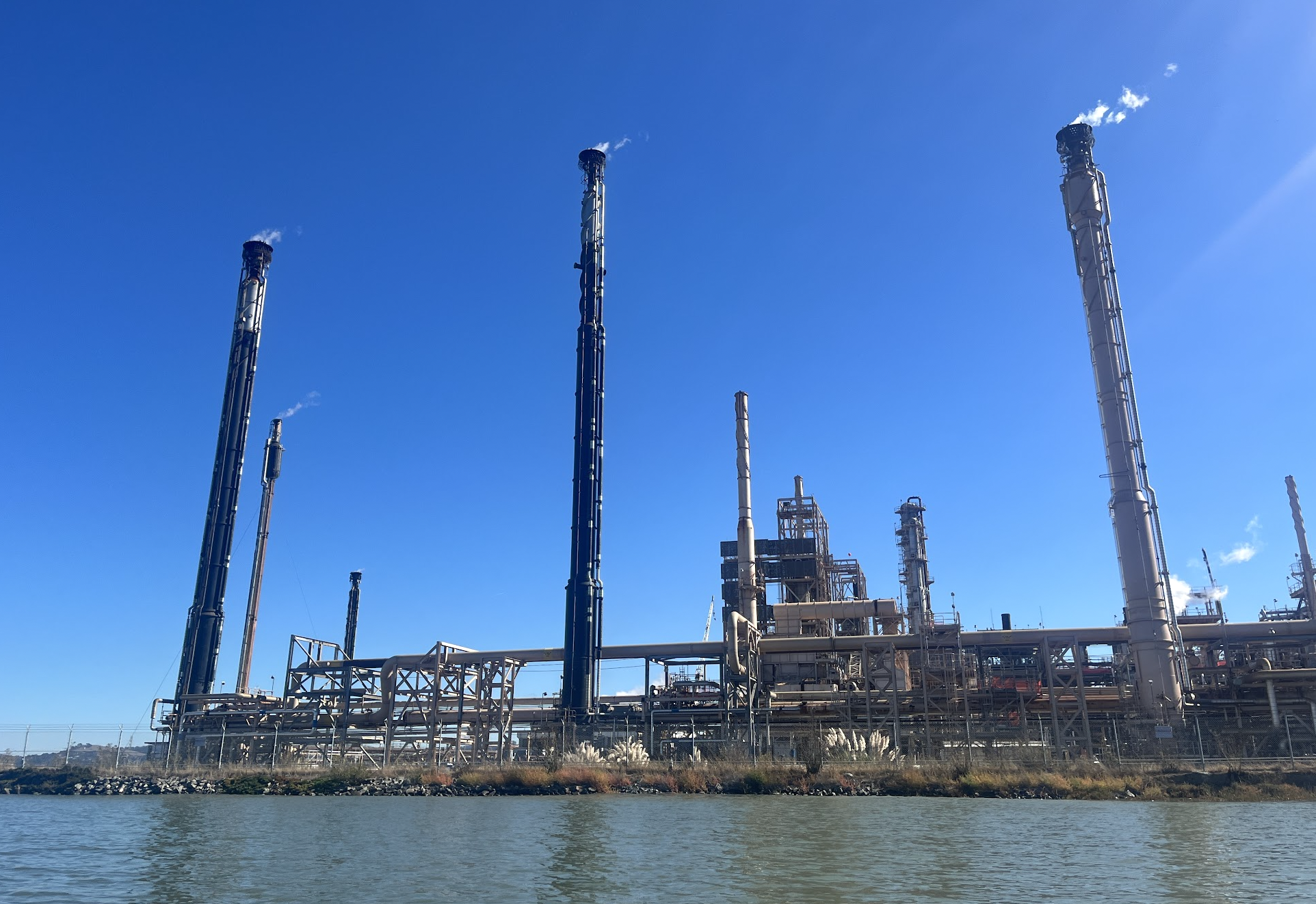
The Chevron refinery in Richmond, California, is one destination for Alaska crude. (Photo by Nathaniel Herz/Northern Journal)

While Asian refineries could be increasingly looking to replace lost Middle East oil with Alaska crude — and have already turned to supplies from the Gulf Coast and Canada — Alaska producers may also be seeing higher demand from those U.S. West Coast refineries, according to Brady, with S&P.

That’s because California refiners, Brady said, also imported “a decent amount of Middle Eastern crude.”

“So, they will also be competing to keep these (Alaska) cargos in the domestic market,” Brady added.

The Wall Street Journal reported Monday that West Coast states have also been importing refined fuels since mid-March from the U.S. Gulf Coast, through the Panama Canal. Alaska, which doesn’t have enough refinery capacity to produce all the fuel it uses, has even received some of the Gulf Coast shipments, too, the Journal said.

The rising Asian and West Coast demand for Alaska crude has been reflected, just like other types of oil, in the skyrocketing price since the start of the war: Last week, it reached $123 a barrel — twice as high as the price it commanded in January.

But the longer-term future for demand is less certain, according to Brad Keithley, a retired Alaska oil and gas attorney who now closely follows Valdez crude shipments and developments at West Coast refineries.

Two of the nine gasoline-producing refineries in California — a state that receives as much as half of Alaska’s oil shipments, according to public data — have closed in the past few months. Keithley said that has potential effects on the market for Alaska crude.

The question of what those effects could be is even more relevant, he added, given that Alaska’s crude production is expected to increase substantially over the next decade, as two enormous new oil fields, Pikka and Willow, enter production.

“The market seems to be in flux, and Alaska crude appears to be benefitting in the short term,” Keithley said. “If Hormuz reopens, the West Coast refineries continue to close and Alaska crude volumes increase, I can easily see a situation where the price starts reflecting a discount as it needs to increase flows to Asian markets.”

Nathaniel Herz welcomes tips at natherz@gmail.com or (907) 793-0312. This article was originally published in Northern Journal, a newsletter from Herz. Subscribe at this link.

SUBSCRIBE: GET THE MORNING HEADLINES DELIVERED TO YOUR INBOX.