The lively market town of Skipton in North Yorkshire has been crowned the happiest place to live in 2025, according to an annual study by Rightmove.The Latest News from the UK and Around the World | Sky News










The lively market town of Skipton in North Yorkshire has been crowned the happiest place to live in 2025, according to an annual study by Rightmove.The Latest News from the UK and Around the World | Sky News

The UK is deporting 60 delivery riders found to be working illegally after an immigration crackdown.The Latest News from the UK and Around the World | Sky News

An 88-year-old US army veteran who works full time at a grocery store to make ends meet will receive over $1.7m (£1.2m) to help him retire.The Latest News from the UK and Around the World | Sky News

Russian President Vladimir Putin was given a red carpet ceremonial welcome as he arrived in New Delhi for the 23rd India-Russia summit.The Latest News from the UK and Around the World | Sky News

Iran’s capital is counting down to “day zero” – the day the water runs out and the taps run dry.The Latest News from the UK and Around the World | Sky News

It’s a debate that has raged since the end of the COVID pandemic but, despite regulatory scrutiny, it’s fair to say there’s been no clear answer to accusations that UK drivers pay over the odds for fuel.The Latest News from the UK and Around the World | Sky News
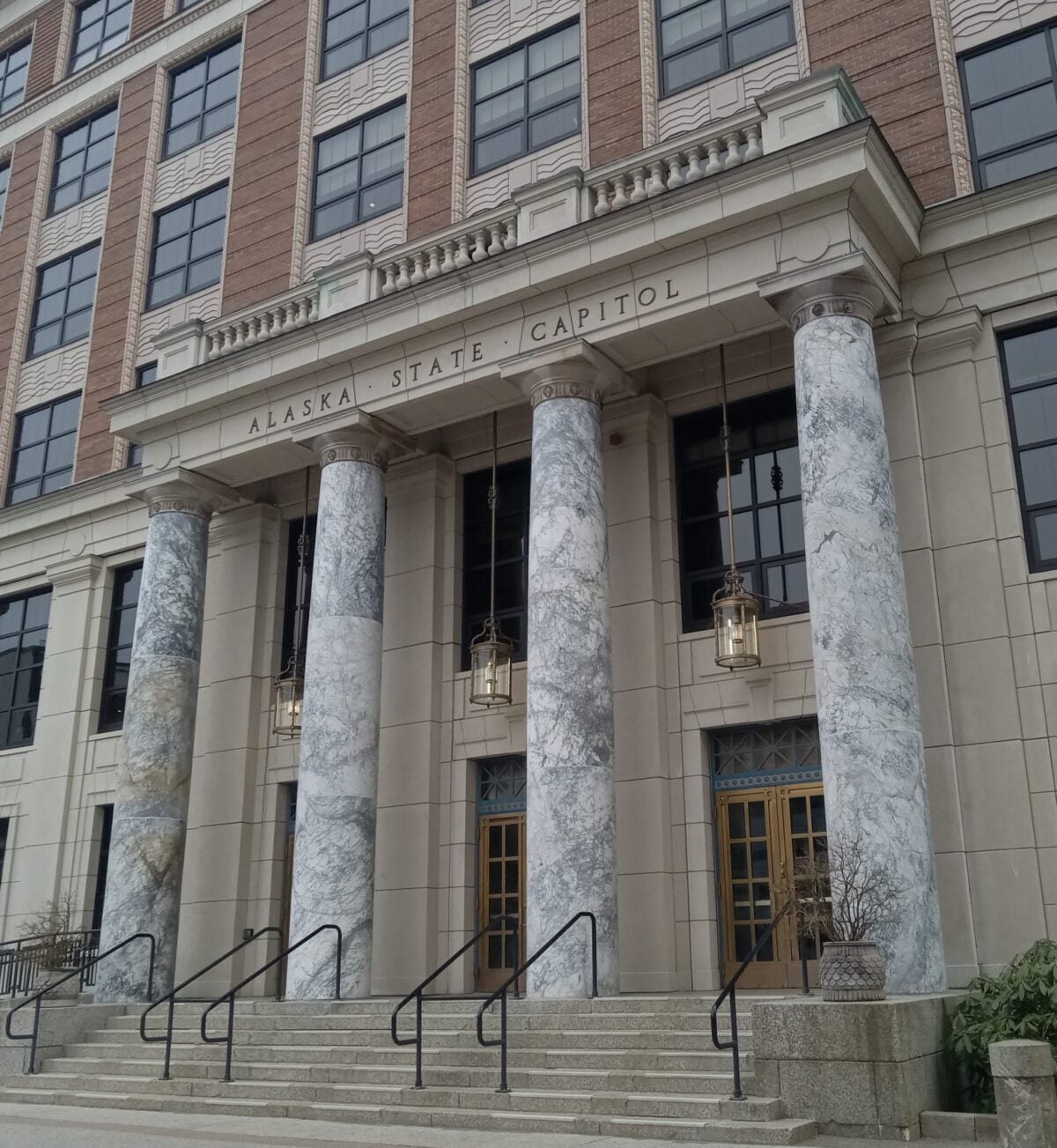

NOTN- Juneau Mayor Beth Weldon said the city is finalizing its annual list of legislative funding priorities, shaped by months of committee work, public input and recommendations from numerous city boards and commissions.
“The planning commission, Systemic Racism Review Committee, General Commission on Sustainability, Utilities Advisory Board, Docks and harbours, Eagle Crest, Parks and Rec Advisory Committee, Historic Resources Committee, General School District and the General Commission on Aging, lots of hands have touched this list.” Weldon said.
The list, which guides Juneau’s requests to state lawmakers and Alaska’s congressional delegation, will be introduced to the full Assembly on Dec. 15 and is scheduled for a public hearing in January.
“What this list is, is it’s our priorities that we’re looking at, so it’s not all of our capital priorities by any stretch of imagination, but this is the list that we send to the State Delegation and the Federal Delegation in the hopes that there’s some money, either state money, which we know there’s not much of, or federal, that we can get help with. So again, this is not our complete list.” Weldon said.
The top projects on Juneau’s 2025 legislative priority list are; Mendenhall Glacier outburst flood response, North Douglas crossing, Mendenhall Wastewater Treatment Plant upgrades, Peterson Hill housing development, Juneau School District security and safety upgrades, Gold Creek flood control rehabilitation, prompted by flume failures, Bartlett Regional Hospital emergency department renovation, Statter Harbor wave attenuator project and Telephone Hill redevelopment.
Weldon said Juneau hopes to secure funding for even a portion of its top five projects. “We’ll be shocked to get any money on the top five. But you got to have a list for people to look at to help support you.” She said, “So this is to help our state delegates, who are having an open house today.”
The mayor encouraged residents to take advantage of the opportunity to speak with lawmakers during their open house at the state Capitol today.
Juneau Senator Jessie Kiehl added, “We’re opening up our offices from 11:30 to 1:00 today. We’ll have some snacks, some beverages, and good cheer.” He said, “Come on by the Capitol, just say hi. We don’t have an agenda, we don’t have a presentation, but we want to talk to you.”
By: James Brooks, Alaska Beacon

The Alaska Court of Appeals has rejected an appeal from a man who received one of the highest prison sentences ever given in Alaska to a juvenile convicted of murder.
In an order published Friday, the court concluded that the recantation of a key witness is not enough to warrant a retrial for Brian Hall, who was 17 at the time. In 1995, Hall was sentenced to 159 years in prison for the killing of two men in Anchorage, Mickey Dinsmore and Stanley Honeycutt.
Despite the rejection, wrote Judge Marjorie Allard on behalf of the court, Hall is eligible for resentencing as part of a wave of juvenile punishments being reconsidered by state courts.
“At sentencing, the court sentenced Hall to 159 years to serve, one of the highest sentences — if not the highest sentence — that a juvenile tried as an adult in Alaska has ever received,” she wrote. “As a juvenile sentenced in 1995 to a de facto life without parole sentence, Hall has been granted the opportunity for a resentencing in which his youth and the unique attributes of youth will be appropriately considered.”
In 2012, the U.S. Supreme Court ruled that the Eighth Amendment prohibits courts from sentencing children to life in prison without the possibility of parole, except in homicide cases.
Two years ago, the state appeals court said the Alaska Constitution imposes further limits in addition to those provided by the U.S. Constitution.
Since then, Alaska courts have resentenced several former juveniles who were sentenced to long terms in prison. In September, Alaska’s youngest convicted female murderer was released from prison on parole after 40 years behind bars.
Hall, who has been in prison for 30 years, could receive similar treatment.
At the time of his trial, Hall claimed he acted in self-defense and that he believed, based on a statement from then-15-year-old Monica Shelton, that Dinsmore and Honeycutt — the people he killed — were armed.
At trial, Shelton denied telling Hall that the two were armed. Hall was convicted and sentenced with that testimony.
While in prison, Hall married Angela Diaz (now Angela Hall), and Angela hired a defense investigator who got in contact with Shelton. In a recorded interview, Shelton said she was scared at trial and lied in her testimony.
In an interview with the Anchorage Daily News, Hall said he is full of remorse about his crime and isn’t the same person he was at 17.
Years of legal arguments followed the investigator’s interview as Hall first requested a new trial, then asked for post-conviction relief.
Superior Court Judge Adolf Zeman dismissed that request, siding with state prosecutors who had raised procedural errors, including the idea that Hall’s filings were too late.
He also concluded that Hall failed to show that Shelton’s recantation would “probably result in an acquittal,” the standard that applies to timely filings for post-conviction relief.
Allard, writing on behalf of the appeals court, overruled Zeman on the procedural elements of Hall’s argument but concluded that even with the recanted testimony, it wasn’t clear that a new trial would result in a new outcome.
“The problem that Hall still faces, notwithstanding Shelton’s recantation, is that the rest of the evidence from trial indicates that Hall’s mistaken belief that he had to use deadly force … was not objectively reasonable,” she wrote.
“Hall was required to show that, viewing all the well-pleaded facts in the light most favorable to Hall, it is “highly probable” that Shelton’s recantation would result in an acquittal at any retrial,” Allard said.
“But while Shelton’s recantation constitutes important new evidence that sheds more light on Hall’s motivations and the reasons for his subjective fear, it does not alter the fact that his actions in shooting both men still appear overly impulsive and objectively unreasonable under the circumstances.”
Even with that finding, Hall is eligible for resentencing, Allard said.
“As part of that resentencing, the court should take into account Shelton’s recantation and the effect of that recantation on Hall’s level of culpability.”
By: Yereth Rosen, Alaska Beacon

The federal government research organization that has been devoted for half a century to renewable energy development has had the word “renewable” stripped from its name.
The Trump administration, which broadly opposes renewable energy projects, changed the name of the Colorado-based National Renewable Energy Laboratory to “National Laboratory of the Rockies.”
The U.S. Department of Energy announced the name change on Monday, effective immediately.
“The energy crisis we face today is unlike the crisis that gave rise to NREL,” Assistant Secretary of Energy Audrey Robertson said in a statement. “We are no longer picking and choosing energy sources. Our highest priority is to invest in the scientific capabilities that will restore American manufacturing, drive down costs, and help this country meet its soaring energy demand. The National Laboratory of the Rockies will play a vital role in those efforts.”
NREL has a prominent presence in Alaska. The agency in 2020 joined into a partnership with the Cold Climate Housing Research Center at the University of Alaska Fairbanks. The UAF facility is one of four NREL centers; two campuses are in Colorado and there is an office in Washington, D.C.
Jud Virden, the laboratory’s director, said the new name “embraces a broader applied energy mission entrusted to us by the Department of Energy to deliver a more affordable and secure energy future for all,” according to the statement.
However, the name change is a troubling sign to one Alaska organization involved in projects promoting renewable energy and energy affordability.
“Removing ‘Renewable’ and ‘Energy’ from NREL’s name raises concerns. Renewables are key to affordable, secure energy and deliver long-term economic benefits, especially for rural communities,” Bridget Shaughnessy Smith, communications director for the Alaska Public Interest Research Group, a non-profit consumer advocacy group, said by email.
“While it’s not yet clear if this name change signals a broad mission shift, any refocus cannot come at the expense of renewable energy or by prioritizing already well-funded fossil fuel industries. Remote microgrid communities in Alaska are working with NREL to innovate toward affordable, reliable energy, and this name change must not disrupt that critical work,” Shaughnessy Smith continued.
NREL’s history started in 1974, when the organization was established as the Solar Energy Research Institute. In 1991, President George H.W. Bush elevated it to national lab status and changed the name to the National Renewable Energy Laboratory.
The Cold Climate Housing Research Center was established in 1999 with a mission of improving housing and building conditions in Alaska’s extreme climate. The center has focused on renewable energy, along with energy efficiency, structural integrity for buildings on permafrost, indoor air quality and designs that are sustainable in the far north. The center headquarters is the world’s farthest-north building with a platinum rating, the highest possible, bestowed by the U.S. Green Building Council Leadership in Energy and Environmental Design.
The NREL-Cold Climate Housing Research Center partnership has participated in numerous recent energy and environmental innovations, including the development of non-plastic housing insulation made from a fungi-wood pulp blend.
The NREL name change adds to a list of government agencies and geographic sites changed by the Trump administration this year to align with the president’s agenda.
On the day he was inaugurated for his second term, President Trump issued an executive order directing that the Gulf of Mexico be renamed “Gulf of America” and that Denali, North America’s tallest peak, revert to its previous federal name, Mount McKinley.
The Denali name comes from the traditional name for the Alaska peak used by the Koyukon people, the region’s Indigenous residents. The name, which translates to “the high one,” has been the official state of Alaska name since the 1970s. The McKinley name, for former president and Ohioan William McKinley, has been widely panned in Alaska, and state lawmakers passed a resolution asking for the Denali name to be restored for federal government use.
In September, Trump issued an executive order directing that the U.S Department of Defense be renamed “Department of War.” That resurrected a department name that was dropped in 1947.

CBJ- The City and Borough of Juneau (CBJ) invites the public to submit proposals for how proceeds from the 2026 Marine Passenger Fee (MPF) are used. Proposals can be made via webform from December 1 to December 31, 2025. This annual process ensures that all members of the community can have a say in how fees from the cruise ship industry are reinvested in local business and services.
Various fees and taxes make up a $13 total fee per cruise ship passenger. These fees are designated to fund projects directly related to the visitor industry which enhance the tourism experience in Juneau and offset community impacts created by the cruise ship industry.
The use of these fees is constitutionally restricted. CBJ and Cruise Lines International Association (CLIA) settled a lawsuit in 2019 with an agreement that governs how and where CBJ spends the fees. CBJ therefore encourages project proposals that benefit cruise ship passengers as well as Juneau residents. For a full description of project eligibility, please see CBJ 69.20.120.
Exciting examples of past projects funded in part through the MPF include the Downtown Seawalk project, growing pedestrian access to Juneau’s waterfront, and improvements to Juneau’s wastewater systems, increasing utility effectiveness and efficiency for all of Juneau’s residents and visitors. For more details, please see the full list of FY26 projects & associated funding totals.
After the proposal period has ended, the City Manager will develop a draft recommendation list followed by a 30-day comment period that can be found on the Marine Passenger Fee Program website. All materials will then be submitted to the Assembly Finance Committee for review, and then to the Assembly for consideration during the upcoming budget cycle.
Proposals must be submitted by December 31 on the webform or the City Manager’s Office, attention Alexandra Pierce, 155 Heritage Way, Juneau, Alaska 99801.
For more information, contact CBJ Visitor Industry Director Alexandra Pierce at alexandra.pierce@juneau.gov or visit the Marine Passenger Fee Program website.