It is certainly big – 940 pages long – but on the question of beauty, Congress is divided.The Latest News from the UK and Around the World | Sky News









It is certainly big – 940 pages long – but on the question of beauty, Congress is divided.The Latest News from the UK and Around the World | Sky News

Jurors in the trial of Sean “Diddy” Combs have reached a verdict on four of the five counts against him – but the hip-hop mogul will have to wait to learn his fate.The Latest News from the UK and Around the World | Sky News

A man has been charged with the murder of a 93-year-old woman who was found dead at a property in Cornwall.The Latest News from the UK and Around the World | Sky News

The Women’s Euros begin in Switzerland today – with extreme heat warnings in place.The Latest News from the UK and Around the World | Sky News

A yellow warning for thunderstorms has been issued for parts of the UK.The Latest News from the UK and Around the World | Sky News

In the long Gaza war, this is a significant moment.The Latest News from the UK and Around the World | Sky News

The Crown Prosecution Service has said it is considering whether to bring further criminal charges over the deaths of babies at hospitals where Lucy Letby worked.The Latest News from the UK and Around the World | Sky News

A power outage that shut Heathrow Airport earlier this year, causing travel chaos for more than 270,000 passengers, was caused by a “catastrophic failure” of equipment in a nearby substation, according to a new report.The Latest News from the UK and Around the World | Sky News
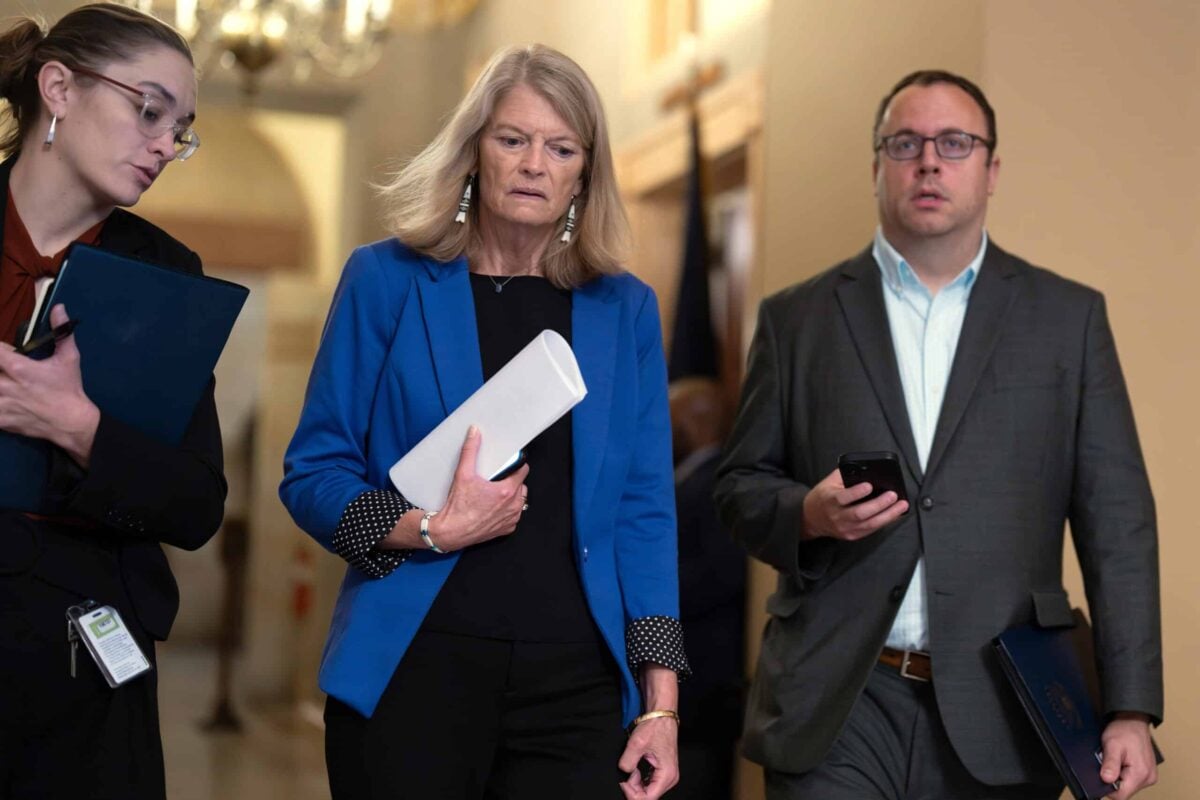

AP- Just after midnight, Alaska Sen. Lisa Murkowski was pacing in a Senate hallway, alone and looking concerned.
It had suddenly become clear to all her Republican colleagues that her vote would be their best chance of passing President Donald Trump’s sweeping bill of tax and spending cuts. Had she decided whether she would support the bill? “No,” Murkowski said, shaking her head and putting her hand up to signal that she didn’t want to answer any questions.
Around 12 hours later, after she had convinced Senate leaders to change the bill to benefit her state and voted for the legislation, ensuring its passage, Murkowski said the last day had been “probably the most difficult and agonizing legislative 24-hour period that I have encountered.”
“And you all know,” she told reporters after the vote at midday Tuesday, “I’ve got a few battle scars underneath me.”
Murkowski has been in the Senate for nearly 23 years, and she has taken a lot of tough votes as a moderate Republican who often breaks with her party. So she knew what she was doing when she managed to leverage the pressure campaign against her into several new programs that benefit her very rural state, including special carveouts for Medicaid and food assistance.
“Lisa can withstand pressure,” said Maine Sen. Susan Collins, a fellow Republican moderate and longtime friend. Collins said she spoke to Murkowski on Monday when she was still undecided, and “I know it was a difficult decision for her, and I also know how much thought she put into it.”
Texas Sen. John Cornyn, R-Texas, who has also served with Murkowski for two decades, was more blunt: “She knows how to use her leverage,” he said.
The 887-page bill narrowly passed by the Senate on Tuesday — and now headed back to the House for possible passage — mentions California three times, Texas twice and New York not at all. But Alaska is in the bill 19 times, from new oil and gas lease sales in the state to tax breaks for Alaska fisheries and whalers to tribal exemptions for work requirements.
Even with all the provisions for Alaska, Murkowski was deeply torn up until the hours just before the vote, when the entire Senate was focused on what she would do — and as Republicans were pressuring her to support the bill and move the party one step closer to giving Trump a win.
She had always supported the bill’s tax cuts and extensions, but she had serious concerns about the repercussions of cutting Medicaid in her state and around the country.
Murkowski eventually decided to support the legislation in the hours after the Senate parliamentarian approved language to allow several states with the worst error rates in the food stamp program — including Alaska — to put off having to pay a greater portion of the cost of federal benefits, and after Republicans added a $50 billion fund proposed by Collins to help rural hospitals that might otherwise be hurt by Medicaid cuts.
Even with the fund included, Collins was one of three Republicans who voted no on the bill, arguing that the cuts to Medicaid and food stamps would hit her small rural state especially hard. But she said she understands why Murkowski would support it and negotiate special treatment for her state. “The fact is, Alaska is unique from every other state,” Collins said.
Nearly one-third of Alaska’s total population is covered by Medicaid, and the state has long struggled with high health care costs and limited health services in many communities. Most Alaska communities are not connected to the state’s main road system, meaning that many residents, particularly those in small, remote villages, need to fly to a larger city for certain kinds of care. Food security is also a longstanding concern, as the remote nature of many communities means food often is barged or flown in, and options can be limited and expensive.
“I had to look on balance, because the people in my state are the ones that I put first,” Murkowski said immediately after the vote. “We do not have a perfect bill by any stretch of the imagination.”
Some of her colleagues who voted against the bill were critical. “They chose to add more pork and subsidies for Alaska to secure that vote,” said Republican Sen. Rand Paul of Kentucky.
Minnesota Sen. Amy Klobuchar, the top Democrat on the Senate Agriculture Committee, which oversees the food stamp benefits, said that the food stamp provision would incentivize states with the worst oversight, which was the opposite of what Republicans originally intended. The provision would “expand the graft,” Klobuchar said.
Murkowski, often accompanied by Collins, has been under a microscope for almost every major vote in the Senate in recent years. In February 2021, she joined six other Republicans and all Democrats in voting to convict Trump for inciting the Jan. 6, 2021, attack of his supporters on the Capitol after the House impeached him for a second time. In 2018, she opposed the confirmation of Supreme Court Justice Brett Kavanaugh amid sexual misconduct claims, ultimately voting “present.”
So as Murkowski was wooed for days by Republican leaders and many of her colleagues to vote for the tax and spending cuts package, it was somewhat familiar territory — and an ideal environment for her to win some concessions in favor of her state.
On Monday evening and early Tuesday, Senate Majority Leader John Thune, R-S.D., and Sen. John Barrasso of Wyoming, the No. 2 Senate Republican, spent hours on the Senate floor talking to Murkowski — who was sometimes wrapped in a blanket to stay warm in the frigid chamber. Alaska Sen. Dan Sullivan, a Republican, would sometimes join the group, as did Senate Budget Committee Chairman Lindsey Graham, R-S.C.
As she mulled her vote, Murkowski sorted through drafts of amendments and talked to aides. And despite longstanding criticism of Trump, she communicated with White House officials who made the case that the measure would ultimately be a positive for her state and constituents.
Thune had said for weeks that he would hold a vote as soon as he had 51 senators supporting the legislation. And after days of delays, it became clear Tuesday morning that Murkowski had decided to support it when Thune told senators to come to the floor and scheduled a vote within the hour.
Murkowski, still looking a bit worried, voted “aye.” After the vote, she said: “I haven’t slept in a long, long while now.”
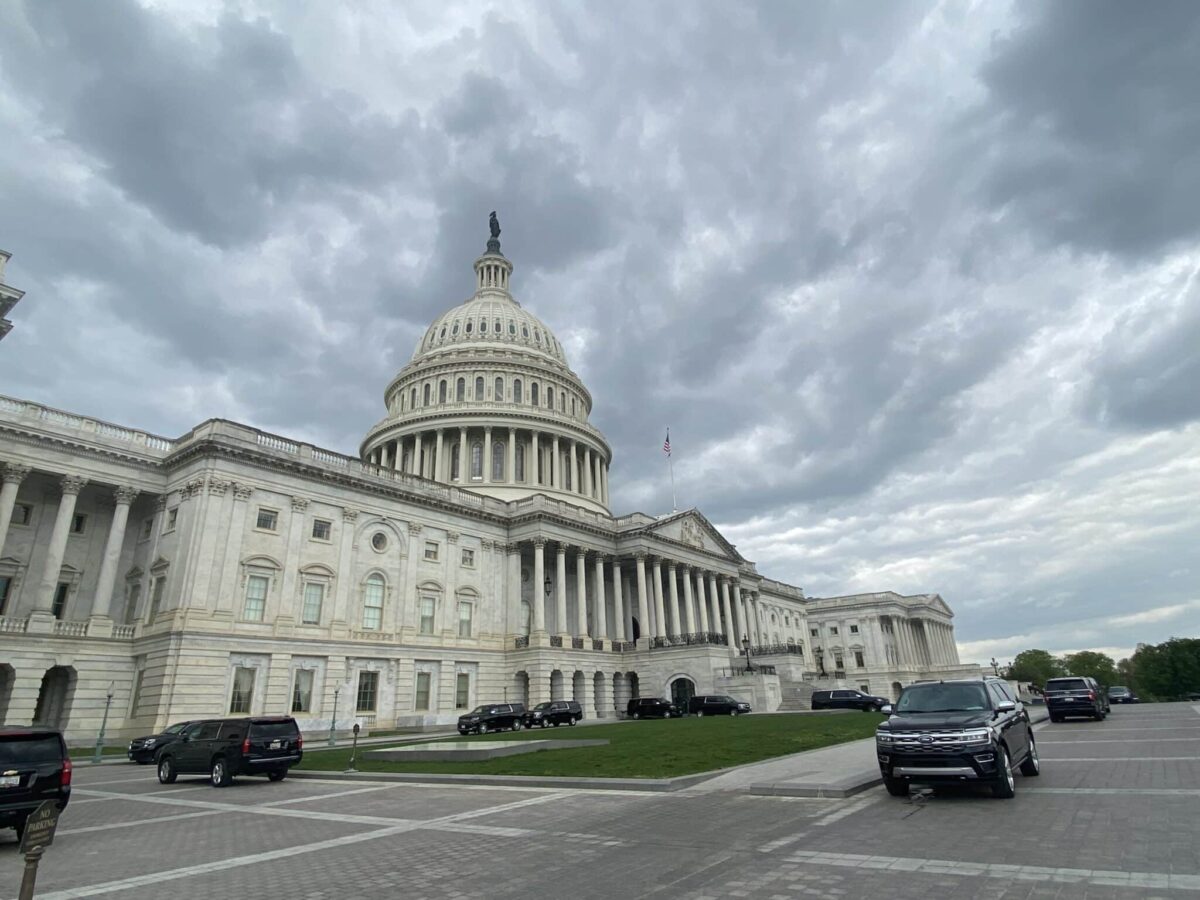

AP- Senate Republicans hauled President Donald Trump’s big tax breaks and spending cuts bill to passage Tuesday on the narrowest of votes, pushing past opposition from Democrats and their own GOP ranks after a turbulent overnight session.
The outcome capped an unusually tense weekend of work at the Capitol, the president’s signature legislative priority teetering on the edge of approval, or collapse.
The difficulty it took for Republicans, who have the majority hold in Congress, to wrestle the bill to this point is not expected to let up. The package now goes back to the House, where Speaker Mike Johnson had warned senators not to deviate too far from what his chamber had already approved. But the Senate did make changes, particularly to Medicaid, risking more problems as they race to finish by Trump’s Fourth of July deadline.
The outcome is a pivotal moment for president and his party, which have been consumed by the 940-page “One Big Beautiful Bill Act,” as it’s formally titled, and invested their political capital in delivering on the GOP’s sweep of power in Washington.
Trump acknowledged it’s “very complicated stuff,” as he departed the White House for Florida.
“I don’t want to go too crazy with cuts,” he said. “I don’t like cuts.”
What started as a routine but laborious day of amendment voting, in a process called vote-a-rama, spiraled into a round-the-clock slog as Republican leaders were buying time to shore up support.
The droning roll calls in the chamber belied the frenzied action to steady the bill. Grim-faced scenes played out on and off the Senate floor, amid exhaustion.
Senate Majority Leader John Thune of South Dakota was desperately reaching for last-minute agreements between those in his party worried the bill’s reductions to Medicaid will leave millions without care, and his most conservative flank, which wants even steeper cuts to hold down deficits ballooning with the tax cuts.
The GOP leaders have no room to spare, with narrow majorities. Thune can lose no more than three Republican senators, and already two — Sen. Thom Tillis of North Carolina, who warned that millions of people will lose access to Medicaid health care, and Sen. Rand Paul of Kentucky, who opposes raising the debt limit by $5 trillion — had indicated opposition.
Attention quickly turned to two key senators, Lisa Murkowski of Alaska and Susan Collins of Maine, who also raised concerns about health care cuts, as well as a loose coalition of four conservative GOP senators pushing for even steeper reductions.
Murkowski in particular became the subject of the GOP leadership’s attention, as they sat beside her for talks. She was huddled intensely for more than an hour in the back of the chamber with others, scribbling notes on papers.
Then all eyes were on Paul after he returned from a visit to Thune’s office with a stunning offer that could win his vote. He had suggested substantially lowering the bill’s increase in the debt ceiling, according to two people familiar with the private meeting and granted anonymity to discuss it.
Senate Democratic Leader Chuck Schumer of New York said “Republicans are in shambles because they know the bill is so unpopular.”
An analysis from the nonpartisan Congressional Budget Office found 11.8 million more Americans would become uninsured by 2034 if the bill became law. The CBO said the package would increase the deficit by nearly $3.3 trillion over the decade.
And on social media, billionaire Elon Musk was again lashing out at Republicans as “the PORKY PIG PARTY!!” for including the $5 trillion debt ceiling in the package, which is needed to allow continued borrowing to pay the bills.
Few Republicans appeared fully satisfied as the final package emerges, in either the House or Senate.
Collins had proposed bolstering the $25 billion proposed rural hospital fund to $50 billion, offset with a higher tax rate on those earning more than $25 million a year, but her amendment failed.
And Murkowski was trying to secure provisions to spare people in her state from some food stamp cuts, which appeared to be accepted, while she was also working to beef up federal reimbursements to hospitals in Alaska and others states, that did not comply with parliamentary rules.
“Radio silence,” Murkowski said when asked how she would vote.
The conservative senators demanding a vote on their steeper health care cuts, including Rick Scott of Florida, Mike Lee of Utah, Ron Johnson of Wisconsin and Cynthia Lummis of Wyoming, filed into Thune’s office near-midnight.
All told, the Senate bill includes $4.5 trillion in tax cuts, according to the latest CBO analysis, making permanent Trump’s 2017 rates, which would expire at the end of the year if Congress fails to act, while adding the new ones he campaigned on, including no taxes on tips.
The Senate package would roll back billions of dollars in green energy tax credits, which Democrats warn will wipe out wind and solar investments nationwide. It would impose $1.2 trillion in cuts, largely to Medicaid and food stamps, by imposing work requirements on able-bodied people, including some parents and older Americans, making sign-up eligibility more stringent and changing federal reimbursements to states.
Additionally, the bill would provide a $350 billion infusion for border and national security, including for deportations, some of it paid for with new fees charged to immigrants.
Unable to stop the march toward passage, the Democrats tried to drag out the process, including with a weekend reading of the full bill.
A few of the Democratic amendments won support from a few Republicans, though almost none were passing. More were considered in one of the longer such sessions in modern times.
One amendment overwhelmingly approved stripped a provision barring states from regulating artificial intelligence if they receive certain federal funding.
Sen. Patty Murray of Washington, the ranking Democrat on the Appropriations Committee, raised particular concern about the accounting method being used by the Republicans, which says the tax breaks from Trump’s first term are now “current policy” and the cost of extending them should not be counted toward deficits.
She said that kind of “magic math” won’t fly with Americans trying to balance their own household books.