Actress Dame Patricia Routledge, best known for TV show Keeping Up Appearances, has died aged 96, her agent has said.The Latest News from the UK and Around the World | Sky News
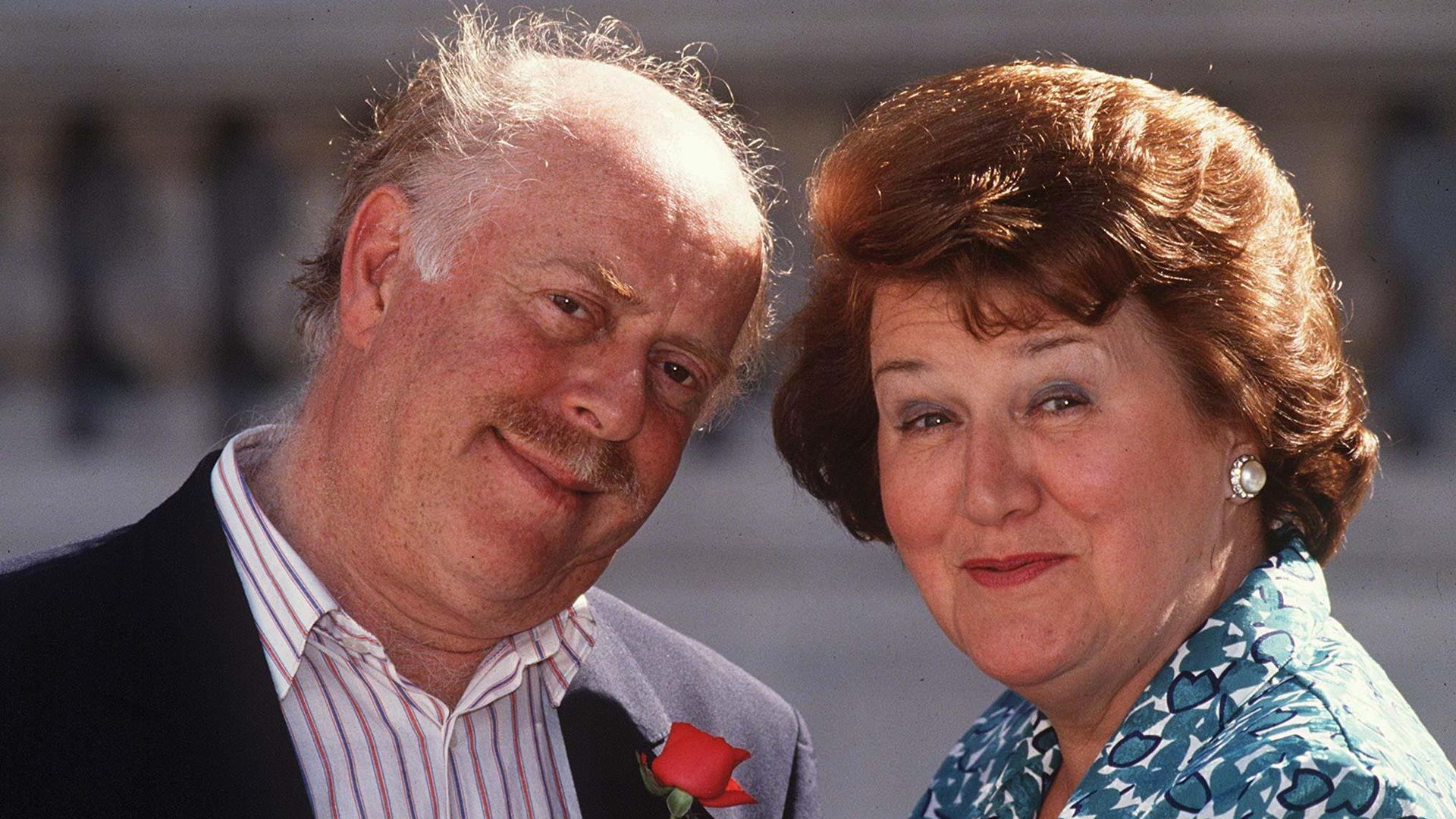










Actress Dame Patricia Routledge, best known for TV show Keeping Up Appearances, has died aged 96, her agent has said.The Latest News from the UK and Around the World | Sky News

Prince William has said “change is on my agenda” when he becomes king, in his most open and personal explanation to date about how he sees his future role and the future of the monarchy. The Latest News from the UK and Around the World | Sky News

“Listen man, we’re a narco state, it’s just how it is, if you want to see drug deals, I’ll show you drug deals – it’s Colombia.”The Latest News from the UK and Around the World | Sky News

Weather warnings have been issued for the whole of the UK as the country braces for Storm Amy’s arrival.The Latest News from the UK and Around the World | Sky News

Bishop of London Dame Sarah Mullally, a former nurse, has been named as the next Archbishop of Canterbury – the first time a woman has been appointed to the role in the Church of England’s history.The Latest News from the UK and Around the World | Sky News

The two men killed by a terrorist outside a synagogue in Manchester have been named by police.The Latest News from the UK and Around the World | Sky News


NOTN- Months after Congress eliminated federal funding for public broadcasting, 14 Alaska stations have been granted temporary relief.
Eligible stations were then presented with two potential funding options: they could partner with a Tribe, either through a 638 compact or 638 contract, or they could go through a grant process.
Stations will likely be funded through a program that supports tribal stations, but they won’t receive the temporary funding until after the federal government Shutdown.
In a press release, Senator Lisa Murkowski announced the funding, calling it a critical but short-term measure to keep rural stations operating after Congress rescinded $1.1 billion from the Corporation for Public Broadcasting.
“This funding will help some of Alaska’s most rural radio stations make ends meet for now.” Murkowski said, “But it is one-time funding, and the job isn’t done until every station in Alaska has stable, long-term support.”
Stations set to receive funding include KNBA in Anchorage, KBRW in Barrow, KYUK in Bethel, KDLG in Dillingham, KUCB in Unalaska, and others serving communities from the Aleutians to the Arctic.
By:Ashley Murray, Jennifer Shutt and Shauneen Miranda, States Newsroom

U.S. Senate Democrats and Republicans remained at a stalemate Wednesday as government offices closed and hundreds of thousands of federal workers faced furloughs on the first day of a government shutdown that showed no sign of ending.
Proposals from each side of the aisle to fund and reopen the government failed again during morning Senate votes, mirroring the same vote breakdowns as Tuesday evening, when lawmakers could not reach a deal hours before the government ran out of money.
The nonpartisan Congressional Budget Office projected up to 750,000 federal workers could be furloughed, leading to a $400 million per day impact on the economy.
Locked in their positions, Republicans failed to pick up enough Democrats to reach the 60 votes needed to advance their plan to fund the government until Nov. 21.
Senators will break Thursday to observe Yom Kippur but will return Friday to again vote on the funding proposals.
Democratic Sens. Catherine Cortez Masto of Nevada and John Fetterman of Pennsylvania, along with independent Angus King of Maine, again joined Republicans in the 55-45 vote for the House-passed stopgap spending bill. GOP Sen. Rand Paul of Kentucky voted no.
Democrats also failed to find support to move forward their bill to fund the government through Oct. 31, roll back GOP cuts on Medicaid and permanently extend subsidies that tie the cost of Affordable Care Act health insurance premiums to an enrollee’s income level.
The Democrats failed to advance their plan in a party-line 47-53 vote. King, who caucuses with Democrats, voted in favor.
Senate and House Democrats say they will not support a GOP path to reopen the government unless Republicans agree to negotiate on rising health care costs.
House Minority Leader Hakeem Jeffries said at a press conference that Democrats are “ready to sit down with anyone at any time and at any place in order now to reopen the government, to enact a spending agreement that meets the needs of the American people and to address the devastating Republican health care crisis that has caused extraordinary harm on people all across the country.”
The New York Democrat pointed to harms in “rural America, working class America, urban America, small-town America, the heartland of America and Black and brown communities throughout America.”
Democratic leaders blitzed Capitol Hill with their message on health care, holding press conferences and attending an evening rally Tuesday on the lawn outside the U.S. House.

They pointed to new data published this week showing annual insurance premiums could double on average in 2026 if the subsidies expire at year’s end, according to an analysis from the nonprofit health policy research organization KFF.
Open enrollment for next year’s ACA health insurance plans opens Nov. 1 in most states, and Oct. 15 in Idaho.
Uptake of ACA health insurance plans has more than doubled to over 24 million, up from 11 million, since the introduction of the subsidies in 2021, according to KFF.
During their own budget reconciliation deal in 2022, Democrats extended the insurance premium tax credits until the end of 2025. The majority of ACA enrollees currently rely on the credits.
Democrats also want assurances that the White House and Senate Republicans will not cancel any more funds that have already been approved by Congress, as was the case this year when the administration and GOP lawmakers stripped funding for medical research, foreign aid and public broadcasting, among other areas.
GOP leaders in the House and Senate continued to blame Senate Democrats for the government shutdown at the expense of furloughed federal workers and Americans who rely on their services.
At a Wednesday morning press conference, House Speaker Mike Johnson said “troops and border patrol agents will have to go to work, but they’ll be working without pay.”
Johnson also claimed at the press conference that veterans benefits would stop. The claim is false, as Veterans Administration medical care will continue uninterrupted and vets will also continue to receive benefits, including compensation, pension, education and housing.

“As we speak here this morning, there are hundreds of thousands of federal workers who are getting their furlough notices. Nearly half of our civilian workforce is being sent home — these are hard-working Americans who work for our federal government,” the Louisiana Republican said, flanked by fellow GOP leaders on the Upper West Terrace of the U.S. Capitol overlooking the National Mall.
Johnson decided in late September the House will be out until Oct. 6, canceling this week’s votes.
The speaker said he will bring House members back next week, even if the government is still shut down.
“They would be here this week, except that we did our work — we passed the bill almost two weeks ago out of the House, sent it to the Senate,” Johnson said. “The ball is literally in (Senate Minority Leader) Chuck Schumer’s court, so he determines that.”
Senate Majority Leader John Thune said “this can all end today” and “needs to end today.”
The South Dakota Republican said the funding lapse can cease when Senate Democrats vote for the GOP’s “clean” short-term funding bill.
“We will continue to work together with our House counterparts, with the president of the United States, to get this government open again on behalf of the American people,” Thune said.
Virginia Democratic Sen. Tim Kaine said later in the day that a bipartisan group huddled on the floor during votes to talk about a possible path forward on “health care fixes” and ensuring that if a bipartisan deal is brokered, the Trump administration will stick to it.
Republican senators, he said, could give Democrats assurances they won’t vote for any more rescissions requests from the White House, which ask Congress to cancel already approved government spending. But other issues, like laying off federal workers by the hundreds or thousands, have to be a promise from the president.
“If I find a deal, should Congress have to follow it? Yes. Should the president have to follow it? Yes. Well, what if the president won’t follow it? Oh, yeah, you got a problem,” Kaine said. “So you know, rescission, impoundment, those are Senate words. But a deal is a deal — people get that.”
Kaine also emphasized that it’s not a “clean” stopgap funding bill if the Trump administration unilaterally cancels some of the spending.
“In the past, we voted for clean (continuing resolutions), but the president has shown that he’ll take the money back,” Kaine said, referring to the technical name for a short-term funding bill. “I mean, just in Virginia, canceling $400 million to our public health, $40 million economic projects just pulled off the table, firing more Virginians than any president.
“So we just want you to agree, if we do a deal, then you’ll honor the deal,” Kaine said. “It’s not that much to ask.”
North Carolina Republican Sen. Thom Tillis said he doesn’t expect the shutdown will have long-term ramifications for senators’ ability to negotiate bipartisan deals — a necessity in the upper chamber, which has a 60-vote threshold to advance legislation.
“It’s all transactional,” Tillis said. “I think there’s going to be opportunities for some bipartisan work, but none of that happens, you can’t even really consider it when you’re in a shutdown posture.”
Cortez Masto, who voted to advance Republicans’ seven-week stopgap bill, said the GOP “created this crisis” on health care and “need to address it.”
“They have no moral standing — no moral standing —- to say that this is all on the Democrats. They are in control. They’ve created this crisis,” Cortez Masto said. “People are suffering and they need to come to the table.”
Missouri Republican Sen. Josh Hawley, who was sworn in for the first time during the last shutdown, said he worries about longer-term effects.
“My concern is it’s going to poison the well on negotiations going forward on a lot of things,” Hawley said. “I can’t speak for anybody but myself, but I would just say that these tactics are very destructive. And it’s destructive, not just for relationships, but for real people.”
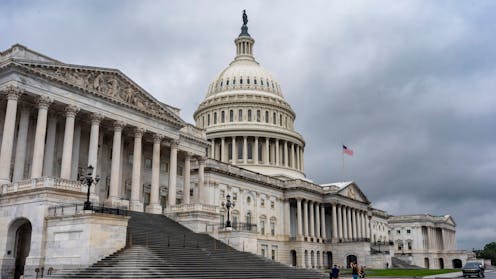
Congress failed to meet an Oct. 1 deadline to adopt a spending measure and keep the federal government open, resulting in the first government shutdown in nearly seven years. With both Democrats and Republicans seemingly prepared for a long fight, Alfonso Serrano, a politics editor at The Conversation, interviewed Charlie Hunt, a congressional expert at Boise State University, about the prospects of a compromise and what’s at stake for both parties.
Both sides appear to be dug in. Do you see a path to a quick compromise?
Not at this point. The Democrats have made clear at least what their stated sticking point is: these health care subsidies that are set to expire at the end of this year that were part of the Obamacare legislation. Politically speaking, this is part of a larger tactic of pushing back broadly and finally having some point of leverage against the Trump administration. The Democrats are going to use this moment to draw attention to what they see as abuses in the administration.
There have been a number of incidents like the spectacle at the Department of Defense (on Sept. 30), the use of the military in cities, and a lot of the other uses or abuses of the Justice Department or the Trump administration. Even though those all are technically separate from the shutdown issue, it’s impossible to talk about the Democrats’ strategy without making reference to those as things that a lot of folks of the left are really upset about. And this is a vehicle by which the Democrats can push back politically and actually use some of their power to stop momentum and draw attention to what the administration is doing.
But on the Republican side of things, they have a pretty simple argument, which is they want to continue funding the government at current levels and the Democrats do not. Until those dynamics change, or until enough Democratic senators get nervous about the optics of what is going on, no, I don’t see a pathway out.
How does the White House’s power over government spending, in the form of impoundment, affect negotiations?
The process of impoundment is basically the executive branch declining to spend money that Congress has appropriated. Technically speaking, that is not legal under the Impoundment Act that was passed following Richard Nixon practicing this method in the 1970s. If you’re the Democrats and you’re trying to negotiate for some kind of spending, for instance on these health care subsidies, and say you win a concession from the Republicans, then the Democrats might rightfully say, “Why would we even agree to this when we think there’s a chance that you’re either going to impound these funds that we’re appropriating for these subsidies, or you’re just going to have another rescissions package and the Republican-led Congress, with a simple majority, is just going to take these funds back? And then we haven’t won any concessions.”
Who are key players and groups of senators and representative who might decide how long this shutdown lasts?
You have people like GOP Sen. Rand Paul who are sort of the Tea Party or Freedom Caucus wing of the party, who want to see less government spending overall, and on principal tend to oppose these continuing resolutions. He was the only Republican who voted against the GOP bill last night. I have the feeling that if Republicans like the Senate Majority Leader John Thune manage to peel off a few more Democrats, and Rand Paul ends up being the deciding vote, they might be able to get him on board to pass this package.
In terms of the Senate, the real sticking points are the Democrats. You’ve got a shrinking number of moderate Democrats who could end up joining the Republicans on future votes to pass their spending bill. (You have) John Fetterman of Pennsylvania, who has been a bit of a wild card for the Democrats ever since he took office in 2023. Then you’ve got other more moderate Democrats from middle-of-the-road states. People like Catherine Cortez Masto in Nevada and others from states like Arizona or Pennsylvania, or maybe Wisconsin. But, for the most part, the Democrats have held the line.
To me, at the end of the day it’s a question of how much leadership in these two parties can hold together their caucus. I think both Chuck Schumer and Hakeem Jeffries, the Democratic leaders in the Senate and House, respectively, have faced a ton of blowback from Democratic voters, who have made it really clear that their strategy last time was not something the left supported. So I think there’s a lot more political pressure on them this time. And (Schumer and Jeffries) are going to sort of use that pressure a lot more with their caucus members than they did last time.

Which party stands to lose more from the political backlash of the shutdown?
It’s perfectly possible that we end up having this fight and there are no winners. A lot of times in these negotiations it ends up being who can save the most face. Who can get away from the fight without having lost the respect of their own supporters.
I have the feeling that most Democratic senators understand that Republicans are not going to suddenly give in on these health care subsidies, or that Donald Trump is going to suddenly say, “You know what, you’re right. We shouldn’t use the military in American cities.” Or that (Director of the Office of Management and Budget) Russell Vought is suddenly going to say, “You’re right. The executive branch should really stop impounding funds and we’re just going to give you what you want.” The Democrats understand that, but they are trying to demonstrate to their voters that they are going to do some kind of fighting and use whatever small leverage they do have.
I think there is more on a policy basis for the Democrats to lose just based on their ideological principles. There are plenty of Republicans that, frankly, are happy to see the government shut down, to demonstrate to the American people that “hey, look, you don’t need this much government, you can get away with less, this is a good opportunity maybe to cut a bunch of government programs, do mass firings of federal workers, as the OMB director has suggested.” Whereas the Democrats favor more robust social safety net programs and more government spending to achieve their goals.
So the longer the government stays shut down, the less funding those programs are going to get. In that sense, the Democrats have more to lose. On the other hand, the Republicans can lose a lot in terms of public relations because of who is leading their party.
I think Donald Trump demonstrated in the last shutdown, back in 2018-2019, that he has a great deal of difficulty not making these fights all about him, at least from a public perspective. That doesn’t tend to go well for him because he’s a pretty unpopular president, because he tends to bite off more than he can chew in fights like these. And that’s something the Democrats can use to their advantage from a public relations or communications perspective, in terms of talking to their voters.
But the question is going to be: How much of that is worth the losses that are going to be incurred if we’re talking about a government that is shut down for weeks or even months? That’s going to be a lot of pain for Americans. Then it just turns to who ends up getting the blame. And I don’t think we know enough yet.

Charlie Hunt does not work for, consult, own shares in or receive funding from any company or organization that would benefit from this article, and has disclosed no relevant affiliations beyond their academic appointment.
Politics + Society – The Conversation

For nearly half a century, the Foreign Corrupt Practices Act has made it illegal for U.S. citizens and companies to bribe foreign officials. Since 1998, that has been the case for foreign companies listed on U.S. stock exchanges or acting in the U.S., too.
Under the Trump administration, however, expectations are changing. In February 2025, an executive order froze new investigations for 180 days, arguing that the act has been “stretched beyond proper bounds” and “harms American economic competitiveness.” The president ordered a review of enforcement guidelines to ensure they advance U.S. interests and competitiveness.
The Department of Justice’s revised guidelines, issued in June 2025, prioritize cases that are tied to cartels and other transnational criminal organizations, harm U.S. companies or their “fair access to compete,” or involve “infrastructure or assets” important for national security.
Whatever impact the new guidelines will have on anti-corruption prosecutions globally, which is still unclear, the impact on the actual level of corruption will likely be small. Legal rules and sanctions designed to deter, find and punish “bad apples” have had limited success in many parts of the world. Yet the United States’ retreat from leadership could set back momentum for addressing the root causes of corruption.
In 1977, when the Foreign Corrupt Practices Act was signed into law, the U.S. was alone in criminalizing bribery of foreign officials. Since then, and especially since the end of the Cold War, there’s been a paradigm shift.
Today, a global infrastructure of treaties and institutions obligates countries to criminalize corruption, adopt measures to prevent it and cooperate to recover stolen assets. All but a few members of the United Nations have adopted the U.N. Convention Against Corruption. Substantial amounts of international aid have also been allocated to strengthen anti-corruption efforts. In 2021 alone, the Development Assistance Committee of the Organisation for Economic Co-operation and Development invested over US$7.5 billion for reforms related to fighting corruption, from anti-corruption courts to public financial management.
Yet global trends in corruption, widely defined as the “abuse of entrusted power for personal gain,” are not improving. On the 2024 Corruption Perceptions Index, the most widely used global ranking of public sector corruption, two-thirds of countries scored below 50 on a scale where 0 is “very corrupt” and 100 is “very clean.” And while 32 countries had reduced corruption since 2012, 148 had either stayed the same or gotten worse.
Corruption, it turns out, can be stubbornly resistant to “best practices.”

A few examples illustrate this “whack-a-mole” dynamic. Medical personnel in Ugandan hospitals began to solicit “gifts” and “appreciation” after the government imposed greater oversight and penalties for bribery. A study of World Bank efforts in over 100 developing countries to clean up procurement corruption found that gains in one area were canceled out when government buyers started to use procedures not subject to the new rules. In my own research, my co-authors and I found that civil servants developed innovative ways to avoid enforcing a law requiring public employees convicted of corruption to be fired.
I have spent the past 10 years trying to understand this paradox. One key factor we (and many others) found is that most conventional anti-corruption tools are addressing the wrong problem.
The Foreign Corrupt Practices Act and similar measures focus on preventing, detecting and punishing individual acts of corruption. Rules requiring reporting and asset declarations, monitoring and oversight, and criminal penalties for corruption belong to this category. These tools try to limit the power people have over decisions and resources and increase accountability and transparency.
This approach works where corrupt acts are sporadic, opportunistic deviations from the norm by “bad apples” acting to enrich themselves. It also assumes that rule of law and robust institutions exist.

This is not the case in much of the world – especially in fragile and conflict-affected states where corruption is endemic. By “endemic,” I mean not just that corruption is widespread, but that it is embedded in politics and the economy – a “team effort” within broad networks, with informal rules of the game. As an Afghan official reportedly told U.S. Embassy officials in 2010, endemic corruption “is not just a problem for the system of governance … it is the system of governance.”
What makes the conventional anti-corruption tool kit so ineffective in contexts of endemic corruption?
#1. It does not pay to follow the rules. Without trusted leaders and institutions to implement the law, it is difficult for people to behave honestly, as they don’t trust that others will do the same. Corruption, in this sense, is a “collective action” problem. If corruption is the norm, not the exception, the short-term costs of sticking to the rules are too high.
#2. Corruption serves a useful function – even when it undermines the public good. Even when people believe it’s wrong, corruption can solve problems that seem unsolvable in their current system. For example, health workers in Nigeria often ask for bribes because their salaries are low and clinics lack needed supplies. The money helps them fulfill family obligations and make clinics work. Similarly, politicians often practice patronage because it helps them redistribute wealth to retain supporters and stabilize conflict. Unless dysfunction is addressed, incentives to bypass the rules remain.
#3. Informal institutions prevail over formal rules. When a government cannot be relied upon to provide security, services or livelihoods, people rely on their personal networks to survive. As a judge in the Central African Republic told our research team, “If someone [within your social network] asks for a service, you are required to do it, even if it goes against your own ethics. To refuse is to put oneself in opposition [to one’s clan] and this can be dangerous.”
This does not mean that conventional anti-corruption approaches are completely ineffective or irrelevant.
But they aren’t enough on their own. They work best hand in hand with interventions that address motivating factors – from low pay to a lack of livelihoods not dependent on corruption, to social norms that motivate people to seek bribes or make them hesitate to enforce the rules.
Over the past few years, momentum has built to develop these new approaches – though it is still early to assess their effectiveness. Some focus on fixing government dysfunction. Others help unite people and groups trying to resist corruption. Some projects support “horizontal” monitoring by peer firms or communities, instead of government regulation, or try to “nudge” behaviors or change social norms.
The limitations of existing anti-corruption approaches suggest that more limited enforcement of the Foreign Corrupt Practices Act is not likely, by itself, to worsen global corruption. But the loss of U.S. leadership may.
The U.S. role in anti-corruption progress cannot be understated – as a leader in “policing” foreign corruption, a model for other countries’ laws and institutions, and a leading donor. It is still unclear whether others – such as the U.K., the most likely and dedicated candidate – can fill the gap.
Equally concerning, in my view, is the danger that the U.S. turn to a more self-serving view of anti-corruption efforts may encourage a corrupt use of anti-corruption enforcement. Many authoritarian governments have weaponized anti-corruption laws to target political opponents through selective prosecutions.
If the Foreign Corrupt Practices Act is used this way, this could not only undermine the legitimacy of global anti-corruption norms but exacerbate conflict and fuel democratic backsliding at home and abroad.

Diana Chigas receives funding for her research from The MacArthur Foundation, Transparency International Canada and the Wellspring Philanthropic Fund through Besa Global, Inc., a social enterprise in Canada dedicated to improving anti-corruption effectiveness in fragile and conflict-affected contexts.
Politics + Society – The Conversation