At least 12 people have been killed in a suicide bombing outside the gates of a court in Pakistan’s capital of Islamabad, the country’s interior minister has said.The Latest News from the UK and Around the World | Sky News











At least 12 people have been killed in a suicide bombing outside the gates of a court in Pakistan’s capital of Islamabad, the country’s interior minister has said.The Latest News from the UK and Around the World | Sky News

Sam Fender has donated his entire £25,000 Mercury Prize winnings to support “struggling” grassroots venues.The Latest News from the UK and Around the World | Sky News

Police say they have interviewed a man over comments made during punk-rap duo Bob Vylan’s set at Glastonbury.The Latest News from the UK and Around the World | Sky News

Police have released a photo after a woman was racially abused and assaulted while with her family in central London last month.The Latest News from the UK and Around the World | Sky News

The UK’s jobless rate has risen to a level not seen since late 2020, according to official figures released ahead of the budget.The Latest News from the UK and Around the World | Sky News

In a small town in Suffolk, a team of police officers walk into a Turkish barbershop.The Latest News from the UK and Around the World | Sky News
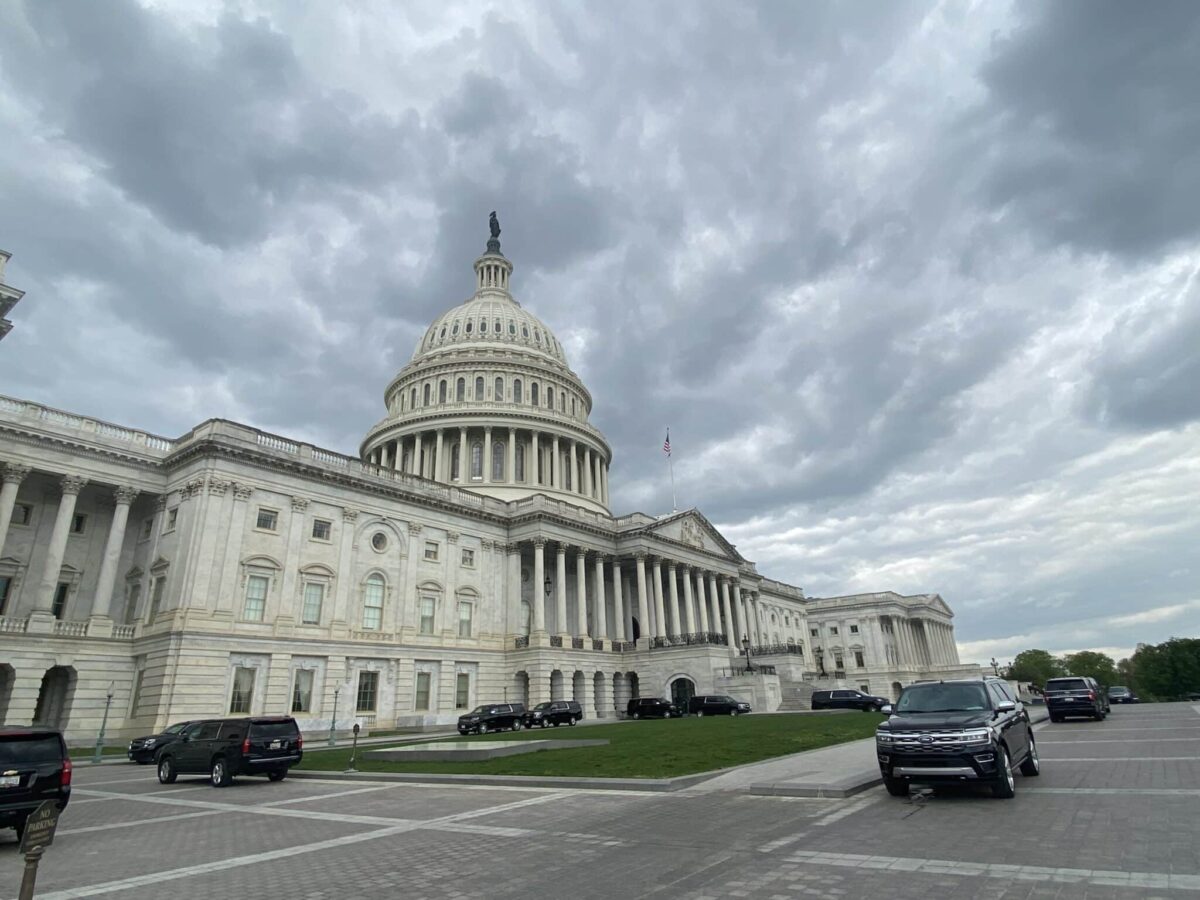

AP-The Senate passed legislation Monday to reopen the government, bringing the longest shutdown in history closer to an end as a small group of Democrats ratified a deal with Republicans despite searing criticism from within their party.
The 41-day shutdown could last a few more days as members of the House, which has been on recess since mid-September, return to Washington to vote on the legislation. President Donald Trump has signaled support for the bill, saying Monday that “we’re going to be opening up our country very quickly.”
The final Senate vote, 60-40, broke a grueling stalemate that lasted more than six weeks as Democrats demanded that Republicans negotiate with them to extend health care tax credits that expire Jan. 1. The Republicans never did, and five moderate Democrats eventually switched their votes as federal food aid was delayed, airport delays worsened and hundreds of thousands of federal workers continued to go unpaid.
House Speaker Mike Johnson urged lawmakers to start returning to Washington “right now” given shutdown-related travel delays, but an official notice issued after the Senate vote said the earliest the House will vote is Wednesday afternoon.
“It appears our long national nightmare is finally coming to an end,” said Johnson, who has kept the House out of session since mid-September, when the House passed a bill to continue government funding.
After weeks of negotiations, A group of three former governors — New Hampshire Sen. Jeanne Shaheen, New Hampshire Sen. Maggie Hassan and Independent Sen. Angus King of Maine — agreed to vote to advance three bipartisan annual spending bills and extend the rest of government funding until late January. Republicans promised to hold a vote to extend the health care subsidies by mid-December, but there was no guarantee of success.
Shaheen said Monday that “this was the option on the table” after Republicans had refused to budge.
“We had reached a point where I think a number of us believed that the shutdown had been very effective in raising the concern about health care,” she said, and the promise for a future vote “gives us an opportunity to continue to address that going forward.”
The legislation includes a reversal of the mass firings of federal workers by the Trump administration since the shutdown began on Oct. 1. It also protects federal workers against further layoffs through January and guarantees they are paid once the shutdown is over.
In addition to Shaheen, King and Hassan, Democratic Sen. Tim Kaine of Virginia, home to tens of thousands of federal workers, also voted Sunday in favor of moving forward on the agreement. Illinois Sen. Dick Durbin, the No. 2 Democrat, Pennsylvania Sen. John Fetterman and Nevada Sens. Catherine Cortez Masto and Jacky Rosen also voted yes. All other Democrats, including Senate Democratic leader Chuck Schumer of New York, voted against it.
The moderates had expected a larger number of Democrats to vote with them as 10 to 12 Democratic senators had been part of the negotiations. But in the end, only five switched their votes — the exact number that Republicans needed. King, Cortez Masto and Fetterman had already been voting to open the government since Oct. 1.
Schumer, who received blowback from his party in March when he voted to keep the government open, said he could not “in good faith” support it after meeting with his caucus for more than two hours on Sunday.
“We will not give up the fight,” Schumer said, adding that Democrats have now “sounded the alarm” on health care.
Independent Sen. Bernie Sanders of Vermont, who caucuses with the Democrats, said giving up the fight was a “horrific mistake.” Sen. Chris Murphy, D-Conn., agreed, saying that voters who overwhelmingly supported Democrats in last week’s elections were urging them to “hold firm.”
House Democrats swiftly criticized the Senate.
Texas Rep. Greg Casar, the chairman of the Congressional Progressive Caucus, said a deal that doesn’t reduce health care costs is a “betrayal” of millions of Americans who are counting on Democrats to fight.
Others gave Schumer a nod of support. House Democratic leader Hakeem Jeffries had criticized Schumer in March after his vote to keep the government open. But he praised the Senate Democratic leader on Monday and expressed support for his leadership throughout the shutdown.
“The American people know we are on the right side of this fight,” Jeffries said Monday, pointing to Tuesday’s election results.
It’s unclear whether the two parties would be able to find any common ground on the health care subsidies before a promised December vote in the Senate. House Speaker Mike Johnson, R-La., has said he will not commit to bringing it up in his chamber.
On Monday, Johnson said House Republicans have always been open to voting to reform what he called the “unaffordable care act” but again did not say if they would vote on the subsidies.
Some Republicans have said they are open to extending the COVID-19-era tax credits as premiums could skyrocket for millions of people, but they also want new limits on who can receive the subsidies. Some argue that the tax dollars for the plans should be routed through individuals.
Senate Appropriations Committee Chairwoman Susan Collins said Monday that she’s supportive of extending the tax credits with changes, like new income caps. Some Democrats have signaled they could be open to that idea.
“We do need to act by the end of the year, and that is exactly what the majority leader has promised,” Collins said.
Other Republicans, including Trump, have used the debate to renew their yearslong criticism of the law and called for it to be scrapped or overhauled.
In a possible preview, the Senate voted 47-53 along party lines Monday not to extend the subsidies for a year. Majority Republicans allowed the vote as part of a separate deal with Democrats to speed up votes and send the legislation to the House.

AP- The flight cancellations at airports across the U.S. are expected to persist even after the government shutdown ends.
The Federal Aviation Administration has reduced flights as some air traffic controllers — unpaid for weeks — have stopped showing up for work.
The Senate took a first step toward ending the shutdown Sunday, but final passage could still be several days away. Transportation Secretary Sean Duffy made clear last week that flight cuts will remain in place until the FAA sees safety metrics improve.
Over the weekend, airlines canceled thousands of flights to comply with the order to eliminate 4% of flights. The cancellations are scheduled to rise to 6% of all flights at 40 of the nation’s busiest airports on Tuesday. By the end of the week, flight cancellations are scheduled to reach 10% of all flights at those airports.
Already, travelers are growing frustrated.
“All of this has real negative consequences for millions of Americans, and it’s 100% unnecessary and avoidable,” said Todd Walker, whose flight from San Francisco to Washington state was canceled over the weekend, causing him to miss his mom’s 80th birthday party.
As of Monday morning, airlines had already canceled 1,600 flights for Monday and nearly 1,000 for Tuesday. International flights have not been affected.
Beyond the mandated cuts, flight delays have been rippling through airports nationwide at times ever since the shutdown began. That’s because the FAA slows air traffic anytime it’s short on controllers at one of its facilities to ensure flights remain safe.
Tuesday will be the second missed payday for air traffic controllers and other FAA employees. It’s unclear how quickly they might be paid once the shutdown ends. The head of the controllers union, Nick Daniels, plans a news conference Monday morning to address the shutdown’s toll.
“More controllers aren’t coming to work day by day, the further they go without a paycheck,” Duffy said.
The government has struggled for years with a shortage of air traffic controllers, and Duffy said the shutdown has worsened the problem, prompting some controllers to retire early or quit. Before the shutdown, Duffy had been working to address the shortage by hiring more controllers, speeding up training and offering bonuses to retain experienced controllers.
Duffy warned over the weekend that if the shutdown drags on, the situation could deteriorate further as the U.S. heads into the busy holiday travel season. He said air travel may “be reduced to a trickle” by the week of Thanksgiving.
By: James Brooks, Alaska Beacon

State elections officials have begun reviewing signatures gathered by people opposed to Alaska’s system of open primary elections and ranked-choice general elections to determine whether a repeal ballot measure will appear before voters in 2026.
Alaskans enacted the state’s existing elections system via a ballot measure in 2020, and a repeal measure last year failed by only 737 votes out of 320,985 cast.
Proponents of the repeal vowed at that time to renew their effort and began gathering signatures in February to force another vote.
Based on state law and the number of people who voted in the 2024 statewide election, repeal supporters needed to collect signatures from at least 34,099 registered voters, including a certain minimum number in at least 30 of the 40 state House districts.
This week, supporters of the repeal measure said they were submitting more than 48,000 signatures to the Alaska Division of Elections for review.
If the repeal petition is deemed to have enough signatures, it would go before voters in either the 2026 primary or the 2026 general election, depending upon the length of next year’s state legislative session.
If voters approve the measure in 2026, all three components of the 2020 ballot measure would be repealed.
That would have three main results. Financial donors to political campaigns would be able to conceal their identity by contributing to a political nonprofit, which could donate money to causes on their behalf.
The 2020 law, currently in effect, requires campaigns to disclose the “true source” of their money.
The second effect would be the repeal of the state’s open primary system, in which all candidates, regardless of political party, run in the same race. Under the current law, the top four vote-getters in a given race advance to the general election.
If that is repealed, political parties would be able to determine the rules for deciding which of their candidates advance to the November general election.
The third change is to general election. Instead of voters being allowed to rank all candidates in order of preference, voters would be able to choose only one candidate, and the candidate with the most votes would win.
One other ballot measure, which would reimpose a limit on financial donations to political candidates, has already been certified and is slated for the 2026 ballot.
Two other ballot measures remain in the signature-gathering process. One would decriminalize several psychedelic substances, and the other would reinforce the state’s existing prohibition on noncitizen voting.
Backers of those measures must gather sufficient signatures before the start of the January legislative session in order to force a vote in 2026.

AP- States administering a federal food aid program serving about 42 million Americans faced uncertainty Monday over whether they can — and should — provide full monthly benefits during an ongoing legal battle involving the U.S. government shutdown.
President Donald Trump’s administration over the weekend demanded that states “undo” full benefits that were paid under the Supplemental Nutrition Assistance Program during a one-day window between when a federal judge ordered full funding and a Supreme Court justice put a temporary pause on that order.
A federal appeals court in Boston left the full benefits order in place late on Sunday, though the Supreme Court order ensures the government won’t have to pay out for at least 48 hours.
“The record here shows that the government sat on its hands for nearly a month, unprepared to make partial payments, while people who rely on SNAP received no benefits a week into November and counting,” Judge Julie Rikleman of the U.S. 1st Circuit Court of Appeals wrote.
The Supreme Court gave the Trump administration until 11 a.m. EST Monday to say whether it wanted to keep the full payments on hold. The pause the court imposed last week will expire Tuesday night without further court action. Congress is considering whether to fund SNAP as part of a proposal to end the government shutdown.
Some states are warning of “catastrophic operational disruptions” if the Trump administration does not reimburse them for those SNAP benefits they already authorized. Meanwhile, other states are providing partial monthly SNAP benefits with federal money or using their own funds to load electronic benefit cards for SNAP recipients.
Trump’s administration initially said SNAP benefits would not be available in November because of the government shutdown. After some states and nonprofit groups sued, judges in Massachusetts and Rhode Island each ruled the administration could not skip November’s benefits entirely.
The administration then said it would use an emergency reserve fund to provide 65% of the maximum monthly benefit. On Thursday, Rhode Island-based U.S. District Judge John J. McConnell said that wasn’t good enough, and ordered full funding for SNAP benefits by Friday.
Some states acted quickly to direct their EBT vendors to disburse full monthly benefits to SNAP recipients. Millions of people in those states received funds to buy groceries before Justice Ketanji Brown Jackson put McConnell’s order on hold Friday night, pending further deliberation by an appeals court.
Millions more people still have not received SNAP payments for November, because their states were waiting on further guidance from the U.S. Department of Agriculture, which administers SNAP.
“Continued delays deepen suffering for children, seniors, and working families, and force nonprofits to shoulder an even heavier burden,” Diane Yentel, President and CEO, National Council of Nonprofits, one of the plaintiffs in the lawsuit, said in a statement Monday. “If basic decency and humanity don’t compel the administration to assure food security for all Americans, then multiple federal court judges finding its actions unlawful must.”
Trump’s administration has argued that the judicial order to provide full benefits violates the Constitution by infringing on the spending power of the legislative and executive branches.
On Sunday, the Trump administration said states had moved too quickly and erroneously released full SNAP benefits after last week’s rulings.
“States must immediately undo any steps taken to issue full SNAP benefits for November 2025,” Patrick Penn, deputy undersecretary of Agriculture, wrote to state SNAP directors. He warned that states could face penalties if they did not comply.
Wisconsin, which was among the first to load full benefits after McConnell’s order, had its federal reimbursement frozen. As a result, the state’s SNAP account could be depleted as soon as Monday, leaving no money to reimburse stores that sell food to SNAP recipients, according to a court filing submitted by those that had sued.
Some Democratic governors vowed to challenge any federal attempt to claw back money.
In Connecticut, Democratic Gov. Ned Lamont said “those who received their benefits should not worry about losing them.”
“No, Connecticut does not need to take back SNAP benefits already sent to the 360,000 people who depend on them for food and who should have never been caught in the middle of this political fight,” Lamont said. “We have their back.”